
Few pieces anchor a living room like a leather sofa. It brings weight, warmth, and a patina that only improves with years of use — the rare furniture that looks better at ten than at one. These living room leather sofa ideas cover colors, pairings, and care so your leather seating feels rich and intentional rather than heavy or dated. Sectional sofa styling ideas that anchor your living room share layout principles that work for leather too.
Before buying, know your leather. Full-grain and top-grain are the durable, beautiful grades that develop character; bonded or faux leathers peel within a few years of daily use. A leather sofa is upholstered seating built for decades — check the frame (kiln-dried hardwood), the suspension, and the hide quality before falling for the color. Good leather costs more upfront and far less per year.
1. Embrace Classic Cognac Leather
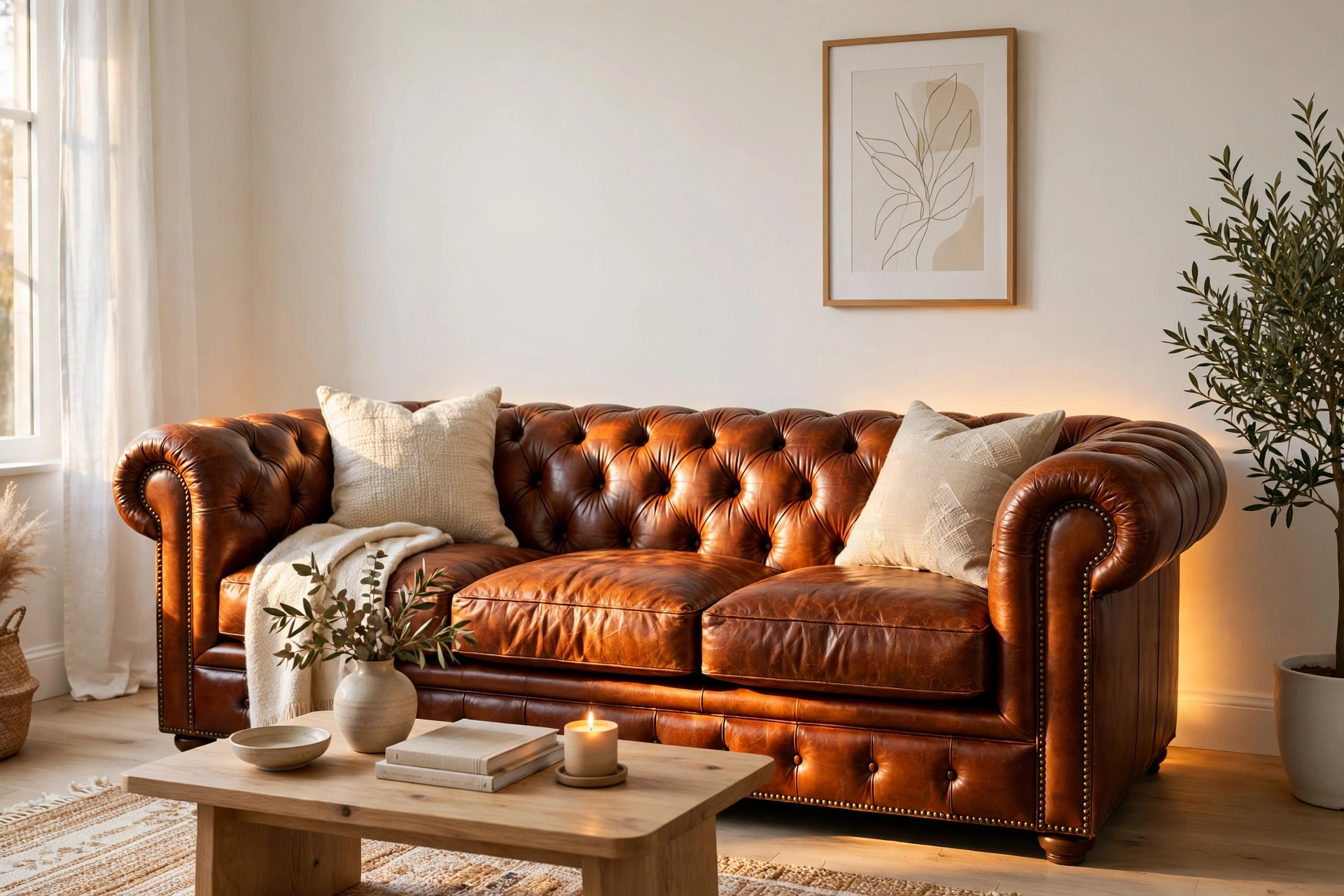
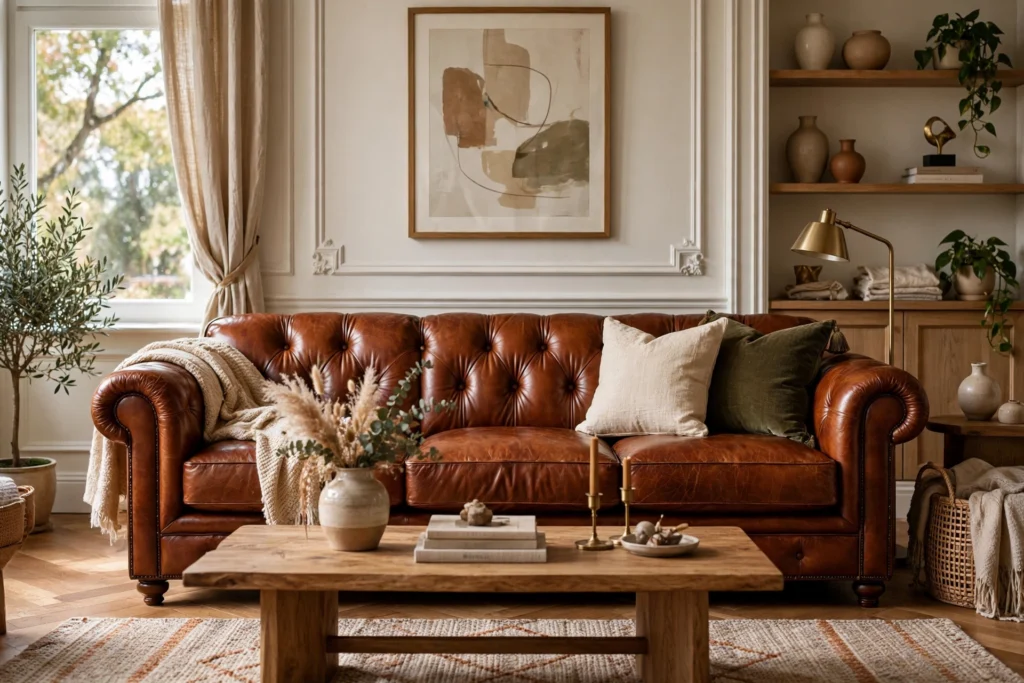
Cognac — that warm, honeyed tan — is the leather color that started a thousand Pinterest boards, and for good reason. It glows against white walls, grounds colorful textiles, and develops a gorgeous patina of darker creases and lighter wear spots. A cognac Chesterfield or mid-century sofa is practically a design icon on its own. Pair it with black metal, dark wood, and plenty of texture — wool, jute, linen — to keep the warmth balanced. Cognac works in every style from industrial loft to California casual. If you buy one leather sofa in your life, make it this color.
2. Go Deep with Espresso Brown
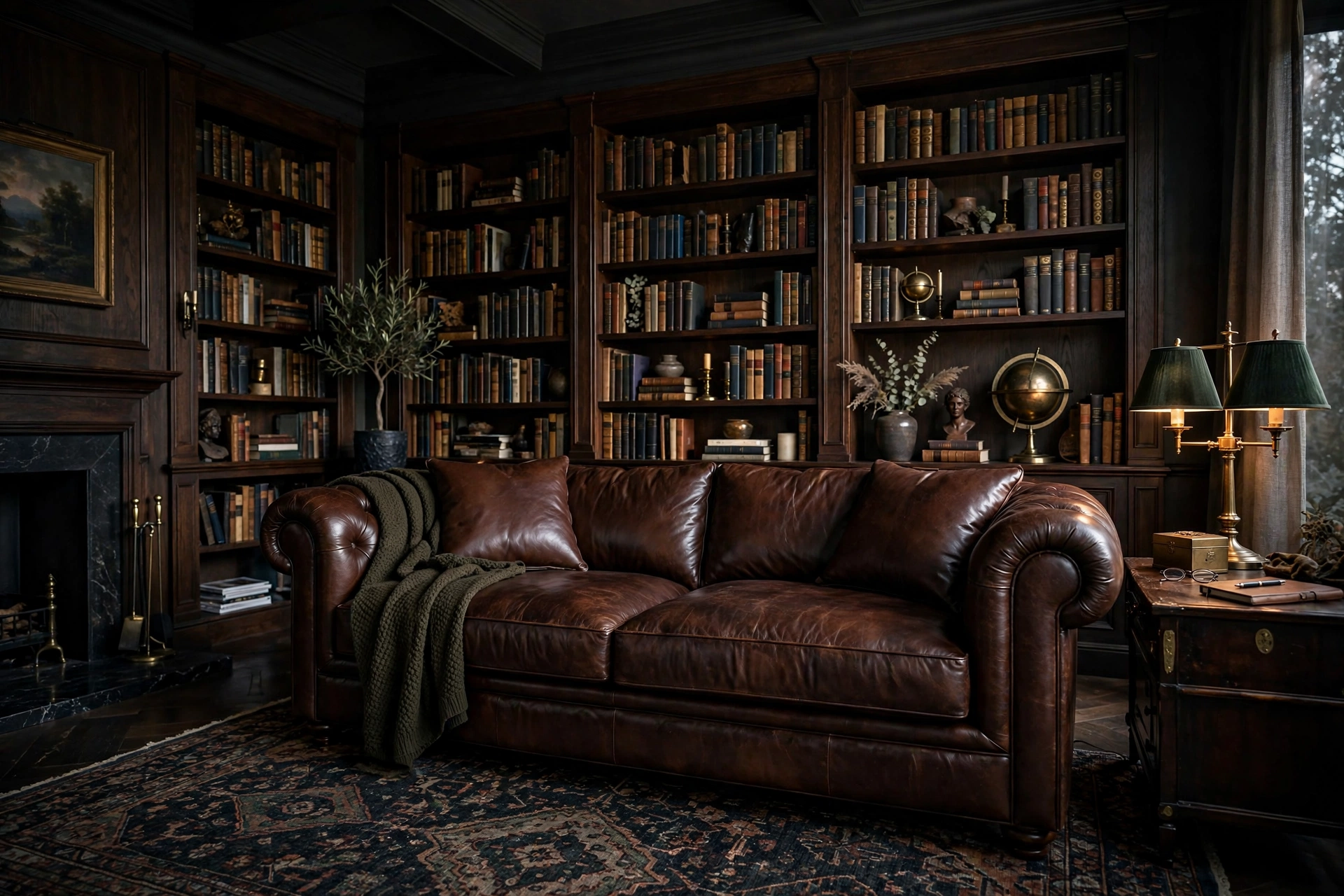
Espresso brown leather brings a tailored, library-like richness that cognac’s golden warmth does not. It reads as serious and grounded — the sofa equivalent of a well-worn briefcase. Dark brown leather suits traditional, craftsman, and masculine-leaning rooms beautifully, especially with wood paneling, bookshelves, and warm lighting. The key to keeping espresso from feeling heavy is contrast: light walls, a pale rug underneath, and lighter textiles on top. In a north-facing room, pair it with warm-toned lighting to keep the brown glowing rather than flat. This is the color for rooms meant for reading and long conversations.
3. Try Black Leather for Modern Edge
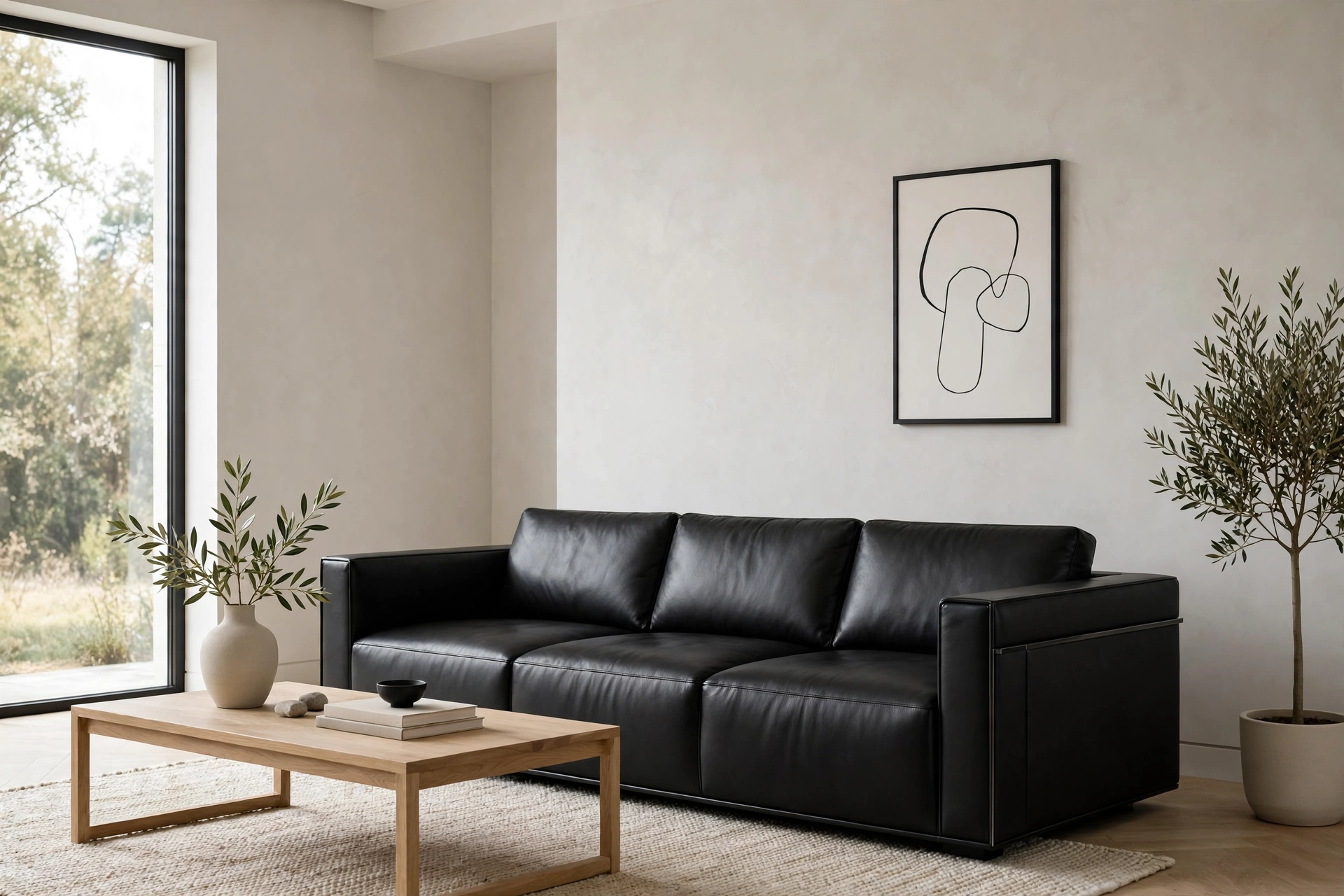
Black leather sofas get a bad rap from dated office associations, but in the right room they are pure modern drama. A sleek black leather sofa against white walls with chrome or black metal accents is timeless contemporary — think gallery, not cubicle. The trick is keeping everything else light and edited: black leather needs breathing room. Add texture on top — a cream throw, gray wool pillows — to soften the severity. Black leather also hides wear better than any other color and suits homes with kids and pets. Choose clean lines and slim profiles; bulky black leather is what tips into the boardroom look.
4. Soften the Look with a White or Cream Leather Sofa
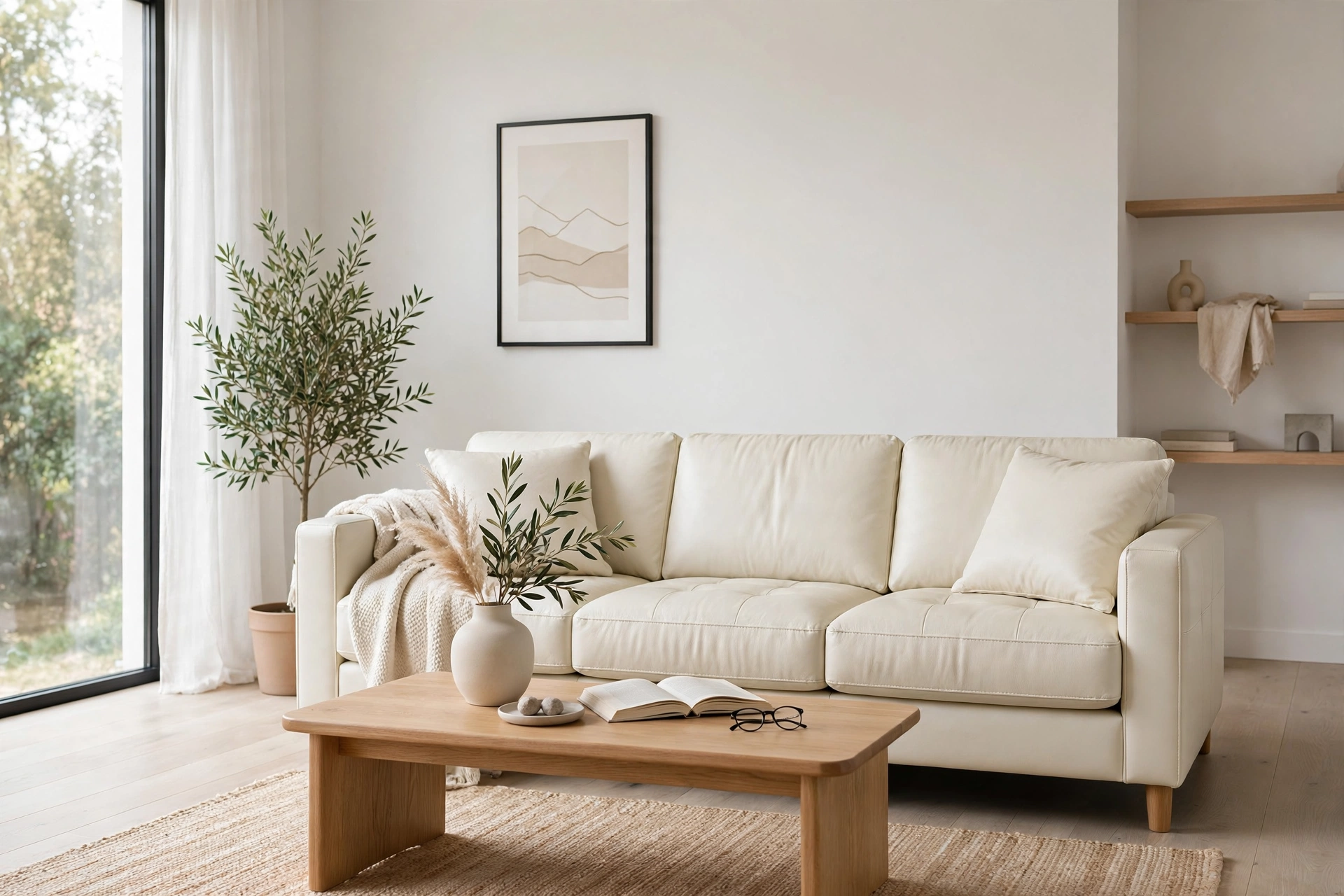
White leather sofas are the tailored alternative to slipcovers — crisp, bright, and surprisingly practical since quality leather wipes clean. A cream or ivory leather sofa brings modern elegance to minimalist and transitional rooms, reflecting light and making spaces feel larger. The maintenance reality: conditioned regularly, good white leather resists dye transfer from jeans far better than cheap versions. Keep throws on the arms where hands rest, and condition every six months. A white leather sofa with warm wood and brass is quietly luxurious — the room feels expensive without shouting.
5. Mix Leather with Fabric Seating
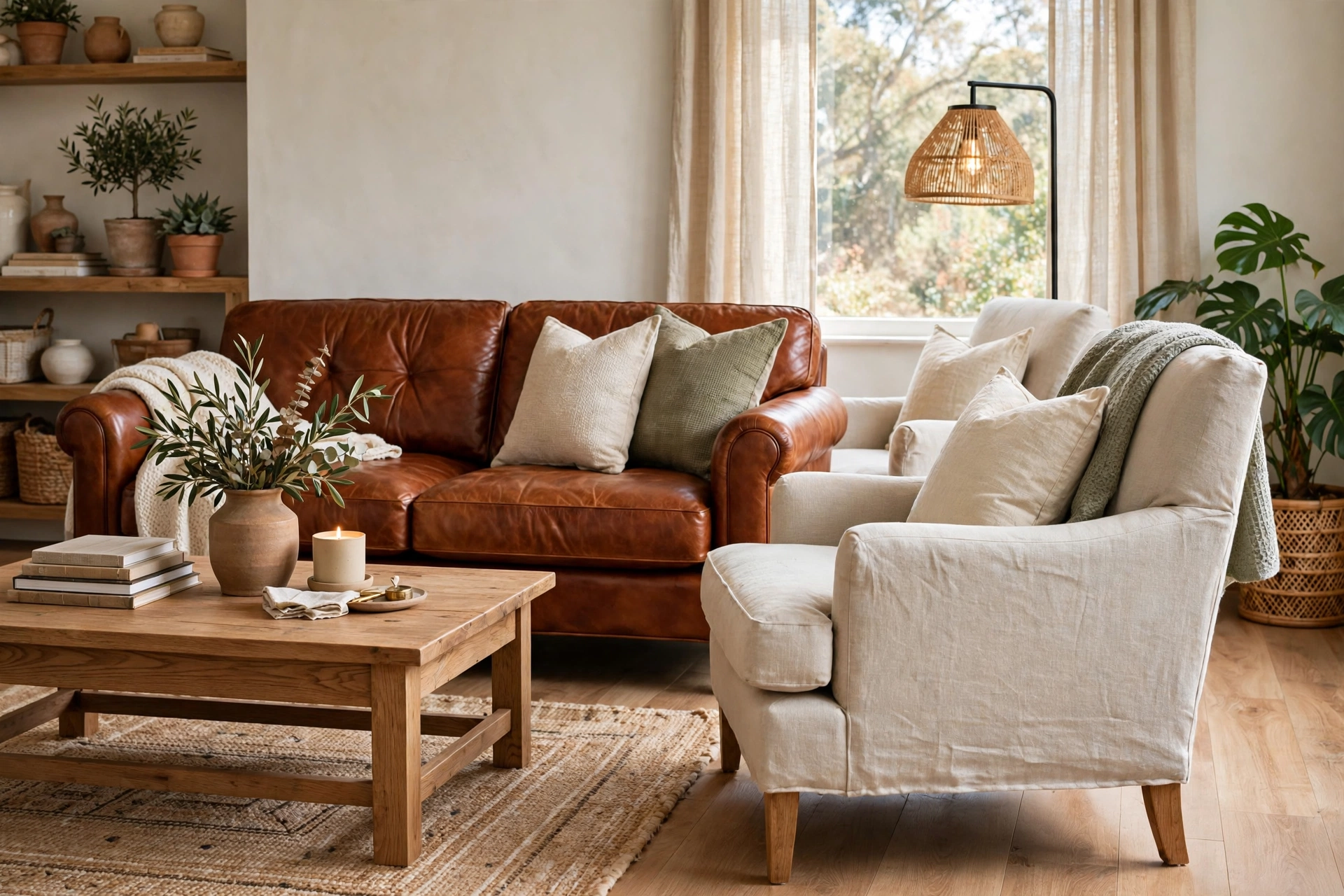
A full room of leather can feel like a men’s club — in the wrong way. The fix is mixing: a leather sofa paired with fabric armchairs, or a fabric sofa with leather accent chairs. The contrast of textures — smooth hide against nubby linen or velvet — is what makes a room feel layered and collected. Keep the color relationship intentional: cognac leather with oatmeal linen chairs, black leather with gray velvet. This mix also balances comfort, since fabric chairs invite curling up while leather anchors the room visually. One leather piece per seating group is usually the sweet spot.
6. Ground It with a Natural Fiber Rug
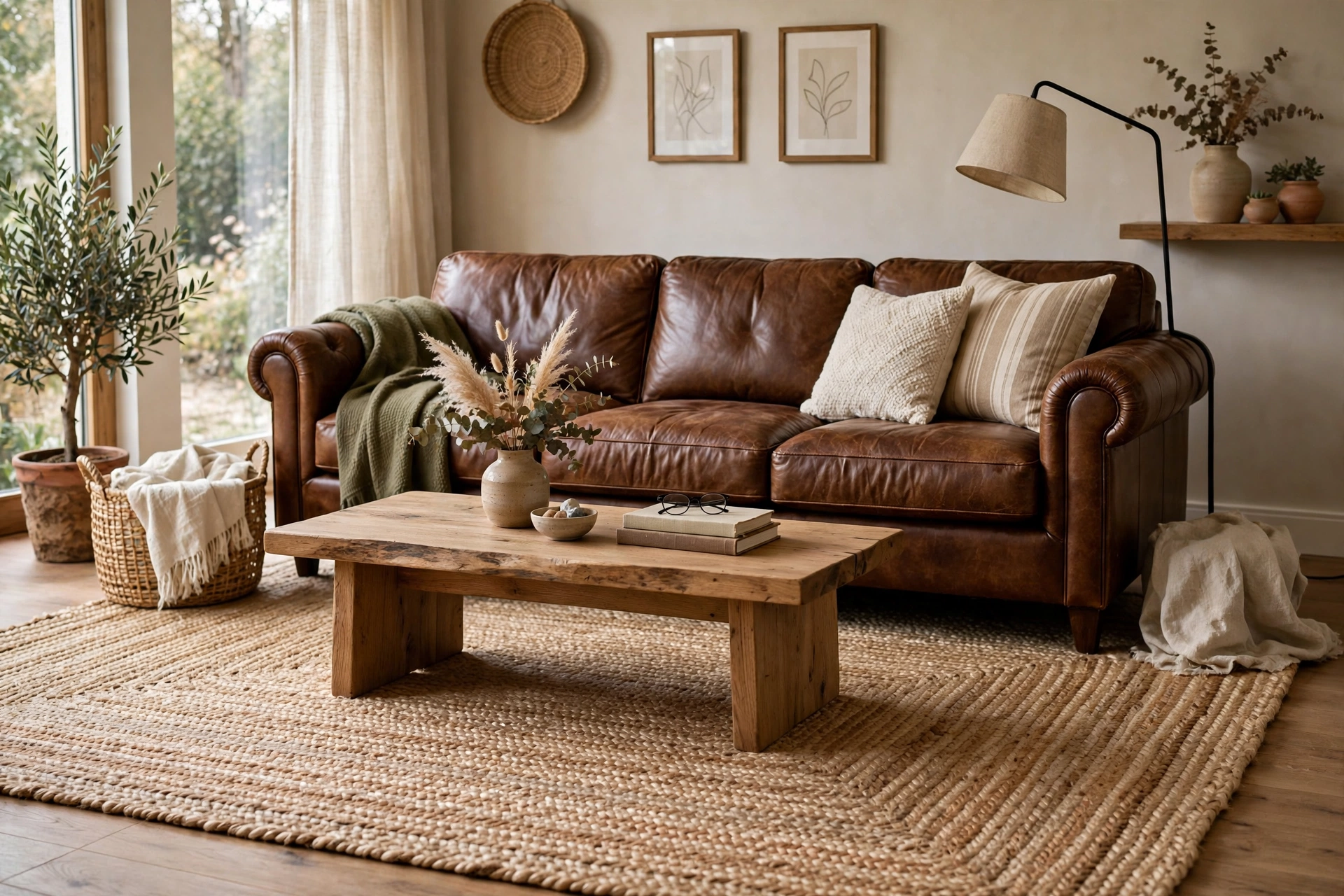
Leather sofas demand the right rug underneath — and natural fibers are the classic answer. A large jute, sisal, or wool rug under a leather sofa adds the softness leather lacks and prevents the seating area from feeling cold or hard. Size it generously: front legs of all seating on the rug, ideally the whole arrangement. The rug’s texture contrasts beautifully with smooth leather, and natural tones let the leather’s color star. Living room rug ideas for warmth and style cover sizing rules that matter doubly under a heavy visual anchor like leather. Avoid small rugs that strand a big leather sofa on bare floor.
7. Add Warmth with Wool Throws and Pillows
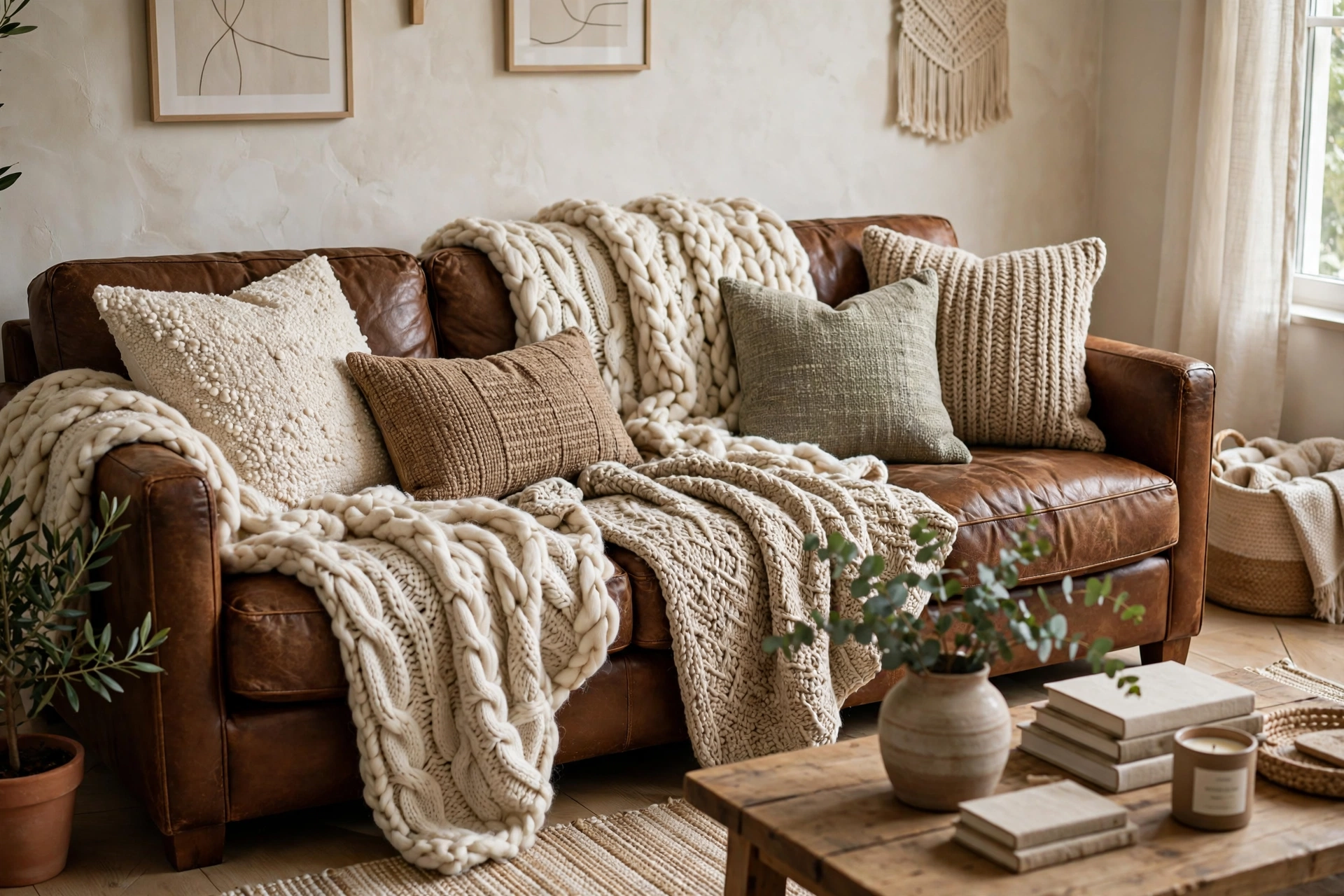
Leather can feel cool — literally and visually — so textiles are essential. Drape a chunky wool or knit throw over one arm, pile on pillows in linen, velvet, and shearling, and the leather sofa transforms from sleek to inviting. The textiles also protect the leather at high-contact points and add the color the sofa itself may lack. Stick to a tight palette of two or three tones so the layering looks curated. In winter, a sheepskin draped over the back is both beautiful and functional. Think of textiles as the leather sofa’s wardrobe — change them seasonally and the room feels new.
8. Pair Leather with Dark Moody Walls
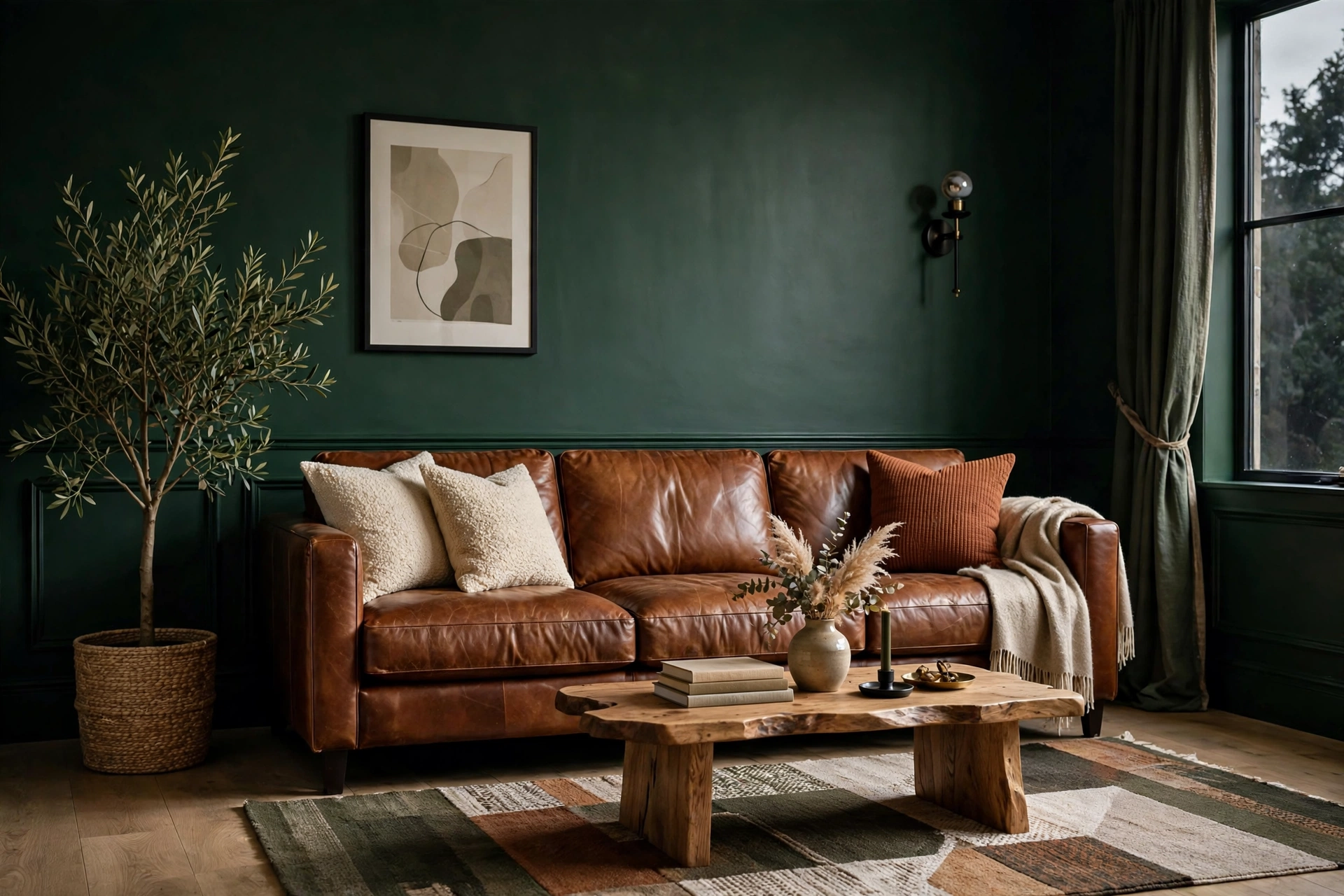
Leather sofas and moody walls are a match made in design heaven. Deep green, charcoal, navy, or oxblood walls wrap around cognac or brown leather like a tailored jacket, creating the cocooning feel of a private club or library. The leather’s warm tones glow against dark paint in a way fabric sofas cannot match. Keep the lighting warm and layered — table lamps and picture lights, never harsh overheads — to complete the mood. Dark academia styling shows this pairing at its best. This combination turns an ordinary living room into an evening destination.
9. Style a Chesterfield for Timeless Elegance
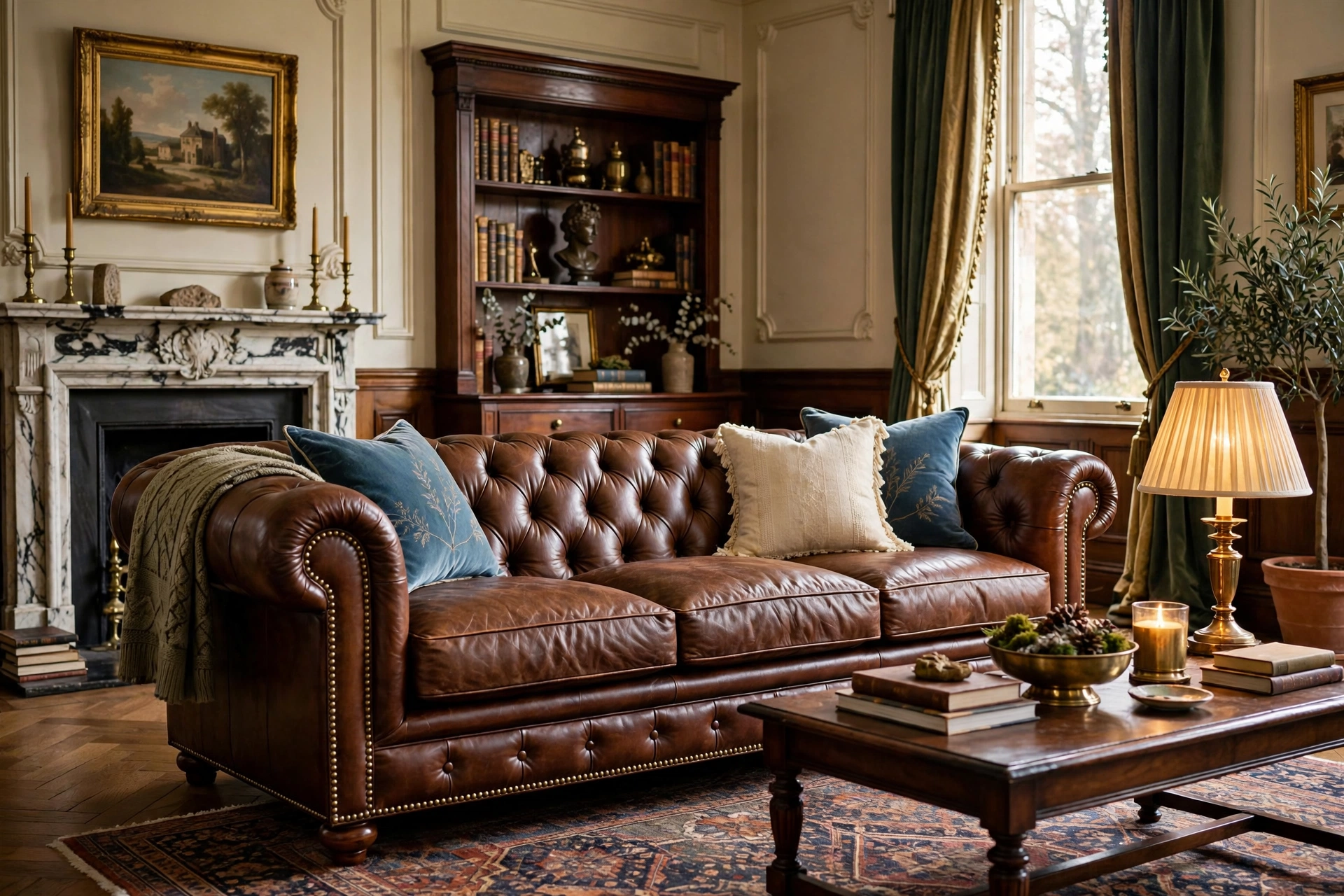
The Chesterfield — deep button tufting, rolled arms, nailhead trim — is the most iconic leather sofa silhouette ever made, and it earns its reputation. A Chesterfield in oxblood, cigar brown, or classic tan brings instant heritage to traditional and eclectic rooms. Let it be the star: keep surrounding furniture simple so the tufting and curves get full attention. Chesterfields pair beautifully with Persian rugs, brass lamps, and bookshelves. One caution — the low back and deep seat suit lounging more than upright sitting, so test the comfort if this will be your main sofa. As a statement piece, nothing beats it.
10. Keep It Light with a Tan or Camel Sofa
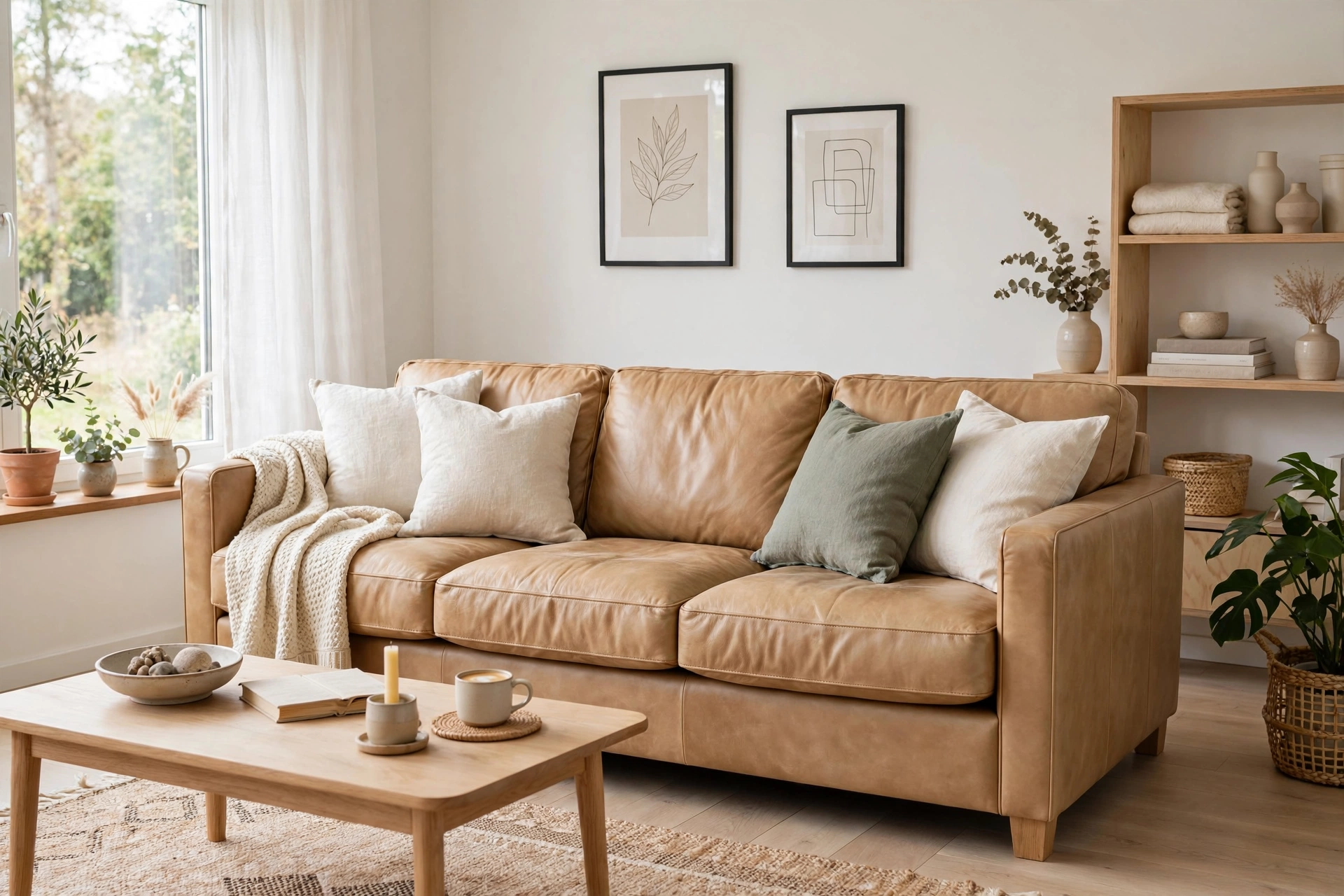
Between cognac’s richness and white’s starkness sits camel — the easygoing middle child of leather colors. Tan and camel leather sofas bring warmth without darkness, suiting Scandinavian, coastal, and modern organic rooms where heavier browns would overwhelm. Camel leather pairs effortlessly with white, gray, black, and natural wood — it is genuinely hard to get wrong. Like all leather, it patinas beautifully, darkening slightly where hands rest. A camel sofa with a white oak coffee table and linen curtains is the definition of relaxed refinement. If cognac feels too orange and brown too heavy, camel is your color.
11. Contrast Leather with Soft Velvet Accents
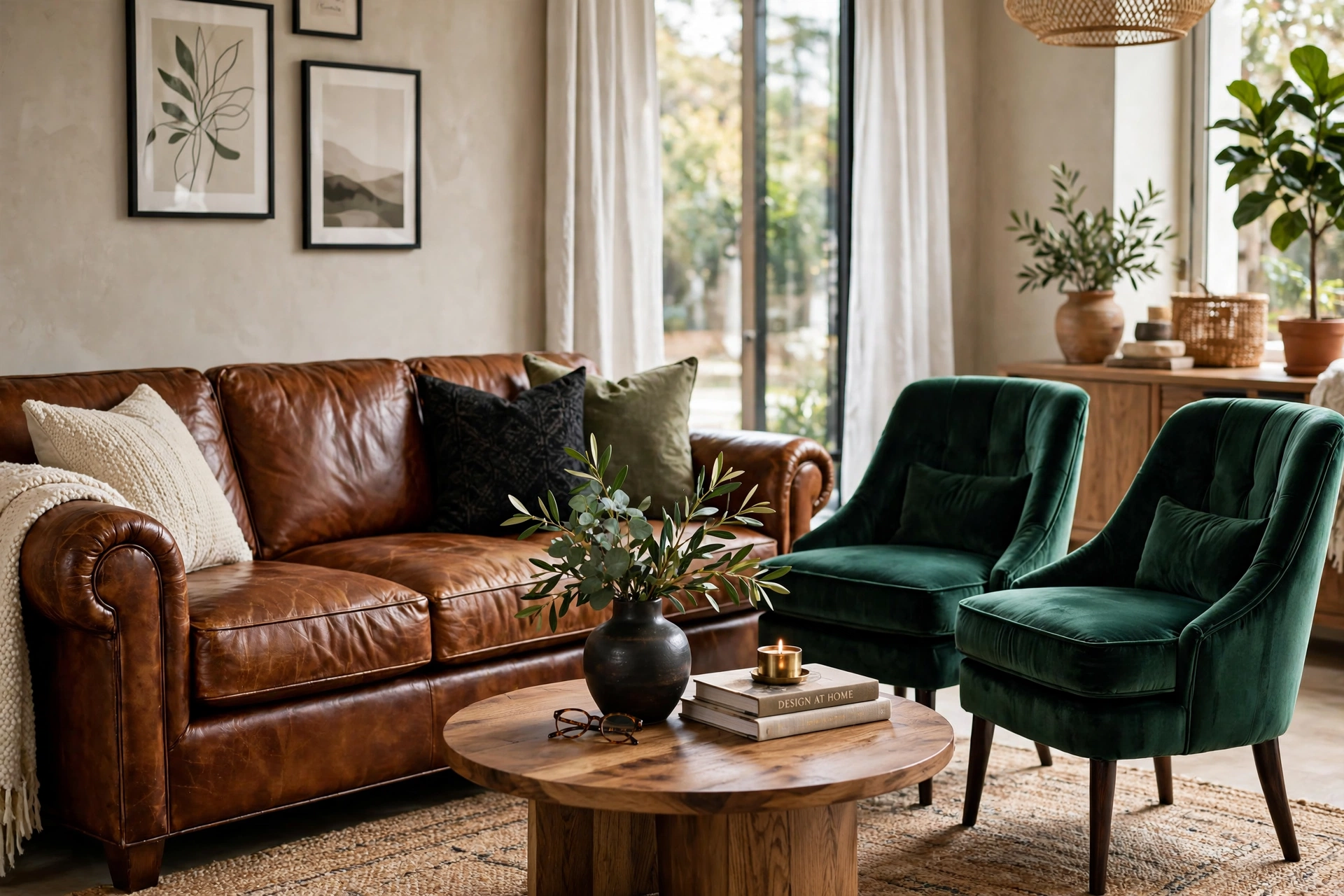
The smooth coolness of leather against the plush warmth of velvet is one of interiors’ great textural pairings. Velvet armchairs, a velvet ottoman, or even velvet pillows on the leather sofa itself create a tension that makes both materials look richer. Try emerald velvet chairs with a cognac sofa, or blush velvet with dark brown leather. The contrast works because the materials are opposites — matte versus sheen, soft versus structured. Keep the velvet in the room’s accent color so the pairing looks deliberate. This combination instantly elevates a room from nice to designed.
12. Let It Age Gracefully — Embrace Patina
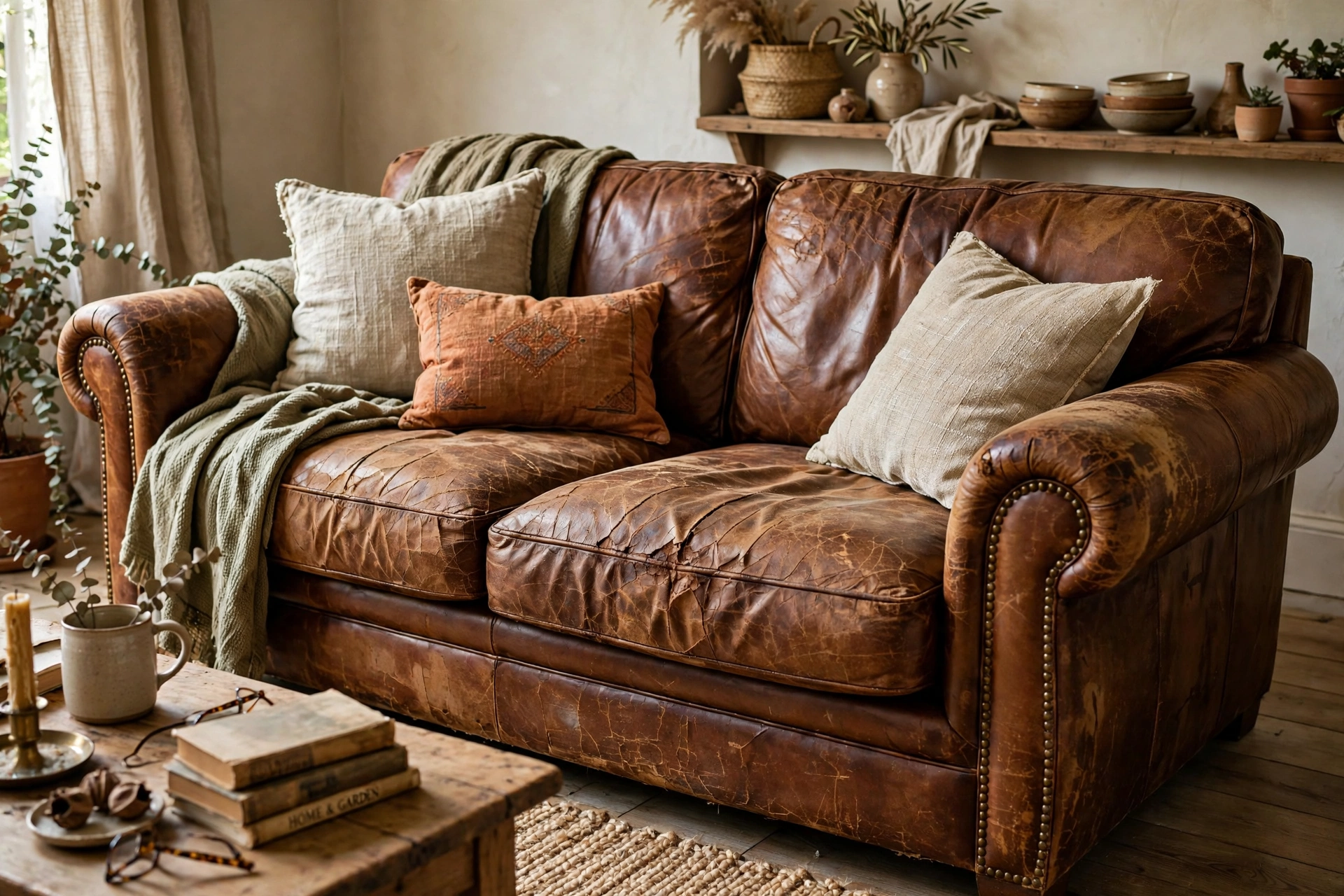
The greatest argument for real leather is patina — the darkening at the arms, the softening of the seat, the character lines that map years of use. Unlike fabric, which simply wears out, good leather wears in. Choose aniline or semi-aniline leather for the most beautiful aging; heavily pigmented leathers stay uniform but never develop that glow. Condition once or twice a year to keep the hide supple, keep it out of direct sun to prevent uneven fading, and otherwise let time do its work. A ten-year-old leather sofa with honest patina is more beautiful than the day it arrived — buy with that future in mind.
13. Balance a Big Leather Sofa with Airy Furniture
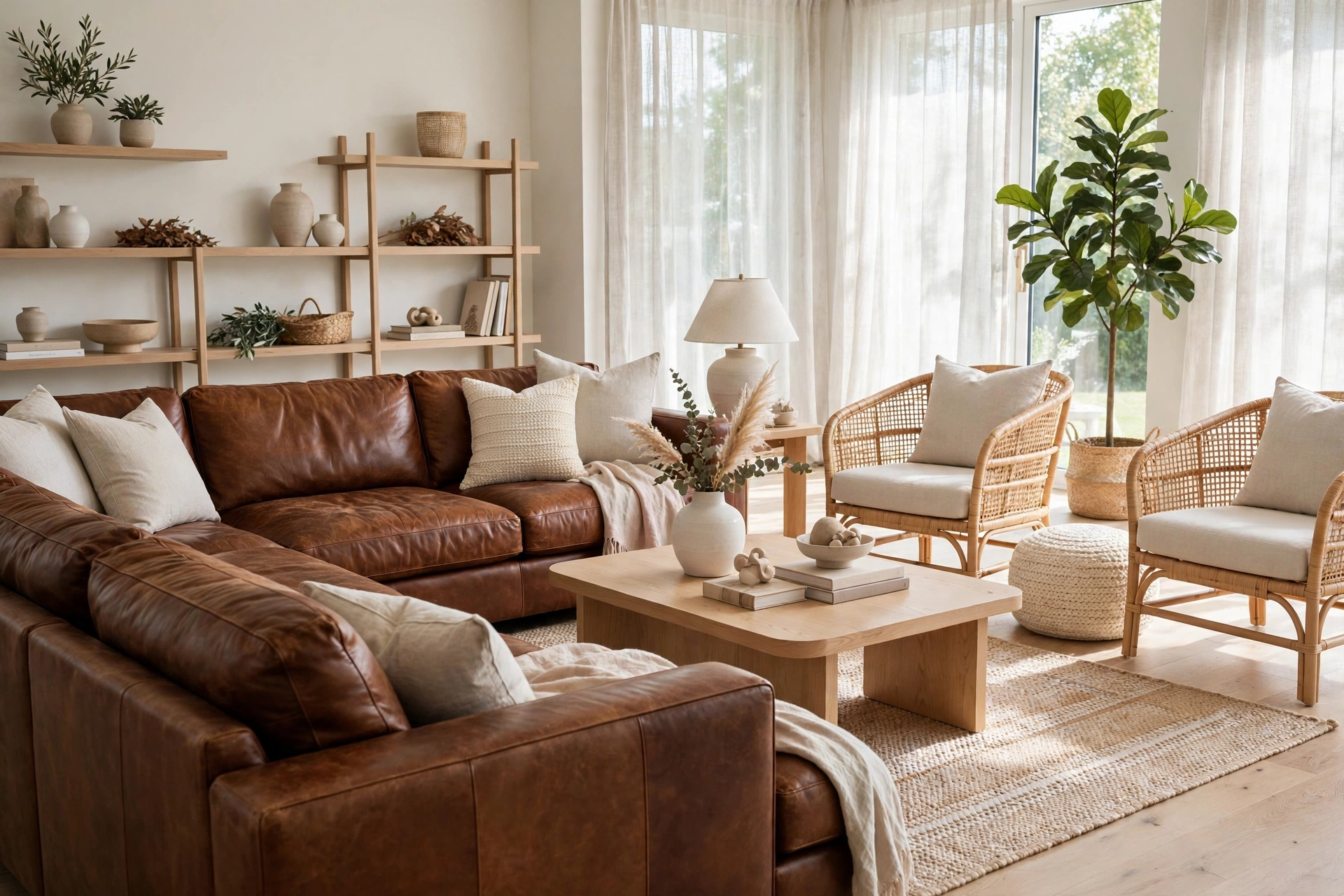
Large leather sectionals and three-seaters carry serious visual weight, so balance them with lighter pieces. Pair a substantial leather sofa with leggy armchairs, a glass or open-frame coffee table, and minimal window treatments that let light flood in. The contrast keeps the room from feeling like a furniture showroom. Negative space is your friend — resist filling every corner when the sofa already commands attention. This balancing act is especially important in smaller rooms, where a big leather piece can dominate. Let the leather be the anchor and everything else the supporting cast.
14. Condition and Care for Decades of Use
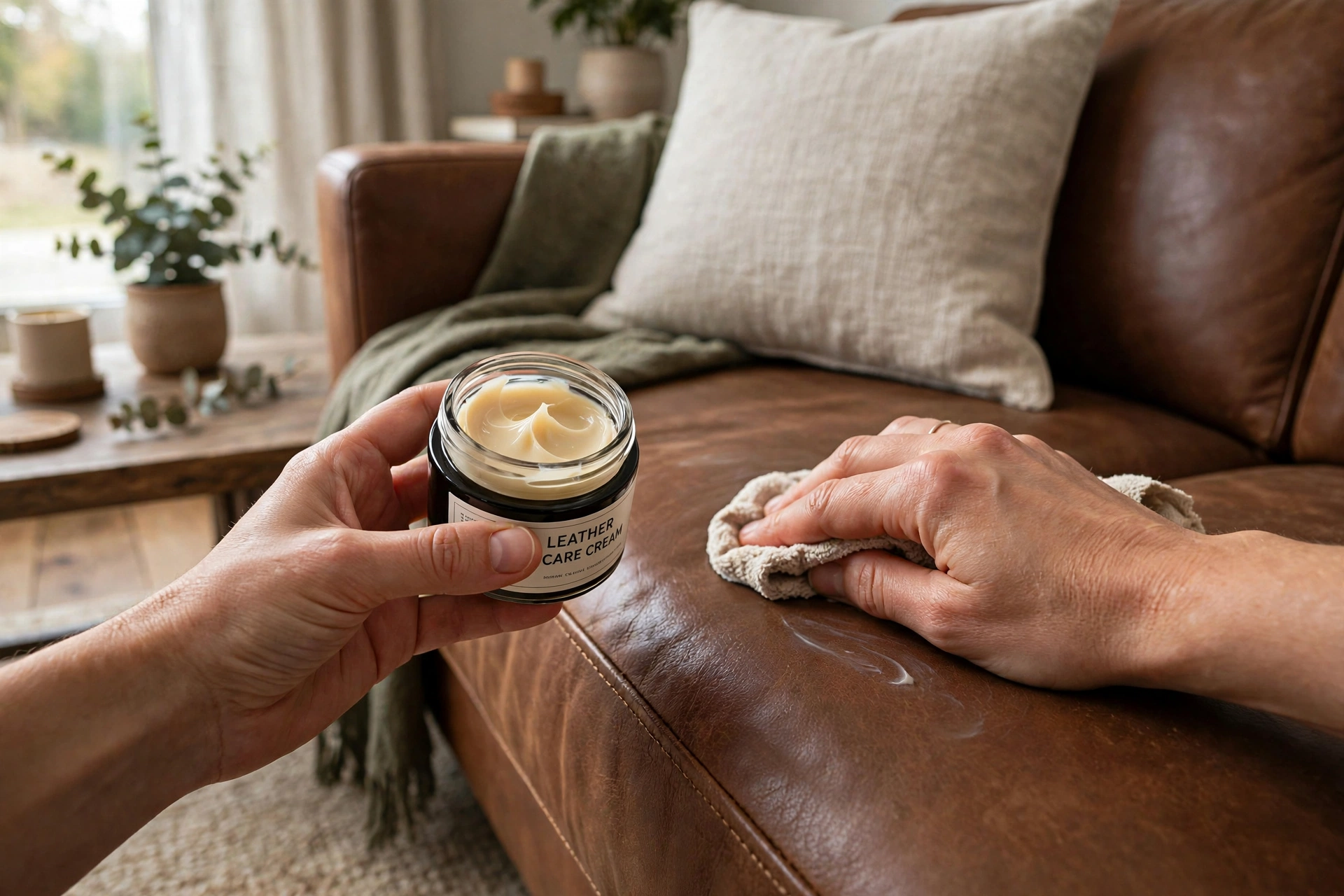
Leather’s longevity is earned through simple, consistent care. Dust weekly with a dry cloth, wipe spills immediately with a damp cloth (never soak), and condition every six to twelve months with a quality leather conditioner to prevent drying and cracking. Keep leather out of direct sunlight and at least two feet from radiators and heat vents — heat and UV are leather’s true enemies. For scratches, gentle buffing with a soft cloth often blends them into the patina. Avoid silicone-based “shine” products and household cleaners, which damage the finish. Thirty minutes of care twice a year buys you decades of beauty.
15. Buy Quality Once from Trusted Makers
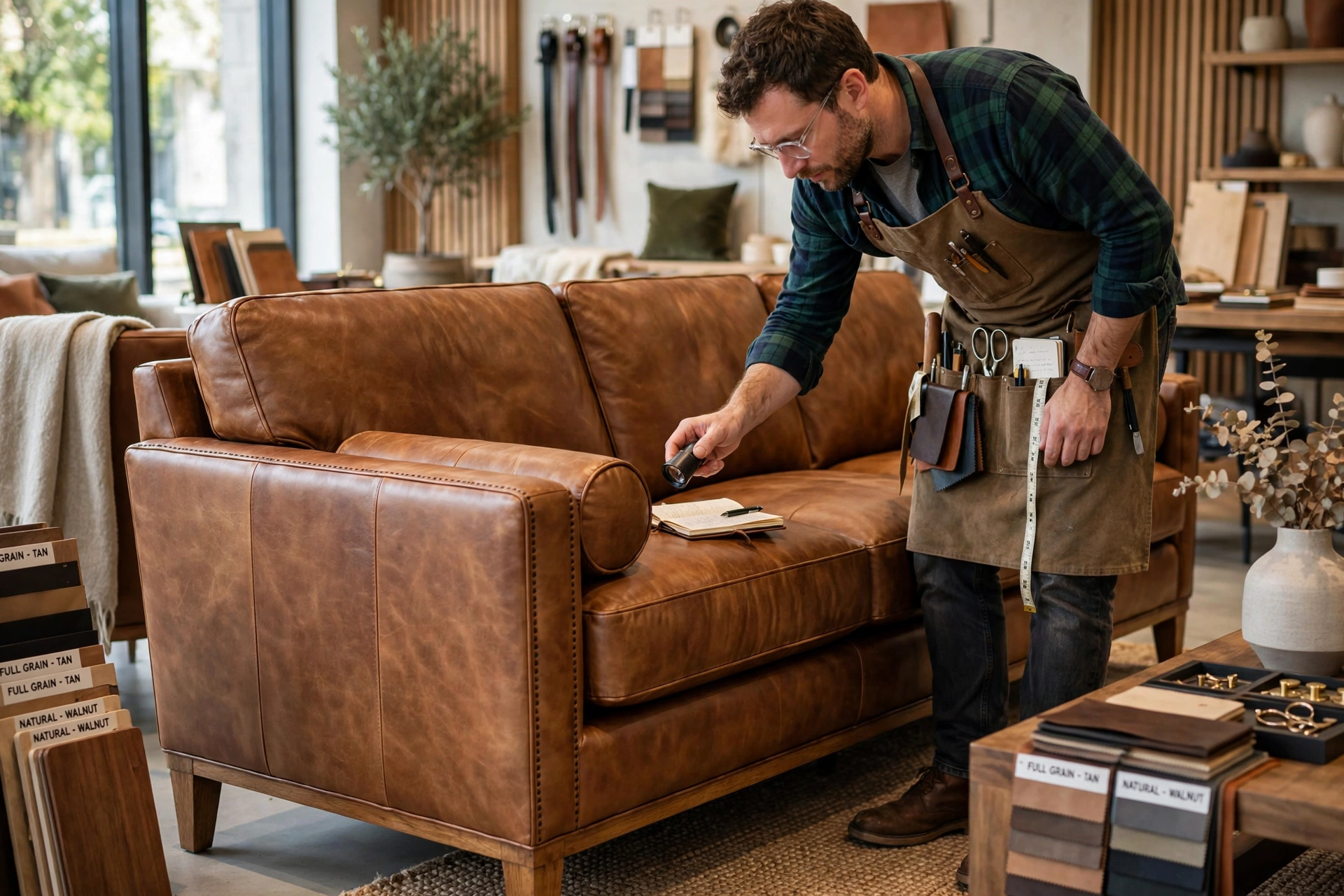
A leather sofa is a twenty-year purchase — treat it like one. Buy the best frame, suspension, and hide grade you can afford from makers with real warranties and repair programs. Full-grain or top-grain leather, kiln-dried hardwood frames, and eight-way hand-tied or sinuous springs are the marks of a sofa that lasts. Browse heritage makers like Pottery Barn’s leather collection to calibrate what quality construction looks like across price points before you commit. Sit on it, check the seams, ask about the leather grade in writing. A $3,000 sofa that lasts twenty years costs less per year than a $900 one replaced three times.
FAQ
Is a leather sofa good for everyday living room use?
Yes — quality leather is one of the most durable upholstery choices for daily use. It resists stains, wipes clean, does not trap odors or allergens like fabric, and improves with age. The caveats: it can feel cold in winter and sticky in summer without climate control, and sharp pet claws can scratch it. For most households, top-grain leather outlasts fabric by years.
What color leather sofa is most timeless?
Cognac and medium brown are the most enduring choices — warm, versatile, and beautiful as they patina. Black is timeless in modern rooms; cream and white suit minimalist spaces. Avoid trendy colors (bright red, stark white in high-traffic homes) if longevity matters. When in doubt, choose the color that appears in nature: tans, browns, and warm neutrals never date.
How do you keep a leather sofa from looking dated?
Keep the silhouette clean and classic — avoid overstuffed or overly trendy shapes. Style it with current textiles (throws, pillows) that you can update cheaply, keep the surrounding decor fresh, and maintain the leather so it glows rather than looking tired. A well-kept classic leather sofa in a current room never looks dated; it looks collected.
Does leather or fabric last longer on a sofa?
Quality top-grain leather typically outlasts fabric, often by a decade or more — 20-plus years versus 7 to 10 for most fabrics. Leather resists staining, fading, and odor absorption better, and it can be conditioned and repaired. Cheap bonded leather is the exception: it peels within a few years and lasts less long than decent fabric.
Can you put a leather sofa in a small living room?
Absolutely, with the right choices. Pick a sofa with slim arms and raised legs (visual lightness matters more than actual size), choose a lighter leather tone like camel or cream, and keep the surrounding furniture airy. A loveseat-scale leather sofa can anchor a small room beautifully without overwhelming it.
Keep Exploring
A leather sofa is a commitment to the long game — buy well, care simply, and let the years make it yours. Choose the color that speaks to your room, balance its weight with texture and light, and condition it like the investment it is. Then complete the seating story with our living room accent chair ideas for a cozy stylish space, where fabric chairs become the perfect companions to your leather anchor.