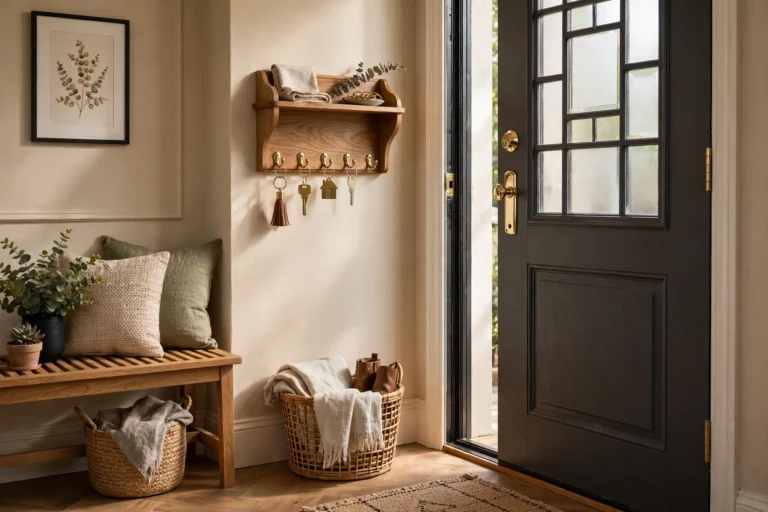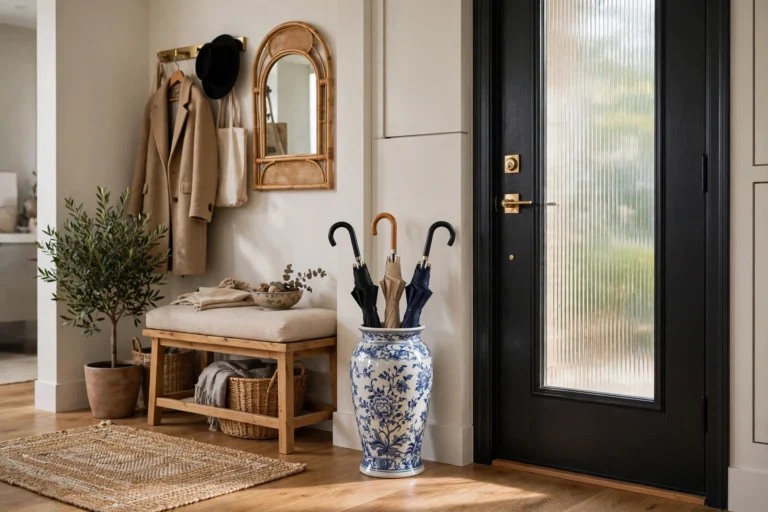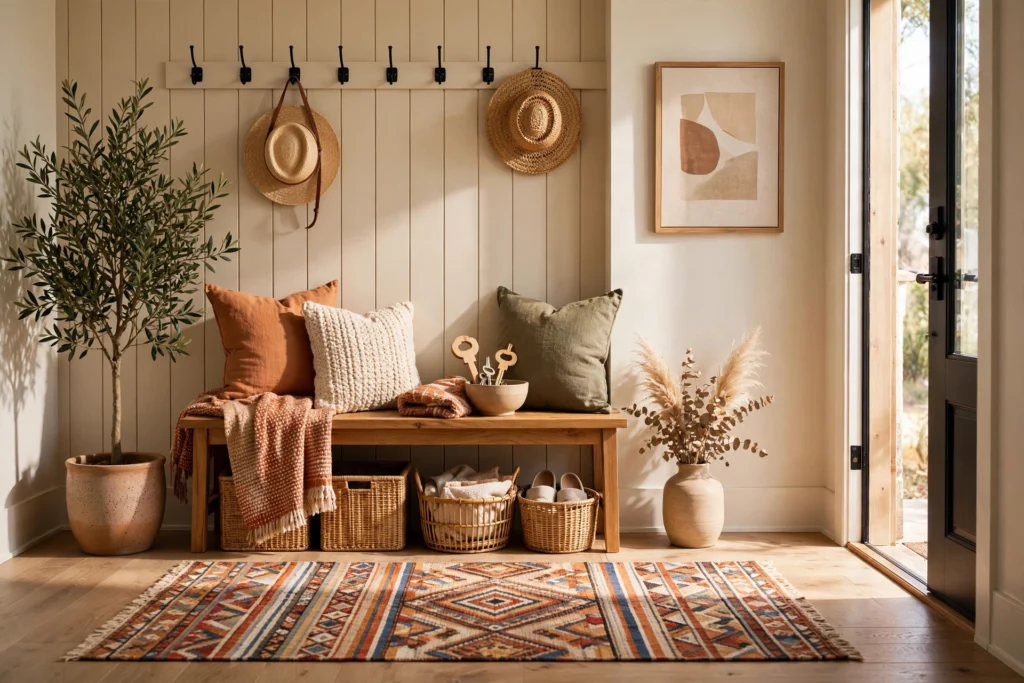

The entryway is the handshake of your home — the first thing guests see and the last thing you cross every day. A rug is what makes that handshake warm: it softens hard floors, catches the grit of the outside world, and sets the style tone for everything beyond the front door. These entryway rug ideas cover sizing, materials, layerinThe entryway is the handshake of your home — the first thing guests see and the last thing you cross every day. A rug is what makes that handshake warm: it softens hard floors, catches the grit of the outside world, and sets the style tone for everything beyond the front door. These entryway rug ideas cover sizing, materials, layering, and style so your entrance feels considered from the threshold inward. If you are styling the whole zone, our entryway decor ideas for a warm welcoming entrance build the complete picture around the rug. These entryway rug ideas will help you
The entryway is the handshake of your home — the first thing guests see and the last thing you cross every day. A rug is what makes that handshake warm: it softens hard floors, catches the grit of the outside world, and sets the style tone for everything beyond the front door. These entryway rug ideas cover sizing, materials, layering, and style so your entrance feels considered from the threshold inward. If you are styling the whole zone, our entryway decor ideas for a warm welcoming entrance build the complete picture around the rug. These entryway rug ideas will help you choose a rug that welcomes guests and stands up to daily life.
An entryway rug works harder than almost any other rug in the house — it takes wet shoes, muddy paws, and constant foot traffic. That means material and construction matter as much as looks. Understanding basic rug construction helps you choose: flatweaves and low-pile rugs clean easily and let doors swing over them, while dense, durable fibers stand up to years of daily crossings. Choose for the traffic first, then for the beauty — the best entryway rugs deliver both.
1. Size It to the Space, Not the Door
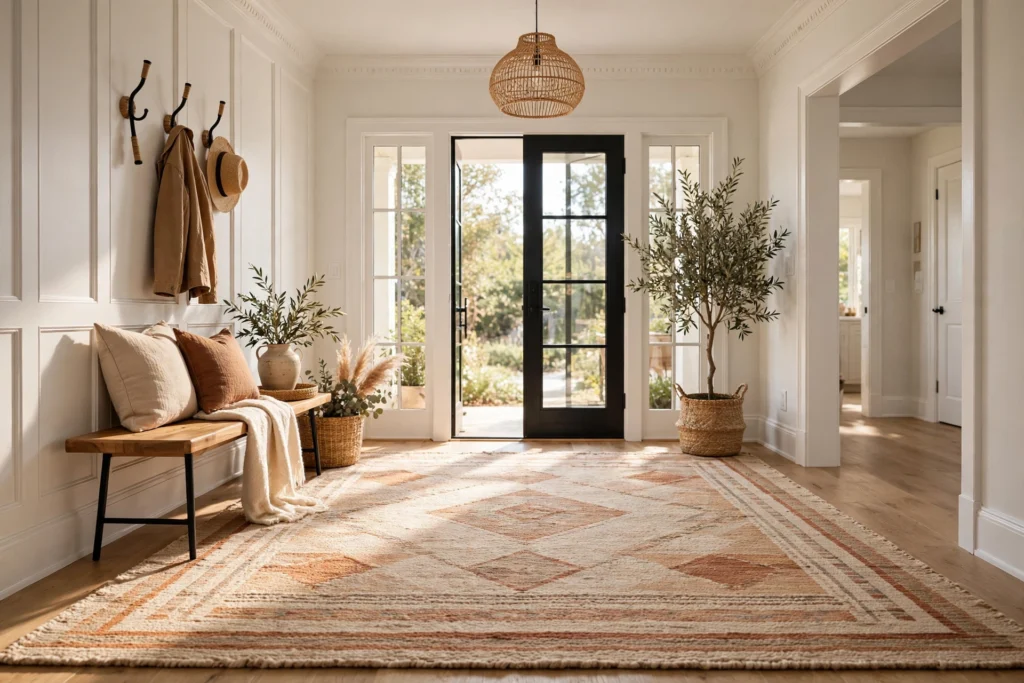
The most common entryway rug mistake is buying too small. A postage-stamp mat floating in front of the door looks lost and does almost nothing for the room. As a rule, the rug should span most of the entryway’s width and extend far enough inside that two people can stand on it comfortably — in a typical foyer, that means at least 4 by 6 feet, and bigger is usually better. In a grand entry, a rug that reaches toward the console table or bench anchors the whole zone. Measure the space, tape out the dimensions on the floor, and live with the outline for a day before ordering. A generously sized rug makes the entrance feel intentional; a tiny one makes it feel like an afterthought.
2. Layer a Rug Over a Larger Rug
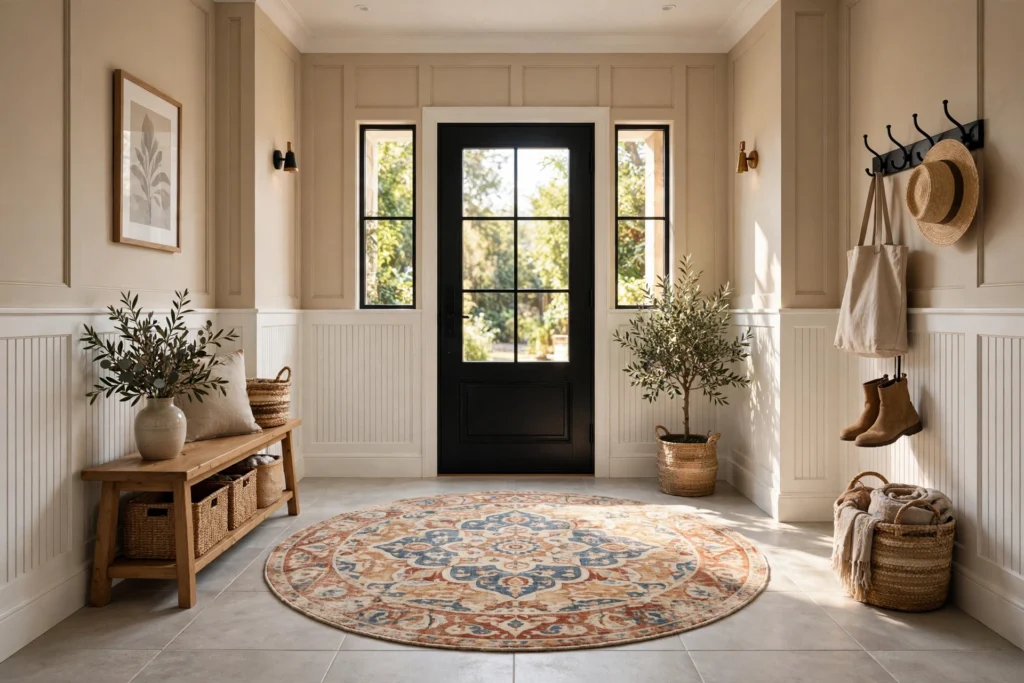
Layering — a smaller patterned rug over a larger natural-fiber base like jute or sisal — is the stylist’s trick for entryways that need both texture and personality. The base rug provides the generous footprint and the durability, while the top rug delivers the pattern and color. This combination also solves the too-small-rug problem elegantly: even a modest vintage rug looks deliberate when it floats on a larger neutral foundation. Keep the top rug’s pile low so the layering does not become a tripping hazard, and use a rug pad between layers to stop slipping. The layered look reads collected and relaxed, like the entrance evolved over time rather than arriving in one delivery.
3. Try a Round Rug to Soften the Entry
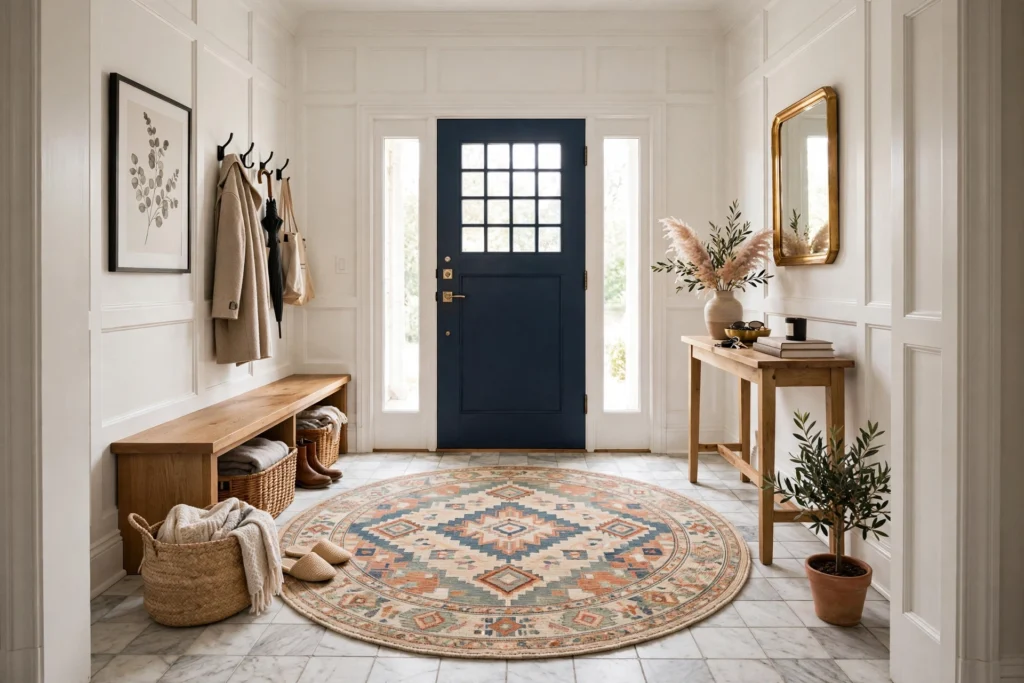
Entryways are full of hard rectangles — doors, consoles, benches — and a round rug breaks the geometry beautifully. A round rug suits square foyers and centered entry layouts, softening the space and creating a natural gathering point under a pendant light or around a small table. Choose a diameter that leaves a comfortable border of floor visible — typically 5 to 6 feet for a standard foyer. Round rugs also guide traffic flow naturally, since there are no corners to catch feet or vacuum around. In a patterned round rug, the medallion design draws the eye to the center of the room, which is exactly where you want first impressions to land.
4. Run a Runner in a Long Entry

Narrow, corridor-like entries call for a runner — the long, slim rug that leads guests from the door into the home like a red carpet. A runner should span most of the hallway’s length while leaving a few inches of floor visible on each side, and it must lie perfectly flat: any curling edge in a high-traffic path is a trip waiting to happen. Patterned runners — vintage Persian styles, bold geometrics, classic stripes — add enormous personality to plain passages. For more long-and-narrow inspiration, our hallway runner rug ideas for narrow spaces extend the same thinking deeper into the home. In an entry runner, low pile and a non-slip pad are non-negotiable.
5. Choose Washable Rugs for Real Life
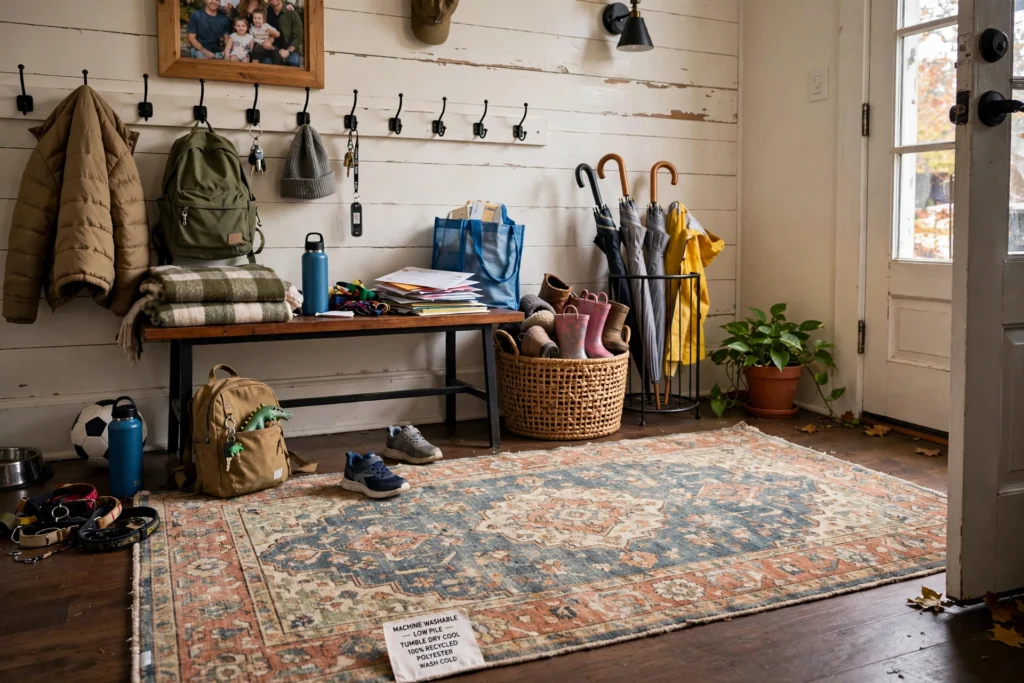
If your entryway sees muddy boots, wet umbrellas, and pet paws, a machine-washable rug is not a compromise — it is liberation. Modern washable rugs have come a long way from flimsy mats: many now offer convincing vintage patterns, real texture, and proper rug pads, and they go straight into the washing machine when life happens. This is the rug to choose for households with kids, dogs, or a front door that opens directly onto weather. Keep a spare cover or a second rug on hand so the entry is never bare on laundry day. The freedom to simply wash away a muddy season is worth more than any hand-knotted prestige in a hardworking entrance.
6. Go Natural With Jute or Sisal
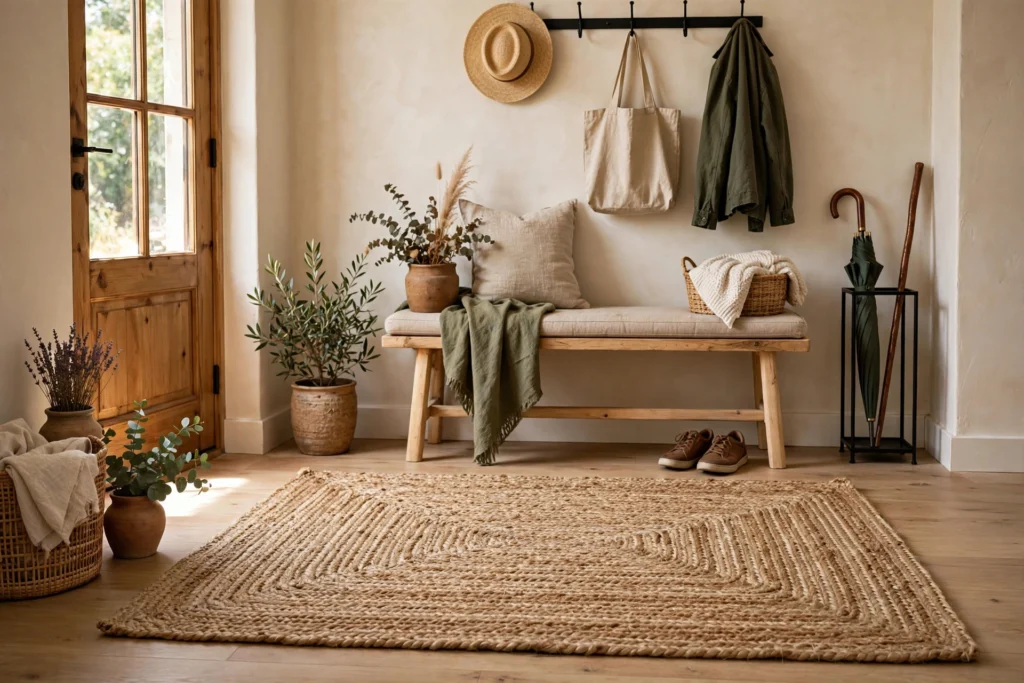
Jute and sisal rugs bring an earthy, textural warmth that instantly relaxes an entryway. Their nubby, organic weave suits coastal, bohemian, farmhouse, and Scandinavian styles, and the neutral tone lets bolder elements — a colorful bench cushion, a statement mirror — take the spotlight. Natural-fiber rugs are durable underfoot and hide dirt remarkably well between cleanings. The caveats: they stain if soaked, so they suit covered entries better than doors that open straight into rain, and the coarse texture is not barefoot-luxurious. Layer a softer rug on top in the main standing zone if comfort matters, and enjoy the casual, grounded feeling the natural fiber brings.
7. Make a Statement With a Vintage Rug
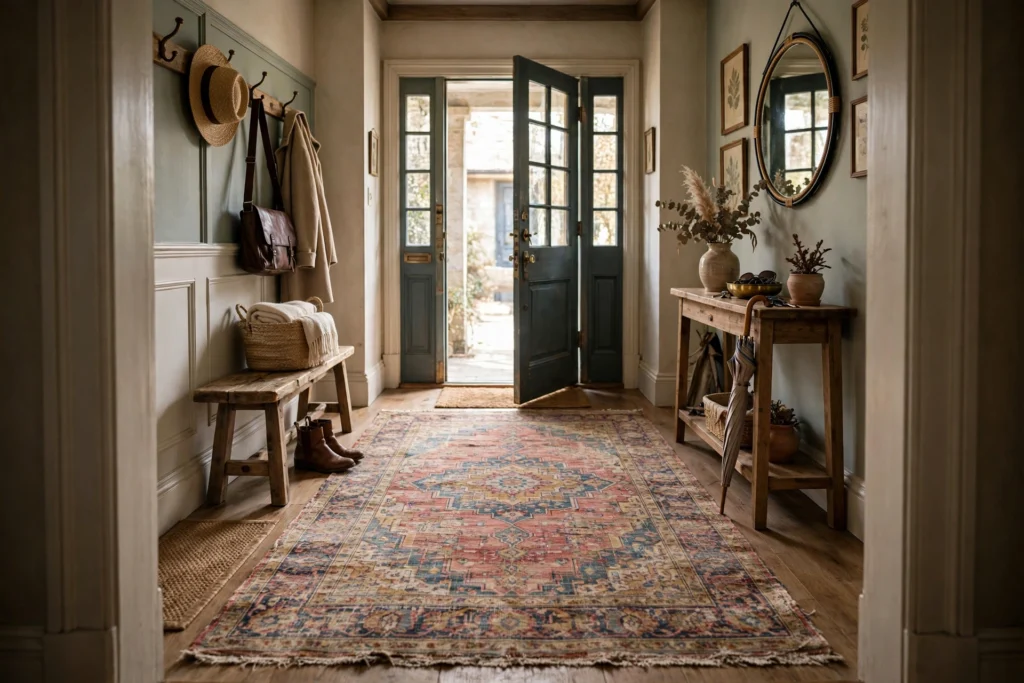
A genuine or good-quality vintage-style rug in the entryway tells guests your home has history and taste before they take three steps inside. Faded Persian and Turkish patterns — in reds, blues, or muted earth tones — add instant character and their busy patterns are masters at hiding the dirt and wear that entryways collect. Real vintage wool rugs are remarkably durable; they survived decades already and will survive your front door. If authentic vintage feels precious for a high-traffic spot, the new generation of vintage-look rugs captures the aesthetic at a fraction of the price. Either way, the entryway gains a focal point with soul.
8. Layer a Doormat Over the Rug
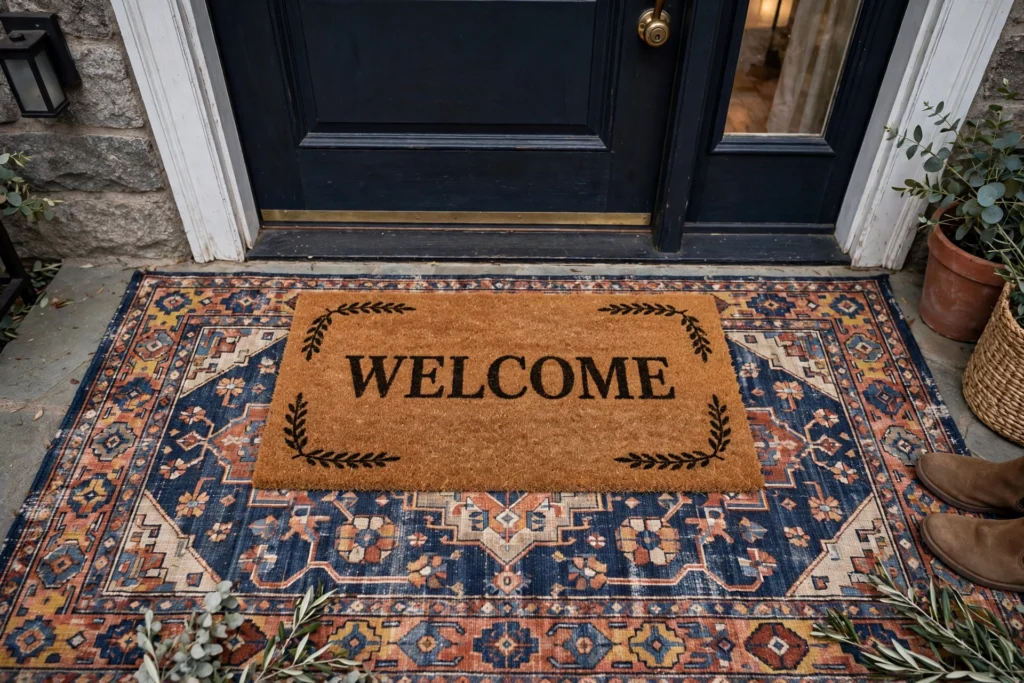
The layered doormat look — a coir or patterned doormat placed on top of a larger entryway rug — has become a signature styling move, and it is as practical as it is pretty. The doormat does the dirty work of scraping shoes while the rug beneath provides the style and the softness, and the combination frames the doorway like a proper vignette. Choose a doormat with a fun message, a classic monogram, or a simple border, and keep the rug beneath it neutral enough to let the mat shine. This layering also extends the rug’s life by taking the worst of the foot traffic on the replaceable top layer. It is a small detail with outsized welcome power.
9. Pick Dark Patterns to Hide Dirt
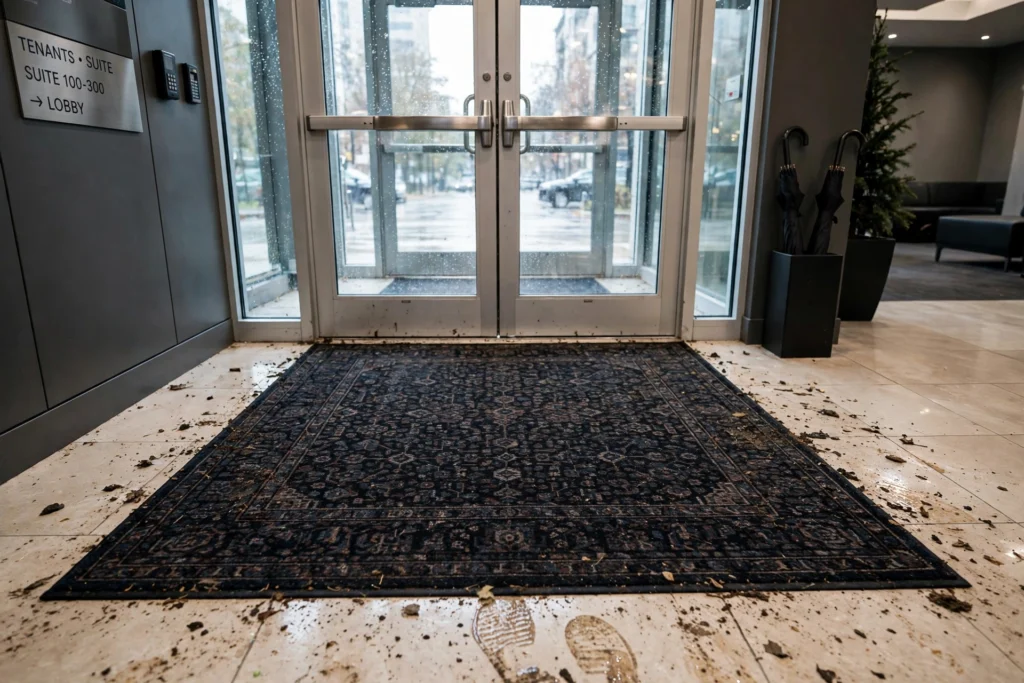
An entryway rug in a pale solid color is a maintenance vow most households cannot keep. Dark, busy patterns — deep navy Persians, charcoal geometrics, richly colored kilims — forgive everything: muddy footprints, pet hair, the gray film of daily traffic. This is not about choosing an ugly rug; some of the most beautiful rugs ever made are dark and intricately patterned. The pattern camouflages soil between cleanings so the entry always looks intentional rather than tired. If your heart is set on light and airy, reserve the pale rug for a low-traffic formal entry and choose the forgiving pattern for the door everyone actually uses.
10. Try a Bold Geometric for Modern Entries
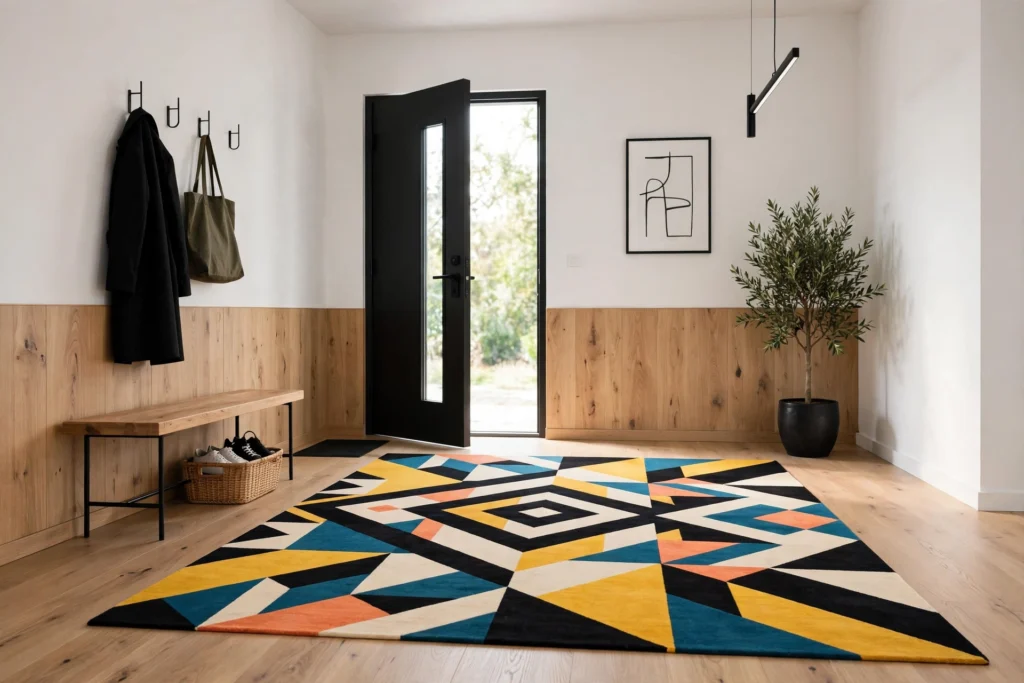
Modern entryways love a strong geometric rug — bold diamonds, graphic stripes, oversized trellis patterns in high-contrast colors. A graphic rug gives a minimalist foyer instant energy and a clear style statement, acting almost like art for the floor. Keep the surrounding decor quiet so the rug can carry the room: a simple bench, one mirror, maybe a single plant. Scale matters with geometrics — the pattern should be large enough to read from the doorway, since small busy prints can feel jittery underfoot. A bold geometric rug also photographs beautifully, which matters more than ever when the entryway is the backdrop for every coming-and-going snapshot.
11. Use an Indoor-Outdoor Rug for Messy Doors
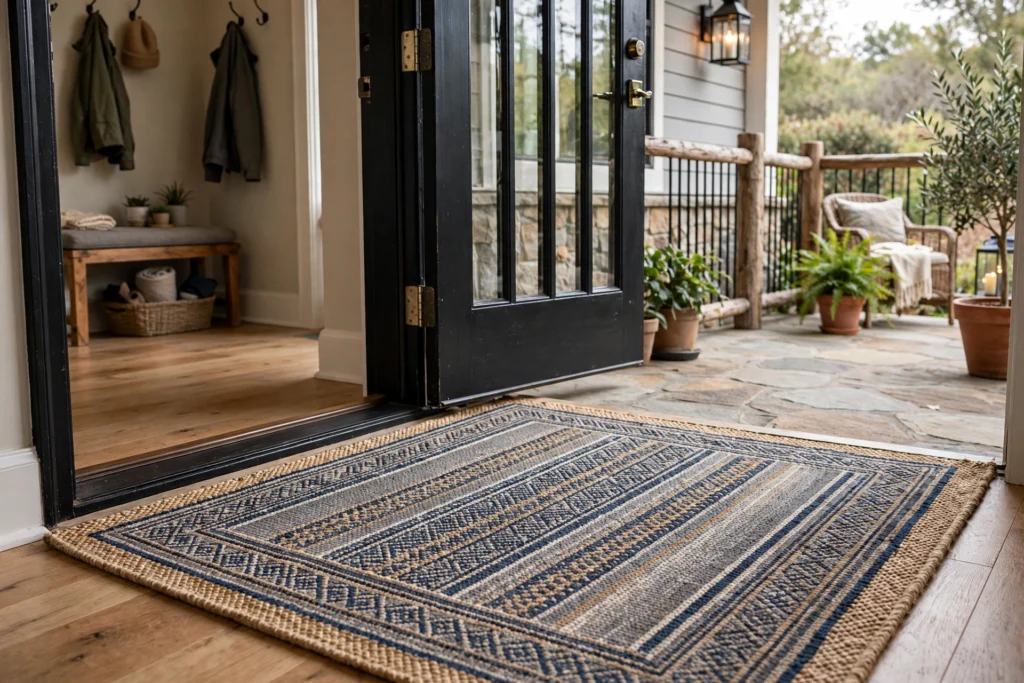
Doors that open directly onto porches, patios, or rainy climates need a rug that shrugs off water: the indoor-outdoor rug. Woven from polypropylene and similar synthetics, these rugs resist moisture, mildew, and fading, hose off for cleaning, and now come in genuinely attractive patterns — stripes, trellises, even vintage looks. They are the practical answer for farmhouse mudroom-entries, beach houses, and any front door without a covered porch. The texture is flatter and less plush than indoor rugs, so layer a coir mat on top for scraping power. For the messiest entrances in the house, nothing beats a rug you can literally hose down.
12. Anchor With a Rug Pad
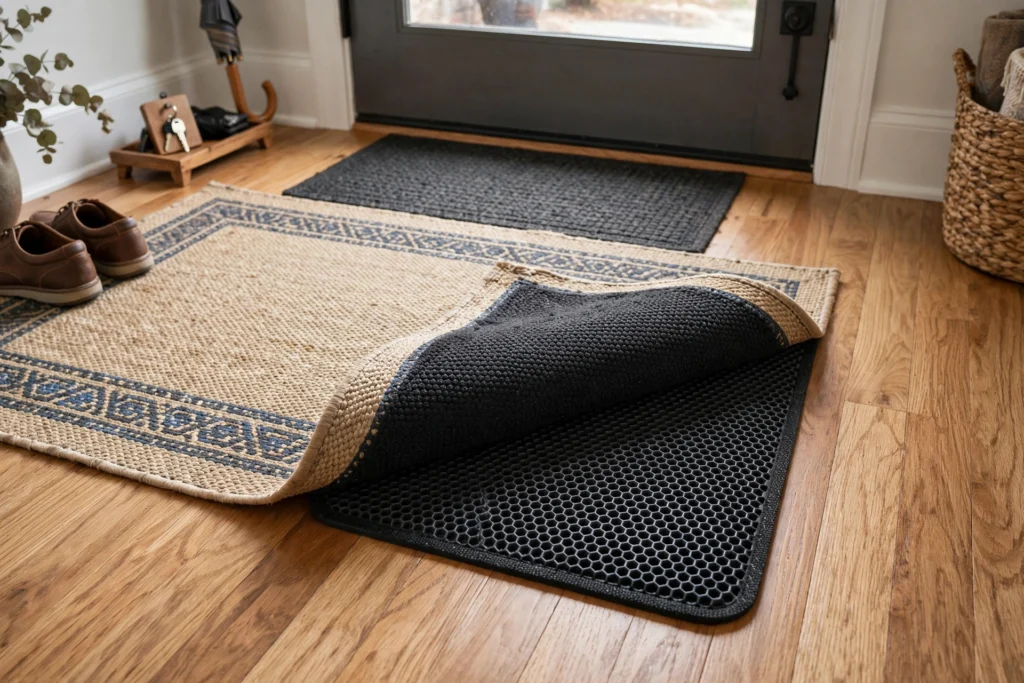
Every entryway rug needs a proper rug pad, full stop. The pad keeps the rug from sliding on hard floors — a genuine safety issue at the front door — protects the floor finish from the rug’s backing, and adds a layer of cushioning that makes even a flat rug feel substantial. Choose a pad slightly smaller than the rug so no edge peeks out, and pick a felt-and-rubber combination for the best grip plus comfort. On stairs-adjacent entries or very smooth tile, consider a pad with extra grip or rug tape at the corners. A rug that stays put looks better, lasts longer, and never sends a guest sliding — the pad is the cheapest insurance in the whole entryway.
13. Coordinate With the Front Door Color
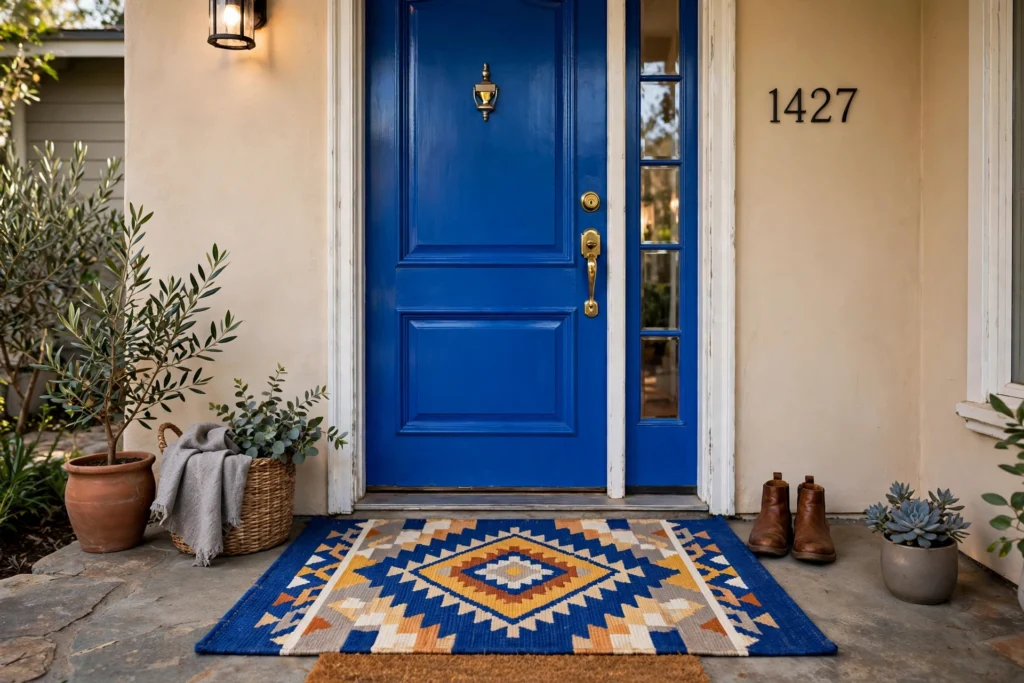
The front door and the entryway rug are the two biggest color statements in the entrance, so they should be in conversation. A classic black door pairs beautifully with a black-and-cream patterned rug; a bold red or navy door wants a rug that picks up the hue in its pattern without matching it exactly. If the door is a natural wood tone, warm-toned rugs in rust, camel, or terracotta patterns harmonize effortlessly. This coordination extends to the interior side too — the rug visible when the door opens should relate to the door’s interior finish. Sizing guides from specialists like Revival Rugs’ sizing guides are handy for getting the proportions right once the color story is set. Think of door and rug as a composed pair, not two independent decisions.
14. Keep the Pile Low for Swinging Doors
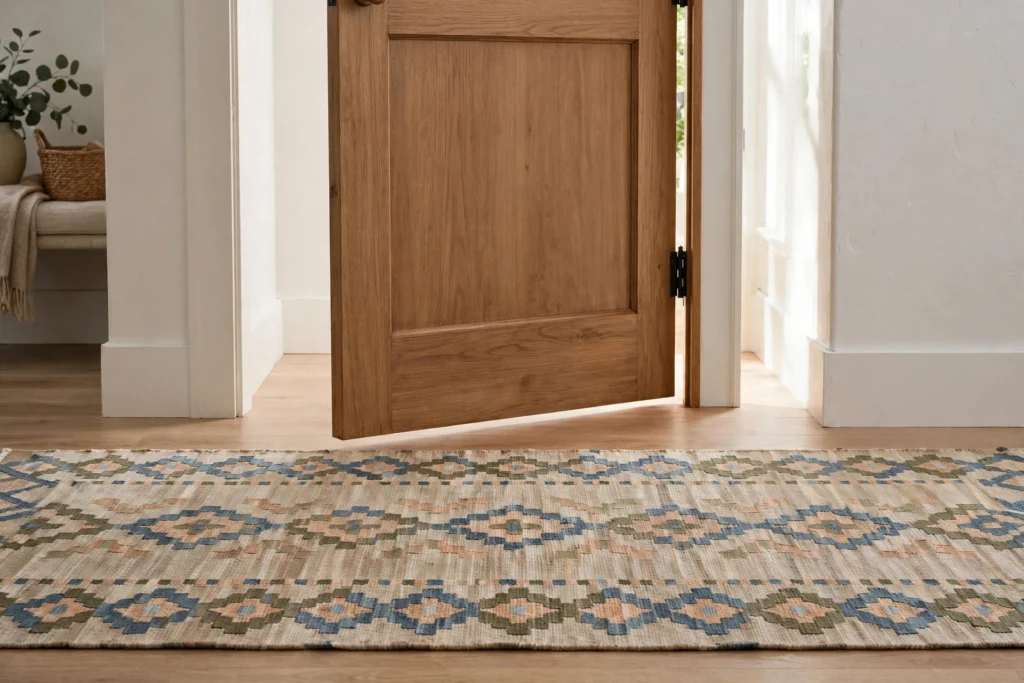
Interior doors often swing over the entryway rug, and a thick pile plus a low door clearance equals a rug that bunches, drags, or stops the door entirely. Measure the gap under your door and choose a rug — plus pad — that clears it with room to spare; flatweave, dhurrie, and low-pile rugs are the safe choices. If you love a plush rug, verify the clearance first or plan to trim the door, which is a bigger project than it sounds. Low pile has practical bonuses beyond the door: it is easier to vacuum, shows less traffic wear, and lets the rug’s pattern read crisply. In the entryway, low and flat beats thick and luxurious every time.
15. Refresh Seasonally With a Rug Swap
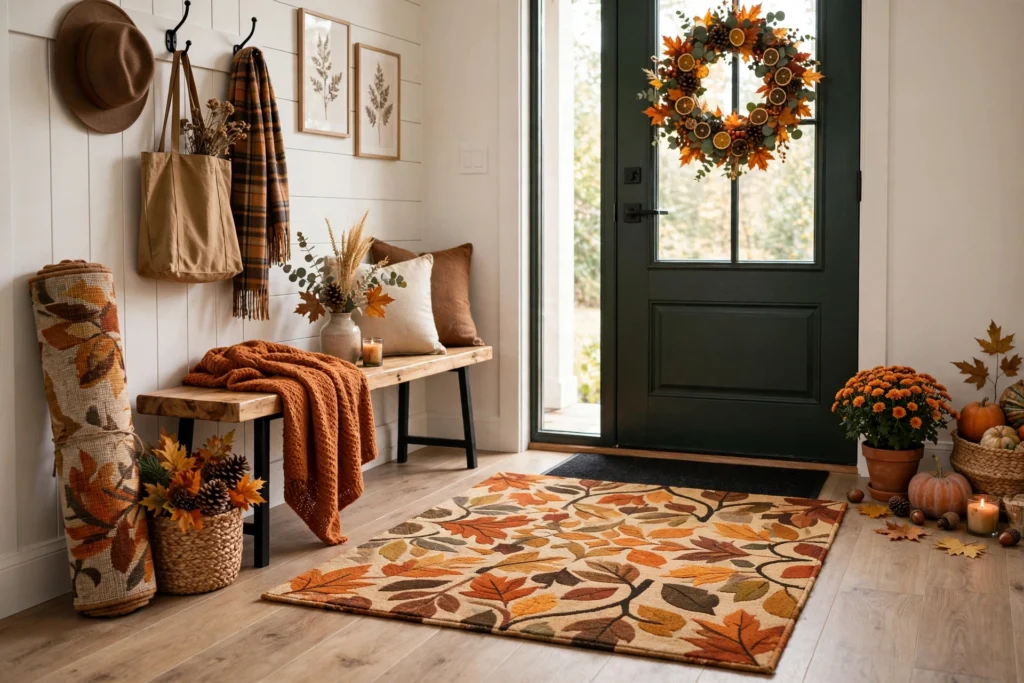
The entryway rug is the easiest seasonal refresh in the house — one swap changes the whole first impression. A light, bright rug for spring and summer; a rich, textured one for fall and winter holidays. Store the off-season rug rolled (never folded) in a dry spot, and the swap takes ten minutes. This is also a smart strategy for rug longevity: rotating two rugs halves the wear on each. Keep a consistent size and pad so swaps are effortless, and let the seasonal rug echo the season’s decor — warm tones and deeper patterns for autumn, fresh naturals for spring. Guests notice a fresh entryway rug the way they notice a new haircut: immediately, and favorably.
FAQ
What size rug is best for an entryway?
Bigger than you think. For a standard foyer, a 4-by-6-foot rug is the practical minimum, with 5-by-7 or larger suiting generous entries. The rug should accommodate two people standing comfortably and span most of the entry’s width. In long narrow entries, use a runner that covers most of the length with a few inches of floor showing on each side. When in doubt, tape out the dimensions and live with them for a day.
What is the best rug material for a high-traffic entryway?
Low-pile wool, durable synthetics, and machine-washable rugs top the list. Wool is naturally stain-resistant and resilient; quality synthetics and washable rugs handle mud, pets, and kids with easy cleaning. Natural fibers like jute and sisal work for covered entries but stain when soaked. Whatever the fiber, pair it with a quality rug pad for grip and longevity.
Should an entryway rug go under the front door?
The rug should sit just inside the door, positioned so the door can swing freely over it — which means low pile and a proper pad. A separate coarse doormat outside (or layered on top of the rug) handles the shoe-scraping. Never place a thick rug where it blocks the door’s swing; measure the under-door clearance before buying.
How do you keep an entryway rug from sliding?
A quality felt-and-rubber rug pad cut slightly smaller than the rug is the primary fix — it grips both floor and rug. For extra security on slick tile or stone, add rug tape or carpet corners. Wall-to-wall fitted runners can be secured with double-sided carpet tape along the edges. If a rug still migrates, the pad is likely too thin or the wrong type for the flooring.
Can you use a round rug in an entryway?
Absolutely — round rugs suit square foyers beautifully, softening the room’s geometry and creating a natural focal point under a pendant or table. Choose a 5-to-6-foot diameter for a standard foyer, leaving a border of visible floor. Round rugs also improve traffic flow since there are no corners to catch feet. They pair especially well with centered layouts and curved furniture like round mirrors or ottomans.
Keep Exploring
The entryway rug does more per square foot than almost any decor in the house — it welcomes, it protects, it sets the tone. Size it generously, choose the material for your real life, and do not skip the pad. Then let the rest of the entrance rise to meet it: our small entryway ideas for a welcoming first impression show how the right rug, bench, and mirror turn even the tiniest foyer into a proper welcome. First impressions are made at the door — make yours a warm one.