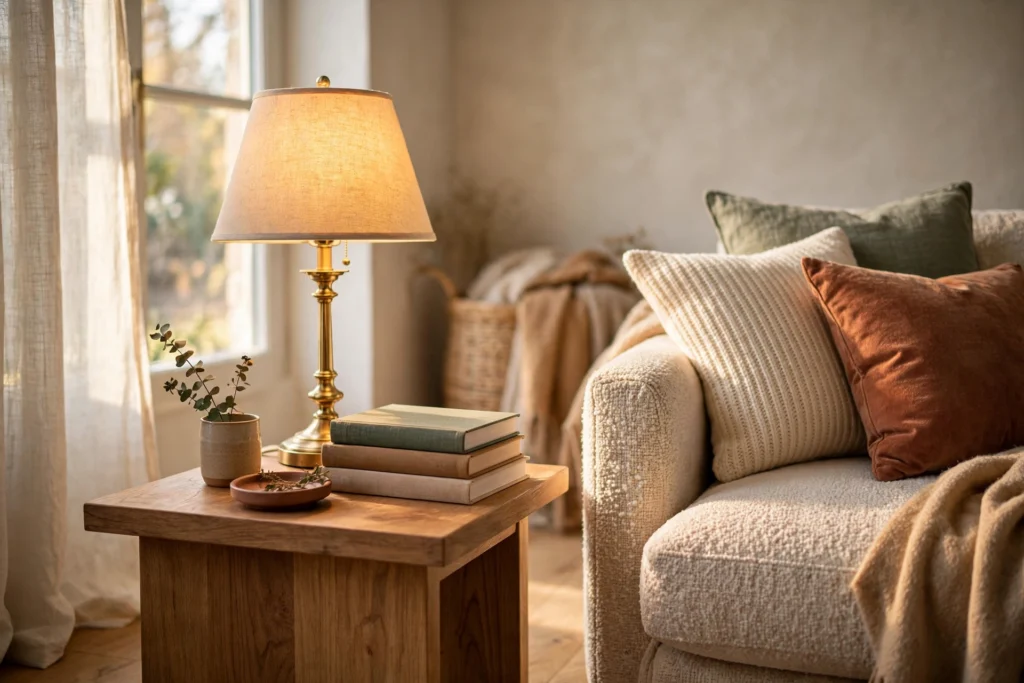

Side tables are the quiet workhorses of the living room. They hold your coffee within reach, anchor your lamp, and give you a landing zone for the book you’re reading and the remote that’s always missing. Yet because they’re small, they’re easy to treat as an afterthought — which is a shame, because the right side table can sharpen the whole room’s style while working twice as hard as it looks.
These living room side table ideas cover every angle: choosing the right height and size for your sofa, picking materials from rattan to marble, styling the perfect vignette, and squeezing real storage out of a footprint barely bigger than a dinner plate. Whether your living room is a sprawling open plan or a cozy corner, you’ll find a side table idea here that earns its place.
1. Master the Height Rule Before You Shop
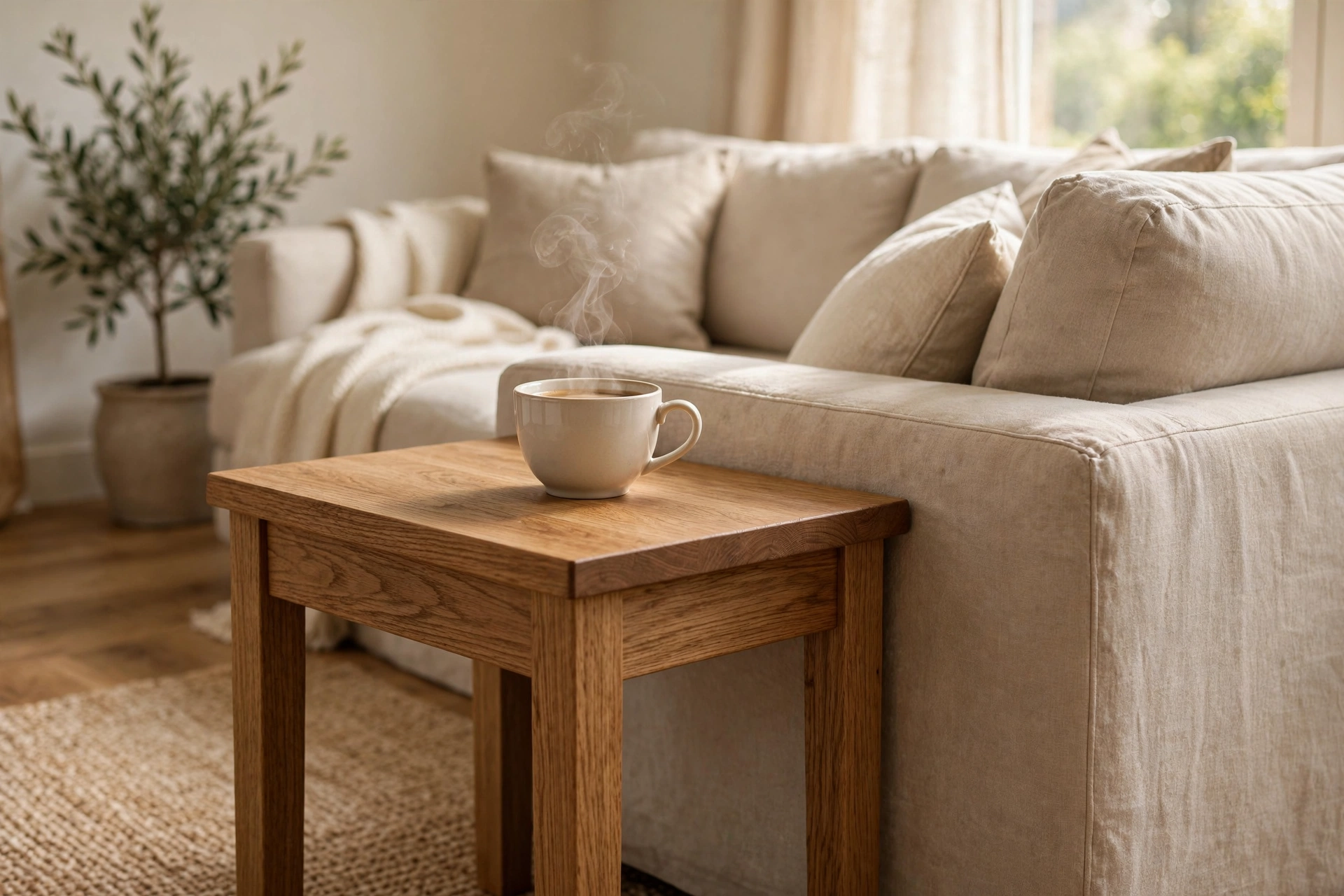
The single most important living room side table idea is also the least glamorous: get the height right. A side table should sit level with or slightly below your sofa arm — roughly 2 to 3 inches lower than the armrest is the sweet spot for most seating. Too tall, and you’ll be lifting your cup over an obstacle; too short, and the table visually disappears beside a high-armed sofa. For armless chairs, aim for a tabletop no more than about 8 inches above the seat. While these guides pin down the center of the room, the edges of your seating deserve the same precision: take the measurement before you browse.: measure your sofa arm height and your chair arm heights, write them in your phone, and shop with those numbers as a filter. Apartments and rentals often mix inherited pieces, so if one table must serve two different arm heights, split the difference and favor the seat you use most. Apartment Therapy’s room-measurement guide explains the ideal distances between side tables, chairs, and sofas in more detail if you want to nail your whole layout at once.
2. Go Mid-Century Modern for Timeless Lines
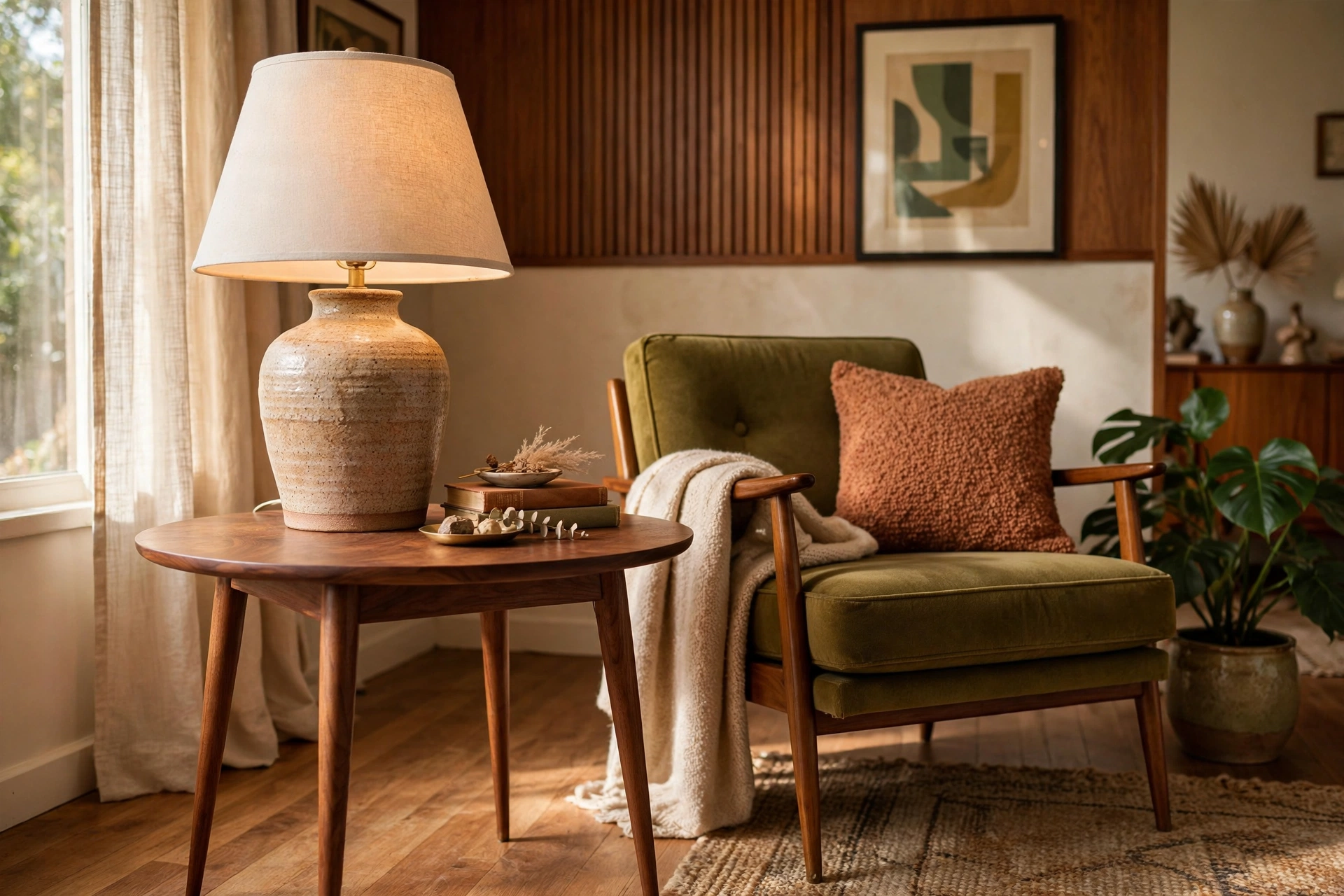
The mid-century modern side table is the rare style that suits almost every living room: tapered dowel legs, a compact round or square top, and warm walnut or teak tones that play nicely with both neutrals and bold color. Because the silhouette is light and leggy, a mid-century piece keeps a small seating area feeling open rather than crowded — you can see the floor beneath it, which tricks the eye into reading the space as larger.
Style one with a ceramic table lamp and a small stack of art books to honor the era’s design-book spirit. If your room leans farmhouse or traditional, don’t be afraid to mix — a mid-century table beside a rolled-arm sofa creates that collected-over-time look designers love. Look for solid wood rather than veneer over particle board if the table will hold drinks daily; oil-finished tops can be refreshed in an afternoon, while cheap veneer chips the first time a mug slides across it. Vintage stores and thrift shops are full of these, often for less than a flat-pack equivalent, and the patina only adds character.
3. Warm Things Up With Rattan and Woven Tables
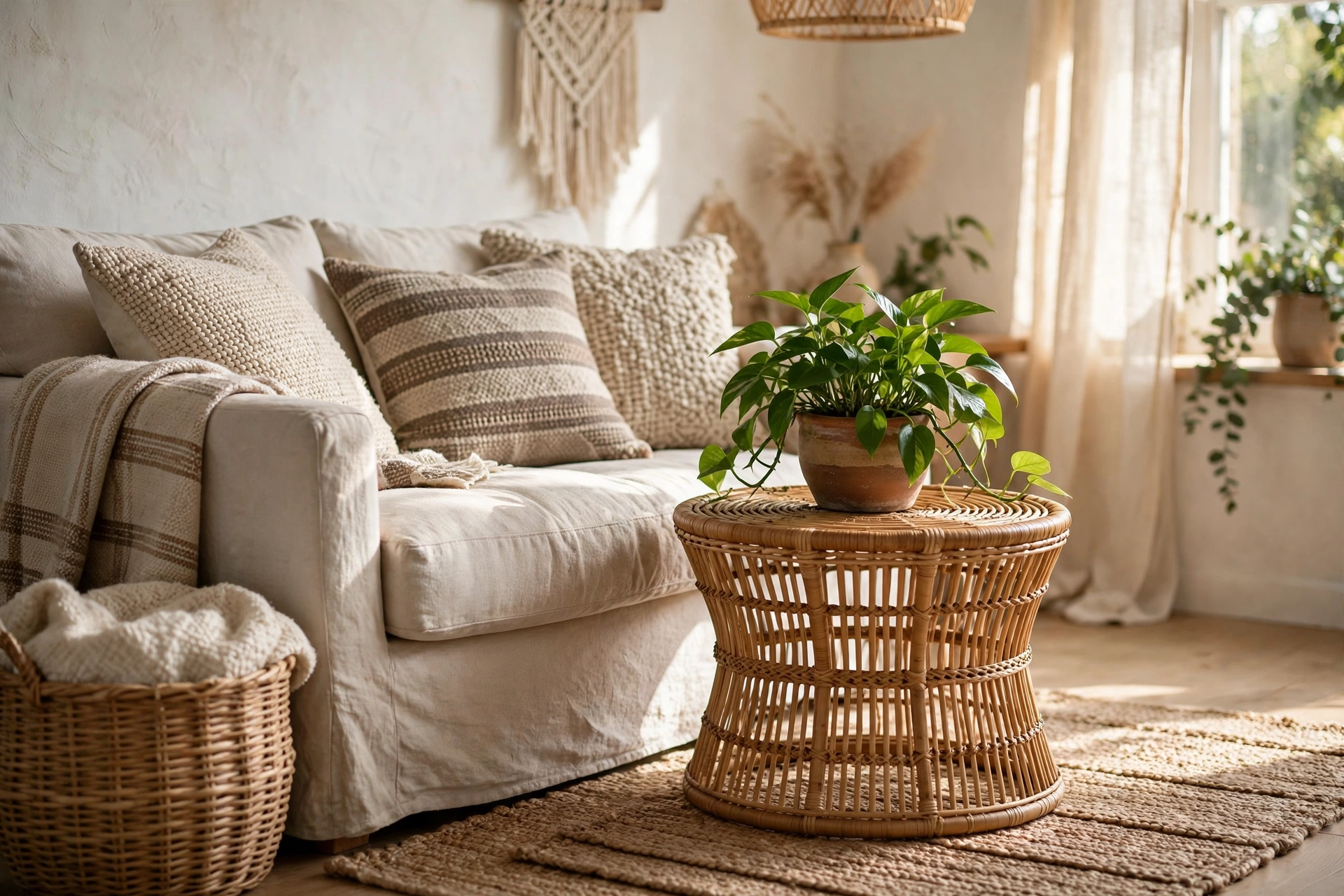
Rattan and woven side tables bring texture and an easy, breezy warmth that hard-edged materials can’t match. A woven drum or a rattan frame with a glass top softens a room full of straight lines — perfect if your sofa, rug, and curtains all read as modern and you want one piece that relaxes the whole composition. They pair beautifully with coastal, boho, and modern-organic styles, and the open weave means they never look heavy even in a compact corner.
Practically speaking, woven tables are light, so they’re easy to move when you rearrange or pull up an extra seat for guests. Just be aware that woven surfaces aren’t ideal for wet glasses — use a small tray, coasters, or a lidded jar for remotes to protect the fibers. Pair a rattan side table with a chunky knit throw on the sofa and a jute rug underneath, and the corner instantly feels layered and intentional rather than like a placeholder piece. If you have kids or pets, a wipeable rattan or a faux-rattan resin weave holds up better than natural cane.
4. Add Instant Luxury With Marble
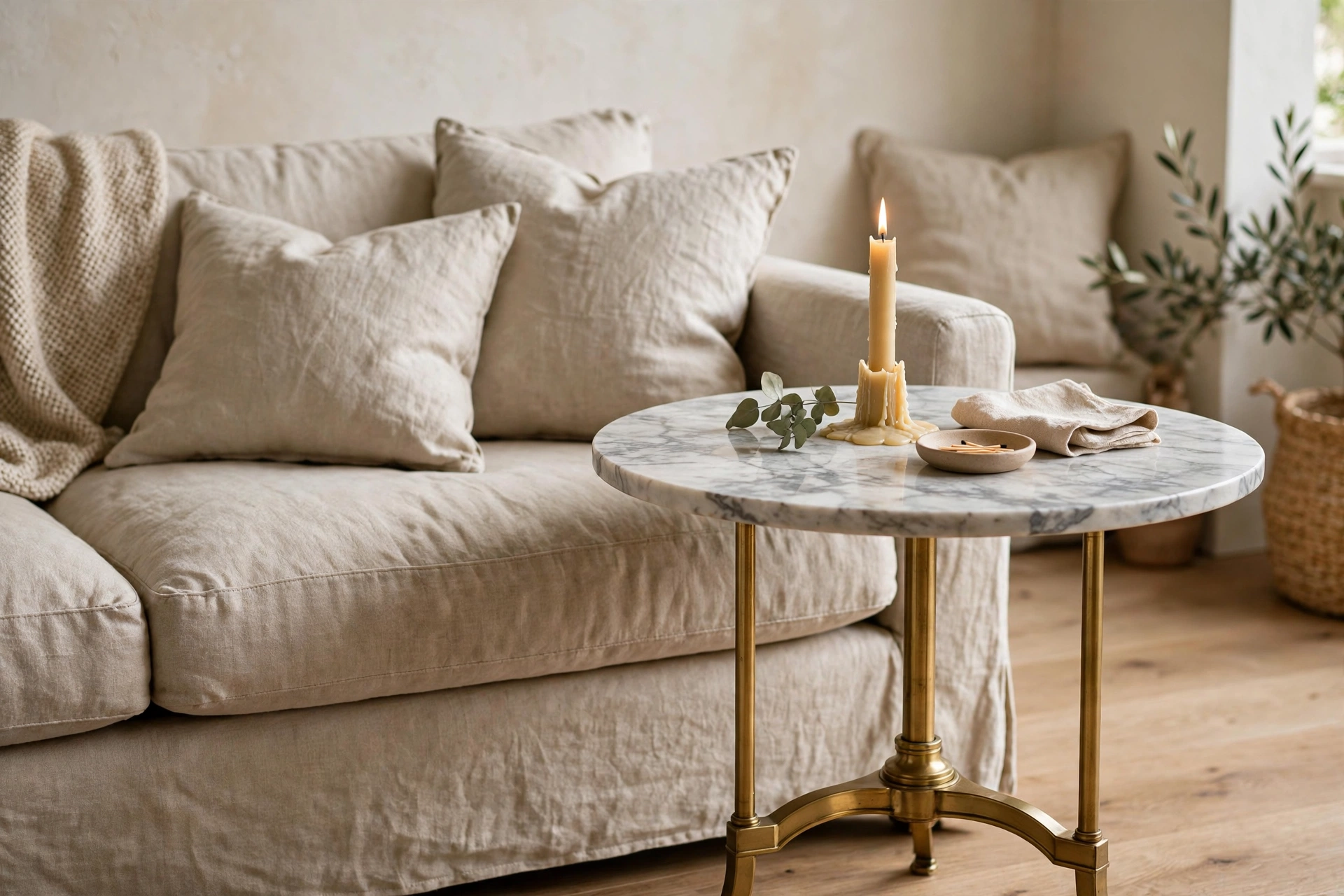
Few materials elevate a living room side table idea faster than marble. A round white-marble top on a slim brass or black-metal base reads as quiet luxury beside a linen sofa, and because marble is naturally cool to the touch, it photographs beautifully and feels special every time you set down your coffee. You don’t need a full slab either — a marble-look porcelain or engineered-stone top delivers most of the look with far less fuss.
Be honest about your habits before you commit to real marble: it’s porous, so red wine, coffee, and citrus can etch or stain if left sitting. Seal the stone twice a year and use coasters or a tray as a matter of routine. Marble works best as a feature piece rather than a hardworking daily surface — style it with one sculptural object and a candle rather than loading it with remotes and magazines. In a small room, the veined surface acts like art, which means you can skip other decor in that corner and let the stone carry the vignette. Pair it with brushed-gold accents nearby to echo the veins’ warmth.
5. Double Your Surface With Nesting Tables
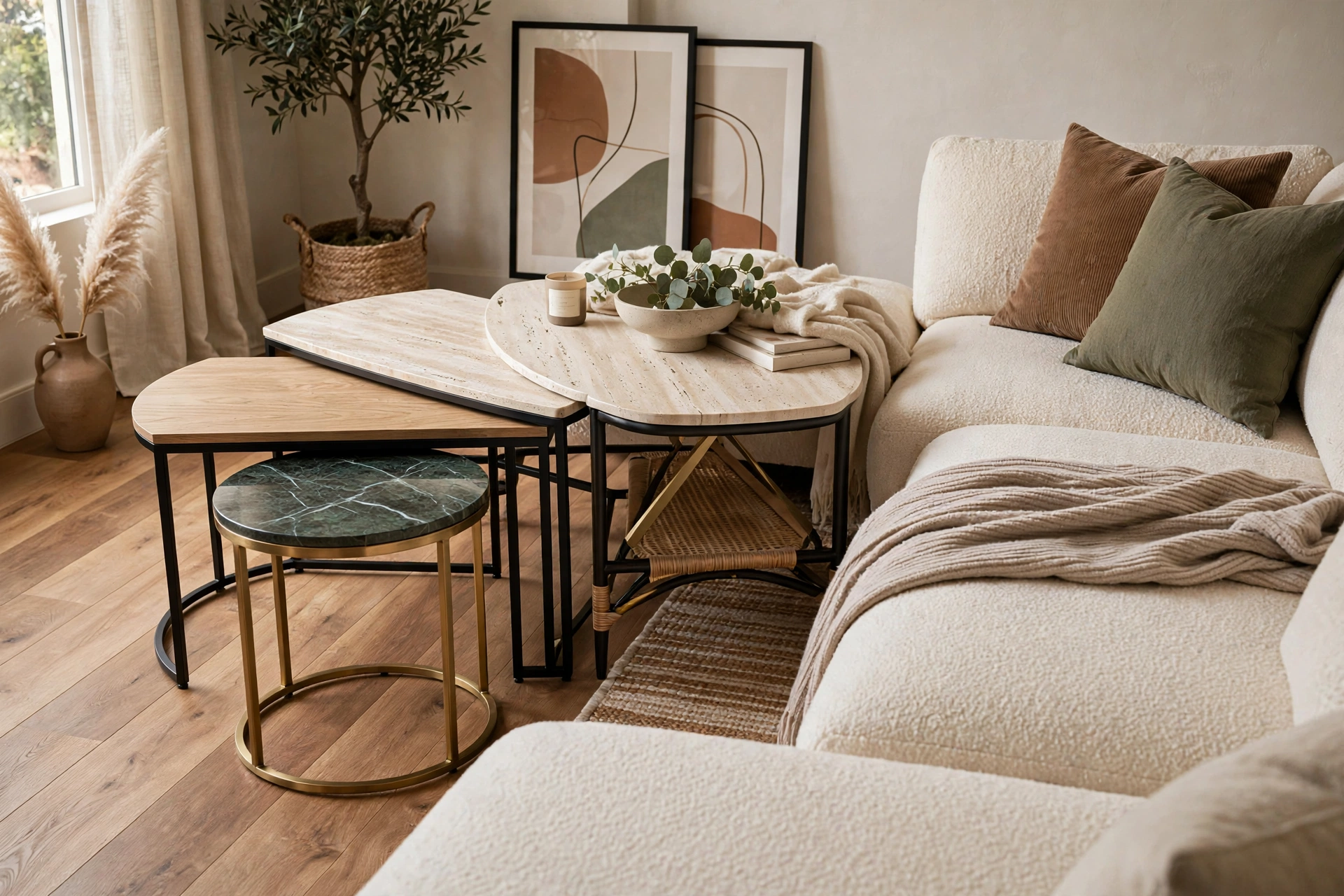
Nesting side tables are the ultimate flexible living room side table idea: two or three tables in descending sizes that tuck together when you don’t need them and fan out when guests arrive. In a small living room, the stacked set occupies a single table’s footprint but can be separated into a laptop perch, a drink station, and a plant stand in seconds. They’re also ideal for sectionals, where you need landing zones at both the chaise end and the corner seat.
When shopping, check that the smallest table is tall enough to be useful on its own — a uselessly short third table is just decoration. Mixed materials in a nesting set (say, a wood large table with a marble small one) look more curated than three identical pieces, so don’t fear a mismatch. Nesting tables also solve the asymmetry problem in rooms where only one side of the sofa has space: tuck the pair together as a single generous surface instead of forcing two matching tables where one won’t fit. Pull them apart for movie night, then slide them back together when the room needs to breathe.
6. Try a C-Table for Work-From-Sofa Days
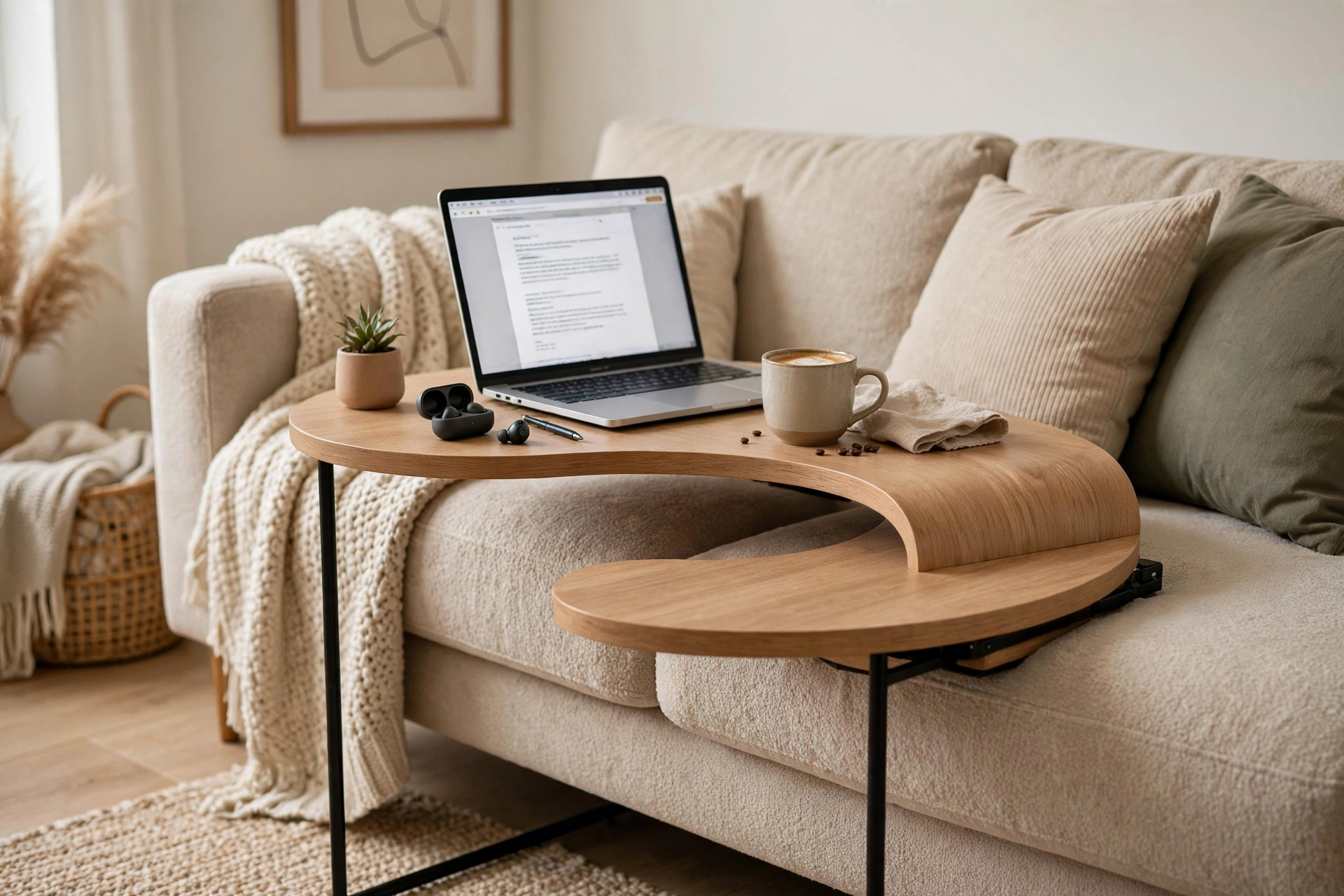
The C-shaped side table — with its cantilevered top that slides over your sofa seat or under an armchair — is built for real life: laptops, dinner on the couch, a crossword puzzle at arm’s length. Because the base tucks under the seating, the top lands exactly where you need it without the awkward lean of reaching past a traditional side table. If you regularly eat, work, or charge devices from the sofa, this is the most functional side table you can buy.
Choose one with an adjustable height if your household mixes a low modern sofa with a deeper lounge chair; a fixed-height C-table that works for one may float too high for the other. Look for a sturdy, weighted base that won’t tip when you lean on the edge — a wide, flat base slides neatly under low-profile sofas, while a four-legged base grips rugs better. Wood-topped C-tables look like furniture; metal ones look like tech accessories, so pick based on how visible the piece will be. Tuck it between the sofa and wall when not in use so it reads as a slim side table rather than a permanent workstation.
7. Make a Statement With Drum and Pedestal Tables
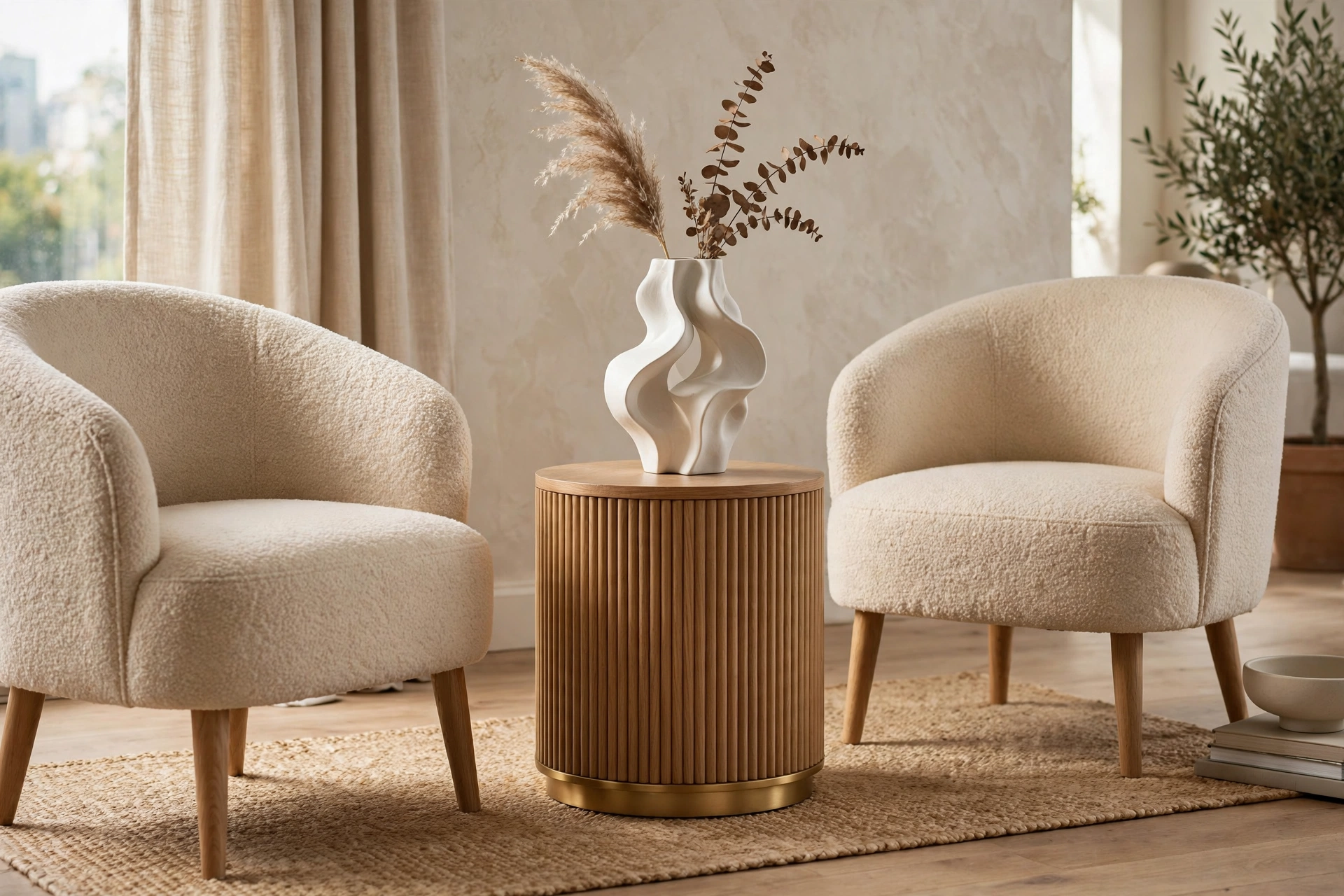
Drum and pedestal side tables bring sculpture to the living room. A fluted drum table in plaster, ceramic, or stained wood has a presence that a four-legged table simply can’t match — it reads as an object of design rather than just a surface. Place one between two accent chairs to create a formal little conversation spot, or let a single bold pedestal table hold its own in an empty corner that otherwise feels forgotten.
Because these shapes have more visual weight, balance them with airy styling: a single branch in a tall vase, a slim lamp, or nothing at all beyond a coffee cup. A carved-wood drum adds global character to a neutral room, while a glossy lacquered pedestal leans modern and graphic. Fluted and reeded textures are especially good at catching light, so position one where afternoon sun or a nearby lamp can rake across the surface. If you’re considering one of these beside an accent chair, our roundup of living room accent chair ideas will help you pair the chair’s scale and style to a table with this much personality.
8. Choose a Tray-Top Table for Flexibility
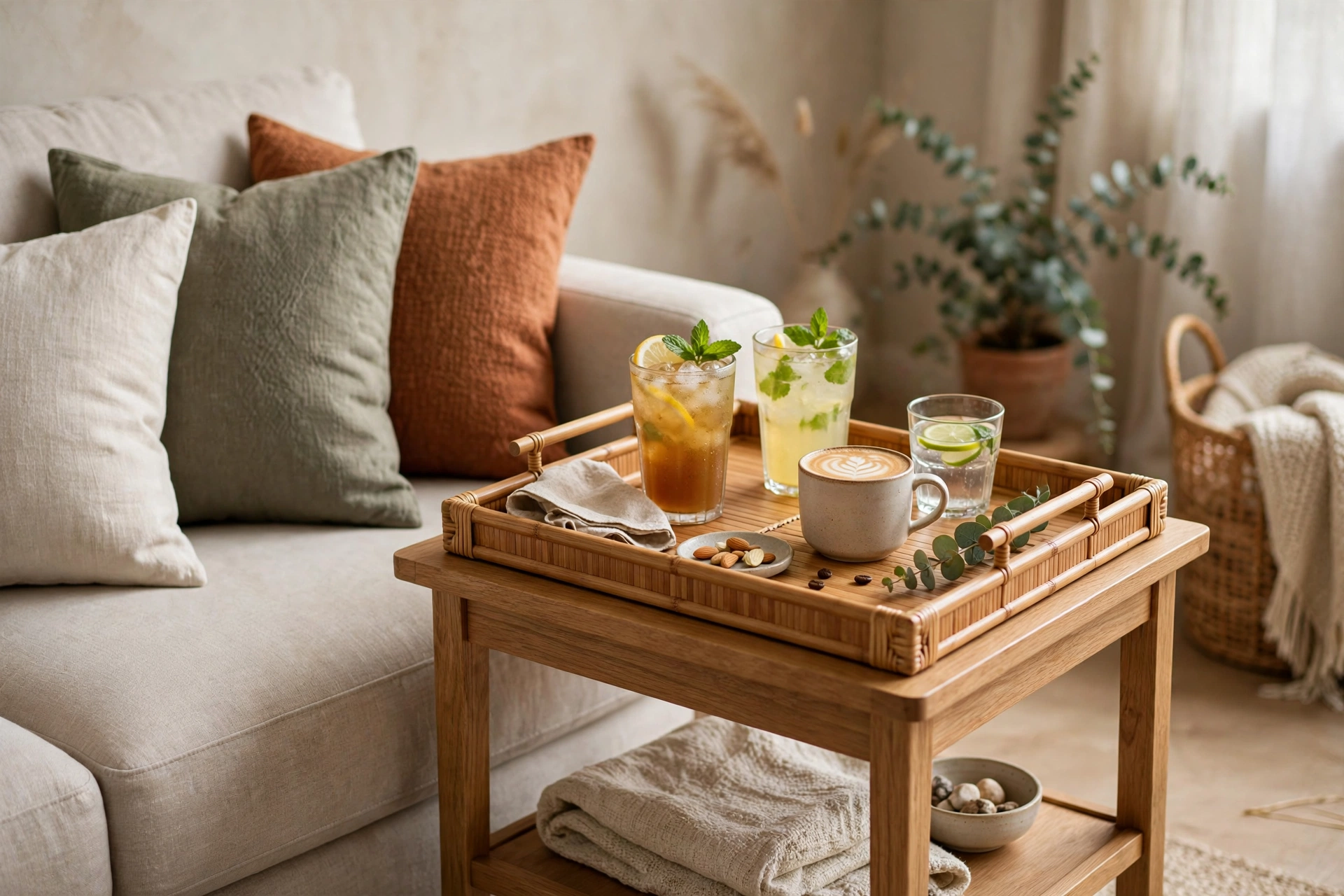
A tray-top side table has a removable tray that sits in the table’s frame — lift it off and it becomes a serving tray for drinks, snacks, or breakfast in bed; set it back and it’s a side table again. This two-in-one trick is gold for small living rooms and frequent entertainers, since you gain serving capacity without storing a separate tray. Bamboo, lacquered wood, and metal tray tables come in every style from Scandinavian to Hollywood regency.
Check that the tray has a raised lip — shallow, lipless trays let glasses slide when carried — and that the frame holds the tray securely so it doesn’t rattle. A tray-top table beside the sofa arm doubles as a cocktail station during parties: stock it with a small ice bucket and glasses, and the table becomes the bar. Between events, style the tray itself with a candle and a small bowl so it still looks finished. If you host often, buy two matching tray tables; they flank a sofa symmetrically for everyday use and separate into two serving stations when the guest list grows.
9. Pick a Side Table With Real Storage
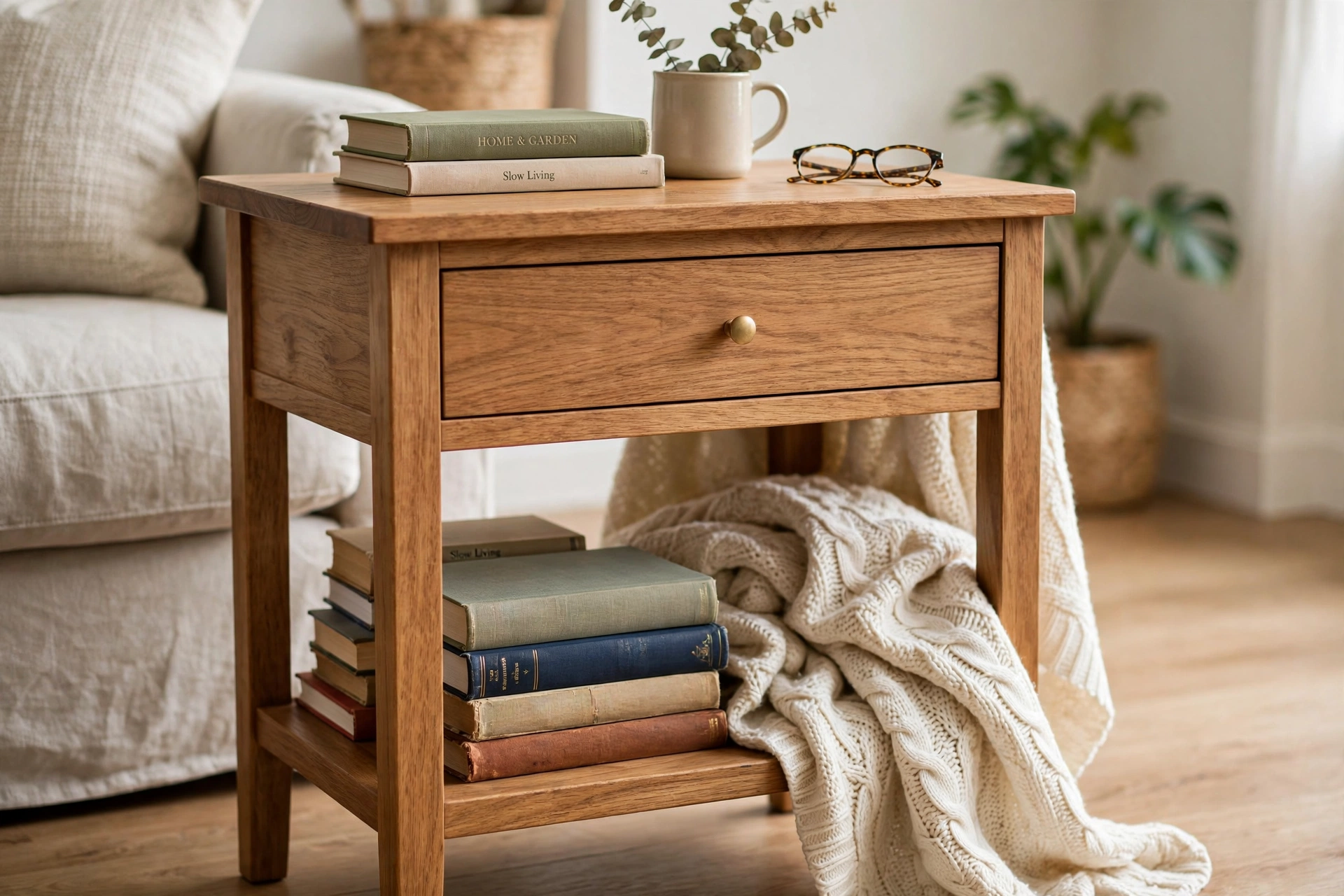
The hardest-working living room side table ideas are the ones that hide clutter. A side table with a drawer swallows remotes, reading glasses, chargers, and coasters — the small items that otherwise colonize your coffee table. A shelf or two beneath the top handles the overflow: stacked magazines, a throw blanket, a basket for the kids’ tablets. In a small living room, this hidden storage can genuinely reduce the need for a larger console or cabinet.
When evaluating storage tables, open the drawer in person or check reviews for glide quality — a sticky drawer you’ll never use is worse than no drawer at all. Soft-close glides and a felt-lined drawer elevate a budget piece more than any finish. Keep the footprint honest: a 20-inch square table with a drawer holds nearly as much as a small dresser without reading as furniture. Style the top minimally since the table is doing functional work — a lamp and one object, with everything else tucked inside. This is the side table to choose if your living room doubles as a playroom, office, or homework zone, because it corrals the evidence.
10. Use the Lamp + Books + Plant Styling Formula
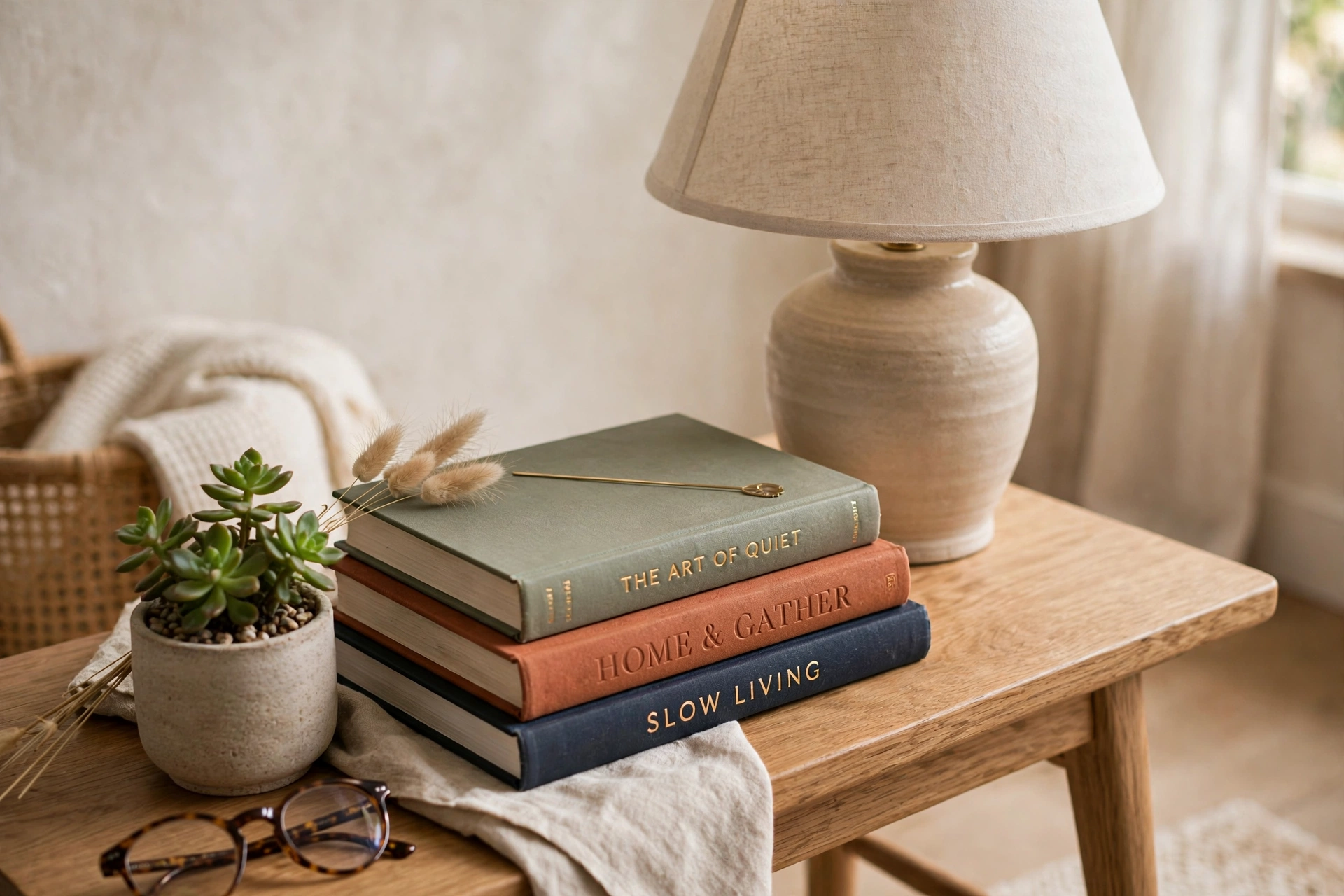
Styling a side table gets easy when you follow a simple formula: something tall (a lamp or a branchy plant), something flat and stacked (two or three books), and something living or organic (a small plant, a bowl of shells, a candle). The tall element gives height, the books ground the composition, and the organic piece softens it — three objects, three roles, zero clutter. Leave at least a third of the surface empty so there’s room for the mug or phone the table actually exists to hold.
Vary the heights deliberately: a 26-inch lamp beside a 4-inch book stack beside a trailing pothos creates a pleasing rhythm the eye can travel. Match the lamp shade to your room’s palette and keep the bulb warm (2700K) so the corner glows in the evening. If your table is small, shrink the formula instead of abandoning it: a mini lamp or a single bud vase, one slim book, and a tiny succulent still read as styled. Apartment Therapy’s roundup of stylish side table and lamp pairings is a great reference for matching lamp shapes to table styles, from mid-century tables to sculptural stone pieces.
11. Choose Smart Picks for Small Living Rooms
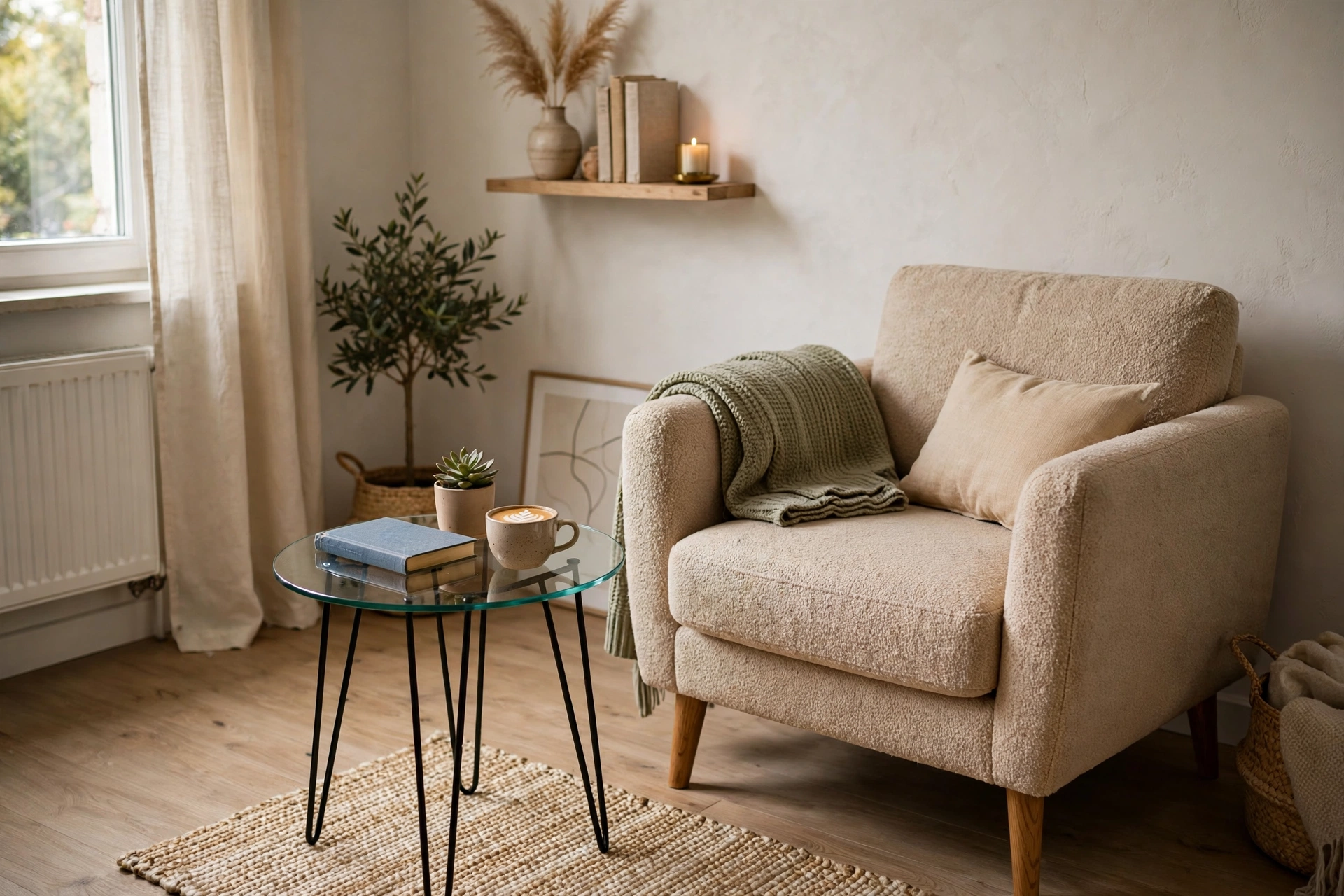
In a small living room, every side table must justify its footprint. Round tables beat square ones — no sharp corners to bruise shins in tight walkways, and the curved profile reads as lighter. Glass or acrylic tops keep sightlines open so the table visually disappears, and a slim pedestal base takes up less floor than four legs. If space is truly tight, consider a wall-mounted fold-down ledge beside the sofa instead of a freestanding table: it holds a drink and a book, then folds flat when guests need the room.
Scale is everything: in a compact room, a 14-to-16-inch diameter table is plenty, while an oversized drum will swallow the corner. Try a C-table that slides over the sofa arm — it occupies zero floor space beside the seat. And don’t default to two matching tables: one well-chosen side table plus a floor lamp on the other side of the sofa often fits better and looks more designed than a forced symmetrical pair. Measure your walkways too — you want at least 24 inches of clear passage around the table, or every trip to the kitchen becomes an obstacle course.
12. Know When to Budget and When to Splurge
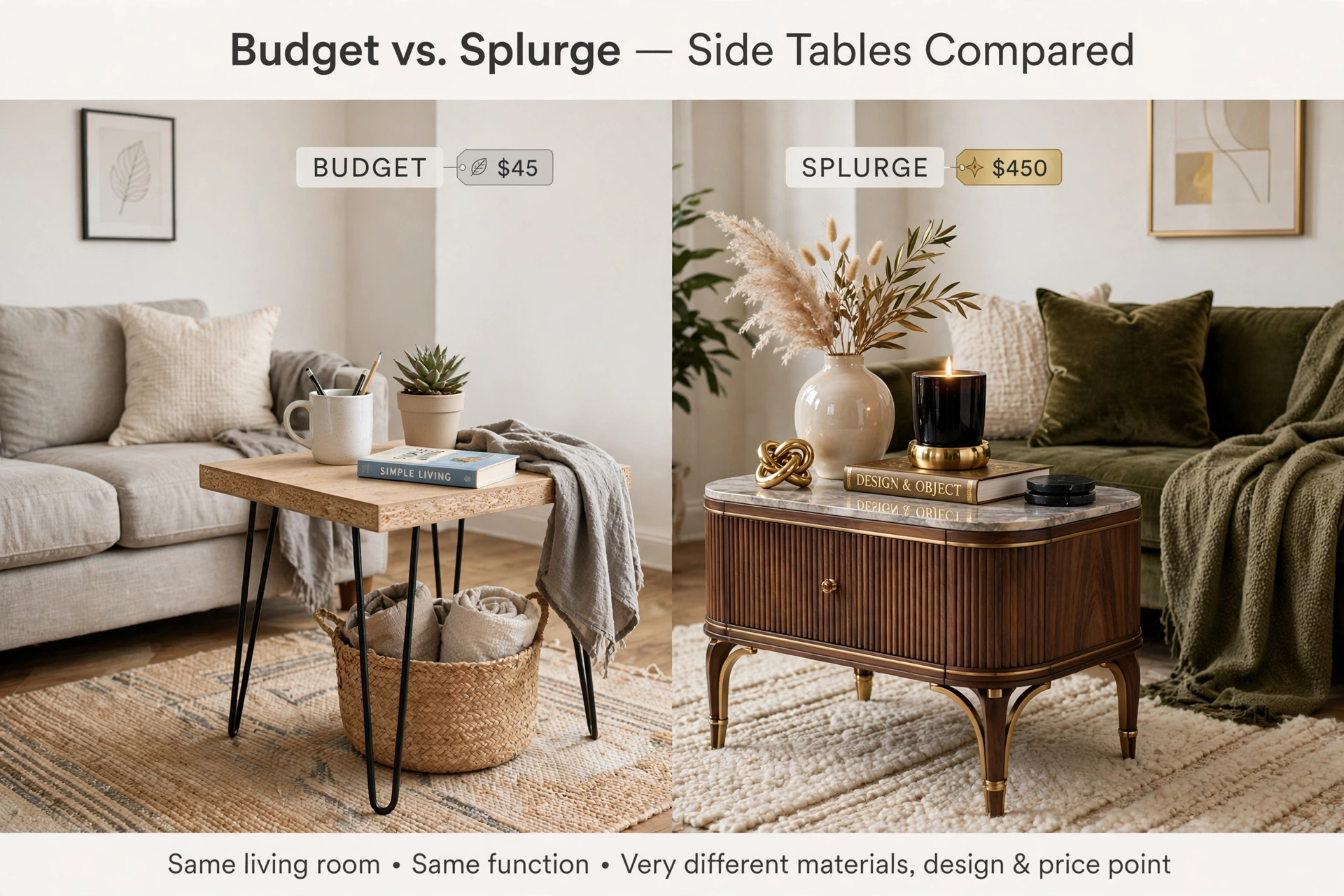
Side tables are a smart place to mix budget and investment pieces, because the small scale means even a splurge stays affordable relative to a sofa. Budget on trendy or high-wear pieces: a $40 rattan stool-table you might replace in three years, or the C-table that will take laptop abuse. Splurge on the piece with staying power — a solid walnut mid-century table or a real marble top that will move with you through several homes and styles.
The trick is knowing what makes a cheap table look cheap: wobbly legs, visible screws, and plastic-feeling finishes. A budget table with solid joinery and a real-wood or stone-look top can pass for triple the price once styled. Shop secondhand for the best value — side tables are among the most donated furniture pieces, so thrift stores are full of solid-wood options with good bones that need only a light sanding or a coat of paint. Whatever you spend, protect the top from day one with felt pads, coasters, and a tray; a well-kept table keeps its value, and a ring-stained one never does.
13. Coordinate With Your Coffee Table and Console
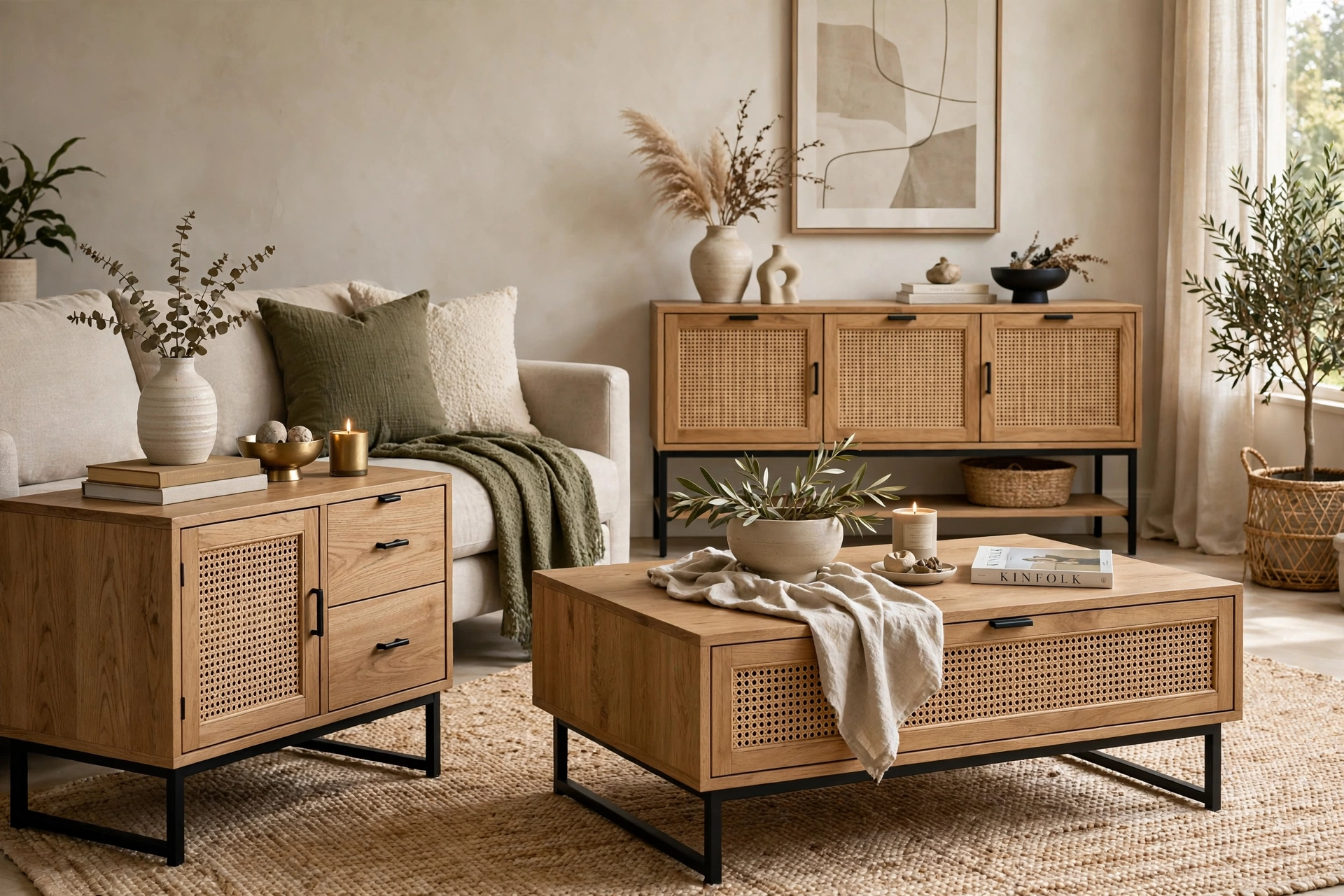
Side tables shouldn’t be chosen in a vacuum — they share the room with your coffee table and console, and the three should relate without matching. The designer rule of thumb: repeat one element (material, color, or era) and vary the rest. A walnut coffee table pairs beautifully with black-metal side tables if the metal echoes the coffee table’s legs; a marble coffee table sings beside simple oak side tables that let the stone star. Our coffee table decor ideas show how to style the center of the room, and the same balance principles apply at its edges.
The console table — the long piece behind your sofa or against the wall — is the side table’s big sibling. If your console is rustic wood, echo that warmth in one side table and let the other go modern for contrast. Keep heights in the same family so the room’s sightlines stay calm: a 30-inch console and 24-inch side tables read as intentional, while a 36-inch console towering over 18-inch tables looks accidental. For the full picture on styling that longer surface, see these living room console table decor ideas for a styled focal point — many of the vignette tricks translate directly to side tables.
14. Master Tray Styling on Any Side Table
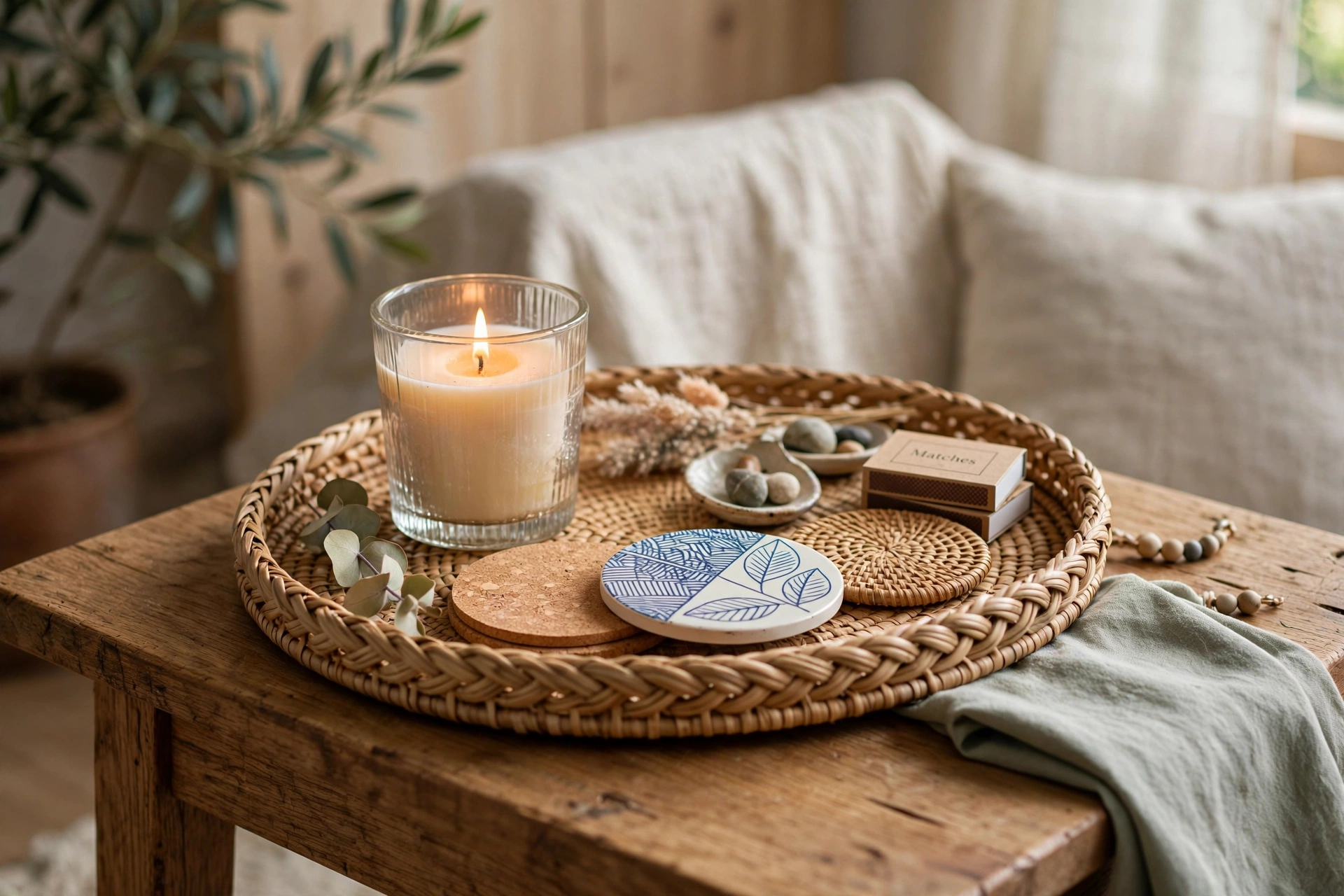
A tray is the fastest way to make any side table look styled: it corrals small items into one composed zone and protects the surface underneath. The formula is simple — pick a tray that covers about a third to half of the tabletop, then arrange three items inside it at varying heights: a candle or small vase (tall), a stack of coasters or a lidded box (medium), and a small dish or matchbox (low). The tray’s edge creates a visual boundary that makes even random objects look deliberate.
Match the tray material to the table for cohesion or contrast on purpose: a brass tray on a dark wood table adds glamour, while a woven seagrass tray on a marble top adds warmth. Keep one corner of the tray empty — an overstuffed tray reads as clutter, not styling. Trays also make cleaning and rearranging effortless: lift the whole arrangement to dust, or carry it to the kitchen when you need the table for a puzzle or a laptop. Rotate the tray’s contents seasonally — fresh flowers in spring, a pumpkin and a cinnamon candle in fall — and the same side table feels new four times a year.
15. Let a Plant Stand Double as a Side Table
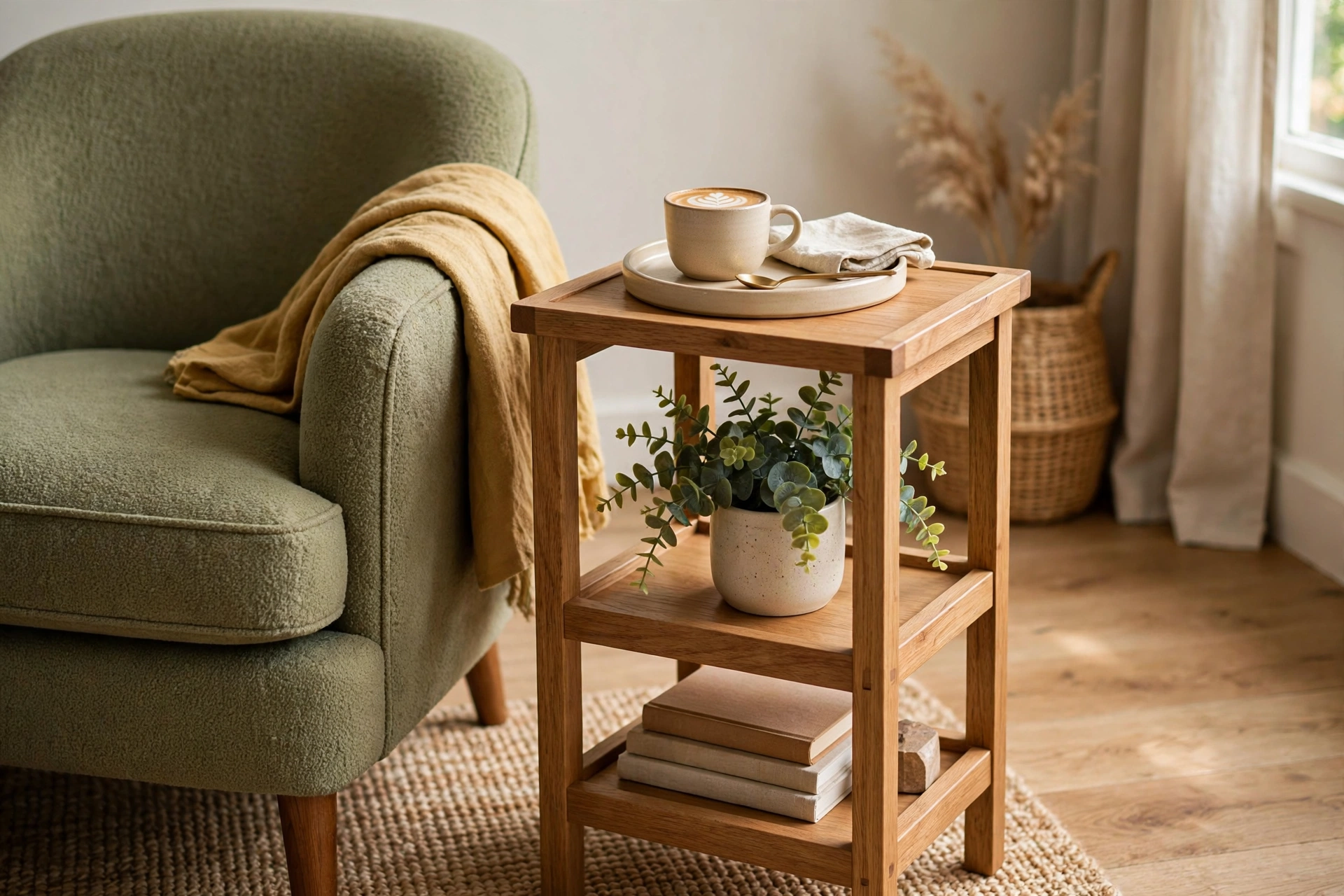
A sturdy plant stand with a flat, wide top can moonlight as a side table — especially the tiered or single-surface wooden stands with a 14-inch-plus diameter top. Place a tall plant stand beside an armchair, top it with a small tray for your drink, and you’ve got greenery and function in one footprint. This is a brilliant small-space move: instead of a side table plus a separate plant in the corner, one piece does both jobs.
Choose a stand rated for real weight — a ceramic pot full of soil is heavier than you’d think, and adding a lamp or books on top increases the load. Mid-century-style plant stands with a round wooden top and splayed legs look like intentional side tables; metal tiered stands read more utilitarian, so style them carefully. Keep the plant in scale: a tall fiddle-leaf fig towering over a tiny stand looks tippy, while a bushy fern or a trailing pothos softens the edges. Water with a saucer and a small towel routine, because a plant stand that doubles as a side table can’t afford a leaky pot — set a waterproof tray under the planter as insurance.
Frequently Asked Questions
What is the ideal height for a side table next to a sofa?
Aim for a tabletop that sits level with your sofa arm or up to 3 inches lower — that’s the comfortable reach zone for setting down drinks and books without stretching. For armless chairs, keep the top no more than about 8 inches above the seat height. Measure your actual arm heights before shopping, since sofa arms vary widely (typically 22 to 26 inches), and split the difference if one table must serve seating of different heights.
How many side tables does a living room need?
Most living rooms need one or two: one beside the sofa’s main seat, and optionally a second at the other end or next to an accent chair. Every seat that someone regularly uses should have a landing spot within arm’s reach. In small rooms, one well-placed table plus a C-table or tray can cover all your needs — don’t force symmetry where space doesn’t allow it.
Should side tables match each other?
They don’t have to. Matching pairs look formal and traditional; mixed tables look collected and modern. The safe middle ground is to repeat one element — the same wood tone, the same metal finish, or the same era — while varying shape or style. If your room already has a lot of pattern or color, matching tables can calm things down; if the room feels flat, mismatched tables add personality.
What can I put on a side table besides a lamp?
Books (a stack of two or three), a small plant, a candle, a decorative box that hides remotes, a carafe and glass for bedside-style convenience, or a small piece of art. Follow the rule of three: one tall item, one flat stacked item, and one organic accent, with at least a third of the surface left clear for daily use. A tray underneath it all keeps the arrangement tidy and protects the top.
Are end tables and side tables the same thing?
Mostly, yes — the terms are used interchangeably in stores and design guides, and both refer to the small table placed beside seating. Traditionally, “end table” meant the table at the end of a sofa, while “side table” or “accent table” could sit anywhere, including beside a bed or in a hallway. For shopping purposes, treat them as the same category and focus on dimensions and style rather than the label.
Keep Exploring
Side tables prove that the smallest furniture often makes the biggest difference — a few inches of height, the right material, and a thoughtful vignette can transform how your whole living room feels and functions. Pick the idea that solves your biggest frustration first, whether that’s a wobbly lamp, a missing landing spot, or a corner that never looked finished.
Once your side tables are sorted, turn to the center of the room: style the biggest surface in the space with the same confident, clutter-free approach, and your living room will feel finished from every angle.





[…] fill awkward gaps, and add a tailored layer to any style. If you love multifunctional pieces, our living room side table ideas for style and function cover the bench’s best […]