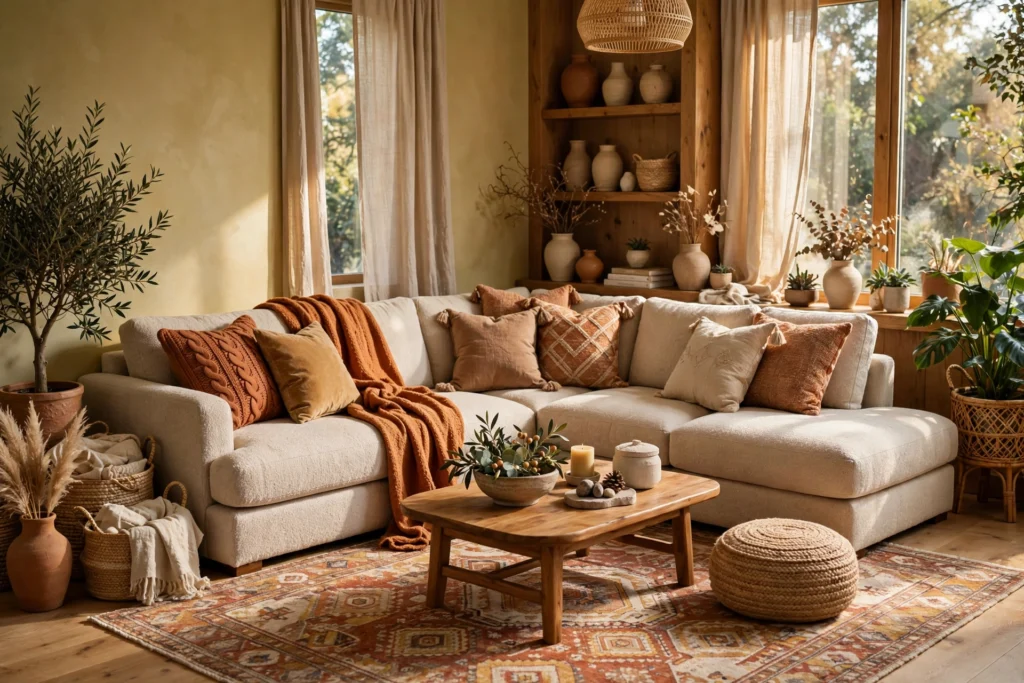

A sectional is the hardest-working piece in most living rooms — part sofa, part lounge, part room divider. But its size makes it tricky: style it wrong and it swallows the room; style it right and it anchors everything beautifully. These sectional sofa styling ideas show how to balance scale, layer softness, and arrange the surrounding pieces so your sectional looks intentional from every angle.
From rug placement and pillow layering to coffee table pairings and lighting, each idea addresses the real challenges of big seating. Whether your sectional is an L-shape, a U-shape, or a modular setup, this guide will help you style it into the comfortable, pulled-together centerpiece your living room deserves.
1. Anchor It on an Oversized Rug
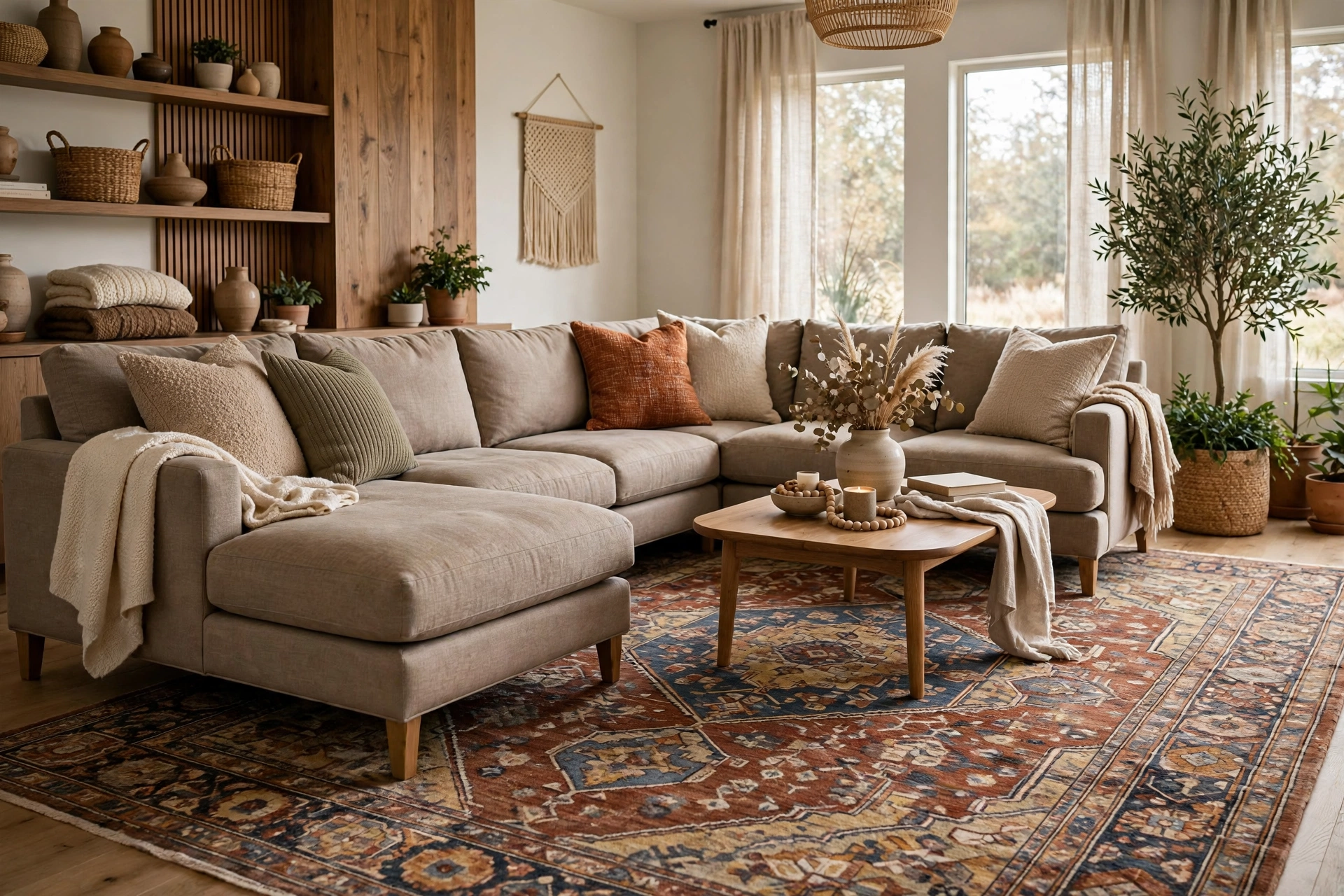
The single most important styling move for a sectional is the rug underneath. Choose a rug large enough that the sectional’s front legs — and ideally all legs — sit on it; a floating rug that is too small makes the sectional look like it is drifting. For most L-shaped sectionals, a 9×12 rug is the sweet spot, with 8×10 as the minimum. The rug visually grounds the sectional’s mass and defines the conversation zone, which matters most in open-plan rooms. Let the rug’s colors guide your pillows and throws for a cohesive palette. Living room rug ideas for warmth and style cover sizing rules for every layout. When the rug is right, everything else gets easier.
2. Float It to Define Zones
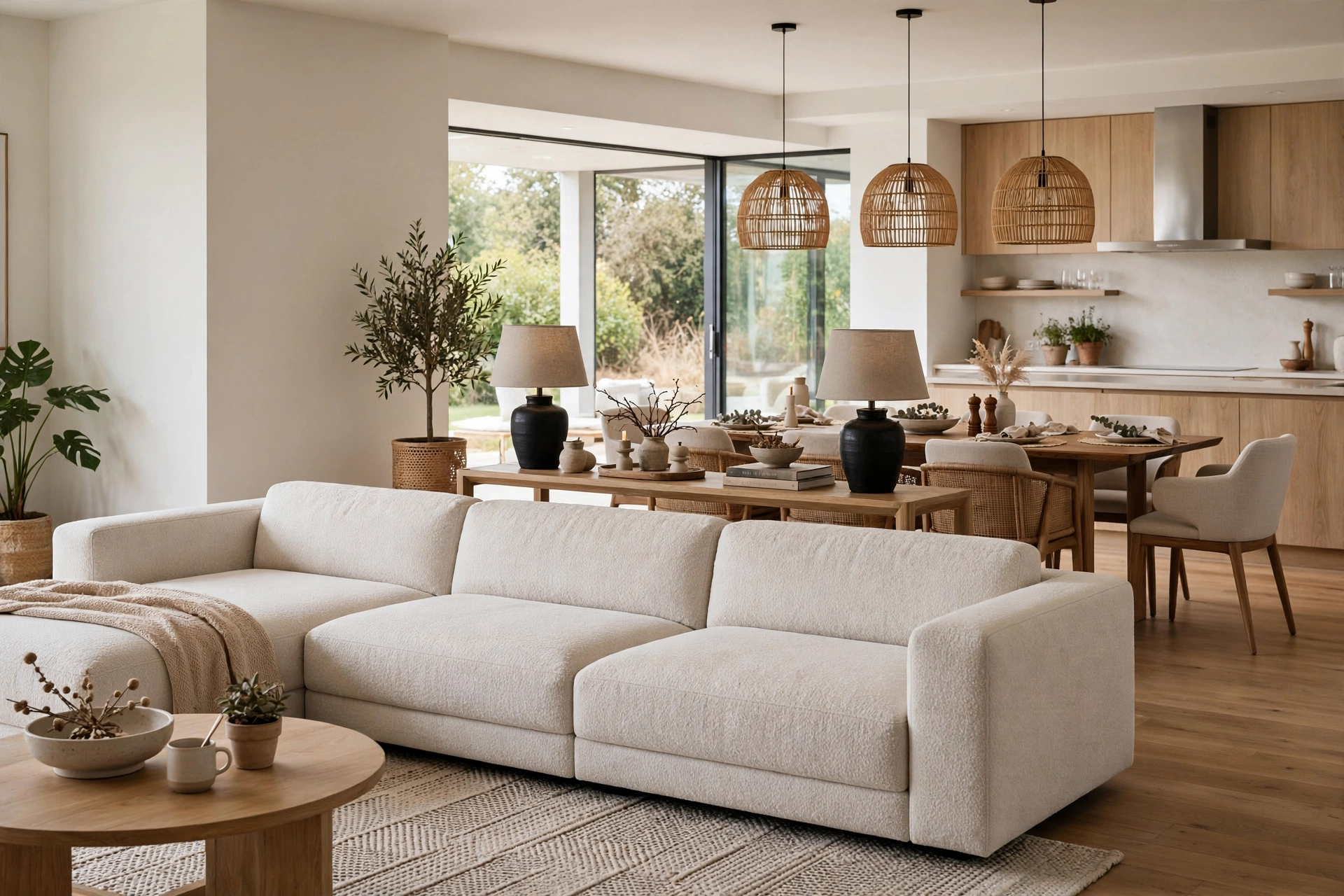
In open-plan spaces, pull the sectional away from the walls and let its back create a natural room divider. Floating the sectional separates the living zone from dining or kitchen areas without a single wall, giving each space its own identity. Leave at least 30 inches behind it for a walkway, and style the exposed back with a slim console table so it looks finished from behind. This layout also improves conversation flow, since seats face each other rather than lining a wall. Designers often use a large sectional to zone open floor plans, placing it to separate sitting areas from kitchens. Floating works best with sectionals that have an upholstered, finished back.
3. Tuck It Into the Corner
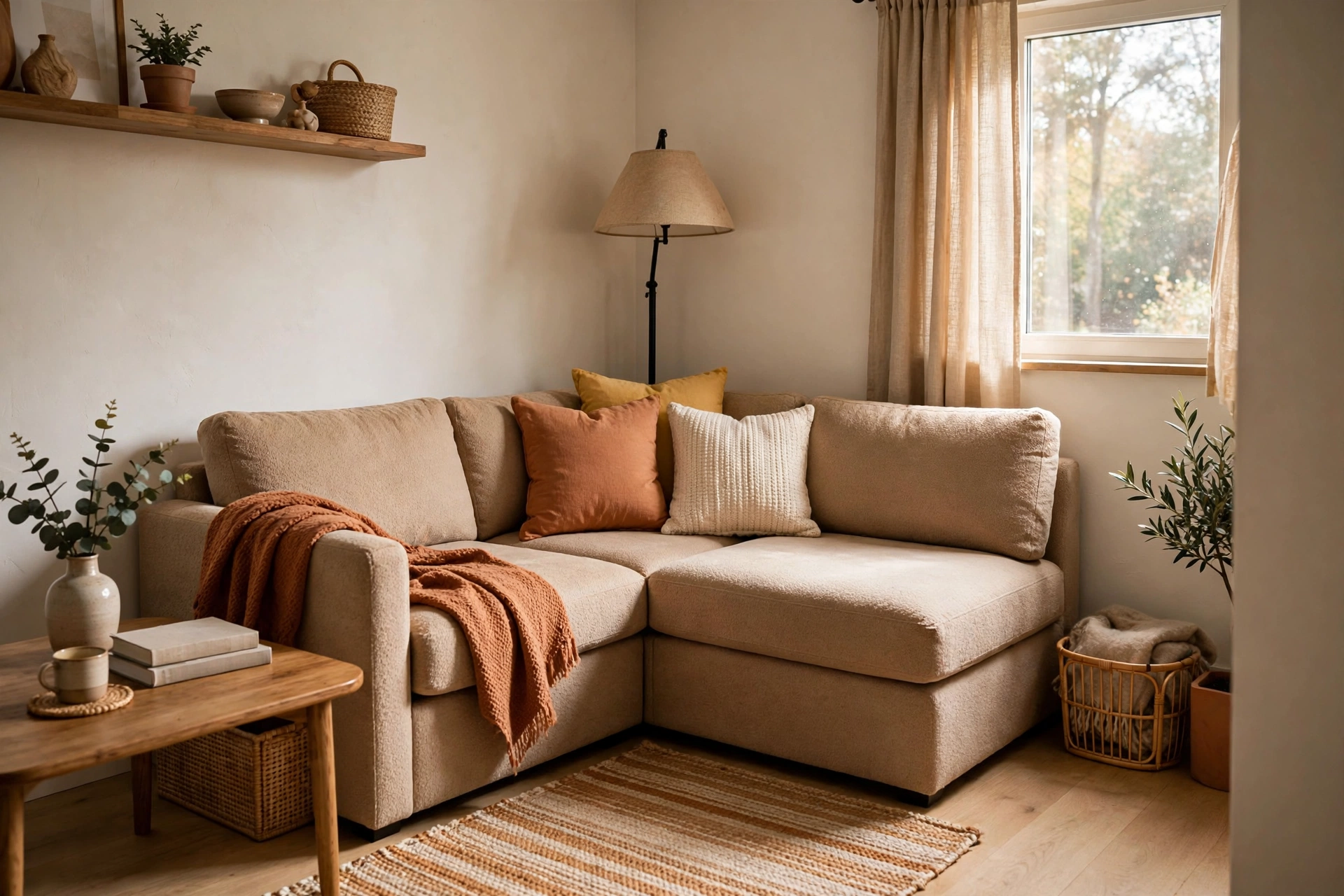
When floor space is tight, nestling the sectional into a corner is the smartest layout. The corner placement hugs the room’s proportions, freeing the center for traffic and making even a large sectional feel like it belongs. This works especially well in square rooms and long, narrow living rooms, where a corner sectional leaves one clear pathway. Add a floor lamp in the corner behind the sectional’s arm to fill the vertical space and create a reading spot. Keep the chaise or long side along the wall with the least foot traffic. Corner placement also maximizes seating for movie nights without a single extra chair.
4. Balance It With an Accent Chair
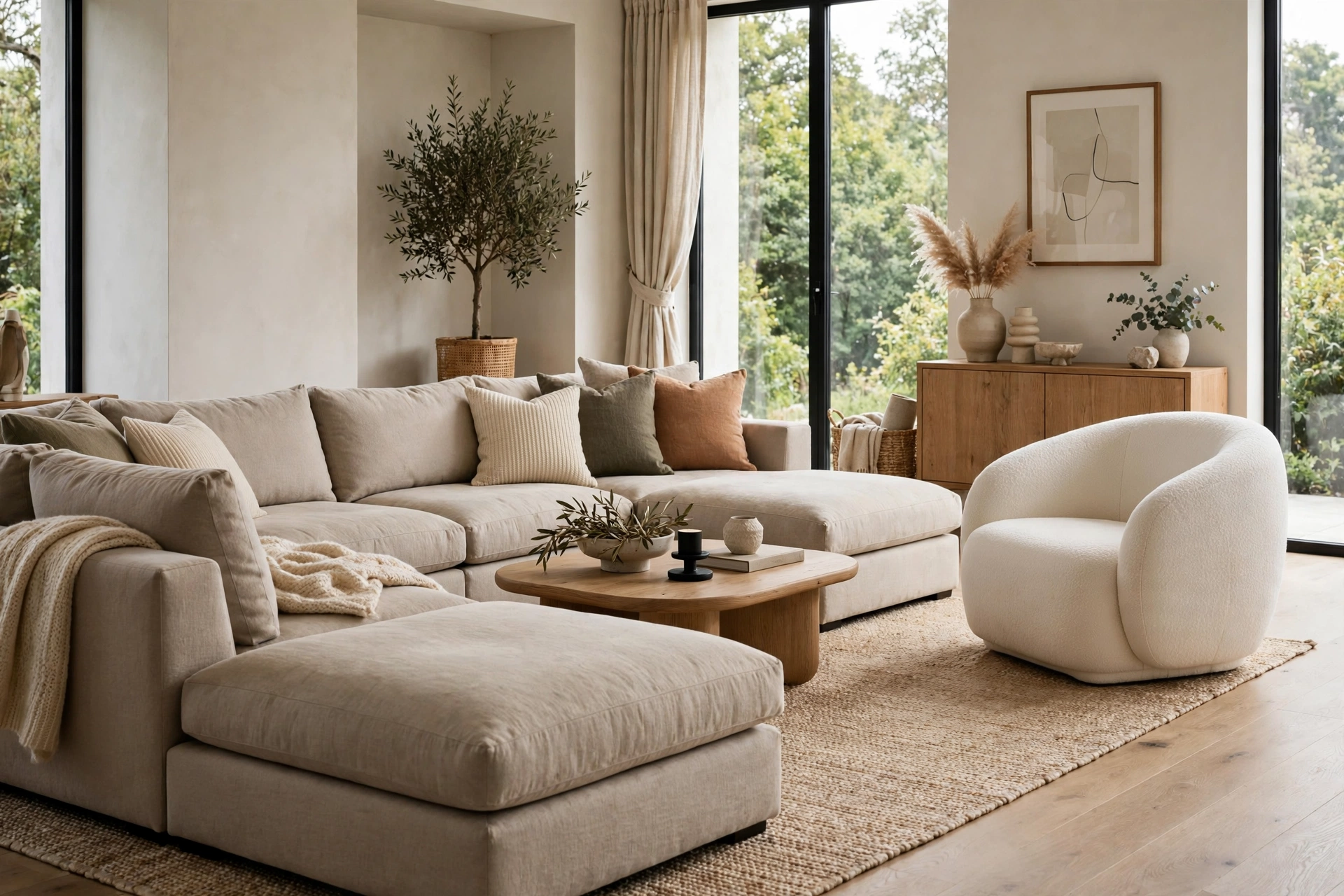
A sectional alone can feel like a monolith; one well-chosen accent chair breaks up the mass and completes the conversation circle. Place the chair opposite the sectional’s short side or angled at the open end, close enough for easy conversation. Choose a chair with a different silhouette — a swivel barrel, a sculptural boucle, or a classic armchair — to add visual variety. Echo one pillow color in the chair’s fabric to tie the pieces together. A single chair is usually enough; two can crowd the space a large sectional already fills. The contrast in scale makes both pieces look more intentional.
5. Layer Pillows in Graduated Sizes
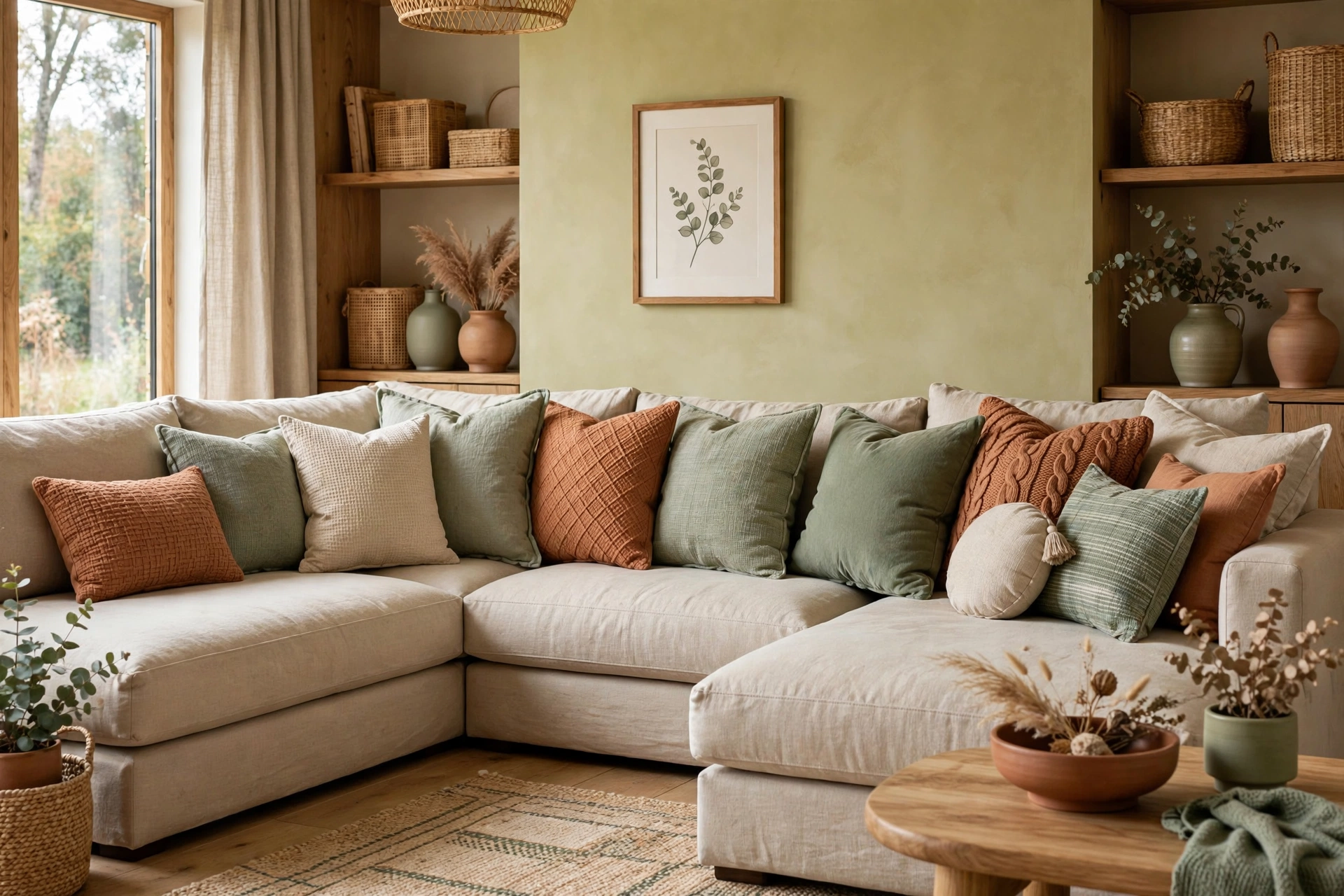
Sectionals swallow small pillows, so scale up: start with 22- or 24-inch squares at the corners and layer down to 20-inch squares and a lumbar in the middle. Distribute pillows along the long back first, then add a cluster at the corner seat where the two sides meet — that corner is the sectional’s visual heart and deserves the fullest styling. Use the three-color rule to keep the mix cohesive across the larger surface. Because sectionals have more linear footage, you can handle seven to nine pillows without looking cluttered. Vary textures — velvet, linen, knit — so the big expanse of upholstery feels rich rather than flat.
6. Drape a Throw for Softness
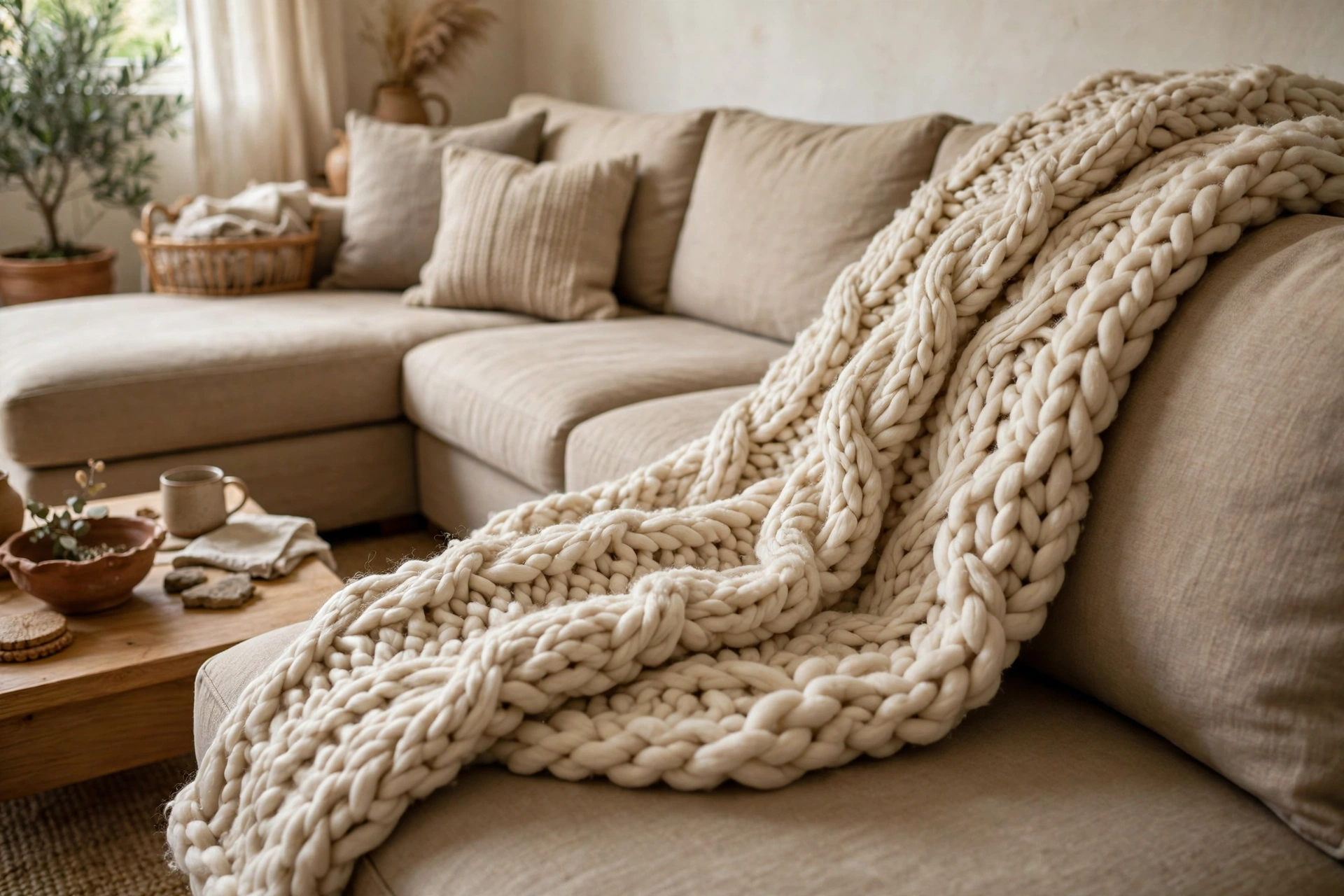
A throw blanket softens the sectional’s structured lines and adds the lived-in warmth that makes people want to sink in. Drape it diagonally across the chaise or fold it neatly over one arm — avoid spreading it flat, which looks fussy. Chunky knits, waffle weaves, and faux fur each bring a different mood; choose the texture that contrasts with your upholstery. A throw also protects high-wear spots like the chaise end from fading and pilling. Keep the throw’s color in your three-color palette so it reads as part of the plan. One beautiful throw beats three mediocre ones.
7. Pair It With the Right Coffee Table
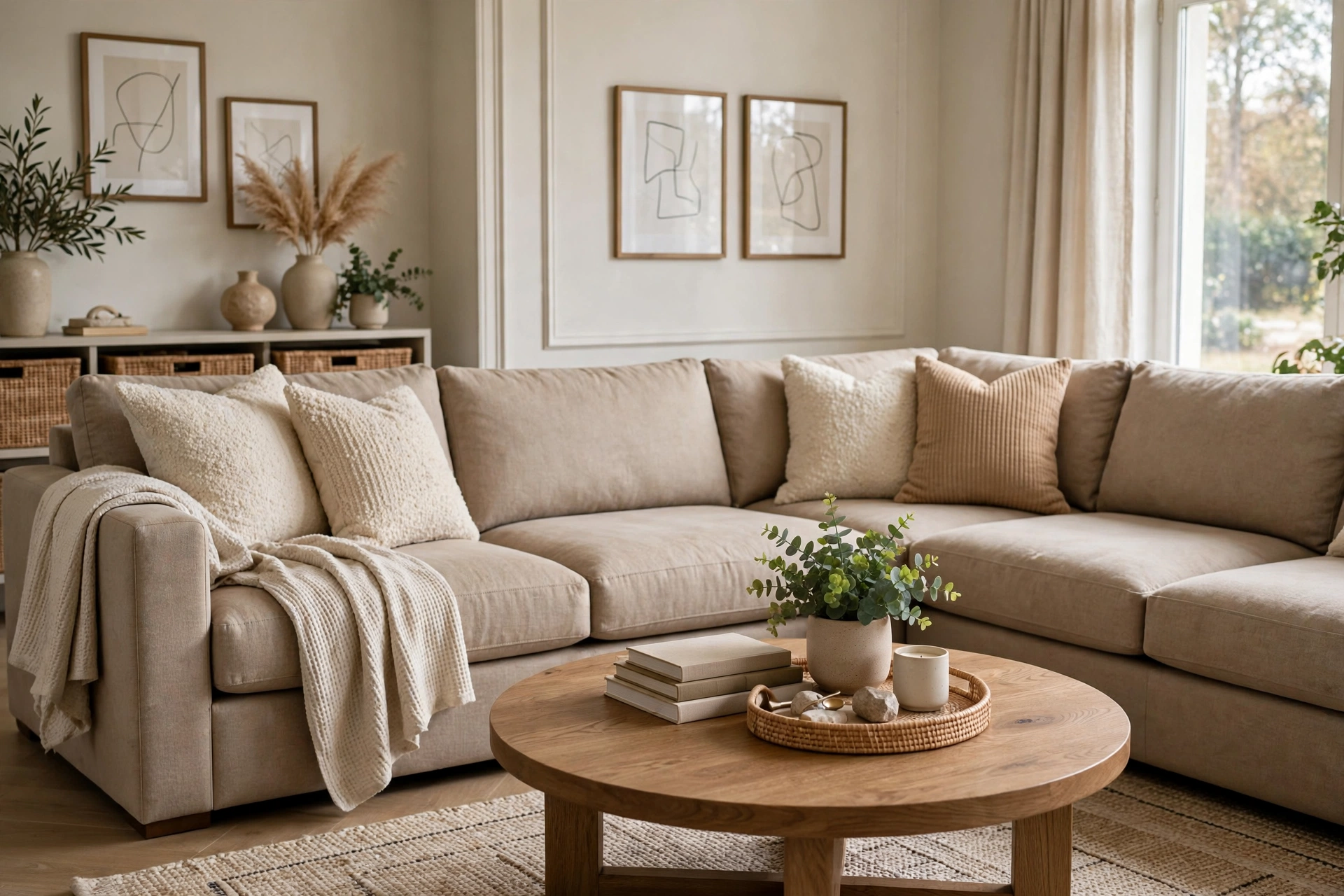
The coffee table must respect the sectional’s scale: too small and it looks lost, too big and knees suffer. Aim for a table about two-thirds the length of the sectional’s long side, sitting 14 to 18 inches from the seats. Round or oval tables soften the sectional’s hard angles and improve traffic flow around the corner seat. If the sectional seats a crowd, consider two small ottomans or a pair of side tables instead of one big table — they flex for movie nights and game days. Style the tabletop simply: a tray, a stack of books, and one organic element. More coffee table styling inspiration lives in our coffee table decor ideas that elevate your living room.
8. Style the Back With a Console Table
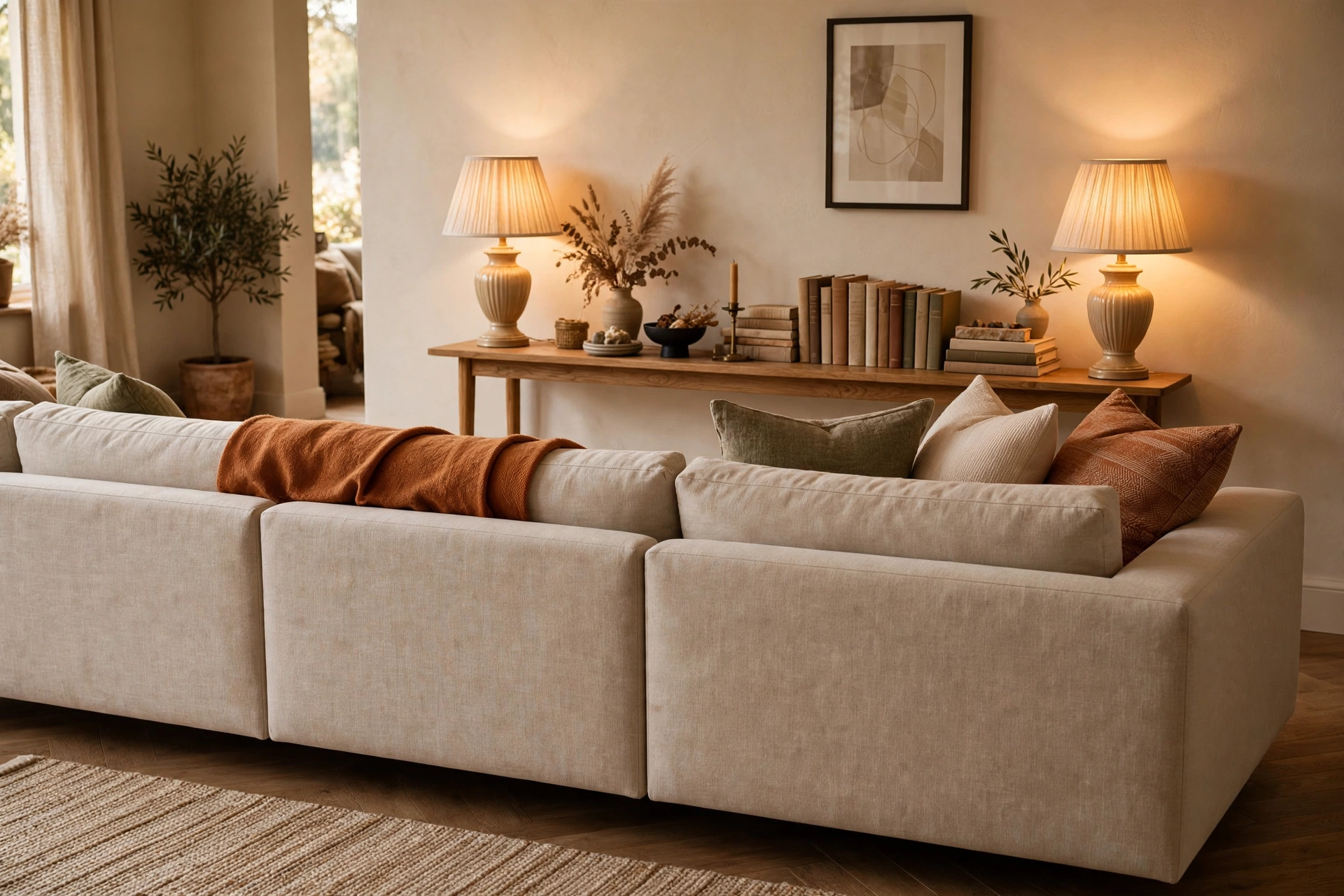
A floated sectional shows its back to the rest of the room, so give that view something to look at. A slim console table behind the sofa creates a styled surface for lamps, books, and decor — and hides the upholstery seams. Keep the console a few inches shorter than the sofa back so it peeks above just enough. This is also prime real estate for lighting: a pair of table lamps on the console washes the wall behind with warm light. In open plans, the console marks the boundary between living and dining zones. Choose an open or leggy design so the walkway behind still feels airy.
9. Make the Chaise End Irresistible
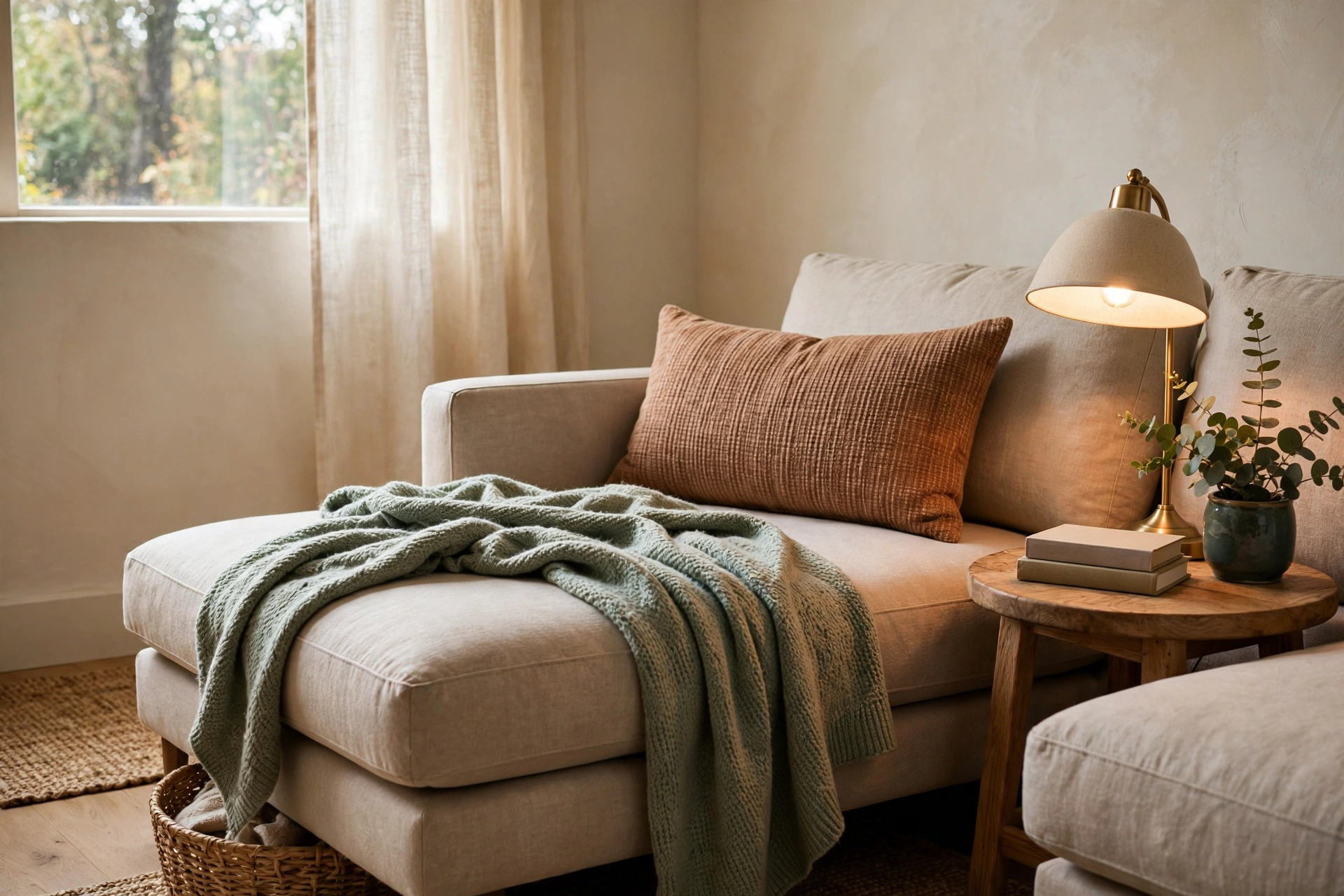
The chaise is the sectional’s best seat, so style it like one. Layer a lumbar pillow where the back meets the seat, drape your softest throw within arm’s reach, and place a small side table or floor lamp beside it for reading. A round pillow at the chaise corner softens the angle where the two sections meet. If the chaise faces a window, it becomes the room’s prime napping spot — lean into it with a plush texture. Keep the chaise end clutter-free: one pillow and one throw is the sweet spot. An inviting chaise gets used daily; a buried one becomes a laundry shelf.
10. Mix in a Contrasting Accent Piece
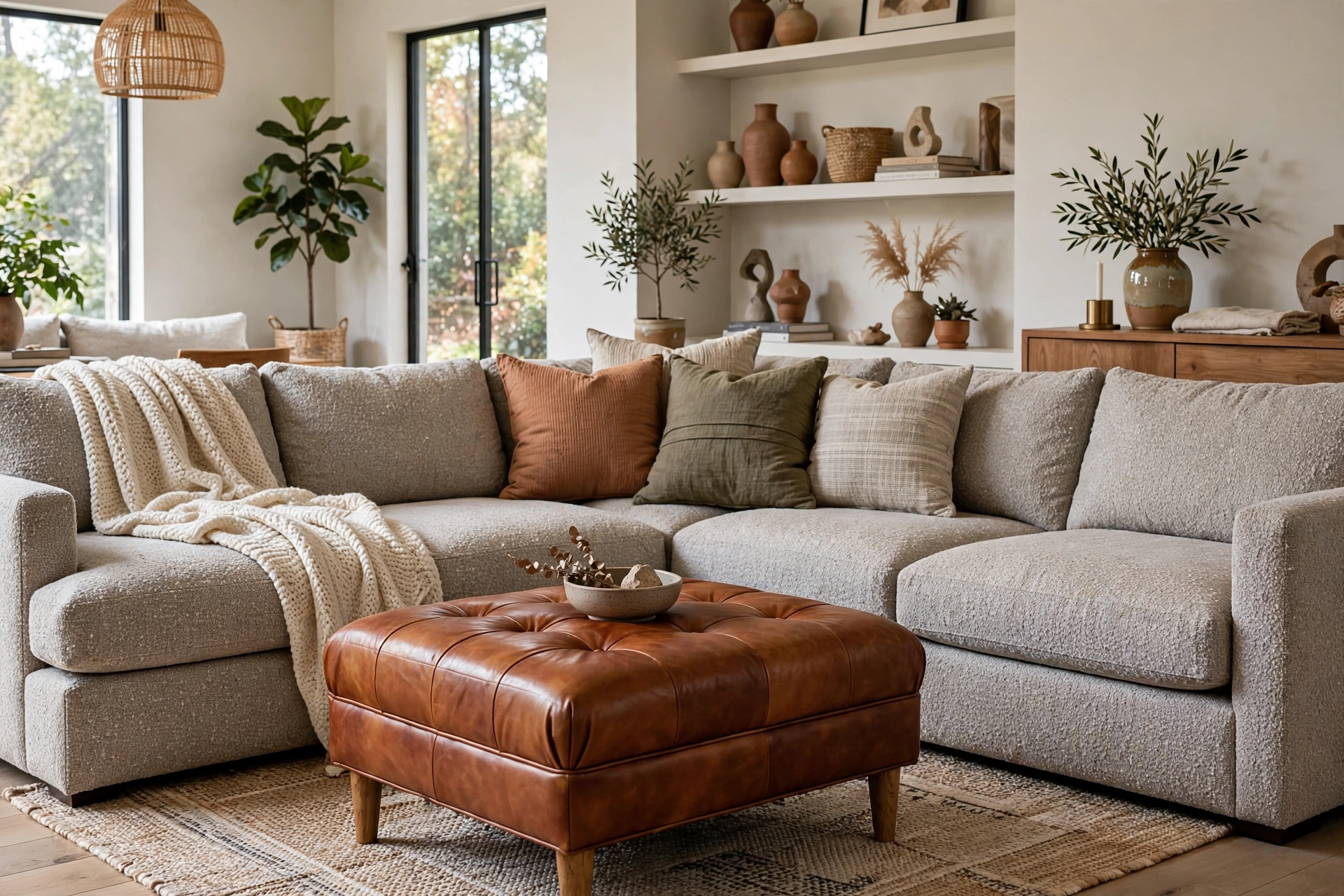
A leather ottoman, a boucle pouf, or a vintage trunk used as a side table breaks up the sectional’s upholstered uniformity. The contrast in material — smooth leather against nubby fabric, or aged wood against new upholstery — adds the collected feel that makes rooms look designed rather than delivered. Place the contrasting piece within the conversation circle so it reads as part of the group. A large square ottoman can double as extra seating or a footrest for the chaise end. Keep the accent’s color in your palette so the contrast is about texture, not a random pop.
11. Light Both Ends of the Sectional
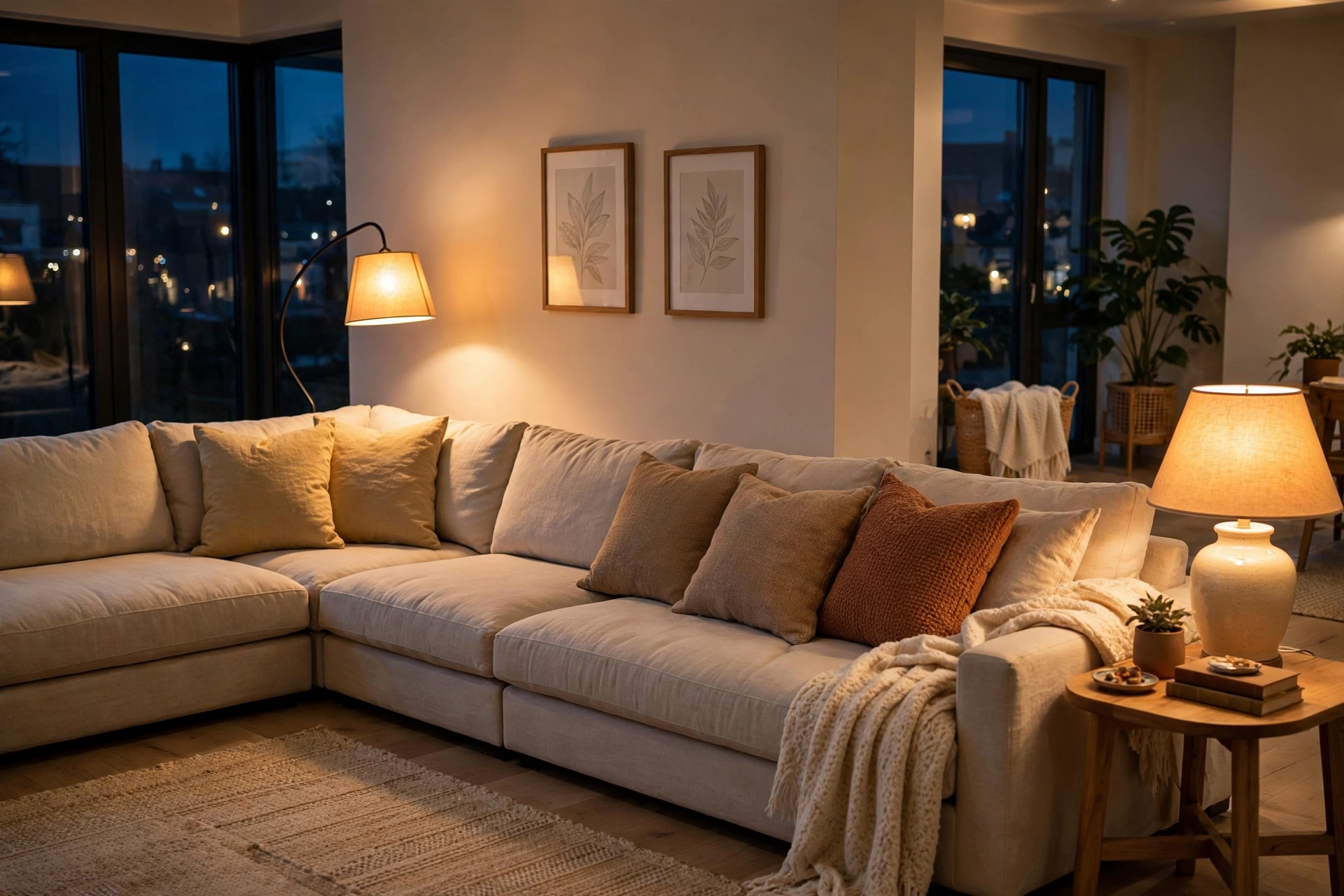
Long seating needs light at both ends, or one side sits in shadow. Place a floor lamp behind one end and a table lamp on a side table or console at the other, creating balanced pools of light for readers on either side. Arc floor lamps work beautifully over the corner seat, delivering overhead light without wiring. Put both lamps on the same dimmer or smart plug so one command sets the evening mood. Matching lamp styles at each end creates symmetry; complementary styles feel more collected. Either way, the goal is simple: no one should need their phone flashlight to read on your sectional.
12. Hang Art Above the Long Side
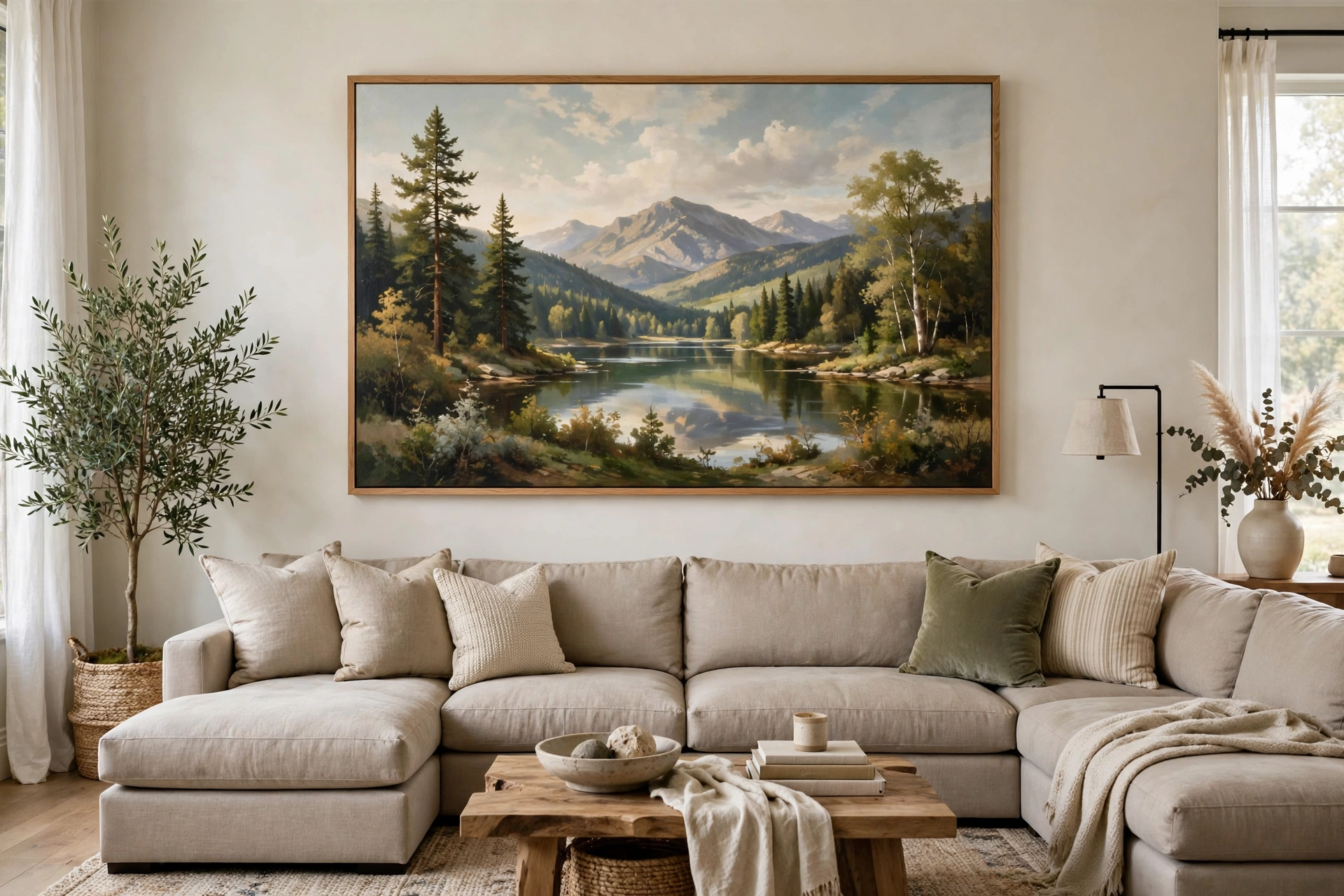
The long back of a sectional is begging for art above it. Hang one large piece — roughly two-thirds the width of the sofa section beneath — centered about 8 inches above the back cushions. A gallery wall also works: keep the arrangement’s outer dimensions similar to that two-thirds rule. The art draws the eye up and gives the sectional’s mass a visual counterweight. In rental-friendly mode, a large leaning mirror or a textile wall hanging achieves the same effect without holes. Whatever you hang, light it: a picture light or aimed spot makes the art glow after dark. Bare wall above a big sectional is the most common missed opportunity in living rooms.
13. Keep Traffic Paths Clear
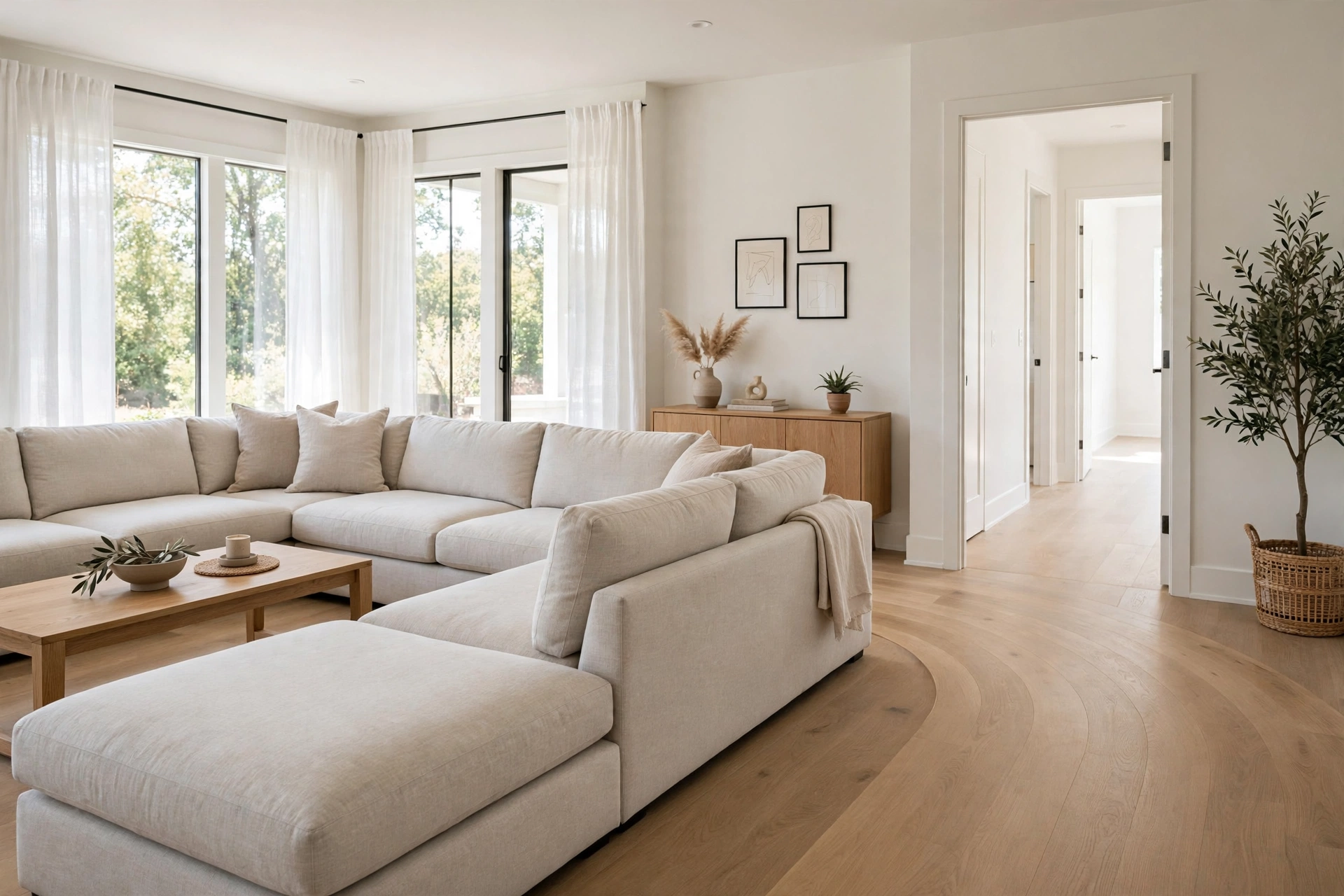
A sectional’s size can easily choke a room’s circulation. Map your main pathways — entry to kitchen, sofa to hallway — and keep them at least 30 inches wide, 36 if possible. Never let the chaise block a doorway or the main route through the room; if it does, flip the sectional’s orientation or choose a smaller configuration. In tight rooms, skip the accent chair rather than squeezing it into a walkway. Good flow makes a room feel larger than its square footage, while pinched paths make even big rooms feel cramped. Walk the routes yourself after arranging — your feet will tell you what your eyes miss.
14. Choose Performance Upholstery for Real Life
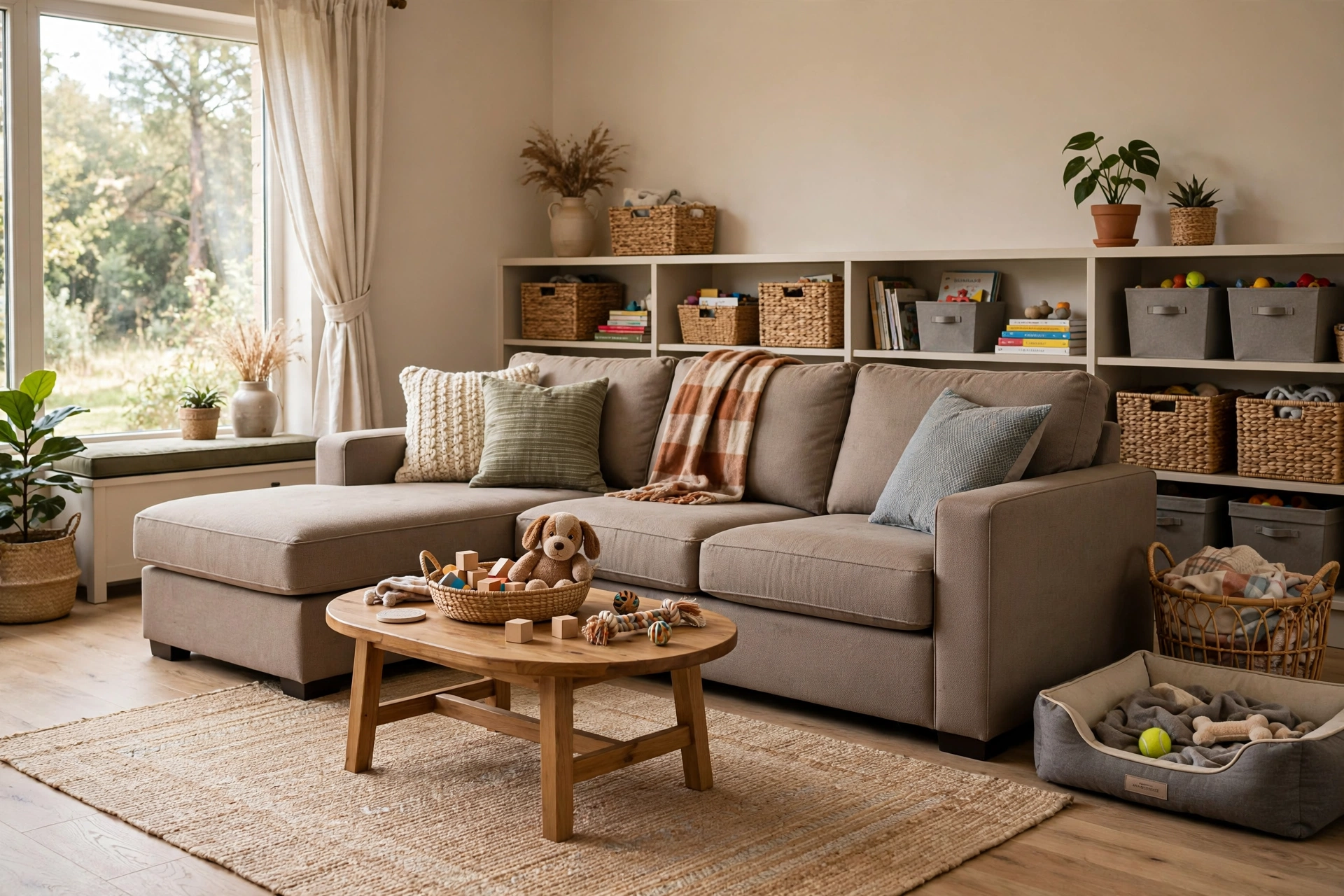
Sectionals take the most abuse of any furniture piece: daily lounging, movie nights, pets, kids. Performance fabrics — stain-resistant weaves, washable slipcovers, or leather — keep a big investment looking good for years. If you already own a sectional in a delicate fabric, a custom or ready-made slipcover is a smart rescue: it protects the upholstery and lets you change colors cheaply. Removable, washable cushion covers are the gold standard for families. Darker mid-tones and textured weaves hide wear better than flat light fabrics. Buy the sectional for the life you have, not the showroom you visited.
15. Refresh Seasonally With Small Swaps
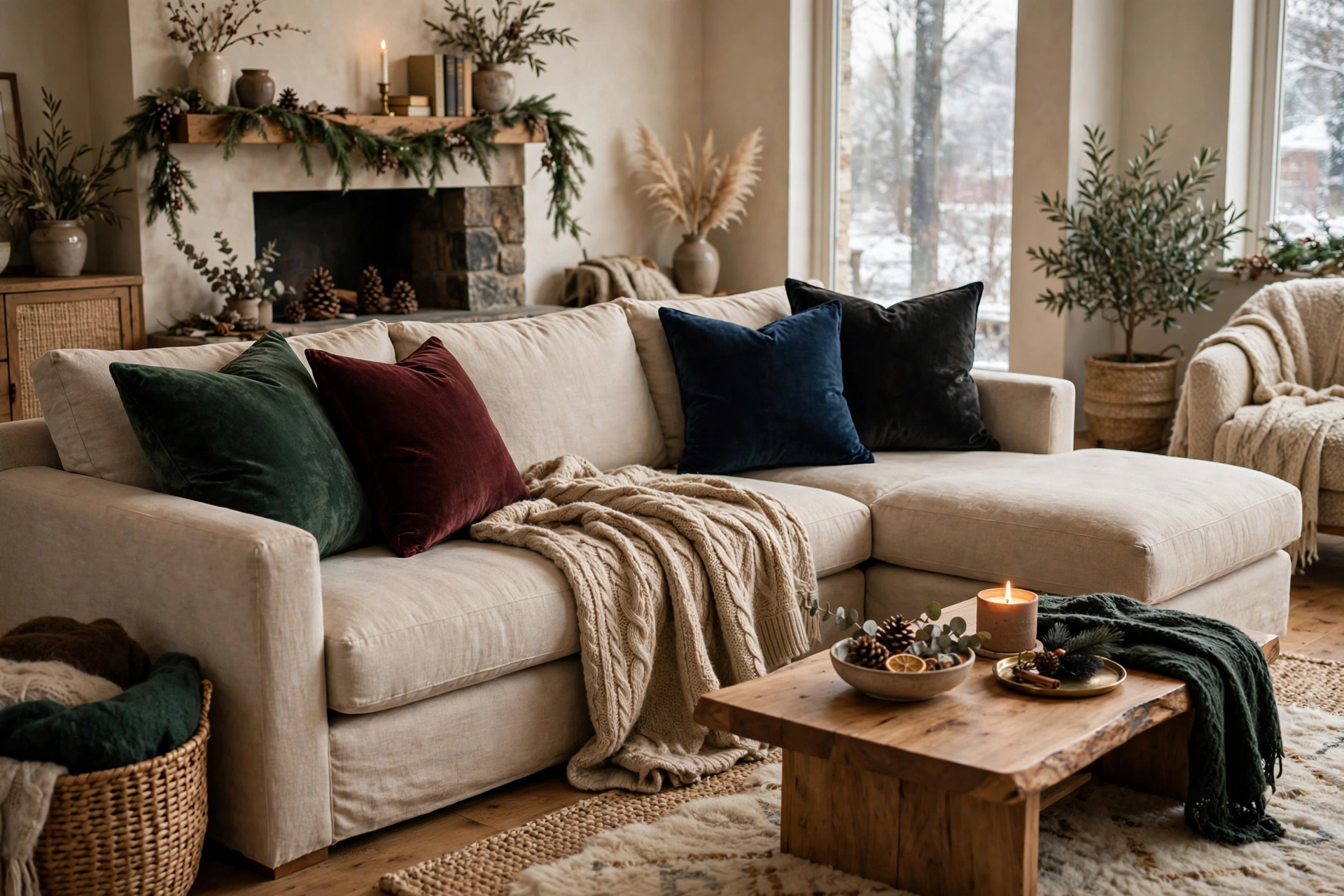
You do not need new furniture to make a sectional feel new — small seasonal swaps do the job. Rotate pillow covers, switch the throw’s texture, and restyle the coffee table and console with the season’s colors. In summer, go light: linen pillows, a breezy throw, greenery on the tables. In winter, layer in velvet, wool, and warm metallics. These swaps take an afternoon and cost a fraction of reupholstering. Styling trick designers use in long rooms with sectionals is refreshing textiles to redefine the space without moving furniture. Keep a labeled bin of off-season covers and the refresh stays effortless.
Frequently Asked Questions
Where should a sectional go in a living room?
Place the sectional against the longest uninterrupted wall or float it to zone an open-plan space, keeping 30 inches of walkway around it. Tuck it into a corner in small rooms to maximize floor space. The chaise or long side should never block doorways or main traffic paths. Living room layout ideas for every room shape.
How many pillows should I put on a sectional?
Seven to nine pillows suit most sectionals: large 22–24 inch squares at the corners, 20-inch squares along the back, and one or two lumbars in the middle. Style the corner seat most fully since it is the visual heart. Follow the three-color rule to keep the larger arrangement cohesive. If seating space disappears under pillows, remove two — comfort beats styling.
What size rug goes under a sectional?
Choose a 9×12 rug for most sectionals, with 8×10 as the minimum — all front legs should sit on the rug, and ideally all legs. The rug should extend at least 6 inches beyond the sectional’s edges. In open plans, the rug also defines the living zone. Measure your sectional’s footprint and add 12–18 inches on each exposed side when choosing.
Should a sectional face the TV or the fireplace?
Face the sectional toward the room’s natural focal point — usually the fireplace if you have one, since it anchors conversation better than a screen. In TV-first households, center the sectional on the television with the corner seat angled for viewing. If both exist, angle the sectional between them or choose the one you use most. Avoid pushing the sectional so far back that conversation feels shouted across the rug.
How do I make a big sectional look less bulky?
Break up the mass with contrasting textures — a leather ottoman, a nubby throw, varied pillow fabrics. Float it off the wall with a console behind so it reads as intentional, not shoved. Choose raised legs over a skirted base to reveal floor and create lightness. Keep surrounding furniture minimal and the palette tight; visual calm makes large pieces feel elegant rather than heavy.
Keep Exploring
A well-styled sectional does more than seat a crowd — it organizes the entire living room around comfort. With an anchoring rug, layered pillows and throws, balanced lighting, and clear traffic paths, these sectional sofa styling ideas turn the biggest piece in the room into its best feature.
Ready for the next layer? Browse more Living Room Decor inspiration for the rugs, lighting, and wall ideas that complete your sectional’s look, and enjoy a living room that finally feels as good as it seats.





[…] pairings, and care so your leather seating feels rich and intentional rather than heavy or dated. Sectional sofa styling ideas that anchor your living room share layout principles that work for leather […]
[…] real life, and let this compact classic earn its place. To complete the seating story, explore our sectional sofa styling ideas and living room accent chair ideas for companions that pair perfectly with your new […]