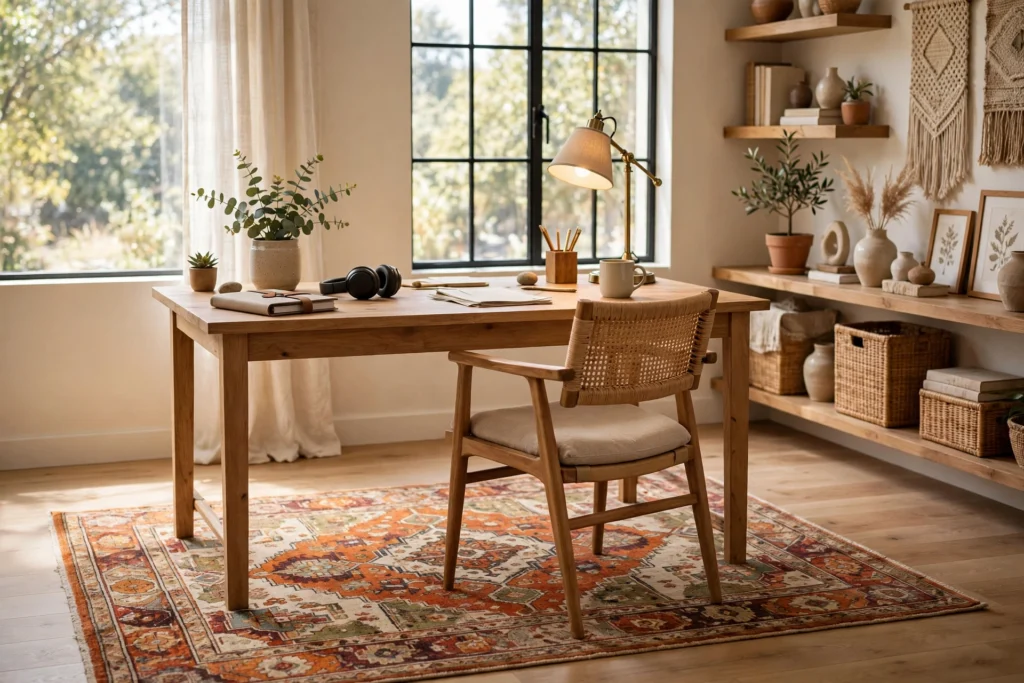

A rug might be the hardest-working element in your home office. It softens hard floors, quiets echo on video calls, defines your work zone, and adds the warmth that makes a workspace feel like somewhere you actually want to spend eight hours. The right home office rug ideas balance comfort with practicality, because this is one room where your chair has opinions.
From sizing rules that keep rolling chairs happy to colors that support focus, choosing an office rug is part design and part ergonomics. Once your desk setup is dialed in with our home office desk setup ideas for focus and comfort, the rug completes the room. Here are 15 home office rug ideas for a grounded, focused workspace.
1. Size It Right: Let the Chair Stay on the Rug
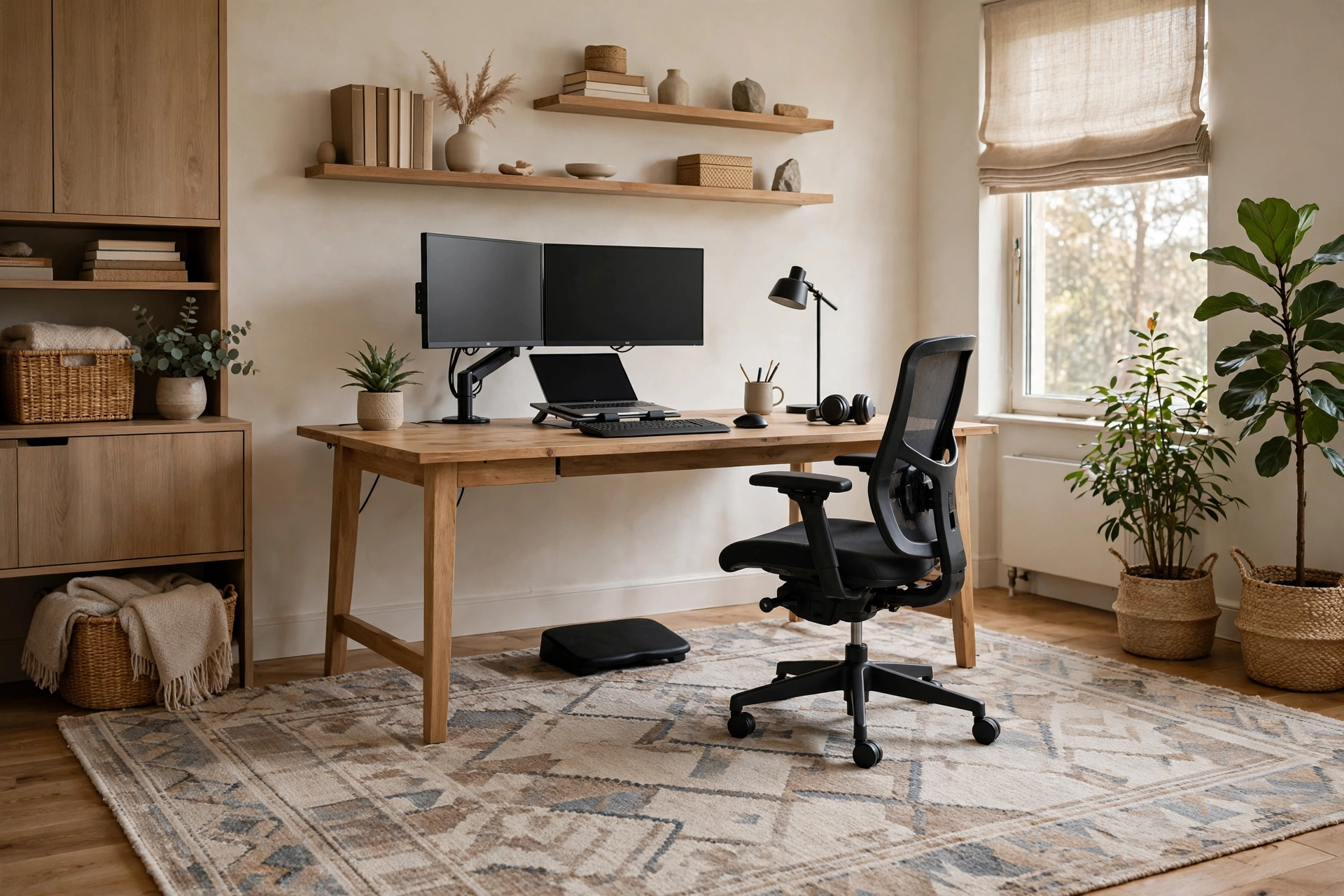
The golden rule of office rugs is simple: your chair should stay on the rug through its full range of motion. Push your chair back as far as you normally roll, then add a margin of at least two feet behind the desk. Spruce’s ultimate rug size guide confirms that going bigger beats going smaller in almost every room. For a standard desk setup, a 5×7 rug is the minimum, while an 8×10 comfortably holds a desk, chair, and a side table. A too-small rug catches chair casters on its edge constantly, which is both annoying and damaging to the rug.
2. Choose Low-Pile for Smooth Rolling
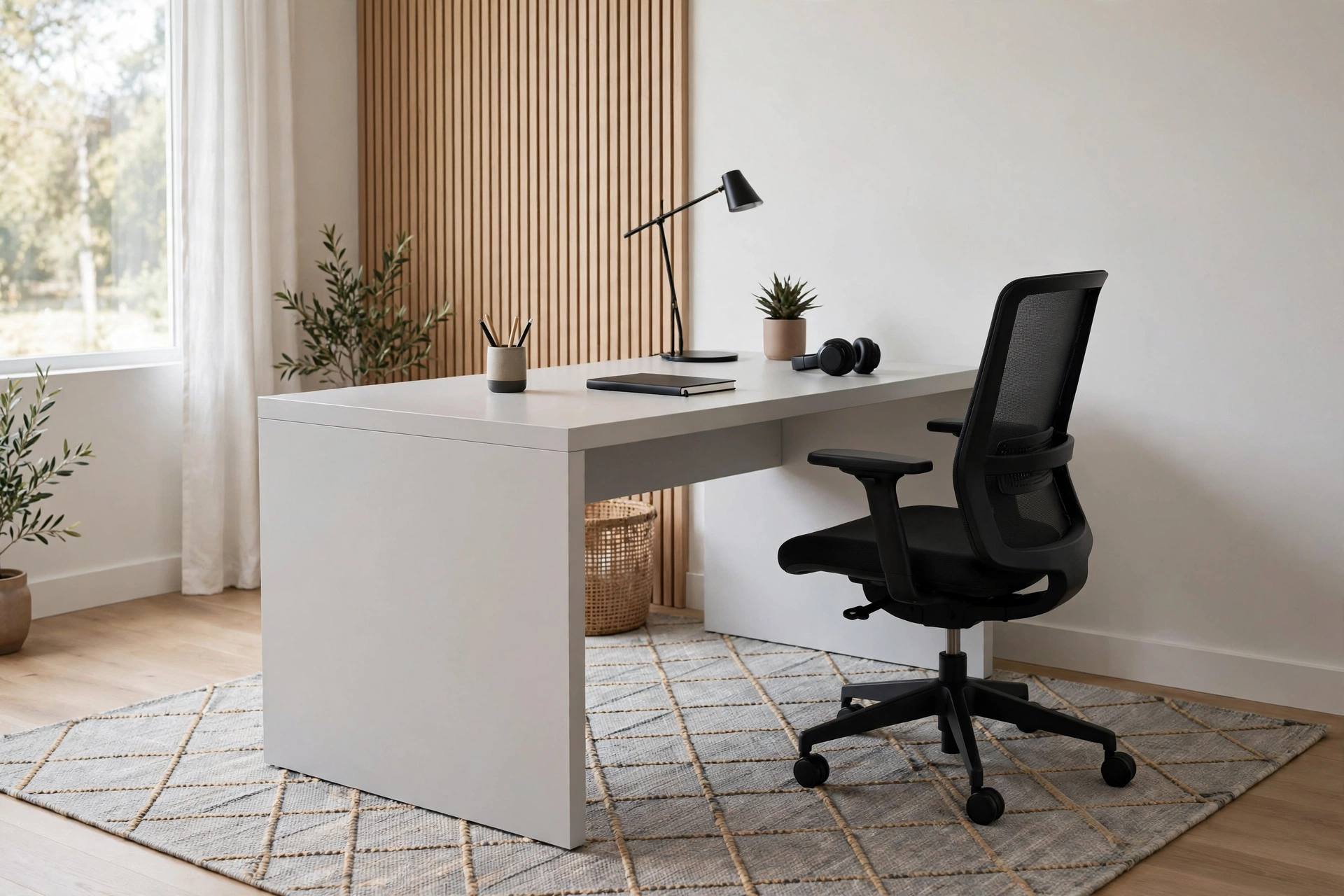
Pile height matters more in a home office than anywhere else because your chair rolls across it all day. Low-pile rugs, flatweaves, and short dense piles let casters glide smoothly without dragging or denting. High-plush rugs feel luxurious underfoot but fight rolling chairs, trap wheels, and show wear paths quickly. If you love the look of a thicker rug, place it in a reading corner away from the desk and use a low-pile option in the rolling zone. A good test: if you can easily push a chair across the rug in the store, it will work at home.
3. Ground the Desk Zone With a 5×7 or 8×10
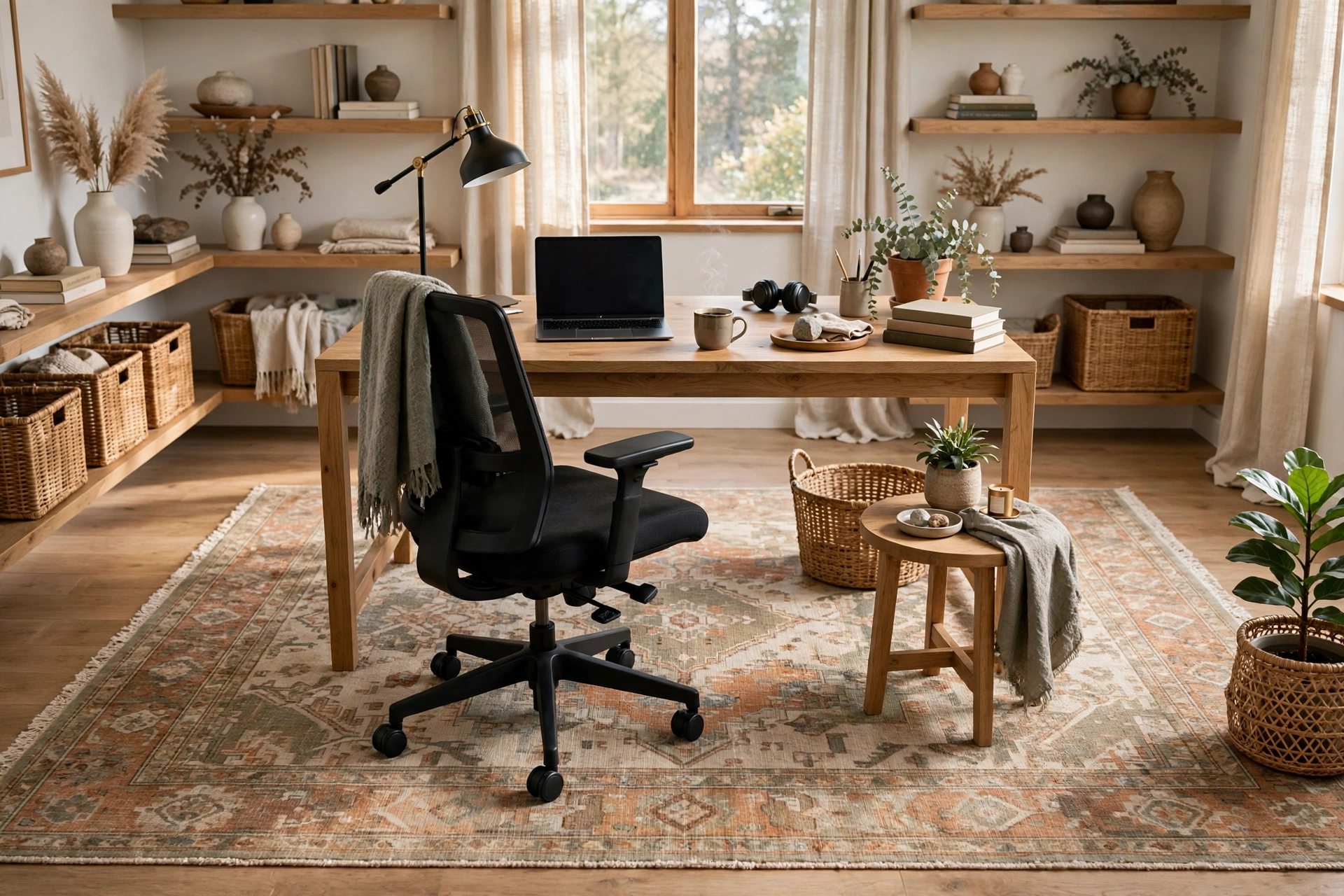
For most home offices, the choice comes down to two workhorse sizes. A 5×7 rug fits neatly under a standard desk and chair, defining the work zone without overwhelming a small room. An 8×10 goes further, holding the desk, chair, and often a bookshelf or side chair, creating a complete office suite feel. In a dedicated office room, the larger size almost always looks better, anchoring the furniture as one composition. In a bedroom corner or nook office, the 5×7 keeps the work zone distinct from the rest of the room. Measure your desk footprint, add the chair’s roll-back distance, and choose accordingly.
4. Try a Washable Rug for Worry-Free Workdays
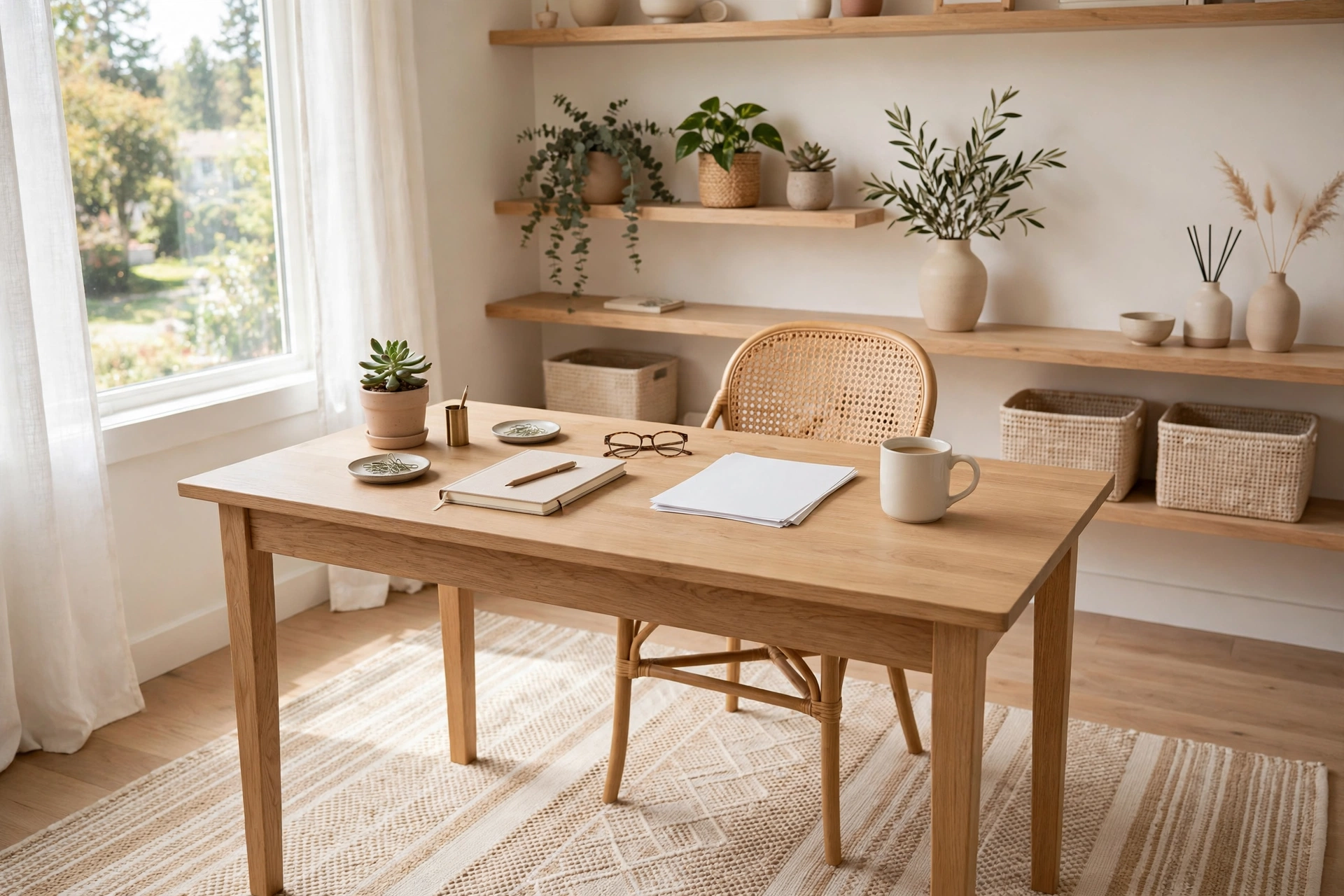
Coffee spills, ink marks, and lunch-at-the-desk crumbs are facts of office life, which makes washable rugs a brilliant choice. Modern washable rugs look nothing like their early predecessors, with convincing wool-look textures, vintage patterns, and plush feels that survive machine washing. Choose a low-pile washable rug so it fits under the desk and handles chair traffic. Keep a second cover or a backup rug if your machine cannot handle large sizes, or choose a two-piece system with a separate washable top layer. For busy households with kids or pets, washable is less a luxury and more a sanity saver.
5. Layer a Small Rug Over Wall-to-Wall Carpet
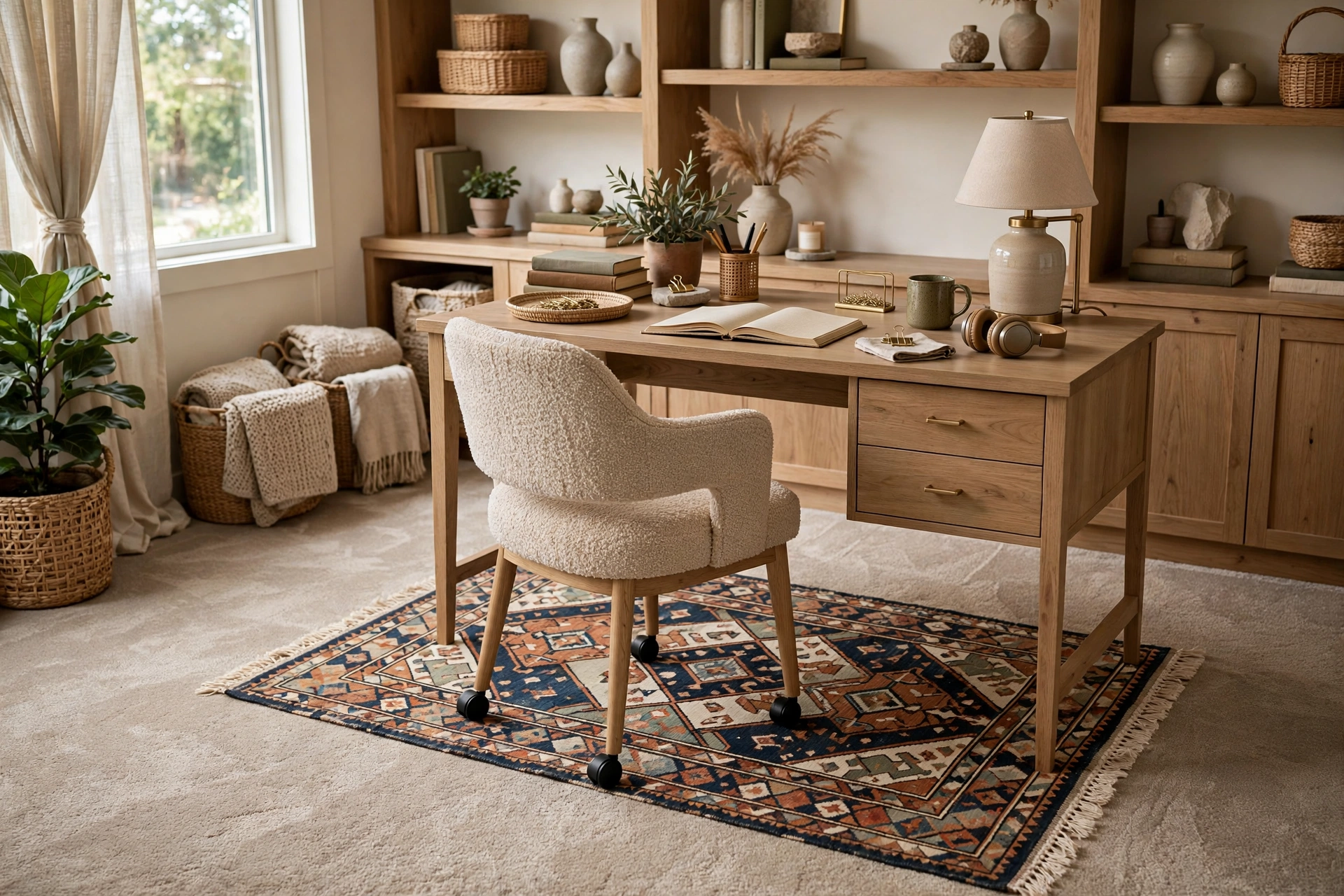
Wall-to-wall carpet does not mean you must skip an area rug. Layering a smaller rug over carpet defines your desk zone, adds pattern and color, and protects the carpet underneath from chair wear. Living room rug ideas for warmth and style cover layering techniques that translate perfectly to offices. Use a low-pile rug with a good grip pad so the layers do not shift, and choose a size that holds the full chair path. The layered look adds designer depth to an otherwise flat carpeted room, and it is completely renter-friendly.
6. Pick Calming Colors That Support Focus
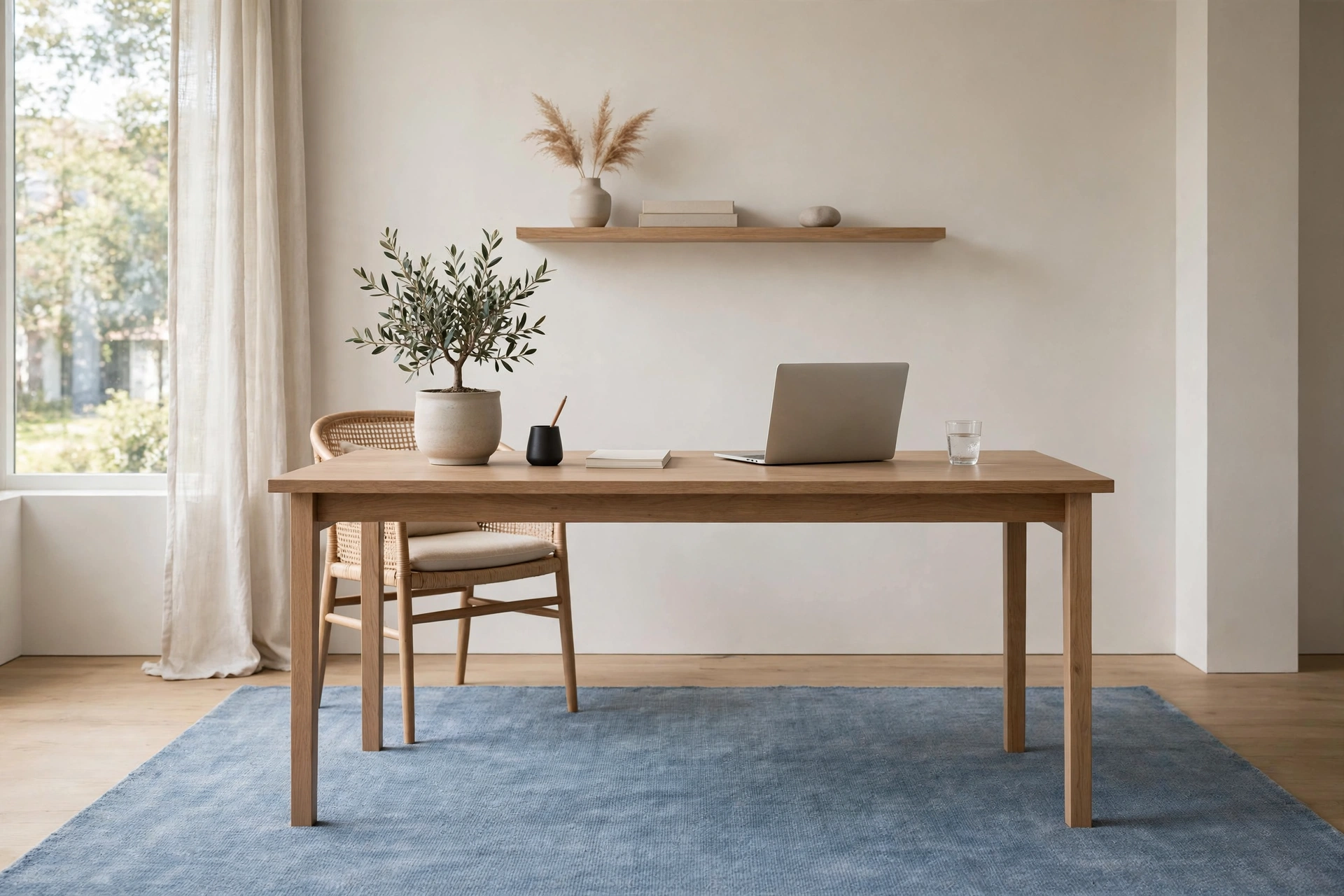
Color psychology matters when you stare at your surroundings all day. Cool tones like soft blue, sage green, and warm gray promote calm and concentration, while busy high-contrast patterns can feel visually noisy during long work sessions. That does not mean boring: a tonal geometric or a subtle texture adds interest without distraction. If your work is creative, a bit more color energy, terracotta, mustard, or deep teal, can spark inspiration. Sample the rug color in your office’s actual light, since screens and task lamps shift how colors read throughout the day.
7. Add Pattern to Spark Creativity
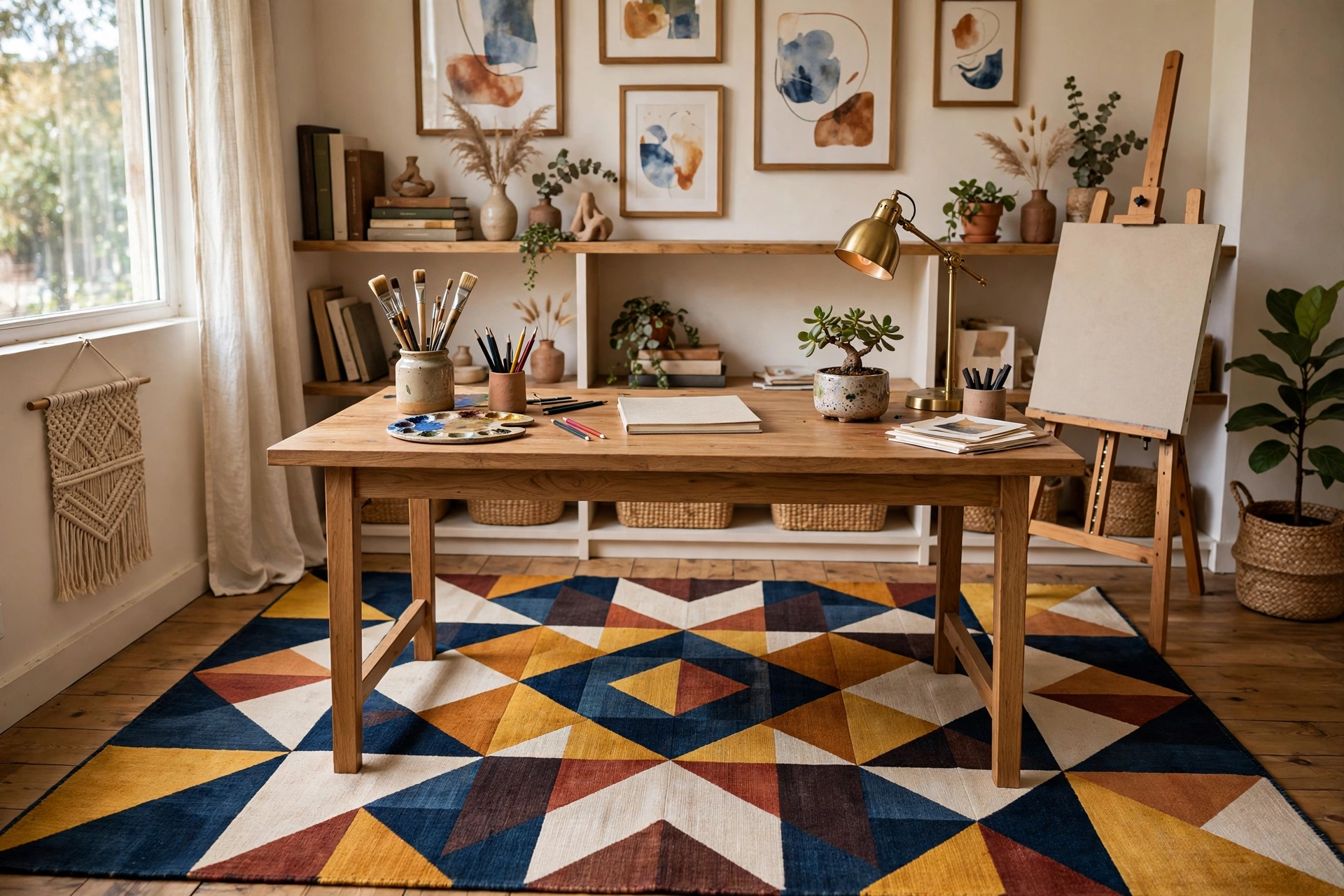
A patterned rug can be the creative spark your office needs, especially in minimalist workspaces that feel a little sterile. Geometric patterns add modern energy, vintage-inspired motifs bring character, and organic abstract designs feel artistic without demanding attention. Keep the scale in proportion to the room: large-scale patterns suit spacious offices, while smaller repeats work in compact nooks. If your rug is patterned, keep walls and large furniture relatively quiet so the floor can be the statement. Pattern also hides wear, crumbs, and the occasional coffee ring far better than a solid light rug.
8. Define a Nook Office With a Round Rug
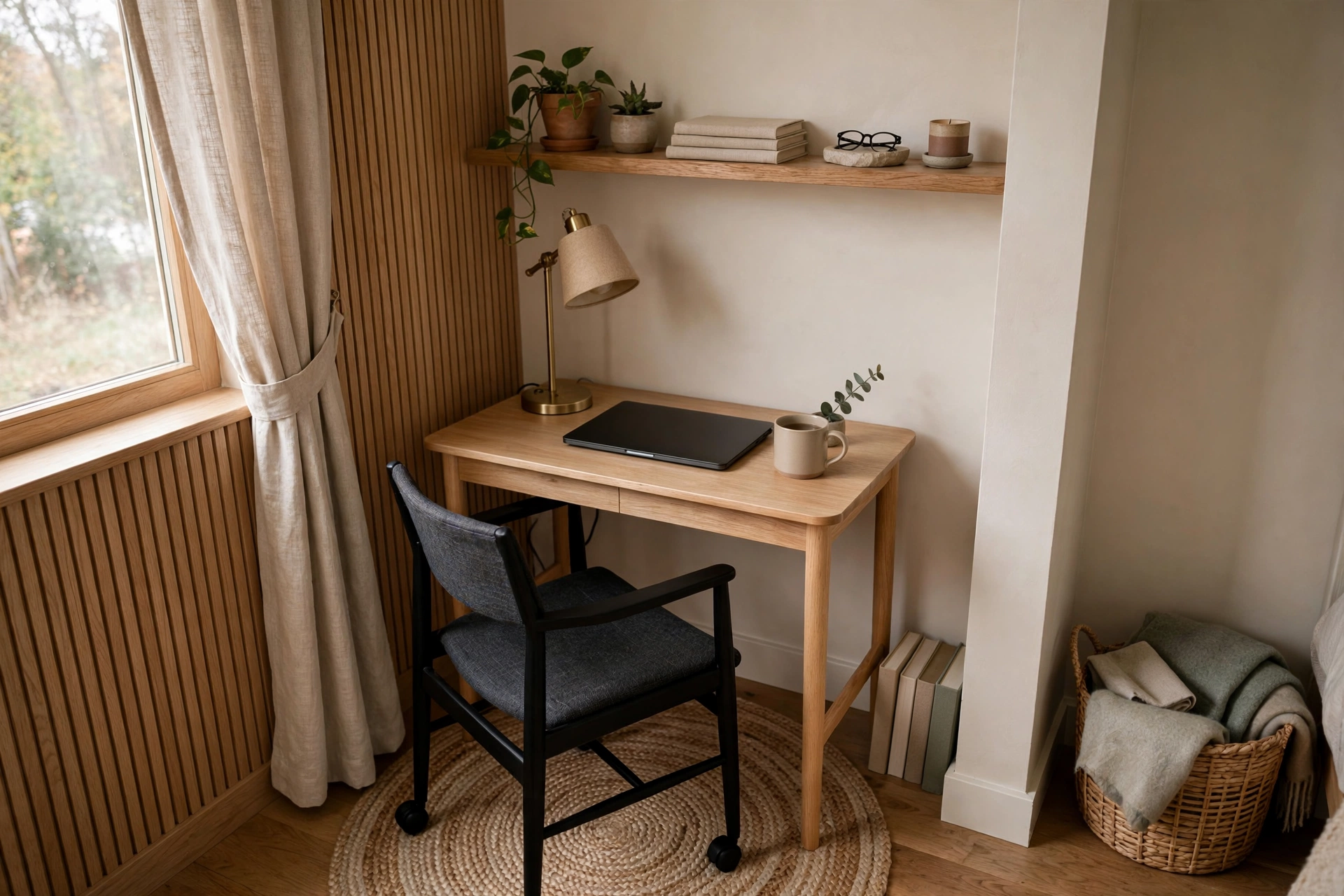
When your office is a corner of a bedroom or living room, a round rug is a clever zoning tool. Apartment Therapy’s small-space designers proved that smaller rugs can define distinct zones beautifully, including office nooks. A round rug under a small desk and chair carves out a clear work territory without the visual weight of a rectangle. Choose a diameter that contains the chair’s full roll path, typically at least five feet. Round rugs soften the hard angles of desks and shelving, and they make tight corners feel intentional rather than leftover.
9. Use Natural Fibers for Warmth and Texture

Jute, sisal, wool, and cotton rugs bring organic warmth that balances the tech-heavy feel of monitors and cables. A chunky jute rug grounds a bright Scandinavian-style office, while a soft wool rug adds luxury underfoot in a traditional study. Natural fibers are also durable and age gracefully, developing character rather than just wearing out. Note that coarse sisal can be tough on bare feet and tricky for rolling chairs, so reserve it for non-rolling zones or pair it with a chair mat. Wool remains the gold standard: naturally stain-resistant, resilient, and comfortable through long workdays.
10. Protect Hardwood With a Rug Pad
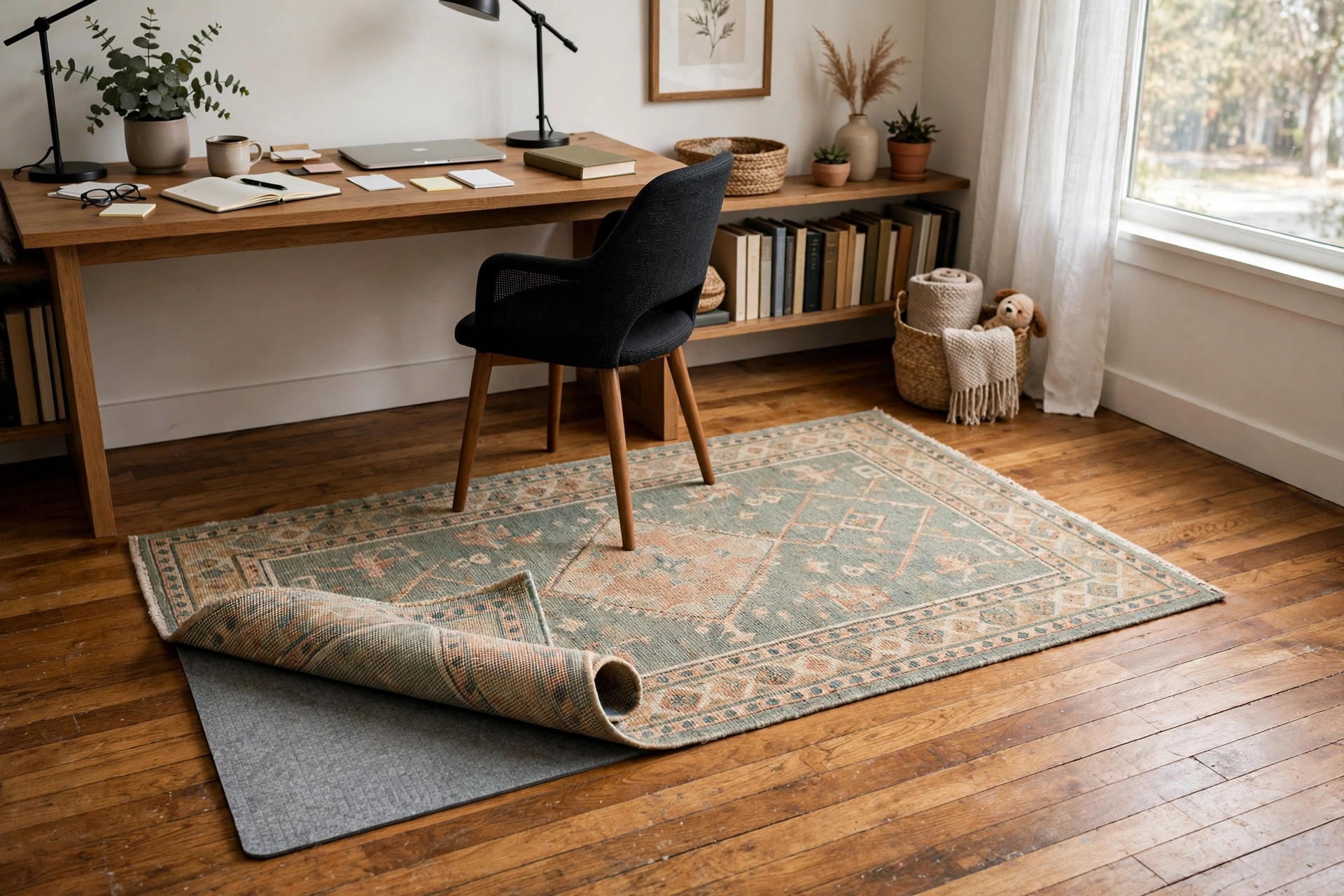
A rug pad is the unsung hero of every home office rug. It prevents slipping, adds cushioning underfoot, and most importantly protects hardwood floors from chair caster damage and rug-backing scratches. Choose a thin, dense pad rather than a thick spongy one, since thick pads make rolling chairs wobble and feel unstable. Look for pads specifically rated for use with office chairs, with a grippy surface on both sides. The pad also extends your rug’s life by absorbing the daily compression of chair wheels. It is a small investment that protects both your floor and your rug.
11. Try a Vintage Rug for Character
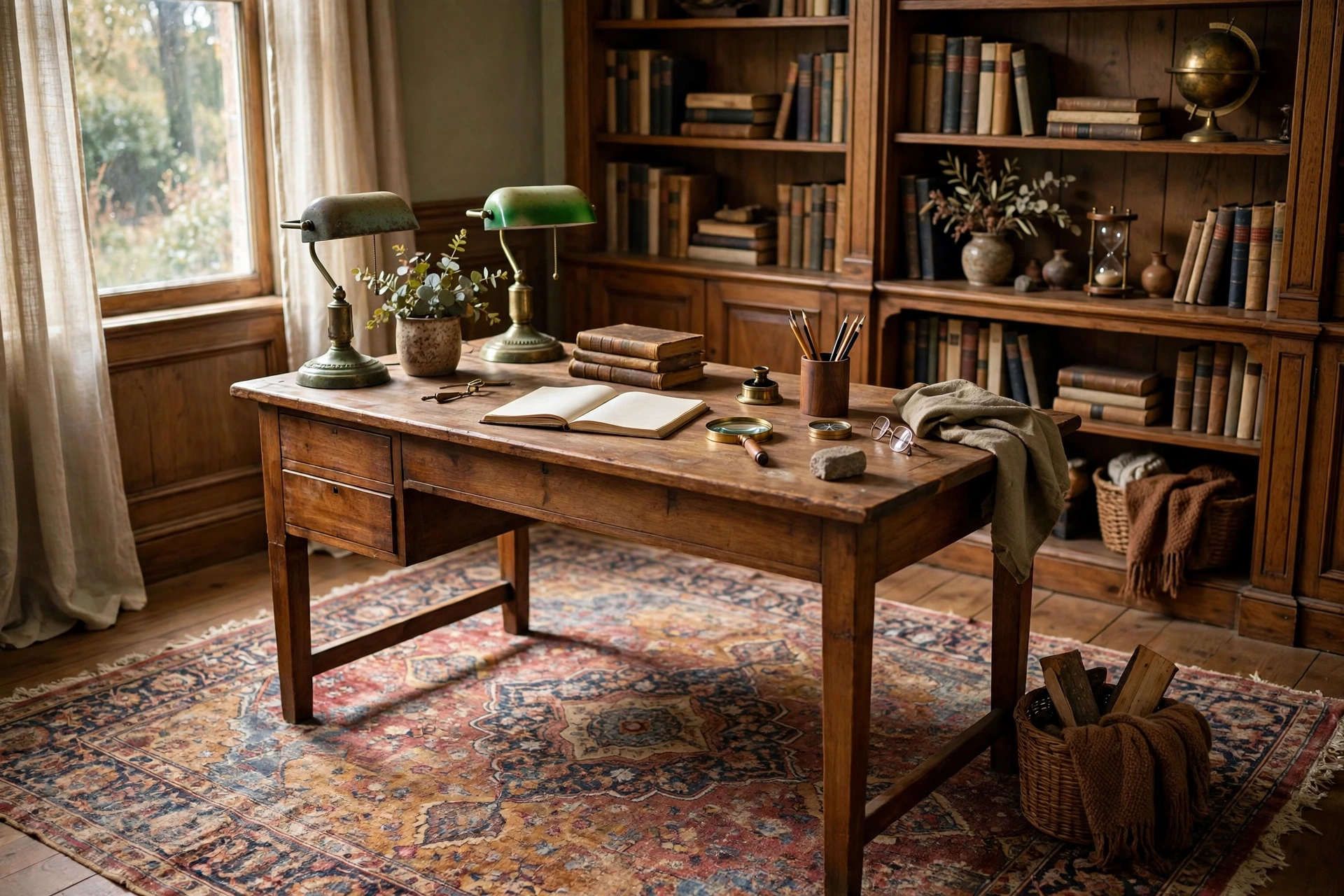
A vintage or vintage-look rug brings instant soul to a home office, with faded patterns and rich colors that make the room feel collected rather than decorated. Persian, Turkish, and Oushak styles pair beautifully with wood desks and leather chairs for a classic study feel. The worn patina hides everyday wear brilliantly, which is ideal under a rolling chair. If authentic vintage is out of budget, today’s reproductions capture the look convincingly at a fraction of the price. Just check that the pile is low and even enough for smooth chair movement before committing.
12. Keep It Neutral to Let Furniture Lead
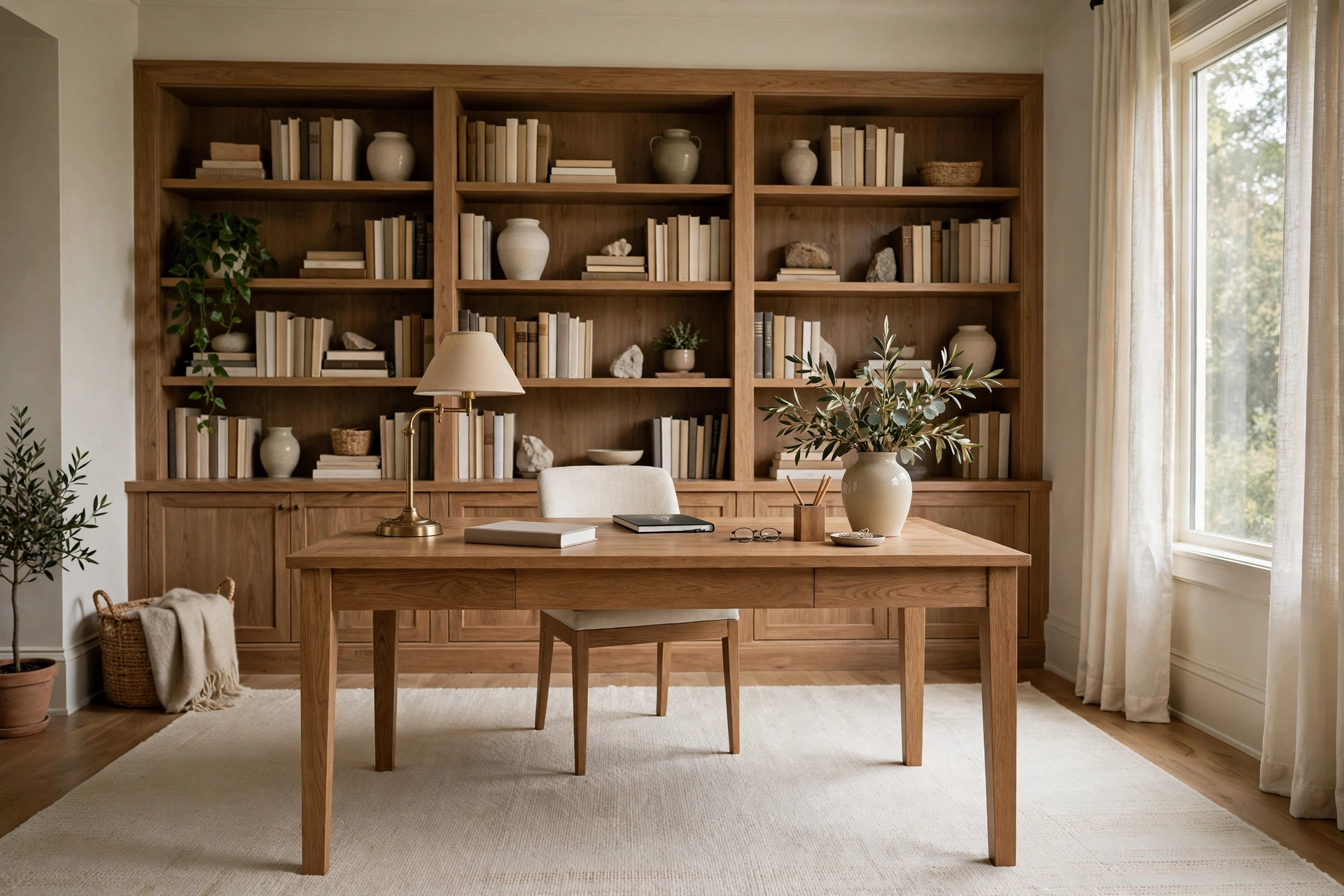
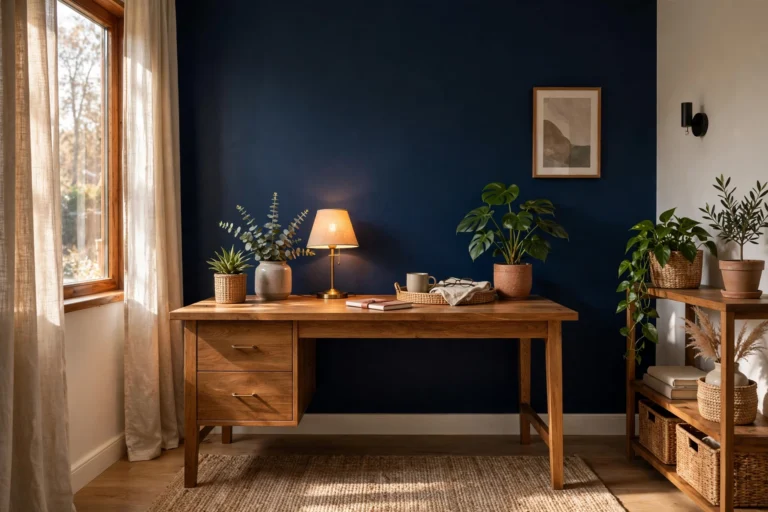
If your desk, shelving, and art are already doing the talking, a neutral rug provides the quiet foundation they need. Warm ivory, soft gray, natural jute tones, or greige let beautiful furniture and a gallery wall take center stage. Neutral does not have to mean flat: look for subtle texture like a hand-knotted weave, a faint geometric, or a tone-on-tone border. A neutral rug also adapts effortlessly when you redecorate, making it the most future-proof choice. In small offices, a light neutral rug visually expands the floor and keeps the room feeling open.
13. Zone an Open-Plan Space With the Rug
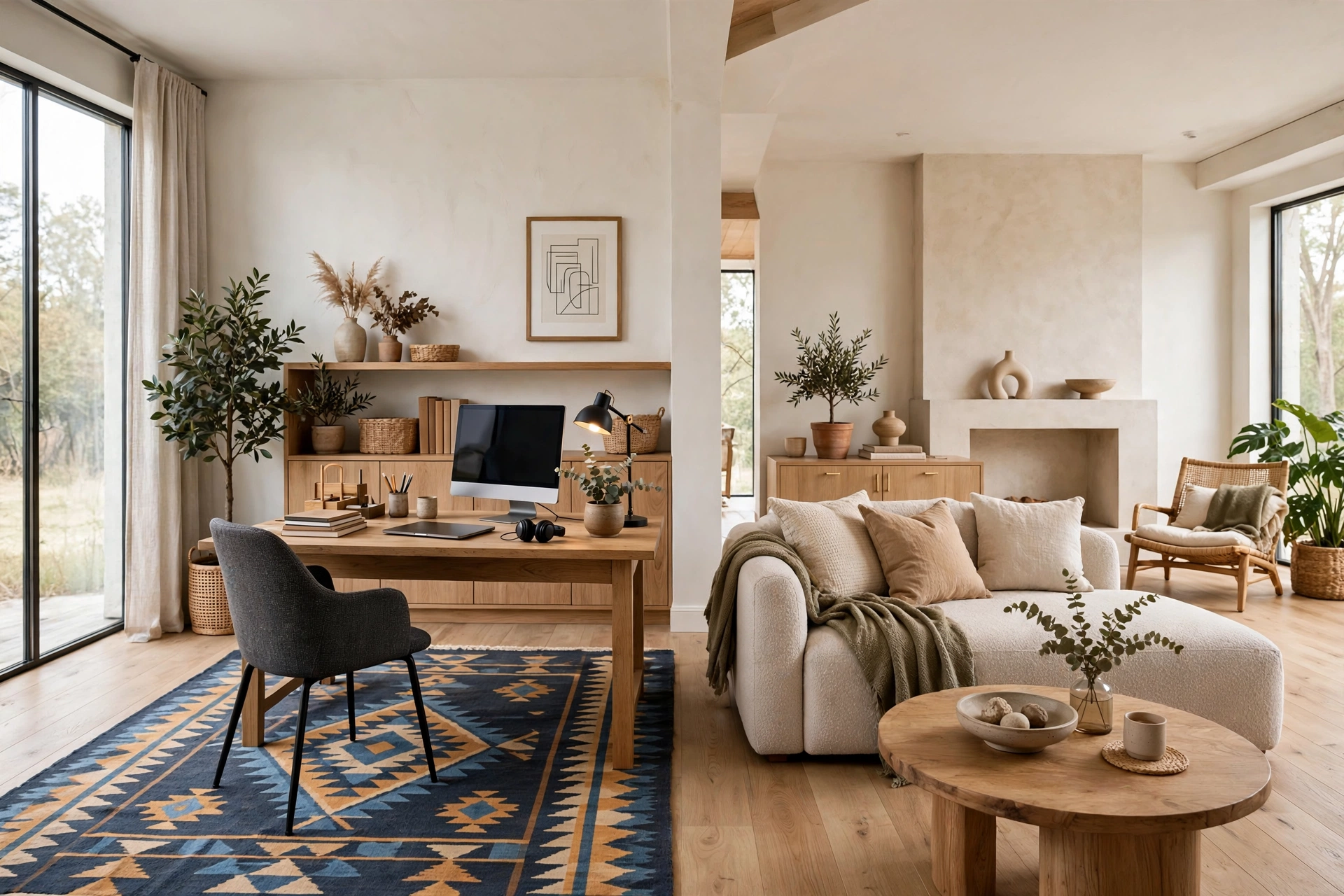
In open-plan homes where the office shares space with living or dining areas, the rug is your most powerful zoning tool. A distinct rug under the desk setup visually separates work from relaxation, which helps your brain switch modes at the start and end of the day. Choose an office rug that coordinates with, but does not match, the living area rug, using a shared color or complementary pattern. Position the rug so its edges clearly mark the work territory. This simple boundary makes a shared space feel organized and helps maintain work-life balance when home is also the office.
14. Match the Rug to Your Lighting
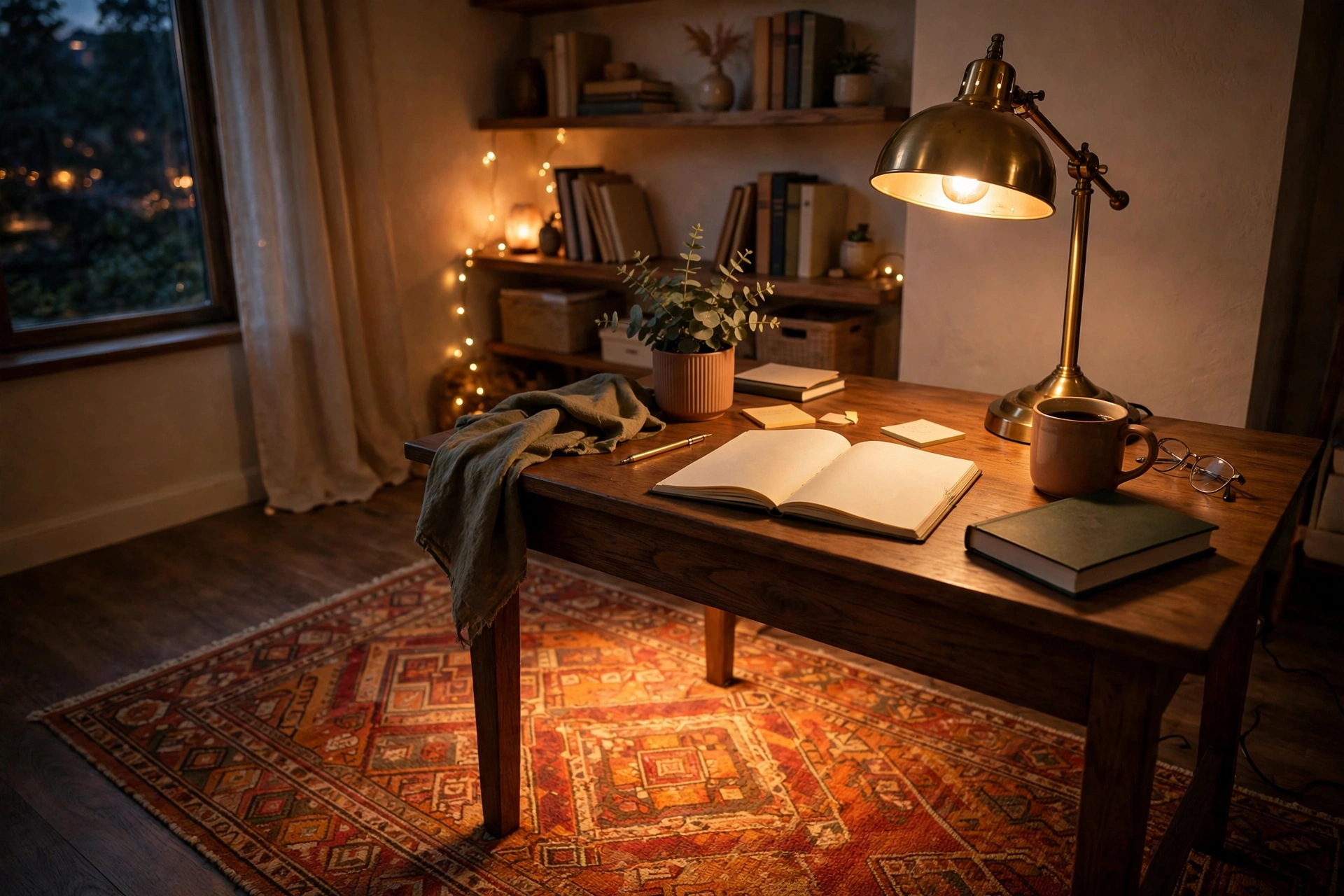
Rug color and office lighting interact constantly, so consider them together. North-facing rooms with cool light warm up beautifully with rugs in honey, terracotta, or warm beige tones. Bright south-facing offices can handle cooler grays and blues without feeling chilly. Home office lighting ideas for bright productive days will help you layer task and ambient light over your new rug. Dark rugs absorb light and can make a dim office feel smaller, while light rugs bounce brightness around. Test rug samples under your actual desk lamp, since task lighting dramatically shifts color perception.
15. Refresh Seasonally With a Simple Swap
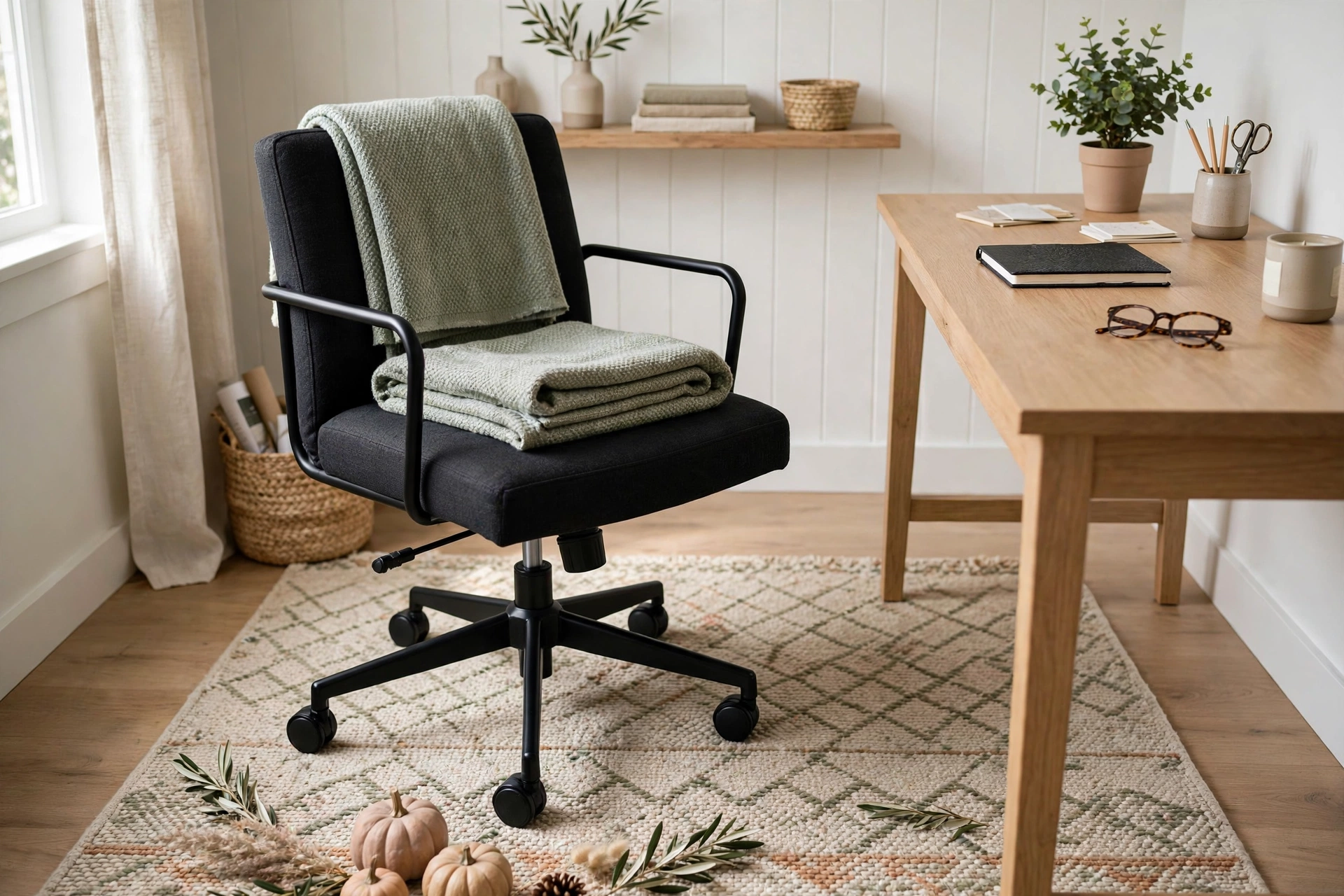
You do not need a new rug every season, but small seasonal touches keep your workspace feeling fresh. Layer a sheepskin throw over your office chair in winter, swap a light cotton rug for a warmer wool one, or simply rotate your rug 180 degrees to even out wear. A washable rug cover in a seasonal color is an easy change with big impact. These small refreshes cost little but fight the staleness that creeps into a room you see every day. A workspace that evolves slightly with the seasons feels cared for, and a cared-for workspace is one where focus comes easier.
Frequently Asked Questions
What size rug should I put under my desk?
For a standard desk with a rolling chair, a 5×7 rug is the minimum and an 8×10 is ideal. The key rule is that your chair must stay on the rug through its entire roll-back path, so measure from the desk front to your chair’s farthest position and add a margin. For L-shaped or large executive desks, size up to 8×10 or 9×12. When in doubt, choose the larger size; too-small rugs catch casters and look undersized.
Can you put a rolling office chair on a rug?
Yes, with the right rug. Choose low-pile, flatweave, or short dense-pile rugs that let casters roll smoothly, and always use a thin dense rug pad rated for office chairs. Avoid high-plush rugs, which trap wheels and wear quickly. Consider upgrading to soft polyurethane caster wheels, which roll quietly on rugs and protect both the rug and the floor beneath. A chair mat over the rug is another option for maximum glide.
What is the best rug material for a home office?
Wool is the top all-around choice: durable, naturally stain-resistant, resilient under chair traffic, and comfortable. Low-pile synthetic rugs in nylon or polypropylene offer excellent durability and stain resistance at lower prices. Washable rugs are ideal for messy households. Avoid delicate materials like silk or high-pile shag in the rolling zone. Whatever you choose, prioritize low pile and a tight weave for the area under your chair.
Should a home office rug be light or dark?
It depends on your light and lifestyle. Light rugs brighten dim offices and make small spaces feel larger, but they show dirt and wear faster. Dark rugs hide wear beautifully and add grounding weight, but they can make a poorly lit room feel smaller. Medium tones with subtle pattern offer the best of both worlds. Consider your room’s natural light first, then choose accordingly.
How do I keep my office rug from sliding?
Use a quality rug pad with grip on both sides, sized slightly smaller than the rug itself. For rugs on hard floors, a thin rubber-backed pad works best; on carpet, use a pad designed for rug-over-carpet layering. Make sure the rug is large enough that your chair never rolls off its edge, since edge-catching is the main cause of shifting. Furniture legs on the rug’s corners also help anchor it firmly in place.
Keep Exploring
The right rug does more than decorate your home office; it defines how the room feels and functions every workday. Whether you chose a perfectly sized low-pile workhorse, a characterful vintage find, or a calming neutral foundation, these home office rug ideas show how one thoughtful choice grounds your entire workspace. Measure twice, consider your chair, and pick the rug that makes you want to sit down and get to work.
With the floor sorted, keep building a workspace that works as hard as you do. Explore more Home Office Ideas for desk setups, lighting, and organization, and create an office that keeps you focused, comfortable, and inspired all day long.

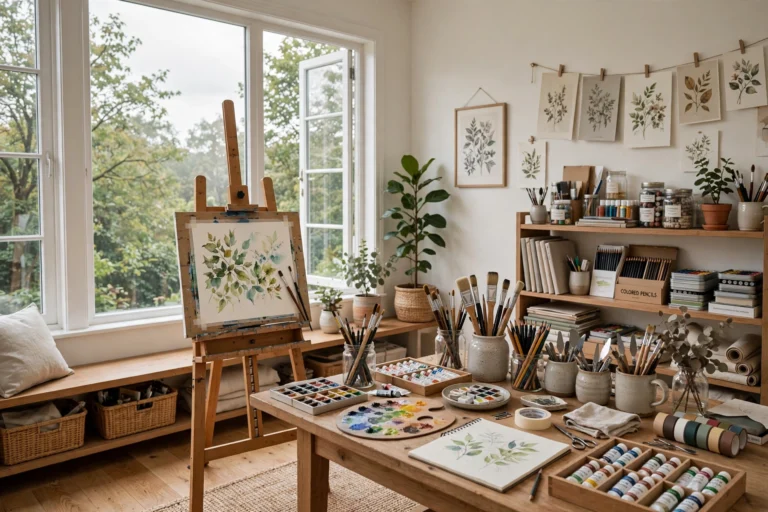




[…] Alternatively, a clear chair mat over carpet gives smooth rolling without hiding the floor. Our home office rug ideas for a grounded focused workspace cover sizing and materials in […]