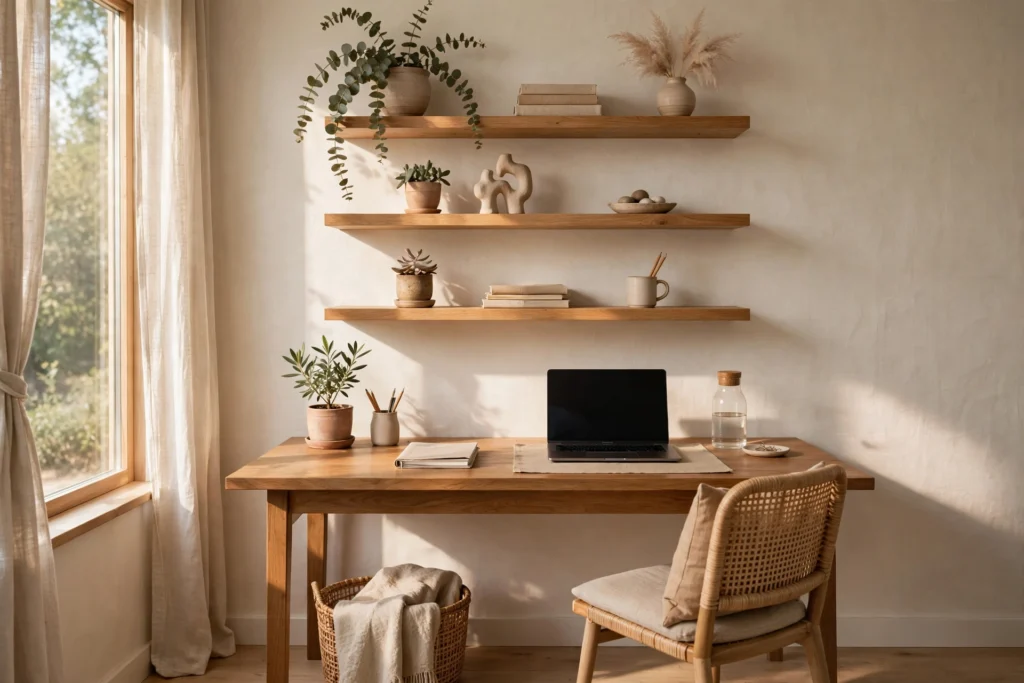

Finding the right home office shelving ideas can change the way your whole workday feels. A well-planned shelf wall keeps supplies close, hides the clutter, and gives your desk room to breathe. Whether you rent a tiny apartment or own a dedicated study, the right shelves bring order and personality to the same space. In this guide, you will find fifteen practical options for every layout and budget. From floating shelves that take up zero floor space to full-height built-ins that double as a library, each idea is easy to style and simple to live with. Let us turn that blank wall into the hardest-working corner of your home.
1. Floating Shelves Above The Desk
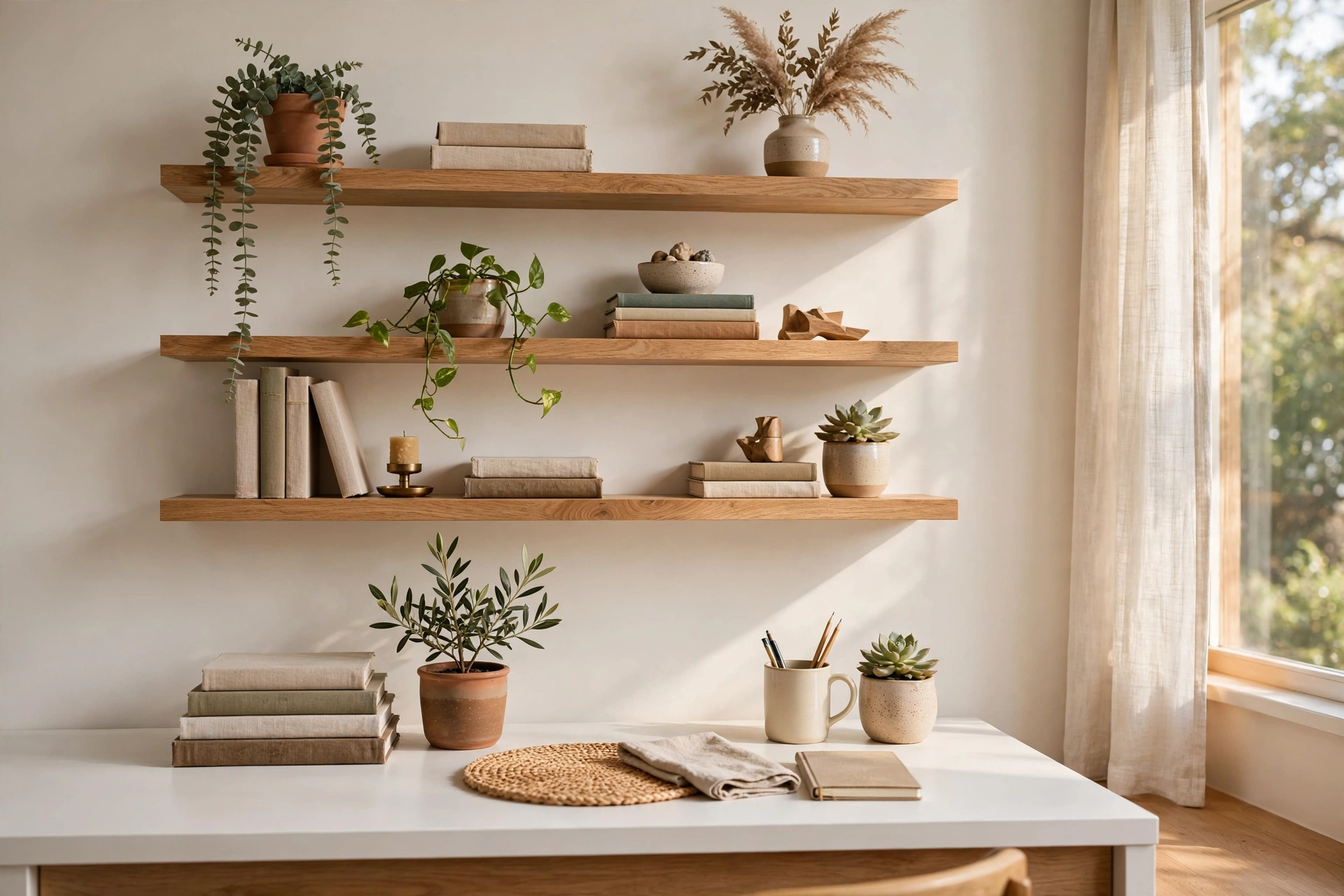
Floating shelves are the simplest way to add storage without legs or bulk. Mounted into wall studs, they hold books, binders, and small bins while leaving the desk surface clear for your laptop and coffee. Keep everyday items on the lowest shelf within arm’s reach, then style the upper rows with plants, framed prints, and a few favorite objects. Choose shelves slightly wider than your desk so the composition looks balanced, and finish them in the same tone as your desk for a calm, pulled-together look.
2. Floor-To-Ceiling Built-Ins
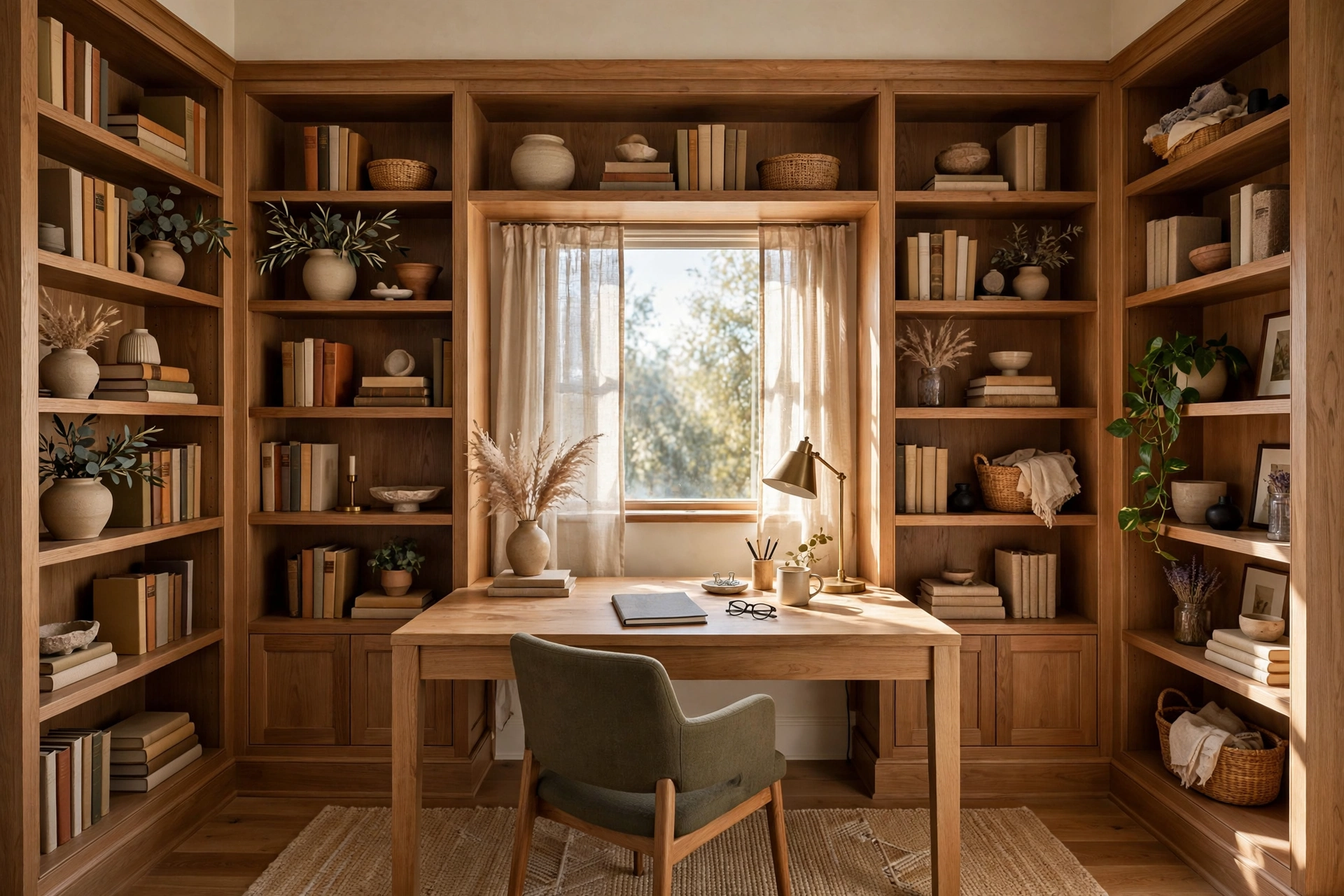
Floor-to-ceiling built-ins turn a plain wall into a serious storage engine. Cabinets at the bottom hide printers, paper, and cables, while open shelves above display books and decor. Because they use the full height of the room, you gain storage that a freestanding bookcase cannot match. Have the unit painted the same color as the walls so it reads as architecture rather than furniture. Add a picture light across the top for a warm evening glow. More built-in shelving inspiration, look for designs that mix closed doors with open bays.
3. Ladder Shelf For The Corner
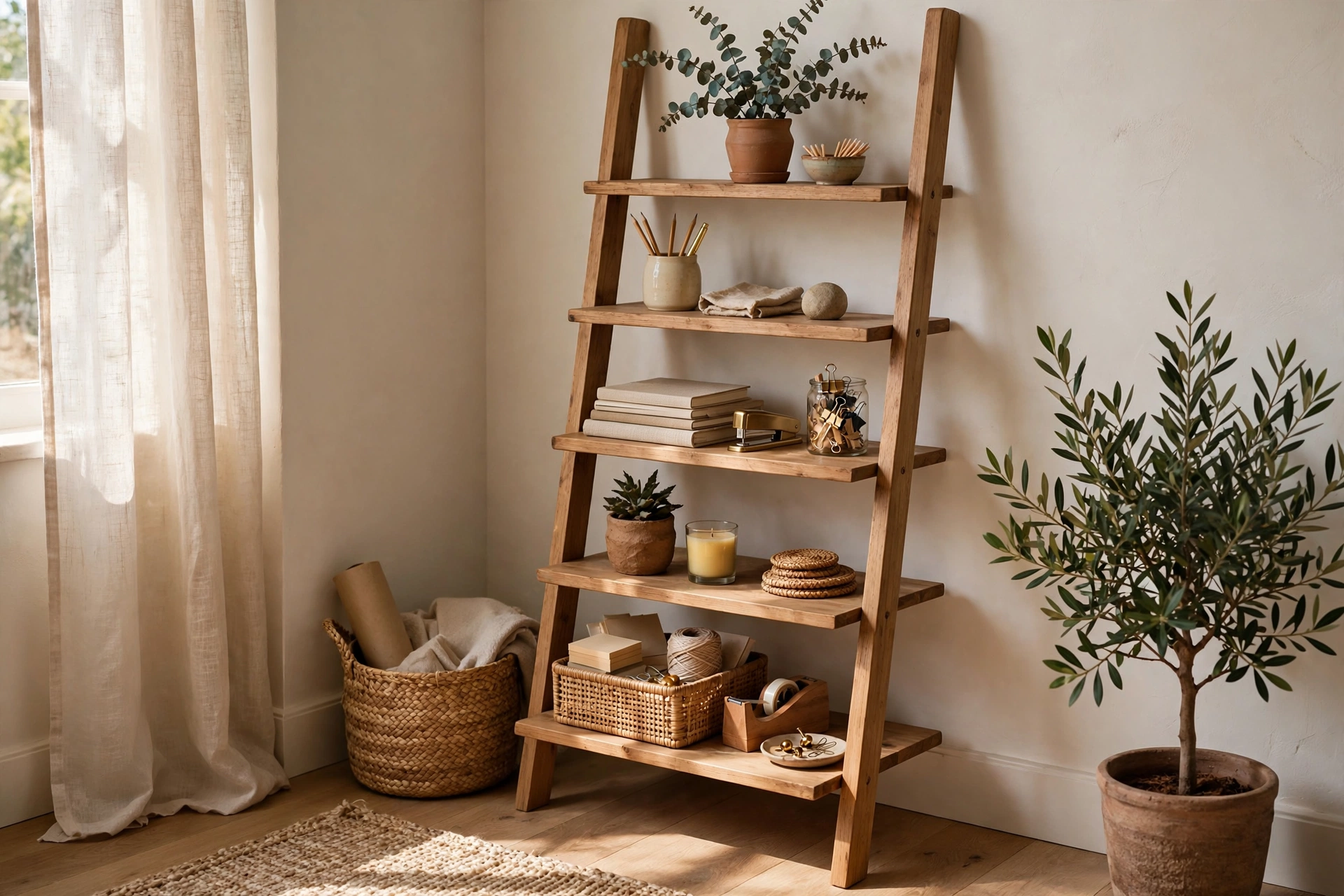
A leaning ladder shelf slips into an awkward corner and instantly makes it useful. The tapered design means wider shelves at the bottom for baskets and files, and narrower ones at the top for small plants and frames. Because it leans rather than mounts, renters can use it without drilling a single hole. Anchor the top to the wall with a small bracket if you have kids or pets. Keep the palette tight by using matching bins on the lower rungs, and leave the top shelf mostly empty so the corner breathes.
4. Cube Storage Shelving
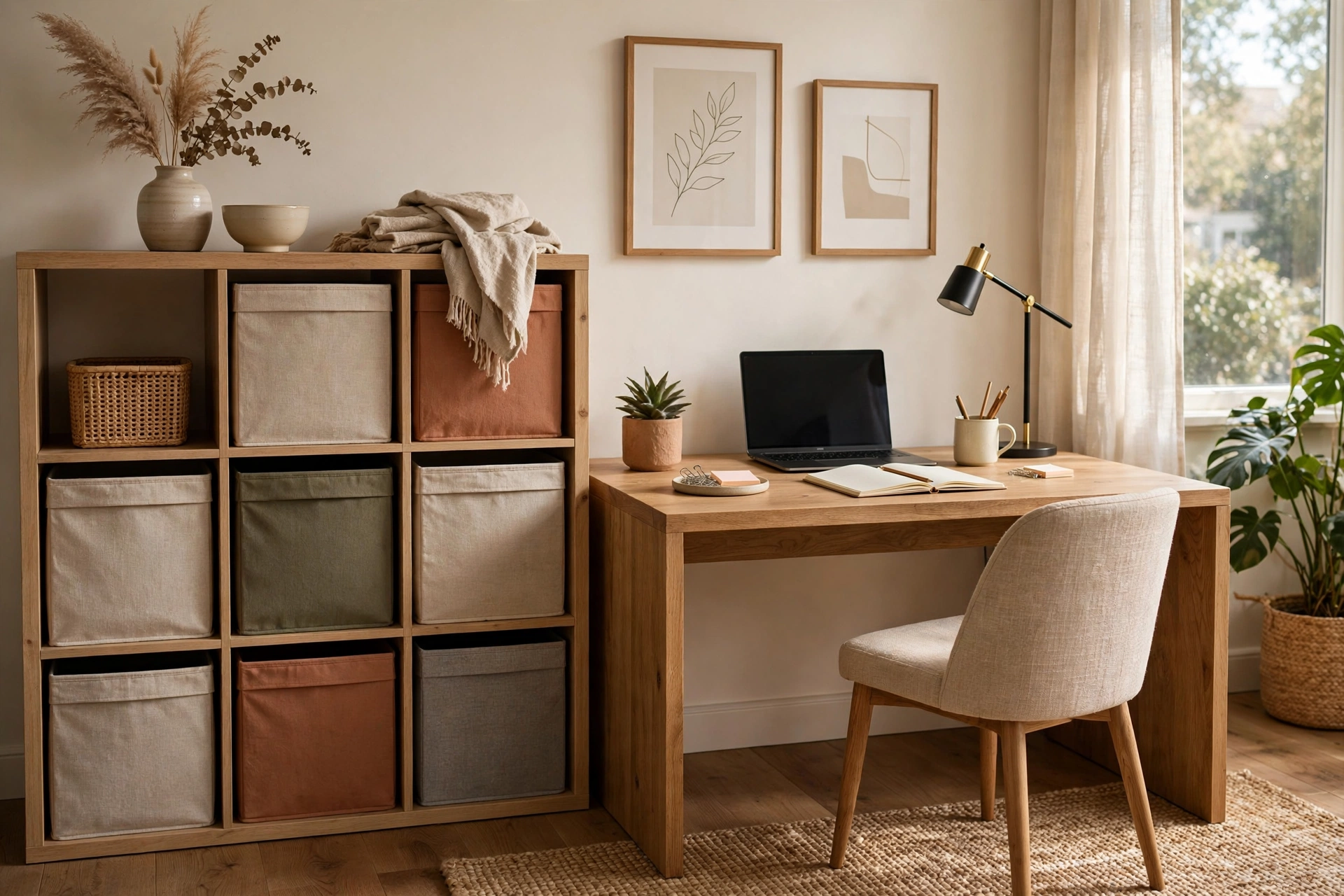
Cube shelving brings friendly order to a busy home office. Each cube holds one category — chargers in one, notebooks in another, craft supplies in a third — so everything has a home. Slide in fabric bins to hide the visual noise, and leave a few cubes open with books stacked horizontally for a relaxed look. Most units are modular, so you can start with a four-cube base and add rows as your needs grow. Place the unit sideways beside your desk to double as a return, or stand it tall against the wall.
5. Corner Floating Shelves
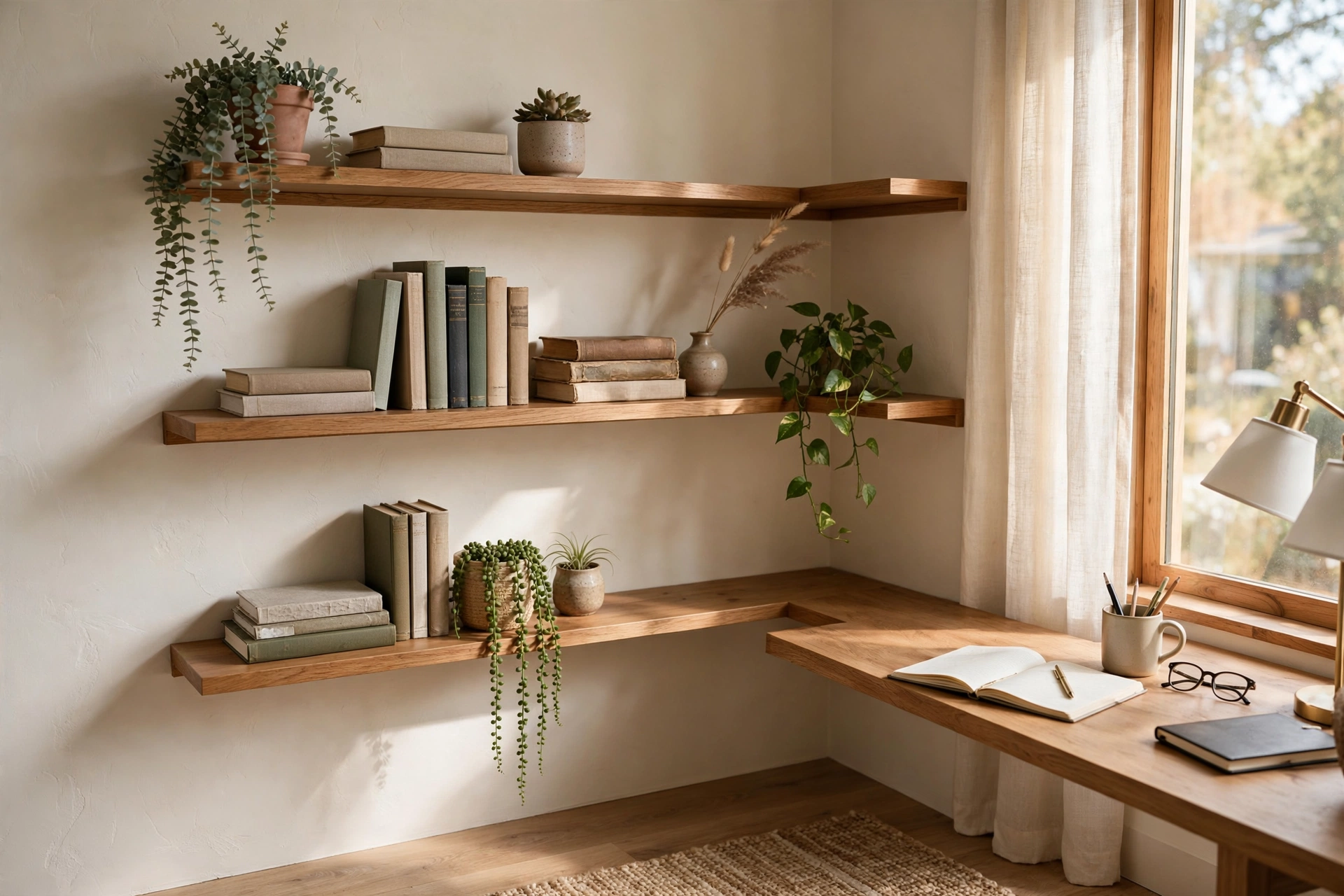
Dead corners are wasted square footage, but L-shaped floating shelves wake them up. Two short shelves meeting at ninety degrees hold more than you would expect — reference books on one arm, a small speaker and plant on the other. Install them at staggered heights so the corner feels sculptural instead of boxed in. Is a strong move for anyone following home office organization ideas, since corners often collect stray piles. Keep each arm to one purpose so the setup stays tidy, and add a small picture light above if the corner runs dim.
6. Picture-Ledge Shelves For Books
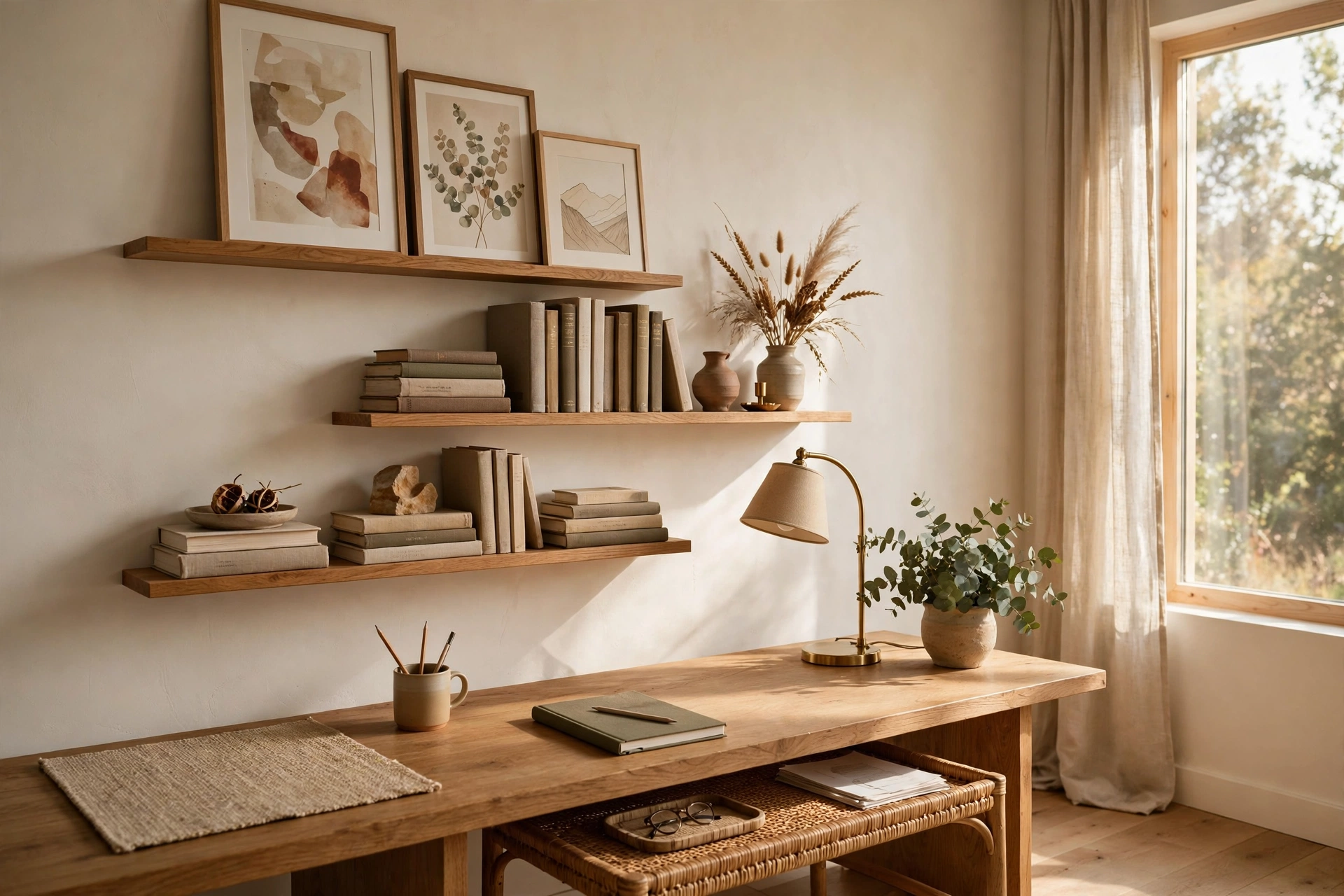
Picture ledges are narrow shelves with a front lip, and they are brilliant for the books you actually use. Instead of filing spines away, you face the covers forward like a gallery, so finding a title takes seconds. Stack two or three ledges above a side table or along a wall you pass daily. Because the shelves are shallow, they never collect the deep clutter that wide shelves invite. Rotate the display with the seasons or your current projects to keep it fresh. Paint the ledges your wall color so the books become the stars.
7. Industrial Pipe Shelving
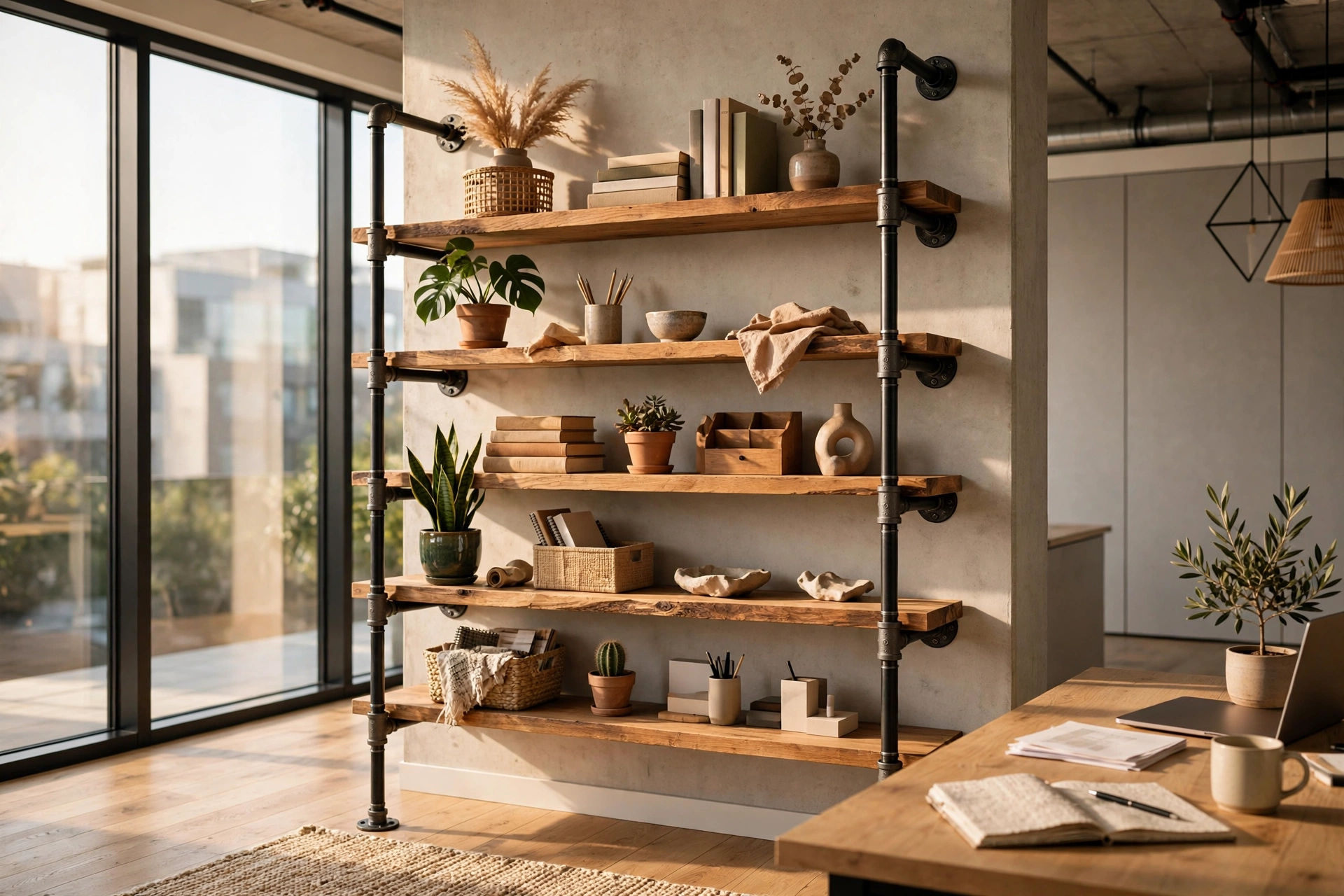
Black iron pipe and thick wood planks give your office a confident workshop feel. The system is endlessly adjustable — add elbows, flanges, and extra tiers as your storage needs change. Because the brackets are the decor, you can leave the shelves simply styled with honest materials like kraft boxes, glass jars, and metal bins. Make sure the flanges land on wall studs, since this look is heavier than standard floating shelves. Sand and seal the wood so splinters never bother your hands. Pipe shelving pairs well with a metal desk and warm Edison-bulb lighting for a cohesive corner.
8. Wall-Mounted Shelf Desk Combo
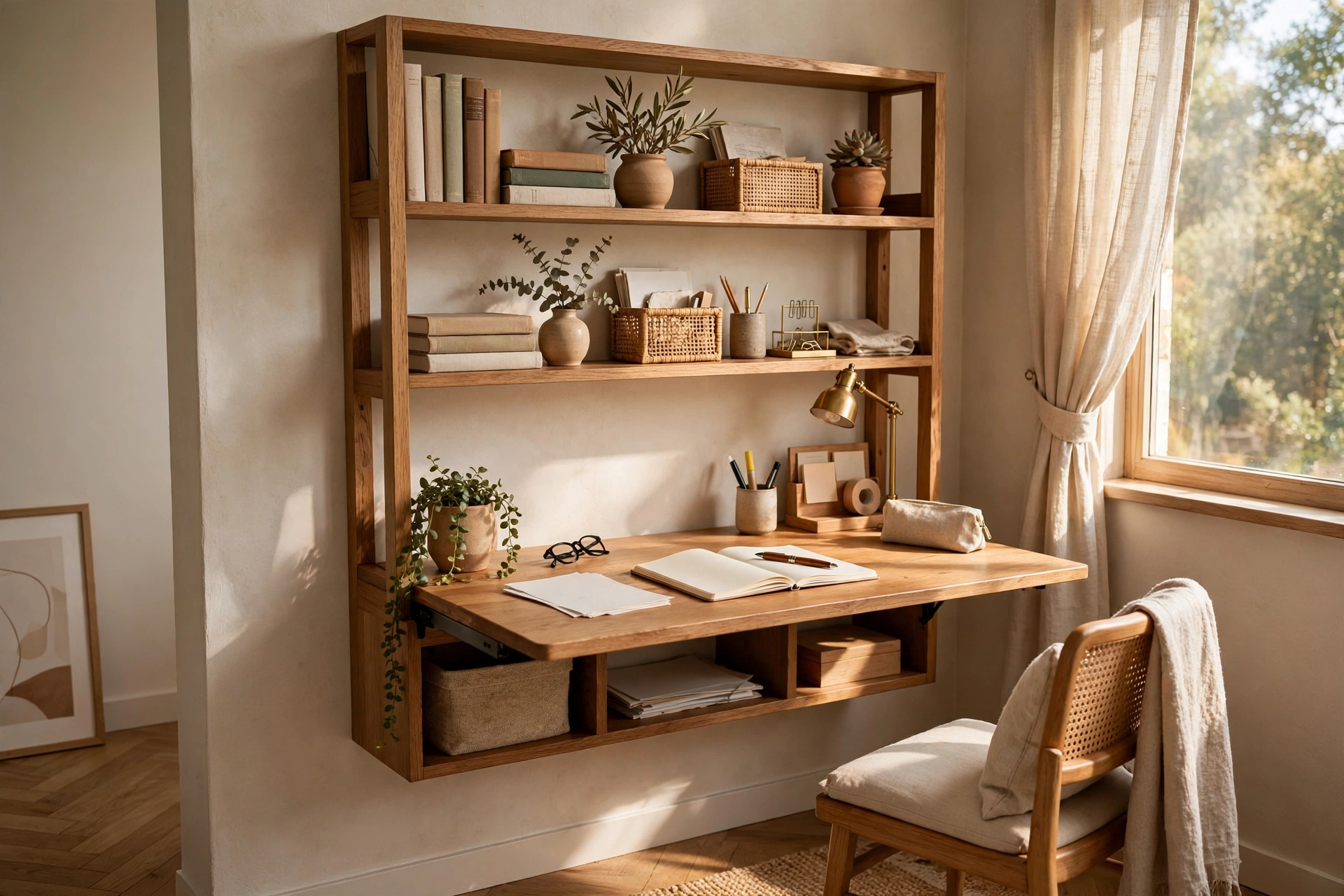
When floor space is the scarcest resource, let the wall do double duty. A wall-mounted desk with shelves stacked above it creates a complete workstation in about three feet of width. Fold-down desks disappear after hours, which suits guest rooms and studio apartments perfectly. Store daily tools on the lowest shelf, reference material higher up, and keep one shelf purely decorative so the setup never feels like a cubicle. Good home office layout ideas often start with the desk against the wall, and this combo takes that logic one step further. Check weight ratings before loading a heavy printer on top.
9. Pegboard Shelving Wall
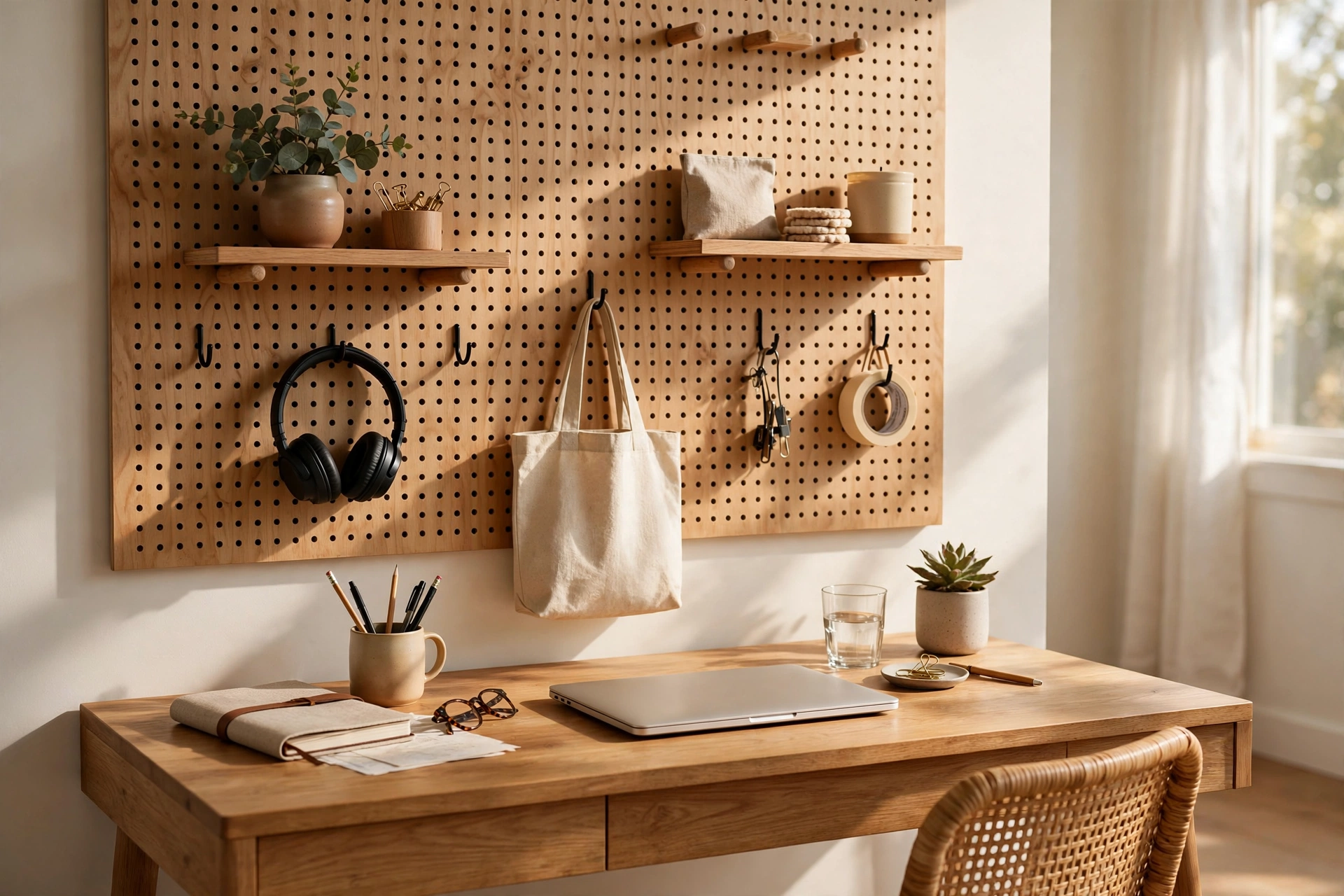
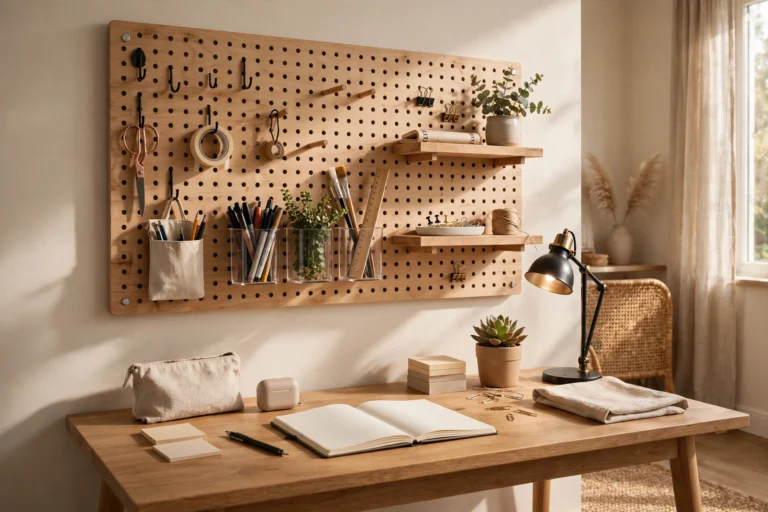
A pegboard wall is the most flexible shelving you can own. Small shelves, cups, hooks, and clips rearrange in minutes without new holes, so your setup evolves with every project. Paint the board a soft neutral or a bold accent color to make it part of the decor. Hang a narrow shelf for notebooks, cups for pens and scissors, and a small tray for the items you grab constantly. Keep one consistent color for the accessories so the board reads as designed rather than chaotic. Reset the layout whenever projects change to keep it fresh.
10. Glass Shelves For An Airy Look
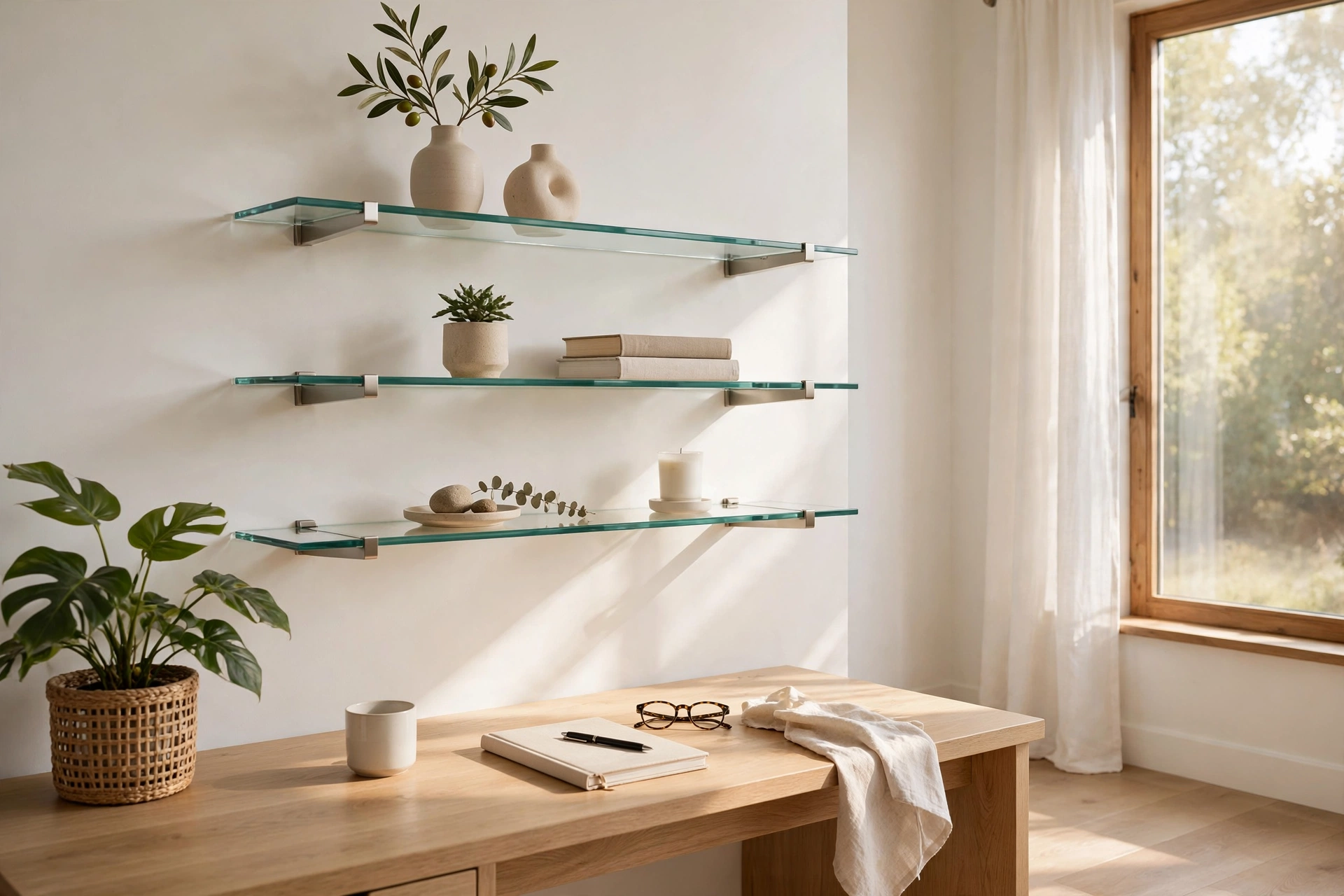
Thick tempered-glass shelves nearly disappear against the wall, which makes them ideal for small or dark offices. Light passes through them instead of being blocked, so the whole corner feels brighter. Style them lightly — a small plant, a stack of two books, one framed photo — because everything shows from every angle. Use polished chrome or brushed brass brackets for a jewelry-like detail. You want more home office design ideas that keep small rooms feeling open, glass shelving is a recurring favorite. Clean the shelves weekly, since dust is very visible on glass.
11. Alcove Shelving
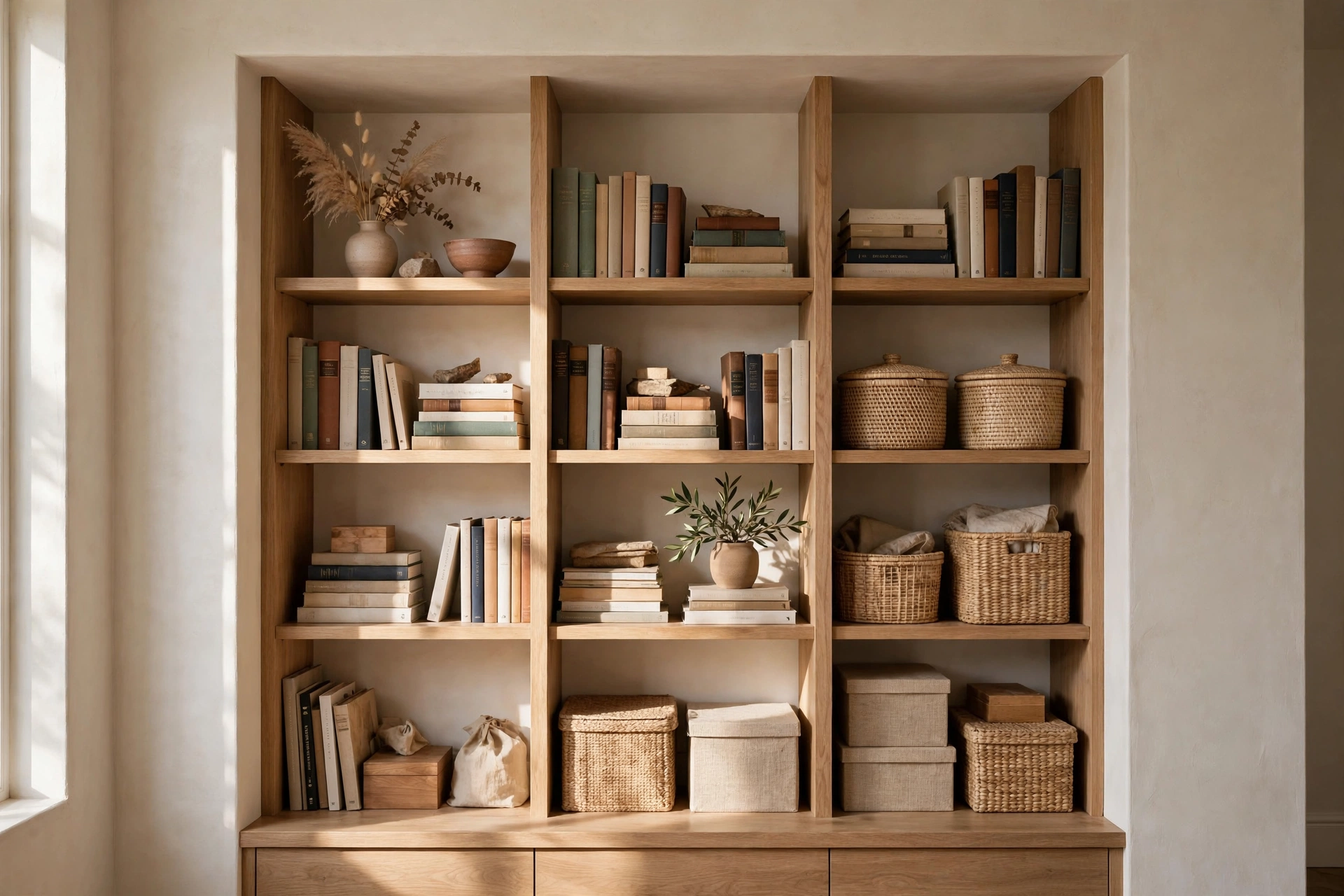
That odd recessed nook beside the chimney breast or under the stairs is shelving waiting to happen. Cut shelves to fit the alcove exactly and paint them the wall color for a built-in look at a fraction of the cost. Deeper alcoves hold printers and filing boxes, while shallow ones suit books and framed art. Add a small LED strip under each shelf so the recess never feels like a cave. Because the shelves sit inside the wall plane, they add zero bulk to the room. Scribe the shelf ends for a snug fit, since alcoves are rarely perfectly square.
12. Under-Desk Side Shelving
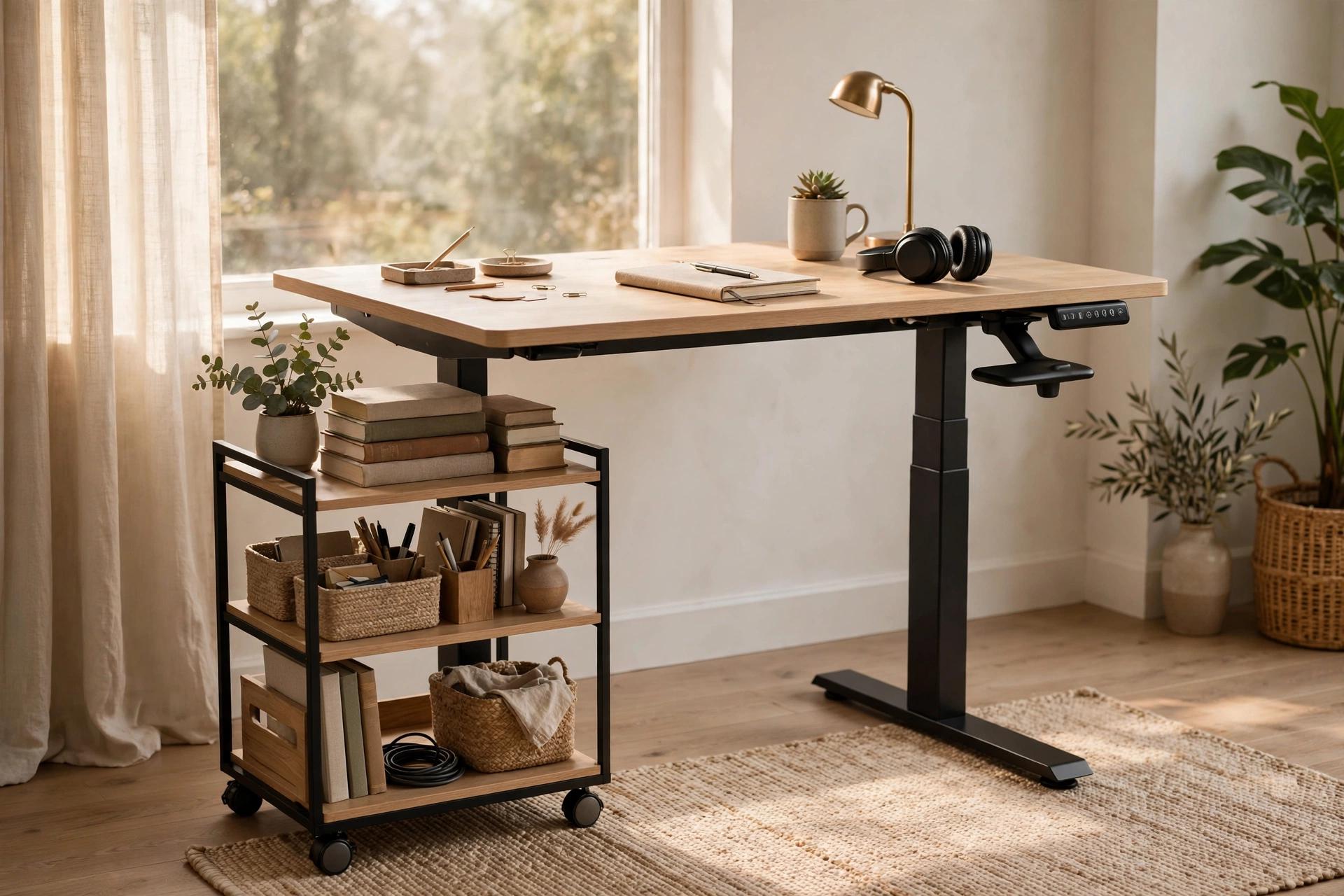
The space beside your knees is prime real estate. A slim rolling cart or a narrow shelf unit tucked under the desk keeps the printer, shredder, or backup drive within reach but out of sight. Choose a unit slightly shorter than the desk so it slides in cleanly, and add casters so you can pull it out for paper changes. Keep cables clipped to the back of the desk so the cart rolls without snagging. It clears the desktop of the bulky items that eat your working space every day.
13. Styled Bookcase Wall
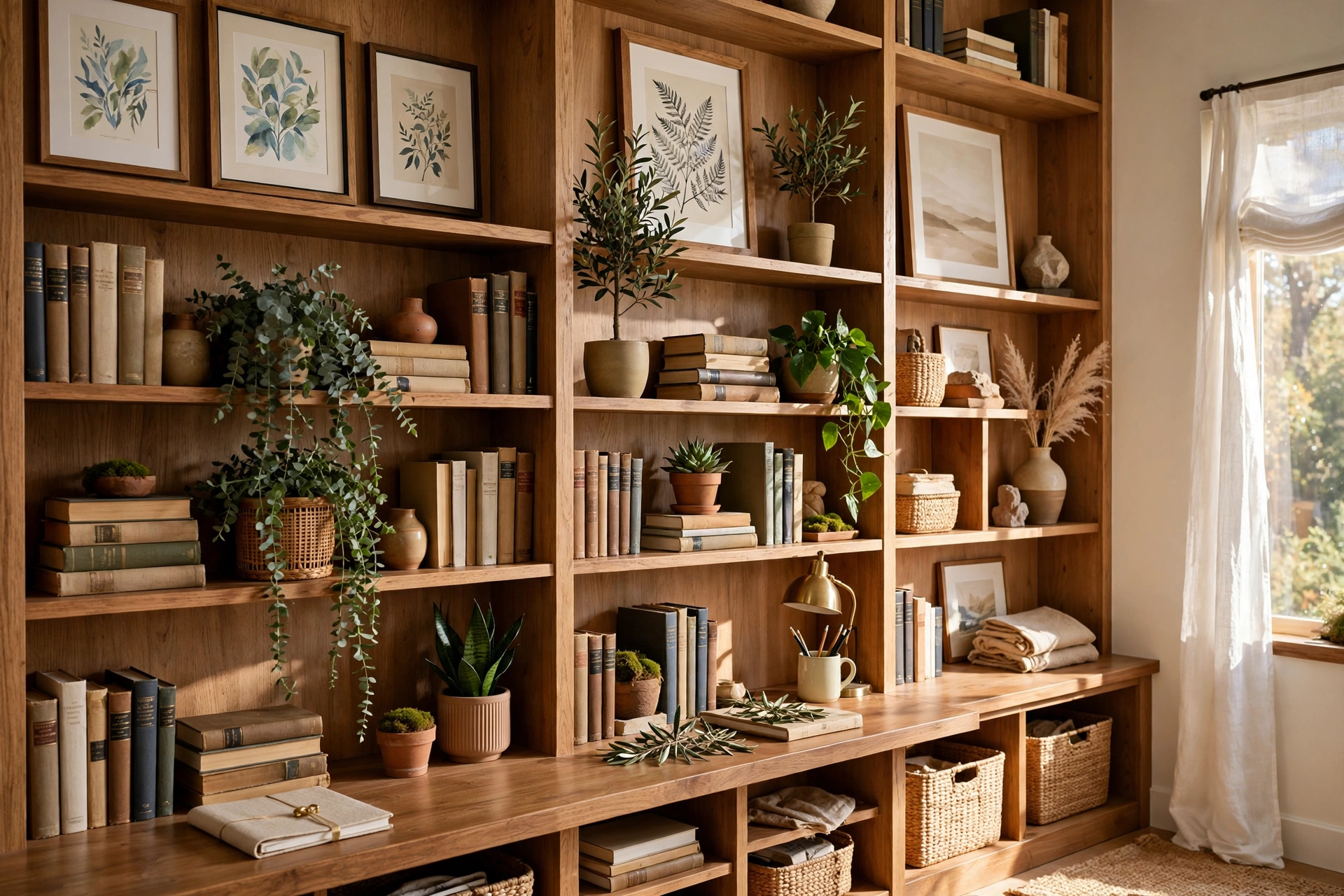
A full wall of bookcases becomes the backdrop of your work life, so style it with intent. Follow the rule of thirds: one third books, one third closed storage or boxes, one third breathing room with plants and art. Vary the rhythm — horizontal stacks beside vertical rows — to keep the eye moving. Same thinking behind open shelving styling ideas works here: group by color, leave negative space, and edit often. Step back every few months and remove what no longer earns its place. A styled bookcase wall photographs beautifully behind you on video calls too.
14. Narrow Vertical Tower Shelf
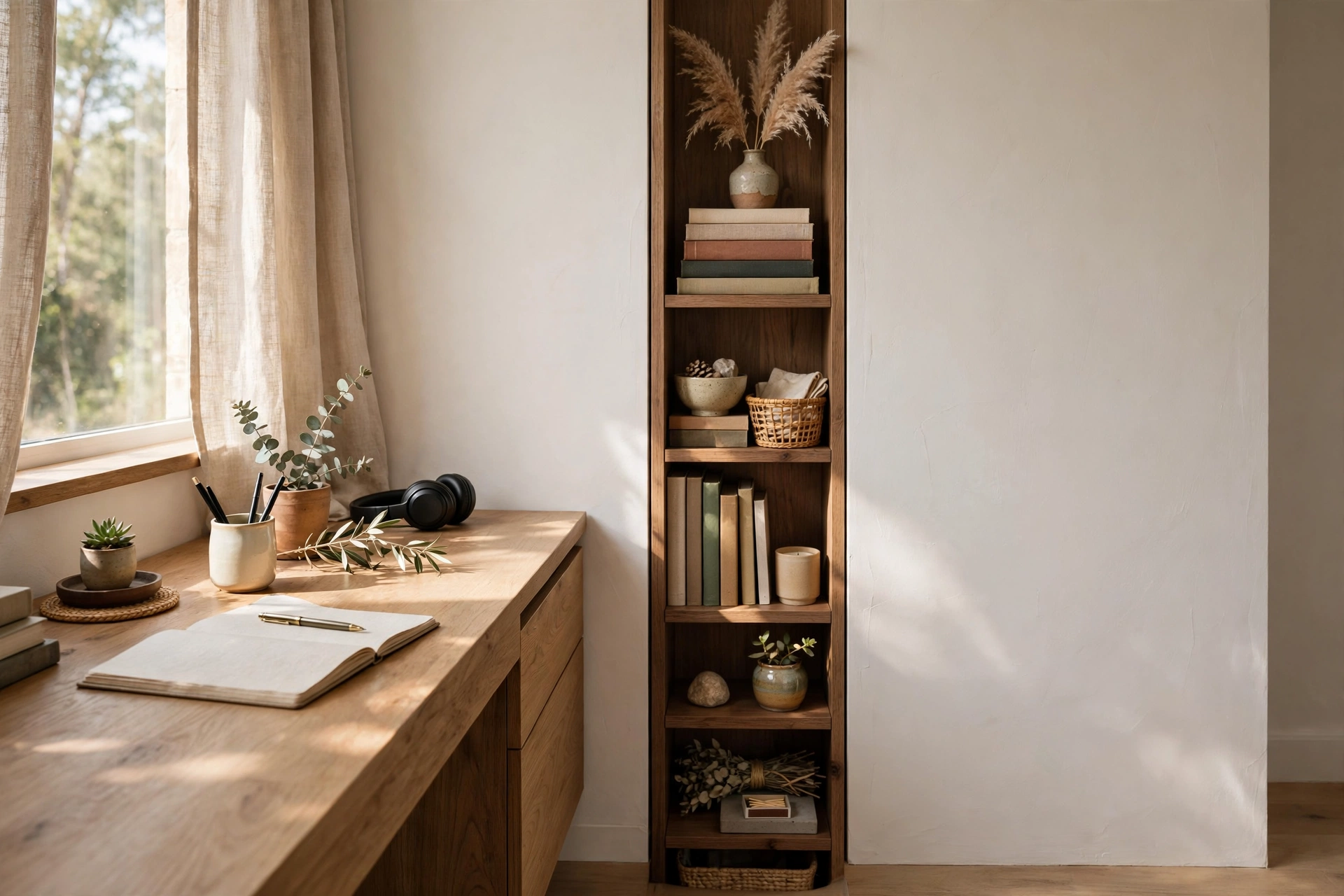
Slim gaps between the desk and the wall, or beside a door frame, are perfect for a tower shelf. At just eight to twelve inches deep, these tall units hold files, magazines, and supplies without stealing floor space. Use the top for a plant or clock and the middle shelves for daily essentials. Because the footprint is tiny, the tower works in hallways, closets converted to offices, and bedroom corners. Look for a model with adjustable shelves so tall binders fit easily. Anchor it to the wall — tall, narrow furniture tips more easily than you might expect.
15. Reclaimed Wood Shelves
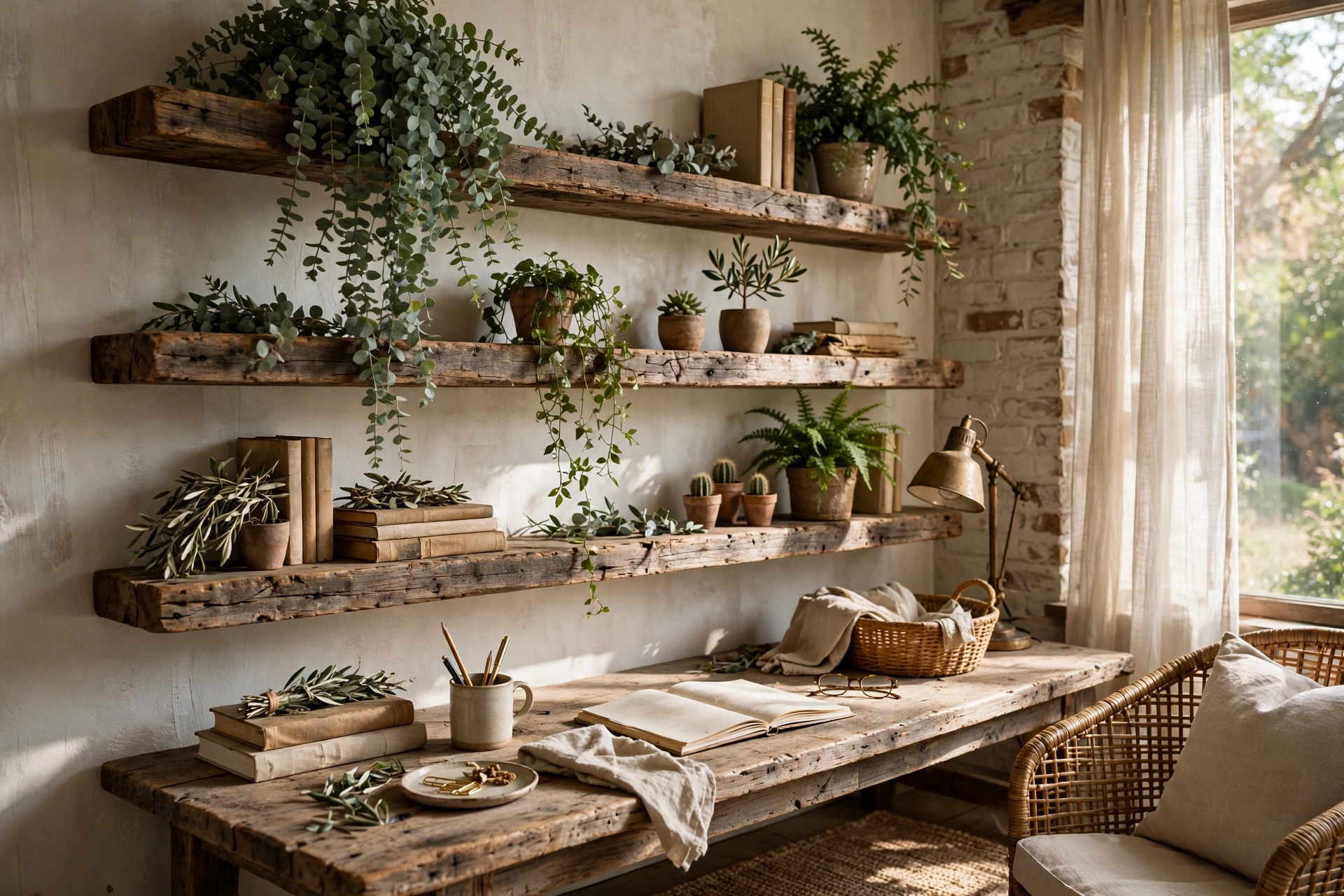
Shelves cut from reclaimed barn wood or old floorboards bring instant character. Every knot and saw mark tells a story, which softens the hard edges of monitors and task lighting. Pair them with simple black brackets and let the wood be the decoration. Seal reclaimed boards well and check for old nails before mounting. Because the material varies from board to board, buy all your shelves from the same source so the tones match. Reclaimed shelves suit farmhouse, rustic, and eclectic offices best, but one warm plank can also soften an otherwise modern and minimal room.
Frequently Asked Questions
How deep should home office shelves be?
For books and decor, ten to twelve inches is the sweet spot — deep enough for a standard book, shallow enough to keep everything visible. For binders, file boxes, or a printer, go fourteen to sixteen inches. Above a desk, keep shelves to ten inches or less so you never bump your head standing up. Mount the lowest shelf about eighteen inches above the desk surface to leave clear working room below.
What is the best material for office shelving?
Solid wood and quality plywood are the most reliable choices — they hold heavy books without sagging and look better with age. MDF with a painted finish works well for built-ins on a budget. Metal and glass suit modern spaces but show dust quickly and need more upkeep. For floating shelves, pick a hidden steel bracket rated well above your planned load. Avoid thin particleboard for spans wider than two feet, since it bows under books within a year.
How do I style shelves without making them look cluttered?
Start by removing everything, then add items back in groups of three at different heights — a stack of books, a small plant, one sculptural object. Leave at least a third of each shelf empty so the arrangement can breathe. Hide small messy items in matching boxes instead of lining them up. Stick to two or three tones, then photograph the shelf — the camera reveals clutter your eyes have learned to ignore.
Can I install floating shelves in a rental?
Yes, with a few renter-friendly tricks. Choose shelves that mount with heavy-duty removable strips or French cleats needing only small holes — most landlords accept those as normal wear. Ladder shelves and freestanding bookcases need no mounting at all. Always check your lease before drilling, and fill holes when you move out. If drilling is forbidden, a tall narrow bookcase gives the same vertical storage with zero wall damage.
How much weight can floating shelves hold?
A floating shelf anchored into wall studs with a quality hidden bracket typically holds twenty to forty pounds, which covers books, plants, and decor easily. Shelves on drywall anchors alone hold far less — often under ten pounds — so find the studs first with a stud finder. Spread heavy books across several shelves rather than loading one to the limit, and stay comfortably below the bracket’s rated capacity.
Keep Exploring
Great shelving is only the start of a calmer workspace. Once your shelves are up, take an afternoon to sort every item into keep, relocate, or donate piles — shelves work best when they hold only what you actually use. Add a small tray on the desk for daily tools, and give every shelf a simple job so nothing drifts back into clutter.
Then enjoy the room you have built. A tidy, well-styled office makes deep work easier and video calls more pleasant, and these fifteen ideas give you a clear path from a blank wall to a finished space. Pick the one that fits your layout, start this weekend, and let your shelves do the quiet organizing work for you.





[…] different species. And if you want more ways to make the whole workspace work harder, these home office shelving ideas for a tidy inspired workspace pair storage with display space your plants will […]