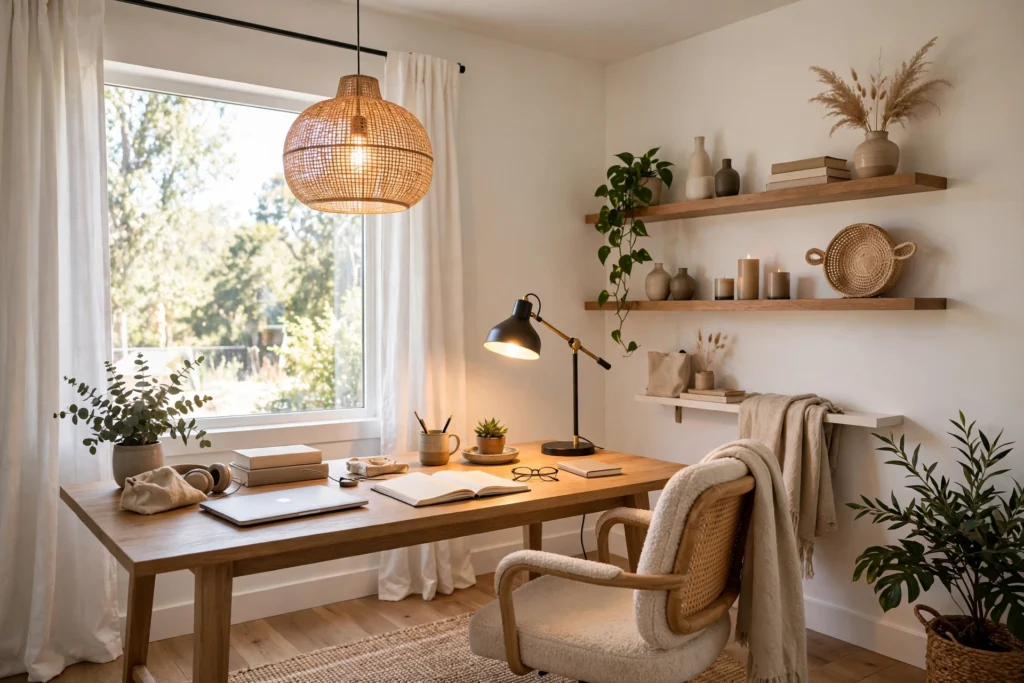

Lighting quietly controls how your workday feels. The right home office lighting ideas keep your eyes comfortable, your energy steady, and your video calls flattering — while the wrong setup leaves you squinting by 3 p.m. Many people blame afternoon fatigue on their workload when the real culprit is flat, harsh, or insufficient light. Good office lighting is layered: natural light, overhead fill, and focused task light working together. Home office ceiling lighting ideas alongside this guide.
1. Layer Three Types of Light
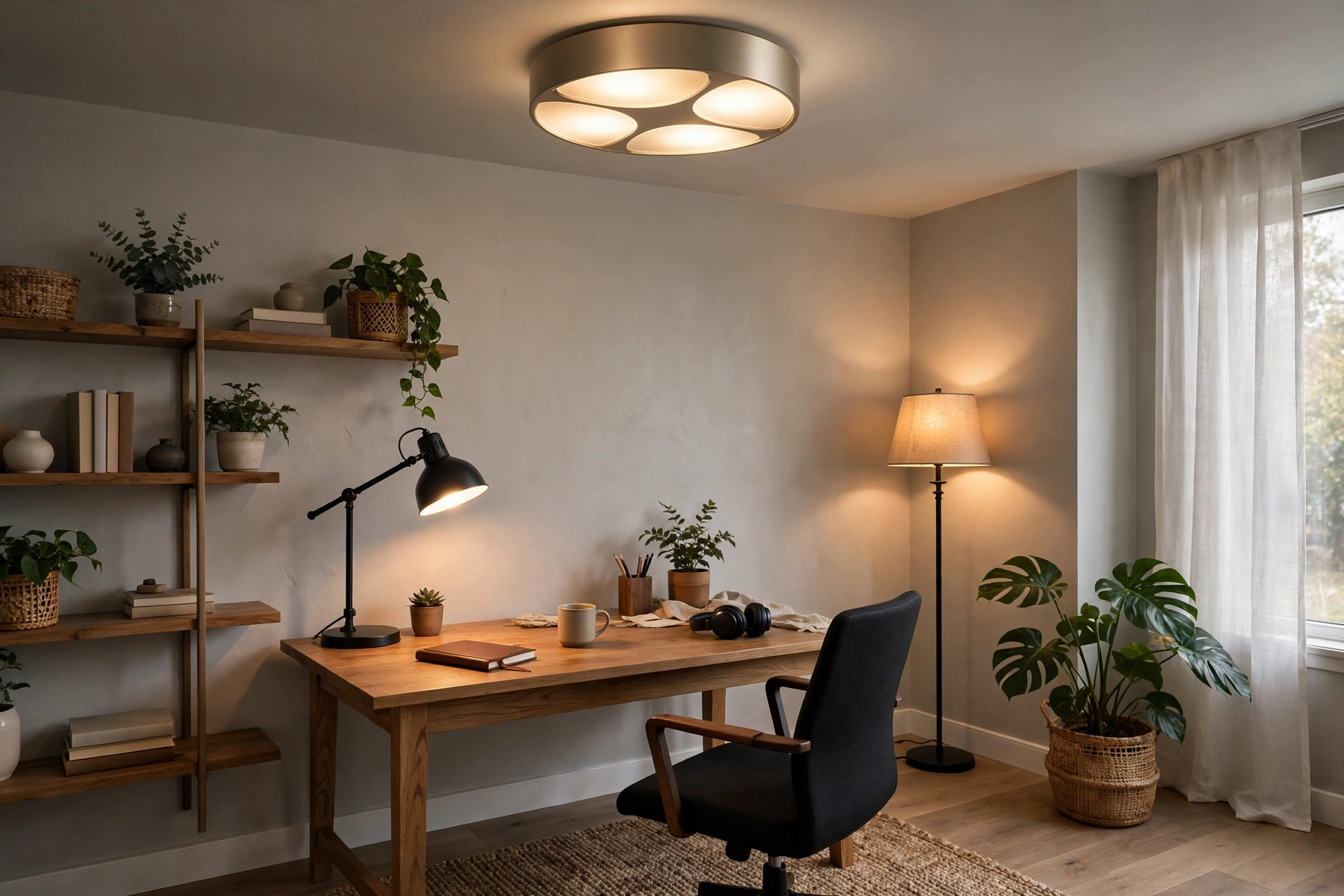
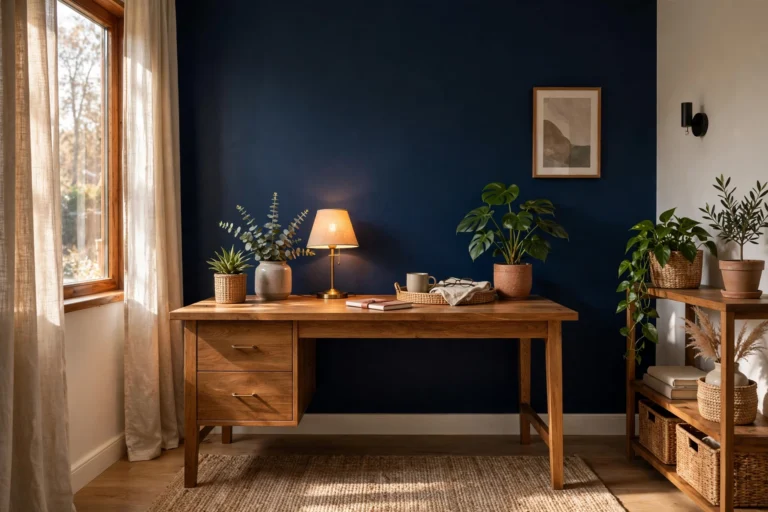
Every well-lit office combines ambient light (the general room glow), task light (focused on the desk), and accent light (shelves, art, or a cozy corner). No single fixture does all three jobs well, which is why one sad ceiling light always disappoints. Start with your existing overhead, add a desk lamp for tasks, then finish with a floor lamp or picture light for warmth. When each layer has its own switch or dimmer, you can tune the room from bright focus mode to calm wind-down in seconds.
2. Maximize Natural Daylight First
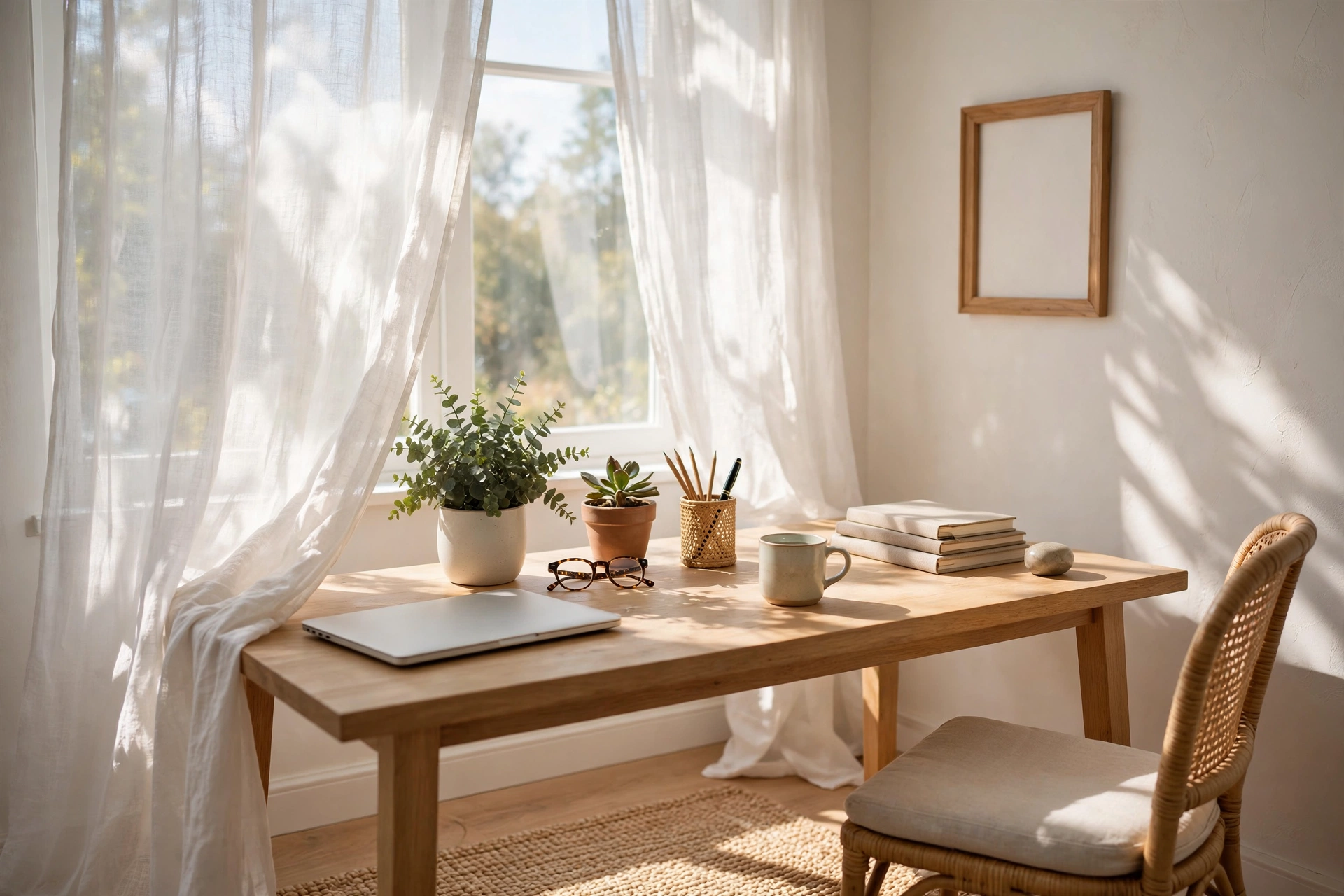
Daylight is the best light for focus and mood, so arrange your office to drink it in. Keep window treatments sheer during work hours, position the desk to catch side light, and use light-colored walls and furniture to bounce brightness around. A mirror opposite the window doubles the daylight effect in a dim room. If your office faces north or sits in shade, supplement generously with full-spectrum bulbs that mimic daylight. Your eyes and your energy will notice the difference immediately.
3. Choose the Right Desk Lamp
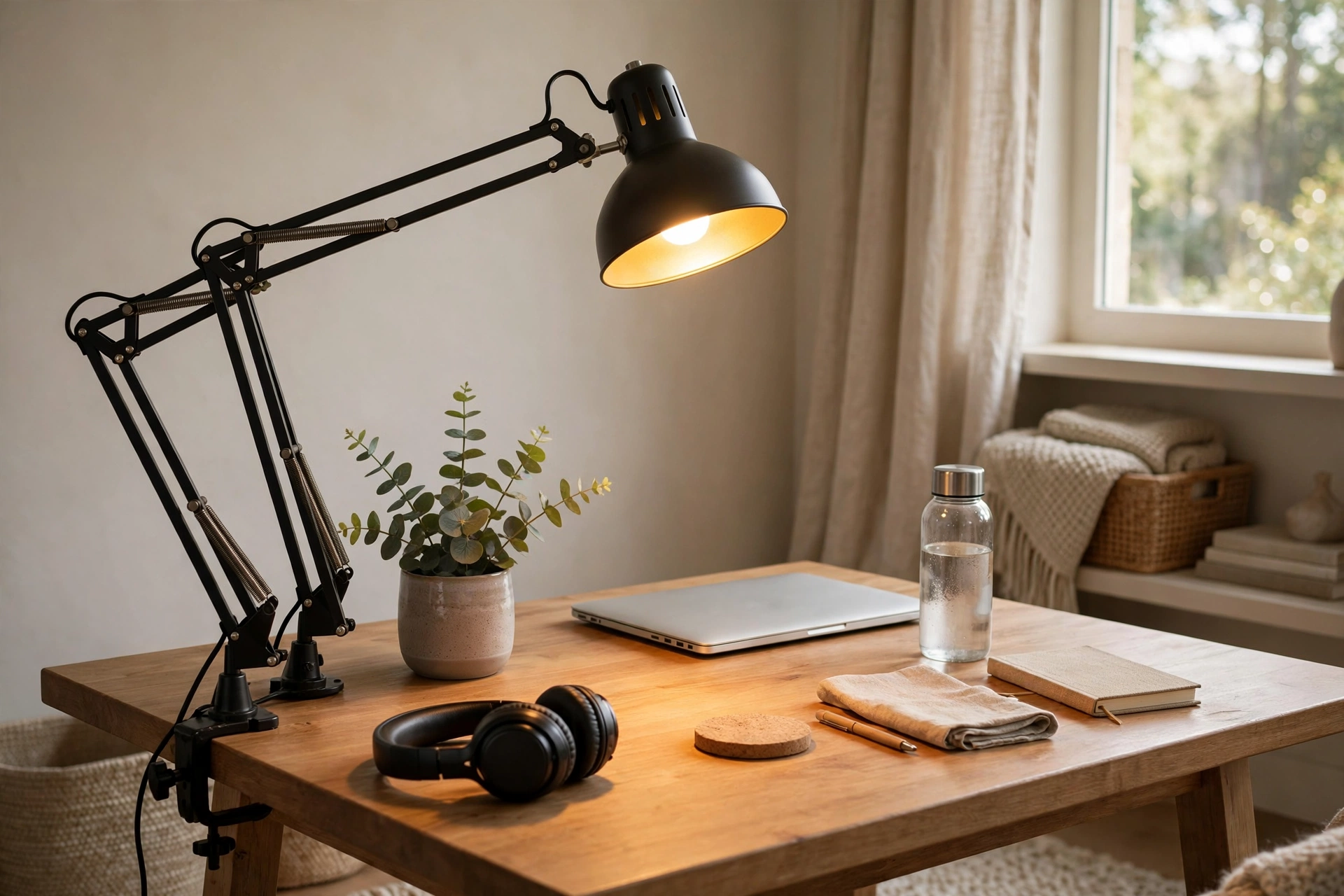
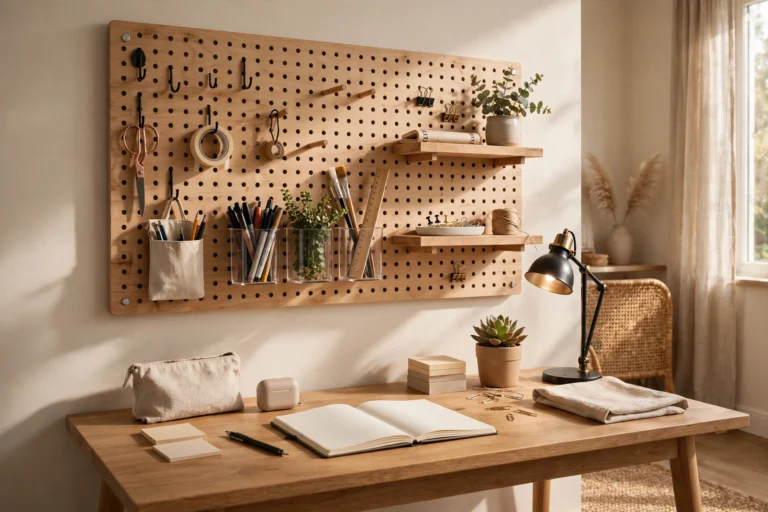
A good task lamp is adjustable, glare-free, and sized to your desk. Look for an articulated arm or a gooseneck you can aim precisely, a shade that directs light downward, and a bulb around 4000K for alert daytime work. LED lamps stay cool, sip electricity, and many offer stepped dimming. Place the lamp on the opposite side from your dominant hand so your writing hand never casts a shadow. Clamp-on lamps free up precious desk surface in tight setups.
4. Add a Floor Lamp Behind Your Chair
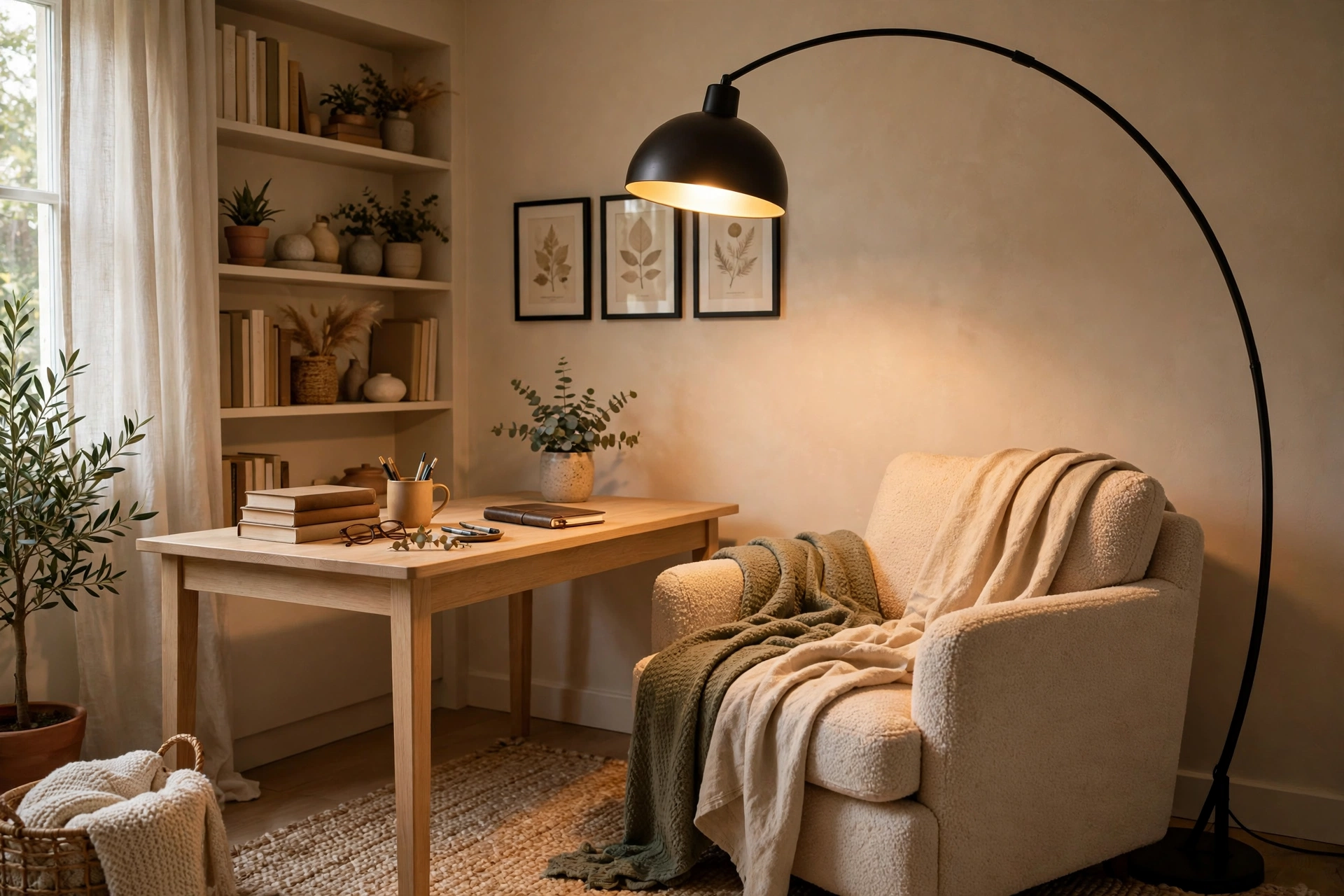
A floor lamp behind or beside your seating fills in the shadows that overhead lights leave and makes the office feel like a real room rather than a cubicle. An arc lamp drapes light elegantly over a reading chair, while a torchiere bounces soft light off the ceiling for general glow. Choose a lamp with a dimmer so it transitions from work light to evening ambiance. This single addition does more for coziness than almost any other lighting move.
5. Hang a Pendant Over the Desk
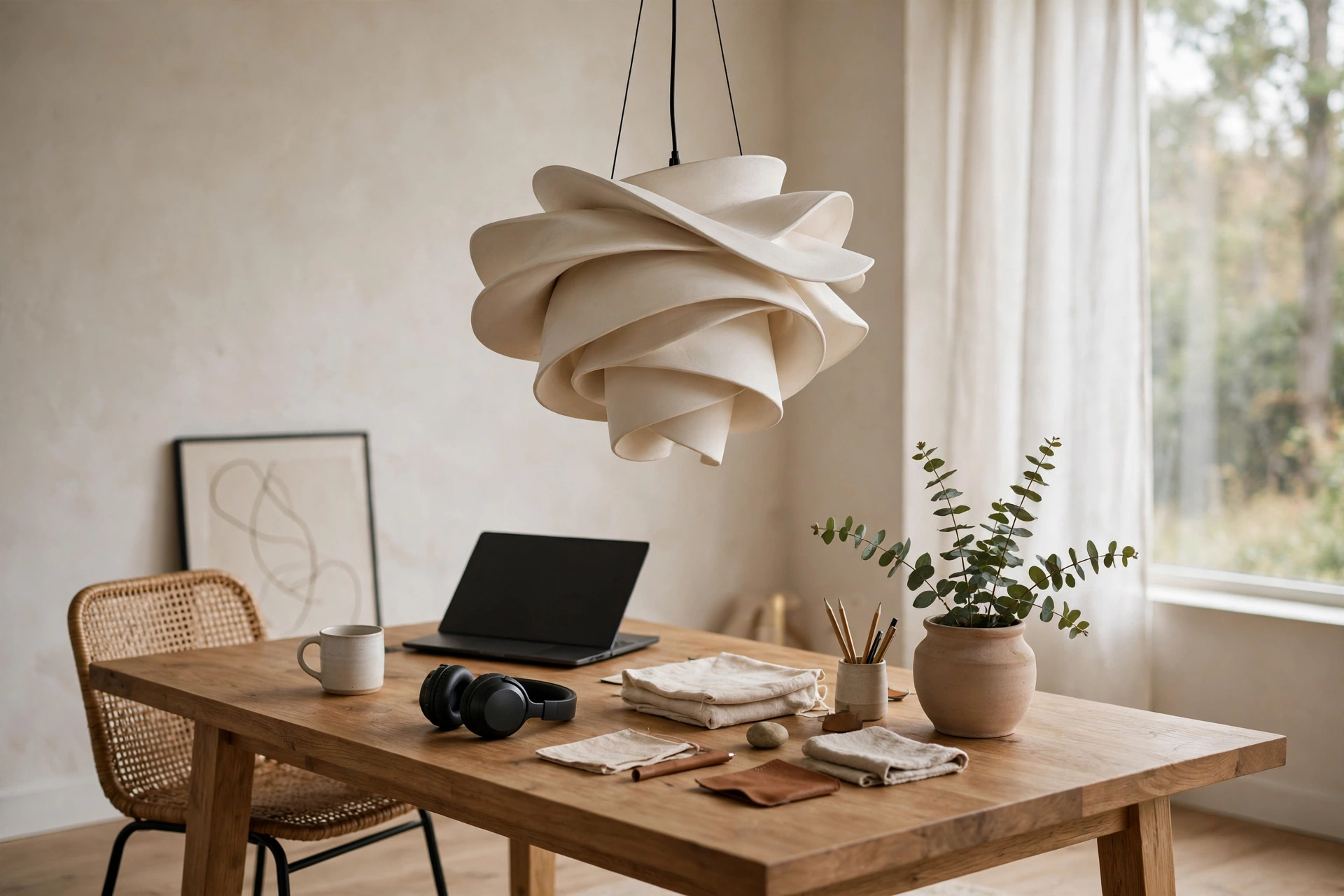
A pendant light hung over the desk defines the work zone and adds style that flush mounts cannot match. Hang it 30 to 36 inches above the desk surface so it lights your work without blocking your sightline or shining in your eyes. A single sculptural pendant suits small desks, while a pair or a linear pendant fits long shared desks. Choose a shade that directs light downward for task work, and put it on a dimmer for flexibility. This works beautifully in rooms with higher ceilings.
6. Install Wall Sconces to Free the Desk
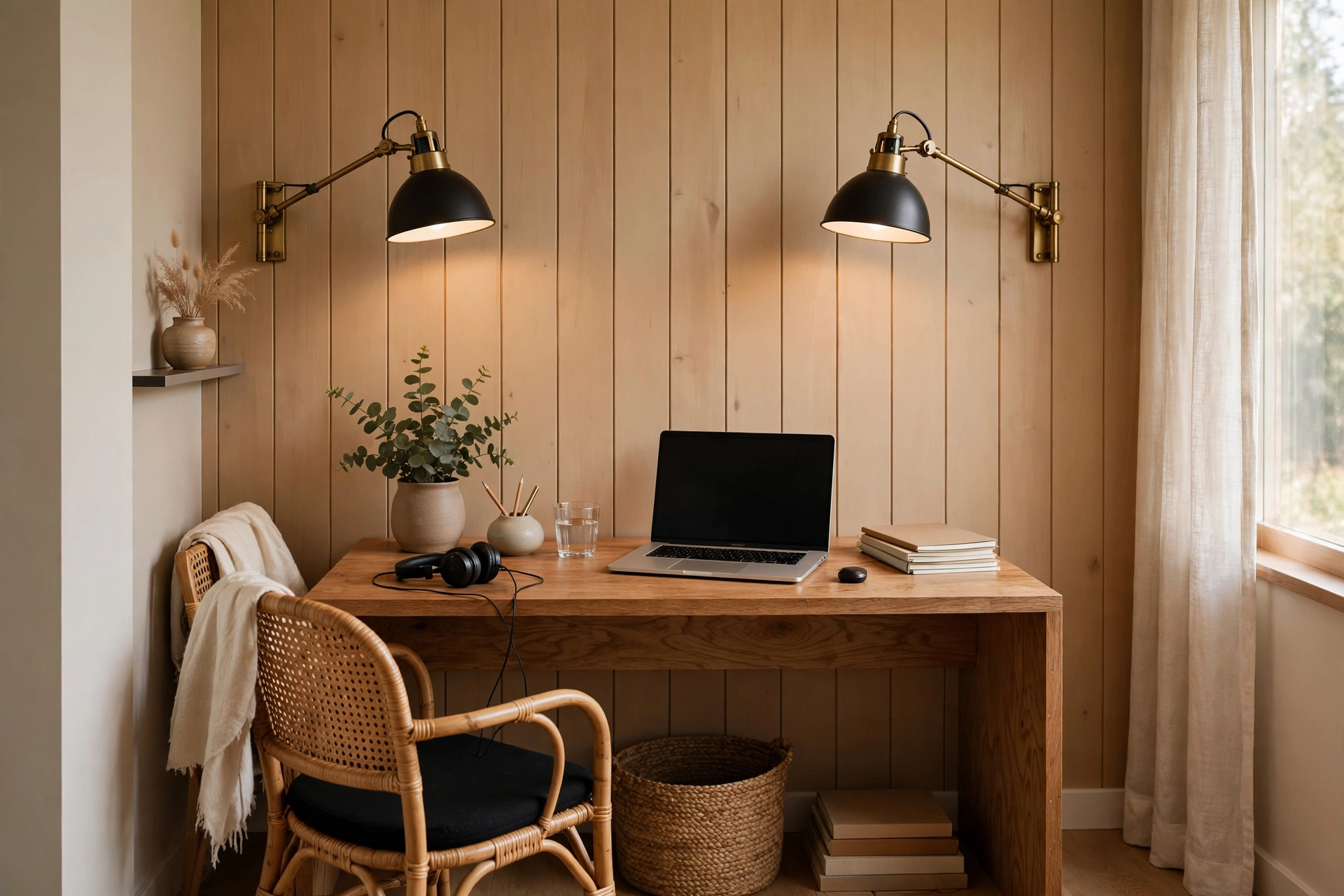
Wall sconces flanking the desk or a bookshelf deliver focused light with zero desk footprint — ideal for compact offices. Plug-in sconces install in minutes with no electrician, while hardwired ones look cleaner. Adjustable swing-arm sconces aim light exactly where you need it, doubling as reading lights. Mount them at eye level when seated, roughly 60 inches from the floor. A pair of matching sconces also brings symmetry and polish that a lone desk lamp cannot.
7. Use Bias Lighting Behind the Monitor
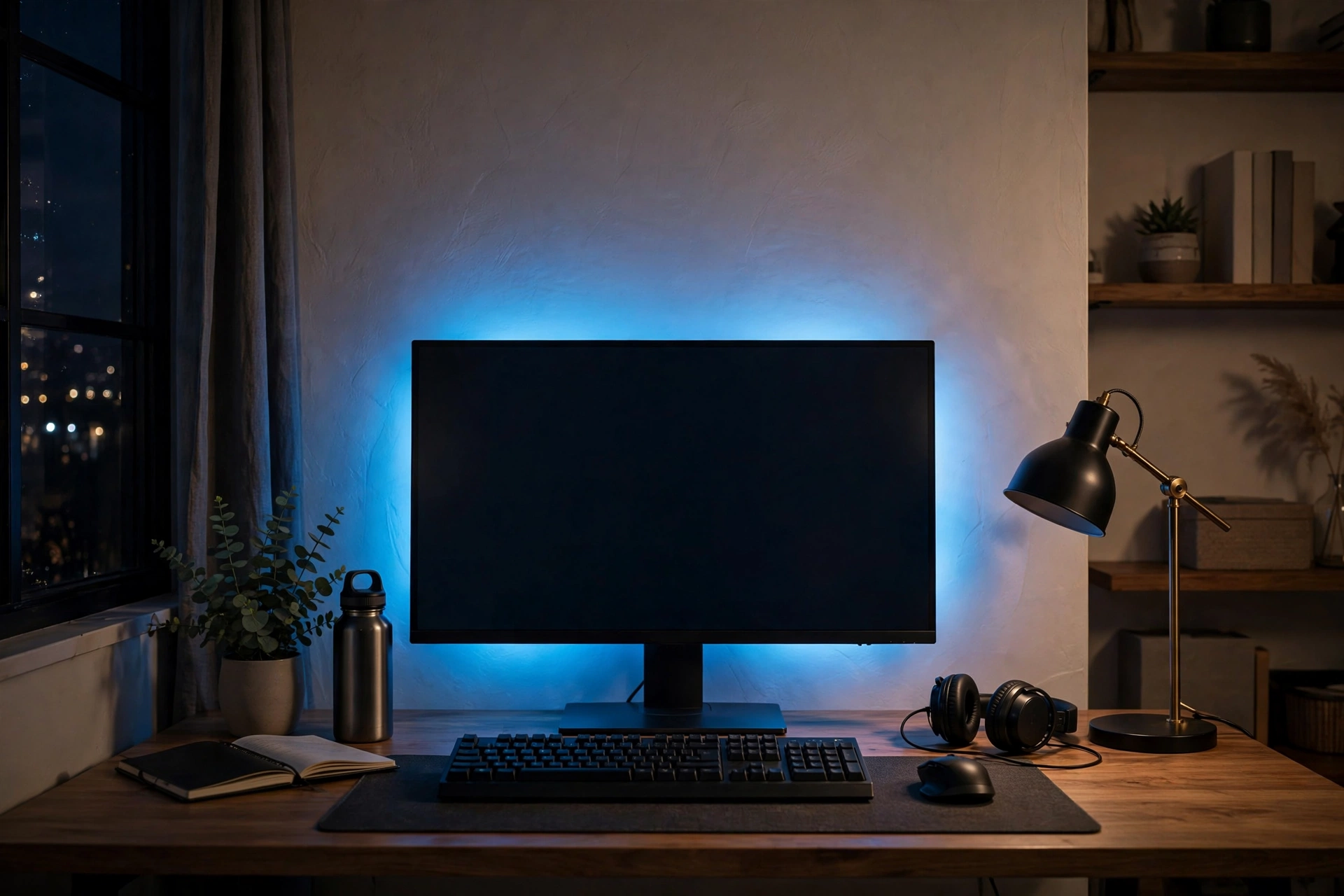
A strip of LED light behind your monitor — called bias lighting — reduces the contrast between the bright screen and the dark wall, which eases eye strain during long sessions. It also makes the setup look fantastic, especially in the evening. USB-powered strips stick to the monitor’s back edge and cost very little. Choose a neutral white around 6500K for color accuracy, or a warm tone for relaxed evening work. Many strips offer app control for brightness and scheduling.
8. Put Everything on Dimmers
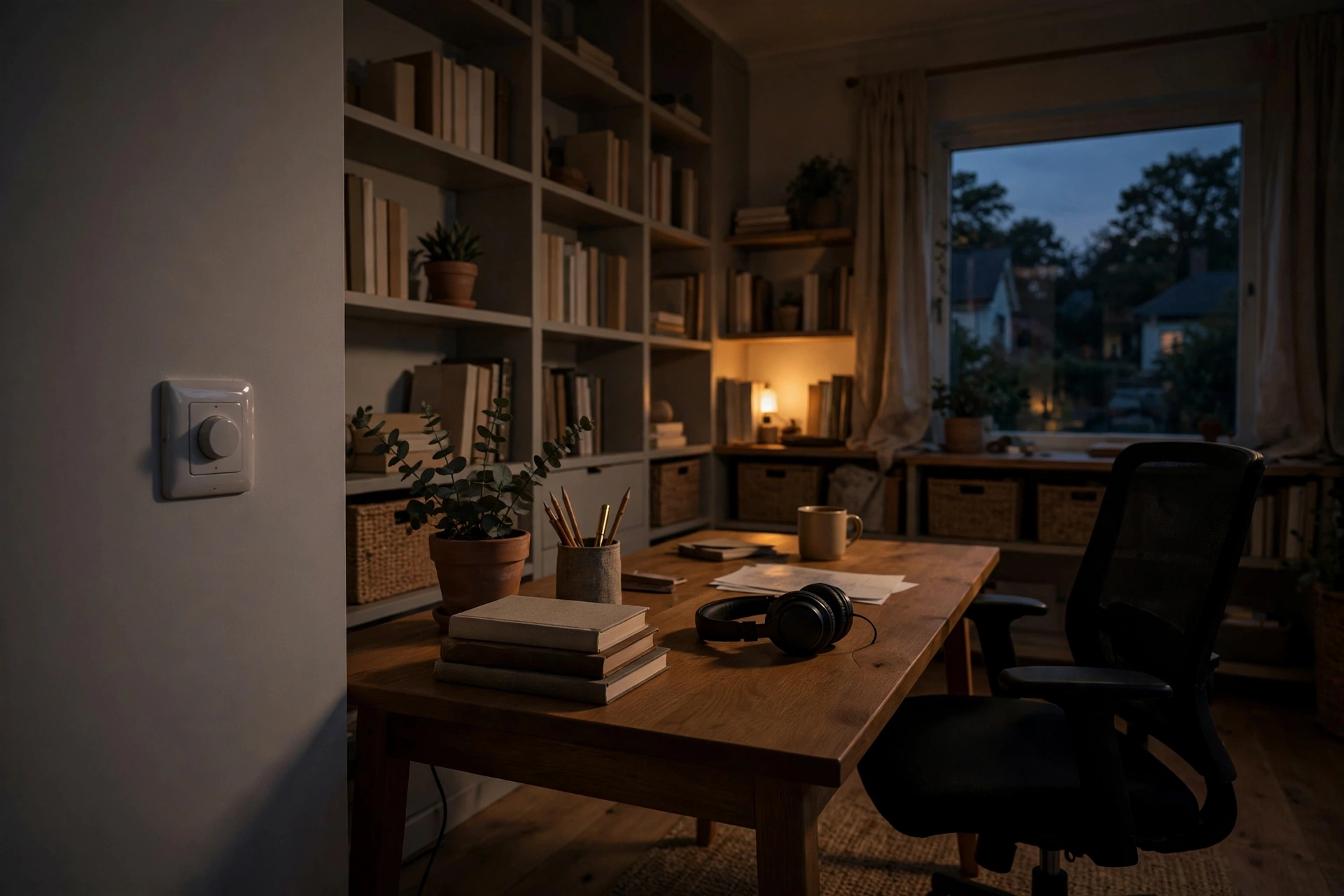
Dimmers are the cheapest upgrade with the biggest lifestyle payoff. Bright light for focused morning work, medium for afternoon calls, low and warm for evening admin — one room serves every mode. Most LED-compatible dimmer switches install in under an hour, and plug-in dimmers handle lamps with no wiring at all. Make sure your bulbs are marked dimmable or they will flicker and buzz. Once you live with dimmers, every room without them feels broken.
9. Pick the Right Color Temperature
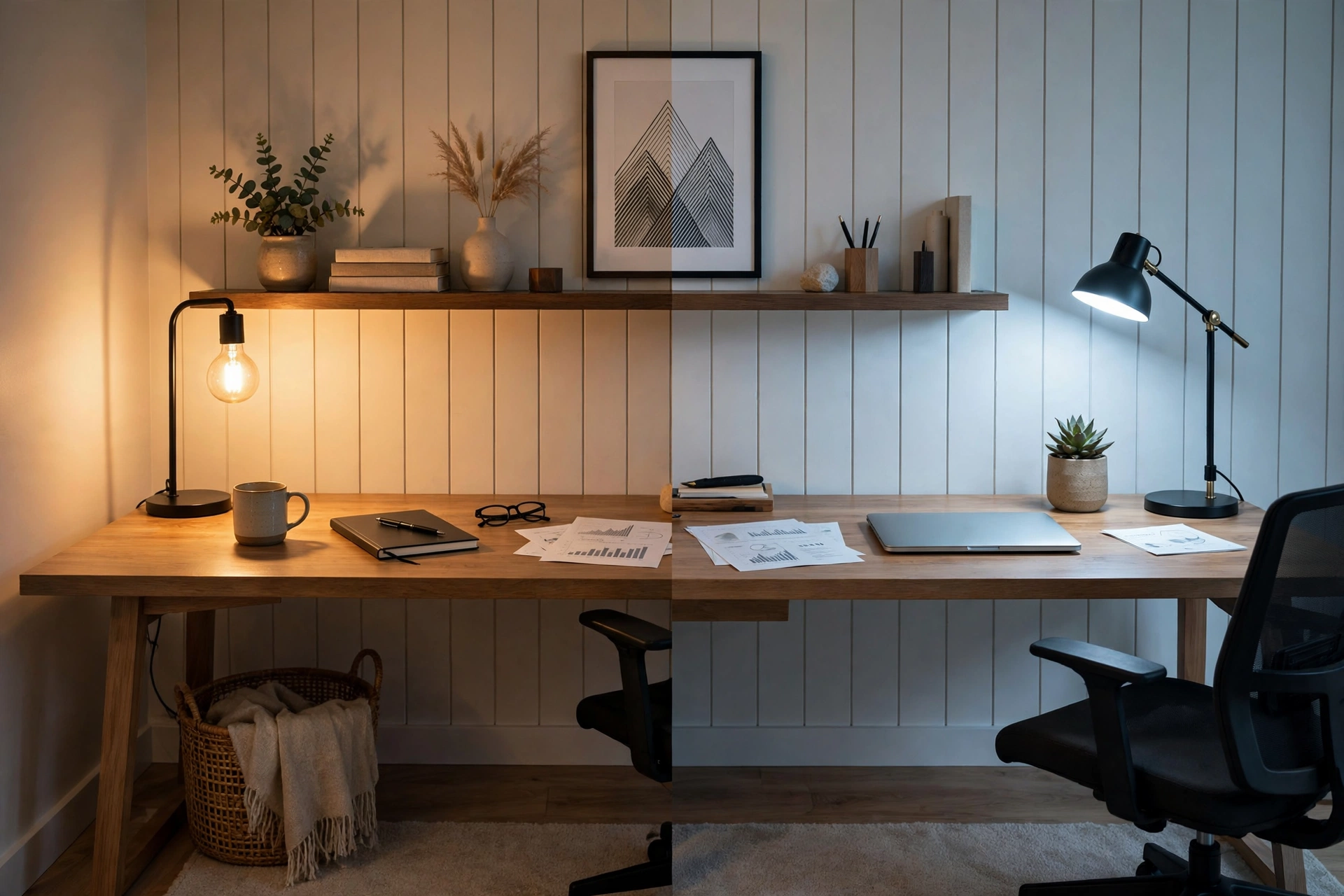
Color temperature, measured in Kelvin, changes how light feels: 2700–3000K is warm and relaxing, 3500–4000K is neutral and balanced, 5000–6500K is cool and energizing. For daytime focus, aim for 4000K at the desk — bright and alert without feeling clinical. Use warmer 2700–3000K for evening ambient light so your wind-down is not sabotaged. Tunable-white bulbs let you shift temperature through the day, mimicking the sun’s natural arc from cool morning to warm dusk.
10. Try Smart Bulbs for Schedules
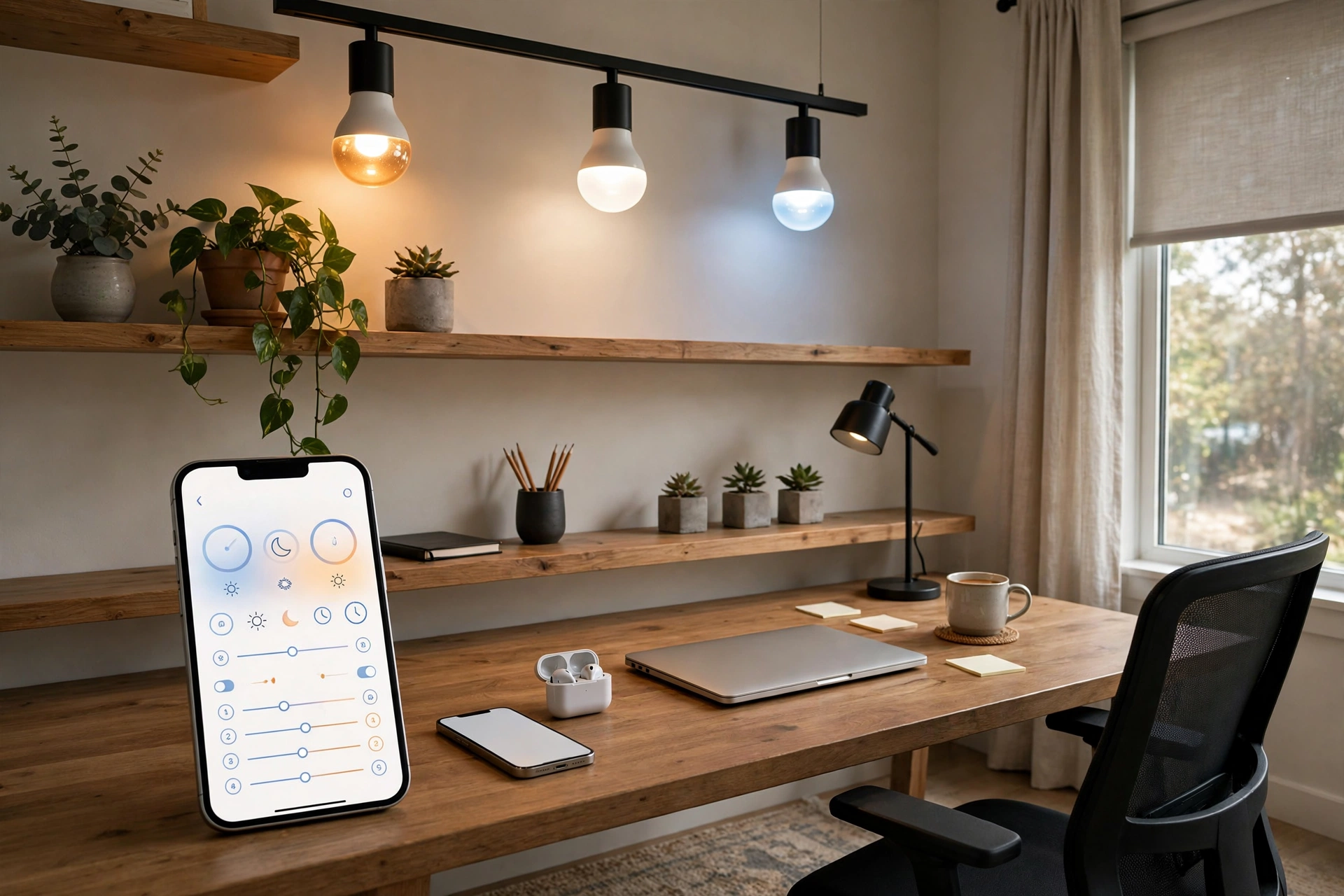
Smart bulbs automate what dimmers and tunable whites do manually: bright cool light at 9 a.m., softer warm light after 6 p.m., all on a schedule you set once. Voice control means adjusting light without breaking focus, and scenes like “video call” or “deep work” tune multiple lamps at once. Start with the two bulbs you use most rather than outfitting the whole room. Even one smart bulb in the desk lamp transforms the daily rhythm of the space.
11. Upgrade the Overhead Fixture
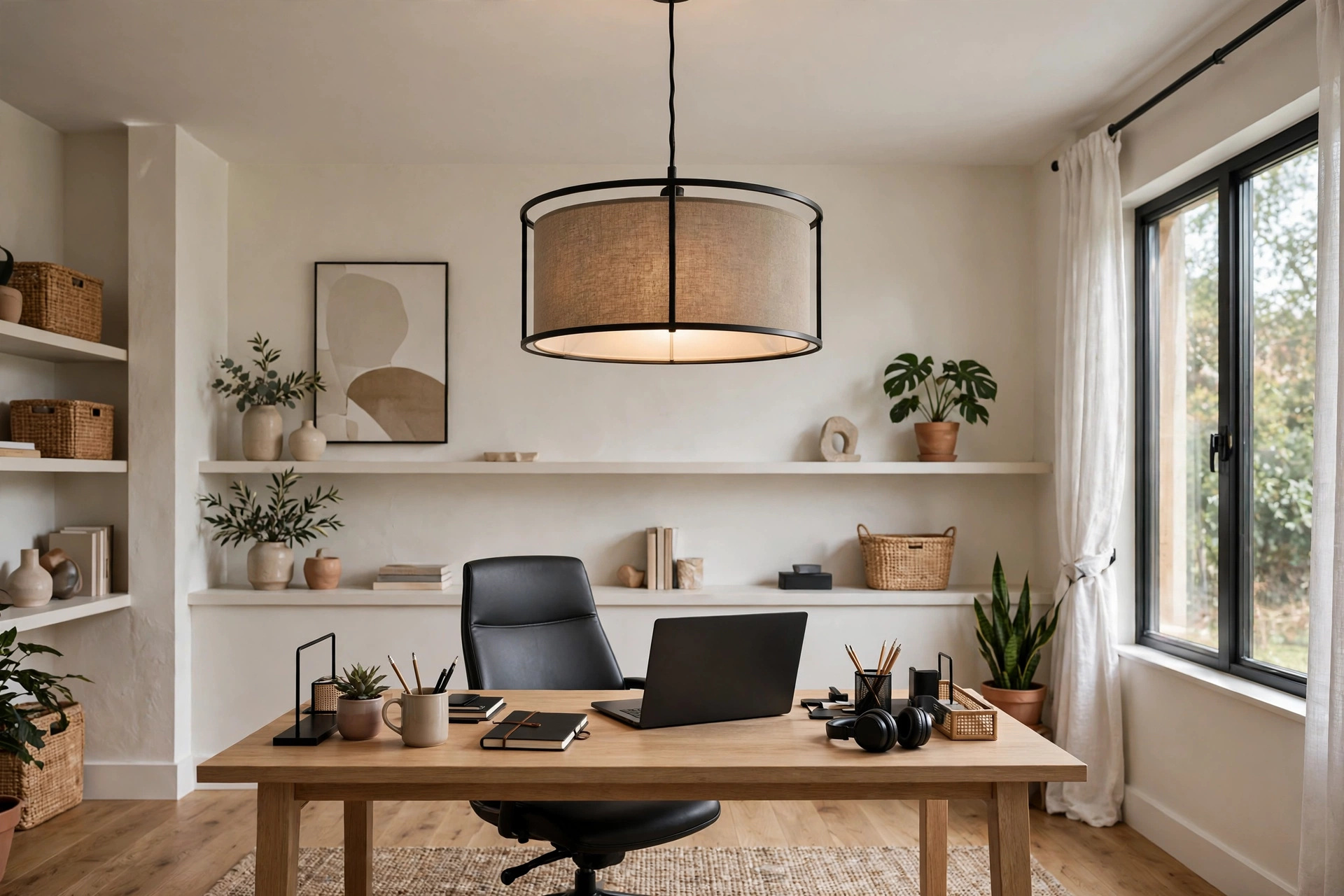
The builder-grade flush mount is doing your office no favors. Swap it for a fixture with character — a drum shade that diffuses light softly, a sputnik for mid-century flair, or a simple linen shade for texture. Choose something that spreads light evenly rather than creating harsh downlight pools. If you rent, a plug-in pendant swag with a cord cover delivers the look with no wiring changes. The overhead sets the room’s tone, so make it intentional.
12. Add an Architect Lamp for Precision Work
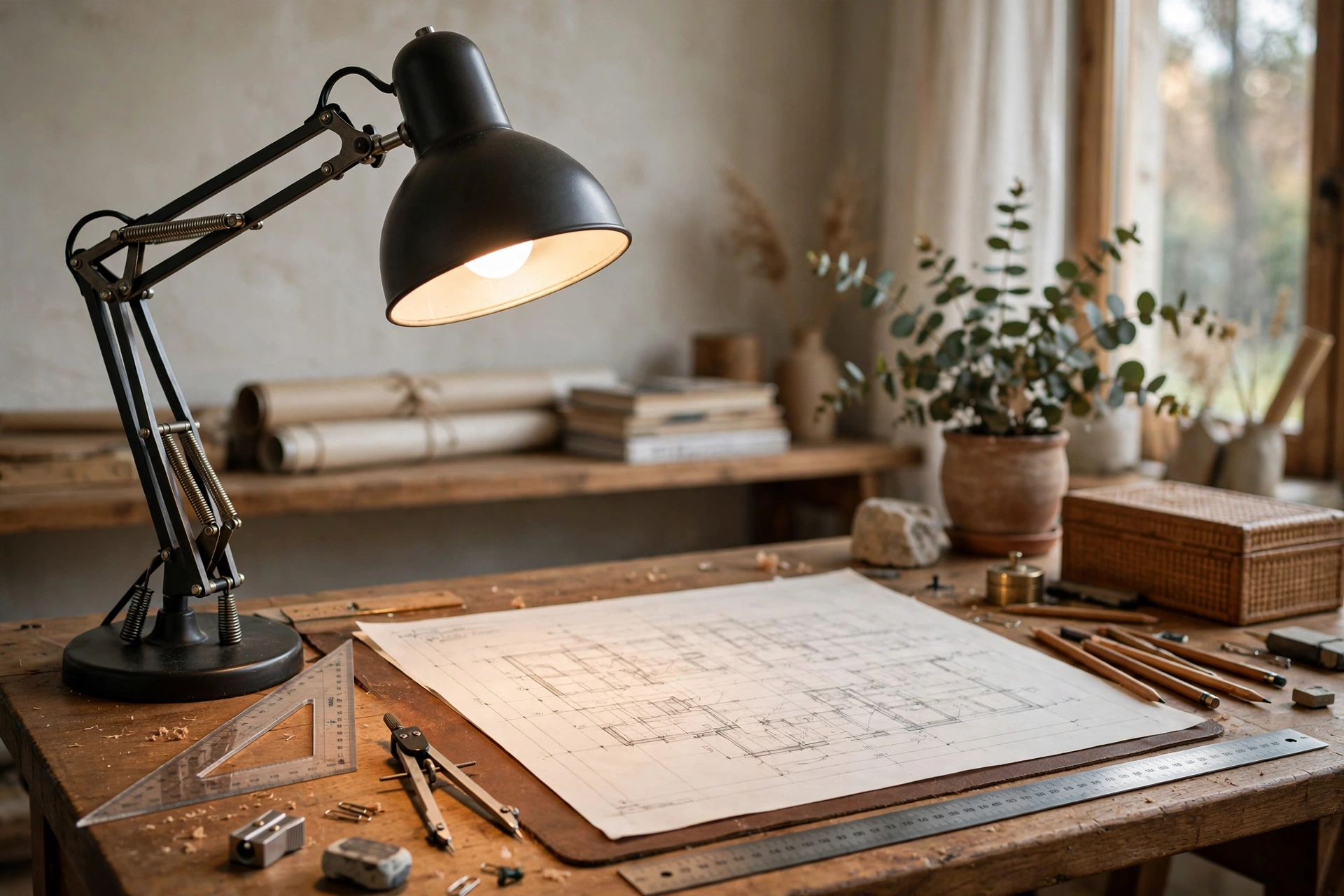
For detailed work — drafting, crafting, reviewing documents — nothing beats a classic architect’s lamp with its spring-balanced arm and focused head. It reaches exactly where you point it and folds flat when you need the desk clear. Modern versions add LED panels, USB charging ports, and touch dimming. Clamp it to the desk edge or a shelf to save surface space. If your work involves fine detail, this purpose-built tool outperforms any decorative lamp.
13. Light Your Shelves and Nooks
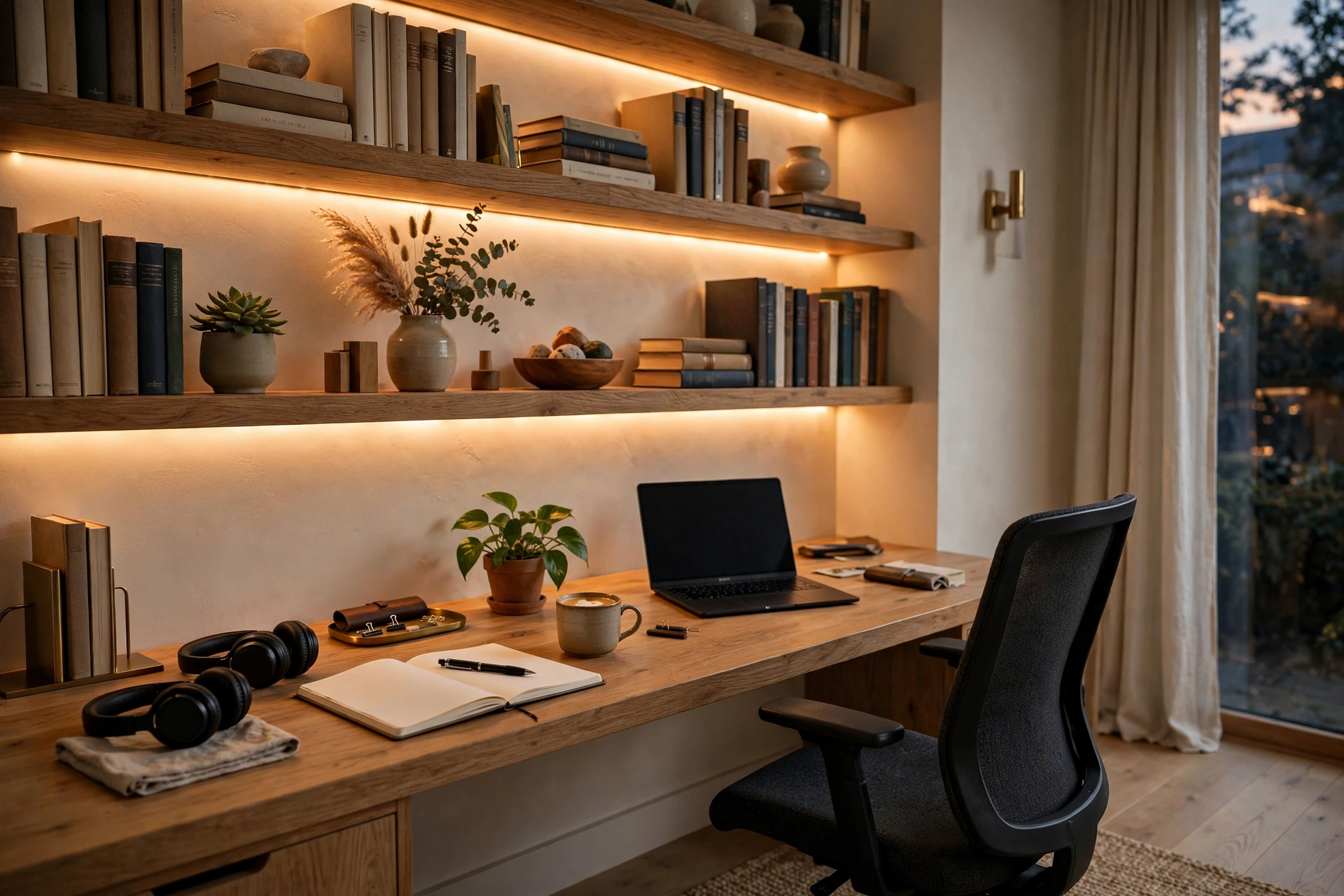
Small accent lights on shelves, inside bookcases, or under wall cabinets add depth that makes an office feel designed rather than merely furnished. Battery-powered puck lights or slim LED strips install in minutes and highlight books, plants, and art. Warm 2700K light flatters wood tones and makes the room glow in the evening. These accents also serve as gentle night lighting when you pop in after hours. Layered offices like these show how light builds atmosphere.
14. Control Glare with Window Treatments
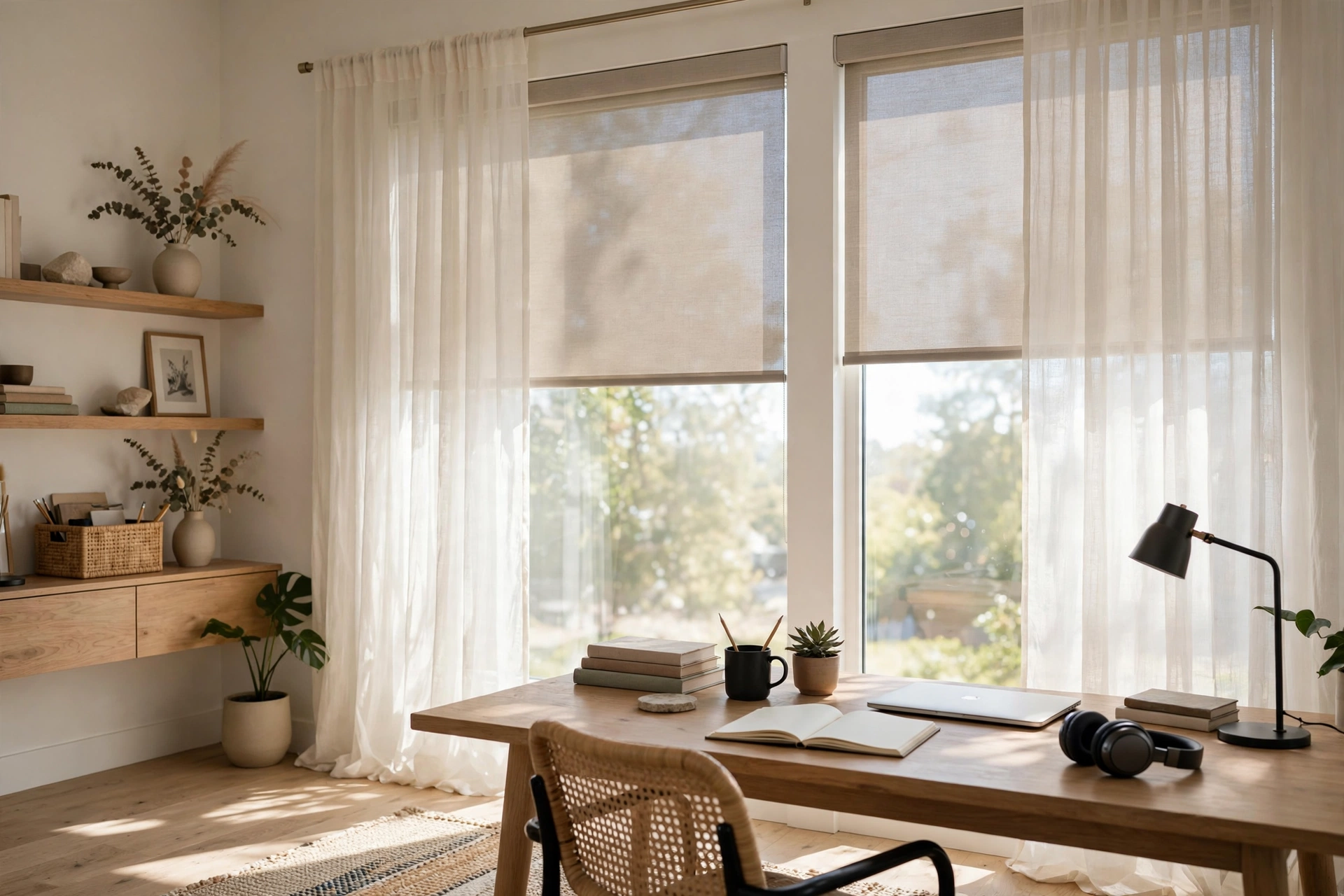
Great daylight turns against you when it glares on the screen. Layer sheer curtains for soft diffusion with blackout or light-filtering shades for video calls and bright afternoons. Top-down bottom-up shades are ideal — lower the top to keep sky light while blocking low sun angles. A matte screen protector is a cheap backup for stubborn glare. Getting glare control right means you keep the blinds open and the daylight flowing instead of working in a cave.
15. Sync Lighting with Your Body Clock
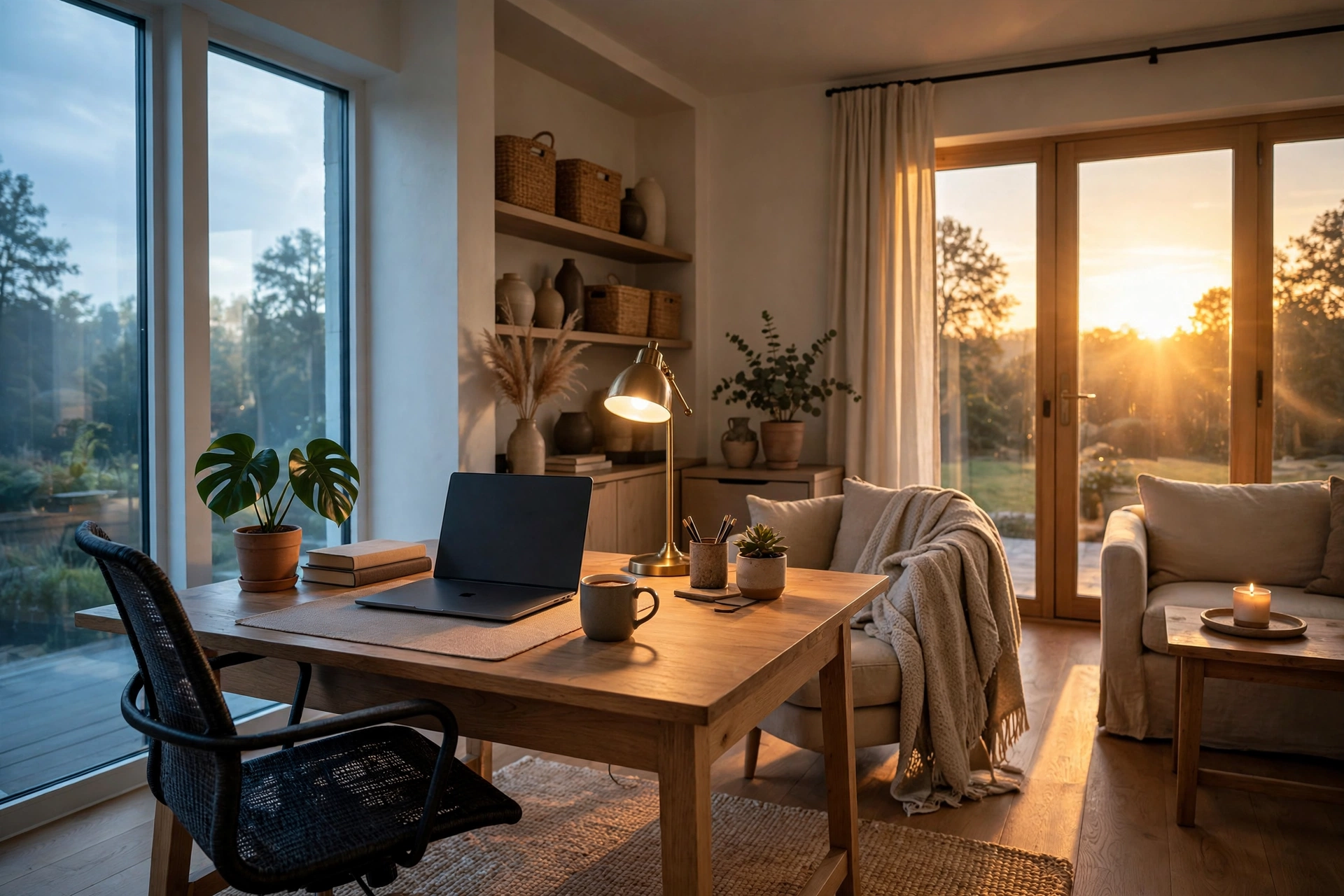
The most advanced of these home office lighting ideas is also the most natural: brighter, cooler light in the morning to signal wakefulness, gradually warming and dimming toward evening. Tunable smart bulbs on a schedule do this automatically, supporting focus by day and rest by night. Even without smart gear, you can approximate it — cool task lamp for morning deep work, warm floor lamp for late-afternoon email. Designers note that window placement matters as much as fixtures for healthy light, so combine both. Your sleep will thank you too.
Frequently Asked Questions
What is the best lighting for a home office?
The best setup layers three sources: natural daylight as the base, a ceiling or ambient light for general fill, and an adjustable task lamp for desk work. Aim for around 4000K neutral-white light at the desk for focus, with warmer accent lighting for comfort. Study rooms designed for concentration use this same layered approach. Avoid relying on a single overhead fixture, which creates shadows and eye strain.
How bright should home office lighting be?
Aim for roughly 300 to 500 lux at the desk surface for computer work — bright enough to read comfortably without squinting, but not so bright it washes out the screen. Detailed paper tasks may want up to 750 lux from a task lamp. A dimmer is the practical answer, letting you tune brightness through the day. If you are unsure, err on the side of more light with dimming control rather than too little.
Where should I place my desk lamp?
Place the task lamp on the opposite side from your dominant hand to prevent shadows while writing, and position it slightly behind the monitor plane so light does not reflect off the screen. The lamp head should sit a bit above eye level when aimed at the work surface. For left-handers that means the lamp goes on the right, and vice versa. A clamp or wall-mounted lamp keeps small desks clear.
Is warm or cool light better for working?
Cool to neutral light (4000–5000K) supports alertness and focus during work hours, making it the better choice for the desk. Warm light (2700–3000K) suits ambient and evening lighting, helping you wind down. The ideal office uses both: cooler task lighting by day that shifts warmer in the evening, either manually or with tunable smart bulbs on a schedule.
How do I reduce glare on my monitor?
Position the desk perpendicular to windows so daylight comes from the side, and use sheer curtains plus adjustable shades to control brightness. Keep task lamps out of the screen’s reflection path and choose matte-finish lamp shades. A matte screen protector helps with stubborn reflections, and bias lighting behind the monitor reduces perceived glare by softening the contrast with the wall. Tilt the monitor slightly downward to dodge ceiling-light reflections.
Keep Exploring
Light is the invisible architecture of your workday — get the layers right and everything from focus to video calls gets easier. Start with one change, like a proper task lamp or dimmers, and notice the difference before adding more. Walk through your office at different times of day to spot dark corners and glare spots, then address them one by one until the whole room feels evenly, comfortably, and reliably bright.
Small home office decor ideas show how to fit great lighting into tight quarters. Combine thoughtful light with an ergonomic desk and smart storage, and your home office becomes the best seat in the house — a space you genuinely look forward to sitting down in each morning.






[…] sheers closed to soften midday glare, then draw the drapes for evening focus or weekend downtime. Productive days keeps the room balanced around the clock. Choose rods with a four to six inch projection so both […]