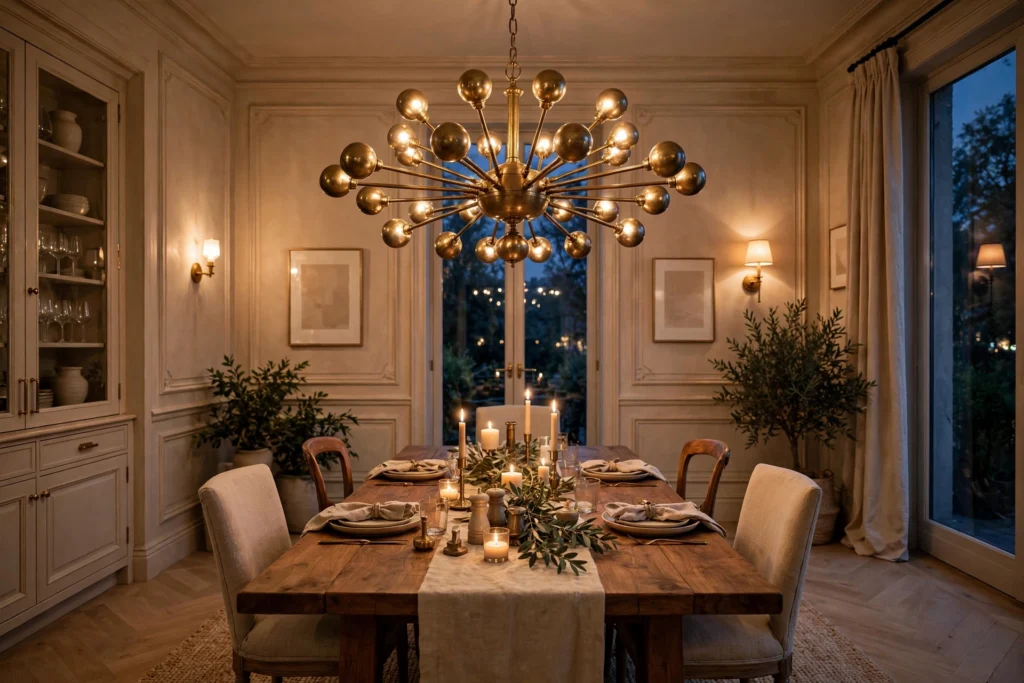

Great dining room lighting ideas do more than illuminate — they set the mood for everything from bright family breakfasts to candlelit dinner parties. The secret is layering: a statement fixture over the table, supporting light at the walls, and dimmers that let you tune it all.
Whether your dining room is grand or compact, traditional or modern, these fifteen dining room lighting ideas — from chandeliers to sconces and everything between — will help you build a lighting plan that flatters both the room and the food.
1. Hang an Oversized Statement Chandelier
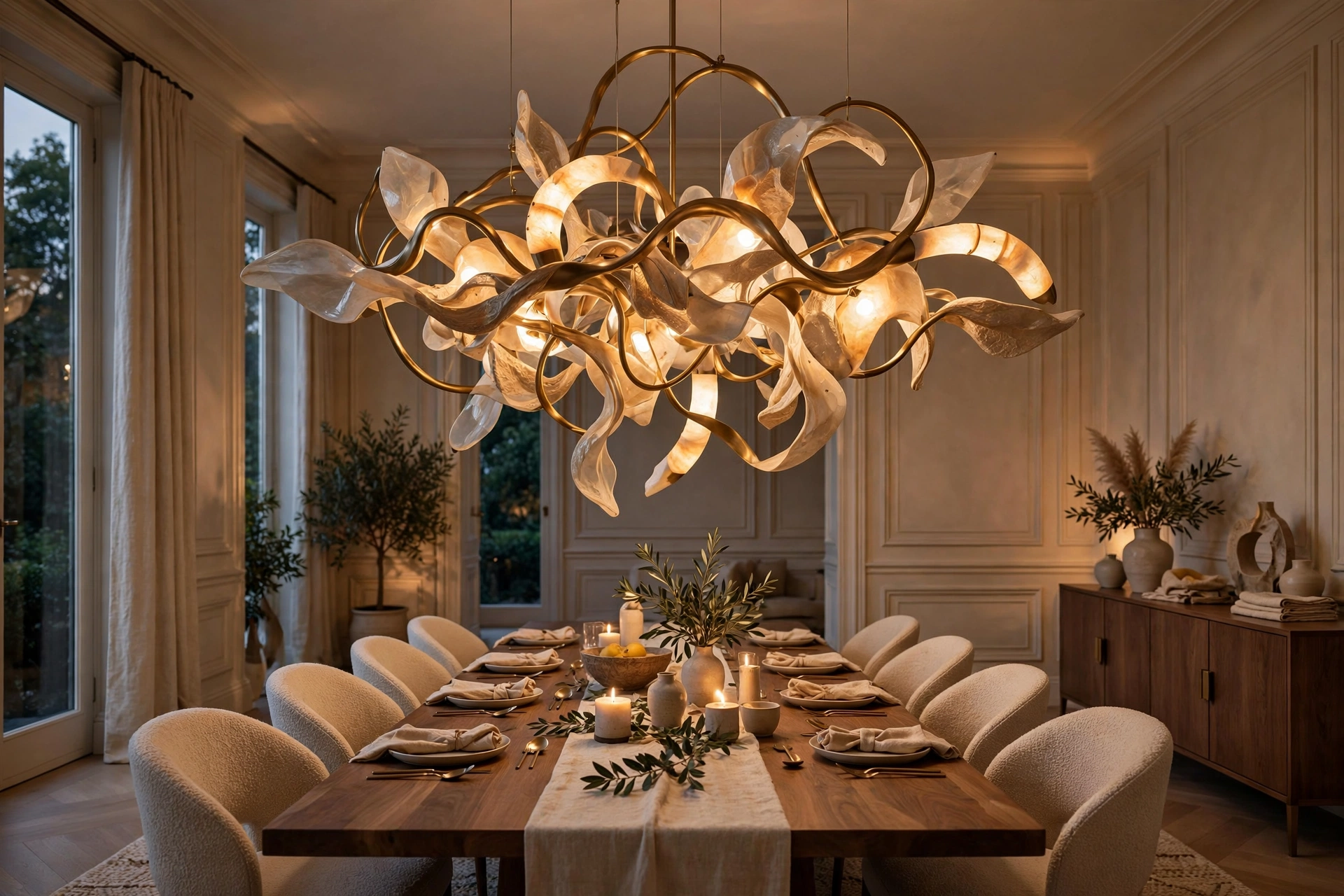
A chandelier slightly larger than expected makes the dining room feel intentional and grand. As a rule, add the room’s length and width in feet and use that number in inches for the fixture’s diameter — then go a touch bigger if the ceiling allows. Hang it so the bottom sits thirty to thirty-six inches above the tabletop.
Choose a style that echoes your table: crystal for traditional, sculptural metal for modern, beaded or wood for relaxed rooms. For proof of how transformative the right chandelier can be, see Apartment Therapy’s black dining room redo, where a bold mid-century chandelier and sconces completely remade the space.
2. Try a Linear Suspension for Long Tables
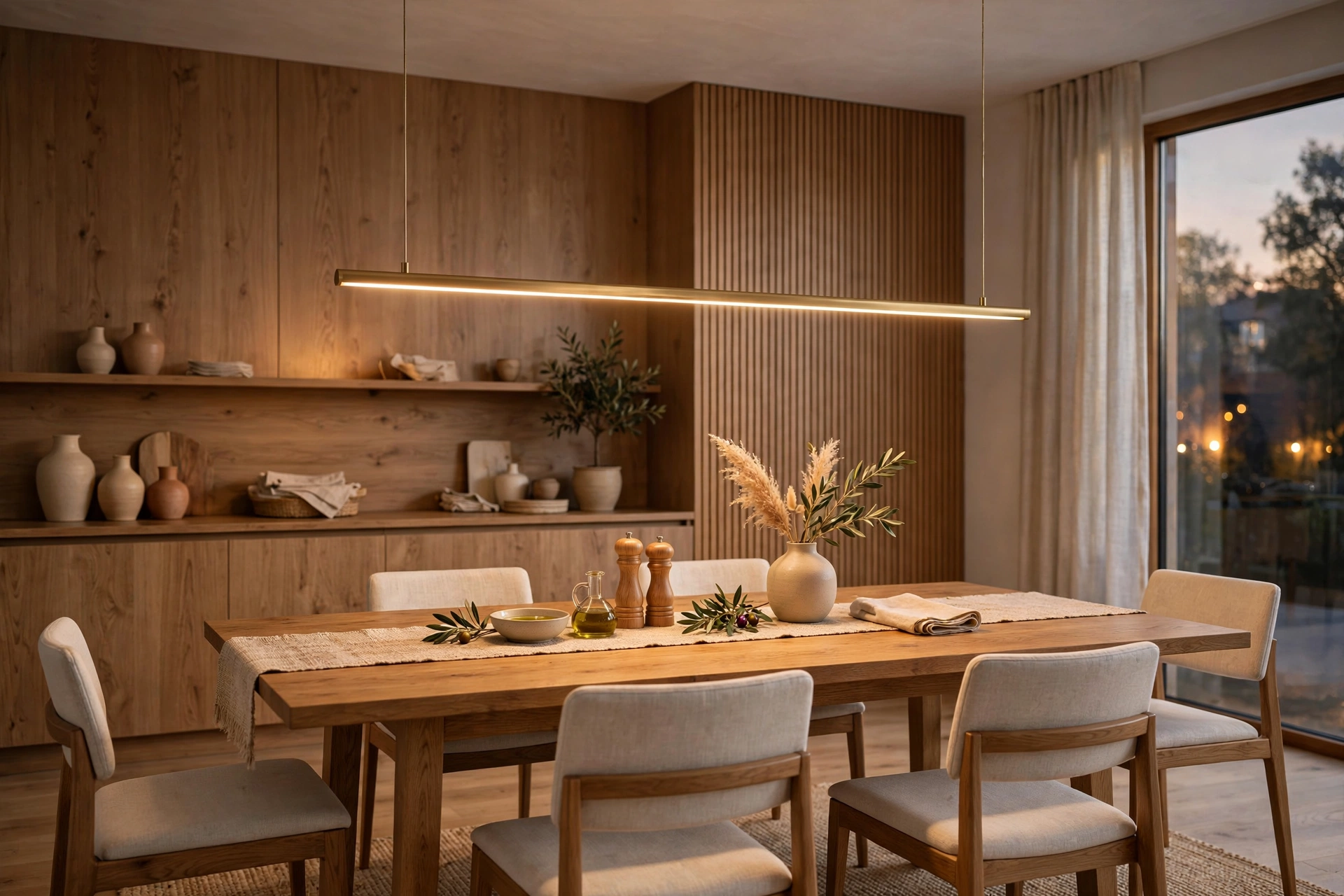
Rectangular tables longer than six feet are best served by linear pendants — long, narrow fixtures that spread light evenly down the table’s length. A slim brass bar, a row of glass globes on a rail, or a reclaimed-wood beam fixture all work beautifully. The fixture should span roughly two-thirds of the table’s length.
Center it carefully; an off-center linear fixture is immediately obvious. These fixtures sit naturally in modern and transitional dining rooms, and their low profile keeps sightlines open across the table for conversation.
3. Cluster Mini Pendants at Varying Heights
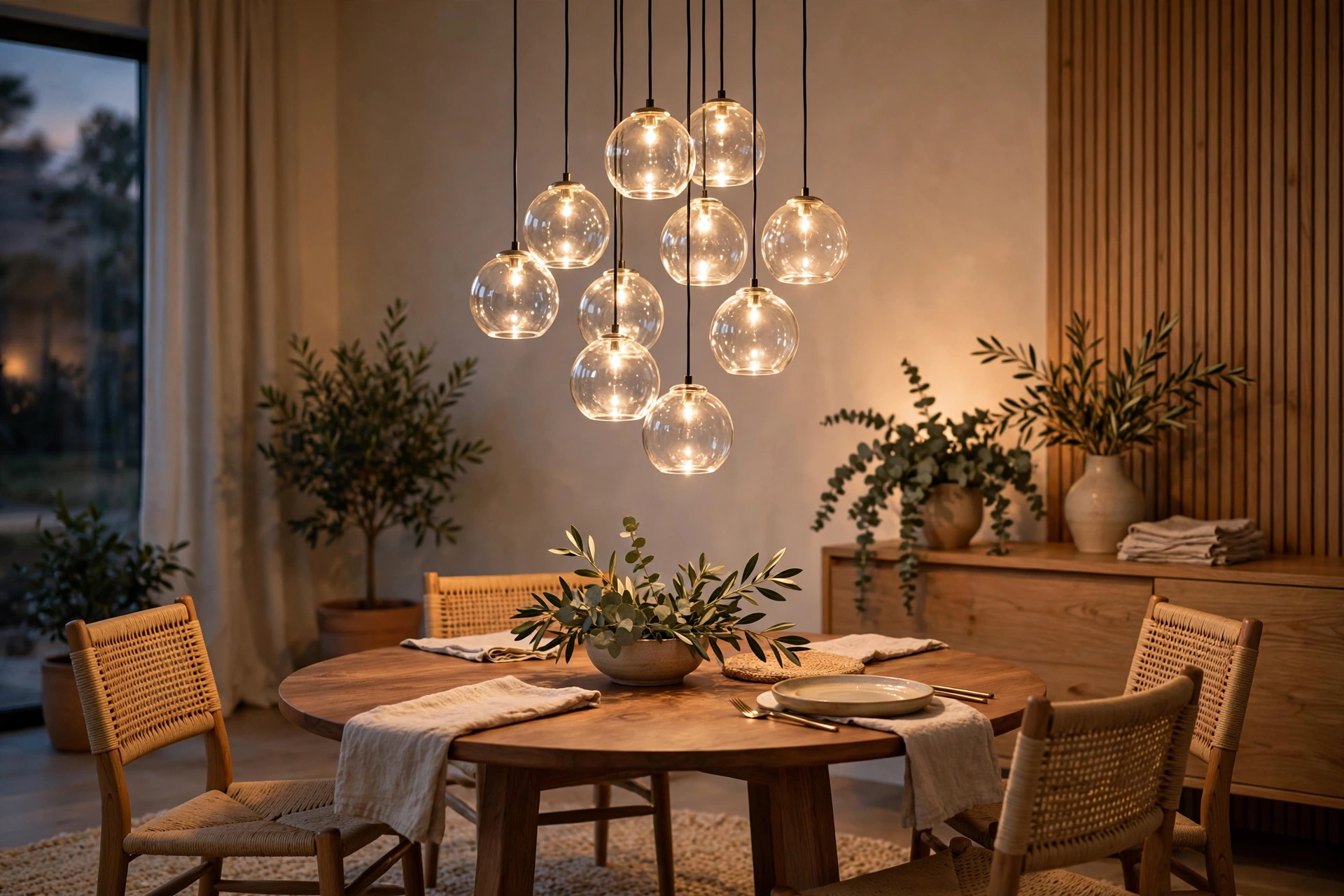
A cluster of three to five small pendants hung at staggered heights creates a sculptural moment over round or square tables. Glass globes, small metal shades, or woven rattan minis all cluster well — the repetition is what makes it work. Keep the lowest pendant at least thirty inches above the table so diners can see under it.
This approach suits contemporary rooms and is more forgiving than a single large fixture if your ceiling is off-center. For a modern room to pair them with, see our 15 modern dining room design ideas with effortless style.
4. Flank the Sideboard with Wall Sconces
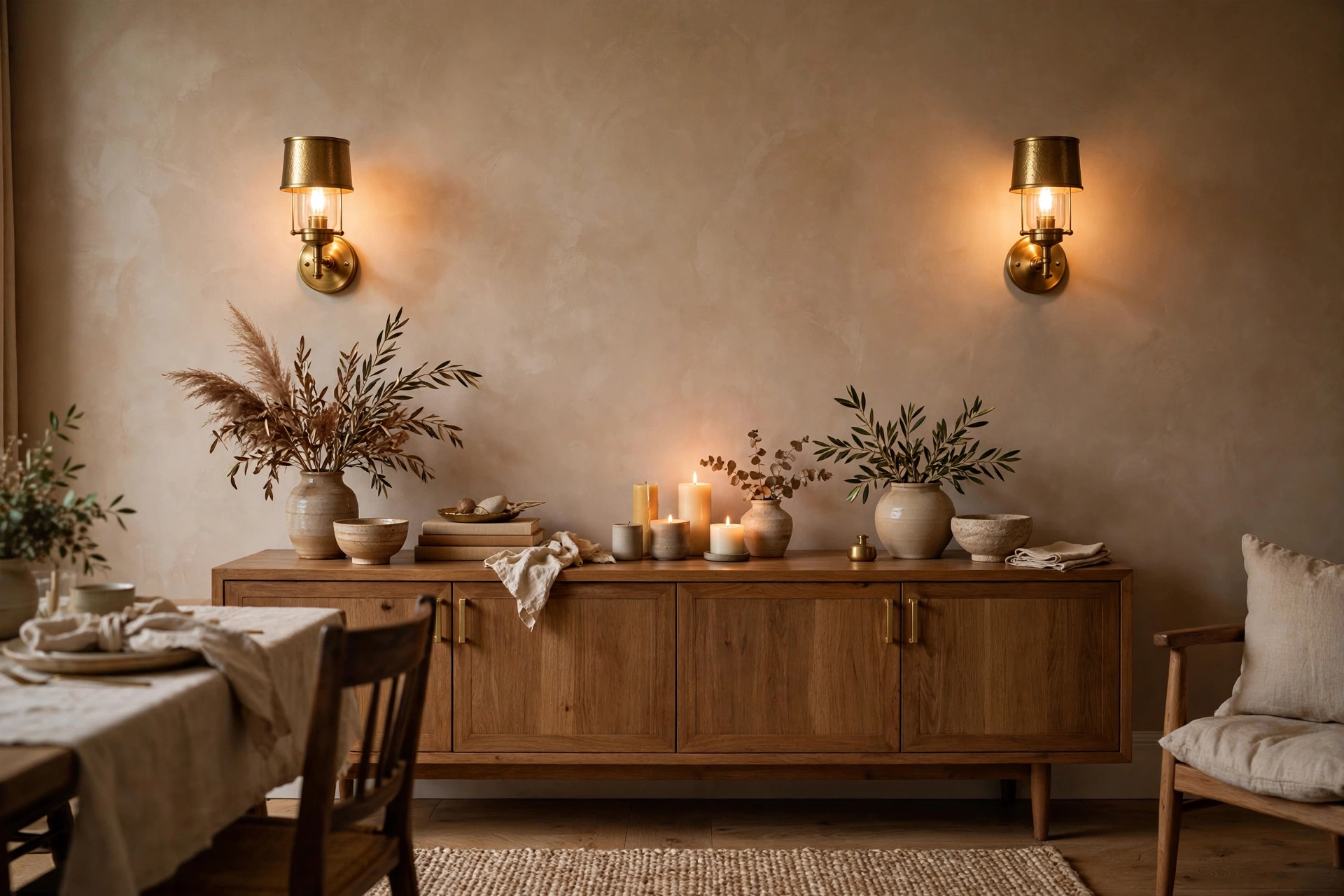
Wall sconces on either side of a sideboard or a large piece of art add the layered glow that overhead fixtures alone cannot provide. They wash the wall with soft light, make the sideboard vignette look styled after dark, and eliminate the cave effect of a single bright ceiling light. Hardwired sconces are ideal, but plug-in versions with cord covers work in rentals.
Choose sconces with shades or diffusers rather than bare bulbs to avoid glare at seated eye level. Brass, black, or ceramic finishes all disappear elegantly into most dining room palettes.
5. Put Everything on Dimmers
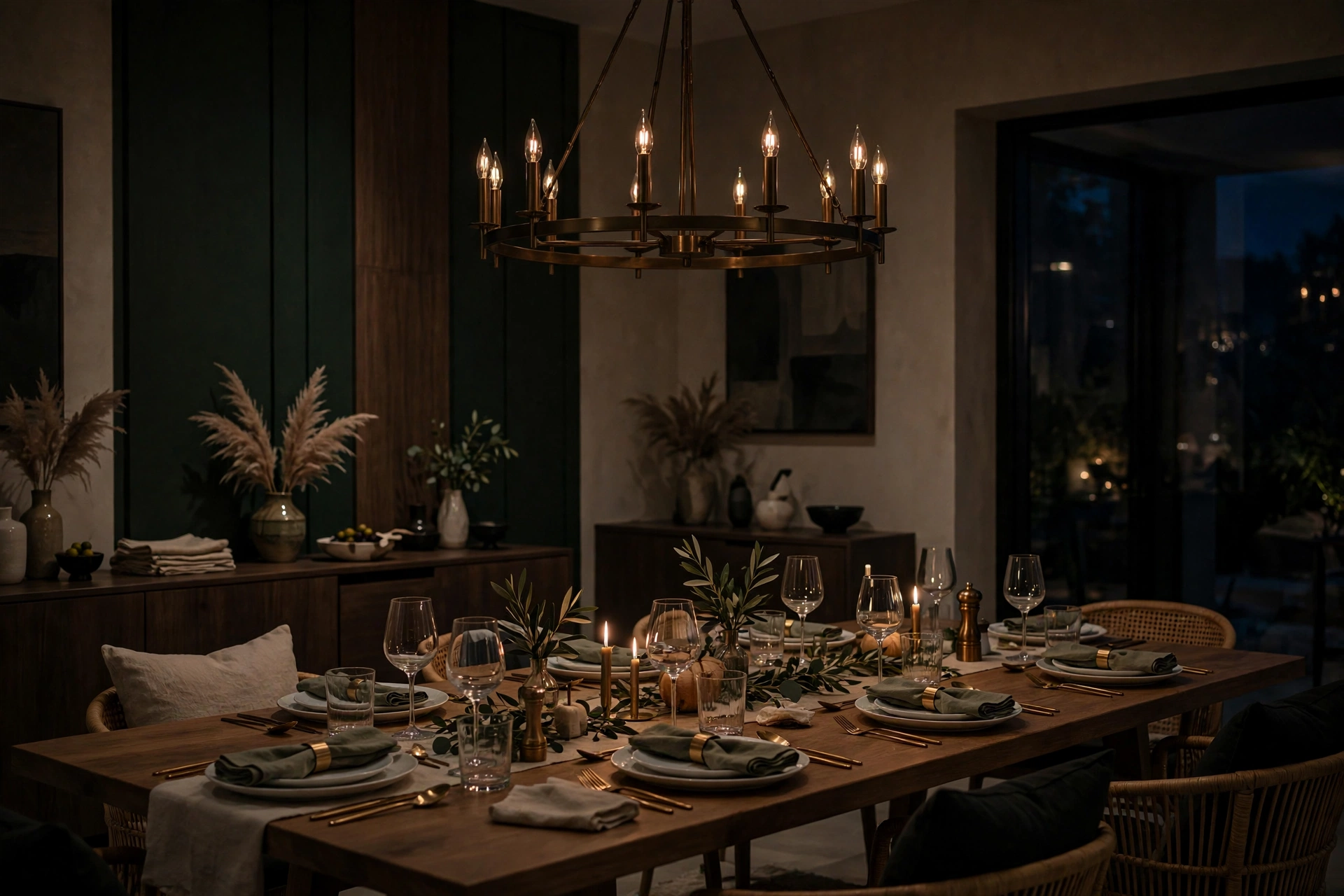
The single highest-impact lighting upgrade is also the cheapest: dimmer switches on every fixture. Dining rooms need bright light for homework and dim light for dinner parties, and only dimmers deliver both. Swap standard switches for dimmers (a straightforward DIY if you are comfortable with basic wiring) and make sure your bulbs are dimmable.
Apartment Therapy’s green dining room makeover is a great reminder to plan lighting early — the designer layered sconces, a chandelier, and a candelabra, all tunable, for that moody, flexible glow. Dim everything to about twenty percent for the classic dinner-party mood.
6. Style Buffet Lamps on the Sideboard
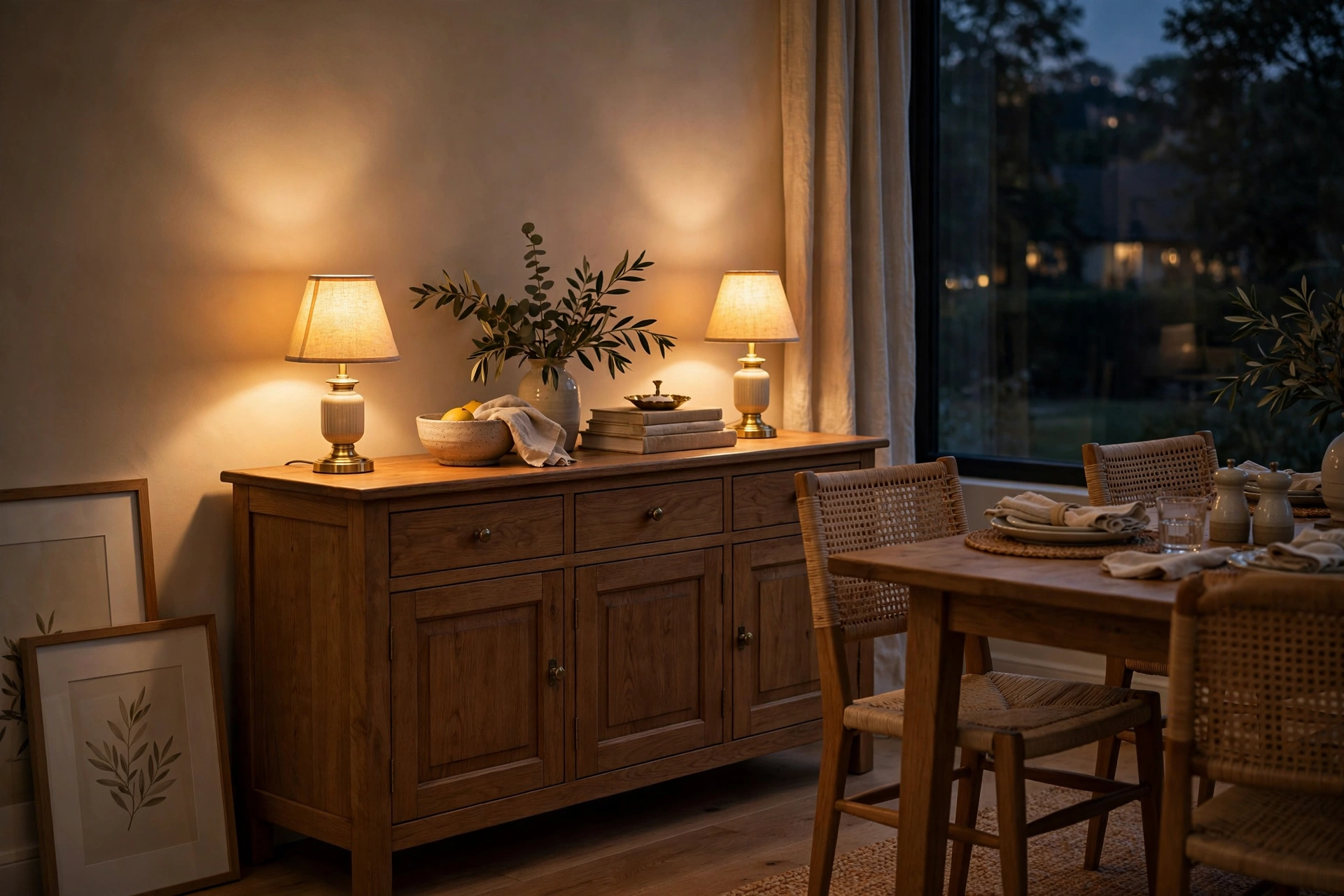
A pair of small table lamps on the sideboard brings lamplight warmth to the dining room’s edges. Choose lamps twelve to eighteen inches tall so they sit below eye level when you are seated — buffet lamps are specifically proportioned for this. Matching pairs look formal; two complementary lamps look collected.
Use warm-toned shades (cream, linen, or soft gold interiors) to keep the glow flattering. These lamps also make the dining room feel finished during the day when the chandelier is off.
7. Add Picture Lights Over Art
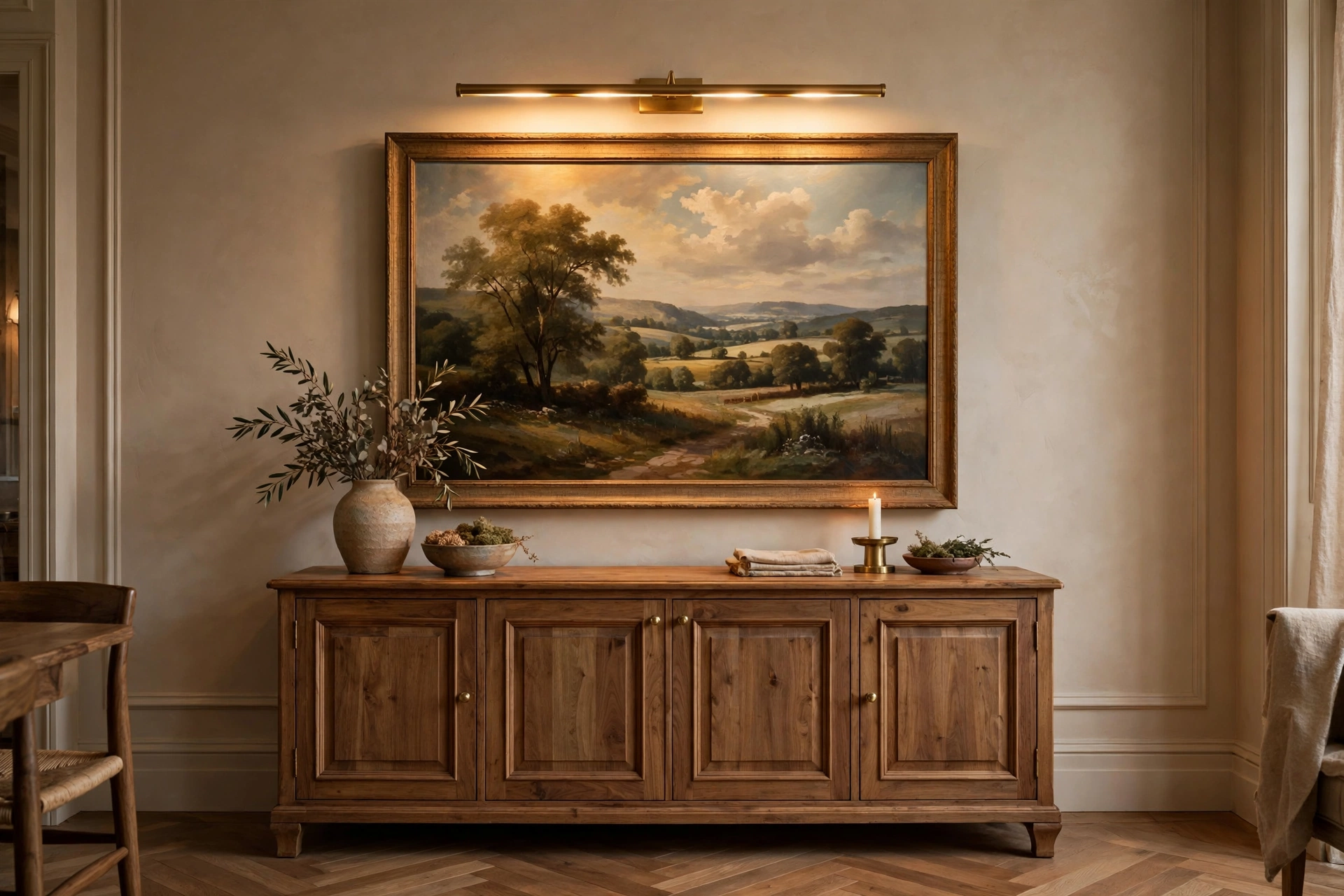
A slim brass picture light over a large painting or mirror adds a gallery touch and a genuinely useful layer of light. Battery-operated versions now last for months and install without an electrician, making this an easy retrofit. The warm pool of light draws the eye and makes the whole wall feel intentional.
Size the light to about half the artwork’s width. This small addition punches far above its weight in traditional and transitional dining rooms, where art is often the room’s second focal point after the table.
8. Make Candlelight the Centerpiece
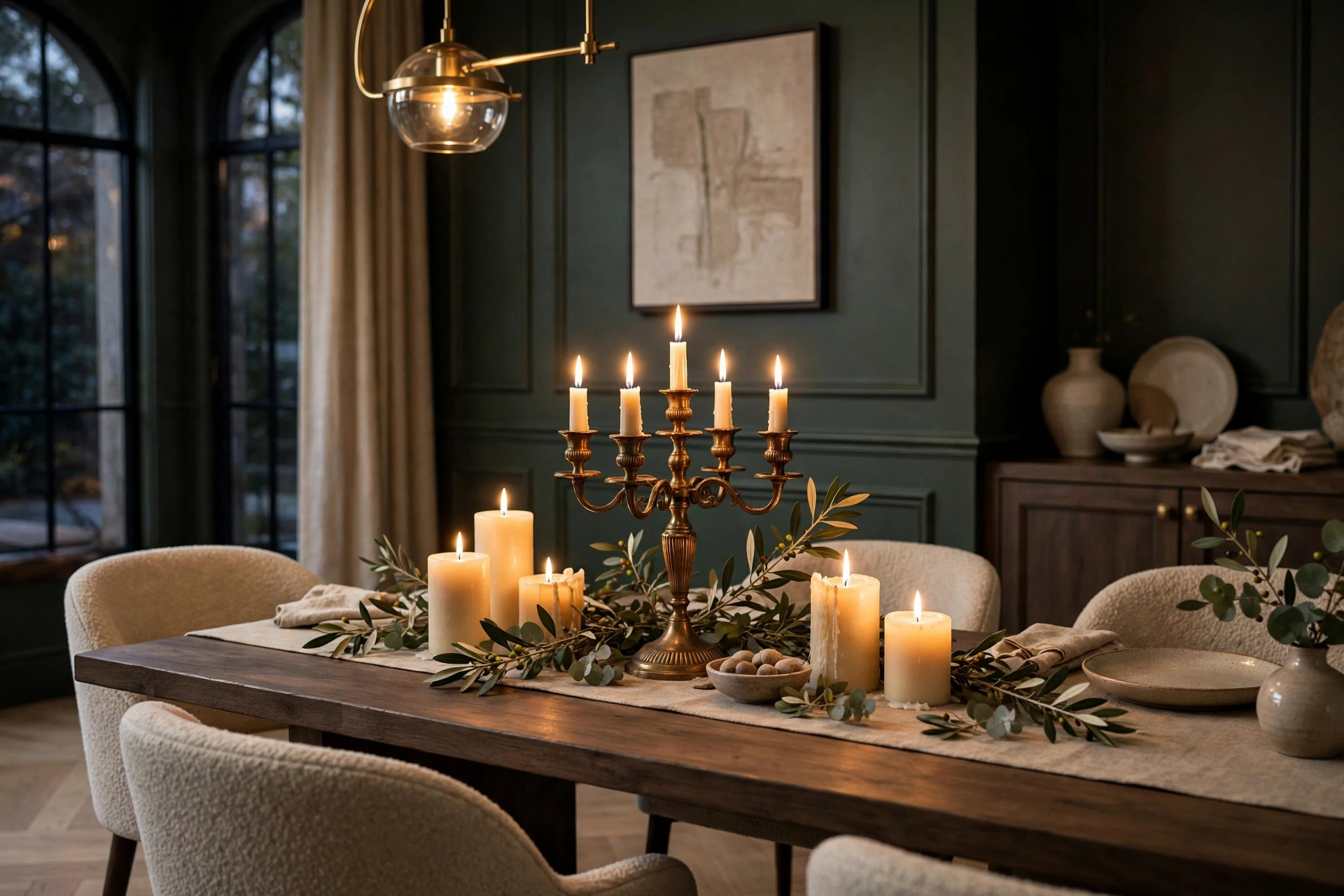
Nothing flatters a dining room like candlelight. A low arrangement of pillar candles, a classic candelabra, or a modern linear candle holder down the table’s center creates the flicker and warmth no bulb fully replicates. Keep arrangements low so conversation flows over them.
For everyday ease, quality LED candles with realistic flicker give the look without the fire watch — many are nearly indistinguishable now. Mix real and LED freely; no one will know. For more warm-glow inspiration beyond the dining room, see our 15 entryway lighting ideas for a warm welcoming glow.
9. Choose a Semi-Flush Mount for Low Ceilings
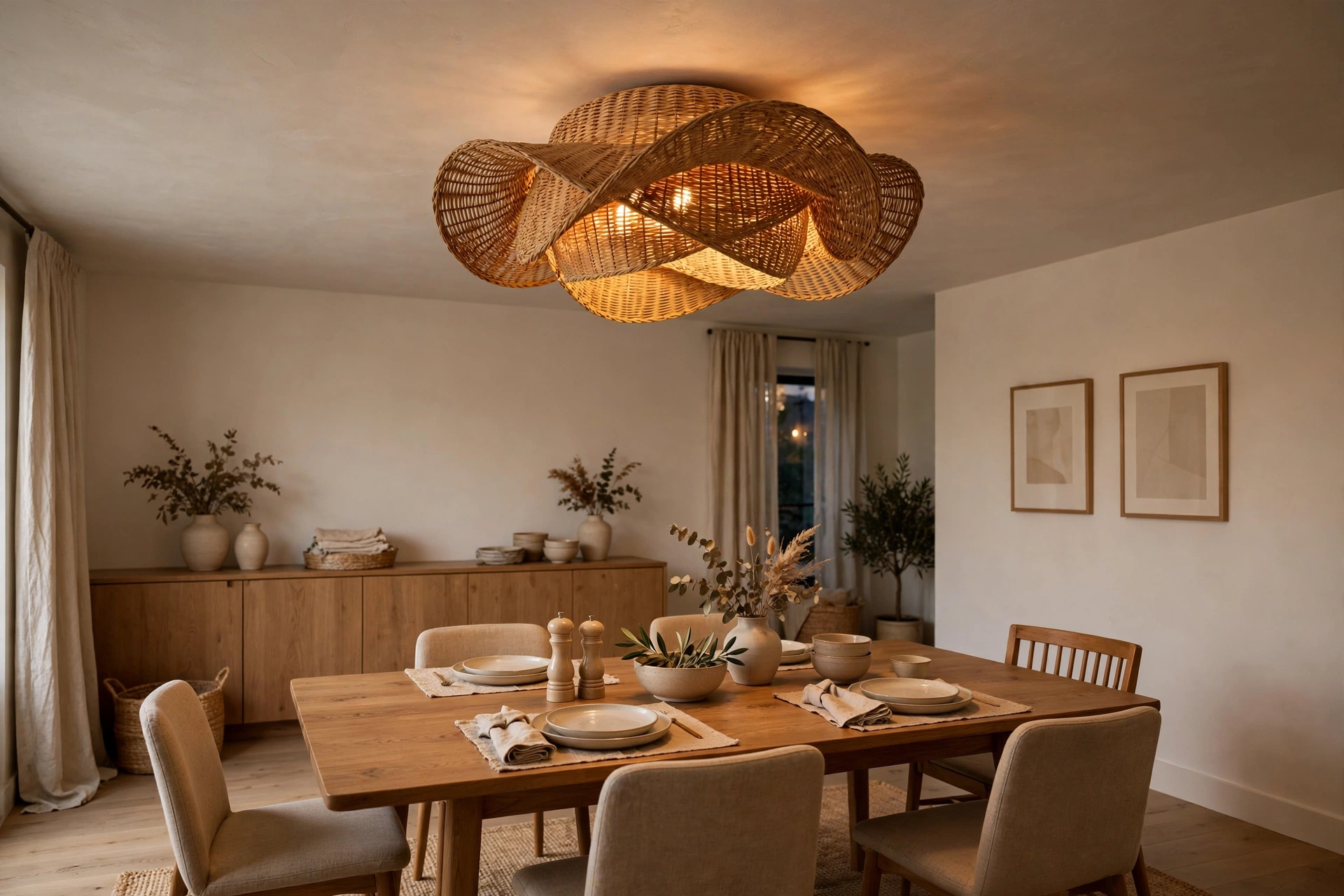
Low ceilings (under eight and a half feet) rule out dramatic chandeliers, but semi-flush mounts fill the gap beautifully. These fixtures hug the ceiling while dropping just enough to show their design — look for sculptural glass, woven shades, or starburst forms. The light spreads wider than a flush mount, which matters in small rooms.
Supplement with sconces or buffet lamps since a single ceiling fixture rarely lights a low room evenly on its own. Keep the fixture’s finish light-reflective (white, glass, or polished metal) to maximize the brightness.
10. Arc a Floor Lamp into the Corner
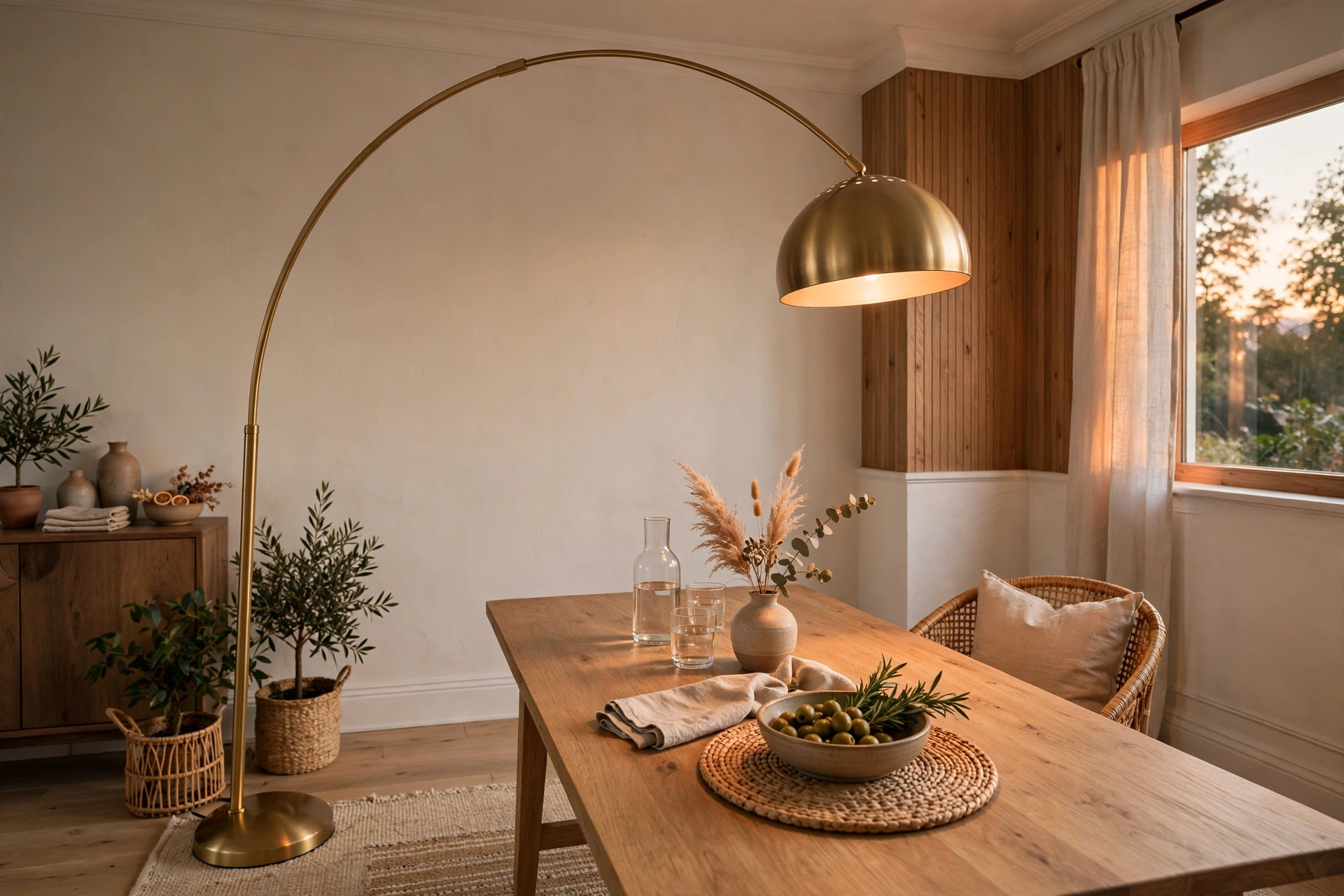
An arc floor lamp sweeping over a reading chair or the table’s end adds drama and task light where ceiling fixtures cannot reach. In dining rooms that double as workspaces, the arc lamp is the hardest-working piece — it lights homework, puzzles, and late-night laptop sessions without rewiring anything.
Choose an arc with a heavy base and position it where no one will walk into the curve. Marble or brass bases suit dining rooms; keep the shade simple so the sculptural arm stays the star.
11. Layer Three Types of Light
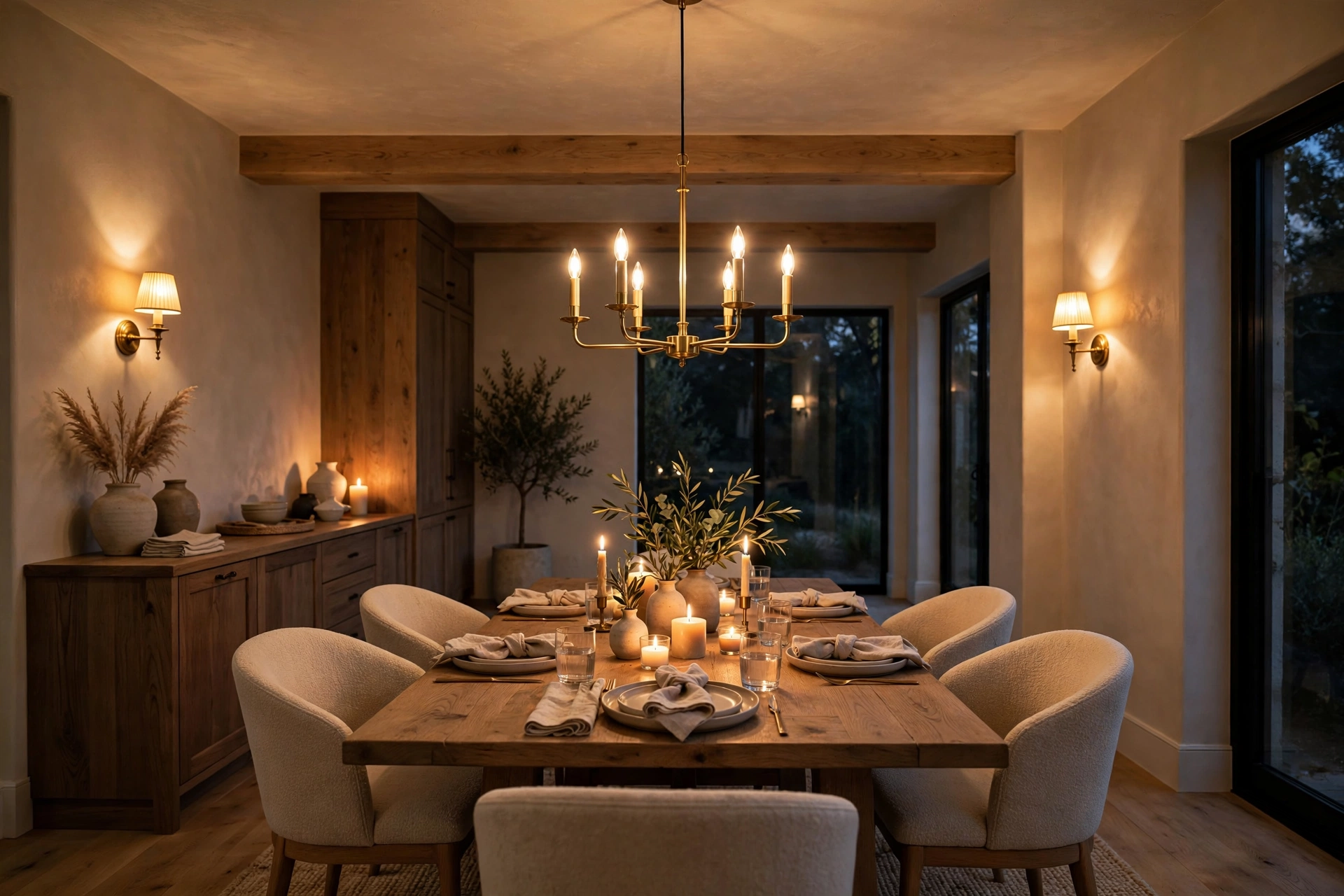
Professional lighting design uses three layers, and dining rooms need all of them: ambient (the chandelier or ceiling fixture for overall light), task (pendants or buffet lamps for seeing the table clearly), and accent (sconces, picture lights, or candles for mood). Most disappointing dining rooms have only the first.
Audit your room against the three layers and add whichever is missing — usually it is accent light. Even two small sconces or a pair of candles transforms a flat-lit room into a layered one. This framework works in every style, from rustic to ultra-modern.
12. Soften with Woven Rattan Pendants
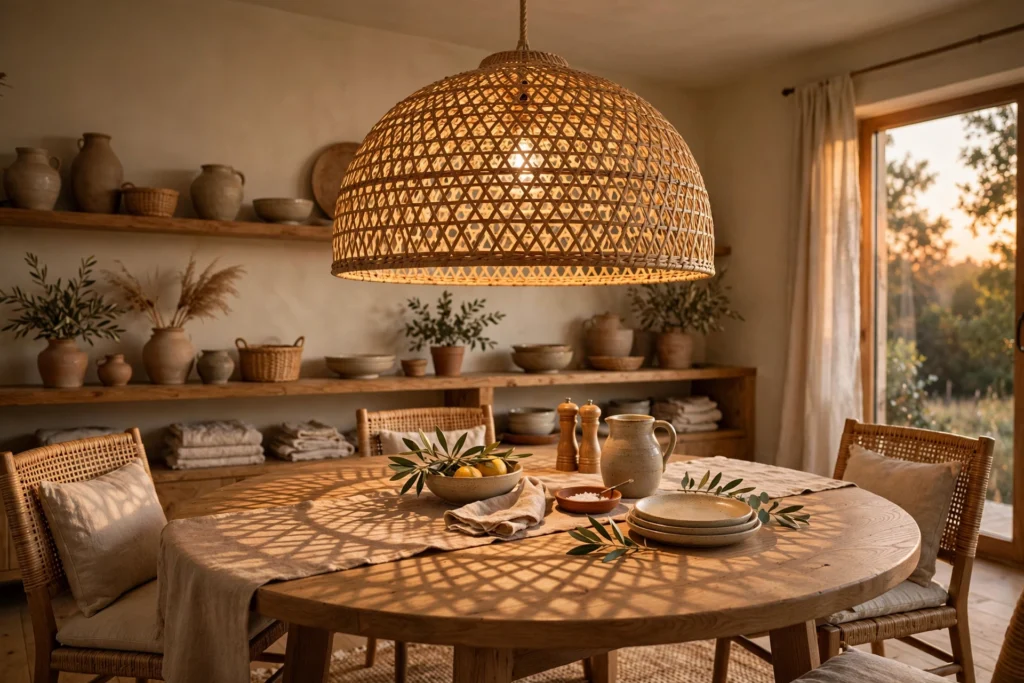
Rattan and wicker pendants bring organic texture and beautiful patterned shadows to dining rooms, especially relaxed, coastal, and bohemian spaces. A single large woven pendant over a round table or a pair over a rectangular one adds warmth that metal and glass cannot. The open weave also means the bulb’s glare is naturally diffused.
Check that the weave is tight enough to hide the bulb from seated sightlines. For a rustic room that would love this texture, see our 15 rustic dining room design ideas for warm gatherings.
13. Mix Metals with Brass Accents
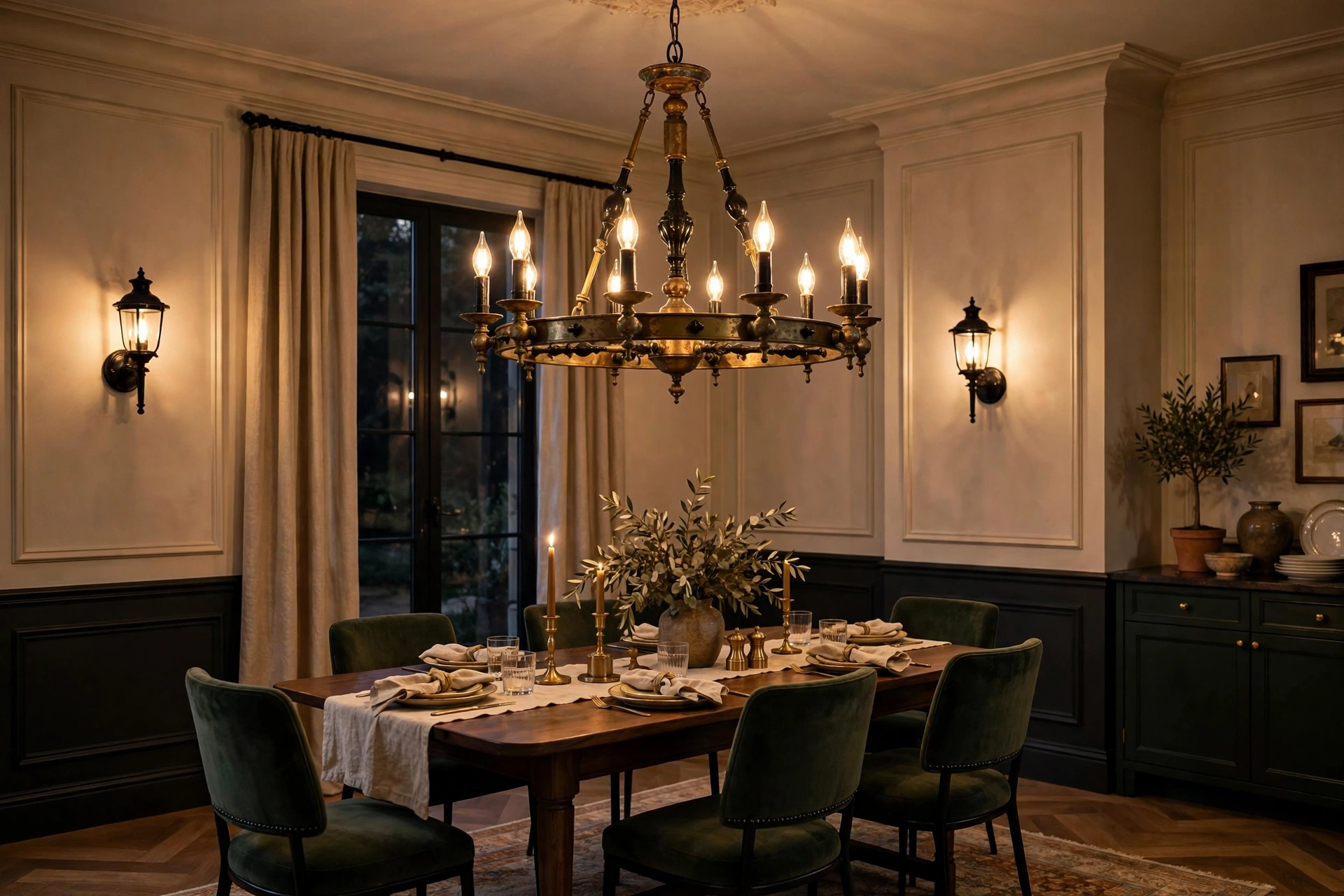
Brass — aged, brushed, or unlacquered — is the dining room’s friendliest metal: warm, classic, and flattering to skin tones in lamplight. Use it for the chandelier, sconces, or picture lights, and do not be afraid to mix it with black or iron elsewhere in the room. Mixed metals look collected; matching everything looks like a showroom.
Unlacquered brass develops a patina over time; if you prefer it bright, choose lacquered. Keep brass away from cool chrome in the same sightline — warm metals play best with other warm finishes.
14. Switch to Warm-Dim Smart Bulbs
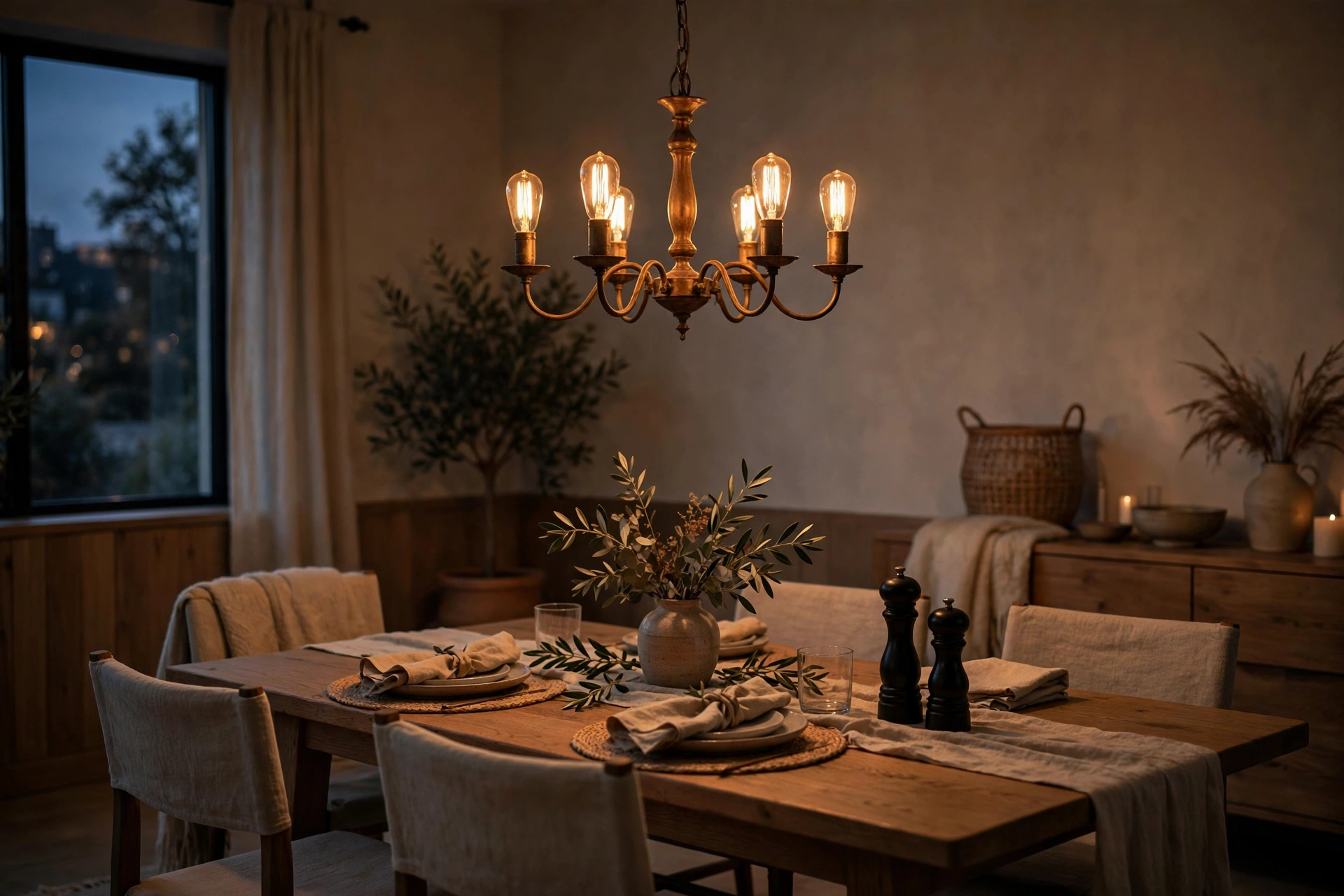
Smart bulbs that warm as they dim (from bright 3000K down to candlelike 1800K) give you the dinner-party glow without changing fixtures. Set scenes for “family dinner,” “entertaining,” and “cleanup” and switch between them from your phone. They are the easiest lighting upgrade that exists — just screw them in.
Use them in every visible-bulb fixture (pendants, sconces, chandeliers) for the biggest effect. One caution: keep the smart features simple enough that guests and family can still use the wall switch normally.
15. String Fairy Lights for Casual Charm
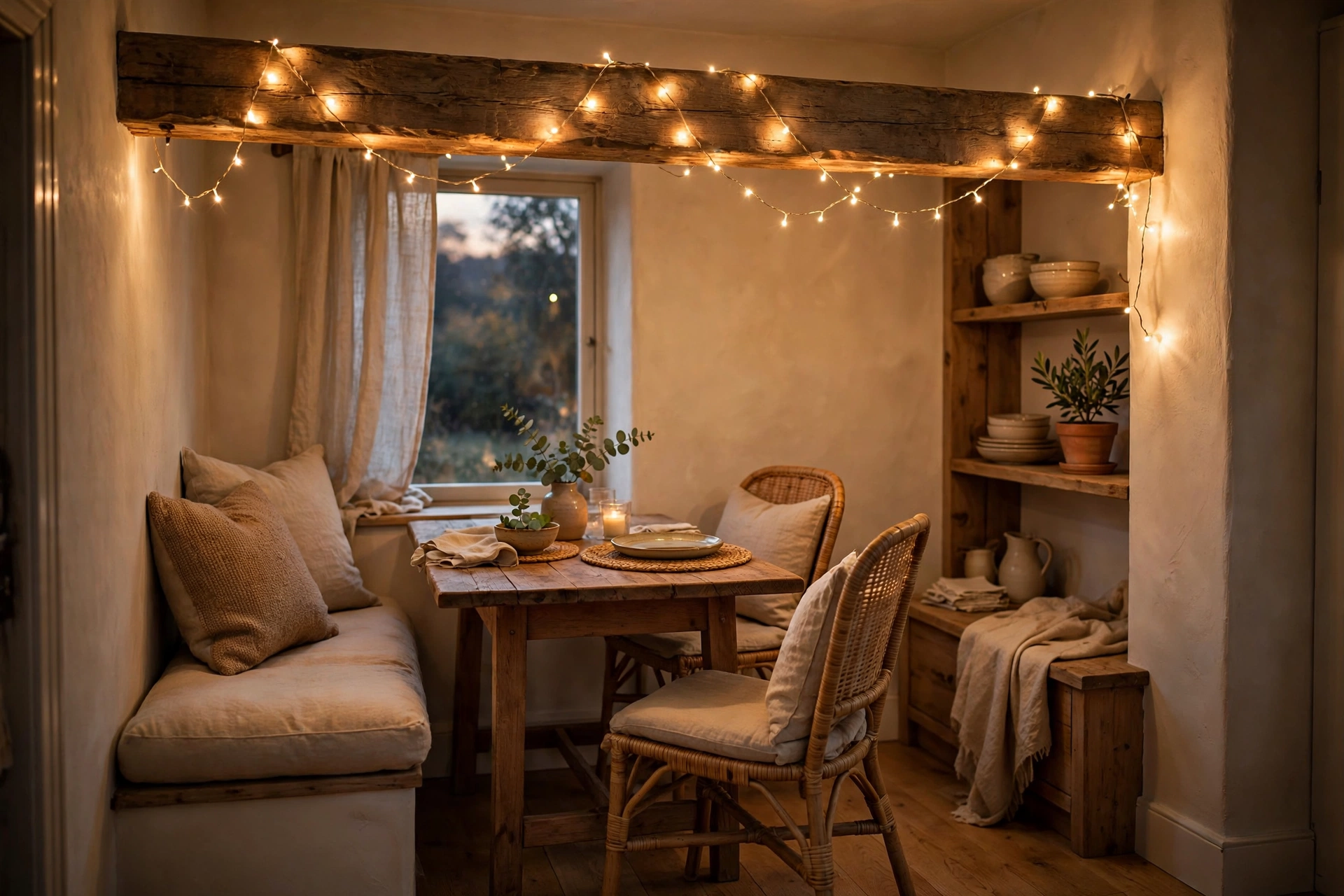
For relaxed, eclectic dining rooms, a swag of warm-white fairy lights or a strand of festoon bulbs adds instant magic. Drape them along a beam, around a window frame, or in a glass cloche as a centerpiece. They are the lowest-commitment lighting idea here — no electrician, no hardwiring, nearly no cost.
Choose warm white (not multicolor) and keep the strand slightly loose rather than taut for the best effect. This is especially charming in dining nooks, sunrooms, and rooms used for casual everyday meals rather than formal entertaining.
Frequently Asked Questions
How high should a chandelier hang above a dining table?
Thirty to thirty-six inches from the tabletop to the bottom of the fixture is the standard, giving enough clearance to see across the table while keeping the light intimate. In rooms with ceilings over nine feet, add about three inches of height per extra foot of ceiling. Always measure from the table surface, not the floor.
What size chandelier do I need for my dining room?
Add the room’s length and width in feet; that total in inches is a good starting diameter. The fixture should also be about half to two-thirds the table’s length (or diameter for round tables). When in doubt, go slightly larger — undersized chandeliers are the most common dining room lighting mistake.
Should dining room lighting be warm or cool?
Warm, always. Bulbs around 2700K flatter food, skin tones, and wood finishes; cooler light makes dining rooms feel institutional. For maximum flexibility, use warm-dim bulbs or dimmers so you can go brighter for tasks and drop to a candlelike glow for entertaining.
How many light sources should a dining room have?
Aim for at least three: a ceiling fixture over the table, plus two supporting sources such as sconces, buffet lamps, or candles. This layered approach eliminates harsh shadows and lets you tune the mood. A single overhead light, no matter how beautiful, is never enough on its own.
Can I mix different lighting styles in one dining room?
Yes — mixing is what makes a room feel collected rather than catalog-bought. Keep one unifying element, usually the metal finish or the warmth of the light, and vary the fixture styles. A brass chandelier with black sconces and linen-shaded buffet lamps works because the warm light ties them together.
Keep Exploring
Dining room lighting rewards layering more than spending — a dimmer switch and a pair of candles can transform a room faster than a four-figure chandelier. Start by auditing your three layers (ambient, task, accent), add what is missing, and put it all on dimmers.
Once the light is right, everything else gets easier: the food looks better, the room feels warmer, and guests linger longer. That is the real job of dining room lighting — not just to illuminate the table, but to make everyone want to stay at it.





[…] with a few beautiful objects, and the buffet becomes the room’s most polished focal point. Looks with layered illumination from these dining room lighting ideas for a dining room that […]
[…] island pendants — 30 to 34 inches above the table — so diners can see each other across it. Dining room lighting guide covers chandeliers to sconces for adjacent […]
[…] create a warm, restaurant-like ambience. For a comprehensive look at fixture styles across rooms, browse our dining room lighting ideas from chandeliers to sconces to keep the whole home’s lighting language […]
[…] sits 30 to 36 inches above the tabletop, centered over the table, and always put it on a dimmer. Dining room lighting ideas from chandeliers to sconces will help you layer sconces and picture lights around it. Scale matters most: the chandelier should […]
[…] a chandelier, pendant, or cluster — because the ceiling and the light read as one composition. Dining room lighting ideas from chandeliers to sconces walk through fixture heights and layering, so plan the light and the ceiling treatment together […]
[…] clocks still hum. For more layered lighting to pair with your quietly ticking-free wall, our dining room lighting ideas from chandeliers to sconces complete the […]