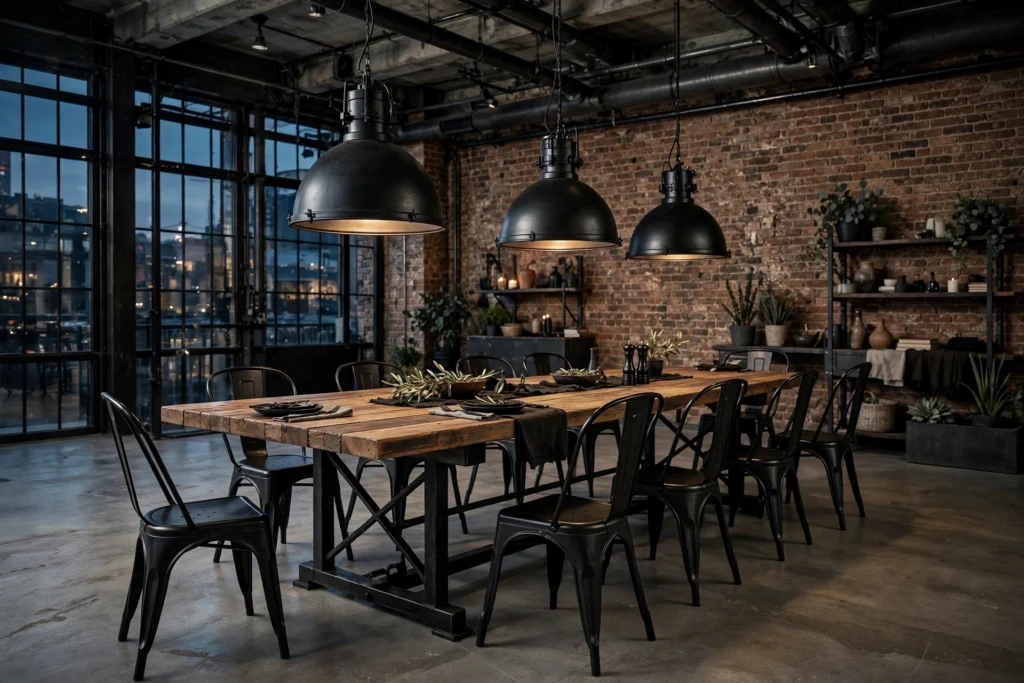

The industrial dining room borrows its attitude from old warehouses and factory lofts — exposed brick, blackened steel, reclaimed timber, and lighting that looks like it means business. Done well, it is anything but cold: the raw materials bring texture and history, and the open, honest construction makes every dinner feel a little more alive.
These industrial dining room design ideas show how to build that urban character without turning your home into a theme park. From reclaimed wood tables and metal chairs to Edison-bulb lighting and softening touches of green, here are fifteen ways to give your dining room real edge.
1. Anchor with a Reclaimed Wood Table
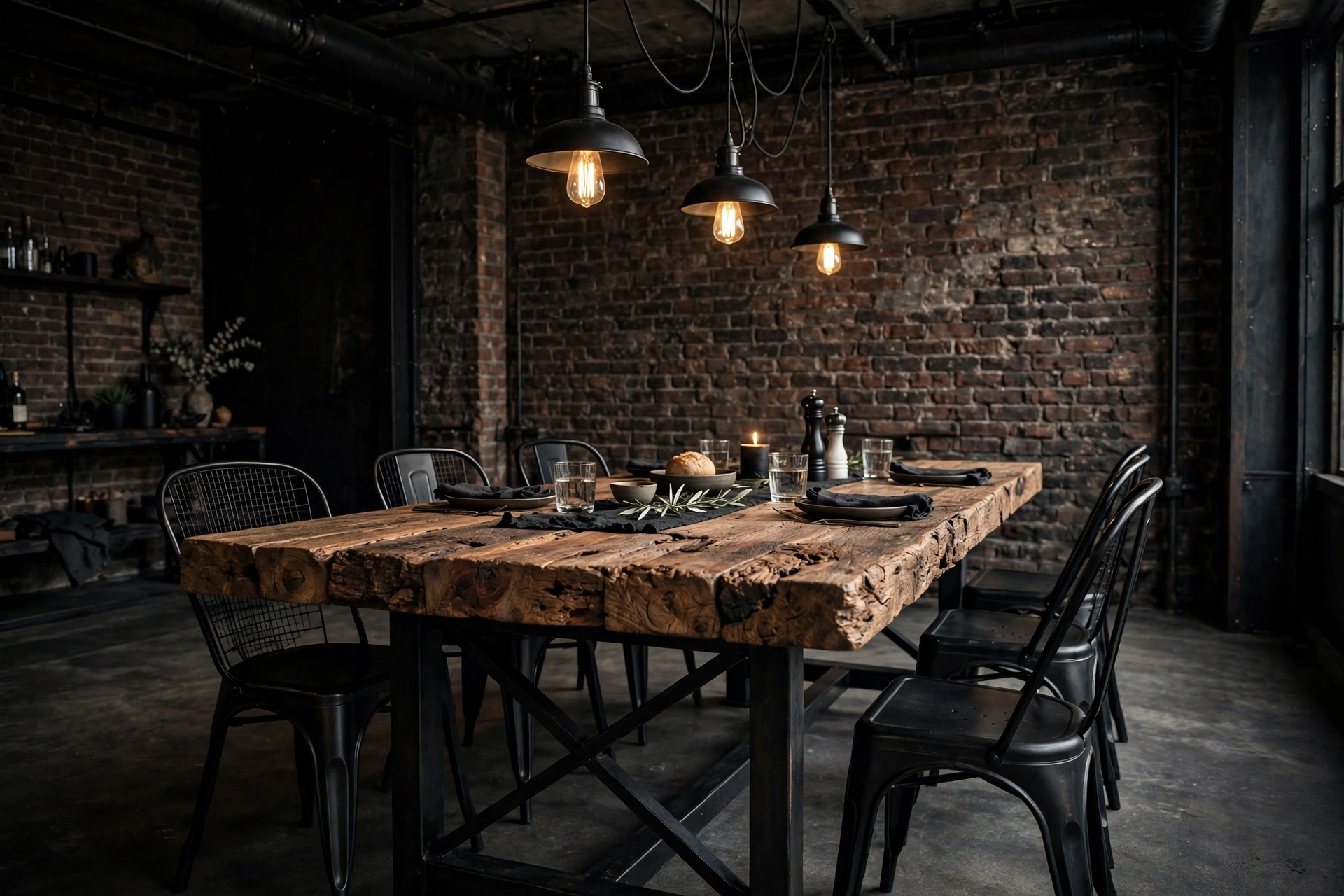
Every industrial dining room starts with the table, and reclaimed wood is the material of choice. A thick slab of salvaged timber — barn boards, factory flooring, old beams — brings grain, knots, and history that no new tabletop can fake. Pair it with a black steel base for the classic wood-meets-metal contrast.
Go big and sturdy: industrial tables look best with presence, so choose the largest table your room can comfortably hold. Leave the finish matte and natural, sealed just enough to survive dinner. A reclaimed table grounds the whole room in authenticity, and every scratch it earns only adds to the story.
2. Mix Metal Chairs
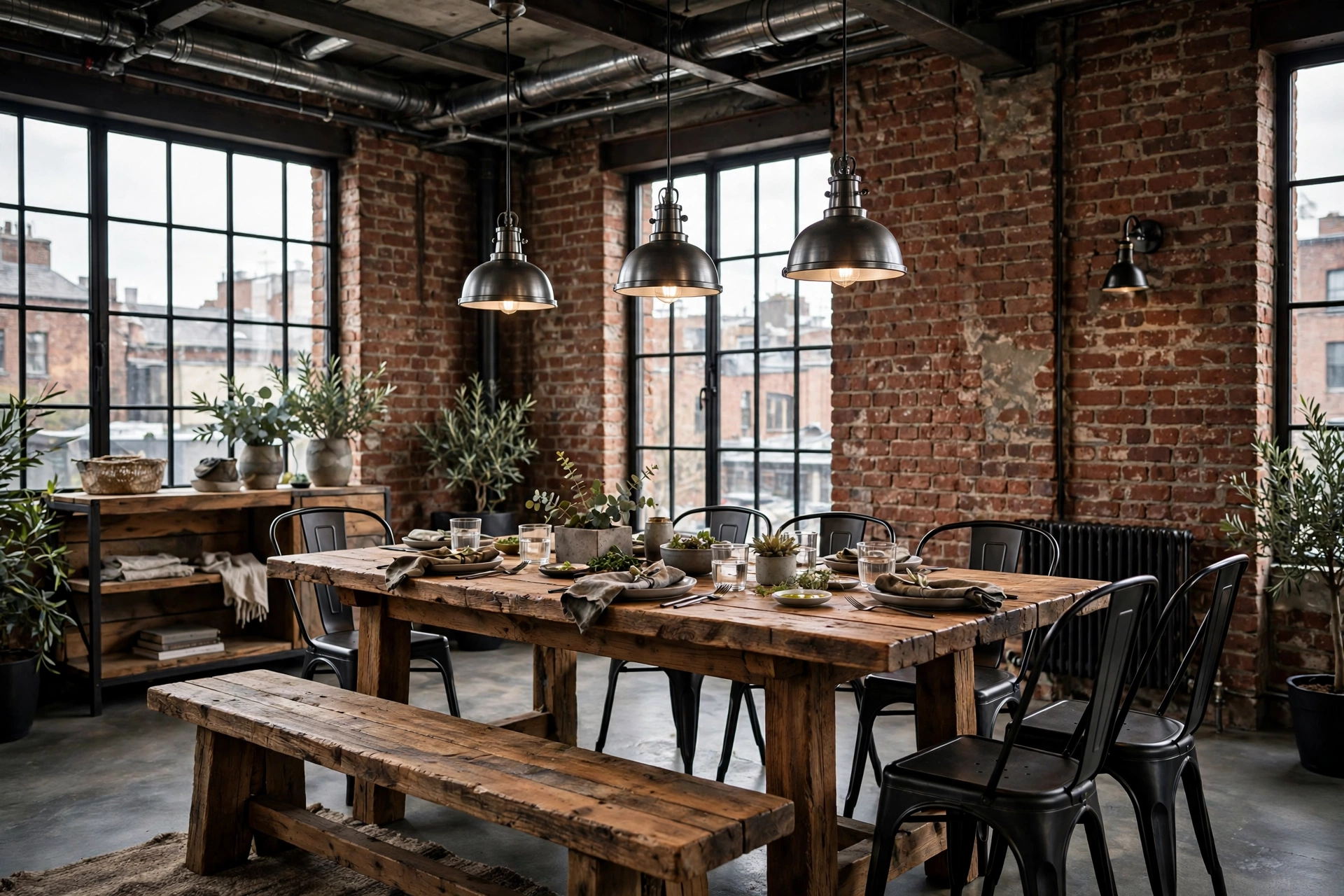
Metal dining chairs are the industrial classic — think Tolix-style steel chairs, vintage factory stools, or simple bent-metal designs in black, gunmetal, or galvanized finishes. They are tough, stackable, and their clean industrial lines contrast beautifully with a warm wood table.
Do not feel bound to a matching set. Mixing chair styles — metal chairs on the sides, a reclaimed-wood bench on one side, two upholstered host chairs at the ends — is the move that keeps industrial from feeling like a furniture catalog. HGTV’s industrial chic dining room shows the formula perfectly: a slab table with mixed seating that feels collected, not coordinated.
3. Expose or Fake a Brick Wall
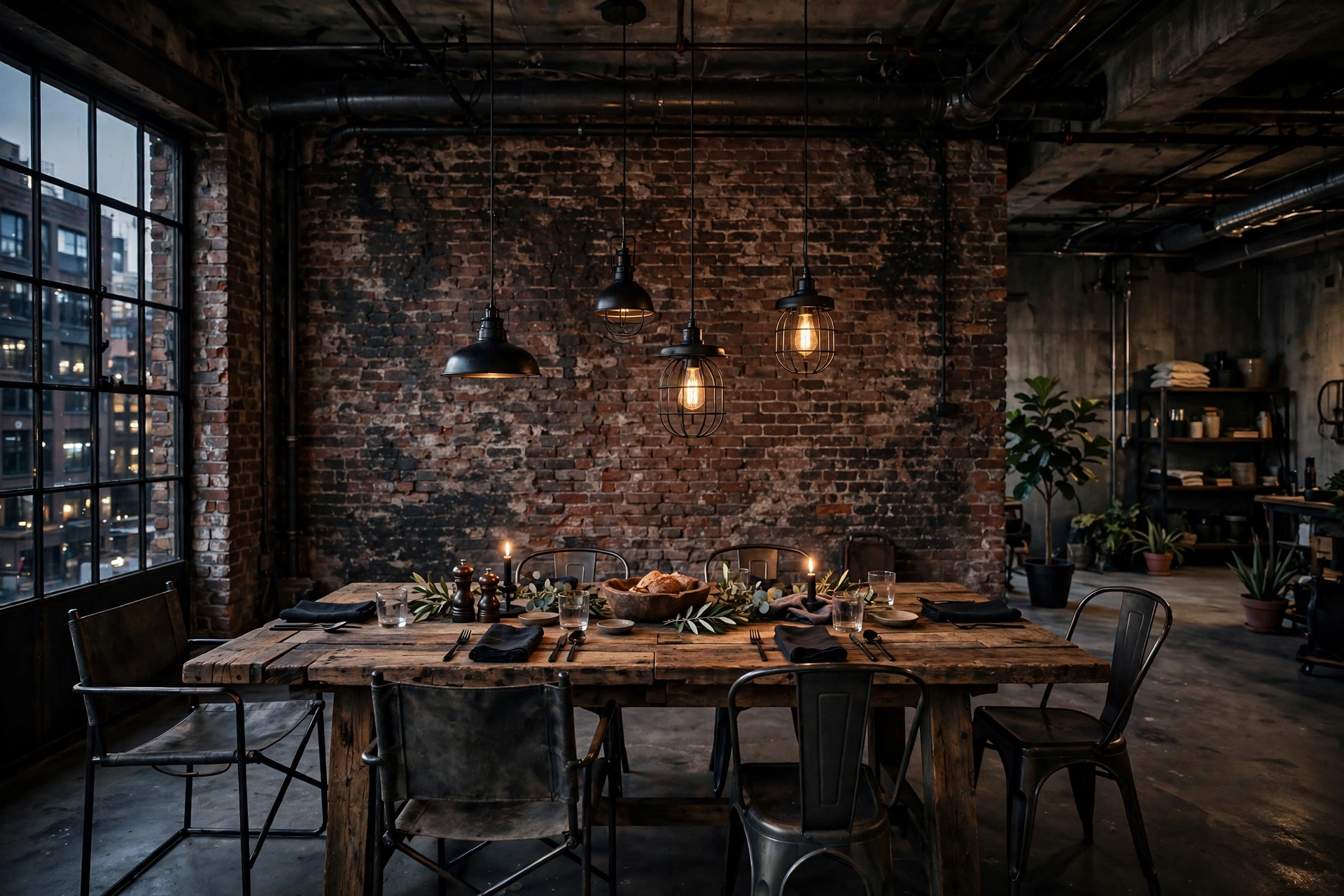
Exposed brick is industrial design’s signature wall, and one brick wall behind the dining table changes the entire room. If you have real brick under the drywall, exposing it is the single highest-impact project you can do. If not, convincing brick veneer panels or even quality brick wallpaper delivers the look without structural work.
Keep the brick to one wall — the full four-wall treatment can overwhelm a dining room and darken it considerably. Style against it simply: the wood table, black metal lighting, and maybe one large piece of art. The brick is the decoration; it does not need competition.
4. Hang Oversized Metal Pendants
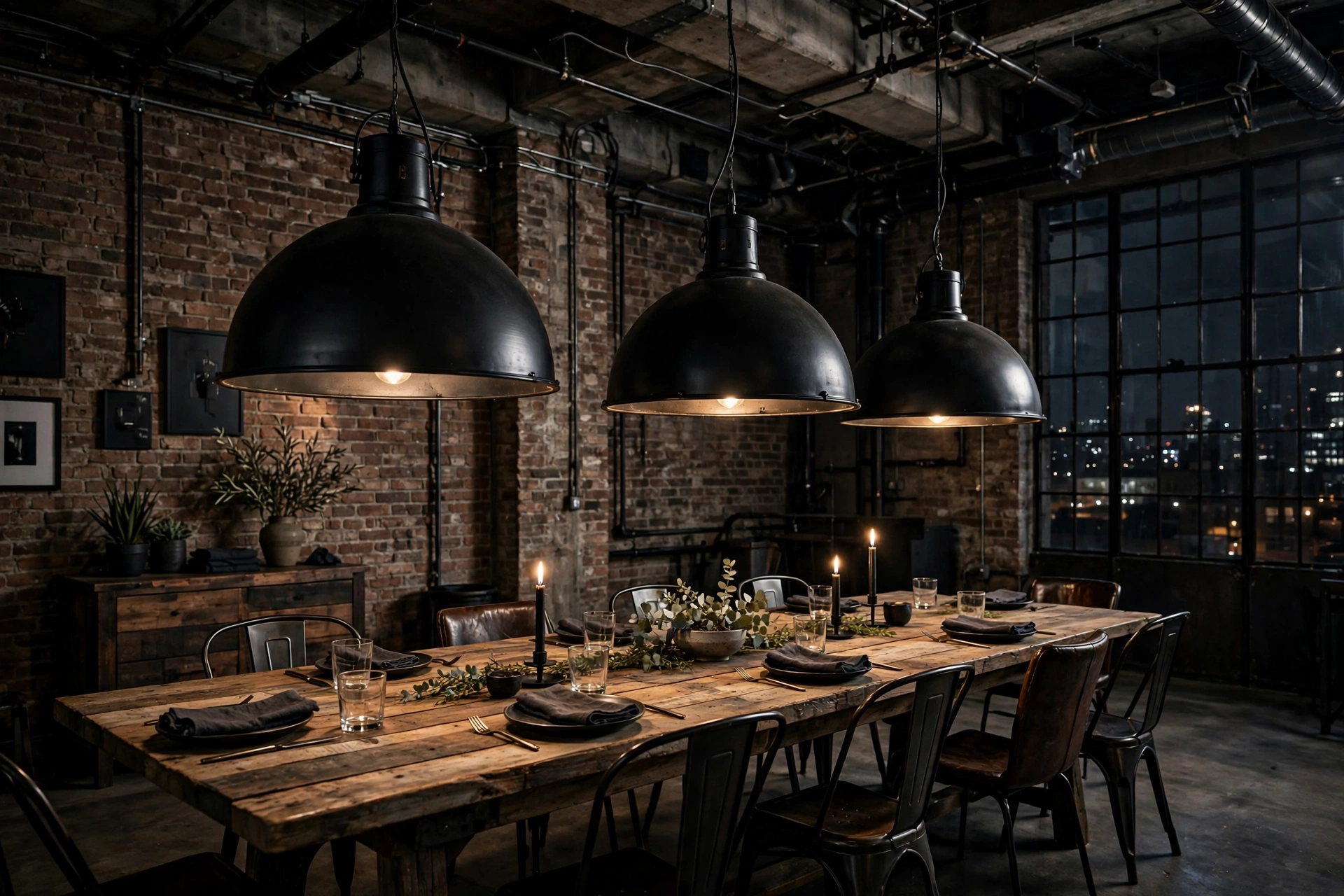
Lighting is where industrial dining rooms make their boldest statement. Oversized dome pendants in blackened steel, galvanized metal, or copper — hung low over the table in a row of two or three — deliver the factory aesthetic with real drama. The bigger the shade, the better the effect.
Hang them 28 to 34 inches above the tabletop so they define the dining zone without blocking sightlines. Put them on a dimmer: industrial pendants look their best glowing warm and low in the evening. For long tables, space multiple pendants evenly; for round tables, one large pendant centered above is perfect.
5. Add an Edison-Bulb Chandelier
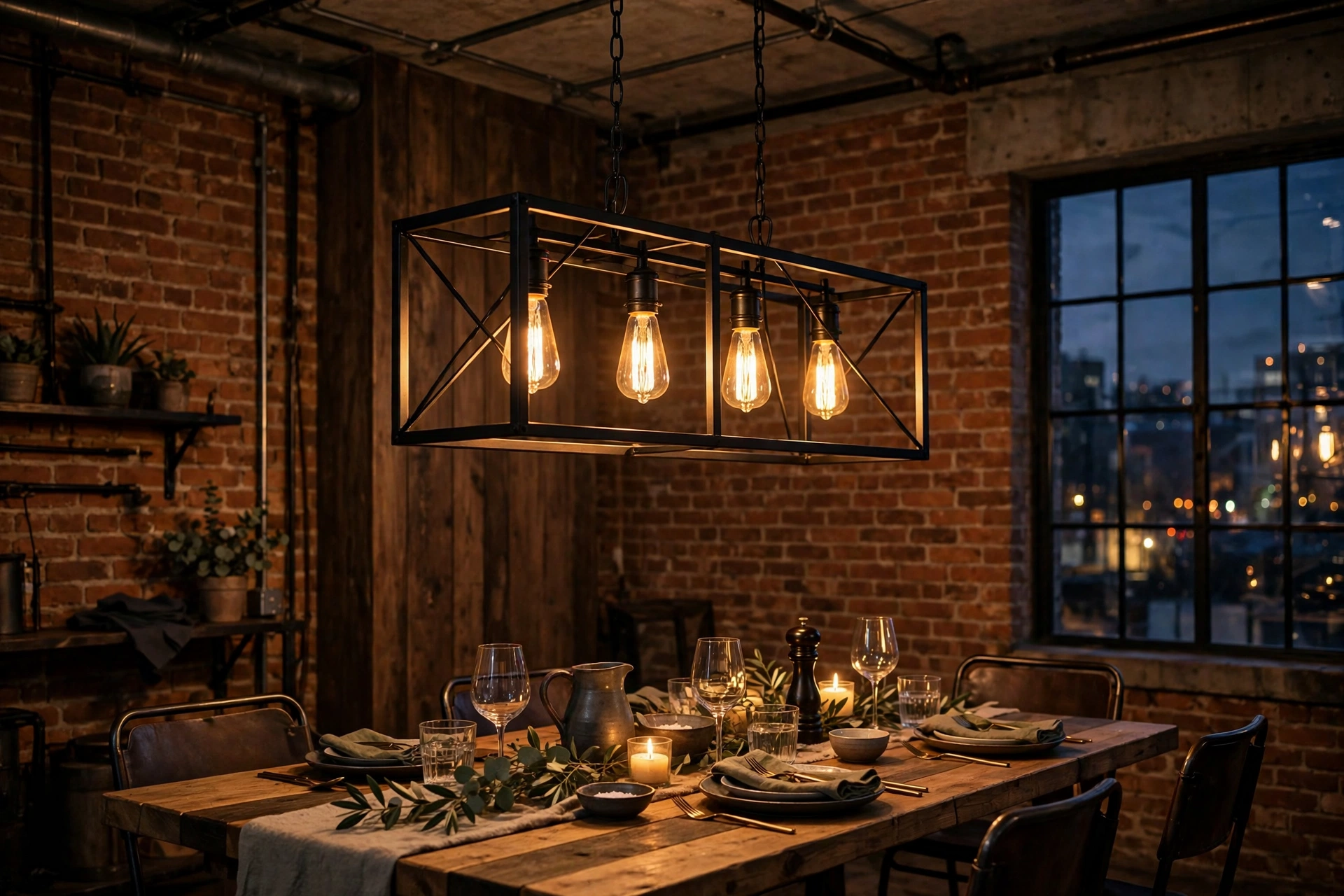
If pendants feel too expected, an Edison-bulb chandelier brings industrial romance. Fixtures with exposed filament bulbs — in a linear cage frame, a wagon-wheel ring, or a simple multi-arm black steel design — cast that warm amber glow that makes everyone at the table look good.
Use dimmable LED Edison-style bulbs for the look without the heat and energy waste of real filaments. The amber light flatters wood, brick, and skin alike, which is why these fixtures photograph so well. One statement chandelier over the table is enough; let the sideboard and corners stay quieter with simple sconces or candles.
6. Use Concrete or Dark Wood Floors
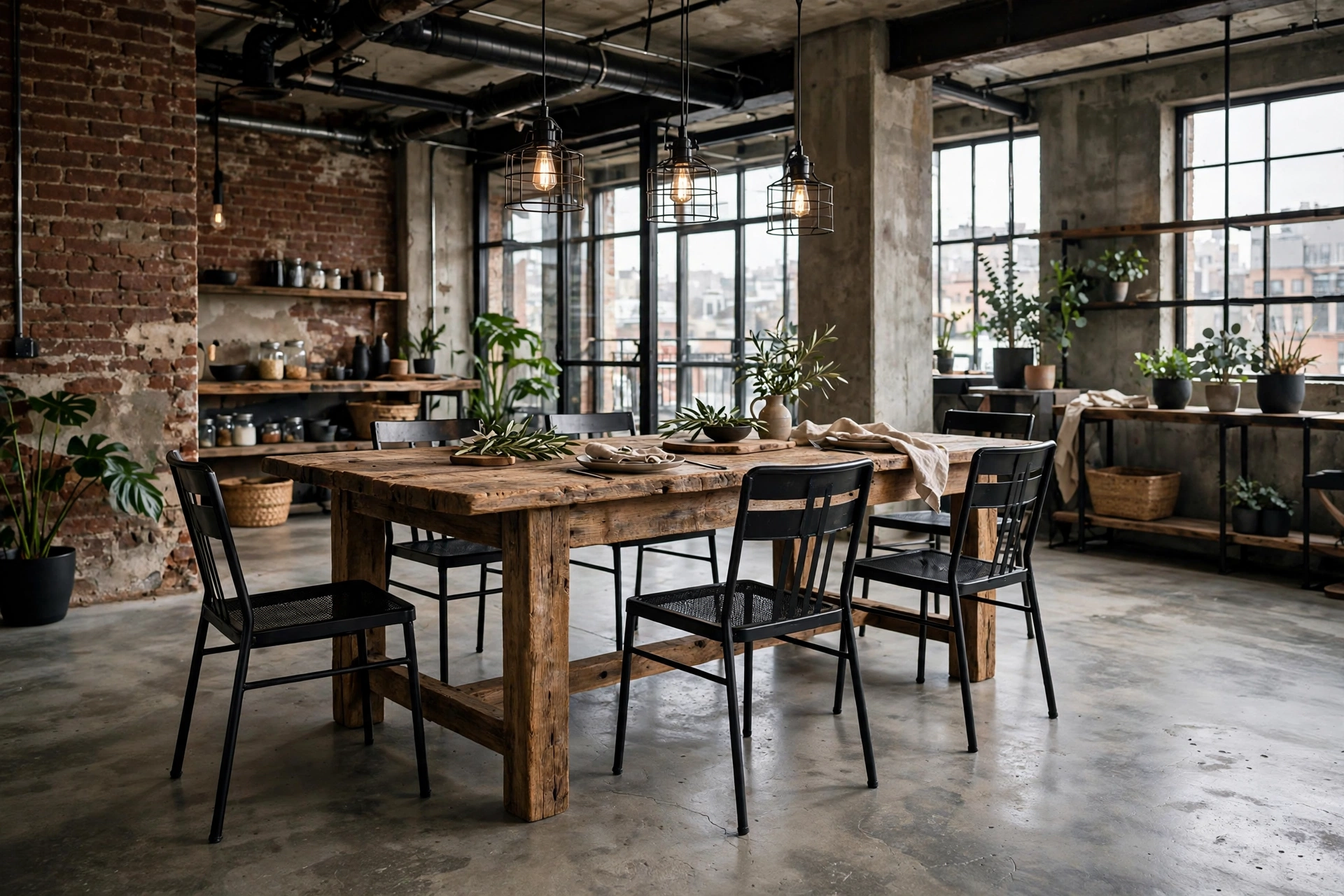
Industrial floors should feel honest underfoot. Polished concrete is the purist’s choice — cool, durable, and beautifully neutral. Dark-stained wood planks, especially wide and slightly distressed, bring the same industrial feeling with more warmth. Both handle dining-room traffic effortlessly.
If replacing floors is not in the cards, a large low-pile rug in a neutral tone or subtle pattern softens existing floors while keeping the industrial mood. Avoid anything too precious underfoot — industrial style wants floors you can live on, not tiptoe around. A rug with a flat weave also keeps dining chairs moving freely.
7. Style an Open Metal Shelf
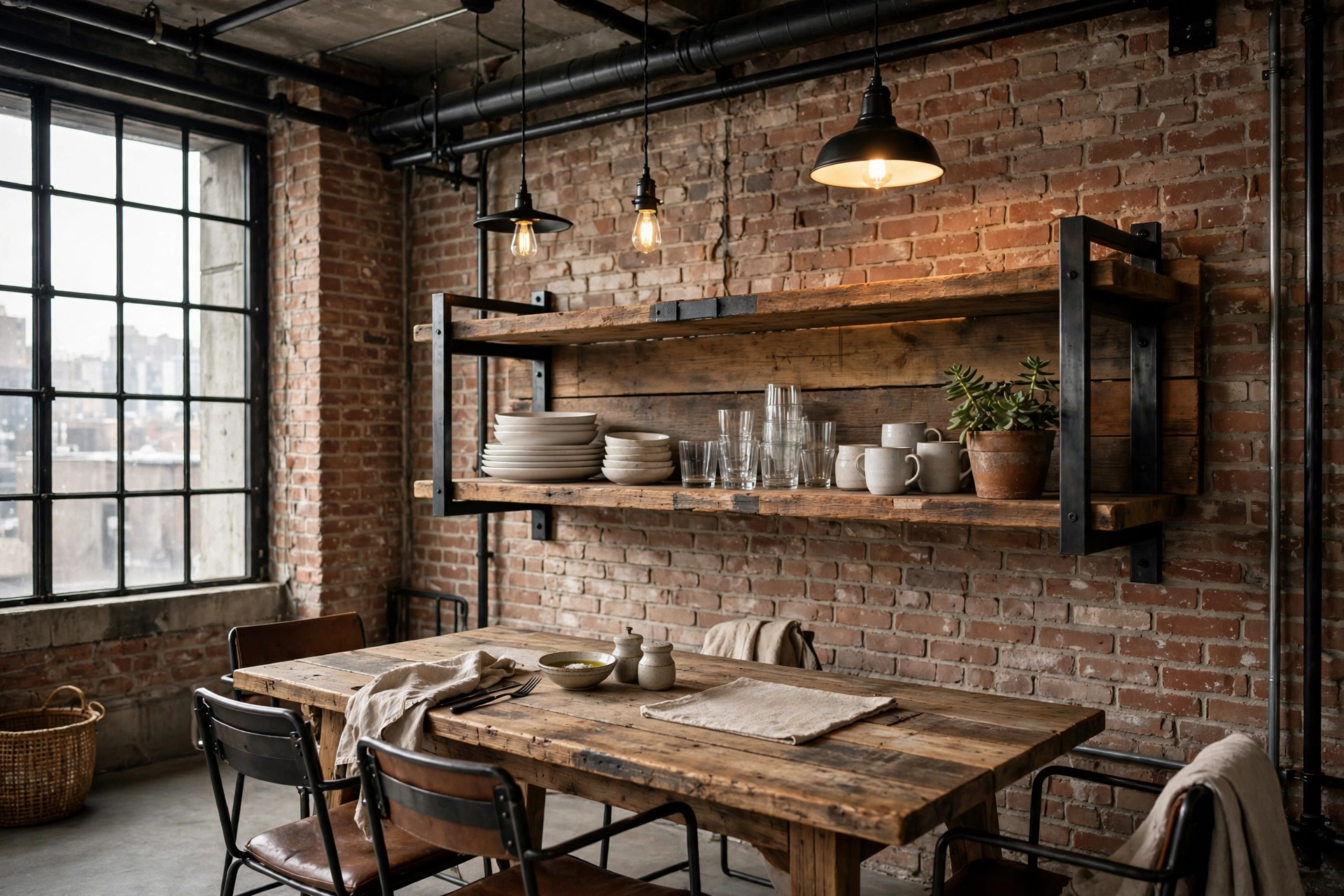
Open shelving in black steel and reclaimed wood is industrial storage at its best — and in the dining room, it doubles as display. A wall-mounted unit beside the table holds everyday dishes, glassware, and a few beautiful objects, keeping the table itself clear for its actual job.
Style it with restraint: stacks of simple white or stoneware dishes, clear glassware, one or two plants, and breathing room between groupings. The shelf should look useful, not staged. Keep the everyday pieces at easy reach and the rarely-used ones up high — industrial design has no patience for form that ignores function.
8. Mix Vintage and Modern Pieces
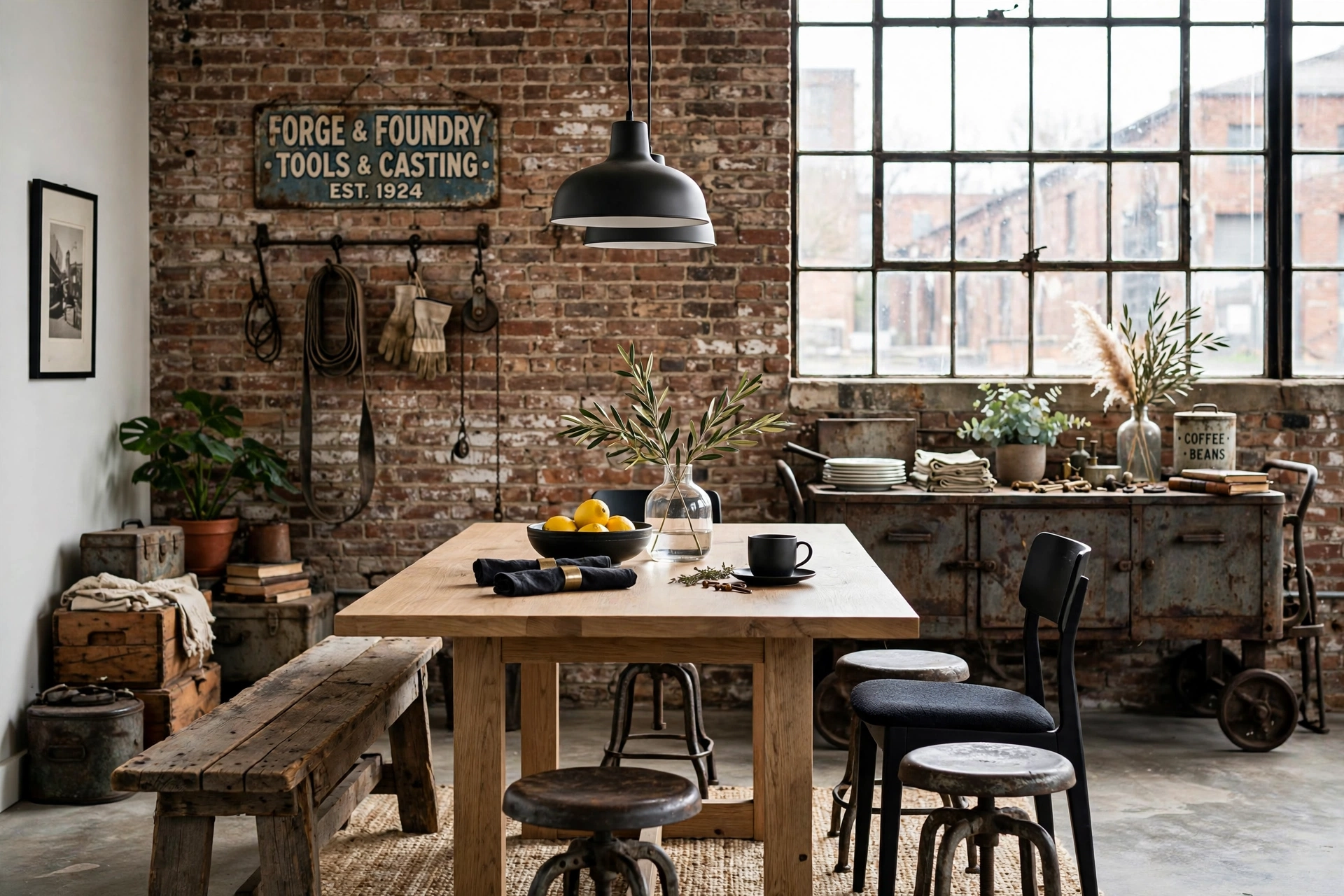
The best industrial dining rooms feel collected over time, not ordered from one catalog. Hunt vintage: an old factory cart as a sideboard, antique metal stools, a salvaged-wood bench, vintage signage as art. Mix these finds with clean modern pieces so the room feels curated rather than costume-y.
Flea markets, salvage yards, and architectural reclamation shops are the hunting grounds. Check vintage metal for stability and lead paint before bringing it to the table — character is wonderful, wobble is not. Our modern dining room ideas show how clean modern lines pair beautifully with industrial rawness when the mix is balanced.
9. Add Leather Seating
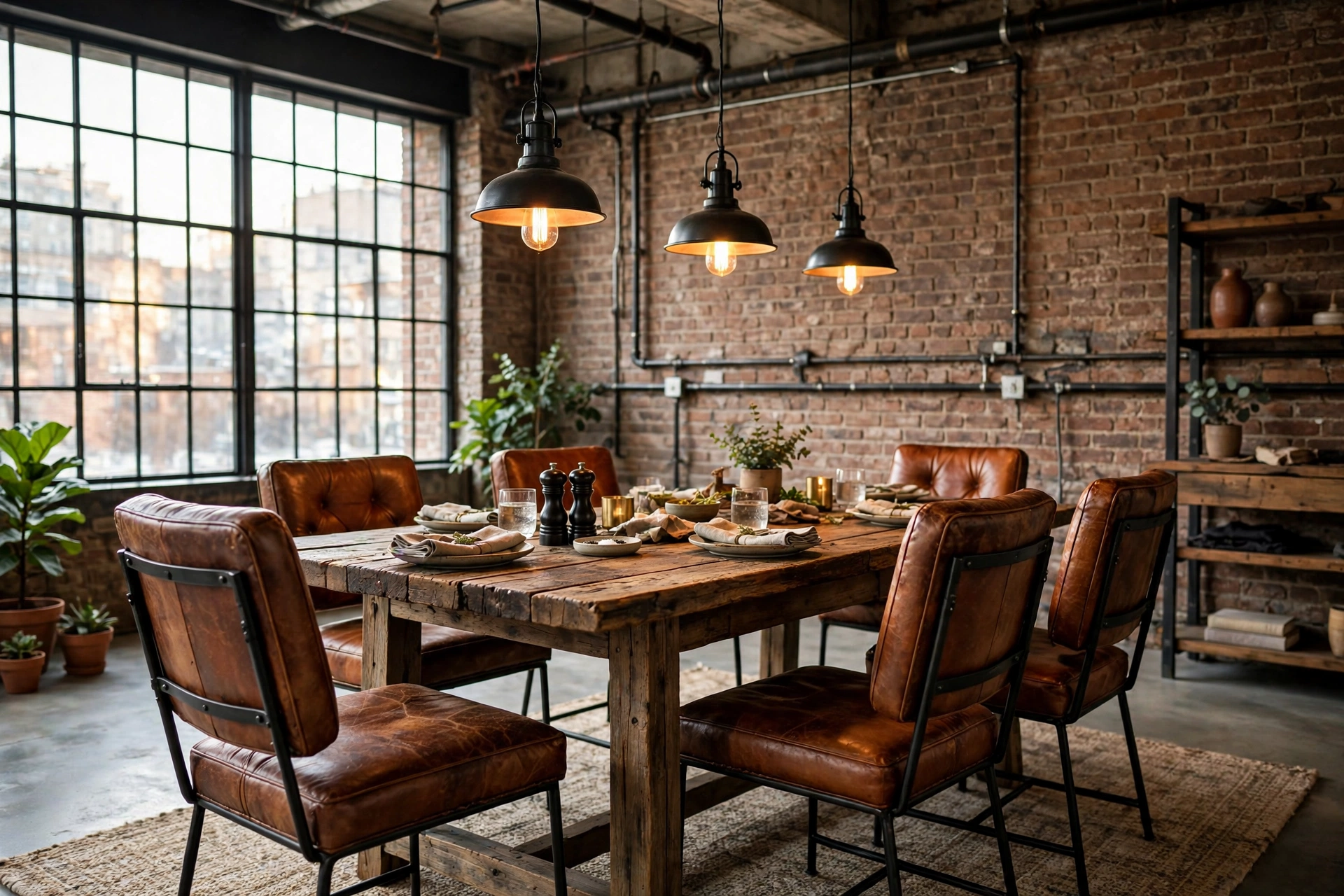
Leather is industrial design’s soft side. A couple of leather dining chairs, a leather-upholstered bench, or even leather seat pads on metal chairs add warmth, patina, and comfort that raw steel alone cannot deliver. Cognac and saddle browns glow against black metal; black leather doubles down on the moody palette.
Aged leather is better than new — it develops the creases and sheen that make it beautiful, exactly like the reclaimed wood it sits beside. Thrift stores and vintage shops often have leather chairs with great bones; reupholstering the seat while keeping a worn frame is the ultimate industrial move.
10. Keep the Palette Neutral and Moody
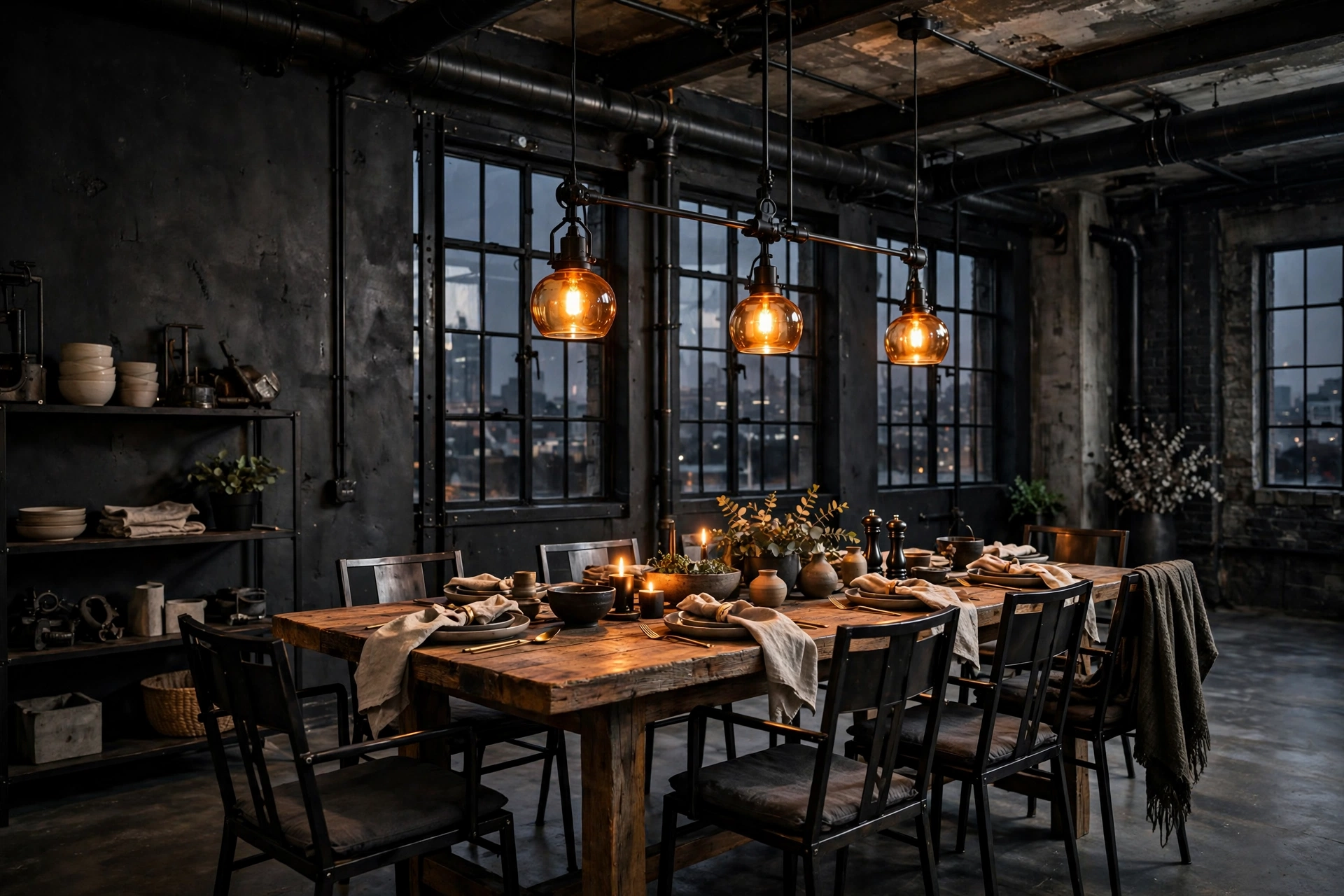
Industrial color comes from the materials themselves: charcoal, black, warm grays, the red-brown of brick, the honey of reclaimed wood, the green-black of aged steel. Build the room’s palette from these honest tones and it will feel cohesive without a single painted accent wall.
Walls work best in warm white, soft gray, or even deep charcoal in a well-lit room. The materials carry the color story, so painted surfaces should stay quiet. One small jolt of color — deep red bar stools, a vintage enamel sign, amber glass — is plenty. Restraint is what separates industrial from cluttered.
11. Install Factory-Style Windows or Frames
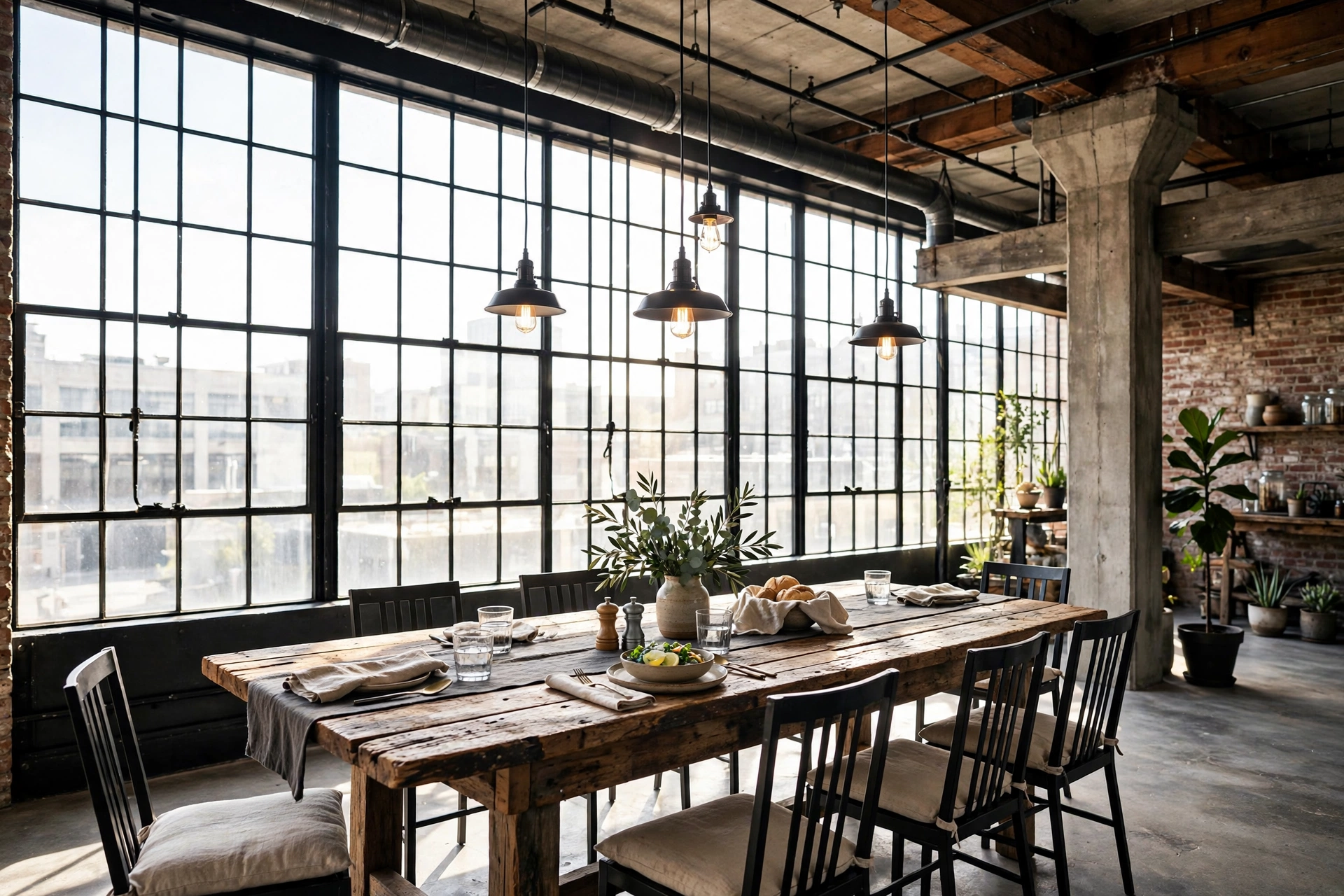
Nothing says industrial like steel-framed glass — the classic factory window grid. If a renovation is on the table, interior steel-and-glass partitions or doors between the dining room and kitchen borrow light while adding unmistakable industrial architecture. Even a large black-framed mirror in a grid pattern captures the effect.
For a simpler move, paint existing window frames matte black and hang minimal treatments — or none at all. The grid pattern is the star. The Spruce’s loft decor ideas show how black steel framing and open industrial architecture define the whole look, dining areas included.
12. Add a Statement Rug with Pattern
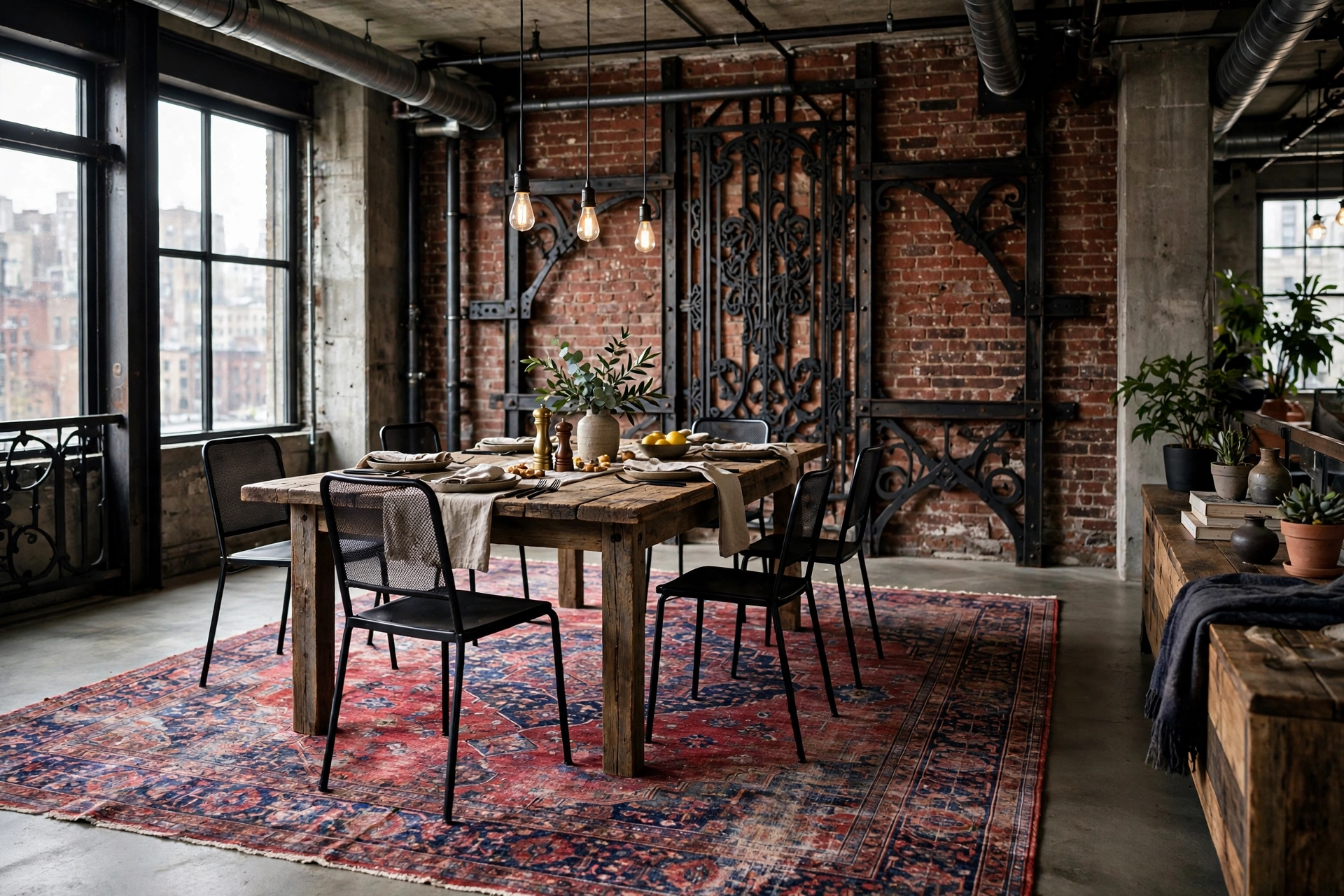
While industrial floors trend raw, a rug with the right pattern adds soul. Vintage-look Persian or Turkish rugs in faded reds and indigos are the classic pairing — their ornate pattern and worn texture play beautifully against steel and concrete. Alternatively, a bold geometric flatweave in charcoal and cream keeps things graphic.
Size it generously so all chair legs stay on the rug, and choose low-pile for easy chair movement. The rug is also your best tool for warming up the room acoustically — hard industrial surfaces echo, and textile underfoot makes conversation noticeably more comfortable.
13. Use Pipe Shelving for Display
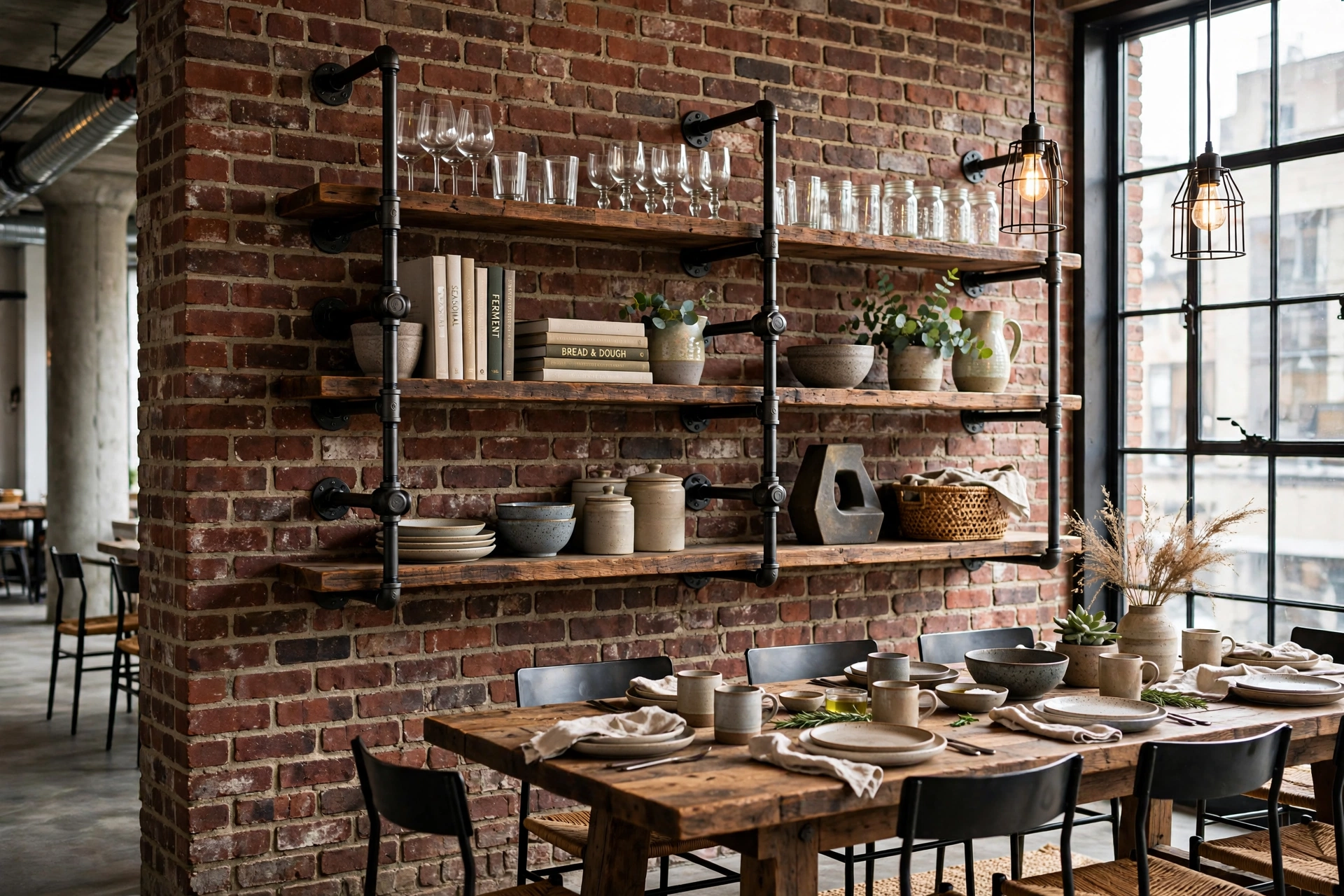
Exposed pipe shelving — black iron pipes with reclaimed wood planks — is industrial decor in its purest form. A run of pipe shelves on the dining room wall displays glassware, cookbooks, and ceramics while doubling as wall art. It is functional, sculptural, and unmistakably industrial.
Build it sturdy: iron pipe fittings are heavy, so anchor into studs, not just drywall. Style the shelves with the same restraint as any open storage — everyday pieces within reach, beautiful objects with breathing room. One well-built pipe shelf beats three flimsy ones, in both looks and longevity.
14. Bring in Greenery to Soften
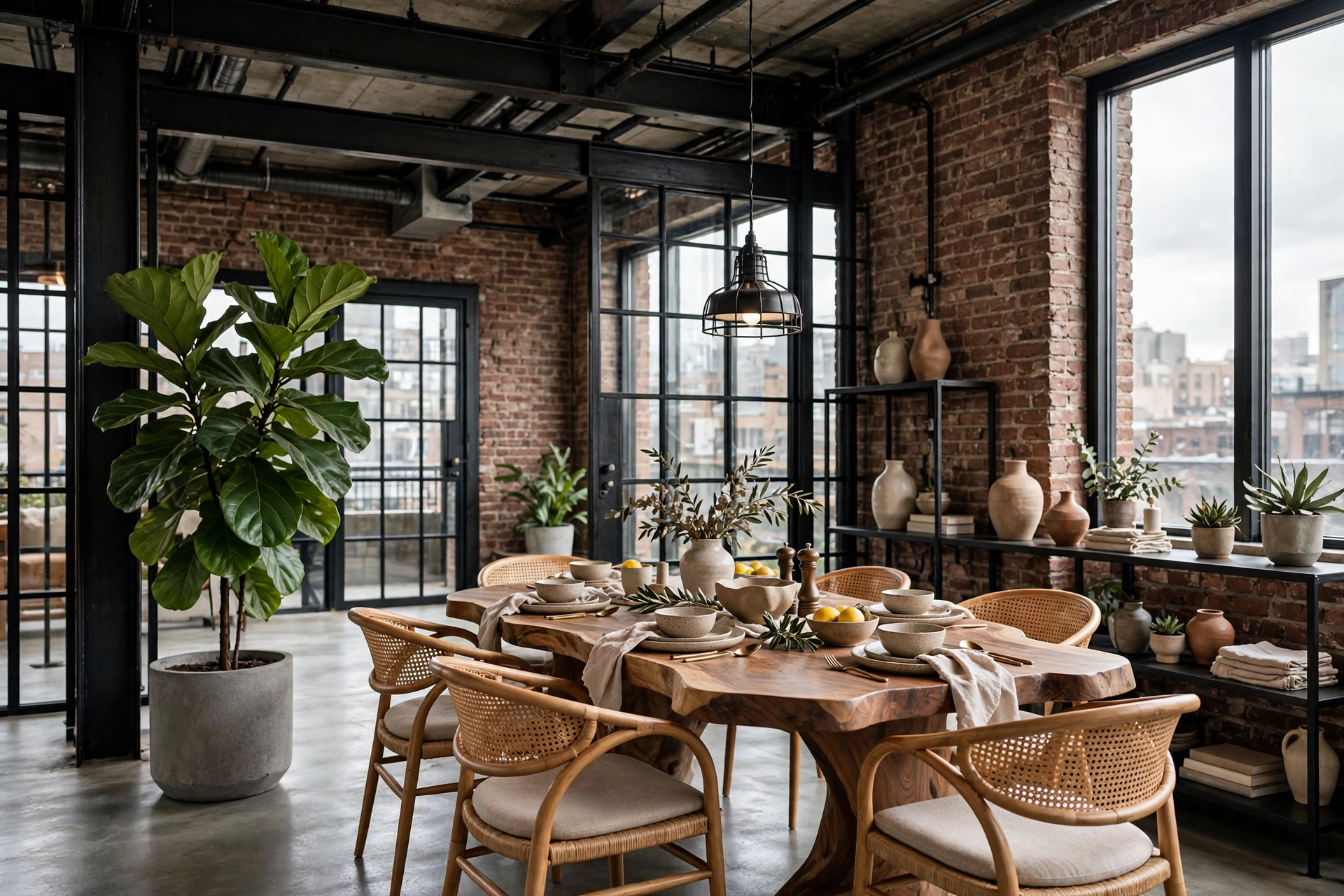
Industrial rooms need something alive to keep them from feeling like a showroom. Large plants — a fiddle-leaf fig, a bird of paradise, trailing pothos on the pipe shelves — soften all that steel and brick with organic shape and color. The contrast is the point: green against gray is one of design’s happiest pairings.
Use simple, tough planters: concrete, black metal, raw terracotta. Let one large plant make the statement rather than scattering small ones everywhere. In a dining room with limited light, a tall snake plant or ZZ plant in a concrete pot delivers the look with almost no maintenance.
15. Add Vintage Industrial Accessories
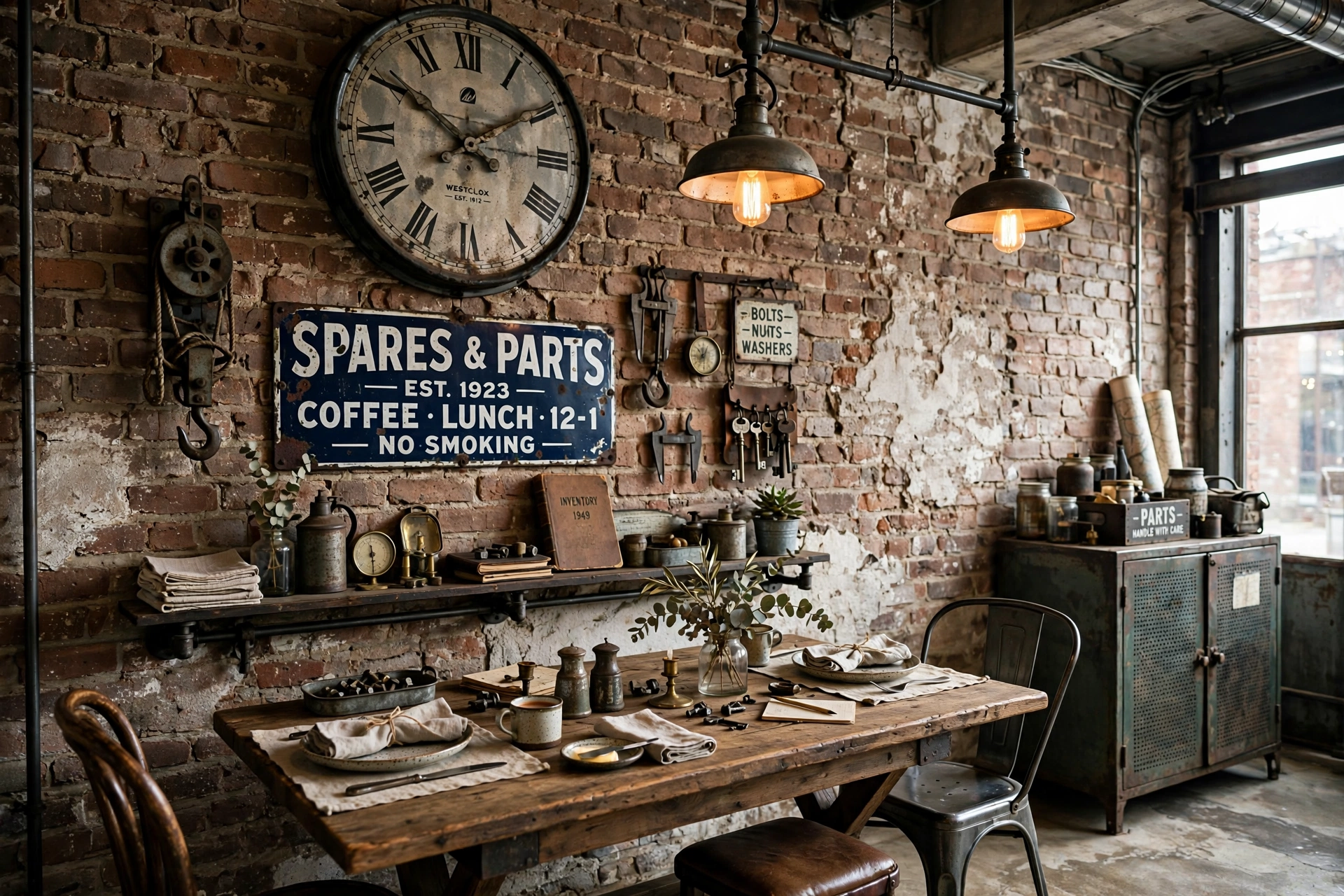
The finishing layer is pure character: vintage factory clocks, old metal signage, Edison-bulb table lamps, antique scales, salvaged gears or pulleys as wall art. These are the details that tell the industrial story and make the room feel collected rather than decorated.
Edit ruthlessly, though — one wall of accessories is character; every surface covered is a junk shop. Choose pieces with real age and real function in their past lives. Our small dining room ideas prove the same principle at compact scale: a few strong industrial pieces beat a room full of themed decor. Let the materials be the stars and the accessories be the supporting cast.
Frequently Asked Questions
What defines an industrial dining room?
Raw, honest materials: reclaimed wood, blackened steel, exposed brick, concrete, and leather, in a neutral moody palette. Factory-inspired lighting (oversized metal pendants, Edison bulbs), mixed vintage-modern furniture, and an open, unpretentious feeling complete the look.
How do I keep an industrial dining room from feeling cold?
Balance the hard materials with warmth: reclaimed wood (not just steel), leather seating, a patterned rug, layered lighting on dimmers, candles, and living plants. Warm-toned bulbs (2700K) are essential — cool light on concrete and steel reads as a warehouse, warm light reads as home.
Can I do industrial style in a small dining room?
Absolutely — industrial was born in compact urban lofts. Choose a smaller-scale reclaimed table, metal chairs that tuck neatly, one statement pendant instead of three, and a single brick-veneer accent wall. Keep the palette light on the walls to avoid closing the space in.
Is industrial dining room decor expensive?
It can be one of the cheapest styles to do authentically, because its materials are reclaimed wood, vintage metal, and salvage finds. Splurge on the table and lighting; hunt flea markets and salvage yards for everything else. A genuine patina costs less than a faux one.
How is industrial different from rustic dining style?
They share reclaimed wood and vintage finds, but industrial leans urban and metallic — black steel, concrete, Edison bulbs, factory references — while rustic leans rural and soft — whitewash, linen, stone fireplaces, farmhouse warmth. Many rooms happily borrow from both.
Keep Exploring
An industrial dining room is built, not decorated — start with honest materials, add bold lighting, and let the room’s urban character emerge. The reclaimed table, the steel chairs, the glow of Edison bulbs: this is dining with backbone.
For more raw-material inspiration, our industrial bathroom ideas bring the same urban edge to the hardest-working room in the house. And if you love the loft look throughout, our modern dining room ideas show how clean contemporary lines pair with industrial rawness.