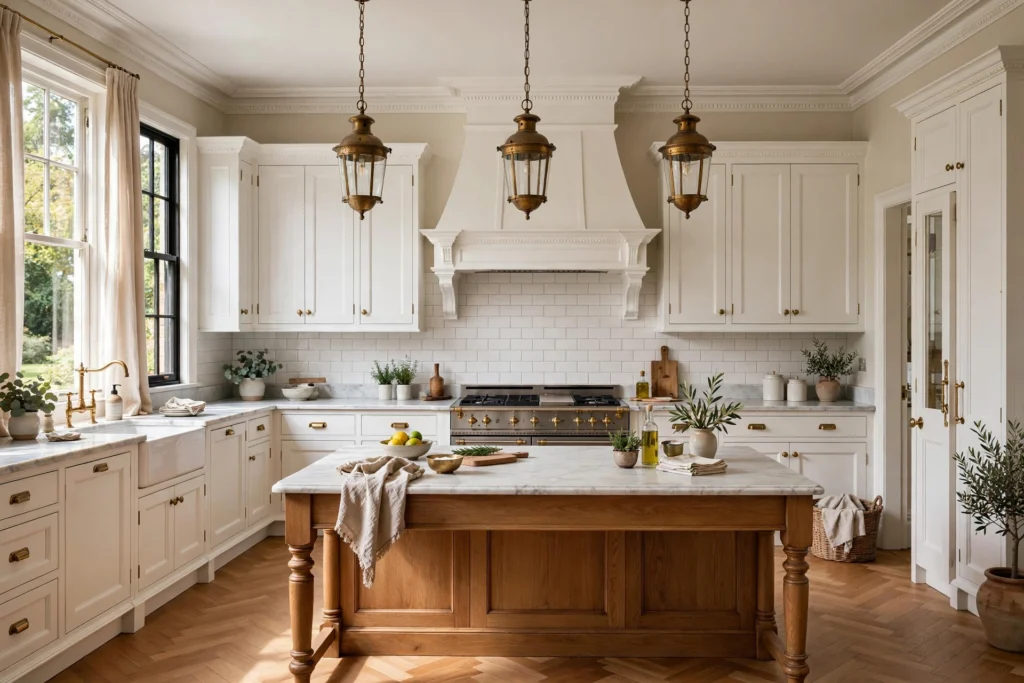

Trends come and go, but a traditional kitchen never begs for a second chance. These traditional kitchen design ideas lean on proportion, craftsmanship, and materials that have looked right for a century — shaker cabinetry, honed marble, warm brass, and millwork with real depth. If you want a kitchen that still feels current ten years from now, this is the playbook.
Whether you are planning a full renovation or simply layering in a few classic details, the ideas below work at any budget. Each one is a small, deliberate choice that adds up to a kitchen with genuine staying power — the kind of room that makes guests linger and makes you glad every single morning.
1. Classic White Shaker Cabinets
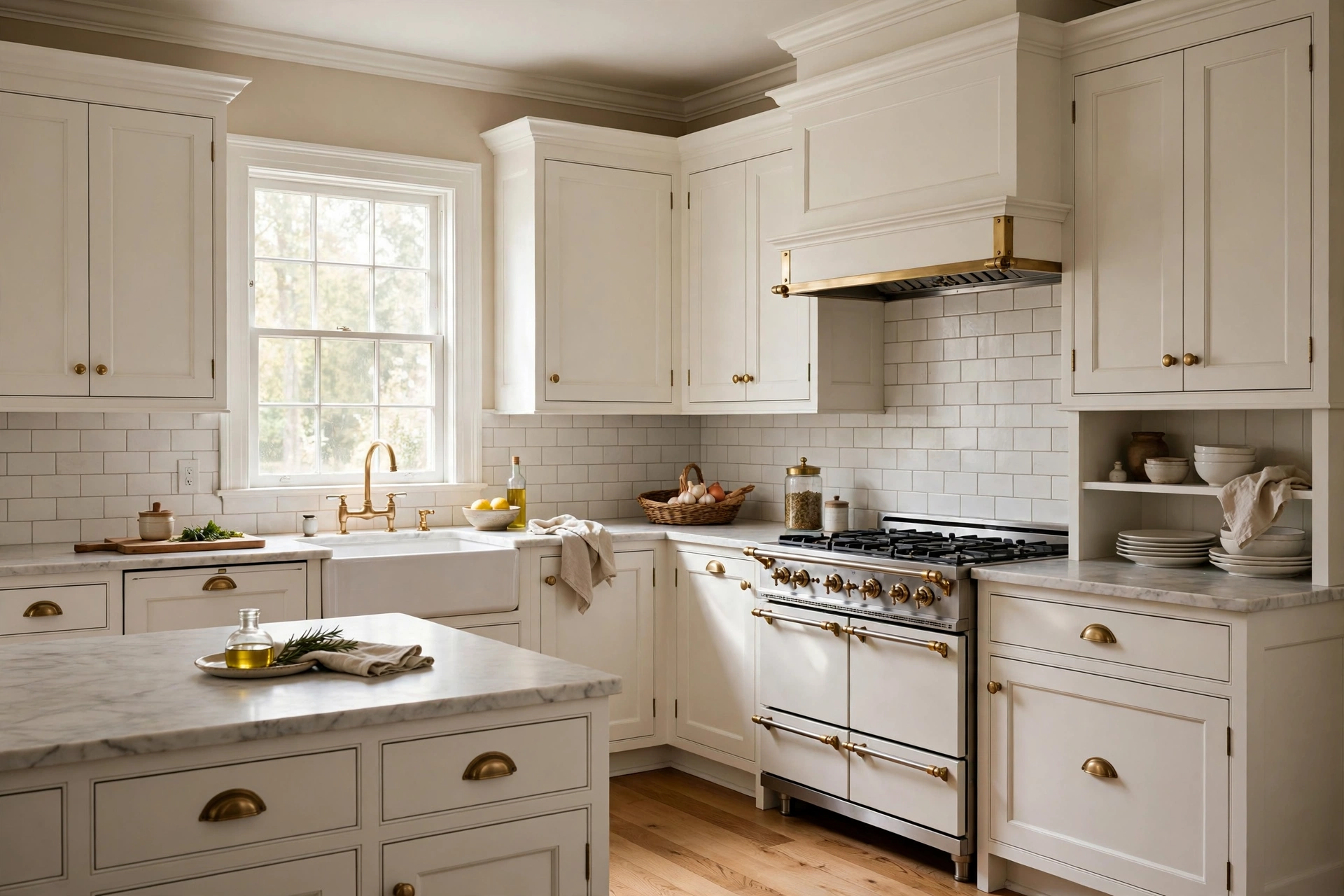
Nothing anchors a traditional kitchen like white shaker cabinets. Their five-piece door construction — a flat recessed panel framed by clean rails and stiles — dates back to 19th-century Shaker craftsmanship, and that simplicity is exactly why it survives every trend cycle. White shakers bounce light around the room, make small kitchens feel airy, and accept any hardware finish beautifully.
The key is in the details: add a light gray or warm greige island for contrast, choose a slightly off-white paint with warmth (pure brilliant white can read clinical under cool LEDs), and let crown molding tie the cabinetry run together. If you are weighing how bright to go, explore our guide to white kitchen design ideas that never go out of style for keeping white kitchens rich rather than sterile.
2. Marble Countertops With Soft Veining
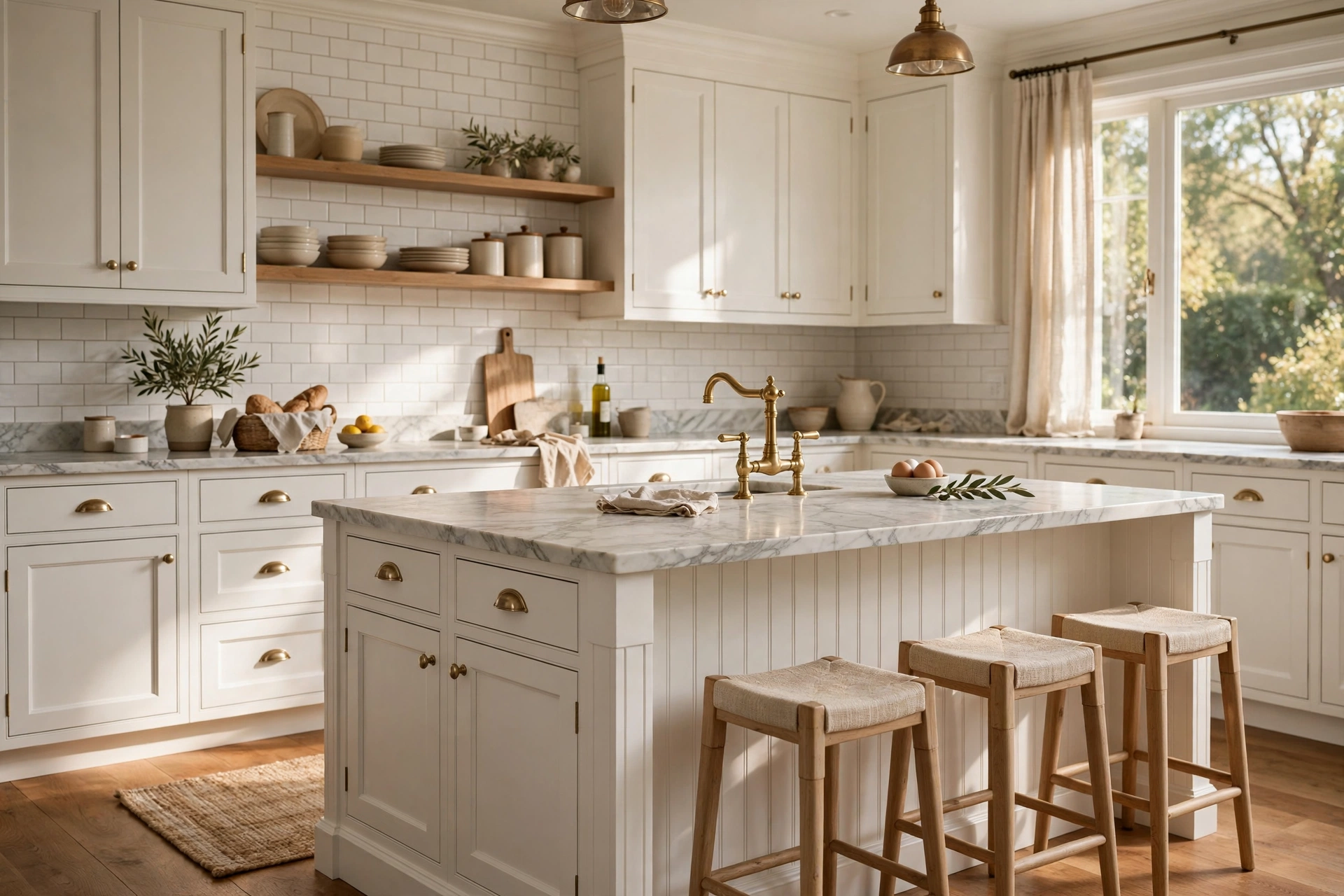
Marble is the countertop material of traditional kitchens — and for good reason. A slab of Carrara or Calacatta with soft, feathery veining adds movement and luxury no manufactured surface fully imitates. Yes, marble etches more readily than quartz, but in a traditional kitchen that patina is part of the charm: it tells the story of a kitchen genuinely lived in and loved.
If maintenance worries you, choose a honed finish rather than polished — it hides etching far better and reads more old-world elegant. Keep bold veining to the island or perimeter, and let the rest of the palette stay quiet so the stone remains the star. Seal it yearly, wipe spills promptly, and your marble will age gracefully for decades.
3. A Statement Range Hood With Mantel Trim
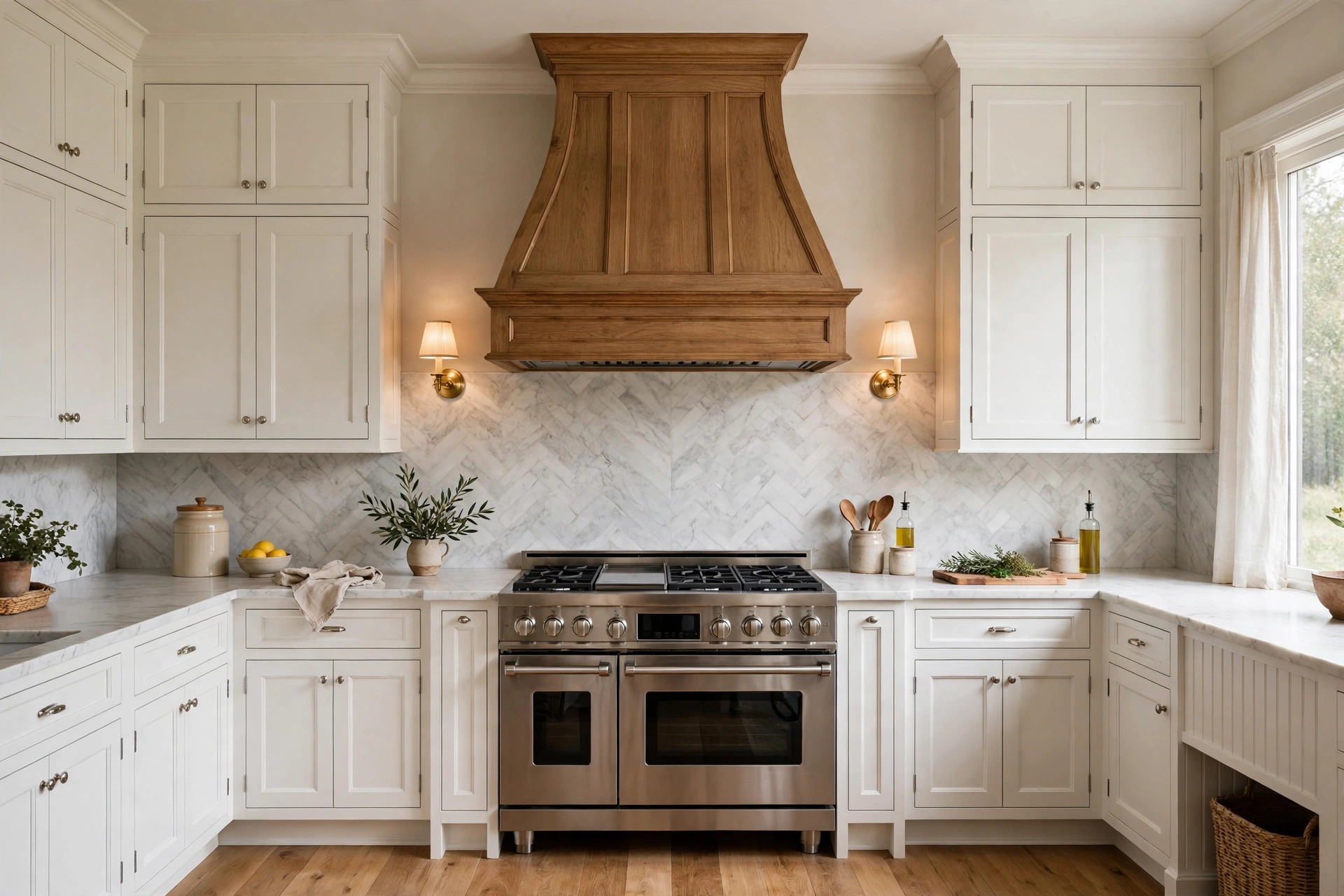
In traditional kitchens, the range hood is not an appliance — it is architecture. A chimney-style hood wrapped in plaster, shiplap, or paneled wood with mantel-style trim becomes the natural focal point of the room, the way a fireplace anchors a living room. This single element can carry the entire traditional character of the kitchen on its own.
Keep proportions generous: the hood should be at least as wide as the range beneath it, with the mantel shelf around eye level for styling. Flanking it with matching cabinetry amplifies the symmetry traditional design thrives on. Paint the hood the same color as the cabinets so it reads as built-in millwork, or try a contrasting wood tone like walnut for drama. Either way, add small sconces nearby — traditional kitchens love layered lighting.
4. Brass and Oil-Rubbed Bronze Hardware
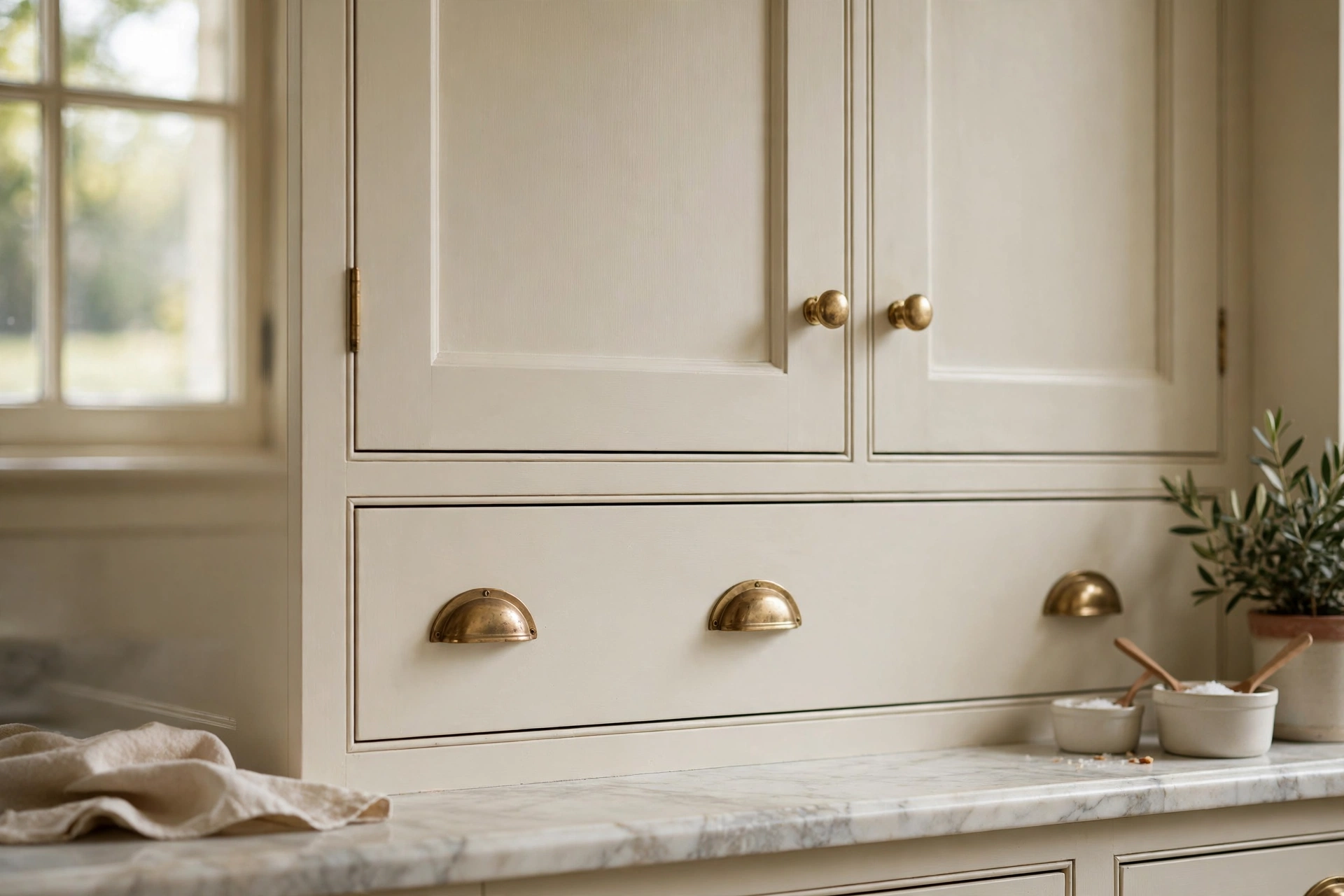
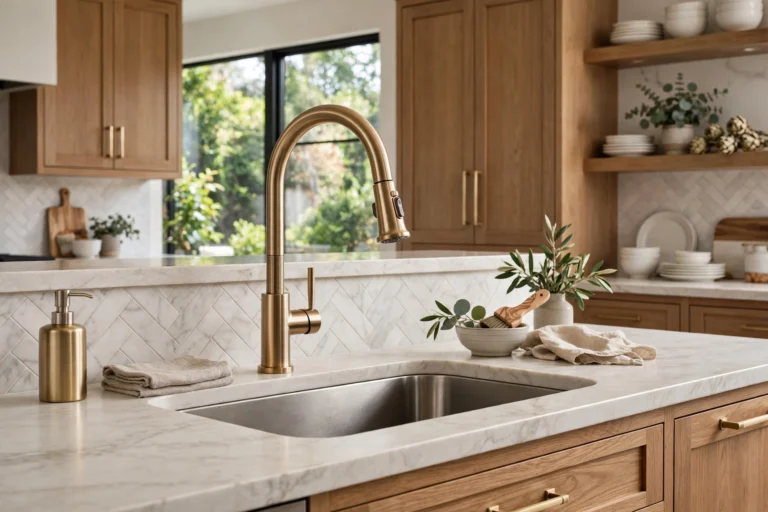
Hardware is the jewelry of the kitchen, and traditional designs shine with warm metals. Unlacquered brass knobs and cup pulls develop a rich patina over time, while oil-rubbed bronze brings a darker, old-world gravity that pairs beautifully with wood cabinetry. Either finish instantly signals “classic” in a way chrome never will.
A foolproof approach: cup pulls on drawers, knobs on doors, all in the same warm metal family, for a cohesive, furniture-like feel. Size matters too — oversized pulls on wide drawers look intentional, while tiny knobs on large doors look lost. Budget tip: hardware is one of the cheapest ways to make builder-grade cabinets read custom, so do not skimp on the finish quality.
5. Crown Molding and Detailed Millwork
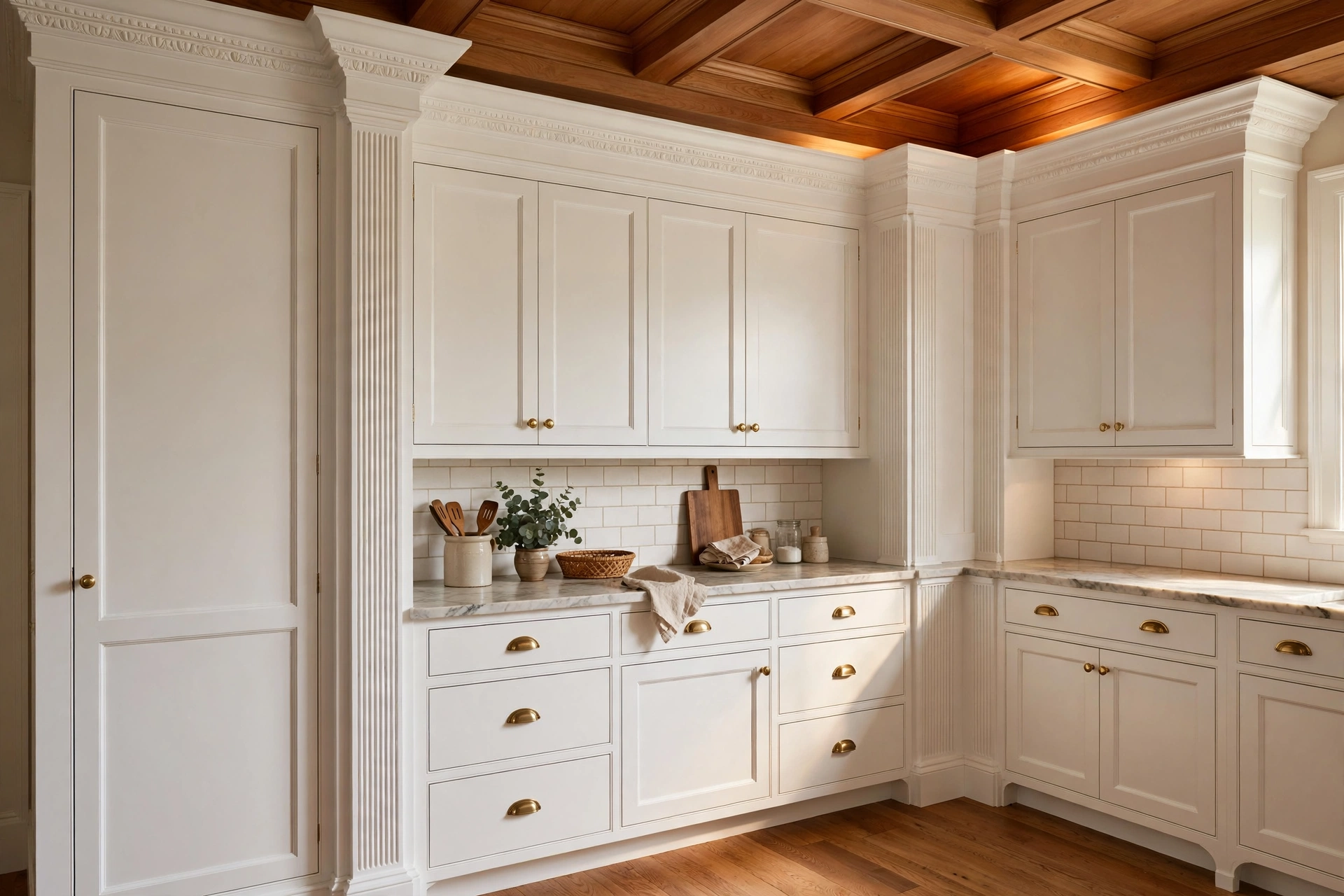
Millwork is what separates a traditional kitchen from a merely nice one. Crown molding where cabinets meet the ceiling, light rail molding under wall cabinets, and fluted filler strips between cabinet runs create shadow lines and depth that flat cabinetry cannot match. These details catch light differently throughout the day, giving the room a quiet, crafted richness.
You do not need a gut renovation to get there. Stock cabinets can be elevated with aftermarket crown molding, a simple chair rail on a breakfast nook wall, or wainscoting on an island’s back panel. Painted millwork in the same color as the cabinets reads as one unified piece of furniture. The rule of thumb: every place two planes meet is an opportunity for trim.
6. A Farmhouse Apron-Front Sink
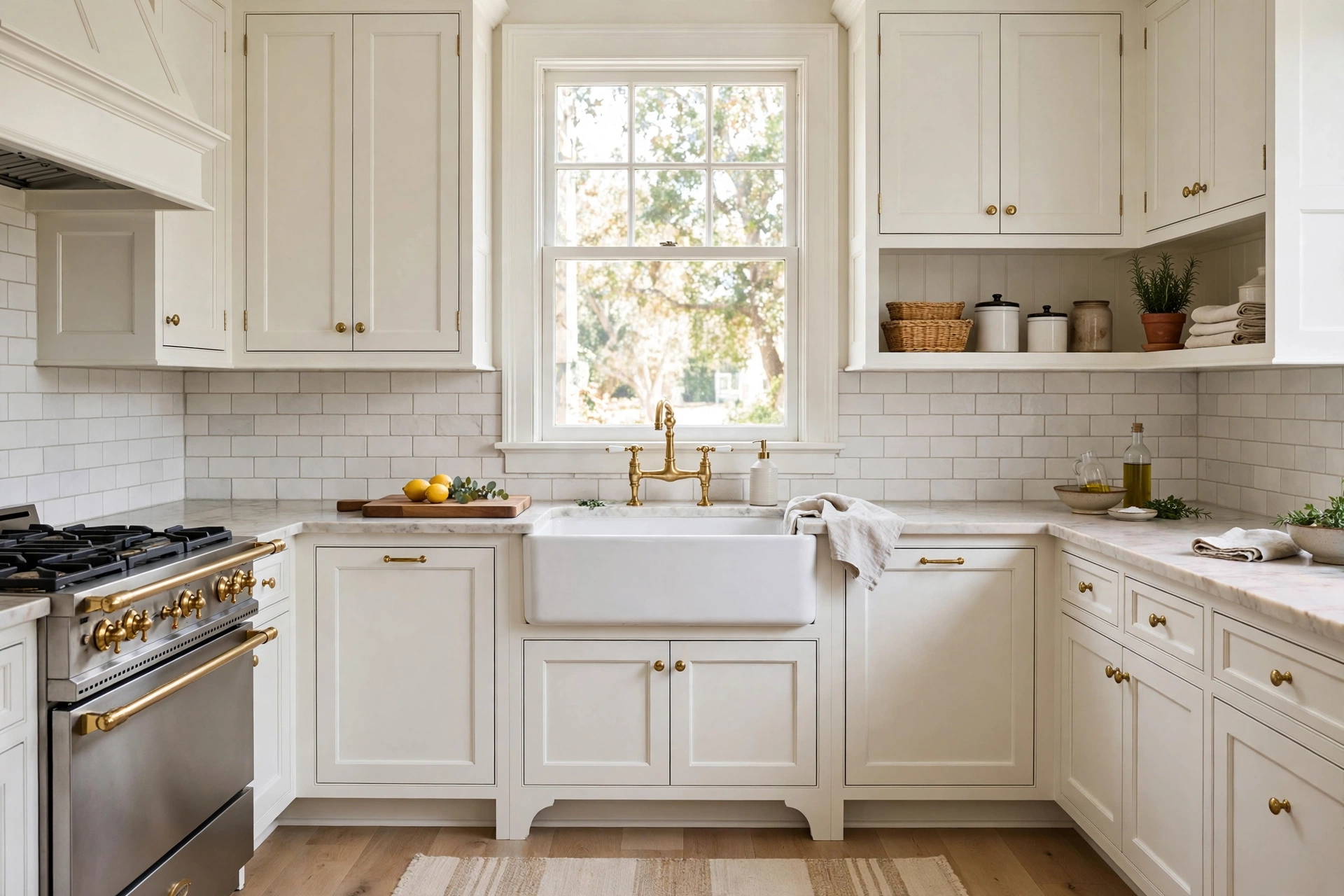
The apron-front sink — with its deep basin and exposed front panel — is both a workhorse and a design statement. Originally built for heavy farmhouse use, its generous depth swallows stockpots and sheet pans with ease, while the visible front becomes a focal point that grounds the sink wall in tradition. Fireclay versions offer a glossy, chip-resistant finish in classic white.
Style the front panel to your taste: smooth fireclay reads refined, while a fluted front adds old-world texture. Pair it with a bridge faucet in brass or polished nickel for the full traditional effect. One practical note: apron sinks need a cabinet base built or modified to support them, so plan this choice early in a renovation — it is much harder to retrofit than to plan for. For more rustic warmth in the same spirit, see our modern farmhouse kitchen design ideas full of warm character.
7. Subway Tile With Classic Detailing
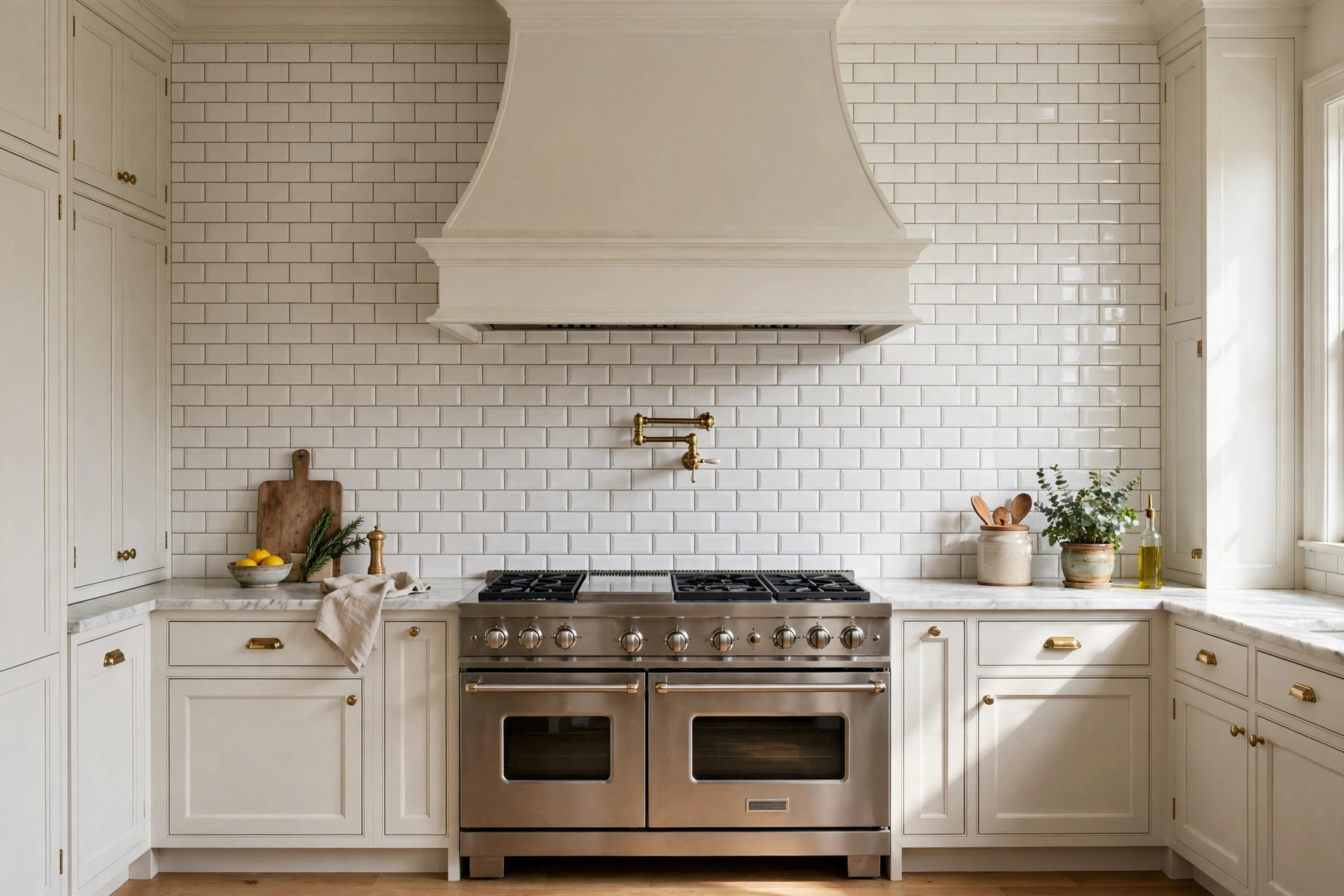
Few backsplashes are as timeless as classic subway tile — it has lined kitchens since the early 1900s and shows no sign of leaving. The 3×6 format in a running bond pattern is the safest classic, but traditional kitchens also welcome handmade-look zellige tiles, beveled subway tile that catches the light, or a herringbone layout for subtle pattern interest.
Keep the grout decision deliberate: matching grout disappears into a clean field of tile, while contrasting grout emphasizes the pattern and adds vintage character. Run the tile to the ceiling behind the range for a dramatic old-world moment, and finish exposed edges with a pencil liner rather than a raw cut edge. For a deeper dive into classic inspiration, this collection of traditional kitchen ideas from The Spruce is a solid reference for pairing tile with classic cabinetry.
8. A Warm Wood Island With Turned Legs
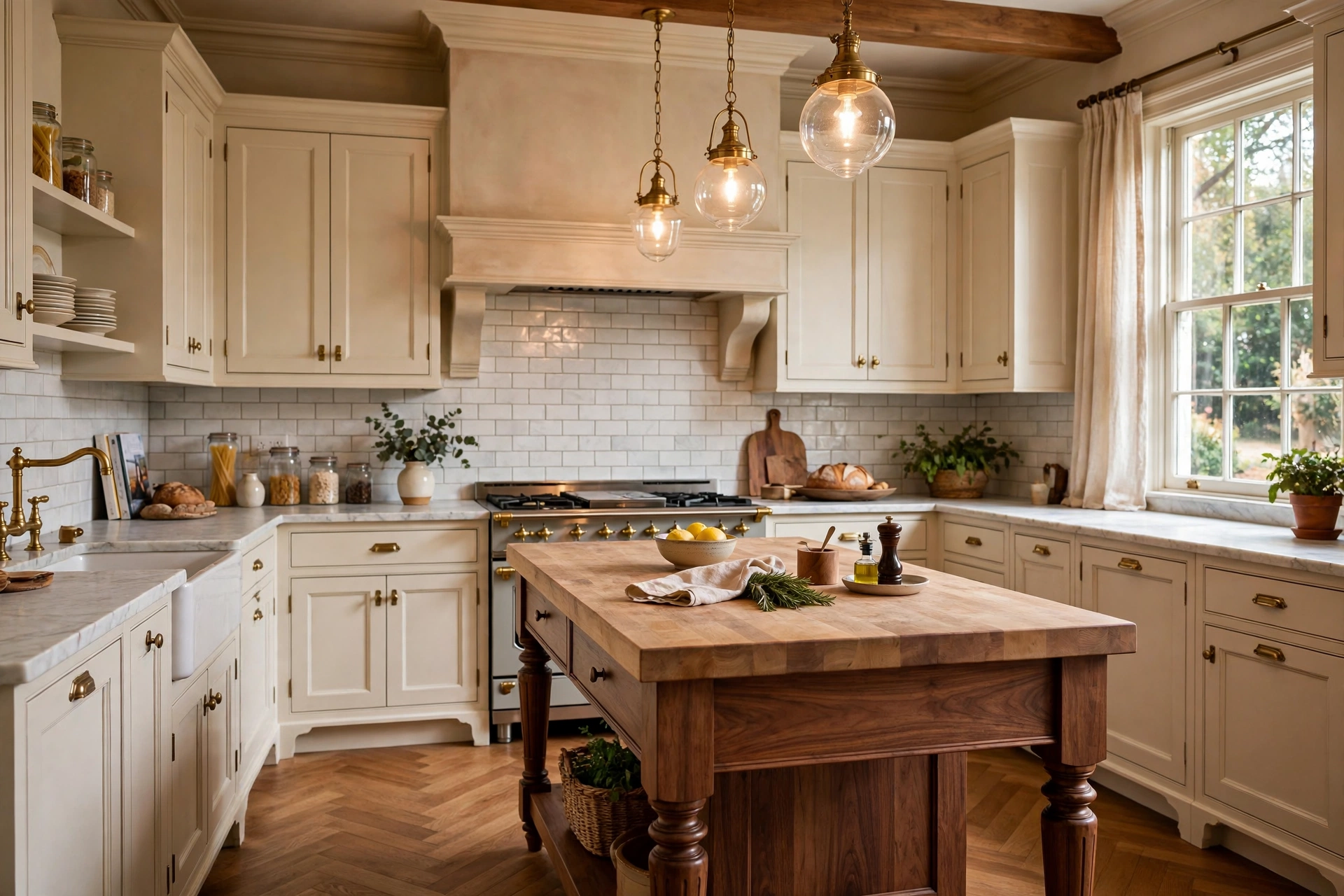
A painted or stained wood island with turned legs and furniture-style detailing brings the soul of a farmhouse table into the heart of the kitchen. Unlike a monolithic stone-clad island, a furniture-style island feels collected rather than built-in — as if it has been in the family for generations. Turned legs, a beadboard back panel, and a thick butcher-block or marble top complete the look.
Use the island to introduce a second color: a deep navy, forest green, or warm walnut island against white perimeter cabinets is the classic traditional formula. Choose counter stools with spindle backs or upholstered seats to reinforce the furniture feel. If your kitchen is small, an island with legs rather than a solid base to the floor keeps sightlines open and the room feeling light.
9. Paneled Appliances for a Seamless Look
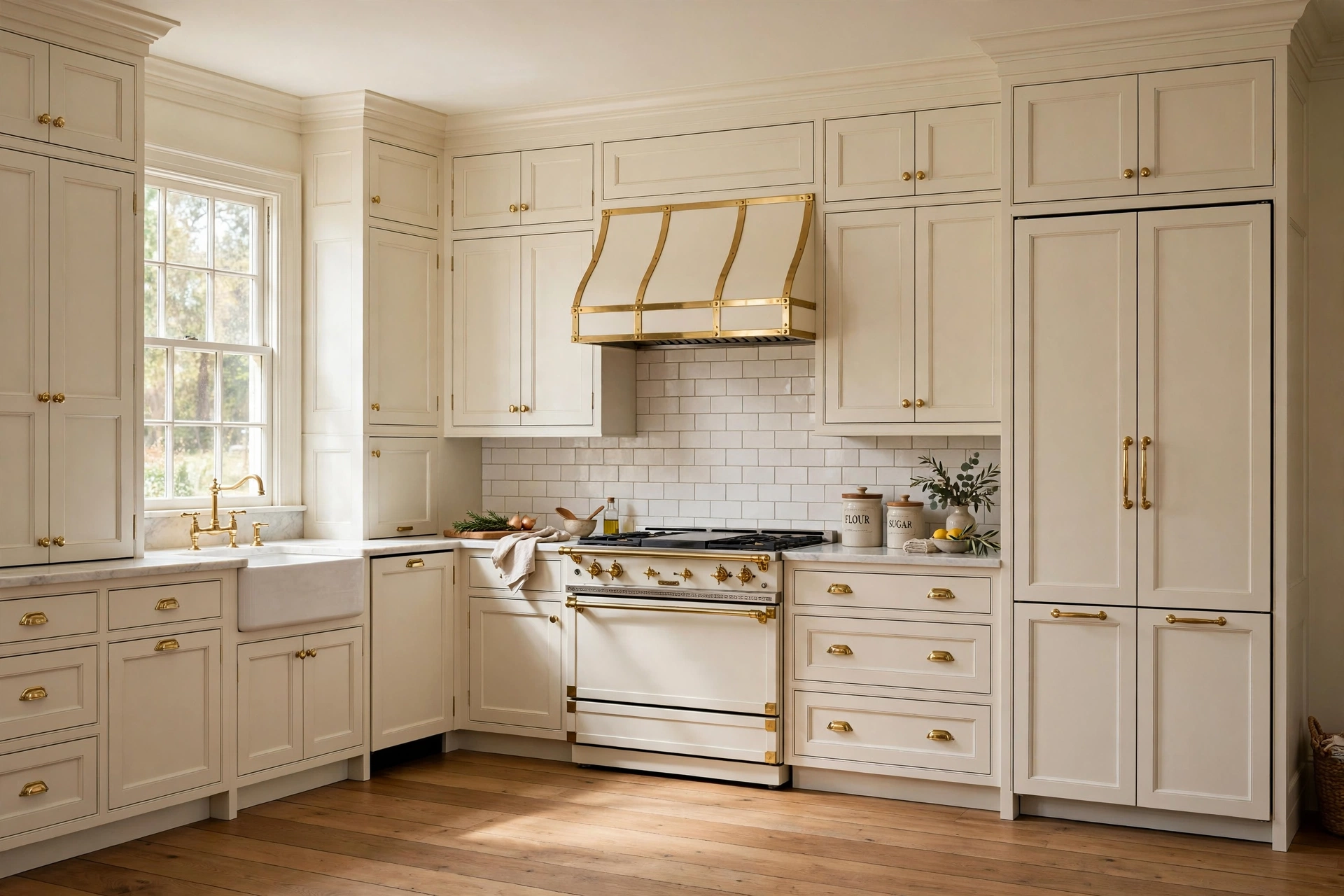
One of the hallmarks of high-end traditional kitchens is the disappearing appliance. Panel-ready dishwashers and refrigerators accept cabinet fronts that match the surrounding millwork, so the kitchen reads as a room of fine furniture rather than a showroom of stainless steel. The visual calm this creates is enormous — your eye travels over uninterrupted cabinetry instead of stopping at every appliance.
You do not have to panel everything. Start with the dishwasher (cheapest to panel) and the refrigerator (biggest visual payoff), and leave the range as a proud stainless or enameled statement piece. If full paneling is beyond budget, choose appliances in classic white, black, or soft cream finishes, which recede far more gracefully than fingerprint-prone stainless. The goal is a kitchen that feels composed and quiet.
10. Elegant Pendant Lighting Over the Island
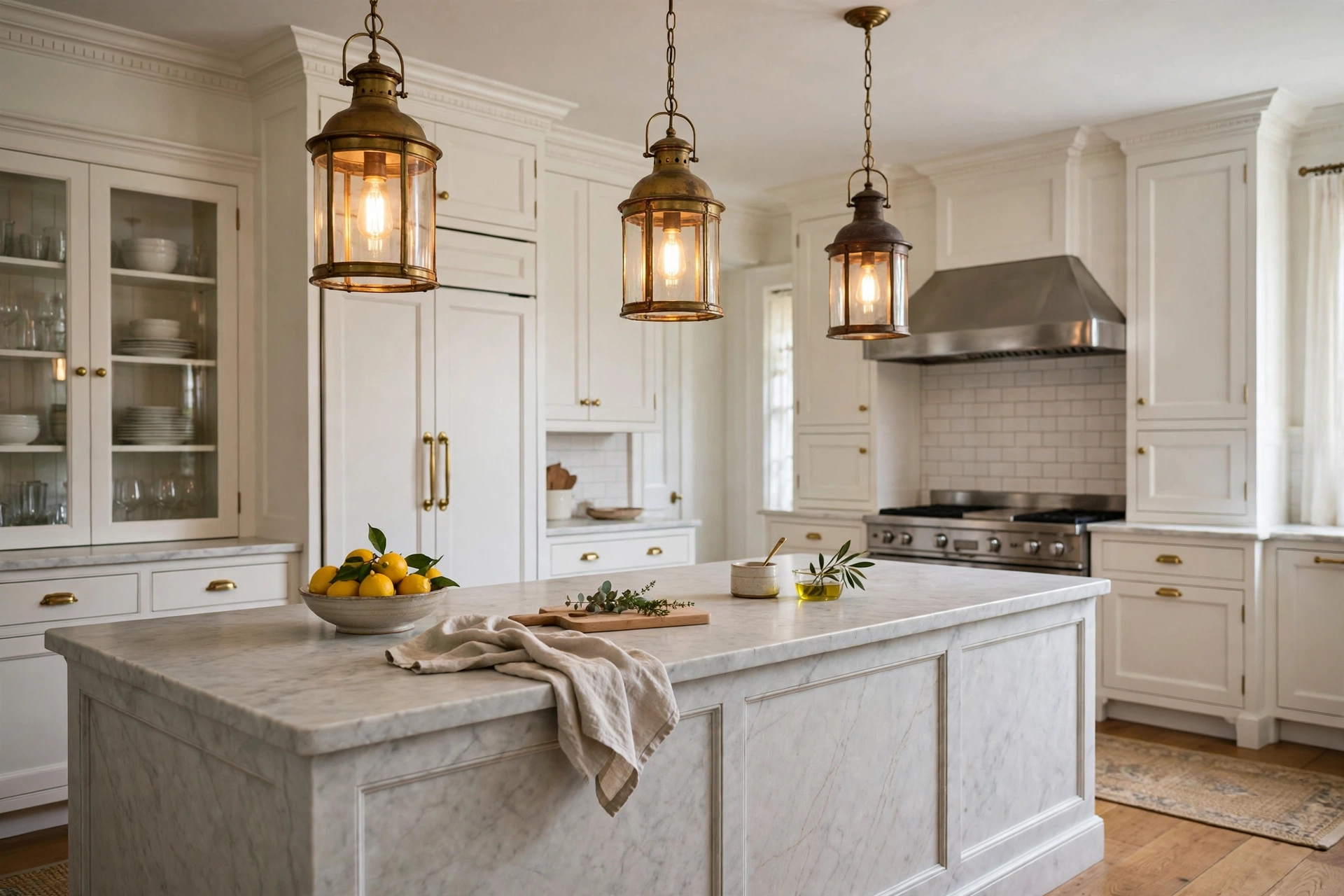
Lighting does more for a traditional kitchen’s mood than almost any other element. A pair or trio of pendants over the island — think seeded glass, aged brass, or classic lantern shapes — adds jewelry, scale, and warm pools of light exactly where you prep and gather. In traditional design, pendants should feel like they were chosen from an estate sale, not a catalog of trends.
Hang pendants 30 to 36 inches above the island countertop, spaced evenly, and always put them on a dimmer — bright task light by day, candlelit glow by night. Complement them with under-cabinet lighting and a small chandelier in the breakfast area for layered warmth. Avoid ultra-modern geometric pendants here; the traditional kitchen wants curves, glass, and warm metal.
11. A Built-In Breakfast Nook
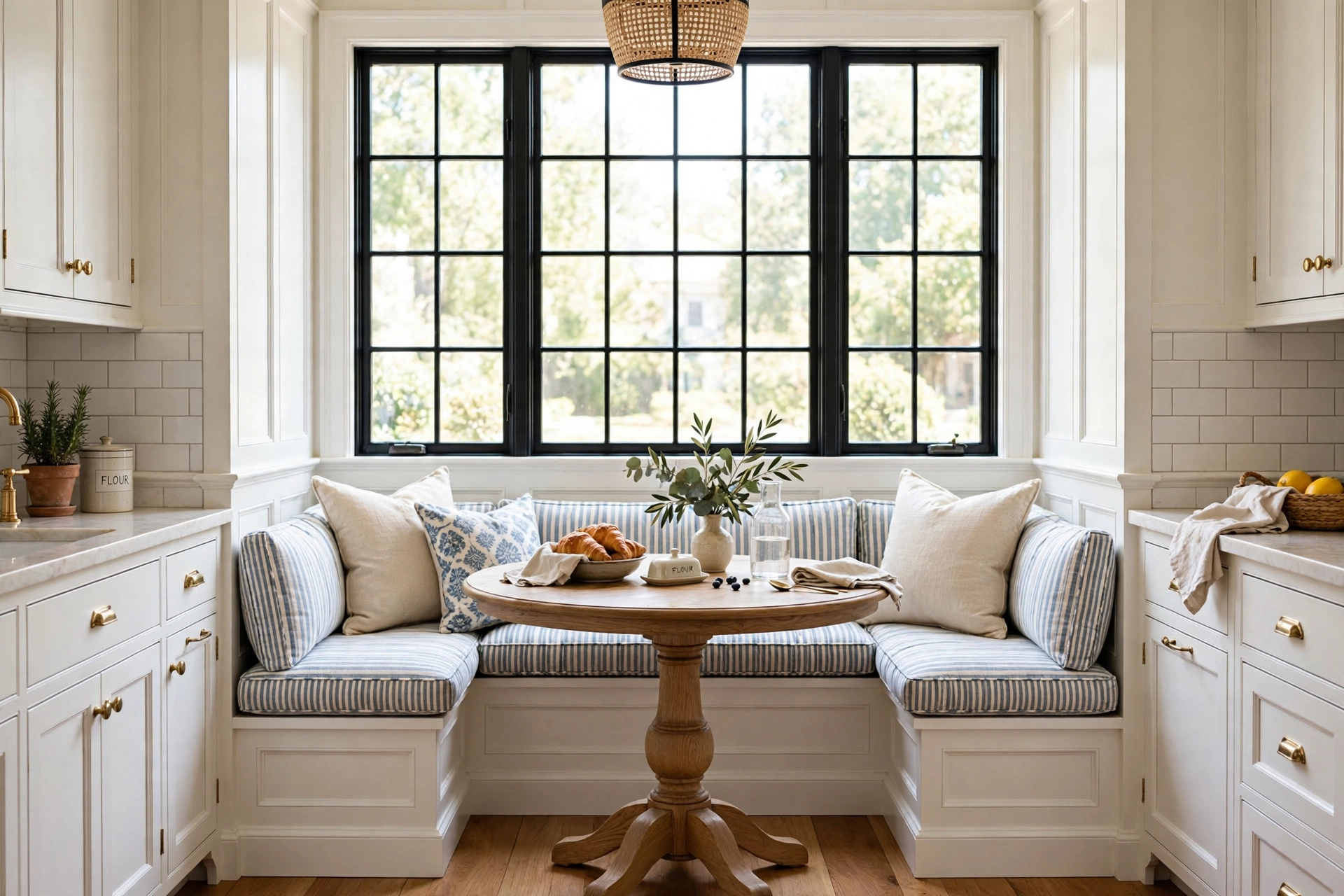
A built-in breakfast nook with a banquette is pure traditional-kitchen romance. Tucked under a window, an L-shaped or U-shaped bench with a pedestal table creates the coziest seat in the house — the spot where coffee tastes better and homework somehow gets done. Banquettes also seat more people in less space than freestanding chairs, making them ideal for smaller kitchens.
Build the bench with storage drawers or a lift-up seat for linens and gadgets, and upholster the cushions in a classic stripe, gingham, or small floral. A beadboard back wall behind the banquette adds architectural interest, and a small pendant overhead makes the nook glow at night. This is the detail that turns a kitchen from a workspace into the heart of the home.
12. Glass-Front Display Cabinets
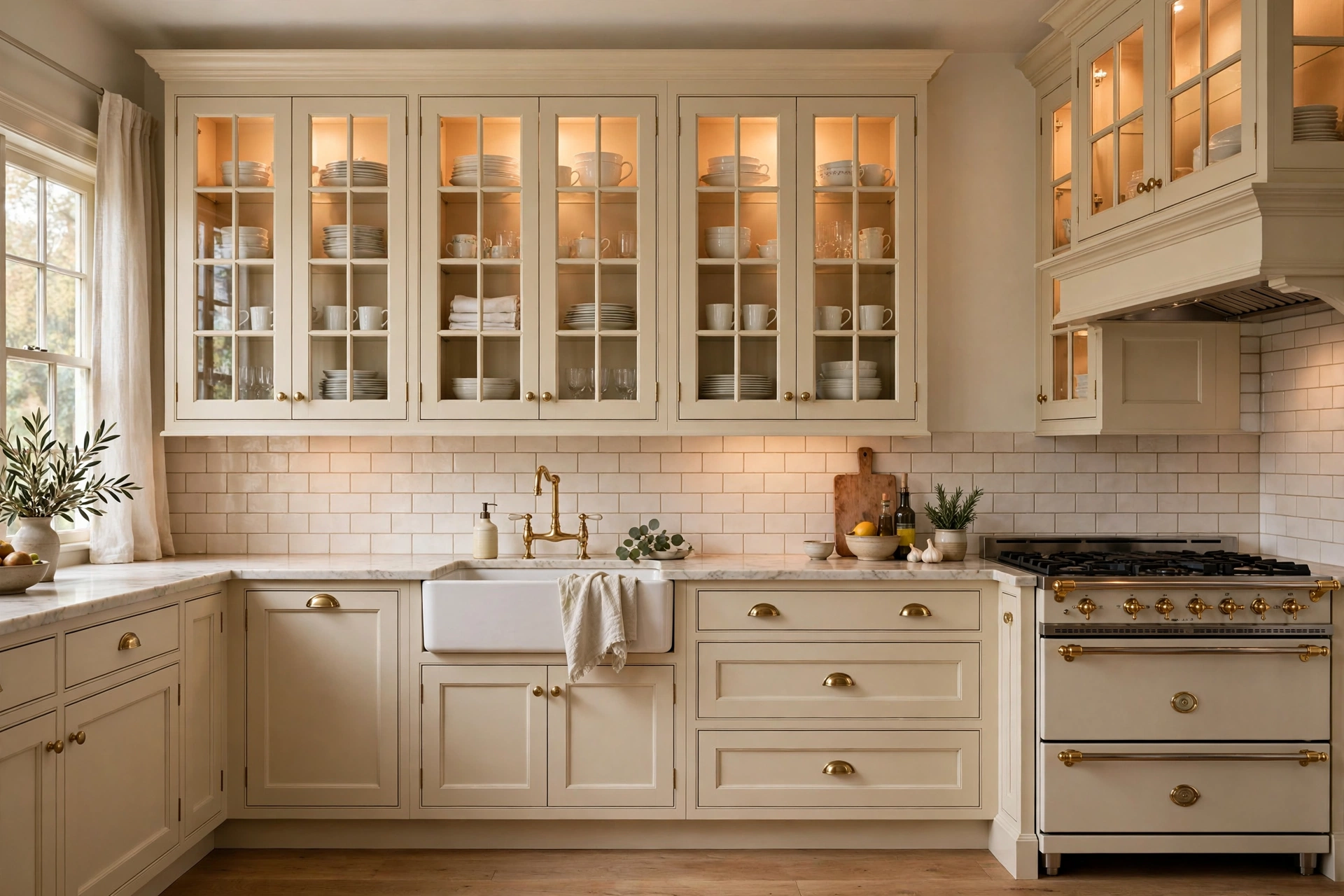
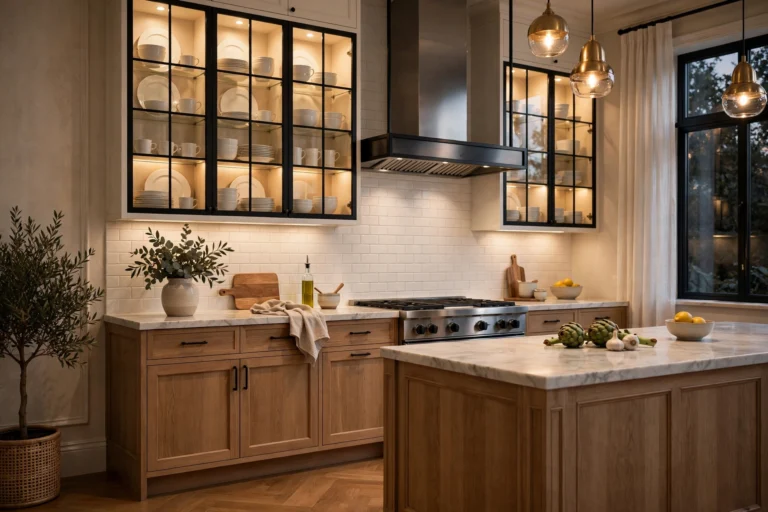
Glass-front upper cabinets are the traditional kitchen’s answer to open shelving — you get the display without the dust. A run of glass doors flanking the range or sink showcases your prettiest dishware, copper pots, and collected pieces while keeping everything protected. Mullion or X-pattern muntins on the glass add authentic traditional detailing.
Style the interiors with restraint: stack white ironstone or creamware, group pieces by color, and leave breathing room — a crowded cabinet reads as clutter, not curation. Add interior lighting and the display glows like a jewelry case at night. If you are nervous about keeping shelves photo-ready, dedicate just one or two cabinets to glass and keep the rest solid. If blue cabinetry appeals to you, our kitchen design ideas with blue cabinets show how color and glass fronts work beautifully together.
13. A Coffered or Beadboard Ceiling
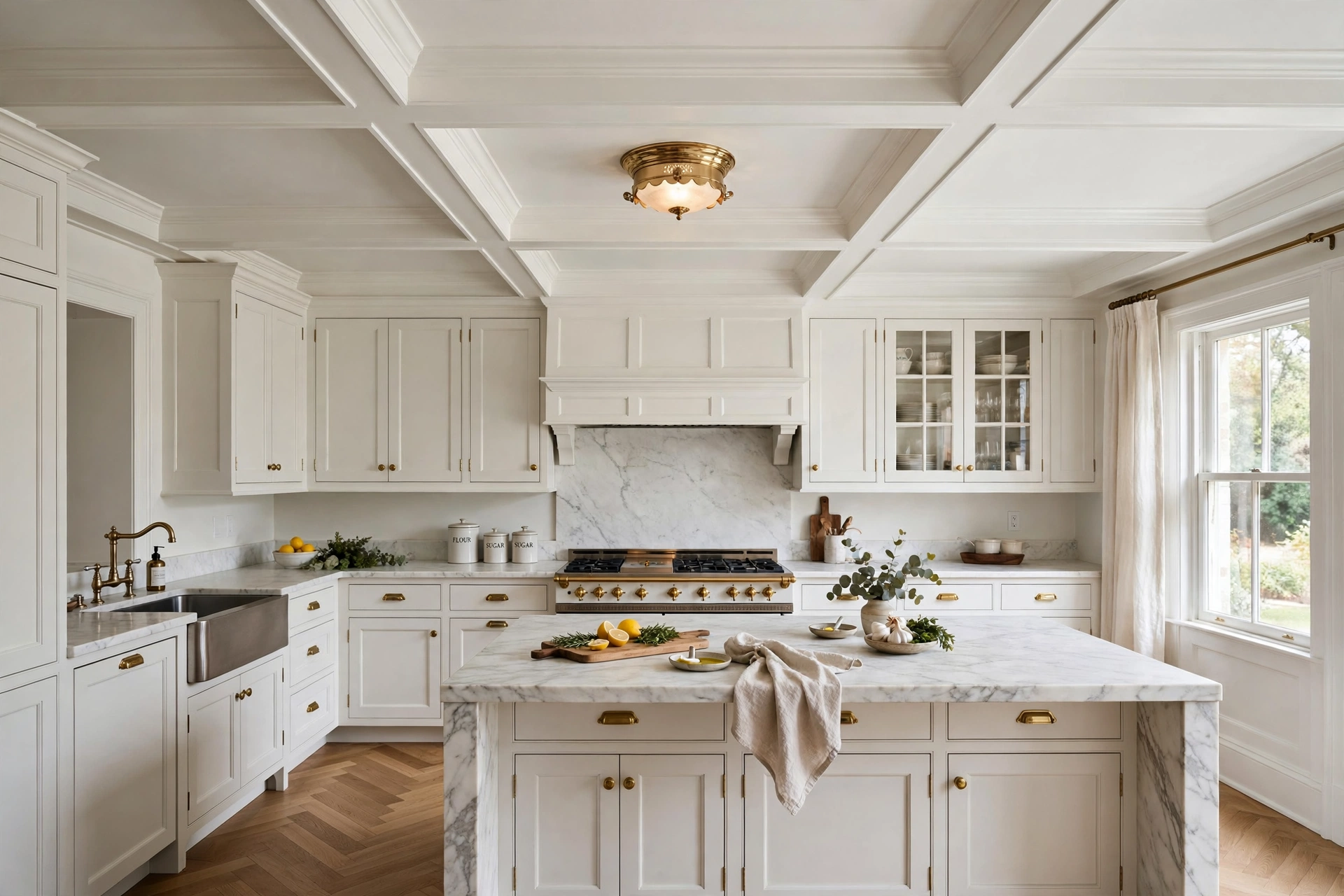
Most people forget the ceiling — traditional designers never do. A coffered ceiling with its grid of recessed panels adds architectural grandeur and makes even an 8-foot ceiling feel intentional and finished. For a softer, cottage-leaning take, beadboard or tongue-and-groove planks in warm white bring texture overhead without the formality of coffers.
Paint the ceiling treatment the same white as the trim for a seamless look, or go bold with a soft blue or warm wood stain on beadboard for a historic feel. Either choice draws the eye up and gives the kitchen a finished, custom quality flat drywall cannot match. Pair it with a classic flush-mount fixture with milk glass or brass details — a weekend-scale project with a renovation-scale payoff.
14. A Timeless Neutral Palette With Layered Textures
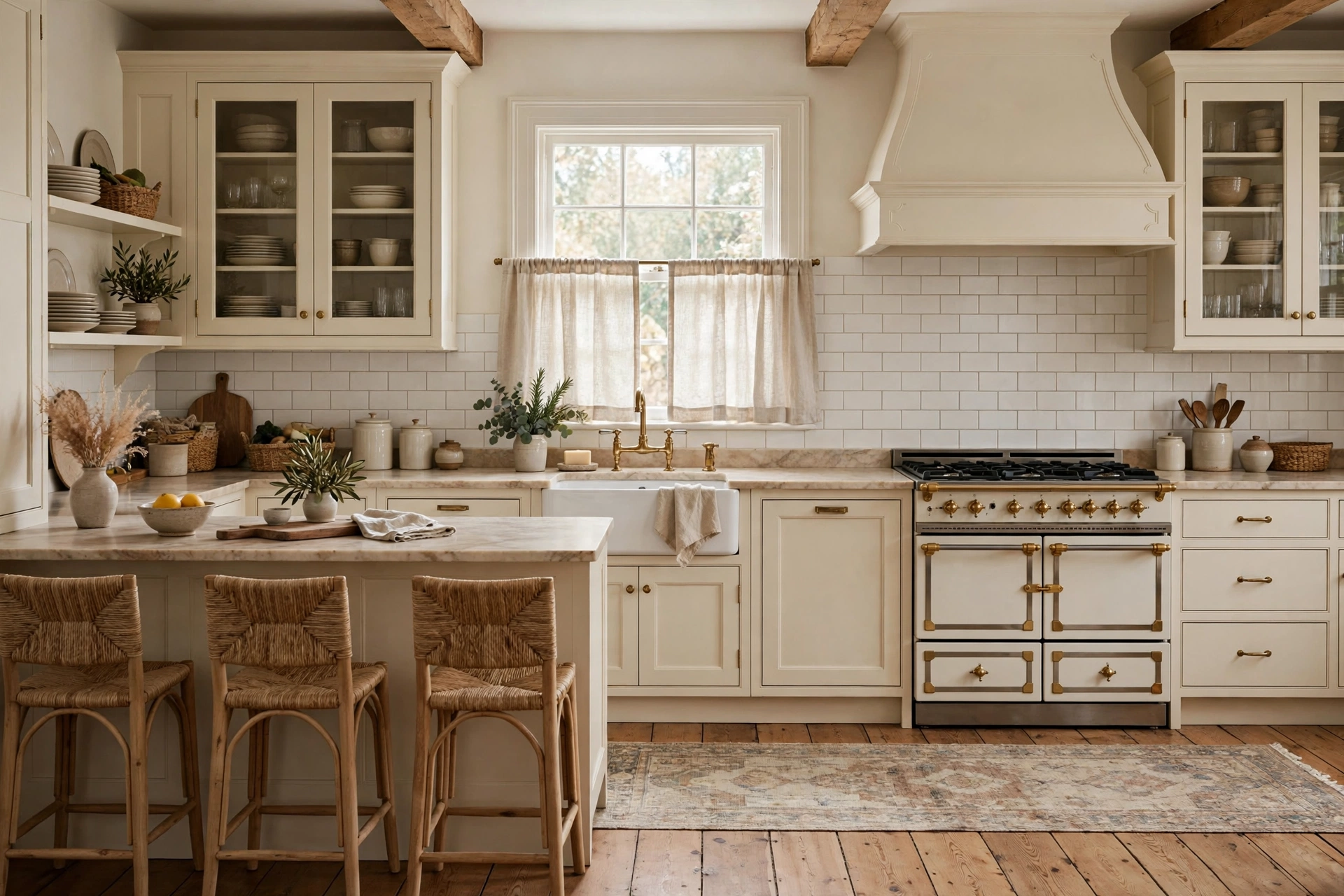
Traditional kitchens rarely shout; they whisper in layers. A palette of warm whites, soft creams, greige, and gentle taupes creates a calm backdrop, and then texture does the talking — honed stone, oiled wood, woven rush seats, linen cafe curtains, and a vintage runner underfoot. The result is a kitchen that feels rich without relying on bold color.
The trick is contrast within the neutrals: pair warm whites with deeper wood tones, mix matte and polished finishes, and let natural materials provide the variation. A single accent — deep green barstools or aged brass with a soft patina — gives the eye somewhere to land. This layered-neutral approach is the most forgiving over time; when every element is classic, nothing dates. For antique-forward inspiration, HGTV’s roundup of antique kitchen decorating ideas shows how vintage pieces layer into traditional rooms.
15. Classic Flooring: Herringbone Hardwood or Stone
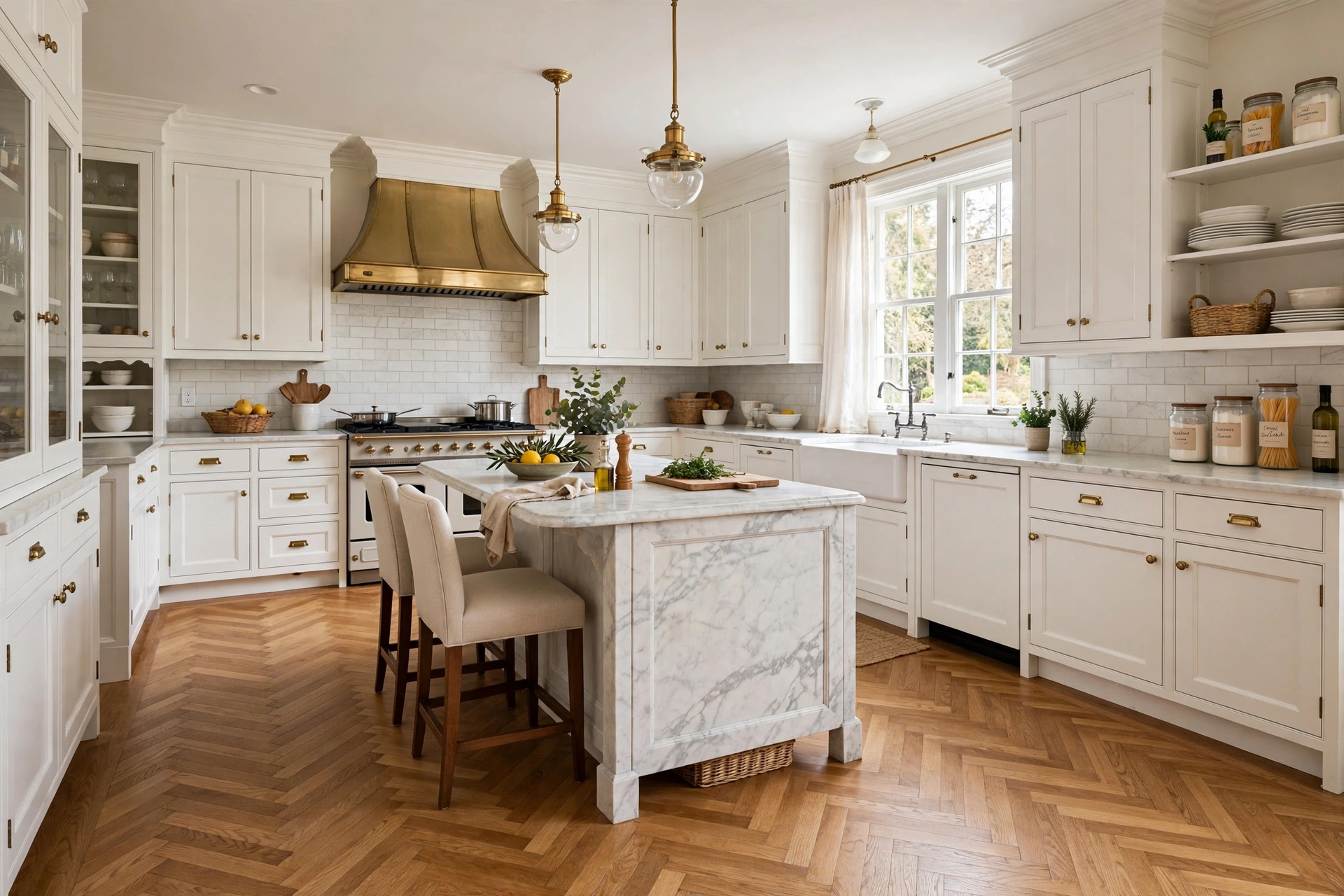
The floor is the foundation of the traditional kitchen — literally. Herringbone or chevron hardwood in a warm oak tone adds pattern and movement that a straight plank layout cannot, instantly elevating the room’s sense of craft. Alternatively, natural stone or stone-look tile in a checkerboard or Versailles pattern delivers old-world European character that pairs perfectly with marble counters.
Choose site-finished or high-quality engineered oak with a matte finish for authenticity; glossy floors read modern and show every footprint. In busy family kitchens, luxury vinyl in a herringbone pattern offers the look with less maintenance anxiety. Run the flooring in one continuous direction through adjoining spaces — visual flow makes the whole main floor feel larger and more cohesive. Finish with a washable vintage-style runner in the work zone for softness and a final layer of classic pattern.
Frequently Asked Questions
What defines a traditional kitchen design?
Classic cabinetry profiles (shaker or raised-panel doors), natural materials like marble and wood, detailed millwork including crown molding, warm metal finishes such as brass or bronze, and a balanced, symmetrical layout. The overall feel is warm, layered, and crafted — designed to look good for decades rather than follow trends.
Are traditional kitchens outdated?
No — traditional kitchens were never tied to a fleeting trend, so they cannot really date. Classic elements like shaker cabinets, subway tile, and marble have remained desirable for over a century, and a well-designed traditional kitchen tends to hold its resale appeal better than trend-driven styles.
What colors work best in a traditional kitchen?
Warm whites, creams, soft grays, greige, and gentle taupes form the classic base, often paired with a deeper accent like navy, forest green, or warm wood tones on the island. Keep the palette calm and layered rather than high-contrast.
How can I make my kitchen look traditional on a budget?
Start with the highest-impact, lowest-cost changes: swap cabinet hardware for brass or bronze cup pulls and knobs, add crown molding to existing cabinets, change the faucet to a classic bridge style, and layer in a vintage-style runner rug. Paint is powerful too — a warm white on walls or a deep accent color on the island transforms the room for the cost of a few gallons.
Traditional vs. farmhouse kitchen — what’s the difference?
Farmhouse style is a relaxed subset of traditional design, leaning rustic with apron sinks and distressed materials. Traditional kitchens are generally more formal and refined — detailed millwork, marble, polished brass, and symmetrical layouts. The two overlap heavily, but traditional leans elegant while farmhouse leans cozy.
Keep Exploring
A traditional kitchen is a collection of good decisions made slowly — one classic detail at a time. Start with the elements that bother you most and work through this list at your own pace. Because these ideas are rooted in craftsmanship rather than trends, every change will still look right years from now. That is the quiet luxury of timeless design: a kitchen that welcomes you home, every single day, without ever asking for an update.





[…] Traditional rooms love the gleam of polished finishes. Mix warm metals — brass, bronze, and antique gold — across the chandelier, curtain rods, picture frames, and cabinet hardware for a cohesive glow. Add cut-glass or crystal accents: a decanter set, a glass compote bowl, or crystal drawer pulls. These reflective surfaces bounce chandelier light around the room and add the layered richness that defines timeless elegance. If you love this classic look in the kitchen too, see our 15 traditional kitchen design ideas. […]