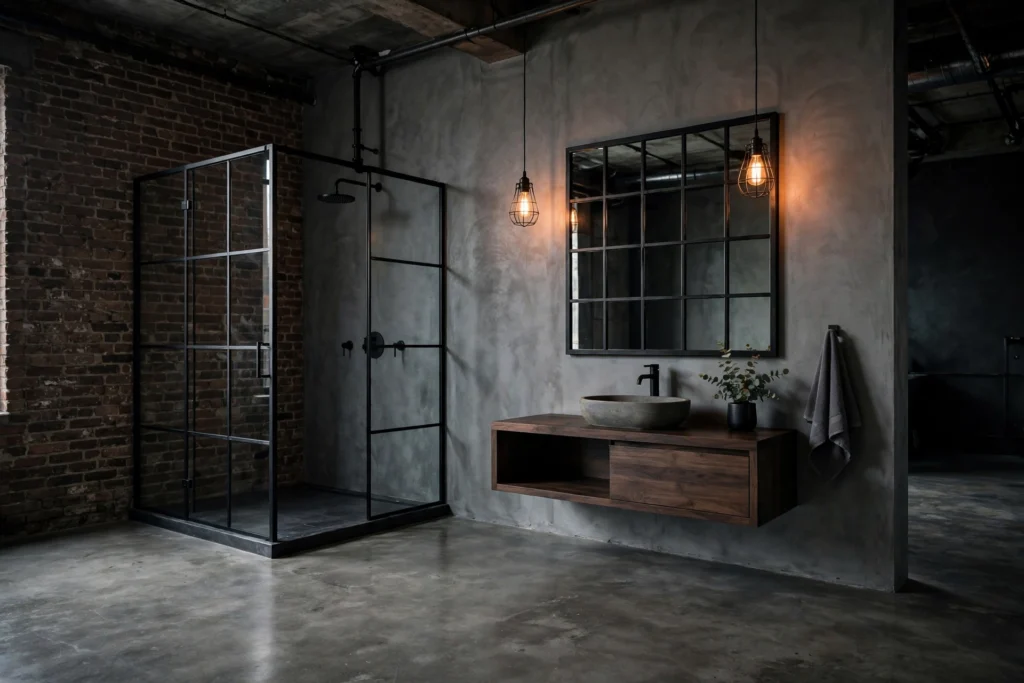

Industrial style is what happens when a bathroom stops pretending to be a spa and starts acting like a working space. Poured concrete underfoot, blackened steel framing a glass shower, a brick wall that was never meant to be covered, and warm Edison bulbs throwing amber light across it all — the raw urban edge comes from honesty. Materials show their age and texture, and somehow that makes the room feel more deliberate, not less.
The trick is restraint. Pick two or three statement materials — concrete, black metal, brick — then let clean fixtures, layered lighting, and a little greenery soften the edges. Go all-in on everything at once and it feels like a construction site; edit well and it feels like a converted loft. Each of these industrial bathroom design ideas is a practical move, whether you’re renovating down to the studs or refreshing what you’ve got.
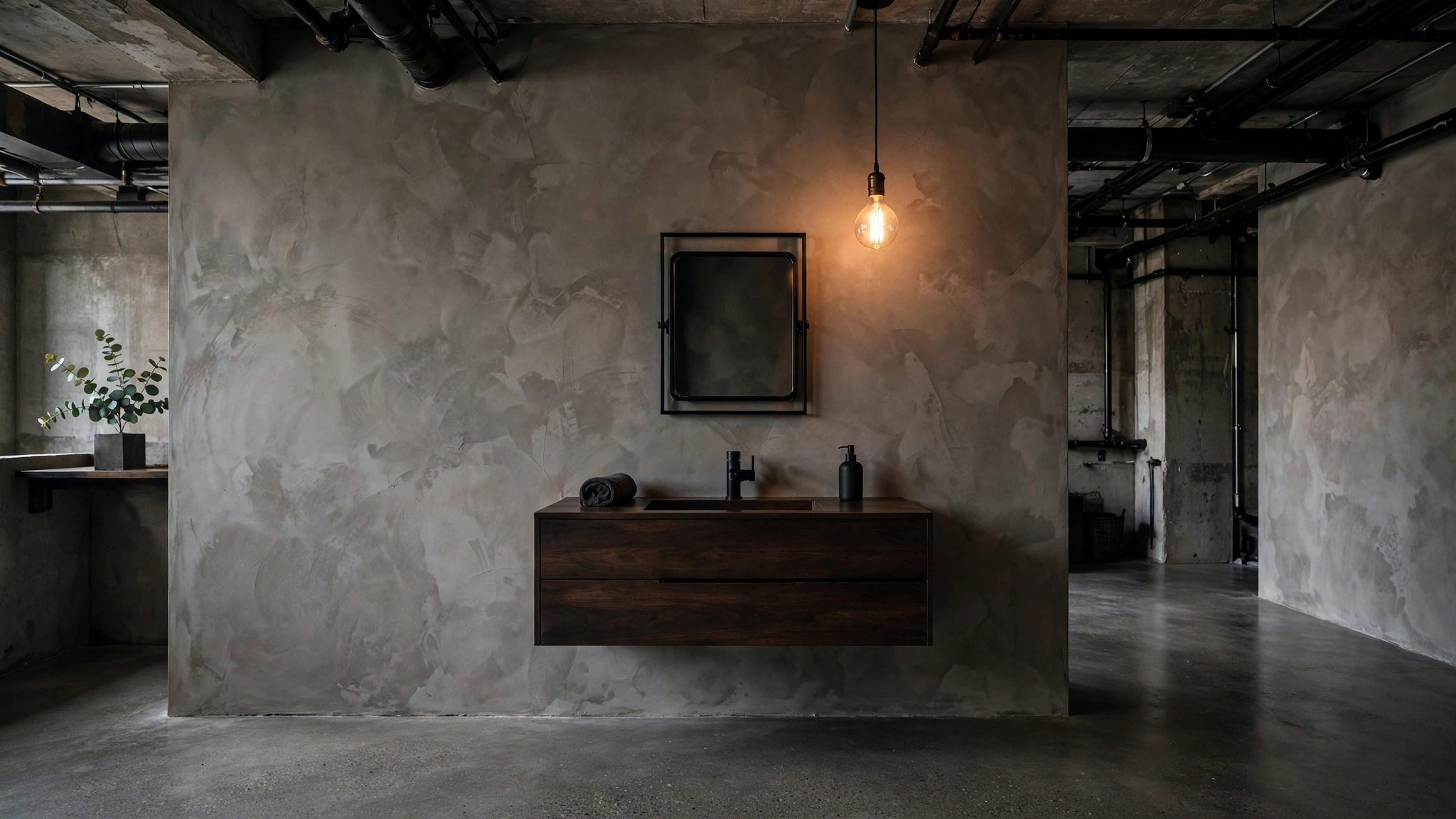
1. Go All-In With Concrete Microcement Walls
Microcement is the industrial bathroom’s secret weapon: a thin, hand-troweled coating that gives you the look of poured concrete without the weight, the demolition, or the cost. At just a few millimeters thick it bonds straight to drywall, tile, or plaster, and once sealed it’s fully waterproof — so it works inside showers and behind sinks as well as on the surrounding walls.
The magic is in the variation. A good application has subtle mottling and trowel marks, so no two square feet look identical — exactly what keeps it from reading as flat gray paint. Go warm mid-gray for a softer edge or dark charcoal for drama, then seal it with a matte polyurethane made for wet areas; it shrugs off steam and splashes without losing its raw character.
2. Let an Exposed Brick Wall Do the Talking
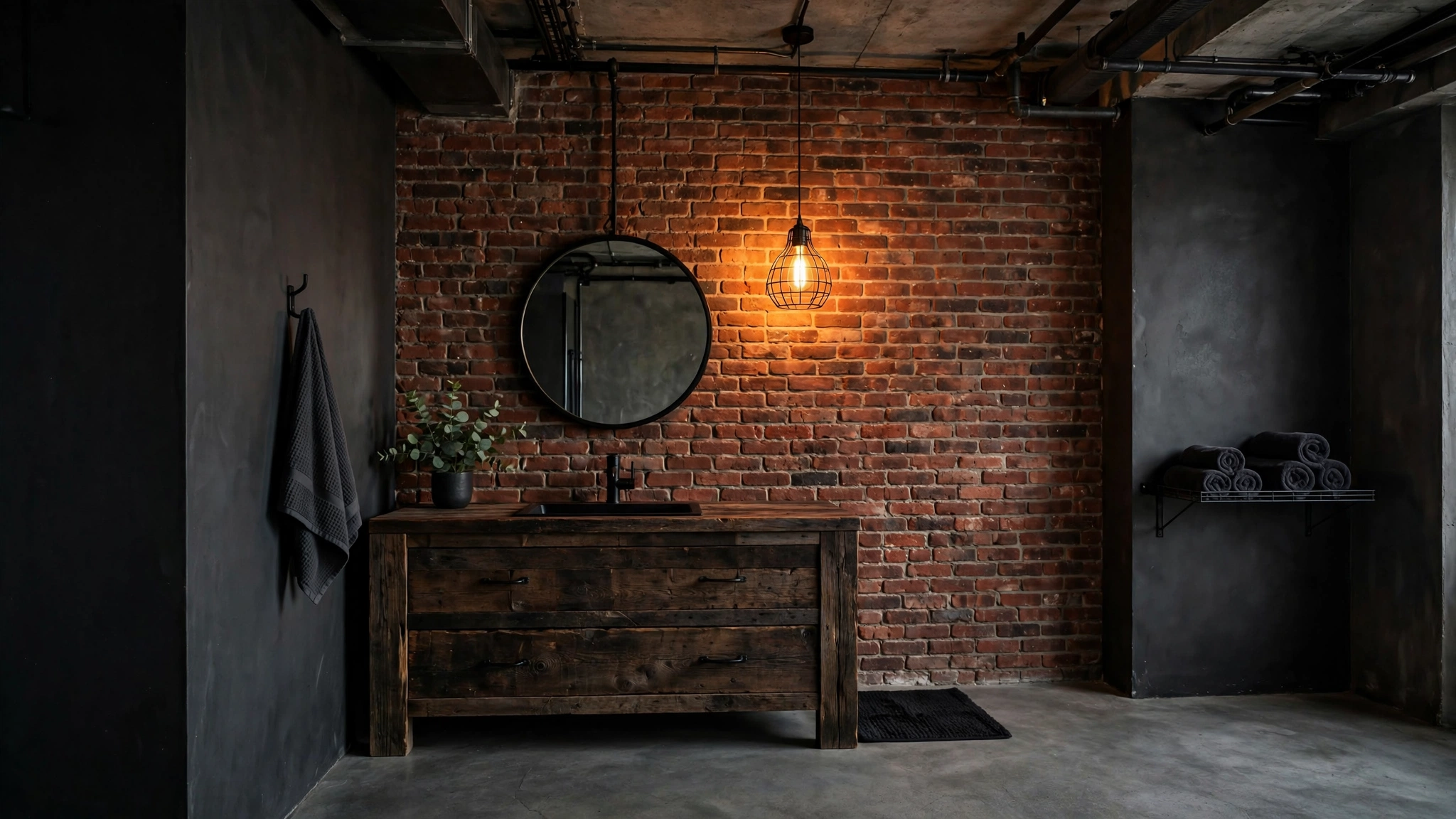
Nothing says industrial like brick that was always meant to be hidden. If your home has masonry under the drywall, exposing the wall behind the vanity or tub gives the bathroom authentic loft character no faux finish can fake. Get it repointed professionally and seal it with a breathable masonry sealer so it survives humidity without trapping moisture behind the mortar.
No brick underneath? A thin brick veneer delivers most of the effect at a fraction of the demolition. Veneer bricks are real clay brick sliced thin, so the texture reads as genuine. Lay them in a running bond with a flush mortar joint and take the other walls matte black or deep charcoal — the tension between warm brick and cold black metal defines the industrial palette.
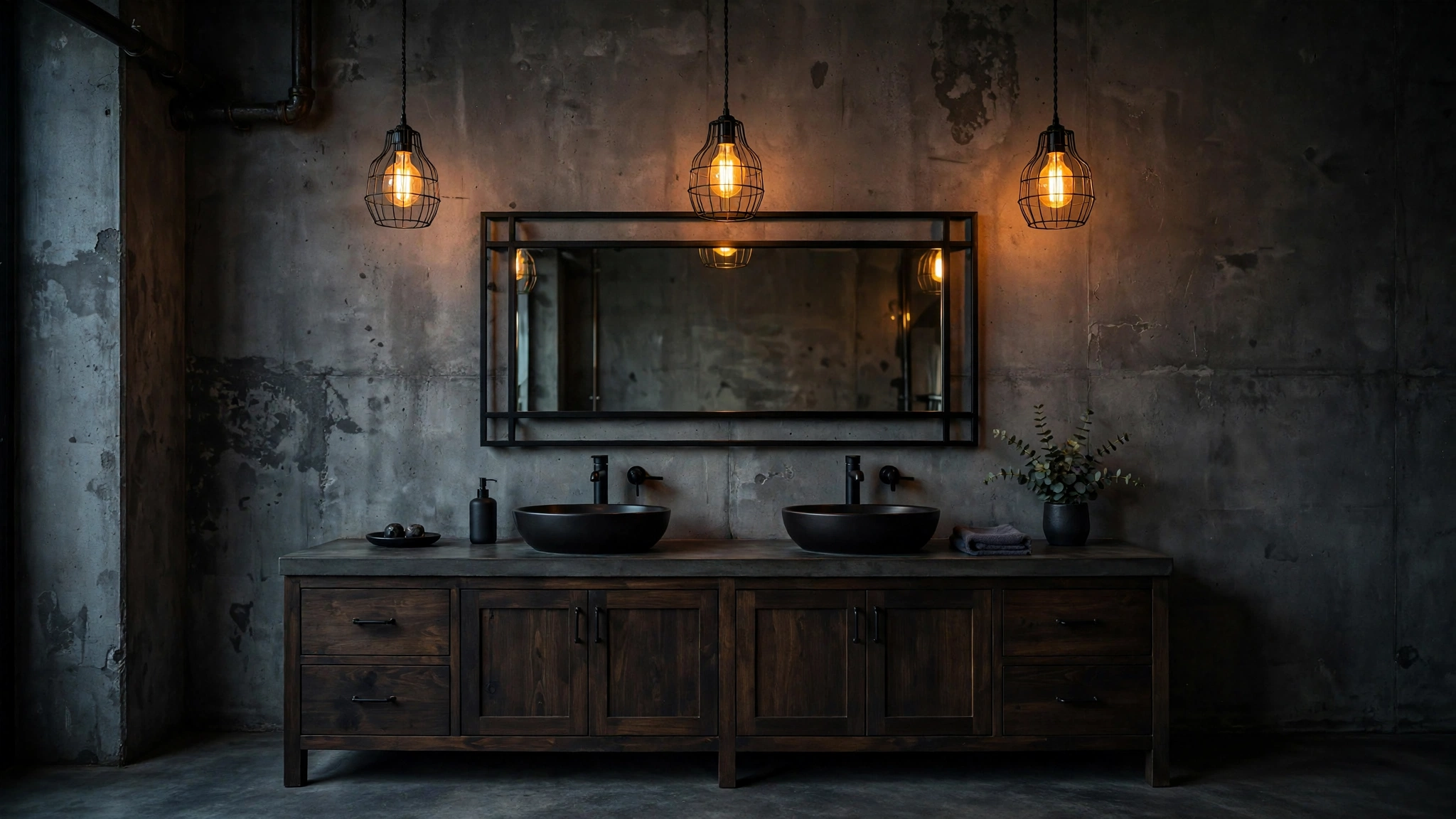
3. Hang a Factory-Window Mirror With a Black Steel Frame
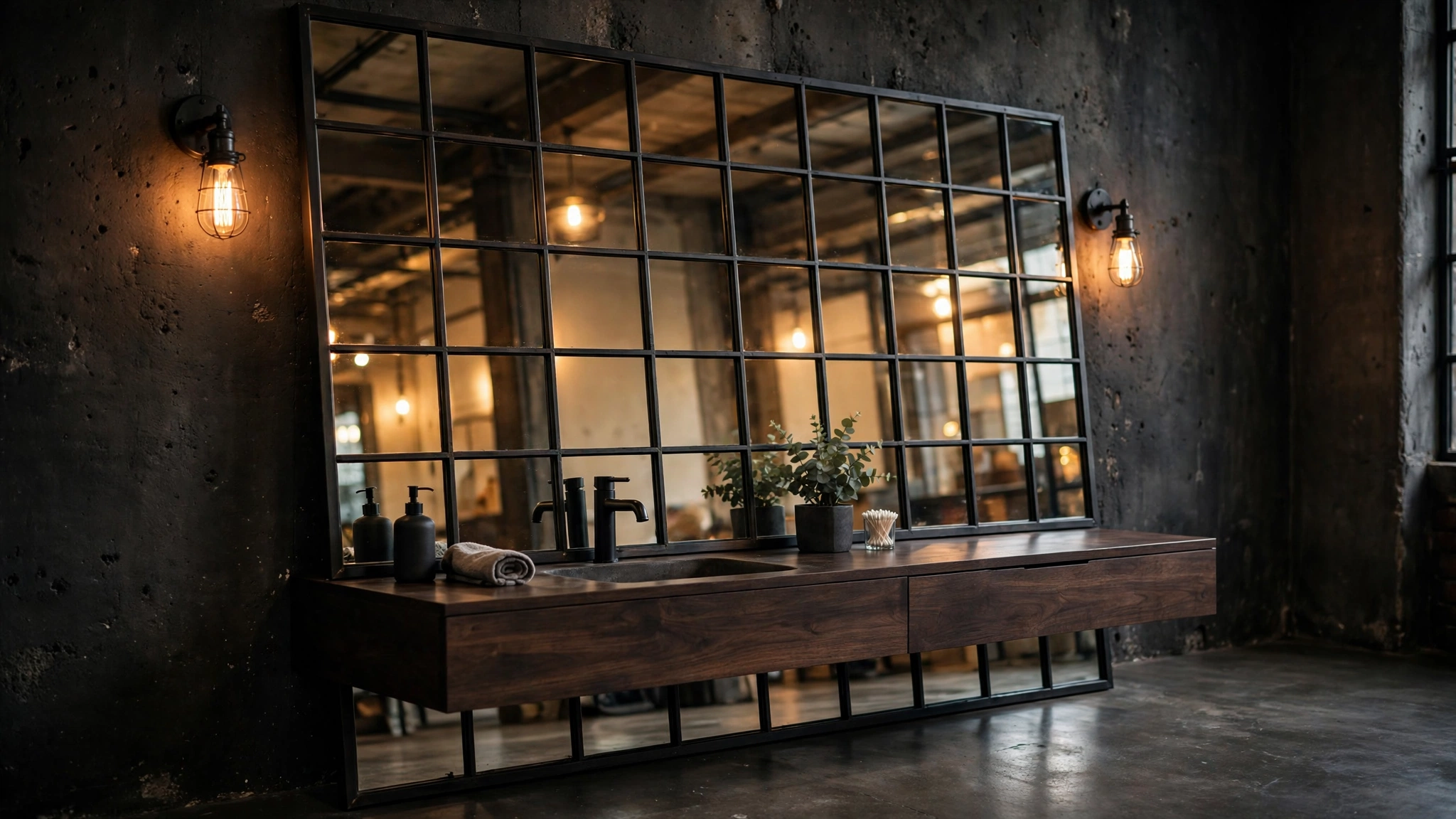
A factory-window mirror is industrial decor’s greatest cheat code: it multiplies light, opens up a small bathroom, and reads unmistakably as loft style in one piece. Look for mirrors divided into a grid of panes by slim blackened-steel mullions — the bigger the grid, the more architectural the effect. Lean an oversized one behind a floating vanity, or hang a pair of narrower grids flanking a double sink.
The steel frame also anchors the whole design language. Once that black grid is on the wall, repeating black metal elsewhere — the shower frame, sconce arms, towel hooks — makes the room feel designed instead of decorated. Lean the mirror where you can; the slight tilt catches ceiling light beautifully.
4. Light It With Edison Bulbs and Cage Pendants
Lighting is where an industrial bathroom finds its warmth. Bare Edison bulbs with visible amber filaments cast a golden, flattering glow that flat white overheads can’t match, and they single-handedly warm up concrete and black metal. Hang two or three wire-cage pendants over a double vanity, or flank the mirror with cage sconces so the task light lands where you need it.
Balance matters, because filament bulbs alone don’t light a working bathroom. Mix the decorative fixtures with a discreet layer of warm recessed cans (3000K or lower) for full usability, and always put the pendants on dimmers — dimmed Edison light over concrete at night is the entire point of the industrial bathroom.
5. Swap Every Fixture for Matte Black Hardware
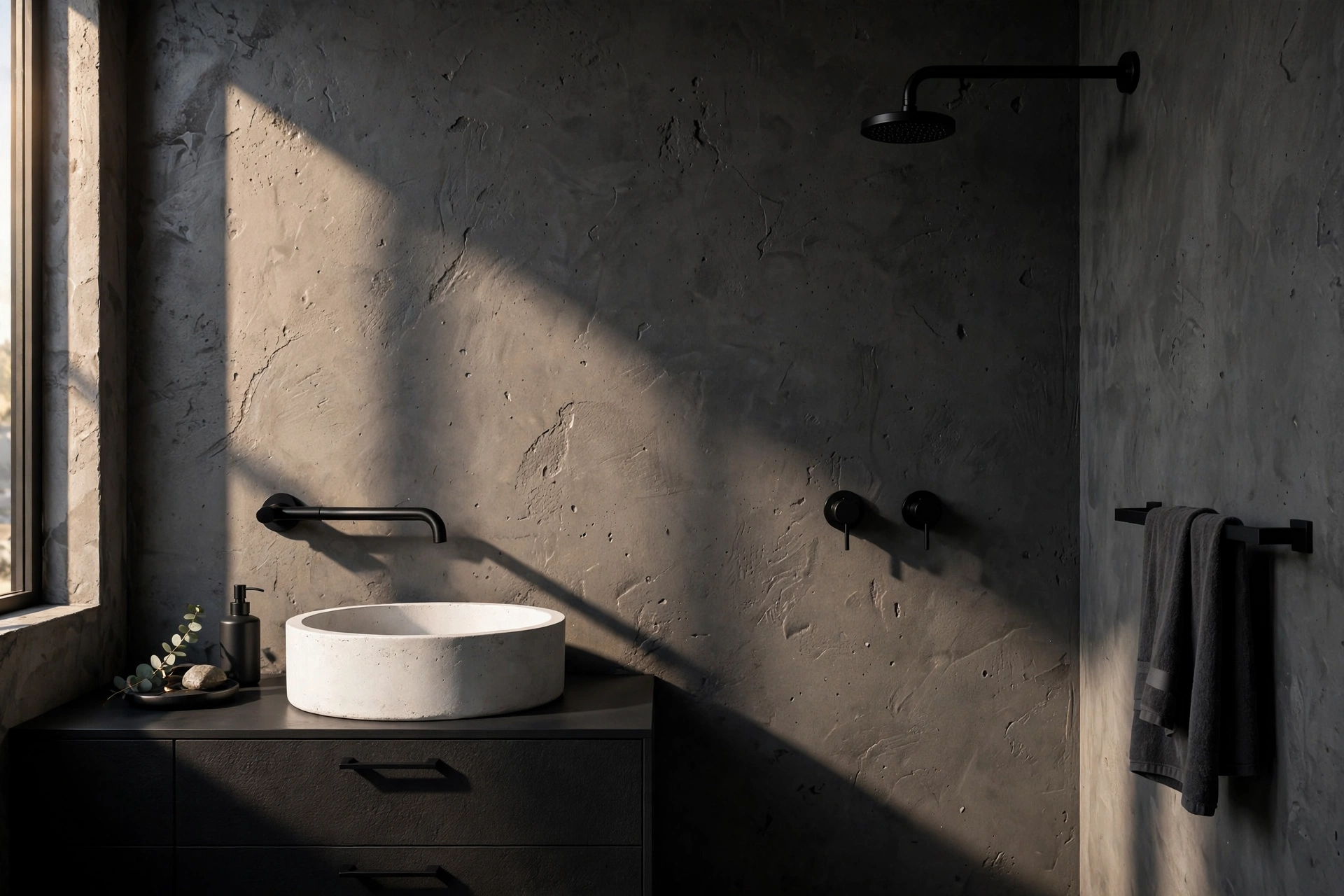
The fastest industrial transformation requires no demolition at all: replace chrome faucets, shower trim, towel bars, hooks, and cabinet pulls with matte black. Black fixtures read as structural — more like forged steel than plumbing — and instantly drag a plain bathroom toward the urban edge. Most of it is a weekend project.
The key is consistency and quality. Buy fixtures from the same family so the black finish matches across the faucet, shower kit, and accessories, since cheap black coatings can shift blue or fade brown. Pair the dark hardware with a white or concrete vessel sink for contrast, and keep one warmer element — a wood shelf, a plant — so the room doesn’t tip into a black box.
6. Build a Black Steel and Glass Walk-In Shower
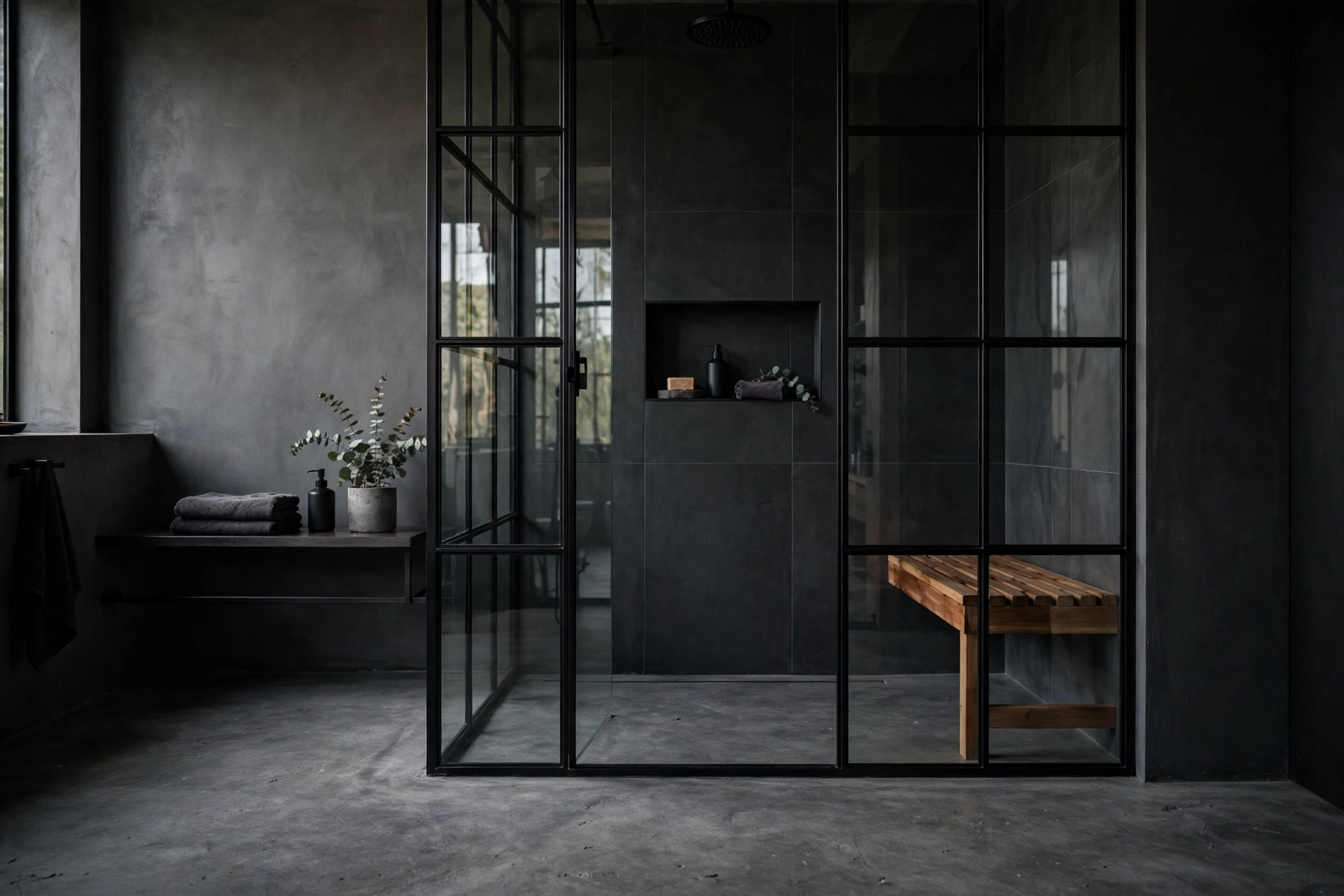
A walk-in shower framed in blackened steel is the centerpiece of the industrial bathroom. The concept borrows straight from factory partitions: thin steel mullions dividing clear or reeded glass panels, usually with a slim black header and a door on an exposed track. It zones the wet area without closing it off, so even a compact bathroom keeps its sense of space.
Inside, carry the material story through: a concrete-look pan or large-format dark tiles underfoot, a wall-mounted rain head in matte black, and a niche lined with the same microcement as the walls. Add a cedar bench for the one warm note the shower needs, and keep a squeegee on a black hook inside the door; thirty seconds after each shower keeps the glass sparkling.
7. Set a Concrete Vessel Sink on a Floating Vanity
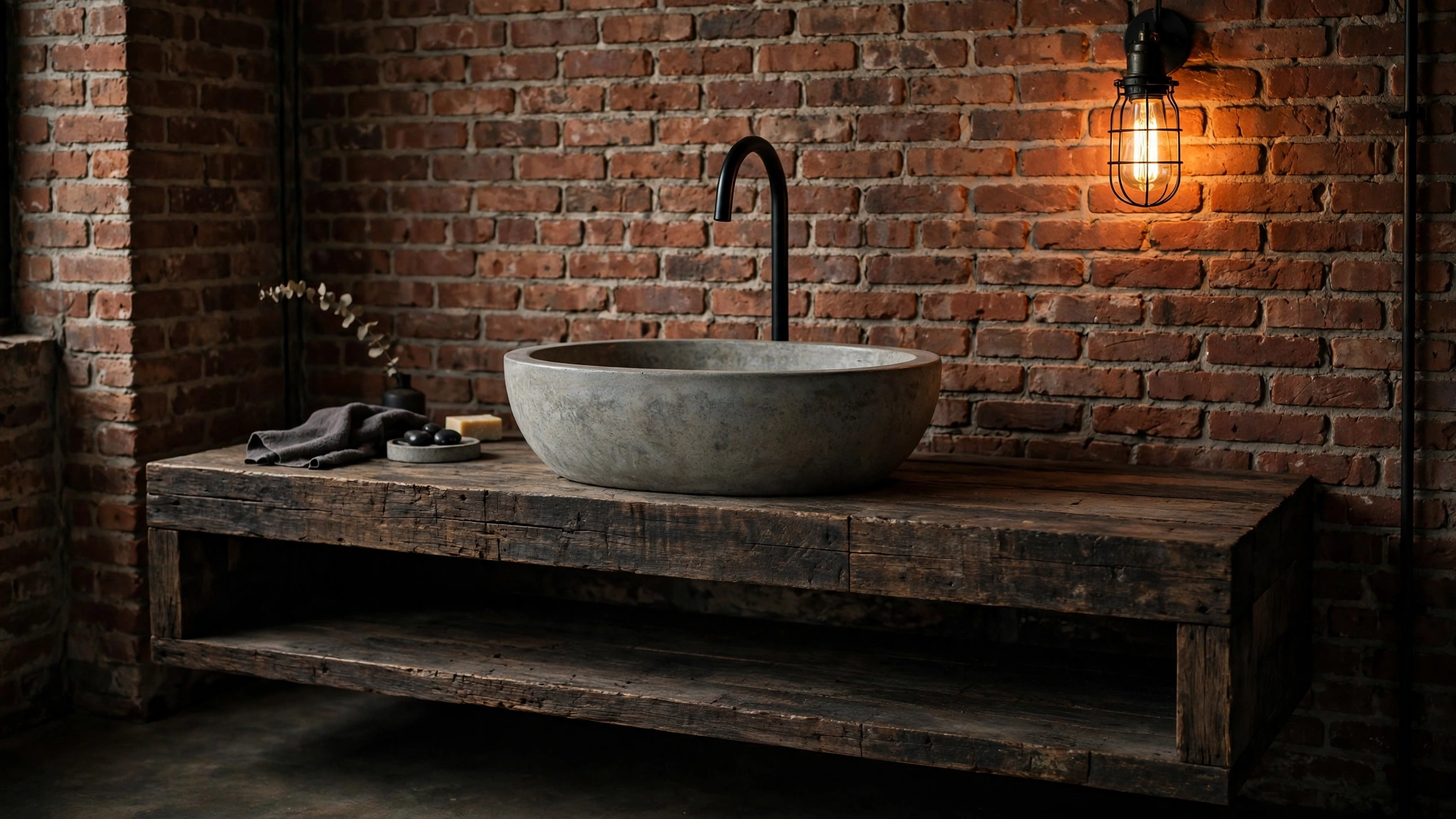
A vessel sink cast from concrete — heavy, matte, faintly imperfect — is the industrial bathroom’s answer to the porcelain pedestal. Each one carries slightly different mottling from the casting process, and it sits on the counter like a stone bowl carved by hand. Pair it with a tall matte-black vessel faucet and the sink area reads as sculpture: rough stone against dark metal.
The base underneath matters just as much. A floating vanity in dark-stained oak or reclaimed barn wood keeps the floor visible, which makes a small bathroom feel bigger, while the grain softens everything the concrete and metal harden. Seal the concrete sink yearly with a stone sealer and accept the patina — that’s not wear, that’s the whole point.
8. Refinish the Vanity in Dark, Grain-Forward Wood
Industrial style lives in the contrast between cold materials and warm ones, and the vanity is where the warmth usually lands. A vanity in dark-stained oak, walnut, or genuinely reclaimed wood brings grain, color temperature, and history into a room full of concrete and steel. Look for live-edge tops, visible saw marks, or thick plank construction — the rougher the wood, the better it plays against the metal.
You don’t need a custom cabinetmaker. An off-the-shelf vanity in mid-tone oak takes a dark walnut stain beautifully, and swapping its chrome pulls for black iron bar pulls completes the conversion. If you go reclaimed, make sure the wood is kiln-dried and sealed for humid environments. Style it minimally: a folded black towel, a concrete tray for soap, one trailing pothos. For a softer take on the same warm-wood idea, see these farmhouse bathroom design ideas full of rustic charm.
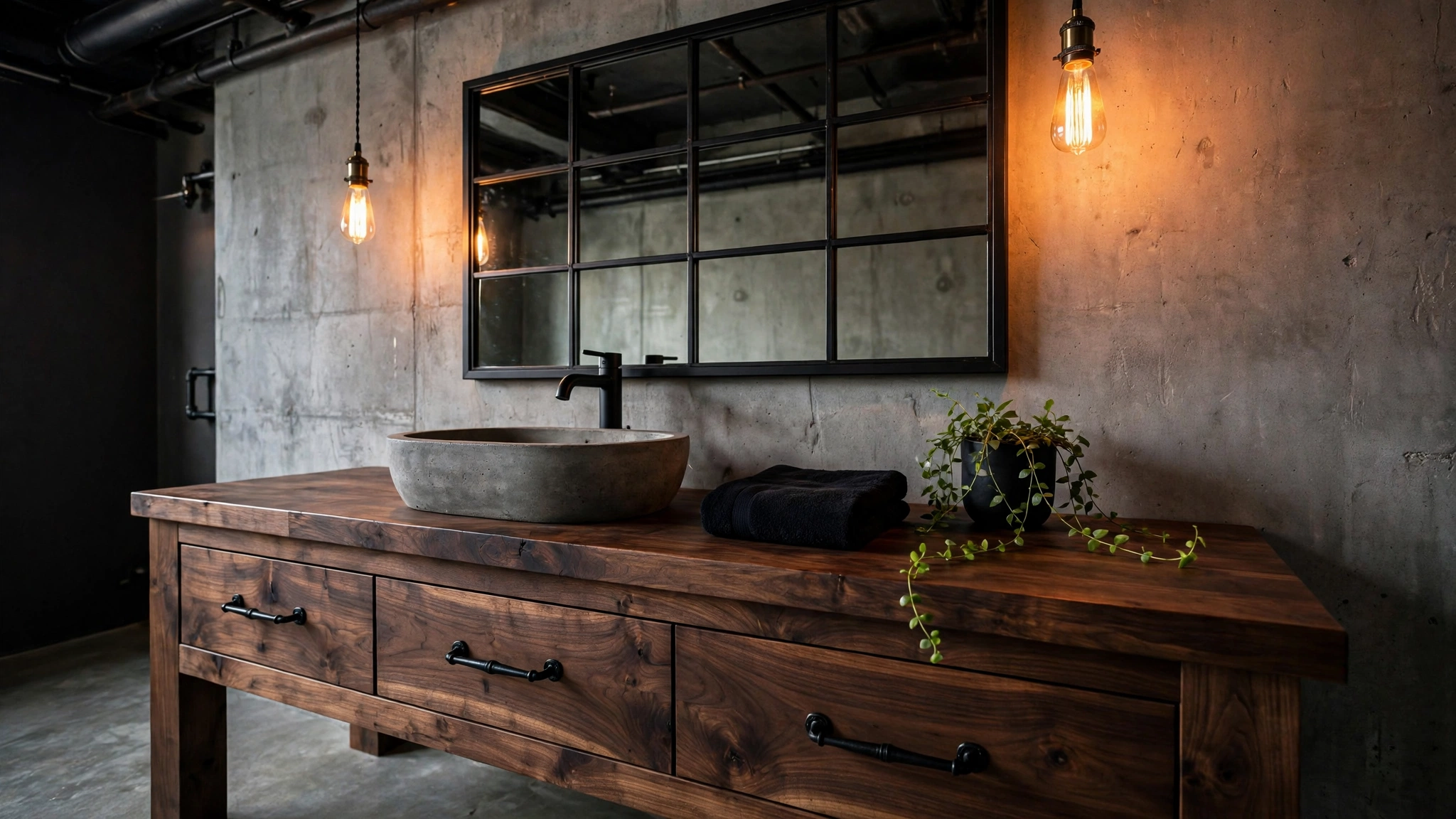
9. Polish It Up With Concrete Floors
Polished concrete floors are the industrial bathroom’s foundation in every sense. Grinding the slab through progressively finer grits, then densifying and polishing, produces a surface that’s hard, seamless, reflective, and nearly indestructible. It shrugs off water, laughs at dropped shampoo bottles, and the subtle aggregate pattern gives it depth tile can’t match.
In a bathroom, choose a matte or satin polish rather than high-gloss — you keep the stone-like depth without a skating-rink finish. If grinding a slab isn’t practical on an upper floor, large-format concrete-look porcelain tiles at 24 inches or larger deliver the same continuous surface with far less labor. Keep grout lines tight and in a matching gray so the floor disappears into the architecture the way good industrial design should.
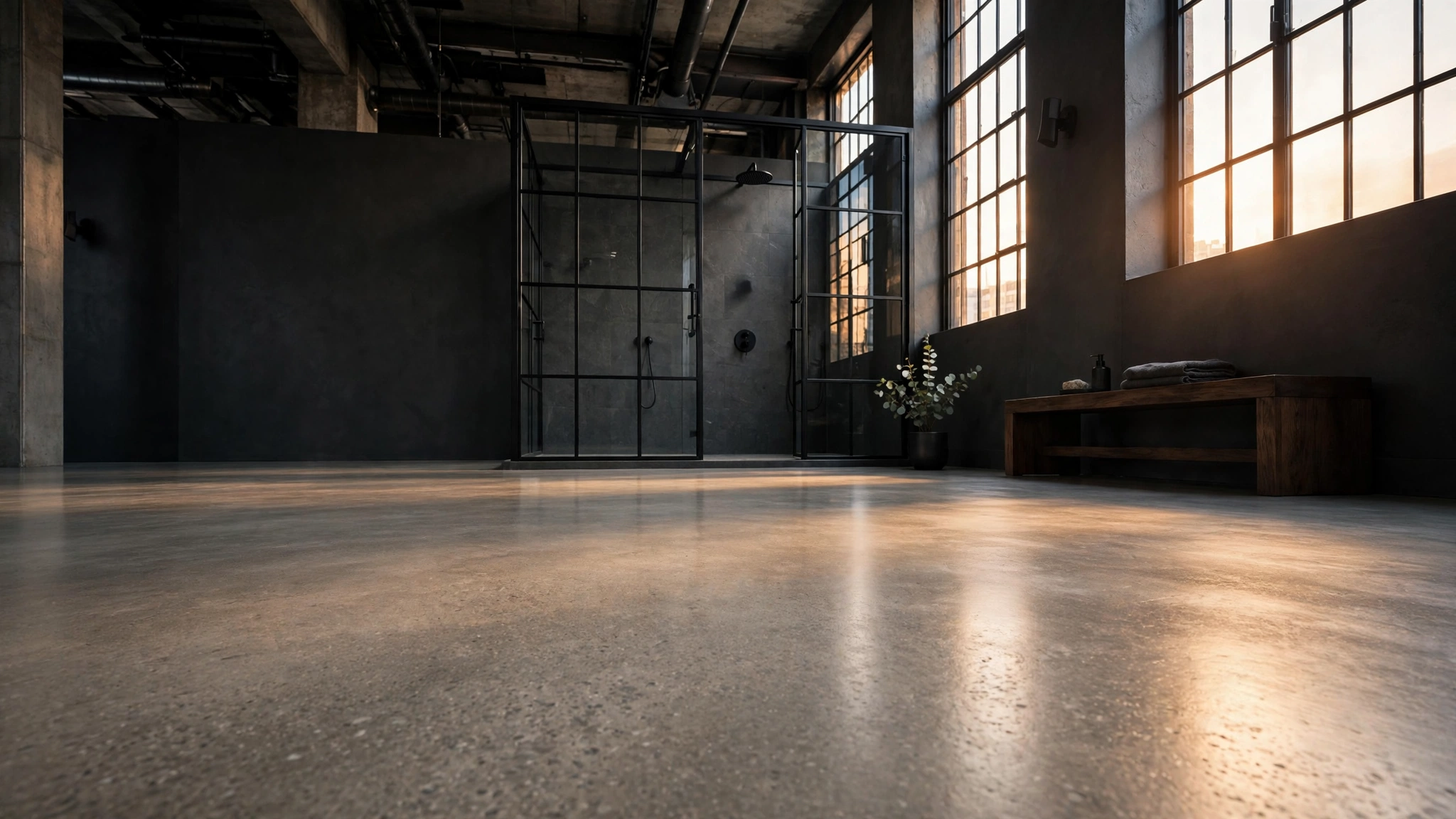
10. Install Open Shelving From Pipe and Reclaimed Planks
Black iron pipe and reclaimed wood planks make the classic industrial shelf — and one of the easiest storage upgrades in a bathroom. Flanges screwed into studs, threaded pipe uprights, and two or three solid planks give you open storage that looks salvaged from a warehouse, holding towels, baskets, and plants while the wall texture stays visible behind it.
The open format suits the industrial look: roll towels instead of folding them, corral small bottles into a black wire basket or concrete tray, and leave one shelf deliberately empty. Don’t mount pipe shelves in the direct splash zone unless the planks are thoroughly sealed — humidity warps bare wood fast. A wipe-on polyurethane on all sides keeps them stable for years.
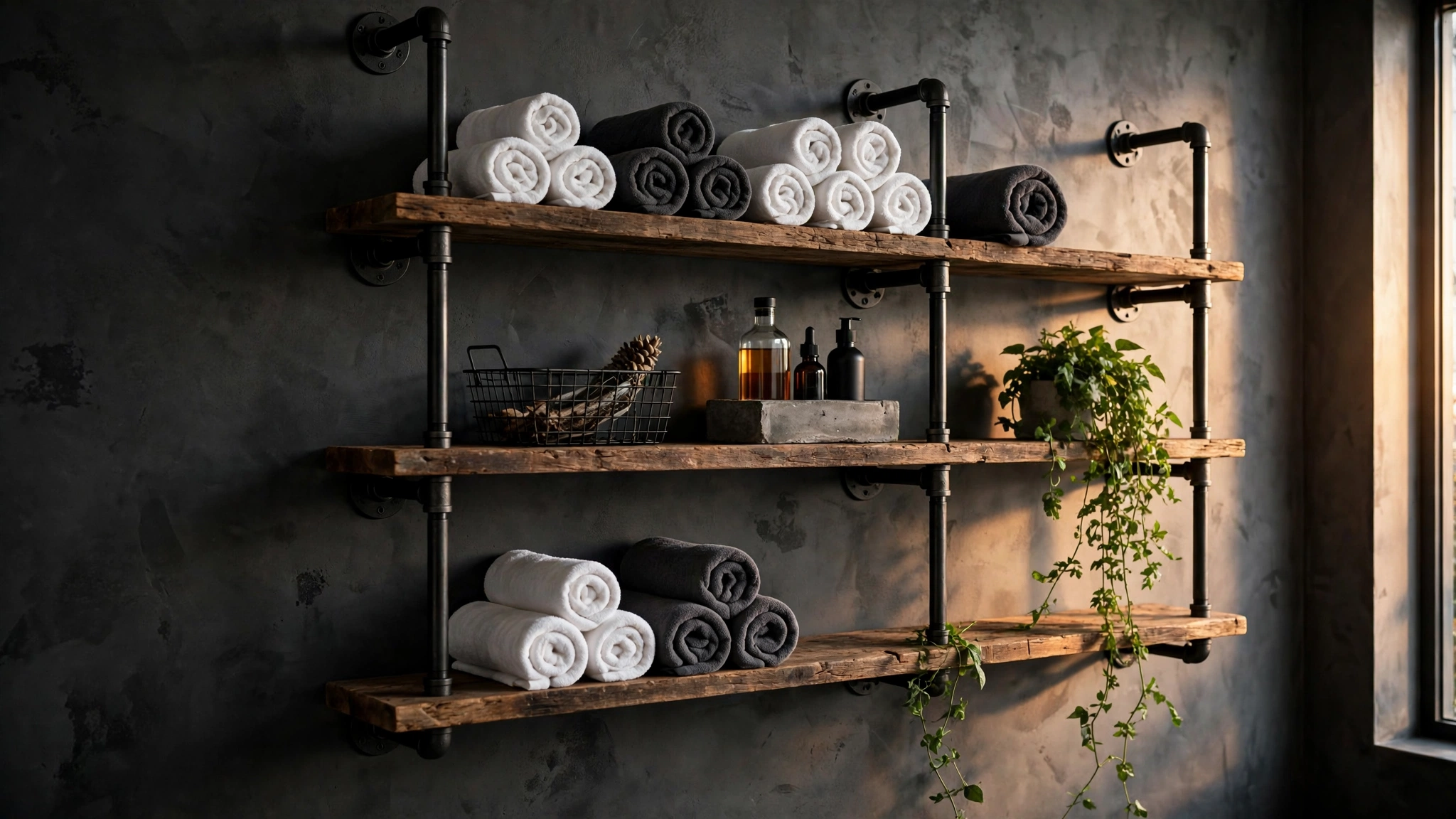
11. Tile It Dark: Charcoal Subway Tile With Black Grout
Dark subway tile with black grout is the industrial answer to the white-tiled classic. The format is familiar and orderly — handmade-feel tiles in charcoal or espresso laid in a running bond — but the dark palette and joints that disappear into it give the wall a moody, almost metallic presence. It works as a full shower surround, a vanity backsplash, or a floor-to-ceiling feature wall behind the tub.
The grout does more work here than you’d expect. Standard gray grout would draw a visible grid and lighten the whole field; black grout lets the tile faces carry all the texture while the joints recede. Dark grout does show limescale, so seal it well after curing. Pair the tiled wall with a black-framed mirror and warm Edison sconces, and the glossy tile faces catch the filament light beautifully.
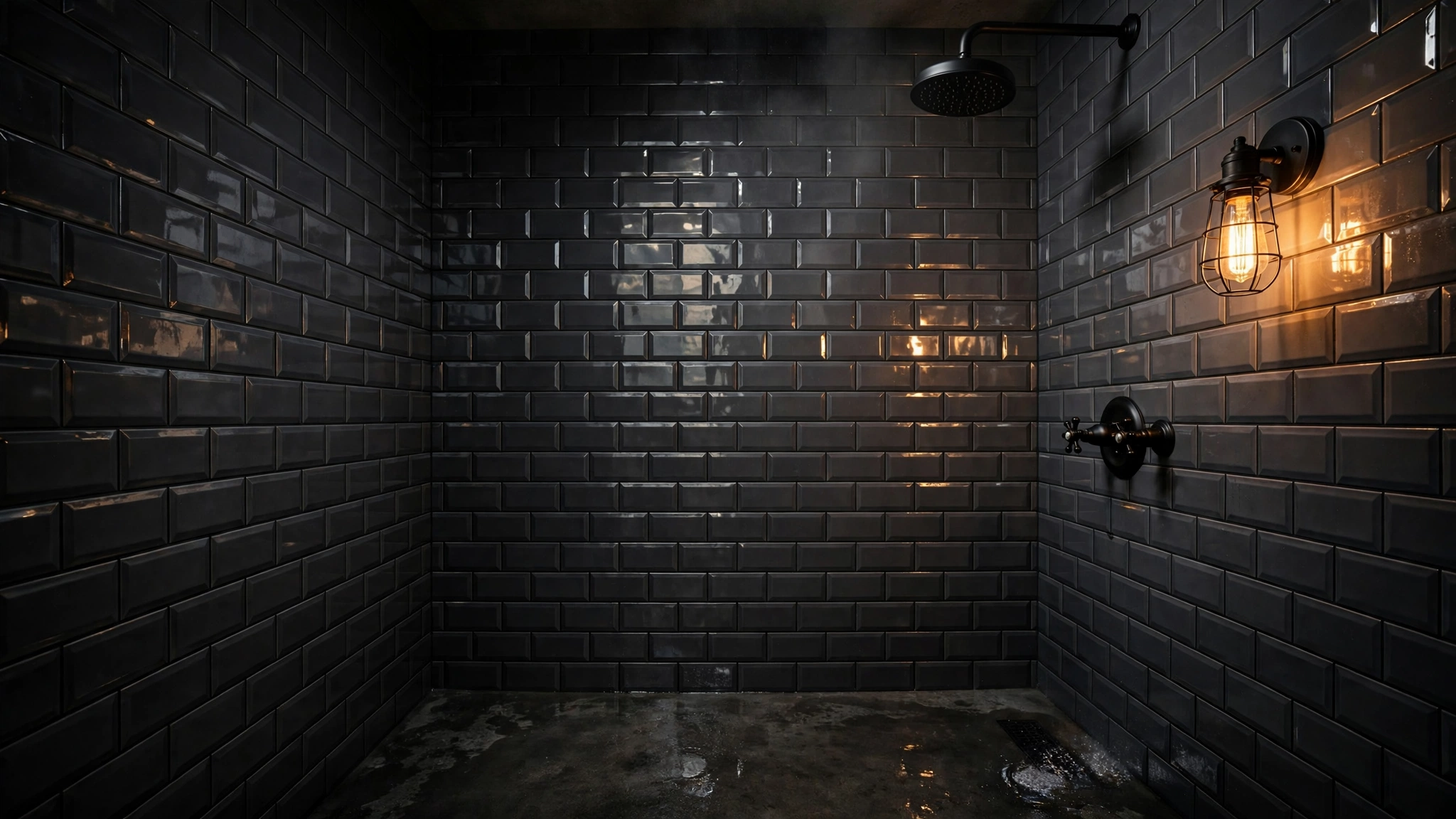
12. Make the Shower Industrial With Exposed Pipe Fixtures
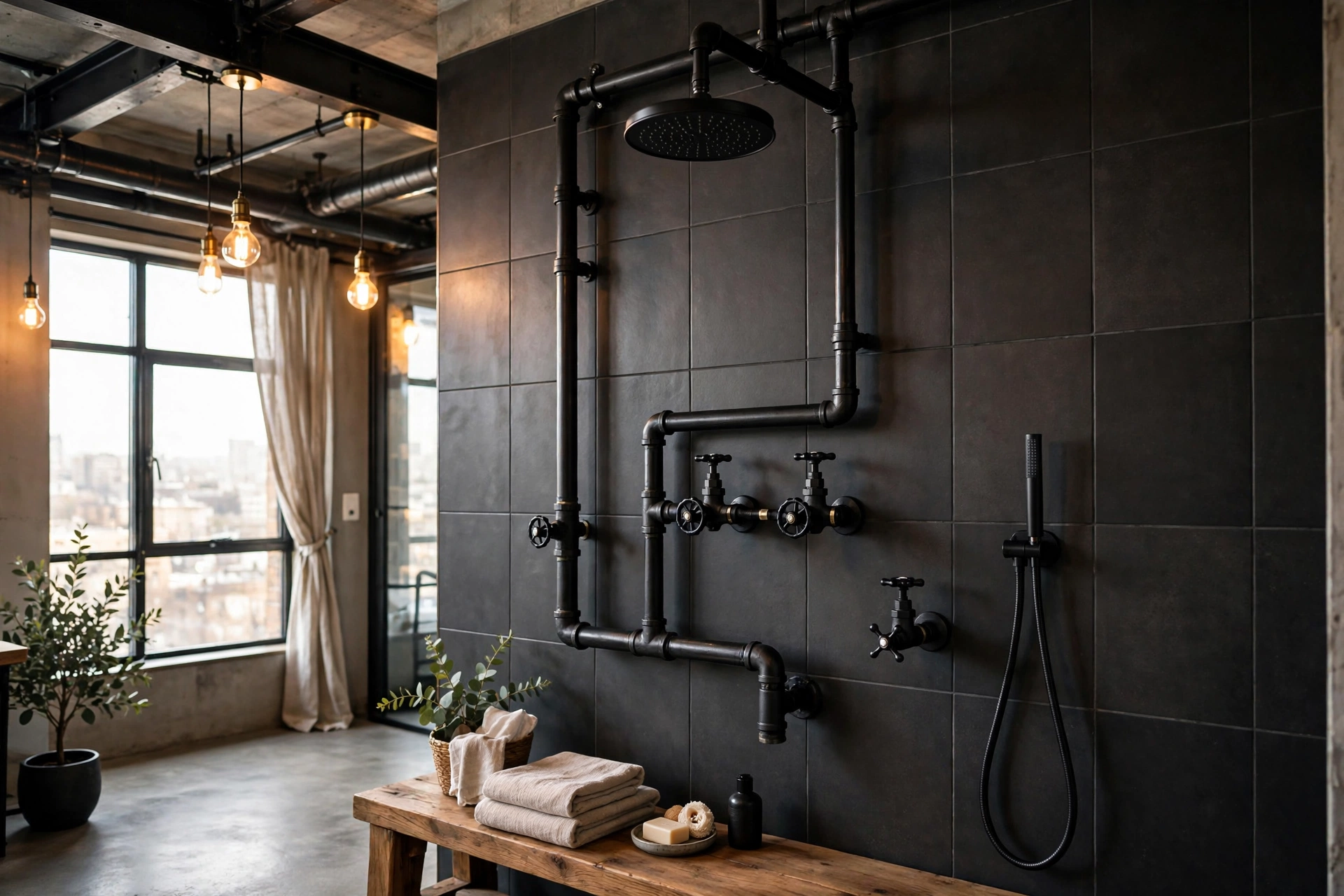
For the factory look in its purest form, run your shower plumbing on the surface. Exposed copper or blackened-steel pipe rising from the floor to a rain head, with visible valves and flanges, turns the shower into honest machinery. It’s the plumbing equivalent of exposed ceiling beams: instead of hiding the work, you celebrate it, and the geometry of the pipes becomes part of the decor.
This is easiest during a renovation, when you can pressure-test the exposed runs before the walls close — but risers can also retrofit over existing tile with careful anchoring. Stick to one metal for every visible fitting so the assembly reads as a single system: all black, or all copper, never a mix. A large round rain head, a wall-mounted thermostatic valve with crosshead handles, and a hand shower on a slider complete the kit.
13. Add a Freestanding Tub With a Floor-Mounted Filler
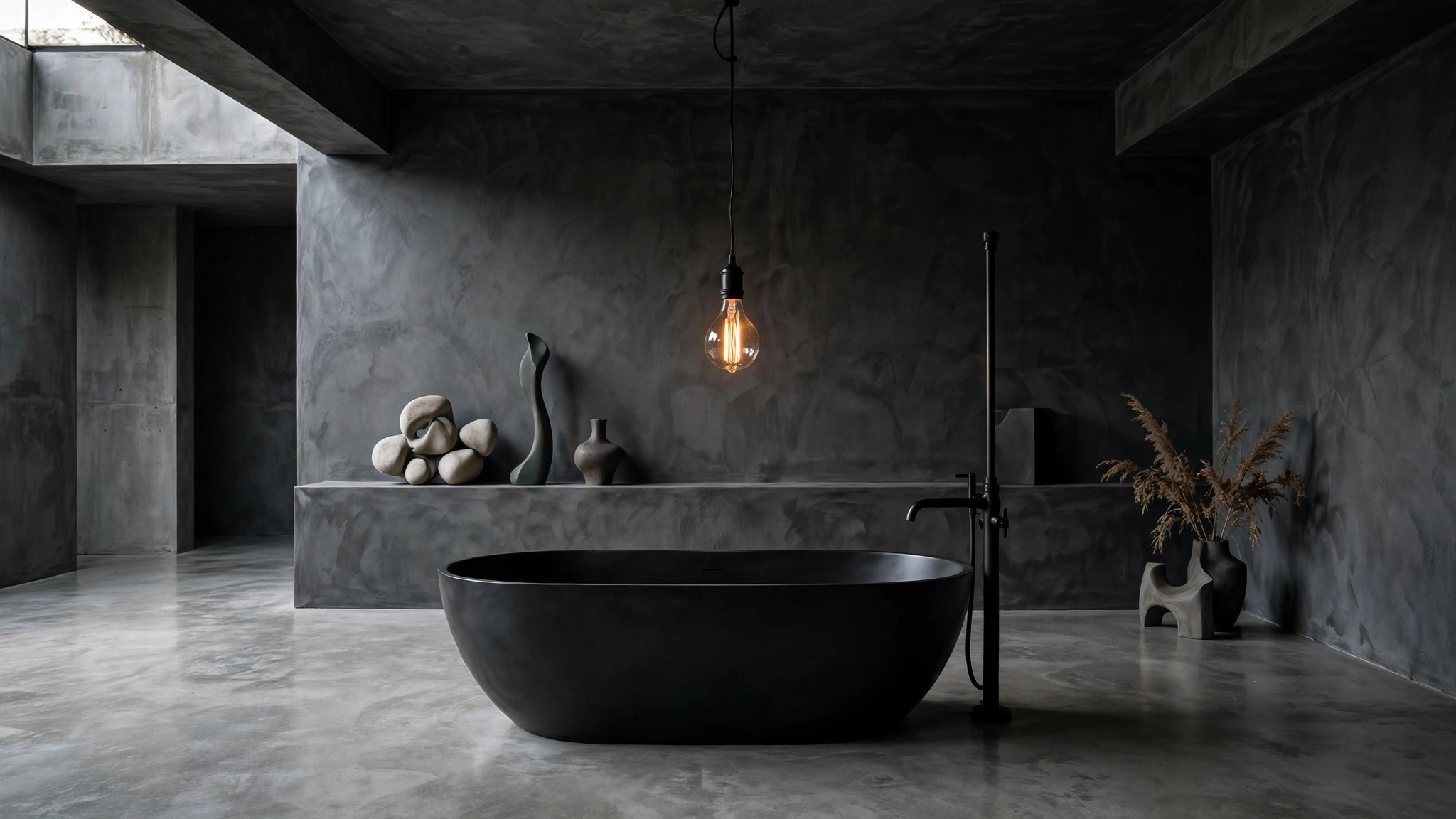
A freestanding soaking tub breaks up all the hard angles of an industrial bathroom with one big sculptural curve. Choose the silhouette carefully: a matte black or dark gray solid-surface tub doubles down on the palette, while a crisp white tub gives the room a single bright anchor that makes everything around it feel even moodier. Either way, the freestanding form reads as confident and gallery-like.
The faucet is the industrial statement. A floor-mounted tub filler in matte black — its long vertical pipe rising beside the tub like factory equipment — ties the tub straight into the room’s metal language. Floor-mount fillers need supply lines run beneath the floor, so this is a renovation-stage decision. Set the tub on dark tile or concrete with generous clearance on all sides, hang one dramatic pendant above it, and the room gains a focal point that says “slow down” instead of “get to work.”
14. Skin an Accent Wall in Riveted Metal Panels
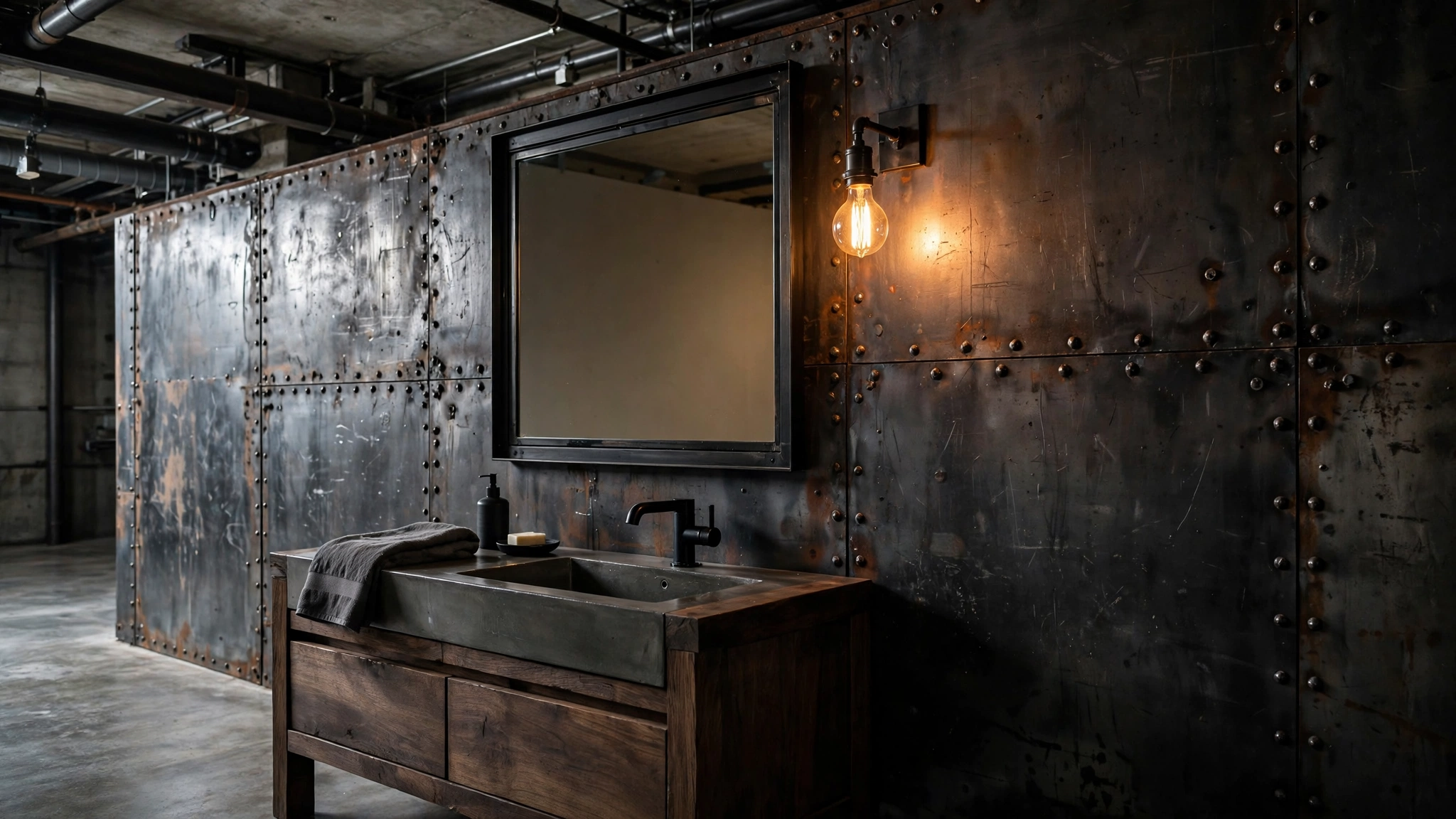
Riveted or corrugated metal panels are the most literal expression of industrial style — factory-wall material brought inside. On one accent wall, typically behind the vanity, darkened steel or zinc panels with visible fasteners give the bathroom a machined, utilitarian texture paint and tile can’t touch. Keep it to a single wall; this is a spice, not the main course.
Choose panels with a protective clear coat rated for interior humidity, because bare steel rusts in a bathroom fast. A dark bronze or blackened finish reads sophisticated; galvanized silver reads more workshop. Install with visible screws in a regular grid — the seams and rivets are the point. Echo the metal in small doses elsewhere so the accent wall feels like part of a system rather than a theme-park moment.
15. Finish With Cage Sconces and Edison Filament Detail
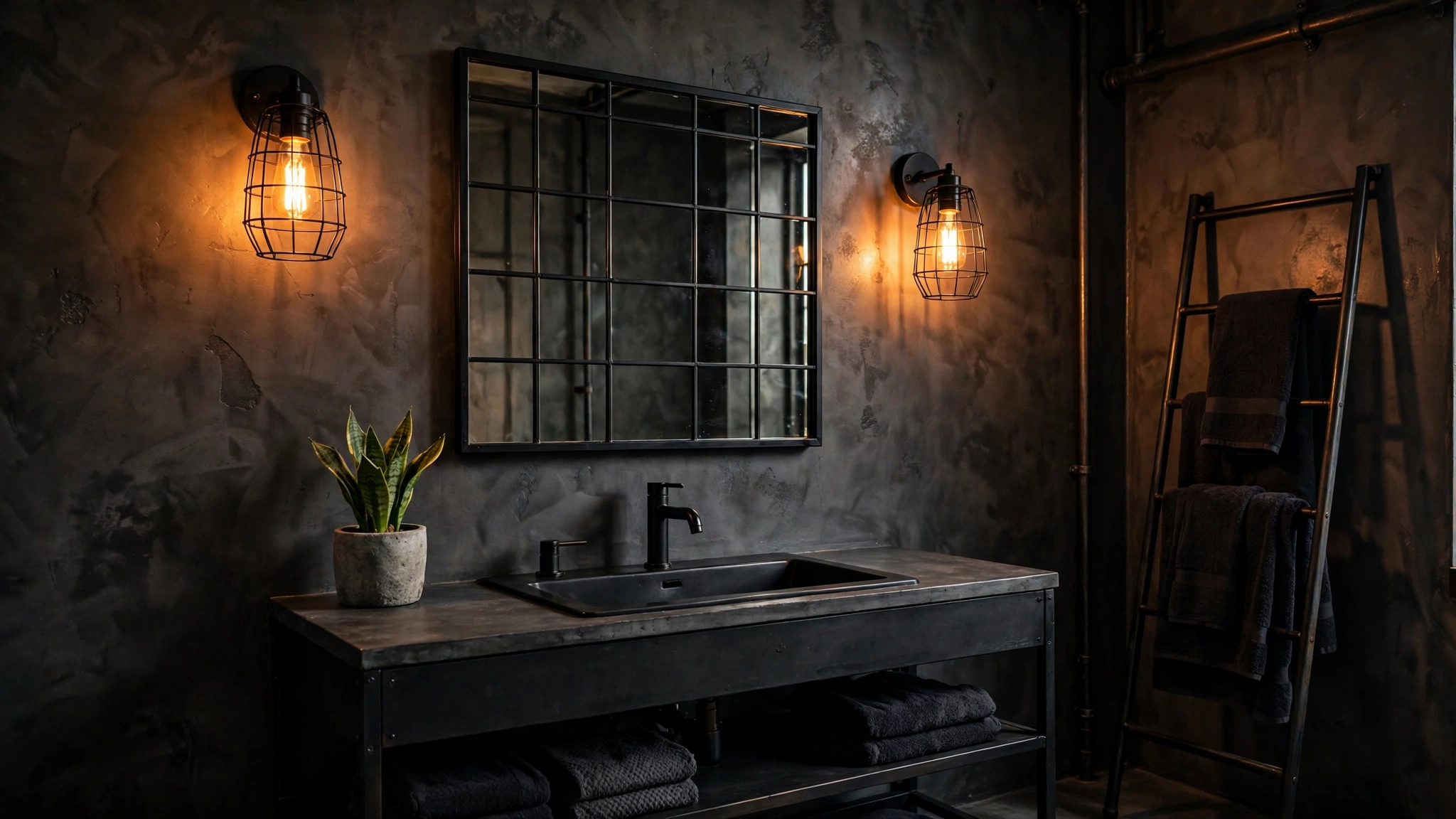
The final layer of any industrial bathroom is small-scale metal and warm light, and that’s where cage sconces earn their place. Flank the mirror with two wall-mounted sconces whose bulbs sit inside open wire cages — the cage reads industrial, the exposed filament reads warm, and together they deliver grooming light at face level plus atmosphere everywhere else.
Carry the filament detail into the finishing touches so the whole room rhymes: a blackened-steel towel ladder instead of a bar, a wire wastebasket, hooks made from pipe fittings. Add one living thing — a fern on the pipe shelf, a snake plant in a concrete pot — because greenery against concrete and black metal is the oldest industrial styling trick there is, and it still works.
Frequently Asked Questions
What is the cheapest way to get an industrial bathroom look?
Swap your hardware. Replacing chrome faucets, towel bars, and cabinet pulls with matte black equivalents, plus switching to Edison-style LED bulbs, moves a plain bathroom dramatically toward industrial for a few hundred dollars and a weekend of work. A black-framed grid mirror completes the transformation without touching plumbing or tile.
Does industrial style work in a small bathroom?
It works especially well. Seamless microcement, large-format dark tile, and glass shower partitions minimize visual breaks, which makes small rooms feel larger. Stick to one statement material per wall, use a floating vanity to keep the floor visible, and let a factory-window mirror double the light. Skip the heaviest moves — corrugated metal walls, exposed pipe everywhere — and the room feels loft-like, not cramped.
How do you keep concrete surfaces from staining in a bathroom?
Seal them properly. Microcement and polished concrete need a penetrating sealer plus a matte polyurethane topcoat rated for wet areas; cast-concrete sinks want a stone sealer reapplied yearly. Wipe up toothpaste, hair dye, and hard-water deposits promptly, use pH-neutral cleaners instead of bleach or vinegar, and accept the gentle patina — it’s part of the look.
Can industrial bathrooms feel warm instead of cold?
Absolutely. Layer in dark-stained or reclaimed wood, warm 2700K Edison lighting on dimmers, rolled cotton towels, and a plant or two. The rule of thumb is two-thirds hard materials (concrete, metal, brick, dark tile) to one-third warm ones (wood, textiles, greenery, amber light) — the warmth lands harder because the surfaces around it are so cool.
Keep Exploring
The industrial bathroom rewards confidence: pick your hard materials, commit to the black metal, and let the Edison light do the warming. Whether you go all-in with microcement walls and a steel-framed shower or start small with matte black hardware and cage sconces, every idea here works on its own — stack two or three and you’ll have the raw urban edge that makes this style timeless.





[…] working-kitchen feel. This is also where the raw-urban-edge story continues through the home: our industrial bathroom design ideas carry the same brick, black metal, and concrete language into the […]
[…] the warm family: the exact match matters less than the shared character of aged, honest timber. Our industrial bathroom ideas use the same reclaimed-wood-plus-black-metal formula to warm up the hardest-working room in the […]