A living room has to do a lot — host quiet evenings, welcome guests, and sometimes double as the house game hall. The trick is choosing living room game table ideas that work hard during game night but look like intentional decor every other day of the week. The right table pulls players together, keeps cards and pieces contained, and either disappears or dresses up beautifully when the games go back in the box.
Whether you have room for a permanent chess table or just a corner that fits a folding card table, the guide below covers fifteen practical setups with the sizing, seating, storage, and lighting details that make each one actually work.
1. Classic Folding Card Table That Stores Flat

The folding card table is the easiest of these living room game table ideas to try: a standard 34-inch square table seats four comfortably for poker, rummy, or mahjong, and a felt or padded vinyl top quiets dice rolls and card dealing.
When the night ends, fold it flat and slide it behind a sofa or into a closet. Because the table itself is purely functional, elevate the moment with seating you already own — four upholstered dining chairs make a card table feel intentional rather than improvised. Read more about the history of these portable tables on Wikipedia’s card table page.
2. Chess Table with a Built-In Board
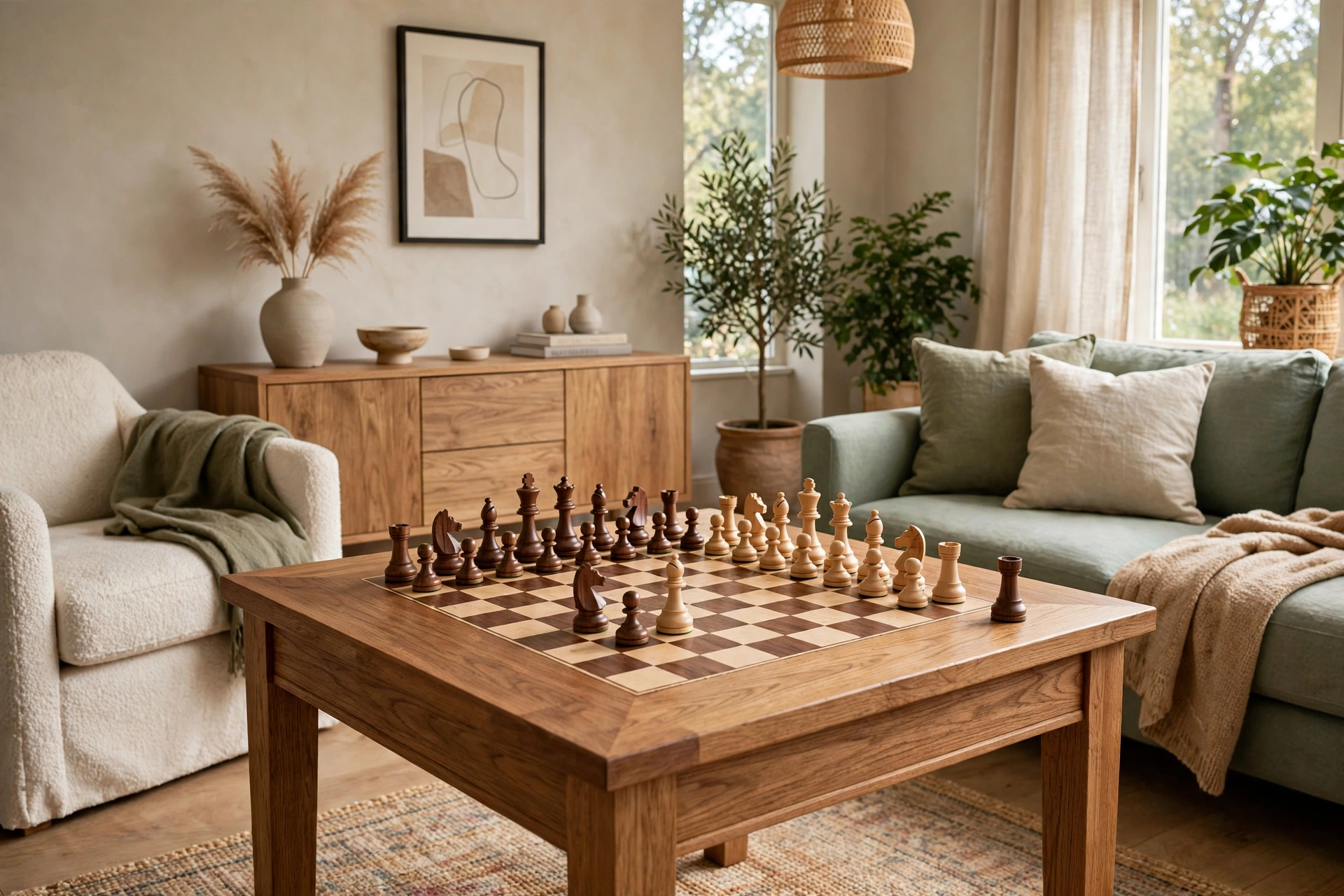
A dedicated chess table is the most elegant game table you can put in a living room, and it doubles as decor between matches. Most designs feature an inlaid wood or marble board — 18 to 22 inches across is standard for full-size pieces — with a small drawer beneath for the chessmen, so the table invites spontaneous play.
Style it like furniture, not a game station: a small lamp or a stack of art books beside the pieces keeps the vignette polished. Traditional games tables often included reversible tops with backgammon on the reverse — see Wikipedia’s overview of games tables for the classic designs.
3. Convertible Dining Table That Becomes a Game Table
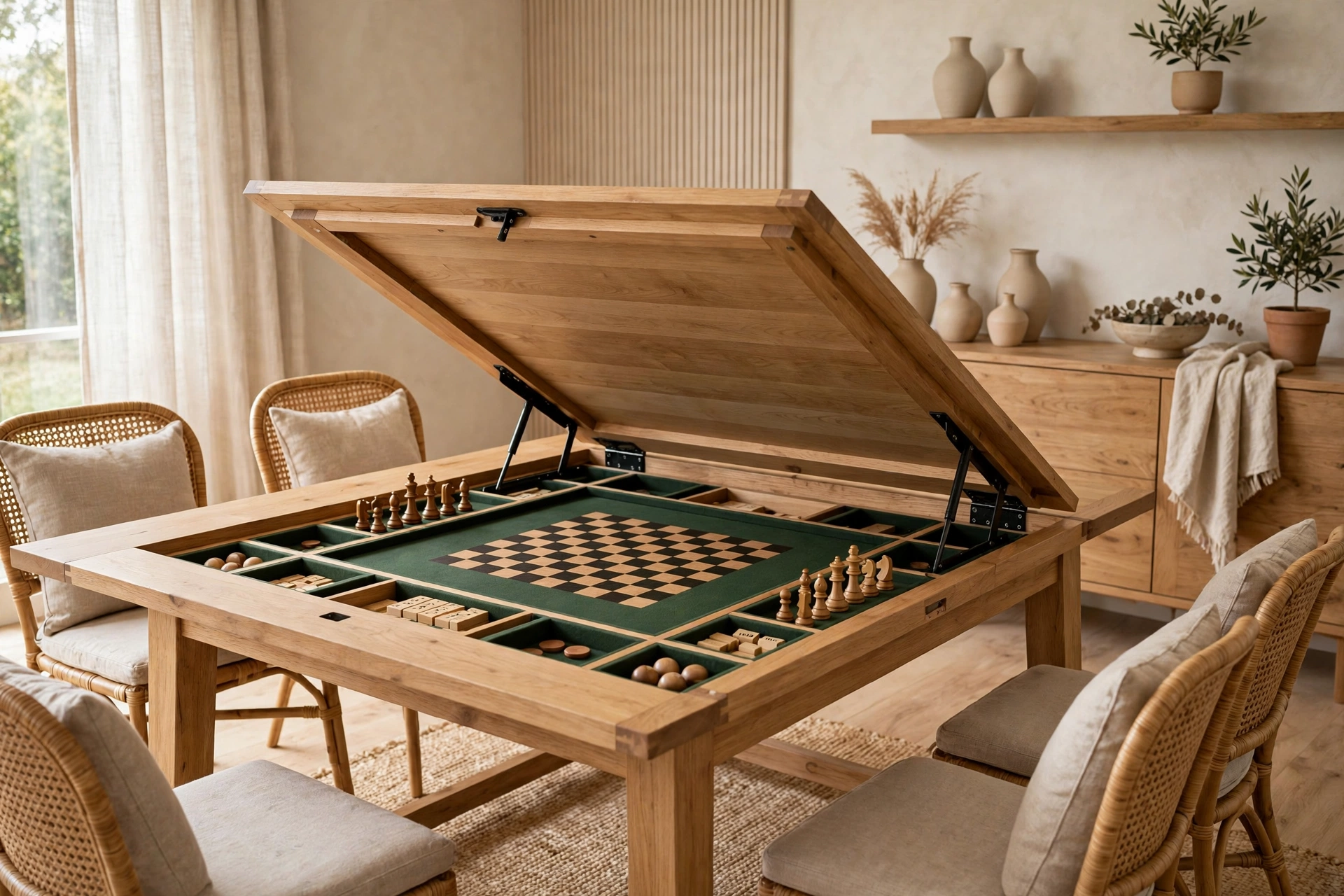
If you lack room for a dedicated game table, a convertible dining table is the smartest buy. These tables look like ordinary dining furniture but lift, flip, or extend to reveal a game surface — often a reversible top with a chessboard or a felt-lined well that keeps dice and cards from sliding onto the floor. Sizes typically run 36 to 48 inches square, seating four comfortably for dinner and games alike.
Test the reveal mechanism carefully — a wobbly flip-top ruins both dinner and game night. Many include drawers for cards, scorepads, and poker chips, keeping game clutter off your shelves.
4. Pub-Height Game Table for Small Spaces

A pub-height table, typically 40 to 42 inches tall, is a clever game table for small living rooms because its narrow footprint seats four without eating floor space. A 30-inch round pub table with four backless bar stools tucks into a corner for cards, dominoes, or board games.
Hang a pendant light low over the table to define the game zone and light players’ hands without a crowding floor lamp. This approach suits apartments especially well, where one surface serves many roles — for more compact-living strategies, see our apartment living room design ideas.
5. Round Pedestal Table for Four-Player Card Nights

A round pedestal table is arguably the best shape for card games because every player sits the same distance from the center. A 42- to 48-inch round top seats four with room for chip stacks, drinks, and discard piles. The pedestal base means no legs to bump knees against, so players pull in close.
Choose a top with a slightly raised edge or a felt insert so cards stay put. Between games, dress it with a runner or a low bowl of fruit, and it reads as a beautiful accent table rather than a game station.
6. Coffee-Table Game Night on the Sofa

No spare corner? Turn your coffee table into the game table. Board games designed for coffee-table play — strategy games, word games, cooperative puzzlers — work beautifully at sofa height, with players settled on the couch and floor cushions pulled up around the table.
Protect the tabletop with a large felt mat or a low-sided tray that corrals pieces and dice while keeping drinks on a separate zone. This setup costs nothing extra and keeps game night in the coziest seat in the house — round out the corner with stylish coffee table decor that works for daily life too.
7. Poker Table with a Felt Playing Surface

For serious card players, a dedicated poker setup changes the whole feel of game night. A 48-inch round or 72-by-36-inch oval poker table seats six to eight, with a padded rail for leaning arms and a speed-cloth felt surface that lets cards glide. The rail is the detail that matters most — it keeps elbows and drinks off the playing field and makes long sessions comfortable.
Lighting should be bright and even: a pendant over the table prevents shadows on cards. A fitted cover between games turns the surface into a side table for drinks and books.
8. Reversible Game Topper on a Table You Own
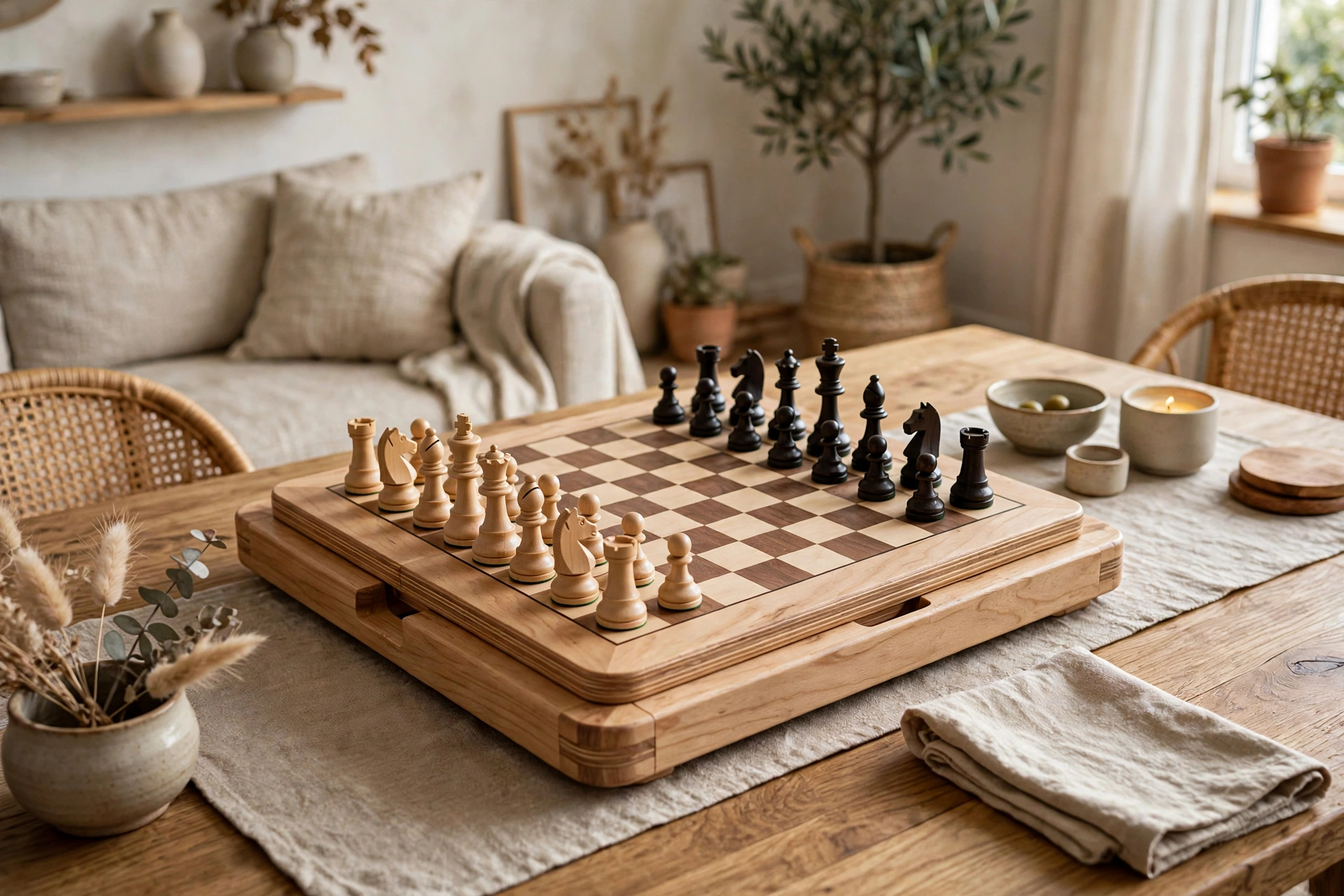
A reversible game topper is the budget champion of living room game table ideas: a wooden or felt-lined panel, usually 32 to 40 inches square, that sits on top of your existing dining or occasional table. One side might carry a printed chessboard, the other a plain felt for cards; flip it and the game changes.
Choose a topper with a lip or felt underside so it grips the table and does not slide mid-game. When the night ends, lean it in a closet or behind a bookshelf — most are under two inches thick.
9. Console Table That Doubles as a Game Surface
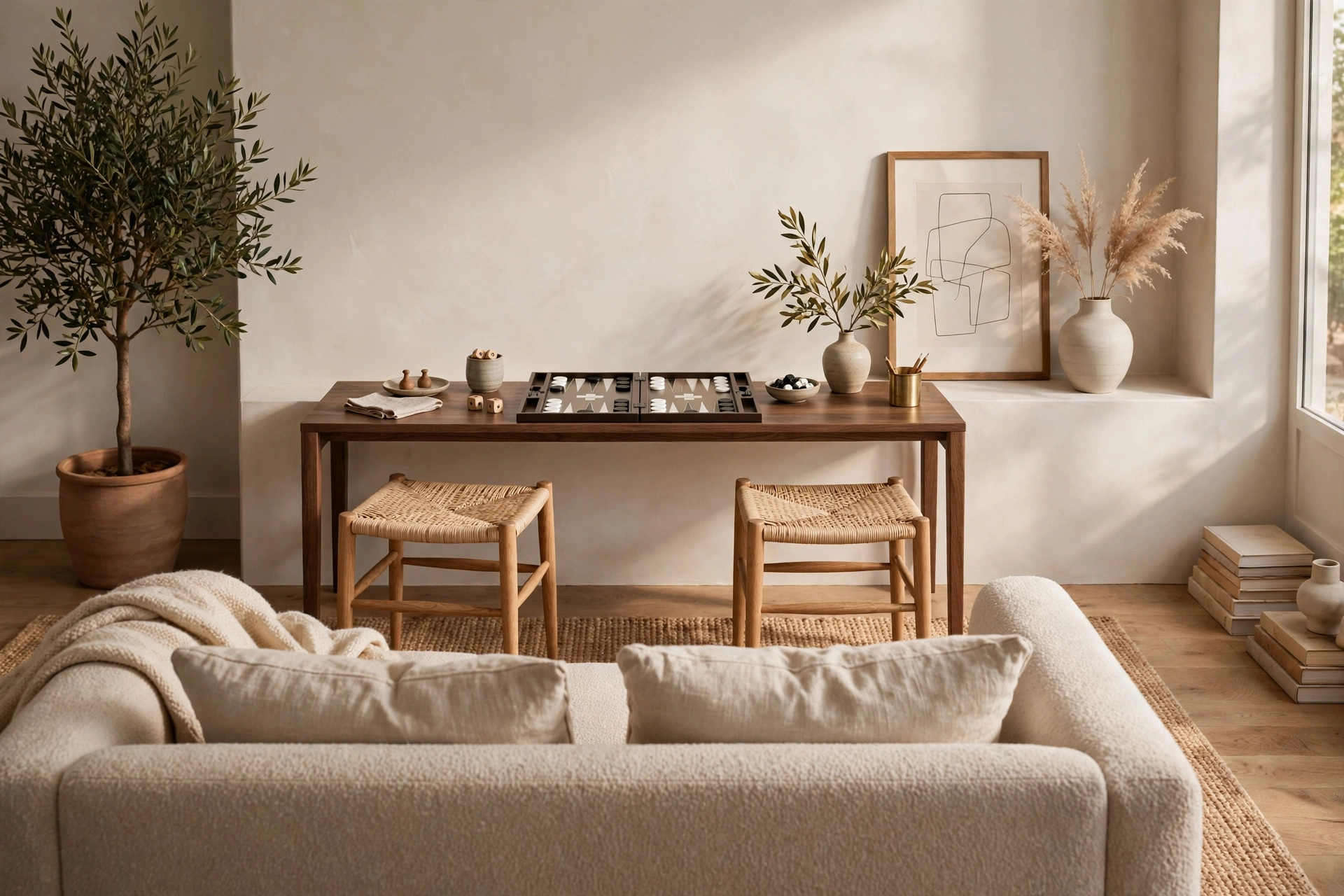
A sofa-back or entryway console table can moonlight as a game table for two. At 30 to 36 inches deep and 48 to 60 inches long, a console at counter or bar height works for chess, checkers, backgammon, or two-player card games when you pull up stools.
Keep the styling simple so conversion takes seconds: a runner, one lamp, and a tray that lifts away to clear the surface. This is one of the best tricks for long, narrow rooms — for more slim-space planning, read our clever narrow living room design ideas.
10. Wall-Mounted Drop-Leaf Table for Tiny Rooms
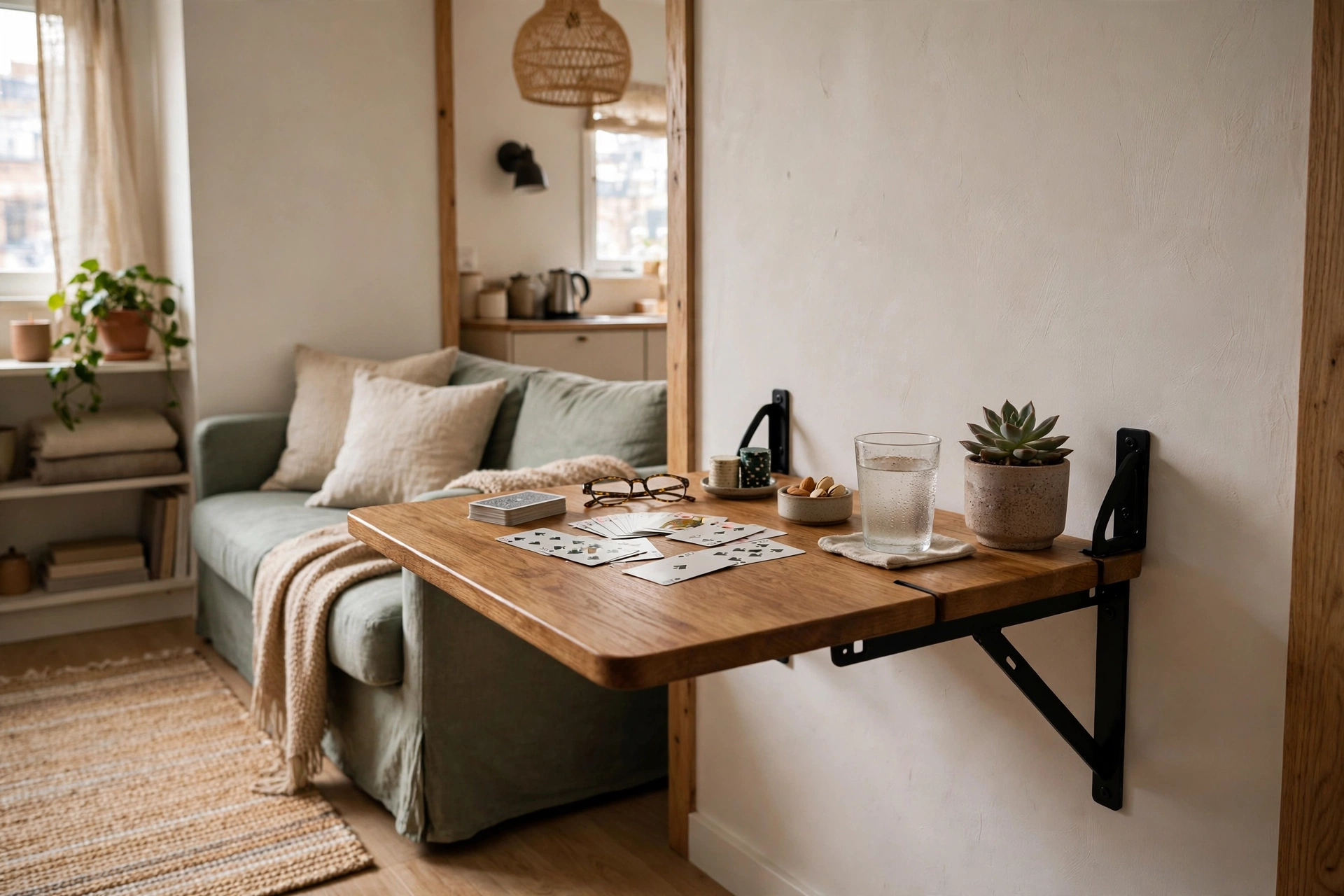
When floor space is truly scarce, a wall-mounted drop-leaf table gives you a game surface that folds away to nothing. Mounted at dining height (about 30 inches), a 36-by-24-inch leaf seats two to three players for cards or small board games, then drops flat against the wall when the night ends.
Mount into studs with heavy-duty brackets rated for at least 100 pounds — game tables take leaning elbows. Style the folded panel like wall art: choose a top with an attractive finish so it looks deliberate, not improvised, between games. This setup shines in studio living rooms where every square foot is negotiated.
11. Vintage or Antique Game Table as a Style Anchor

A vintage game table — a mid-century flip-top, a Victorian card table with a swivel top, or a campaign-style folding table — brings character no new piece can match. Hunt estate sales and antique shops for solid-wood tables with reversible or rotating tops; check that the mechanism moves smoothly and the surface is level, since warped tops ruin play.
Style it with a brass lamp, vintage books, and one beautiful game set displayed on top. Repair wobbly legs and refelt worn surfaces first — a quick restoration makes a thrifted table feel curated.
12. Game Table with Built-In Storage Drawers
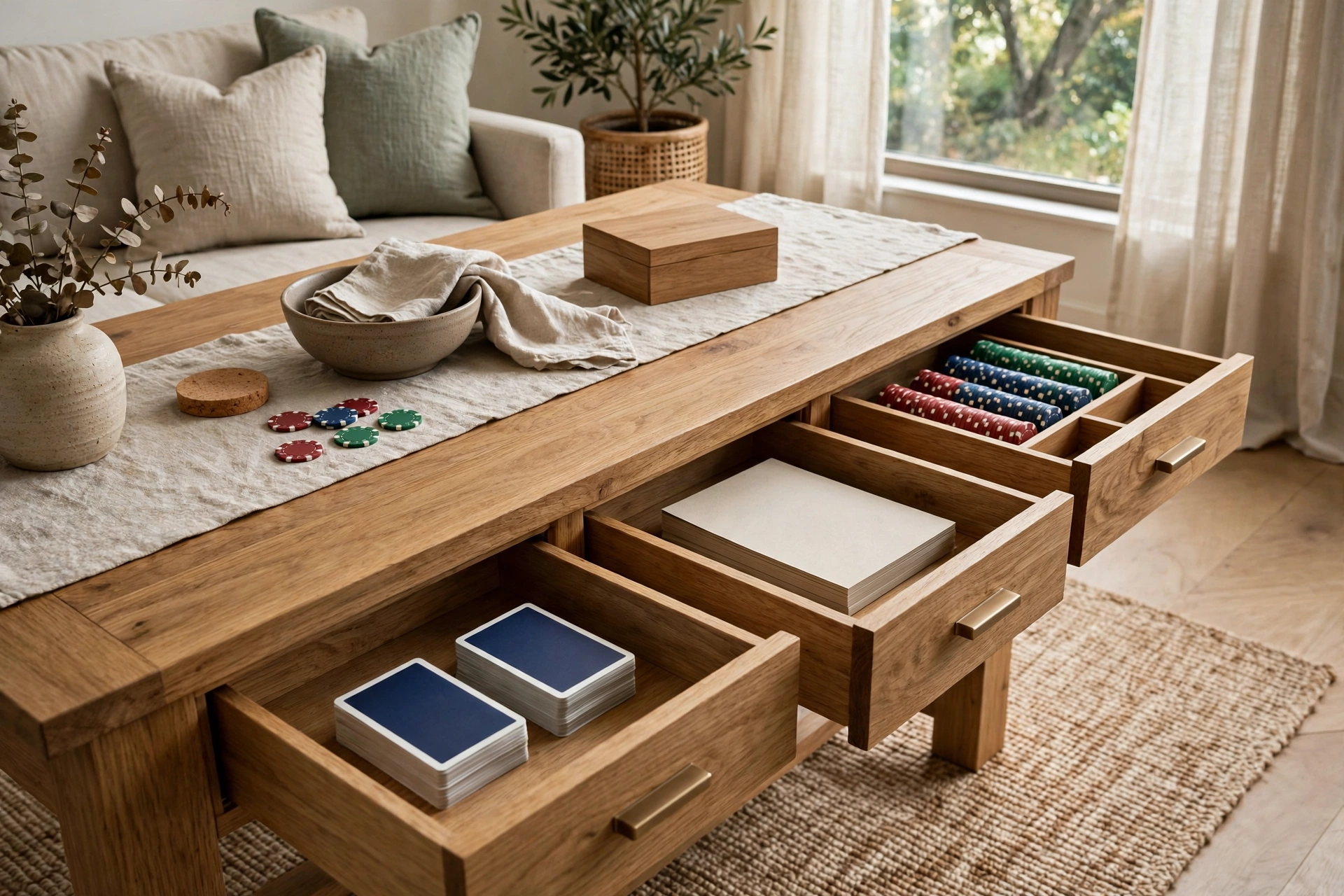
Built-in storage is what separates a game table from a plain table with games on it. Look for tables with drawers sized for card decks, scorepads, and poker chips, or a shallow well under a lift-off top that swallows board game boxes.
Measure your games before buying: standard board game boxes are about 12 inches square, so a drawer or well at least 13 inches deep keeps them hidden. If you are adapting a regular table, slide flat storage boxes or a rolling cart underneath instead. The goal is a one-motion cleanup: every piece gets a home inside the table.
13. Kids’ Game Corner with a Low Table
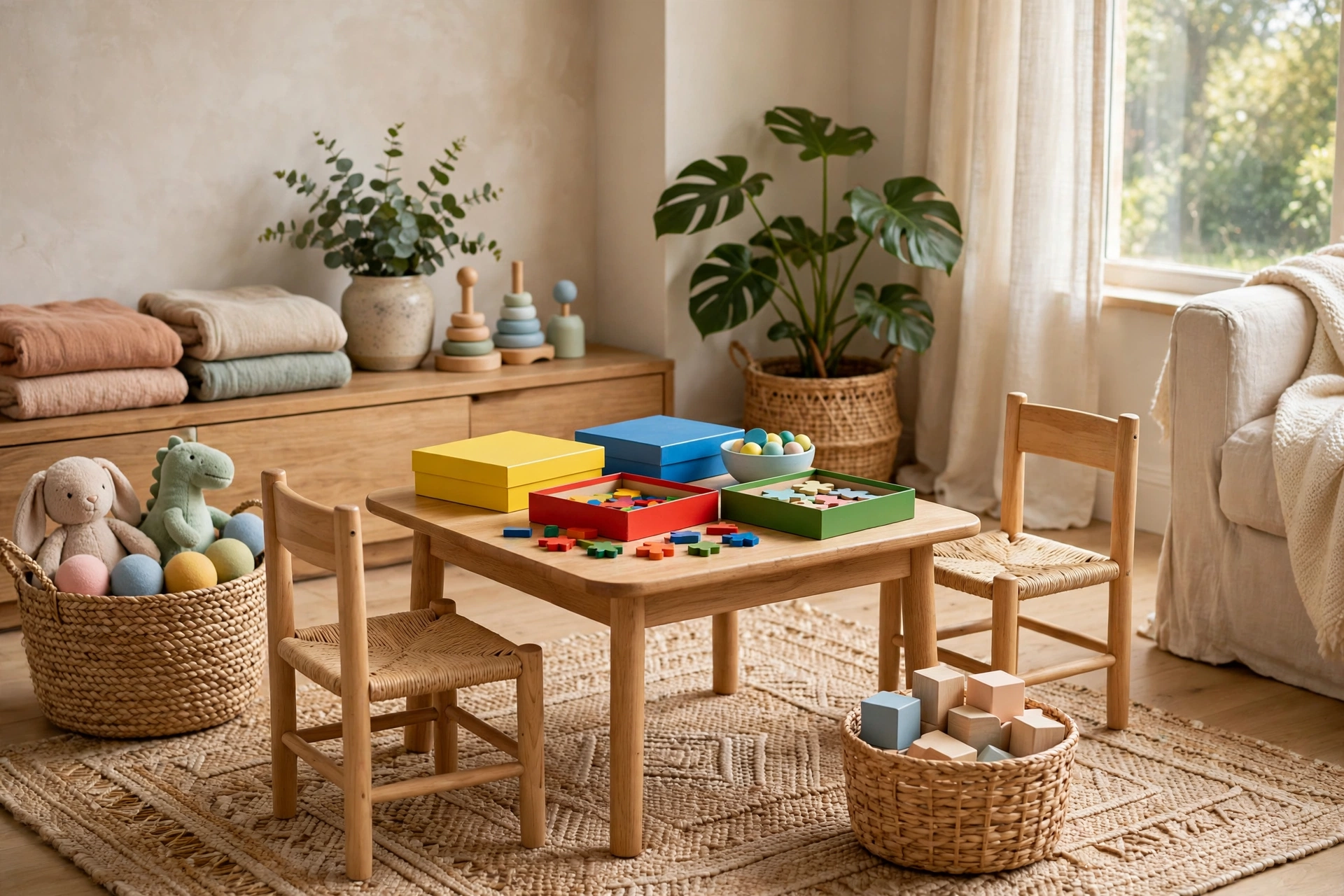
A low kids’ table carves out a game zone that keeps little players — and their sprawling boards — out of the adult seating area. A 24- to 30-inch round or square table at 18 to 20 inches tall suits ages three to eight; pair it with small chairs or floor cushions and a washable rug that defines the zone.
Store kids’ games in low baskets or a cube shelf right beside the table so cleanup is part of the game. As kids grow, the same corner graduates to homework or crafts without any furniture change.
14. Nesting Side Tables as Flexible Game Spots
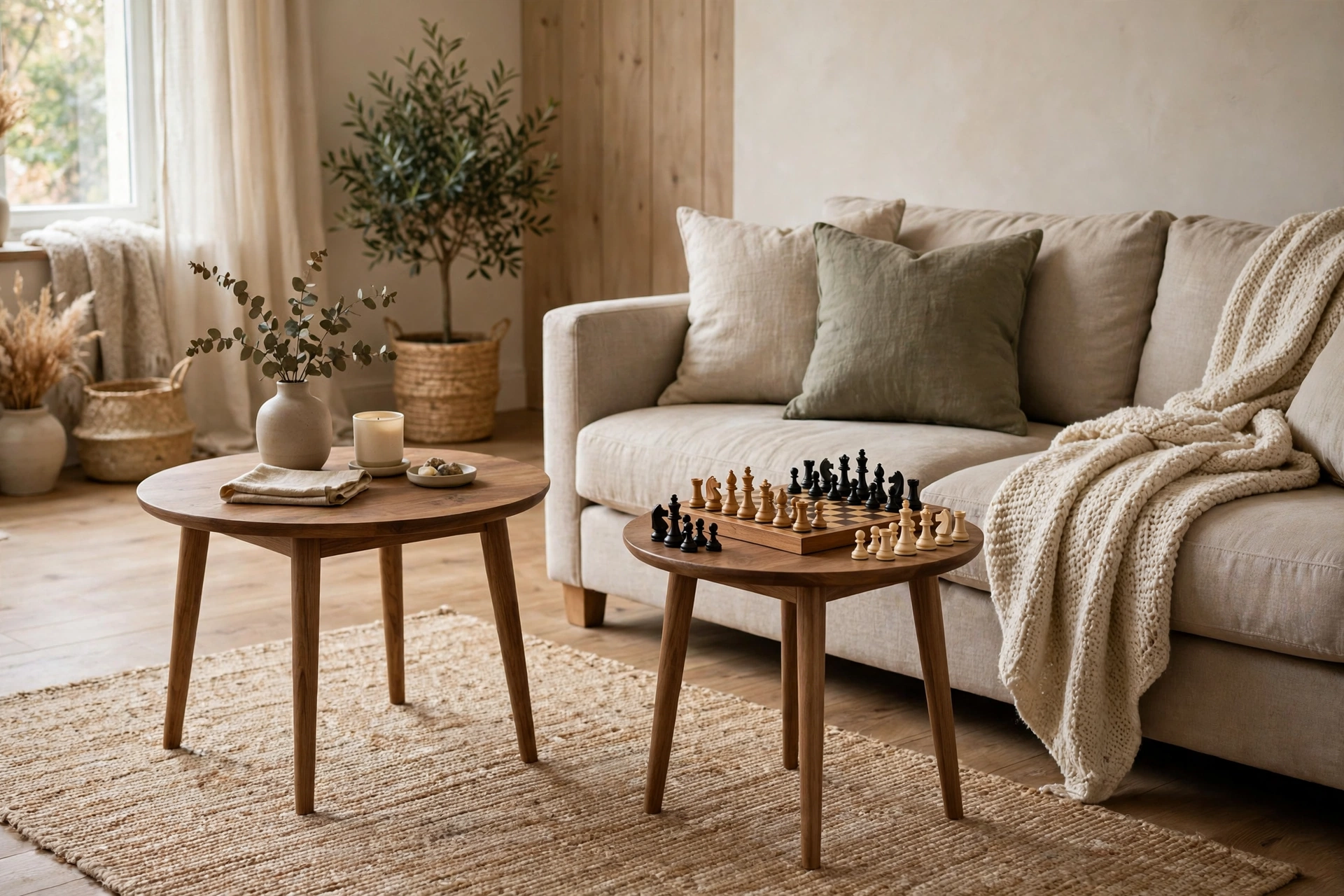
Nesting side tables are the most flexible of all living room game table ideas because they split apart or stack together on demand. Pull the set apart for two-player games at armchair height — chess, checkers, or a travel-size board game fit perfectly on a 16- to 20-inch top — or push two together to form a larger surface for cards.
Choose flat, stable tops rather than glass, which shows fingerprints and lets pieces slide. A felt pad on each top protects the finish and quiets play. Style them as normal side tables and clear them in seconds when a game breaks out.
15. Style the Table for Daily Life Between Games

The final idea is not a table at all — it is the styling discipline that makes a game table live happily in a living room. Keep a beautiful game set on display — a wooden chess set, a leather backgammon case, a deck of art cards in a handsome box — and treat it as decor.
Layer the rest like any styled surface: a runner or tray, a small plant, and one stack of books. Store the less photogenic games — bulky boxes, poker chips — inside the table or in a nearby ottoman.
Frequently Asked Questions
What size game table fits a living room?
For four players, a 36- to 48-inch square or round top gives each person about 24 inches of elbow room; two-player games need only 30 to 36 inches. Leave 30 to 36 inches of clearance where chairs pull out.
How do you make a game table look stylish, not cluttered?
Style it like other furniture: display one beautiful game set as decor, hide the rest inside the table or an ottoman, and layer a runner, tray, or small plant on top. A fitted cover turns a card table into a side table between games.
Where should you put a game table in a living room?
Place it near — not in — the main seating so games don’t hijack conversation. A corner with a pendant light, a spot by the window, or behind the sofa all work. Keep it clear of walkways so players aren’t bumped mid-game.
What is the best lighting for a game table?
A single pendant 28 to 34 inches above the tabletop gives focused, shadow-free light. Don’t seat players with their backs to bright windows — it creates glare. Dimmable bulbs shift from bright play to soft ambient light afterward.
How do you store board games in a living room?
Pick a table with drawers or a lift-off top at least 13 inches deep for standard game boxes. Alternatives: a lidded ottoman, a cube shelf with baskets, or flat boxes under the table. Every game needs a hidden home near the table.
Keep Exploring
A game table earns its place in a living room by being two things at once: a stage for memorable nights and a piece of furniture you are proud to show off. Pick the setup that fits your space, size it for your usual player count, and style it for daily life. For more ways to make your main gathering space work harder, keep exploring our living room guides.