
If your video calls echo, keyboard clicks bounce off bare walls, and the neighbor’s dog joins every meeting, the problem is not your microphone — it is your room. Hard drywall, hardwood floors, and glass bounce sound around, stretching every syllable into a blurry tail. These home office acoustic panel ideas treat the real issue: reflections inside the room. Panels absorb mid- and high-frequency sound, shortening reverb time so your voice sounds crisp, concentration comes easier, and the space feels calmer the moment you walk in.
The good news is that acoustic treatment doubles as decor. Modern panels come as sculpted hexagons, fabric-wrapped art, warm wood slats, and soft felt shapes in designer colors. Before you buy, pair your panels with a strong visual plan — a well-composed backdrop like the ones in our guide to home office accent wall ideas for a focused creative space makes the treatment look intentional rather than improvised. Aim to cover roughly 15–25% of the wall surface in a typical 10×12-foot office; that is usually enough to hear a dramatic difference without turning the room into a recording studio.
1. Fabric-Wrapped Fiberglass Panels With a High NRC Rating
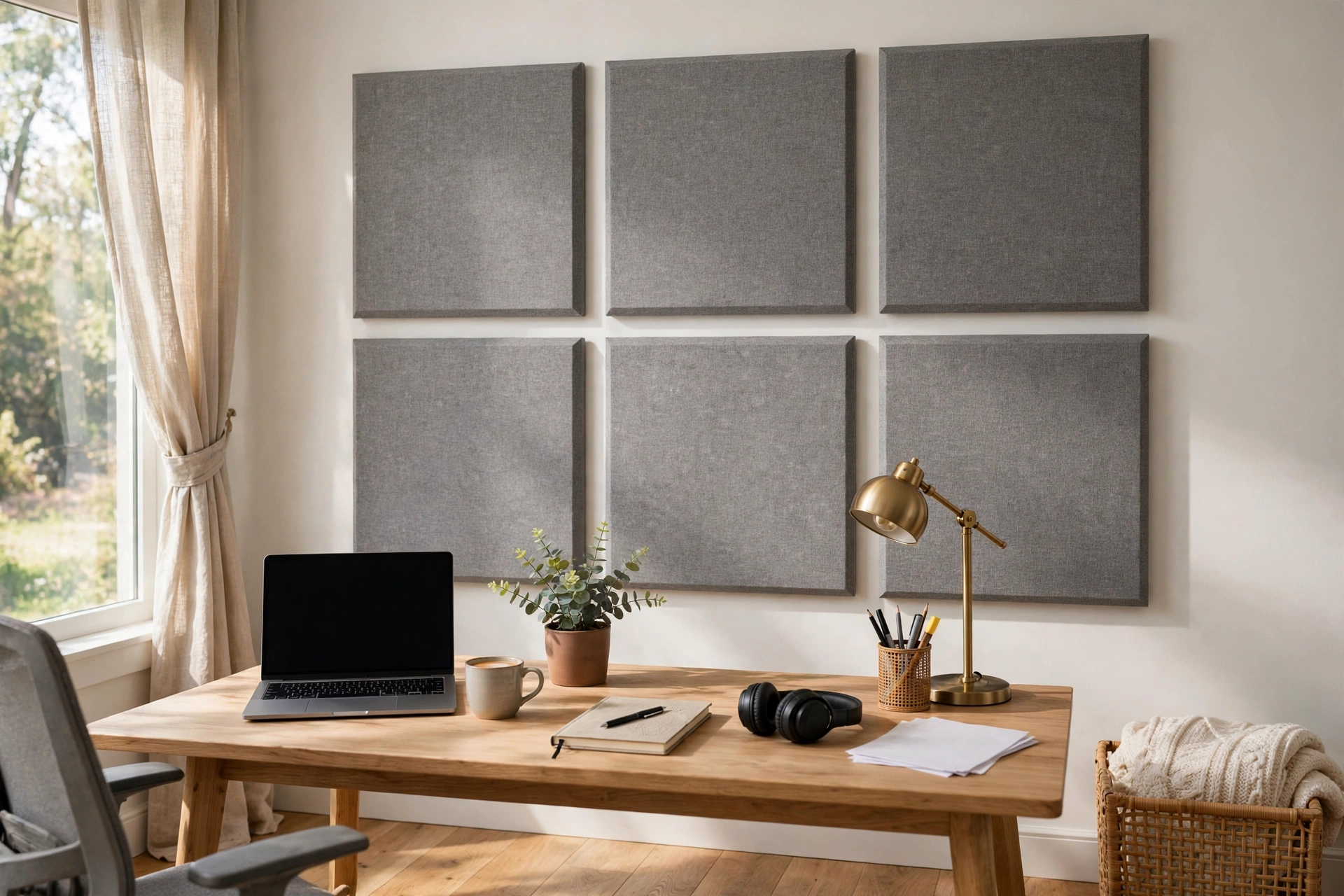
The workhorse of home office acoustic panel ideas is the fabric-wrapped fiberglass panel — typically a 1- or 2-inch slab of rigid fiberglass (Owens Corning 703 is the classic) wrapped in acoustically transparent fabric. Look for an NRC (Noise Reduction Coefficient) rating of 0.85 to 1.0, which means the panel absorbs 85–100% of the sound energy that hits it. Two-inch panels reach down into lower frequencies, so voices sound fuller and less boxy, while 1-inch panels are slimmer and fine for taming flutter echo between parallel walls.
Mount them with Z-clips or French cleats so they sit about an inch off the wall — the air gap boosts low-frequency absorption for free. Place the first panels at your first reflection points: the spots on the side walls where sound from your mouth bounces straight to your ears, roughly halfway between you and the speakers or your own voice path. A 2×4-foot panel centered on each side wall at seated ear height (about 42–48 inches from the floor) is the highest-impact starting layout. Choose a woven, breathable fabric like Guilford of Maine in a color pulled from your rug or curtains, and the panels read as deliberate upholstered wall art. For the science behind the ratings, the acoustic panel overview explains how absorbers and NRC values work.
2. Hexagonal Honeycomb Tile Grid
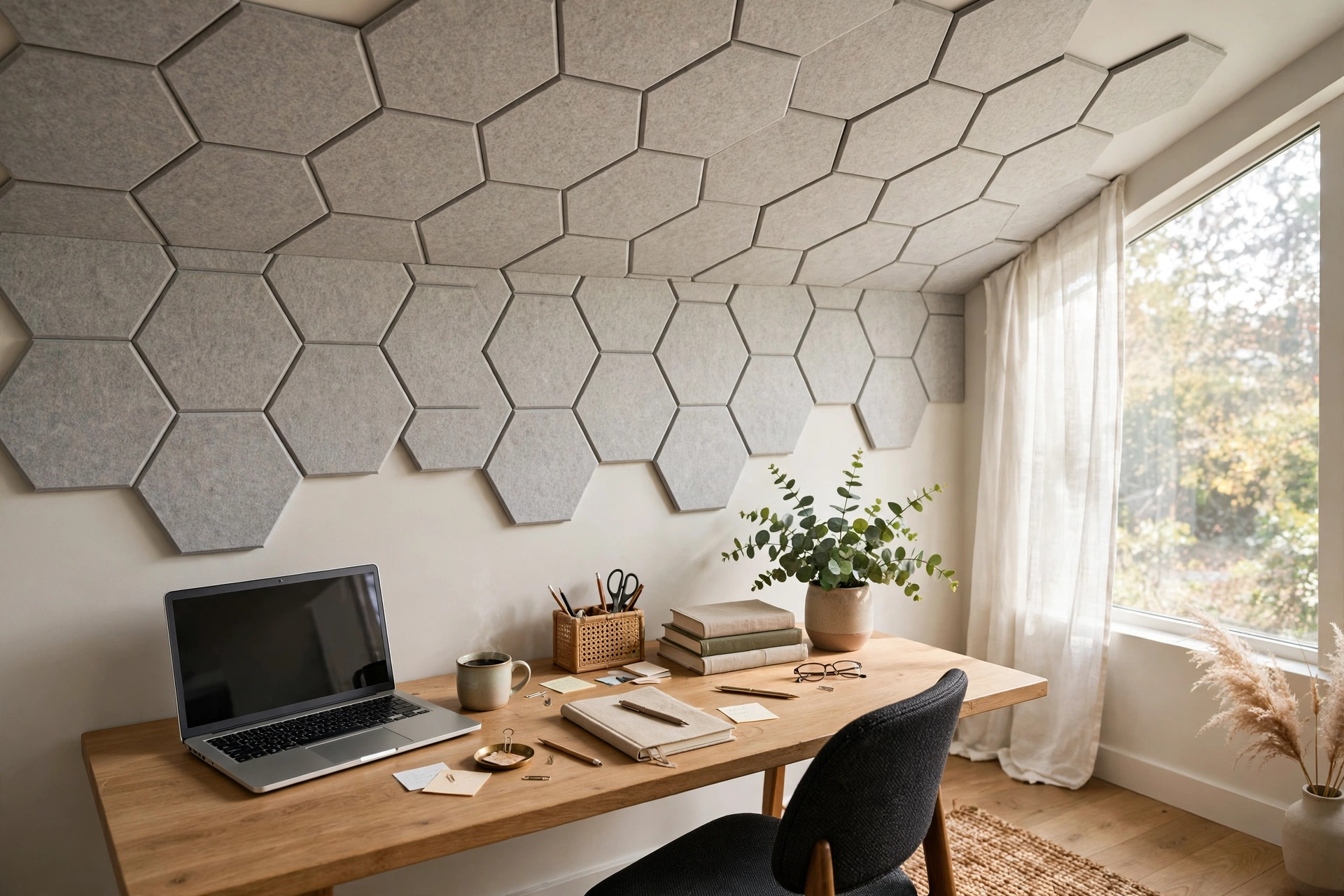
Hexagon acoustic tiles turn treatment into a feature wall. Most are 8–12 inches across and about an inch thick, made from high-density polyester or recycled PET felt, with NRC ratings around 0.7–0.85. The honeycomb layout is forgiving: you can start with a cluster of 12–18 tiles behind your monitor and expand the pattern organically as budget allows, since hexagons tile seamlessly in any direction.
Map the design on the floor first with painter’s tape, then hang tiles with adhesive mounting squares or small pins so you can rearrange later. Leave a quarter-inch gap between tiles for a crisp shadow line that makes the geometry pop. For a designer look, use two tones — say, charcoal and warm gray — arranged in an ombré fade or a scattered-pixel pattern, keeping the densest coverage at ear level where reflections are strongest. Because each tile is small and light (often under half a pound), they are renter-friendly and easy to take down without damage. Cover at least a 4×4-foot area behind your desk to noticeably tighten the sound of your voice on calls.
3. DIY Printed-Art Acoustic Panels

If standard panels feel too corporate, build your own with custom-printed fabric. The recipe is simple: a 2-inch rigid fiberglass or mineral-wool board cut to 24×36 inches, a wooden frame of 1×2 furring strips around the back edge, and a fabric printed with artwork, a landscape photo, or an abstract pattern from an online fabric printer. The key requirement is that the fabric must be breathable — hold it to your mouth and check you can breathe through it easily; heavy canvas or vinyl will reflect sound instead of letting it pass into the absorber.
Stretch the fabric like a canvas using a staple gun, folding hospital corners for a clean edge, then mount with French cleats. Two or three of these flanking your desk give you gallery art plus genuine absorption (NRC ~0.9 at 2 inches). Keep the print’s colors tied to your palette so the panels feel like commissioned pieces. This is also the cheapest route to large-format treatment: a 24×36-inch DIY panel typically costs a third of a retail equivalent. Seal fiberglass edges with the fabric wrap and wash hands after handling, since loose fibers irritate skin.
4. Recycled PET Felt Panels in Geometric Shapes

PET felt panels — pressed from recycled plastic bottles — are the eco-friendly favorite, and they cut cleanly into circles, arches, blades, and waves without fraying. Standard 9mm or 12mm panels carry NRC ratings around 0.6–0.75, which is modest, so plan for more coverage: think a full 5×7-foot composition rather than a couple of lonely squares. Their advantage is design freedom and safety — no fiberglass, no itch, and they are easy to trim with a utility knife and straightedge.
Use them to build a sculptural installation: alternating large arches and small discs in two or three muted tones (oatmeal, sage, terracotta) across the wall behind your camera’s frame. Mount with removable adhesive strips for a rental-safe install, spacing pieces 1–2 inches apart so the wall color becomes part of the pattern. Because PET felt is also pin-able, a few panels can double as soft pinboards for notes and inspiration. For a 120-square-foot office, budget 30–40 square feet of PET felt to make a real acoustic dent.
5. Wood Slat and Felt Hybrid Panels
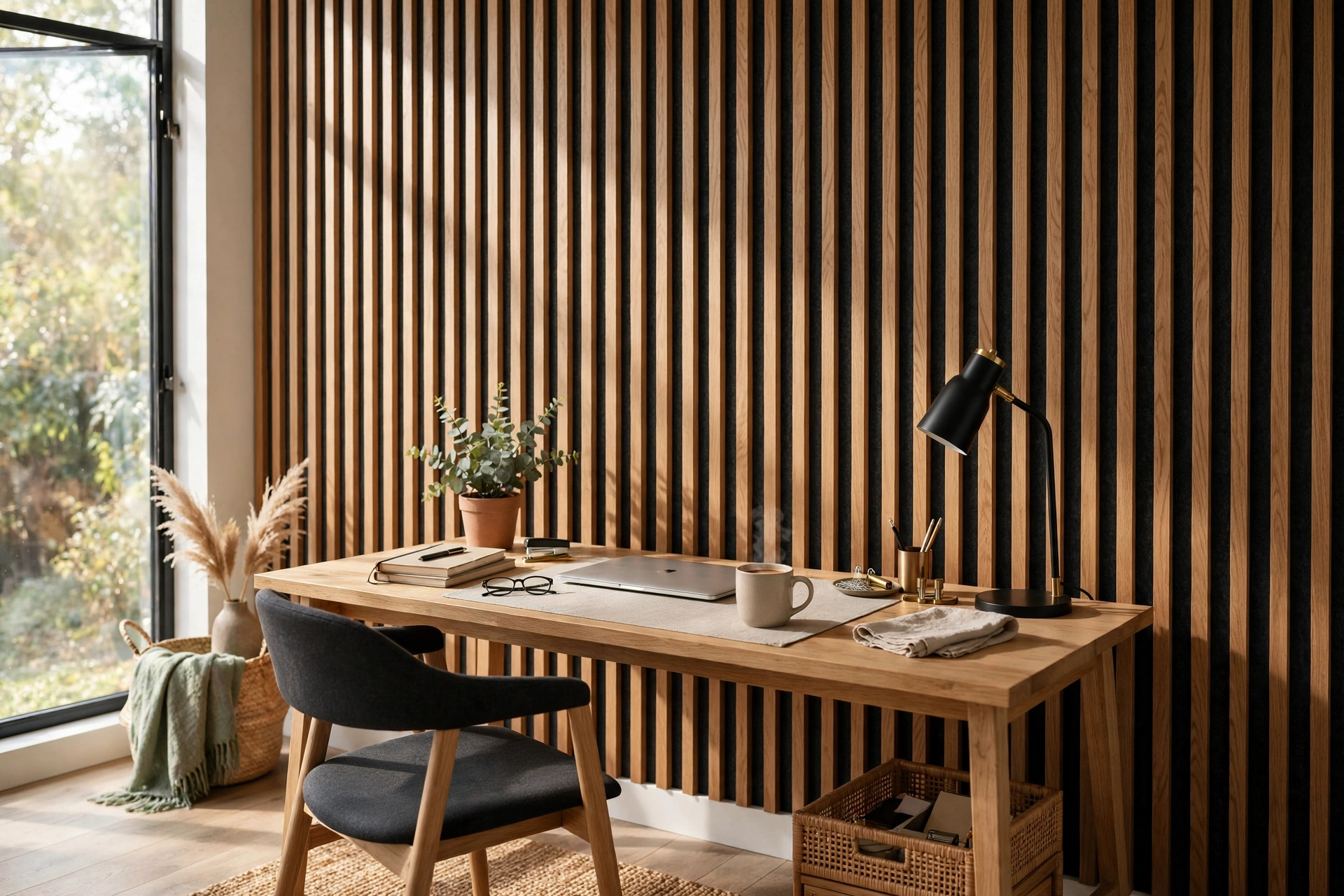
Slatted wood panels backed with acoustic felt deliver the warm, architectural look popular in modern offices while actually absorbing sound. The construction is straightforward: vertical wood slats (oak veneer, walnut-look MDF, or real pine) spaced about half an inch apart over a black or gray recycled-felt backing. Sound passes between the slats into the felt, giving NRC ratings around 0.6–0.8 depending on the felt thickness, while the wood face scatters some reflections for a livelier, less “dead” sound than full absorption.
Install them floor-to-ceiling on the wall behind your desk for a full statement, or as a 4-foot wainscot-height band around the room. Panels usually come in 24×96-inch sections that butt together; secure them to studs with brad nails or construction adhesive over a level starter line. The vertical lines also make low ceilings feel taller on camera. Leave the felt backing exposed at the top behind a floating shelf for a layered look, and choose a slat tone that echoes your desk wood. This hybrid is ideal when you want treatment that reads as millwork, not equipment.
6. Ceiling Acoustic Clouds

Walls get all the attention, but the ceiling is often the biggest reflector in a home office — especially with hard floors below creating a floor-ceiling slap echo. Acoustic clouds are horizontal panels hung from the ceiling on cables or eye hooks, typically 2×4 feet and 2 inches thick, floating 4–8 inches below the drywall. That air gap makes them exceptionally effective at voice frequencies, and they catch reflections before they bounce between floor and ceiling.
Hang one large cloud directly above your desk chair, centered on your seated position, or two smaller clouds spaced over the work zone. Wrap them in the same fabric as your wall panels for cohesion, and consider panels with integrated LED perimeter lighting to double as a soft overhead glow that flatters video calls. Keep the bottom of the cloud at least 7 feet from the floor so the room still feels open. In rooms with ceiling fans or sprinklers, map clearances before you drill. Clouds are the single most underrated of these home office acoustic panel ideas because they treat a surface most people forget.
7. Behind-the-Desk Statement Array
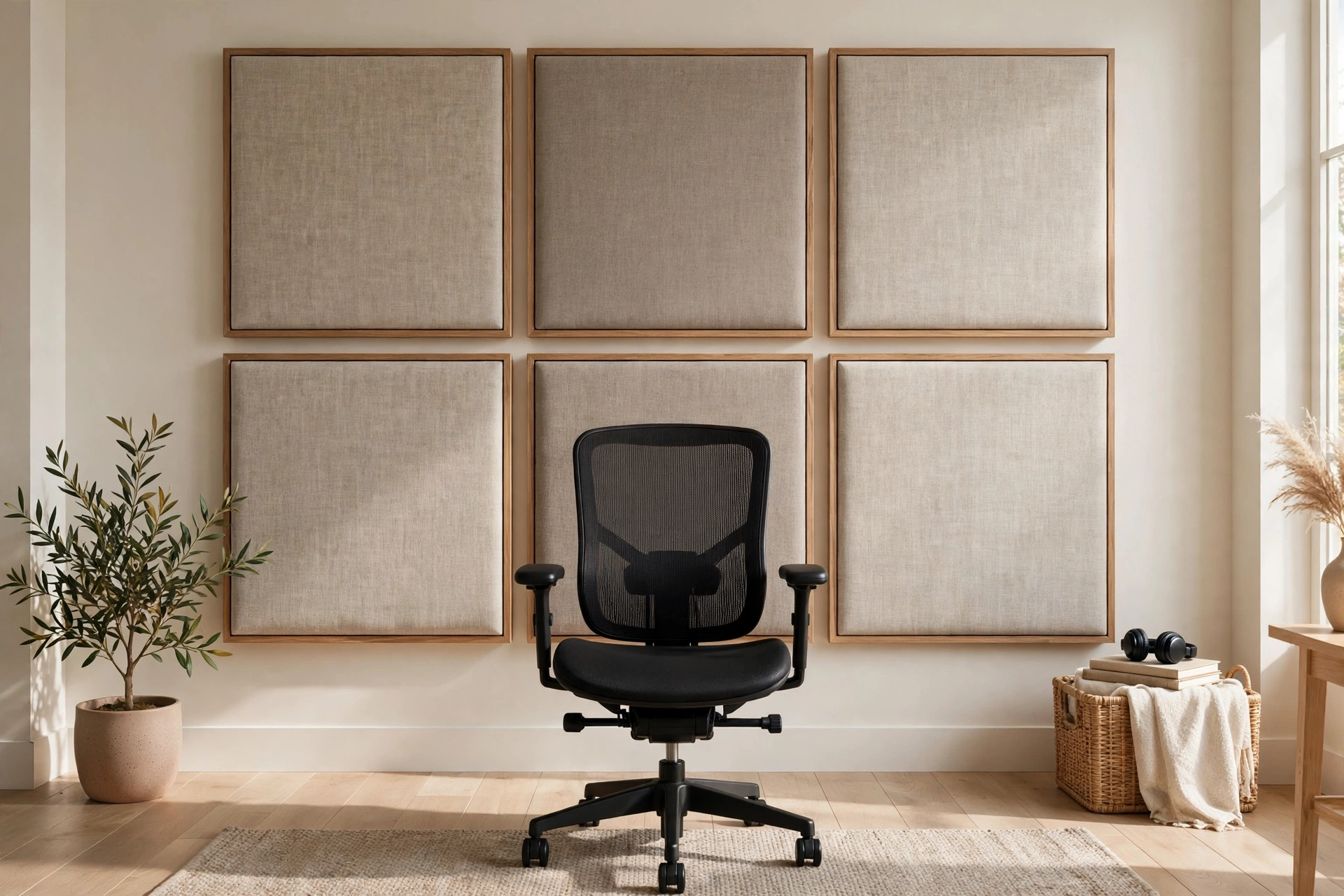
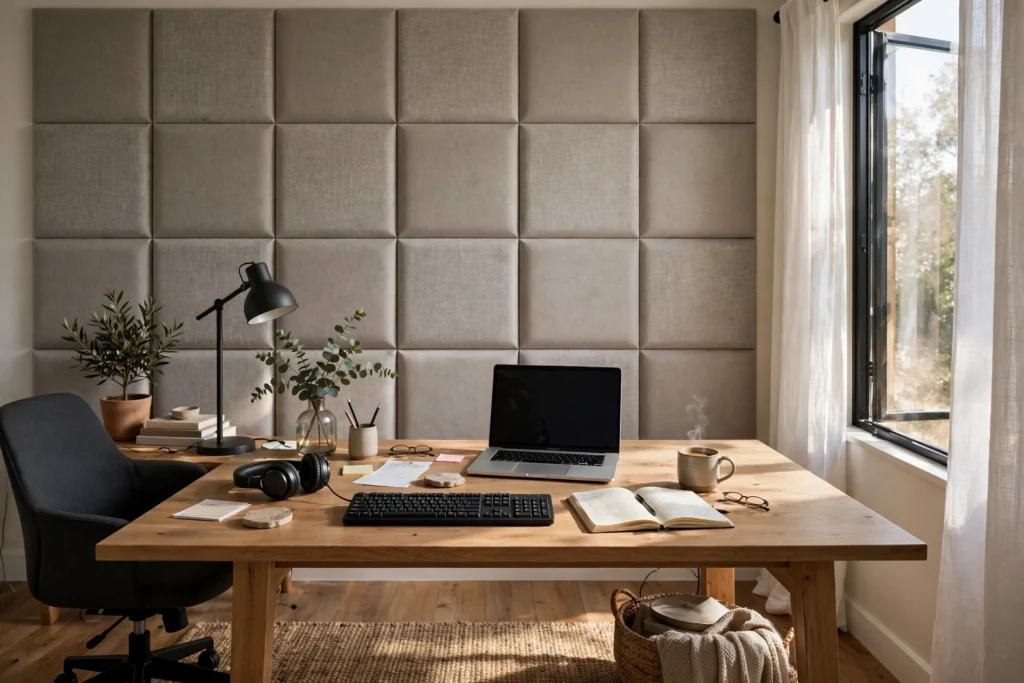
Your camera sees one wall more than any other — the one behind you — so make it your acoustic centerpiece. A statement array is a composed grid of 6–9 fabric panels (typically 2×2 or 2×4 feet) arranged with intention: a symmetrical grid for a formal look, or an offset, gallery-style arrangement for creative energy. Because this wall sits in your microphone’s pickup pattern and your camera’s frame, treating it improves both how you sound and how you look.
Center the array on your seated position, with the middle of the composition at 48–54 inches from the floor — right behind your head on camera. Keep panel faces matte; glossy fabrics create hot spots under desk lamps. If you use two colors, put the darker tone at the outer edges to create a subtle vignette that draws the eye (and the webcam) to you. Wire any cables behind the panels before mounting so the array looks seamless. This is the wall to invest in first if your budget only covers one surface.
8. Freestanding Acoustic Baffles and Room Dividers
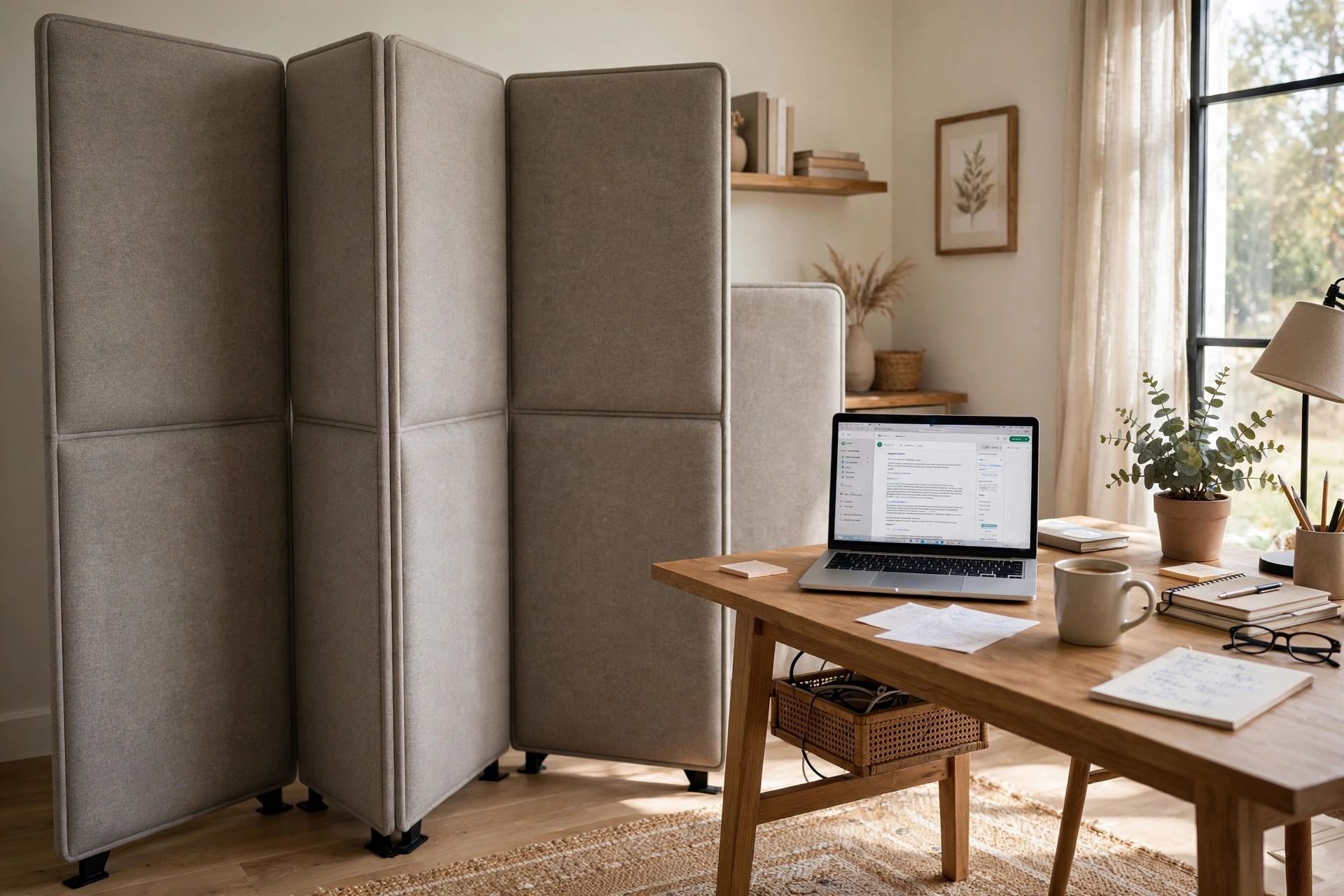
When you cannot — or do not want to — mount anything on the walls, freestanding baffles step in. These are 5–6-foot-tall panels on feet or casters, usually 2–3 inches thick with an NRC around 0.8, wrapped in fabric or PET felt. Place one behind your chair to catch reflections off the wall at your back, or use two angled in a shallow V to create a treated alcove around your desk in an open-plan room or studio apartment.
Choose baffles with a stable weighted base (at least 15–20 pounds per panel) so they do not wobble when bumped, and look for double-sided finishes since both faces will show. Casters add flexibility if you rearrange often, but lock them during calls. A single 4-foot-wide baffle directly behind you noticeably reduces the hollow “room tone” listeners hear on video meetings. Some models include a whiteboard or pinboard face — handy in small offices where every surface must multitask. They also work as visual privacy screens, signaling “in a meeting” to the rest of the household.
9. Corner Bass Traps
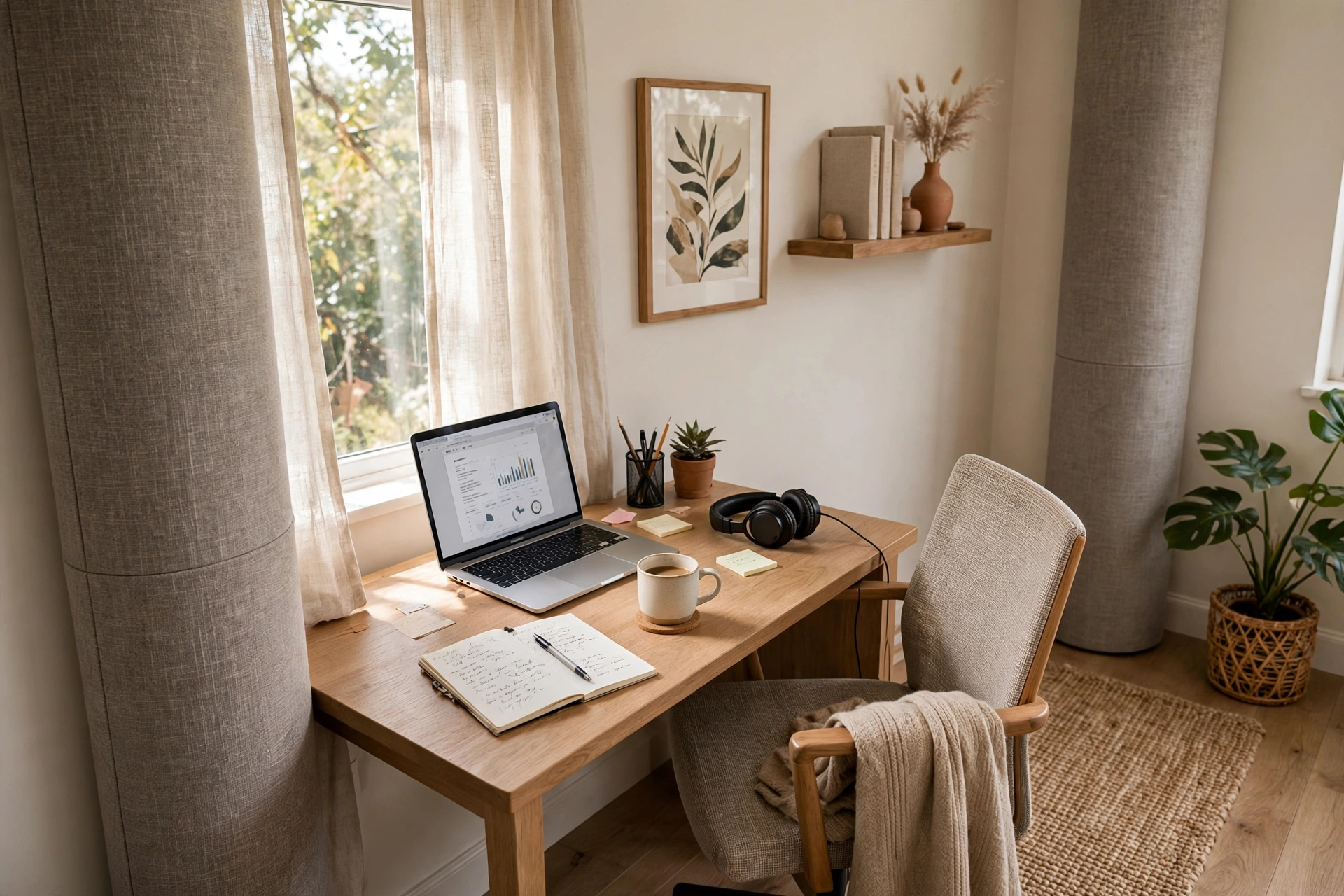
Low frequencies pile up in corners, making voices sound boomy and music muddy. Bass traps — triangular or rectangular absorbers that fit floor-to-ceiling into room corners — target exactly that buildup. A 4-inch-thick trap straddling each front corner (the corners behind your desk) smooths out the low end far better than flat wall panels can, because corners are where all room modes terminate.
You can buy ready-made corner traps or stack 2-foot cubes of rigid fiberglass wrapped in fabric from floor to ceiling for a DIY column. Cover the two corners behind your desk first; if the room still sounds tubby, treat the rear corners too. Paint or fabric-wrap them to match the walls so the columns read as architectural pilasters rather than equipment. In small square offices — the worst shape for bass buildup — corner traps are often the difference between “echoey box” and “broadcast booth.” They are invisible on camera but unmistakable on the microphone.
10. Bookshelf Diffuser Wall

A full bookshelf is a surprisingly effective acoustic tool. Books of varying depths and sizes scatter sound waves in many directions (diffusion), breaking up harsh reflections without deadening the room the way pure absorption can. A floor-to-ceiling bookcase filled with books, binders, and a few objects along the wall behind or beside you tames flutter echo while looking like a scholar’s study on camera.
For the best effect, vary book depths by pulling some volumes flush and pushing others back an inch or two — the irregular surface is what does the scattering. Leave about 20% of shelf space for angled stacks and objects to avoid a flat, uniform face. If the shelves are shallow, add a 1-inch PET felt panel to the back of each shelf bay for hybrid absorption plus diffusion. Anchor tall bookcases to studs for safety. This approach suits anyone who wants acoustic improvement with zero “studio” aesthetic — it just looks like a well-stocked office.
11. Cork Wall Tiles for Gentle Treatment
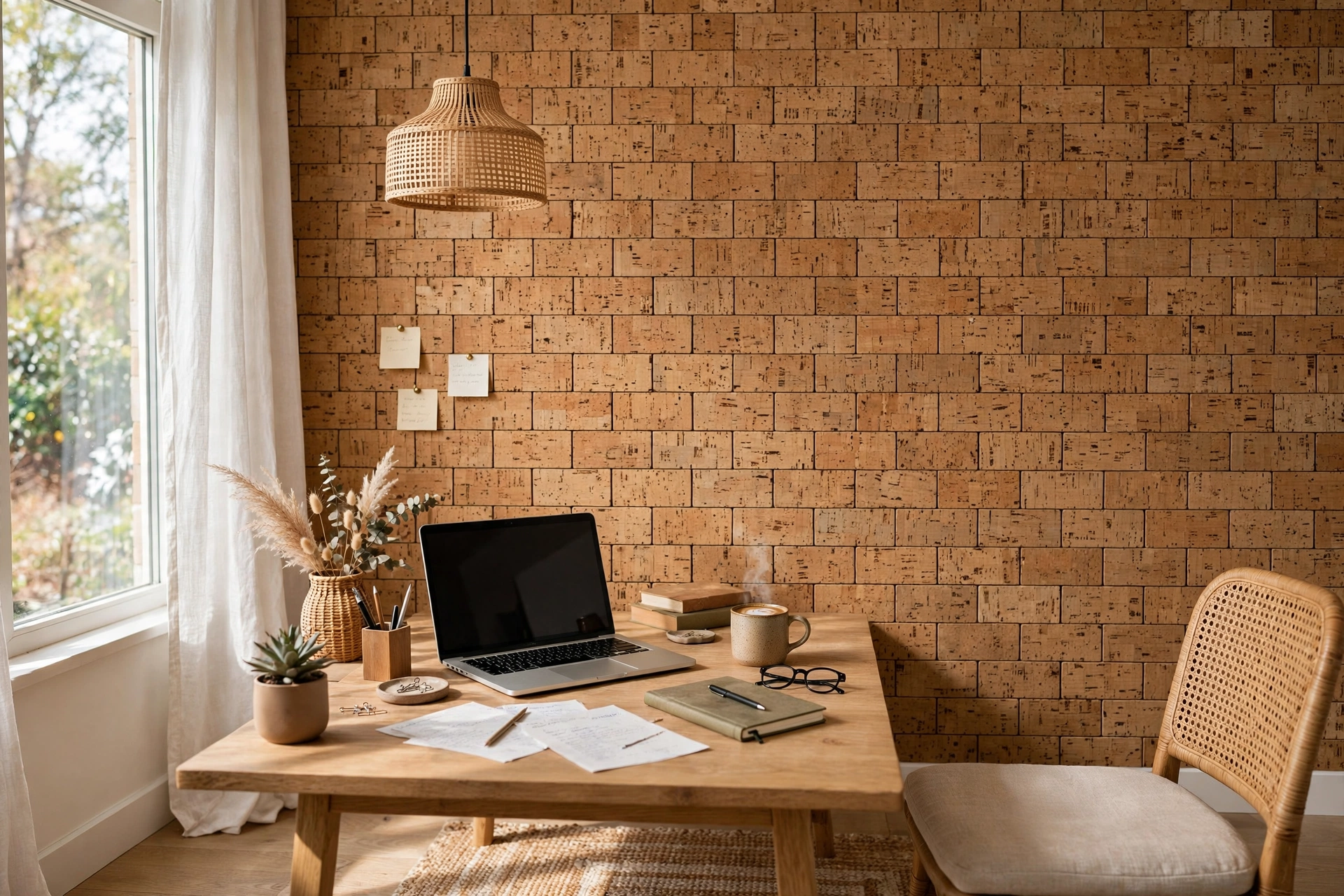
Natural cork tiles will not replace fiberglass for serious absorption — their NRC sits around 0.2–0.3 — but they take the edge off high-frequency harshness and look fantastic. Half-inch cork tiles in 12×12-inch squares add warmth and texture, and their slight give makes them double as a giant pinboard for notes, sketches, and reference photos. They are ideal for the wall beside your desk where you want mild treatment plus function.
Install with cork-safe contact adhesive over a level baseline, staggering joints like brickwork. Because cork is a natural material, buy 10% extra and mix tiles from different boxes to even out color variation. Seal with a matte water-based polyurethane if the office gets humid, and keep tiles away from direct sprinkler-like splashes. Pair cork with a couple of true absorptive panels on the opposite wall — the combination gives you texture where you look and performance where it counts. For a creative office, arrange tiles in a large-scale chevron or scattered constellation instead of a plain grid.
12. Upholstered Memo Board Panels
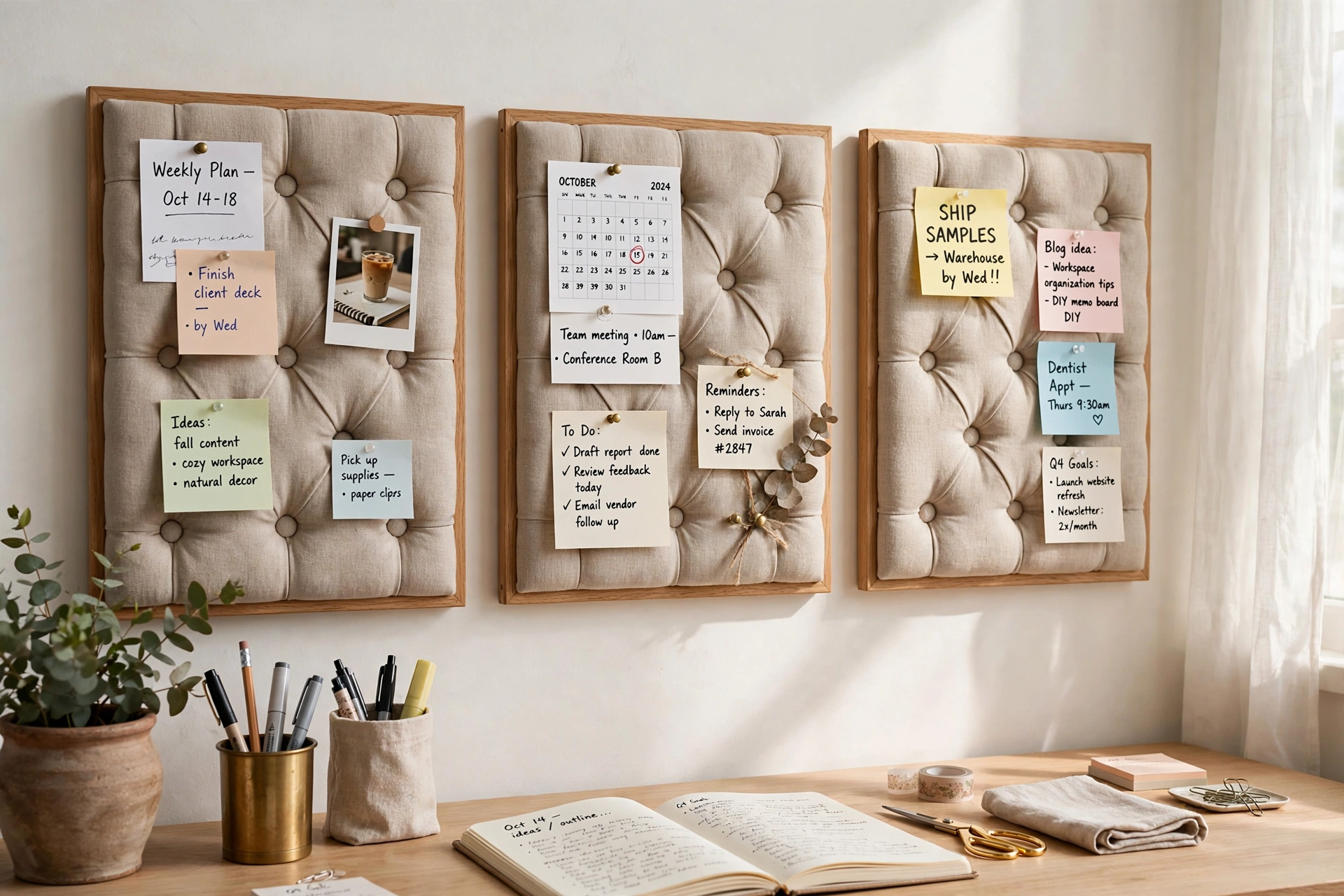
Turn your to-do wall into an absorber. Upholstered memo boards — 1-inch rigid insulation or dense foam wrapped in linen or wool fabric, often with button tufting or strap grids — pin notes beautifully while absorbing midrange reflections at NRC ~0.5–0.7. A 3×4-foot memo panel beside your monitor holds your weekly plan and quietly improves the room’s sound at the same time.
Build one by wrapping a 1-inch mineral-wool board in quilt batting (for a soft, tufted face) and then your finish fabric, stapling to a plywood backer. Add diagonal ribbon straps before the final fabric layer for a classic French memo-board look that grips photos and cards without pins. Hang at a slight tilt off the wall using a cleat to preserve the air gap. Keep the fabric light-colored so pinned notes stay readable, and choose a weave tight enough that pins do not snag. Two memo panels flanking a window give you an organized command center that also calms the room’s ring.
13. Geometric 3D Polyester Tiles
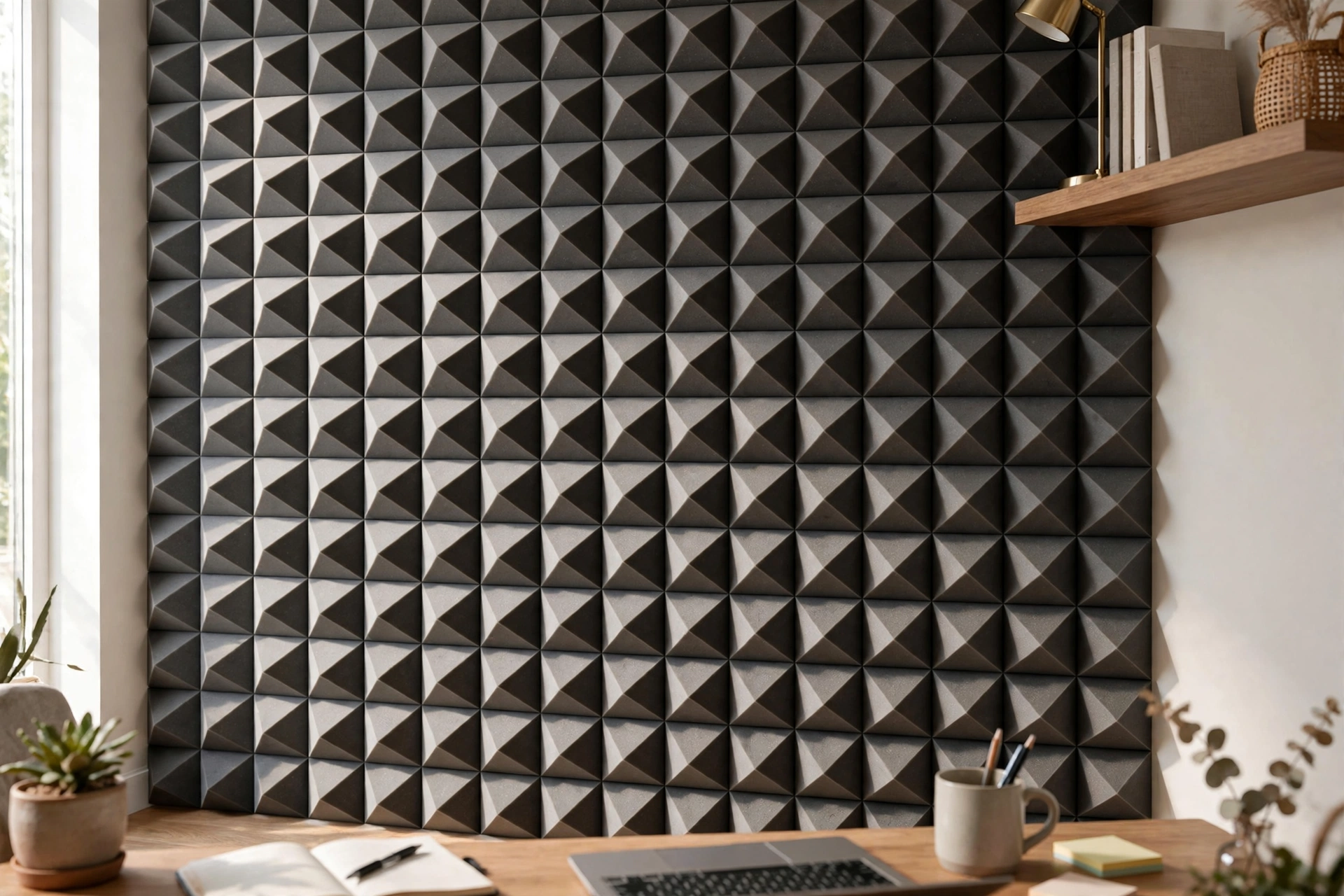
Three-dimensional polyester tiles — pyramids, wedges, and origami-like folds pressed from recycled fiber — add sculptural depth that flat panels cannot. Their shaped faces scatter as well as absorb, with NRC ratings typically 0.6–0.85, and the shadows they cast under a desk lamp give the wall a gallery quality that flat fabric never achieves. They are a strong pick for the camera-facing wall where visual interest matters as much as acoustics.
Plan the layout on paper first: alternating pyramid orientations in a checkerboard, or rows of wedges all facing one direction for a waterfall effect. Most tiles are 20×20 inches and mount with construction adhesive or Z-clips; because they are lightweight (a few pounds each), adhesive alone usually suffices. Keep the palette to one or two tones — the geometry provides the drama, so loud colors can overwhelm. Dust them quarterly with a soft brush or vacuum upholstery attachment, since textured faces collect dust. Budget for at least a 4×6-foot field; scattered singles look unfinished and do little acoustically.
14. Floor-Up Strategy: Rugs Plus Panels
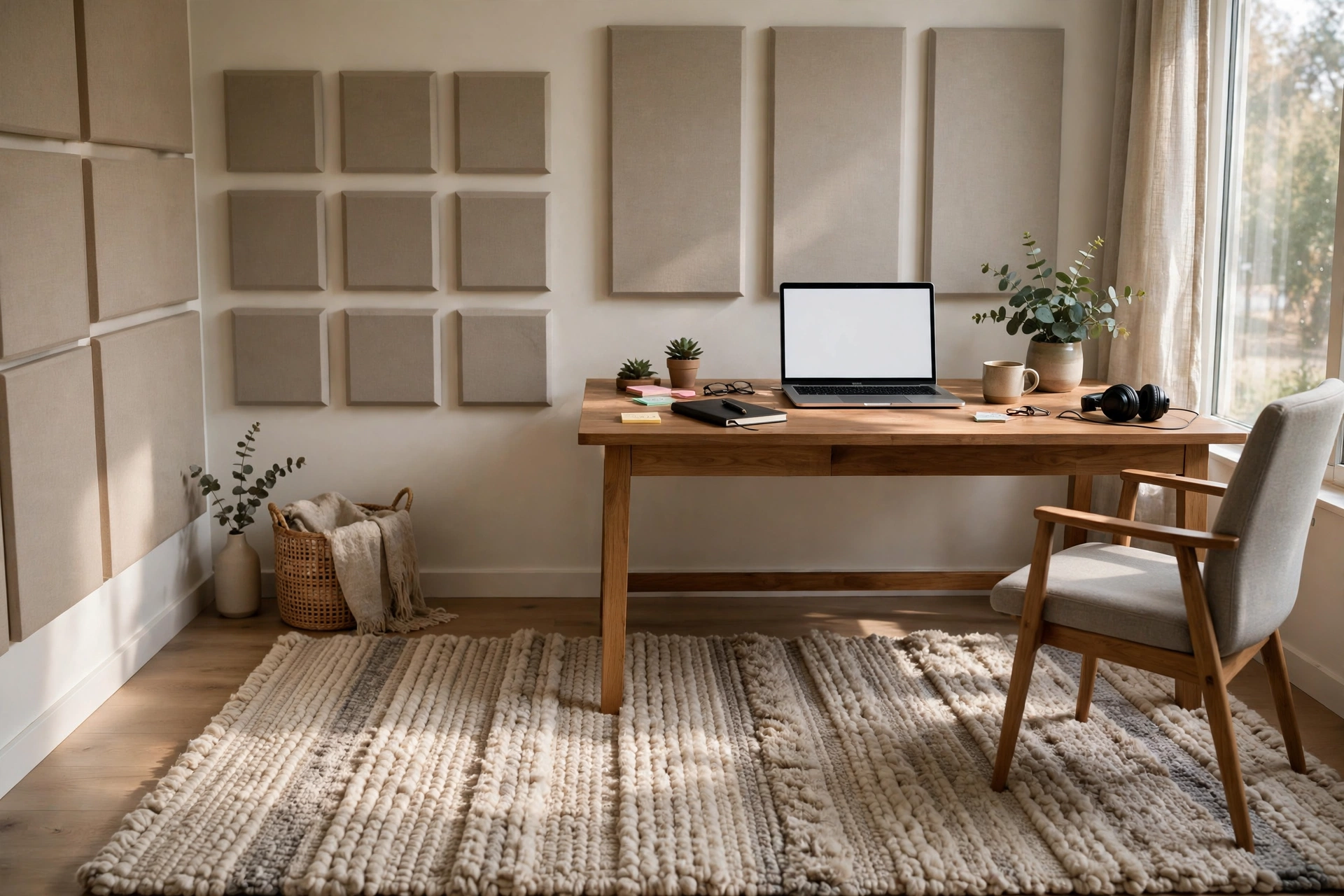
Treating only walls while ignoring a hard floor leaves half the reflections alive. A thick area rug with a dense pad underneath absorbs footfall noise and kills the floor-ceiling bounce that wall panels alone cannot reach. Choose a rug with a pile height of at least half an inch over a 3/8-inch felt pad; the combination meaningfully absorbs frequencies down into the low mids, complementing your wall treatment.
Size the rug to extend at least 24 inches beyond your chair’s rolling zone on all sides so casters stay on carpet — typically an 8×10-foot rug for a standard desk setup. Layer a smaller patterned rug over a large natural-fiber base for style without sacrificing coverage. If you need visual guidance on patterns and placement, our roundup of home office rug ideas for a grounded focused workspace pairs well with this plan. In rooms where a full rug is impractical, even a 5×7-foot rug under the desk-and-chair footprint plus panels on two walls transforms the room’s sound.
15. Door Sealing and Door-Mounted Panels
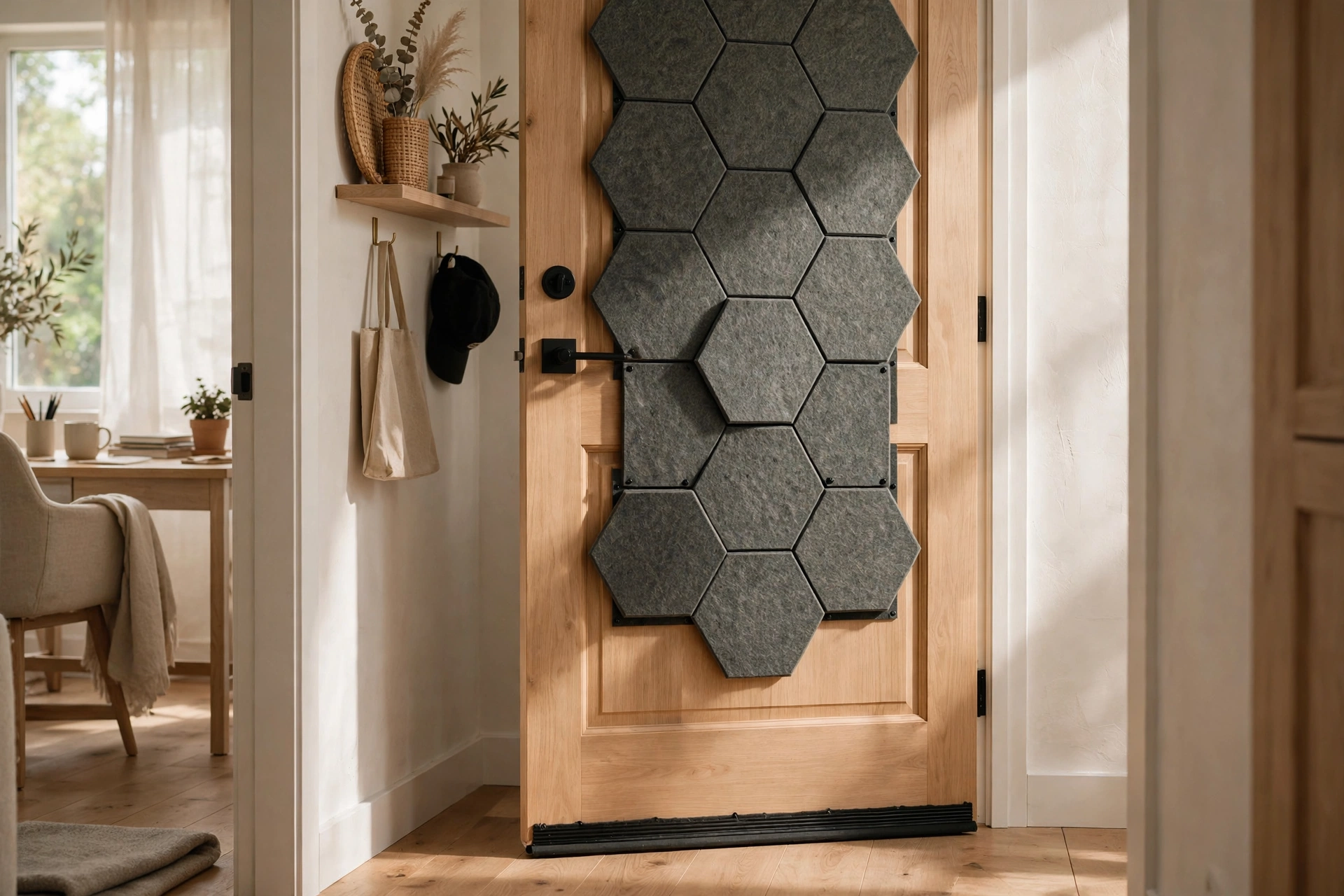
The door is the weakest link: a hollow-core interior door plus a quarter-inch gap underneath leaks hallway noise straight into your calls. Before buying anything, seal it. Self-adhesive foam weatherstripping around the jamb and an automatic door bottom or draft stopper under the door can cut transmitted noise dramatically for under $30 — often the highest ROI of any item on this list.
For the door face itself, mount a lightweight 1-inch PET felt or fabric-wrapped panel (24×60 inches is typical) with removable adhesive hooks so the door still opens freely; keep total added weight under 8–10 pounds to avoid straining hinges. Choose a panel color that matches the door paint so it blends in. If your office door has a hollow rattle, a layer of mass-loaded vinyl behind the panel adds mass that blocks sound, while the felt face absorbs reflections inside the room. Treat the door and you will be amazed how much “house noise” was actually doorway noise.
Frequently Asked Questions
How many acoustic panels do I need in a home office?
For a typical 10×12-foot home office, plan on 24–48 square feet of 1–2-inch absorptive panels — roughly 15–25% of the total wall area. Start with the wall behind your desk and the two side-wall reflection points, then add ceiling or corner treatment if the room still sounds lively. You can verify progress with a simple clap test: sharp, ringing flutter means you need more coverage, while a short, dull decay means you are in good shape.
What NRC rating should home office acoustic panels have?
Look for an NRC (Noise Reduction Coefficient) of 0.7 or higher for meaningful voice-frequency absorption; 0.85–1.0 is excellent. Thicker panels (2 inches) absorb lower frequencies better than thin ones, and mounting panels an inch off the wall improves low-end performance further. The noise reduction coefficient reference explains how the 0-to-1 scale is measured. Avoid products with no published NRC — the rating is the only objective way to compare.
Do acoustic panels block outside noise?
No — panels absorb reflections inside the room; they do not block sound traveling through walls, windows, or doors. If traffic or household noise is the problem, address the building envelope first: seal door gaps, add weatherstripping to windows, and consider heavy curtains over glass, as covered in our home office curtain ideas for light privacy and style. Panels then clean up the echo that remains, which is what makes your microphone feed sound professional.
Are foam wedge panels good enough for a home office?
Classic convoluted “egg-crate” foam absorbs highs but does almost nothing for the low-mid frequencies where voice boxiness lives, and cheap foam crumbles and yellows within a couple of years. Rigid fiberglass, mineral wool, or dense recycled-polyester panels outperform foam at the same thickness and last far longer. If you already own foam wedges, they are better than nothing for flutter echo — just do not expect them to fix a boomy room.
Can I install acoustic panels in a rental without damaging walls?
Yes. Lightweight PET felt and polyester tiles hang well on removable adhesive strips rated for a few pounds each. Fabric-wrapped fiberglass panels can mount on French cleats secured with heavy-duty removable hooks, or lean large panels on the floor against the wall behind your desk. Freestanding baffles need no mounting at all. Always check strip weight ratings and test one in a hidden spot first.
Keep Exploring
Start with the wall your camera sees, add side-wall reflection panels and a rug underfoot, and seal the door — most home offices transform with that four-step sequence alone. Pick panels in colors you genuinely love, because treatment you enjoy looking at is treatment that stays up for years, quietly making every call clearer and every workday calmer.