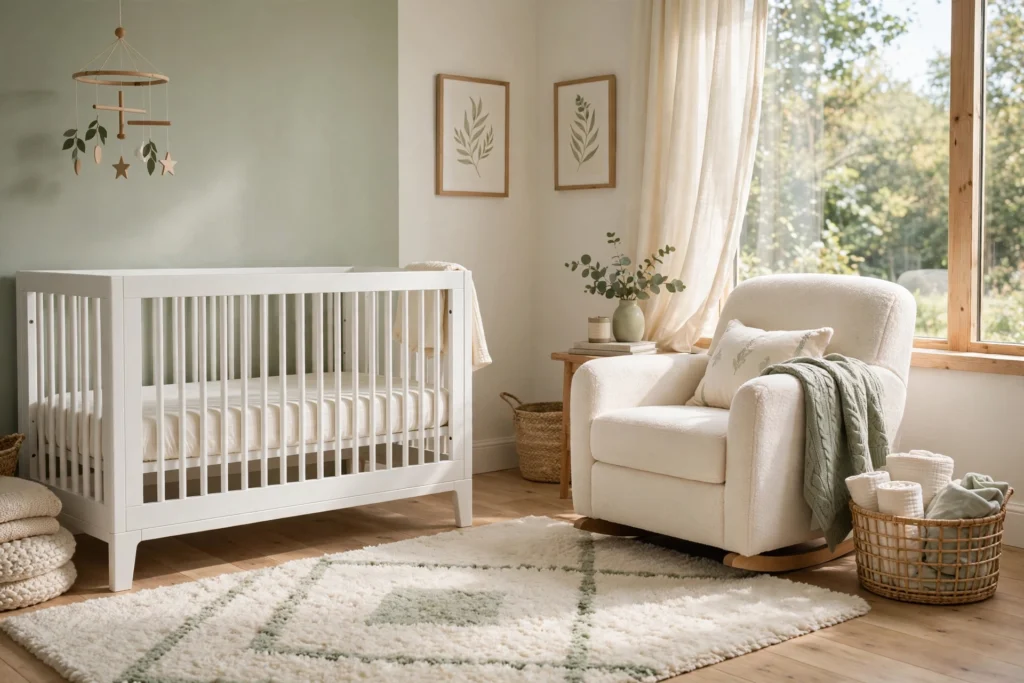

Designing a nursery is one of the sweetest projects a home can hold. It’s a room built around love, hope, and countless 3 a.m. moments — so it deserves to be calm, cozy, and genuinely functional. The best nursery design ideas balance softness with practicality, because this little room has to work hard: sleep, feeding, changing, playing, and storing more tiny things than you ever imagined.
Whether you’re starting with a blank spare room or a small corner of your bedroom, you don’t need a designer’s budget to create something beautiful. Here are fifteen nursery design ideas that blend comfort, safety, and style — a room that cradles your baby and still feels like part of your home.
1. Choose a Convertible Crib That Grows with Baby
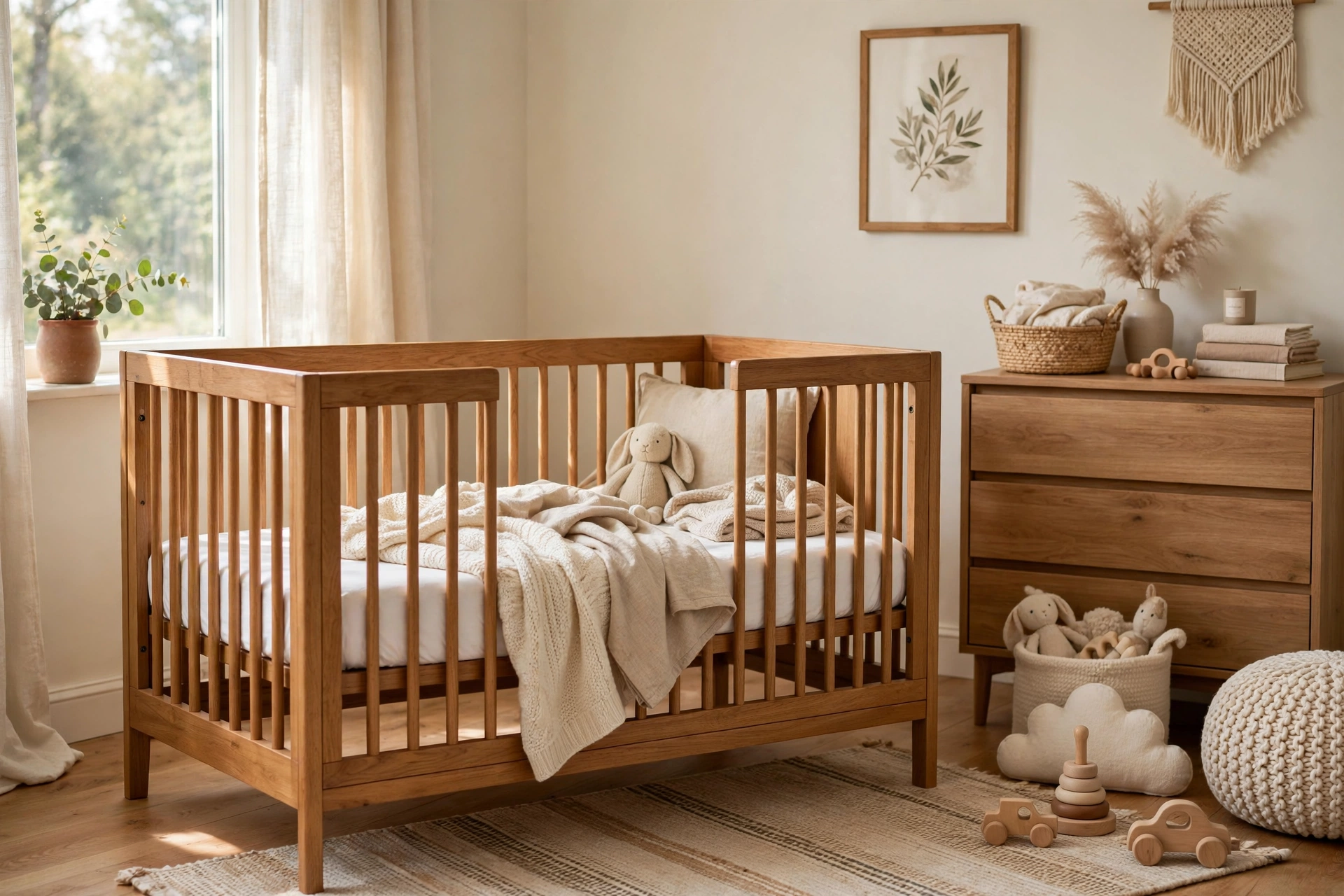
The crib is the centerpiece of the nursery, so choose one that will earn its place for years. A convertible crib transitions from newborn crib to toddler bed and sometimes to a full-size headboard, which means you won’t be re-shopping for the big-kid bed two years from now. Look for sturdy hardwood construction, non-toxic finishes, and slats spaced no more than 2⅜ inches apart for safety.
Place the crib against a solid wall away from windows, cords, and drapes, and keep the sleep surface simple: a firm mattress with a fitted sheet and nothing else. A crib with clean lines in a warm wood tone or soft white will adapt as the nursery’s style evolves.
2. Create a Glider Rocker Corner
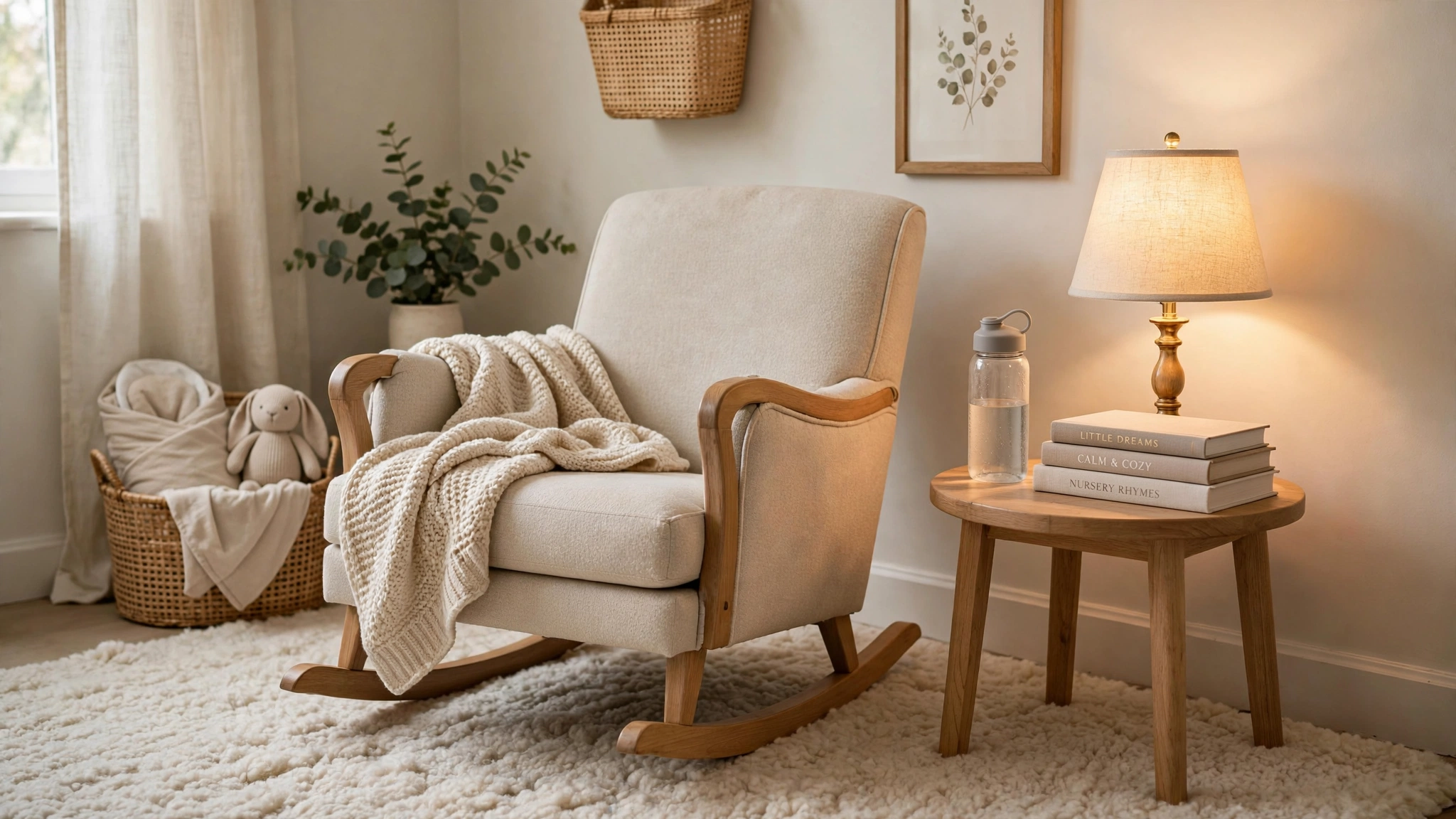
You will spend more hours in the nursery chair than anywhere else in the house during those first months — choose it accordingly. A good glider or rocker with padded armrests, a high back, and a smooth gliding motion turns feeding and rocking into something restful rather than exhausting. Apartment Therapy’s roundup of 15 cute baby nursery ideas puts a comfortable rocking chair on the must-have list, dressed up with plush pillows and throws so both parent and baby sit snugly.
Set up your corner before the baby arrives: chair, small side table for water and a book, a warm lamp, and a soft throw. Keep a basket of burp cloths within arm’s reach. This corner is where the quiet magic of the nursery happens — design it like you mean it.
3. Start with a Soft, Calming Palette
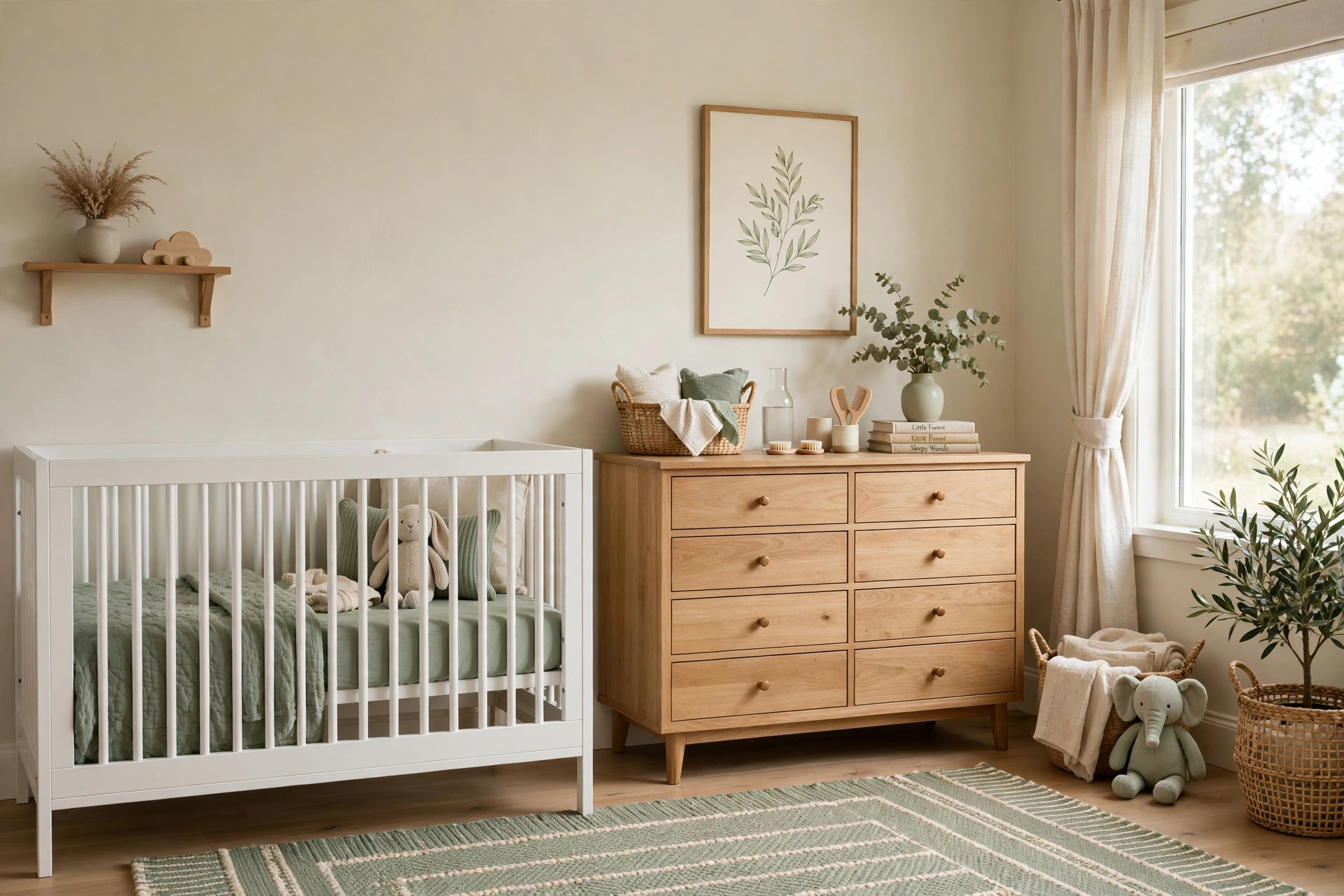
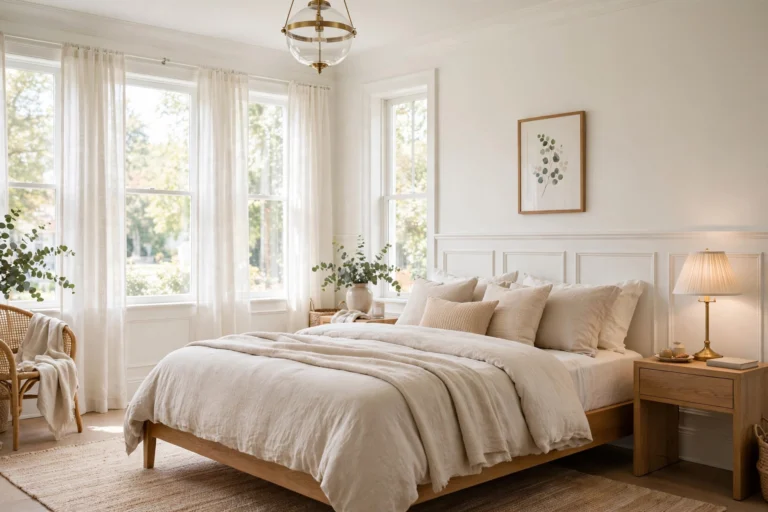
A nursery’s colors shape its mood, and soft tones are your best friend. Warm whites, gentle creams, pale sage, muted blush, and powder blue create a serene backdrop that helps everyone — baby included — wind down. Neutral doesn’t have to mean boring; it means the room can grow with your child and change its personality with simple swaps of textiles and art.
Paint the walls in your calm base color, then layer interest through texture: a nubby rug, linen curtains, a knit blanket. If you want a little more drama, try one painted accent wall in a soft hue — a whisper of color, not a shout. The goal is a room that feels like an exhale.
4. Hang Whimsical Wall Decals
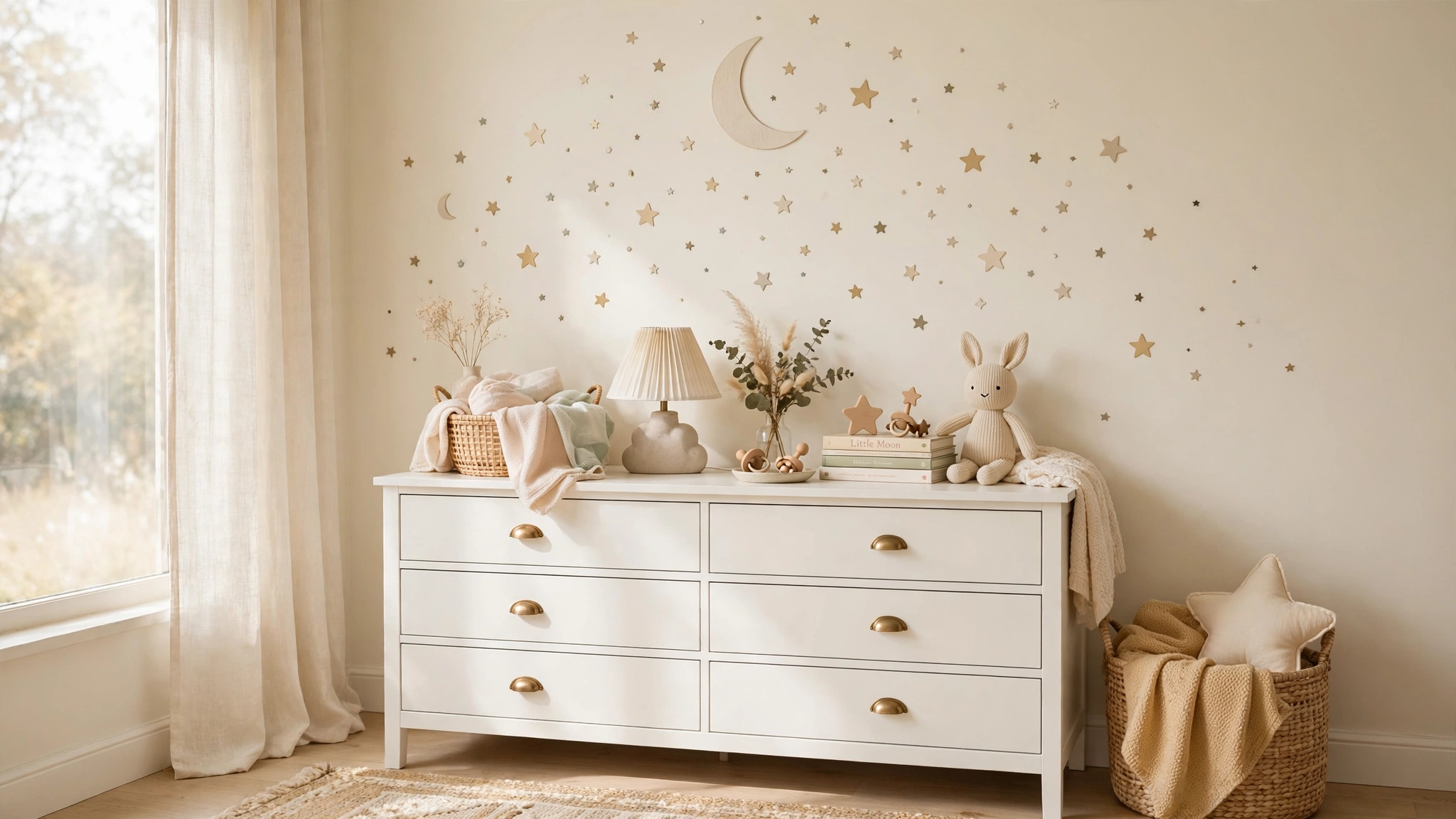
Wall decals are the nursery decorator’s secret weapon: instant personality, zero commitment, and they peel right off when your toddler’s taste moves on. A scatter of stars above the crib, a forest of little trees along one wall, or clouds drifting across the ceiling brings the room to life in an afternoon.
Keep decals up high and out of baby’s reach once they can stand and grab. Cluster them for impact rather than scattering them evenly — a dense constellation above the changing table or a woodland scene wrapping a corner feels designed rather than random. Pair decals with one framed print to ground the look.
5. Install Blackout Curtains for Better Sleep
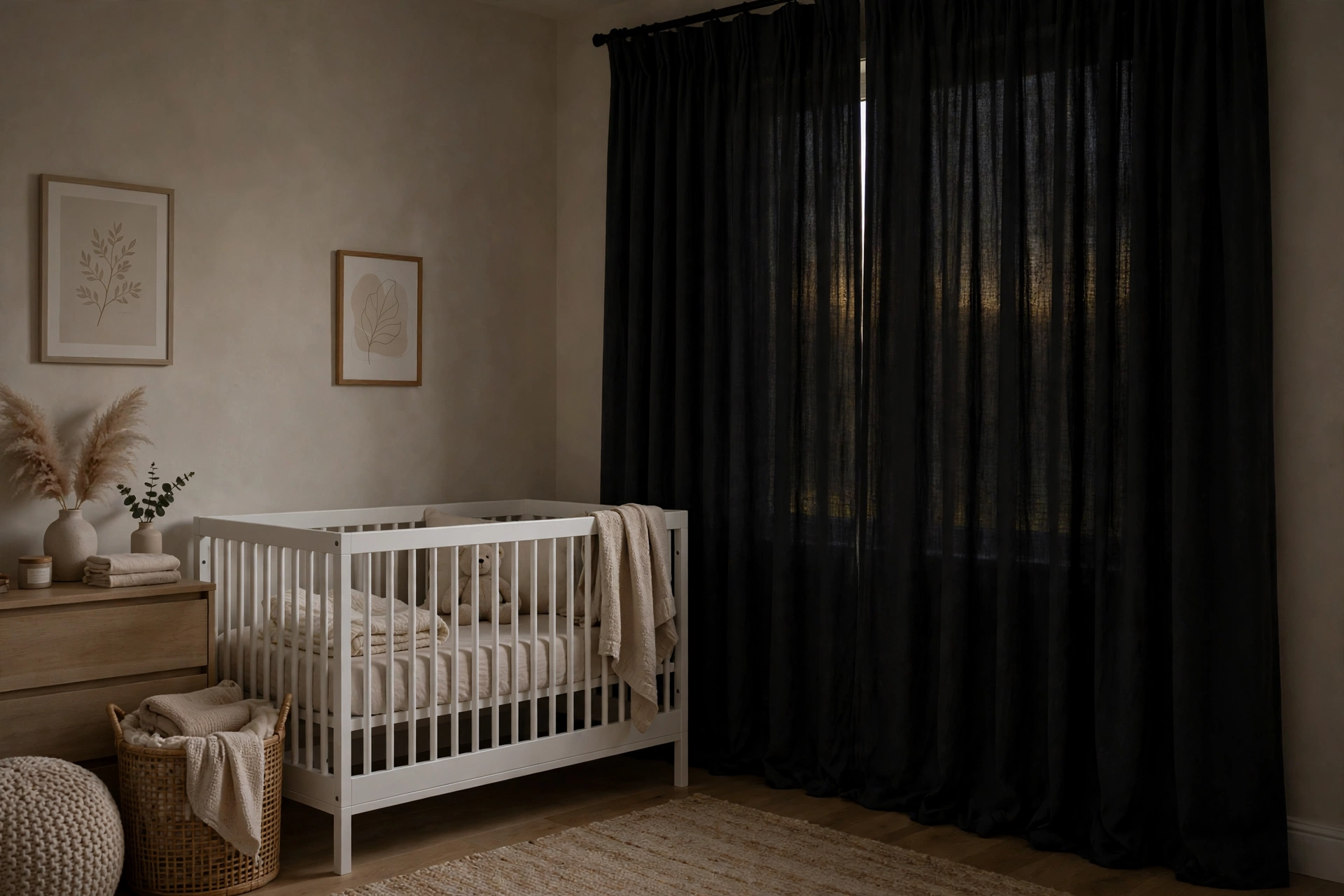
Nothing matters more in a nursery than sleep — yours and the baby’s — and light control is the unsung hero of it. Quality blackout curtains or lined roman shades keep naps long and early sunrises at bay, especially in summer months. Hang them wide and high so the room looks taller and the coverage is complete.
Layer a sheer curtain underneath for daytime softness, so the room isn’t a cave when the baby is awake. When your baby naps longer, you’ll consider this the best money you spent on the room.
6. Pick a Storage Ottoman That Pulls Double Duty
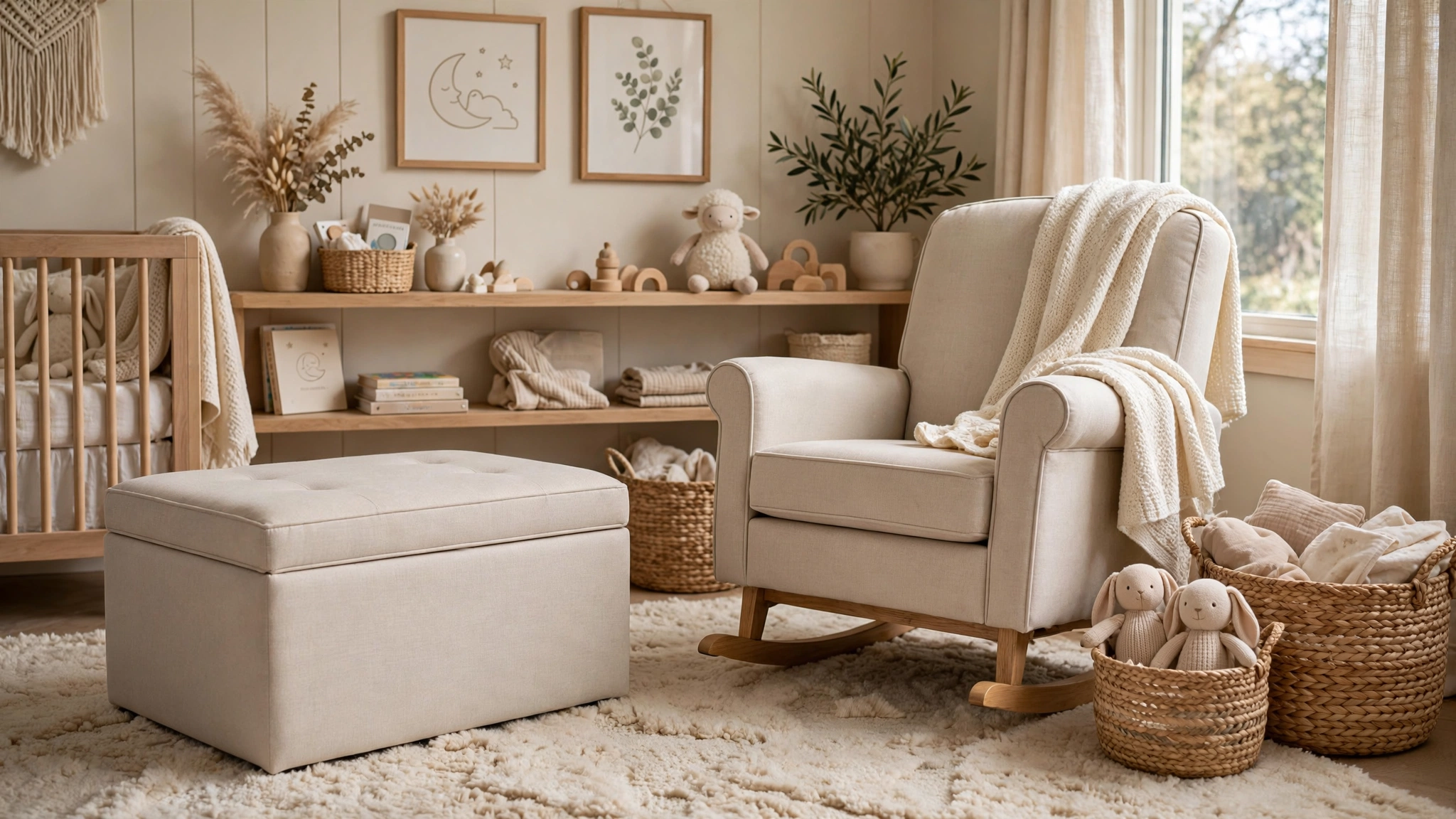
Nursery furniture should work twice as hard as anywhere else, and a storage ottoman is one of the cleverest buys you can make. It serves as a footrest during nursing, a soft perch for a sibling during storytime, and a hidden home for diapers, wipes, and the ever-growing collection of small toys.
Choose a washable fabric or faux leather that wipes clean — babies are generous with their messes. When the nursery eventually becomes a kid’s bedroom, the ottoman moves right along with it, still earning its keep.
7. Build a Bookshelf Reading Nook
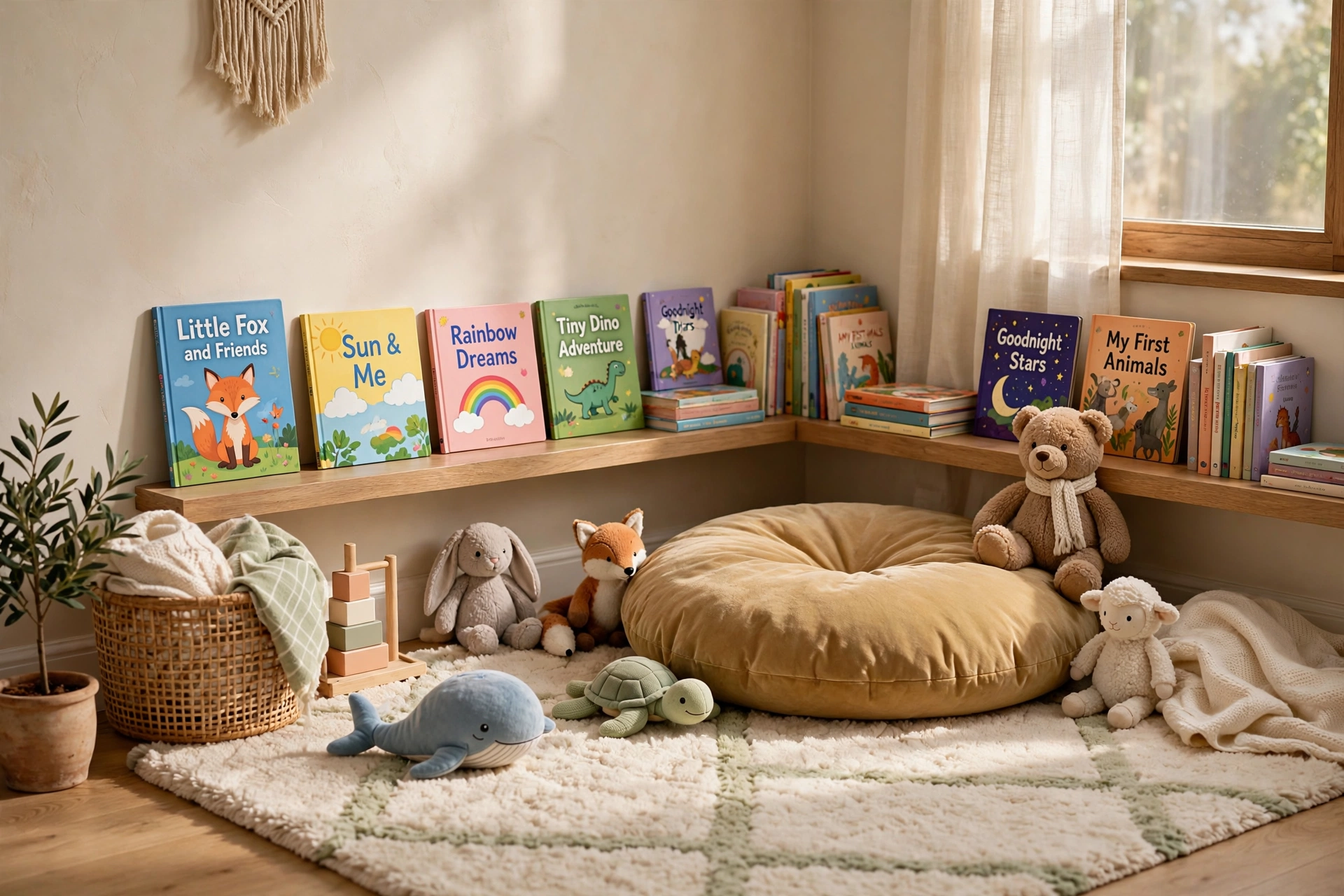
It’s never too early to fill a nursery with books, and a little reading nook makes the habit visible from day one. Low floating shelves with front-facing book displays let your baby see the covers and reach for them as they grow. Add a small cushion, a plush rug, and a stuffed friend, and you have a storytime spot that invites itself. Start the collection now with board books and a few beloved classics; the shelves will fill themselves faster than you expect.
8. Personalize with a Name Sign
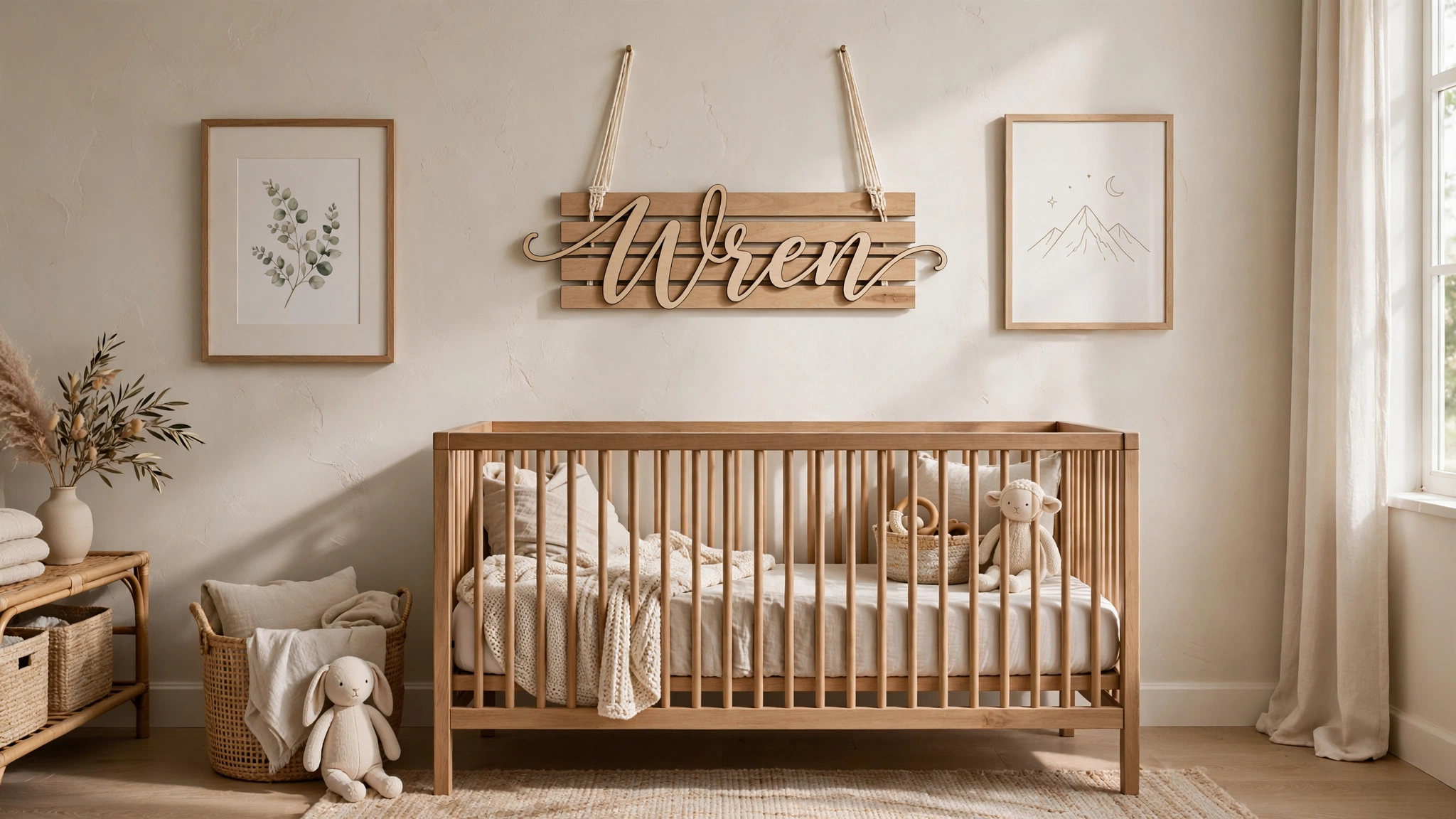
A wooden name sign above the crib is the nursery touch that makes the room feel truly theirs. Whether it’s scripted wood letters, a painted plaque, or an embroidered hoop, seeing your baby’s name on the wall is a small daily joy. HGTV’s designers love personal touches like these — their roundup on nursery design inspired by favorite designers shows how sweet personalized details elevate a whole room.
Hang the sign securely and high enough that curious standing toddlers can’t grab it. If you’d rather not commit to a name before birth, choose a meaningful word instead — dream, wonder, love — and swap it later. Either way, this is the detail guests photograph first.
9. Layer Rugs for Warmth and Texture
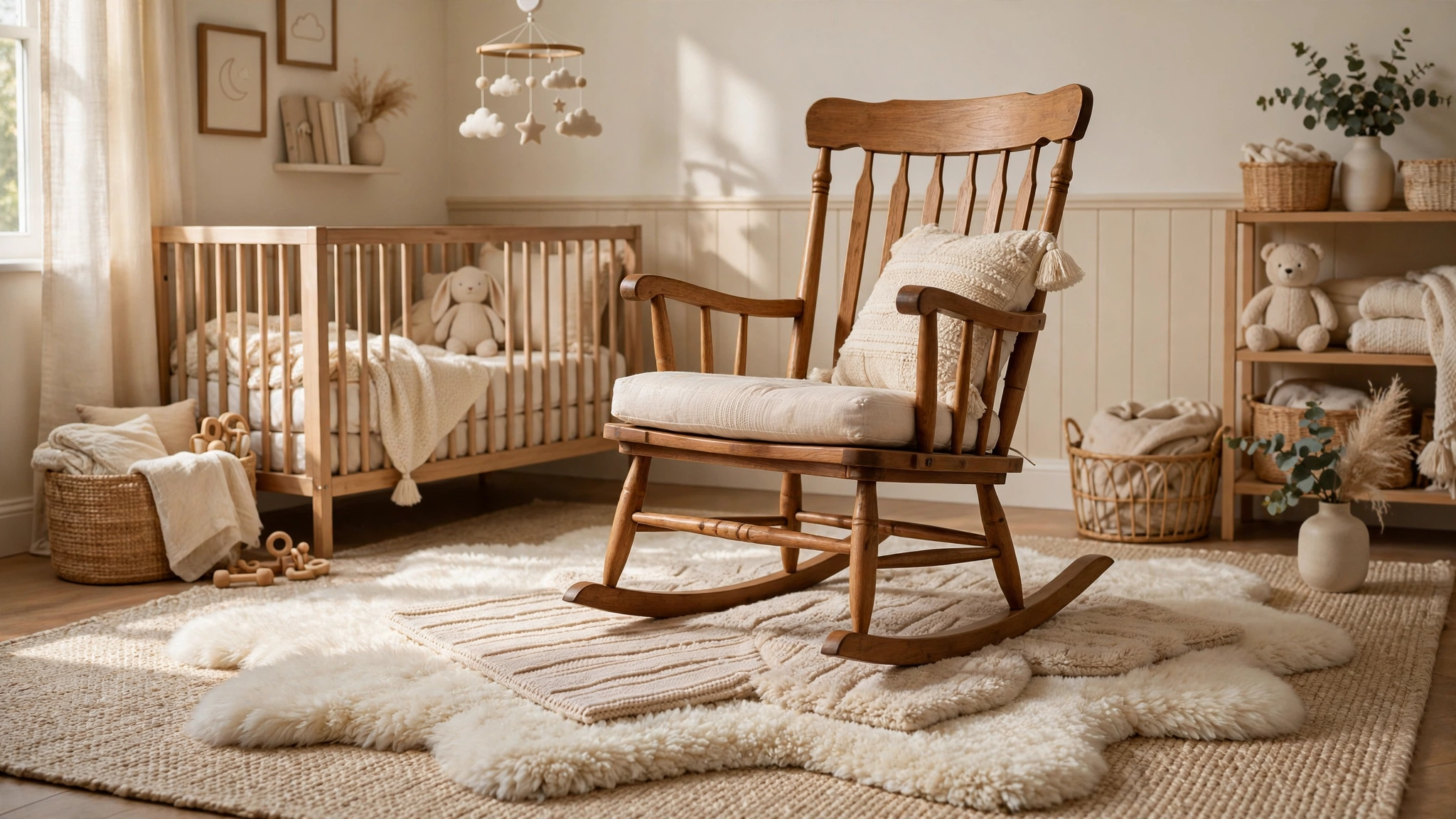
Nursery floors take a beating — midnight feedings on tiptoe, tummy time, crawling practice — so give them the softest possible landing. Layering rugs adds warmth, cushions little knees, and defines zones in the room: a plush area rug under the crib zone, a smaller washable rug by the rocker.
Choose low-pile or machine-washable rugs you can actually clean, because spills are a given. Anchor rugs with non-slip pads to keep them safe on hard floors. A patterned rug can even set the room’s whole color scheme — pull two or three shades from it for your textiles and wall art, and the nursery pulls together effortlessly.
10. Set Up a Dresser-Changing Station
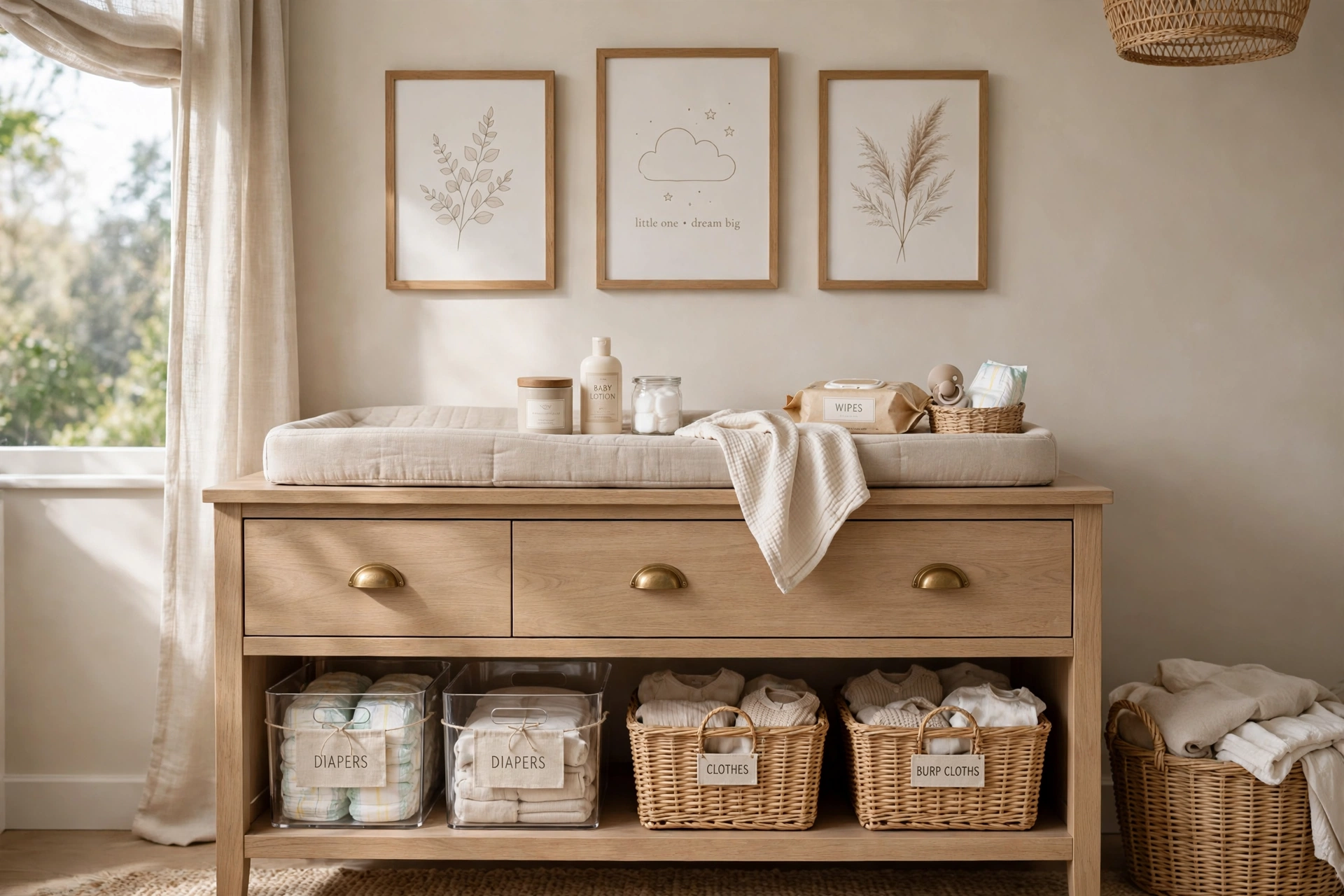
A dedicated changing table becomes obsolete fast, but a sturdy dresser with a changing pad on top serves the nursery for years. It’s the smarter buy: drawers full of onesies and diapers today, clothes and toys tomorrow. Secure the dresser to the wall and the changing pad to the dresser — safety first, always.
Organize the top drawer like a workstation: diapers, wipes, cream, and a spare change of clothes in labeled bins, so midnight changes happen half-asleep. Add a small lamp or nightlight nearby for those dim 3 a.m. moments. When the diaper days end, remove the pad and you’ve got a handsome dresser that never looks like baby furniture.
11. Keep Lighting Soft and Layered
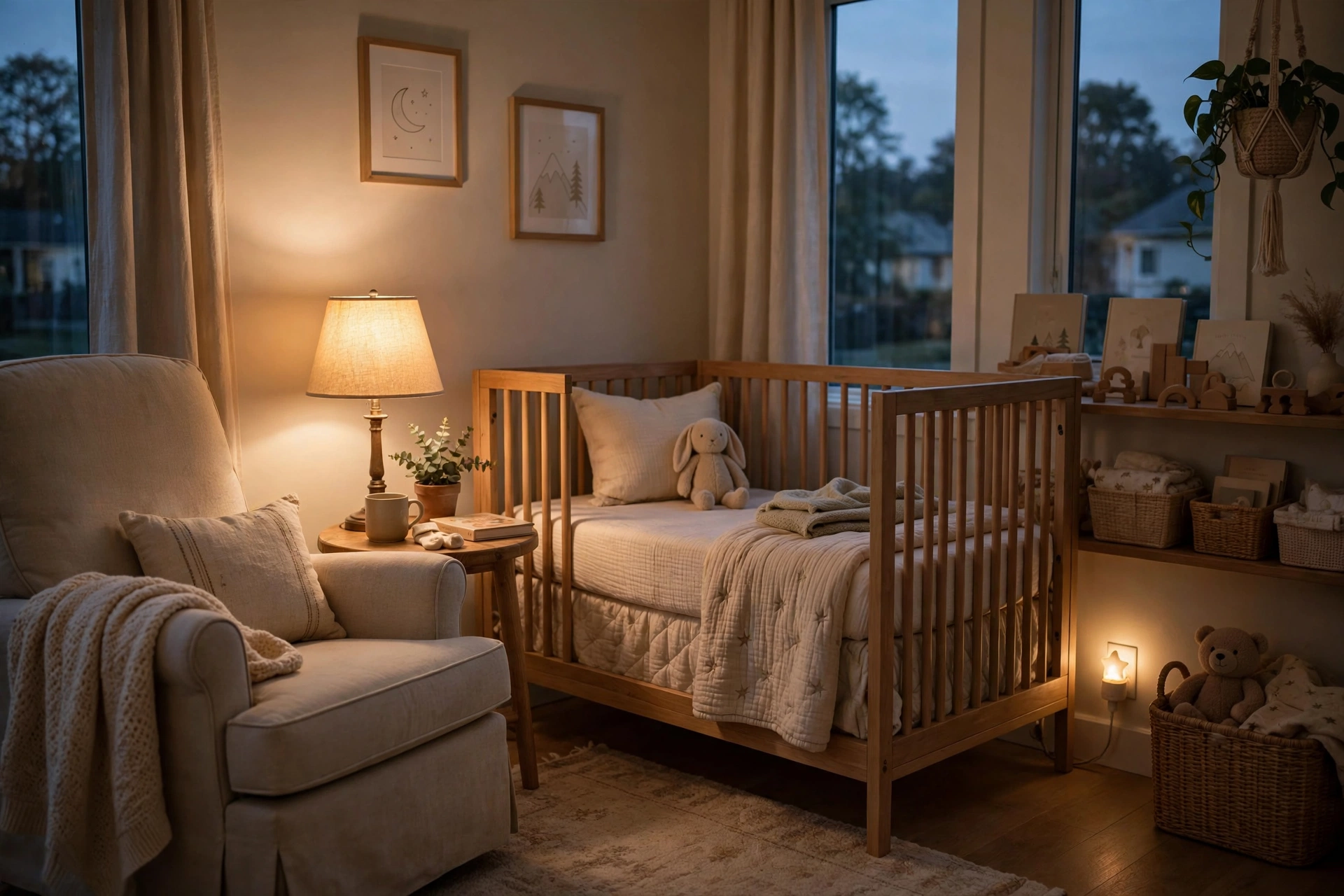
Harsh overhead light has no place in a nursery. Layer your lighting instead: a dimmable ceiling light for daytime, a warm table lamp by the rocker for feeding, and a soft nightlight that lets you check on the baby without waking them fully. Around 2700K keeps everything golden and sleep-friendly. A lamp with a touch dimmer or smart bulb is worth its weight — you can fade the light as the baby drifts off.
12. Create a Gallery Wall Above the Crib
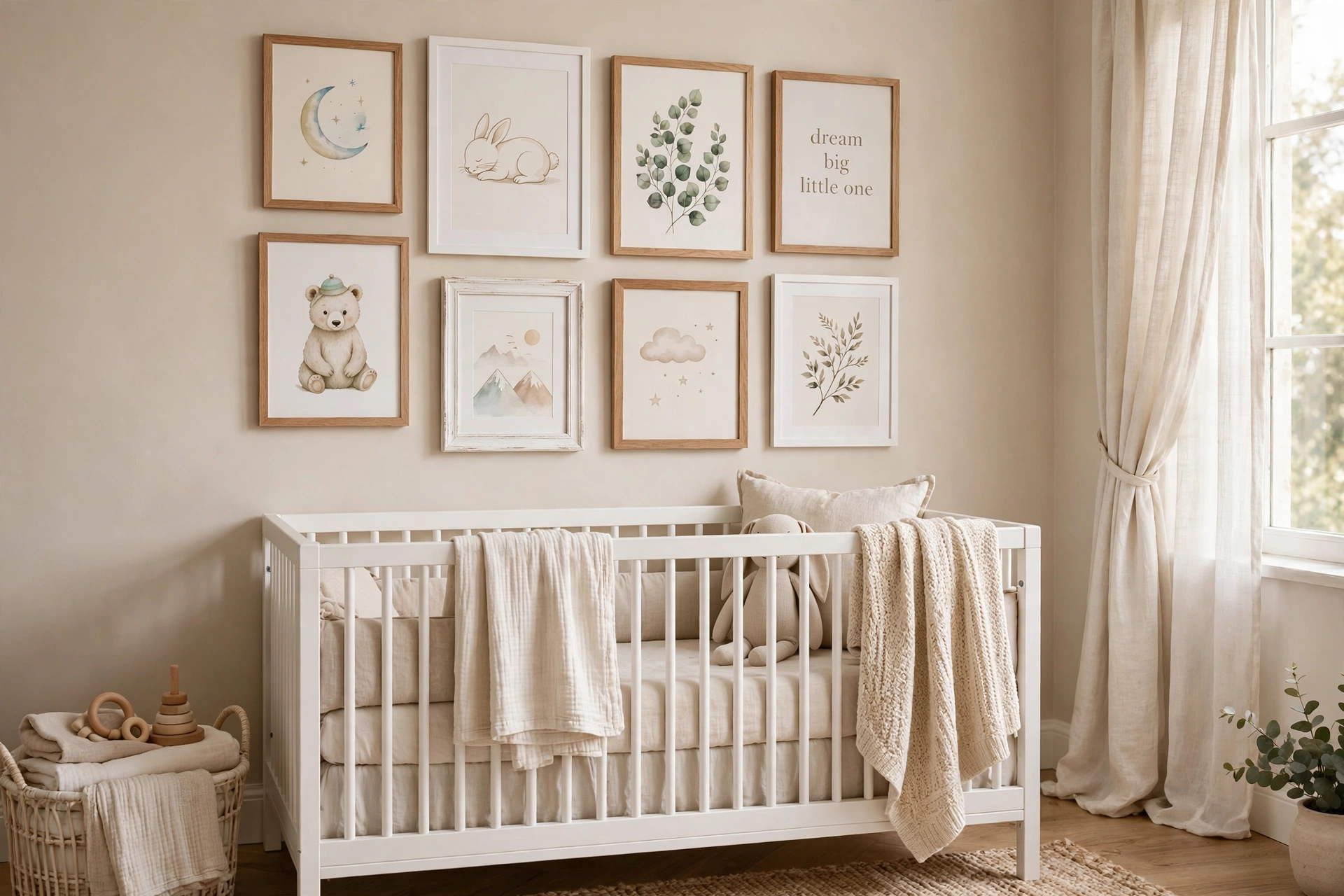
The wall above the crib is prime decorating real estate, and a small gallery wall turns it into the room’s sweetest focal point. Mix framed nursery prints, a tiny embroidered hoop, a favorite book page in a frame, and maybe a small woven hanging for texture. Keep frames lightweight and hung with real hardware — never glass-fronted frames where they could fall.
Arrange the frames on the floor first until the composition feels right, then hang as one unit. A cohesive color thread — all white frames, or all wood — keeps a mix of pieces looking intentional. This is where the nursery’s personality shines, so choose pieces that make you smile every time you look up from the crib.
13. Add a Cozy Canopy or Reading Tent
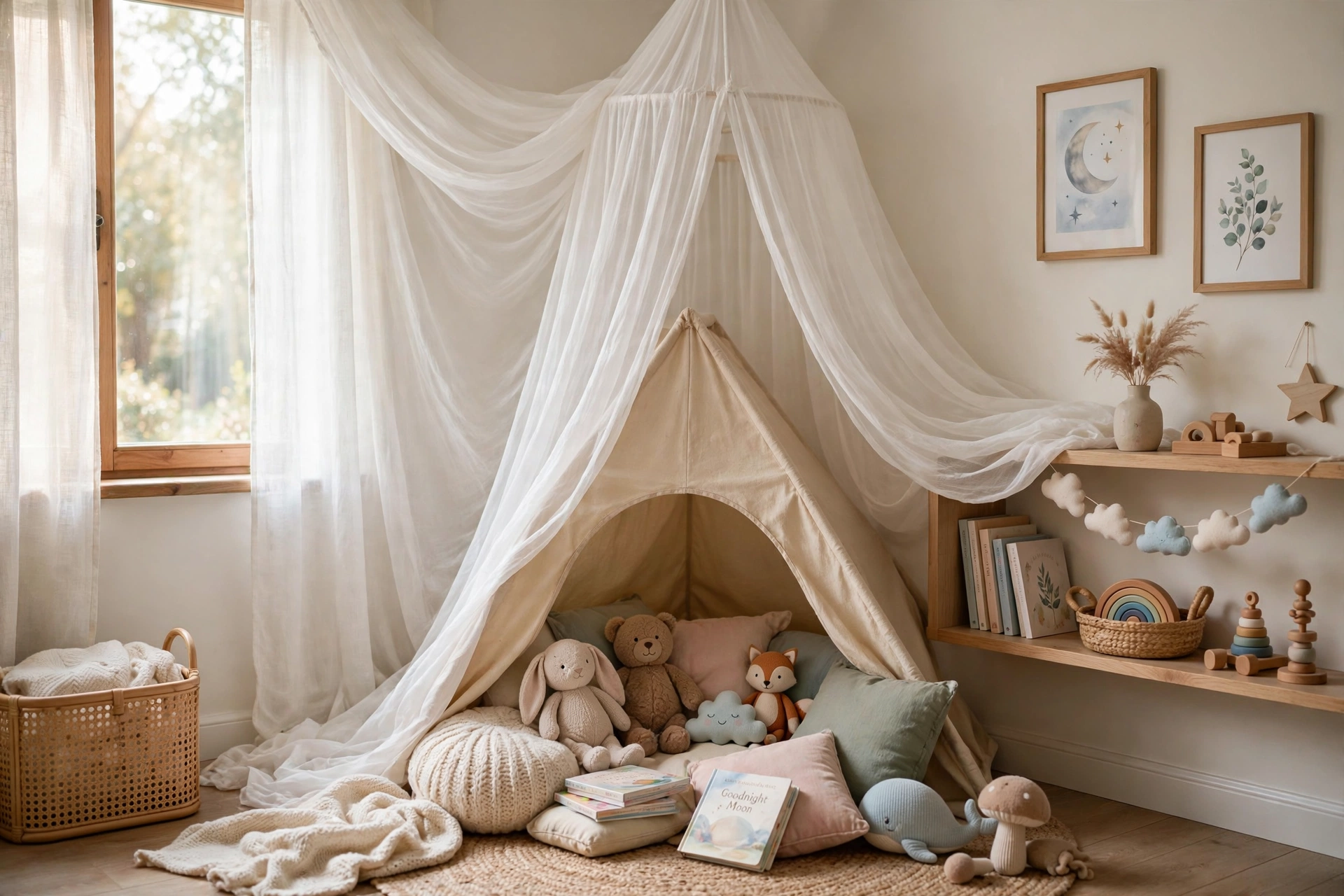
A simple fabric canopy over the crib corner or a little reading tent in the corner adds instant magic. Draped sheer fabric softens the room and creates a dreamy focal point, while a small pop-up tent becomes the toddler’s favorite hideaway later. Both are inexpensive and both photograph beautifully.
If you drape fabric over the crib area, keep it well out of reach and remove anything that hangs near the sleep surface once the baby can pull up. For a reading tent, fill it with floor cushions and a few books. This is the nursery detail your child will actually remember — a little world of their own inside the room.
14. Use Baskets and Bins for Hidden Storage
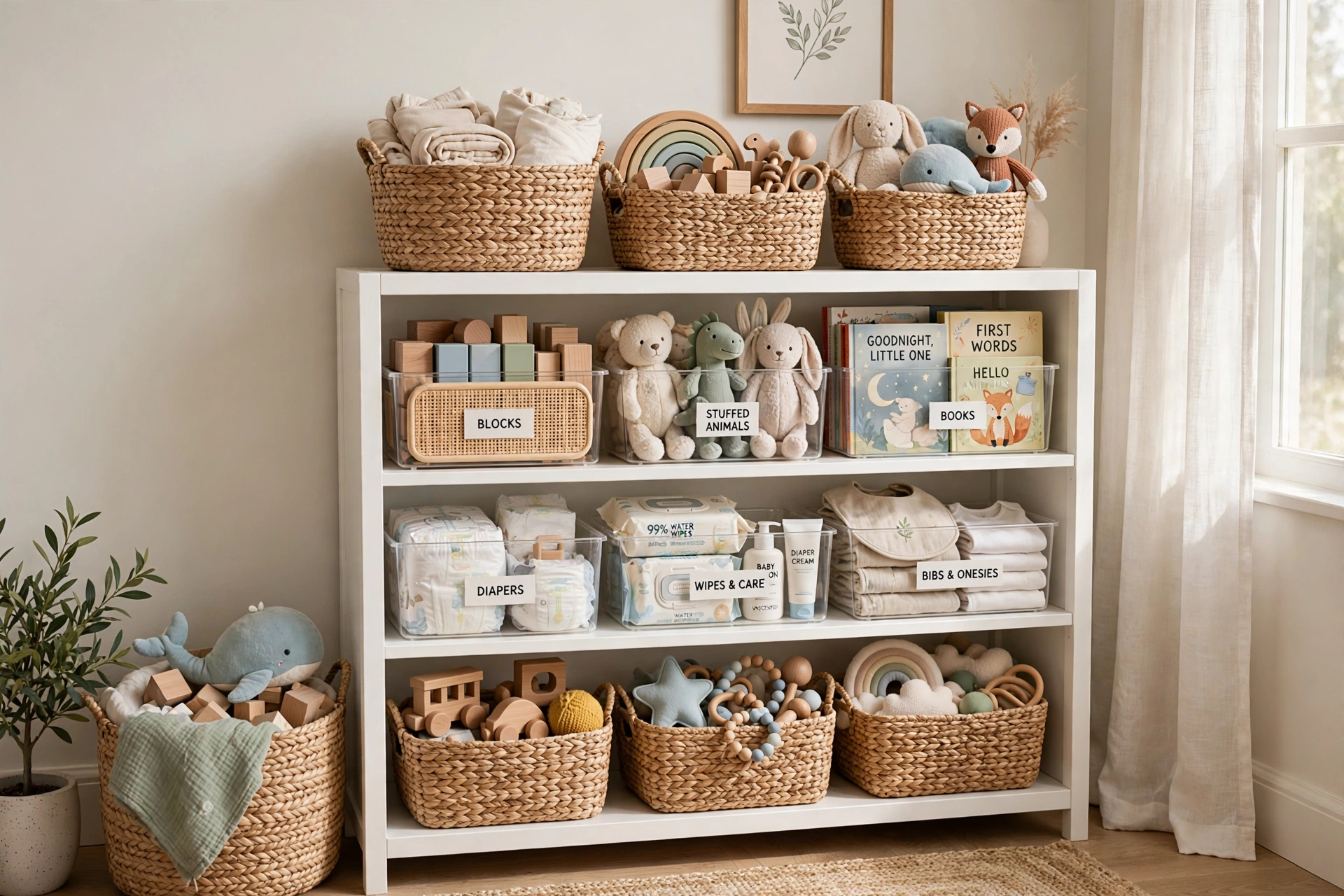
Babies arrive with astonishing amounts of stuff, and the nursery stays calm only if everything has a home. Woven baskets and labeled bins are the answer: they hide the clutter while looking like decor. Slide baskets under the crib, line them up on the changing dresser, and tuck bins into the closet.
Assign each basket a job — diapers, lotions, burp cloths, toys — and keep the system simple enough that a sleep-deprived parent can use it. Natural textures like seagrass and cotton rope add warmth to the room while doing the hard work of containing chaos. A tidy nursery is a calmer nursery, and calm is the whole point.
15. Finish with Heirloom and Handmade Touches
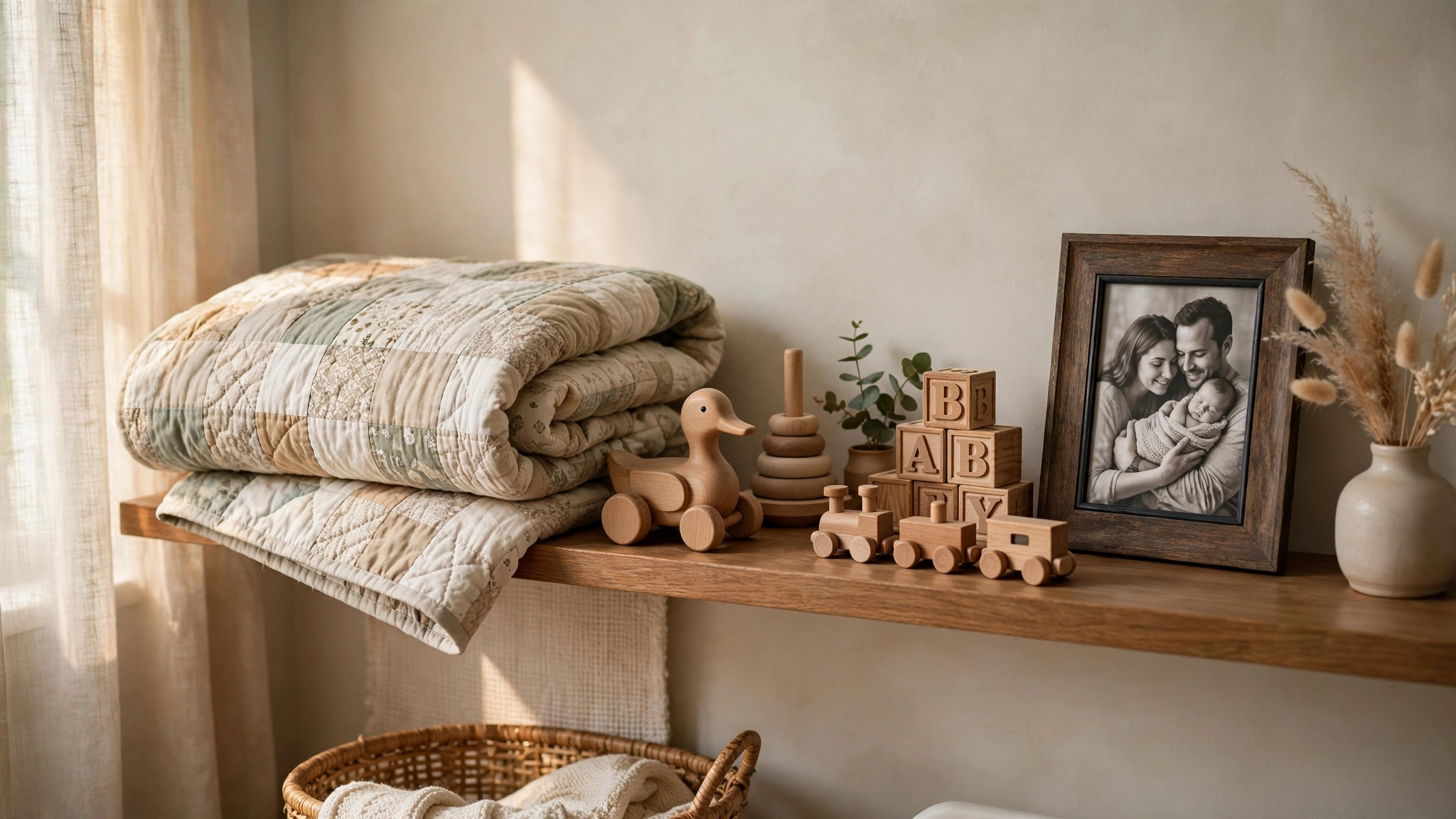
The nurseries people remember are the ones with soul — a quilt from grandma, a wooden toy from a craft fair, a framed photo of the family, a mobile you made yourself. These pieces don’t have to match anything; they just have to mean something. Scatter a few through the room and the nursery stops looking like a catalog and starts feeling like home.
Leave space for the nursery to collect its story over time. The first framed footprint, the hospital bracelet in a shadow box, the tiny shoes on a shelf — these arrive on their own schedule. A nursery finished with love is never really finished, and that’s exactly as it should be.
Frequently Asked Questions
When should I start designing the nursery?
Most parents start in the second trimester, which gives you time to paint, order furniture, and let everything off-gas before the baby arrives. Cribs and gliders can have long lead times, so order the big pieces early. That said, a nursery doesn’t have to be perfect on day one — babies need a safe sleep space, feeding spot, and diapers far more than they need finished decor.
What colors are best for a nursery?
Soft, calming colors work best: warm whites, creams, pale sage, gentle grays, and muted pastels. These tones promote rest and give you a flexible backdrop as your child’s tastes change. If you love bolder color, use it in accents — a patterned rug, curtains, or wall art — rather than on all four walls, so the room stays soothing.
How can I make a small nursery feel bigger?
Keep the palette light, choose furniture with visible legs so more floor shows, and use vertical space with floating shelves instead of bulky bookcases. A mirror bounces light around the room, and a compact or mini crib saves precious square footage. Our ideas for a teen bedroom show how the same space-stretching tricks carry into bigger-kid rooms too.
Is it safe to hang things above the crib?
Yes, with care: use lightweight frames hung on proper wall anchors (never just adhesive strips), avoid glass-fronted frames directly above the sleep area, and keep mobiles and hanging decor well out of a standing baby’s reach. Never hang anything heavy, sharp, or with long cords near the crib. When in doubt, place the gallery wall on the adjacent wall instead.
What should I avoid putting in the nursery?
Keep the crib bare — no pillows, blankets, bumpers, or stuffed animals in the sleep space. Avoid strong fragrances, small decor items a baby could pull down and mouth, and furniture that isn’t anchored to the wall. Skip trendy themes that will feel dated in a year; choose a calm foundation and let the playful details live in things that are easy to swap, like our kids’ bathroom ideas show for family spaces.
Keep Exploring
A nursery is the only room you decorate for someone who can’t yet tell you what they like — so design it for the moments you’ll share there: the quiet feedings, the first giggles, the bedtime stories. Start with the crib and the calm, add the practical pieces, and let the sweet details gather over time.
When your little one outgrows the nursery, these nursery design ideas carry forward into bigger-kid rooms too — the same gentle thinking, just scaled up.







[…] a non-slip pad underneath; an active playroom with a sliding rug is an injury waiting to happen. Our nursery design ideas use the same layered-rug thinking for soft landings in baby […]
[…] beats an overwhelming wall of options. Use picture labels on bins so pre-readers can sort by image. Our nursery design ideas introduced the same reachable-storage principle for babies — it only matters more once they can […]