
Can’t decide between the warmth of classic design and the clean calm of modern style? Transitional living room design ideas solve that dilemma beautifully. This timeless style takes the best of both worlds — tailored traditional shapes softened with modern simplicity — and wraps it all in warm neutrals like beige, greige, and cream. The result is a living room that feels elegant but never fussy, current but never cold.
What makes transitional design so livable is its balance. Classic details like paneled walls and refined furniture shapes give the room soul and structure, while modern lighting, bold art, and uncluttered styling keep it fresh. Work through the transitional living room design ideas below in any order — even adopting three or four will move your space firmly into that sweet spot between classic and modern.
1. Start With a Warm Neutral Foundation
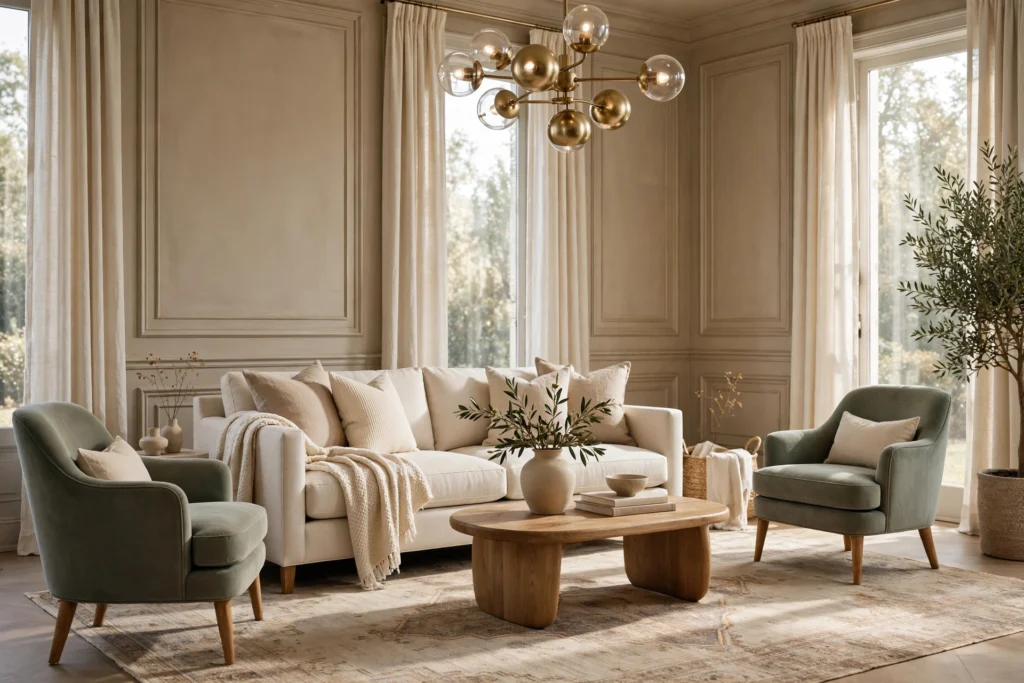
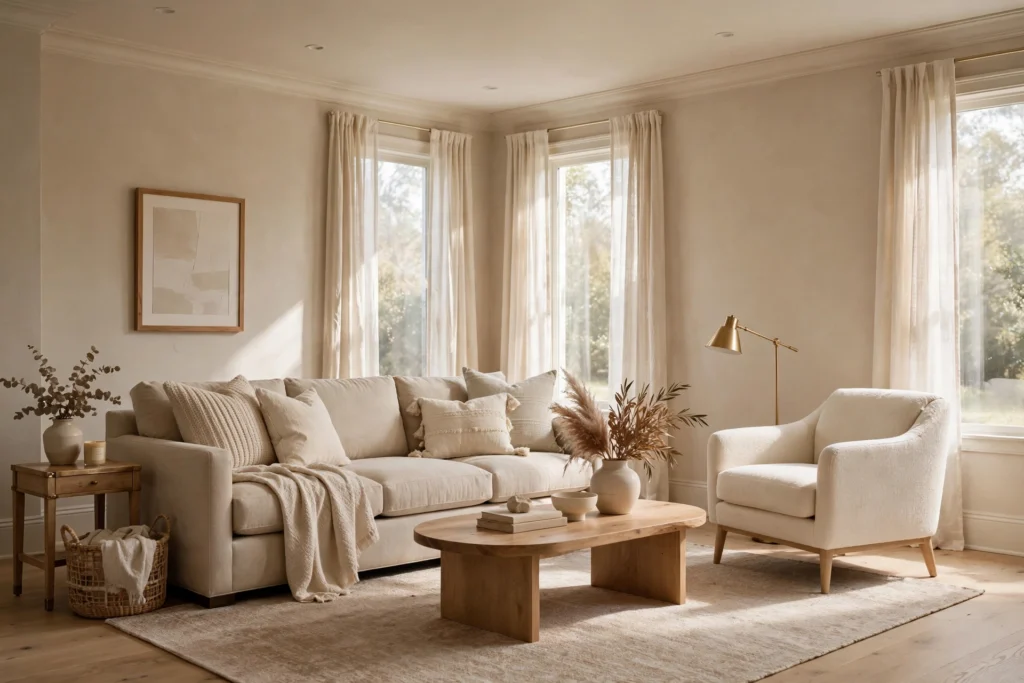
Every great transitional living room begins with color. Warm neutrals — greige, warm beige, soft cream, and mushroom — are the glue that lets classic and modern pieces share a room without clashing. Paint walls a warm greige rather than a cool blue-gray, and carry the same family of tones through your largest upholstery pieces. When everything large sits in the same warm-neutral family, the style-mixing reads as intentional instead of accidental.
Choose one undertone and commit to it: a yellow-beige warmth or a soft pink-beige, repeated across walls, sofa, and rug. Test paint swatches in morning and evening light — a greige that looks perfect at noon can turn chilly under nighttime LEDs. Keep ceilings warm white rather than stark white.
2. Choose a Tailored Sofa With Clean Lines
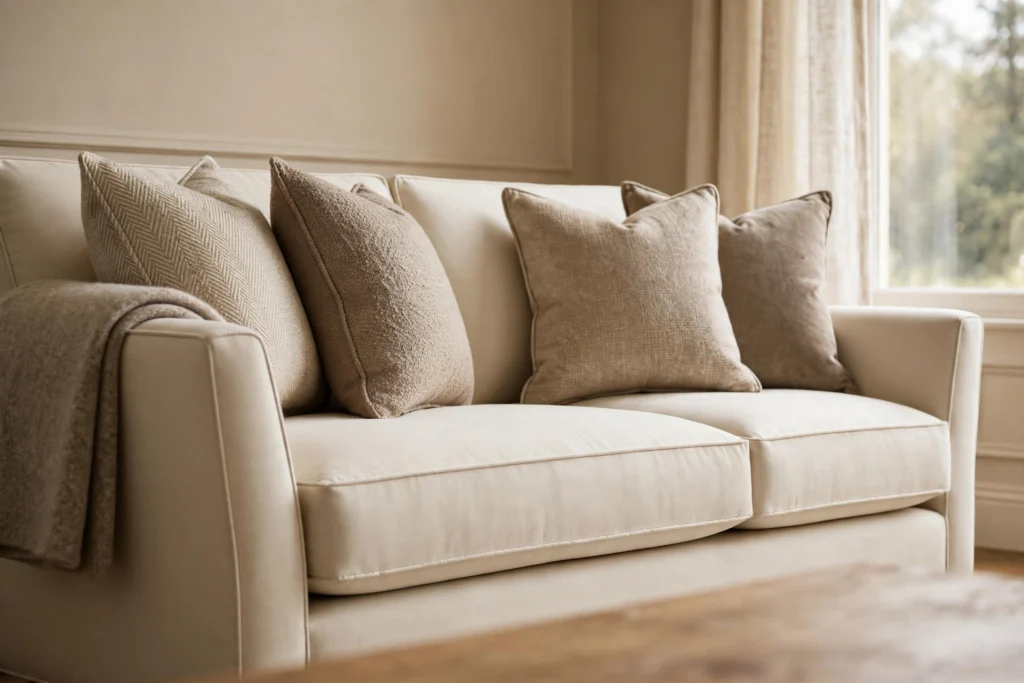
The sofa is the handshake between classic and modern in transitional design. Look for a tailored profile — gently sloped or straight arms, neat box or bench cushions, simple welted seams — in a durable warm-neutral fabric like a linen blend or performance weave. Skip heavy rolled arms, which read purely traditional, and razor-thin track arms, which read purely modern. The sweet spot is a clean silhouette with just enough softness to invite you to sit down.
Scale matters as much as style: leave at least 30 inches of walkway around the sofa and choose a seat depth that suits how you lounge (22 to 24 inches works for most adults). Order fabric swatches and live with them for a week — performance fabrics in oat, stone, or greige resist stains and hold their tailored shape for years.
3. Add Classic Paneled Walls or Molding
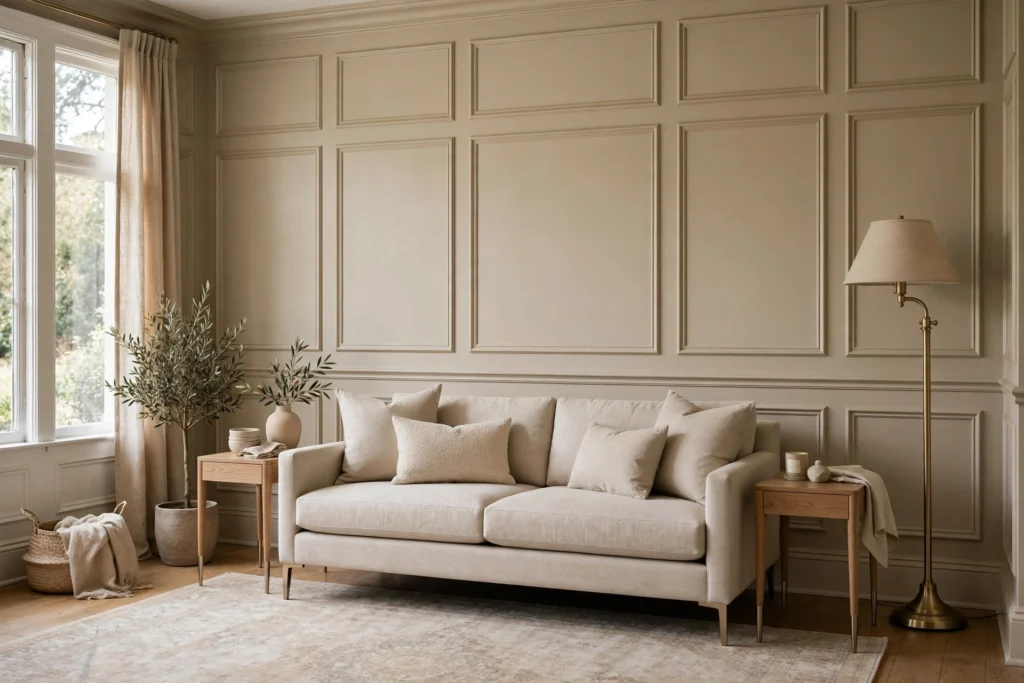
Few upgrades deliver classic character faster than wall molding, and it is one of the highest-impact transitional living room design ideas on this list. Board-and-batten, picture-frame molding, or simple wainscoting adds traditional architectural interest, while painting it the same warm white or greige as the walls keeps it current rather than fussy. The detail is classic; the monochrome treatment is modern.
You don’t need a carpenter for every version — paintable molding kits and peel-and-stick trim make this a genuine weekend project. Keep the profile simple, like flat stock or a modest ogee, and run wainscoting to about one-third of the wall height, or build large rectangular frames for a more formal look. That restraint is what keeps it transitional: traditional detail executed with modern simplicity.
4. Pair Traditional Shapes With Modern Finishes
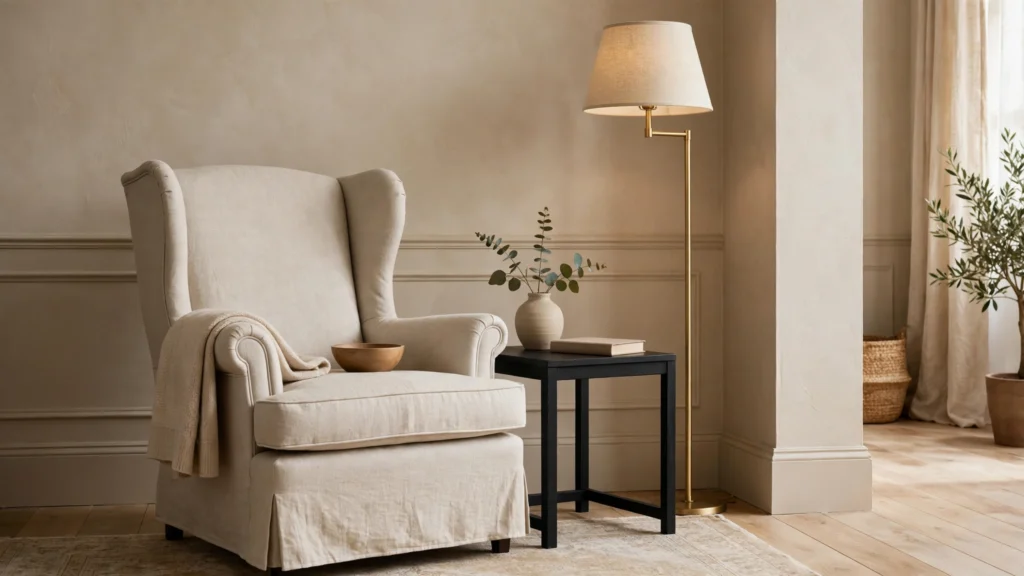
The easiest transitional trick is contrast pairing: take a classic furniture shape and render it in a modern material, or the reverse. A wingback chair in crisp solid linen instead of floral chintz, a turned-leg wooden side table finished in matte black, or a traditional club chair reupholstered in contemporary boucle — each piece bridges both eras, and the room feels collected rather than decorated.
When pairing, let one piece be the clearly “classic” voice and its neighbor the clearly “modern” voice instead of making everything a hybrid. A traditional tufted ottoman earns its place if the coffee table beside it is a simple modern slab. Keep metal finishes consistent across old and new pieces — matching brass or black tones throughout — so the pairings feel curated rather than accidental.
5. Layer Textures Instead of Patterns
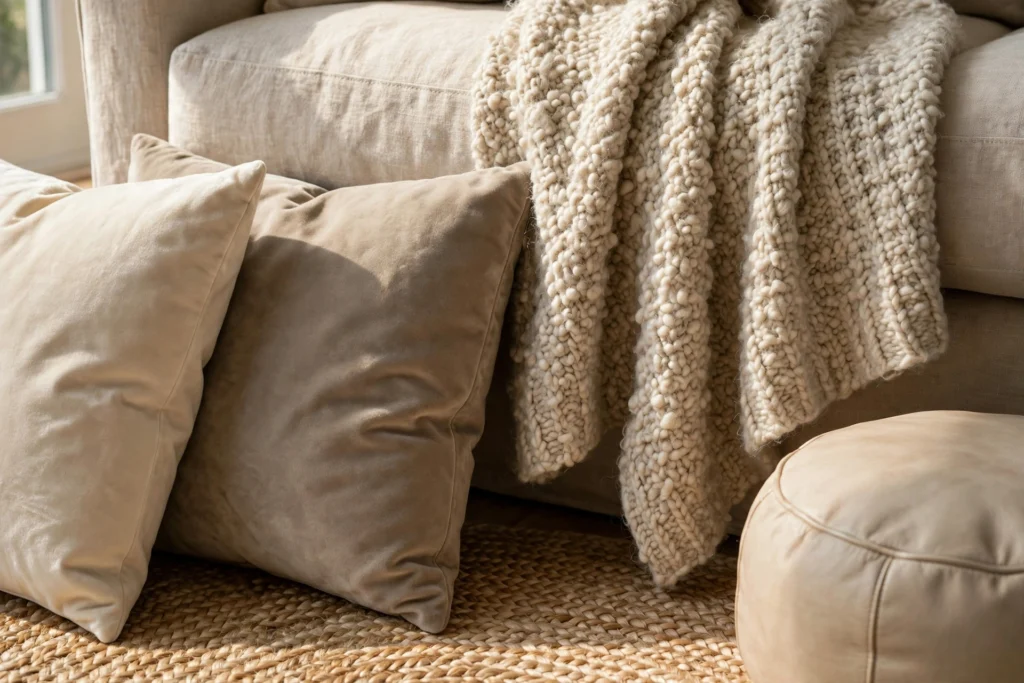
Transitional rooms stay calm by keeping pattern quiet and letting texture do the talking. Combine linen upholstery, a nubby wool throw, velvet cushions, a jute or sisal rug, and smooth leather or warm wood — all inside the same warm-neutral family. Different surfaces catch light differently, creating the depth and richness that bold pattern usually provides without the visual noise.
Build from the floor up: a large flat-weave rug, a softer smaller rug or sheepskin in the seating zone, then cushions in three textures — one smooth, one nubby, one plush. A good test: close your eyes and you should still be able to “read” the room by touch. Keep every texture in the beige, greige, and cream range, reserving accent color for two or three small pieces only.
6. Make Modern Lighting the Star
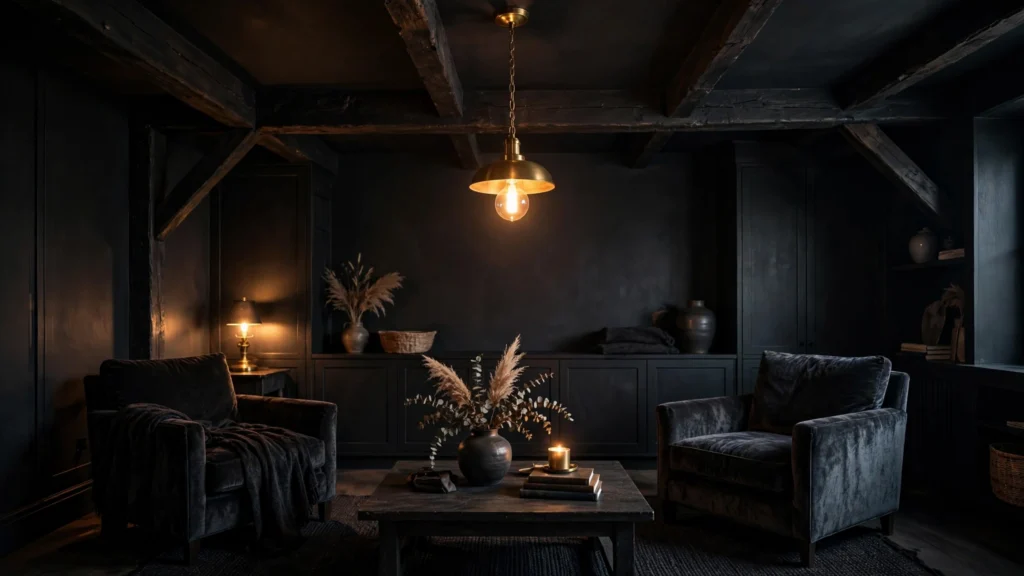
Lighting is where transitional style lets its modern side shine. A sculptural modern chandelier or a pair of sleek brass pendants hung over classic furniture creates the signature tension of the style — old soul, new energy. Choose clean geometry — globes, arcs, linear bars — in warm metals like brushed brass or aged bronze, which flatter warm neutrals far better than chrome.
Layer three levels of light the way designers do: ambient light from the statement chandelier on a dimmer, task light from a slim modern floor lamp with a linen shade beside the reading chair, and accent light from small table lamps or picture lights. Keep every bulb at 2700K warm white — cool daylight bulbs will make warm greige walls look muddy and undo the entire palette in one flip of the switch.
7. Pick One or Two Muted Accent Colors
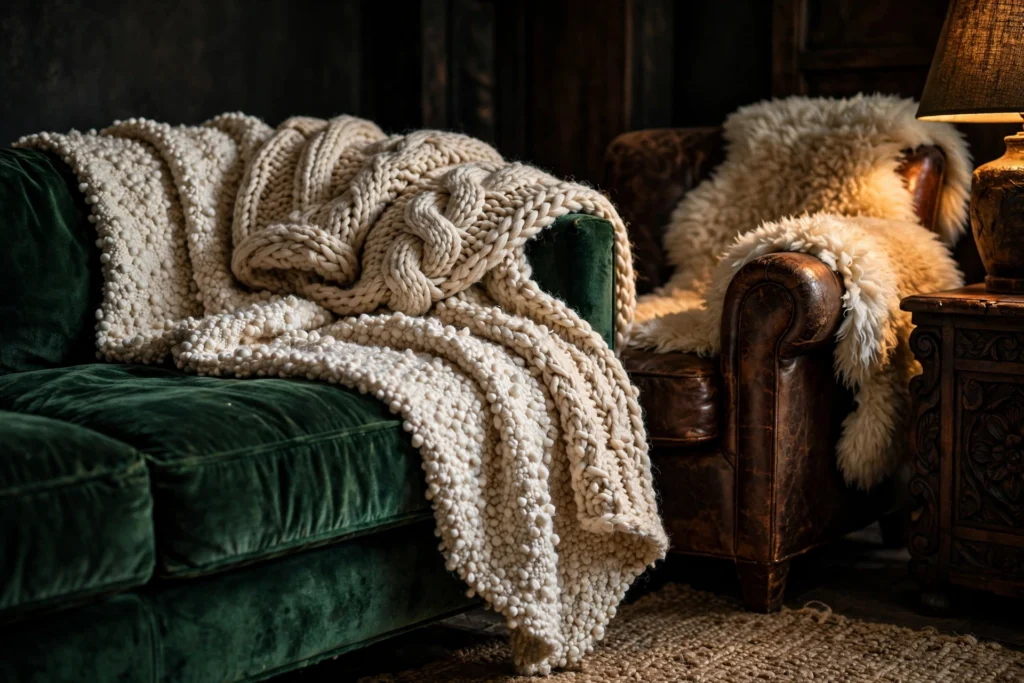
Warm neutrals need a supporting actor or the room can feel flat, and transitional palettes allow one or two muted accent tones — sage green, dusty blue, warm taupe, soft terracotta, or muted olive. “Muted” is the operative word: choose colors with gray in them so they rest calmly against beige and greige.
Confine accents to the easily changeable layer: cushions, throws, artwork, ceramics, and at most one upholstered accent chair. Aim for roughly 70 percent warm neutrals, 25 percent mid-tones like warm wood and stone, and 5 to 10 percent accent color. This ratio keeps the room timeless — when your taste shifts in a few years, you swap cushions and art, not the sofa.
8. Style a Classic Fireplace the Modern Way
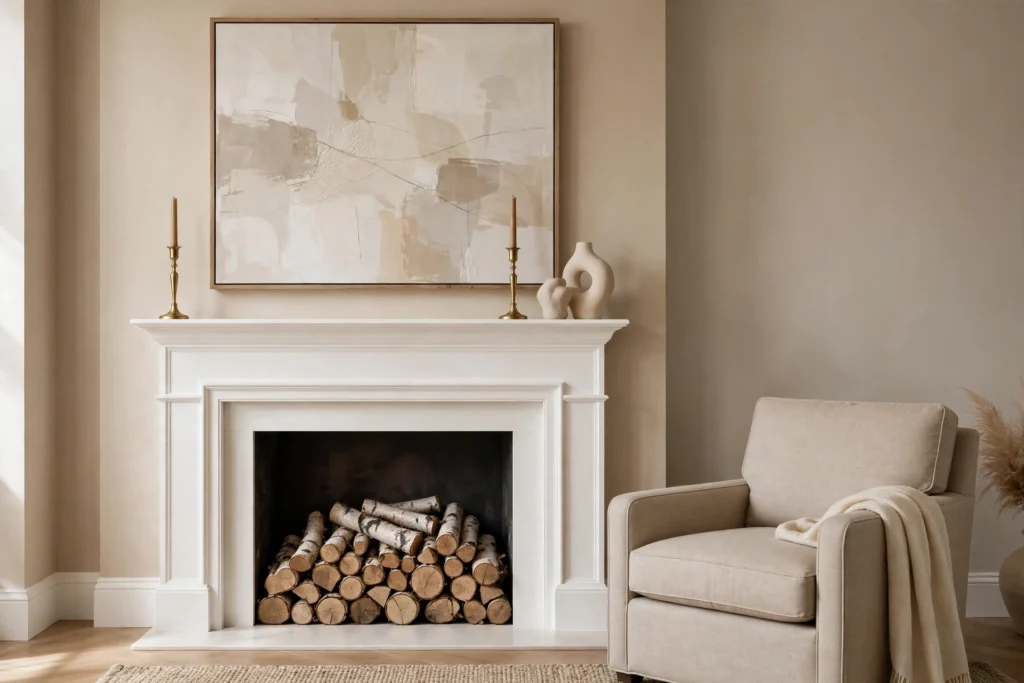
If your living room has a traditional fireplace, you already own the room’s classic anchor — the trick is styling it with a modern hand. Keep the mantel simple — painted wood or classic stone — then decorate with restraint: one large modern artwork or round mirror above, flanked by simple candlesticks or small sculptural objects.
Inside the firebox, less is more during the months it sits unused: a neat stack of birch logs, a cluster of pillar candles at varying heights, or simply clean and empty. Resist the classic mantel clutter of framed photos and figurines — three to five objects with breathing room between them reads transitional, while a crowded mantel reads traditional. Gentle symmetry helps: matching objects at each end with one taller piece in the center.
9. Ground the Room With a Traditional-Style Rug
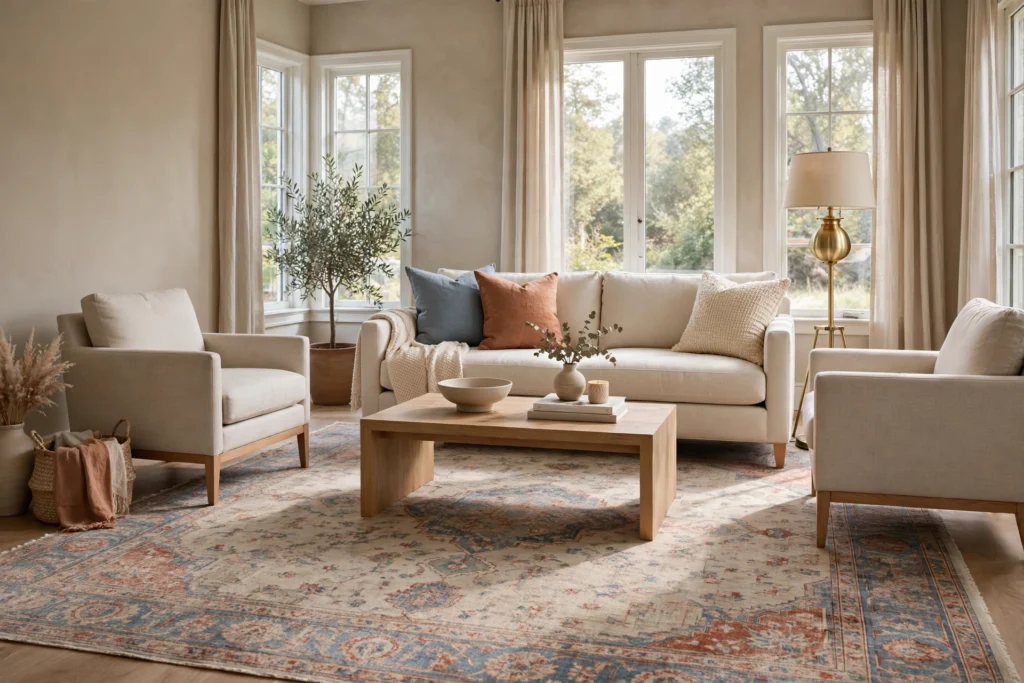
A rug in a classic pattern — a faded Persian or Turkish design in muted beige, rust, and soft blue — is one of the most forgiving ways to add tradition to a transitional living room. Choose one whose pattern has been softened by age or a low-contrast reproduction, so it adds warmth without dominating the calm modern furniture above it.
Size the rug generously — the front legs of the sofa and all accent chairs should rest on it, which usually means 8 by 10 feet for a standard layout. If a genuine vintage rug stretches the budget, washed-out reproductions deliver the look for a fraction of the price. Keep the rug’s background in the same warm-neutral family as your walls and the whole room locks together effortlessly.
10. Hang Bold Modern Art Over Classic Furniture
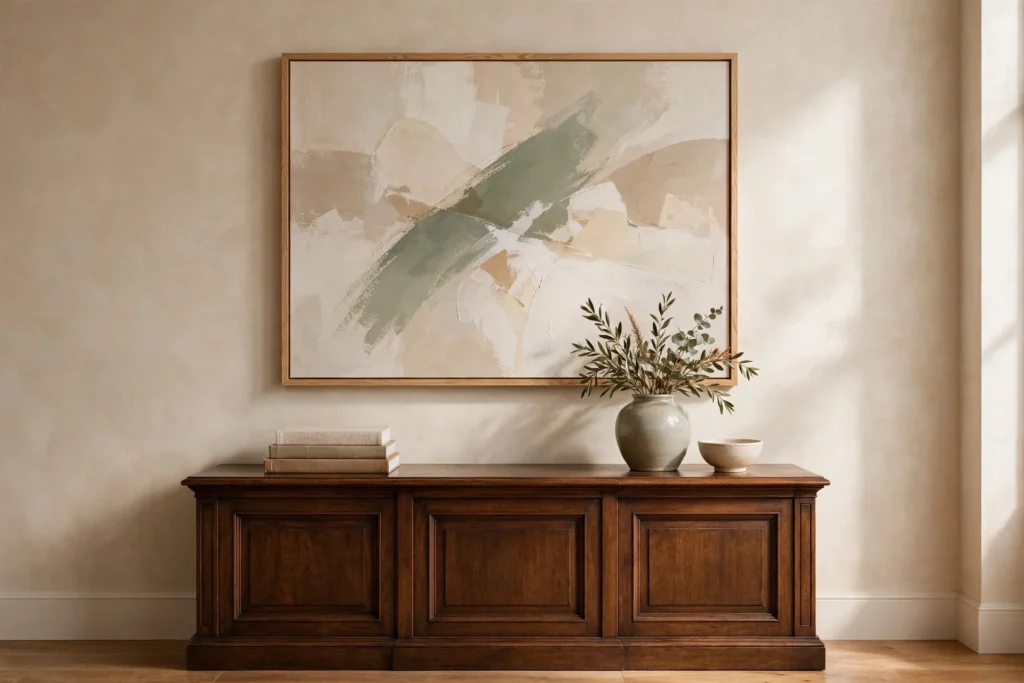
Art is the fastest way to tip a traditional-leaning room toward transitional. One large-scale modern abstract — soft neutrals with a single muted tone pulled from your accent colors — hung over a classic console, sideboard, or mantel instantly updates the entire wall. Scale is everything: the artwork should span roughly two-thirds the width of the furniture below it.
Hang it low: the center of the piece about 57 to 60 inches from the floor, or just 6 to 8 inches above the furniture it sits over. Choose a thin modern frame in natural oak, slim black, or a float frame to keep the look current — heavy gilt frames push the room back toward traditional. If large originals are out of reach, oversized prints from independent artists deliver the same impact.
11. Use Relaxed Symmetry
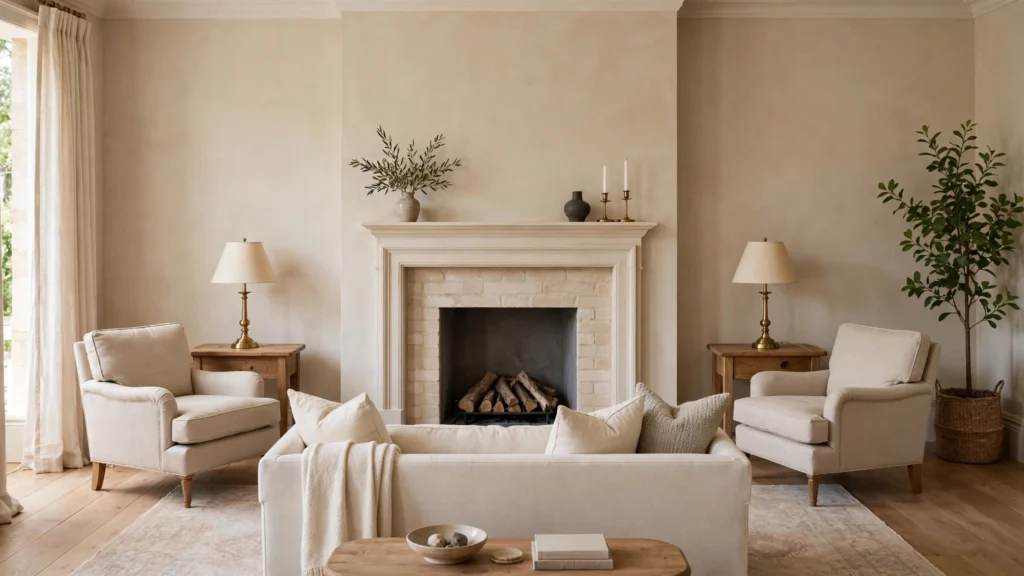
Classic design loves symmetry, and transitional style keeps it — just loosened up. Flank the fireplace or sofa with a matching pair of armchairs, lamps, or side tables for that calm, balanced feeling, but let the pairs be close cousins rather than identical twins: the same silhouette in slightly different fabrics, or matching lamps wearing different shades. You get the order of traditional design with the ease of modern living.
Then break the symmetry deliberately in one spot — an asymmetric cluster of small frames on one side, a tall plant standing alone in a corner, a throw draped over only one chair arm. This “almost symmetrical” approach stops the room from feeling like a furniture showroom while preserving the composed, settled feeling that symmetry gives. One intentional break is plenty; more starts to look accidental.
12. Dress Windows in Tailored Drapery
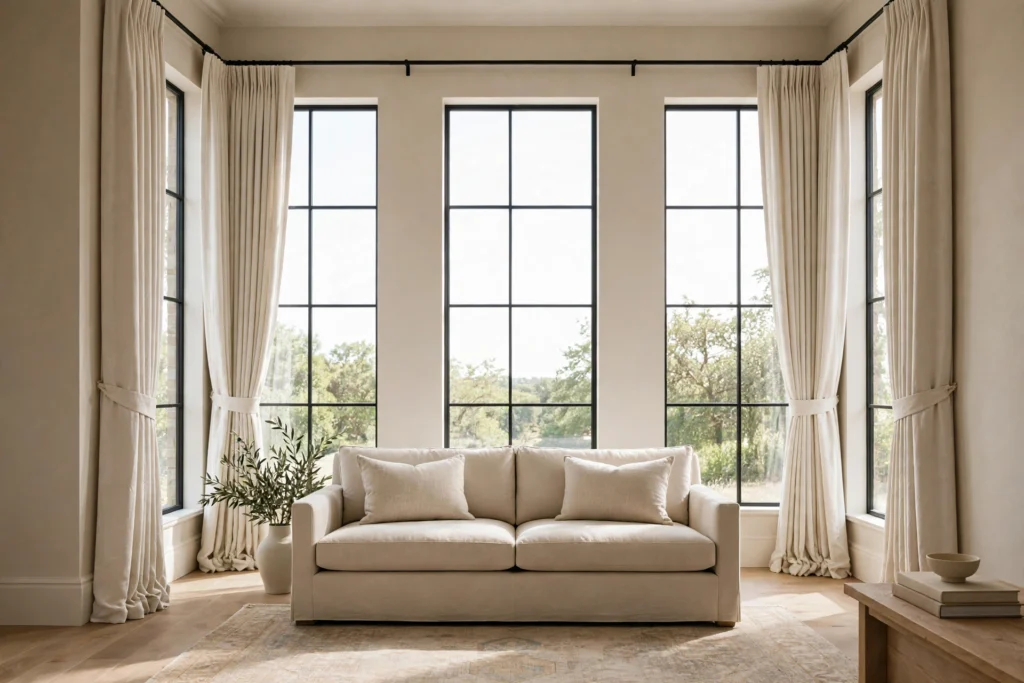
Window treatments are a quiet transitional powerhouse. Floor-to-ceiling drapery panels in warm-neutral linen or a linen blend, hung on a simple modern rod in matte black or brushed brass, frame the windows with classic softness while the clean tailoring keeps them contemporary. Skip fussy valances and heavy damask — just simple panels with a tailored pleat.
Mount the rod 4 to 6 inches above the window frame and extend it 6 to 10 inches beyond each side, so the panels stack back on the wall rather than covering the glass. This makes windows look larger and admits maximum daylight. Choose a softly light-filtering fabric like unlined linen, keeping its color close to the wall tone for a seamless, airy effect.
13. Blend Wood Tones Old and New
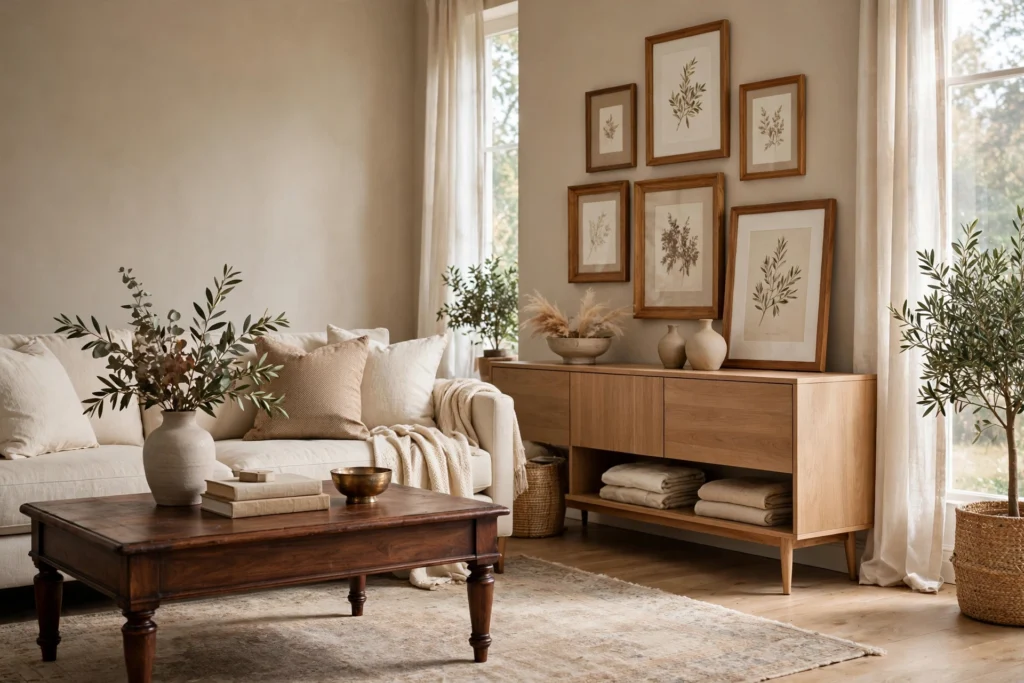
Transitional rooms are one of the few styles where mixing wood tones is not just allowed but encouraged. Pair a classic dark walnut coffee table with a light-oak modern sideboard, or honey-toned built-ins with sleek black-stained floating shelves. The contrast between old and new woods tells exactly the classic-meets-modern story this style is built on.
The secret to mixing without clashing is undertone: keep all your woods warm (or all cool) even as the depths vary. Spread each tone around the room at least twice — the walnut appears in the coffee table and a picture frame, the oak in the sideboard and a floor-lamp base — so no single wood looks like an accident. Two to three wood tones is the sweet spot; beyond that, the mix starts to feel busy instead of collected.
14. Let One Antique Shine
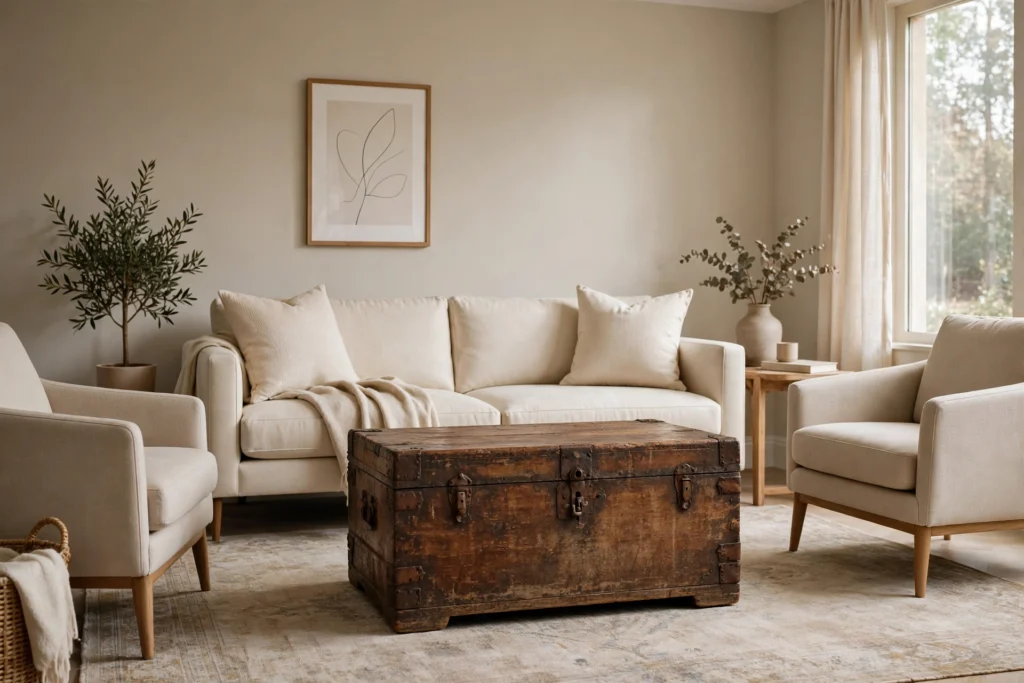
A single genuine antique gives a transitional living room a soul that new furniture can’t fake — a weathered wooden chest, an antique mirror with a timeworn frame, a vintage brass lamp, or an old farmhouse bench. One piece is the magic number: it becomes a story and a focal point instead of tipping the whole room into period territory.
Give the antique breathing room and a modern context: hang the antique mirror above a clean-lined console, or use the vintage chest as a coffee table beside a tailored sofa and modern chairs. Don’t surround it with other old pieces — the contrast against modern surroundings is what makes it sing. One great old thing will always beat five mediocre ones.
15. Style Coffee Tables and Built-Ins With Restraint
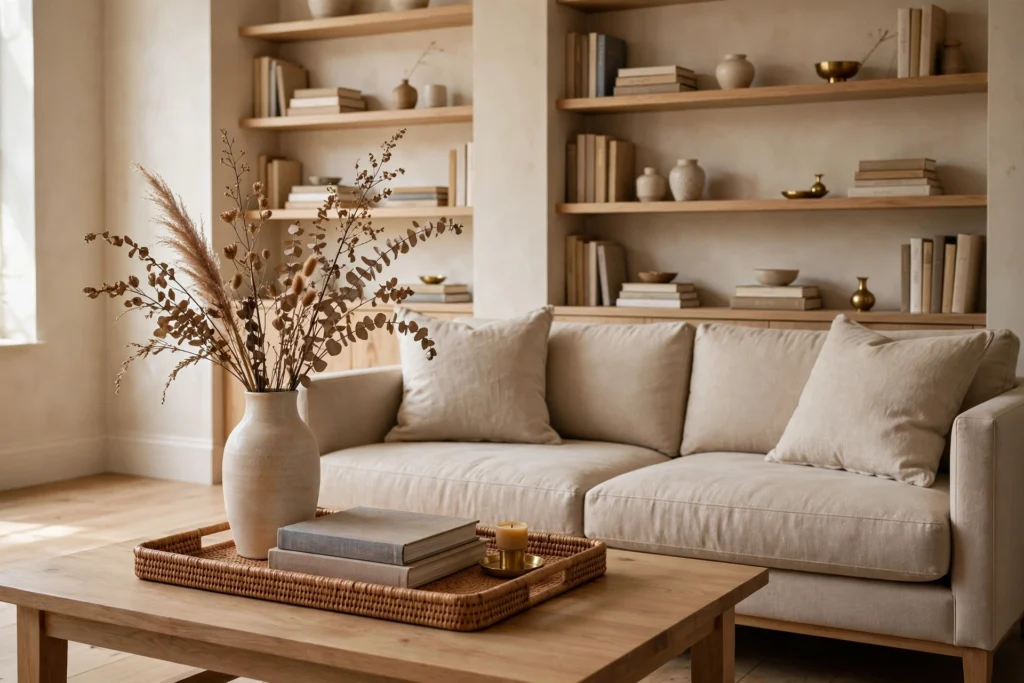
Transitional styling is edited, not empty. On the coffee table, follow the rule of three: something tall like a vase with stems, something flat like a stack of two or three beautiful books, and something small like a candle, a stone object, or a petite bowl. Corral the grouping on a tray so it reads as one composed unit instead of scattered clutter.
Give built-in shelves the same restraint: leave 30 to 40 percent of each shelf empty, arrange books vertically and horizontally, and repeat a small material set — ceramic, wood, brass, linen-bound books. Step back and squint at the shelves; if any single object screams for attention, remove one thing. That negative space is what separates transitional calm from traditional fullness.
Frequently Asked Questions
What is transitional living room style?
Transitional style is the bridge between classic traditional design and clean modern design. It keeps traditional comforts — tailored upholstery, symmetrical layouts, refined details like molding — but strips away the fussiness: simpler silhouettes, calmer colors, and uncluttered styling. Warm neutrals such as beige, greige, and cream dominate, layered with rich textures and one or two muted accent colors. The result feels timeless and balanced — neither old-fashioned nor starkly contemporary.
How do I mix classic and modern pieces without the room looking mismatched?
Unify everything with a consistent warm-neutral palette so different eras share common ground. Keep wood undertones consistent (all warm or all cool), repeat metal finishes across old and new pieces, and let each furniture piece be clearly classic or clearly modern rather than a muddy half-and-half. The 70-25-5 formula helps: about 70 percent warm neutrals, 25 percent mid-tone wood and stone, and 5 to 10 percent accent color. When the palette and finishes agree, the style mix reads as intentional curation.
What colors work best in a transitional living room?
Warm neutrals do the heavy lifting: greige, warm beige, cream, mushroom, and warm white on walls and large upholstery. Mid-tones of natural wood, stone, and leather add depth, while one or two muted accents — sage green, dusty blue, soft terracotta, or warm taupe — bring the palette to life in cushions, art, and ceramics. Avoid cool grays, stark whites, and saturated brights, which pull the room toward either cold-modern or traditional-formal instead of the balanced middle.
Is transitional style expensive to achieve?
Not at all — it is one of the most budget-friendly styles because it works with what you own. Repaint walls in a warm greige, add affordable molding kits, and slipcover or reupholster existing traditional furniture in modern neutral fabrics. Modern lighting and abstract art are widely available at modest prices, washed-out rug reproductions cost a fraction of vintage originals, and a single flea-market antique supplies all the character you need. Since the accent layer is just cushions and decor, you can refresh the look cheaply for years.
Keep Exploring
A transitional living room comes together one balanced layer at a time — you don’t need to overhaul everything at once. Start with the change that bothers you most, whether that’s a dated wall color, tired lighting, or a sofa that leans too far traditional or too far modern, and build outward from there. Because the style sits in the timeless middle rather than chasing trends, every improvement you make now will still look right years from today.