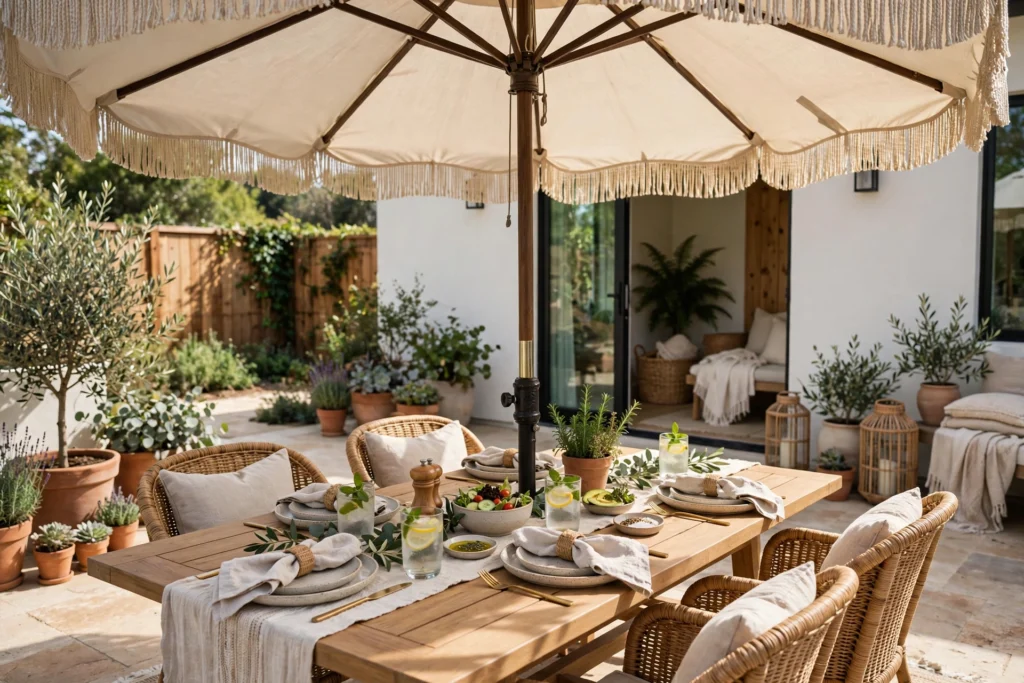

A patio without shade is a patio you only use at golden hour. The right umbrella changes that — dropping the temperature under the canopy by 10–15 degrees, protecting furniture from UV fade, and giving your outdoor space the finished, resort-like layer it is missing. These patio umbrella ideas walk through every major style — classic market, cantilever, half, and solar-lit — with the sizing math, base weights, and placement rules that separate an umbrella that works from one that topples in the first storm.
Start with size: your canopy should extend 2 feet beyond the area you want shaded on every side, because the sun moves. A 9-foot umbrella shades a 42–54-inch dining table; an 11-foot cantilever covers a full lounge set. For the complete outdoor picture, pair your umbrella plan with our patio decor ideas for a stunning outdoor retreat so shade, seating, and styling arrive together. And always budget the base before the canopy — an under-weighted umbrella is a sail waiting for wind.
1. Classic Center-Pole Market Umbrella
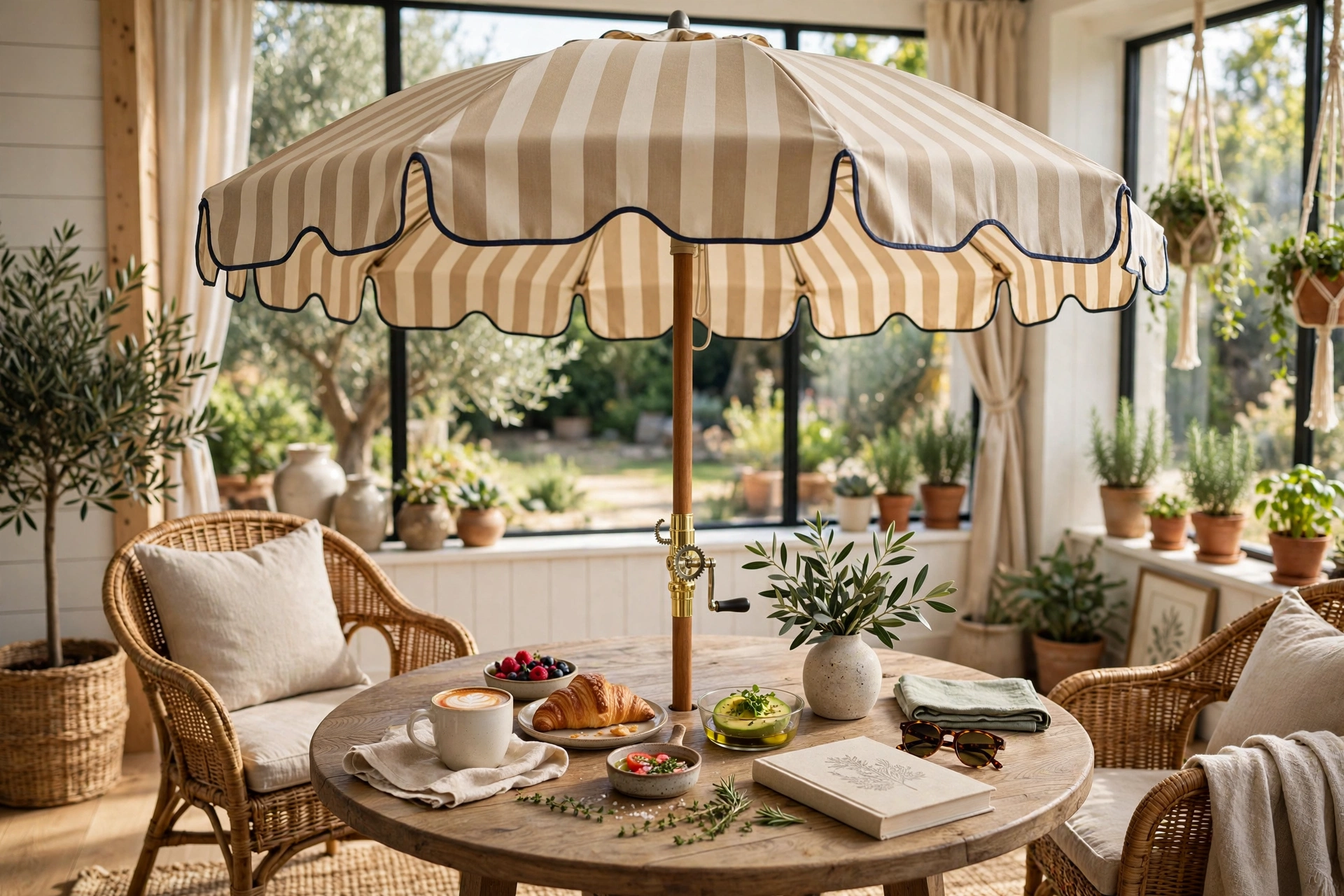
The market umbrella — straight center pole, 7.5 to 11 feet across — remains the best value in patio shade. A 9-foot model in solution-dyed acrylic (Sunbrella or equivalent) shades a 48-inch round table with room for chairs, and the center pole doubles as a stabilizer when dropped through the table’s umbrella hole into a weighted base below. Expect to pay for fabric quality: solution-dyed acrylic holds color for 5+ years, while cheap polyester fades in one season.
Size the pole to your table: standard 1.5-inch poles fit most patio tables. For freestanding use away from a table, step up to an 11-foot canopy and a 75-pound base minimum. Crank-lift mechanisms beat push-button tilts for daily ease — test the crank in store for smoothness. The umbrella design overview traces how this centuries-old form evolved into today’s patio staple. Keep a cover on it when not in use; UV degrades even good fabric when it is open 24/7.
2. Cantilever Offset Umbrella
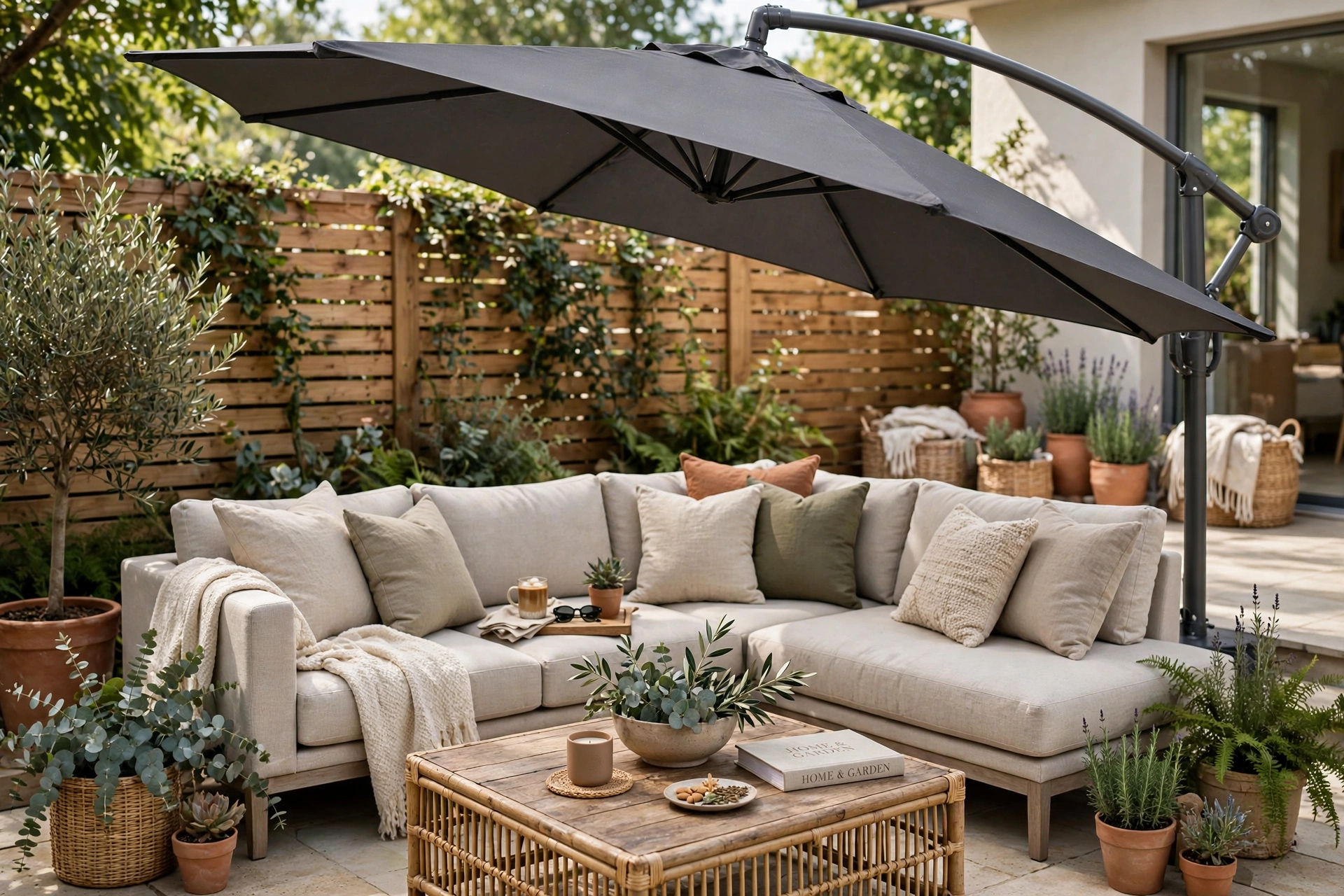
Cantilever (offset) umbrellas hang the canopy from a side arm, leaving the space beneath completely free of poles — perfect over lounge sets, sectionals, and dining tables where a center pole would block conversation or legroom. The 10–13-foot canopies rotate 360 degrees and tilt on multiple axes, so you can chase shade across the afternoon without moving furniture.
The engineering tradeoff is weight: the offset arm acts as a lever, so the base must be heavy — 150–220 pounds of sand or water-filled ballast, or a bolt-down plate on decks. Look for a sturdy aluminum frame (steel rusts; wood cantilevers are rare and pricey) and a smooth crank-and-tilt system you will actually use. Position the base 2–3 feet outside the seating zone so nobody trips on it, and always close a cantilever in wind above 25 mph — the large canopy catches gusts like a sail. For rectangular dining sets, the oval or rectangular 10×13-foot cantilever canopy matches the table shape far better than a round one.
3. Half Umbrella for Balconies and Tight Patios
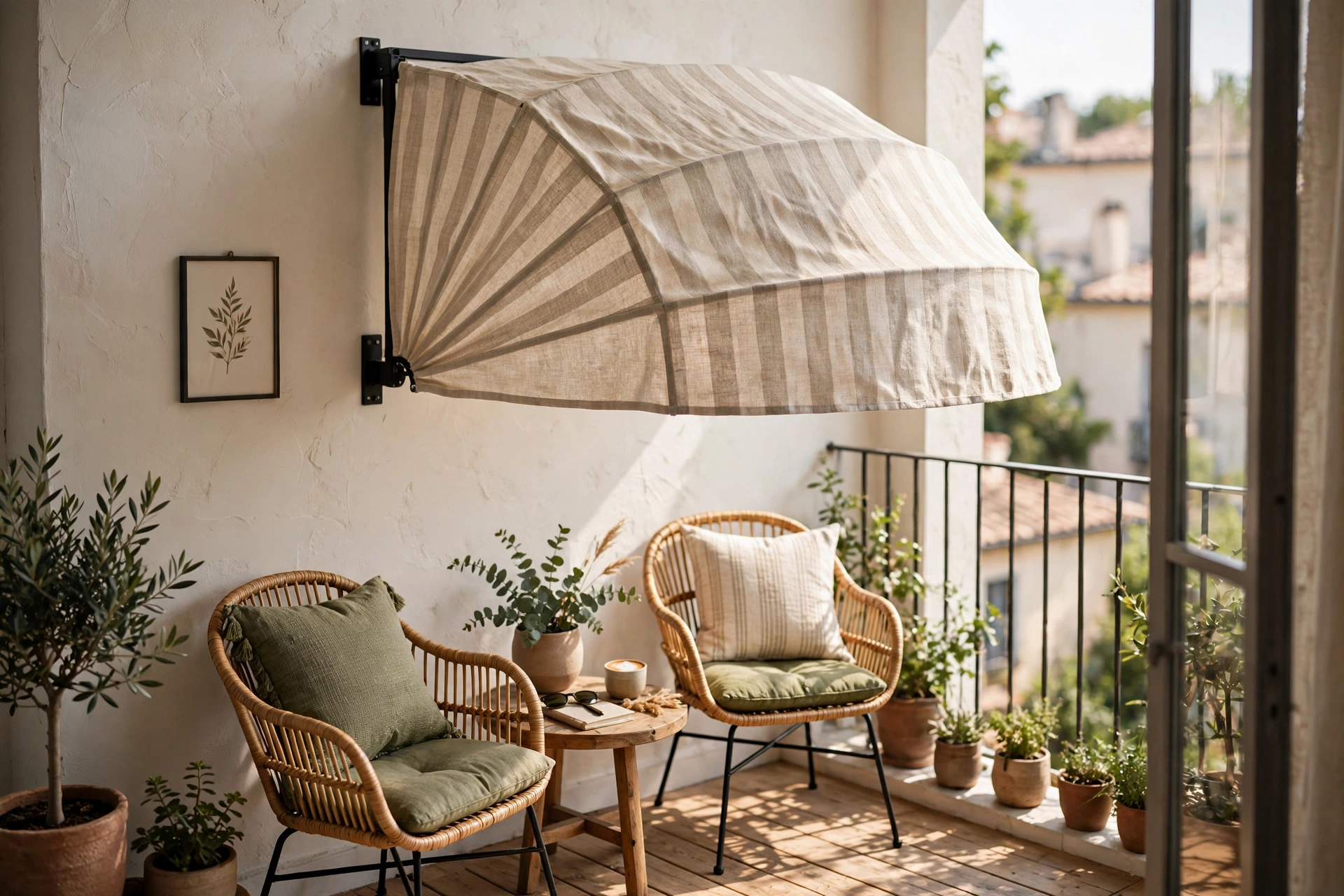
When a full round canopy would swallow your balcony, a half umbrella — a semicircle that sits flat against the wall or railing — gives you real shade in half the footprint. A 9-foot half umbrella shades about as much as a 6-foot full one but hugs the wall, leaving your narrow balcony walkable. It is the only umbrella style genuinely designed for spaces under 6 feet deep.
Mount it against the wall with the included bracket or use a half-round weighted base (35–50 pounds) that slides against the railing. The flat edge should face the building with the curved canopy extending outward; most models tilt, so angle it against the afternoon sun. Because the canopy is close to the wall, choose light colors to bounce brightness back into the seating area rather than dark tones that create a cave. Measure railing height first — the canopy’s lowest edge should clear seated head height by at least 6 inches.
4. Solar LED Umbrella
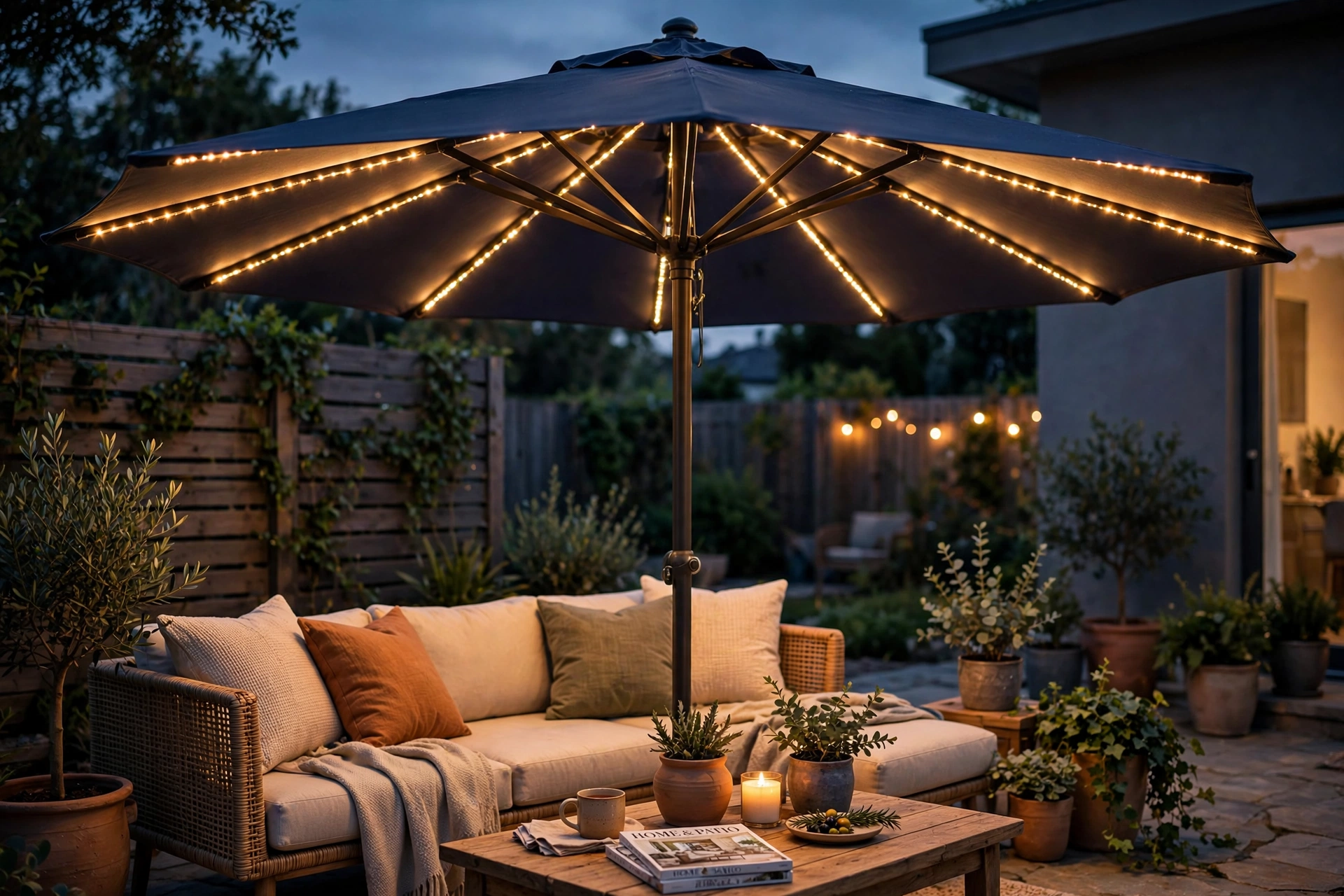
Solar LED umbrellas embed small photovoltaic panels in the canopy top that charge by day and power LED lights under the ribs at night — typically 24–40 LEDs giving 4–6 hours of warm ambient glow. You get evening patio lighting with zero wiring, zero electrician, and zero running cost, which makes this the easiest “outdoor room” upgrade there is.
For the lights to matter, the canopy must get 6+ hours of direct sun daily; under trees or on north-facing patios the charge disappoints. Look for models with a separate on/off switch and replaceable rechargeable batteries (usually AA NiMH) so the lights survive beyond year two. The glow is ambient, not task lighting — pair it with a lantern or two on the table for dining. If you want a fuller nighttime scheme, our outdoor string light ideas for a magical glow layers beautifully with a solar umbrella as the centerpiece.
5. Wooden Market Umbrella in Teak or Eucalyptus
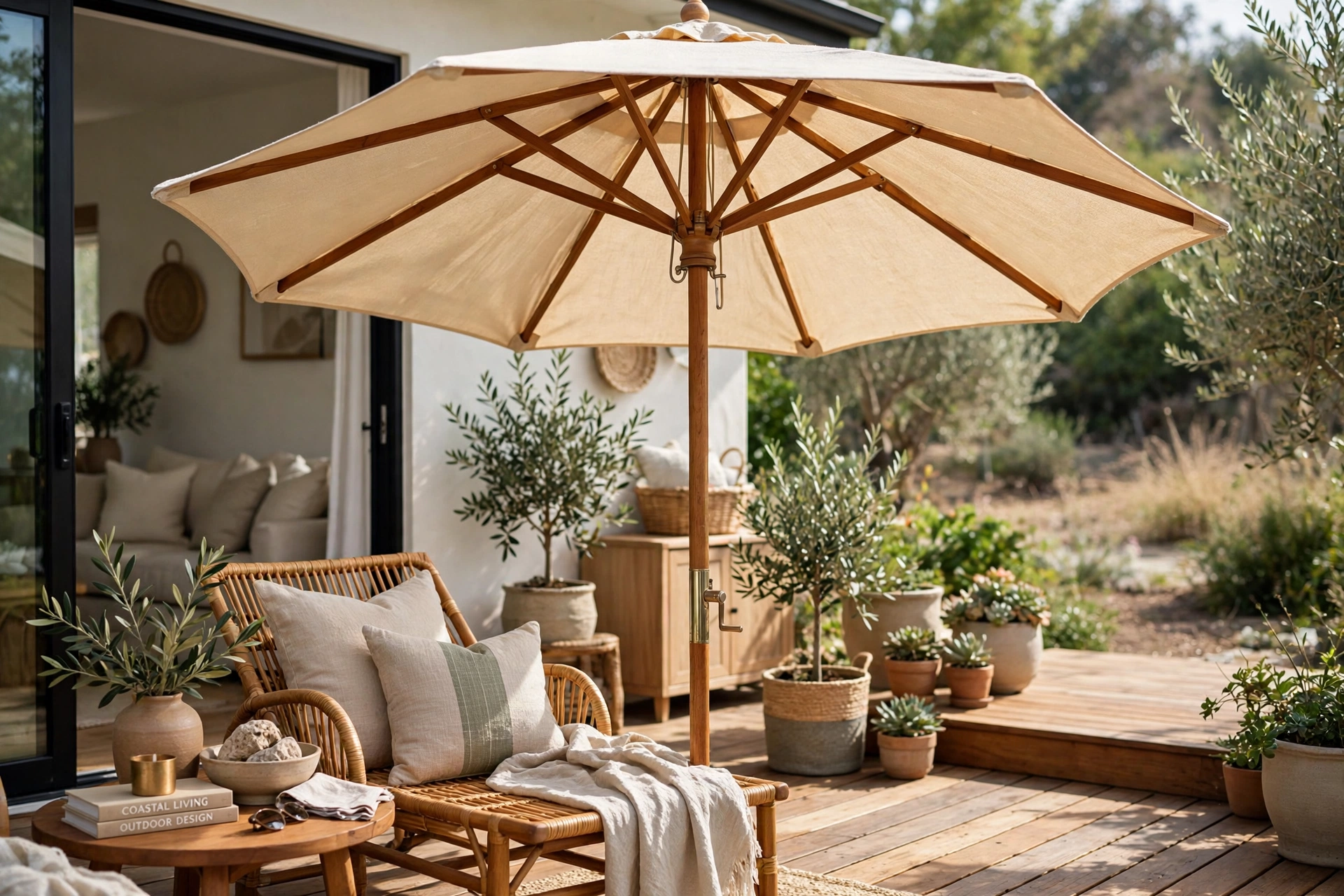
A wood-pole market umbrella brings furniture-grade warmth that aluminum cannot match. Teak and eucalyptus poles with brass or stainless hardware age to a silver-gray patina (or keep the honey tone with annual teak oil), and the natural material visually ties the umbrella to wooden decking and furniture. The 8-rib construction on quality wood umbrellas also tensions the canopy more evenly than cheap 6-rib metal frames.
Wood demands care: oil the pole yearly, store the umbrella dry, and never leave it open in rain — wet wood plus a damp folded canopy invites mildew. Expect to pay 2–3× the price of an aluminum equivalent; the payoff is longevity (a decade or more) and looks. Pulley-and-pin lift systems are traditional on wood poles — they are simple and reliable but require some arm strength on 9-foot-plus canopies. Match the canopy to your cushions in a solid natural tone and let the wood be the star.
6. Tilting Umbrella for Low-Angle Sun
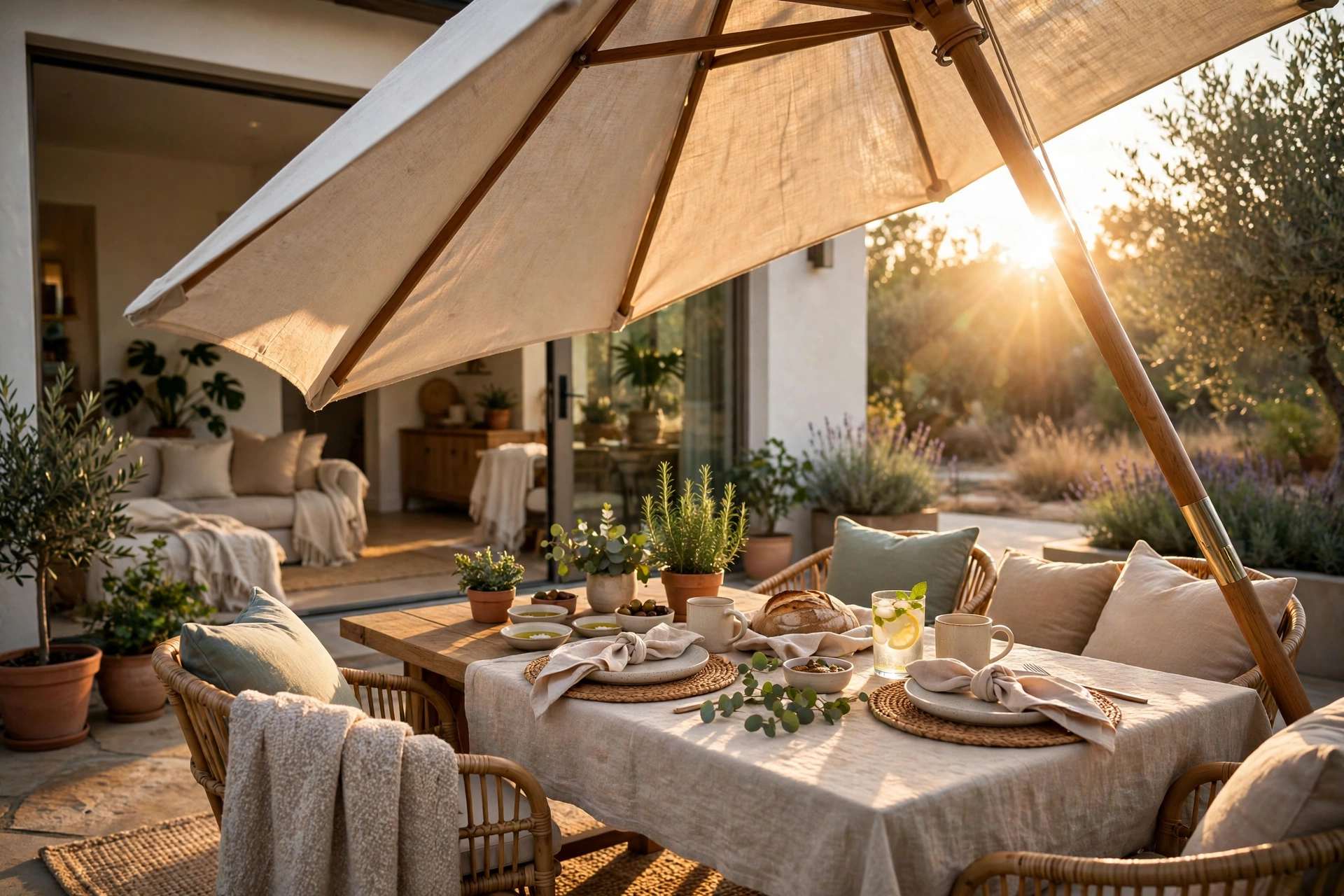
Morning and late-afternoon sun slips under a fixed canopy, which is why tilt matters more than most buyers realize. A tilt mechanism angles the entire canopy up to 45 degrees toward the low sun, extending useful shade by 2–3 hours daily. Collar-tilt (twist the collar, tilt the top) is smoother than push-button tilt and less prone to jamming.
When shopping, tilt the display model fully and check that the canopy stays taut — sagging at full tilt means weak rib tension. Position the umbrella on the sun side of the seating and tilt toward the sun’s position at your main use time; for dinner patios that means westward tilt. Combine tilt with a rotating base or a cantilever’s 360-degree spin and you can track the sun all day without dragging furniture. This single feature is the difference between an umbrella you use at noon only and one you live under.
7. Double-Sided Twin Canopy Umbrella
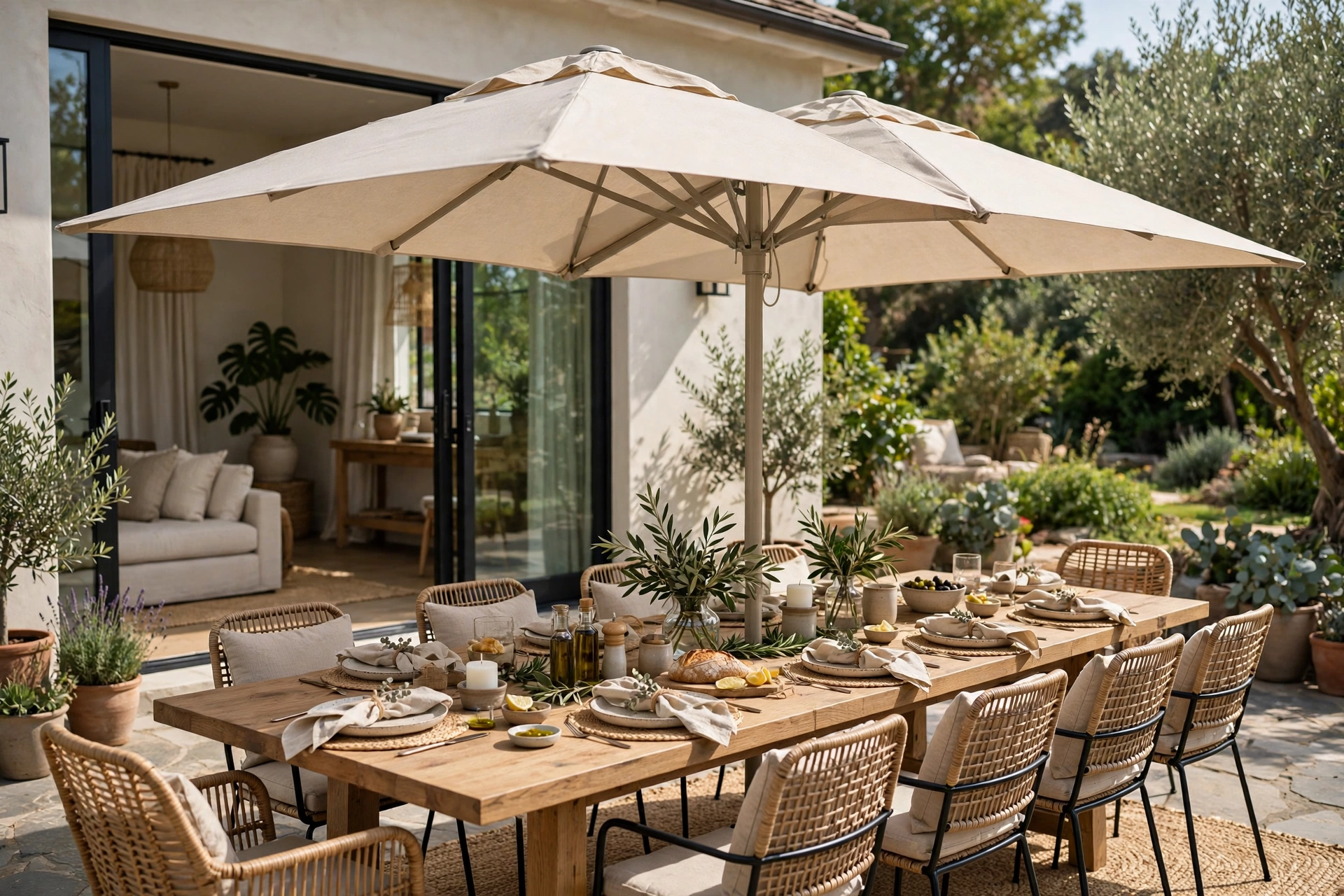
Oversized rectangular dining sets — 8-foot tables seating 8–10 — defeat single canopies. The twin (double-sided) umbrella mounts two rectangular canopies on one center pole, covering up to 15×9 feet of table with balanced proportions. It looks intentional rather than improvised, unlike two separate umbrellas fighting for space.
You will need a serious base: 100+ pounds minimum, or better, a bolt-down or in-ground mount, because the combined canopy area catches significant wind. Check that both canopies tilt independently — sun angles differ across a long table. The center pole lands mid-table, so this style suits tables with a center umbrella hole or a dedicated base position; measure your table’s hole diameter (usually 1.5–2 inches) before buying. For windy sites, choose a model with vented canopies (see idea 10) to let gusts pass through.
8. Planter-Base Umbrella
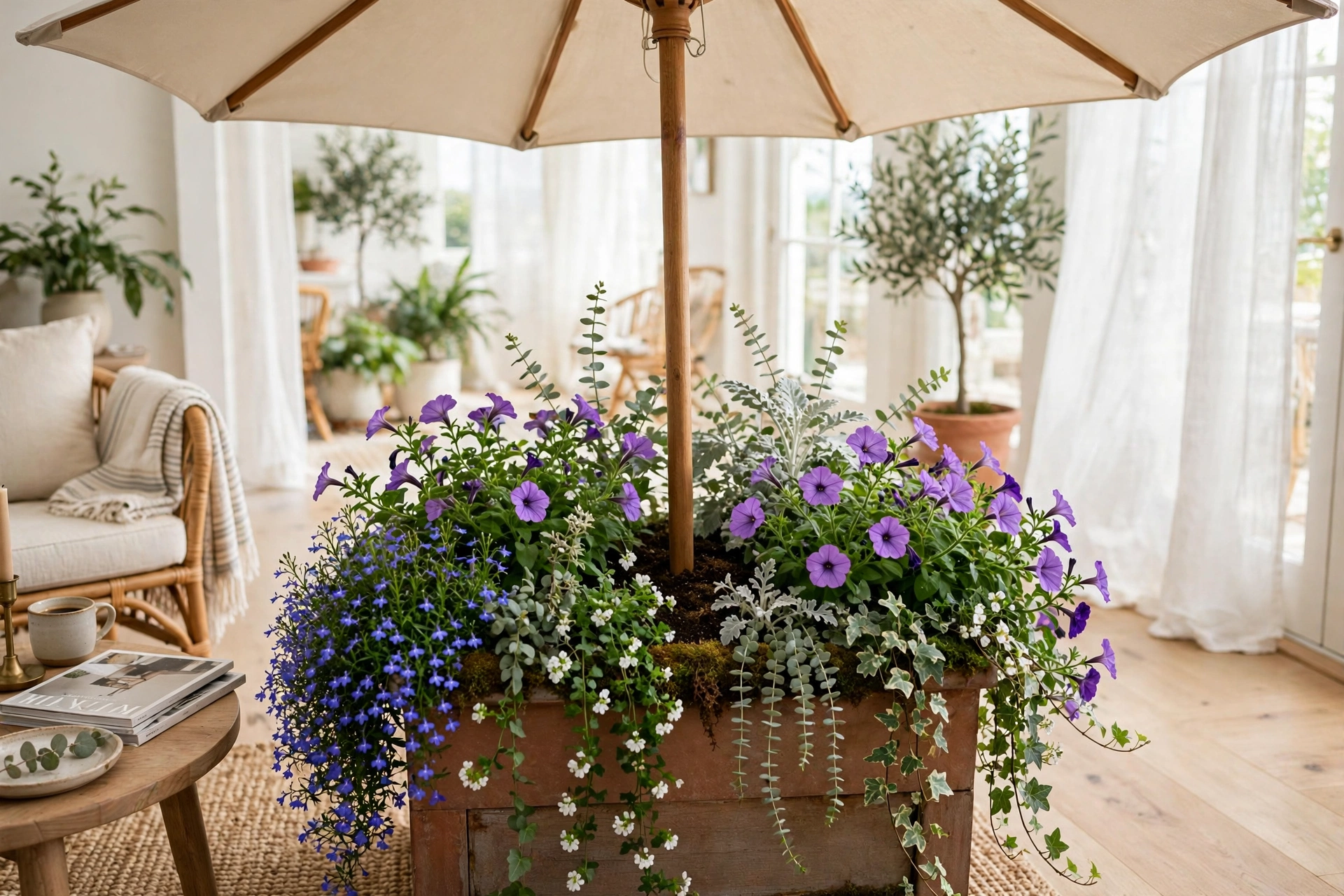
A planter base — a hollow resin or concrete-look pot that fills with soil and plants around the umbrella pole — hides the ugly ballast and adds greenery in one move. Fill the reservoir with 50–70 pounds of sand or gravel first for stability, then top with soil and trailing plants like sweet potato vine or wave petunias that cascade over the rim.
Choose plants with shallow roots that tolerate the confined soil and the reflected heat off the patio; succulents work in hot climates, ferns in shade. The base must have drainage holes so the ballast layer does not turn into a swamp. This is a particularly elegant solution for balconies and small patios where a separate planter plus a separate base would crowd the space. Refresh the planting each season and the base becomes a design feature rather than a necessary eyesore.
9. Sizing Math for Dining Sets
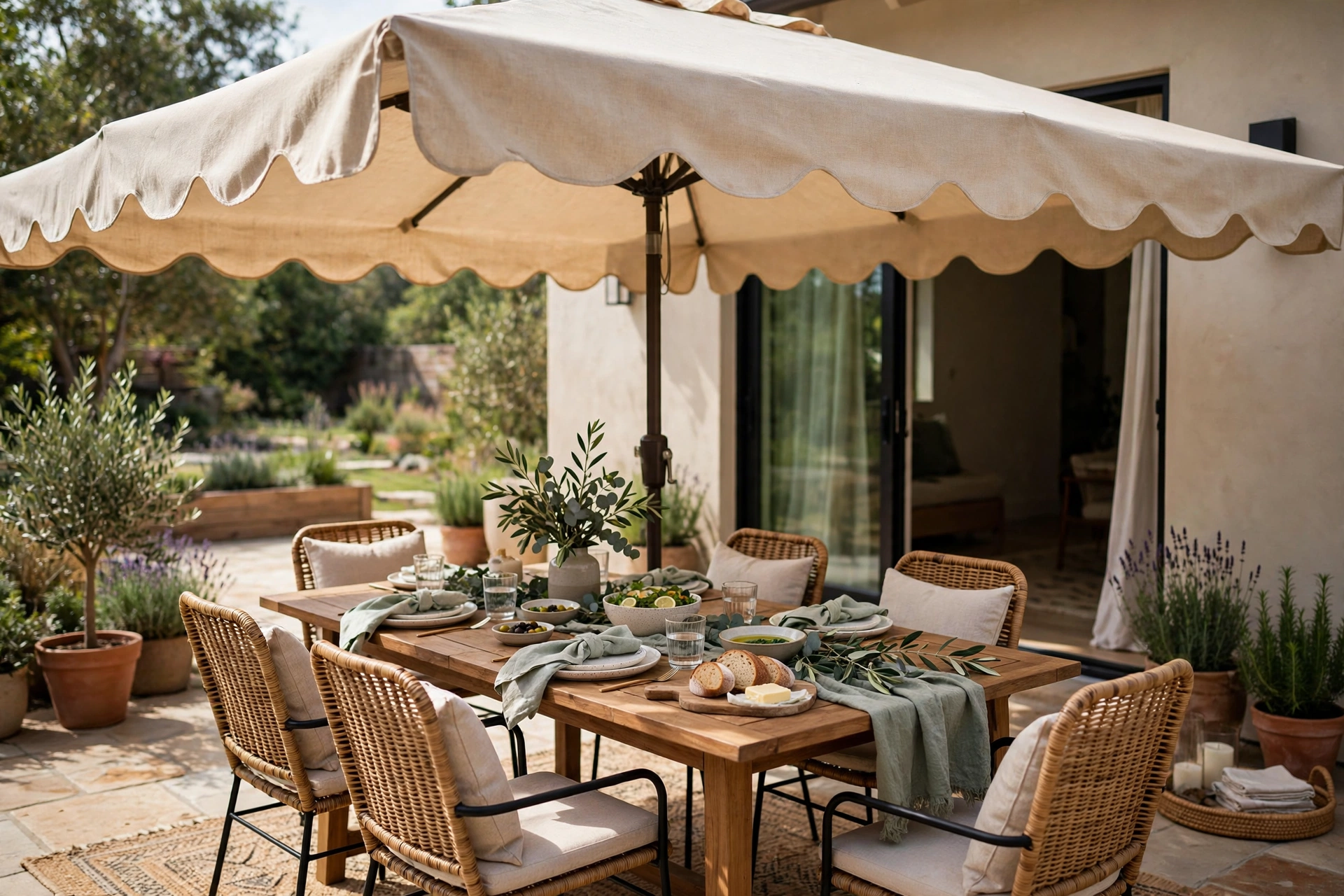
Getting the size wrong is the most common umbrella mistake, so here is the math: the canopy should extend at least 2 feet beyond the table edge on all sides. A 48-inch round table needs a 9-foot (108-inch) umbrella; a 72×40-inch rectangular table needs an 11-foot round or a 10×13-foot rectangular canopy. For lounge areas, shade the full furniture footprint plus 2 feet — a typical 3-seat sectional plus coffee table needs an 11–13-foot cantilever.
Height matters too: the canopy’s lowest edge should sit 6.5–7 feet off the ground so standing adults clear it, which means a pole of at least 8 feet for in-table use. When in doubt between sizes, go larger — an oversized canopy can be tilted, but an undersized one cannot be stretched. Sketch your furniture footprint in chalk on the patio and hold a tape measure to the sky; the 10 minutes prevents a costly return.
10. Wind-Vented Canopy
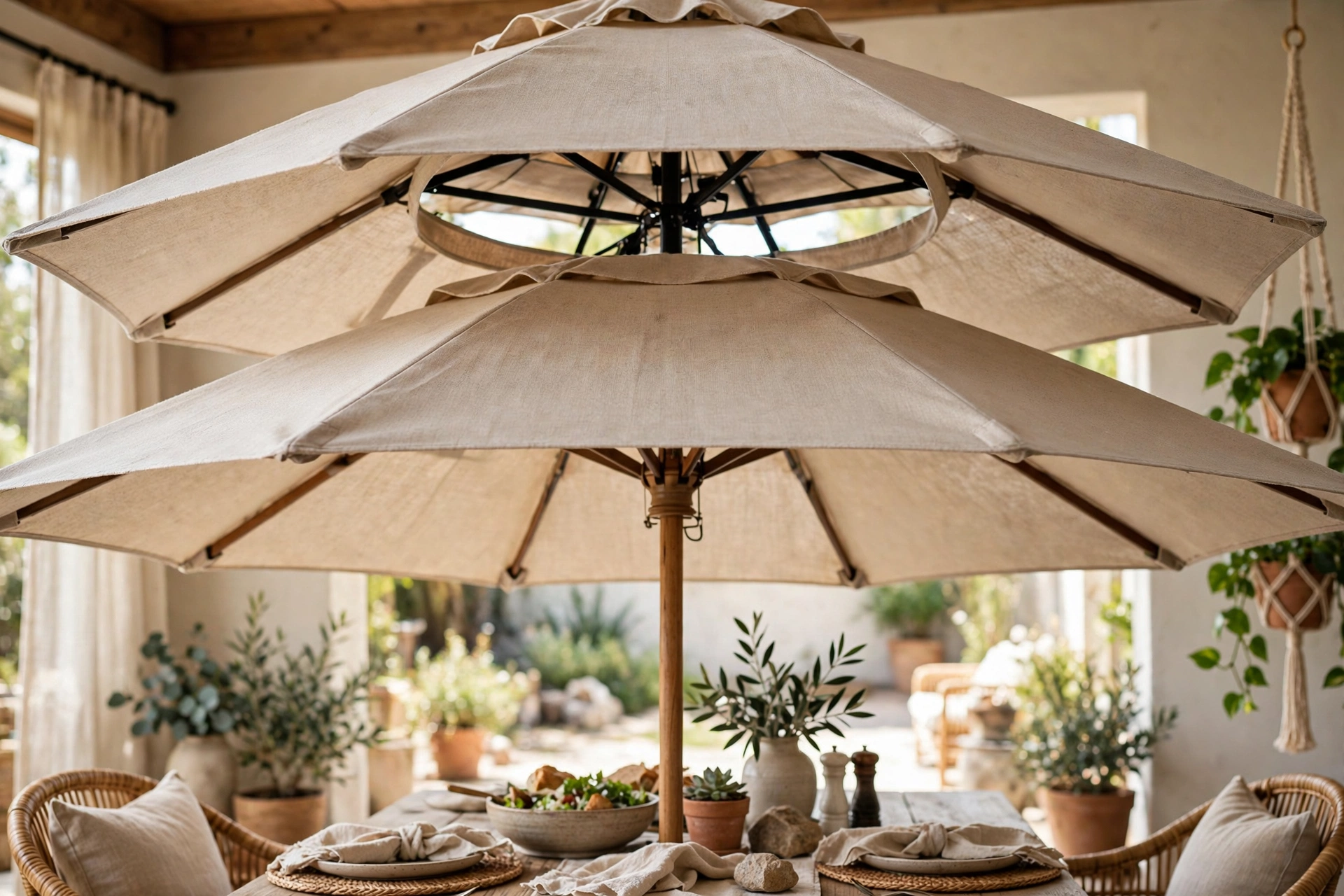
That little second canopy floating above the main one is a wind vent, and it is functional, not decorative. The gap lets rising hot air escape (cooling the shade beneath) and — critically — lets gusts pass through instead of catching the canopy like a parachute. In breezy locations, a vented canopy plus a proper base is the difference between relaxing and chasing your umbrella across the yard.
Do not treat the vent as a substitute for closing the umbrella in storms: bring any umbrella down when winds exceed 25–30 mph or when you leave home for the day. For permanent windy sites, consider an in-ground mount — a sleeve set in concrete that the pole drops into — which holds better than any portable base. As a rule of thumb, base weight in pounds should roughly equal canopy diameter in inches × 8 for freestanding setups (a 9-foot/108-inch canopy wants ~85+ pounds). The patio overview covers how shade structures fit into overall patio planning.
11. Cabana-Style Umbrella With Curtains
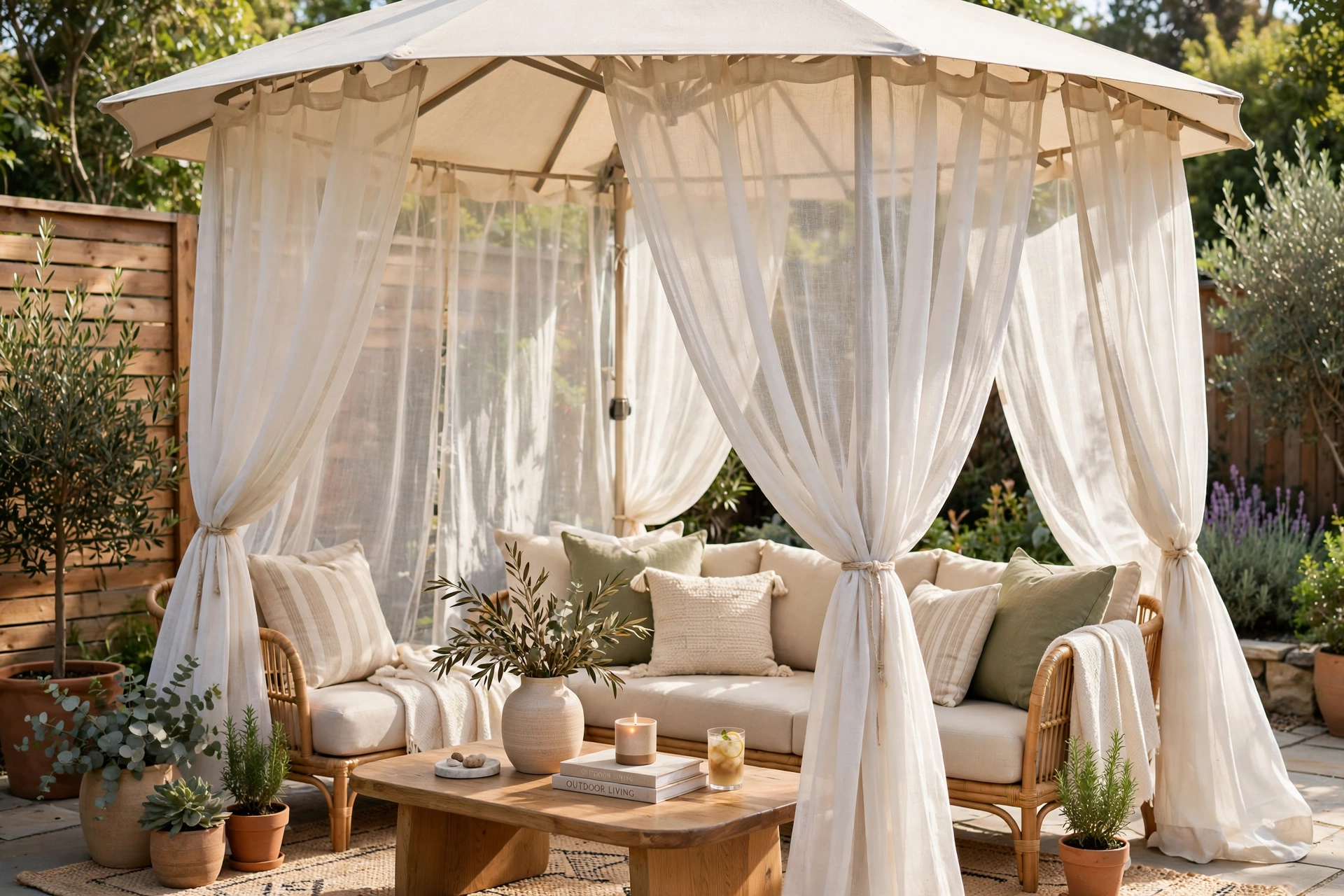
Add sheer outdoor curtains to a large market or cantilever umbrella and you get a cabana: privacy, filtered light, and mosquito buffering in one romantic package. Clip curtain panels to the canopy’s edge ribs with stainless curtain rings or dedicated clips, using solution-dyed acrylic or outdoor-rated sheer fabric that resists mildew.
Hang panels to just brush the patio floor and weight the hems with outdoor drapery weights or a sewn chain so breezes do not tangle them. Tie-backs on each rib let you open the cabana fully on calm days. This treatment suits lounge areas and daybeds more than dining sets, where curtains snag chairs. In the evening, the curtains diffuse your solar-LED or string lights into a soft glow that feels genuinely resort-like. Take curtains down in storms — wet fabric plus wind destroys both curtains and canopy.
12. In-Table Umbrella Done Right
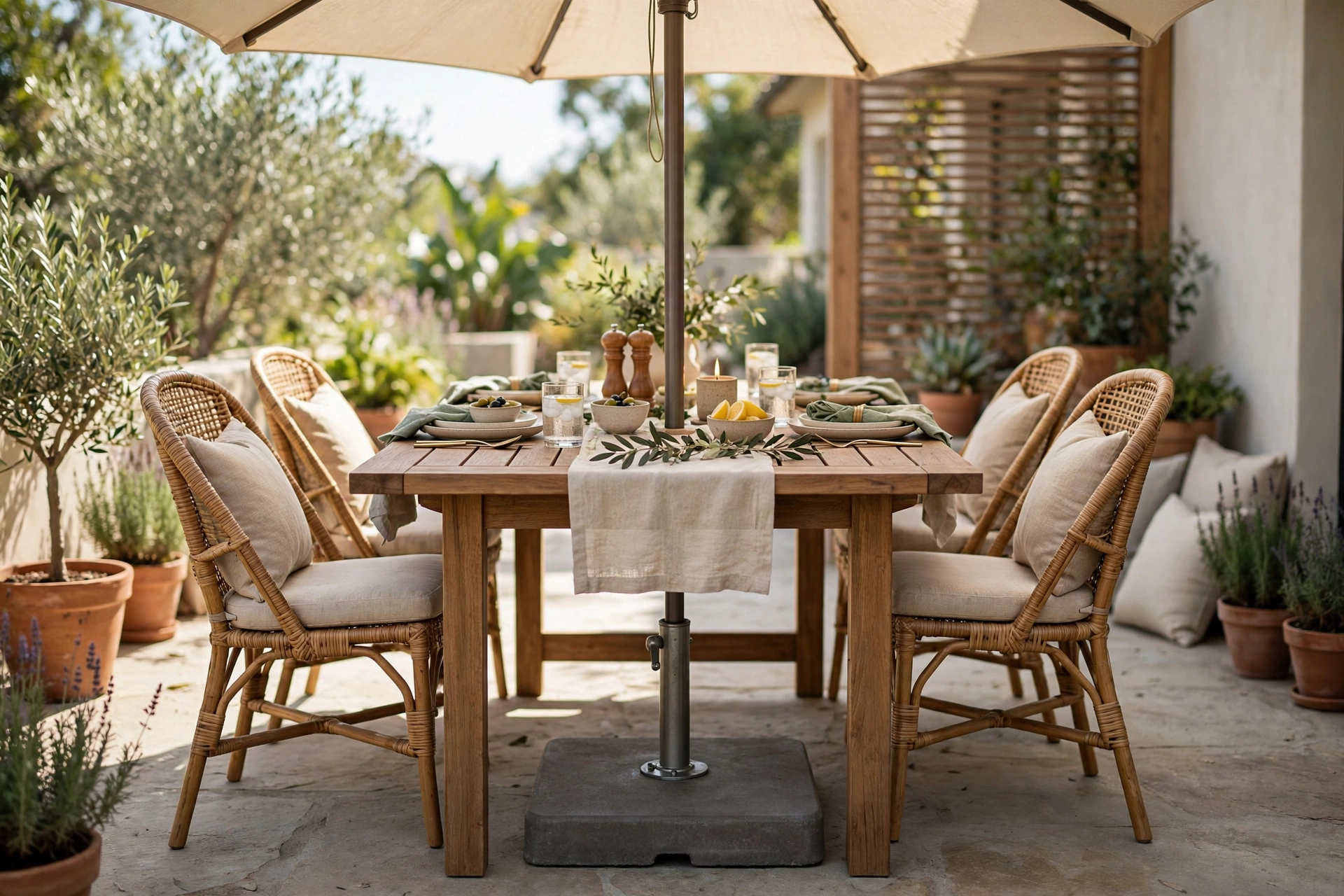
Running the pole through the dining table looks clean but creates specific demands. The table’s umbrella hole must match the pole (1.5-inch standard; adapters exist for 2-inch commercial poles), and you need a base beneath the table — not beside it — rated for the full canopy, typically 50–75 pounds for a 9-footer. A base that fits under the table keeps foot space clear; low-profile 19-inch-diameter bases slide under most dining sets.
Protect the table: a plastic hole ring prevents the pole from chipping the tabletop, and a rubber gasket stops wobble. When the umbrella is out for the season, cap the hole with a matching cover so rain does not pour through onto the base below. Never rely on the table alone to stabilize the umbrella — an unbased pole through a table will lever the table over in a gust. For glass-top tables, verify the manufacturer’s umbrella rating; some tempered tops are not rated for pole loads.
13. Color and Pattern Styling
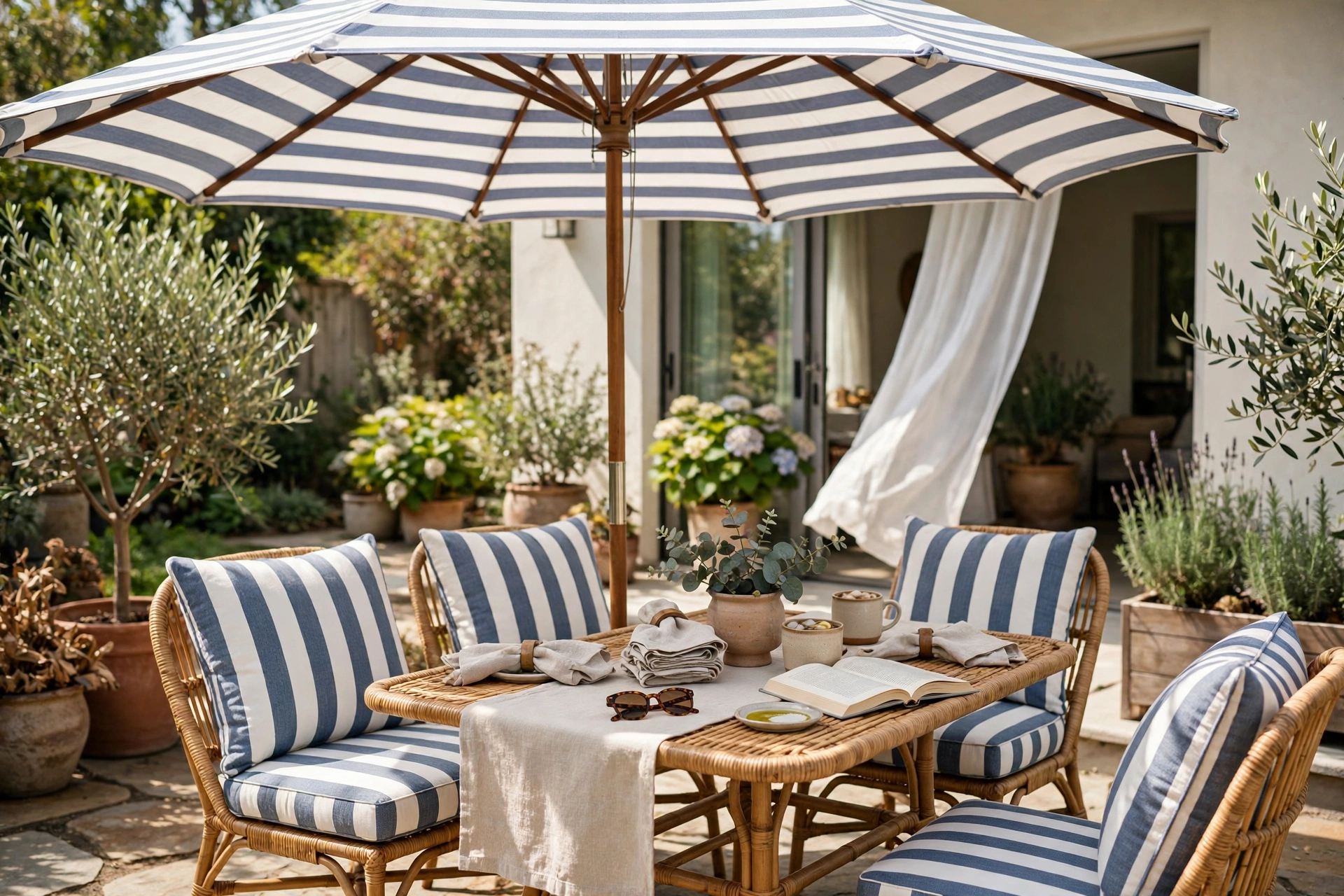
Canopy color is a design decision with practical consequences. Light neutrals (natural canvas, sand, light gray) reflect heat and keep the shade cooler; dark colors (navy, charcoal, forest) absorb heat but hide stains and create dramatic contrast. Classic stripes — navy/white, green/white, terracotta/white — read instantly as “patio” and forgive fading better than solids.
Coordinate, do not match exactly: pull the canopy color from your cushions or rug as an accent, not a clone. If your furniture is neutral, a bold canopy (terracotta stripes, deep teal) becomes the patio’s artwork; if furniture is colorful, keep the canopy quiet. Solution-dyed acrylic is worth the premium for any color you want to last — the pigment runs through the fiber, so reds and blues survive years of sun that would bleach surface-dyed polyester in months.
14. Balcony Railing-Mount Umbrella
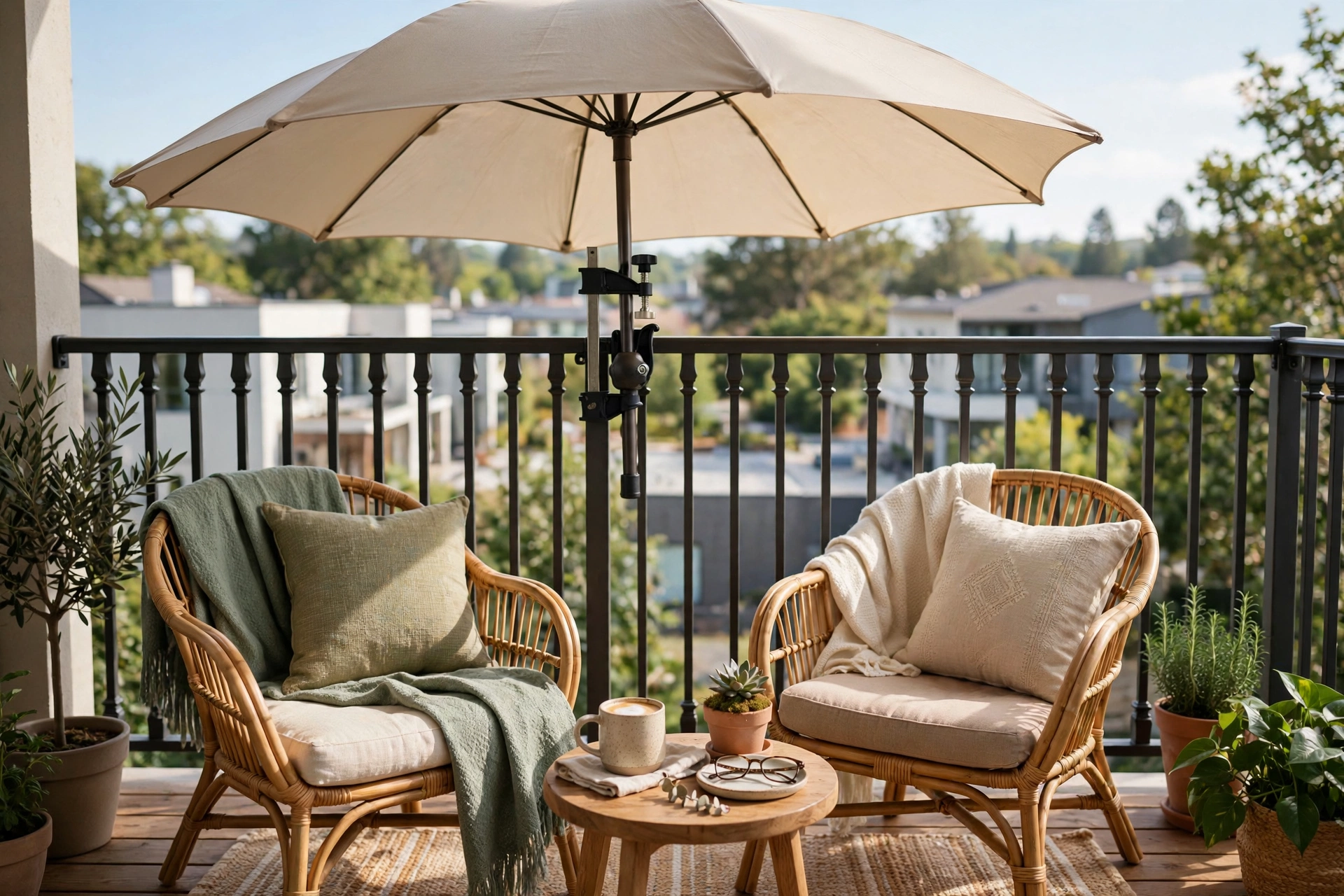
For balconies where floor space is nonexistent, a clamp-mount umbrella grips the railing directly. Heavy-duty clamps fit round or square railings up to 2 inches thick and hold 7.5–9-foot canopies with tilt adjustment. This puts shade exactly where you sit without sacrificing a single square foot of deck.
Test the clamp on your railing profile before buying — square aluminum railings and round steel need different clamp designs. Tighten with thread-lock or check monthly; vibration loosens clamps over a season. Position the clamp at seated shoulder height on the sun side, and always remove the umbrella in high wind — a railing clamp cannot match a weighted base’s holding power. Renters love this option because it installs and removes without a trace. Pair it with our balcony decor ideas for a cozy outdoor retreat for the full small-space treatment.
15. Off-Season Storage and Care
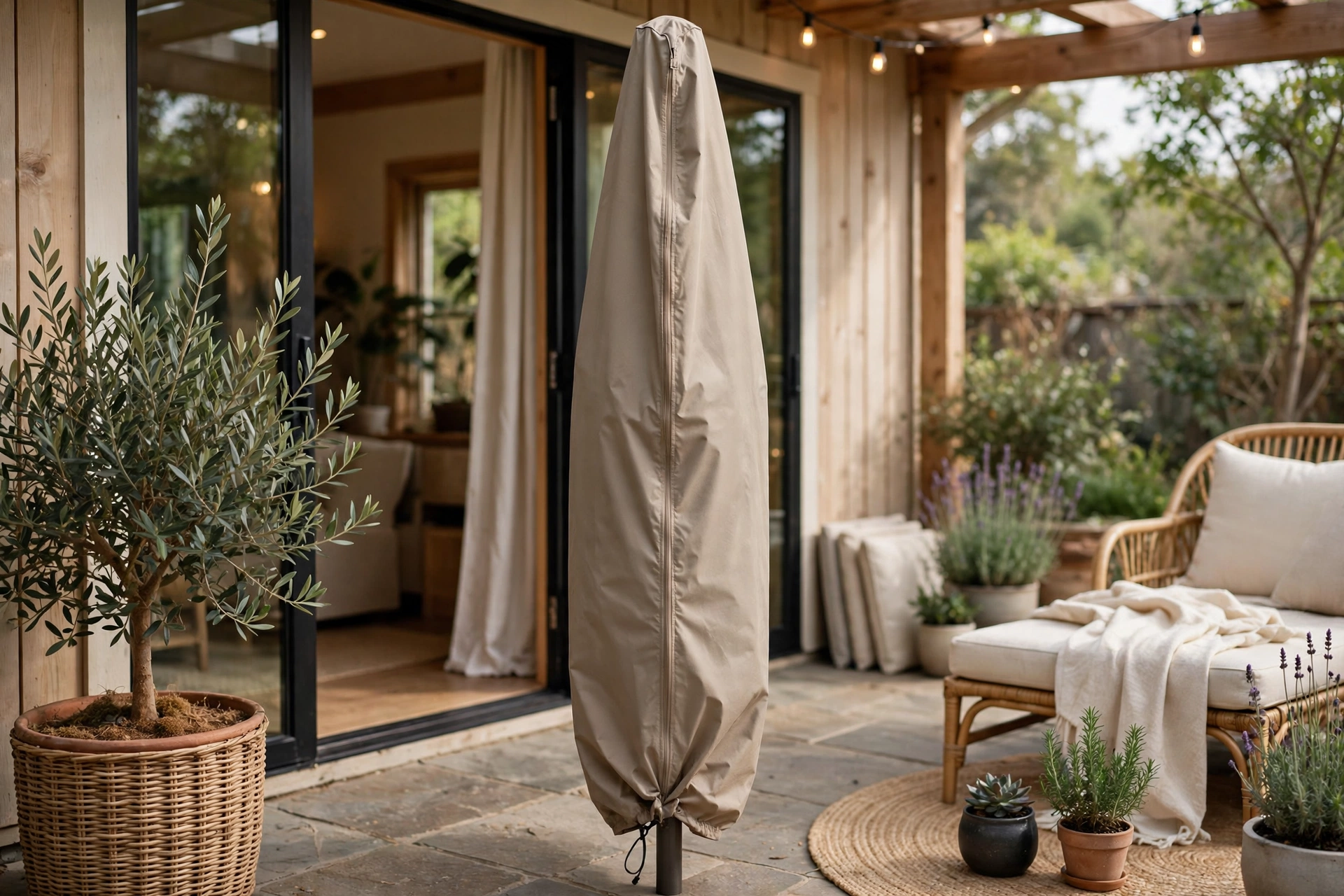
An umbrella that lasts a decade is a maintained one. At season’s end (or before any forecast storm), close the canopy, strap it with the included tie, and slide on a breathable cover — never plastic, which traps moisture and breeds mildew. Store upright in a dry garage or shed; laying a wood pole flat for months can bow it.
Mid-season, hose the canopy monthly and spot-clean with mild soap and water; for mildew spots, a diluted white-vinegar wipe followed by thorough drying works without bleaching solution-dyed fabric. Lubricate crank gears and tilt joints yearly with silicone spray, and inspect rib ends for fraying fabric pockets — a $5 rib-tip repair beats a torn canopy. Tighten base bolts each spring. Thirty minutes of care per season genuinely doubles an umbrella’s life.
Frequently Asked Questions
What size patio umbrella do I need?
Add 4 feet to your table or seating area’s largest dimension: a 48-inch table needs a 9-foot canopy, a 6-foot rectangular set needs 10–11 feet. The canopy should overhang seating by 2 feet on every side for real sun protection. When choosing between sizes, go bigger — you can tilt a large canopy, but you cannot stretch a small one.
How heavy should my umbrella base be?
For freestanding center-pole umbrellas, use at least 50 pounds for 7.5-foot canopies, 75 pounds for 9-foot, and 90+ for 11-foot. Cantilever umbrellas need 150–220 pounds because the offset arm multiplies wind force. In-table setups can use slightly less since the table adds stability, but never skip the base entirely. When in doubt, add 20% — an over-weighted base is invisible, an under-weighted one is a projectile.
Can patio umbrellas stay out in the rain?
Light rain is fine for quality acrylic canopies, but close and cover umbrellas before heavy rain and wind — water pooling stretches fabric and gusts destroy frames. Wood poles especially should never sit open in rain. As a habit, close the umbrella whenever you leave home for the day; most warranty claims trace back to one forgotten storm.
Are cantilever umbrellas worth the extra cost?
If your seating has no center table to anchor a pole — sectionals, lounge sets, dining tables where a pole blocks conversation — yes, absolutely. The unobstructed space and 360-degree rotation transform how usable the shade is. Just budget honestly: the umbrella plus its 150+ pound base system typically costs 2–3× a market umbrella setup. For simple table shading, a market umbrella remains the smarter buy.
How do I stop my patio umbrella from fading?
Buy solution-dyed acrylic fabric (Sunbrella or equivalent), where pigment saturates the fiber rather than coating it — it resists fading 5–10× longer than polyester. Use the protective cover whenever the umbrella is closed, since UV degrades fabric even when furled. Position the umbrella to avoid the harshest midday sun when possible, and clean off bird droppings and sap promptly, as organic stains bake into sun-softened fabric.
Keep Exploring
Measure your space, size up rather than down, weight the base generously, and choose fabric you will love looking at for years. Done right, a patio umbrella is not just shade — it is the architectural moment that turns a slab of concrete into an outdoor room.