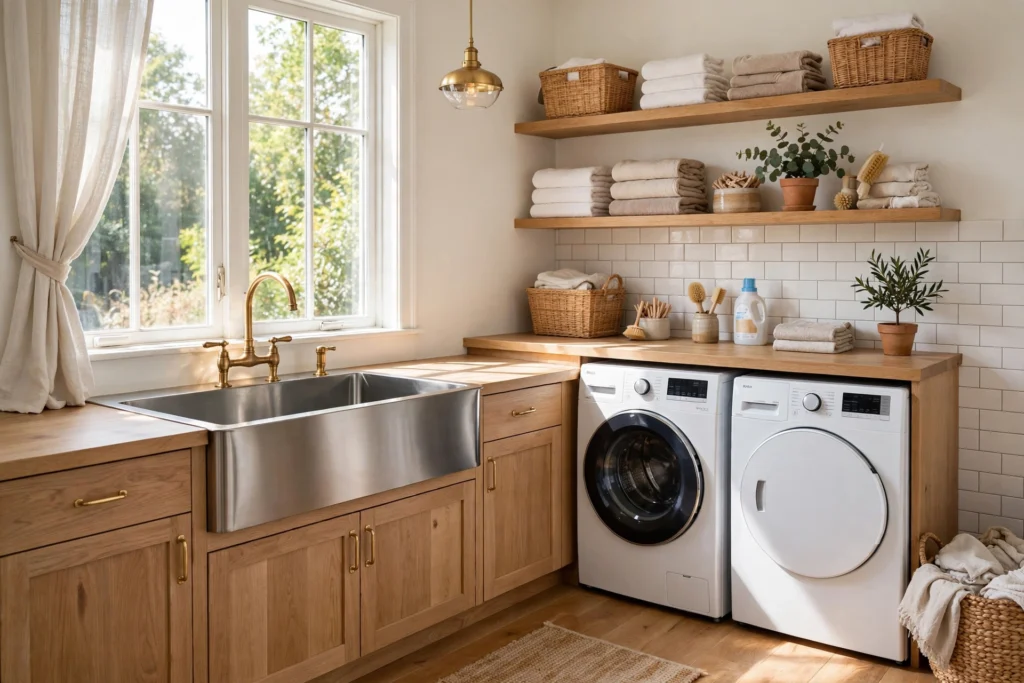

A laundry room sink is one of those hardworking fixtures that earns its keep daily. Also called a utility sink, laundry tub, or wash tub, it is the deep basin you reach for when a load needs a pre-soak, muddy sneakers need a rinse, or a paint project needs cleanup far from the kitchen. If you have ever wondered what the sink in a laundry room is called, those names all point to the same job: a bigger, tougher basin for messy work.
These laundry room sink ideas prove the fixture can be as good-looking as it is useful. From farmhouse apron fronts to matte black faucets and tiled backsplashes, the ideas below pair real durability with design you will actually enjoy — whatever your space and budget.
1. Go Deep With a Stainless Steel Utility Sink
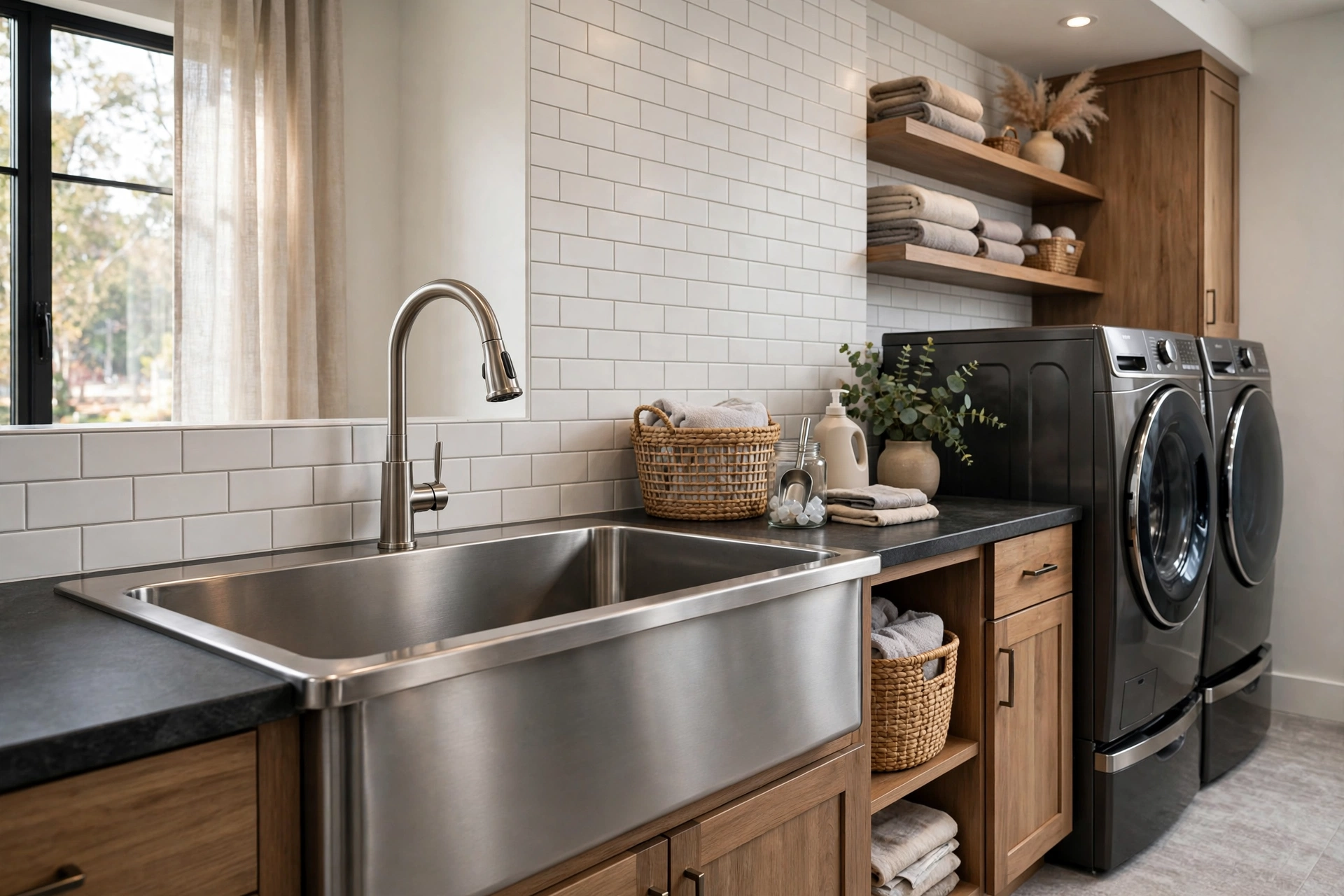
The classic deep stainless steel utility sink is the workhorse among laundry room sink ideas. Stainless resists rust, wipes clean, and handles bleach, dye, and mud without staining. Look for a basin at least 12 to 14 inches deep — enough to submerge sweaters or fill a mop bucket without splashing the walls. An 18-gauge sink resists denting better than thinner models. Freestanding leg-style versions install almost anywhere with plumbing access and cost far less than built-in cabinetry. Pair it with a gooseneck faucet for maximum clearance, and it becomes the room’s command center for messy jobs.
2. Install a Farmhouse Apron-Front Laundry Sink
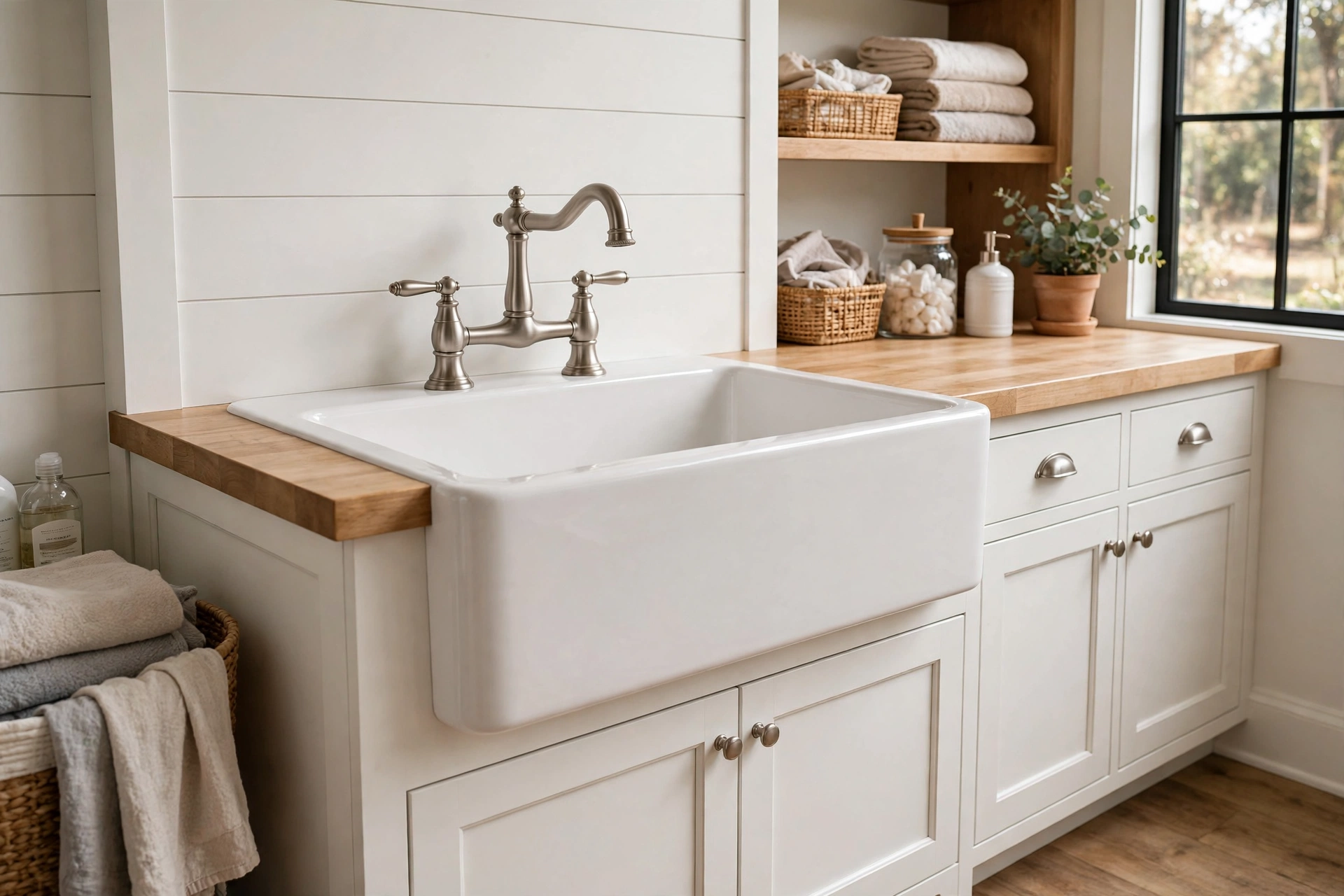
An apron-front sink brings farmhouse charm to the laundry room. The exposed front reads as furniture rather than plumbing, which instantly elevates the space. Fireclay and enameled cast iron are the classic materials — both resist stains and years of use, though fireclay needs a sturdy, well-supported cabinet to carry its weight. Choose a single deep basin over a divided one to soak large items like dog beds or curtains. The apron sits proud of the cabinet, so leave an inch of clearance and seal the joint with silicone. A bridge faucet in brushed nickel or brass completes the farmhouse effect.
3. Set an Undermount Sink Into a Counter Run
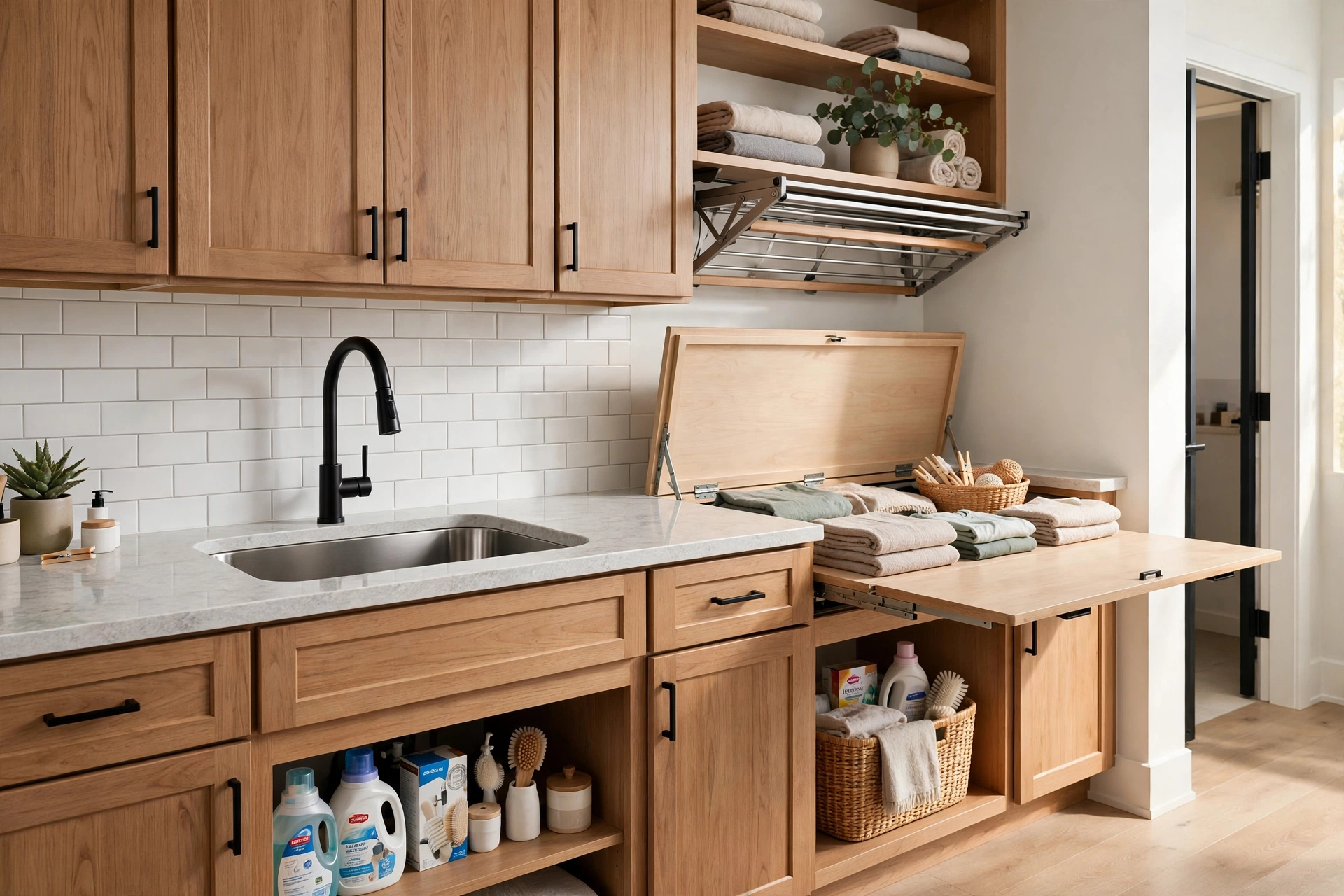
An undermount sink set into a continuous counter run gives the laundry room a clean, built-for-purpose feel. Because the basin sits below the countertop, you can wipe lint, detergent, and drips straight in with no rim in the way. Solid-surface, quartz, or butcher-block counters all work, sealed against moisture. This layout shines when you need folding space: the counter doubles as a folding surface beside the washer. Choose a stainless or granite-composite basin for durability, and mount a single-lever faucet with a side sprayer to keep the profile low under upper cabinets.
4. Try a Wall-Mounted Sink in a Tight Room
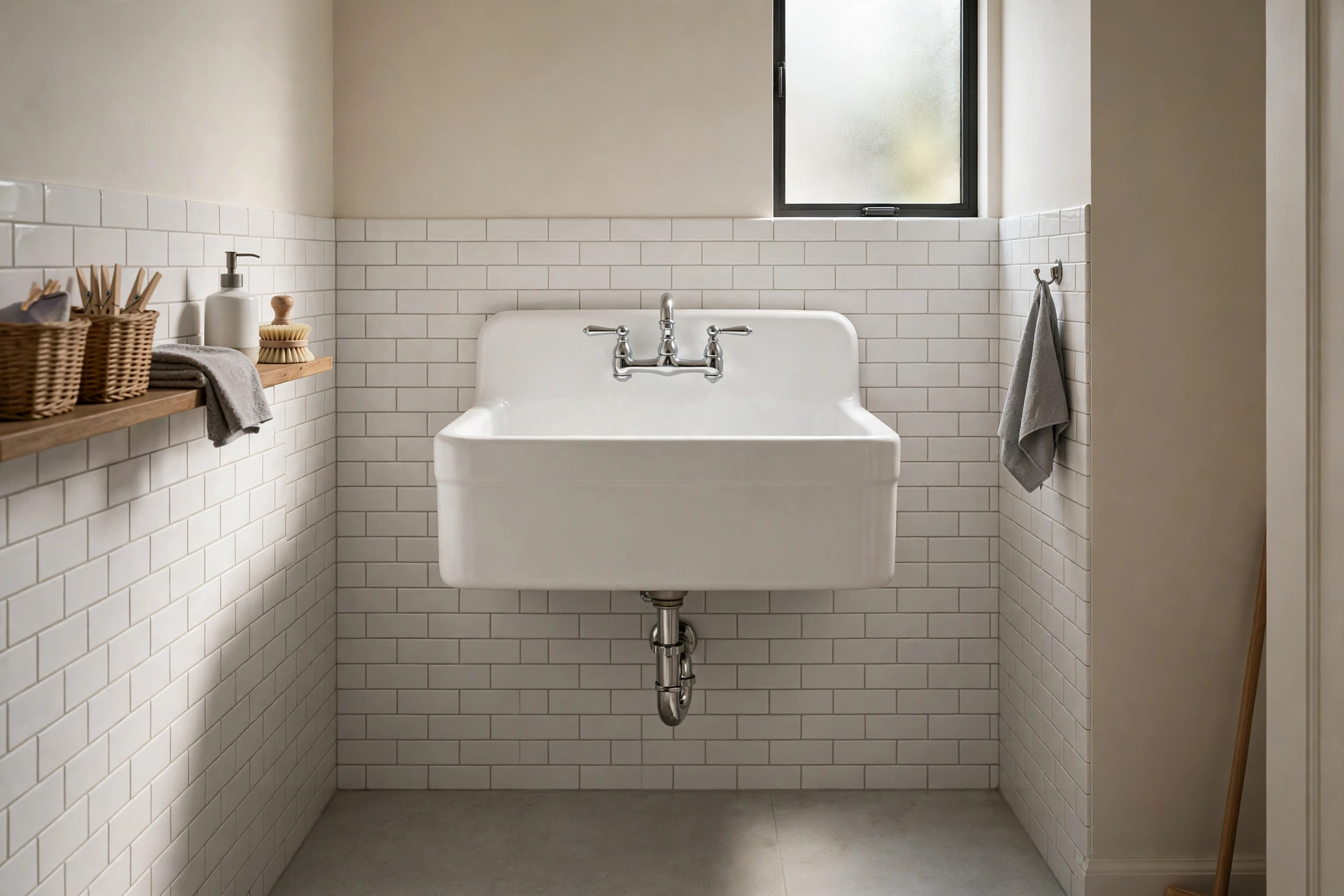
A wall-mounted sink frees up every square inch below it. The open space underneath holds a basket, a step stool, or a rolling cart, and the floor stays easy to clean. Mount on a load-bearing wall or add blocking inside a stud wall — a full basin of water is heavy. Look for vitreous china or stainless versions with a backsplash lip to protect the wall. Keep the plumbing neatly boxed in a slim chase or use decorative bottle traps. For more tight-space inspiration, our small laundry room design ideas that work hard and look good cover layouts where every inch counts.
5. Pick a Freestanding Thermoplastic Utility Tub
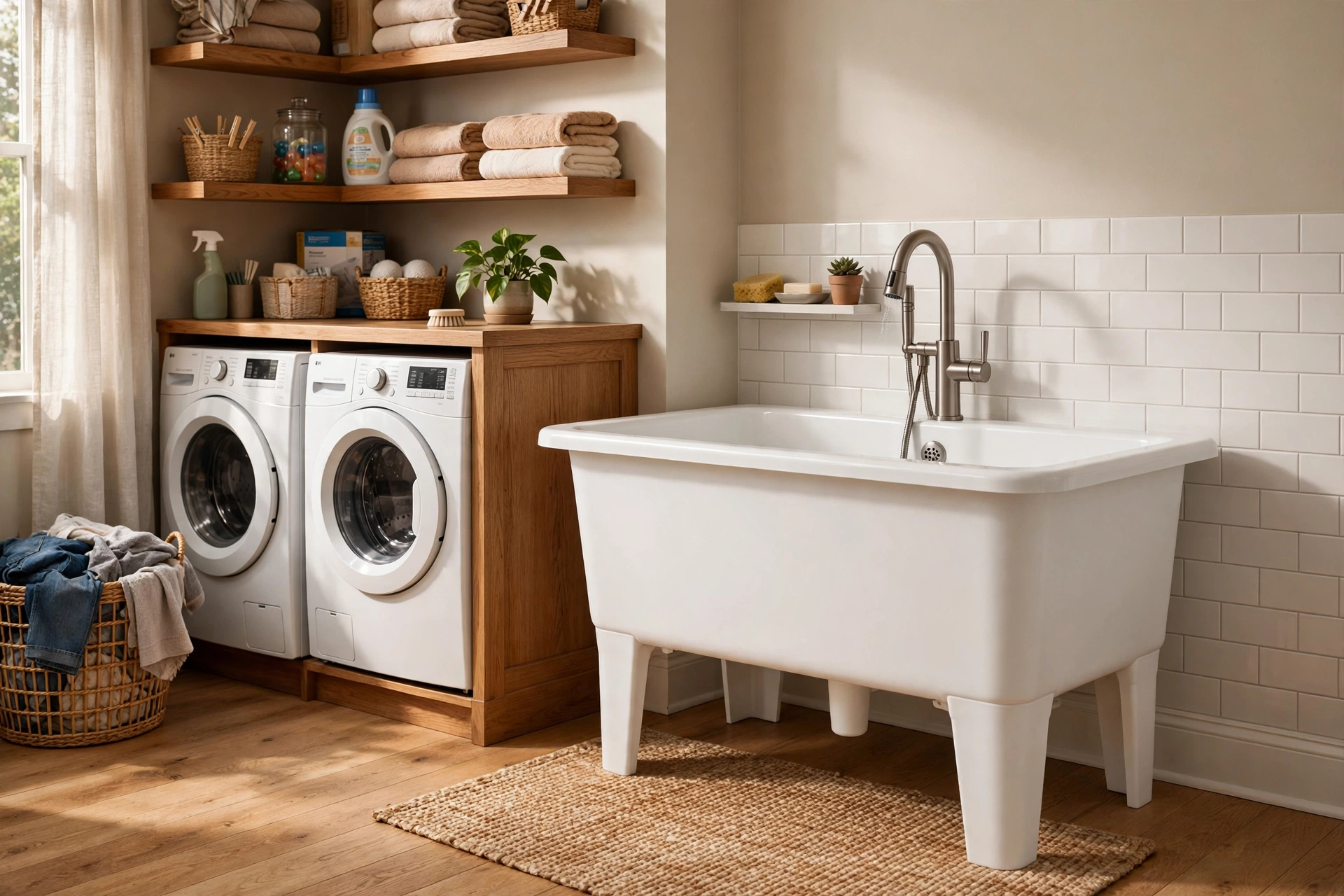
The freestanding thermoplastic utility tub is the most budget-friendly option on this list. Molded from tough polypropylene, these tubs are lightweight, impact-resistant, and rustproof — one person can usually carry one into place. Many models offer basins 13 inches deep or more, with legs that raise the rim to a comfortable height. Some include a molded washboard texture on the front for hand-scrubbing stains — a genuinely useful throwback. They install with basic plumbing and cost a fraction of metal or stone sinks. If the plastic look bothers you, hide the lower half with a sink skirt.
6. Double Up With a Double-Basin Laundry Sink
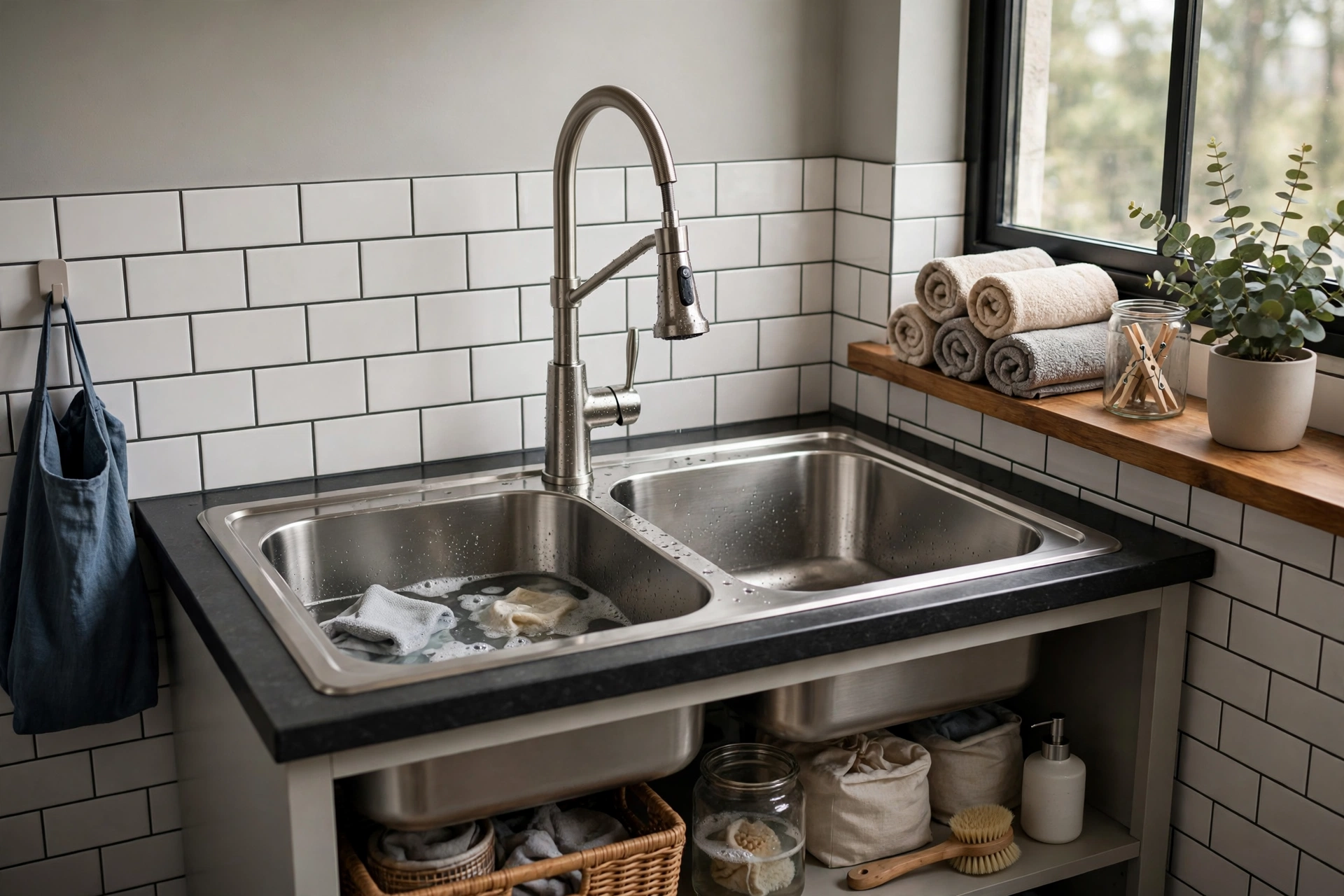
A double-basin sink turns one chore station into two. Soak a stain in one side while rinsing delicates in the other, or dedicate one basin to pet washing. Unequal basins are the smartest pick: a deep large bowl for soaking plus a smaller one for quick rinses. Stainless steel and acrylic both come in double-basin utility models. Plan on at least 36 inches of width for the cabinet or counter run, and a pull-down faucet with enough reach to serve both bowls. It is more plumbing, but for busy households the workflow upgrade is worth it.
7. Revive a Vintage Cast-Iron Sink
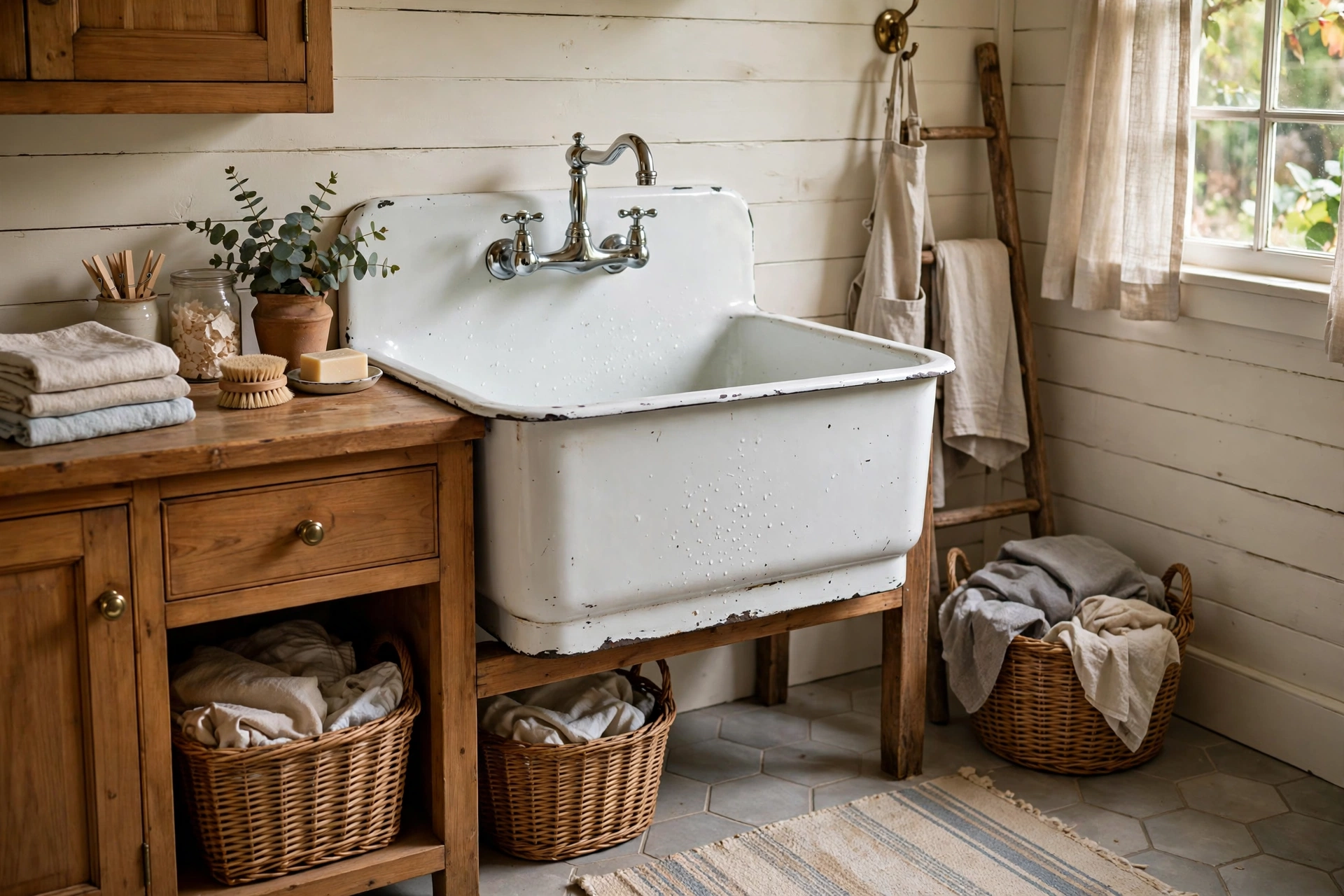
A vintage cast-iron sink brings character no new fixture can match. Old enamel-over-cast-iron sinks turn up at salvage yards and estate sales with deep basins and softly rounded corners that suit cottage and traditional rooms. Check the enamel for chips down to the iron — small ones can be repaired with epoxy kits, but widespread rust means pass. Cast iron is extremely heavy, so confirm your floor and cabinet can support it first. Pair it with a classic wall-mount or bridge faucet in chrome or brass. The result is a one-of-a-kind sink with a story, usually cheaper than a new premium fixture.
8. Pair the Sink With a Matte Black Faucet
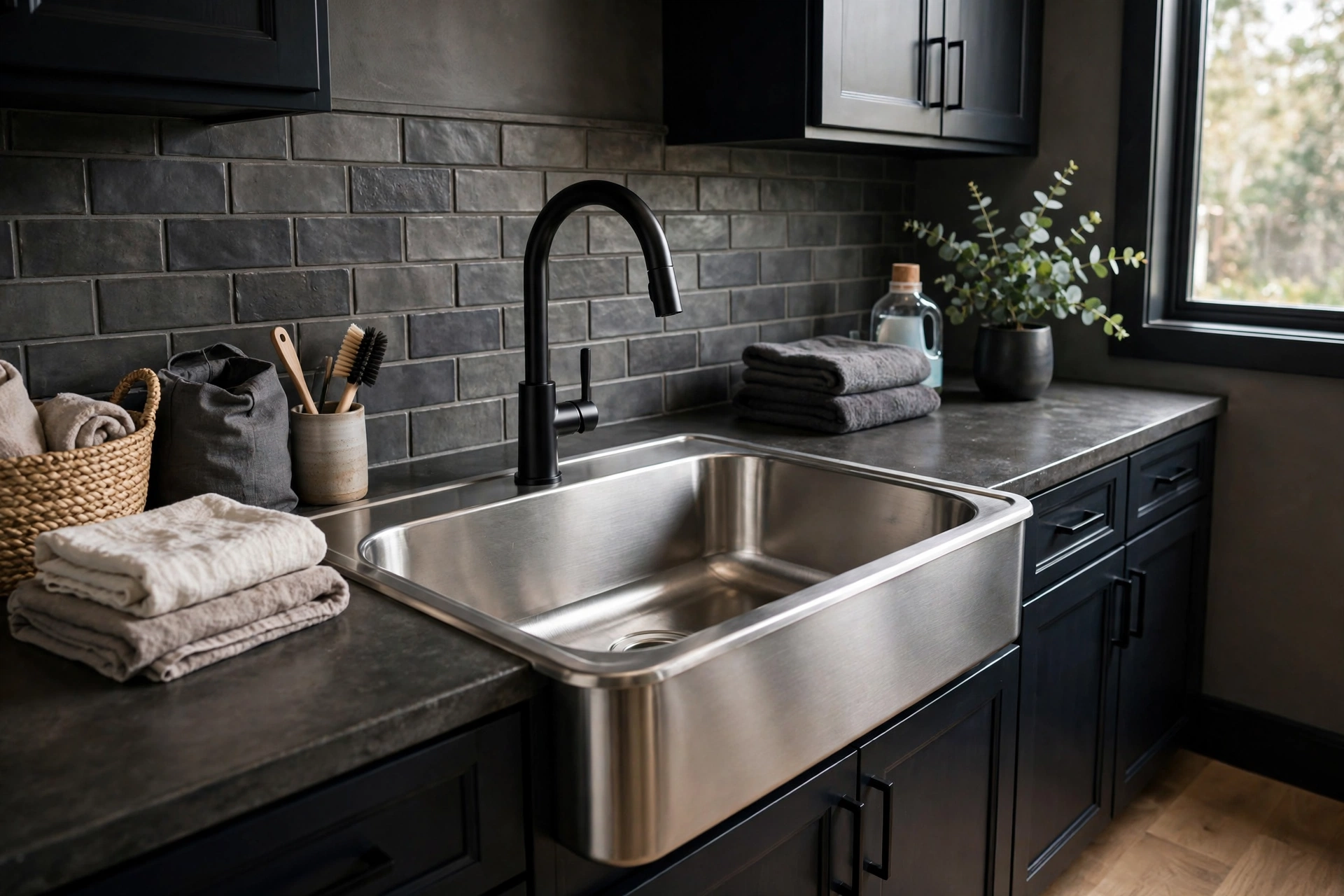
A matte black faucet instantly makes any laundry sink look designed rather than default. Black hides water spots and fingerprints far better than chrome — a real plus where the faucet gets touched with soapy hands. Matte black pairs beautifully with stainless basins, white fireclay, and dark cabinetry alike. Look for a solid brass body with a quality powder-coat or PVD finish so the black does not chip over time. A single-handle gooseneck or pull-down style gives the clearance and reach a utility sink demands. Swap the faucet alone and even a plain plastic tub suddenly looks intentional.
9. Upgrade to a Pull-Down Sprayer Faucet
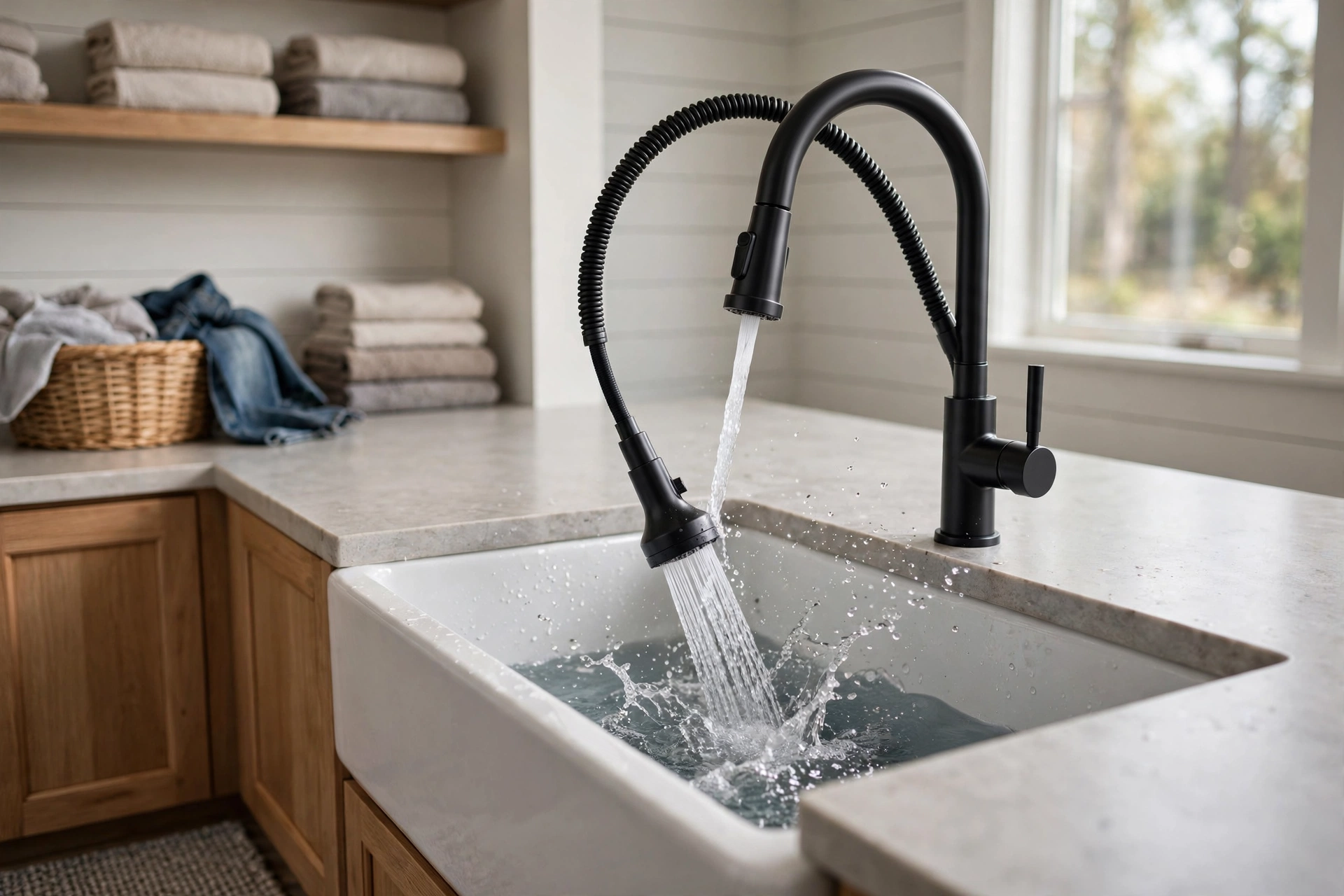
A pull-down sprayer faucet transforms what a laundry sink can do. The flexible hose reaches every corner of a deep basin, rinses the sides in seconds, and fills buckets on the floor beside the sink. Look for at least 18 inches of hose reach, a magnetic docking head, and two spray modes — aerated stream and powerful spray. A high-arc spout clears tall items like watering cans. Match the finish to your other hardware so the room feels cohesive. This is the most useful faucet upgrade among these laundry room sink ideas, and it installs with basic tools.
10. Hide the Plumbing With a Sink Skirt
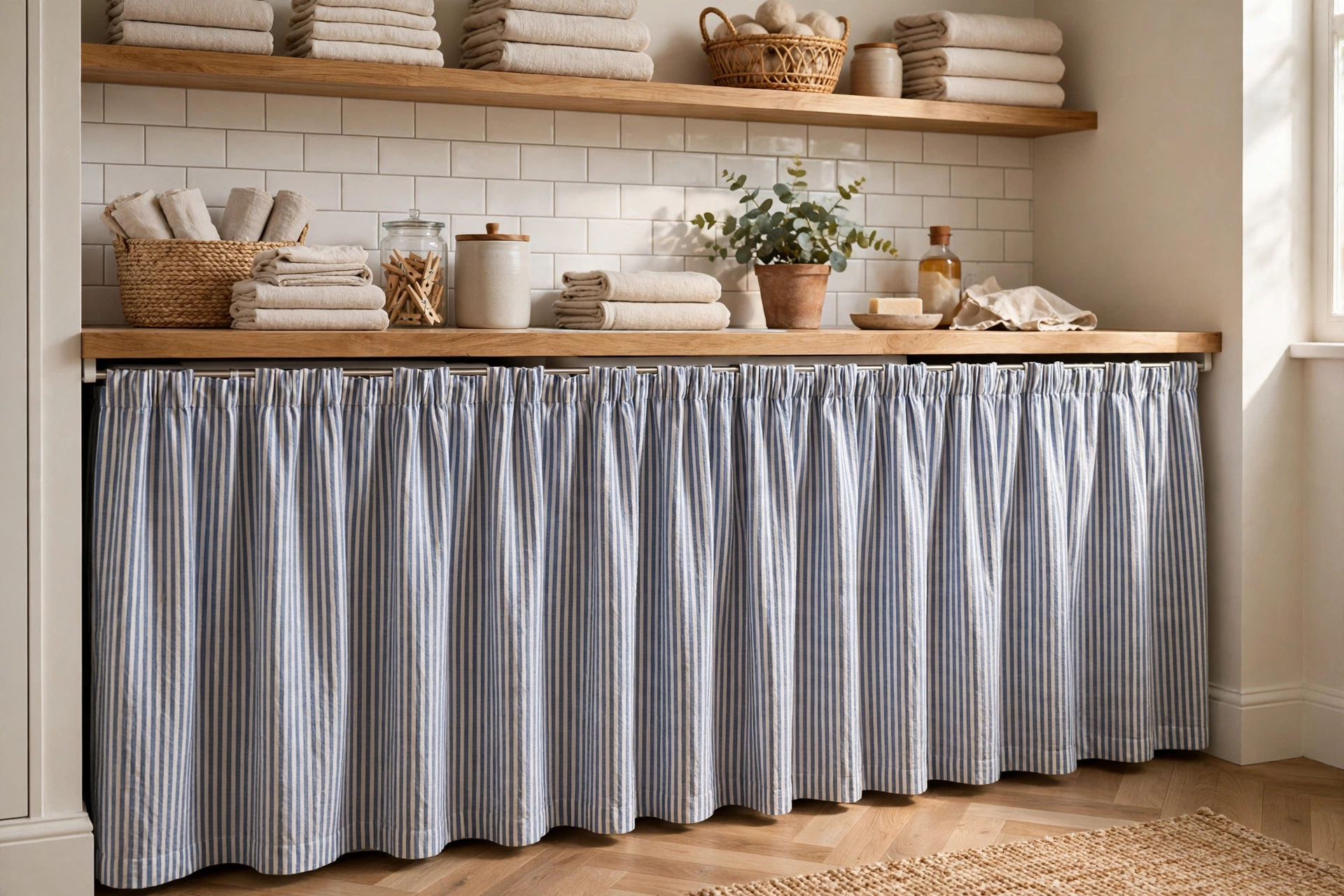
A sink skirt is the charming, budget-friendly way to cover an under-sink area without cabinetry. A gathered curtain on a tension rod hides pipes, cleaning supplies, and the legs of a freestanding tub, adding softness to a hardworking room. Choose a washable fabric — cotton canvas, ticking stripe, or outdoor fabric — since laundry rooms see moisture and the occasional splash. Velcro-mounted panels come off in seconds for laundry day. Match the skirt to your room’s palette or pick a fun pattern for personality. It is renter-friendly, costs very little, and takes an afternoon to install.
11. Style Open Shelving Above the Sink
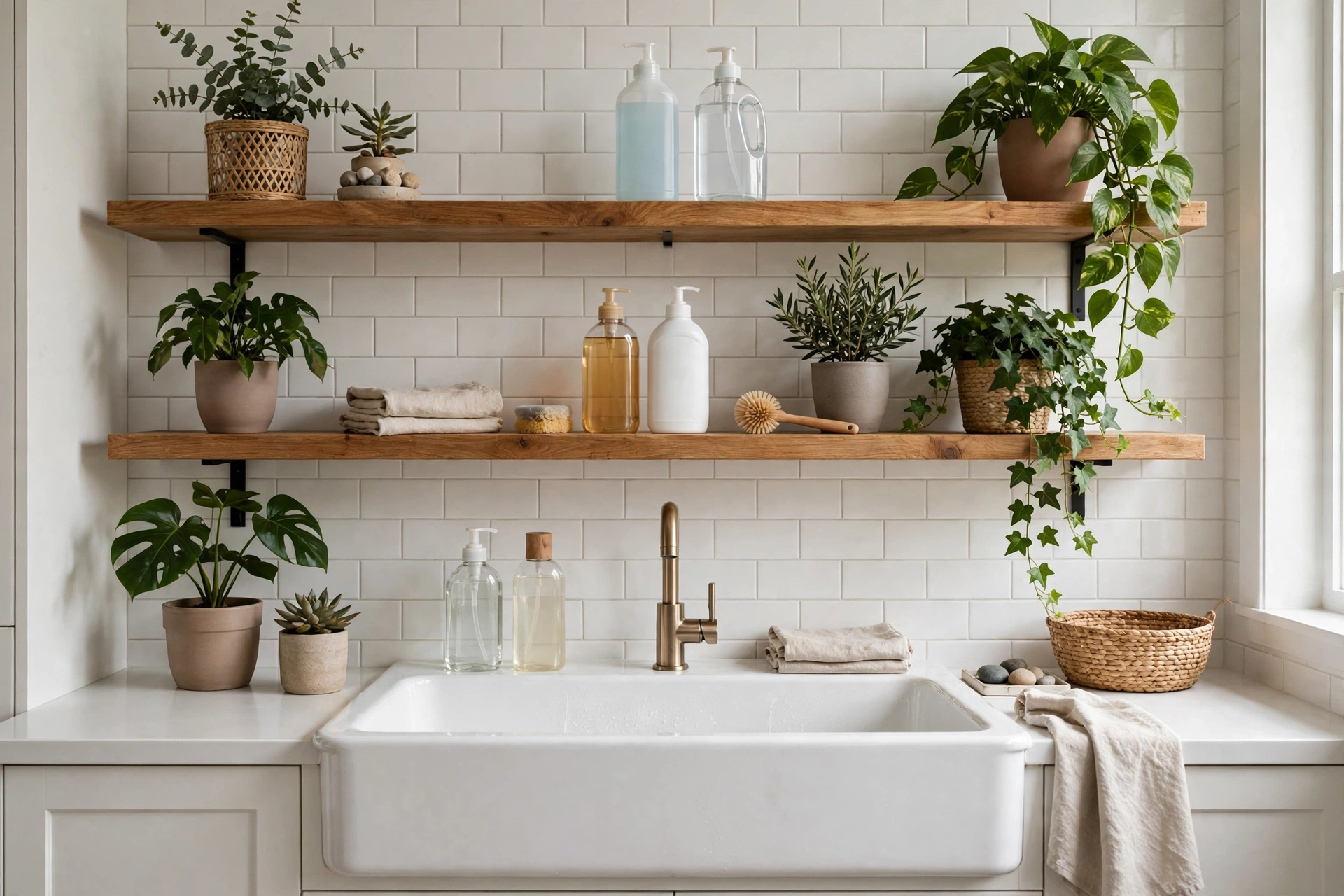
Open shelving above the sink turns dead wall space into both storage and decor. Keep everyday items — detergent, stain remover, folded towels — on the lowest shelf, within reach of the basin. Style the upper shelves with a trailing plant, woven baskets for clothespins and dryer sheets, and a small framed print. Everything on the shelves should tolerate humidity: sealed wood or metal brackets, glass jars instead of cardboard boxes. Keep the bottom shelf at least 24 inches above the faucet so tall items clear it. As The Spruce on decorating the laundry room notes, this overlooked room deserves real design attention — and styled shelves are an easy win.
12. Add a Tiled Backsplash Behind the Sink
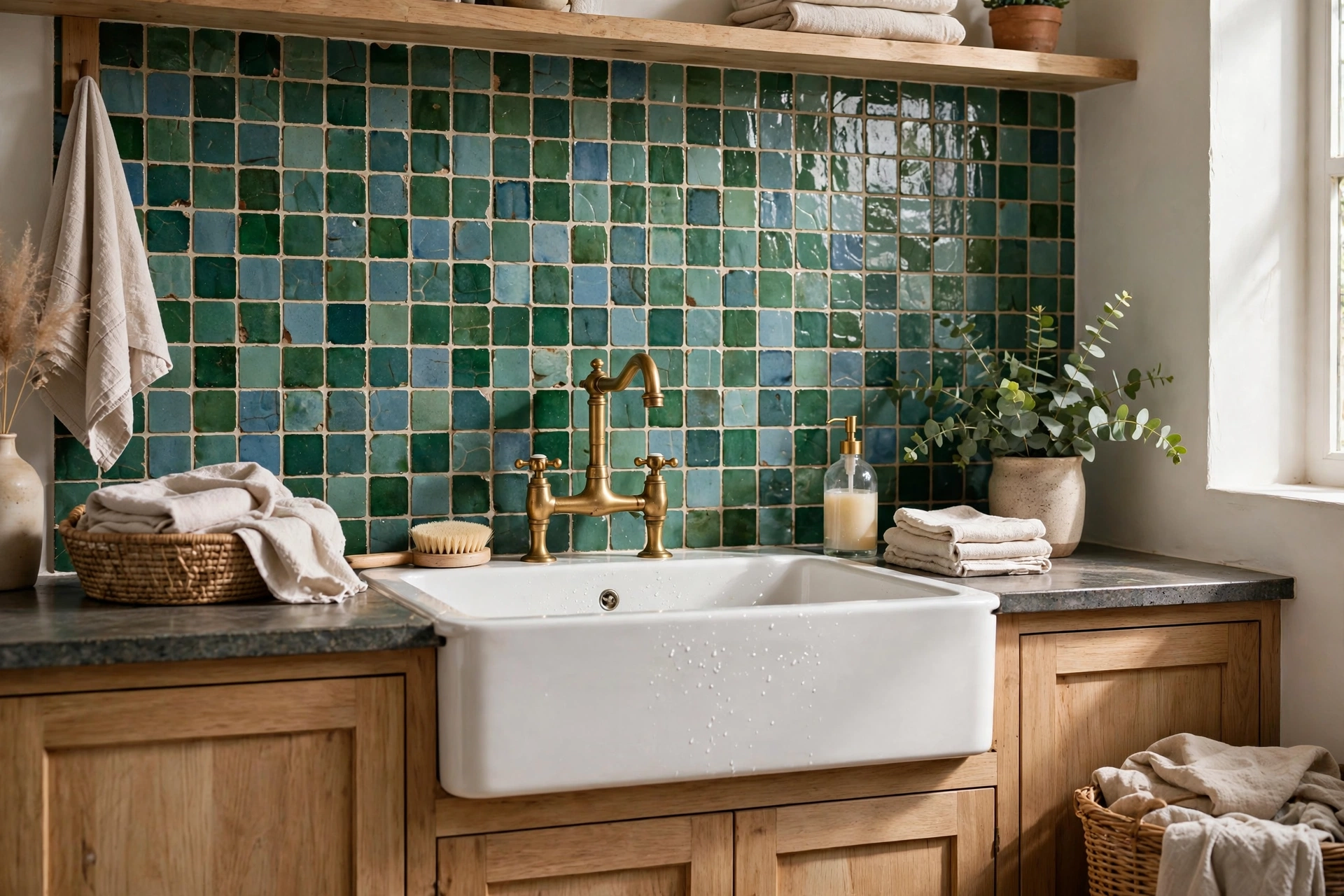
A tiled backsplash protects the wall from years of splashes while giving the room a finished look. Subway tile is timeless, but handmade-look zellige, penny rounds, or patterned cement tile can make the sink wall the focal point. Run the tile from the sink rim up to the upper cabinets or shelves for full coverage. Choose grout in a mid-tone rather than bright white — it hides discoloration from detergent and hard water. Epoxy grout costs more but resists staining and needs no sealing. This is one of the highest-impact laundry room sink ideas for the money.
13. Build an Integrated Drying Rack Beside the Sink
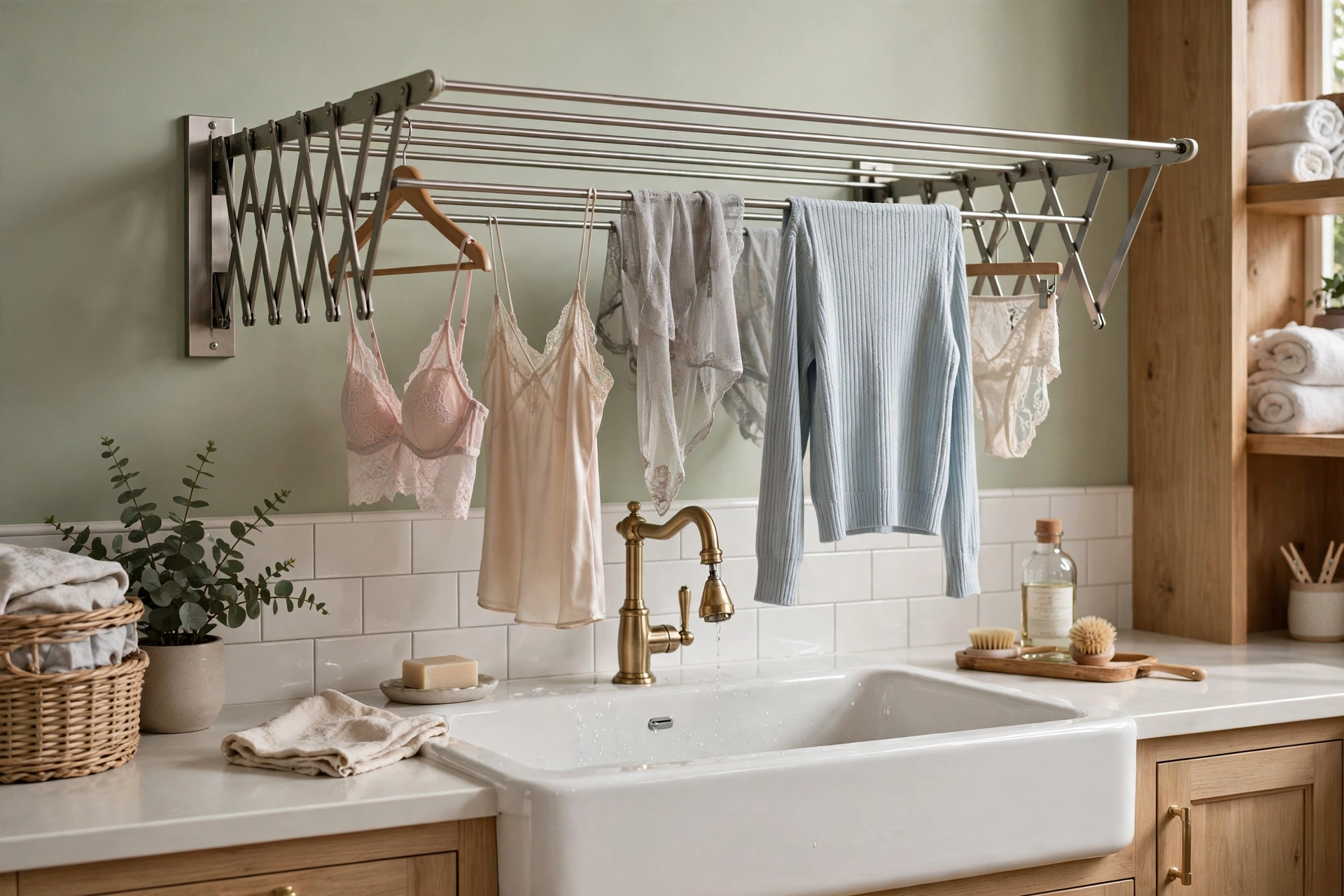
A drying rack integrated beside the sink makes hand-washing clothes genuinely convenient. Wall-mounted accordion racks fold flat when not in use and pull out over the sink so drips fall into the basin. A countertop rack beside an undermount sink does the same job in a built-in layout. For delicates, a pull-out rack inside the sink cabinet keeps them hidden. Keep the rack within arm’s reach of the faucet — the shorter the carry, the fewer drips on the floor. Stainless or coated-metal racks resist rust in the damp zone. Good ventilation keeps air-dried items smelling fresh, not musty.
14. Enclose the Sink in a Storage Cabinet
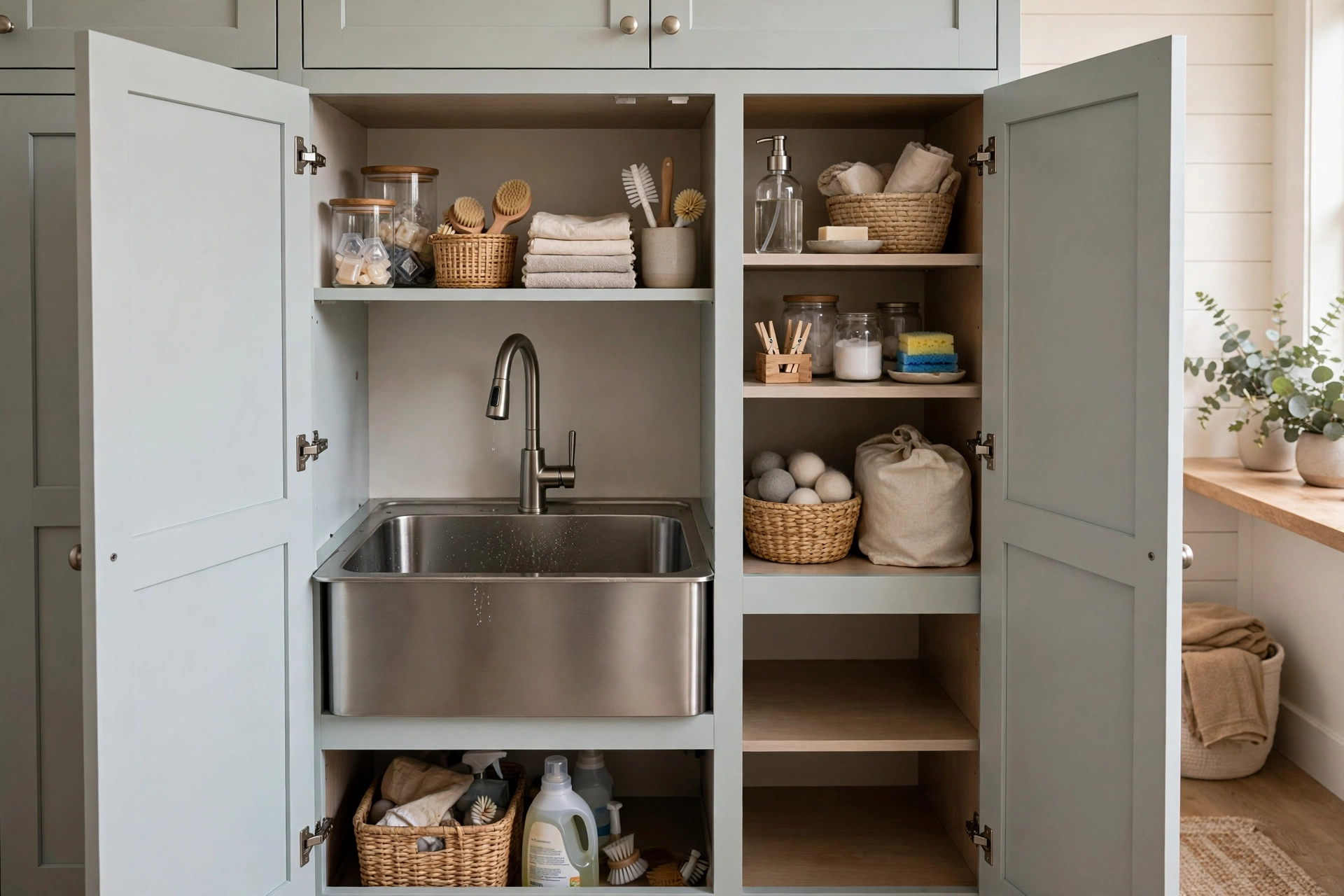
A cabinet-enclosed sink base brings kitchen-style storage and a clean look to the laundry room. The cabinet hides plumbing and the P-trap while the doors and drawers hold detergent, brushes, and cleaning supplies. Choose a sink base at least 30 inches wide, with false drawer fronts above the doors for access. Moisture-resistant materials matter: plywood boxes with a sealed finish outlast particleboard in a humid laundry room. Add a pull-out trash bin or a tilt-out tray under the sink for sponges. Our laundry room organization ideas for a tidy efficient space show how to keep every shelf working as hard as this cabinet.
15. Fit a Compact Corner Sink in a Tiny Laundry
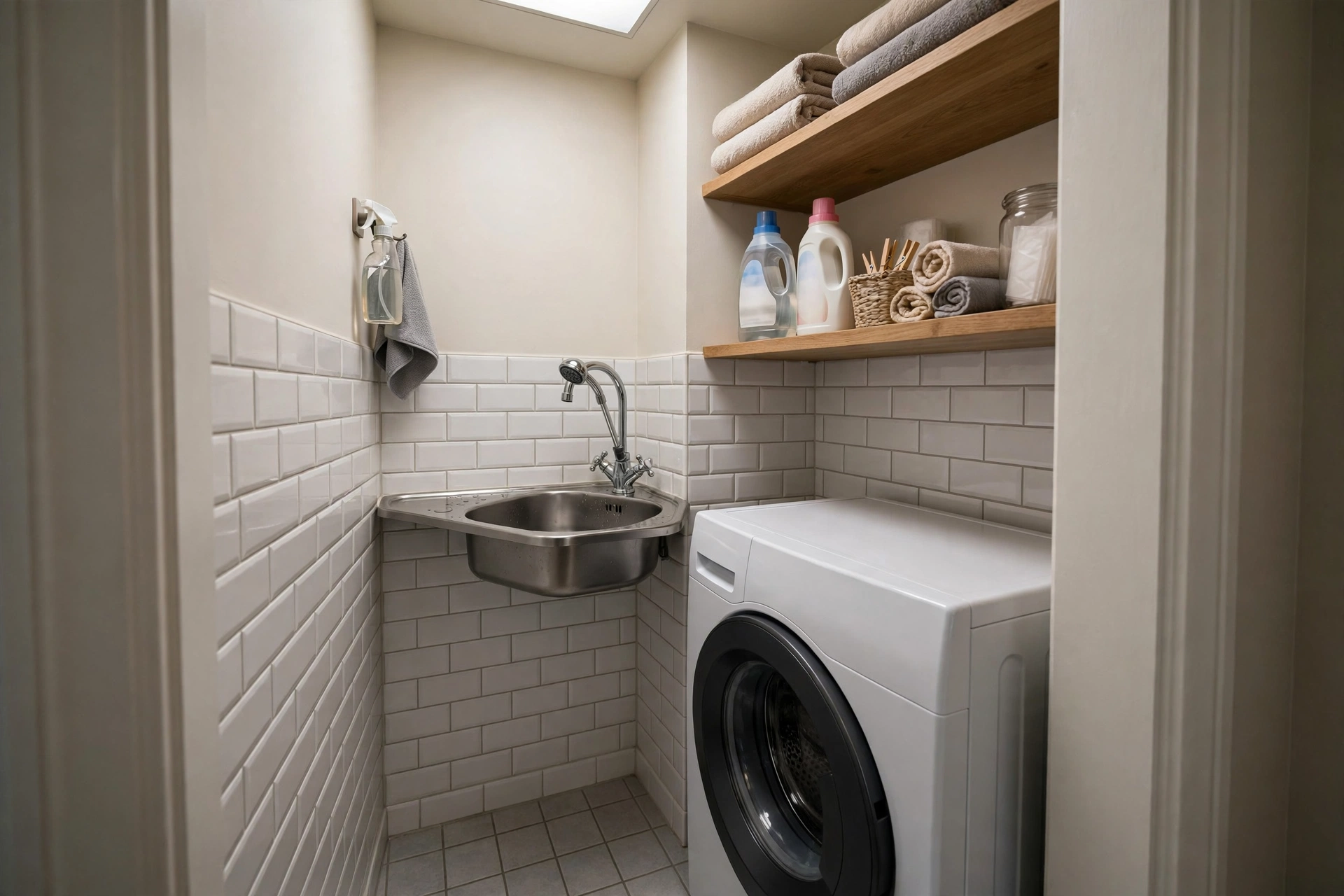
A compact corner sink squeezes a real basin into laundry spaces where a standard sink simply will not fit. Corner-mounted models tuck into the dead angle beside the washer, turning wasted space into a soaking station. Look for round or triangular basins around 15 to 18 inches wide — small, but deep enough for hand-washing and bucket filling. Wall-mount or pedestal styles keep the footprint minimal. In laundry closets and hallway nooks, pair the corner sink with a wall-mounted faucet to free up deck space. Our laundry closet ideas for small space efficiency show how a tiny footprint can still hold everything a laundry needs.
FAQ
How deep should a laundry room sink be?
Aim for 12 to 15 inches deep — enough to soak clothes, fill mop buckets, and contain splashes. Freestanding utility tubs often run deeper, up to 20 inches, which suits pet washing and big soaking jobs. Balance depth against a comfortable rim height of 34 to 36 inches, especially if bending is an issue.
What is the best material for a laundry sink?
Stainless steel is the all-round winner: rust- and stain-resistant and easy to clean. Enameled cast iron and fireclay look better and last decades but are heavy and cost more. Thermoplastic tubs are the budget pick — tough and rustproof. Granite composite balances looks and durability.
Does a laundry sink need special plumbing?
Not usually. Most connect to standard hot and cold supplies and a regular drain, like a kitchen sink. The main considerations are the deeper basin’s drain placement and keeping the trap accessible for clearing lint. Adding a sink where none existed means tying into existing lines — straightforward against a shared bathroom or kitchen wall.
How do I clean and maintain a utility sink?
Rinse the basin after messy jobs so dye and chemicals do not sit. Clean stainless with dish soap and a soft cloth — never steel wool. Skip abrasive cleaners on enameled cast iron. Flush the drain monthly with hot water to clear lint, and wipe the faucet to prevent hard-water spots.
What sink works best in a small laundry room?
A wall-mounted or compact corner sink makes the most of tight spaces, since neither eats floor space. A freestanding thermoplastic tub works if you have a spare corner, and a sink skirt keeps it tidy. Pair it with a pull-down faucet, and keep the wall above free for open shelving.
Keep Exploring
A good laundry sink quietly upgrades every chore in the room — soaking, rinsing, scrubbing, and all the messy in-between jobs that do not belong in the kitchen sink. Pick the idea that fits your space, add one styling touch, and enjoy a chore that feels a little easier every time.




