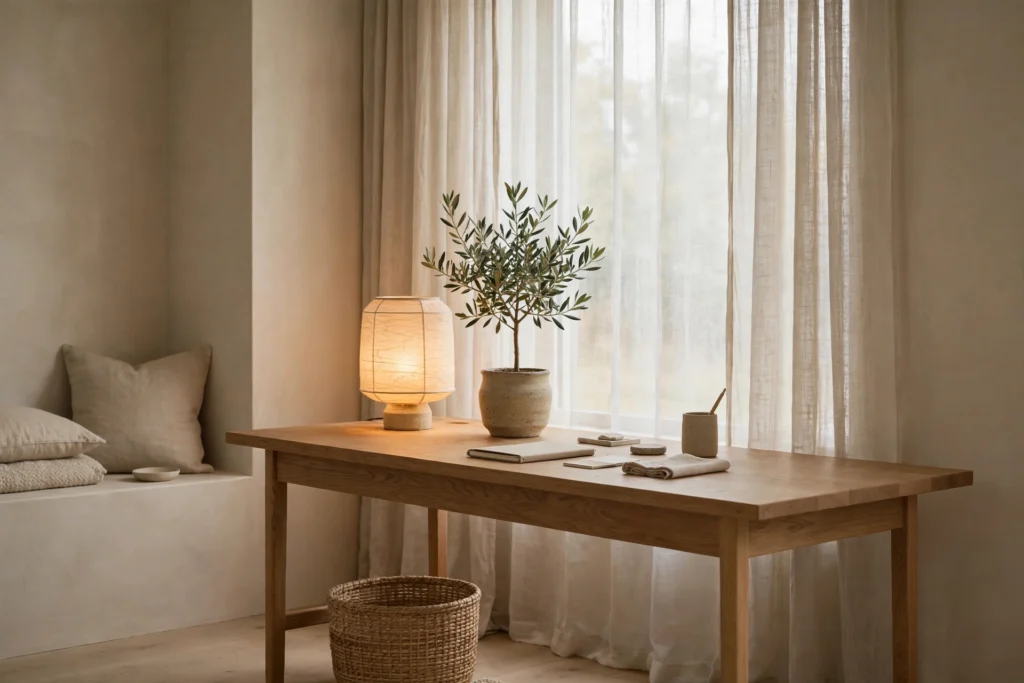

Your workspace shapes your workday more than any productivity app ever will. A chaotic desk breeds a chaotic mind — scattered papers, tangled cables, harsh lighting — while a calm, intentional space quietly pulls you into focus. That’s exactly what Japandi home office design ideas deliver: the serene minimalism of Japan fused with the warm functionality of Scandinavia, built for people who want to get more done with less noise around them.
Japandi isn’t about buying a whole new office. It’s a philosophy of restraint: fewer things, better made, arranged with intention. From Japan it borrows wabi-sabi (beauty in imperfection), low furniture profiles, and reverence for natural materials. From Scandinavia it takes hygge coziness, pale woods, and light-filled practicality. The result is a workspace that feels calm the moment you sit down — no visual clutter competing for your attention, just honest materials and clean lines.
The fifteen Japandi home office design ideas below are practical, not precious. Each one works on its own, but layered together they create a home office where deep work actually happens — calm, focused, and quietly beautiful.
1. Low-Profile Solid Wood Desk
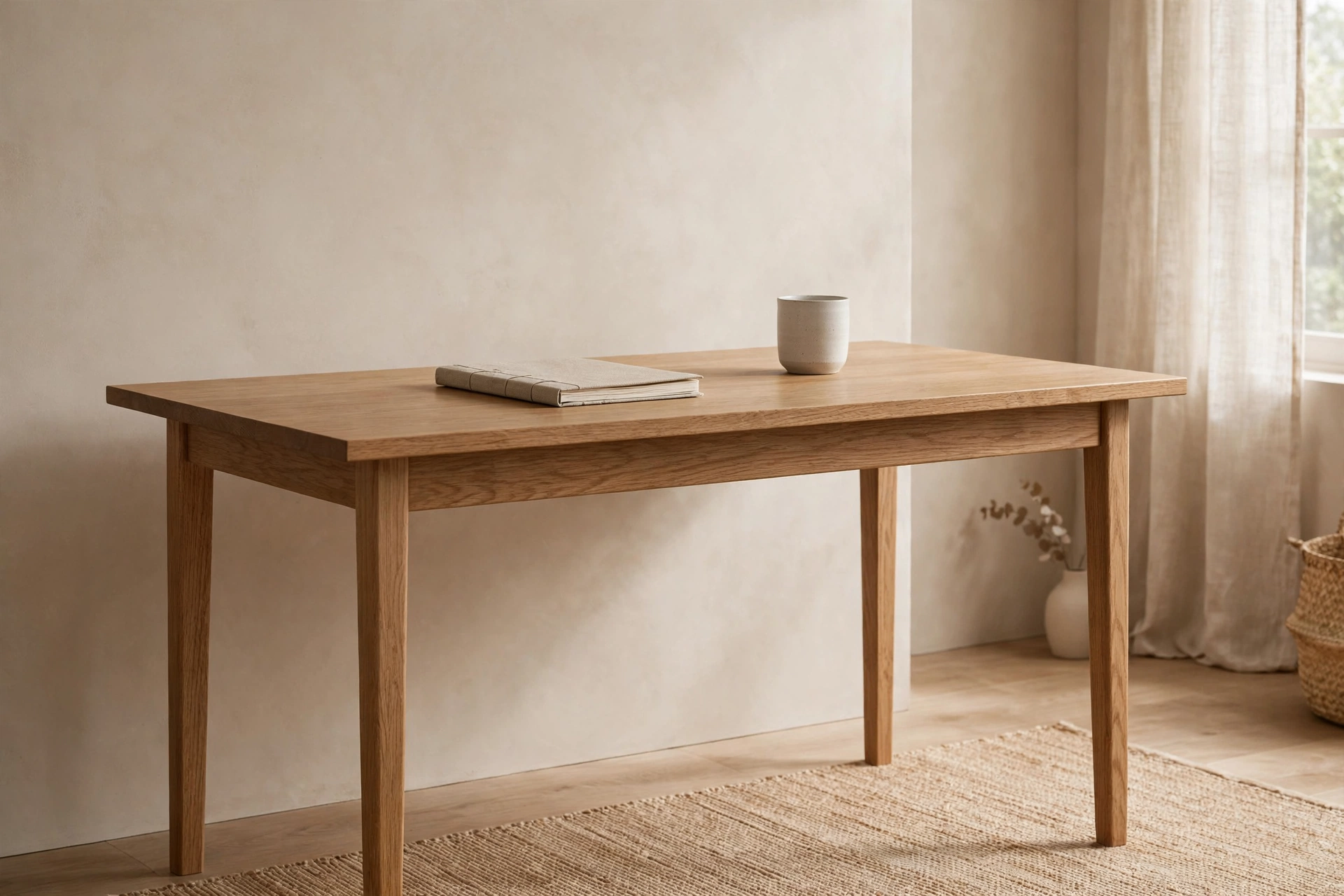
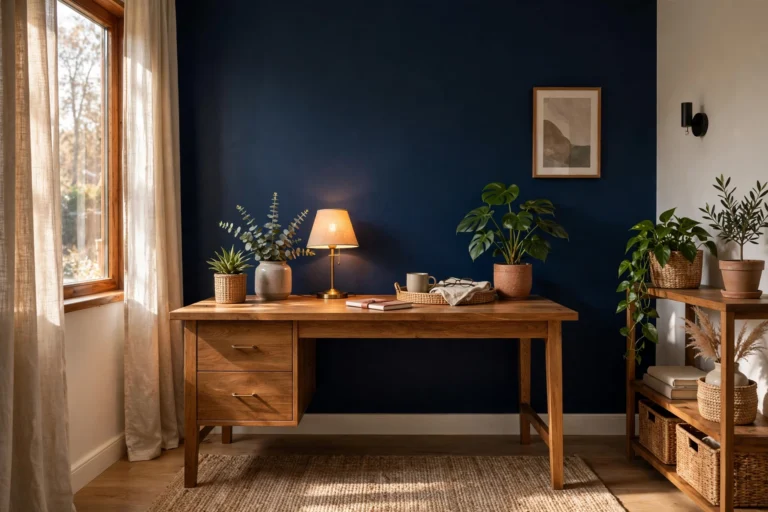
Start with the anchor: a low-profile desk in solid oak or ash. Japandi furniture sits close to the ground, a Japanese principle that makes ceilings feel taller and the whole room feel calmer. Choose a simple rectangular top with clean, straight legs — no bulky corner units, no glossy finishes. A clear matte oil finish lets the grain show through, which is the whole point: honest materials, nothing hidden. Size it to your actual work: a 120–140 cm top fits a laptop, a notebook, and a lamp with breathing room. Anything bigger invites clutter to move in.
2. Warm Neutral Color Palette
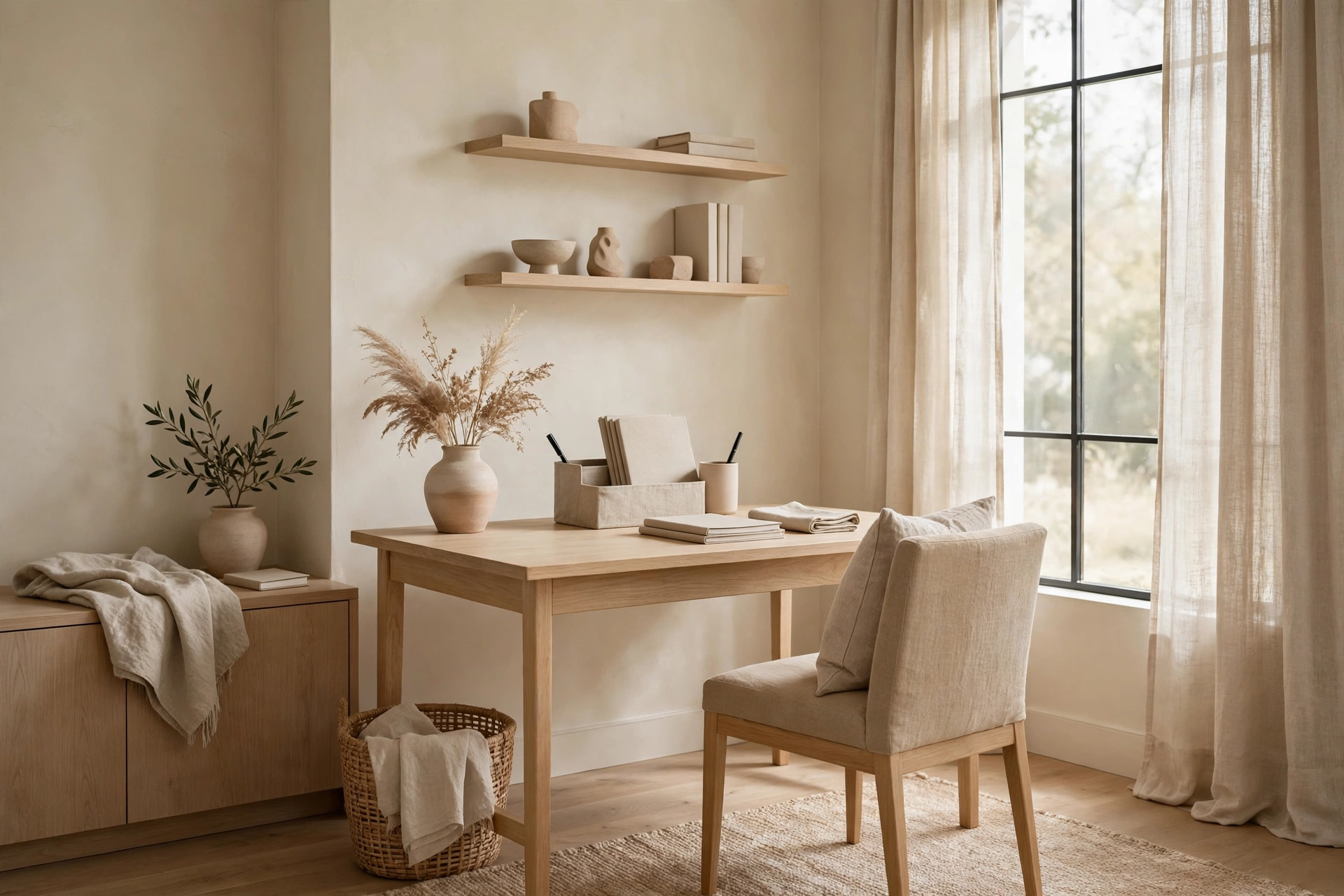
Japandi home office design ideas always begin with color restraint. Paint walls in warm off-white with a creamy undertone — never stark blue-white, which reads as cold and clinical. Build the palette around beige, greige, oatmeal, soft clay, and mushroom, keeping everything in the same warm tonal family so your eye moves across the room without interruption. This matters for focus: high-contrast, saturated colors subtly raise mental noise, while a tonal neutral backdrop lets your brain settle on the task in front of you. Add depth with one deeper accent — a clay cushion or a mushroom storage box — and stop there.
3. Washi Paper Task Lighting
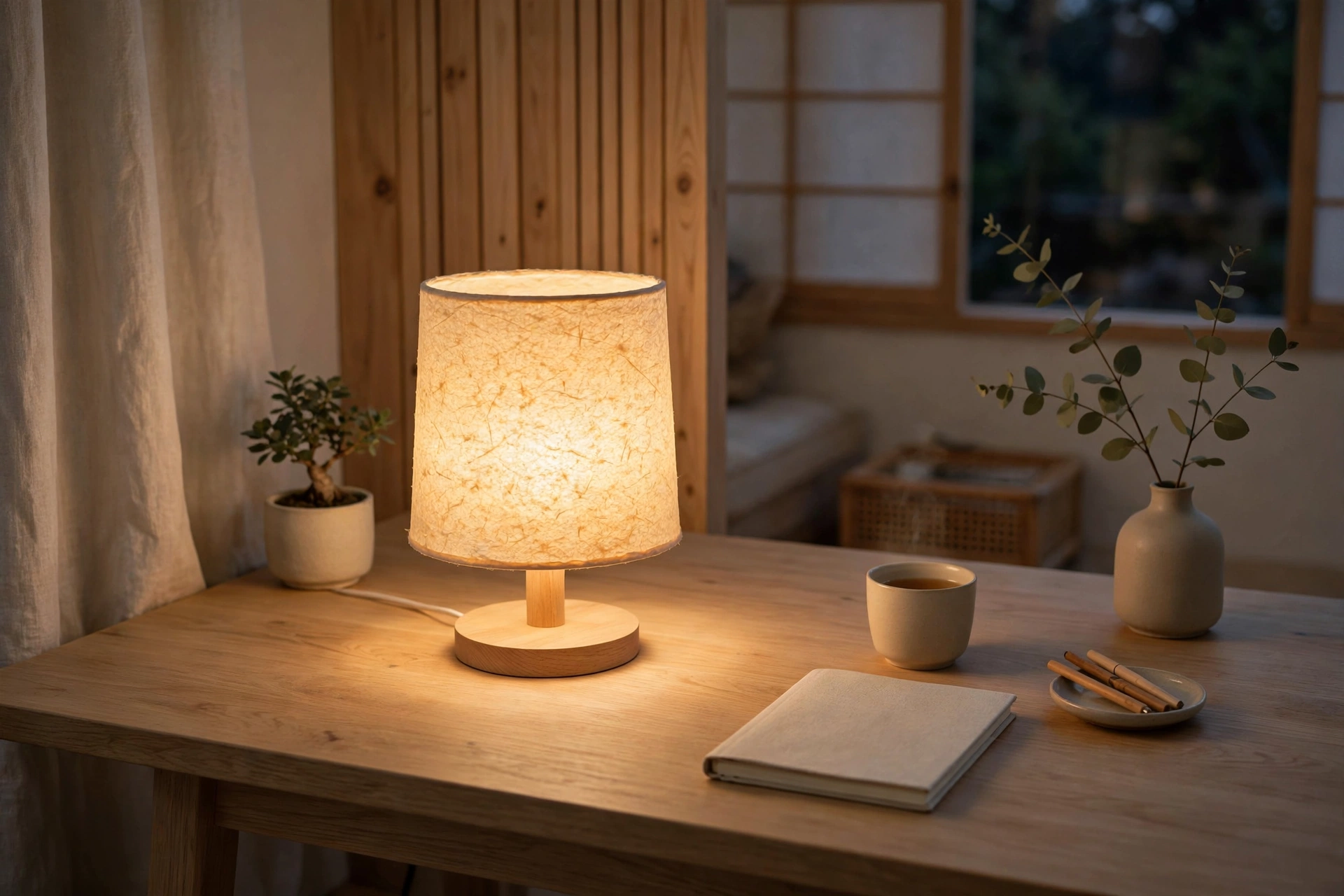
Overhead fluorescents are the enemy of calm work. A washi paper desk lamp or a small paper pendant above the desk casts the soft, diffused glow Japandi is famous for — flattering, warm, and easy on the eyes during long sessions. Fit it with a 2700K warm bulb and position it to the side of your dominant hand so you never work in your own shadow. For video calls, the diffused light is a bonus: it softens facial shadows far better than a harsh ring light. One beautiful lamp beats three mediocre light sources every time.
4. Hidden Cable Management
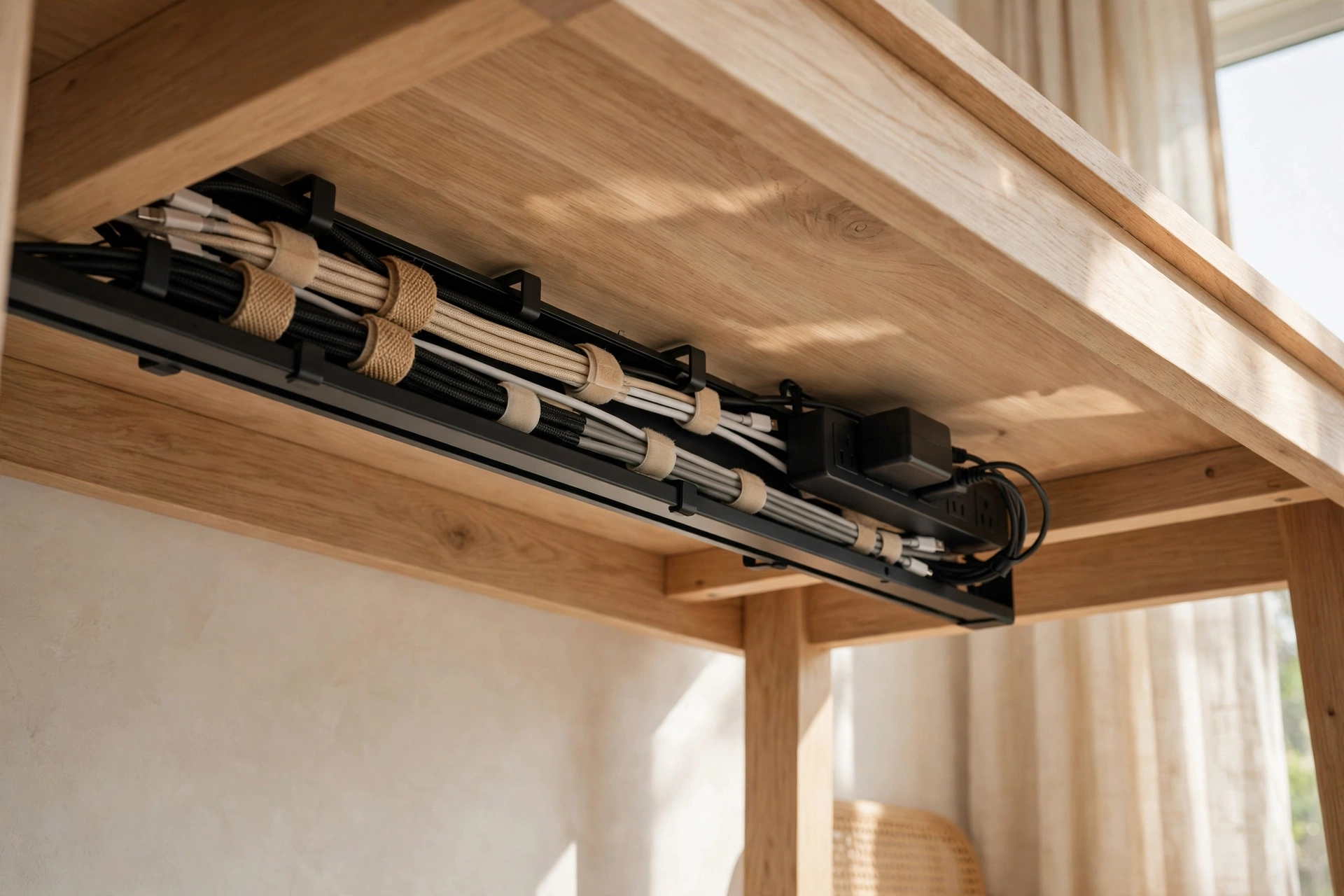
Nothing destroys Japandi calm faster than a tangle of cables. Of all the Japandi home office design ideas here, this unglamorous one has the biggest visual payoff. Mount a slim cable tray under the desk, route everything through it, and use a single fabric-wrapped extension cord to the wall. Velcro ties beat zip ties — you’ll rearrange eventually. The goal is simple: from the doorway, no cables should be visible at all. A desk with clean lines underneath feels instantly more expensive and infinitely calmer.
5. Floating Oak Shelves Instead of Bookcases
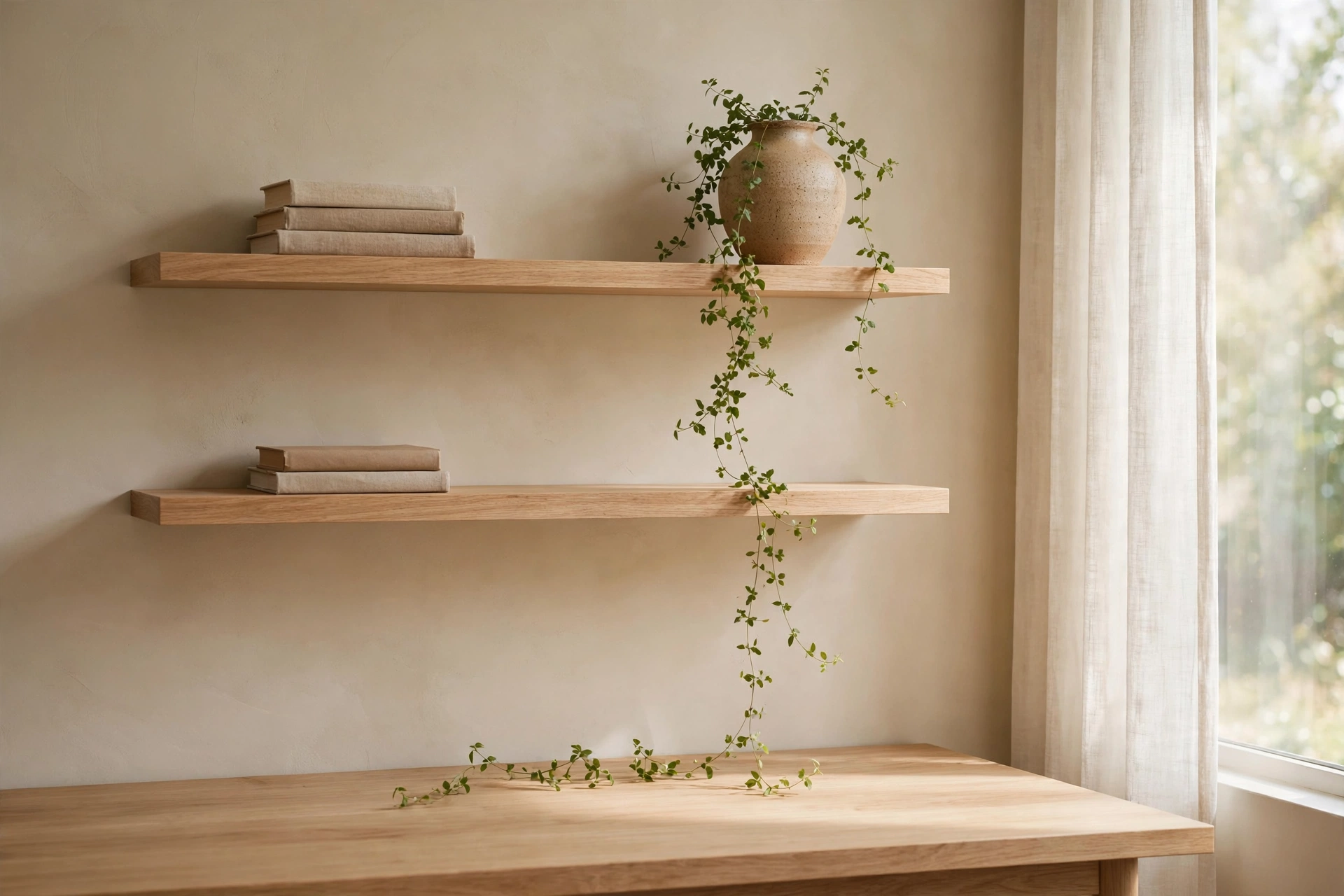
Skip the bulky bookcase and mount two or three floating shelves in light oak above or beside the desk. The Japandi rule is restraint: style each shelf with just a few curated objects — reference books you actually use, one ceramic vessel, a small plant — and leave plenty of empty wood visible. The emptiness is the design. Mount the lowest shelf within easy reach of your seated position so frequently used items don’t require getting up. Dust them weekly; minimalism only works when surfaces stay clean.
6. Ergonomic Chair in Natural Materials
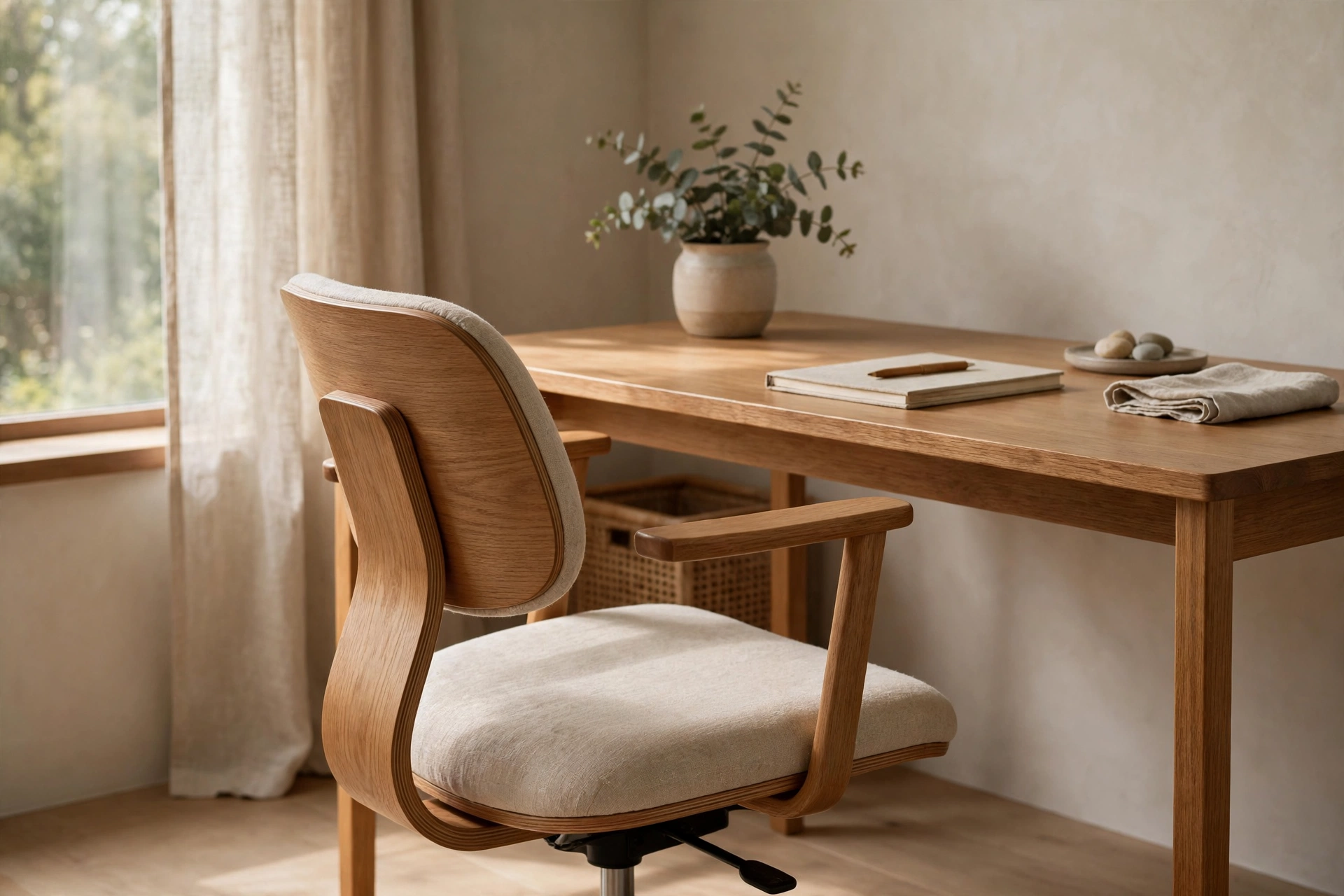
Comfort and Japandi aren’t opposites — you just choose comfort in honest materials. Look for an ergonomic task chair with a wooden frame or wooden armrests, upholstered in natural linen or wool rather than synthetic mesh and plastic. Warm oak legs, a curved plywood back, oatmeal fabric: it should look like furniture, not equipment. If a full replacement isn’t in budget, drape a wool throw over your existing chair and swap a plastic armrest cover for a wooden one — small material upgrades shift the whole feeling of the chair.
7. Wabi-Sabi Desk Accessories
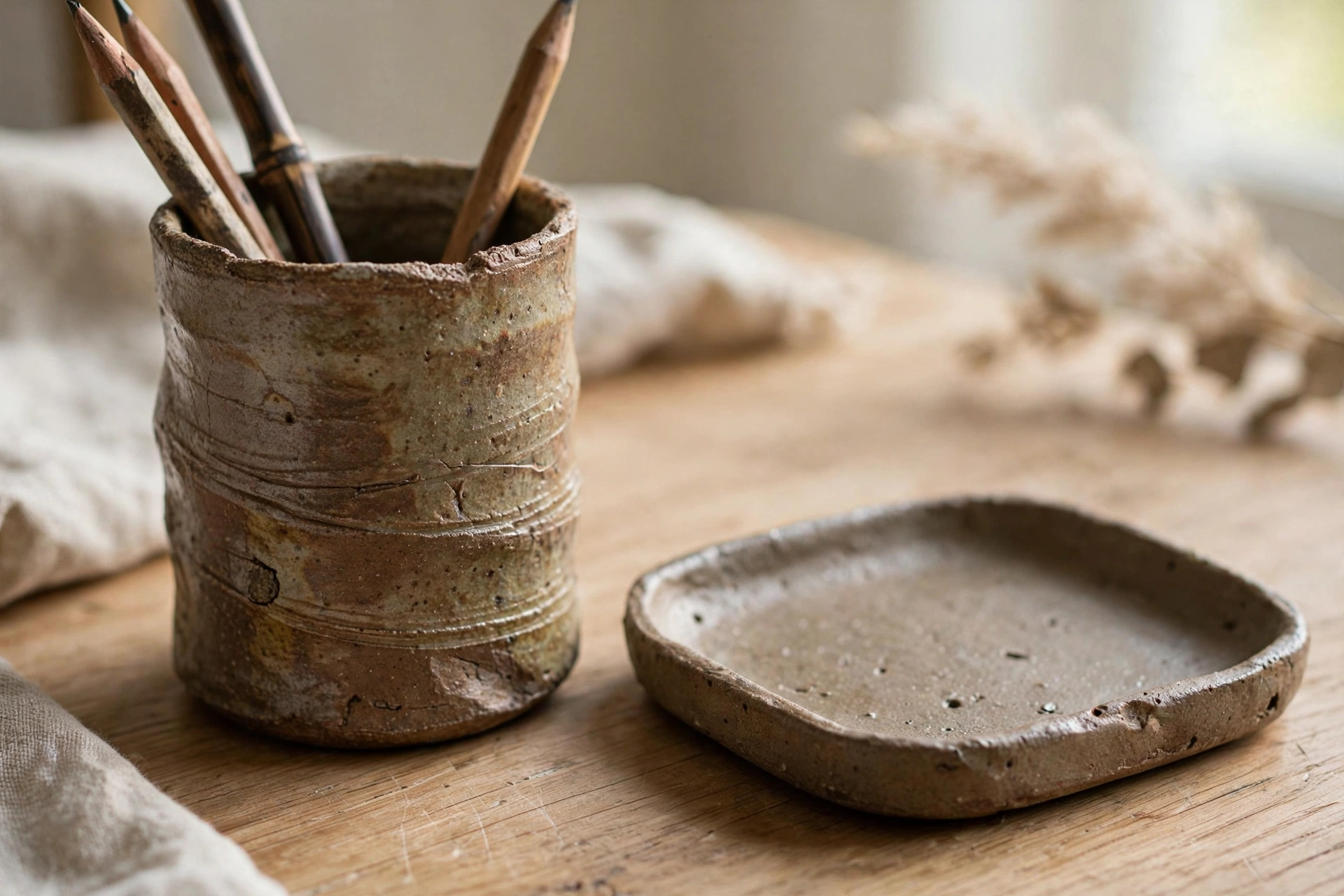
Japandi rooms need a nod to wabi-sabi — the Japanese appreciation of imperfection — and your desk is the perfect place. Choose a handmade stoneware pen cup with an uneven rim, a small ceramic tray for paperclips with a matte earthy glaze, a wooden desk organizer with visible grain. Each piece should feel quietly one of a kind. These small imperfect objects do important work: they keep the minimalism human and warm instead of sterile, and they make the desk a place you actually enjoy sitting at.
8. One Sculptural Indoor Plant
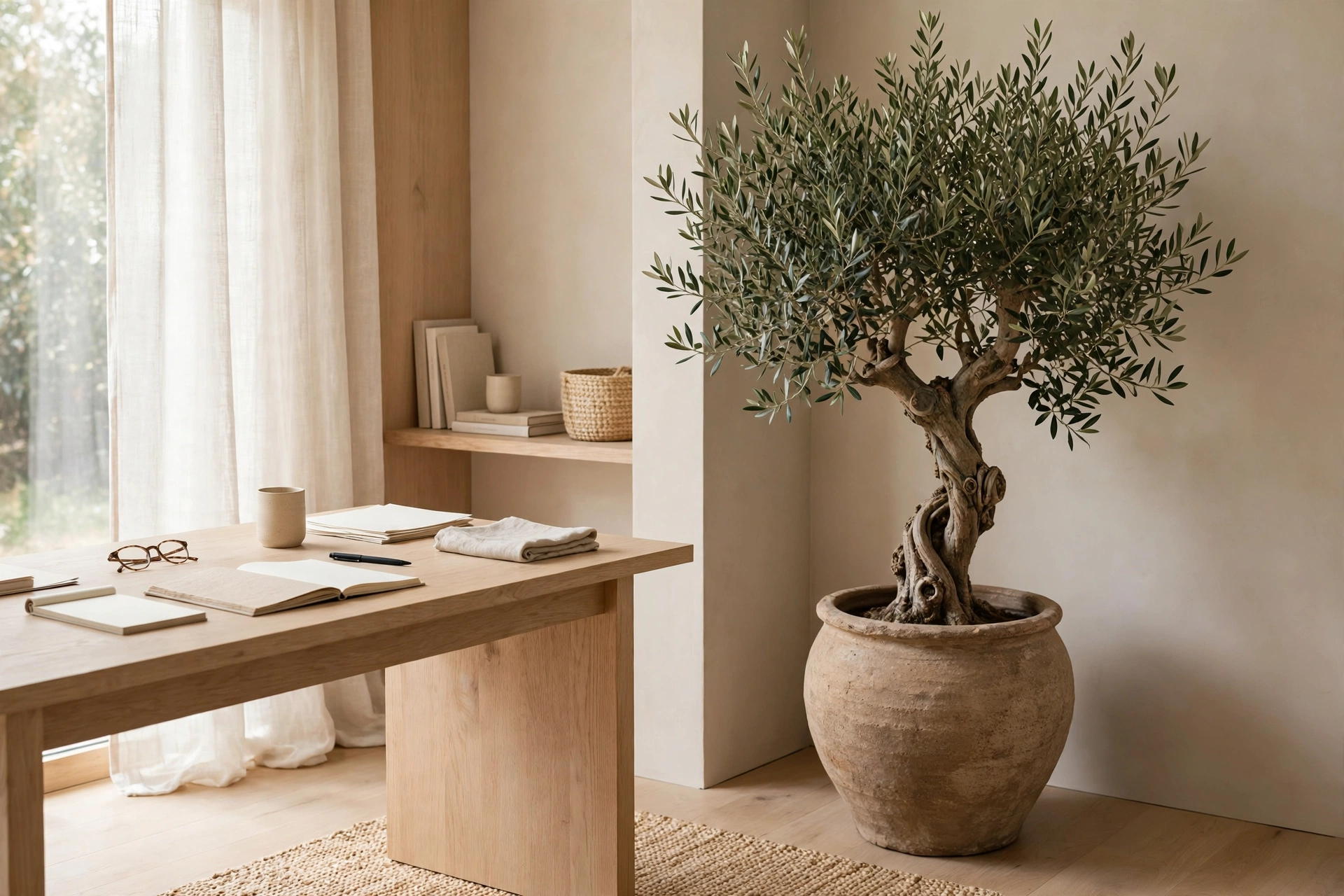
In Japandi design, greenery follows the same less-is-more rule as everything else: one plant, chosen well, beats a shelf of succulents. A single olive tree, fiddle-leaf fig, or snake plant in a handmade ceramic pot brings life and a sculptural silhouette to the office corner. Position it where it gets bright, indirect light — near the window but out of your direct sightline, so it calms without distracting. Studies consistently link a single visible plant to lower stress during focused work; it’s the cheapest productivity upgrade on this list.
9. Shoji-Style Room Divider
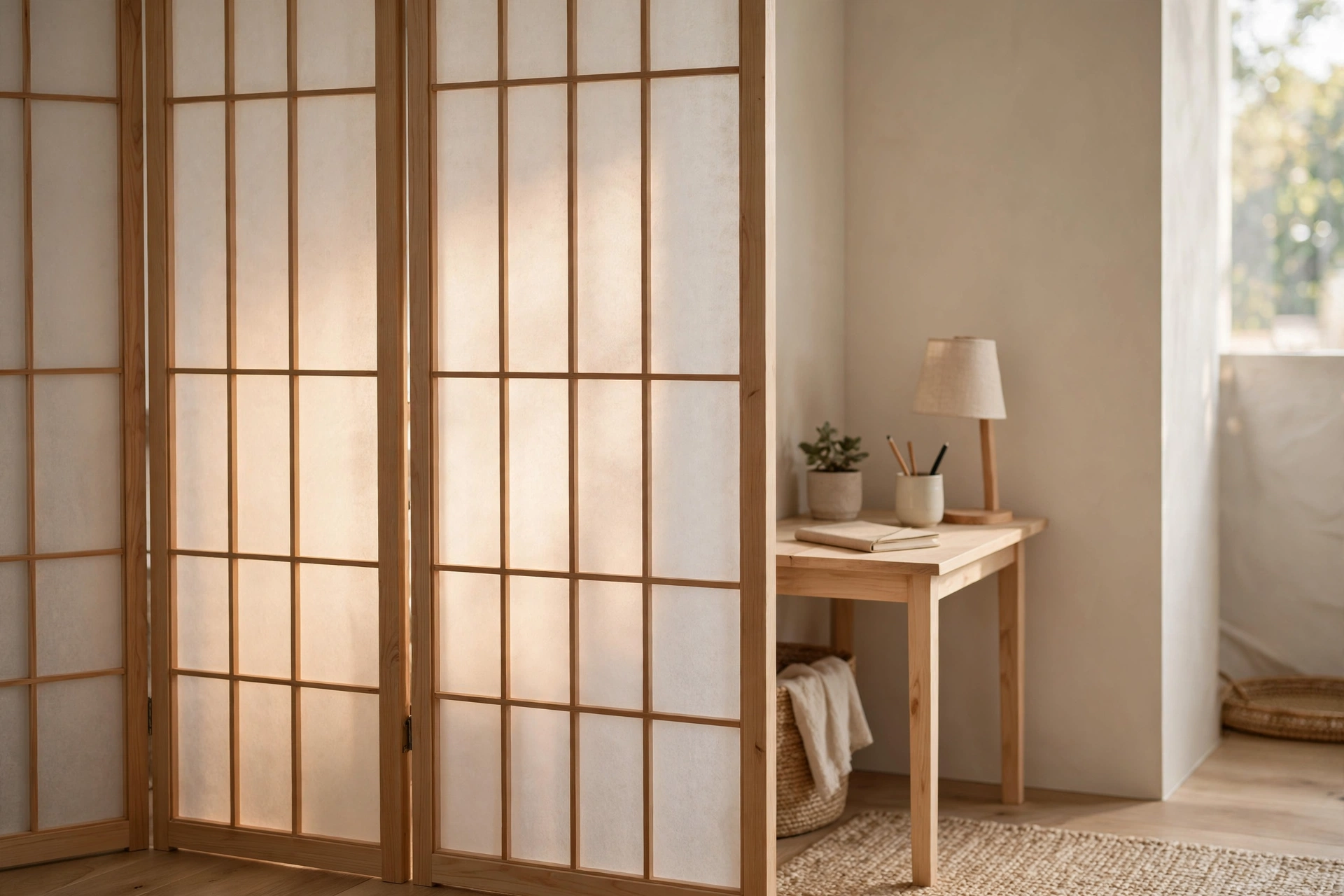
If your home office shares space with a living room or bedroom, a shoji-style screen is the most elegant way to zone it. The wooden lattice with translucent panels divides space without blocking light, so both zones stay bright — and when the workday ends, you can literally close off the office, a powerful psychological boundary for remote workers. Choose natural or lightly stained wood, and keep the panels clean; that soft filtered glow is the whole point. It’s also a perfect video-call backdrop: calm, textured, and professional.
10. Natural Fiber Rug Under the Desk
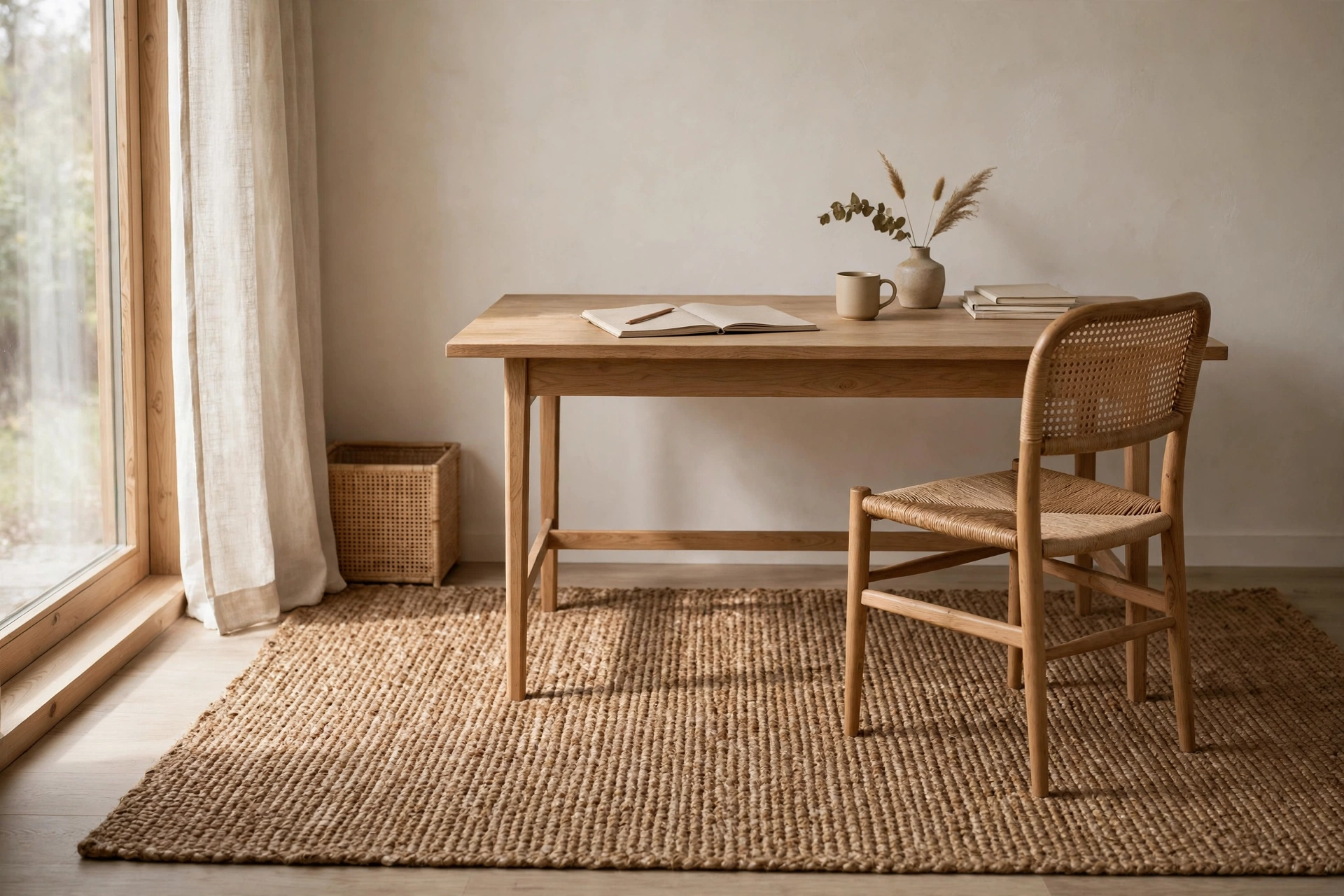
Ground the workspace with a low-pile rug in jute, sisal, or seagrass, large enough to extend beyond the desk and chair so the whole work zone reads as one intentional area. The tight weave and earthy tone add warmth without pattern, keeping the room visually quiet — important when your eyes need rest between screen sessions. The texture underfoot also marks a subtle ritual: stepping onto the rug means work mode, stepping off means you’re done. Avoid thick shag or bold prints; in a Japandi office, the rug should be felt more than seen.
11. The Clear-Desktop Rule
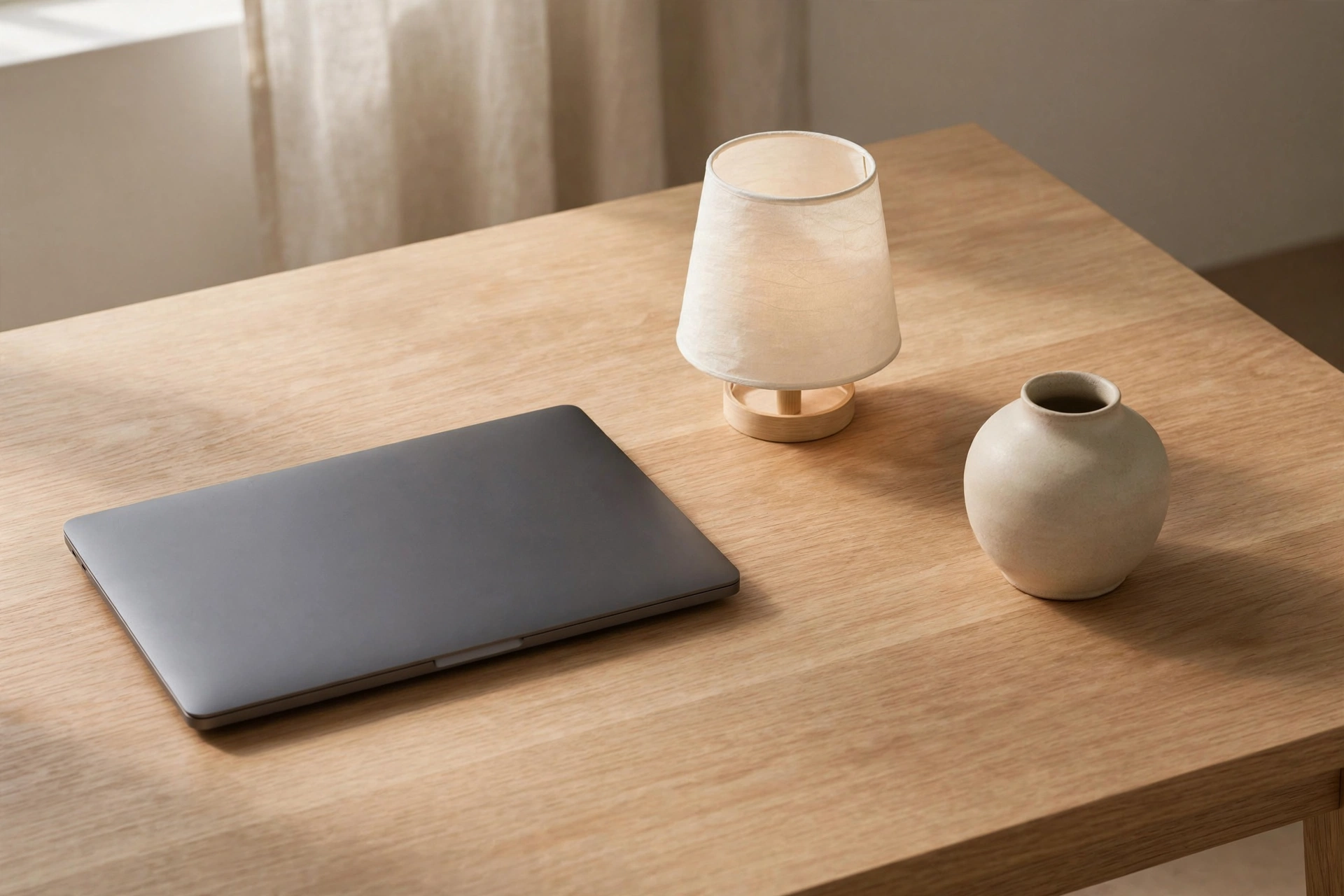
Adopt the strictest of all Japandi home office design ideas: when you finish work, the desktop holds only three things — your closed laptop or monitor, your lamp, and one intentional object. Everything else goes into drawers, trays, or shelves. This isn’t just aesthetics; a clear desk removes hundreds of micro-decisions (“what’s that paper?”) that fragment attention the next morning. Pair it with a five-minute end-of-day reset: file papers, wipe the desk, close the laptop. You’ll start every morning in a room that feels like a fresh start.
12. Low Wooden Storage Cabinet
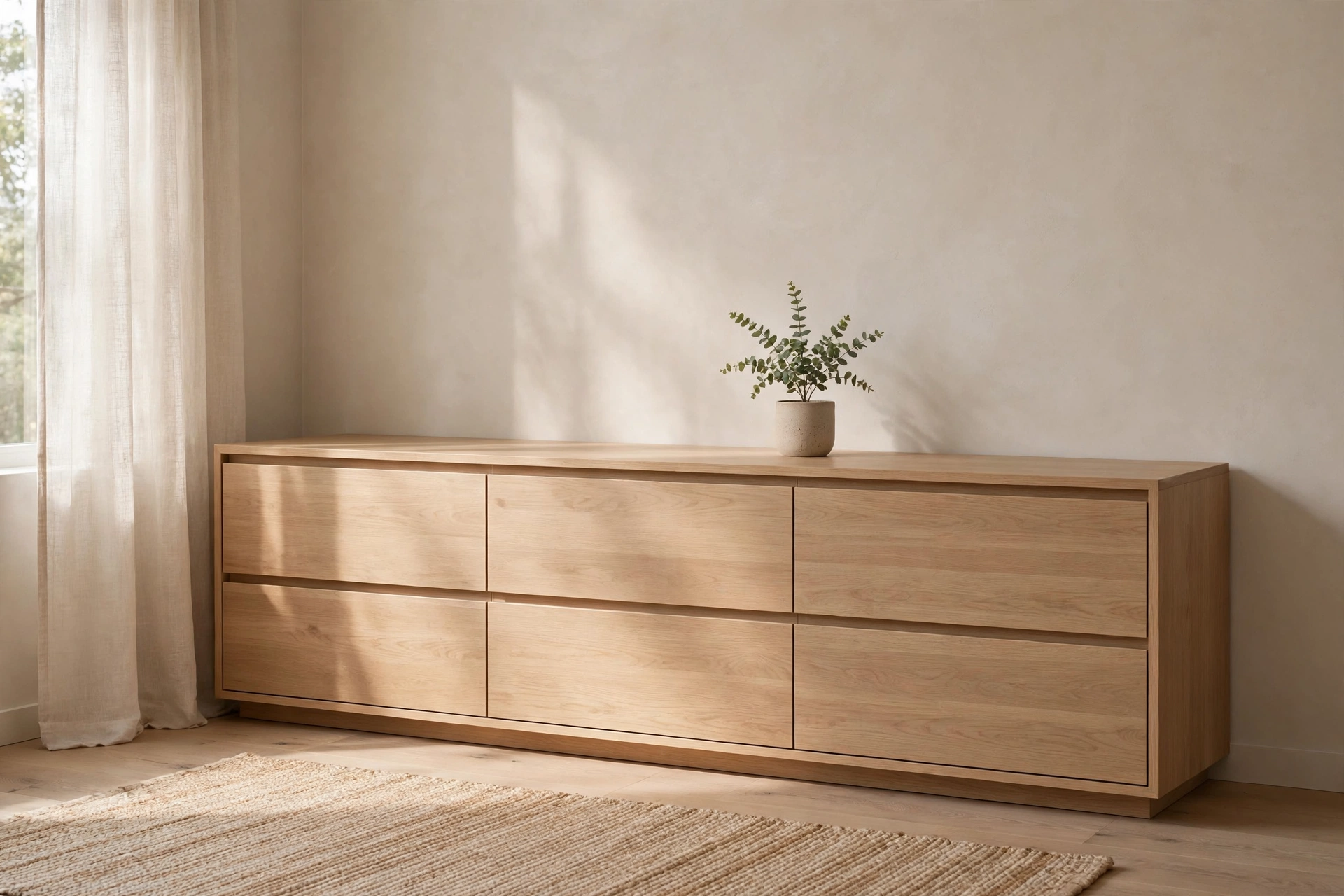
Every office accumulates things that must exist but shouldn’t be seen — printers, chargers, reference binders, stationery stock. Give them a home in a single low, wide wooden cabinet in oak or ash with flat fronts and push-to-open drawers (no fussy hardware). Position it against the longest wall or under a window, and keep the top surface nearly clear — one plant or one ceramic piece, nothing more. One good closed cabinet beats three open shelving units: out of sight genuinely means out of mind, and your focus stays on the desk, not the stuff.
13. Desk Positioned for Soft Daylight
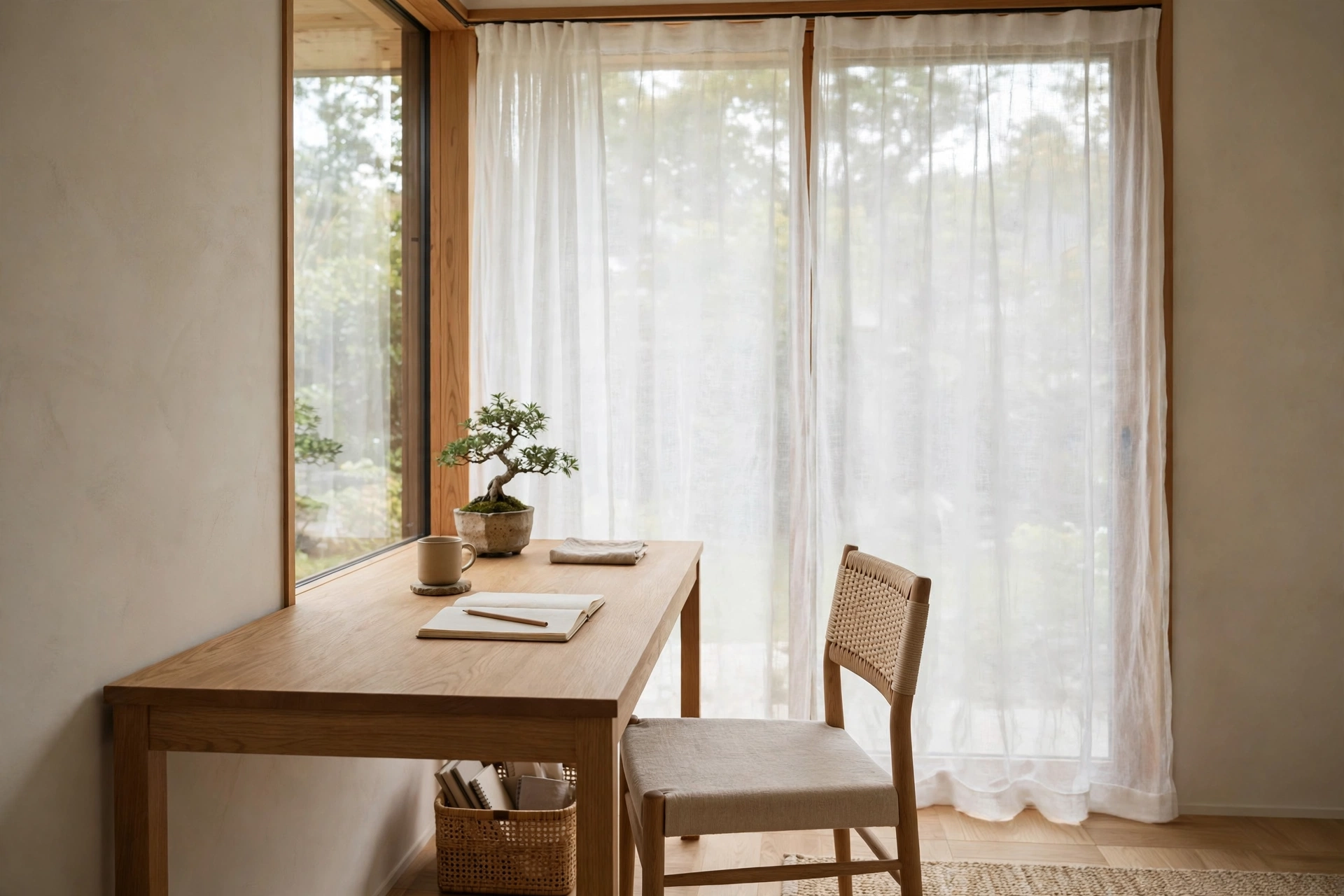
Place your desk perpendicular to the window, not facing it (glare) and not with your back to it (you become a silhouette on calls). Side daylight is the most flattering and least straining light for screen work. Hang sheer linen curtains in warm white to diffuse direct sun into a soft glow that shifts gently through the day — bright and energizing at noon, golden and calm by late afternoon. If your only option is a dark corner, a daylight-mimicking 5000K desk lamp for mornings plus the warm 2700K lamp for afternoons recreates the rhythm artificially.
14. Warm Layered Evening Lighting
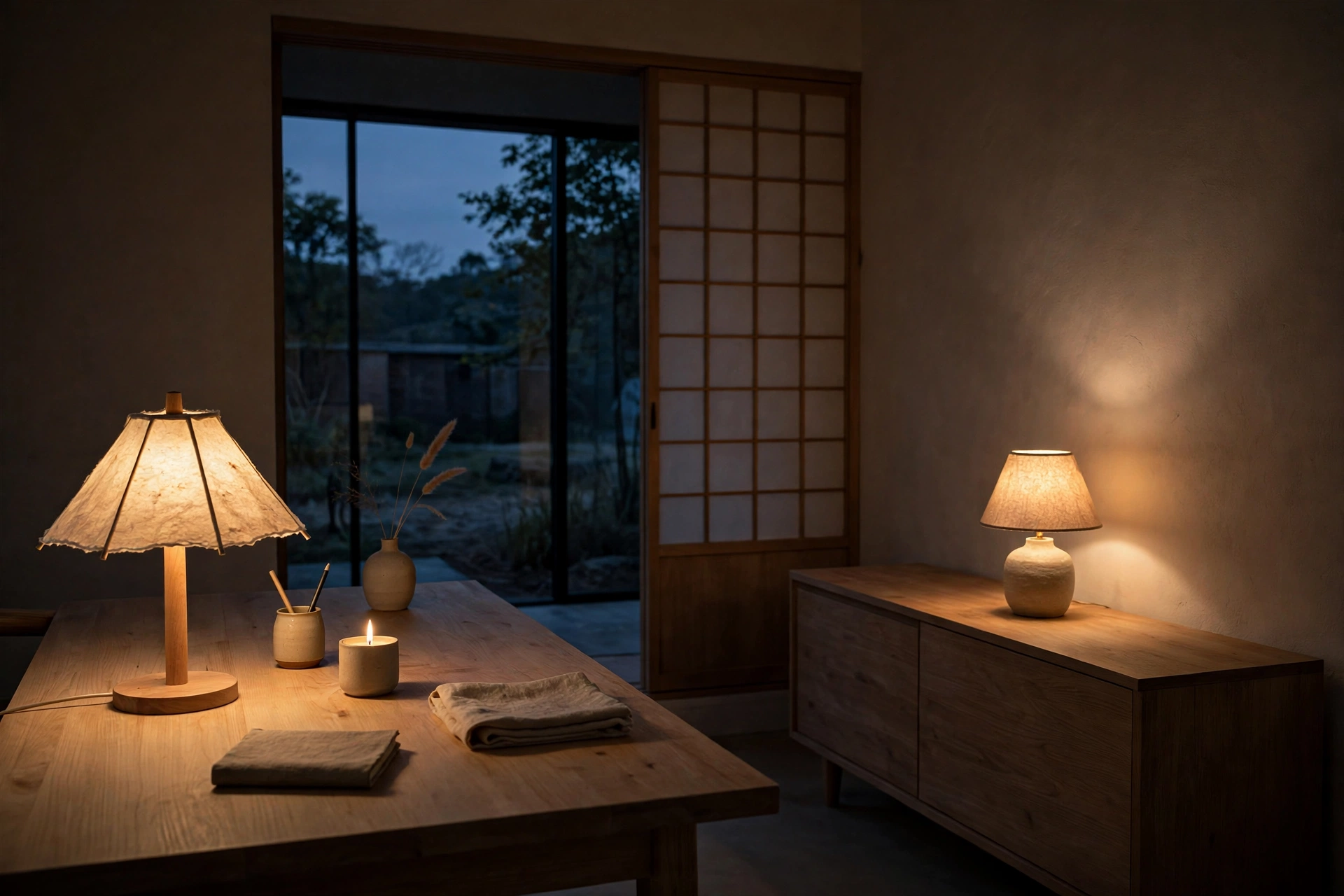
When daylight fades, don’t surrender to a single harsh overhead. Build evening light in layers: the paper desk lamp for task work, a small ceramic table lamp on the storage cabinet for ambient warmth, and optionally a candle or two for the last wind-down hour. Keep every bulb at 2700K or warmer and put the main lamp on a dimmer so you can dial the room down as the evening deepens. This layered glow signals to your brain that the intense work phase is over — one of the most underrated Japandi home office design ideas for people who struggle to switch off.
15. Mindful Negative Space and a Weekly Reset
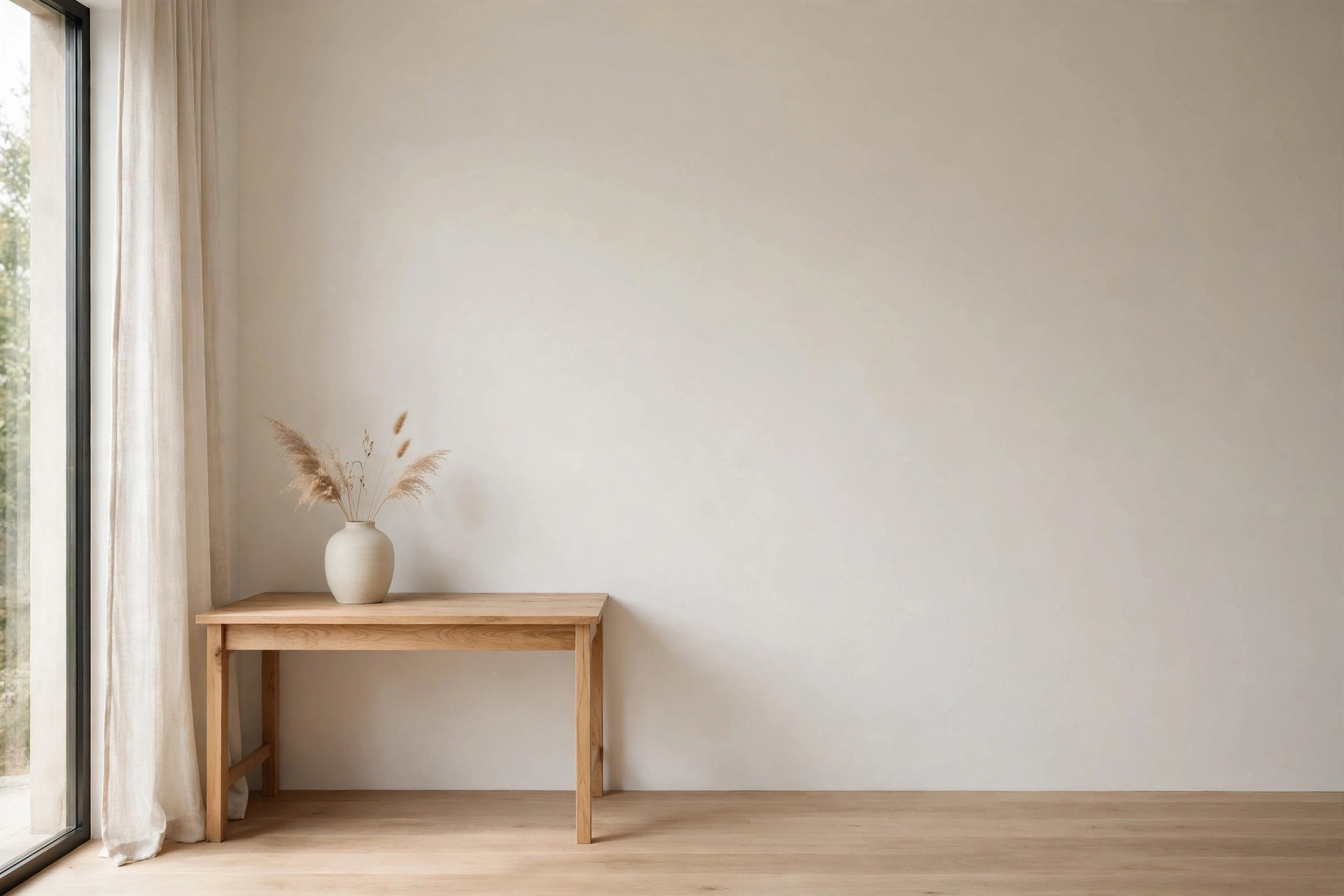
The most powerful idea costs nothing: leave space empty on purpose. Keep one shelf completely bare, leave a stretch of wall unadorned, resist filling the corner behind the door. Negative space gives each object room to be appreciated and gives your mind room to think — visual breathing room translates directly into mental breathing room. Seal it with a weekly reset ritual: every Friday, remove one thing from the office that doesn’t earn its place. Calm isn’t bought; in a Japandi home office, it’s curated by subtraction, week after week.
Frequently Asked Questions
What exactly is Japandi style in a home office?
Japandi fuses Japanese minimalism with Scandinavian functionality. In a home office, that means low-profile natural-wood furniture, a warm neutral palette, honest materials like linen and ceramic, and ruthless clutter control — a workspace designed for calm focus rather than decoration. These Japandi home office design ideas apply that philosophy specifically to where you work.
What colors work best in a Japandi home office?
Warm neutrals: beige, greige, warm white, oatmeal, soft clay, and mushroom, layered with natural wood tones. Avoid stark whites, cool grays, and saturated brights — they raise visual noise. Everything should sit in the same warm tonal family so the room feels cohesive and your attention stays on your work.
How do I make a small home office look Japandi?
Japandi is ideal for small spaces. Choose a compact low-profile desk, mount floating shelves instead of a bookcase, use hidden cable management, and embrace negative space rather than filling every corner. A shoji-style divider can zone a corner of a larger room without any renovation, and one sculptural plant adds life without clutter.
Can I create a Japandi home office on a budget?
Absolutely. Start with what costs nothing: declutter ruthlessly, reposition your desk for better daylight, and adopt the clear-desktop rule. Then make high-impact low-cost swaps — a washi paper desk lamp, a jute rug, and linen-look storage boxes transform a space for very little. Invest later in one good wooden piece, like a solid oak desk, rather than many cheap ones.
Keep Exploring
If these Japandi home office design ideas resonated, keep the calm momentum going — small, intentional changes compound. Start with one idea this weekend, notice how your focus shifts, and let your workspace evolve into the quiet, productive retreat your work deserves.





[…] that actually meets your lower back, and armrests you can tuck under the desk. Then bring in the Nordic look with natural materials — a light beech or oak frame, or upholstery in wool bouclé or woven linen […]
[…] a place you have to work and more like a place you get to create. For more inspiration, explore our Japandi home office ideas, Scandinavian home office ideas, and boho bedroom […]