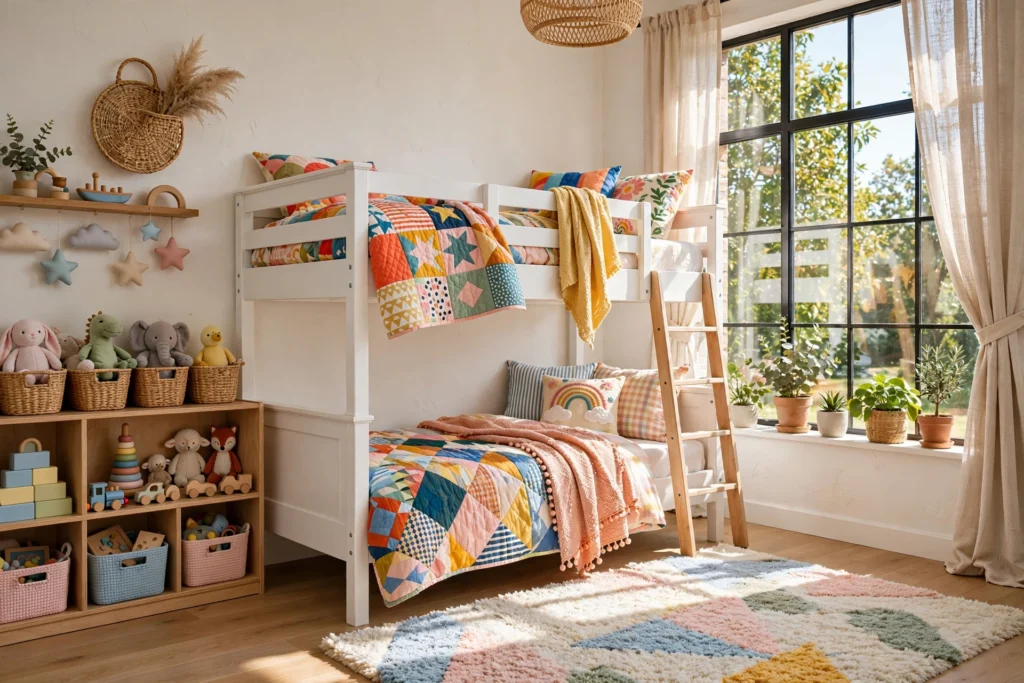

Sharing a room doesn’t mean sacrificing style or personal space. These bunk bed room ideas maximize shared kids’ spaces with L-shaped bunks, loft desks, storage stairs, and trundles — smart layouts that give every child their own zone.
1. Start with Classic Twin-over-Twin
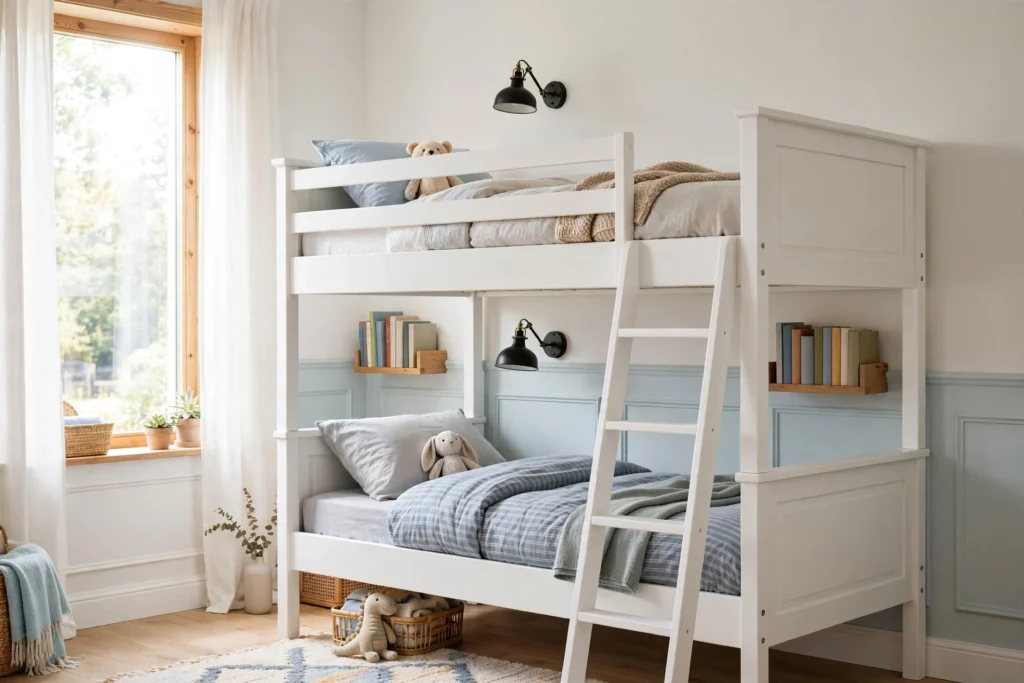
The classic twin-over-twin bunk with individual reading lights at each bed is the timeless starting point. Each child gets their own light, their own bedding personality, and equal territory. Keep the frame simple — white or natural wood — and let the bedding do the talking.
2. Try an L-Shaped Corner Bunk
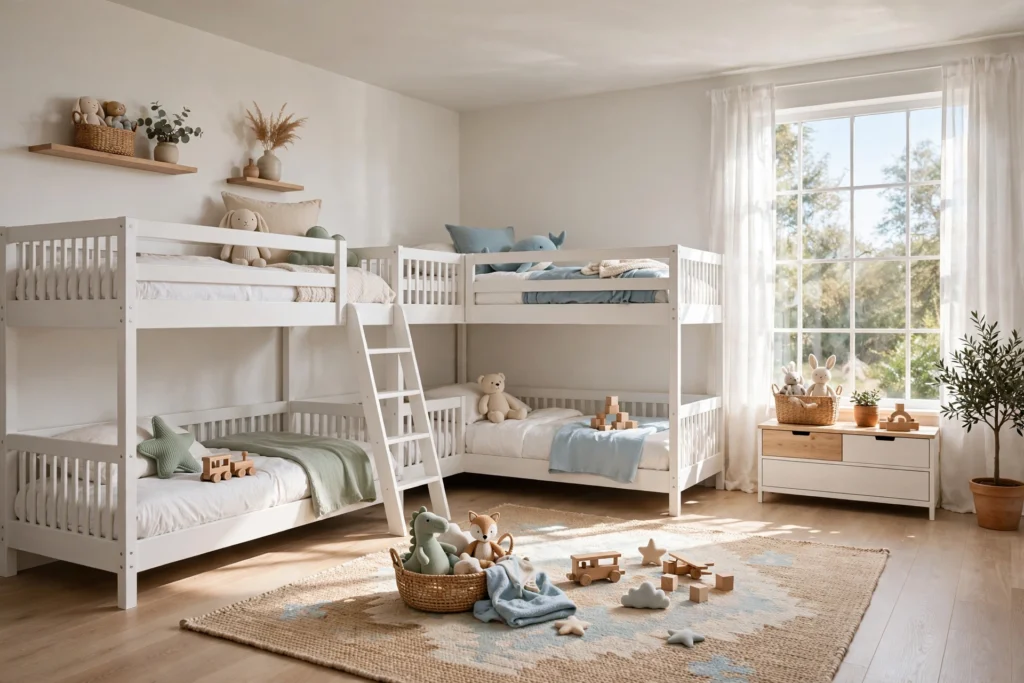
An L-shaped corner bunk opens up the center floor space for play. The perpendicular arrangement fits corners beautifully and leaves the middle of the room free. This layout suits square rooms best and gives each sleeper a distinct nook.
3. Loft the Bed Over a Study Desk
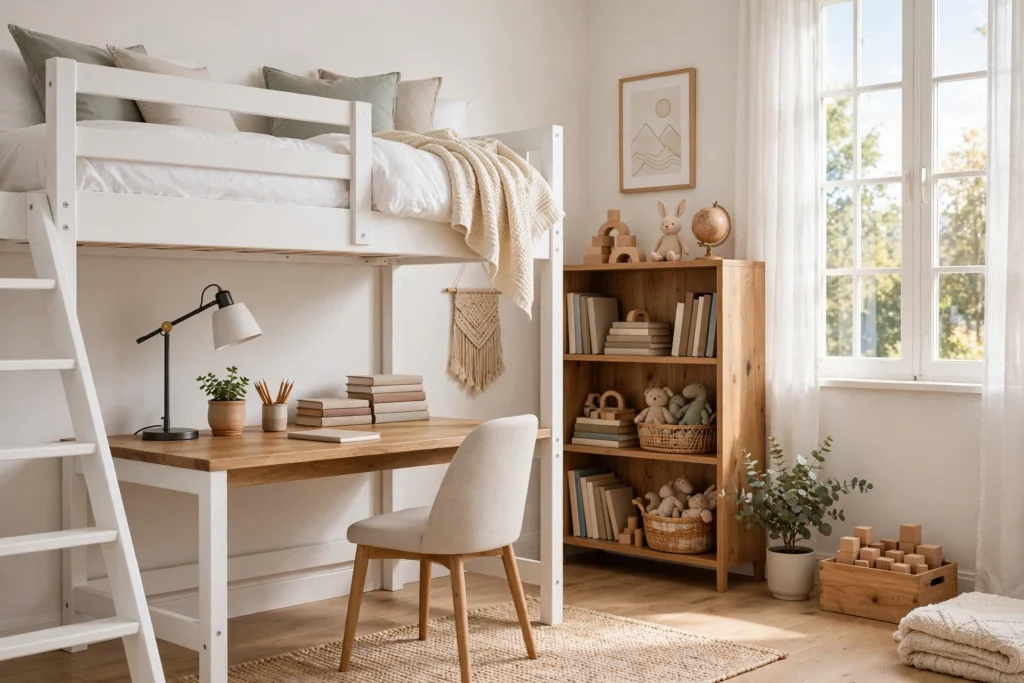
A loft bed with a full study desk and lamp underneath doubles the room’s function. Sleep up top, work below — the vertical split gives each child a complete personal zone in half the footprint. This is the go-to for school-age kids sharing a room.
4. Add a Trundle for Sleepovers
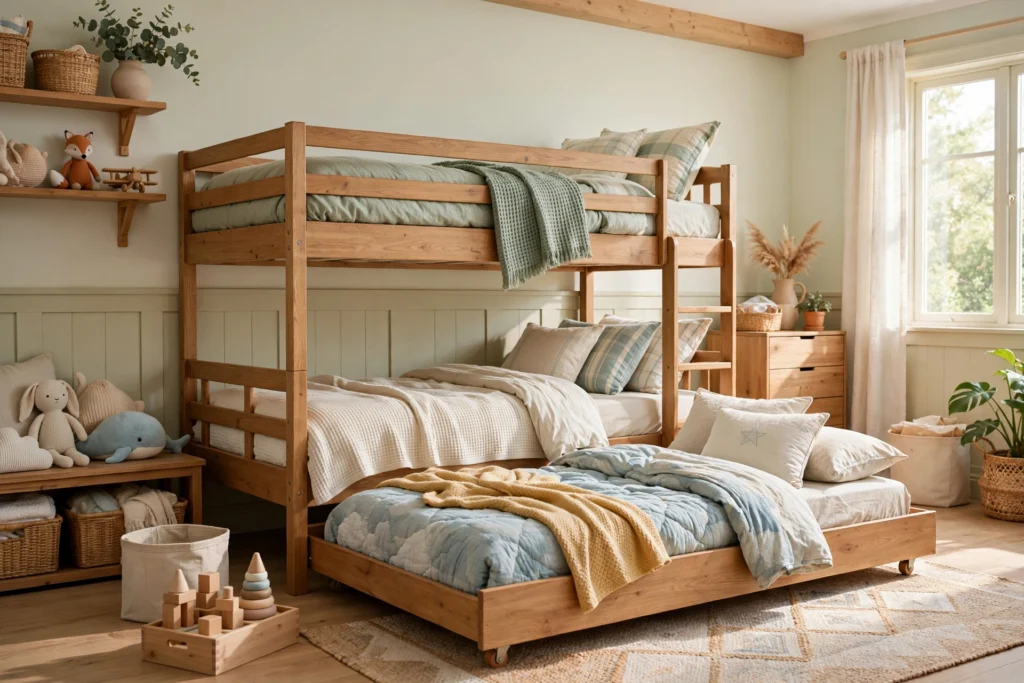
A twin bunk with a pull-out trundle extended for sleepovers sleeps three without permanent bulk. The trundle tucks away by day. Choose a trundle on casters for easy pull-out. Apartment Therapy’s shared kids’ room guide has more sleepover-friendly layouts.
5. Choose Storage Stairs
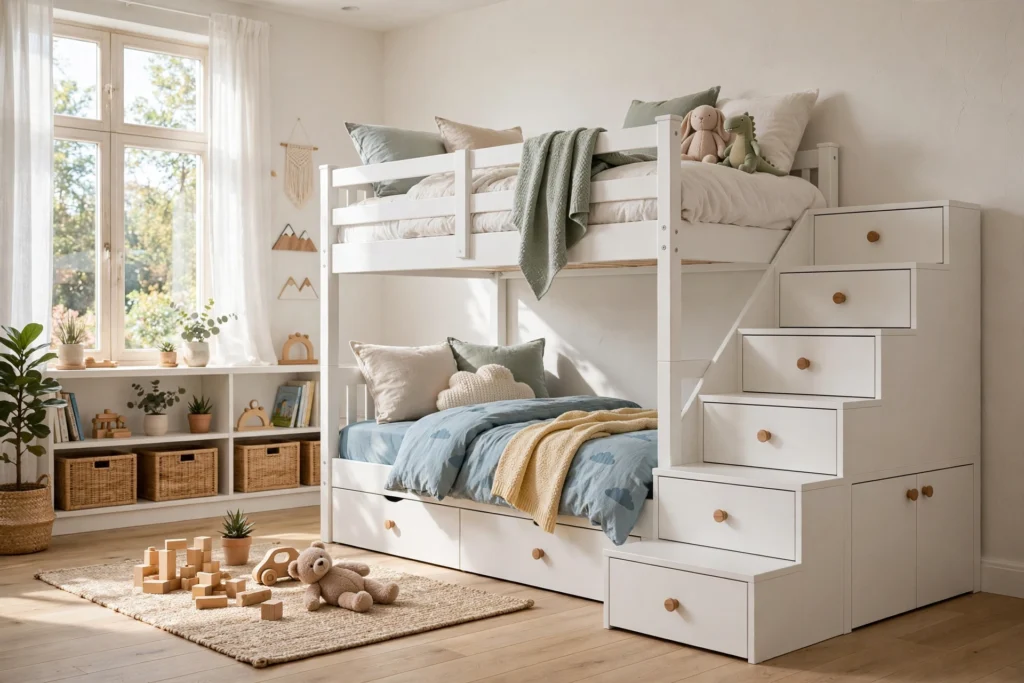
Storage stairs where each step opens into a drawer for clothes beat ladders on safety and storage. Kids climb safely; clothes get a home. The stairs do double duty as a dresser, freeing up floor space for play.
6. Hang Privacy Curtains
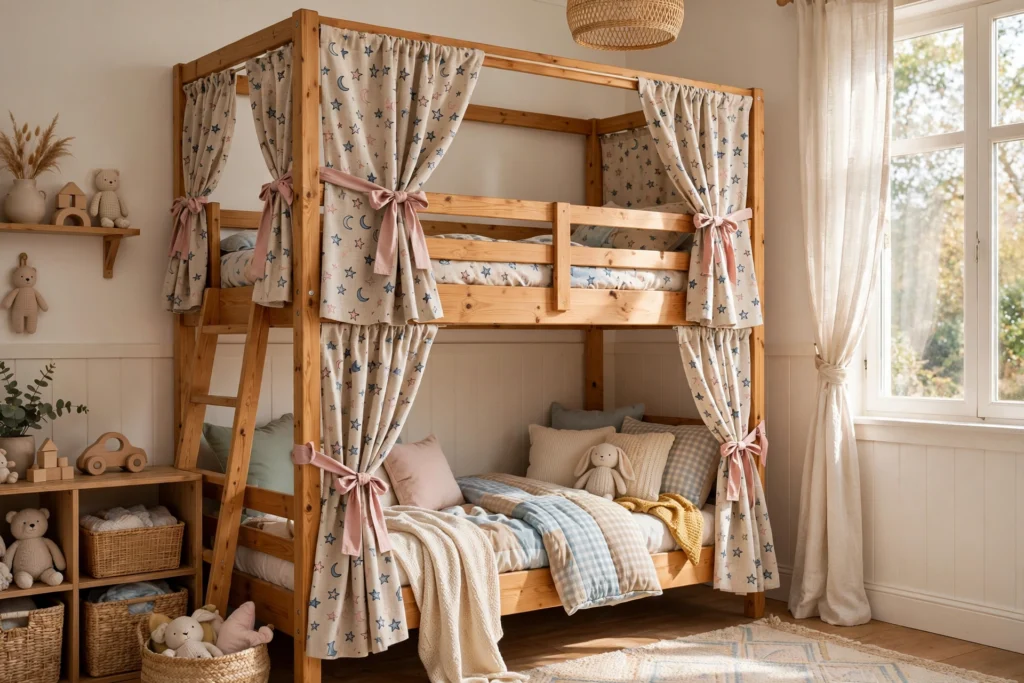
Patterned curtains hung from the top bunk create private sleeping nooks. Each child gets a curtain they can draw for alone time. Choose washable fabric and a simple tension rod or track. This small addition dramatically reduces sibling friction.
7. Style It Coastal
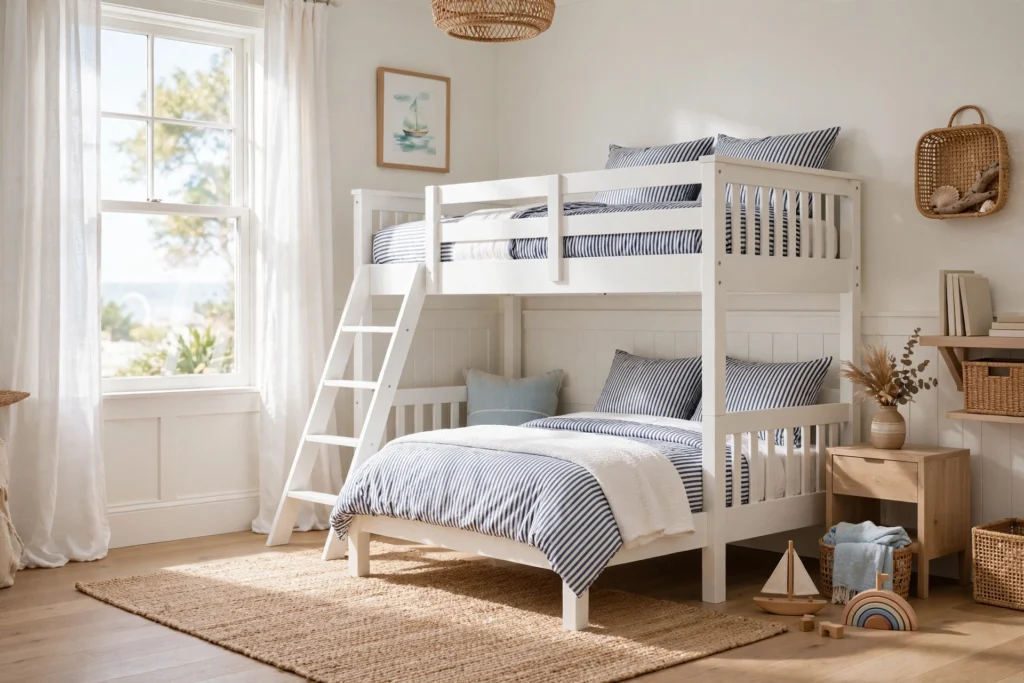
Crisp white bunks styled with navy striped bedding and a jute rug bring breezy coastal charm to a shared room. The light palette keeps a small room feeling open. This works especially well in beach-house bedrooms and summer homes.
8. Go Scandinavian Minimal
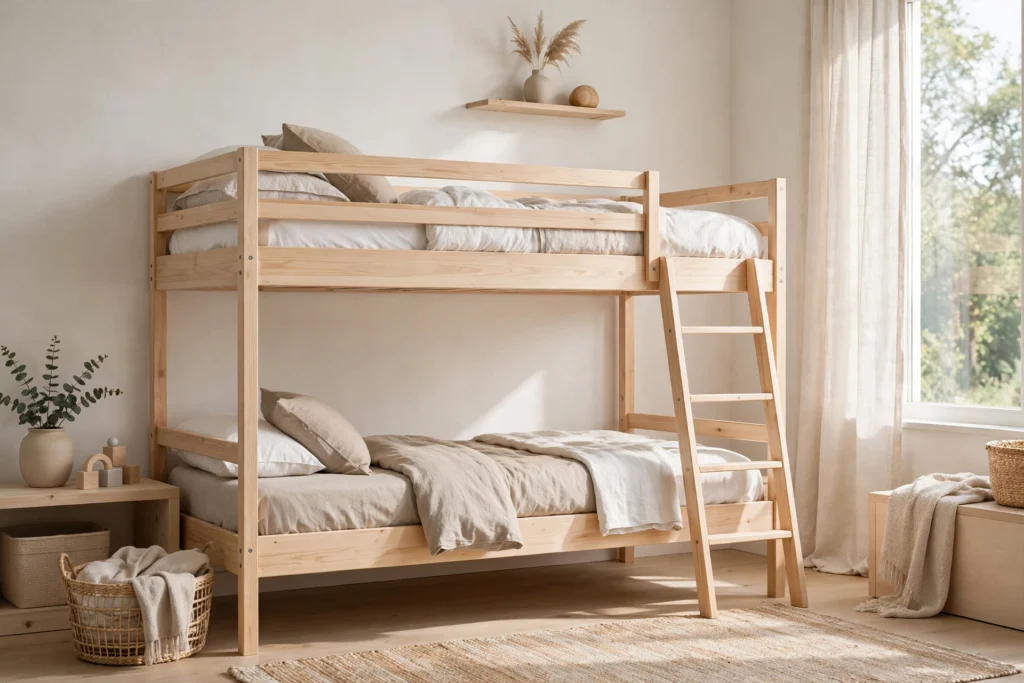
A natural wood Scandinavian bunk with muted minimalist bedding proves less is more. Clean lines, pale wood, and a restrained palette keep the shared room calm. This style grows well with kids — it suits a five-year-old and a fifteen-year-old equally.
9. Dedicate Under-Bunk Space to Play
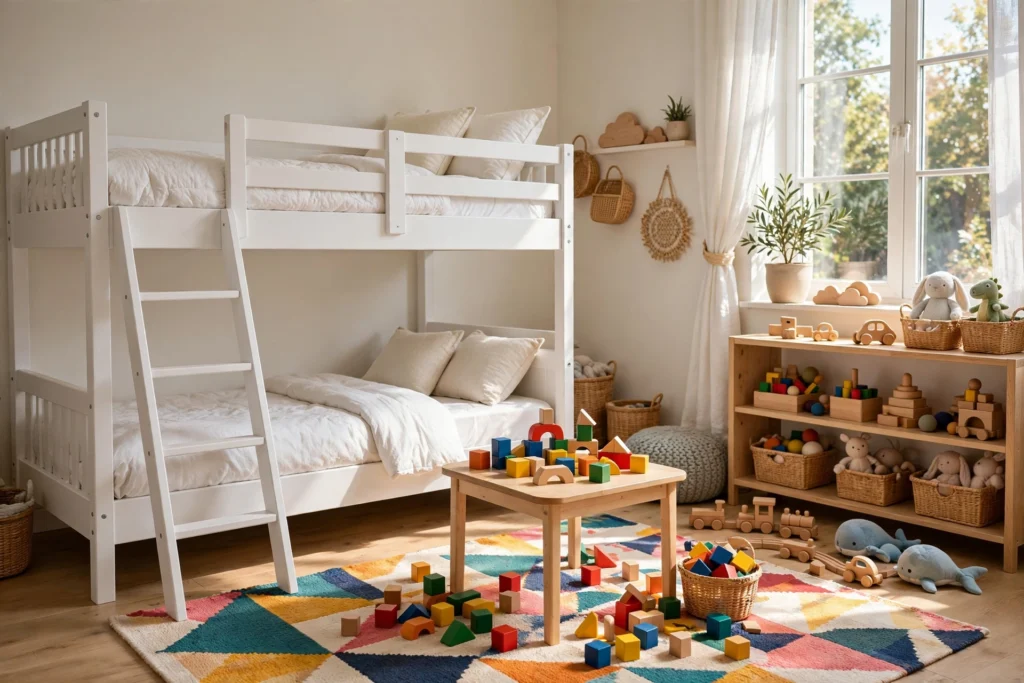
The floor space under a loft bunk dedicated to a play table and toy shelves gives kids a playroom within their bedroom. Define the zone with a rug. When they outgrow the toys, the same space becomes a study nook.
10. Paint It Sage Green
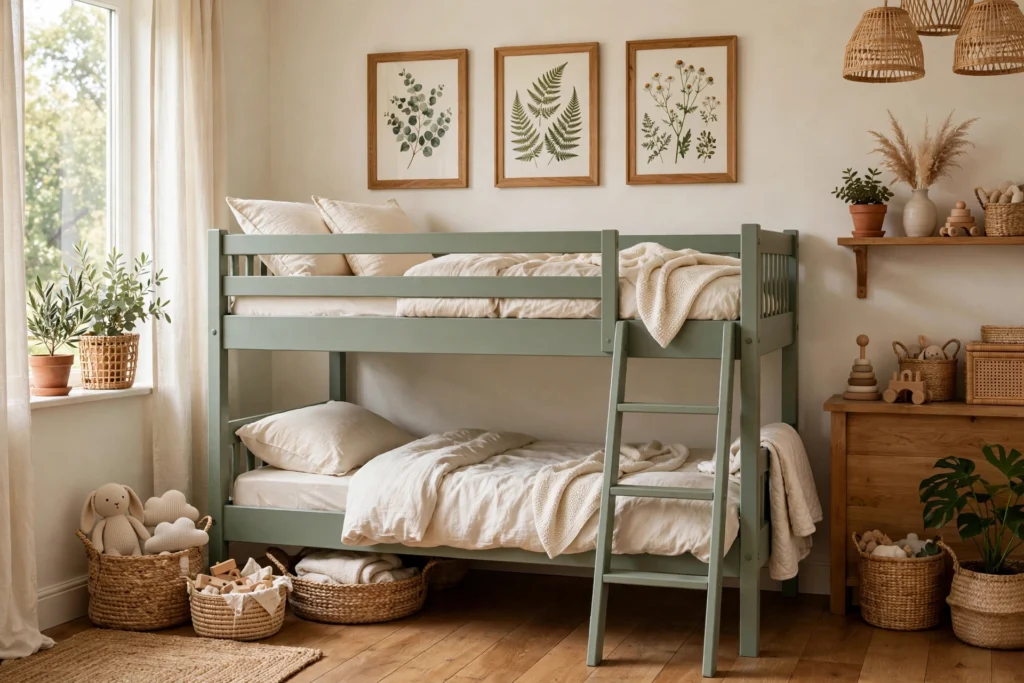
Sage-green bunk frames paired with cream bedding and botanical prints create a calm, nature-inspired shared room. The muted green suits both boys and girls and hides scuffs better than white. The Spruce’s cozy bedroom ideas show sage used beautifully in kids’ spaces.
11. Build a Teen Loft Lounge
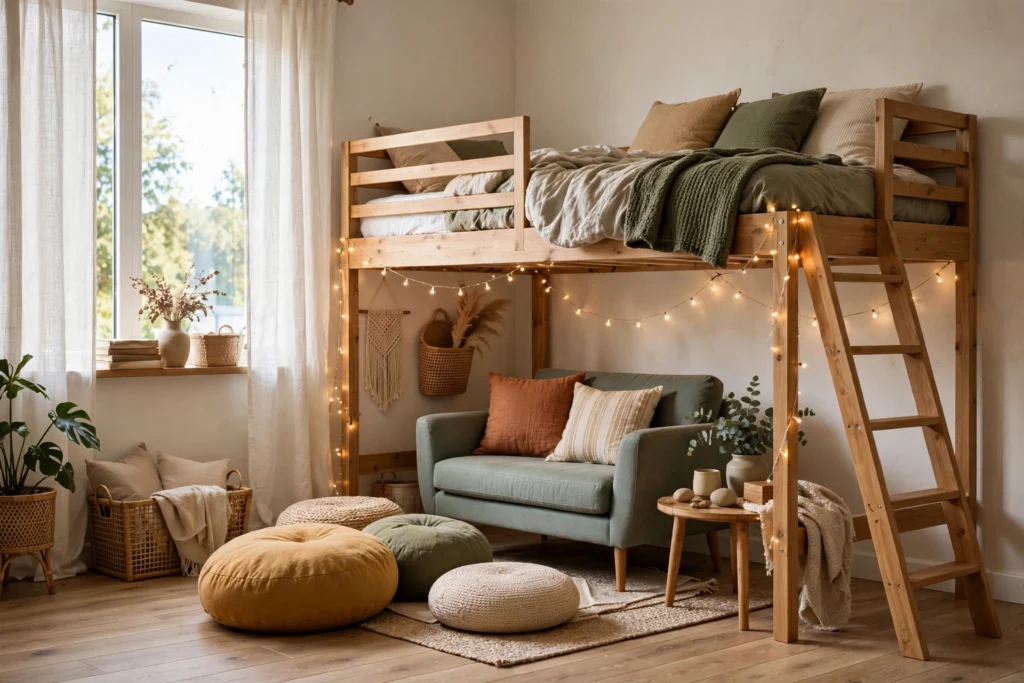
A teen loft bed with a lounge area of floor cushions below gives older kids a hangout zone. Add string lights and a small speaker for the full teen-den effect. This setup respects a teenager’s need for their own space within a shared room.
12. Fit Three with a Triple Sleeper
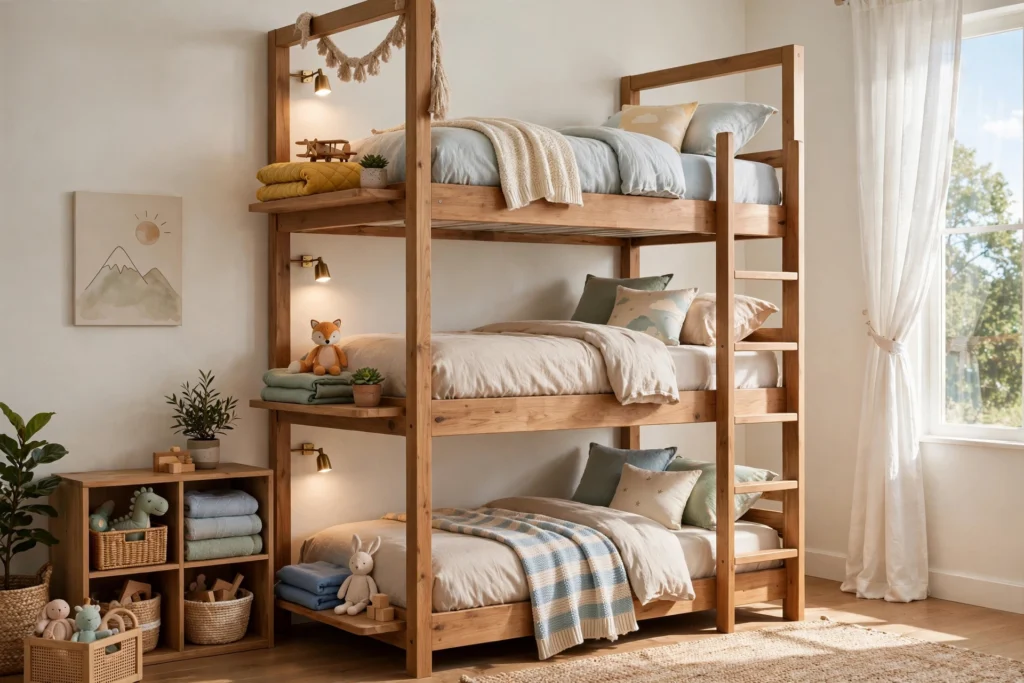
A triple sleeper bunk gives each of three kids their own light and shelf. The L- or stacked-triple configuration fits three sleepers in the footprint of one bed. Assign each child a shelf and light to keep the peace.
13. Add Bookshelf Headboards
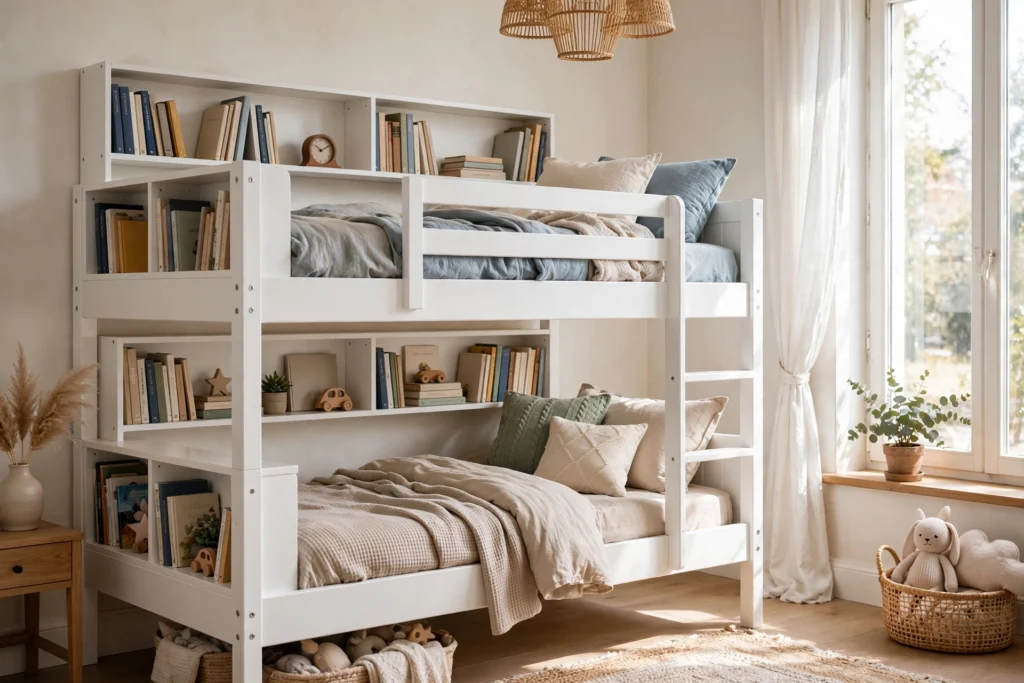
Bunks with built-in bookshelf headboards hold books and clocks within arm’s reach. Each sleeper gets bedtime reading without a separate nightstand. This built-in approach saves precious floor space in tight rooms.
14. Paint a Navy Accent Wall
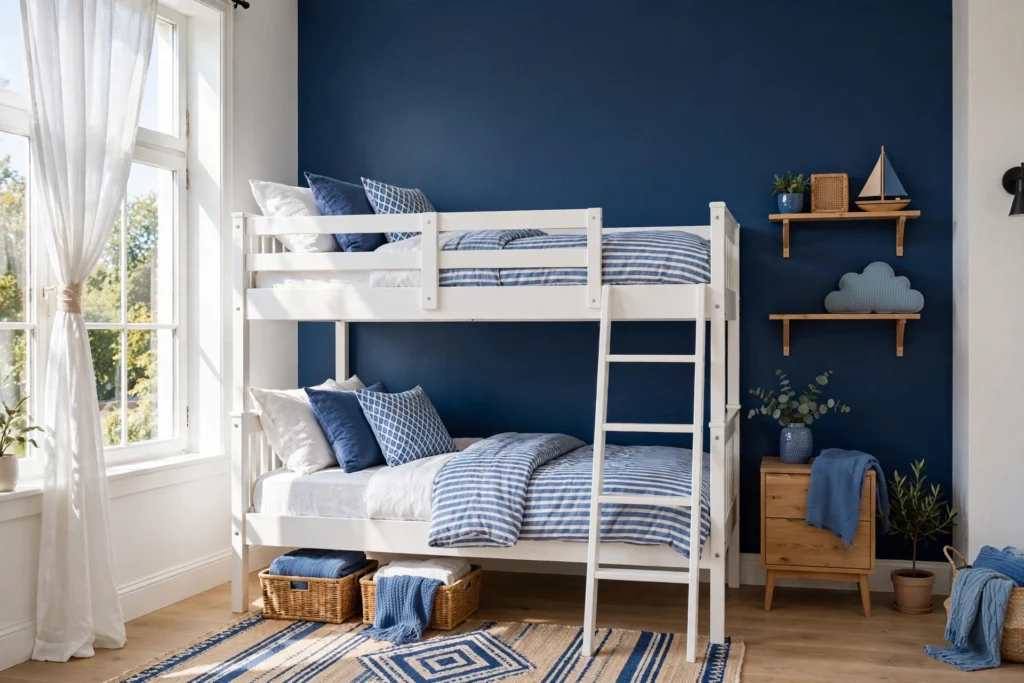
A deep navy painted accent wall behind the bunk beds adds drama and depth. The dark backdrop makes white bedding pop and gives the room a cozy, cocooning feel at night. For more small-room tricks, see our 15 small bedroom design ideas that make tiny rooms feel huge.
15. Go Industrial with Black Metal
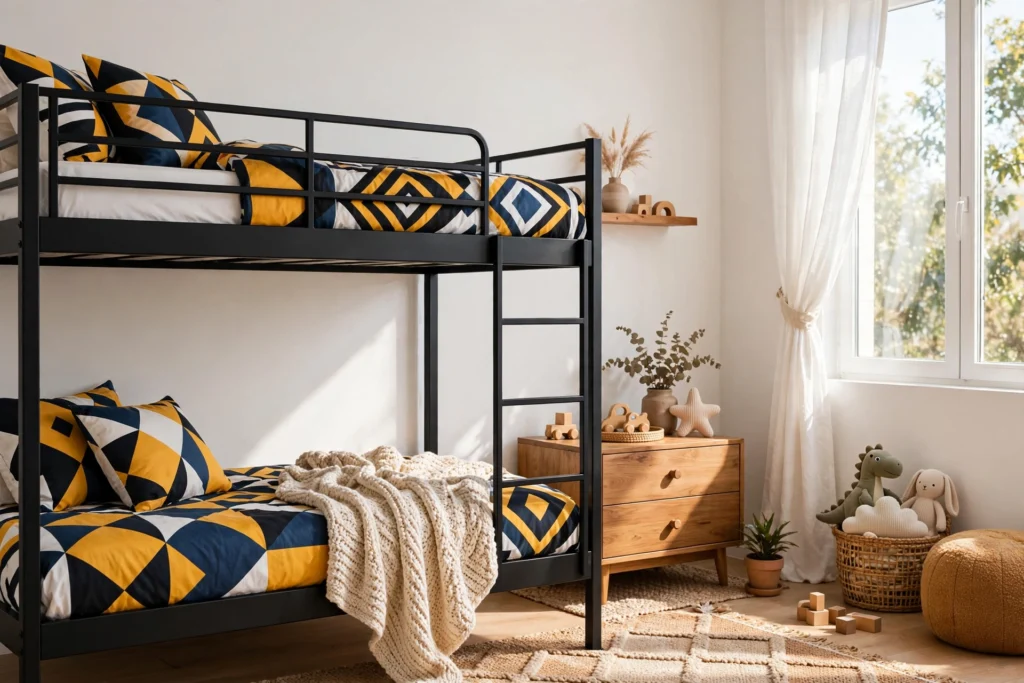
A matte black metal bunk styled with graphic bedding and warm wood accents suits older kids and industrial-loving families. The black frame grounds the room; wood accents keep it warm. For broader kids’ room inspiration, see our 15 kids bedroom design ideas and our 15 toddler bedroom design ideas.
Frequently Asked Questions
What age is safe for the top bunk?
Most manufacturers recommend age 6+ for the top bunk. Always use guardrails on both sides, ensure the mattress is the correct thickness for the rails, and teach kids the ladder-only rule. Younger siblings sleep below.
How do I give each child privacy in a shared room?
Privacy curtains on bunks, individual reading lights, personal shelves, and distinct bedding all help. A room divider or curtain panel can split the space further. Even small personal zones reduce conflict.
What is the best bunk bed for small rooms?
L-shaped bunks and loft beds free the most floor space. Twin-over-twin is the most compact stacked option. Measure carefully — leave at least 2 feet between the top mattress and the ceiling.
How do I stop bunk bed fights?
Give each child equal territory: their own light, shelf, and bedding choice. Privacy curtains help enormously. A clear rota for top-bunk turns (if shared) prevents the biggest argument.
Can adults use bunk beds?
Yes — choose a bunk rated for adult weight (many quality bunks support 200+ lbs per bed). Full-over-full bunks suit teens and guests. Check the manufacturer’s weight limits and use a sturdy frame.
Keep Exploring
The right bunk bed setup turns sharing into an advantage — more floor space, more fun, and a room kids actually love.
For more kids’ room inspiration, keep exploring our bedroom collections.





[…] swallow clothes and toys, and a slim shelf mounted on each bunk holds books and a water bottle. Bunk bed room ideas and pick a configuration that fits your floor plan and your kids’ […]