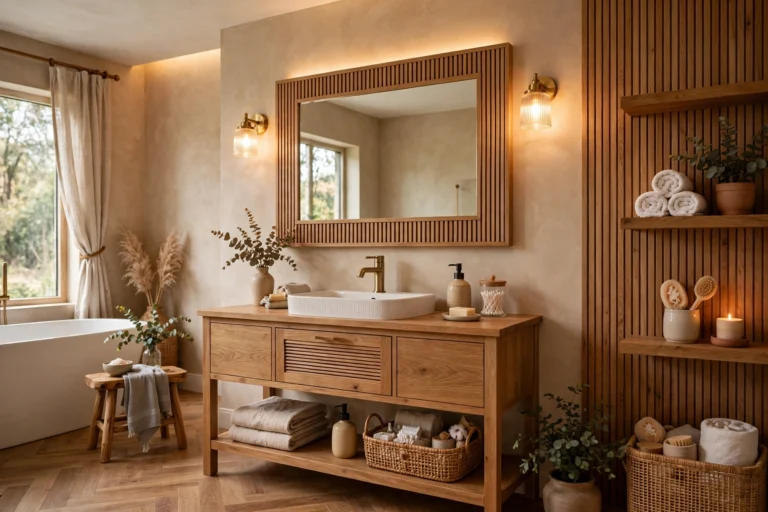
Bathroom countertop ideas can completely change how your bathroom looks and works, whether you are planning a full remodel or a simple vanity refresh. The countertop is the surface you touch every morning — it frames the sink, holds your daily essentials, and takes the brunt of water, toothpaste, and hot styling tools. Choosing well means balancing beauty, durability, and budget, and the options go far beyond standard white cultured marble.
From quarried stone to budget laminate, each material below comes with honest notes on upkeep, durability, and style fit, so you can match the surface to your real life rather than just your mood board. The fifteen ideas that follow cover every style and price point.
1. Classic Carrara Marble Elegance

Carrara marble is the timeless choice that never reads dated, its soft gray veining on a white ground bringing instant spa calm to any bath. Choose a honed finish rather than polished — the matte surface hides etching from toothpaste, perfume, and cosmetics far better. Seal it once or twice a year with an impregnating stone sealer, and wipe up standing water promptly to prevent dull spots.
It pairs beautifully with brushed brass fixtures and white subway tile, and because it suits traditional and transitional rooms alike, it is a safe investment for resale. For vanity styles that show off a marble top, browse our bathroom vanity ideas for style and storage.
2. Quartz That Shrugs Off Daily Wear
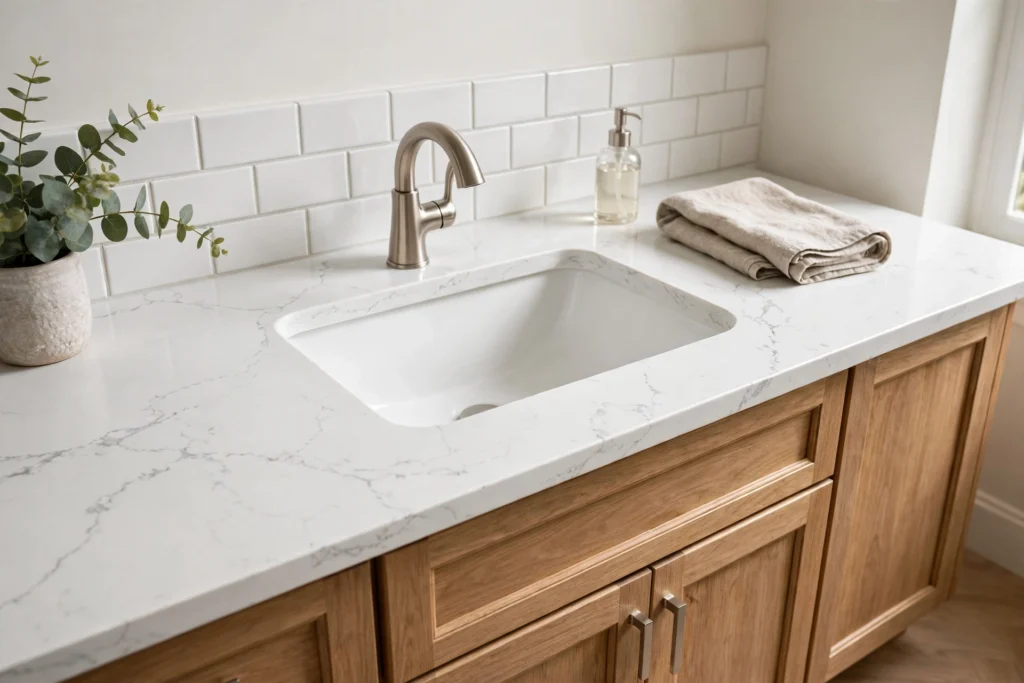
Engineered quartz is the workhorse of modern bathrooms, made from crushed stone bound in resin for a surface that resists stains, scratches, and daily chemical contact. Unlike marble or granite, it never needs sealing, and manufacturers now print remarkably convincing marble veining into it — you get the Carrara look with none of the etching anxiety.
It arrives in slabs with consistent patterning, which makes matching a double vanity easy. The one caveat: sustained heat from a flat iron can damage the resin, so always use a heat mat. For busy households, quartz is the closest thing to a worry-free staple among bathroom countertop ideas.
3. Warm Butcher-Block Wood
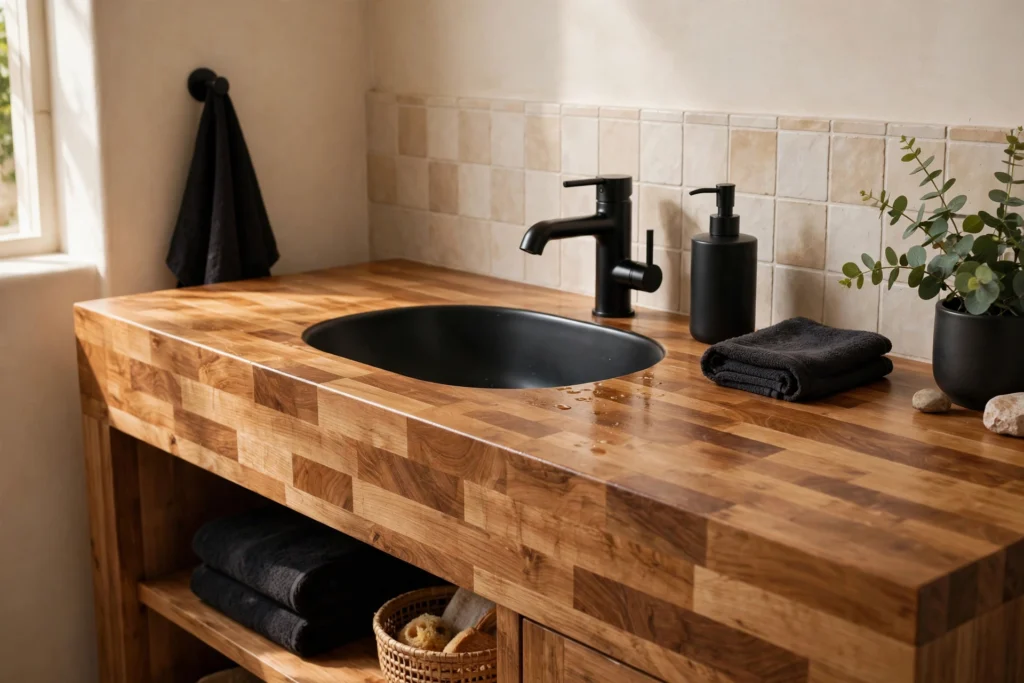
Wood brings instant warmth to a room dominated by tile and porcelain, and butcher block is the most affordable way to get it. Maple, oak, and walnut tops cost far less than stone and can be cut to fit any vanity, including vintage furniture conversions. The catch is water: seal all six sides with a marine-grade oil or polyurethane, re-oil every few months, and never let water pool around the faucet.
With that discipline, a wood top develops a rich patina that stone simply cannot match. It is a favorite among bathroom countertop ideas for cozy, cottage-style spaces where character matters more than perfection.
4. Dramatic Granite with Bold Movement

Granite remains the go-to for drama, with bold veining and mineral movement no engineered product fully replicates. Dark granites hide water spots and toothpaste splatter better than light stones, making them practical for shared family baths. Seal it annually — the water-drop test tells you when: if water darkens the stone instead of beading, it is time.
Pair a busy granite with quiet surroundings: simple white tile, a frameless mirror, and brushed nickel fixtures let the stone be the star. Slab prices vary wildly by color, so a dramatic look does not always mean a dramatic bill.
5. Laminate That Looks Expensive
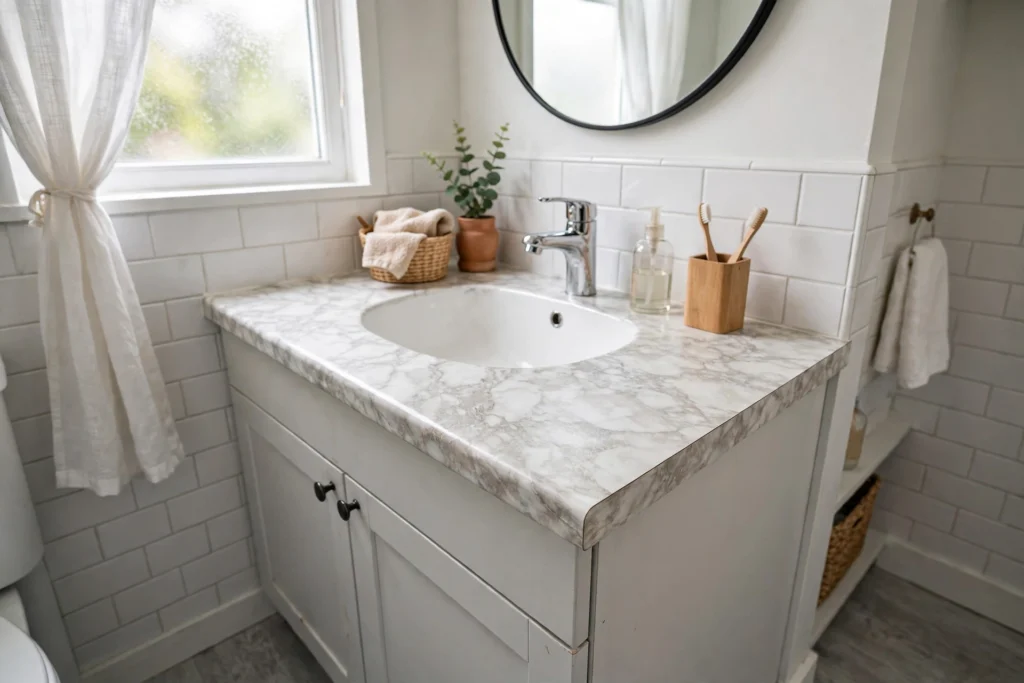
Modern laminate has left its dated reputation behind. High-definition prints now mimic marble, concrete, and wood grain convincingly, and new matte and textured finishes feel far more premium than the glossy sheets of decades past. A prefabricated laminate vanity top with an integrated sink can cost less than a tenth of stone and installs in an afternoon with basic tools.
It will not survive a dropped curling iron or a knife slip the way stone does, but for rentals, guest baths, and tight budgets, laminate is among the smartest bathroom countertop ideas you can choose.
6. Concrete for an Industrial Edge

Poured concrete delivers an industrial, custom-cast look that suits modern and rustic bathrooms alike. It can be cast in any shape — including integrated sinks and drainboards — and tinted or seeded with aggregate for one-of-a-kind character. Concrete must be sealed thoroughly and re-sealed periodically, since it stains easily and can develop hairline cracks.
It is also heavy, so confirm your vanity can carry the load. Countertop materials span an enormous family, from quarried stone to engineered composites, and Wikipedia’s countertop overview is a useful reference for comparing them side by side before you commit.
7. Vessel Sink Showpiece on a Thick Slab

A thick slab — three inches or more — turns the countertop into a sculptural plinth, especially when paired with a vessel sink sitting proudly on top. The chunky profile reads luxurious and modern, and a mitered edge can fake the thickness from standard material to save money and weight. Keep the slab simple if the vessel is decorative: a quiet quartz or honed black granite lets a patterned or colored basin shine.
This combination needs a taller faucet or a wall-mounted tap, so plan the plumbing before you fall in love with the look.
8. Space-Saving Tops for Small Bathrooms

Small bathrooms punish bulky vanities, so choose a countertop that visually lightens the room. Narrow-depth tops (eighteen inches instead of twenty-one) free precious floor space, while light colors and a slim edge profile keep the vanity from looming. Wall-mounted vanities with a floating top reveal the floor underneath, which reads as extra square footage.
A single-hole faucet and a compact rectangular sink maximize usable surface on a small top — in tight quarters, every inch of these bathroom countertop ideas has to earn its keep.
9. Handmade Tile Countertops

Handmade tile countertops bring artisanal texture that slab materials cannot — think glossy zellige, crackled subway, or encaustic-look porcelain laid in a herringbone. Tile is budget-friendly and gloriously customizable, but the grout lines demand epoxy grout and regular sealing to stay stain-free around a sink. Keep tiles small around curves and use a solid-surface or stone threshold at the sink cutout for a clean edge.
For patterns and layouts that flatter a bath, see our bathroom tile design ideas before you start laying.
10. Seamless Solid-Surface Tops

Solid-surface tops are the seamless option: the sink can be fused directly into the counter with no lip to trap grime, and scratches sand out with fine abrasive pads. The material is warm to the touch, quiet under running water, and available in hundreds of colors, including convincing stone patterns. It scorches under high heat and scratches more easily than quartz, so it suits lower-traffic baths best.
For the technical background on how this engineered acrylic is made, see Wikipedia’s solid surface material article — useful context if you are comparing it against quartz.
11. Moody Black Soapstone

Soapstone is the moody, old-soul choice: a dense natural stone that starts pale gray and deepens to rich charcoal with age and oiling. It is nonporous, so it never needs sealing and shrugs off acids that would etch marble — red wine, lemon, and toothpaste wipe away. It does scratch, but scratches blend into the patina and can be sanded out.
The limited color range and softness are the trade-offs. In a dim, atmospheric bathroom with aged brass, few bathroom countertop ideas feel as quietly luxurious.
12. Crisp White-on-White
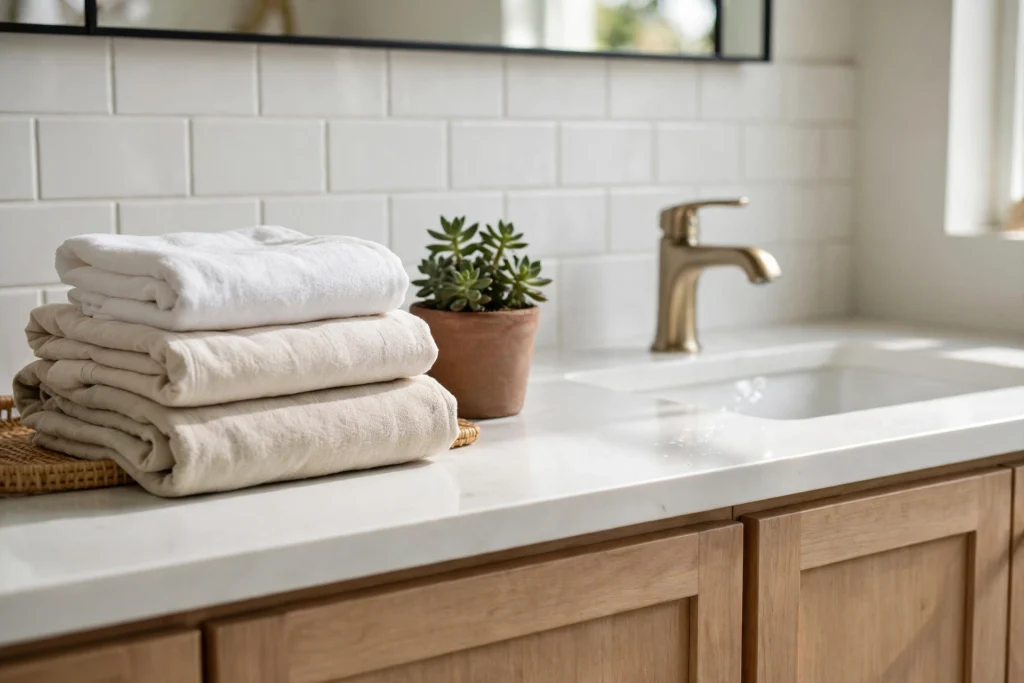
An all-white bathroom lives or dies by its surfaces, and the countertop sets the tone. A crisp white quartz or solid-surface top keeps the palette serene and makes small baths feel larger and brighter. The trick is layering whites with different textures — a honed top, glossy tile, brushed metal — so the room reads intentional rather than flat.
White shows everything, so choose a nonporous material and keep cleaning simple. Once the top is in, style it lightly: a folded hand towel, a small plant, and a soap dispenser are plenty, as shown in our bathroom counter decor ideas for a tidy, stylish sink area.
13. Live-Edge Wood for Organic Texture

A live-edge slab keeps the tree’s natural contour along the front, bringing organic sculpture into the bathroom. Black walnut and white oak are popular, finished with marine-grade epoxy or hardwax oil to stand up to splashes. Because no two slabs match, this is inherently a one-of-a-kind piece — best as the star of a simple room.
Seal the underside and ends as carefully as the top, and allow for wood movement with slotted mounting. It is not the lowest-maintenance of bathroom countertop ideas, but nothing else delivers the same warmth.
14. Terrazzo and Recycled Glass
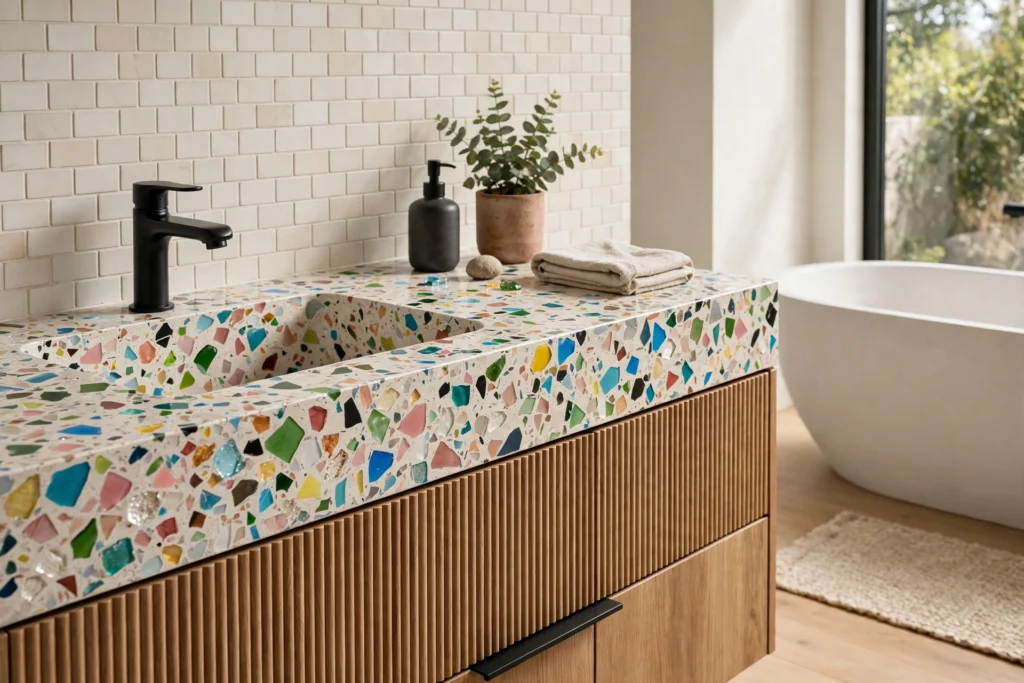
Terrazzo — chips of marble, quartz, and glass set in cement or resin — has surged back from mid-century lobbies into residential baths. It hides water spots and wear brilliantly, since the busy pattern camouflages everything, and recycled-glass versions add eco credibility. Sealed cement-based terrazzo needs periodic re-sealing; resin-based needs none.
Run it up the wall as a backsplash or into the shower for a cohesive, high-design envelope. The pattern scale matters: large chips suit big rooms, fine chips suit small ones.
15. Waterfall Edges on Floating Vanities

A waterfall edge — where the countertop material continues down the side of the vanity to the floor — is the most architectural finish on this list. Paired with a wall-hung vanity, it creates a striking floating block of stone that makes the bathroom feel designed rather than assembled. Mitered construction keeps it lighter and cheaper than solid slabs.
This look demands precise fabrication, so choose an experienced stone shop and confirm the vanity wall can carry a floating unit. Among statement-making bathroom countertop ideas, the waterfall edge is the boldest move.
Frequently Asked Questions
What is the most durable bathroom countertop material?
Engineered quartz is the durability champion for most bathrooms: it resists stains, scratches, and heat better than natural stone, never needs sealing, and handles daily contact with cosmetics and cleaners without complaint. Granite is a close second and slightly more heat-tolerant, but it needs periodic sealing. For a busy family bath where maintenance will be minimal, quartz is the set-and-forget answer.
What is the cheapest bathroom countertop option?
Laminate is the clear budget winner, often costing a fraction of stone while convincingly imitating marble, granite, or wood grain. Prefabricated laminate vanity tops with integrated sinks are especially affordable and install in an afternoon. Tile set over a cement-board base is another low-cost route, though grout needs sealing. Both beat the price of any natural or engineered stone by a wide margin.
Is marble a bad idea in a bathroom?
Not at all — marble has graced bathrooms for centuries — but it demands realistic expectations. It etches when acids like toothpaste, citrus-based cleaners, or perfume sit on it, and it needs sealing once or twice a year. If you love the look and accept a lived-in patina, honed marble is lovely; if you want zero maintenance, choose quartz with a marble-look pattern instead.
How thick should a bathroom countertop be?
The standard is three centimeters (about one and a quarter inches), which looks substantial and supports an undermount sink without extra bracing. Two-centimeter slabs work for smaller vanities and cost less, but they need a built-up or mitered edge to look finished. For a modern statement, mitered edges can fake a four-inch-thick slab from thinner, cheaper material.
Can you put hot styling tools on a bathroom counter?
It depends on the material. Granite and concrete handle brief heat well, while quartz can discolor or crack under sustained high heat from a flat iron or curling wand. Laminate, solid surface, and wood will scorch or melt. The safe habit: always rest hot tools on a silicone heat mat, regardless of your countertop material — it protects the surface and the tool.
Keep Exploring
The right countertop quietly elevates everything around it — the faucet looks better, the mirror reflects more light, and the whole room feels considered. Start with your real life: how much maintenance you will actually do, how hard the household is on surfaces, and what the budget allows. Then let one of these fifteen ideas anchor the room. A surface you love touching every morning is worth choosing carefully.