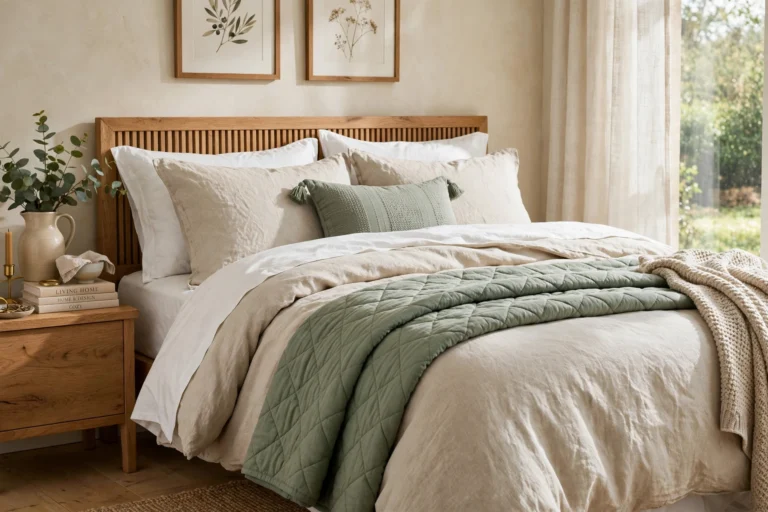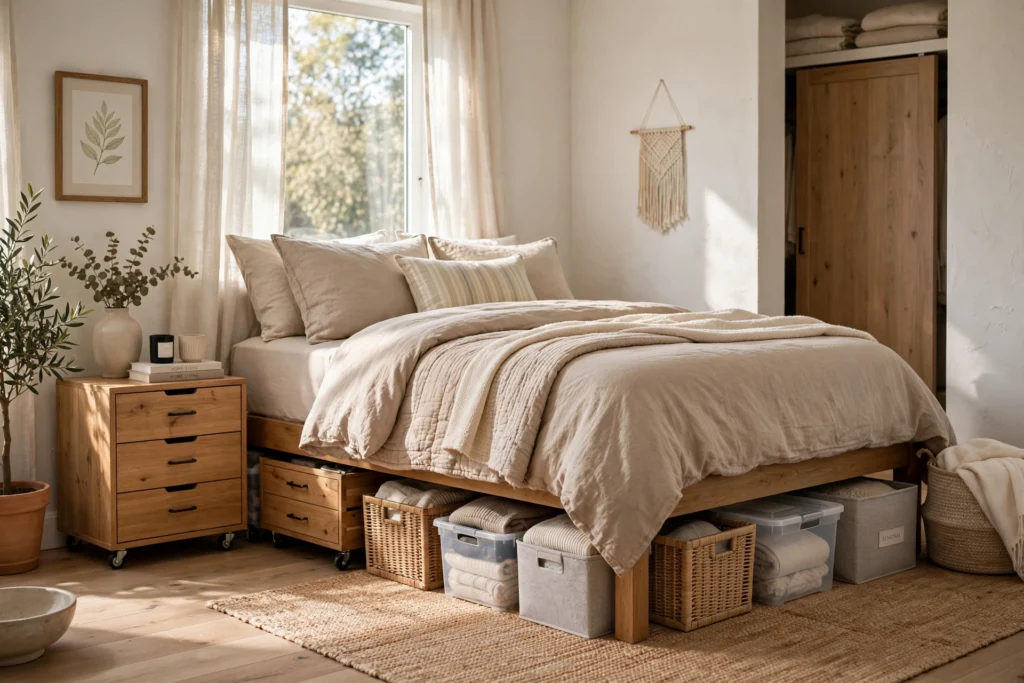

The space under your bed is one of the largest unused footprints in the bedroom — a queen bed hides roughly 33 square feet of floor area. These bedroom under bed storage ideas turn that dead zone into organized, out-of-sight storage for off-season clothes, extra bedding, shoes, and all the things that don’t deserve closet space. Unlike storage beds with built-in drawers, these bedroom under bed storage ideas work with the bed you already own.
Below are fifteen practical bedroom under bed storage ideas, from rolling drawers to vacuum bags, plus the measurements and maintenance habits that keep everything clean, accessible, and dust-free.
1. Start by measuring your actual clearance
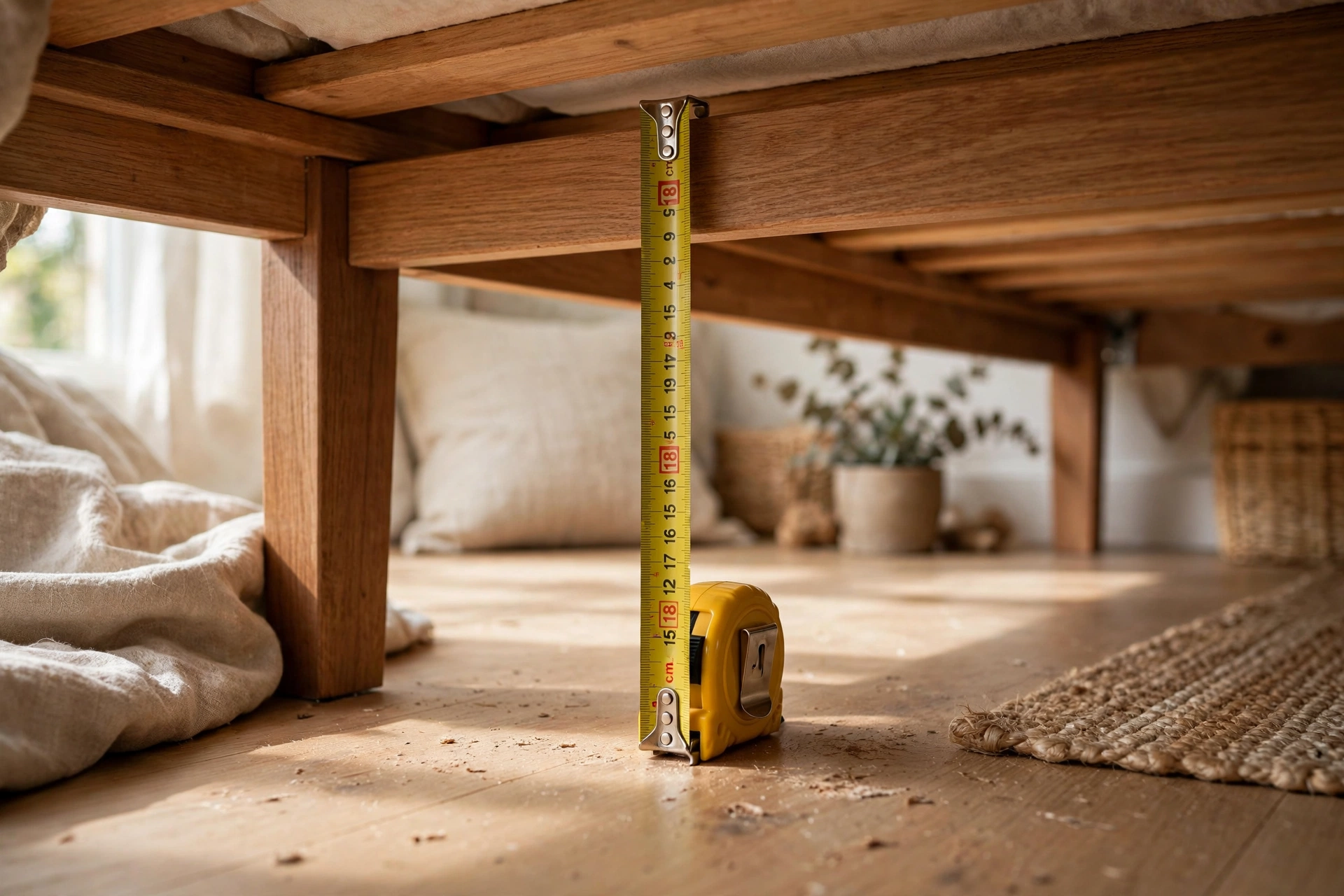
Every under-bed plan starts with a tape measure, because clearance varies wildly — platform beds can offer as little as 4 inches, while standard frames with risers can clear 12 inches or more. Measure from the floor to the underside of the bed rail or slats at several points, since floors and frames aren’t always perfectly level. Note the lowest point; that’s your maximum bin height. Also measure the depth you can reach: most people can comfortably pull items from about 24 to 30 inches in, so a king bed’s center may be unreachable from one side — plan to store rarely-used items in the deep middle and daily items at the edges. Write the numbers down before you shop, and you’ll never bring home a bin that doesn’t fit. Standard bed frame dimensions give you a rough guide, but your own measurements are what count.
2. Use rolling drawers that pull out like real furniture
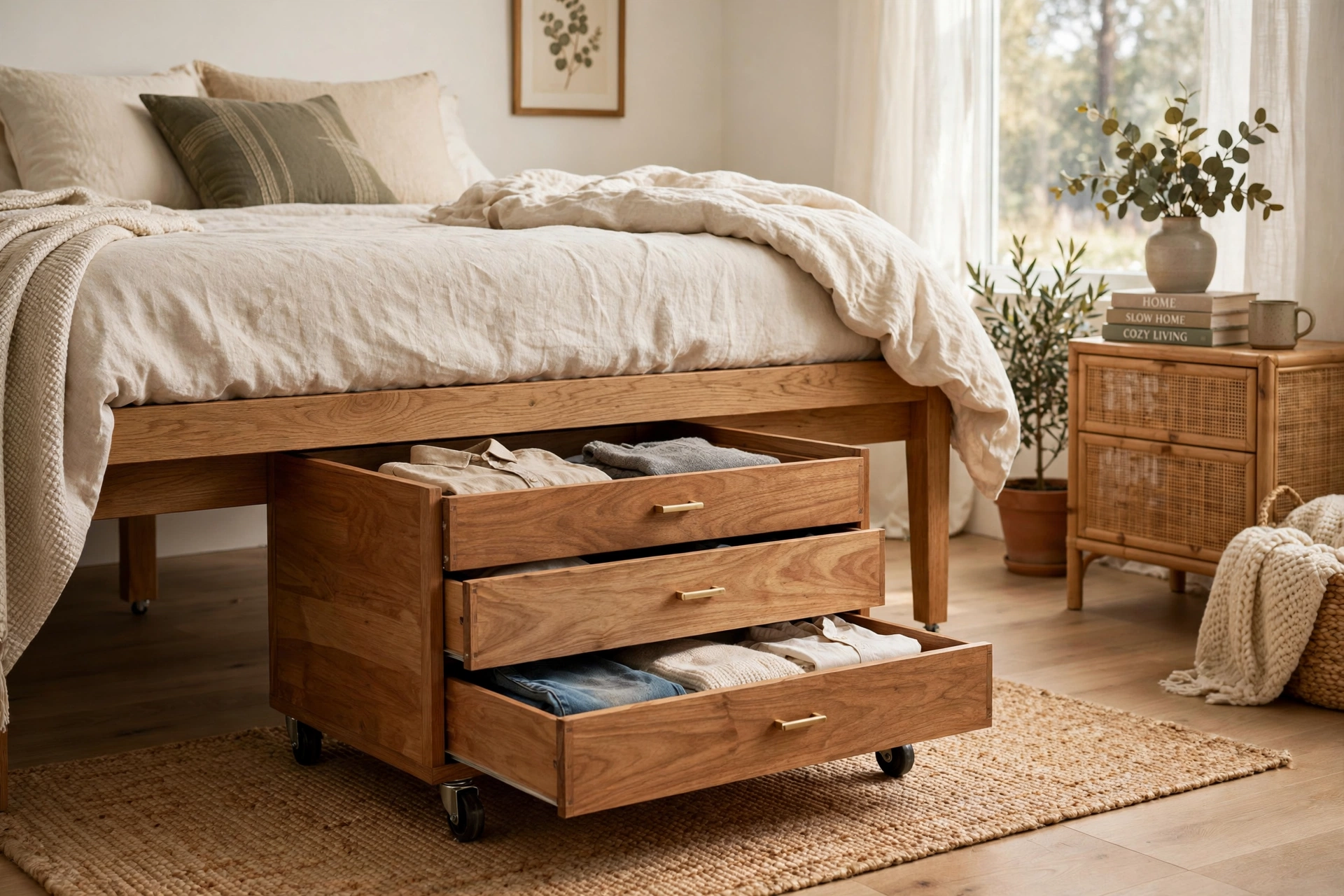
Rolling under-bed drawers are the closest thing to having built-in drawers without buying a new bed. They come in wood, fabric-covered, and plastic versions, typically 6 to 8 inches tall, with caster wheels that glide on hard floors and low-pile carpet. Load them with folded off-season clothes, spare sheets, or towels — things you want folded, not stuffed. Look for drawers with a handle or pull cutout on the front face so you can grab them without crawling; on carpet, choose larger wheels (at least 2 inches) so they roll instead of dragging. Two drawers per side of a queen bed is the sweet spot — more than that and the middle ones become hard to reach.
3. Add bed risers to create clearance where there is none
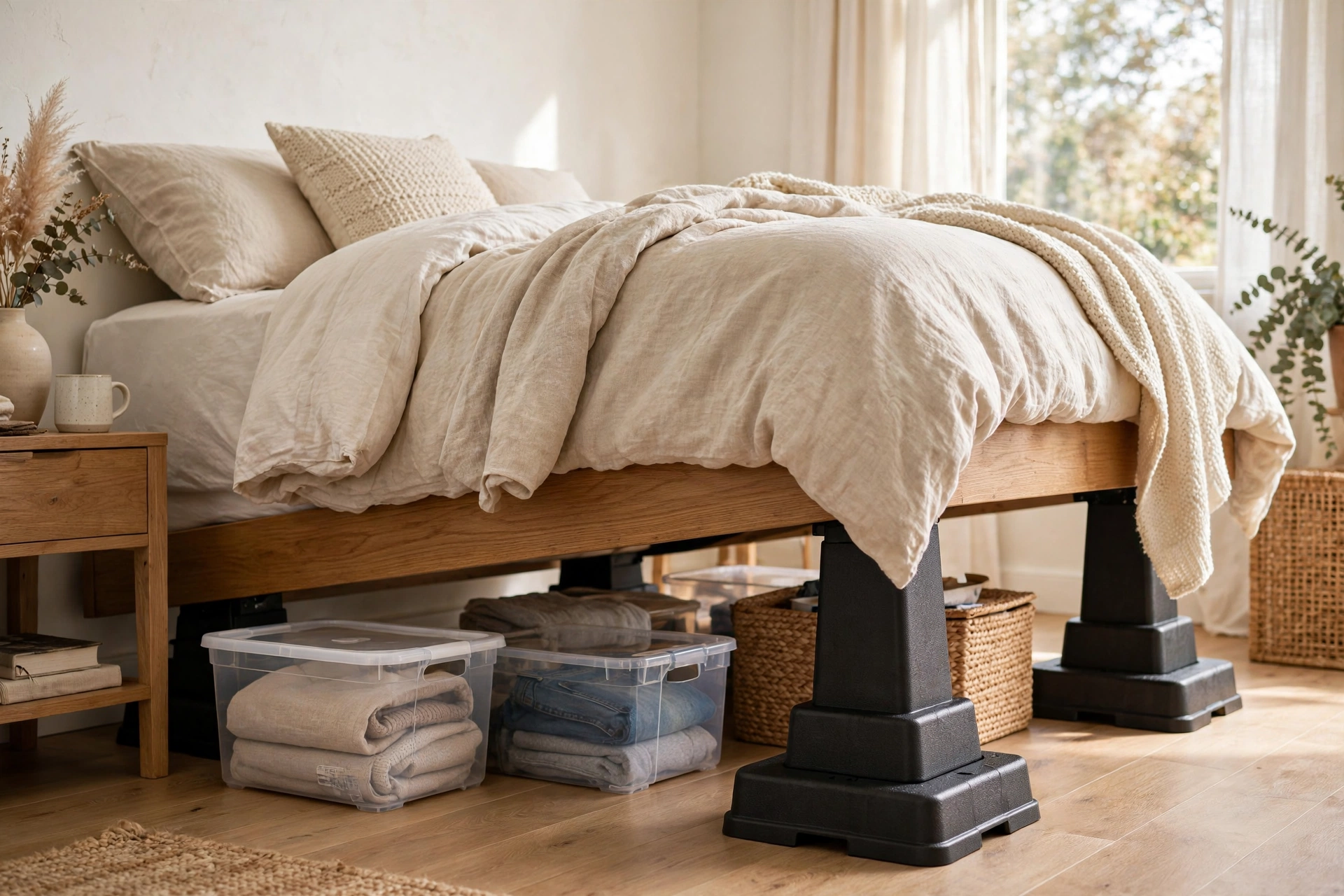
If your bed sits too low for any meaningful storage, bed risers are the cheapest fix in this entire list. A set of four risers lifts the frame 3 to 8 inches — enough to slide flat bins underneath a bed that previously touched the floor. Choose sturdy plastic or wood risers rated for your bed’s weight plus sleepers (most quality risers support 1,000+ pounds per set), and make sure the bed leg or post seats fully into the riser’s cup so nothing shifts. Risers also make the bed easier to get in and out of, which is a bonus for taller people or anyone with knee trouble. One caution: risers change the look of the bed, so if your bed skirt or frame was sized for the old height, you may need a longer bed skirt to keep the storage hidden.
4. Shrink bulky bedding with vacuum-seal bags
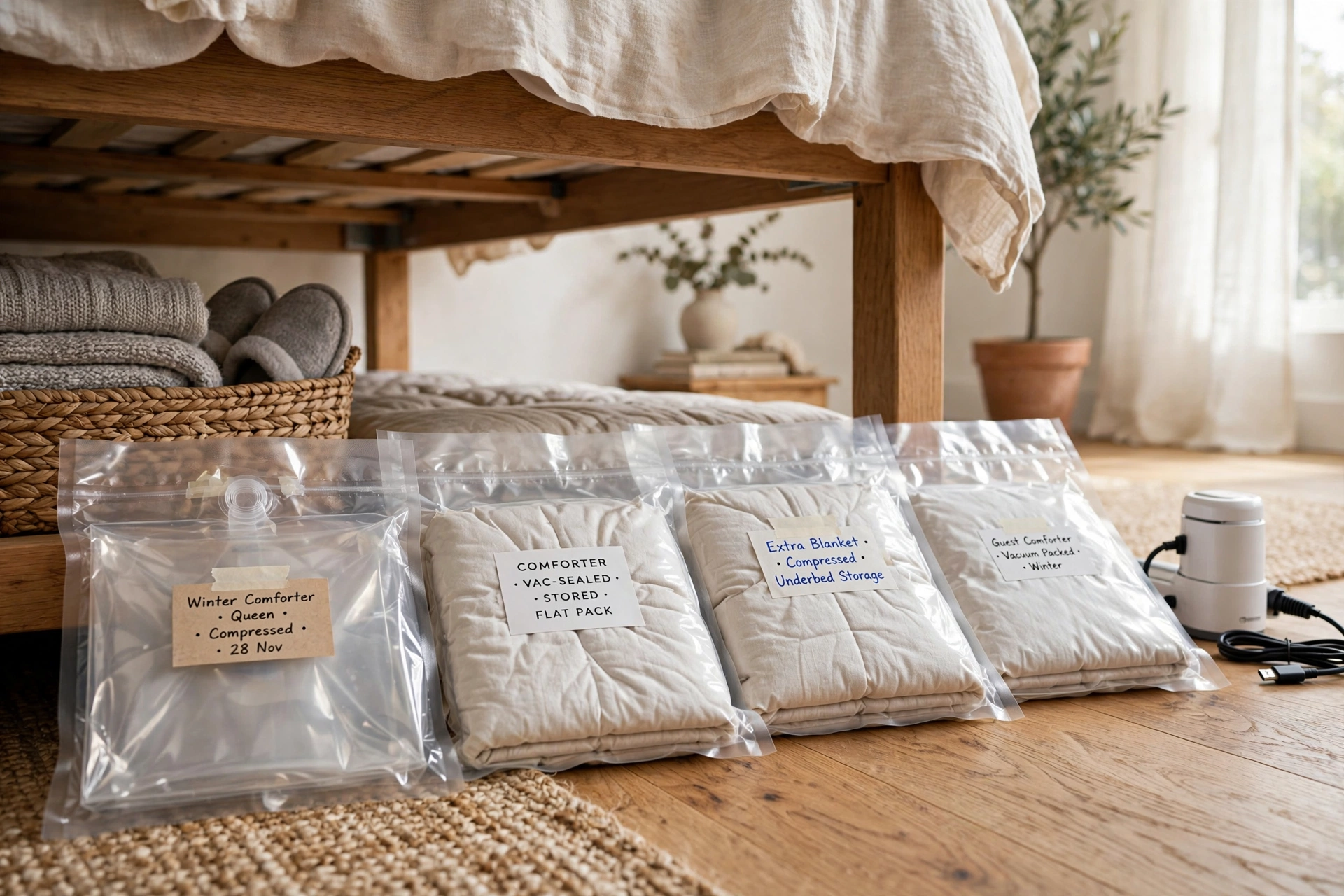
Vacuum-seal bags are the highest-density option for under-bed storage — they compress comforters, winter blankets, and spare pillows to about a third of their original volume. The flat, sealed shape slides easily under even low frames, and the airtight seal keeps out dust, moisture, and odors. Use the jumbo or queen-size bags for comforters, roll (don’t fold) items before sealing to avoid sharp creases, and stop the vacuum just before the bag is drum-tight to protect down and delicate fills from over-compression. Label each bag with painter’s tape and a marker — “winter duvet,” “guest pillows” — because sealed bags all look alike. Re-vacuum every six months, since slow air leaks gradually let bags puff back up.
5. Choose lidded fabric bins for a soft, quiet option
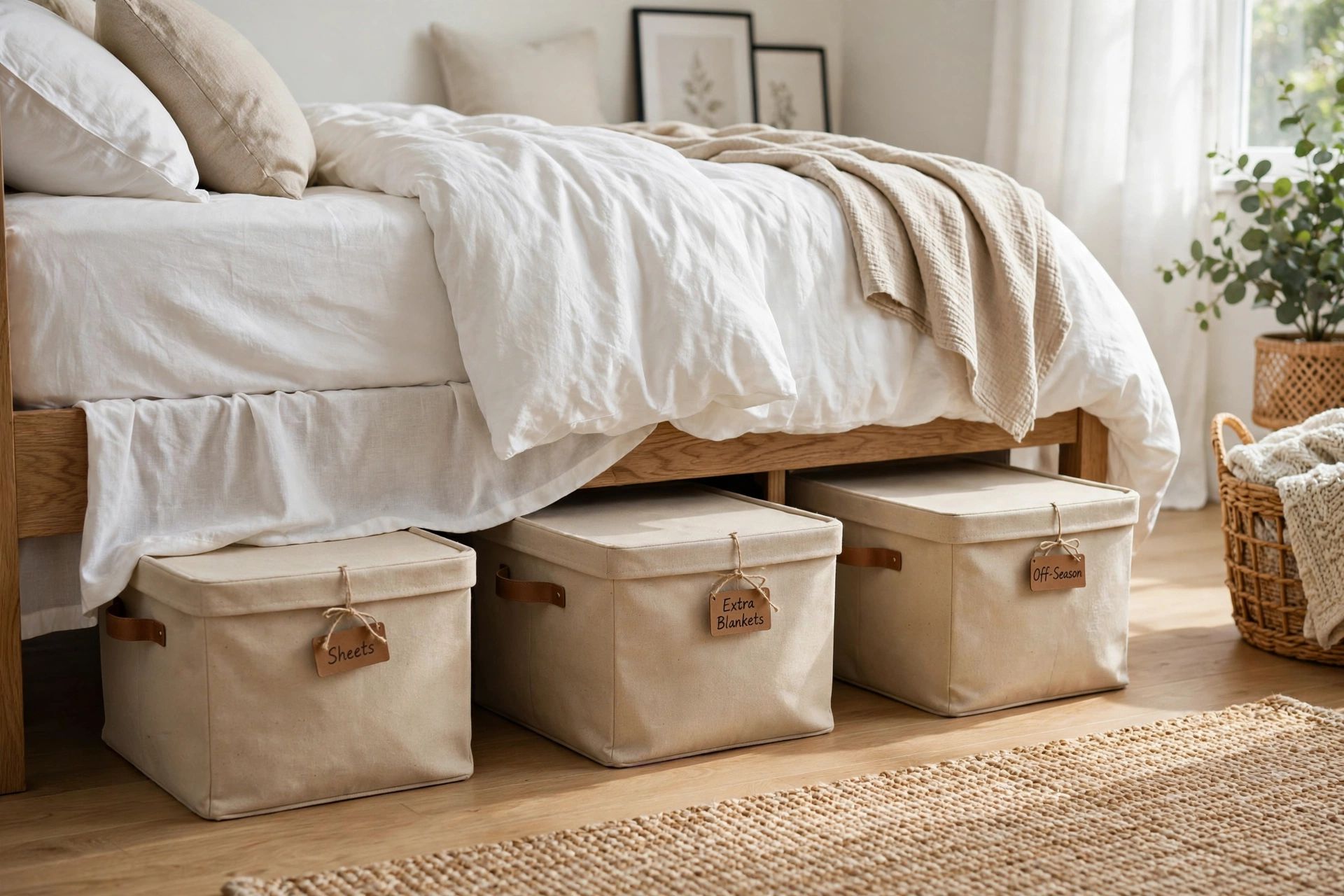
Fabric storage bins with lids — usually canvas, polyester, or non-woven fabric over a light frame — are quiet to pull out, won’t scratch floors, and look neat if a corner peeks out from under the bed skirt. The standard under-bed size is roughly 30 x 17 x 6 inches, sized to fit the long side of a bed with room to spare. Reinforced handles on the short end make them easy to drag out. These are ideal for items you touch often, like workout clothes or kids’ pajamas, because the lids lift off in a second. Avoid storing anything damp in fabric bins, and if the bins will sit on a concrete or basement-adjacent floor, put a thin moisture barrier underneath. Wipe the exteriors with a lint roller now and then to keep dust from settling on the fabric.
6. Go clear and labeled with stackable plastic bins
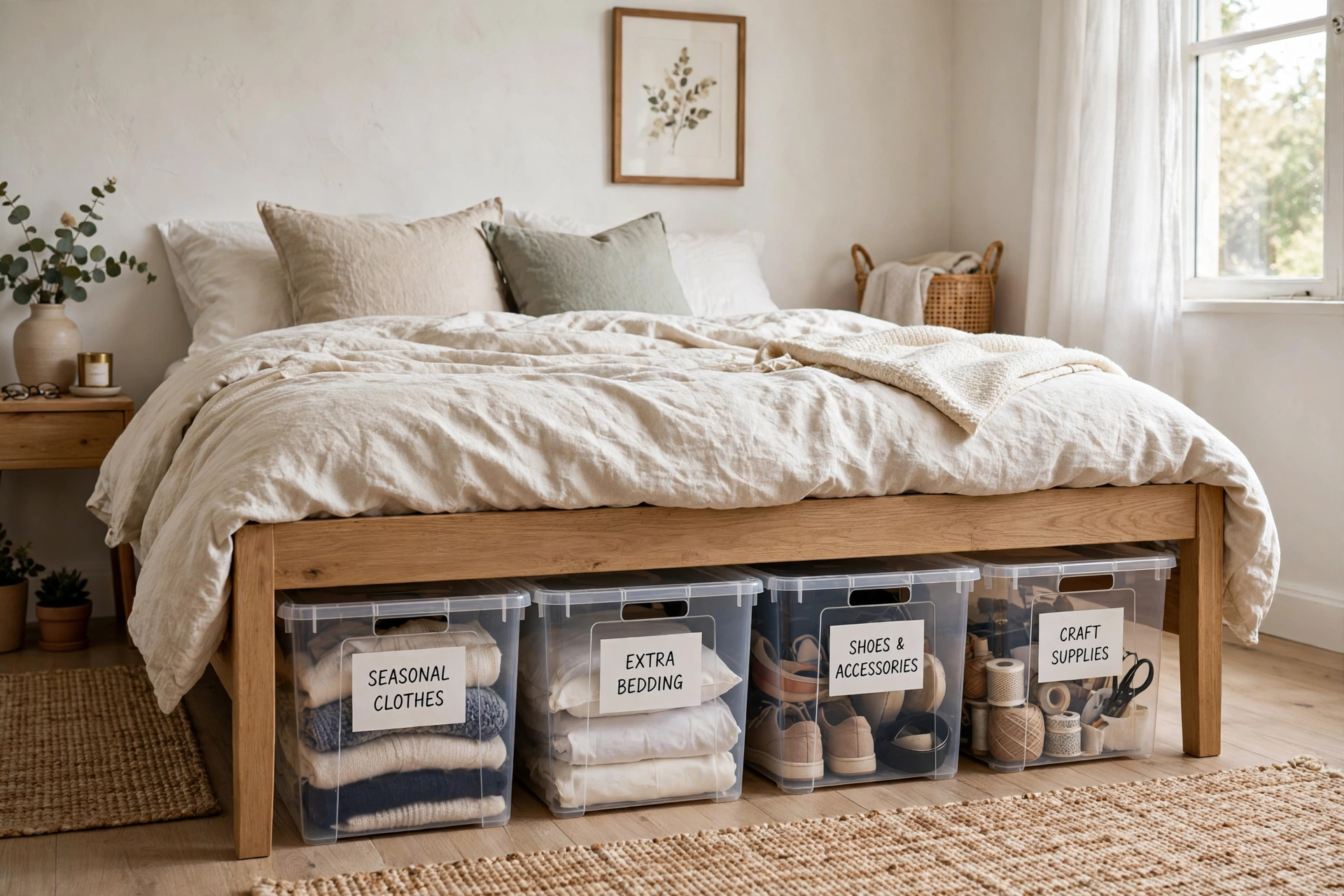
Clear plastic bins are the most practical choice if you want to see what’s inside without opening everything. Choose low, wide bins — 6 inches tall or less — with snap-on lids that keep dust out. Even with clear sides, label every bin: a strip of masking tape and a marker beats memory every time, especially for seasonal items you won’t touch for months. Group like with like — “summer shorts,” “scarves and hats,” “board games” — and keep a simple rule of one category per bin so nothing becomes a junk drawer. Clear bins also make it obvious when something doesn’t belong, which keeps the system honest over time.
7. Store off-season clothes in zippered garment bags
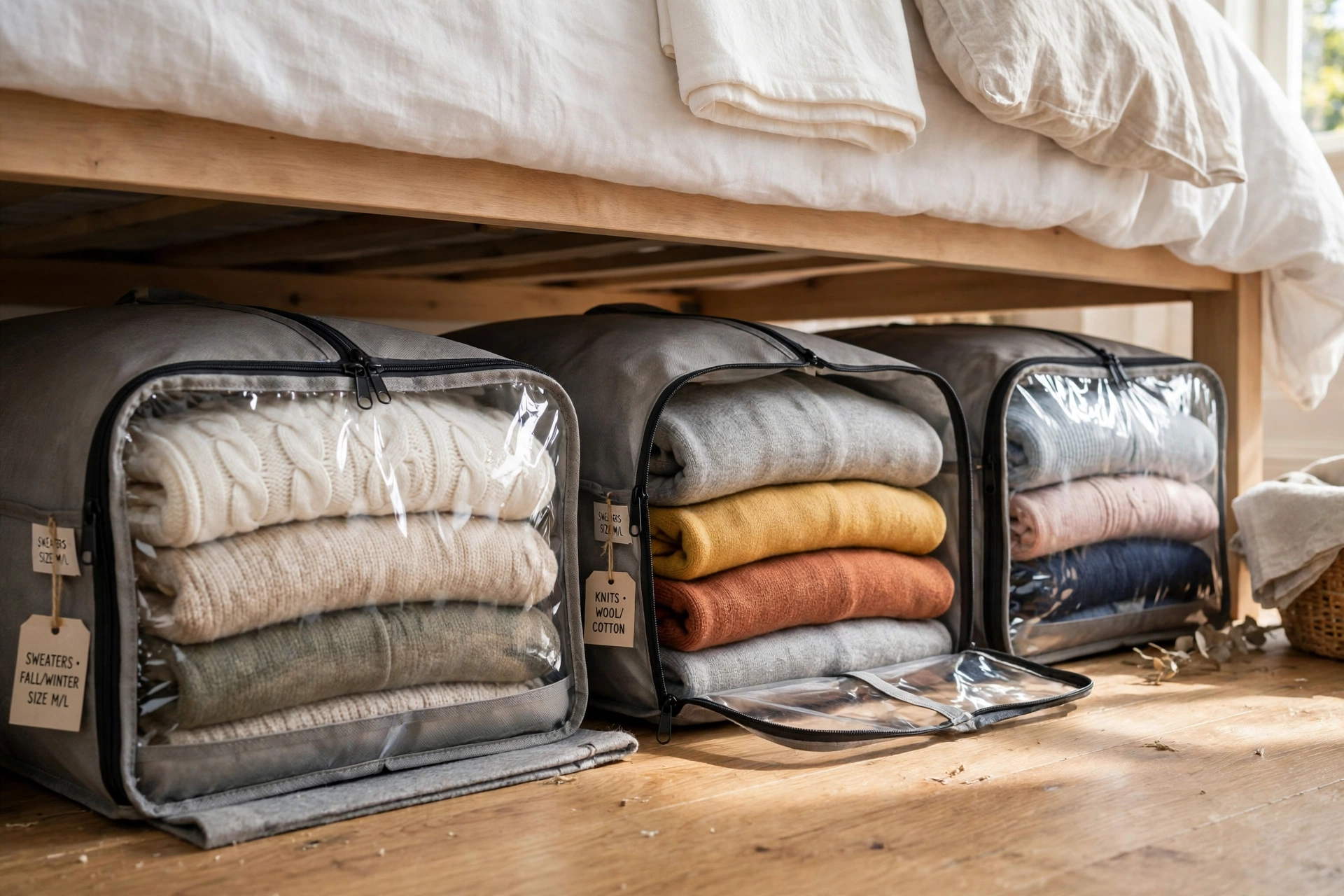
Zippered under-bed bags, usually about 40 x 18 x 6 inches with a clear top window, are designed for clothing: they hold folded sweaters, jeans, or a full season’s wardrobe in one flat package. The zipper keeps out dust far better than an open bin, and the clear window means you can identify contents at a glance. Fold clothes with tissue paper between delicate knits to prevent creasing, and add a cedar sachet or lavender pouch inside each bag before zipping — natural moth deterrents that won’t perfume your clothes the way mothballs do. Store bags flat, never on end, so zippers don’t strain. If you’re reorganizing the whole closet around seasonal storage, these bedroom closet ideas for style and smart organization (https://gallaxyindoors.com/bedroom-closet-ideas-for-style-and-smart-organization/) pair well with an under-bed system.
8. Line up slim shoe organizers along the bed’s edge
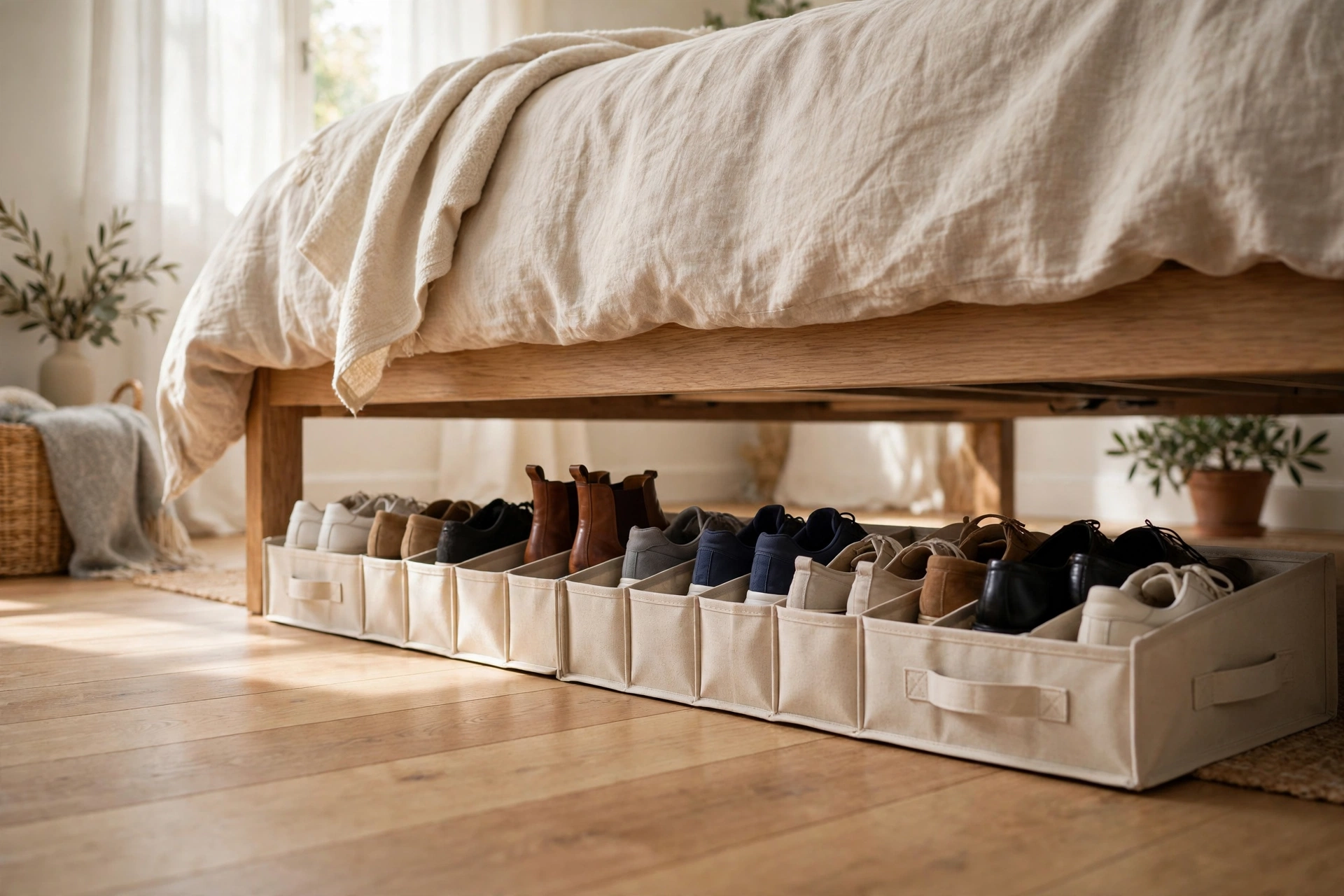
Shoes are ideal under-bed residents: they’re flat, heavy enough not to shift, and easy to grab. Slim under-bed shoe organizers hold 12 to 16 pairs in individual compartments under a clear cover, keeping dust off and pairs together. Alternatively, use shallow open trays — one pair per slot — for shoes you wear weekly, since open trays are faster than zipped compartments. Keep the organizer at the side of the bed you dress on, and reserve it for off-season or occasion shoes; daily sneakers belong by the door, not under the bed. Stuff structured shoes like boots with acid-free paper so they keep their shape, and always store shoes clean — dirt left on leather for six months becomes a permanent stain.
9. Roll a toy chest under the bed in kids’ rooms
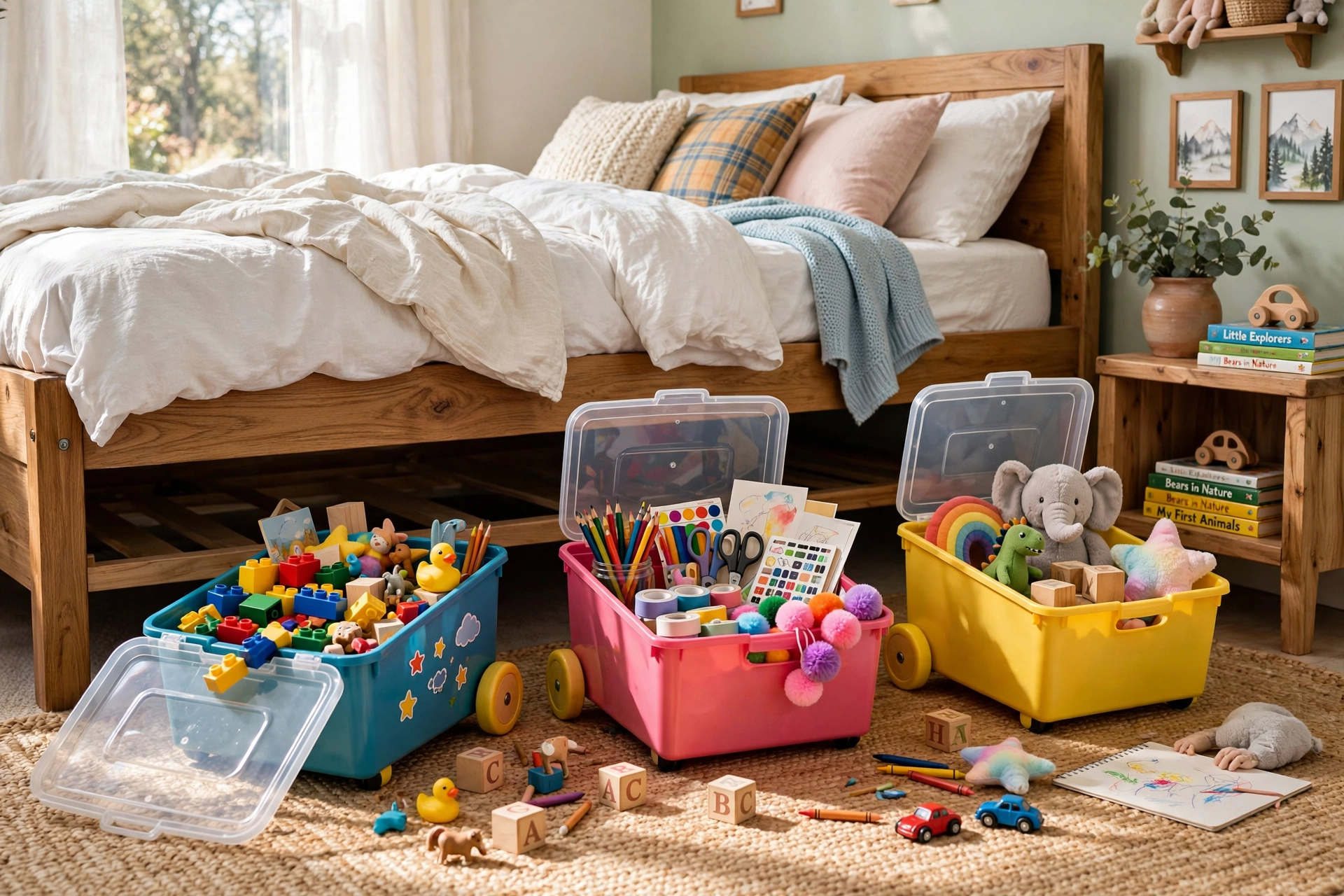
In kids’ bedrooms, a low rolling toy chest or a set of rolling bins under the bed turns cleanup into a game — toys get shoved under, the room looks tidy in minutes. Choose bins with lids to contain small pieces like building blocks, and pick bright colors or picture labels so young kids can sort by themselves. Keep the bins shallow enough for a child to pull out alone (under 20 pounds loaded), and avoid bins with finger-pinching lids. This system works best for medium-size toys — dolls, cars, art supplies — while tiny pieces like beads still deserve a lidded box on a shelf. Rotate the toys seasonally: store half under the bed and swap every few months, and old toys feel new again.
10. Build a simple DIY drawer on casters
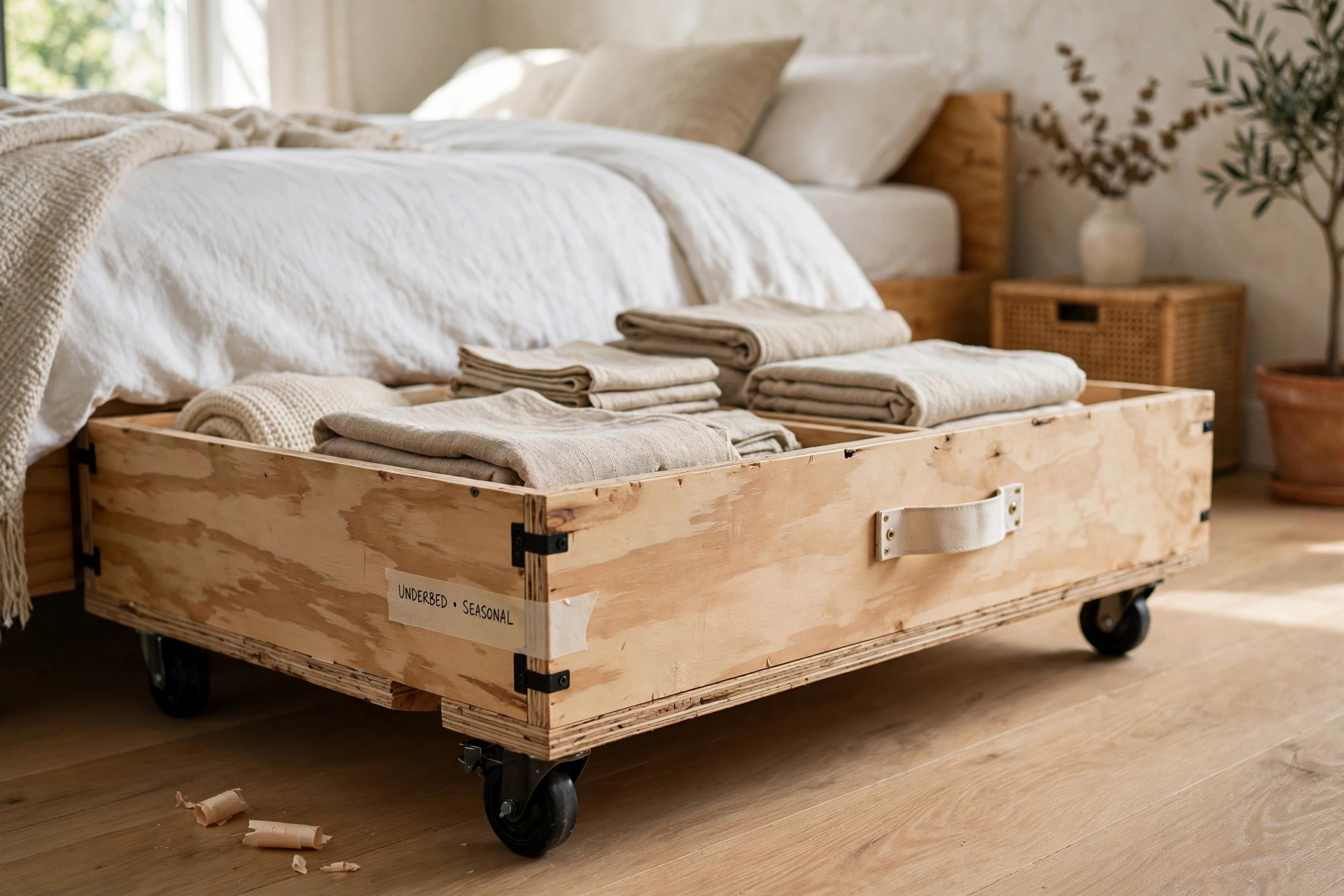
If store-bought options don’t fit your odd clearance, a DIY drawer is a weekend project: a shallow plywood box, four caster wheels, and a front panel that matches or complements your bed. Build the box 2 inches shorter than your clearance and 4 inches narrower than the bed’s side opening so it slides freely. Use 1/2-inch plywood for the sides and 1/4-inch for the bottom, joined with wood glue and brad nails — it doesn’t need to be furniture-grade since it lives under the bed. Sand the front panel and paint or stain it to match the bed frame; add a simple cup pull for a finished look. Four swivel casters rated for at least 25 pounds each will carry folded clothes and linens easily. This is the most customizable of all bedroom under bed storage ideas, and it costs a fraction of retail drawers.
11. Divide storage by season and rotate twice a year
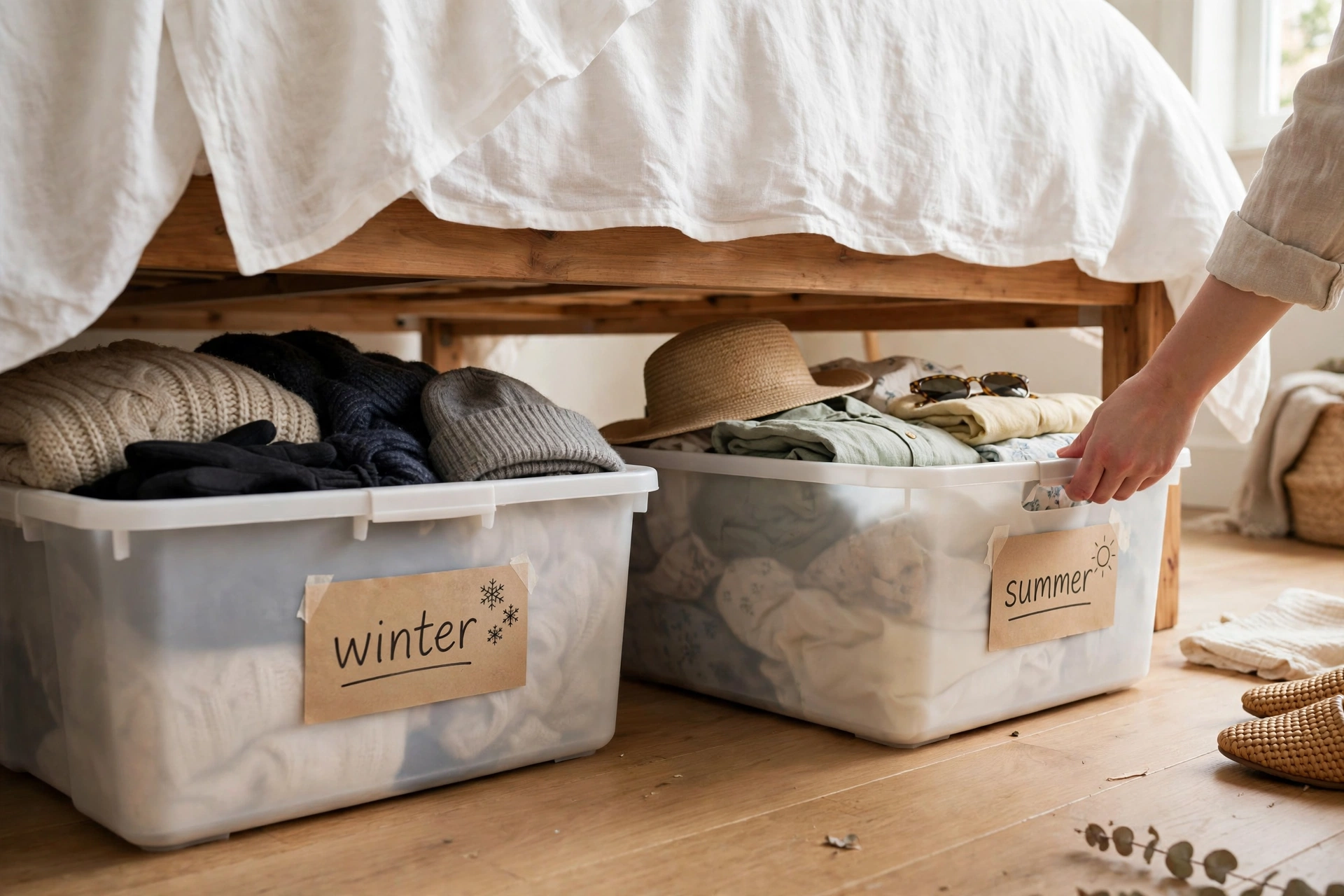
The most sustainable under-bed system is a seasonal rotation: winter gear lives under the bed in summer, summer gear in winter, and the swap happens twice a year. Dedicate specific bins to each season — “winter: sweaters, boots, heavy blankets” — and when the weather turns, the swap takes an hour instead of a weekend. This keeps your closet and dresser uncluttered year-round because only the current season’s clothes occupy prime space. Mark your calendar for the swap (late October and late April work in most climates), and use the moment to declutter: anything you didn’t wear all season goes to donation rather than back under the bed.
12. Protect fabrics with cedar and lavender, not mothballs
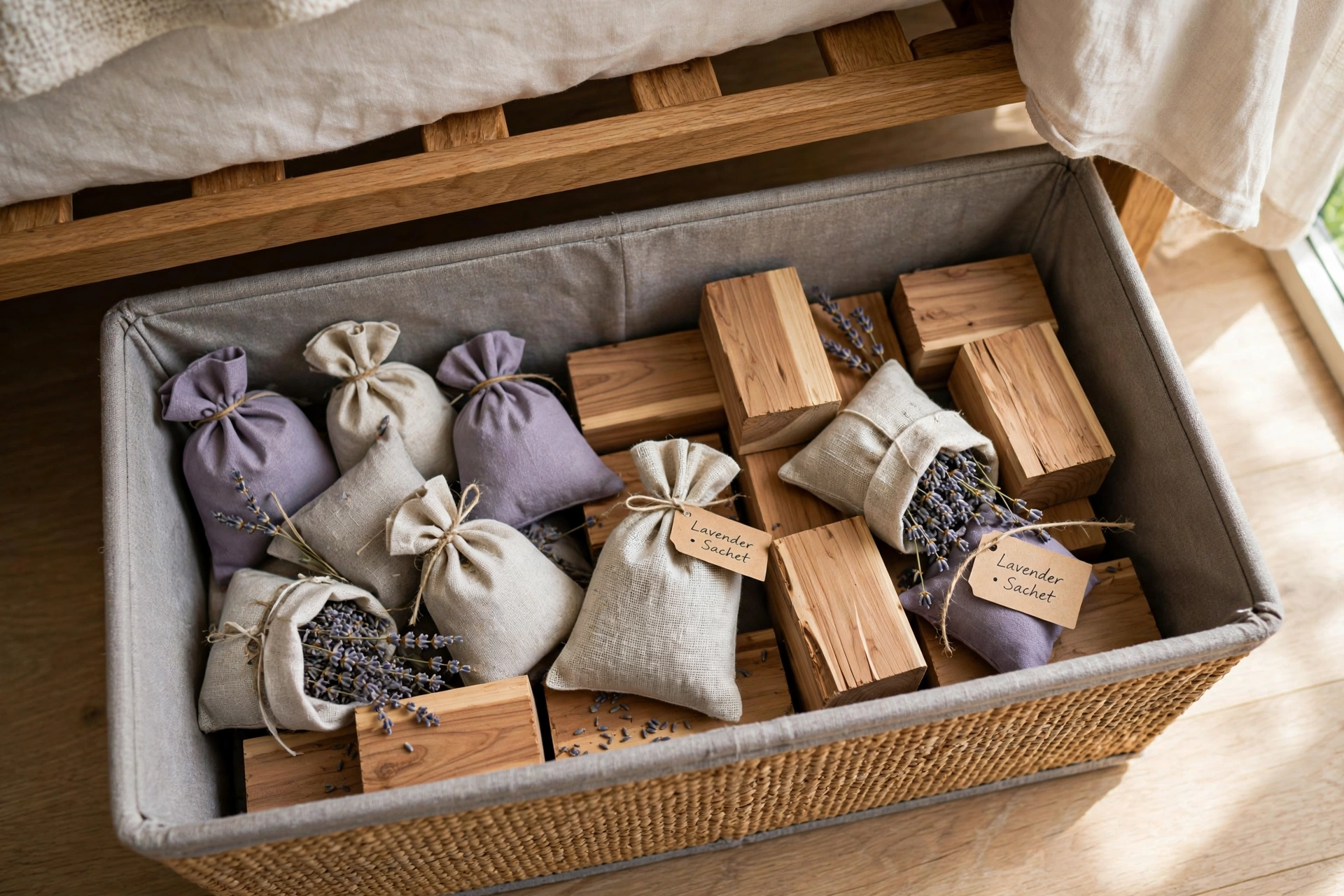
Enclosed under-bed storage can attract clothes moths, especially with wool and cashmere inside. Skip mothballs — their smell permeates everything and the chemicals aren’t something you want near bedding. Instead, tuck cedar blocks or rings into each bin and refresh them yearly with a light sanding to release the oils. Lavender sachets work too and smell far better; replace them every six months when the scent fades. For valuable knits, add one more layer of defense: store them in sealed zip bags inside the bin. Check bins for signs of moths — tiny holes, webbing, or larvae casings — during your seasonal rotation, and freeze any suspect garment for 72 hours to kill eggs before they spread.
13. Create a hidden gift-wrap station under the bed
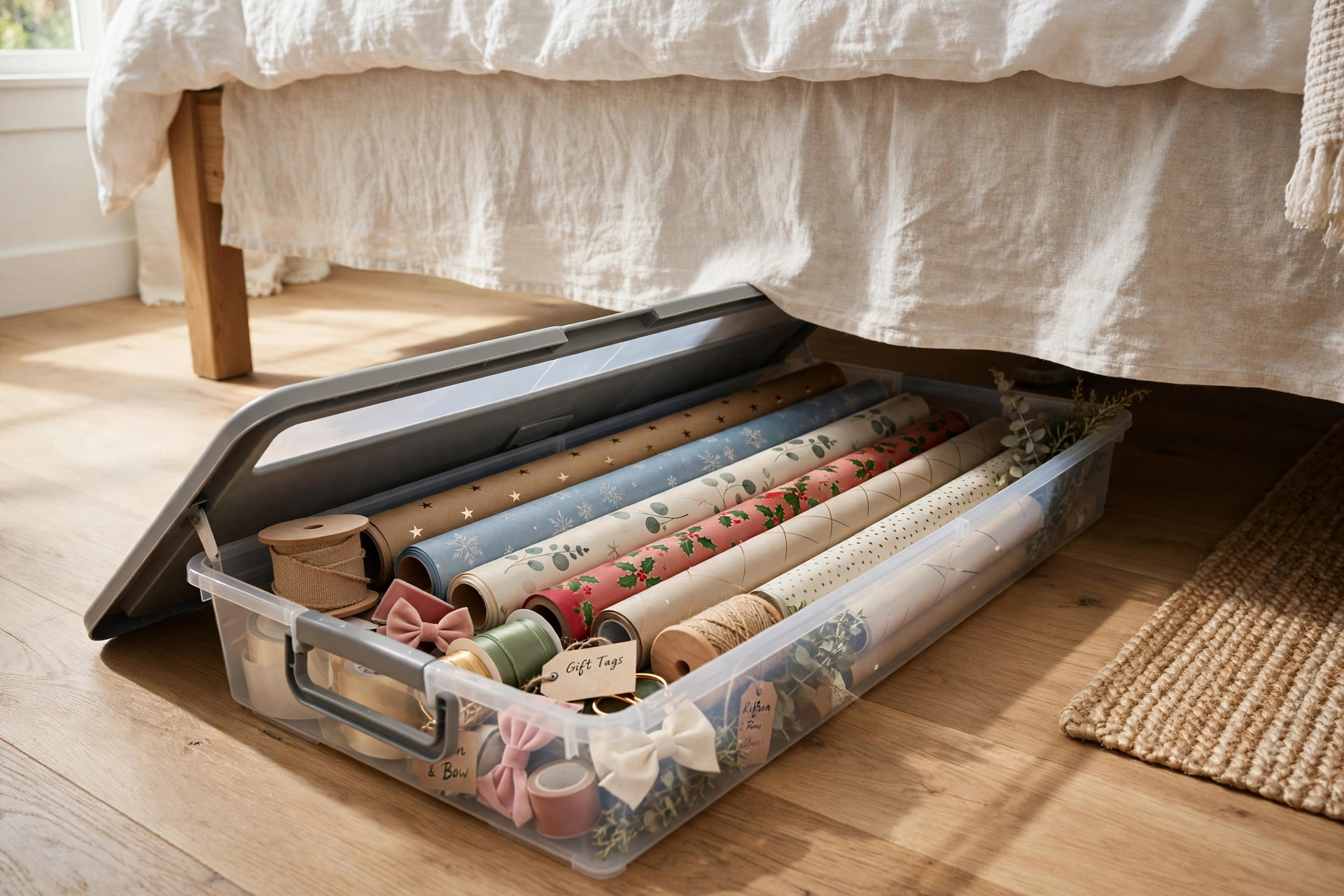
Gift wrap, bags, tissue, and ribbon are the perfect under-bed tenants: long, flat, and needed only occasionally. A long, shallow bin (the kind sold for wrapping paper, about 40 inches long) holds full rolls without bending them, and a second bin corrals bags and tissue upright. Keep scissors, tape, and ribbon in a small lidded box inside the same bin so the whole station pulls out as one unit. Store it on the least-used side of the bed — the wall side of a bed pushed into a corner, for instance. This is one of those bedroom under bed storage ideas that feels like a luxury once you have it: no more hunting through closets every birthday.
14. Keep heavy items toward the middle, light items at the edges
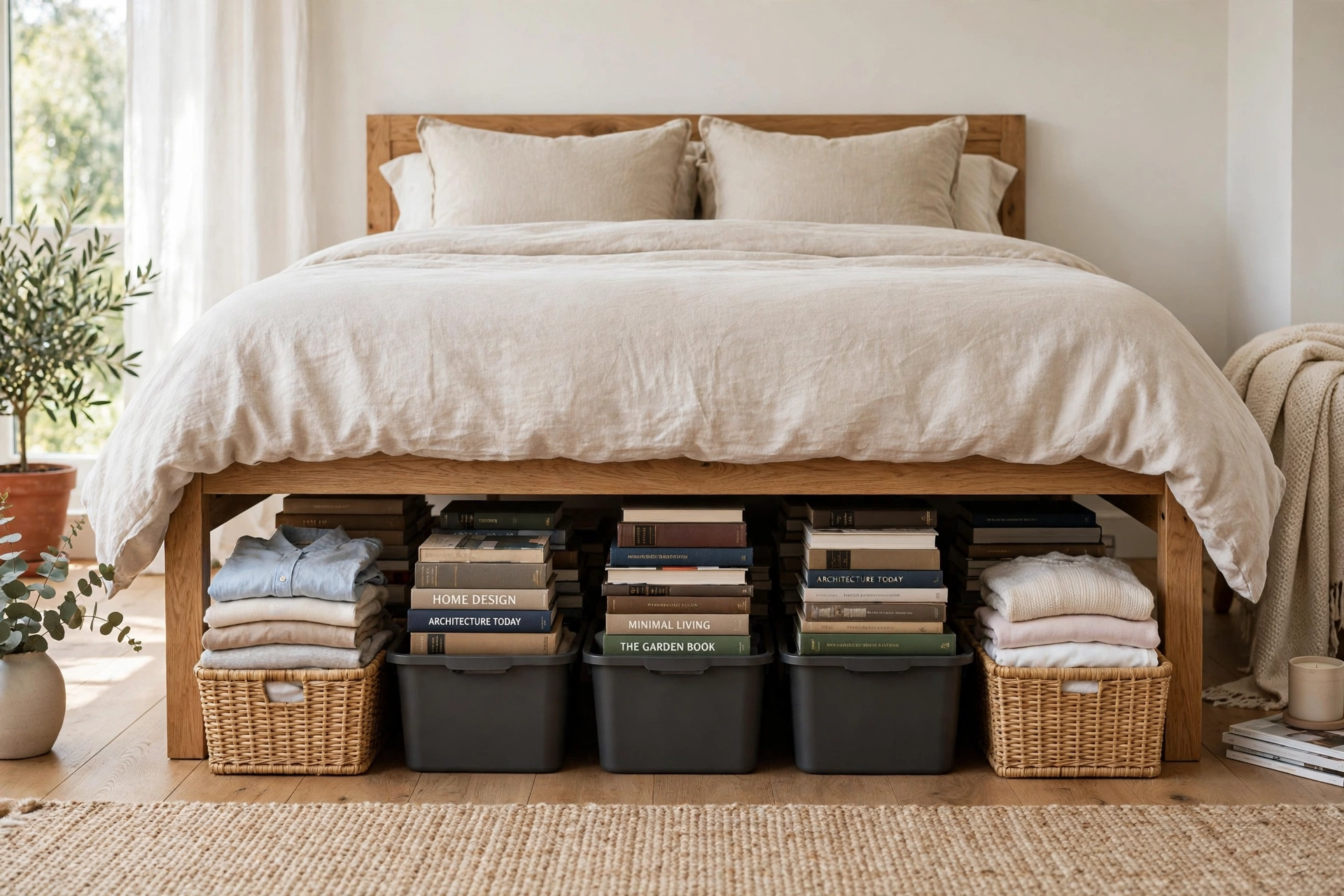
Weight distribution matters more than people think. Heavy bins — books, tools, files — should slide toward the center of the bed, where the frame’s support is strongest and where you won’t strain your back dragging them out daily. Light, frequently used items — pajamas, workout clothes, current-season shoes — belong at the edges within easy arm’s reach. This also protects your floors: dragging a 40-pound bin of books across the same patch of hardwood twice a day will wear the finish. Put felt pads on the bottom of heavy bins or choose bins with smooth, wide runners. If you notice the bed frame flexing or the bins getting harder to slide, you’ve overloaded — redistribute or declutter.
15. Do a twice-a-year under-bed reset
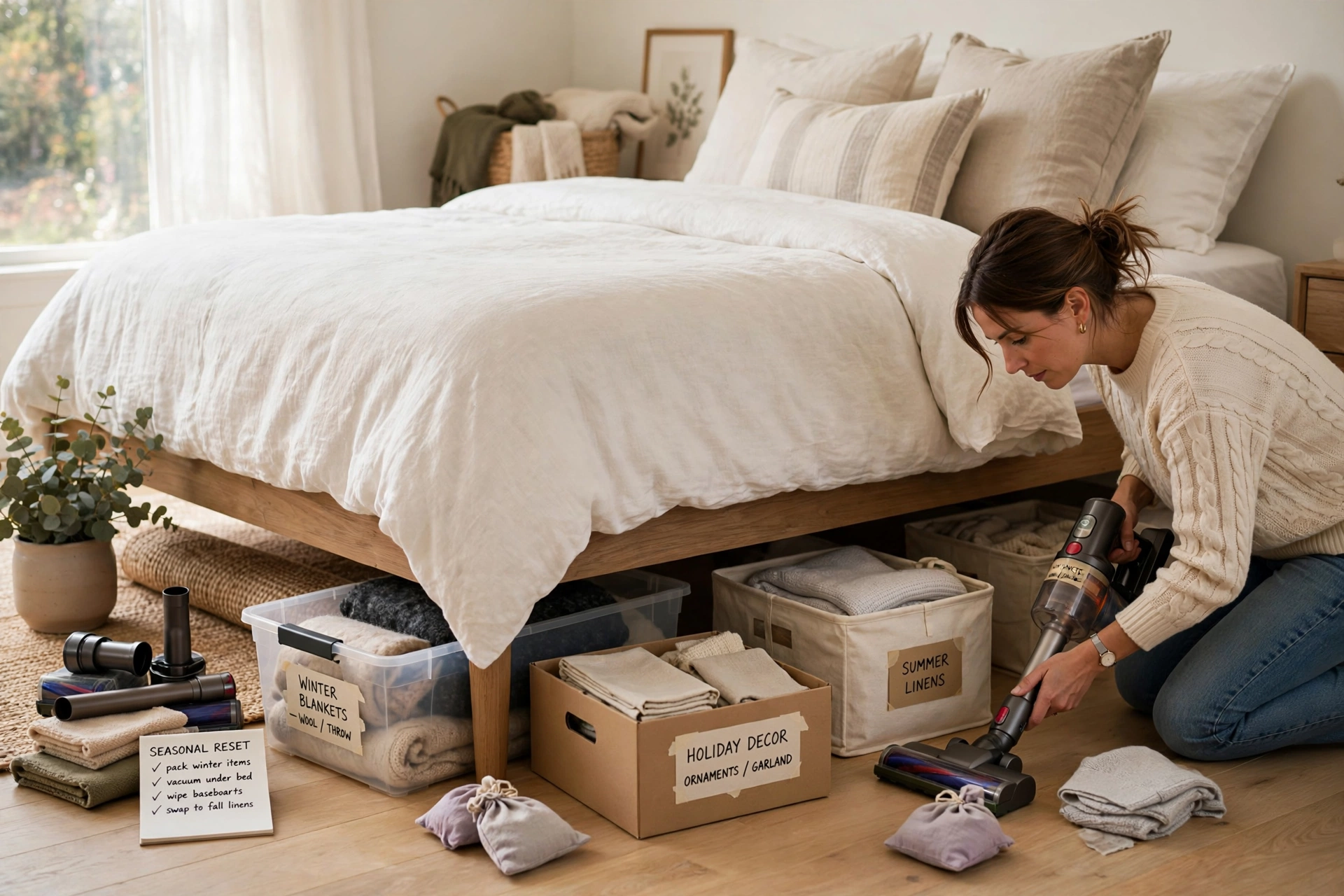
Even the best system drifts, so schedule a full under-bed reset with each seasonal rotation: pull everything out, vacuum the floor underneath (this is where dust mites and lost socks accumulate), wipe down the bins, and check for anything damaged, damp, or pest-affected. This is also the moment to reassess: if a bin has become a junk drawer, sort it on the spot. The whole reset takes 30 to 45 minutes for a queen bed and keeps the system working for years. Pair the reset with laundering the bed skirt if you use one, since skirts collect dust along their bottom edge. If you’re weighing whether add-on storage is enough or it’s time for furniture with built-in drawers, compare with these bedroom storage bed ideas for small space function (https://gallaxyindoors.com/bedroom-storage-bed-ideas-for-small-space-function/) — and for more ways to keep bedroom surfaces tidy, see these bedroom floating shelf ideas for style and storage (https://gallaxyindoors.com/bedroom-floating-shelf-ideas-for-style-and-storage/).
Frequently Asked Questions
What is the best under bed storage for a low bed?
Flat vacuum-seal bags and lidded fabric bins under 6 inches tall work best for low-clearance beds. If your frame clears less than 4 inches, add bed risers to gain 3 to 8 inches of height — they’re inexpensive and make nearly any storage option possible.
How do I keep under bed storage from getting dusty?
Always use containers with lids, zippered closures, or vacuum seals — open bins collect dust quickly. Vacuum the floor under the bed twice a year during your seasonal rotation, and wipe bin exteriors with a damp cloth. A bed skirt also dramatically reduces the dust that drifts underneath.
Can I store clothes under the bed long term?
Yes, if they’re clean, fully dry, and sealed in zippered bags or lidded bins with cedar or lavender for moth protection. Never store damp clothes under a bed — trapped moisture causes mildew. Check stored clothes during each seasonal rotation for any signs of pests or mustiness.
How much weight can I store under a bed?
There’s no single limit — it depends on your frame. Keep heavy items like books toward the center where support is strongest, and avoid exceeding what you can comfortably pull out. If the frame creaks, flexes, or the bins drag, lighten the load. When in doubt, check your bed frame manufacturer’s weight rating.
What’s the difference between under bed storage and a storage bed?
Under-bed storage means add-on containers — bins, bags, and rolling drawers — that work with any existing bed. A storage bed is furniture with drawers or lift-up compartments built into the frame itself. Add-ons are cheaper and portable; built-in storage beds offer more capacity and a cleaner look but require buying new furniture.
Keep Exploring
The space under your bed is free square footage you’ve already paid for — measure it, choose containers that fit, and give everything a labeled home. With a seasonal rotation and a twice-yearly reset, your under-bed storage will stay as organized as any closet, completely out of sight.