
Overhead bedroom lighting is often too harsh for winding down, and table lamps only reach so far. That’s where bedroom floor lamp ideas come in: a floor lamp fills the dark corner, gives you real reading light by the chair, and adds a warm pool of glow that makes the whole room feel calmer. Unlike wall sconces or chandeliers, a floor lamp needs no wiring — you just plug it in and place it. These bedroom floor lamp ideas suit reading corners, empty corners, and bedside spots alike.
Here are fifteen bedroom floor lamp ideas covering every style and corner, with placement measurements, bulb guidance, and the details that separate a lamp that merely stands there from one that transforms the room. Each of the bedroom floor lamp ideas below includes exact measurements — base placement, shade height, and bulb specs — so you can shop with confidence. As you compare these bedroom floor lamp ideas, pay attention to which picks are dimmable and which call for warm 2700K bulbs; those two details affect comfort more than style alone. Save these bedroom floor lamp ideas before your next lighting run — the measurements could save you a return trip.
Whether you’re after bedroom floor lamp ideas for a reading nook, a small room, or the forgotten corner behind the door, you’ll find a match below. From arc and tripod bedroom floor lamp ideas to torchiere, pharmacy, and swing-arm bedroom floor lamp ideas, every major style is represented. The dimmer, bulb, and cord-management bedroom floor lamp ideas near the end apply whichever style you choose. Renters love these bedroom floor lamp ideas too — no wiring, no holes in the walls. Use these bedroom floor lamp ideas as a shopping checklist: pick your corner, match the style to your room, choose a warm dimmable bulb, and let the glow do the rest. With the right choice from these bedroom floor lamp ideas, even the darkest corner becomes the coziest seat in the house.
1. Arc a lamp over your reading chair
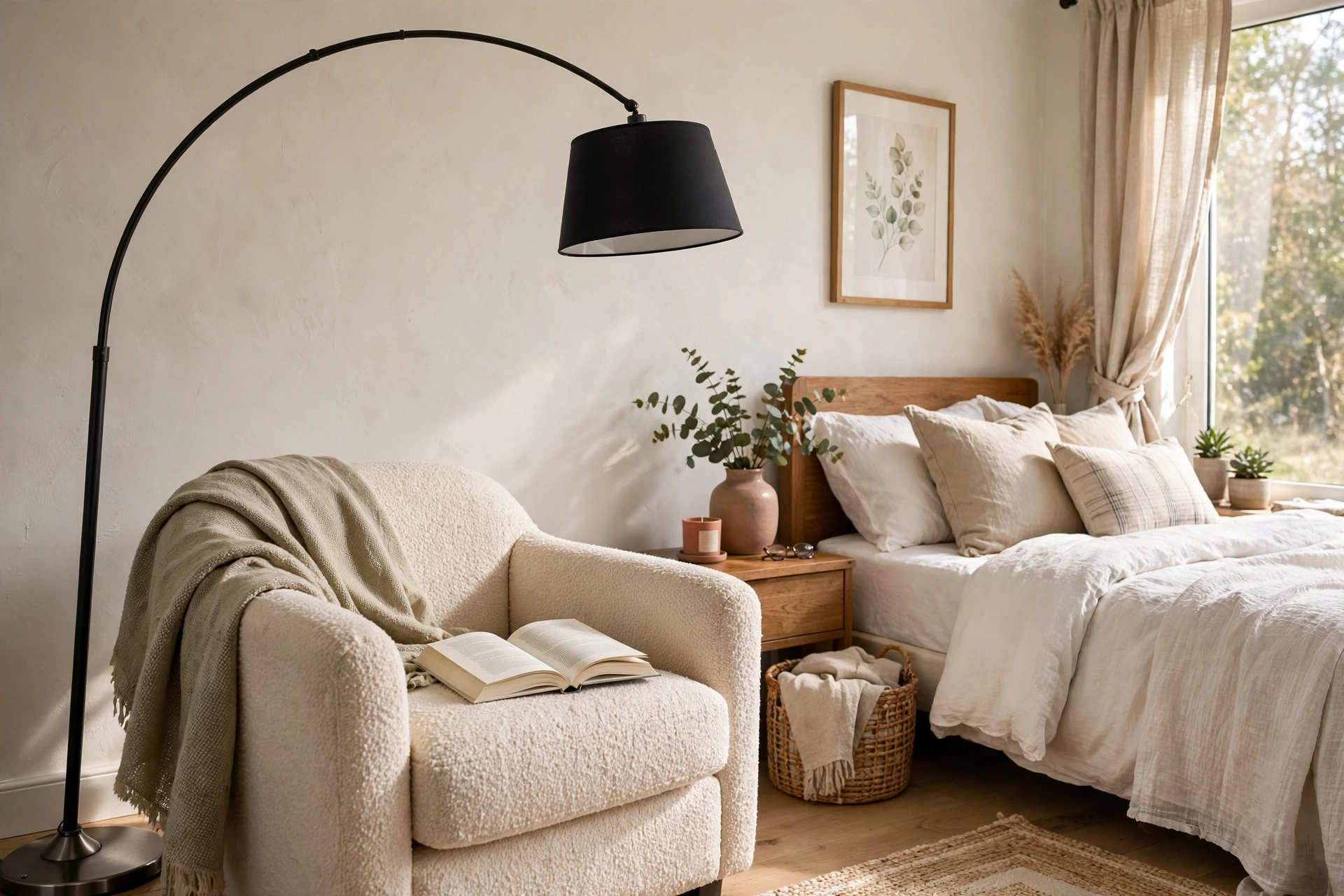
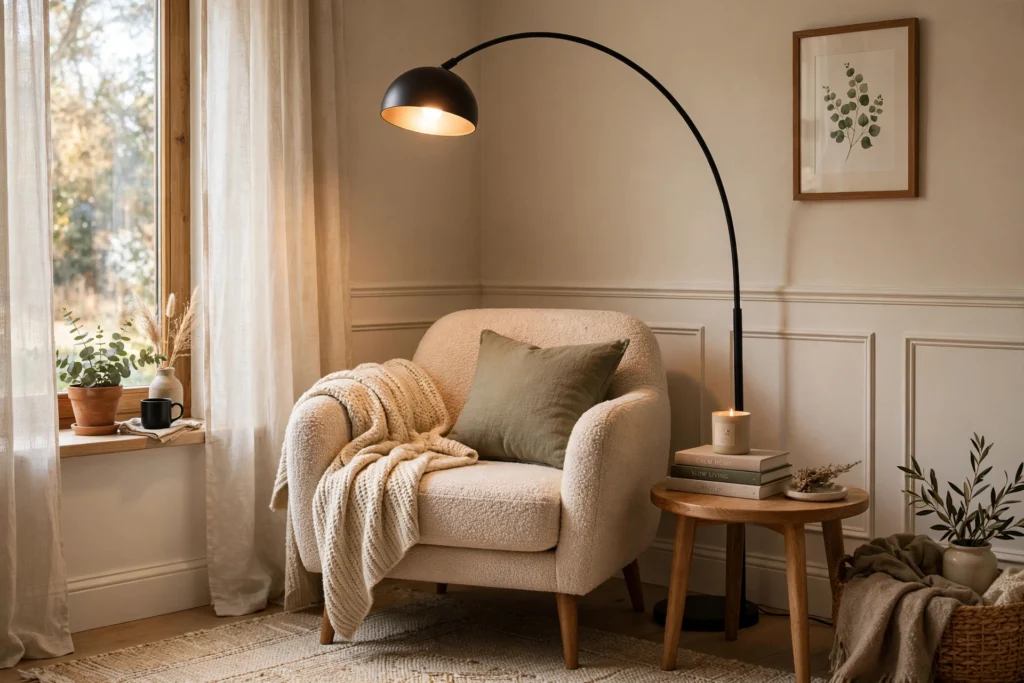
An arc floor lamp is the classic reading-corner move: the base sits a few feet behind the chair while the curved arm brings the shade directly over your shoulder. Look for an arc with at least a 3-foot reach and a height around 78 to 84 inches so the light clears a tall chair back. Position the base about 2 to 3 feet behind and slightly to the side of the chair, then swing the shade so it sits roughly 12 to 18 inches above and behind your head — close enough to read by, far enough that the bulb never glares into your eyes. Arc lamps are heavy at the base by design, but keep the base out of the walking path so nobody trips on it in the dark. A marble or metal base in the 20-pound range keeps even a long-reach arc stable.
2. Ground an empty corner with a tripod lamp
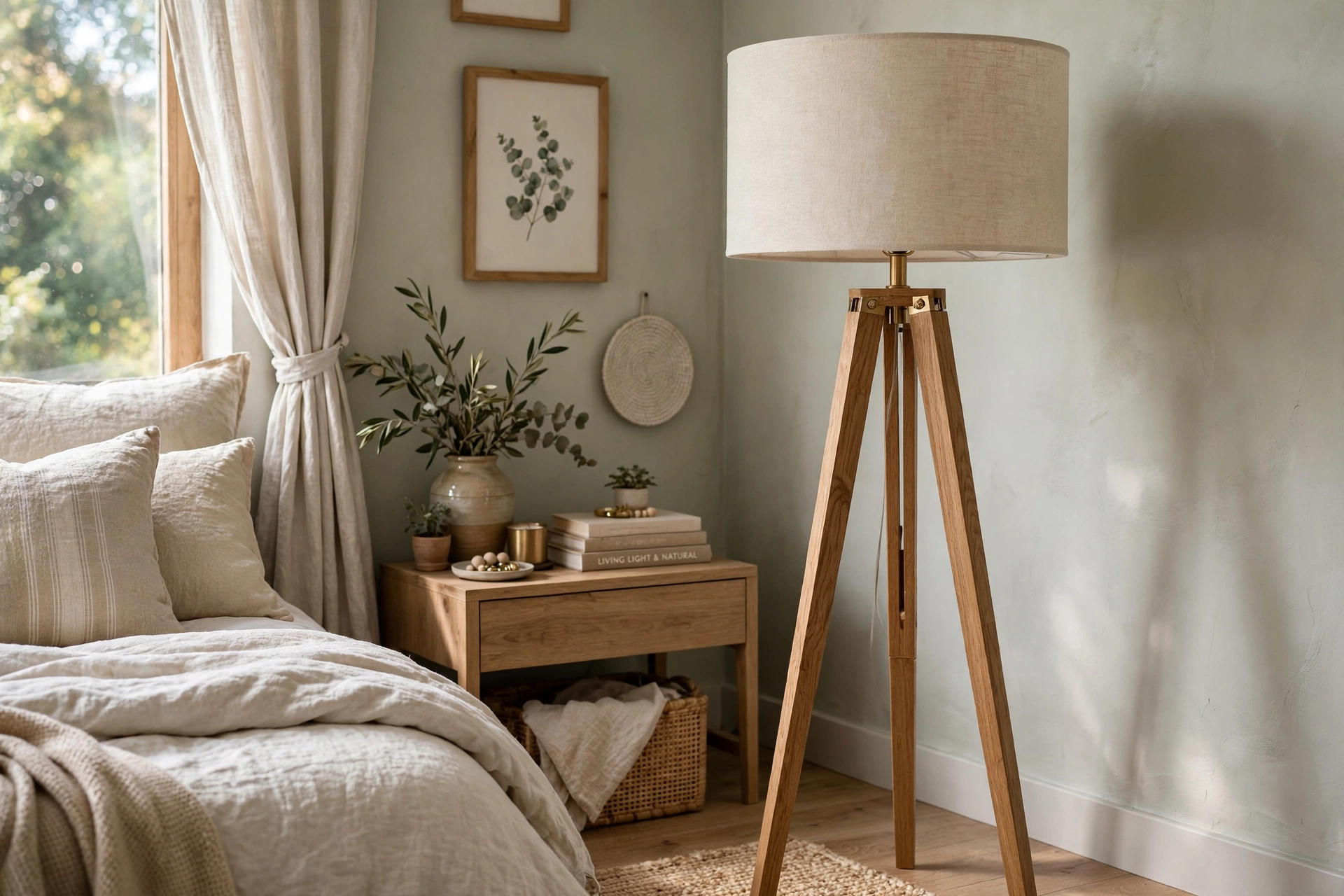
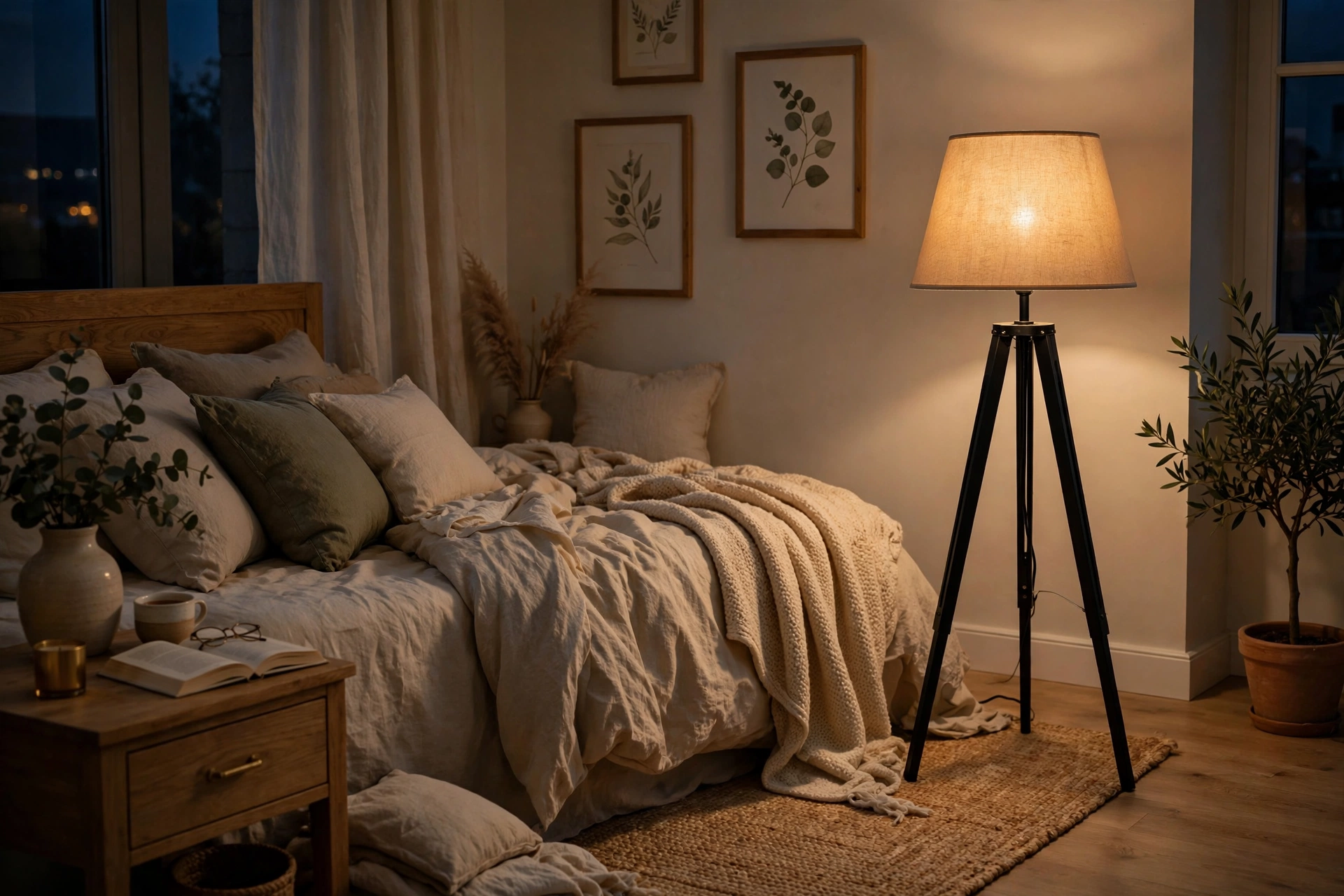
Empty bedroom corners collect clutter; a tripod floor lamp turns them into intentional design. The three-legged base spreads about 20 to 24 inches wide, so measure your corner to make sure the legs won’t crowd the walls or the bed. Tripod lamps typically stand 55 to 65 inches tall, putting the light at a comfortable height for both seating and standing sightlines. They suit Scandinavian, boho, and mid-century bedrooms especially well — wood legs with a linen drum shade is the can’t-miss combination. Because the shade often sits at eye level when you’re seated, choose an opaque or lined shade so the bulb stays hidden. A floor lamp in this classic form has been a furniture staple for over a century, and the tripod version remains one of the most versatile.
3. Bounce soft light off the ceiling with a torchiere
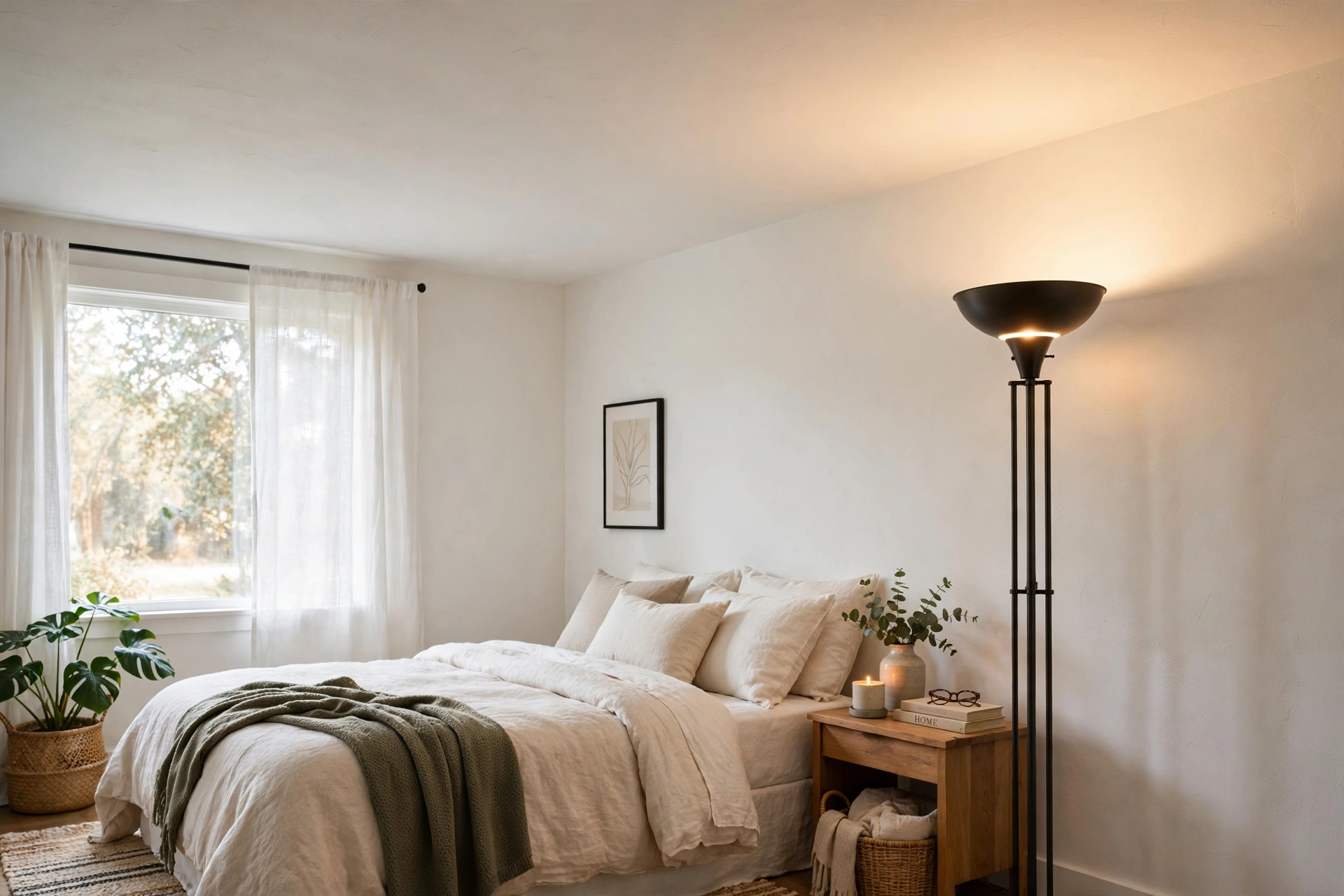
A torchiere sends all its light upward, bouncing it off the ceiling for a soft, shadow-free glow that flatters the whole room. This is the gentlest form of bedroom light — no harsh downward pools, no glare. Torchieres work best in bedrooms with white or light ceilings at least 8 feet high; the higher the ceiling, the more the light spreads. Keep the top of the torchiere 12 to 18 inches below the ceiling for the best bounce, and choose an LED bulb around 800 lumens (a 60-watt equivalent) in warm white. Avoid placing a torchiere where the upward light will hit a ceiling fan or a smoke detector — both cast odd shadows and, in the detector’s case, can cause issues with heat buildup.
4. Put a pharmacy task lamp by the bed for reading
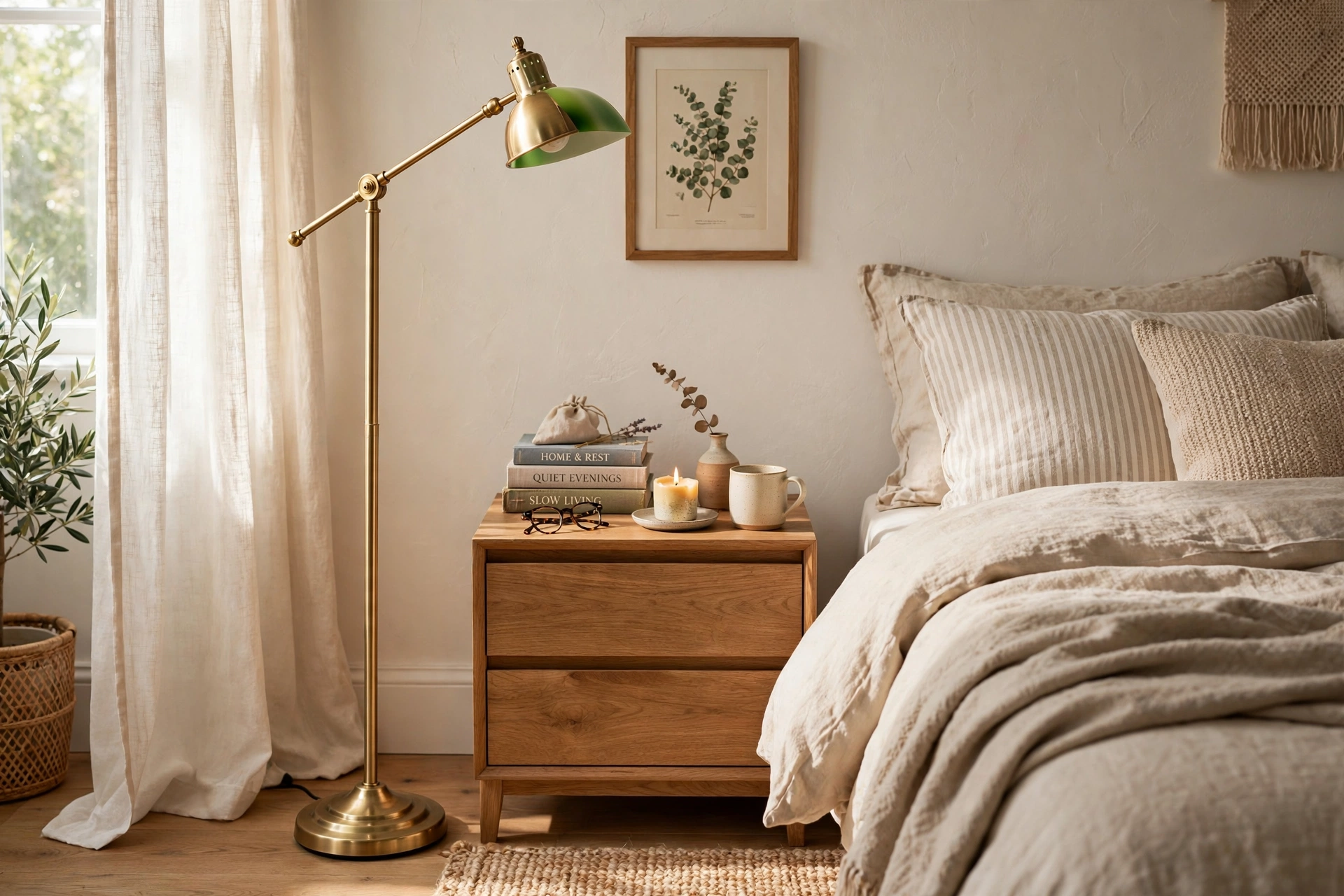
A pharmacy-style floor lamp — the one with the adjustable metal shade on a slim pole — is made for bedtime readers. Its focused downward light lands exactly on your book without flooding the room and waking your partner. Place it just behind the nightstand on your side of the bed, with the shade about 40 to 48 inches off the floor so the light hits the page at a comfortable angle. Many pharmacy lamps have a built-in dimmer or a three-way switch, which is ideal for dialing the light down as you get sleepy. The slim profile (the base is usually only 9 to 10 inches wide) means it squeezes into the narrow strip of floor between nightstand and wall where bulkier lamps won’t fit.
5. Diffuse the glow with a fabric drum shade lamp
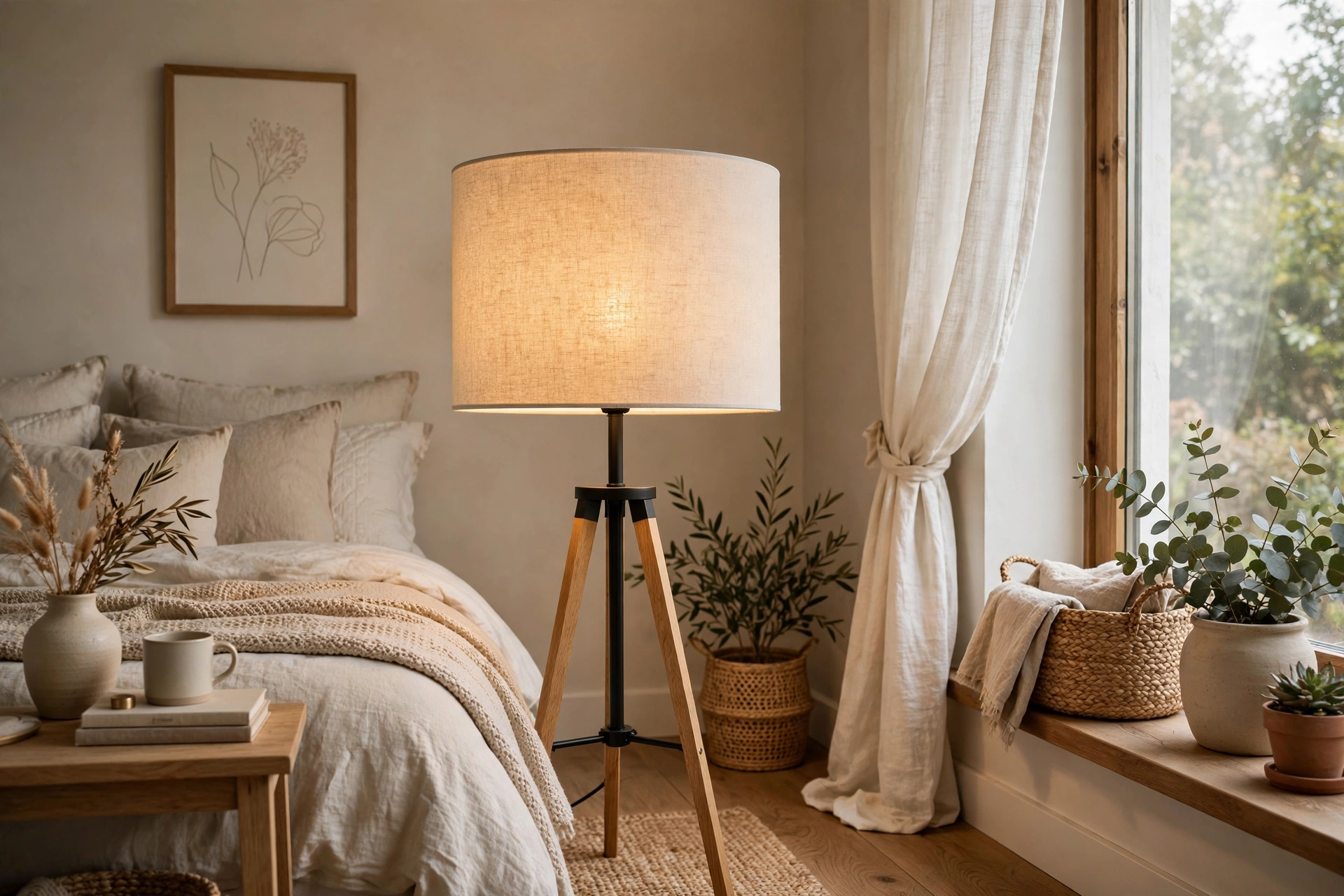
If your bedroom light always feels too harsh, the shade is probably the problem, not the bulb. A fabric drum shade — cylindrical, usually 14 to 18 inches across — diffuses light in all directions and softens every edge in the room. Choose a shade in white, cream, or natural linen for maximum glow; darker shades look dramatic but cut light output significantly. The harp and finial hardware should position the shade so the bulb sits roughly centered inside it. For bedrooms, a lamp with the shade bottom around 48 to 55 inches off the floor puts the glow at a flattering height. Replace yellowed or stained shades rather than living with them — a fresh shade is the cheapest lighting upgrade there is.
6. Choose a slim minimalist lamp for tight spaces
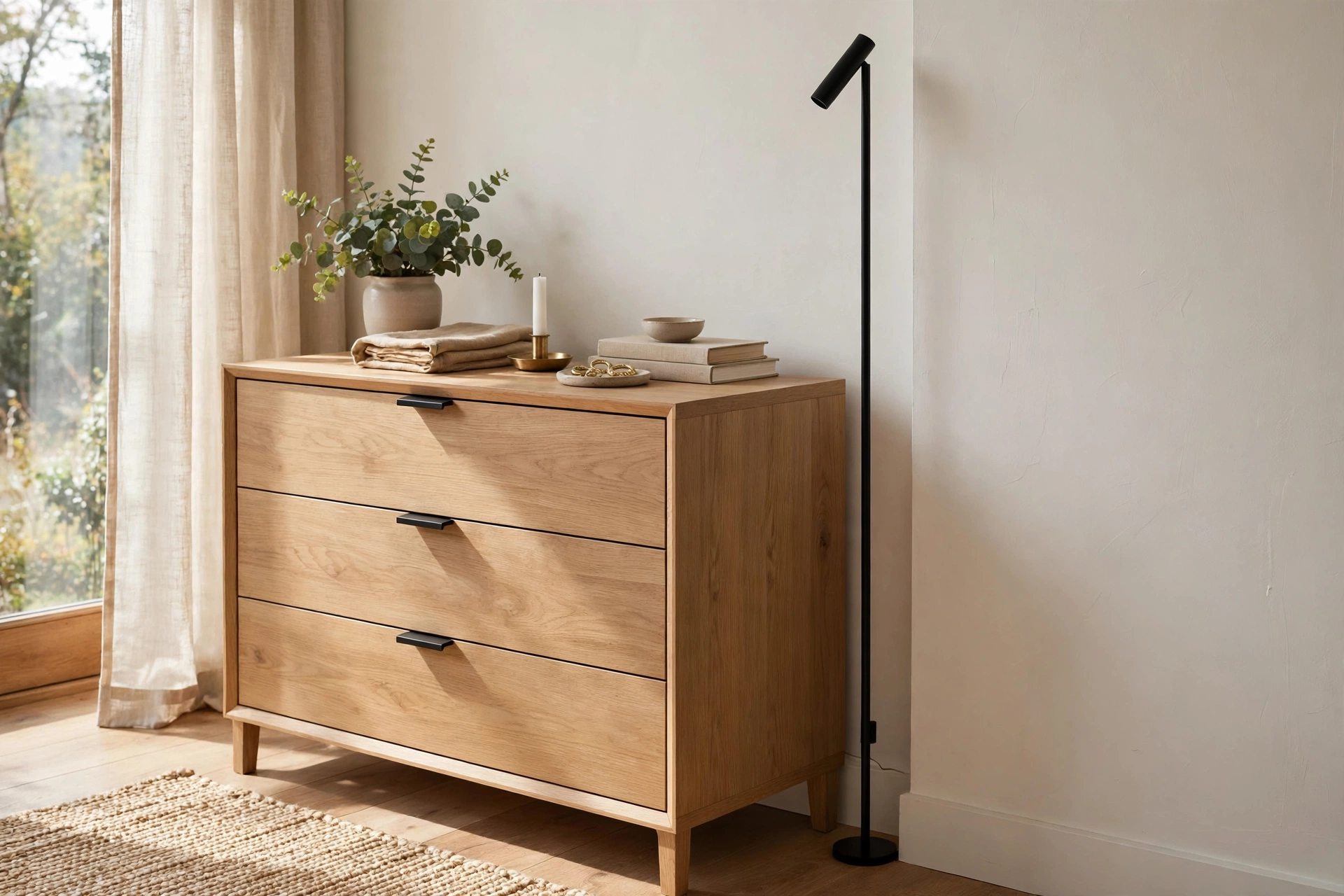
Small bedrooms don’t have to skip floor lamps. Slim-profile lamps with a base under 10 inches wide and a pole barely thicker than a broom handle tuck into the sliver of floor between a dresser and the wall or beside a nightstand. Look for designs where the shade is compact too — a 10 to 12 inch shade keeps the whole footprint small. These lamps are light, so check that the base has enough weight (or a wide enough footprint) not to tip if brushed in the dark. A slim lamp in black metal with a white shade disappears visually while still delivering a real pool of light — function without visual bulk.
7. Insist on a dimmer for true bedroom versatility
A floor lamp without a dimmer has exactly one mood; with a dimmer, it has all of them. Full brightness for getting dressed, medium for reading, low for winding down — a dimmable lamp replaces three separate lights. If your lamp doesn’t have a built-in dimmer, add a plug-in dimmer module between the lamp and the outlet (they cost little and work with most dimmable LED bulbs). The catch: the bulb must be labeled dimmable, or it will flicker and buzz. Test the bulb-dimmer combination at every level before you commit, listening for hum at low settings. For the full layered-lighting picture, these bedroom lighting ideas for a cozy glowing retreat (https://gallaxyindoors.com/bedroom-lighting-ideas-for-a-cozy-glowing-retreat/) show how a dimmable floor lamp works alongside sconces and overheads.
8. Stick to warm 2700K bulbs for restful light
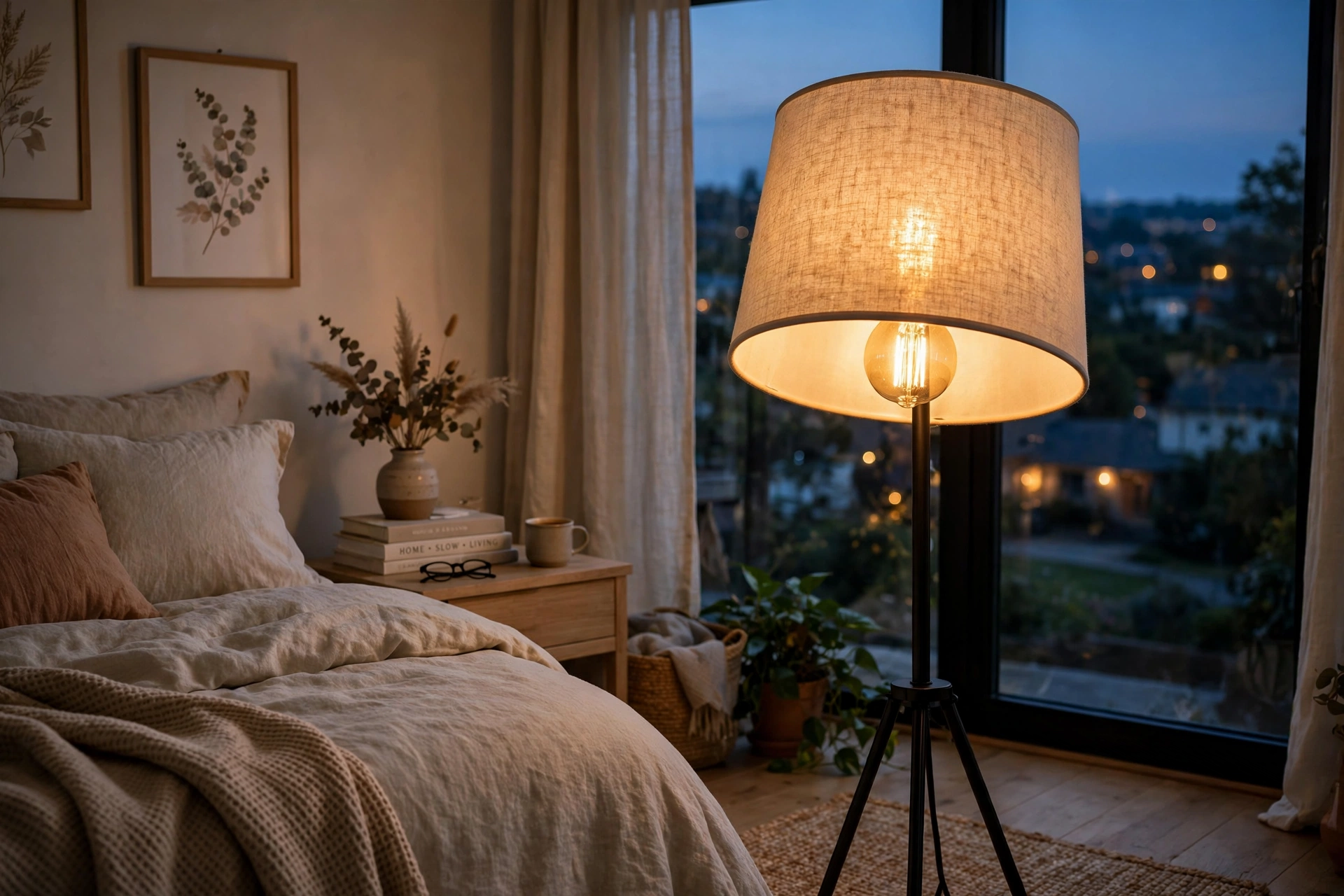
Color temperature shapes how a bedroom feels more than almost any other choice. For bedrooms, 2700K (warm white) is the sweet spot — it’s the color of traditional incandescent light and signals “evening” to your brain. Cooler bulbs at 4000K and above read as office or daylight and can make it harder to wind down. When you buy LED bulbs for a bedroom floor lamp, check the Kelvin rating on the box, not just “warm white” on the marketing — and match every bulb in the room to the same temperature so the light feels coherent. Aim for 800 lumens (60-watt equivalent) for general corner light and 450 lumens (40-watt equivalent) for a bedside reading lamp. High CRI (90+) bulbs render colors accurately, so your bedding and wall colors look right under the lamp.
9. Tuck a lamp behind the headboard wall for backlighting
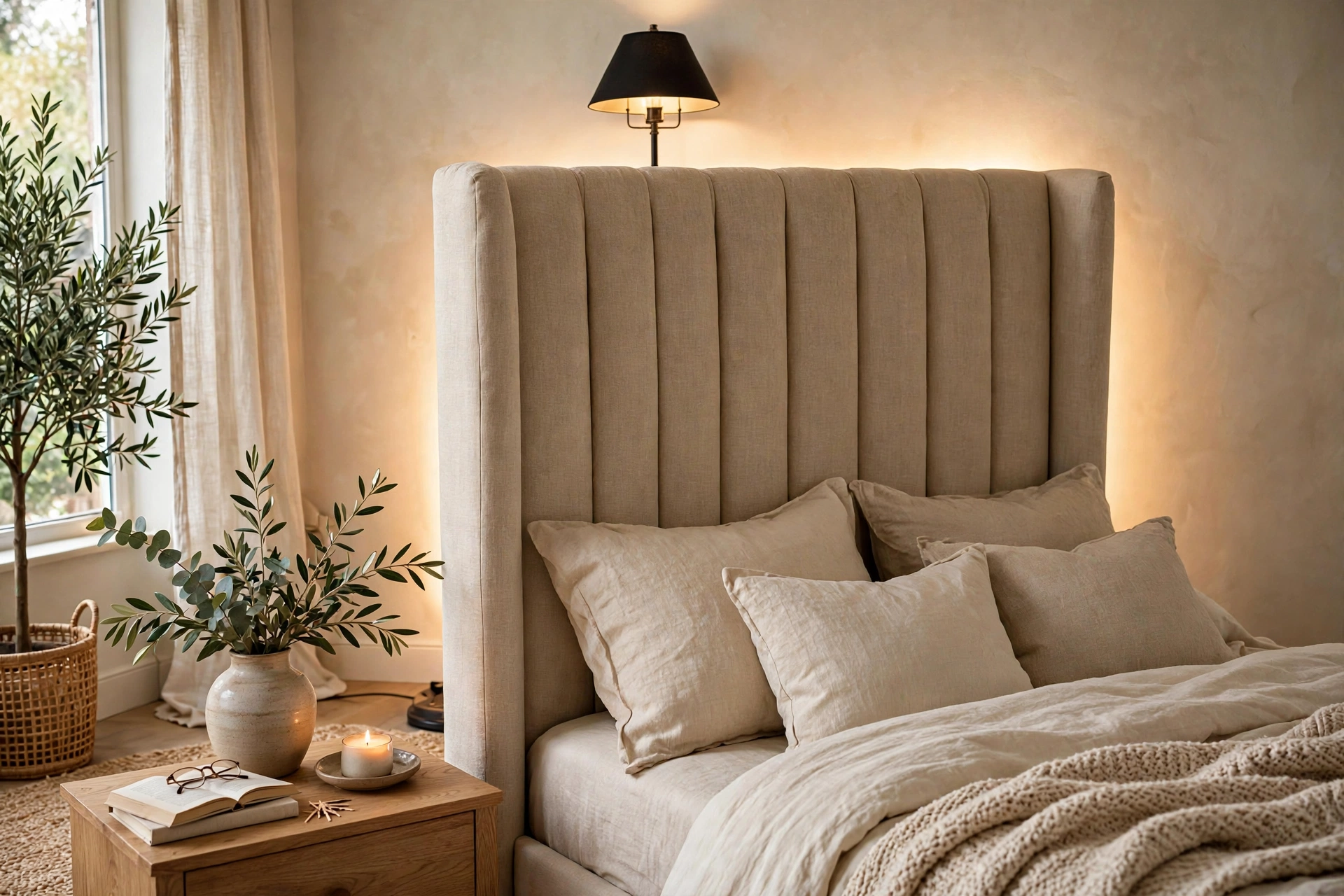
Placing a floor lamp behind the bed — in the gap between the headboard and the wall, or just beside the headboard — creates a soft halo of backlight that makes the bed the glowing center of the room. This works best with upholstered or solid headboards at least 48 inches tall, which block direct glare while letting light spill around the edges. Use a torchiere-style or upward-facing lamp here, and keep the lamp head below the top of the headboard so the light source stays hidden. The effect is especially beautiful in the evening: the wall behind the bed glows while the rest of the room stays dim. Make sure the cord routes cleanly behind the bed — a cord cover clipped to the headboard leg keeps it invisible and safe.
10. Flank the dresser with a matching pair
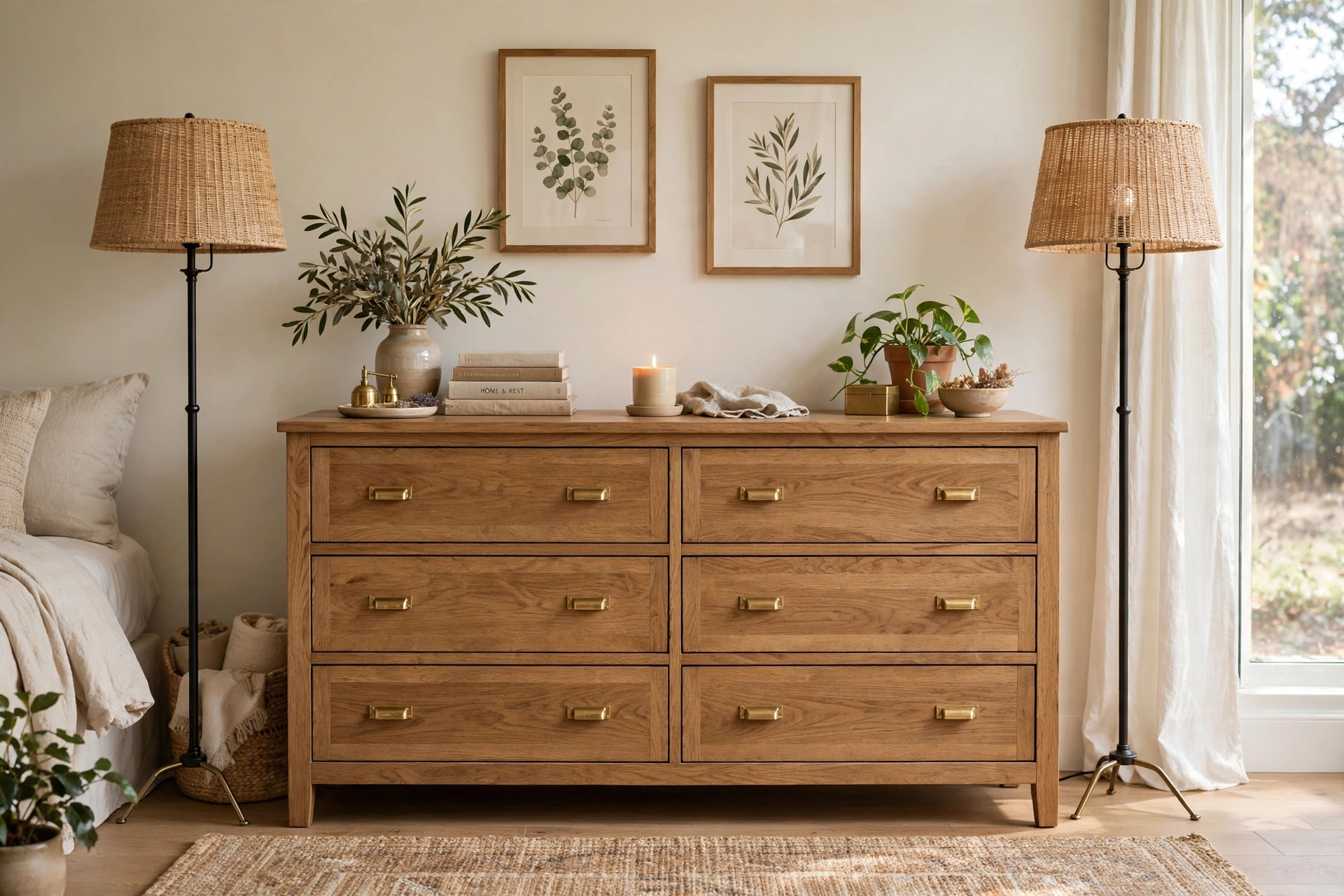
Symmetry is calming, and a matched pair of floor lamps flanking the dresser brings instant balance to the bedroom. Choose identical slim lamps — same height, same shade — and place them equidistant from the dresser’s edges, about 6 to 12 inches out from each side. This works best with dressers at least 55 inches wide so the lamps don’t crowd the piece. Keep both lamps on the same switch or smart plug so they turn on and off together; nothing breaks the symmetry like one lamp glowing alone. This arrangement also doubles your light output for the dressing area, which is genuinely useful for seeing clothes clearly in the morning.
11. Try a swing-arm lamp for adjustable task light
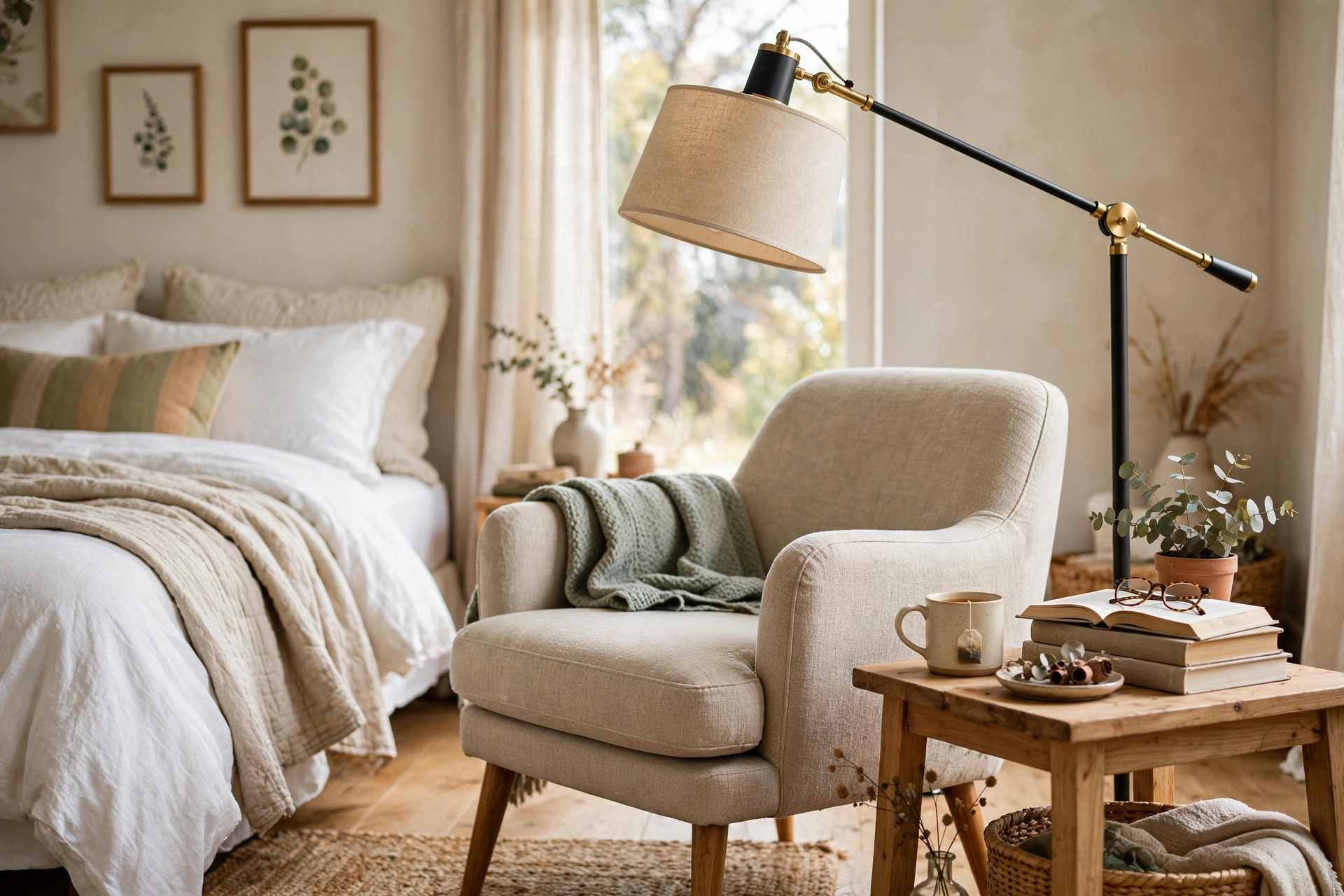
A swing-arm floor lamp gives you the adjustability of a desk lamp at floor-lamp scale: the arm pivots and extends so you can pull the light exactly where you need it. Place one beside a reading chair or your side of the bed, and swing the shade in for reading, out for ambient glow. Look for arms with at least 24 inches of reach and joints that lock firmly — loose joints drift and the shade ends up pointing at the ceiling by morning. The shade should be opaque metal so the light directs downward onto your book or project rather than scattering. Swing-arm lamps are heavier than they look because of the counterweight mechanism, so verify the base weight before placing one on thick carpet where it might lean.
12. Soften a modern room with a paper lantern lamp
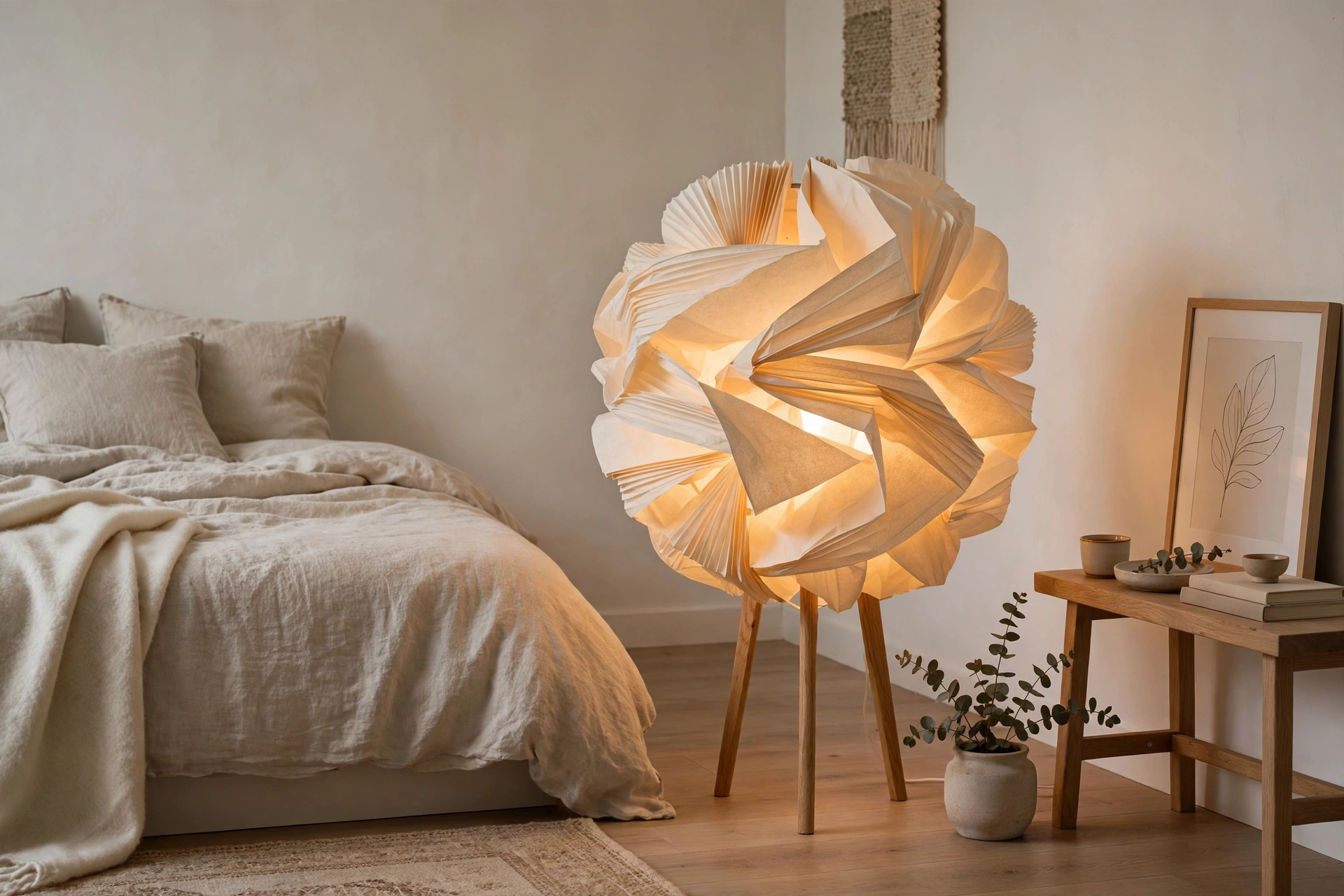
Paper and rice-paper floor lanterns — the Noguchi-style sculptural kind — cast the softest light of any lamp on this list because the paper diffuses the bulb completely. They’re a perfect counterpoint to bedrooms with lots of hard surfaces: wood floors, metal frames, glass. The sculptural shapes double as art even when switched off. Keep paper lanterns away from high-traffic paths since the paper tears if bumped, and use only LED bulbs — they run cool, which is essential near paper. Dust the paper gently with a dry soft brush; never use water. These lamps suit Japandi, Scandinavian, and minimalist bedrooms particularly well.
13. Make it smart with a connected bulb
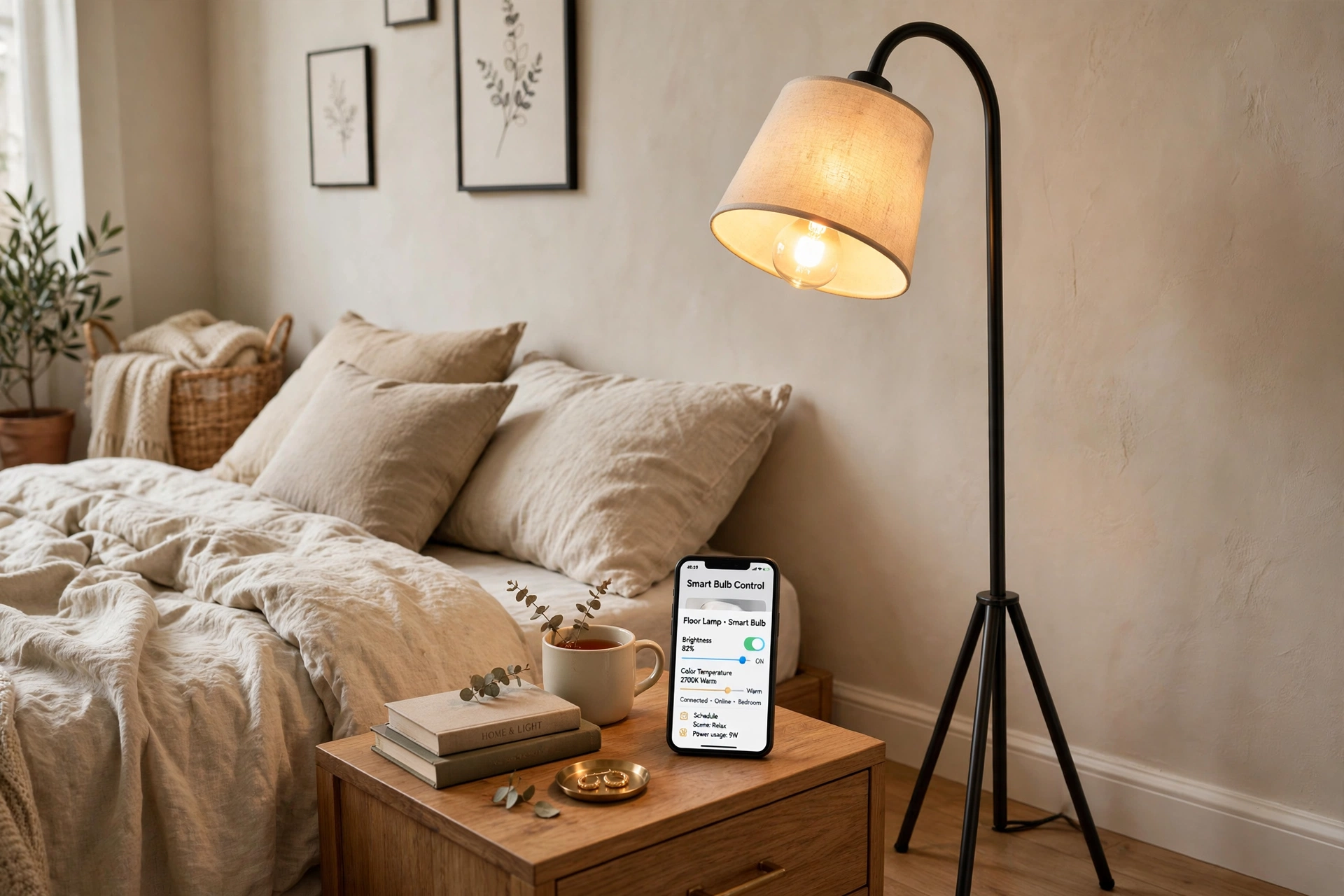
A smart bulb turns an ordinary floor lamp into the most convenient light in the bedroom: dim it from bed, schedule it to fade on as a gentle wake-up, or set it to turn off automatically after you’ve fallen asleep. Any standard floor lamp accepts a smart bulb — just screw in a Wi-Fi or hub-based bulb and pair it with your phone. Set a “wind down” routine that drops the lamp to 10 percent warm light at bedtime, and a morning routine that ramps it up slowly. One practical tip: keep the lamp’s physical switch in the “on” position always, since a smart bulb can’t receive commands when the power is cut. A small piece of tape over the switch reminds everyone in the household.
14. Light the forgotten corner behind the bedroom door
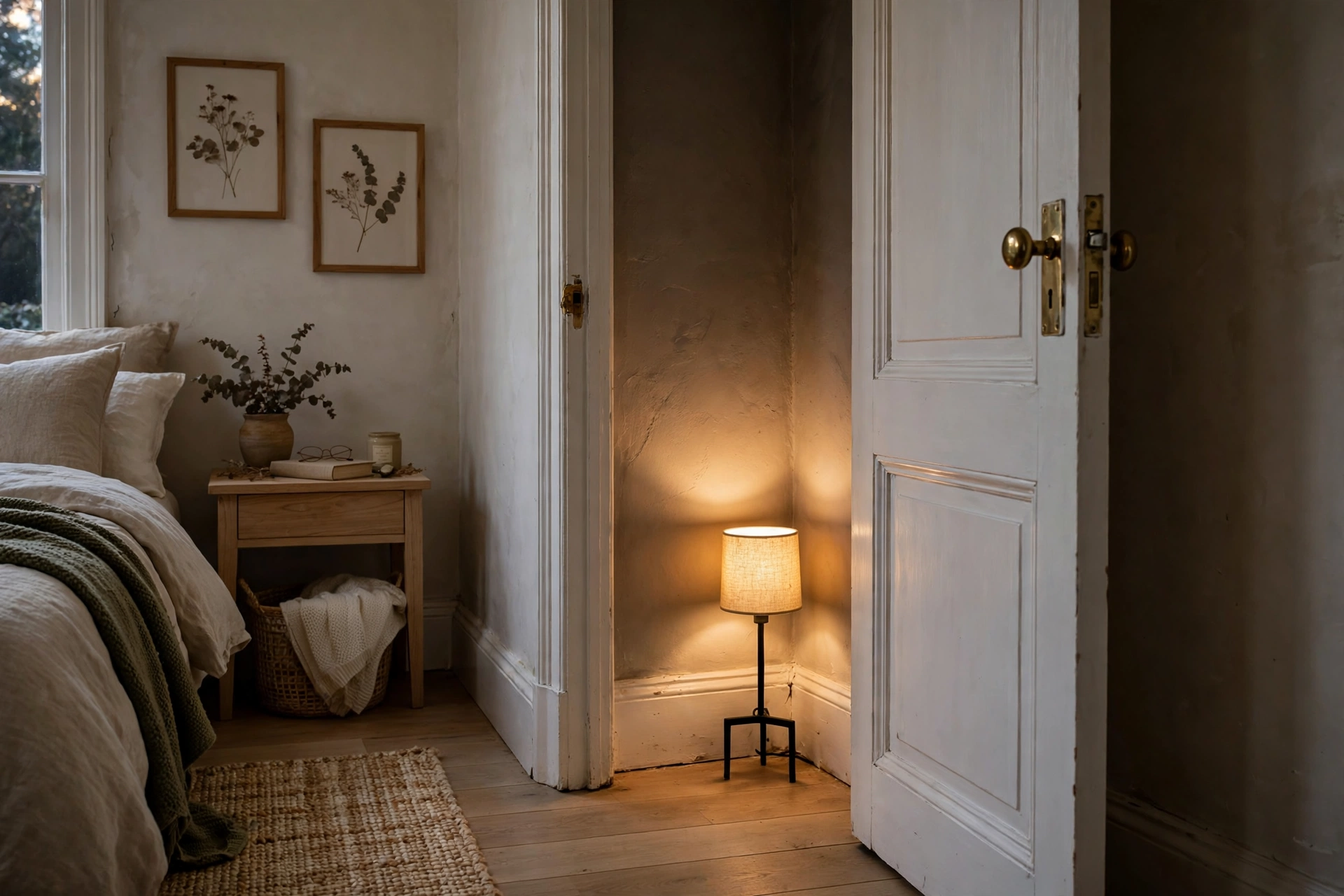
Every bedroom has one: the dark corner behind the door or beside the wardrobe that the overhead light never reaches. A floor lamp there eliminates the gloom and makes the whole room feel larger, because our eyes read a lit corner as more space. A compact torchiere or slim drum lamp works — it just needs to throw light upward and outward. Measure the corner’s floor footprint first; many of these spots are only 12 to 15 inches deep, so a slim base is essential. This is also a great place for a lamp on a timer or smart schedule, since it’s the corner you’re least likely to remember to switch off. For complementary ideas at bedside height, see these desk lamp ideas for the bedroom and bedside tables (https://gallaxyindoors.com/desk-lamp-ideas-for-the-bedroom-and-bedside-tables/) and these bedroom wall sconce ideas for warm bedside light (https://gallaxyindoors.com/bedroom-wall-sconce-ideas-for-warm-bedside-light/).
15. Manage cords and keep the lamp stable
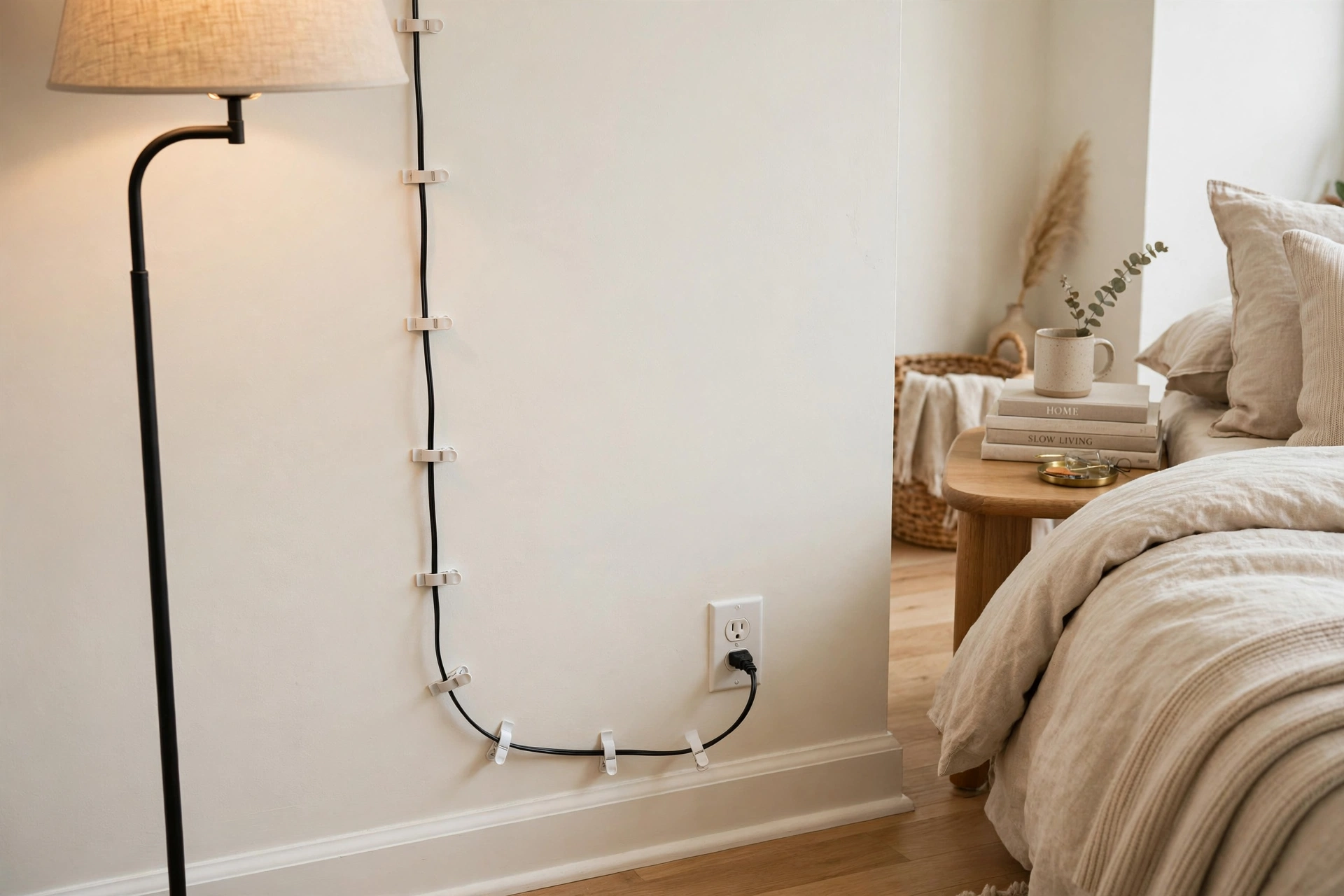
The unglamorous details decide whether a floor lamp is a pleasure or a hazard. Route every cord along the wall to the nearest outlet — never across a walking path — and secure it with adhesive cord clips every 12 inches. If the cord must cross open floor, use a flat cord cover that lies flush. On carpet, choose lamps with wide or heavy bases; on hard floors, add felt pads under the base so it doesn’t scratch or slide. Keep lamp shades at least 12 inches from curtains, bedding, and upholstered furniture, and always use bulbs at or below the lamp’s maximum wattage rating. A lamp that’s stable, cool-running, and trip-free is one you’ll actually enjoy using every night.
Frequently Asked Questions
Where should a floor lamp go in a bedroom?
The best spots are beside a reading chair, in an empty corner, flanking the dresser, or behind the nightstand on the reading side of the bed. Place it where you need task light or where a dark corner makes the room feel smaller. Keep it out of walking paths and at least 12 inches from curtains and bedding.
What kind of floor lamp is best for a bedroom?
For reading, choose an arc lamp, pharmacy task lamp, or swing-arm lamp that directs light onto your book. For ambient glow, pick a torchiere or drum-shade lamp. Whatever the style, make sure it’s dimmable and uses a warm 2700K bulb for a restful feel.
What wattage bulb should I use in a bedroom floor lamp?
Use an 800-lumen LED (60-watt equivalent) for general corner lighting and a 450-lumen LED (40-watt equivalent) for bedside reading. Always stay at or below the lamp’s maximum wattage rating, and choose bulbs labeled dimmable if your lamp has a dimmer.
Are floor lamps safe next to a bed?
Yes, with sensible precautions: keep shades 12 inches from bedding and curtains, use cool-running LED bulbs, route cords along the wall, and choose a stable base that won’t tip if brushed in the dark. Never drape fabric over a lampshade.
Can one floor lamp light a whole bedroom?
One floor lamp can handle ambient lighting in a small bedroom, especially a torchiere bouncing light off the ceiling. But most bedrooms feel better with layered light — a floor lamp plus a bedside lamp or sconce — so you have both glow and task light where you need it.
Keep Exploring
The right bedroom floor lamp does more than fill a corner — it sets the room’s evening mood, gives you real light for reading, and makes the space feel finished. Pick your corner, choose warm and dimmable, and let the glow do the rest.