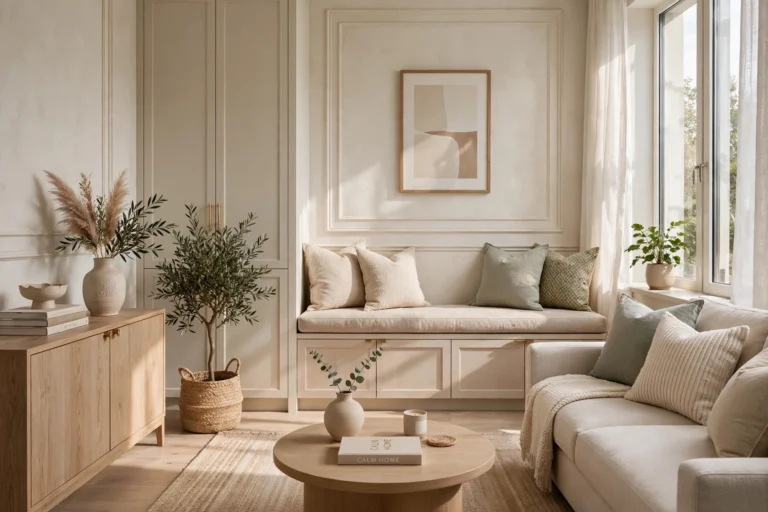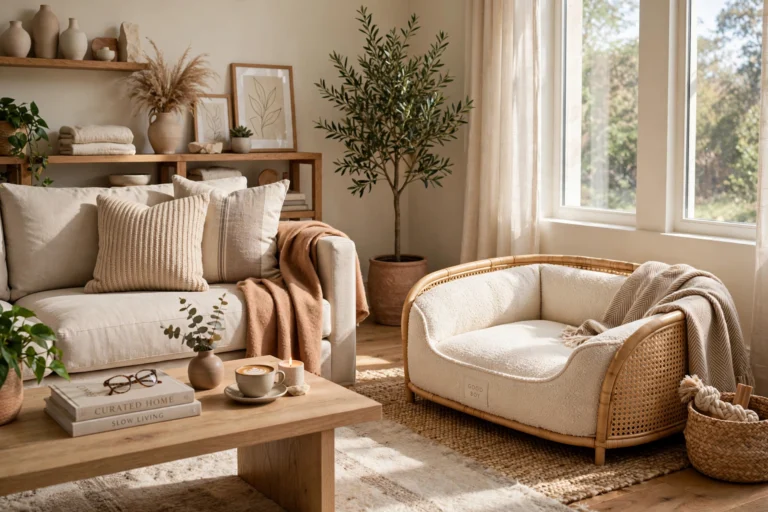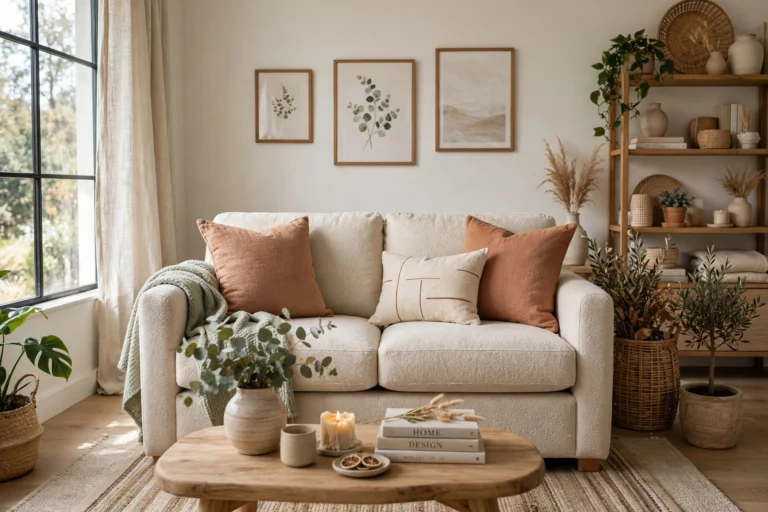

Few pieces of furniture say relaxed elegance like a chaise lounge. Longer than a chair but more sculptural than a sofa, it gives you a dedicated spot to stretch out with a book, take a phone call in comfort, or simply admire the room. These living room chaise lounge ideas cover every style — from French antiques to clean-lined modern designs — plus the practical details of sizing, placement, and styling that make a chaise feel intentional rather than like an afterthought.
A chaise works as a standalone statement because it has a clear job: one person, fully supported, legs extended. That single-purpose clarity is what makes it elegant. Plan for roughly 150–180cm of length and 65–80cm of width, keep 60–75cm of walkway around it, and give it good light. Do that, and the chaise becomes the seat everyone quietly fights over.
1. The Classic French Méridienne
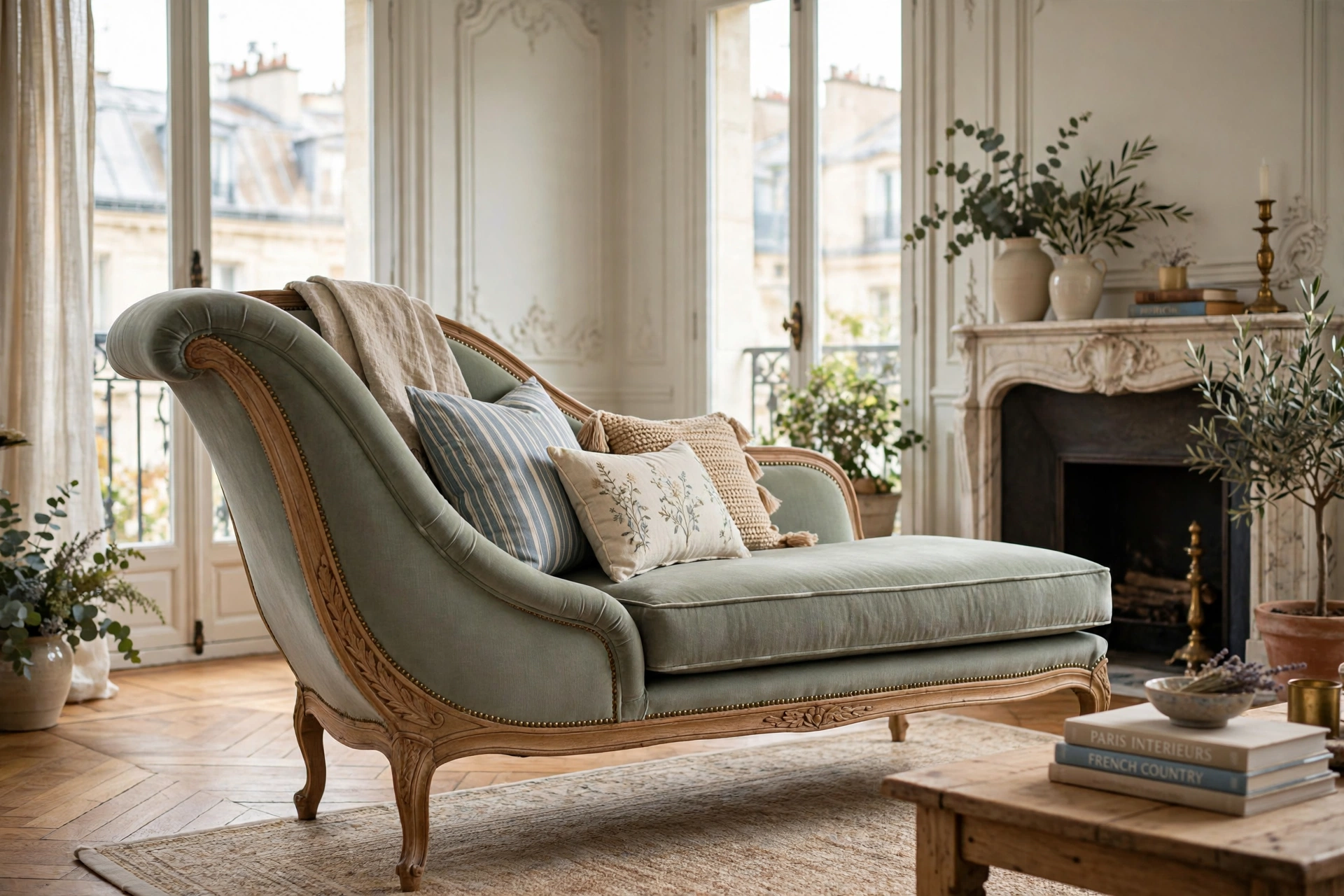
The méridienne is the chaise in its most romantic form: a high headrest sloping down to a lower footrest, usually with one raised end and an asymmetrical silhouette. Originating in early 19th-century France as a midday resting seat, it brings instant old-world grace to a traditional or transitional living room. Look for versions in linen or muted velvet with turned wooden legs.
Because the méridienne is visually light — lots of exposed leg and an open frame — it suits rooms where a bulky recliner would overwhelm. Place it at a slight angle rather than flat against the wall; the asymmetry looks deliberate when it floats. The chaise longue’s French origins explain why this shape still feels so refined two centuries later.
2. The Victorian Récamier
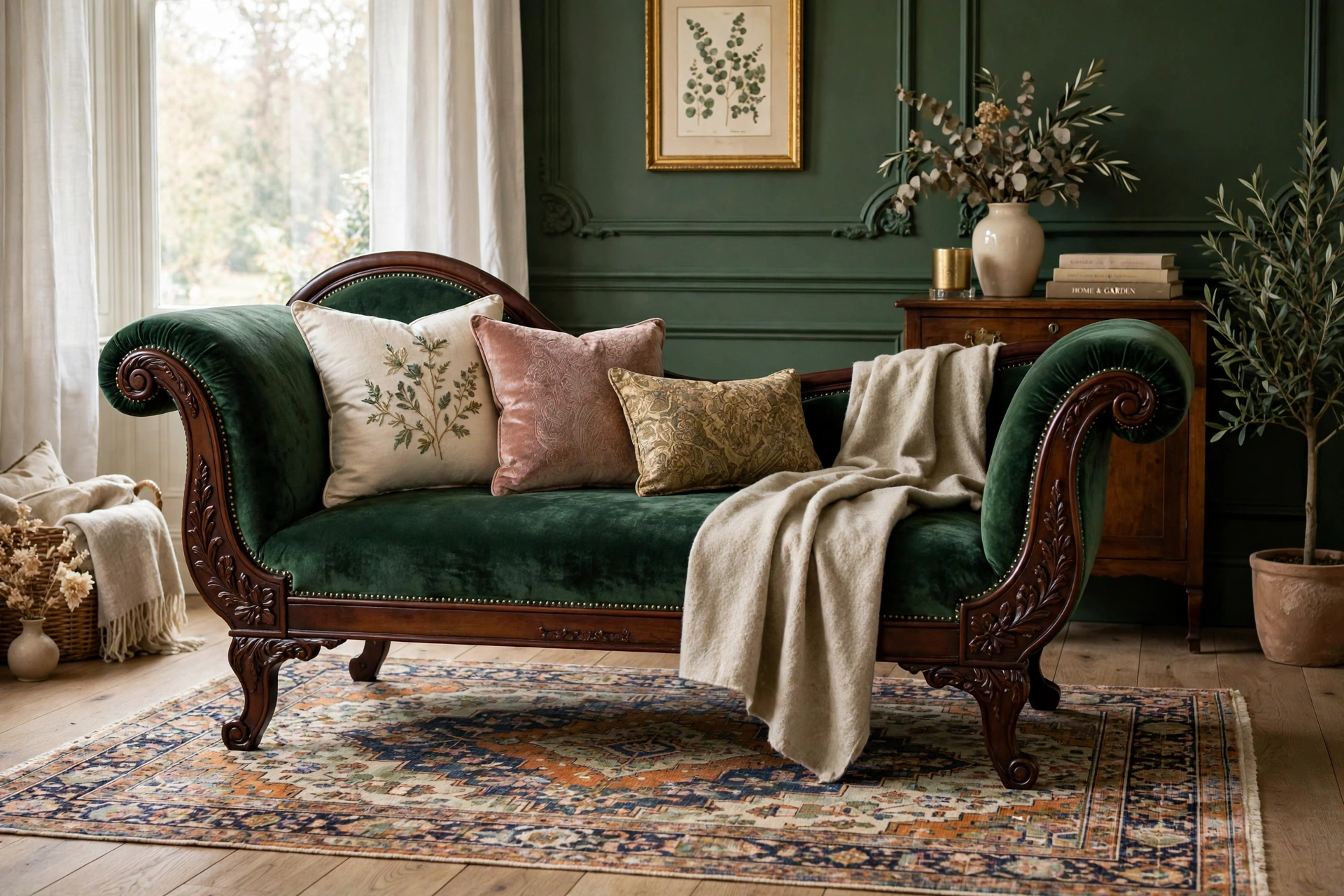
A récamier has two raised ends and open long sides, like a daybed crossed with a sofa. Named after the French society hostess Madame Récamier, it reads as pure drawing-room drama. In a living room, it works beautifully centered on a rug or placed beneath a large piece of art, since both long sides are meant to be seen.
Style it symmetrically: a lumbar pillow centered on each raised end and a folded throw across the middle. Keep the upholstery tailored — a récamier’s long, uninterrupted lines show every wrinkle. This is a strong choice if your room already leans traditional; in a minimalist space it can feel like a costume piece, so commit to the aesthetic or choose a simpler silhouette.
3. Mid-Century Modern Chaise
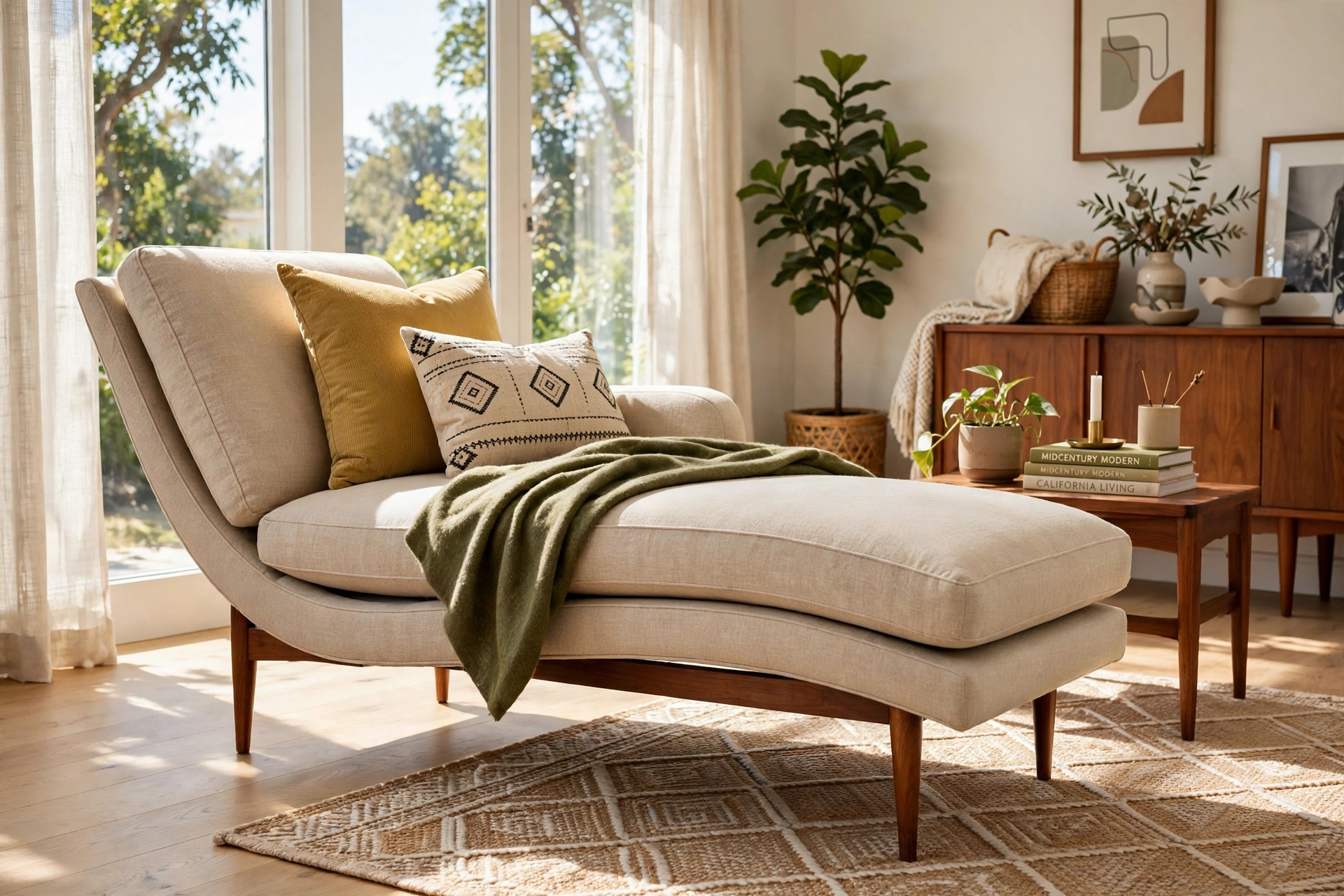
For contemporary rooms, the mid-century chaise is the sweet spot: a low, clean-lined form on tapered wooden legs, often in bouclé, leather, or a nubby weave. Design classics in this genre typically measure 150–165cm long, making them easier to place than their Victorian ancestors. The low profile keeps sightlines open, which matters in open-plan living rooms.
Pair it with a small round side table and an arc or pharmacy floor lamp to create a self-contained reading zone. Walnut legs tie it to other mid-century pieces, while a light bouclé seat keeps it feeling current. Measure your doorways before ordering — many chaises ship in one piece and need 75cm of clear doorway width.
4. The Dedicated Reading Nook Chaise
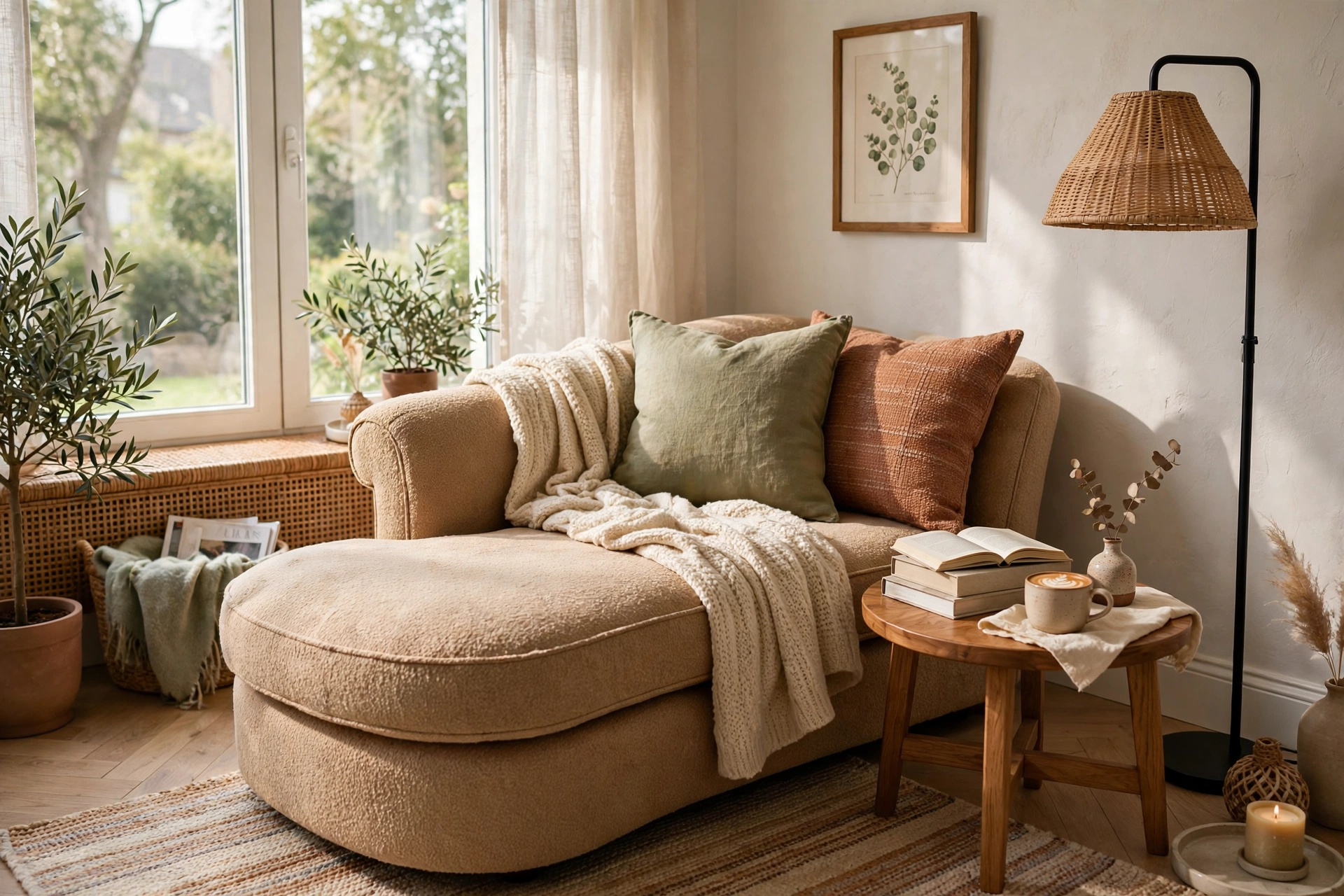
A chaise earns its keep fastest as a reading nook anchor. Tuck it into a corner with a floor lamp positioned over the head end, add a small side table for tea, and finish with a throw in arm’s reach. The key measurement: the lamp shade should sit 100–120cm above the seat so light falls on the page, not in your eyes.
Choose a chaise with a supportive back angle rather than a fully flat lounger — around 110–120 degrees of recline is ideal for reading without neck strain. A small lumbar cushion fills the gap at the lower back. For more ways to make neglected corners work hard, see these living room corner decor ideas.
5. Chaise by the Window
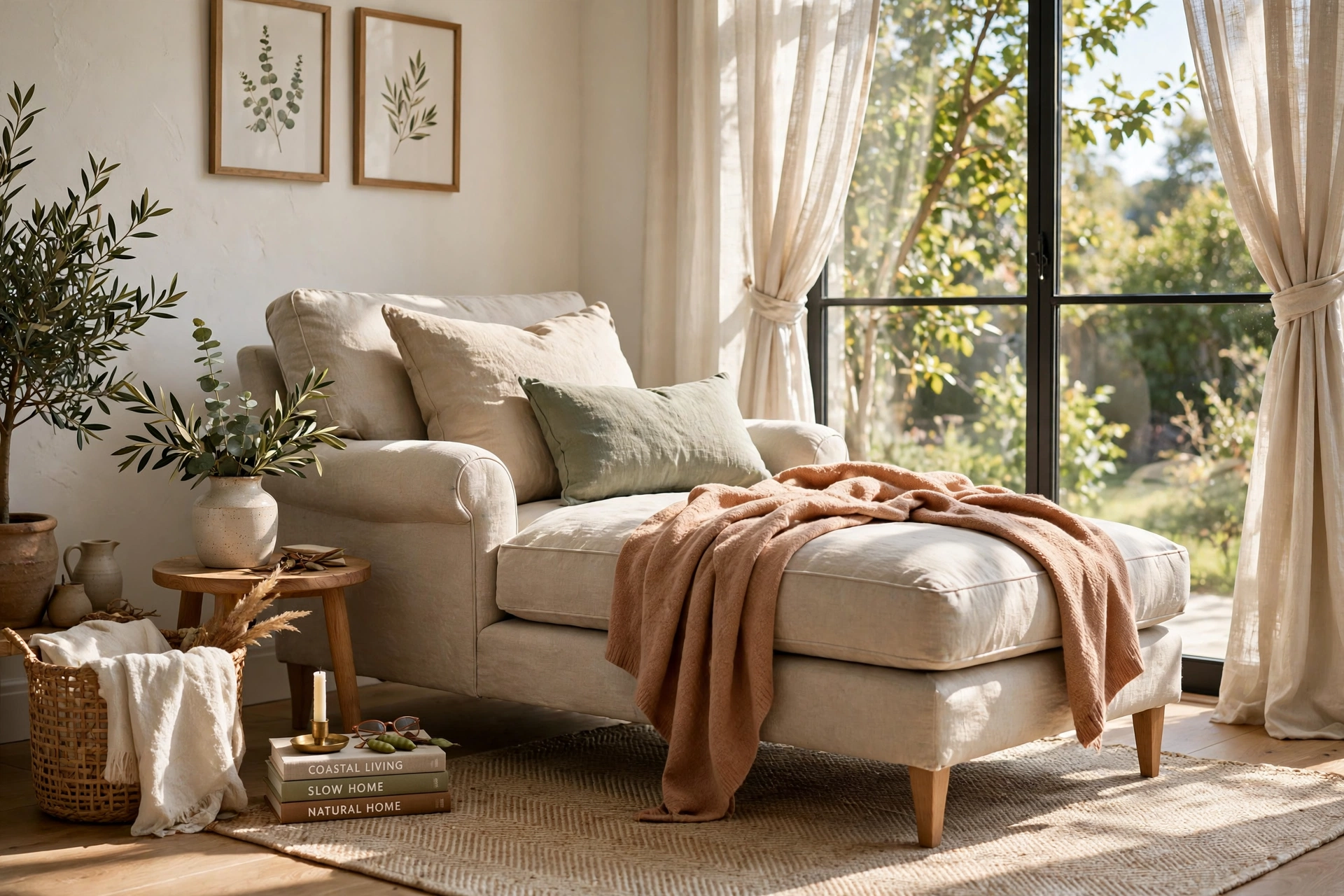
Few placements beat a chaise under or beside a bright window. Natural light makes it the default daytime seat, and the view gives your eyes somewhere to rest. Leave 10–15cm between the chaise back and the wall or window frame so curtains can move freely and air circulates behind the upholstery.
If the window gets strong afternoon sun, choose fade-resistant fabrics — solution-dyed acrylics or performance linens — or plan to rotate a throw over the sun-struck end. A low chaise here preserves the view and the light; a tall-backed Victorian piece would block both. Add a slim plant stand at the foot end to complete the vignette.
6. Velvet Chaise as a Statement Piece
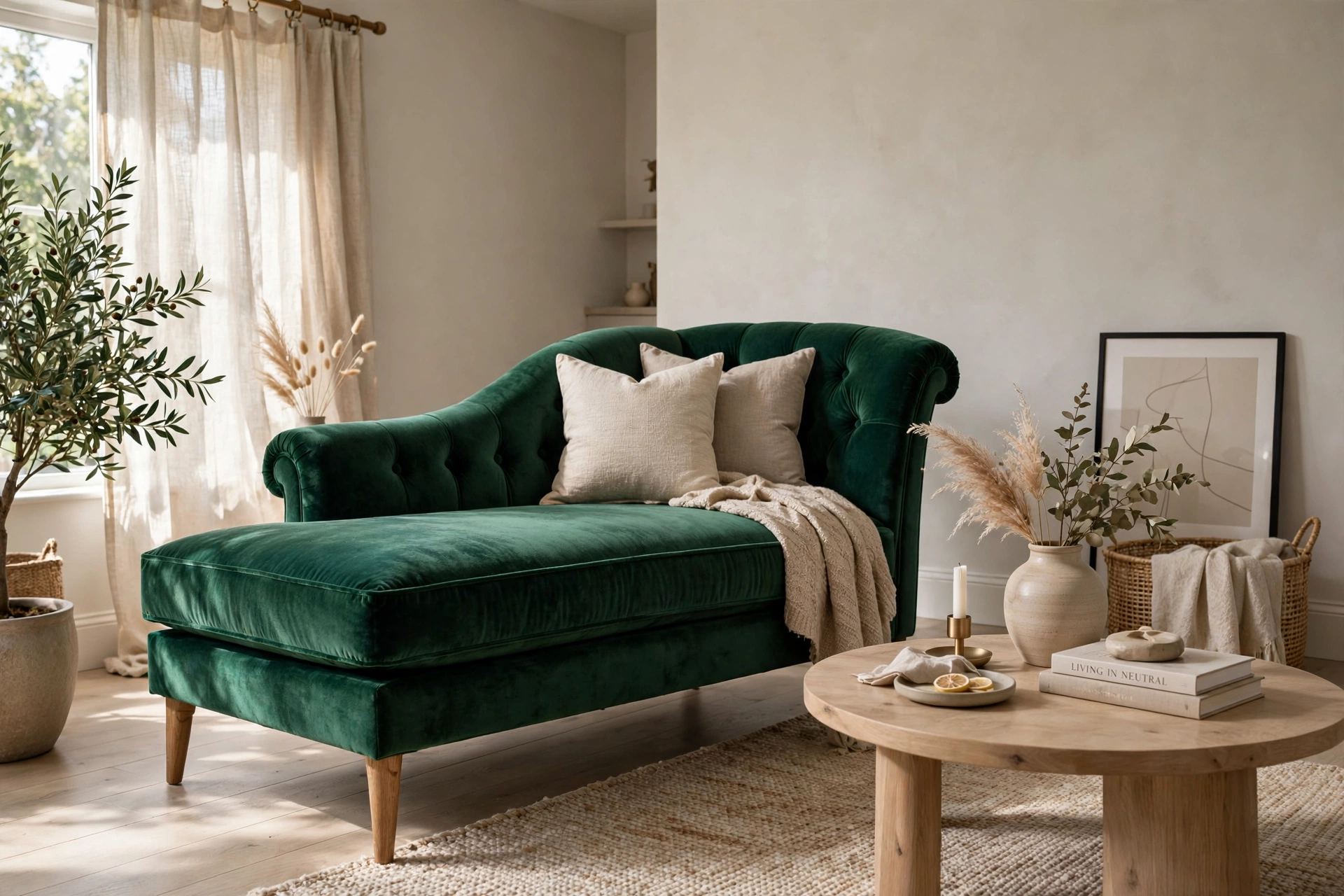
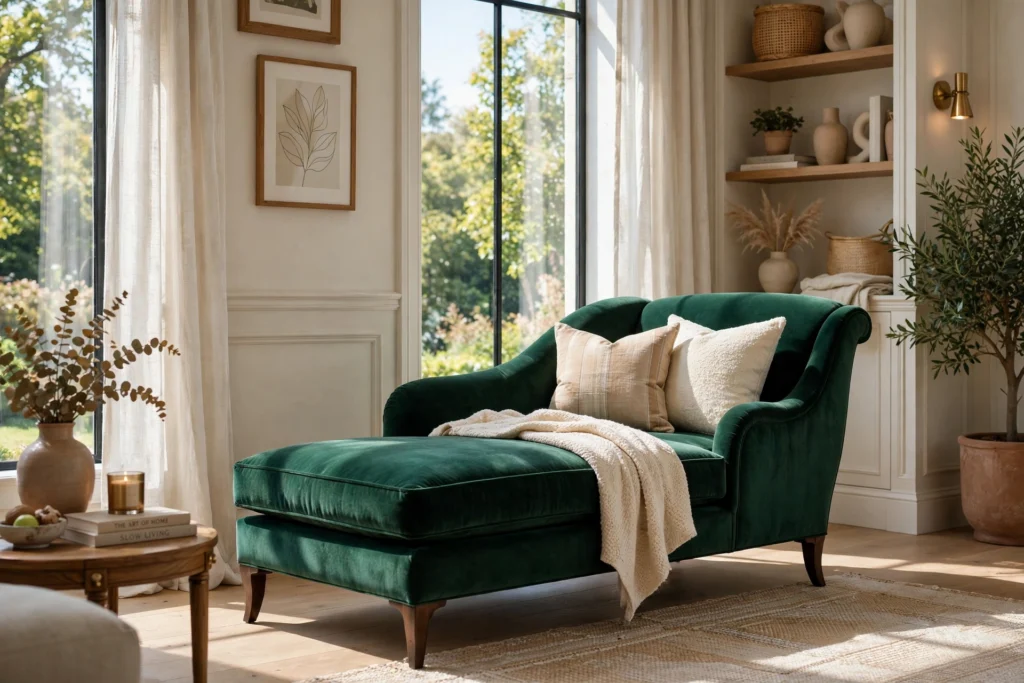
A velvet chaise in emerald, sapphire, or burnt orange is the fastest way to give a neutral living room a focal point. Velvet’s pile catches light differently from every angle, so the piece looks alive even in a quiet corner. Cotton velvet wears better than silk blends for everyday seating, and performance velvets now resist stains remarkably well.
Keep the rest of the palette calm — creams, warm grays, natural wood — so the chaise carries the color story alone. One patterned pillow is enough; more competes with the fabric’s sheen. Vacuum velvet with an upholstery attachment monthly and brush the pile in one direction to prevent pressure marks where you always sit.
7. Leather Club Chaise
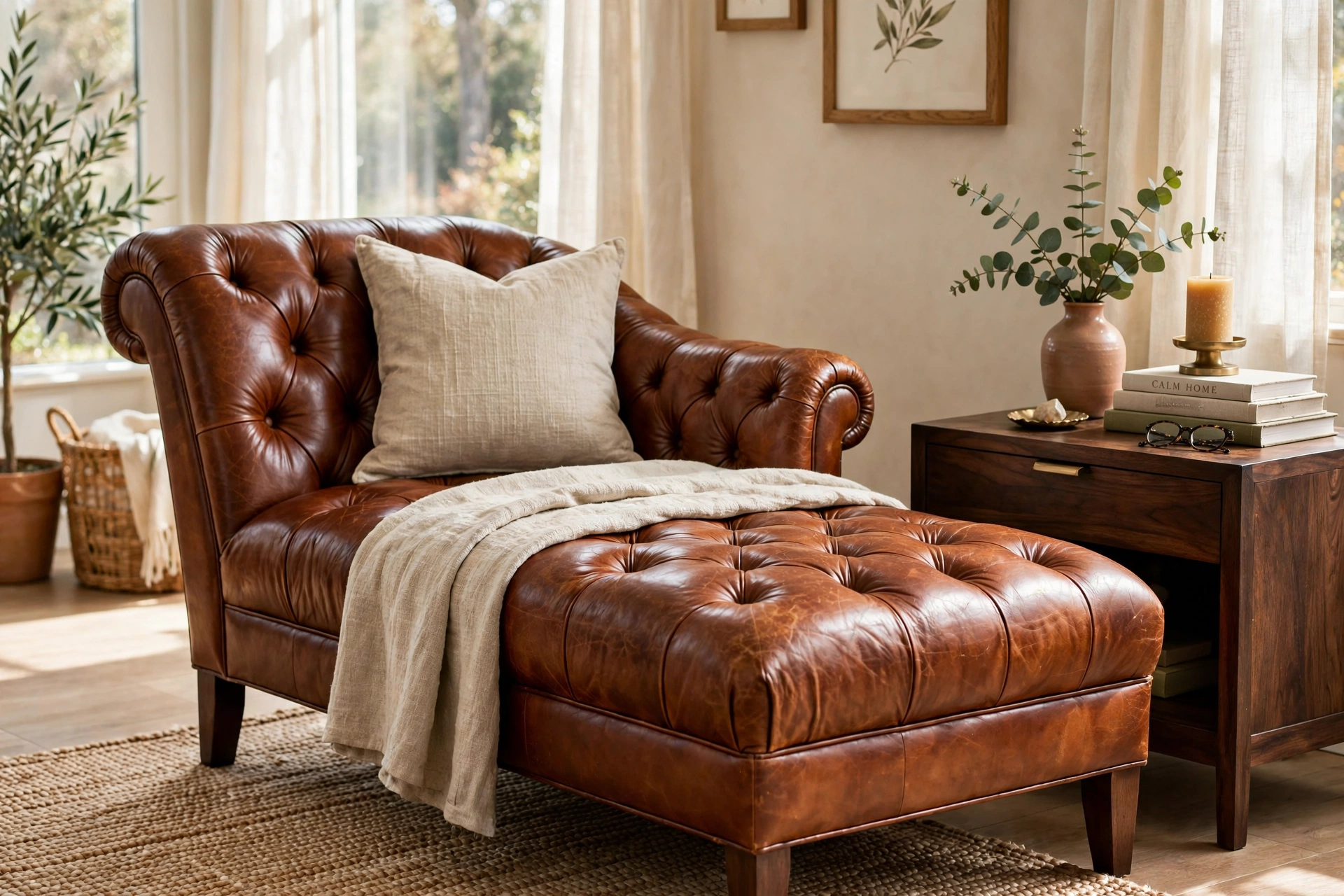
A leather chaise — think Chesterfield-style tufting or a sleek cognac lounger — brings a clubby, collected feel that works in traditional, industrial, and eclectic rooms. Full-grain or top-grain leather develops a patina that improves with age, while bonded leather cracks within a few years and is best avoided.
Condition the leather twice a year and keep it out of direct, all-day sun to prevent drying and fading. A leather chaise pairs naturally with dark woods and brass accents; add a wool throw for textural contrast since leather can feel cool and slick. Expect a quality leather chaise to be heavy — 30–45kg — so place it where it will live permanently.
8. Chaise Paired With an Armchair
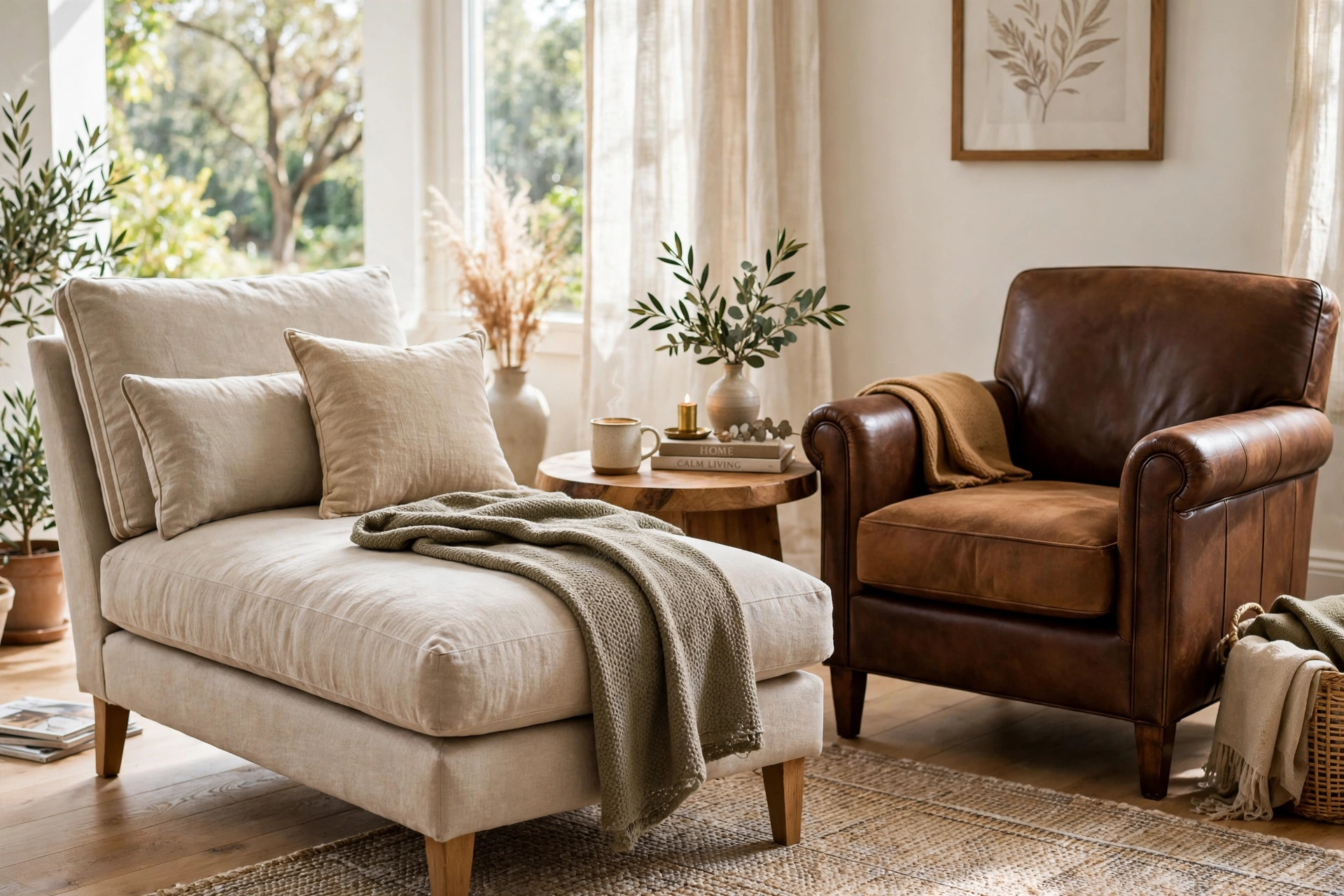
A chaise plus a complementary armchair creates a conversation-ready duo without the bulk of a full sofa. Match the pair through fabric color or leg finish rather than buying an identical set — a linen chaise with a leather armchair, for example, looks curated rather than showroom-styled. Angle both pieces toward each other at roughly 90 degrees around a shared side table.
Keep seat heights within 5cm of each other so the pairing feels balanced and conversation flows naturally. This arrangement suits smaller living rooms where a sofa plus chairs would crowd the floor. Our living room accent chair ideas offer dozens of chair styles that pair well with a chaise.
9. Small-Space Slipper Chaise
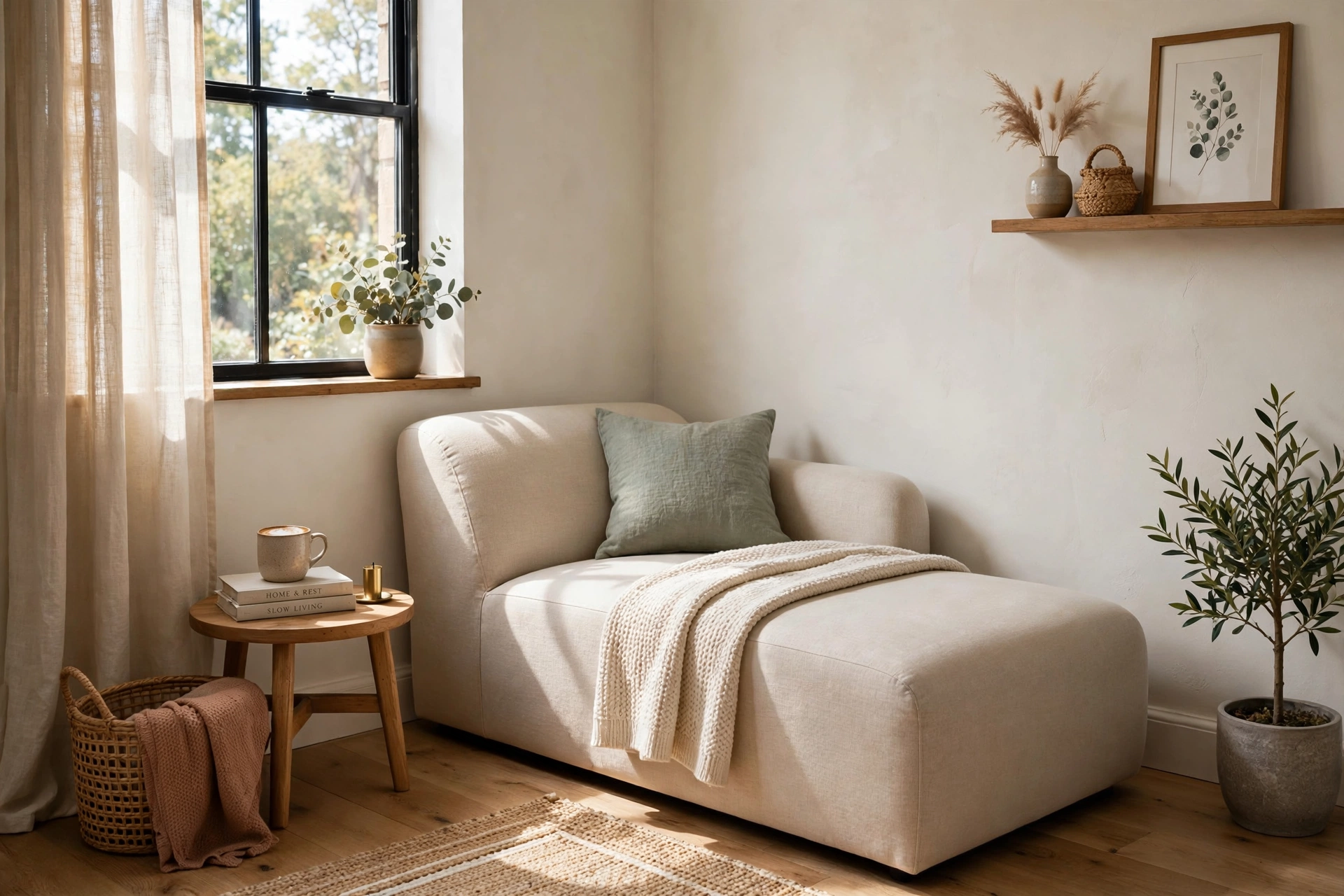
Short on square footage? A slipper chaise — armless, low, and typically 130–150cm long — slides into spaces a standard chaise cannot. Without arms it visually disappears, and the low back keeps it from blocking light or views. It works as extra seating, a footrest extension for the sofa, or a perch at the end of a console.
Look for models under 65cm wide if the spot is tight, and choose legs over a skirted base so floor shows beneath — visible floor always makes a small room feel larger. A slipper chaise in a bold fabric can also serve as the room’s accent piece without demanding the footprint of an armchair. Store a folded throw on the seat so it always looks dressed.
10. Chaise as a Room Divider
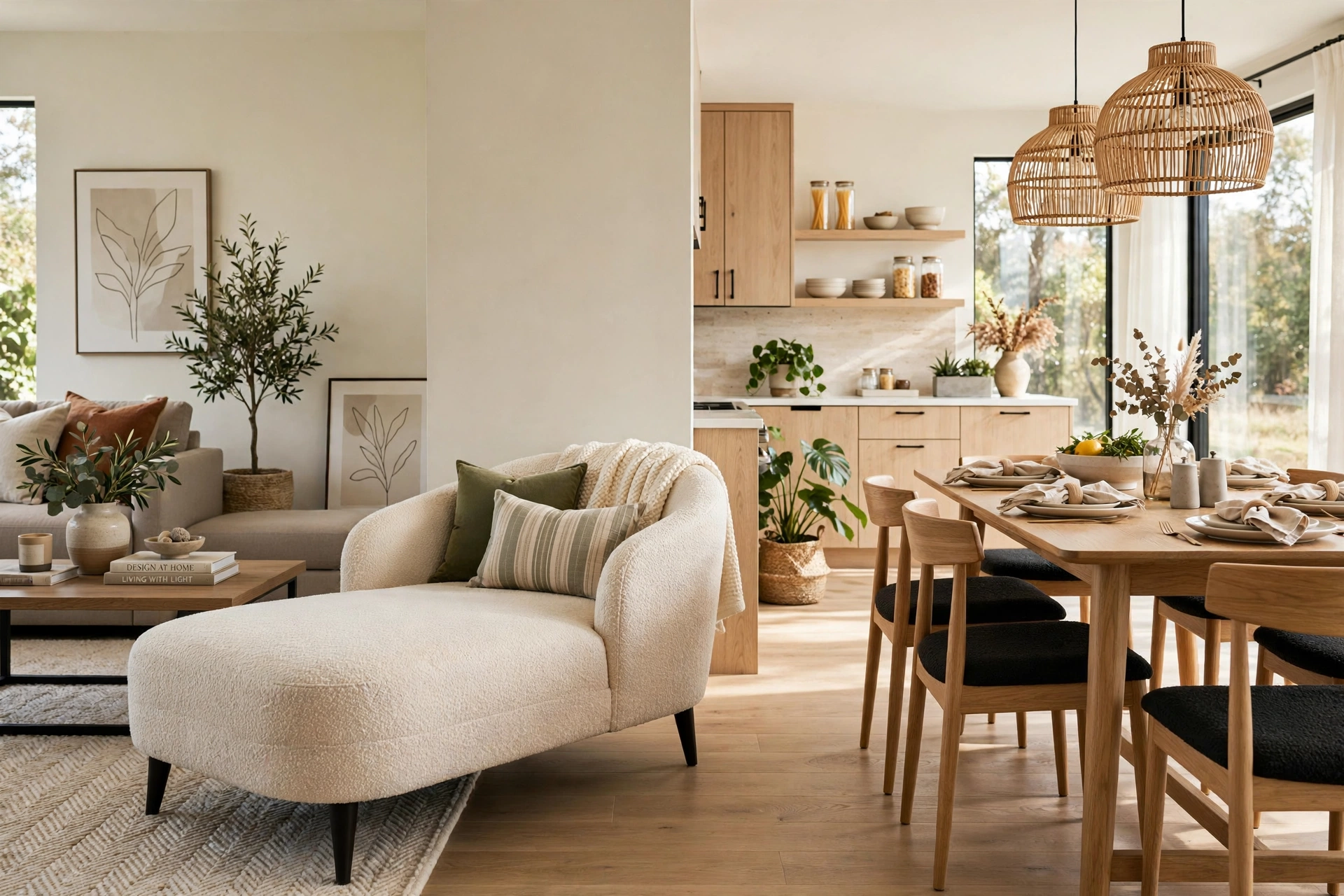
In an open-plan living room, a chaise placed with its back to the seating area creates a soft zone boundary. It divides without the visual wallop of a bookcase, keeping light and conversation flowing. Position it perpendicular to the sofa, about 120–150cm away, with a narrow console or a plant behind it to finish the divide.
This works best with a chaise that looks good from behind — upholstered backs, not exposed frames. A récamier or a clean-lined modern chaise both present a finished back. Anchor the chaise’s zone with its own rug layer or a floor lamp so the division reads as intentional design, not furniture drift.
11. Rattan and Cane Chaise
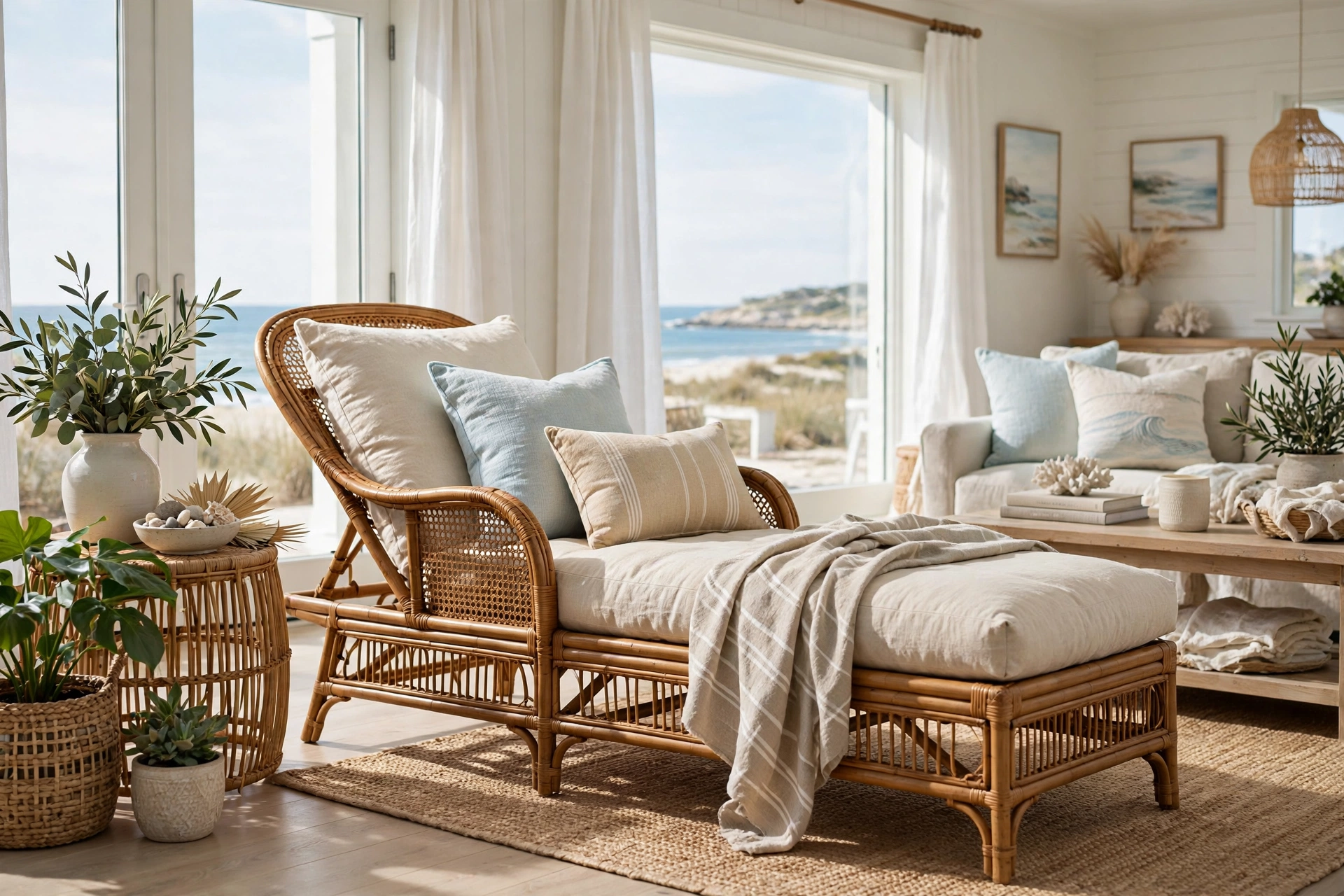
A rattan or cane chaise brings resort-like ease to sunrooms, conservatories, and coastal living rooms. The open weave keeps it visually light and physically cool — a real advantage in warm climates or sun-drenched spots where upholstered pieces get sticky. Add a tailored seat pad and lumbar pillow in outdoor-rated fabric for comfort that survives humidity.
Keep natural rattan out of constant direct rain and condition it occasionally to prevent brittleness. Indoors, it pairs beautifully with jute rugs, linen curtains, and trailing plants. Unlike fully upholstered chaises, a cane chaise needs its cushions stored or covered if the room gets dusty — removable, washable covers solve that in one step.
12. Styling a Chaise With Throws and Pillows
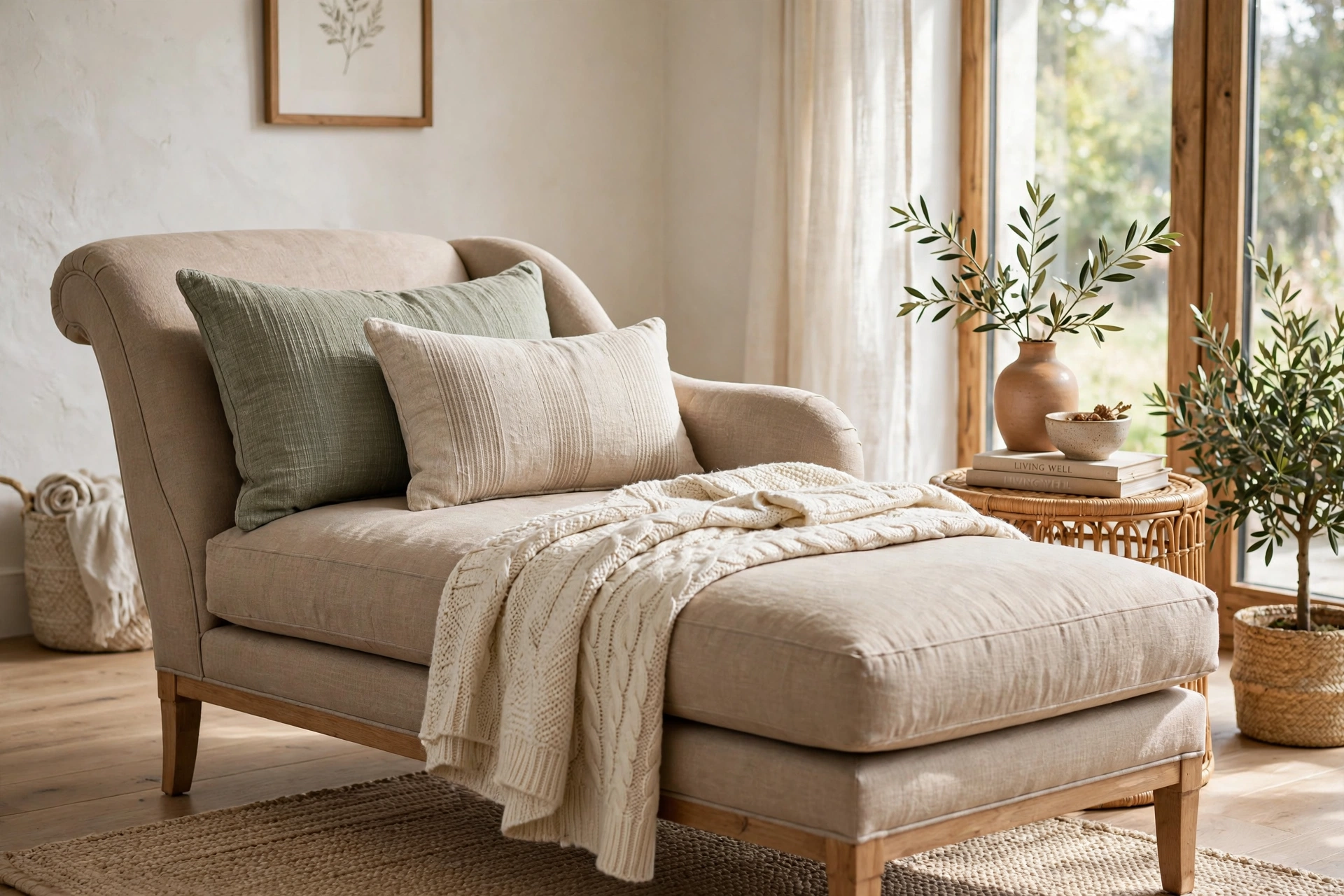
A chaise is a stylist’s dream because its long, uninterrupted surface shows off textiles. Start with a throw folded lengthwise and draped across the lower third — this protects the seat where feet land and adds a color band. Add one lumbar pillow at the head end and, for longer chaises, a second smaller cushion midway.
Follow the two-thirds rule: leave about a third of the chaise visibly clear so it still reads as a seat, not a display shelf. Vary textures — chunky knit, smooth linen, a touch of velvet — rather than piling on competing patterns. Rotate throws seasonally: heavy wool in winter, light cotton in summer, which also extends the life of the upholstery underneath.
13. Tufted Chesterfield Chaise
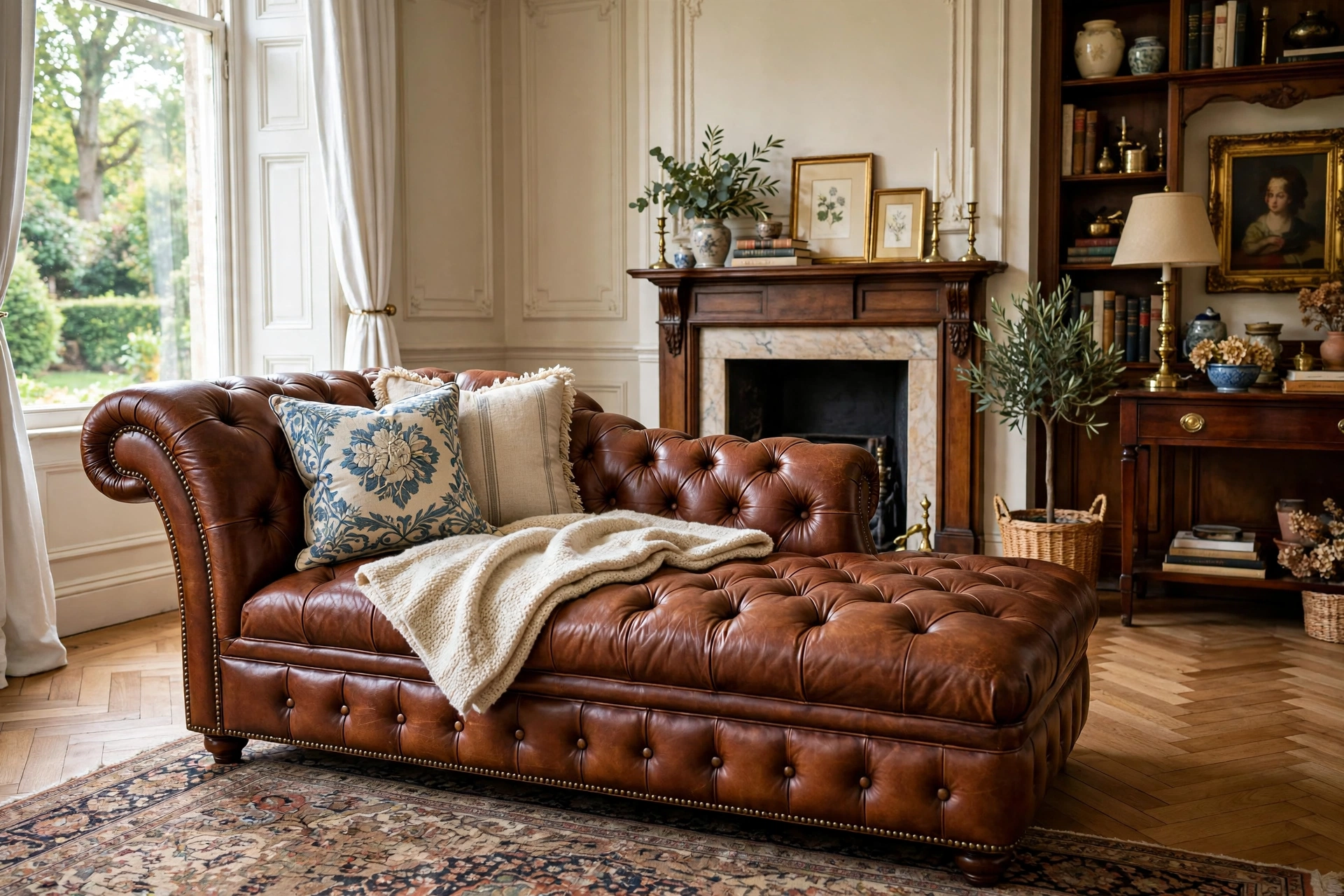
Deep button tufting on a chaise is unapologetically traditional — and in the right room, magnificent. The Chesterfield chaise suits libraries, studies that open to the living room, and formal sitting areas. Rolled arms at one end (the classic single-arm chaise) give it that unmistakable profile.
Tufting collects dust in its crevices, so vacuum with a crevice tool every few weeks. Leather is the traditional covering, but velvet tufting looks equally rich and feels warmer. Because the silhouette is so strong, keep surrounding furniture simple — a tufted chaise plus a tufted sofa in one room is one tuft too many.
14. Bay Window Chaise
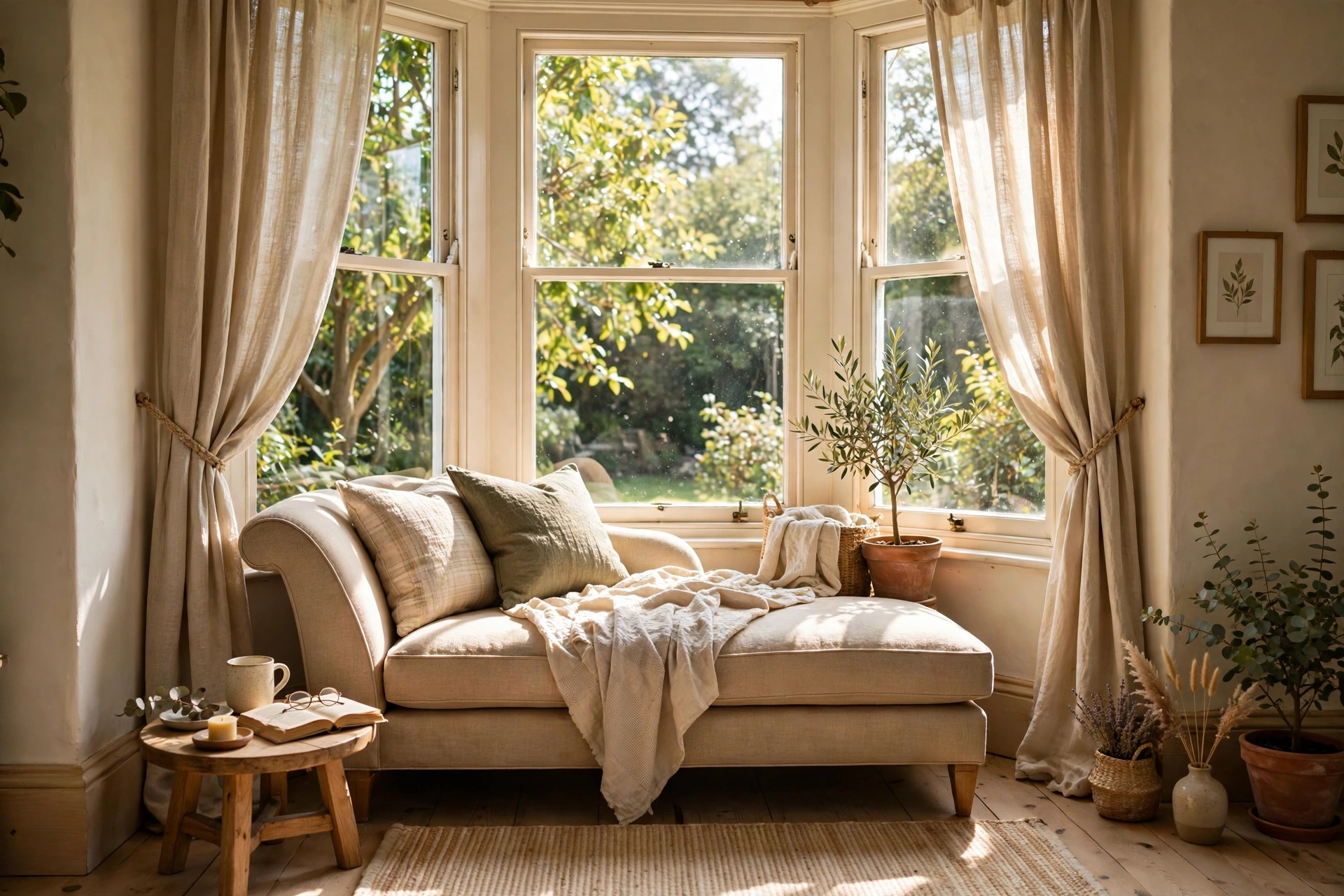
A bay window with a chaise fitted into it is the stuff of daydreams, and it is more achievable than it looks. Measure the bay’s narrowest width and choose a chaise 10–15cm narrower so it slides in without scraping the frames. A low, armless design preserves the panoramic feel that makes bays special.
Layer a custom-cut seat pad if the chaise base is firm, and dress the bay’s side windows with full-length curtains that can close around the chaise for a cocoon effect. This spot gets the room’s best light, so it doubles as a plant shelf behind the chaise — just keep greenery off the upholstery to avoid moisture marks. Unlike standard sofas and couches, a chaise’s single-occupant scale fits bays that would swallow a full sofa awkwardly.
15. Budget-Friendly Chaise Refresh
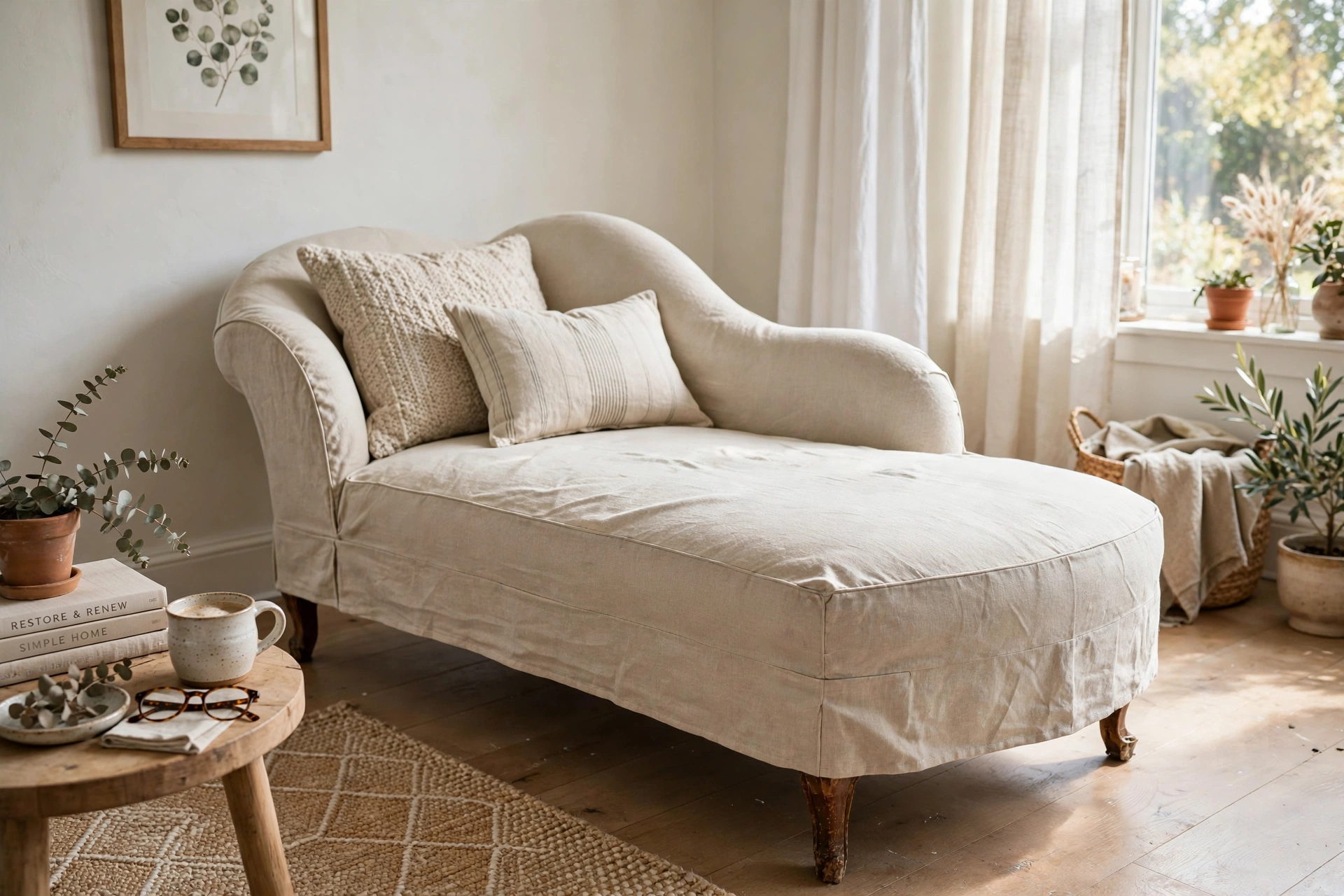
You do not need a designer budget for chaise elegance. Secondhand chaises are plentiful because people buy them for looks and sell them for fit — check the frame for solid joinery (no wobble), then budget for reupholstery or a quality slipcover. A tailored slipcover in natural linen can make a dated chaise look custom for a fraction of reupholstery cost.
If the frame is good but the cushion is tired, a foam replacement (high-density, 5–8cm thick, wrapped in Dacron) transforms comfort for little money. Paint or stain exposed wooden legs to match your room’s wood tones. For gentle everyday seating ideas that complement a refreshed chaise, browse these living room daybed ideas.
Frequently Asked Questions
What is the difference between a chaise lounge and a sofa?
A chaise lounge is designed for one person to recline with legs fully extended, typically 150–180cm long and 65–80cm wide, often with a raised head end. A sofa seats two or more people upright with a full backrest. The chaise is a lounging piece; the sofa is a sitting piece — they serve different postures and different moments of the day.
What size chaise lounge fits a living room?
Standard chaises run 150–180cm long and 65–80cm wide. Allow 60–75cm of clear walkway on the access side and 10–15cm behind it. For small rooms, look at slipper chaises at 130–150cm long. Always measure doorways and stairwells too — many chaises are one solid piece and need about 75cm of clearance to get inside.
Should a chaise lounge face left or right?
It depends on your room’s traffic flow. The raised head end should face the room’s focal point — the fireplace, the view, or the conversation area — while the foot end points toward open space. In a corner, angle the chaise at 45 degrees so both the room and the window are visible. There is no universal rule; mock it up with painter’s tape first.
Can you sleep on a chaise lounge?
For a nap, absolutely — that is what chaises are for. For nightly sleeping, most chaises are too narrow (65–80cm) for comfortable full-night rest, though wider récamier styles work better. If overnight guests are the goal, a daybed or sleeper sofa is the more practical choice; treat the chaise as the nap specialist.
How do you style a chaise lounge so it does not look empty?
Dress it like a bed in miniature: a folded throw across the lower third, one lumbar pillow at the head end, and a side table with a lamp or book stack beside it. Keep one-third of the seat visibly clear so it invites sitting. A rug underneath anchors it, and good lighting — natural or a floor lamp — makes it the seat people gravitate toward.
Keep Exploring
A chaise lounge is a small luxury with an outsized effect: it gives your living room a place for slow moments in a way no sofa quite manages. Choose the silhouette that matches your style, measure twice, and style it with restraint — then enjoy having the best seat in the house, every single day.