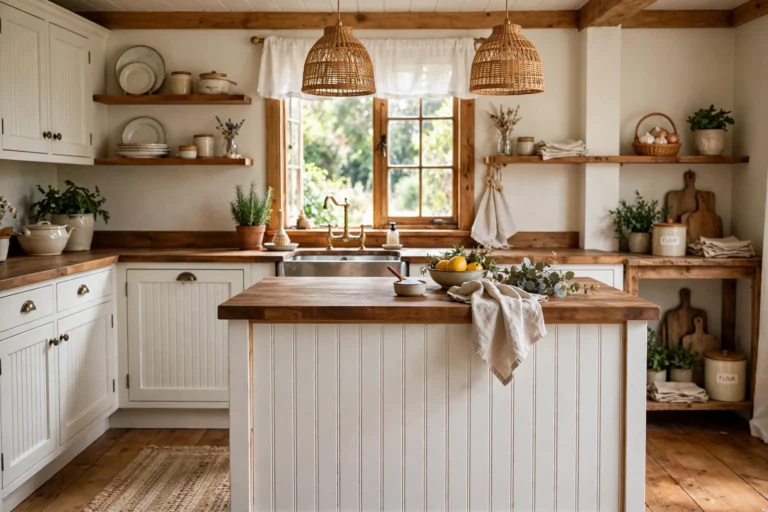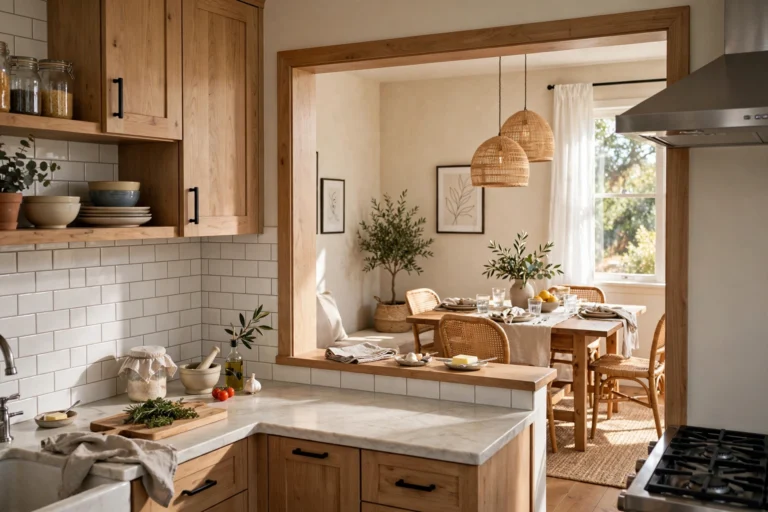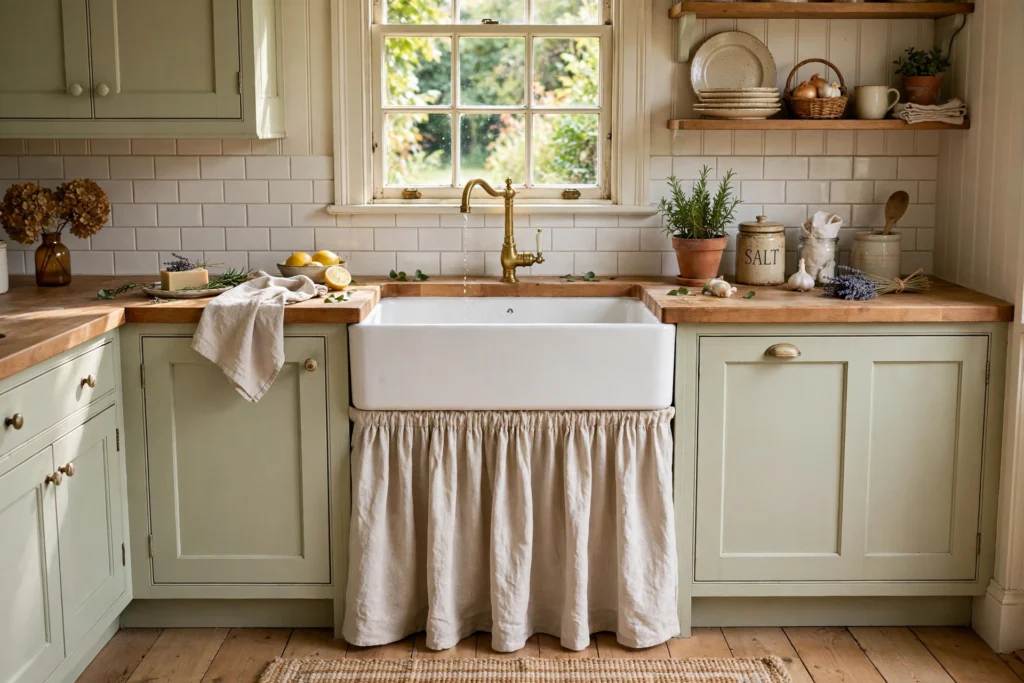

Kitchen sink skirt ideas are one of the simplest ways to bring cottage charm into a hardworking space. A sink skirt is exactly what it sounds like: a fabric panel hung under the sink basin that hides plumbing, cleaning supplies, and open cabinetry behind a soft, decorative curtain. In farmhouse, cottage, and vintage kitchens, this little textile detail does outsized visual work — it softens the hardest corner of the room and introduces color, pattern, and texture where there would otherwise be only cabinet doors.
Whether you are covering the open space beneath a farmhouse apron sink, replacing the doors on a sink base cabinet, or refreshing a rental kitchen without a full remodel, kitchen sink skirt ideas range from no-sew tension-rod versions to tailored flat panels. The guide below walks through fifteen practical approaches with the materials, measurements, and mounting details that make each one actually work.
1. Classic Gathered Linen on a Tension Rod
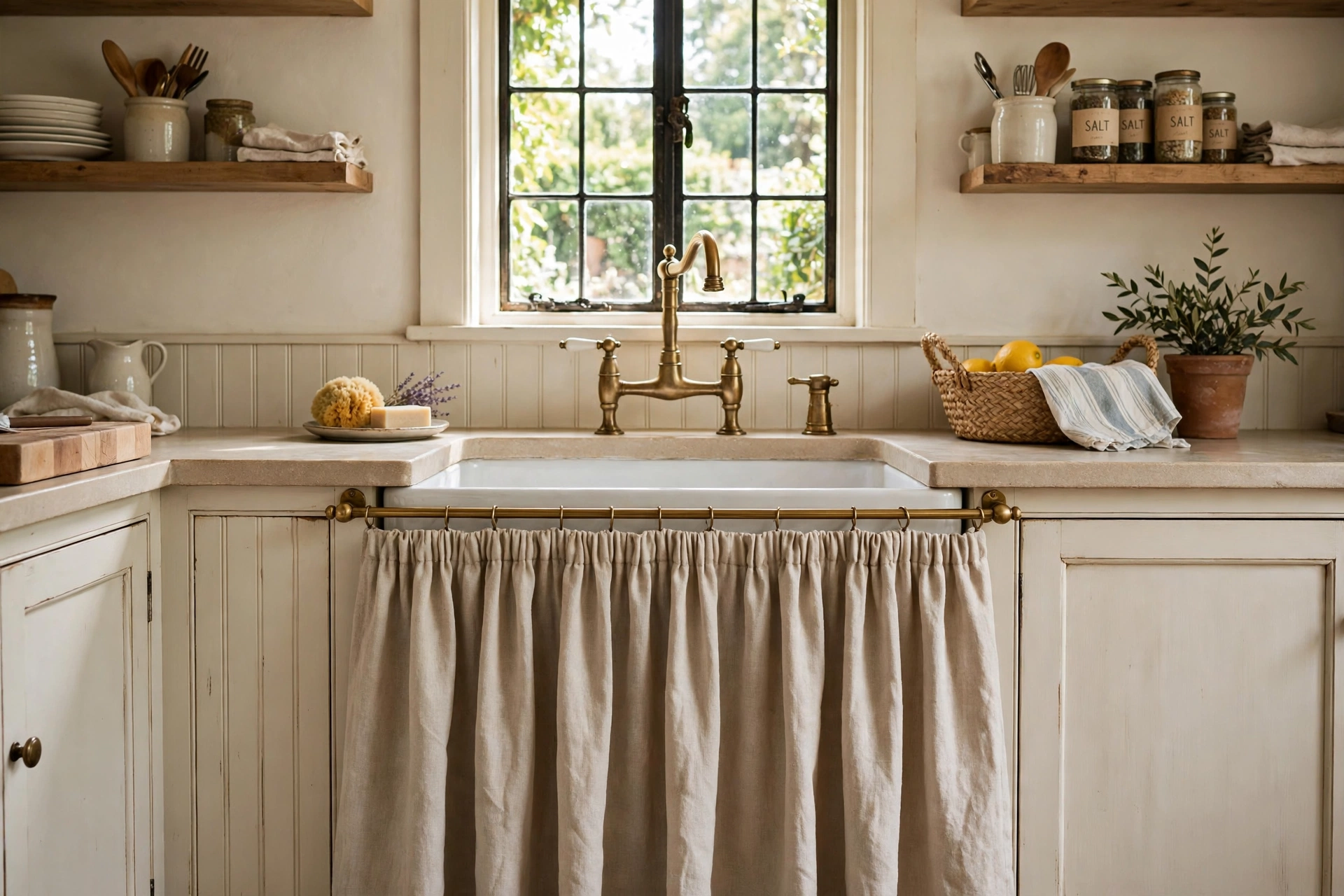
The classic gathered sink skirt is the fastest route to cottage charm and needs almost no hardware. Measure the inside width of your sink base opening, then buy a tension rod one to two inches longer than that measurement so it wedges firmly. For the fabric, cut or buy a panel one and a half to two times the opening width — this fullness is what creates the soft gathers. Medium-weight linen or a linen-look cotton blend works best because it drapes well and survives repeated washing.
Hang the panel using a rod pocket or clip rings, and let the fabric fall to about half an inch above the floor so it does not wick up mop water. If you are sewing your own, hem all four sides with a half-inch double-fold hem before adding the pocket. This version pairs beautifully with painted cabinets and a farmhouse apron sink, and the whole project typically costs less than a restaurant dinner — explore more ways to soften a hardworking sink area with our farmhouse sink styling tips.
2. Ruffled Cotton Skirt for Storybook Cottage Style
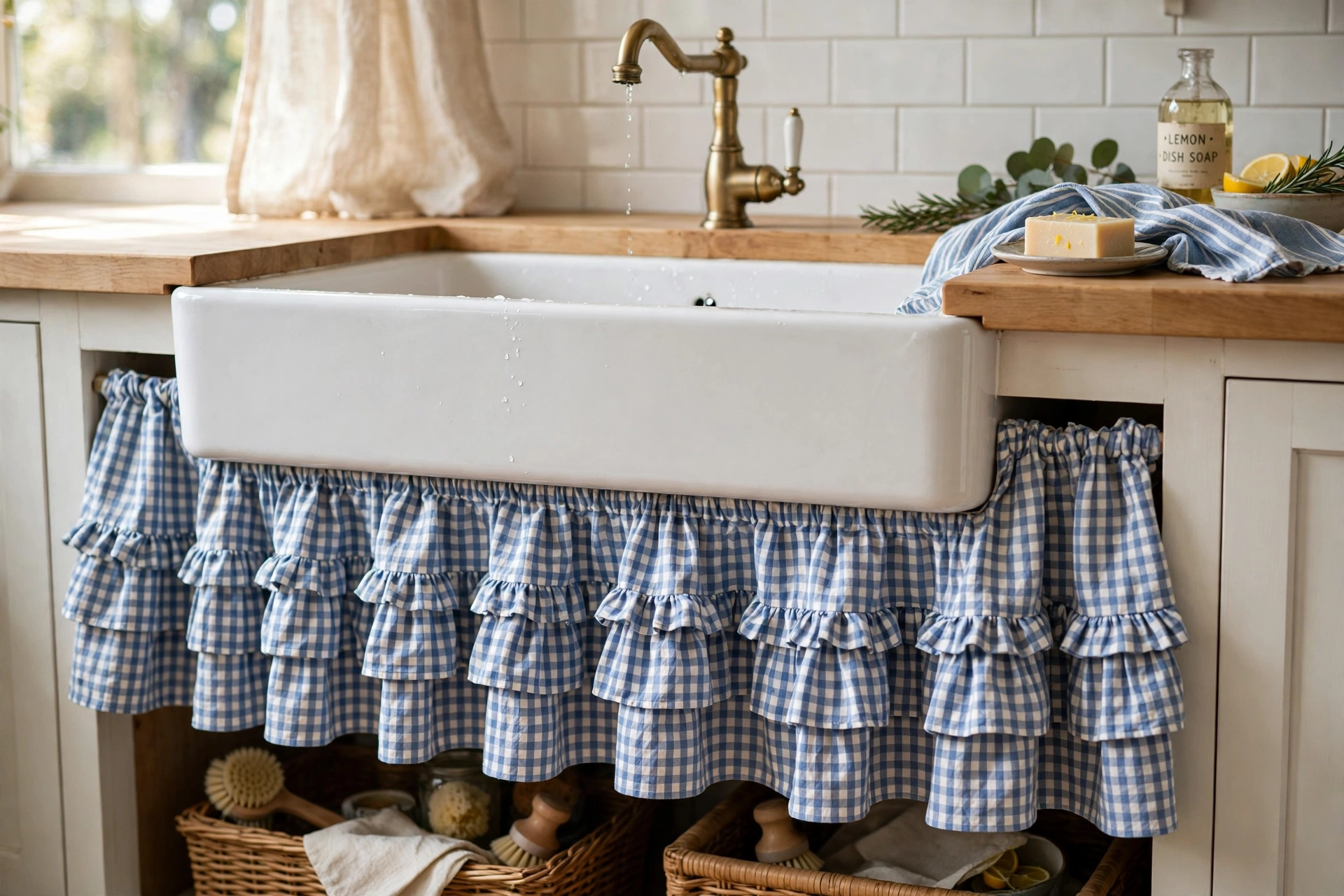
A ruffled skirt takes the gathered look one step further with two or three horizontal flounce tiers. Each ruffle layer should be cut twice the finished width of the skirt and hemmed before gathering, then sewn onto the main panel in overlapping rows so the raw edges hide beneath the ruffle above. Cotton ticking stripe or small gingham checks are the traditional choices here, and they read unmistakably cottage.
Because the tiers add visual weight, keep the overall length slightly shorter — ending about an inch above the floor keeps the ruffles from dragging. This is the ideal sink skirt if your kitchen already has patterned cafe curtains, since matching or coordinating the fabrics ties the room together. Machine-wash the finished skirt on cold and line-dry to preserve the ruffle shape.
3. Flat Tailored Panel with Velcro Mount
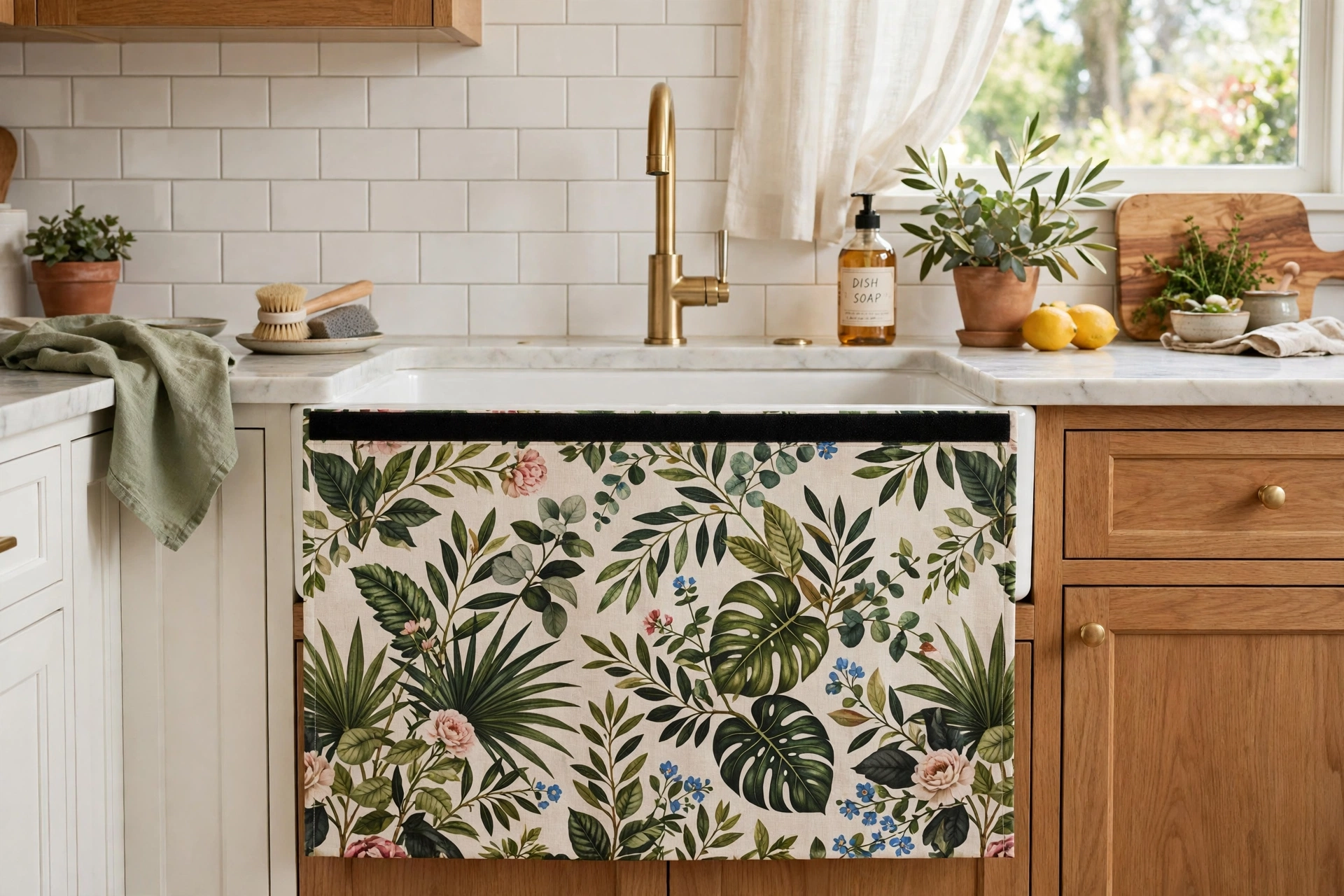
If ruffles feel too frilly for your taste, a flat tailored panel delivers the same concealment with cleaner lines. This is the best approach when the cabinet frame already has a defined opening and you want a crisp, almost-shuttered look. Cut the fabric exactly to the opening size plus one inch on each side for hems, press a sharp center crease if you want a pleated division, and hem all edges.
Attach the panel with adhesive-backed hook-and-loop tape: stick the loop side to the cabinet frame (clean the surface with rubbing alcohol first so it bonds), and sew the hook side to the back top edge of the fabric. Flat panels work especially well in patterns with a large-scale motif — a bold stripe or botanical print reads clearly when the fabric hangs straight. For kitchens that mix fabric softness with tailored cabinetry, see our cottage kitchen design roundup.
4. Bistro-Style Cafe Skirt Under the Apron Sink
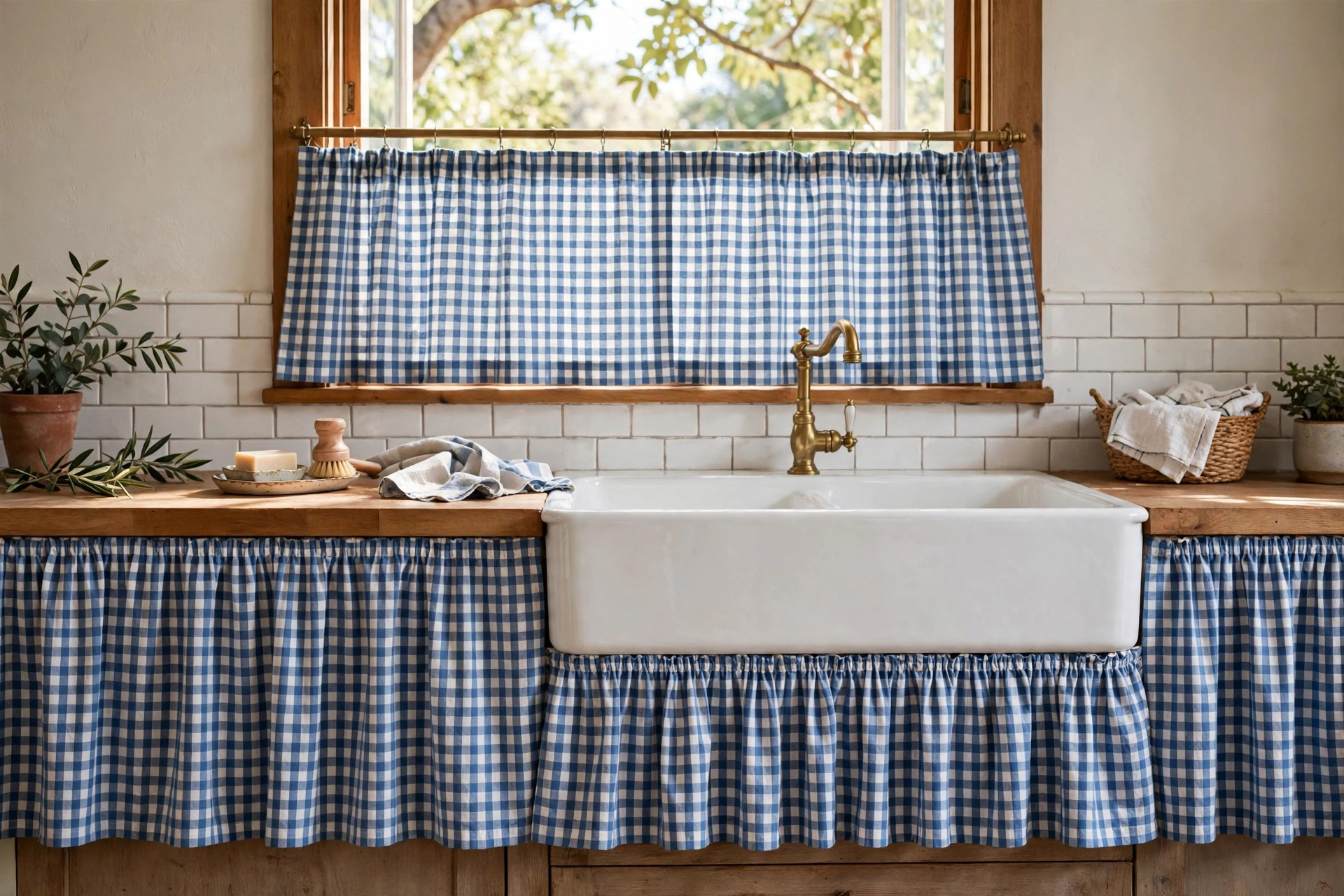
Farmhouse apron sinks leave an open knee space below the basin, which is the perfect stage for a bistro-style skirt. A half-height cafe curtain mounted on a slim tension rod under the apron gives you the charm of a skirt without hiding the entire lower cabinet run — the plumbing stays accessible and the curtain can be lifted easily for under-sink storage access.
Choose a natural-look fabric such as unbleached muslin or a light chambray, hemmed with a simple rod pocket, and gather it to about half the rod width for an easy bistro feel. Because this skirt sits higher than a full panel, it stays cleaner and dries faster if it catches a splash. Pair it with a matching cafe curtain at the window above the sink for a coordinated, French-countryside effect.
5. No-Sew Skirt with Fusible Hem Tape
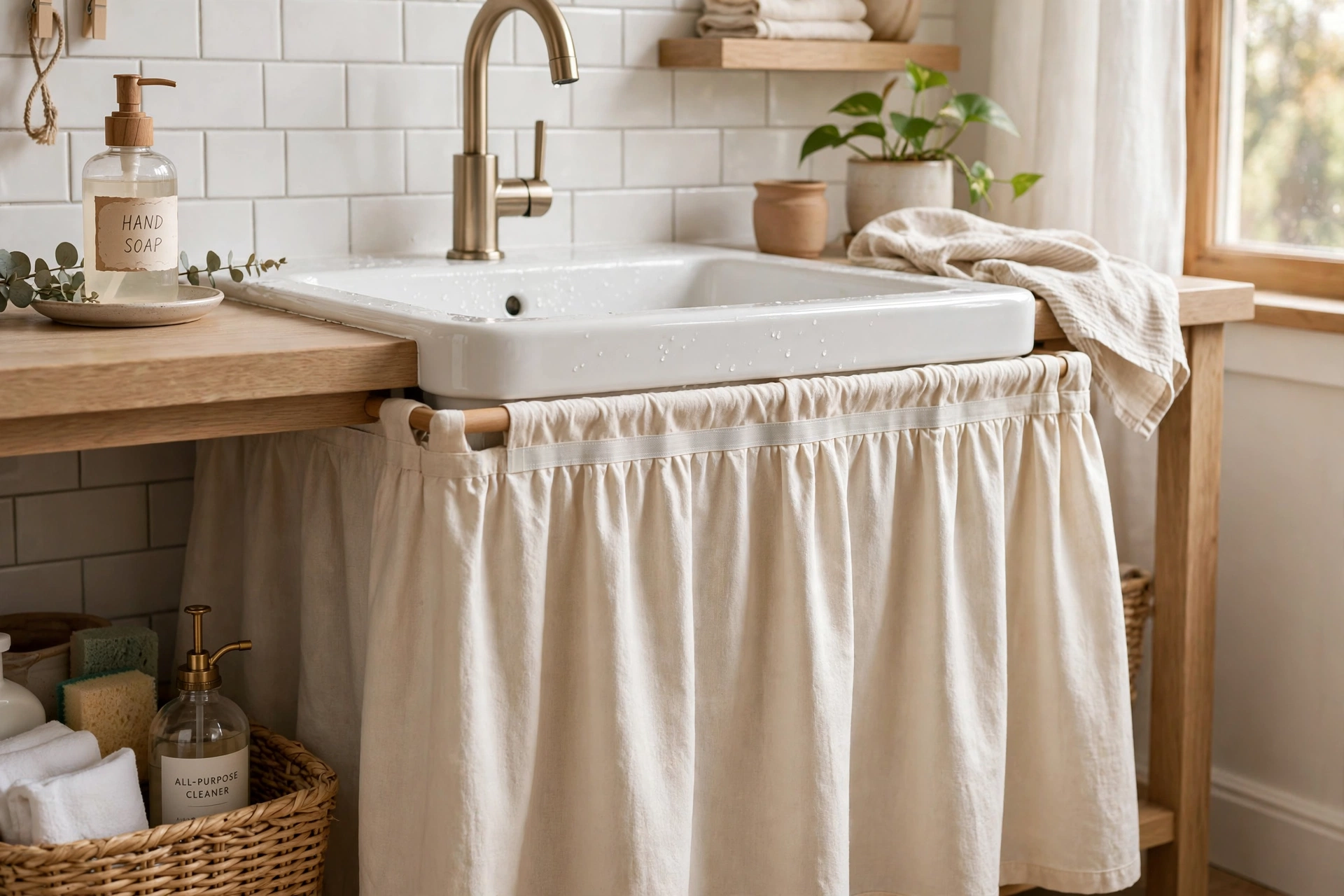
No sewing machine, no problem. A no-sew sink skirt uses iron-on fusible hem tape to create finished edges and a rod pocket in minutes. Choose a cotton or cotton-blend fabric — synthetics can melt under the iron, so test a corner first — and cut your panel to two times the opening width. Fold each raw edge over half an inch, press, then place the fusible tape inside the fold and iron according to the package directions, usually a firm press for about ten seconds.
The rod pocket follows the same method: fold the top edge down two inches to clear your tension rod, press, and fuse. (A rod pocket is simply a channel sewn — or in this case fused — into the top of the fabric; see Wikipedia’s guide to curtain styles for the full range of headings you can adapt.) This version is perfect for renters and for testing a pattern before committing to a sewn version. If the fabric is thin, consider adding a second layer or a lining panel so plumbing silhouettes do not show through — sheer skirts can reveal more than you intend.
6. Oilcloth Skirt for Splash-Zone Durability
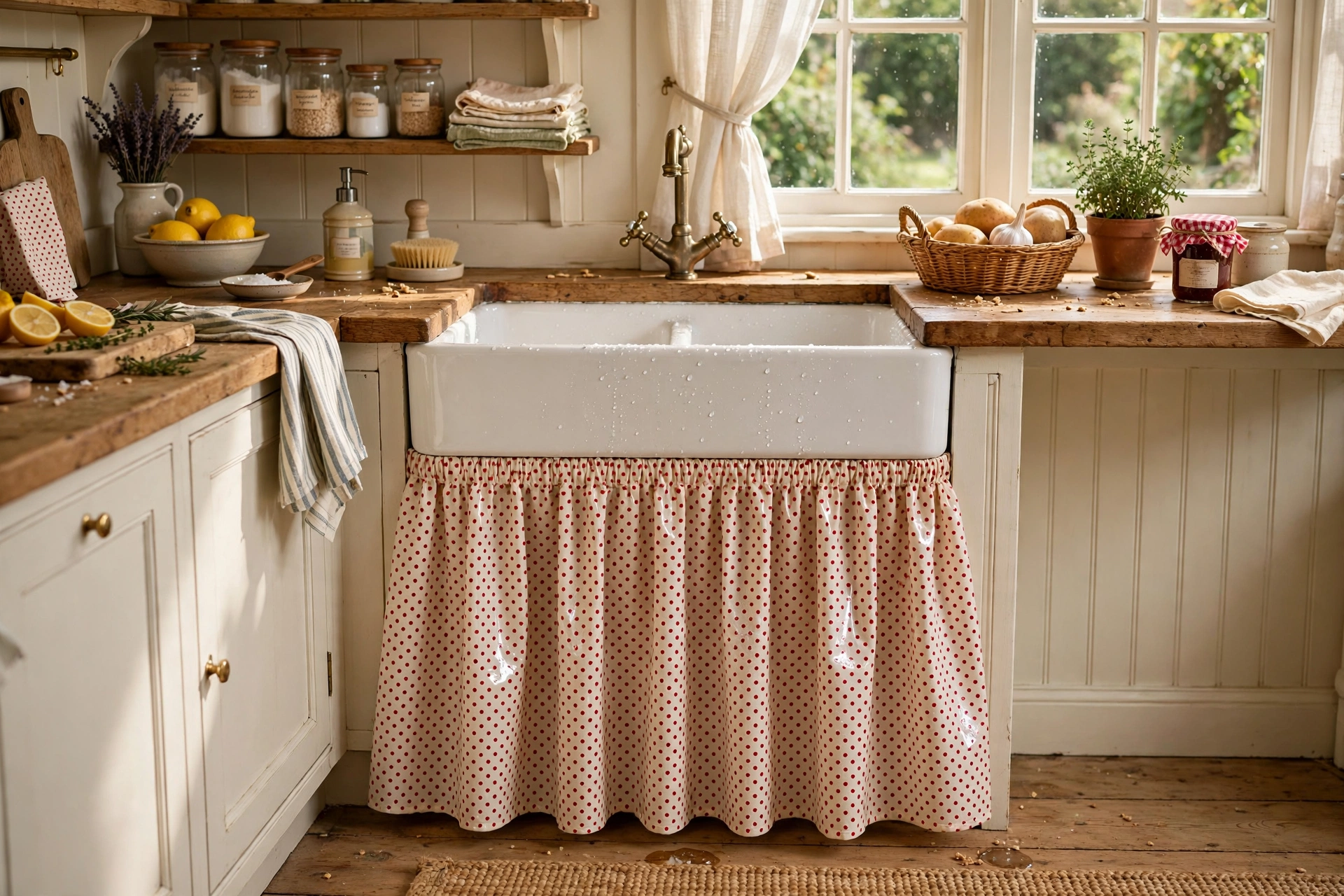
The zone directly under the sink takes the most water in the kitchen, which is where oilcloth earns its keep. Oilcloth — cotton coated with a linseed or PVC finish — wipes clean with a damp sponge, shrugs off splashes from the faucet, and never needs laundering. Cut it slightly narrower than a fabric skirt, about one and a quarter times the opening width, because its stiffness resists heavy gathering.
Oilcloth patterns lean charmingly retro: polka dots, cherries, vintage florals, and gingham checks all suit cottage kitchens. Traditional oilcloth is cotton duck coated with linseed oil to make it waterproof — read more about its history and manufacture on Wikipedia’s oilcloth page. Hem the edges with pinking shears to prevent fraying rather than sewing, and hang it from clip rings or grommets rather than a rod pocket, since the coated surface does not slide easily. This is the most practical of all kitchen sink skirt ideas for busy family kitchens.
7. Drop-Cloth Canvas Skirt for Farmhouse Texture
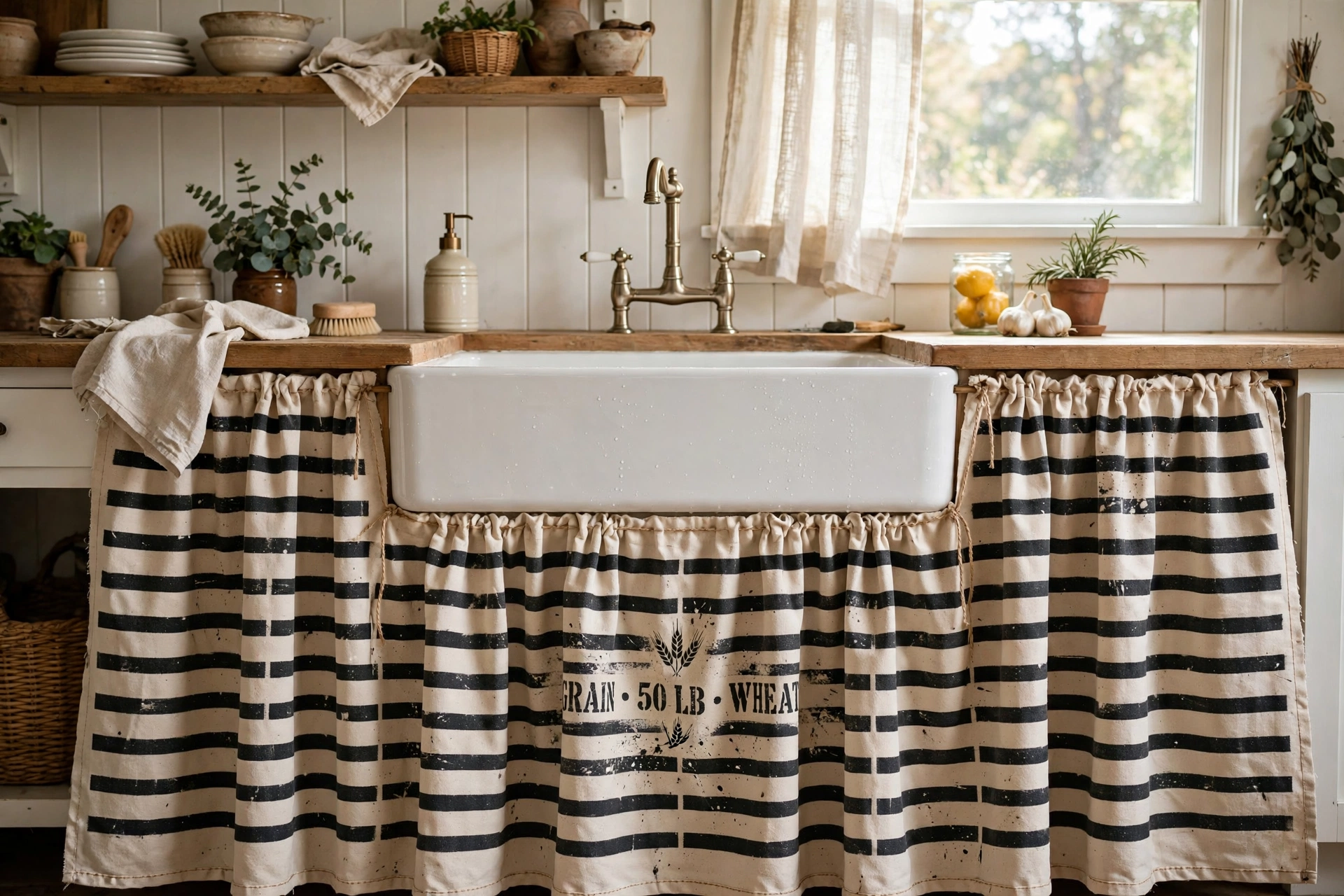
Painter’s drop cloths from the hardware store are a beloved farmhouse hack: heavy cotton canvas at a fraction of the price of yardage. A nine-by-twelve-foot drop cloth yields enough fabric for several skirts, so you will have material to spare. Wash it twice before cutting — the sizing in new canvas makes it stiff and off-gassing — then cut a panel two times the opening width.
The natural tan color and nubby texture look effortlessly rustic, and the heavyweight fabric hangs in beautiful, structured folds without a lining. For a more finished look, stamp or stencil a simple motif (a French grain-sack stripe or a small botanical) with fabric paint before hemming. Mount it on a wooden dowel instead of a metal tension rod for an extra layer of farmhouse authenticity.
8. Tie-Back Skirt for Easy Under-Sink Access
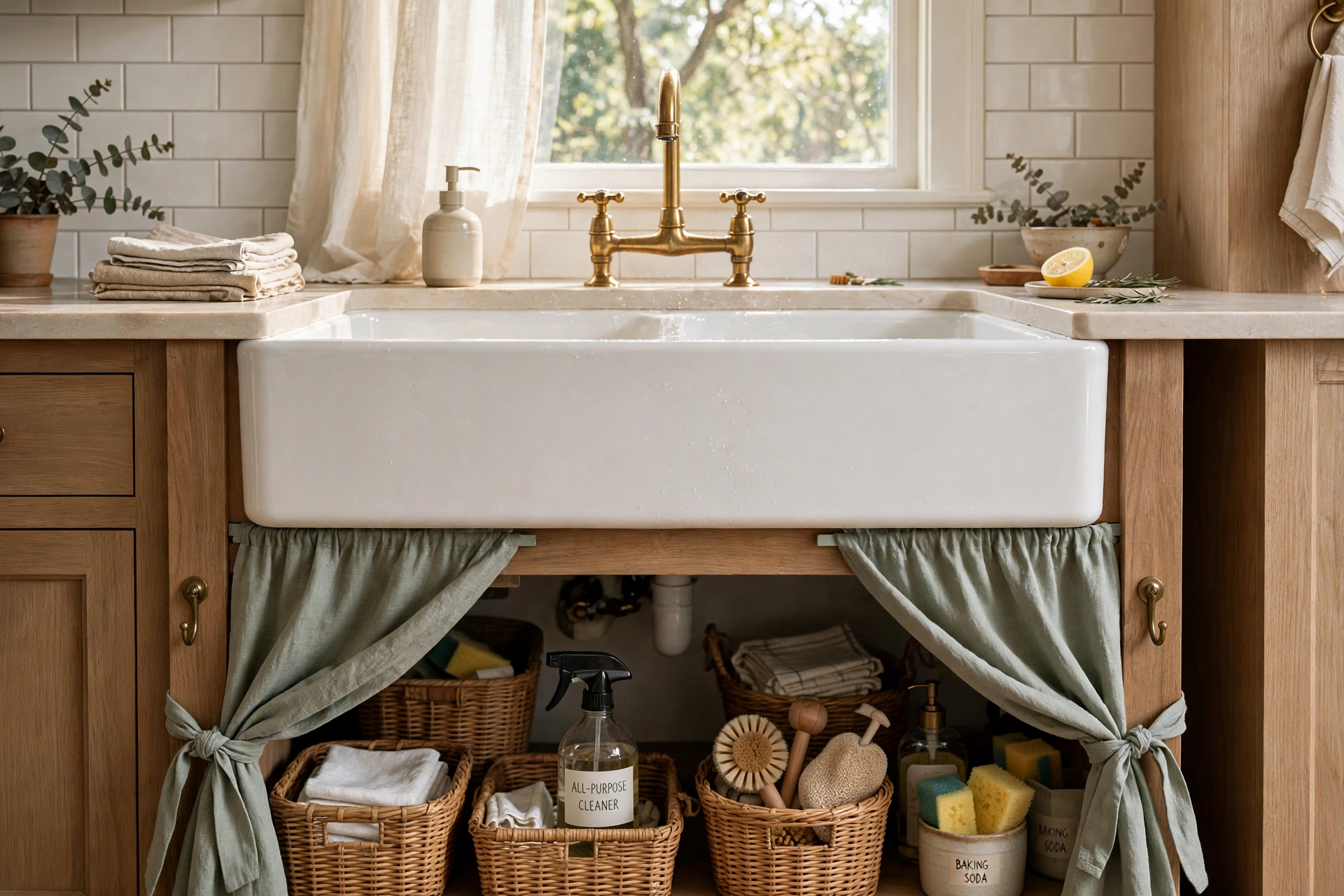
If you constantly reach under the sink for trash bags, dishwasher pods, or the garbage disposal switch, a fixed skirt can become an annoyance. The tie-back version solves this: make a gathered panel as usual, but instead of letting it hang free, catch each side with a fabric tie or a cup hook mounted on the cabinet frame about two-thirds of the way down.
The ties create a gentle swag that looks deliberate and decorative while leaving the center of the opening partly accessible. Use the same fabric for the ties, cut in four-by-sixteen-inch strips and folded into one-inch bands. This approach is especially smart for skirts under apron sinks where the plumbing and shutoff valves sit front and center, since you can untie one side in seconds when a plumber visits.
9. Gingham Check Skirt with Coordinating Valance
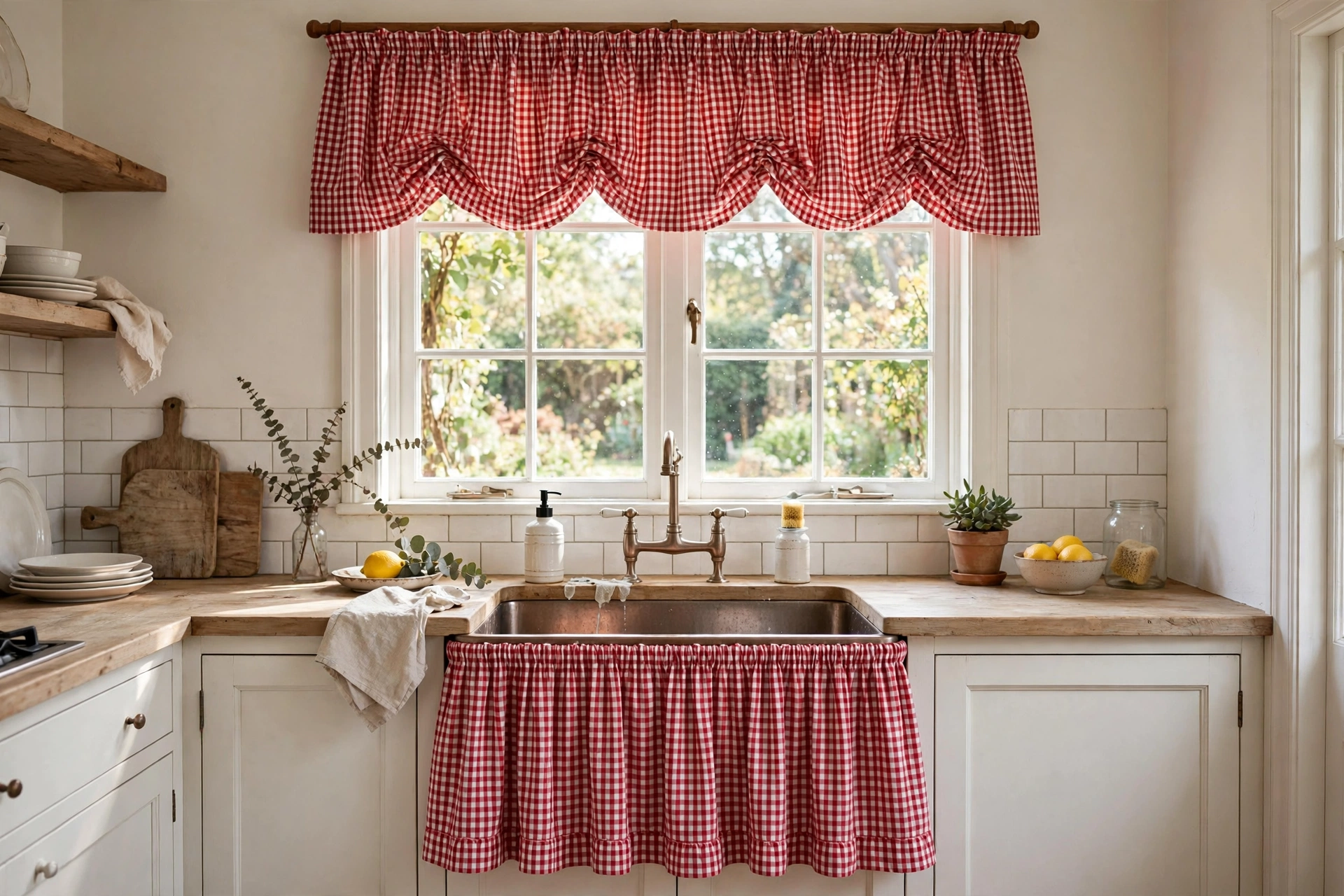
Gingham is the fabric equivalent of a friendly smile, and pairing a gingham sink skirt with a matching window valance makes the whole kitchen feel planned. Choose the same scale of check for both — a classic half-inch red or navy check is the most versatile — and vary the fullness: a generously gathered skirt under the sink and a lightly gathered valance above the window.
For balance, keep the valance length to about ten to twelve inches so it does not crowd the window, while the skirt runs full length to just above the floor. If your kitchen is small, use the same gingham at a smaller scale to avoid overwhelming the space. This coordinated pairing is one of the most reliable kitchen sink skirt ideas for a cohesive cottage look, and it photographs beautifully.
10. Vintage Feed-Sack Style Striped Skirt
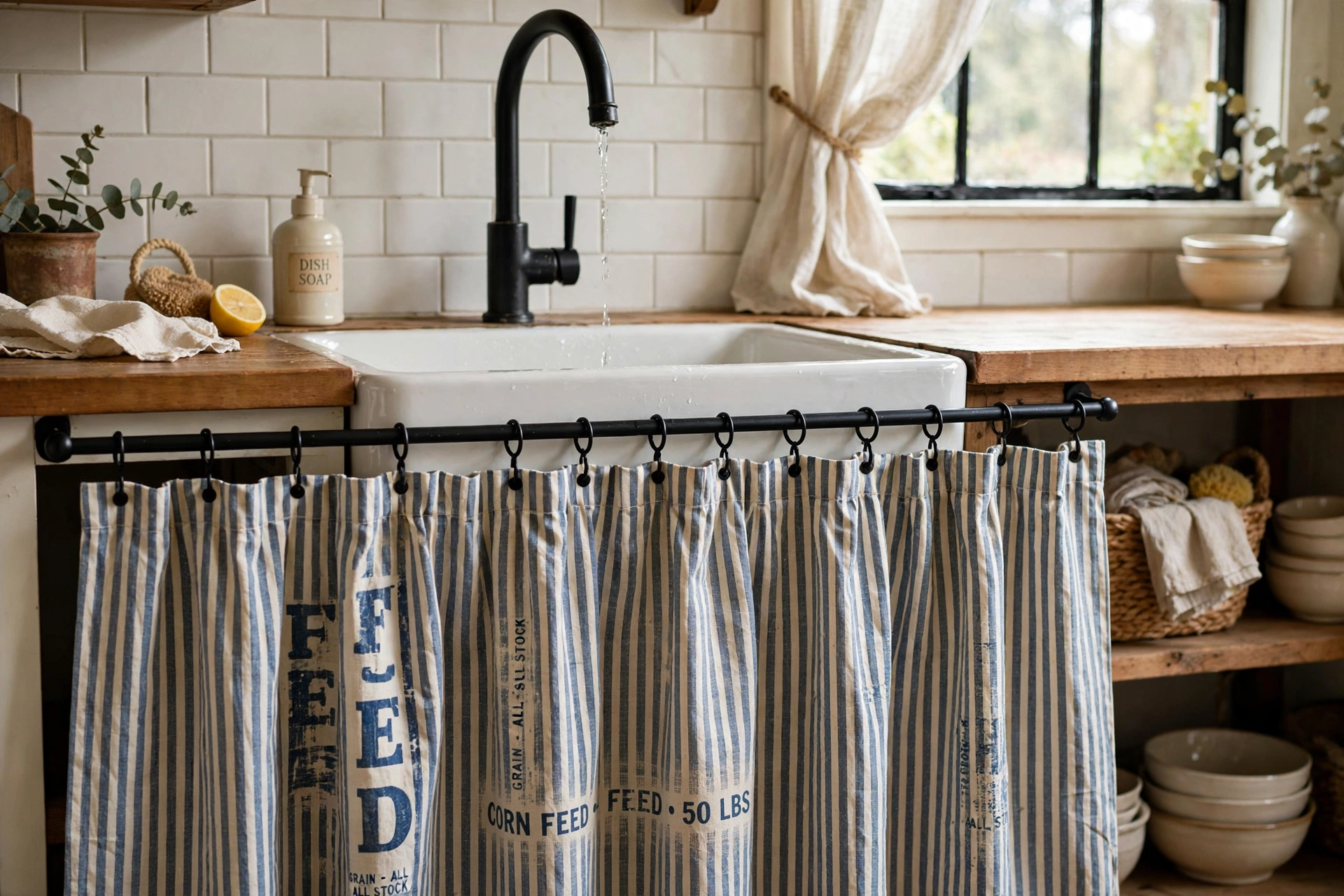
Grain-sack stripes nod to the farmhouse kitchens of a century ago. Look for modern ticking or feed-sack reproduction fabrics in cream with red, navy, or black stripes — or buy a genuine vintage sack on a marketplace and piece it into a panel. Because authentic sacks are narrow, you may need to sew two together with a French seam; press the seam flat so it reads as a deliberate detail rather than a patch.
Mount the finished panel with clip rings on a matte-black tension rod so the stripes stay visible and uncompressed. The flat hang shows off the stripe pattern best, so avoid heavy gathering — one and a quarter times the opening width is enough. This skirt pairs wonderfully with open shelving holding ironstone and crockery. For more textile ideas that suit vintage-inspired rooms, browse our kitchen curtain styling guide.
11. Quilted Skirt for a Cozy Handmade Feel
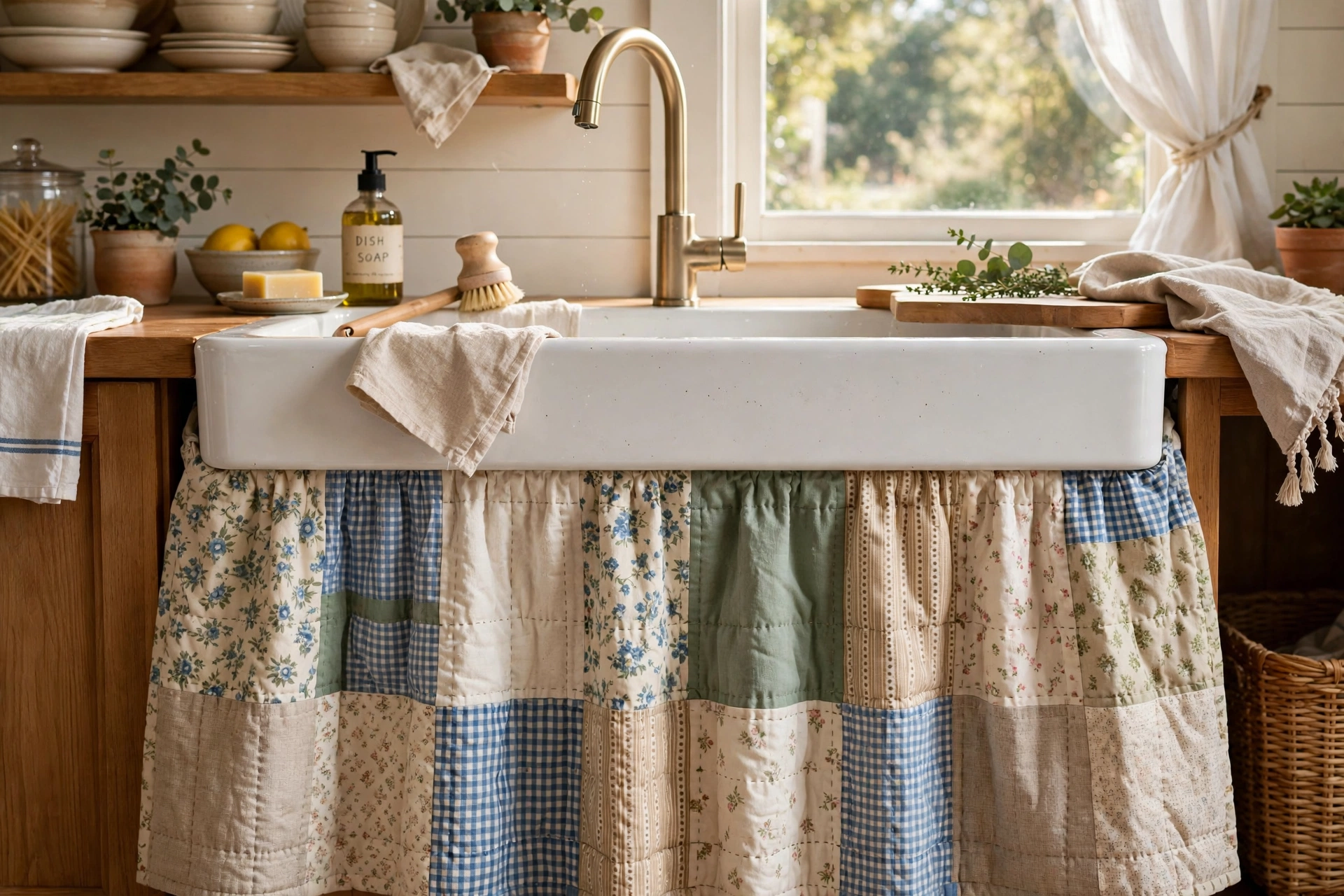
A quilted sink skirt brings patchwork warmth to the heart of the kitchen. Piece a simple quilt top from cotton squares — charm packs of pre-cut five-inch squares make this beginner-friendly — back it with a thin cotton batting, and quilt it with straight stitch-in-the-ditch lines or a simple diagonal grid. The finished panel should measure about one and a half times the opening width so the quilting lies fairly flat.
Because of the batting, hang this skirt from wooden clip rings rather than threading it onto a rod; the bulk slides more easily. A quilted skirt adds insulation as well as beauty, slightly muffling the sound of pipes. Choose a color palette that echoes your dishes or rug — pulling two or three colors from elsewhere in the room makes the patchwork feel curated rather than random.
12. Pleated Skirt with Pinch Pleats
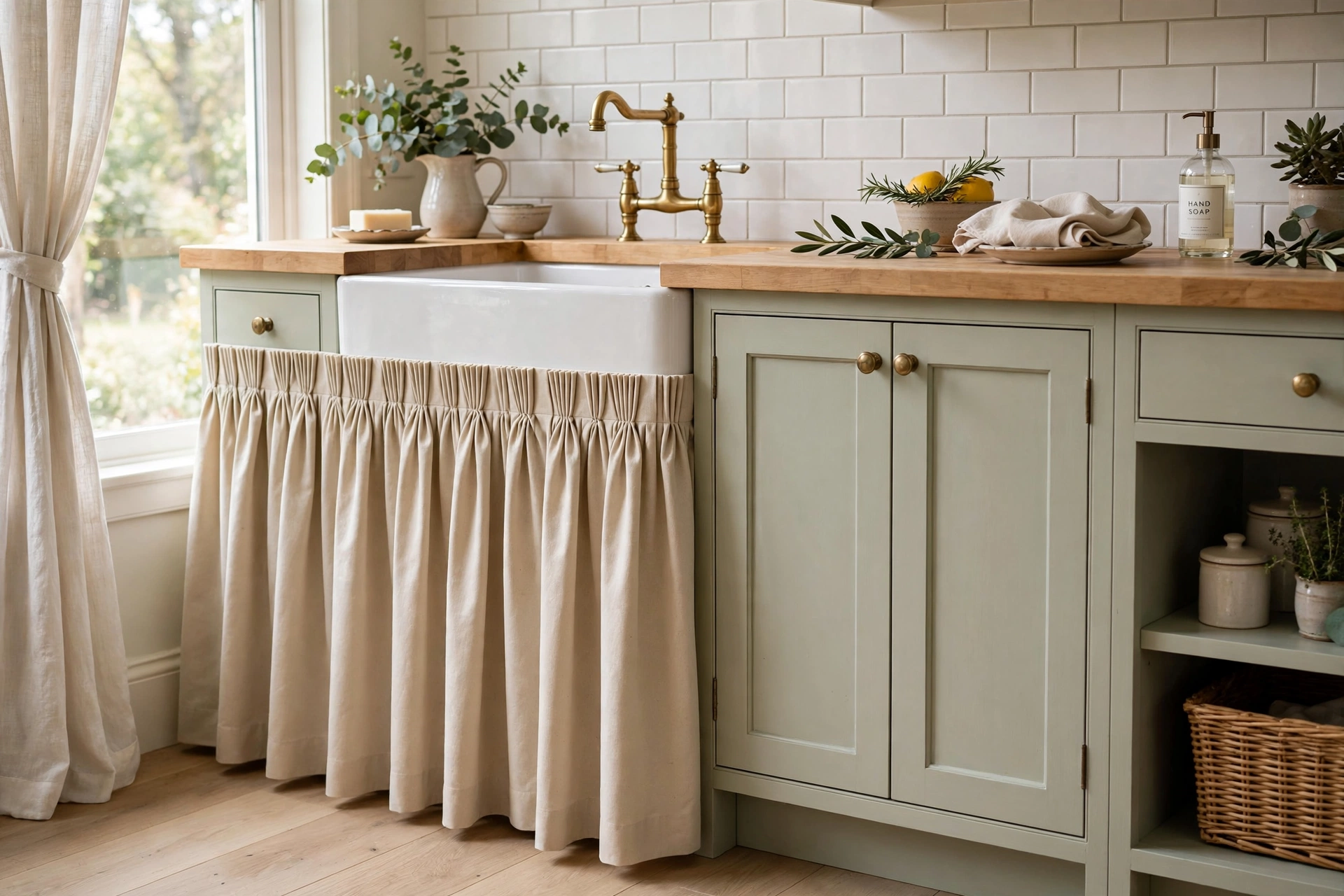
Pinch pleats give a sink skirt the tailored finish of drapery panels. Space three-finger pinch pleats every four to six inches across the top of the panel, tacking each pleat with a few hand stitches or a sewing-machine bar tack. The pleats eat up fullness, so cut the fabric to two and a half times the opening width and let the excess form crisp, regular folds.
This is the dressiest of the kitchen sink skirt ideas — best suited to cottages with a slightly formal bent, perhaps paired with painted shaker cabinets and brass hardware. Use a medium-weight fabric like a cotton duck or a lightweight upholstery fabric so the pleats hold their shape through washing. Hang pinch-pleated skirts from a slim rod threaded through back tabs or drapery pins to keep the top edge neat.
13. Burlap Skirt for Rustic Warmth
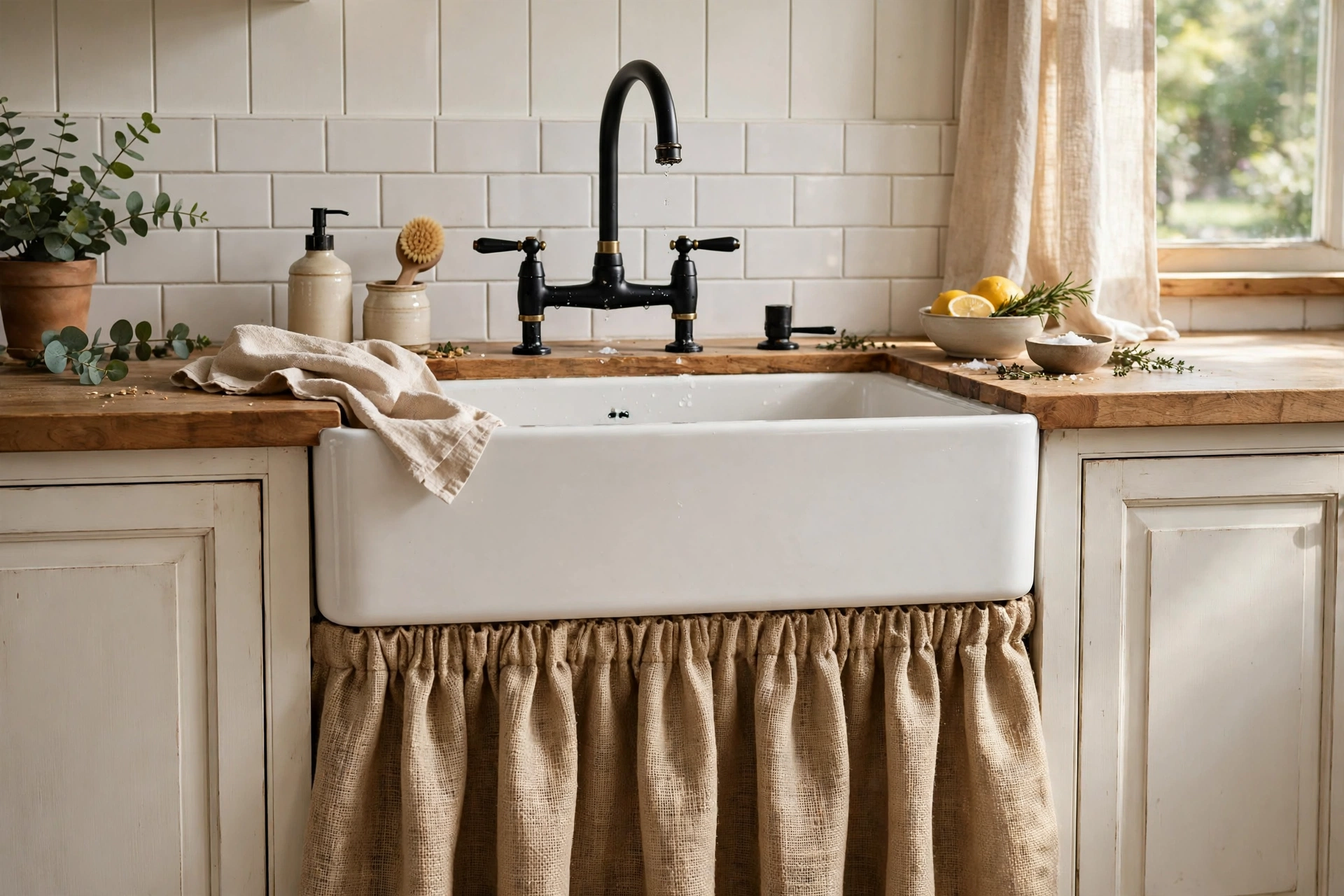
Burlap is the definition of rustic, and under a sink it adds wonderful texture for almost no money. Choose a tight-weave burlap rather than the loose garden-center variety — it sheds less and looks more refined. Because burlap frays aggressively, serge or zigzag every edge, and consider fusing a lightweight interfacing to the back to tame the shedding further.
The natural oatmeal color works with everything from white farmhouse kitchens to dark moody ones, and a simple hemmed panel with a rod pocket is all this fabric needs — its texture is the decoration. Note that burlap and water are not friends: keep this skirt short, ending a couple of inches above the floor, and do not use it directly under a spray-happy prep sink. Spot-clean with a dry brush and shake it out seasonally.
14. Seasonal Swap Skirts on Interchangeable Rods
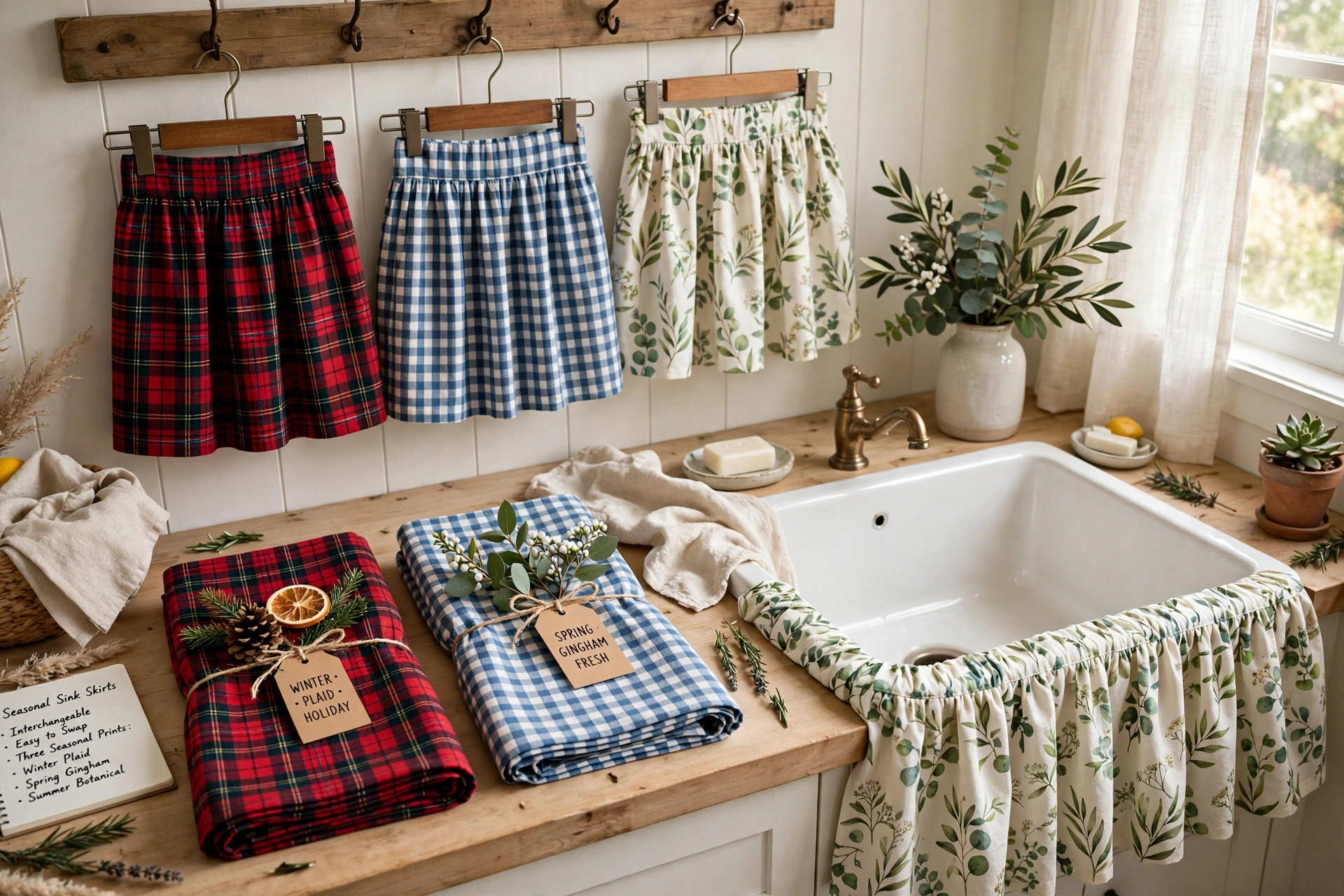
Why settle for one skirt when the rod makes swapping effortless? Keep two or three skirts — say, a light botanical for spring, gingham for summer, and a warm plaid for fall — and rotate them with the seasons. Each skirt lives on its own inexpensive tension rod, so a swap takes under a minute: collapse the old rod, slide it out, and pop the new one in.
Store off-season skirts folded in a zippered bag to keep them dust-free. This approach also doubles as a backup system: when one skirt is in the wash, another is already hanging. Budget one to one and a half yards of fabric per skirt for a standard thirty-inch sink base, and you have a year-round decor refresh that costs less than a set of new cabinet pulls.
15. Embroidered Monogram Skirt as a Personal Touch
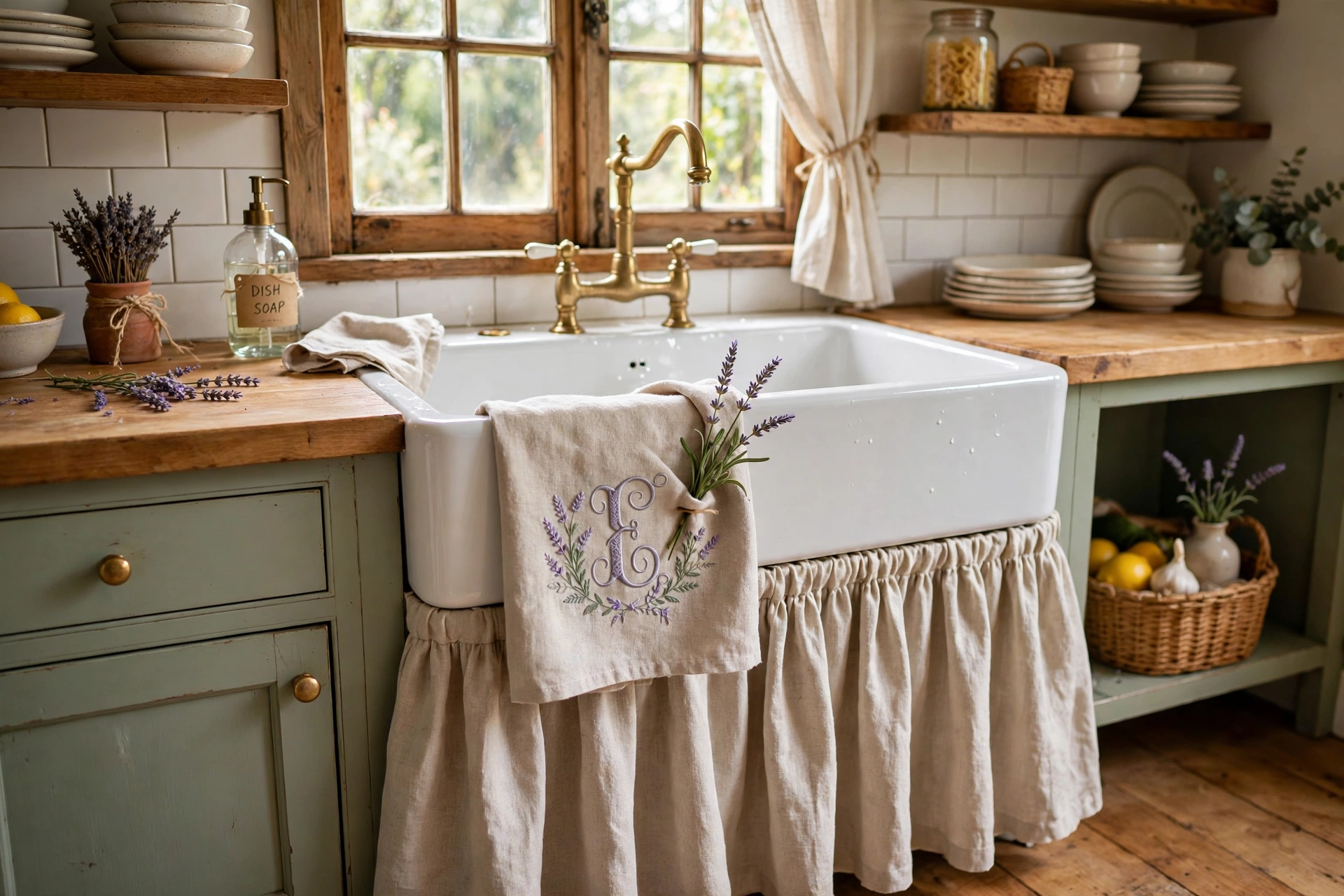
For a skirt that feels truly bespoke, add a monogram or a small embroidered motif to a simple linen panel. Use iron-on transfer paper to print your initial or a small design, or hand-embroider a sprig of lavender or wheat in stem stitch if you enjoy needlework. Center the design on the upper third of the skirt where it reads clearly when the panel hangs.
Keep the rest of the skirt plain — the embroidery is the star — and mount it with clip rings so the panel hangs flat enough for the design to show. This is a lovely housewarming project and makes a thoughtful handmade gift for a new homeowner. Choose colorfast embroidery floss and pre-wash the linen before stitching so nothing puckers in the first wash.
Frequently Asked Questions
What is the best fabric for a kitchen sink skirt?
Medium-weight cotton, linen, or a cotton-linen blend is the best all-around choice: these fabrics drape nicely, survive frequent machine washing, and take ironing well. For maximum practicality directly under the sink, oilcloth or a laminated cotton wipes clean and never needs laundering, making it ideal for busy or messy kitchens.
How do you hang a sink skirt without drilling?
A spring-loaded tension rod wedged inside the cabinet opening is the standard no-drill method — choose a rod one to two inches longer than the opening for a firm grip. Alternatively, use adhesive-backed hook-and-loop tape on the cabinet frame, or mount cup hooks and hang the skirt from rings. All three methods are renter-friendly and leave no permanent marks.
How full should a gathered sink skirt be?
Plan on one and a half to two times the width of the opening for a soft, attractive gather. Less than that looks skimpy; more than two and a half times creates heavy bunching that can trap moisture against the cabinet. Heavy fabrics like canvas need less fullness (about one and a quarter times), while thin cottons benefit from the fuller end of the range.
Will a fabric skirt under the sink get moldy?
It can if it stays damp, so design for airflow: end the skirt at least half an inch above the floor, avoid pressing fabric directly against cold pipes, and choose washable fabrics you can launder every few months. If your under-sink area stays humid, an oilcloth skirt or a tie-back style that lets air circulate is the safer choice.
Can you put a sink skirt on a cabinet with doors?
Yes — either remove the doors and fill the hinge holes for a clean open look, or keep the doors and hang the skirt in front of them for pure decoration. Removing the doors gives you easier access and the full cottage effect; hanging the skirt over closed doors is the simplest reversible option for renters who want the look without altering the cabinetry.
Keep Exploring
A sink skirt proves that the smallest textile in the kitchen can carry the most charm. Pick the mounting method that suits your cabinet, choose a washable fabric you love, and let this one soft detail warm up the hardest-working corner of your home. Small change, big cottage payoff.