
The entryway is the handshake of your home — the first thing guests see and the last thing you see before facing the day. Yet it is often the most neglected wall in the house, left builder-beige while every other room gets the design treatment. An accent wall changes that in a single weekend: one wall with the confidence to be different sets the tone for everything beyond it.
These entryway accent wall ideas range from a quart of bold paint to full wood slat installations, with options for renters, small foyers, and grand two-story entries alike. For the decor that goes on the wall once it is finished, our entryway wall decor ideas for a warm personal entry pick up where this list leaves off.
First, pick the right wall. An accent wall works best on the wall your eye lands on when you walk in — usually the wall facing the front door, or the longest uninterrupted stretch. Skip walls chopped up by multiple doorways, since the treatment will read as fragments rather than a feature.
In a small entryway, the accent wall should be the one behind the console table or bench, where furniture grounds the color. And always sample first: paint a large swatch and live with it for two days, because entryway light changes dramatically from morning to evening.
1. Paint It a Bold, Moody Color
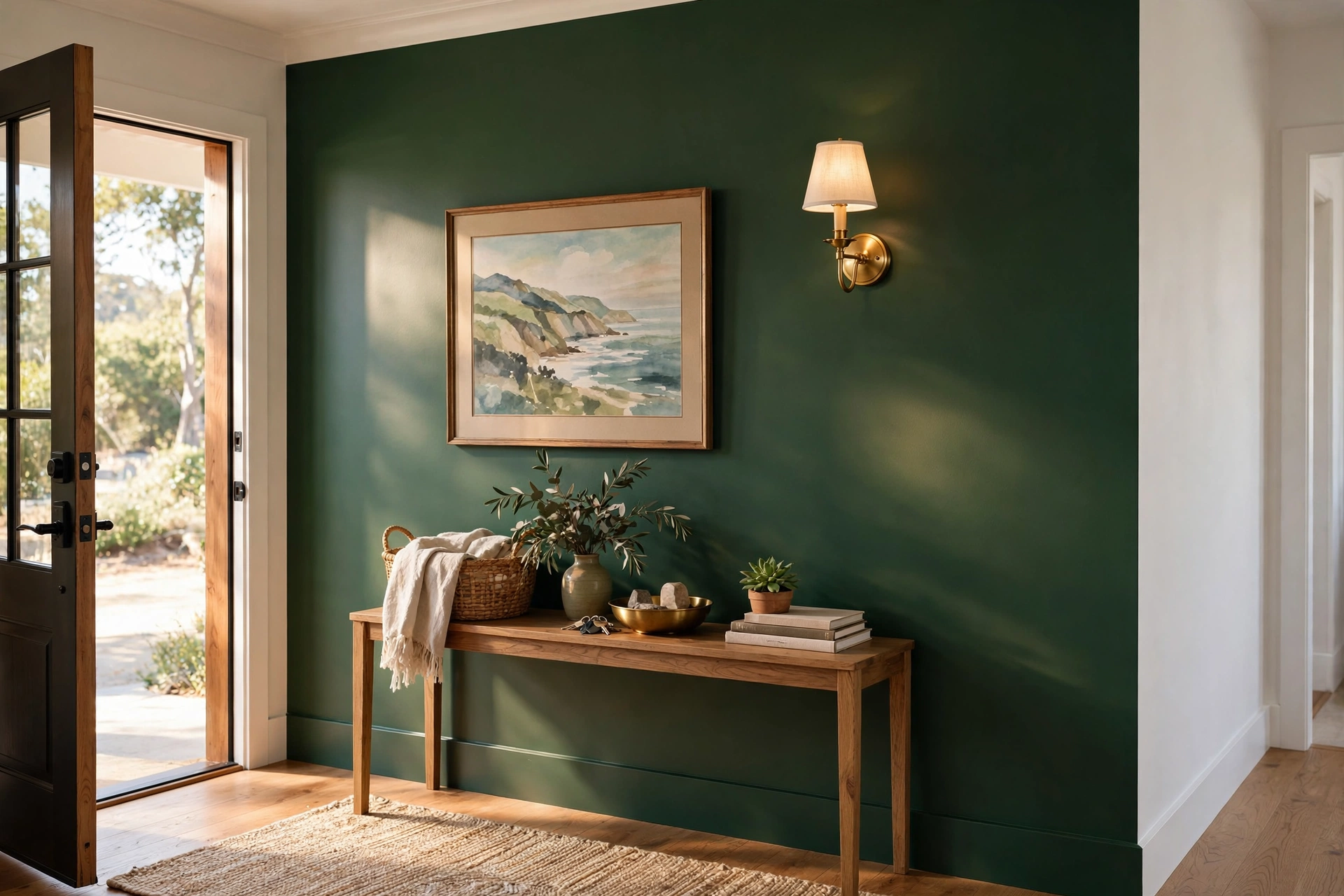
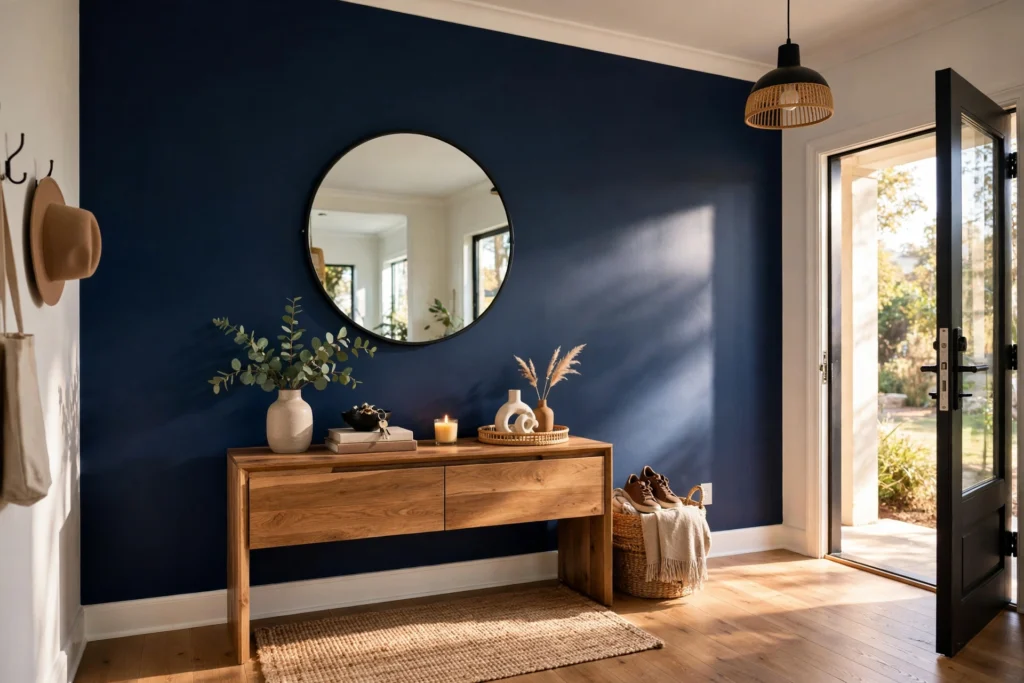
One wall of deep, saturated paint is the fastest entryway transformation there is. Inky navy, forest green, charcoal, or a rich terracotta turns a forgettable foyer into a room with intention. Dark colors make small entryways feel cocooning rather than cramped, and they make everything hung on them — mirrors, art, a brass sconce — pop. Use a satin or eggshell finish so the wall wipes clean of fingerprints and scuffs, which entryways collect fast. Paint the trim the same color for a cocooning, color-drenched look, or keep trim white for crisp contrast.
2. Try Peel-and-Stick Wallpaper
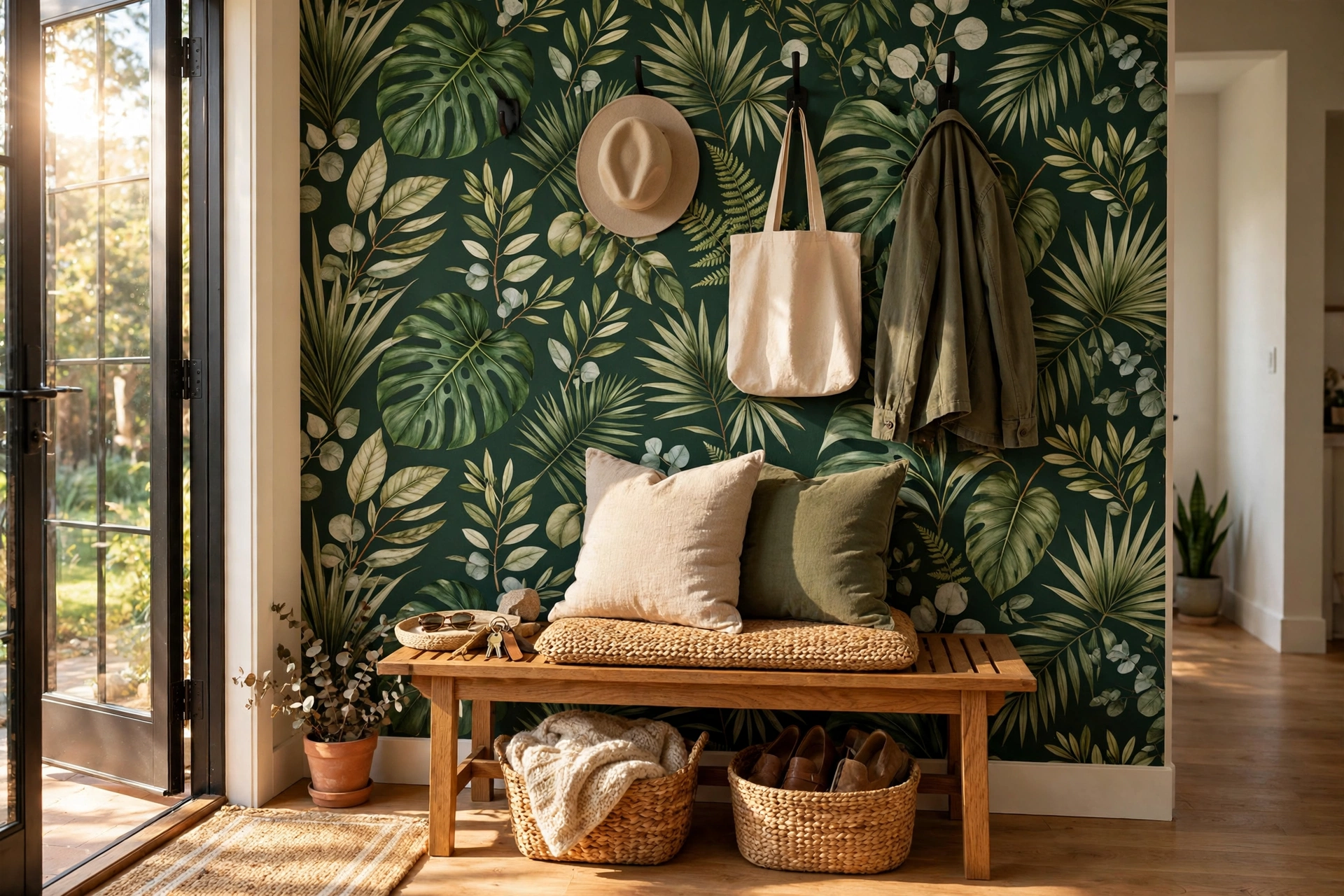
Peel-and-stick wallpaper is the renter’s accent wall: dramatic pattern, zero commitment, and it comes down cleanly when the lease ends. Modern peel-and-stick papers come in every style — bold botanicals, classic stripes, subtle grasscloth textures, graphic geometrics — and a single entryway wall needs only a few panels. Measure carefully and order one extra panel for pattern matching mistakes. Smooth the paper with a plastic smoother as you go, working top to bottom, and use a sharp utility knife for clean cuts around outlets and trim.
3. Install Vertical Wood Slats
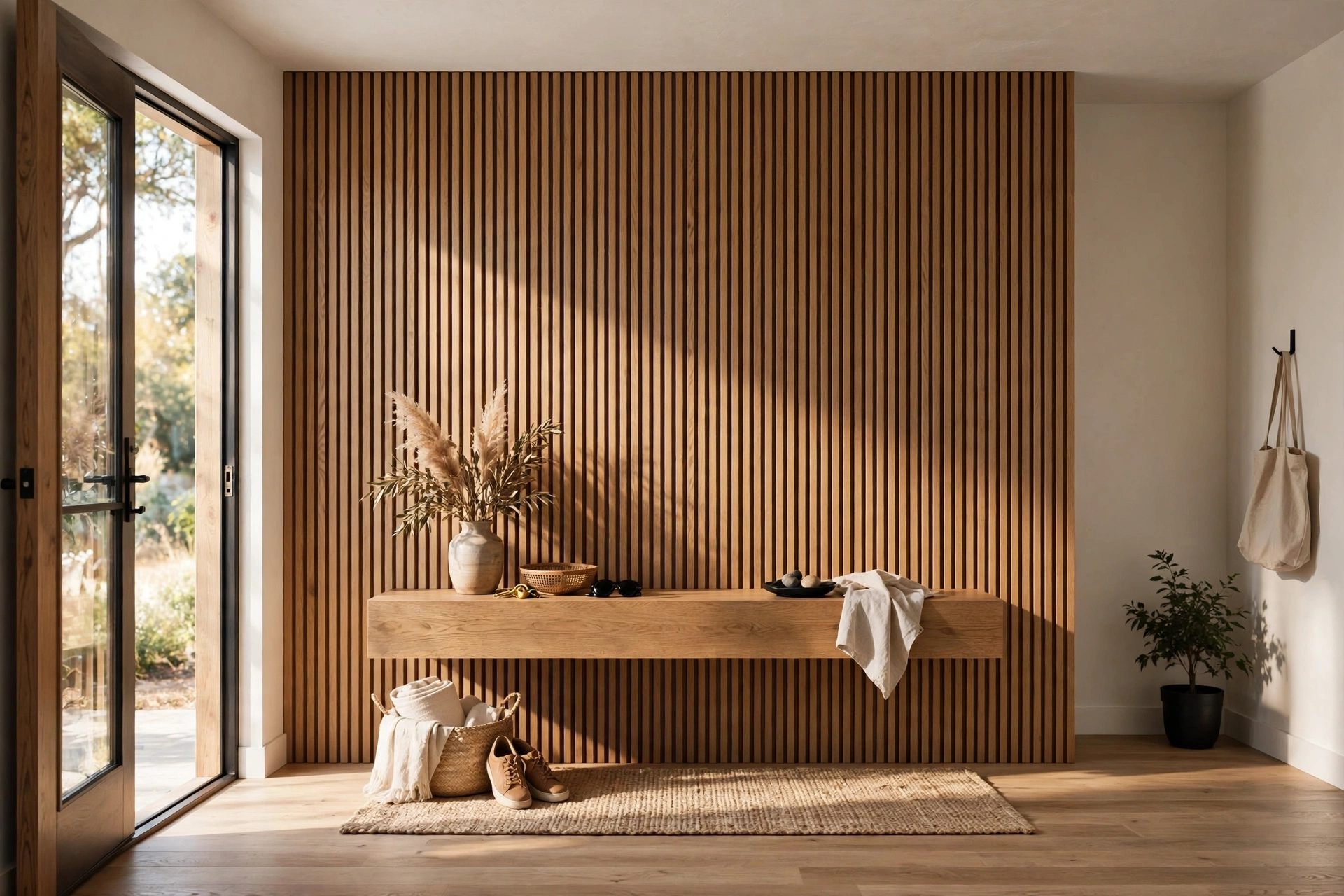
Vertical wood slats bring warmth, rhythm, and a high-end custom feel to the entryway. Thin battens of oak, walnut, or painted poplar, spaced evenly over the wall, create shadow lines that shift beautifully as daylight moves. Run them floor to ceiling for drama, or stop at picture-rail height with a cap rail for a more traditional feel. Paint them the same color as the wall for subtle texture, or stain them for contrast. Slats also hide a multitude of sins — uneven drywall, old patch jobs — behind their rhythm.
4. Add Classic Board and Batten
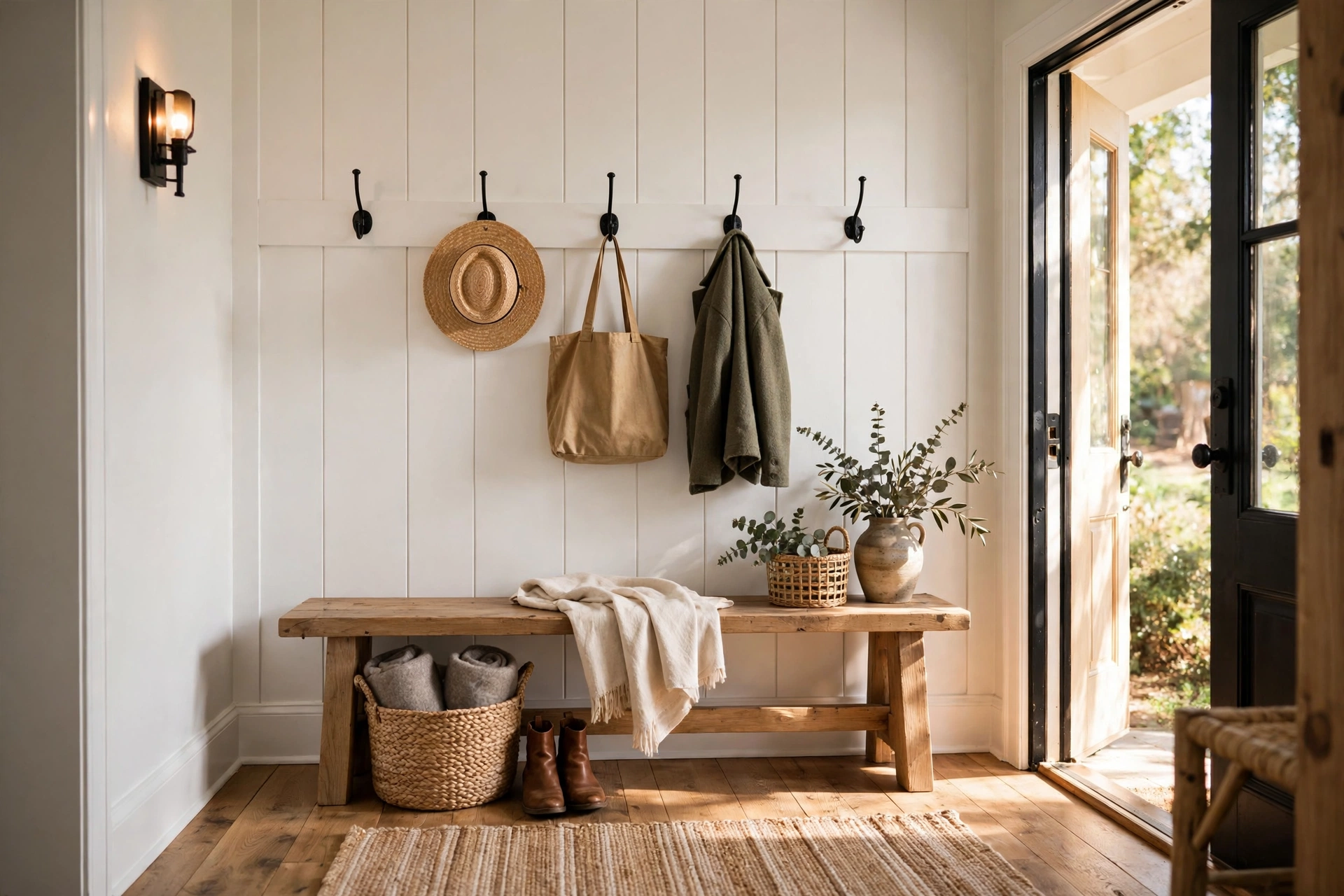
Board and batten — vertical boards with narrow battens over the seams — gives the entryway architectural character that reads as original to the house. It suits farmhouse, traditional, and transitional homes, and it is remarkably forgiving to install since small imperfections disappear in the pattern. Run it two-thirds up the wall with a chair rail cap for the classic look, or take it full height for modern drama. Paint it the wall color for quiet texture or a contrasting shade for definition.
5. Choose Textured Grasscloth Wallpaper
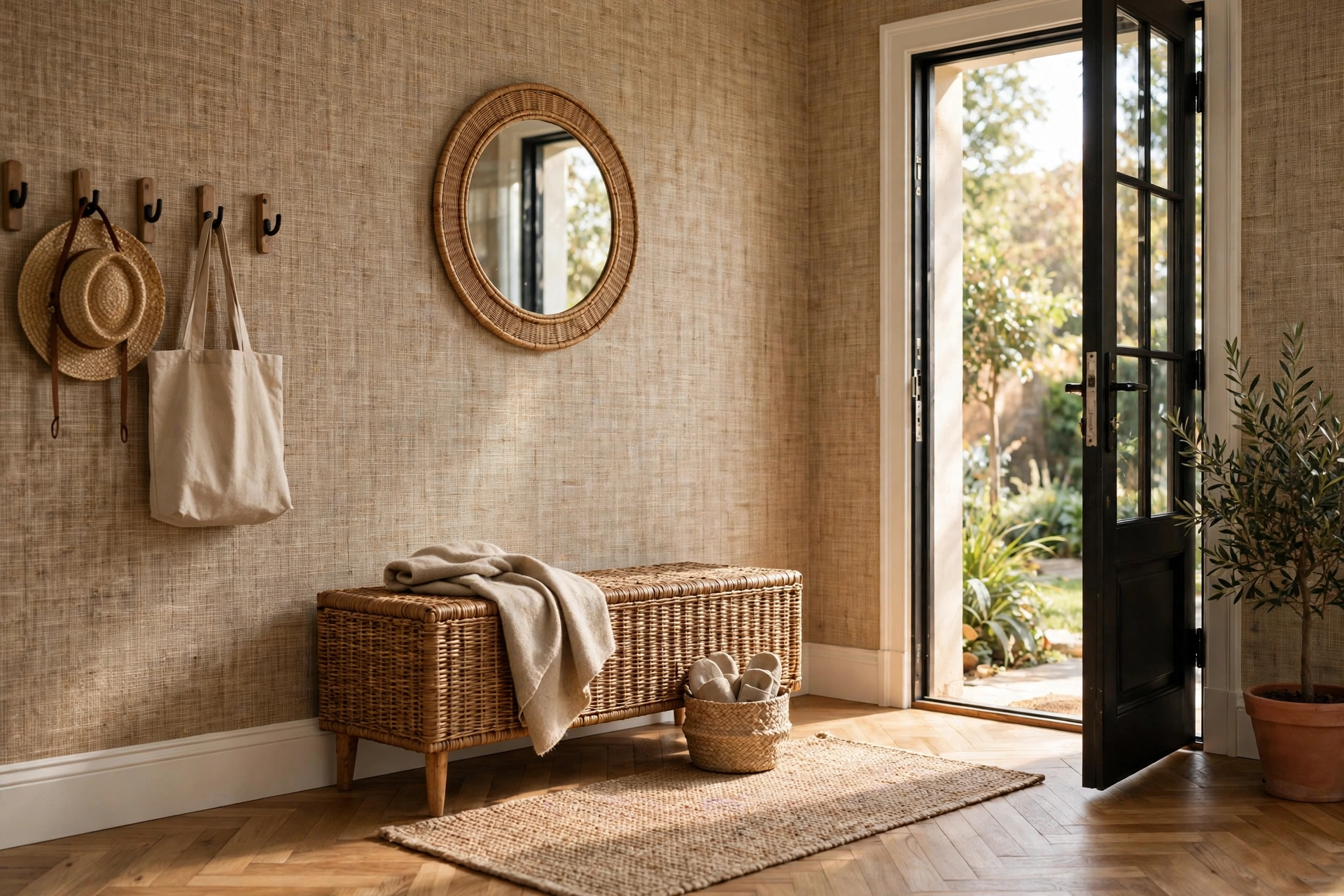
Grasscloth wallpaper adds the kind of subtle, natural texture that paint alone cannot achieve. Woven from sisal, jute, or seagrass, it brings warmth and an organic feel that softens the entryway’s hard surfaces — tile floors, metal hardware, glass doors. The neutral tones work with any palette, and the texture catches light beautifully. Note that grasscloth shows seams more than printed papers, so hire an experienced installer if you are not confident, and keep it out of splash zones near the door where rain drips.
6. Commission or Hang a Mural
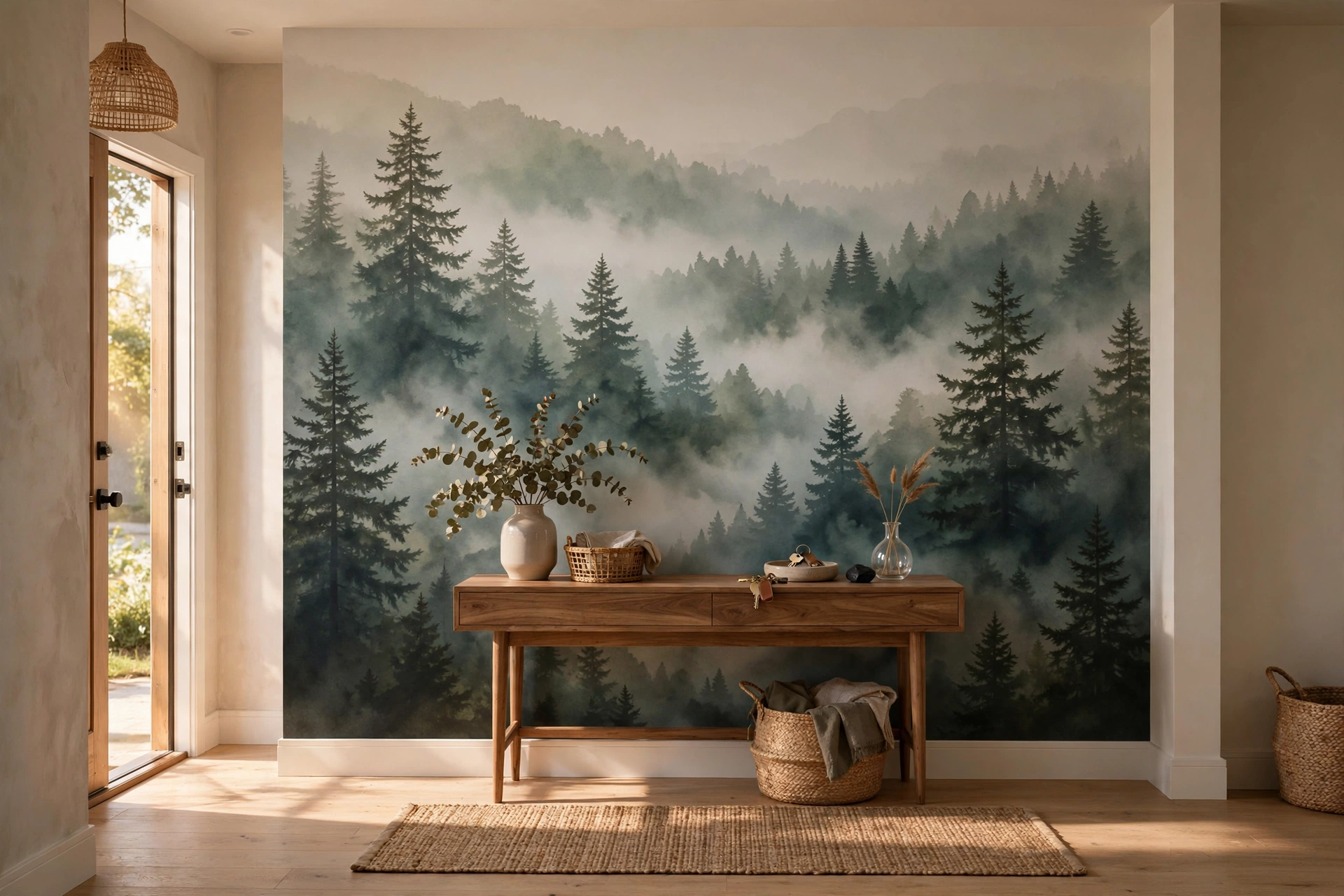
A mural turns the entryway wall into art on an architectural scale. Hand-painted murals by a local artist create a true one-of-a-kind entrance, while peel-and-stick mural panels deliver the look for a few hundred dollars — misty forests, abstract landscapes, oversized botanicals. Scale the imagery to the wall: large-scale motifs suit grand entries, while smaller repeats work in narrow foyers. Keep the surrounding decor minimal so the mural breathes; it is already doing the heavy lifting.
7. Color-Block the Wall
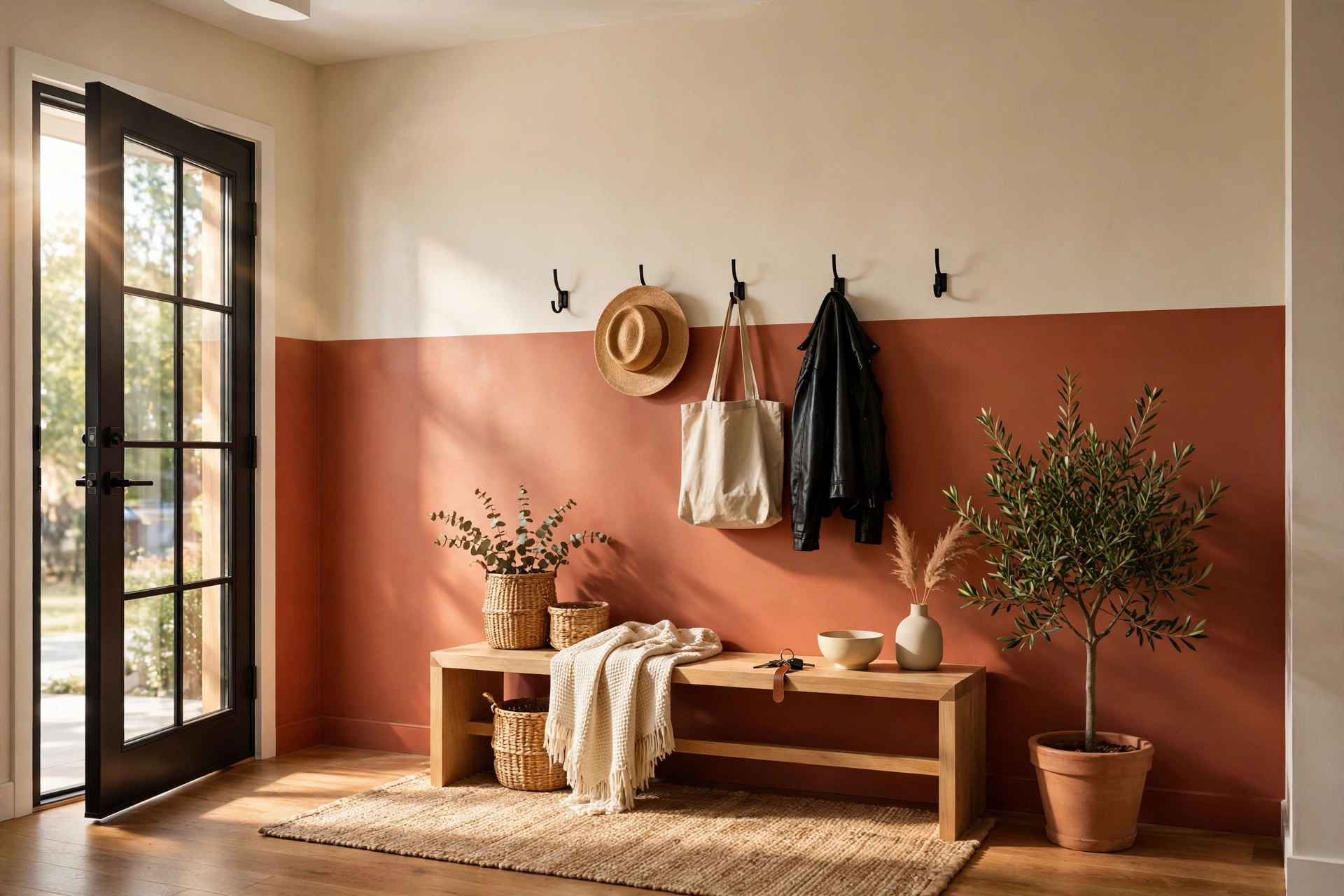
Color-blocking — painting bold geometric shapes or large blocks of color — gives the entryway a modern, gallery-like edge. Try a large painted arch behind the console table, a half-wall of color with a crisp horizontal line, or two-tone rectangles that frame the doorway. Painter’s tape and a level are the only special tools you need, and the design can be as simple or complex as your confidence allows. Pull one color from elsewhere in the house so the block feels connected rather than random.
8. Add Shiplap for Casual Charm
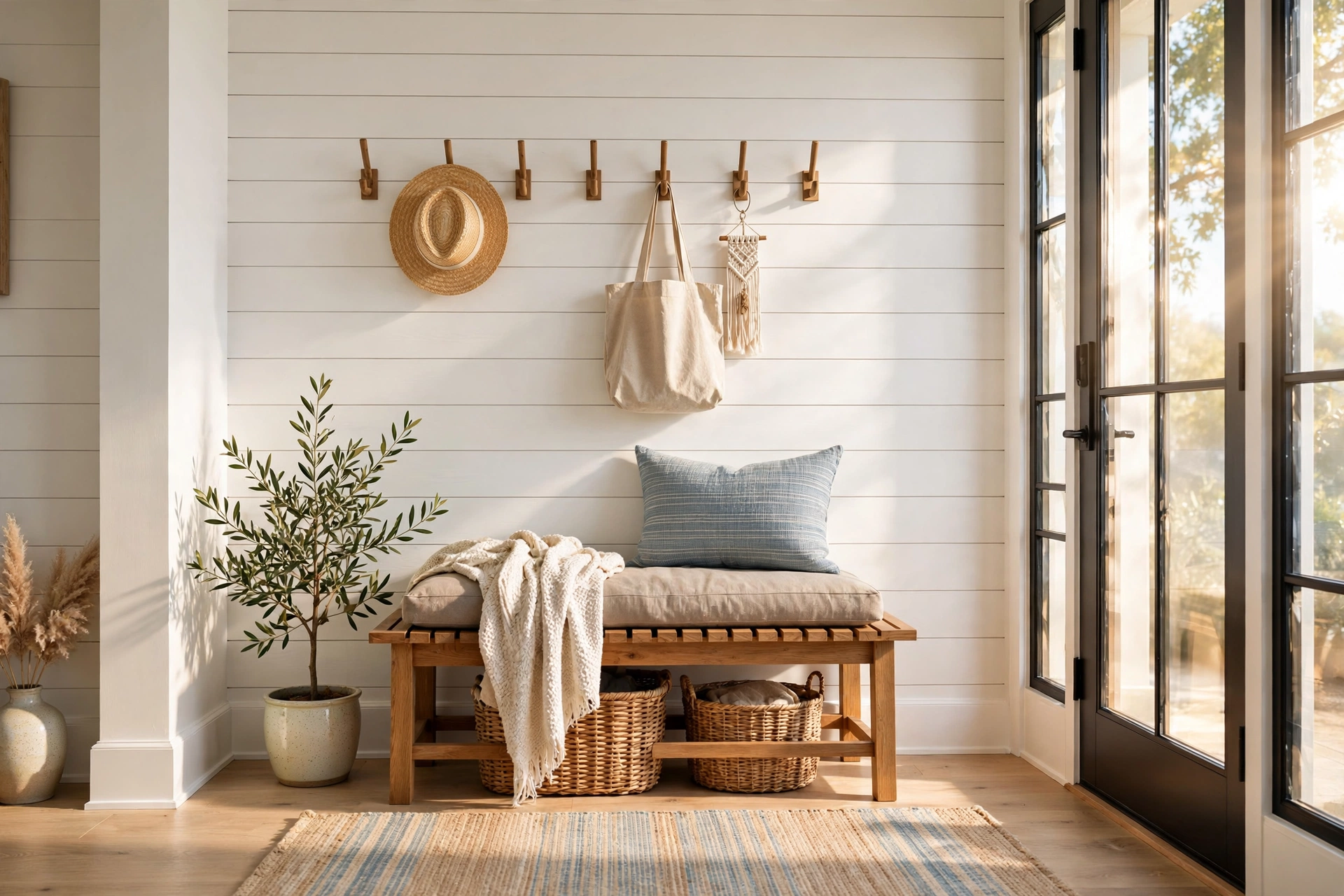
Shiplap’s clean horizontal lines bring instant coastal or farmhouse charm to the entryway. The narrow gaps between boards create shadow lines that add depth without color, so it works even in all-white entries. Install it on the wall behind the bench or console where it will be seen and touched, running the boards horizontally to widen a narrow foyer visually. Paint it white or a soft neutral for the classic look, or go bold with black shiplap for modern drama.
9. Create a Picture-Frame Molding Wall
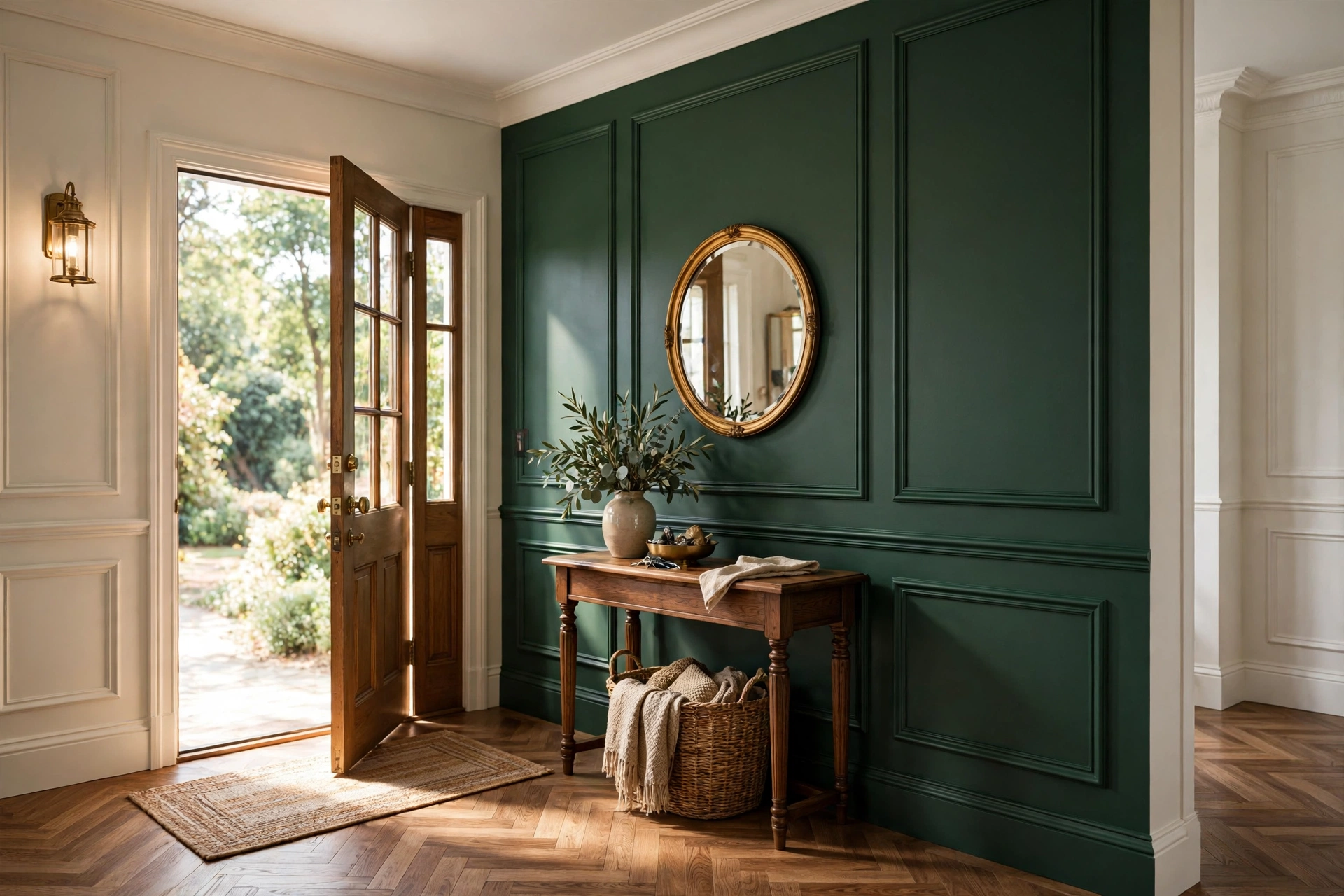
Picture-frame molding — thin trim boxes applied directly to the wall — delivers the paneled look of a historic home without the cost of real paneling. The geometric rectangles add architecture and shadow to flat drywall, and painted in a deep color they look genuinely high-end. Space the boxes evenly, keeping them proportional to the wall, and use a laser level to keep lines crisp. This treatment shines in traditional and transitional entryways, especially when the molding is painted the same deep shade as the wall for a monochromatic, custom feel.
10. Try Limewash Paint for Soft Texture
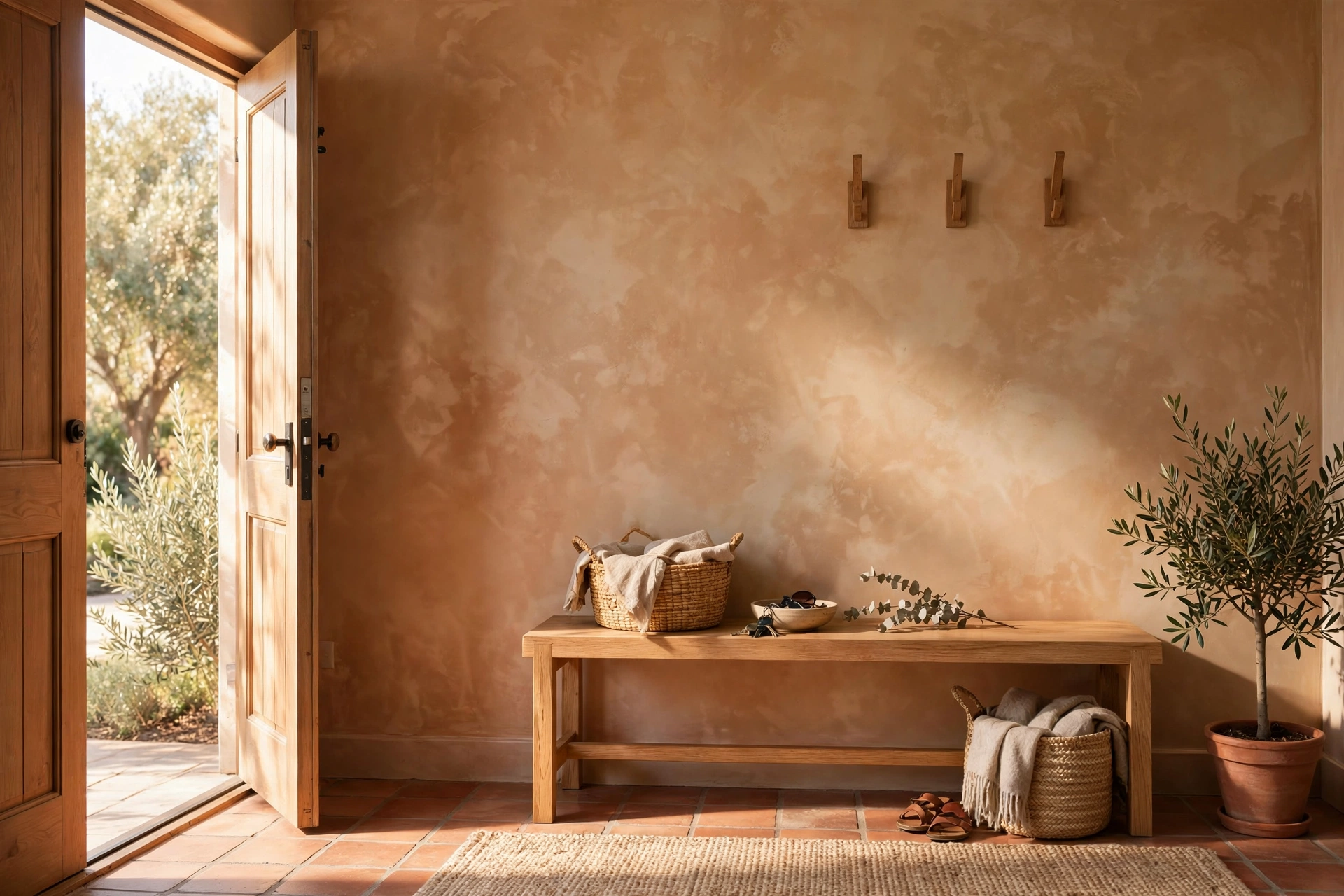
Limewash paint creates a soft, cloudy, Old World texture that flat paint cannot touch. The mottled finish moves with the light, giving the entryway wall depth and a handcrafted feel that suits Mediterranean, organic modern, and eclectic homes. Apply it with a large block brush in random crisscross strokes — the technique is forgiving, and variation is the point. Limewash works best in earthy tones: warm whites, clay, sage, soft terracotta. It is also naturally breathable and low-VOC.
11. Paint a Geometric Pattern
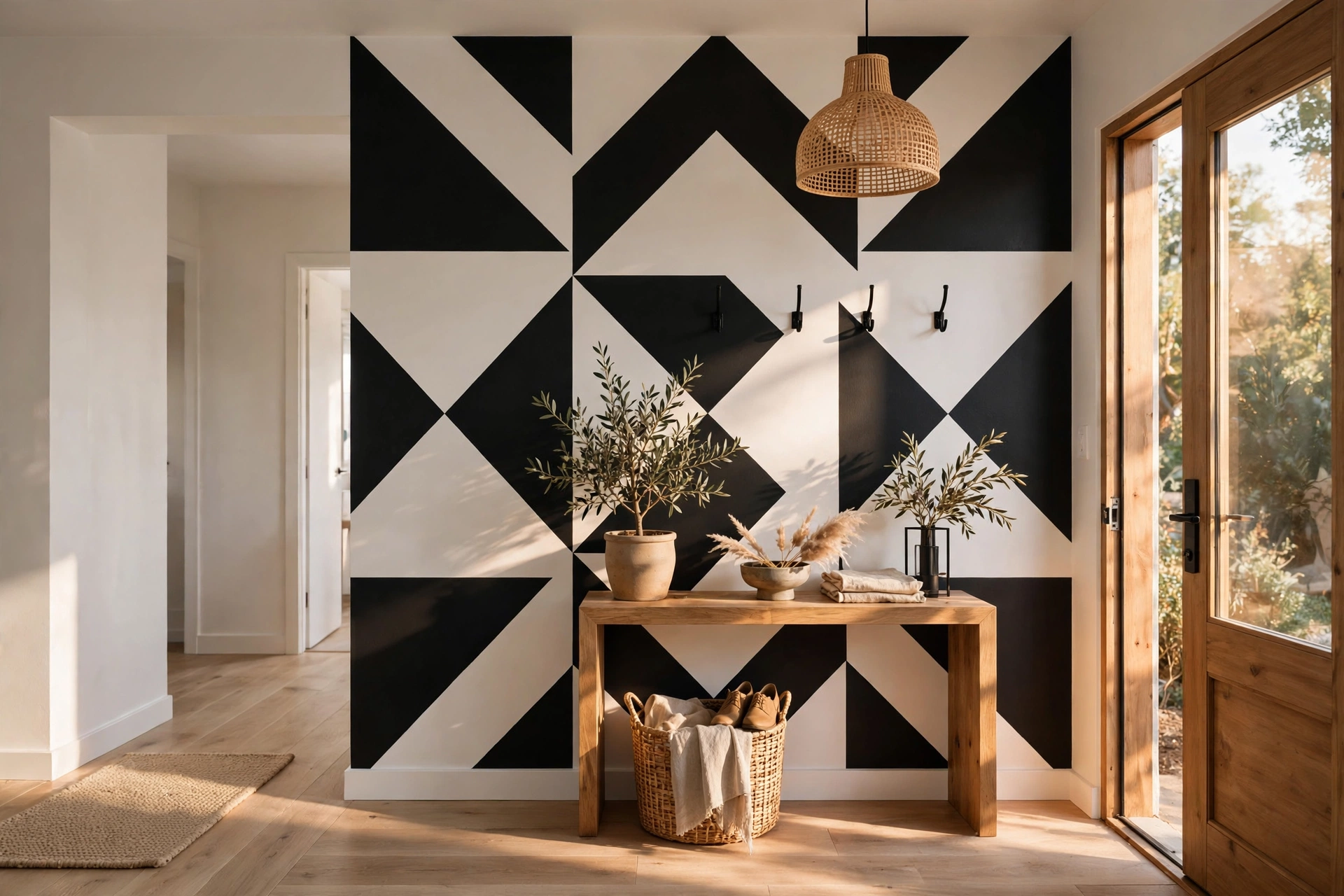
Geometric patterns — stripes, chevrons, diamonds, scallops — turn the entryway wall into a graphic statement. Use painter’s tape to map the design, starting with simple wide stripes if you are new to this, and build to more complex patterns as confidence grows. Two tones of the same color keep it sophisticated; contrasting colors make it playful. The key is crisp lines: seal tape edges with the base coat color first so the pattern color cannot bleed underneath.
12. Go Dark and Dramatic With a Mirror
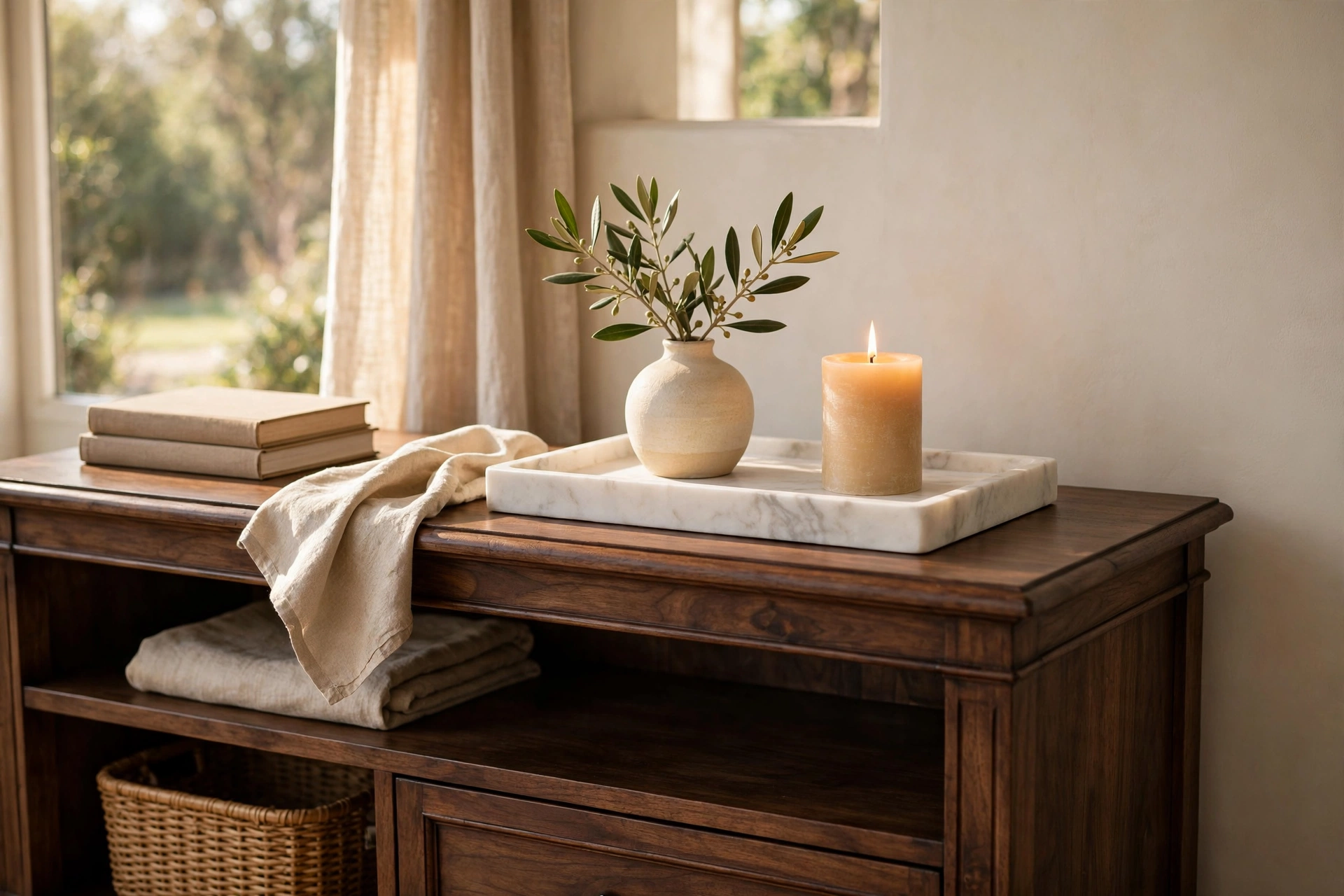
Paint the accent wall a deep, moody shade — near-black green, espresso, midnight blue — and hang an oversized mirror on it. The dark wall recedes, the mirror doubles the light, and the combination makes even a tiny entryway feel like a boutique hotel lobby. A round mirror softens the drama; an arched one adds architecture. Keep the mirror’s frame minimal so the contrast between dark wall and bright reflection does the talking. This pairing also solves the entryway’s two biggest problems at once: lack of light and lack of a last-look mirror before heading out. Our entryway mirror ideas for light space and first impressions show more ways to work this magic.
13. Add Tile for Unexpected Texture
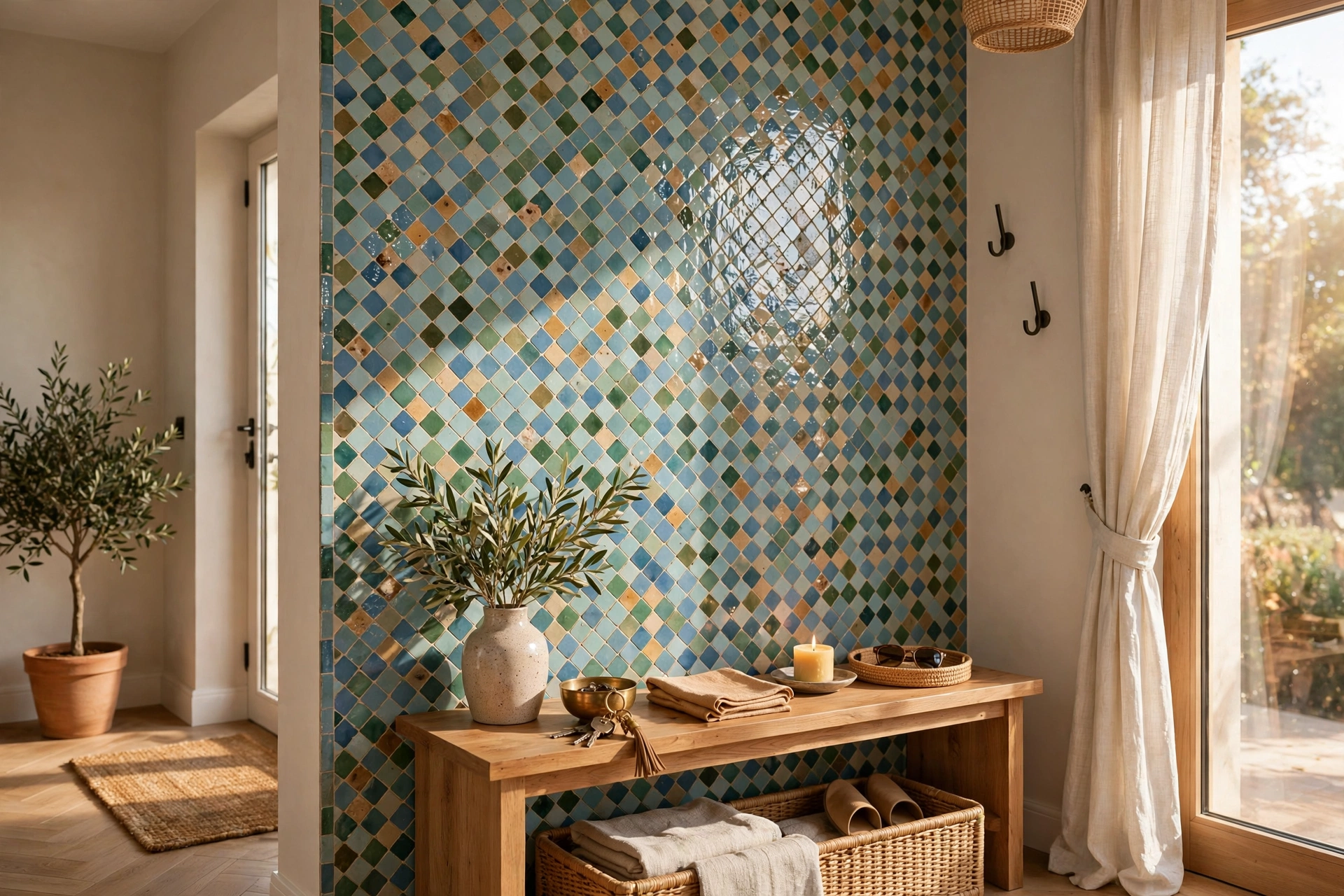
Tile is not just for backsplashes — a tiled entryway accent wall brings shine, pattern, and serious durability to the hardest-working wall in the house. Handmade-look zellige tiles shimmer with variation, patterned cement tiles add graphic punch, and classic subway tile in a dark grout reads modern and crisp. Tile shrugs off the scuffs, drips, and backpack bumps that destroy painted walls, making it the practical luxury choice. Limit it to one wall to control cost, and run it behind the console or bench where it gets maximum visibility.
14. Use Beadboard for Cottage Character
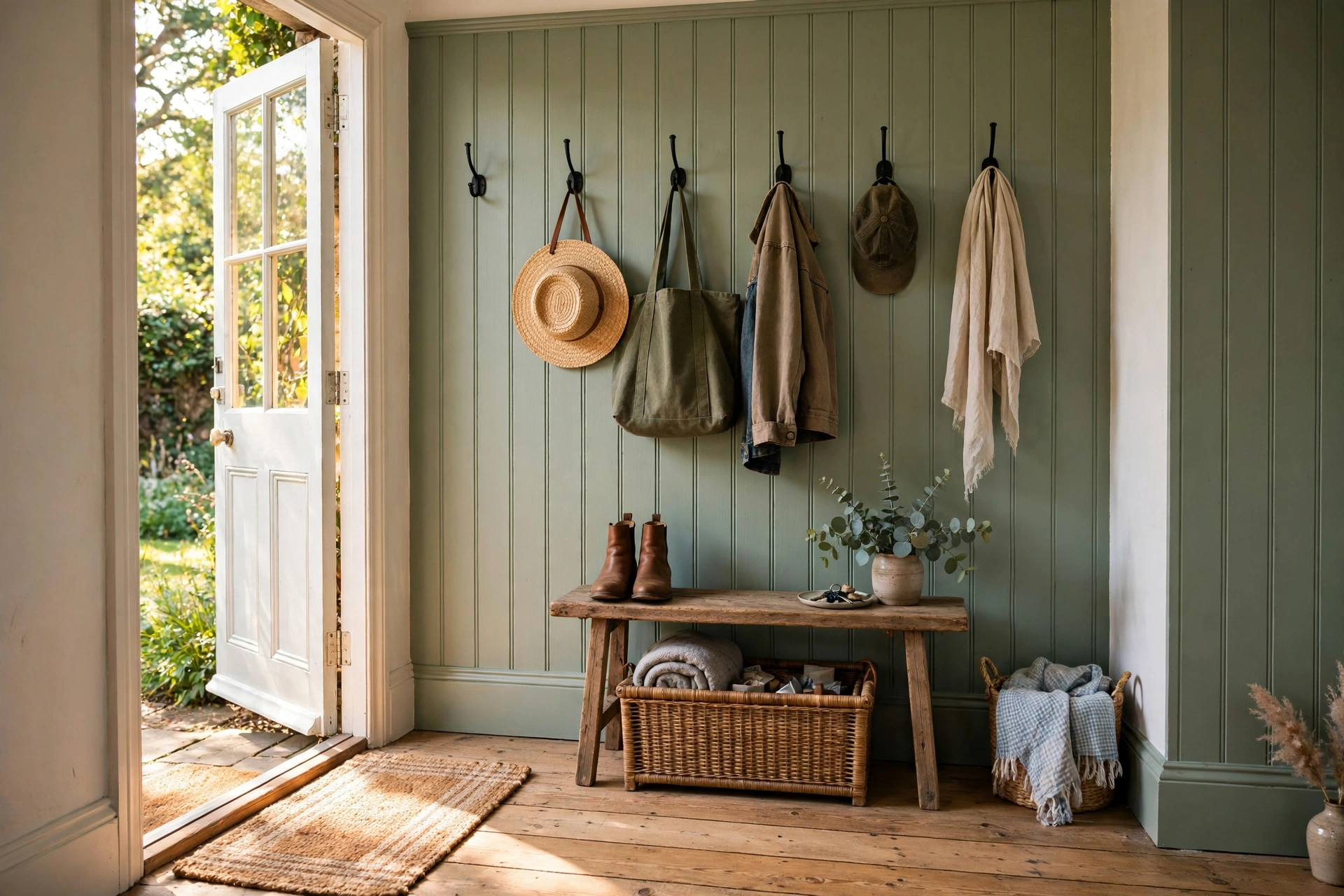
Beadboard’s narrow vertical grooves bring instant cottage and coastal character to the entryway. It is thinner and more delicate than shiplap, which suits smaller foyers where shiplap’s bold lines might overwhelm. Run it as a wainscot with a chair rail cap, or take it full height in a tiny entry for a jewel-box effect. Paint it white for the classic cottage look, or try a soft sage or powder blue for color. Beadboard panels from the home center make installation a one-day job — just level, nail, caulk, and paint.
15. Paint an Arch Behind the Console
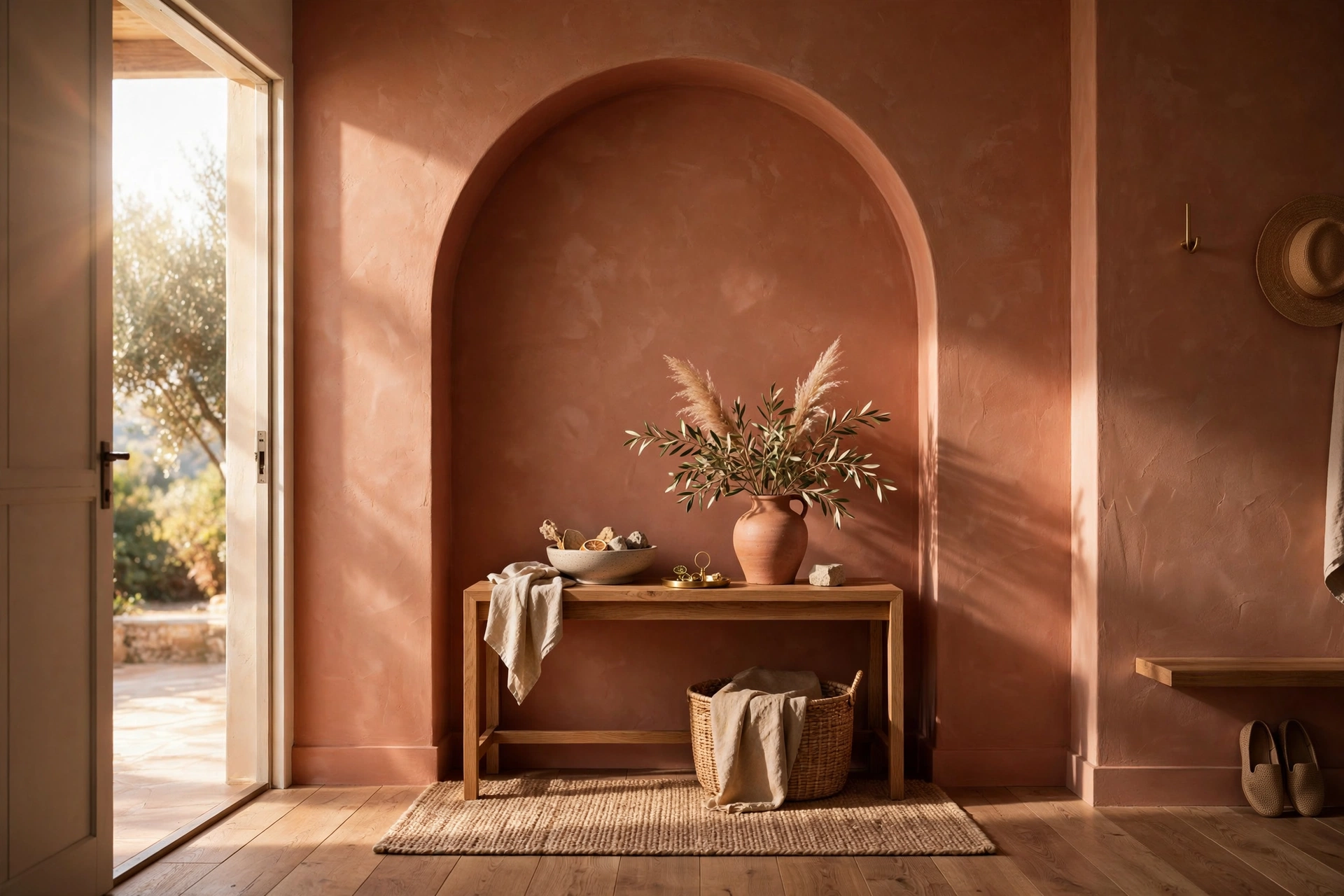
A painted arch framing the console table is the entryway’s answer to a headboard: it creates a focal point, defines the zone, and adds architecture with nothing but paint. Use a pencil, string, and painter’s tape to map a perfect arch, then fill it with a color pulled from your home’s palette — or go bold with a contrast shade. The arch visually anchors the console, mirror, and lamp into one composed vignette. The Orangetree Interiors accent wall guide includes arches among its favorite high-impact, low-cost treatments. For a softer take, paint the arch in a tone just slightly deeper than the wall — subtle, but the eye knows it is there.
FAQ
Which wall should be the accent wall in an entryway?
Choose the wall you see first when you walk in — usually the wall facing the front door or the longest uninterrupted stretch. The wall behind the console table or bench is the classic choice because furniture grounds the treatment.
What is the best paint color for an entryway accent wall?
Deep, saturated colors make the strongest first impression: inky navy, forest green, charcoal, warm terracotta, or black. Pull the shade from colors already present deeper in the house so the entry feels connected to what follows. In dark entryways with no natural light, consider a rich mid-tone rather than the darkest shade to avoid a cave effect.
Is wallpaper or paint better for an entryway accent wall?
Paint is cheaper, faster, and easier to change; wallpaper offers pattern and texture paint cannot match. For renters, peel-and-stick wallpaper wins outright. For high-traffic entries with kids and pets, a scrubbable satin paint or a durable grasscloth holds up best.
How do I choose an accent wall in a small entryway?
In a small foyer, keep the treatment simple and let one idea shine: a single bold paint color, one graphic wallpaper, or a painted arch behind the console. Avoid busy patterns on every surface — they shrink the space visually. Dark colors can actually work beautifully in small entries, making them feel cocooning and intentional rather than cramped.
Can renters do an entryway accent wall?
Absolutely. Peel-and-stick wallpaper is the renter’s best friend — it applies in an afternoon and removes cleanly. Removable wall decals, large-scale art leaned against the wall, and a painted arch done with removable paint are all deposit-safe. Even tension-mounted curtains or a freestanding room divider can create an accent-wall effect with zero wall contact. For trim-look character without nails, our entryway wainscoting ideas for elegant first impressions include renter-friendly alternatives.
Keep Exploring
An accent wall is the backdrop; the styling on it is the story. Once the paint dries or the last slat is nailed, layer in the mirror, the console, the lamp, and the art that make the entryway yours. Start this weekend with the wall that greets you every day — it is the smallest canvas in the house and the one with the biggest emotional payoff. Which of these entryway accent wall ideas will you try first?