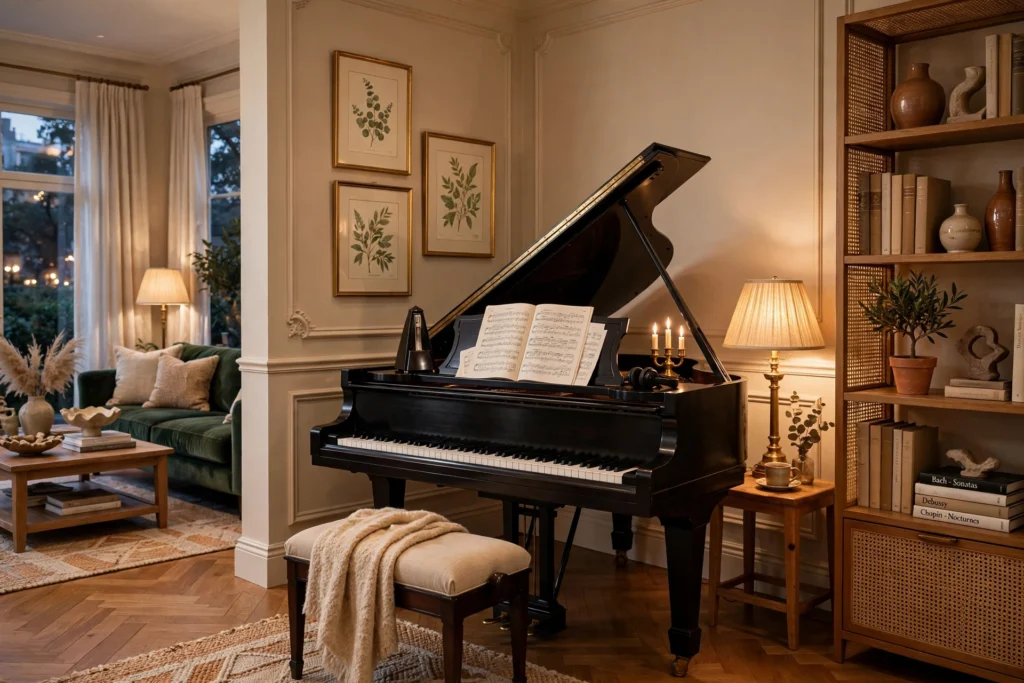

A piano is the grandest object most living rooms will ever hold — sculptural, storied, and impossible to ignore. Rather than treating it as an obstacle to decorate around, make it the heart of a music corner that invites playing and gathering. These living room piano decor ideas cover placement, styling, and finishing touches so your instrument looks like the room’s crown jewel. Living room corner decor ideas that turn dead space cozy are made for piano placement.
Before styling, respect the instrument. Keep the piano away from direct sunlight, radiators, and exterior walls with big temperature swings — a piano’s wooden soundboard and tuning stability depend on a stable environment. Position it where it can be played comfortably, with room for the bench to slide out and a player to sit with proper posture. Decor should frame the music, never fight it.
1. Anchor the Piano Against a Feature Wall
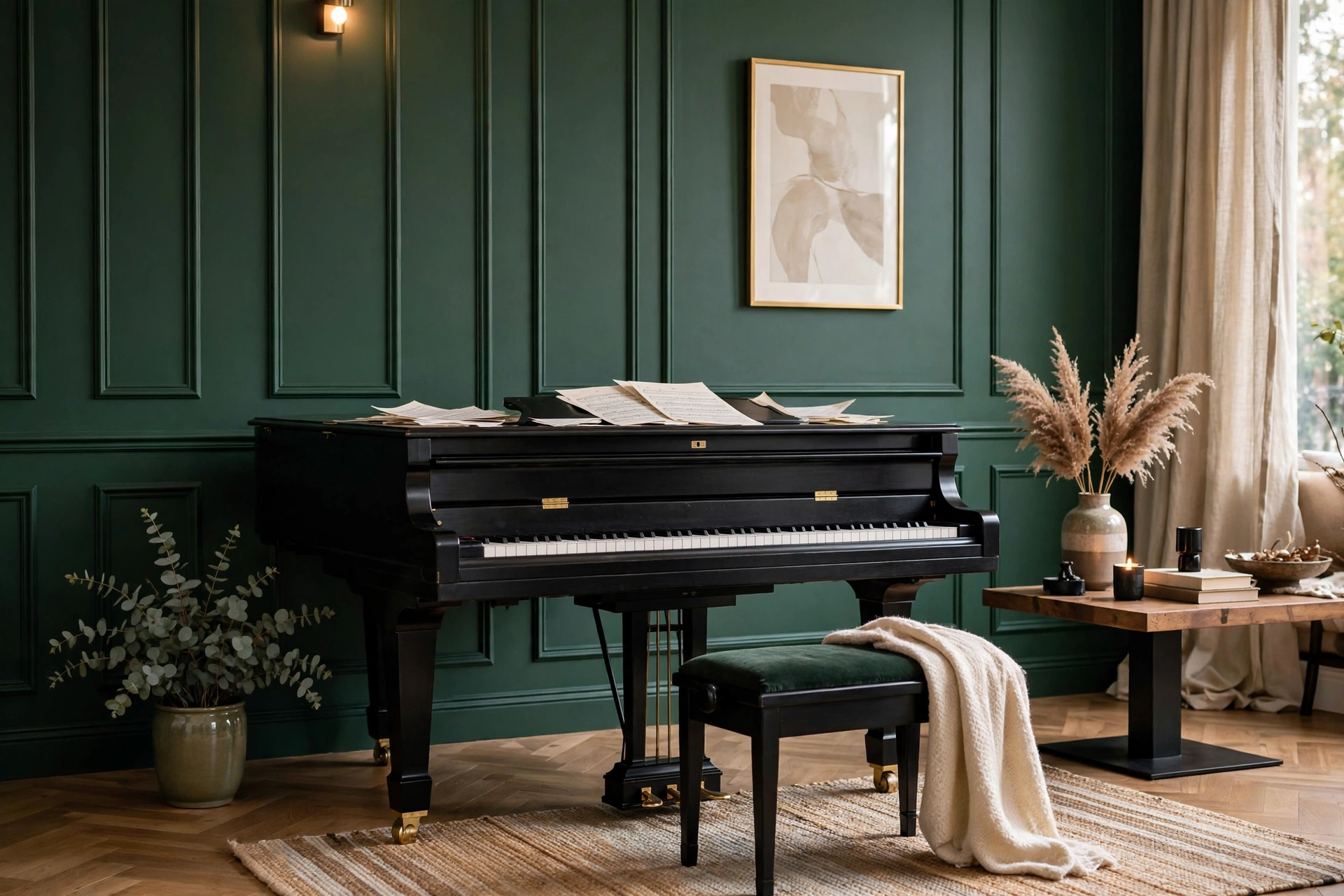
Give the piano the backdrop it deserves: a feature wall in deep paint, limewash, grasscloth, or wood paneling that makes the instrument’s silhouette sing. A black grand against emerald green, a white upright against warm terracotta — the contrast turns the piano into art. The feature wall also defines the music corner as its own zone within an open plan. Keep the wall’s texture subtle enough not to fight the piano’s lines; the instrument is the sculpture, the wall is the gallery. Living room accent wall ideas with big impact offer finishes that flatter large instruments beautifully.
2. Style the Top with Restrained Elegance
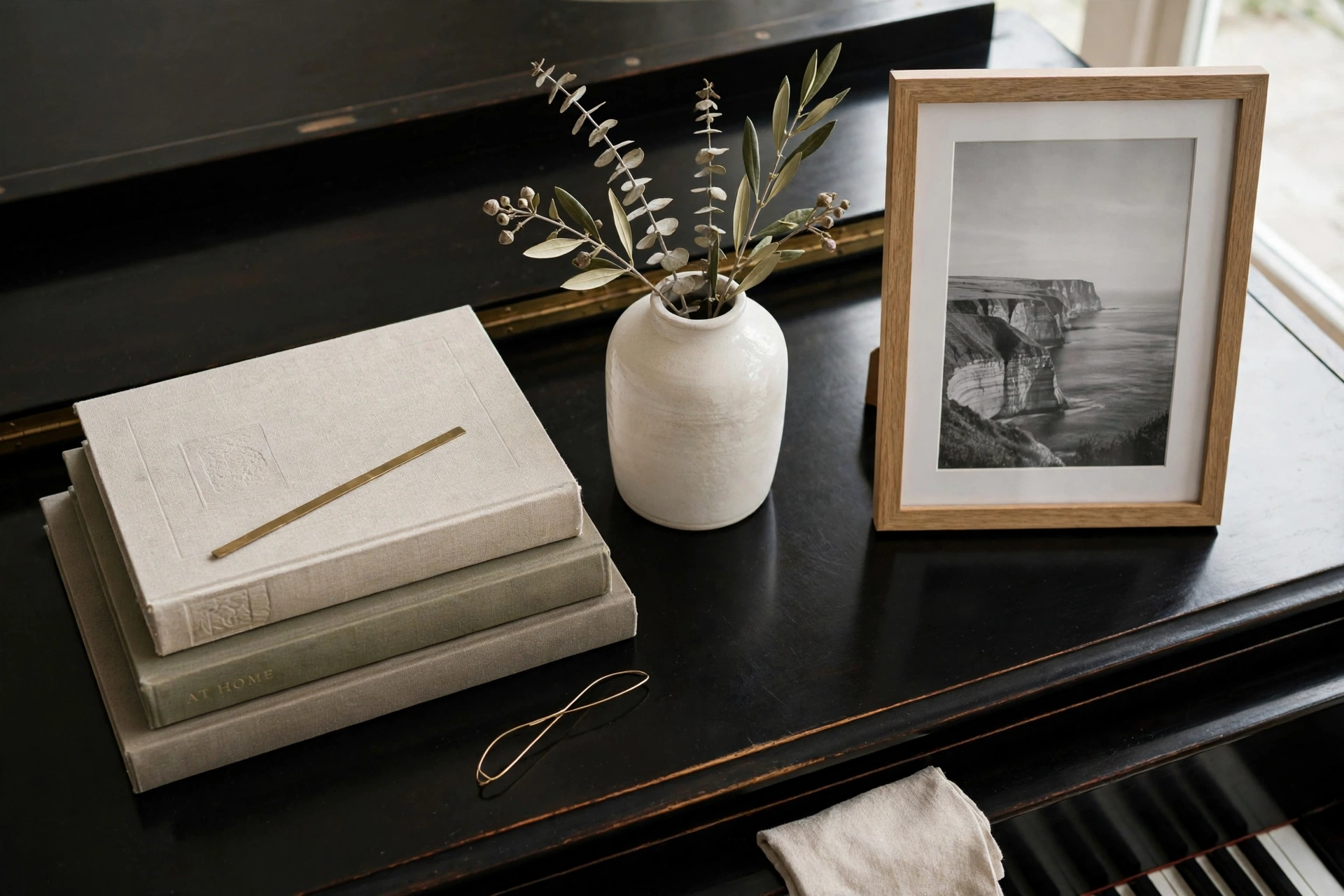
A piano top is a styling surface, not a storage shelf — restraint is everything. Choose three to five objects of varying heights: a small stack of art books, a sculptural vase with fresh stems, a framed photo, a candle. Leave generous empty space so the piano’s own lines remain visible; a crowded top reads as clutter, not curation. Odd numbers and the rule of thirds keep arrangements natural. For grand pianos, style toward the back curve and leave the lid’s playing area clear. Nothing should rattle, scratch, or slide when the music starts — felt pads under every object are non-negotiable.
3. Hang Art Above an Upright Piano
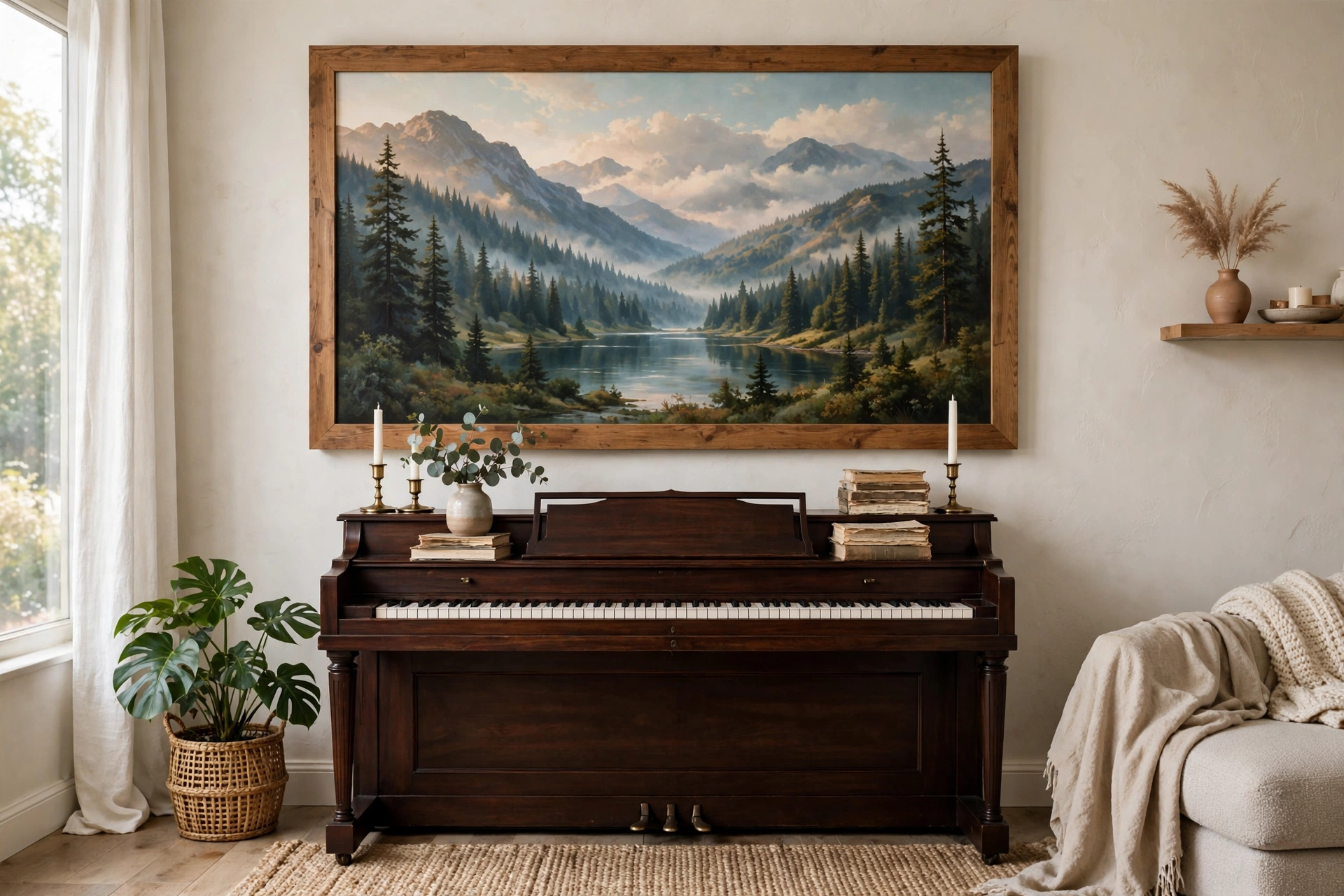
The wall above an upright piano is a natural gallery spot — the piano’s horizontal line begs for vertical balance. Hang one large piece centered above, or a salon-style cluster that echoes the piano’s width. Music-themed art is the obvious choice but not the only one: landscapes, abstracts, and family photography all work when the palette connects to the room. Hang the art’s center about 8 to 10 inches above the piano top so the grouping reads as one composition. For renters, a leaning oversized frame on the piano top achieves the look without holes.
4. Light the Music Corner Beautifully
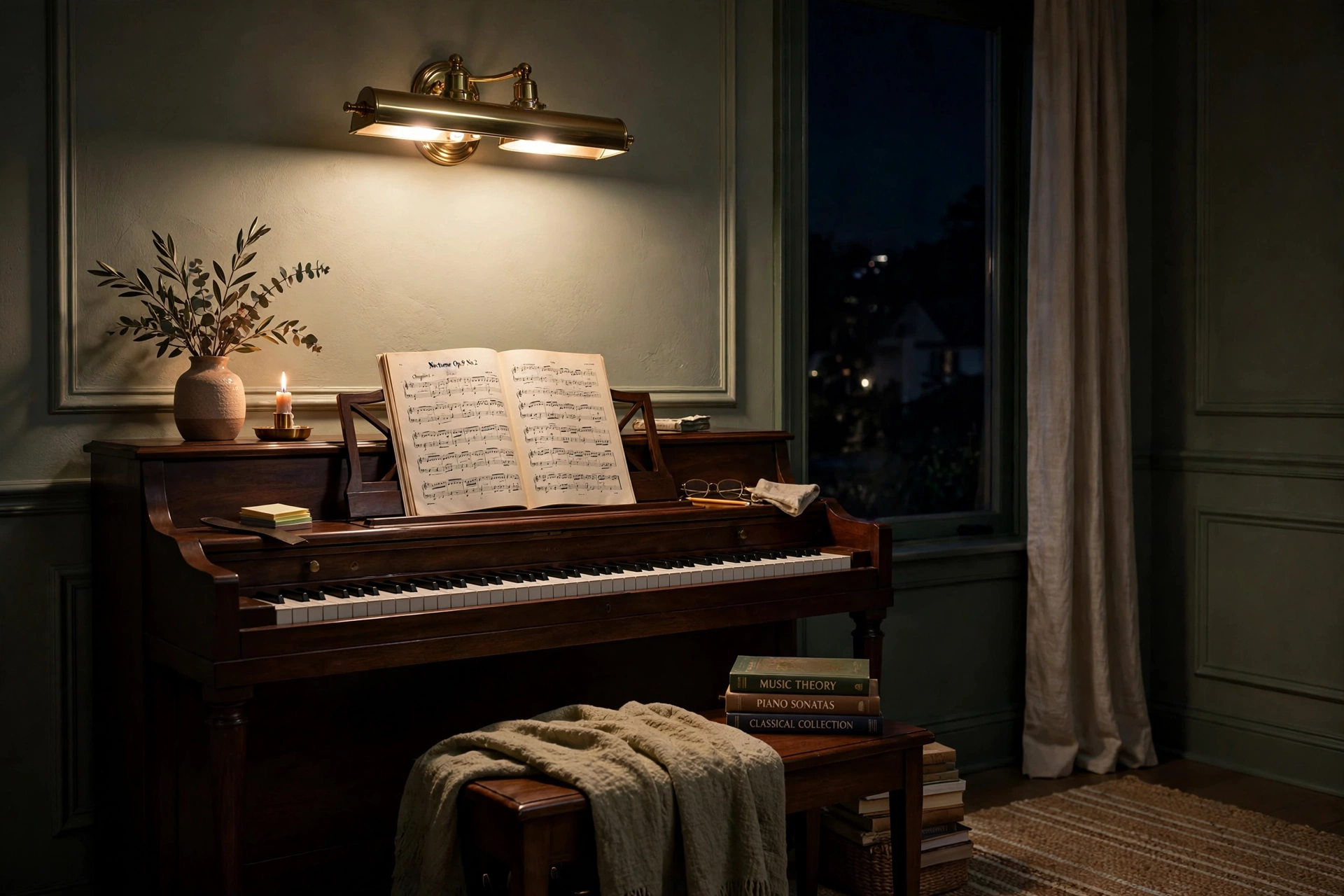
Pianos deserve dedicated lighting — both for playing and for evening atmosphere. A brass picture light mounted above an upright illuminates sheet music and art alike; a sculptural floor lamp arcing over a grand creates drama. Add a small table lamp on a nearby surface for warm ambient glow. Keep light warm (2700K) and dimmable so the corner shifts from practice-bright to evening-moody. Layered lighting principles make a music corner glow. Never place a hot lamp directly on the piano’s finish.
5. Choose the Right Piano Bench (and Style It)
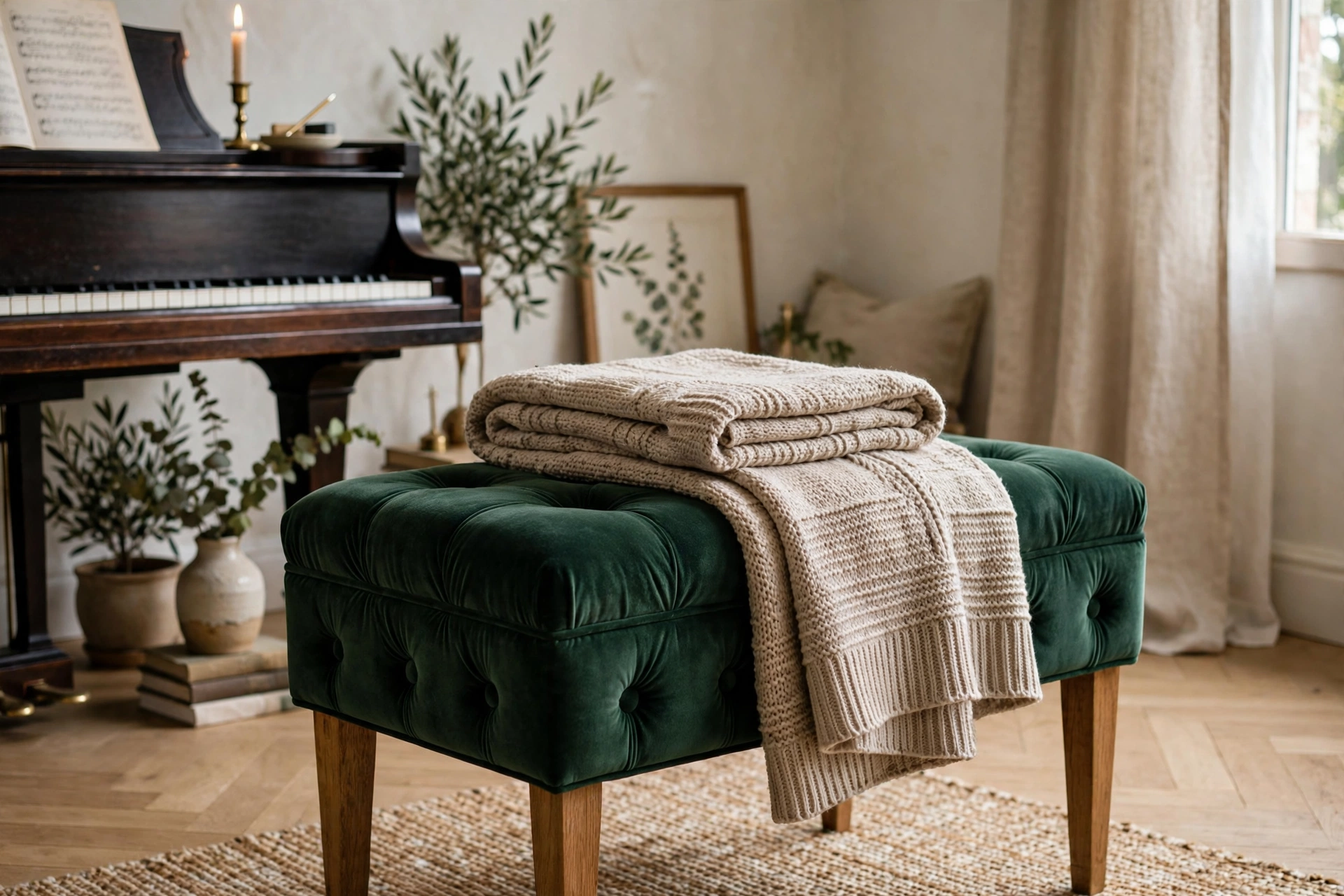
The bench is the piano’s companion piece — choose one with intention. A matching bench in the same finish reads as a set; a contrasting upholstered bench (velvet, leather, linen) adds designer flair. Storage benches hide sheet music and metronomes beautifully. Style the bench simply: a folded throw or a single cushion, nothing that interferes with sitting. Adjustable-height benches suit households with players of different sizes. The bench should slide fully under the piano when not in use, keeping the corner tidy. Think of it as the piano’s handshake with the room — welcoming and well-dressed.
6. Display Sheet Music as Decor
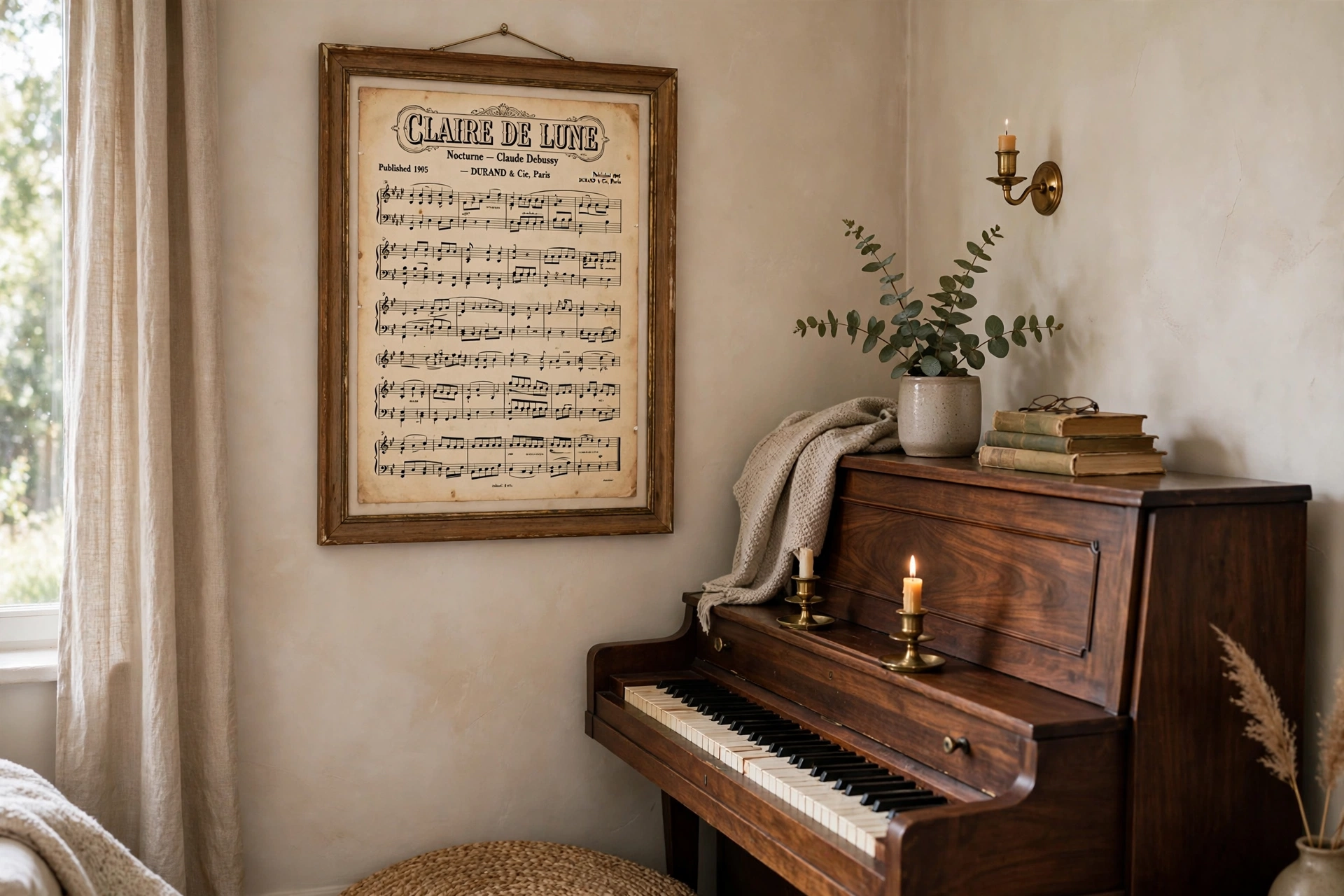
Sheet music is ready-made art — frame a favorite score’s title page, lean vintage sheet music on the piano’s music desk, or stack leather-bound volumes beside the bench. Aged scores with beautiful typography bring history and craft to the corner. Rotate the displayed piece seasonally: holiday music in December, a beloved sonata year-round. For non-players, framed vintage music prints offer the aesthetic without pretense. Keep actual playing copies in the bench storage and display copies pristine. This is decor that tells the truth about the room — music lives here.
7. Add a Rug to Define the Music Zone
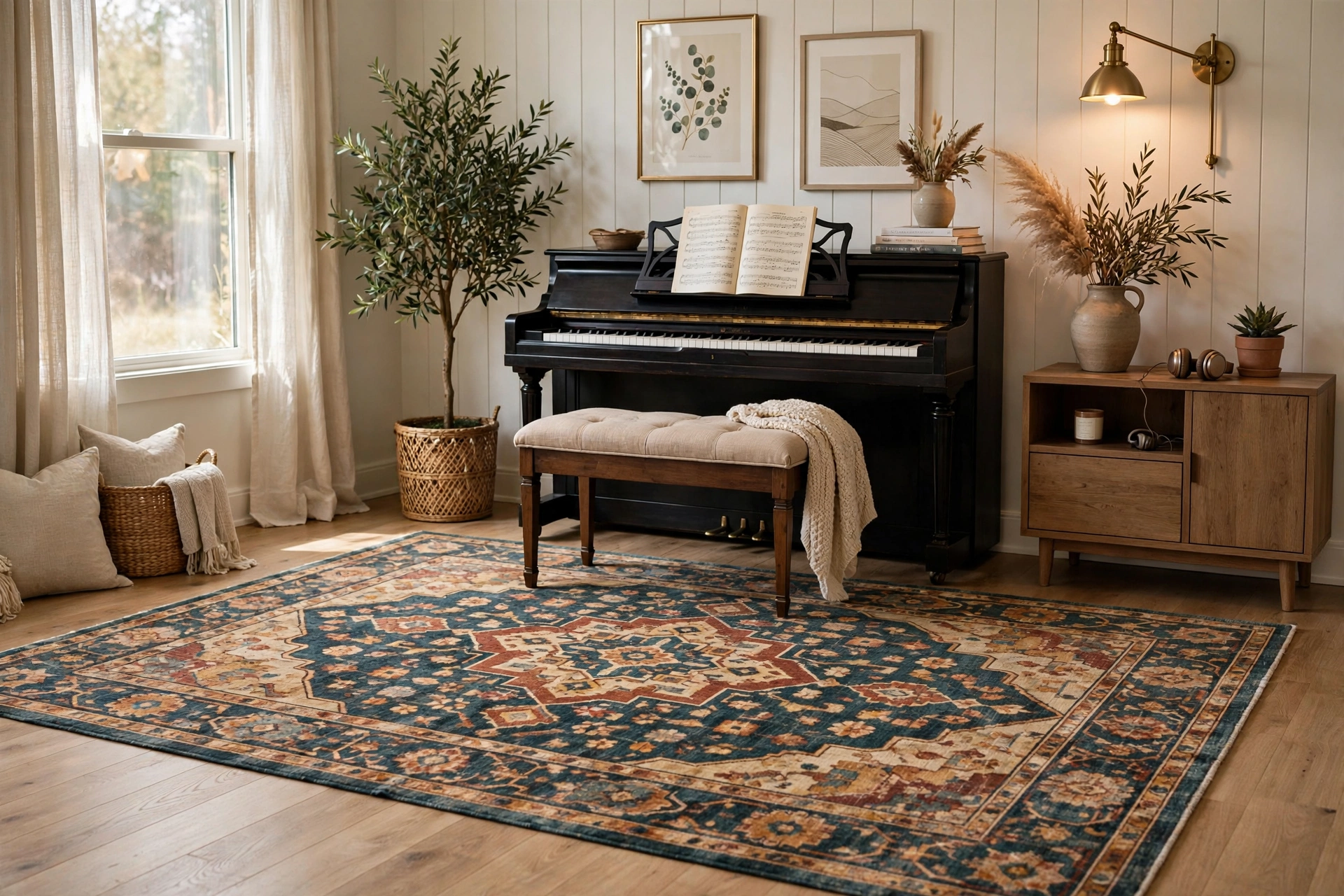
A rug under the piano and bench does triple duty: it defines the music corner as a distinct zone, protects floors from bench legs and foot traffic, and improves the room’s acoustics by taming echo. Size it generously — the bench should sit fully on the rug with room to slide back. For grand pianos, a large rug anchors the instrument’s footprint; for uprights, a runner or medium rug suffices. Choose low-pile weaves that allow the bench to move smoothly. Pattern-wise, let the rug complement the room: Persian styles suit traditional pianos, flat-weave geometrics suit modern ones.
8. Surround It with Greenery
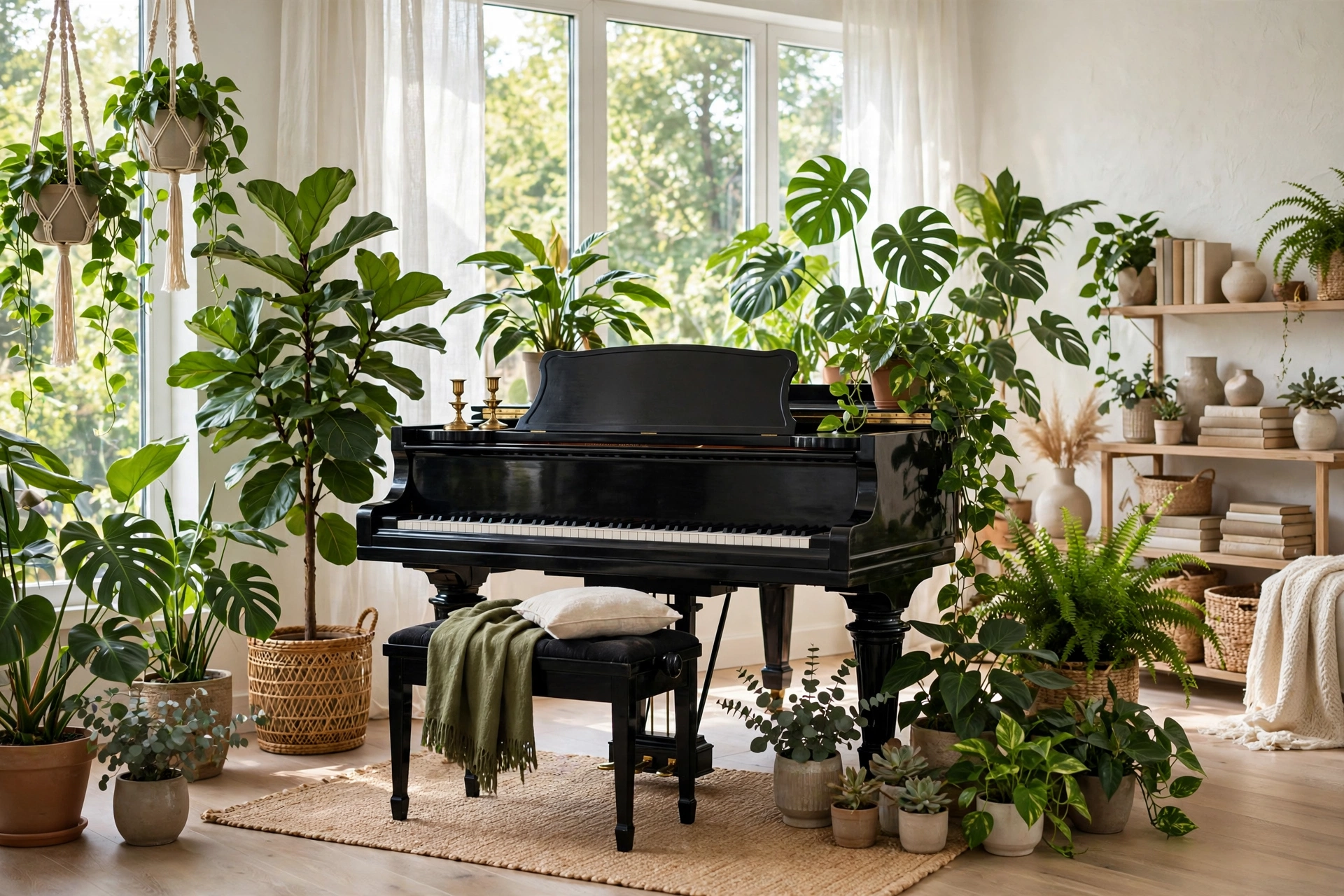
Plants soften the piano’s hard lines and bring life to the music corner. A tall fiddle-leaf fig or olive tree beside a grand, trailing pothos on top of an upright (in a proper saucer), a cluster of smaller plants on a nearby stand — greenery makes the corner breathe. The organic shapes contrast beautifully with the piano’s geometry. Keep plants in leak-proof containers and never water them on the piano itself. A single dramatic plant often beats a fussy collection. The combination of music and nature turns the corner into the room’s most soulful spot.
9. Create a Listening Nook Nearby
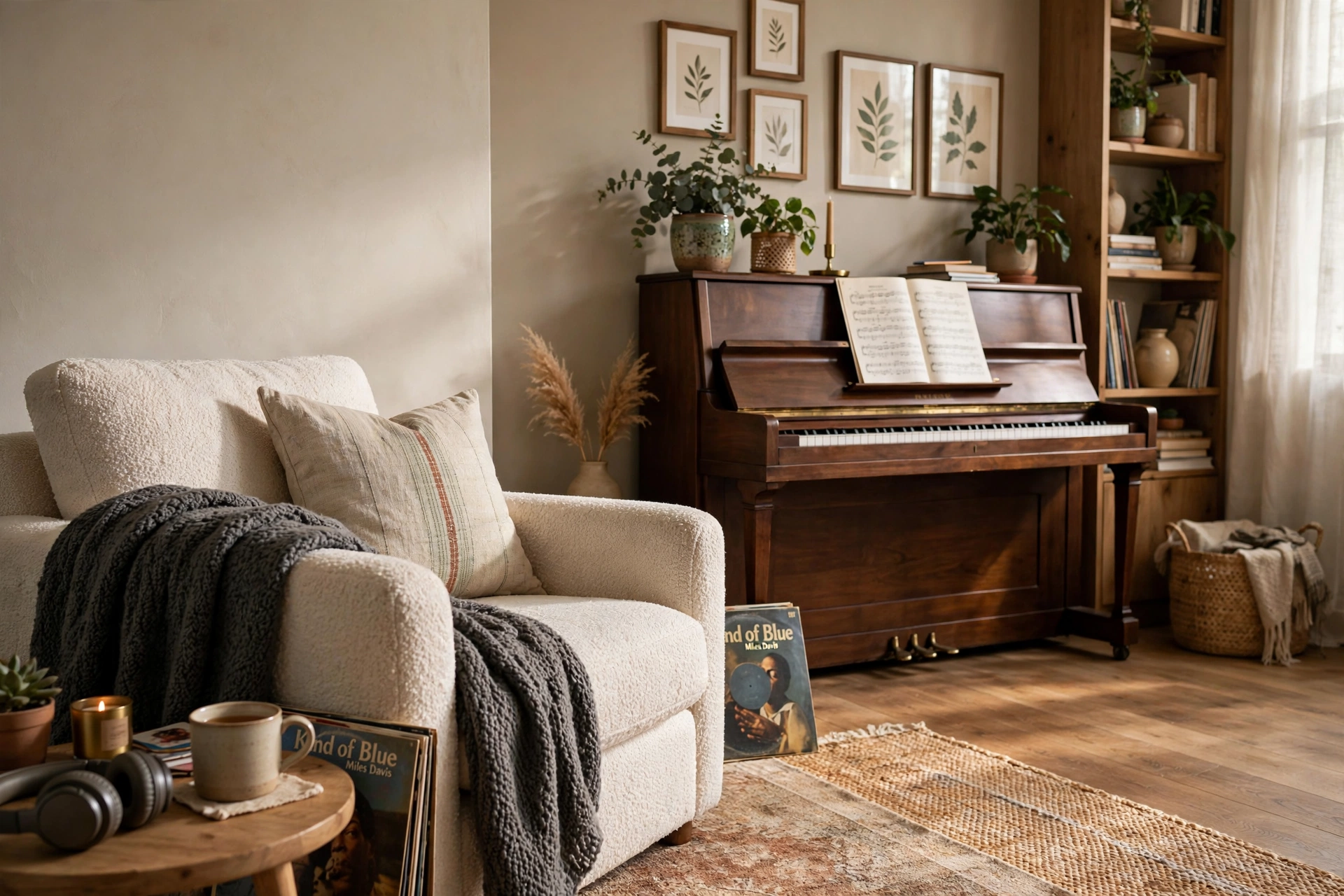
A piano invites an audience — honor that with a listening nook. Place a comfortable armchair or a small loveseat angled toward the piano, with a side table for drinks and a good reading lamp. This arrangement turns idle piano time into family concerts and gives the instrument a social context. In smaller rooms, even a single beautiful chair signals that the piano is for enjoying, not just looking at. Position the seating to catch the sound — slightly to the side of a grand’s open lid, facing an upright. Music shared is music doubled.
10. Embrace a Black Grand as Sculpture
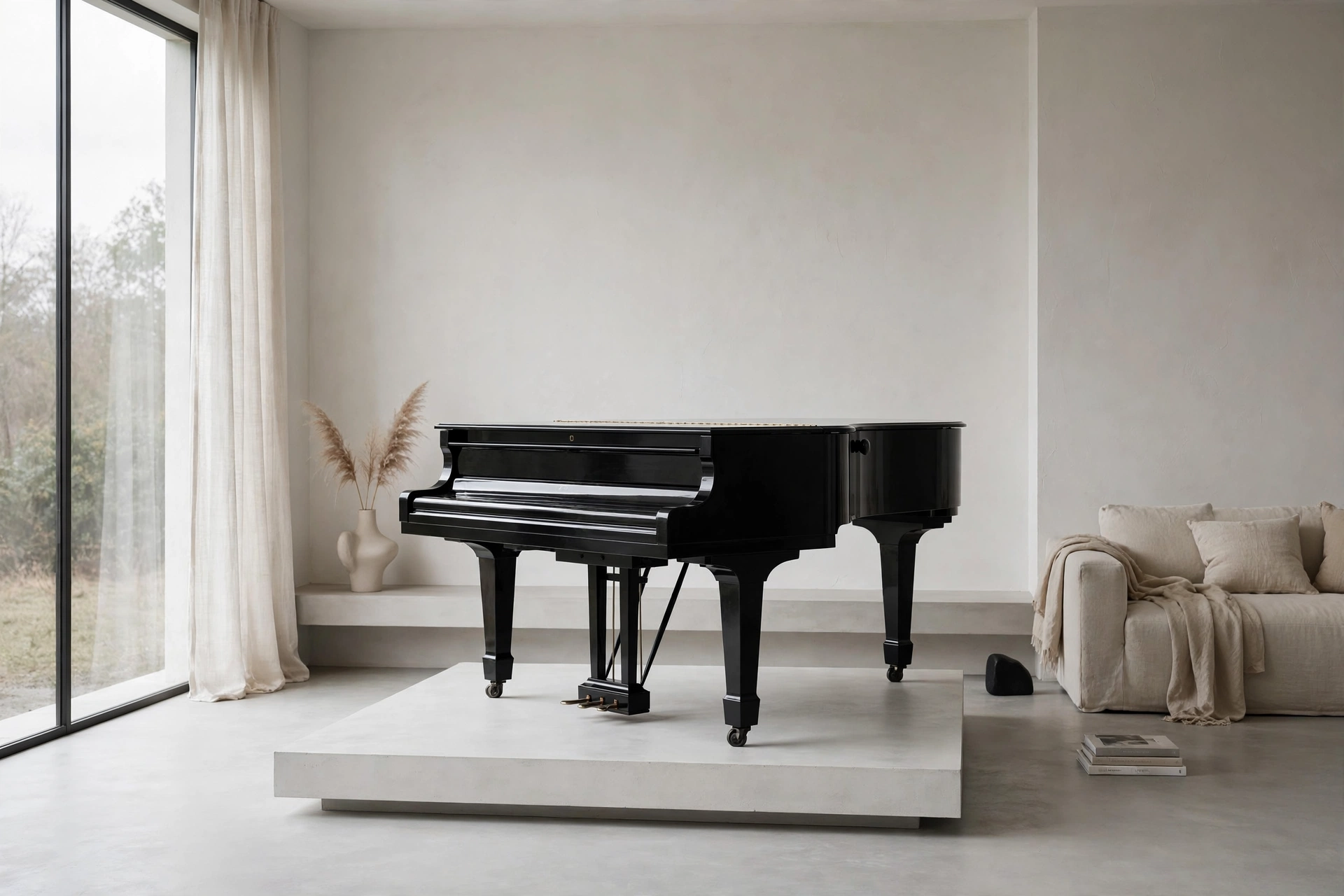
A black grand piano is arguably the most sculptural object in domestic interiors — treat it like the art piece it is. Give it space: pull it away from walls so its curves can be appreciated from multiple angles. Keep the surrounding decor minimal and the palette restrained so nothing competes. A single dramatic light source — a spotlight or a low-hanging pendant — makes the lacquer glow after dark. Resist the urge to cover it with objects; the lid’s curve is the decoration. In the right room, a black grand needs no styling at all — placement and lighting do everything.
11. Warm Up a White or Light Piano
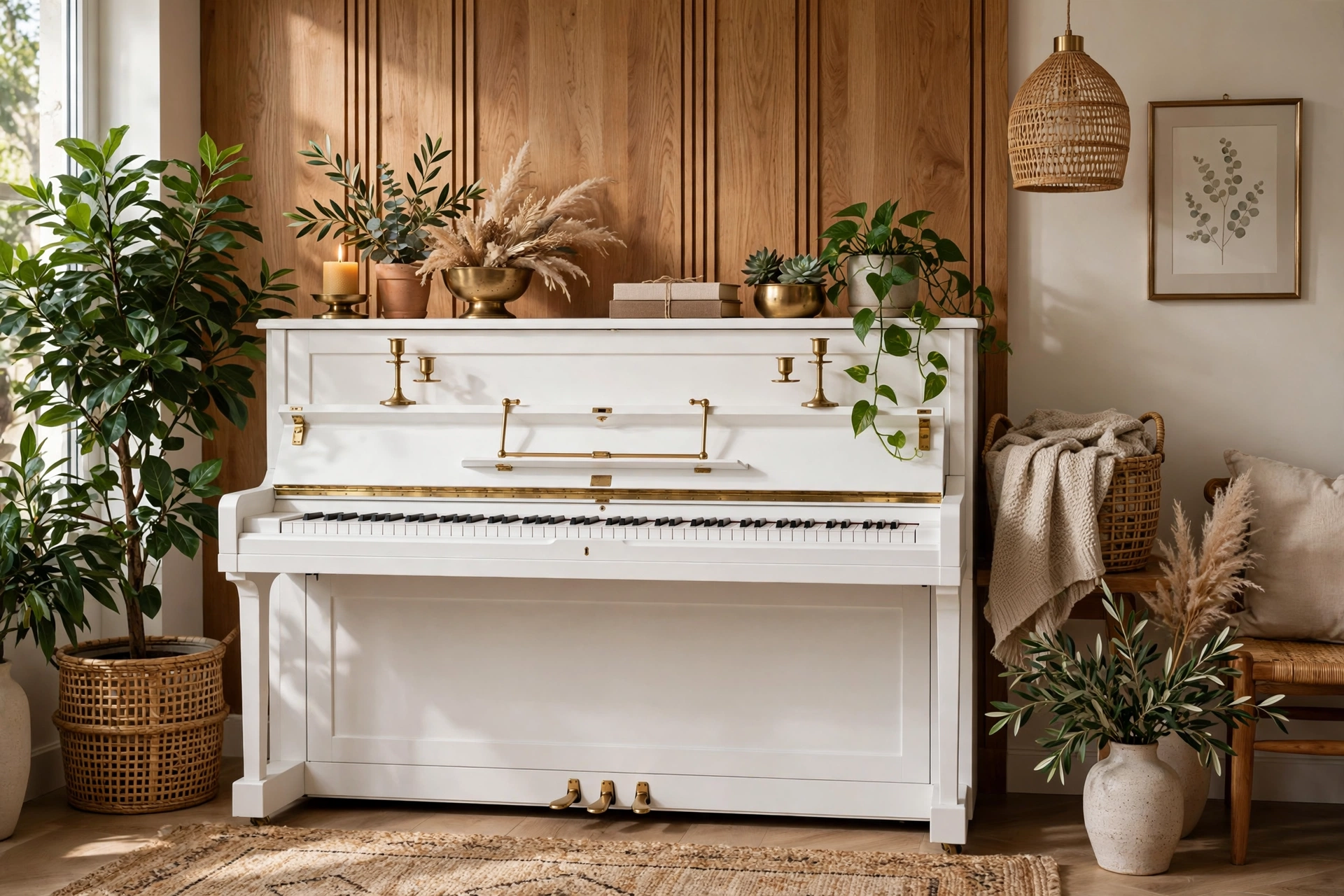
White, ivory, and light-wood pianos bring airiness that black cannot — they suit coastal, Scandinavian, and modern rooms beautifully. The styling approach inverts the black-piano rules: warm it up with natural textures rather than paring back. Wood tones, woven baskets, linen, and greenery keep a white piano from feeling stark. Brass and gold accents glow against white lacquer. Keep the surrounding palette warm — creams, sands, soft greens — so the piano feels integrated rather than clinical. A white piano in a light-filled room with plants is pure serenity.
12. Add Vintage Charm with Antique Accessories
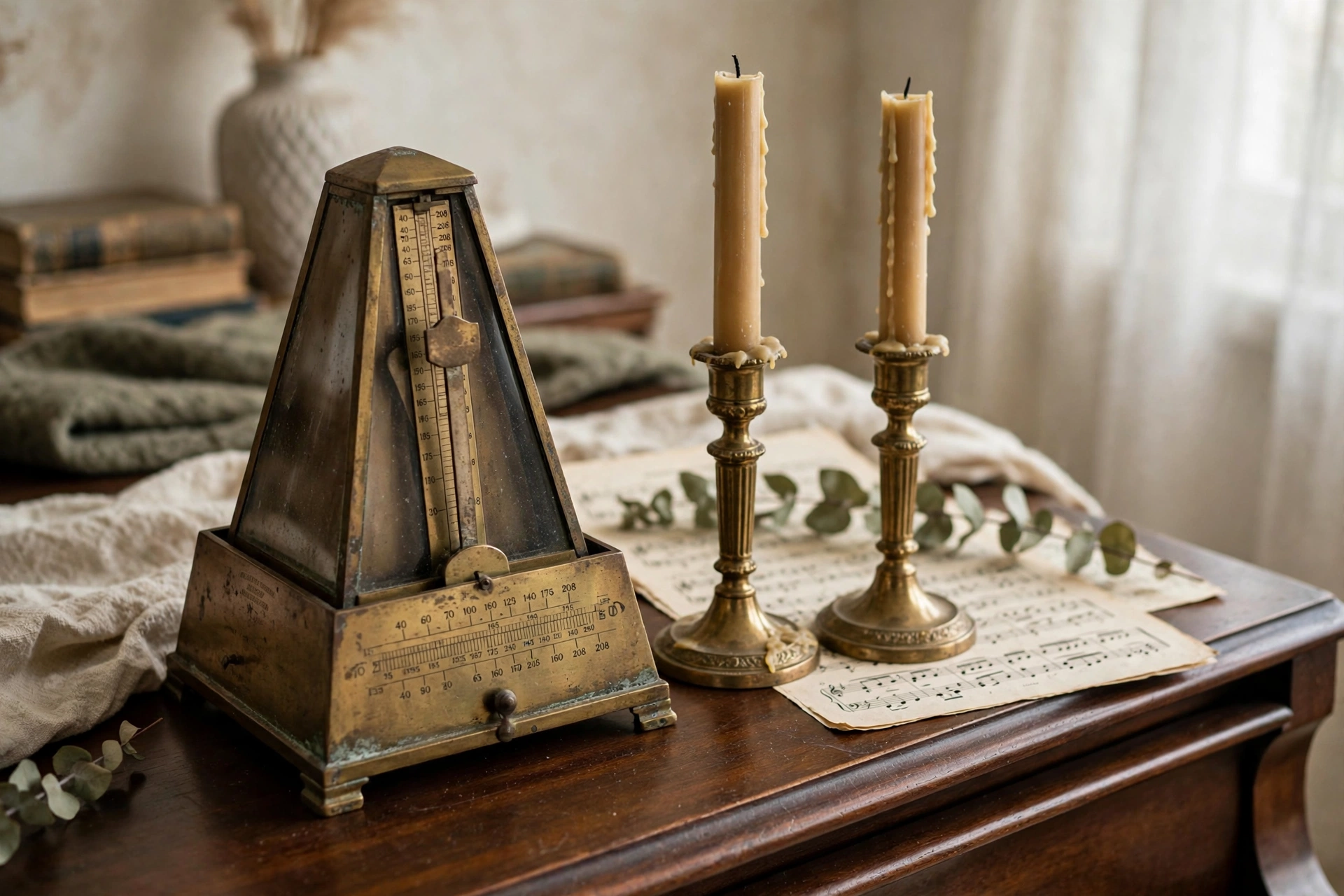
Antique accessories give a piano corner soul: a brass metronome, candlesticks, a vintage music stand, an old framed portrait of a composer. These objects carry the weight of music history and make the corner feel collected over decades. Hunt flea markets and estate sales for pieces with genuine patina — reproduction “vintage” rarely convinces up close. A metronome is both decor and tool; candlesticks add evening ceremony (use LED candles near the instrument). Keep the count low — three well-chosen antiques beat a dozen knick-knacks. The piano’s own history deserves companions with stories.
13. Keep Cables and Clutter Invisible
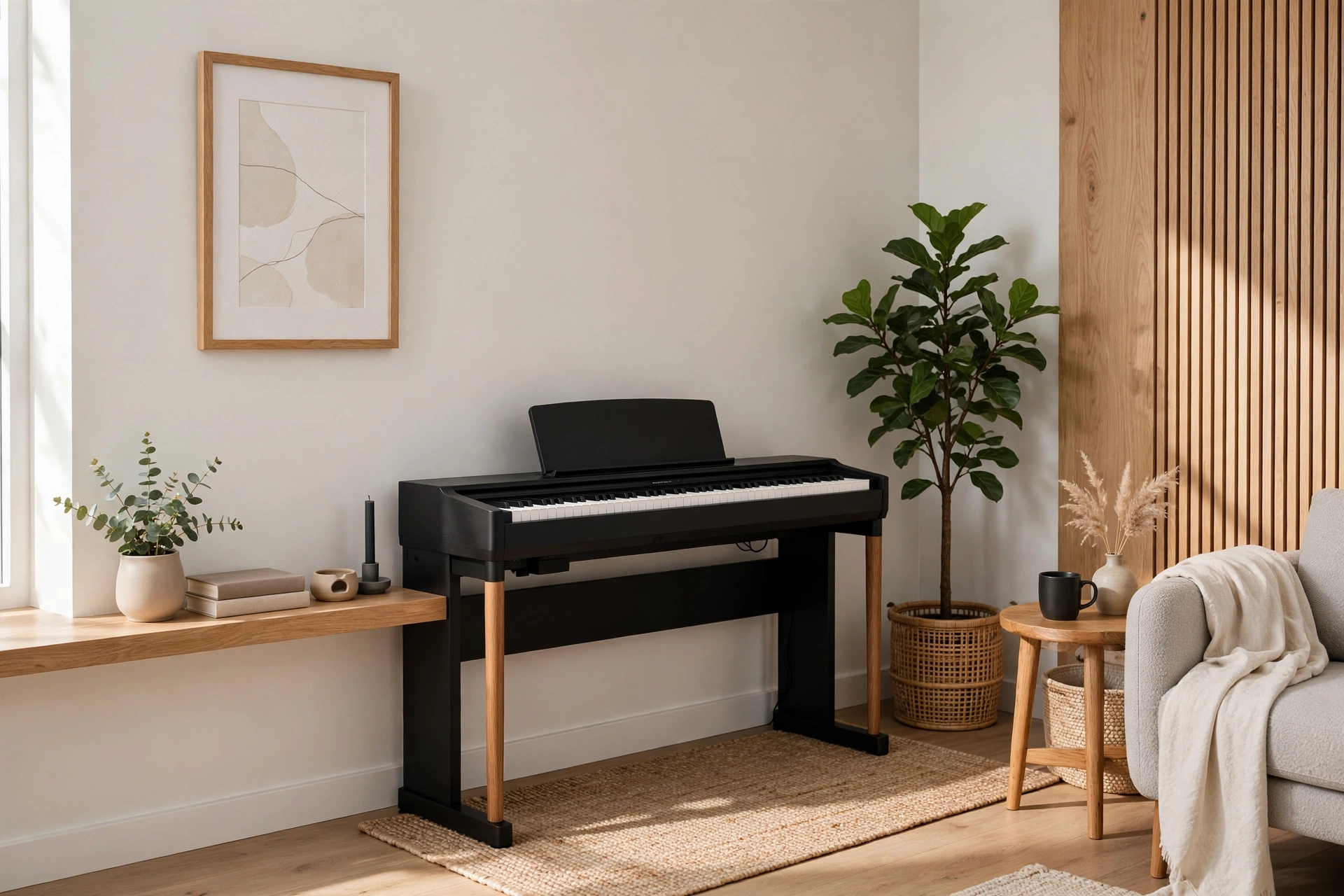
Digital pianos and keyboards bring cables, pedals, power adapters, and stands — all of which can wreck the corner’s elegance in seconds. Run cables through cord covers matched to the floor, mount power strips behind furniture, and choose a keyboard stand in the piano’s finish rather than chrome X-frames when possible. Store headphones on a beautiful stand, not draped over the keys. A storage bench or nearby basket swallows adapters and spare cables. The goal is simple: when someone glances at the music corner, they should see music, not electronics.
14. Tune the Acoustics with Soft Furnishings
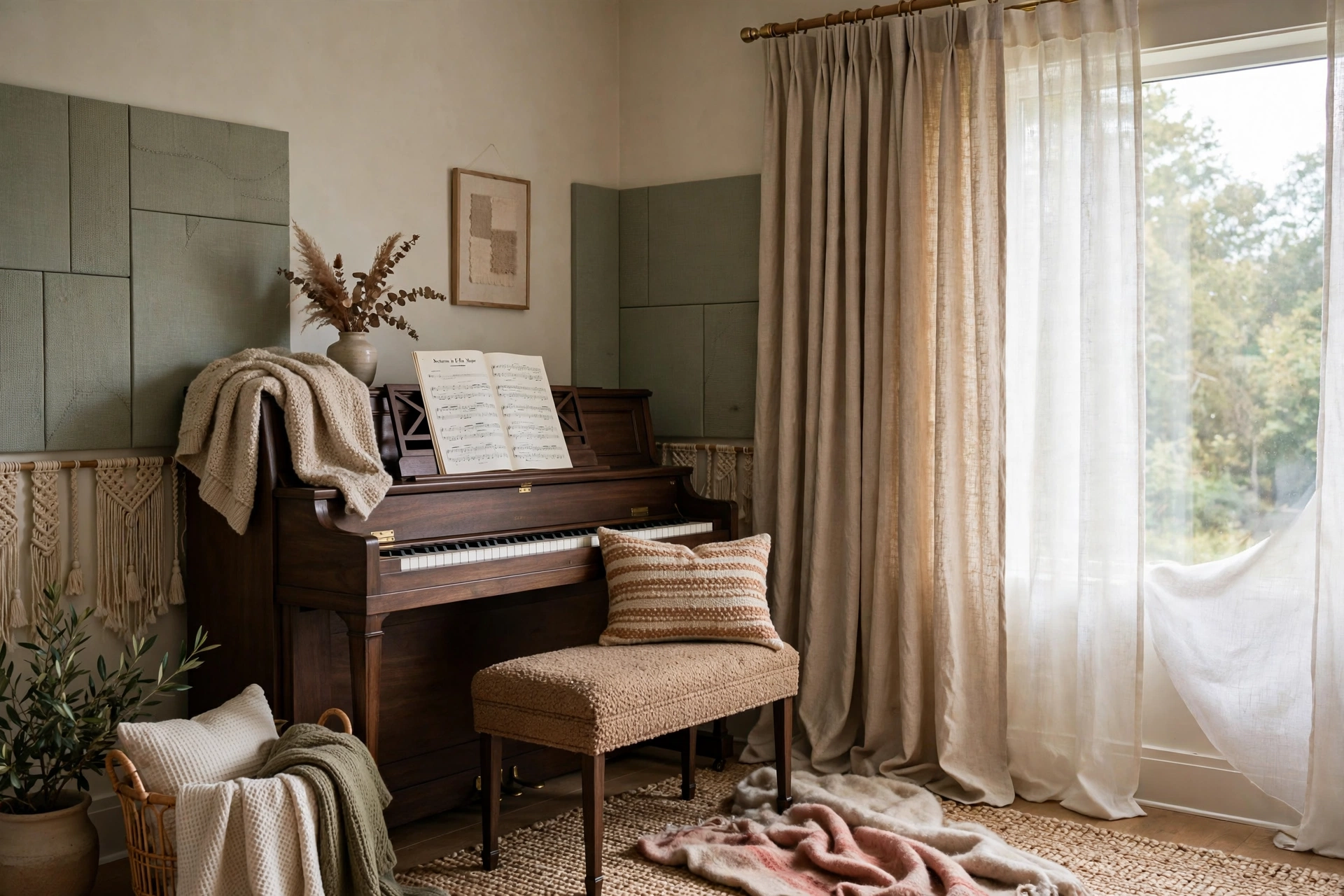
A piano in a hard-surfaced room can sound harsh — soft furnishings tune both the look and the sound. Curtains, upholstered seating, rugs, and even wall hangings absorb the reflections that make pianos sound tinny in modern minimalist spaces. This is styling with acoustic purpose: every textile you add for beauty also sweetens the tone. Bookshelves are excellent diffusers — a book-lined wall near the piano scatters sound beautifully. If the room echoes when you clap, it needs softening before the piano will sound its best. Decorate for the ears as well as the eyes.
15. Invest in Proper Care from Trusted Experts
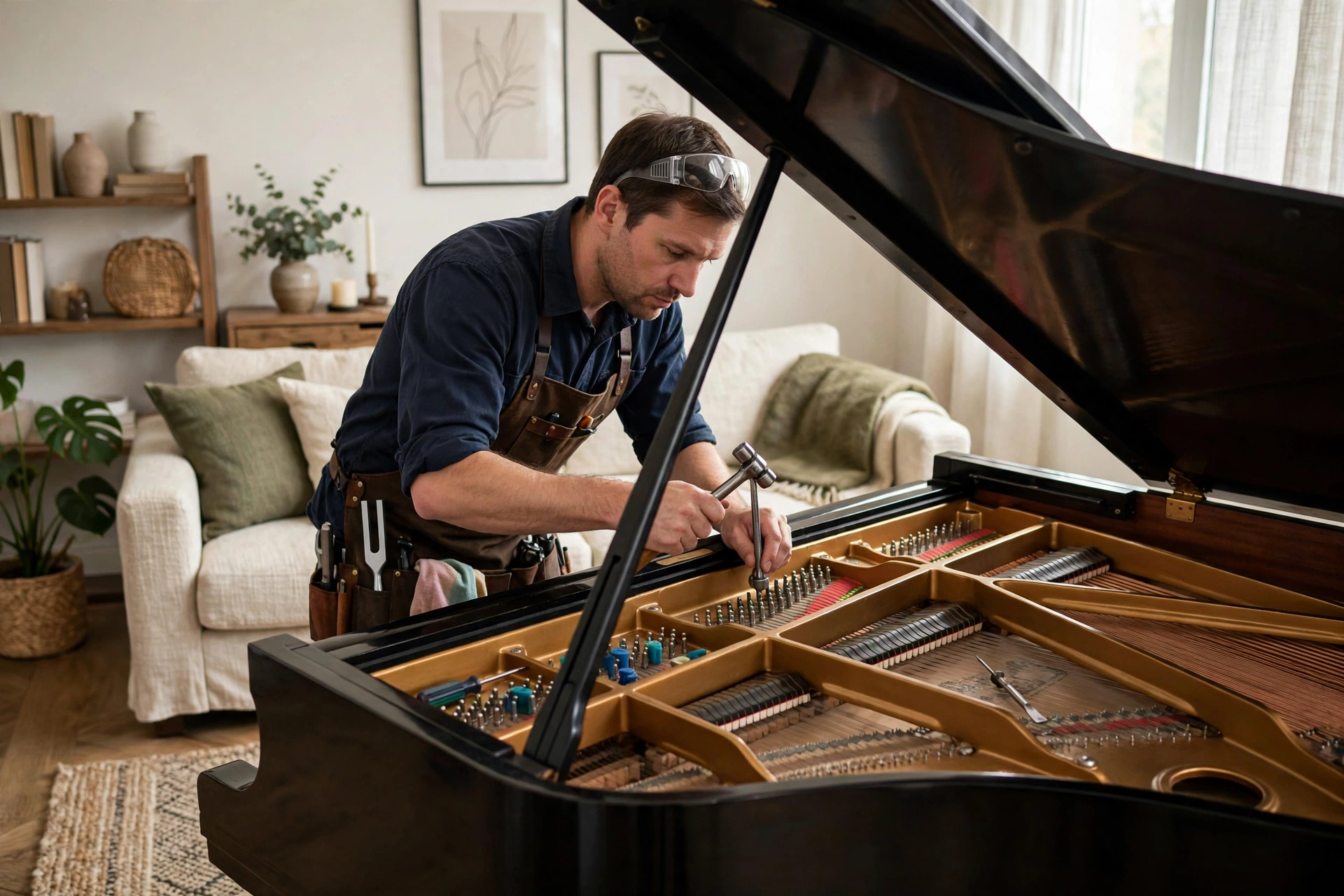
A piano is a precision instrument that rewards professional care — annual tuning at minimum, regulation and voicing as needed, and climate awareness year-round. Build a relationship with a qualified technician; makers like Steinway & Sons maintain technician networks and care guides worth consulting whatever brand you own. Keep the finish dusted with a soft dry cloth, close the lid or use a cover to protect from dust and sun, and maintain 40 to 50 percent humidity if you can. A well-maintained piano plays beautifully for generations — it may outlive every other object in the room.
FAQ
Where should I put a piano in my living room?
Place it against an interior wall away from windows, radiators, and exterior doors to protect tuning stability. Uprights suit flat walls; grands need open floor space with room to walk around. Ideally position it where it can be heard and enjoyed — near seating, not exiled to a corner nobody visits. Leave room for the bench to slide out fully.
How do you decorate around a piano without cluttering it?
Less is more: style the top with three to five objects maximum, keep the surrounding walls to one art moment, and give the instrument breathing room. Every object near a piano should earn its place — felt-pad everything to protect the finish. When in doubt, remove one thing; pianos look best with space.
Can a piano work in a small living room?
Yes — uprights and slim digital pianos fit beautifully in small rooms. Place the upright against the longest wall, use the top as a styled console surface, and choose a bench that tucks fully underneath. A piano in a small room becomes the natural focal point, which simplifies the rest of the decorating. Just ensure the bench has clearance to pull out.
Should a piano go against a wall or in the middle of the room?
Uprights belong against walls (their backs are unfinished). Grands sound and look best pulled into the room with space around them — the lid opens into the room for projection. In open-plan spaces, a grand can define zones, acting as a sculptural divider. Let the piano type and your floor space decide.
How do I protect my piano from damage while decorating?
Use felt pads under every decorative object, never place drinks directly on the finish, keep it out of direct sunlight, and maintain stable humidity. Close the lid when not playing to keep dust out, and move the piano (even slightly) only with proper equipment — never drag it. A piano cover is worth it in sunny or dusty rooms.
Keep Exploring
A piano corner is a promise — that music will be made here, that evenings will have soundtracks, that the room has a soul. Place it with care, style it with restraint, and maintain it like the heirloom it is. Then let the room's warmth gather around it with our living room accent chair ideas for a cozy stylish space, where the perfect listening chair completes your music corner.