
Few treatments give a bathroom instant character like wainscoting. That band of paneling running along the lower walls adds architecture, hides imperfect drywall, and turns even a plain builder-grade bath into something with intention. These bathroom wainscoting ideas are built around one non-negotiable rule: bathrooms are wet rooms, so every material choice has to survive steam, splashes, and daily humidity. Get the material right and the style follows — our bathroom accent wall ideas for bold stylish baths show how the upper wall can play off the paneling below.
Traditional wainscot was solid wood, but a steamy bathroom will warp, swell, and eventually rot real wood that is not perfectly sealed. Modern bathroom wainscoting leans on moisture-proof alternatives — PVC, tile, and sealed engineered boards — that deliver the classic look without the maintenance anxiety. With the right material, wainscoting in a bathroom is not a risk; it is one of the most forgiving wall treatments you can choose.
1. Choose PVC Beadboard for Worry-Free Walls
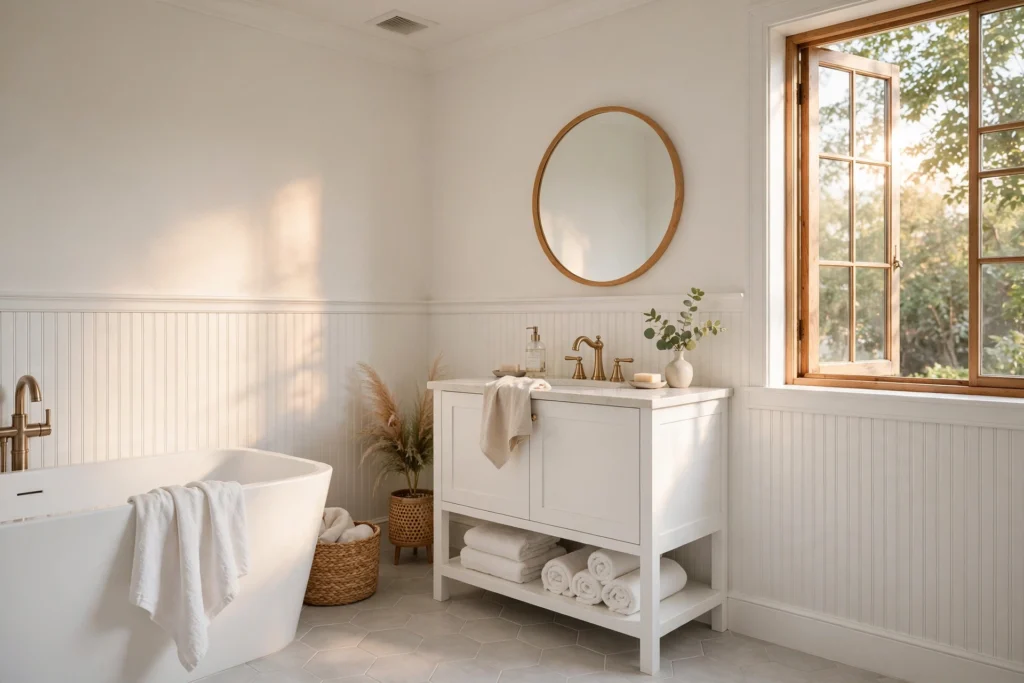
If you want classic beadboard without ever thinking about rot, PVC beadboard is the answer. It looks nearly identical to painted wood once installed, but it is impervious to water — steam, splashes, and even direct shower spray will not phase it. PVC beadboard comes in moisture-rated panels and trim that install like wood, take paint beautifully, and never need resealing. Use it in powder rooms, kids’ bathrooms, and anywhere near the tub with total confidence. The only giveaway is the price of quality PVC trim, which costs more than pine — but you buy it once and never touch it again, which is the cheapest long-term option of all.
2. Try Tile Wainscoting for the Wettest Zones
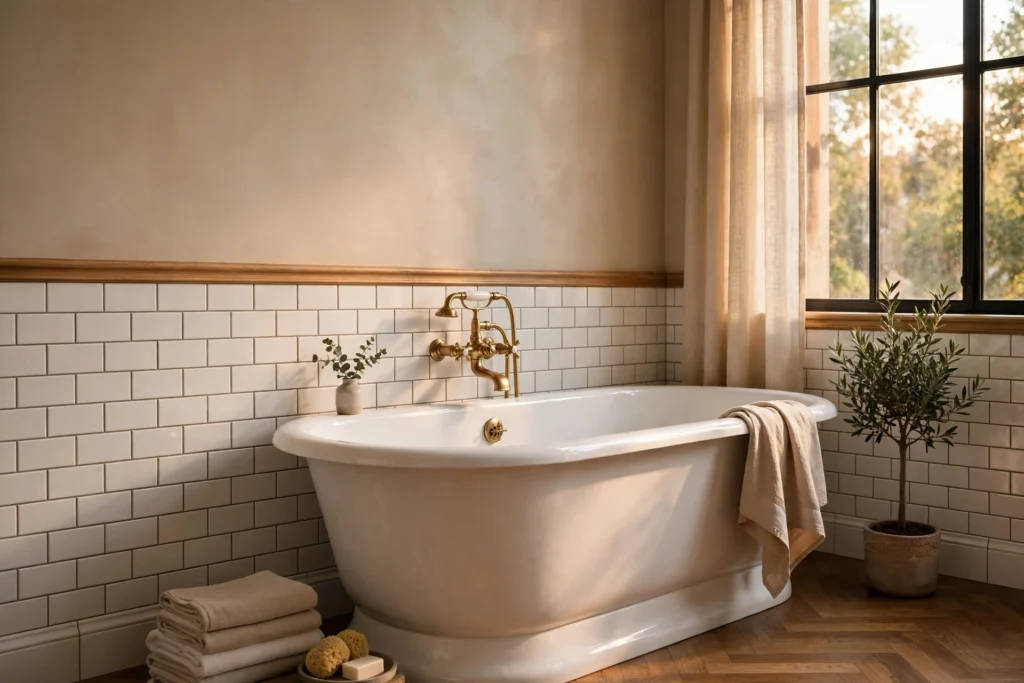
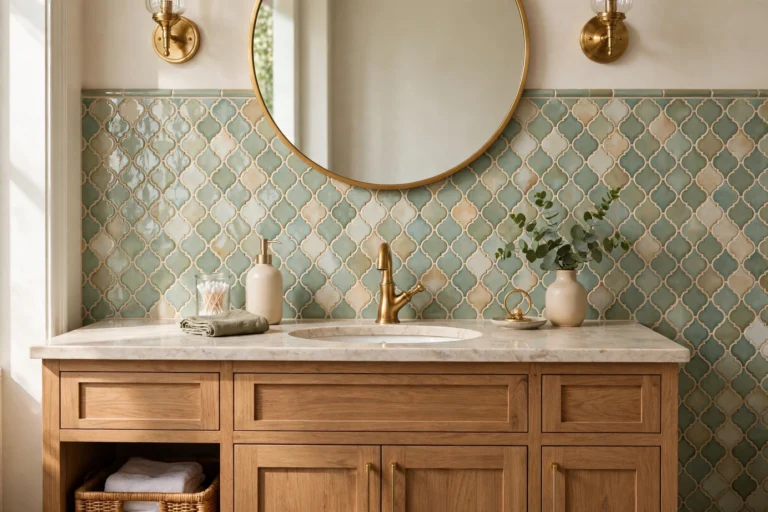
Where water actually hits the wall — behind the tub, beside the shower, around the vanity — tile wainscoting is the gold standard. Subway tile, handmade-look squares, or classic 4x4s run to chair-rail height give you the wainscot silhouette with a fully waterproof surface. Tile wainscot pairs with a painted upper wall for a two-tone look that feels both vintage and fresh, and it handles daily splashing with zero maintenance beyond normal cleaning. Cap it with a bullnose or pencil-trim chair rail for a finished edge. This is the treatment to choose in any bathroom where kids, dogs, or enthusiastic bathers guarantee the lower walls get soaked.
3. Go Floor-to-Ceiling in a Powder Room
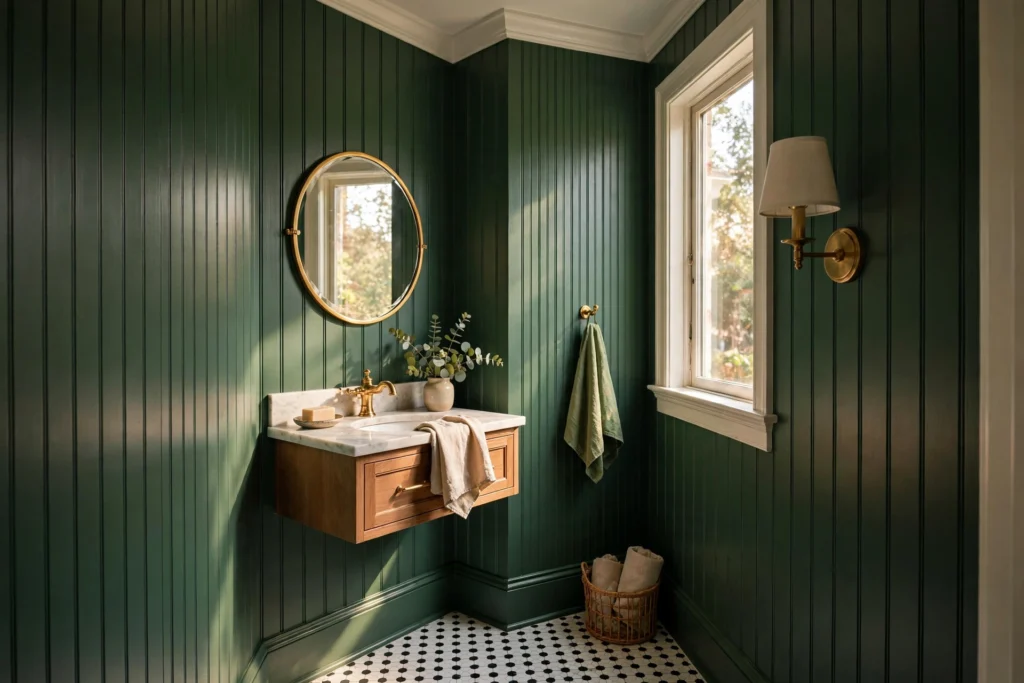
In a small powder room with no shower, you can break the usual rules and run paneling all the way up. Floor-to-ceiling beadboard or board-and-batten in a powder room wraps the tiny space in texture and makes it feel like a jewel box rather than a closet. Without steam from a shower, even well-sealed wood panels behave fine here — just use a quality bathroom paint and keep the exhaust fan running. Paint everything one deep, moody color for drama, or keep it crisp white for a classic cottage feel. The full-height treatment also hides every drywall imperfection in older homes, which is often half the motivation.
4. Paint It a Bold, Saturated Color
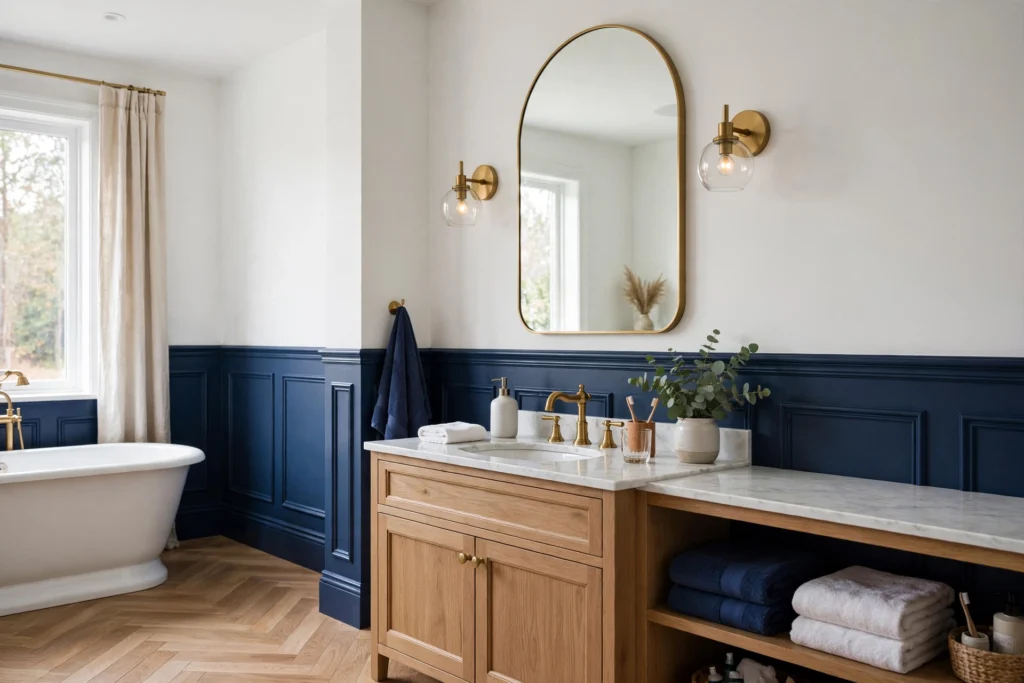
White wainscoting is safe; colored wainscoting is memorable. A deep navy, forest green, or inky charcoal on the lower walls grounds the bathroom and makes white fixtures pop like sculpture. The key in a bathroom is paint built for the job: a satin or semi-gloss acrylic enamel rated for high-moisture rooms, applied over a proper primer, resists steam far better than flat wall paint. Keep the upper wall light to balance the drama below, and repeat the wainscot color in a small accessory — a stool, a frame, a bath mat — so it feels intentional. Bold paneling is also wonderfully forgiving of scuffs, which is why it thrives in family bathrooms.
5. Keep It Crisp White for a Classic Look
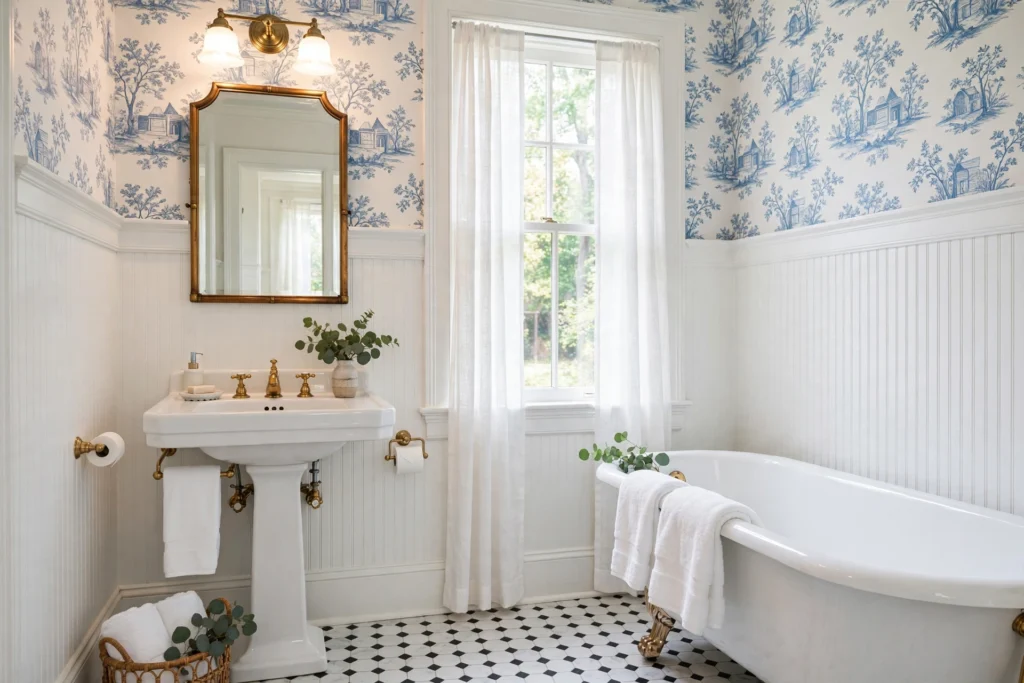
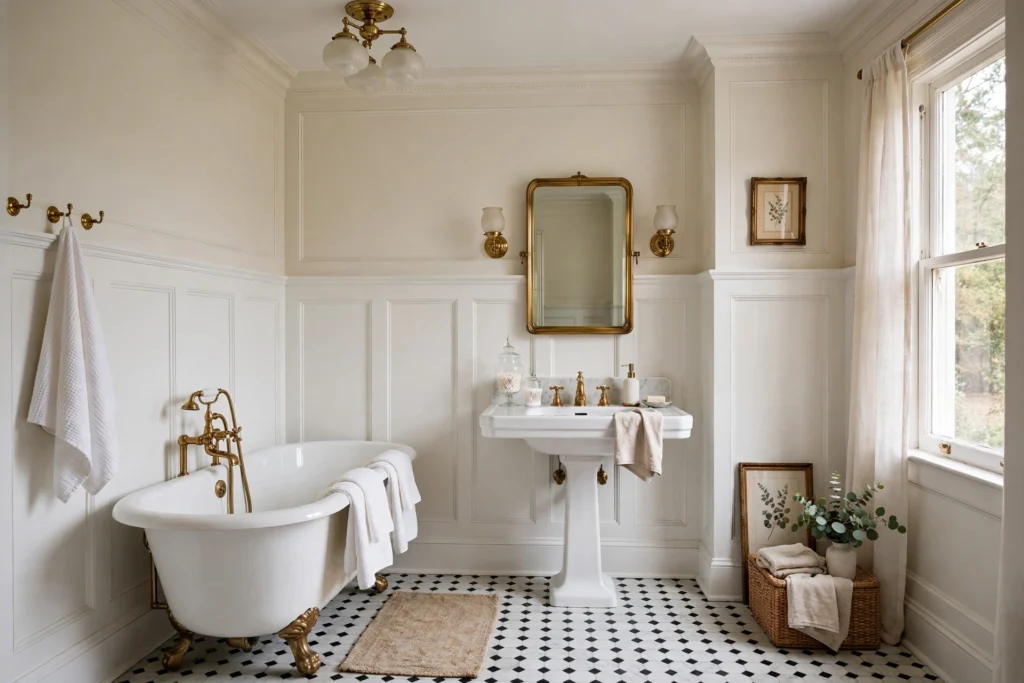
There is a reason white wainscoting never goes out of style: it makes bathrooms feel cleaner, brighter, and larger, and it flatters every fixture finish from chrome to brass. White beadboard or board-and-batten with a white upper wall creates a seamless, airy envelope that works in farmhouse, coastal, traditional, and transitional baths alike. The trick to keeping white from feeling flat is sheen contrast — satin or semi-gloss on the paneling against a matte upper wall gives subtle dimension even in an all-white room. White also shows the paneling’s shadow lines best, which is the whole point of the texture. When in doubt, start here; you can always repaint later.
6. Use Board-and-Batten for Modern Farmhouse Charm
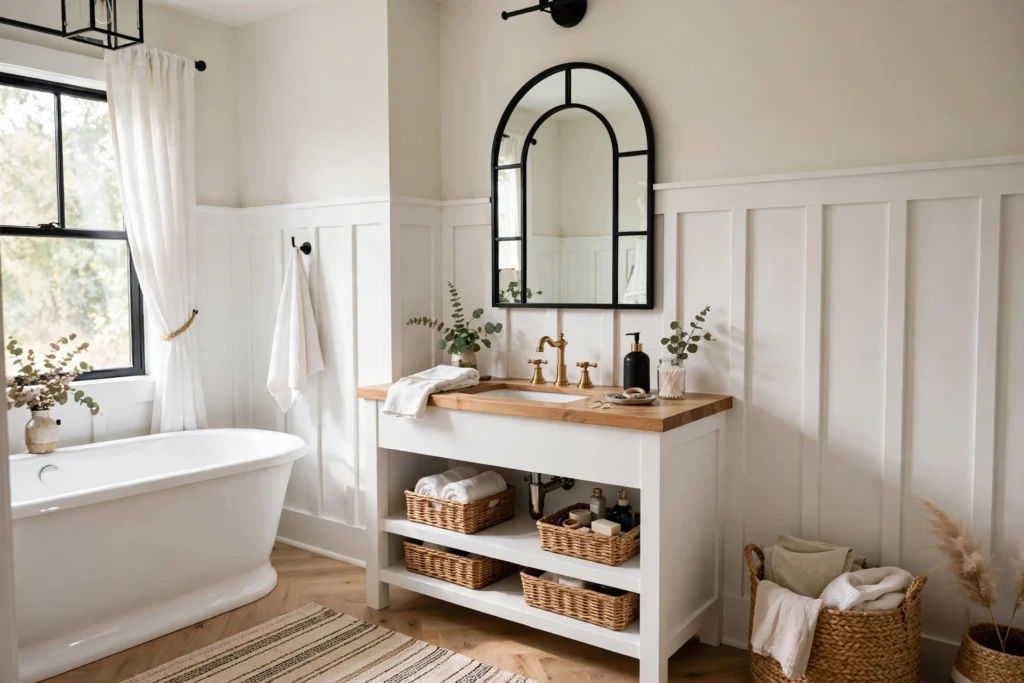
Board-and-batten — flat panels with narrow vertical battens over the seams — is the friendliest wainscot for DIYers and the defining look of modern farmhouse bathrooms. The grid is simple rectangles, the materials are basic trim and panels, and the result reads tailored rather than rustic. In a bathroom, build it from PVC or moisture-resistant MDF rather than raw pine, and caulk every seam so steam cannot creep behind the panels. A typical installation runs battens every 16 to 24 inches up to chair-rail height, then caps the run with a ledge trim. Painted white or soft greige, it gives a plain bath instant architecture for the cost of a weekend.
7. Add a Chair Rail Ledge for Display
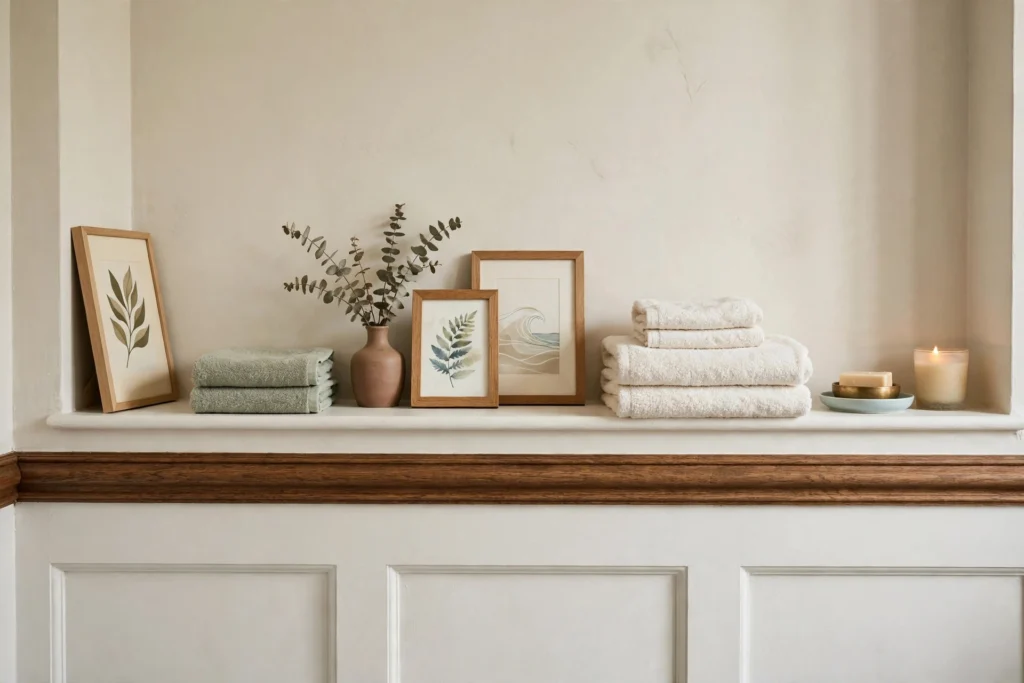
A proper wainscot installation ends with a chair rail — and that rail can be more than a trim line. Make the cap rail a true ledge, an inch or two deep, and it becomes a display shelf running around the room: a spot for small art, a bud vase, folded hand towels, or a candle. In a bathroom, this narrow ledge is precious real estate that costs nothing extra during installation. Keep the styling minimal and the items moisture-tolerant — framed prints behind glass, stone or ceramic objects, nothing paper. The ledge also gives the eye a clean horizontal line that makes small bathrooms feel wider, which is a trick worth having on its own.
8. Combine Wainscot With Wallpaper Above
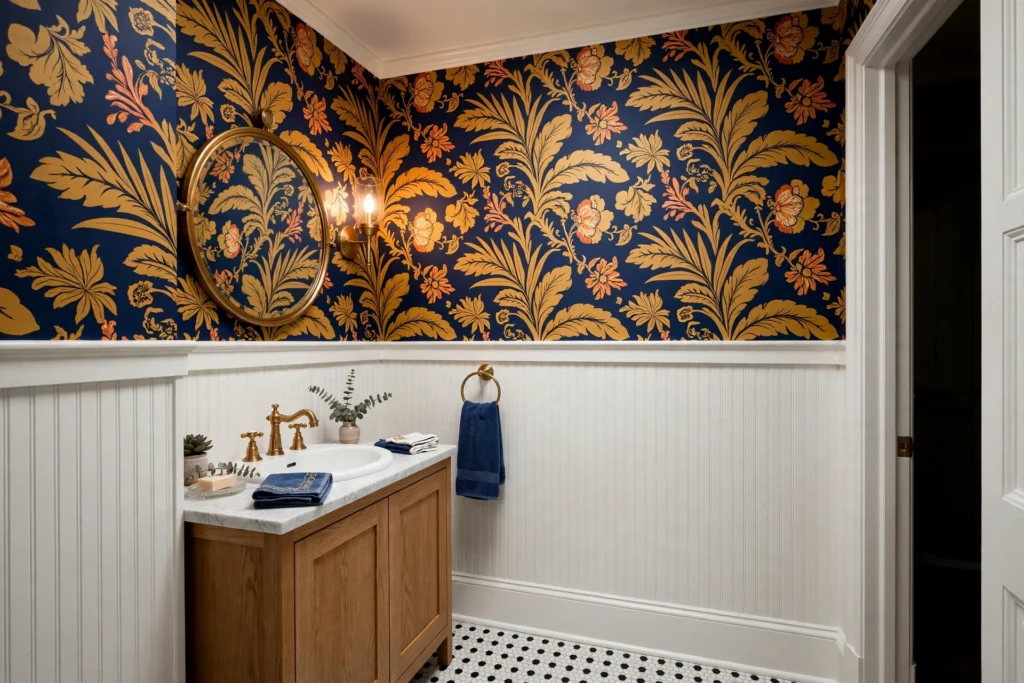
Wainscoting’s best friend is the wall above it, and wallpaper there is a match made in design heaven. The paneling protects the lower wall from splashes while the wallpaper delivers pattern and personality up high where it stays dry. This combination is classic in powder rooms and half-baths: beadboard below, a bold botanical or geometric paper above, divided by a crisp chair rail. Choose a vinyl or vinyl-coated wallpaper rated for bathrooms so humidity does not lift the seams. The wainscot does the practical work, the wallpaper does the talking, and the chair rail makes the marriage look inevitable.
9. Run Picture-Frame Molding for Formal Elegance
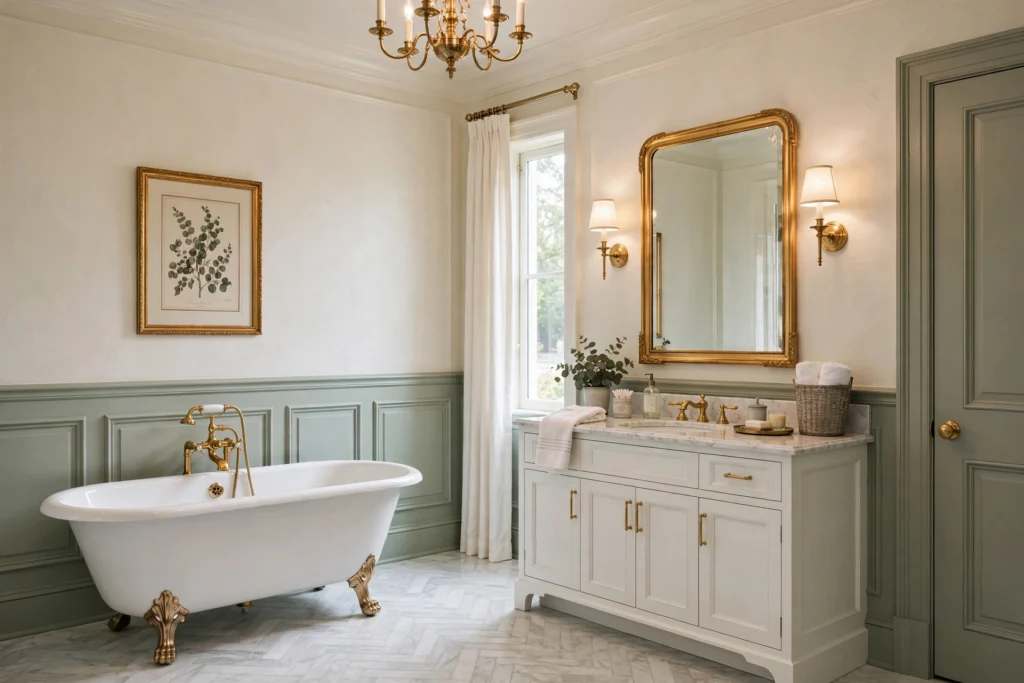
For a formal, almost Parisian bathroom, skip the beadboard grooves and install picture-frame molding — thin trim rectangles applied directly to the lower wall. This flat-panel wainscot reads more refined than beadboard and suits traditional and transitional bathrooms beautifully, especially paired with a pedestal sink and classic fixtures. In a wet bathroom, use PVC or polyurethane trim instead of wood so the molding never swells at the joints. Paint it the same color as the wall for subtle shadow-play elegance, or contrast it for definition. Picture-frame molding is also the easiest wainscot to retrofit, since it mounts onto the existing wall with no panels required.
10. Waterproof Every Seam and Edge
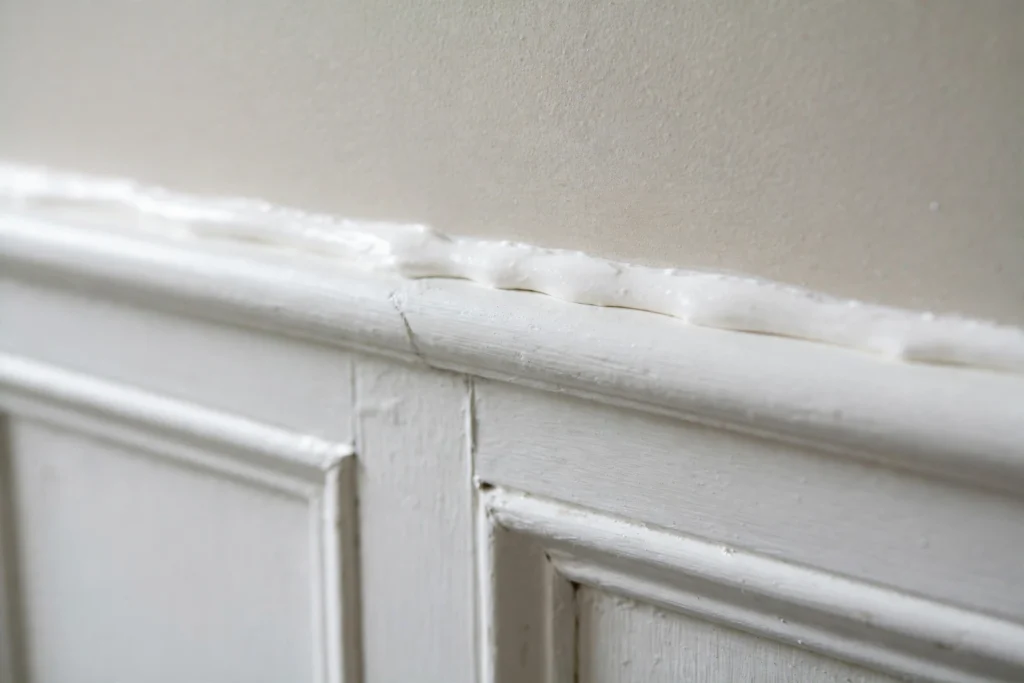
This is the unglamorous idea that saves every other one. Bathroom wainscoting fails at the seams: caulk lines that crack, panel bottoms that wick water off the floor, trim joints that open with humidity cycles. Seal the bottom edge where paneling meets the floor or baseboard with a flexible bathroom-grade caulk, not rigid filler. Leave a tiny gap behind the baseboard’s bottom edge rather than burying panel ends in standing water. Caulk every inside corner and re-check them yearly — a five-minute maintenance pass beats a rot repair every time. However beautiful your wainscot, its lifespan in a bathroom is decided entirely by how well its edges are sealed.
11. Match the Wainscot Height to the Room
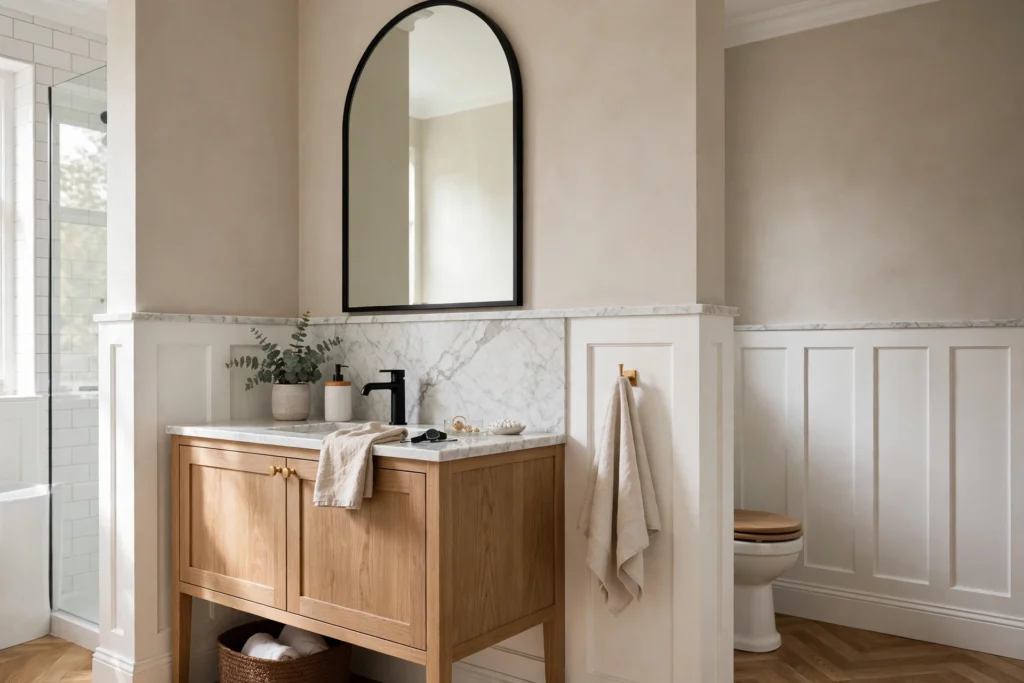
The classic wainscot height is about one-third of the wall — typically 32 to 42 inches — but bathrooms have their own logic. In a bath with a high vanity backsplash or a tall tiled tub surround, align the chair rail with those existing horizontal lines so the room reads as one composition. Taller wainscoting (48 to 54 inches) suits rooms with high ceilings and makes small bathrooms feel grander, while a lower 30-inch run keeps a tiny bath from feeling chopped up. Whatever height you choose, run it consistently around the whole room, including behind the toilet and vanity — stopping and starting the line is what makes paneling look like an afterthought.
12. Pair Dark Paneling With Brass Fixtures
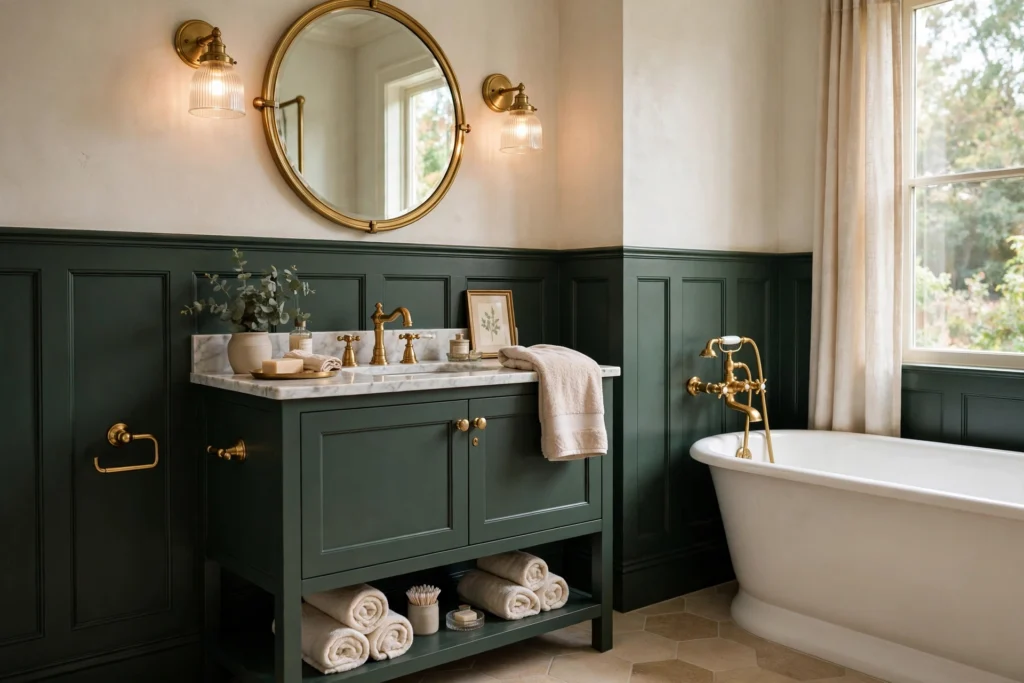
Few combinations feel as rich as dark wainscoting with warm brass. A deep green or near-black lower wall makes unlacquered brass faucets, mirrors, and sconces glow like jewelry, and the classic paneling profile keeps the drama feeling traditional rather than trendy. This pairing works because the wainscot gives the dark color architectural structure — it is a wall treatment, not just a paint job. Keep the upper walls warm white so the room stays bright, and choose a satin finish on the paneling so it catches light softly. Our bathroom paint design ideas explore more high-contrast color strategies that play well with paneled walls.
13. Use Vertical Shiplap for a Coastal Feel
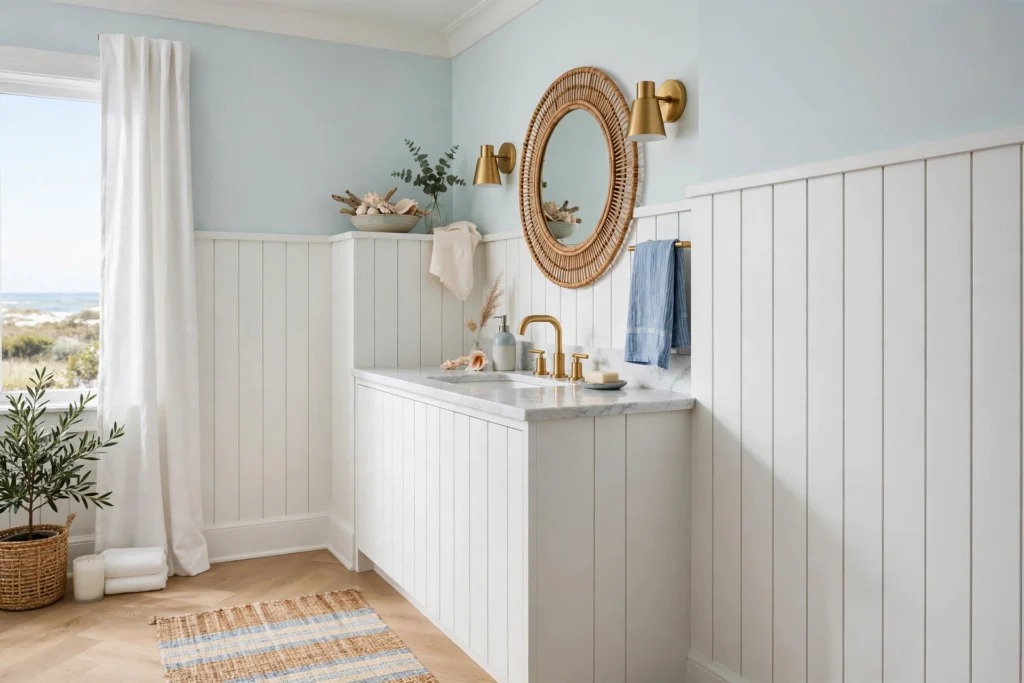
Vertical shiplap channels run the eye upward, making low bathroom ceilings feel taller — and in a coastal or cottage bath, it is the defining texture. Run moisture-proof shiplap panels vertically to chair-rail height, or full-height in a shower-free powder room, and finish with a simple cap trim. The narrow shadow gaps between boards add rhythm without the busyness of beadboard grooves, which suits serene, spa-leaning bathrooms. Paint it white or the palest blue for the full coastal effect, and let natural textures — teak, stone, linen — do the rest of the talking. In a real wet zone, confirm your shiplap is PVC or fully sealed; traditional pine shiplap belongs in dry rooms only.
14. Let the Vanity Wall Carry the Paneling
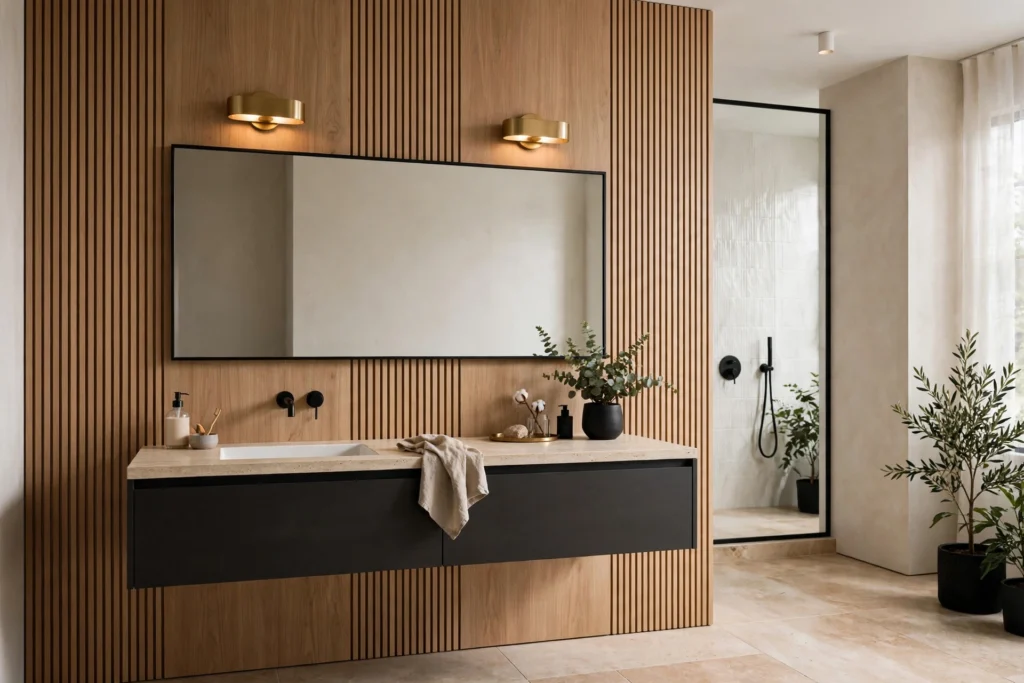
You do not have to wainscot all four walls. Paneling just the vanity wall — the wall you face every morning — concentrates the impact where you will actually see it while halving the material and labor. This focused approach works brilliantly behind a floating vanity, where the paneling runs wall to wall and the vanity appears to hover in front of it. It also solves the awkward geometry of bathrooms where a tub or shower interrupts the other walls. Frame the paneled section with casing trim at the corners so it reads as a deliberate feature panel rather than an unfinished job. One great wall beats four mediocre ones.
15. Finish With Moisture-Rated Paint, Always
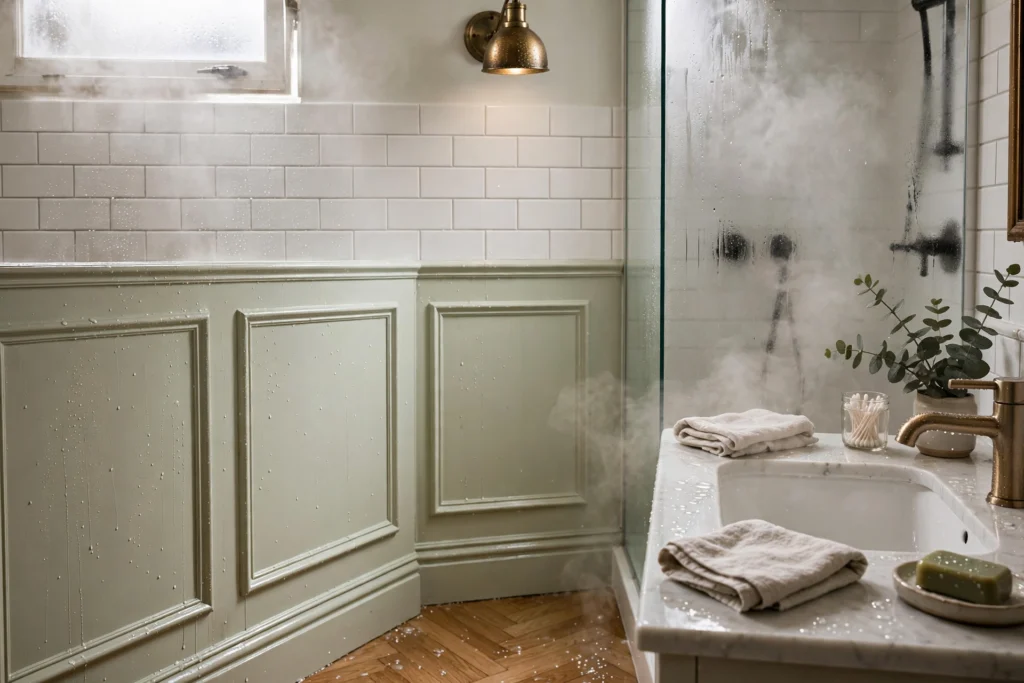
Whatever paneling you choose, the paint is its raincoat. Use a top-quality acrylic enamel in satin or semi-gloss, explicitly rated for bathrooms and high humidity, over a bonding primer suited to your panel material. Two finish coats minimum — the second coat is what actually builds the moisture barrier. Paint the backs of wood-based panels before installation if you use them, so no raw surface ever faces the wall cavity. And keep a small jar of the exact paint for touch-ups; in a bathroom, a chipped panel edge is an open door for moisture, and a dab of paint closes it in seconds. The prettiest wainscot in the world is only as good as its finish.
FAQ
Is wainscoting a good idea in a bathroom?
Yes, with the right materials. Bathrooms demand moisture-proof wainscoting — PVC, polyurethane trim, or tile — rather than raw wood, plus sealed seams and bathroom-rated paint. Done this way, wainscoting handles steam and splashes for decades while adding architecture that flat drywall cannot match. Avoid unsealed wood paneling anywhere near a shower or tub.
What is the best wainscoting material for a bathroom with a shower?
Tile wainscoting is the safest choice where water directly hits the wall, since it is fully waterproof. For the rest of the room, PVC beadboard or PVC board-and-batten gives the classic wood look with zero rot risk. Guidance from House Beautiful design coverage consistently favors these impervious materials in high-moisture baths over traditional wood.
How high should bathroom wainscoting be?
The classic range is 32 to 42 inches, roughly one-third of an 8-foot wall. Align the chair rail with existing horizontal lines like the vanity backsplash or tub surround for a cohesive look. Taller runs of 48 to 54 inches suit high ceilings and grander traditional baths, while 30 inches keeps a tiny bathroom feeling open.
Can you put wainscoting behind a toilet or vanity?
Absolutely — in fact, running it continuously behind fixtures is what makes it look professional. The paneling simply installs wall to wall first, and the toilet and vanity mount in front of it. Just be sure to caulk the seams where fixtures meet the paneling, since those junctions see the most moisture and cleaning-product exposure.
Does bathroom wainscoting add value to a home?
It adds perceived value by making a bathroom feel custom and finished rather than builder-basic, which photographs well and impresses buyers. Like any quality millwork, it signals care and craftsmanship. The value holds best when the installation is moisture-proof and well-executed — warped or peeling paneling does the opposite, so material choice and sealing matter more than the style itself.
Keep Exploring
Bathroom wainscoting is one of those rare upgrades that is both practical and pretty — it armors your lower walls against daily life while giving the room the tailored feel of a much more expensive space. Choose your moisture-proof material, seal every seam, and let the upper walls carry the color story. For the full classic-bathroom picture, our traditional bathroom design ideas with classic charm show how paneled walls, timeless fixtures, and warm finishes come together in one cohesive room.