
A bedroom desk has one of the toughest jobs in the house: it needs to be a focused place to work or study, and it still has to look like it belongs in the calmest room in your home. These bedroom desk ideas balance both sides of that equation. You will find smart placement tricks for tight rooms, desks that double as dressing tables, lighting that works for spreadsheets and sleep, and storage setups that keep paper clutter from creeping onto your nightstand.
The secret to getting a bedroom workspace right is treating it like a designed corner, not an office you shoved into a corner. Every pick — the desk’s footprint, its finish, the chair, the light — should feel like a natural extension of your bedroom decor. When the desk looks like it belongs, you will actually want to sit down and use it.
1. Start With the Right Placement
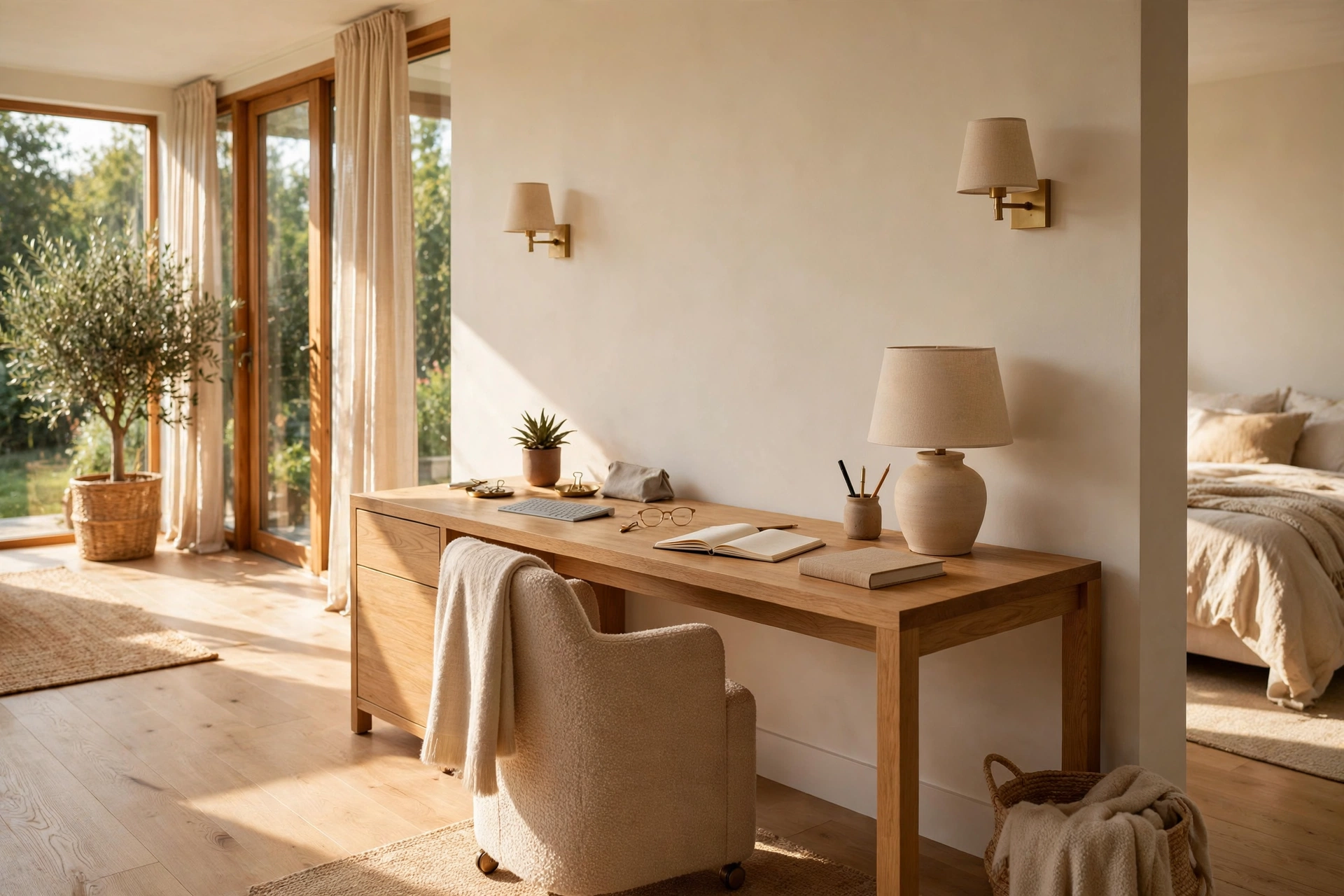
Before buying anything, map where a desk can genuinely live in your bedroom. The ideal spot has three things: a wall long enough for the desk’s width plus chair clearance, access to an outlet, and distance from the direct path between the door and the bed. Measure twice and sketch the layout on paper so you do not fall in love with a desk that leaves you squeezing sideways past it at night. The desk does not need its own room — it needs a clear, intentional zone that you can step into and, just as importantly, step away from when the workday ends.
2. Pick a Compact Desk That Fits the Room
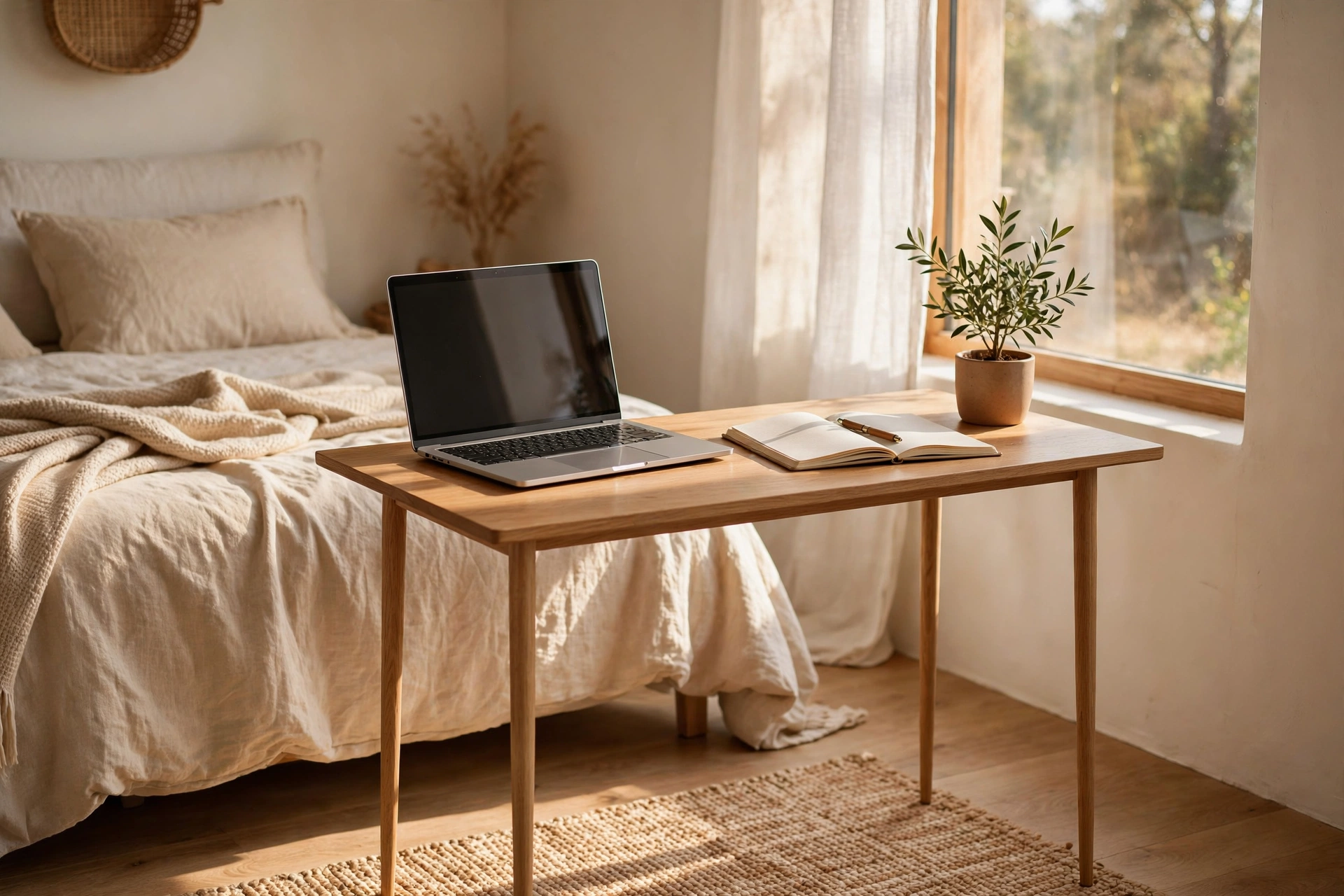
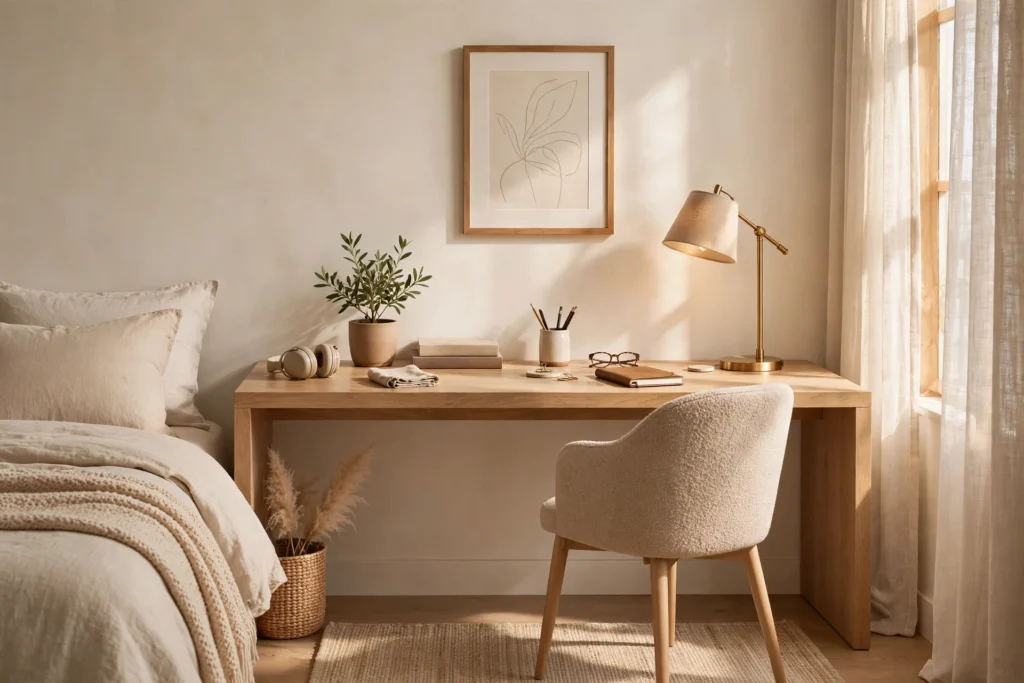
Bedrooms rarely have space for a deep executive desk, and that is actually an advantage. A compact desk around 90 to 120 centimeters wide gives a laptop, a notebook, and a cup of tea enough room without swallowing the floor plan. Look for slim legs that show the floor beneath, which keeps the room feeling open, and consider a single shallow drawer rather than bulky pedestals. Desks come in far more forms than the standard office rectangle — writing tables, console-style desks, and even cabinet desks with closing doors — and the encyclopedia entry on desks shows how many shapes have evolved for tight home spaces. Pick the smallest footprint that still holds your real daily essentials.
3. Set Up Near a Window for Natural Light
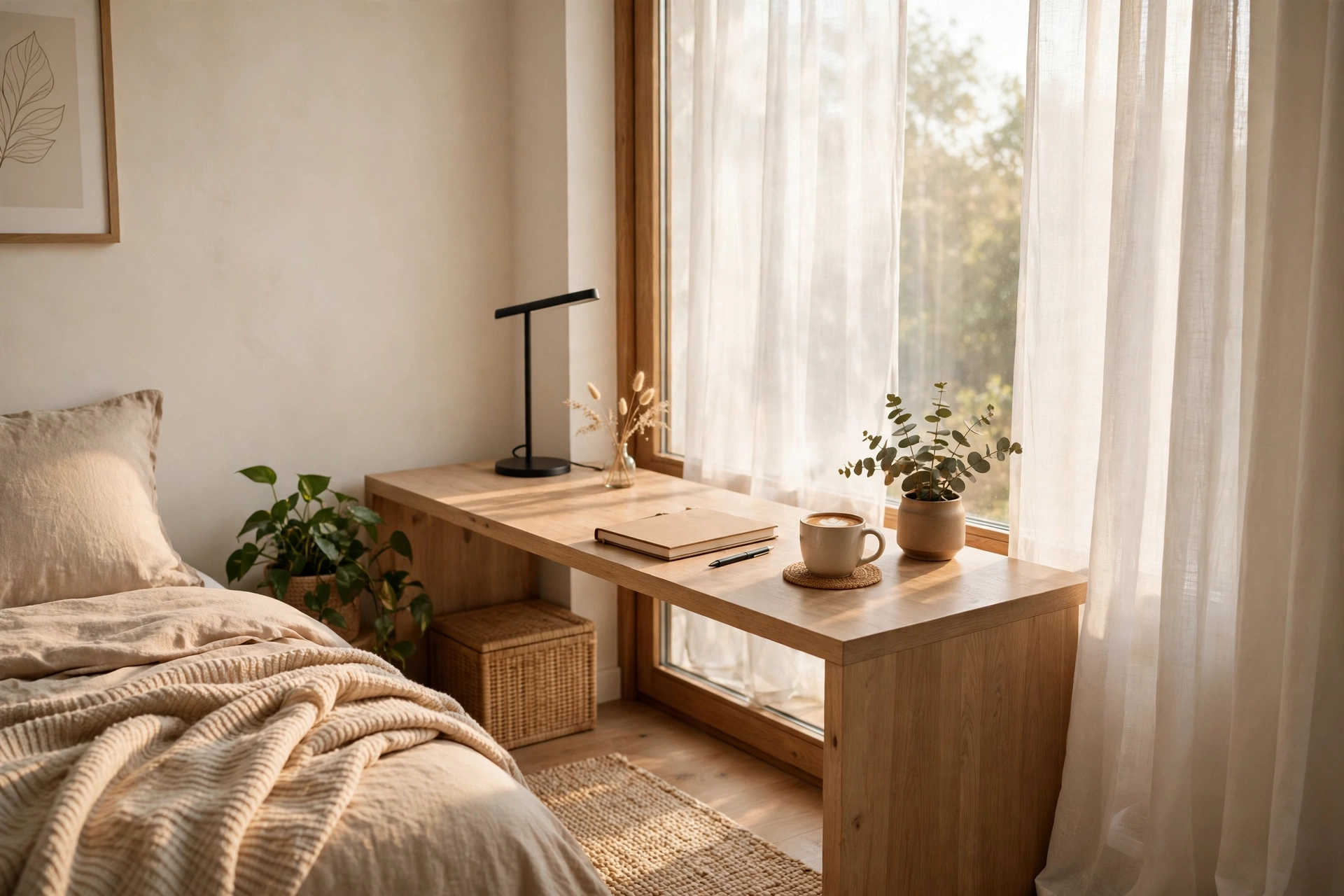
If your bedroom layout allows it, placing the desk by a window is the single biggest upgrade you can make to a work-from-bedroom setup. Daylight keeps you alert, reduces eye strain, and makes even a simple desk feel pleasant to sit at. Angle the desk so you face parallel to the window rather than staring straight into the glare, which washes out screens and forces you to squint by mid-afternoon. A sheer curtain softens harsh midday sun without darkening the corner. At night, a good task lamp takes over — and you will appreciate the view during the day more than any wallpaper ever could.
4. Double Up With a Vanity Desk
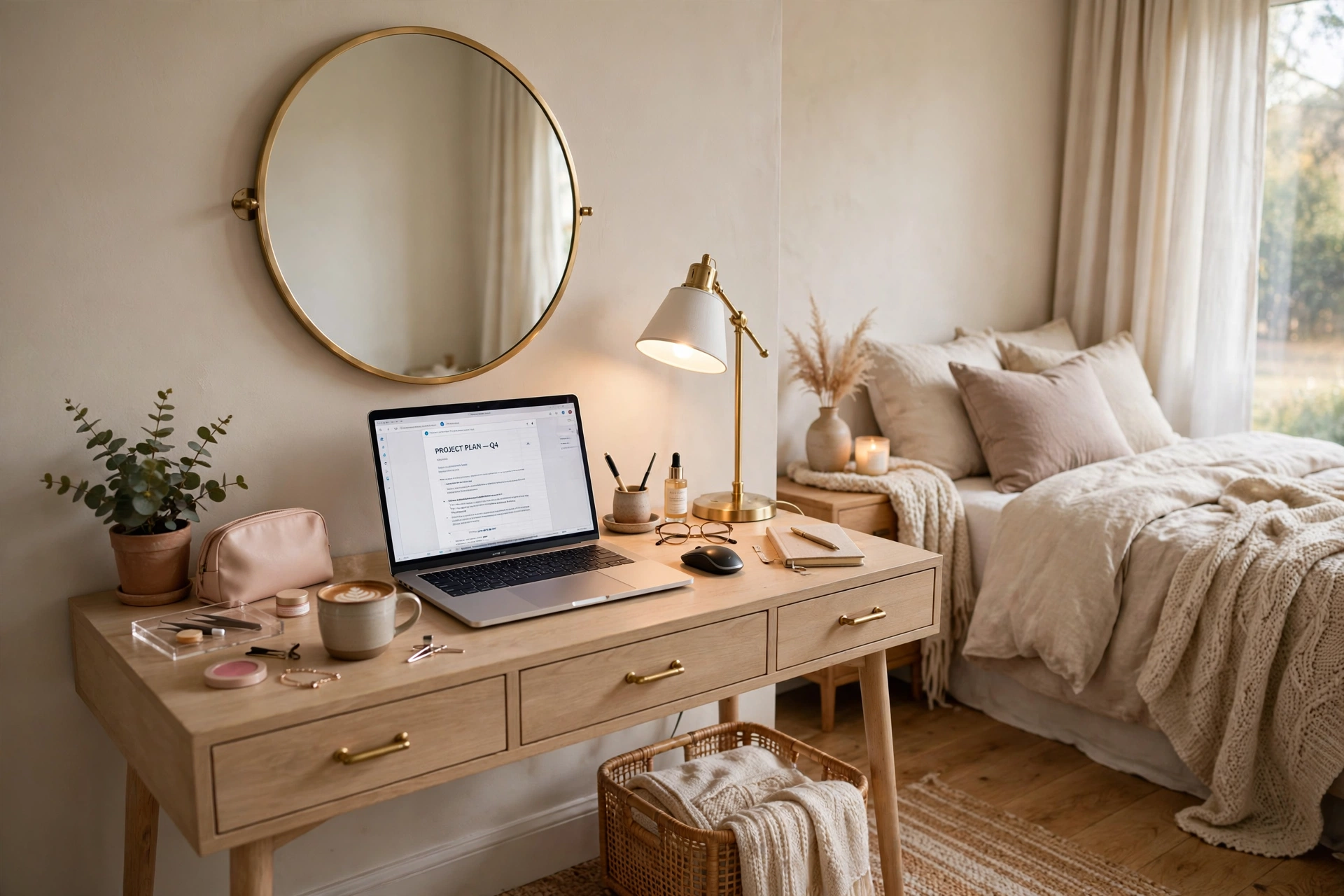
The vanity desk is the bedroom’s original two-in-one, and it earns its place in almost every small bedroom. A slim dressing table with a mirror doubles perfectly as a laptop desk: by day it is your workstation, by morning it is where you get ready. Choose one with a drawer for chargers and pens, and let the mirror do double duty as your “am I presentable for this video call” check. Keep styling minimal so the transition between grooming station and workspace feels seamless — a small tray corrals makeup, and everything else lives in the drawer. No guest will ever guess this spot moonlights as your office.
5. Tuck a Desk Into an Unused Corner
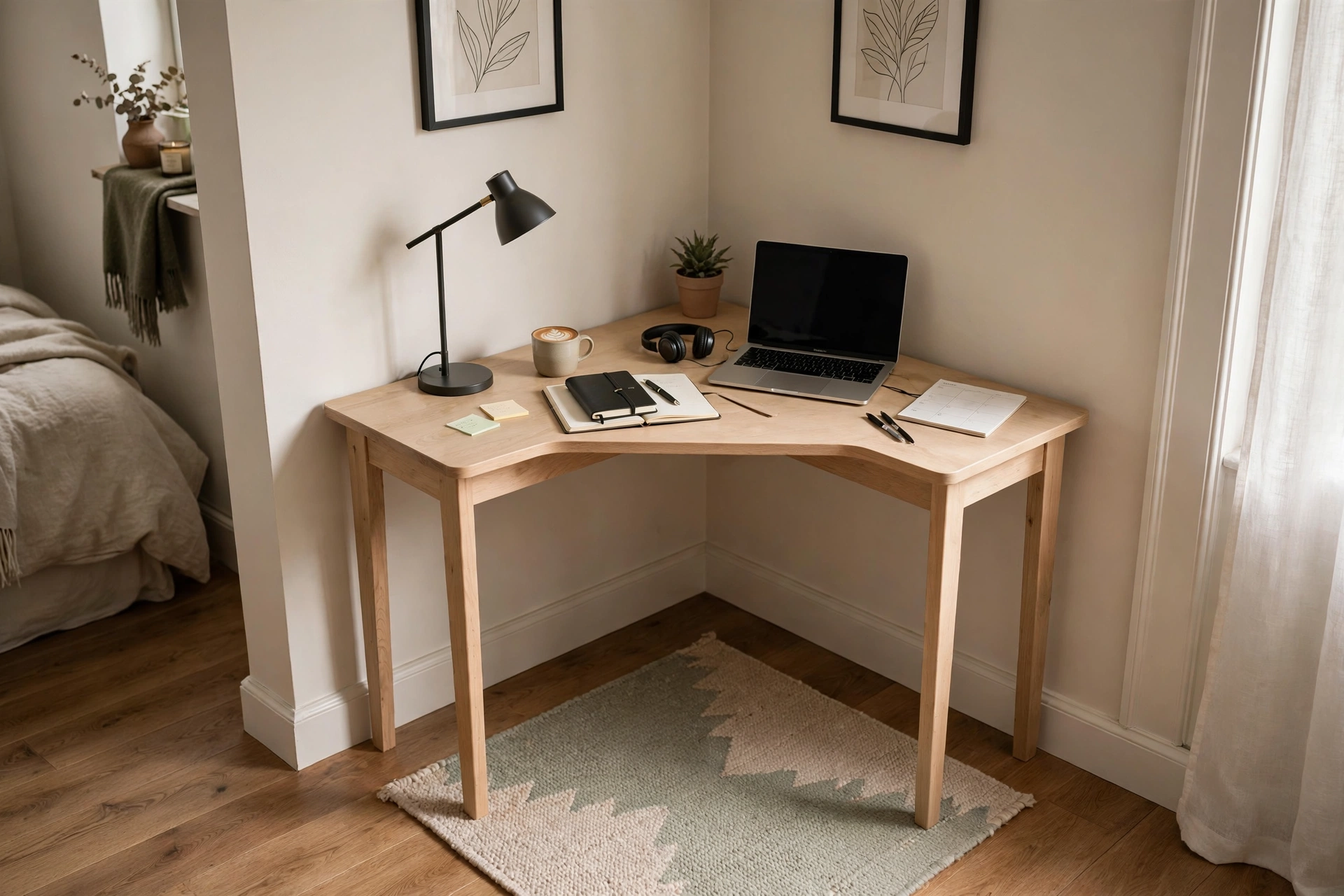
Corners are the most underused real estate in most bedrooms — the one beside the closet door, the gap between the bed and the wall, the dead space under a sloped ceiling. A corner desk turns that awkward triangle into a defined work nook with a wraparound feel that actually helps you focus, since distractions shrink to the two walls around you. An L-shaped or simple straight desk spanning the corner gives generous surface area on a small footprint. Add a rug underneath to visually zone the nook, and suddenly the corner reads as a deliberate study area instead of leftover space.
6. Go Under the Loft or Bunk Bed
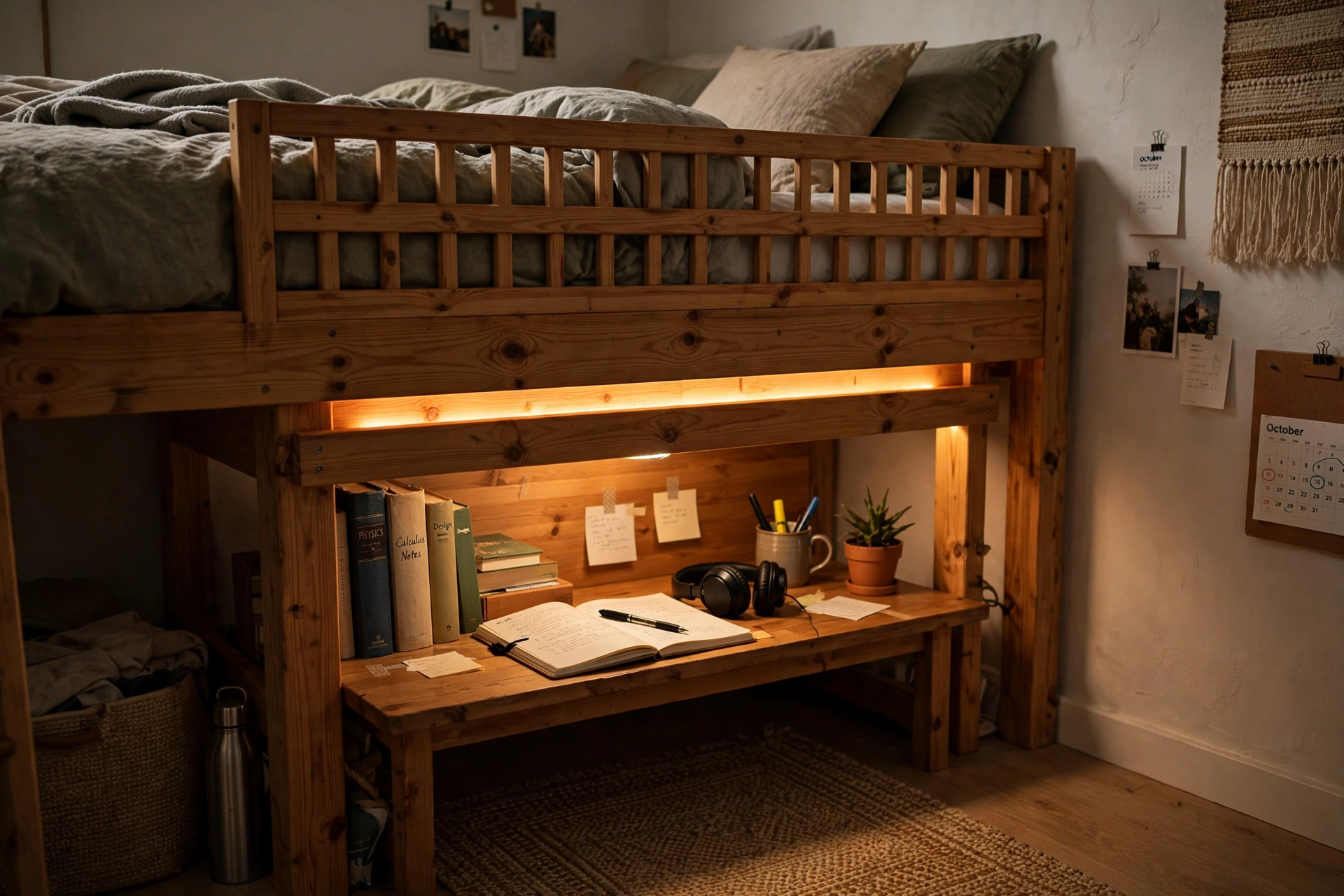
If your ceiling allows a loft or high-sleeper bed, the space underneath is a ready-made desk zone with a built-in roof of coziness. The frame itself defines the workspace, so the desk feels tucked in rather than imposed on the room. Measure your sitting height carefully — you need comfortable clearance above the desk surface plus room for a monitor — and choose a desk that fits the bed’s footprint exactly so no wasted gap collects clutter. This setup shines in teen bedrooms and small studios, where one piece of furniture delivers sleep and study in the same square meters. String a small light under the frame and the underside becomes a proper, focused cave.
7. Try a Standing or Sit-Stand Desk
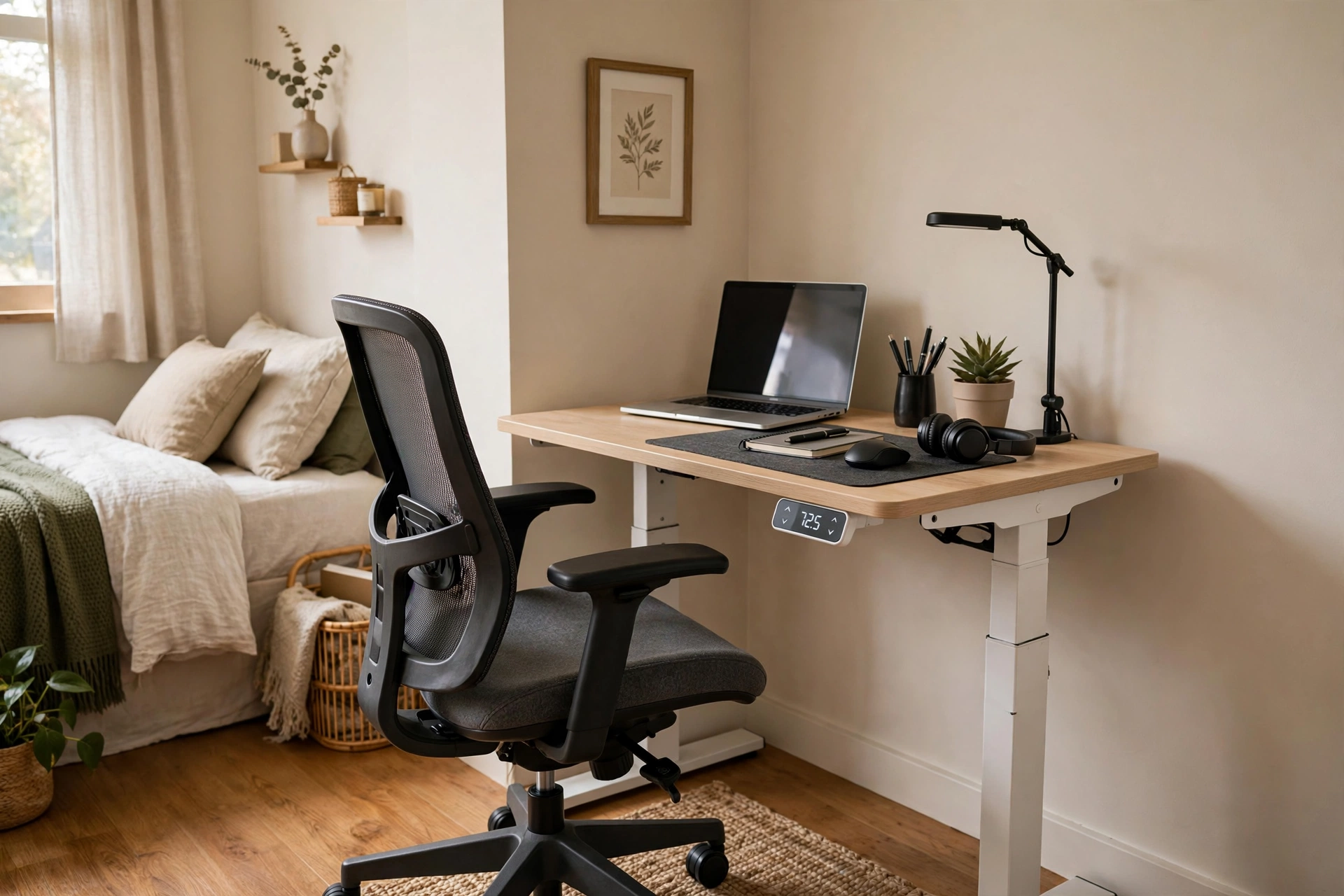
Sitting through a full workday in a bedroom can leave you feeling oddly sluggish, so a height-adjustable desk is worth considering. A compact sit-stand model lets you alternate between sitting and standing without needing more floor space than a regular desk. Keep the desk near enough to the bed that the “commute” stays short, and park your chair where it does not block nighttime movement around the room. If a full adjustable desk is over budget, a desktop riser on a standard small desk gives you the same flexibility for a fraction of the price. Your back and your sleep will both thank you for the movement.
8. Use a Fold-Down or Wall-Mounted Desk
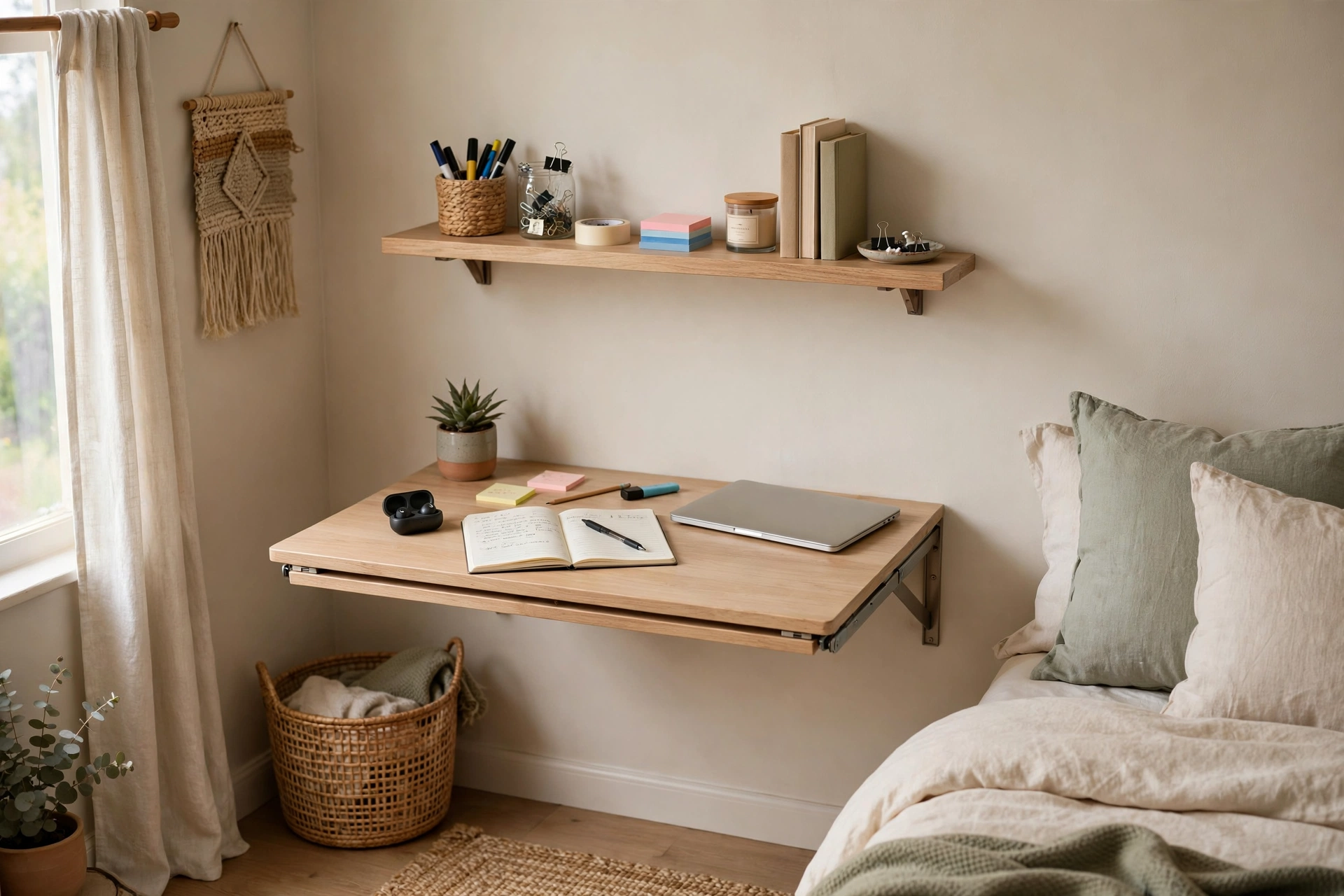
For bedrooms where every centimeter counts, a wall-mounted drop-leaf desk disappears when you are done. Folded down, you have a proper work surface; folded up, the room looks completely desk-free, which makes a real difference in how restful the bedroom feels at night. Mount it at a height that suits both your chair and your standing posture if possible, and add a floating shelf above for the supplies that would otherwise colonize the surface. This is also the renter-friendly option with the lightest footprint — most drop-leaf desks install with just a few screws, and a dab of filler covers them at move-out.
9. Light the Desk Without Ruining the Bedroom Mood
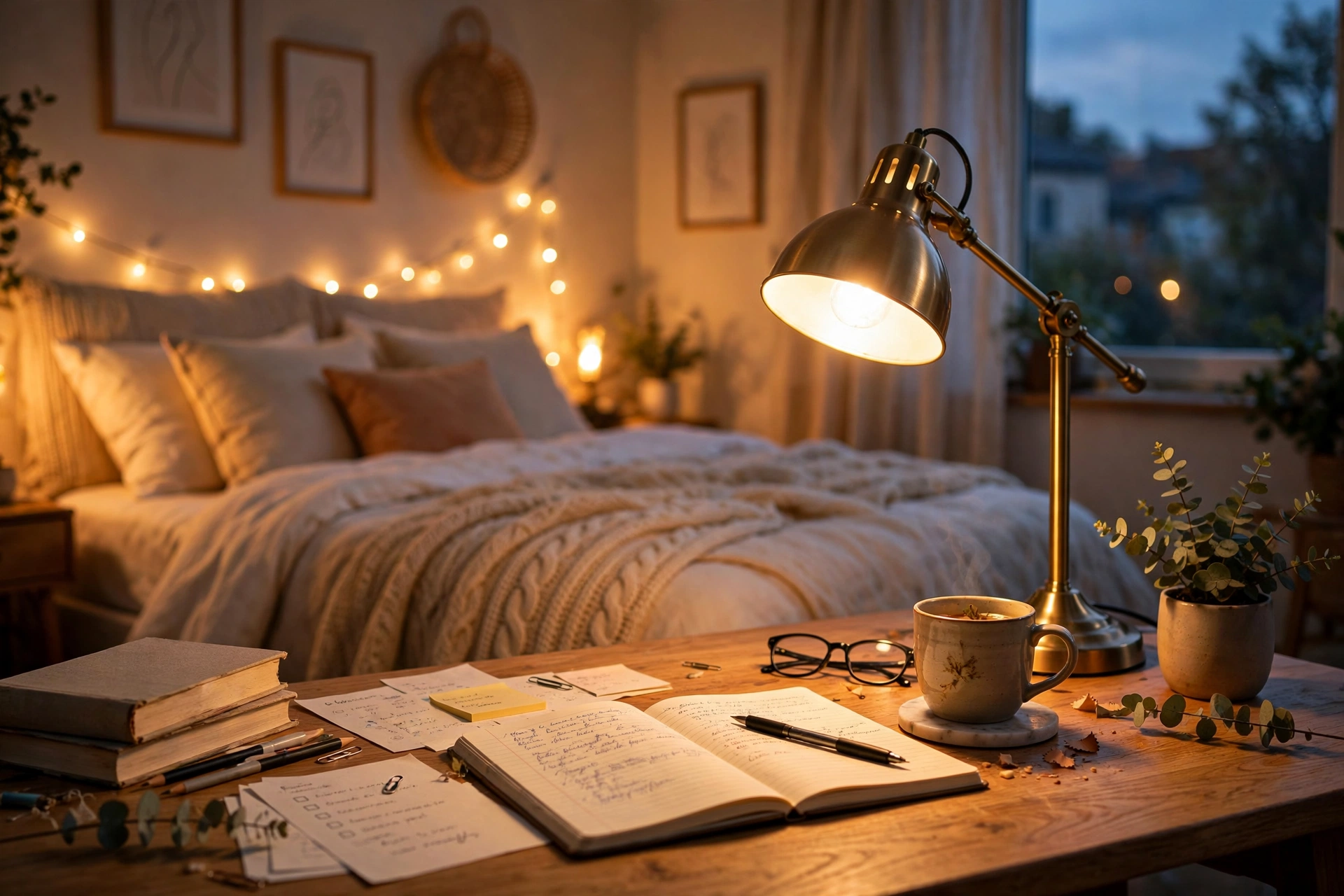
Bedroom lighting has to serve two masters: bright, focused light for work and soft, warm light for winding down. The answer is a dedicated desk lamp with adjustable warmth or a separate warm bulb for evenings. A slim task lamp with an articulated arm lights your work without flooding the whole room, and pairing it with these desk lamp ideas for the bedroom and bedside tables helps you coordinate it with your bedside lighting so nothing clashes. Avoid cool-white overheads beaming down on the desk — they flatten the room’s atmosphere. When you finish work, switching off the task lamp becomes a satisfying visual full stop on the day.
10. Manage Cables So the Room Still Feels Calm
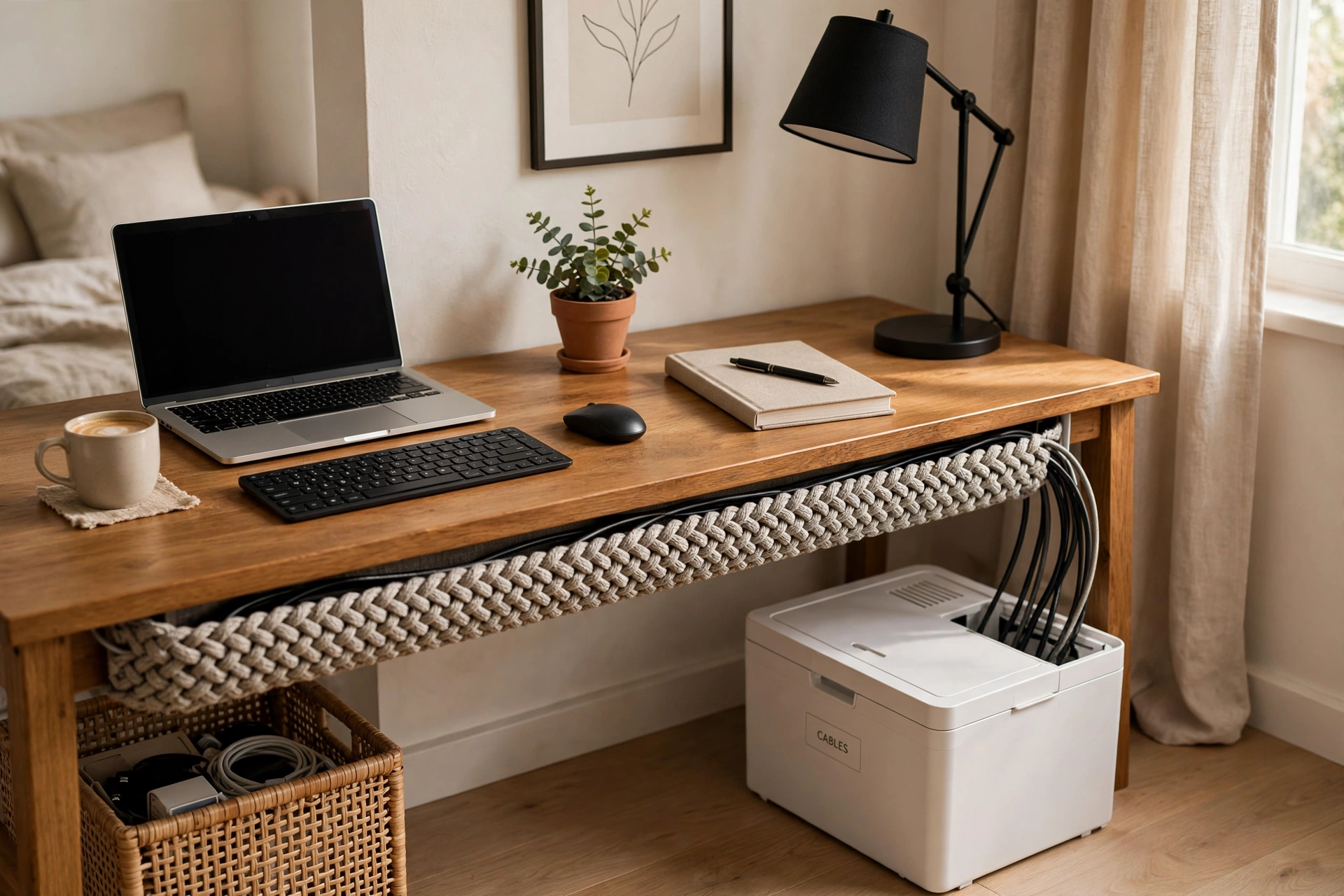
Nothing ruins a bedroom’s calm faster than a nest of chargers snaking across the floor. Cable management is not fussy — it is what separates a workspace from a tangle that happens to have a laptop in it. Route the power strip behind or under the desk, strap loose cables to the desk legs with reusable ties, and give every device a designated charging spot so cords do not migrate. A simple cable box under the desk hides the adapter brick entirely. If the desk sits against a wall, run a single fabric cable sleeve from desk to outlet and the whole setup reads as clean and intentional rather than improvised.
11. Choose a Chair You Can Actually Sit In All Day
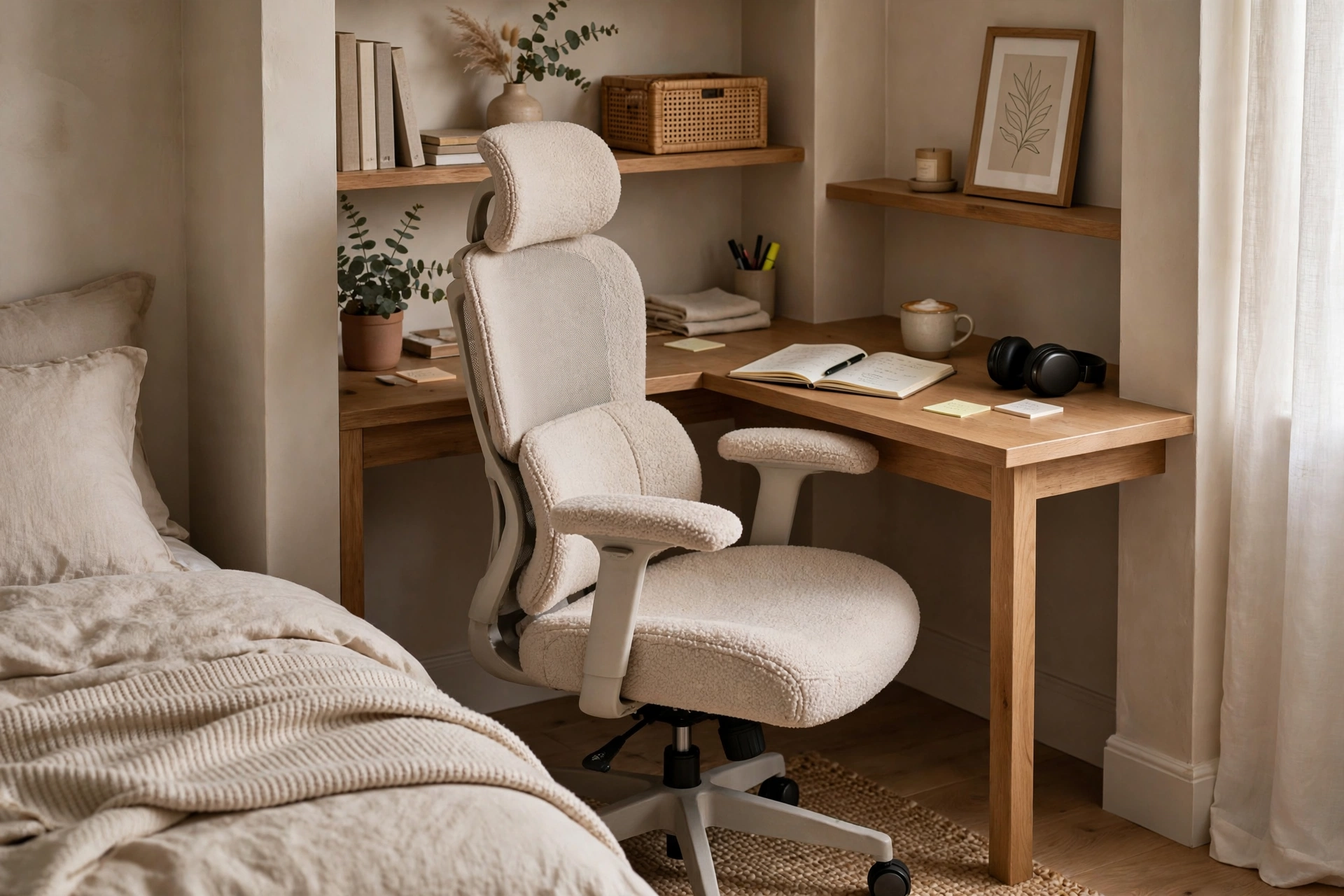
The chair is where bedroom desks most often fail, because a stiff dining chair or the edge of the bed destroys posture within an hour. Invest in a proper task chair with adjustable height and lumbar support — it does not have to look like office furniture anymore, since plenty of ergonomic chairs come in fabric and soft colors that suit a bedroom. Keep the chair’s footprint small if the desk nook is tight, and choose one with wheels only if the floor is hard; on carpet, a chair mat protects the fibers and keeps you rolling. Your future self, typing at 4 p.m. without a sore neck, will be grateful.
12. Give the Desk Its Own Storage System
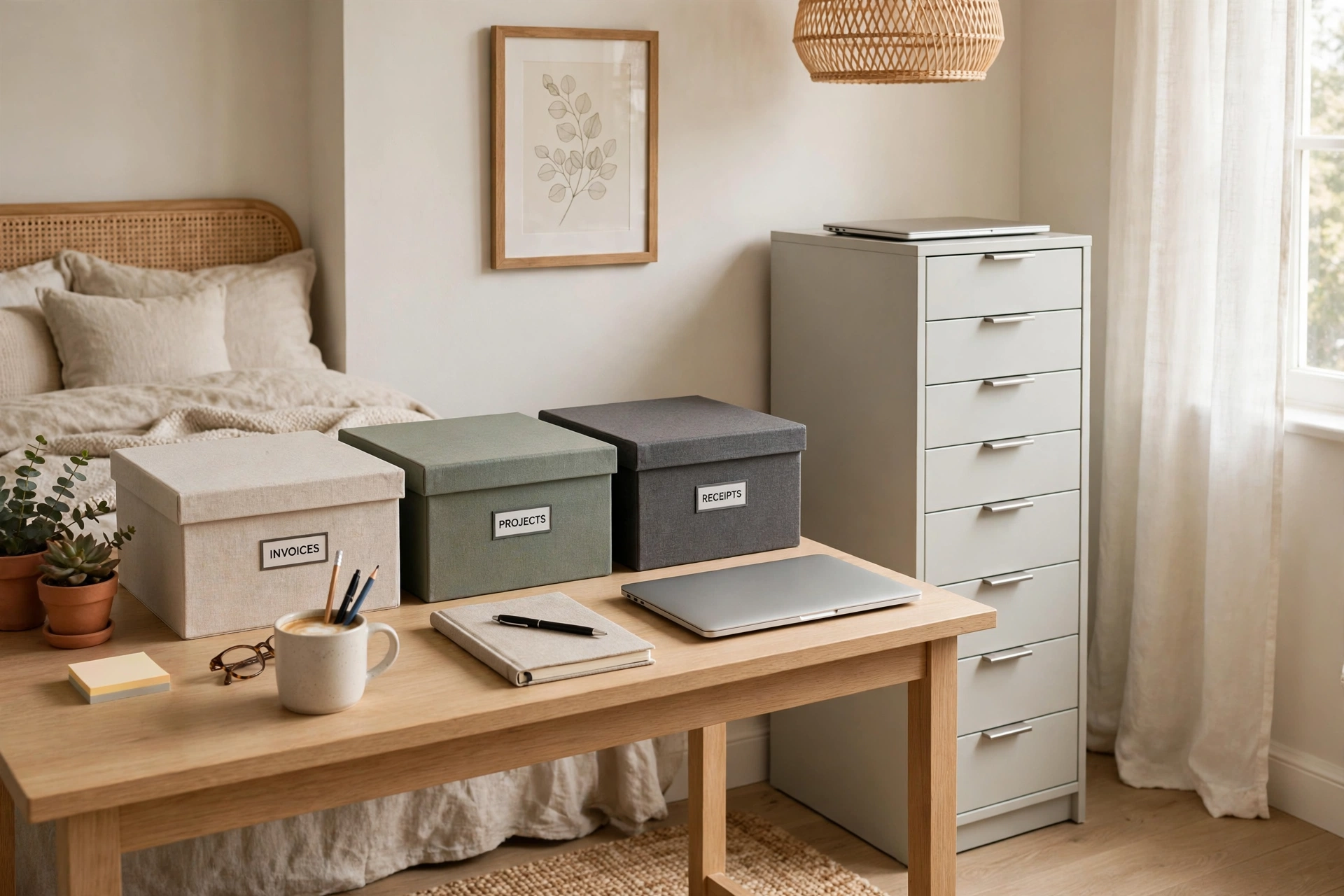
A bedroom desk without storage becomes a paper landslide within a week. The fix is a dedicated, closed storage spot for everything work-related: a slim drawer unit beside the desk, a wall-mounted file box, or stackable trays that match your bedroom palette. Closed storage matters here more than in a home office, because open piles of mail and notebooks make the whole bedroom feel like a place of obligations. If you are setting up a bigger workstation, these home office desk setup ideas for focus and comfort cover monitor heights, keyboard positioning, and layout tricks that translate perfectly to a bedroom corner. End each workday by returning papers to their homes and your bedroom resets to a rest space.
13. Style the Desk Like Decor, Not an Office
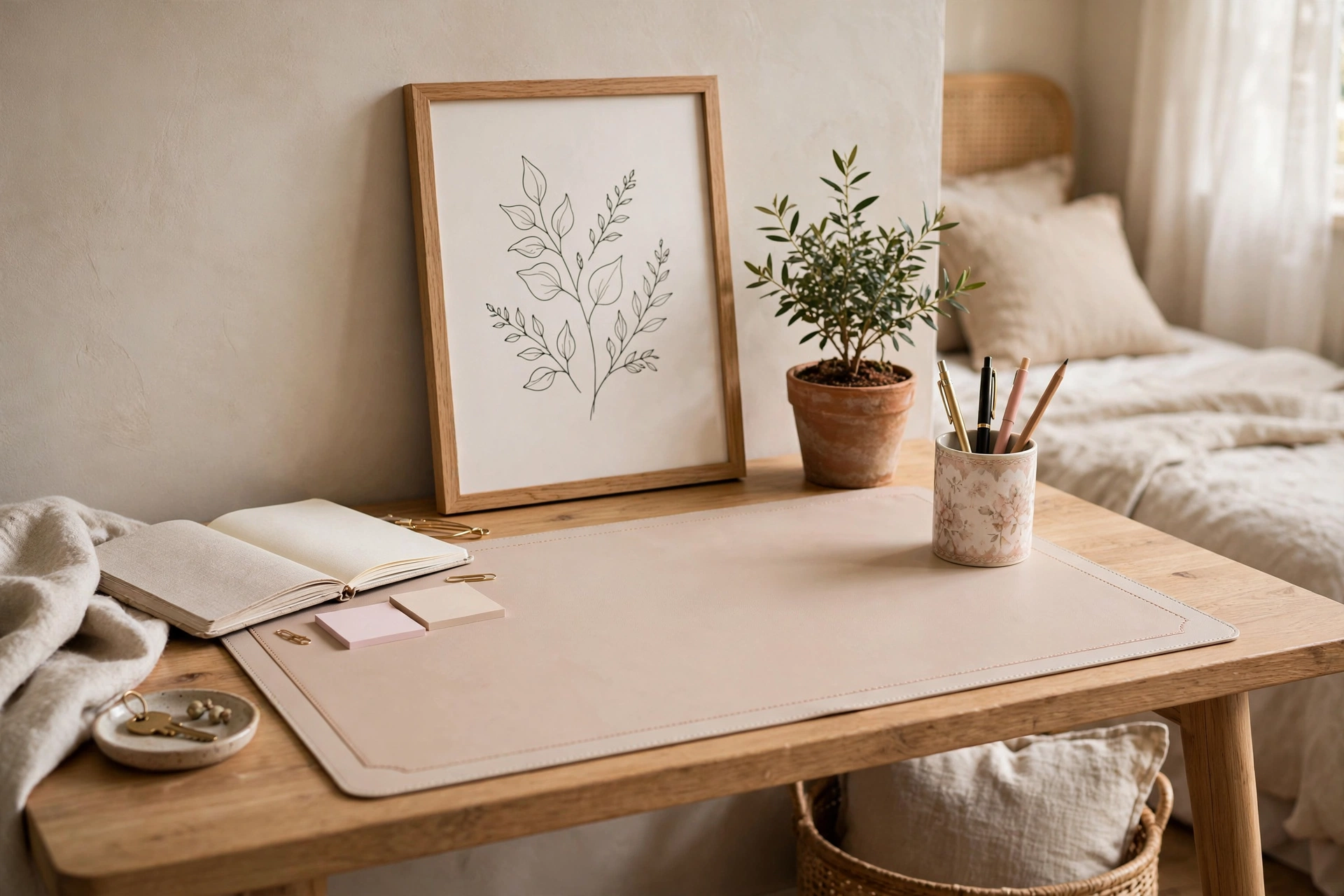
This is the step that makes the difference between a desk in a bedroom and a bedroom with a desk. Style the surface the way you would any vignette: a small framed print, a low-maintenance plant, a pretty pen cup, maybe a candle for evenings. Keep the office-supply look confined to closed storage and let the visible styling echo your bedroom’s colors and textures. A desk pad in a soft tone protects the surface and pulls the whole corner into the room’s palette. When the desk looks like part of the decor, you will never resent it as an intruder — and video-call backgrounds get a free upgrade too.
14. Make It Work in a Shared Bedroom
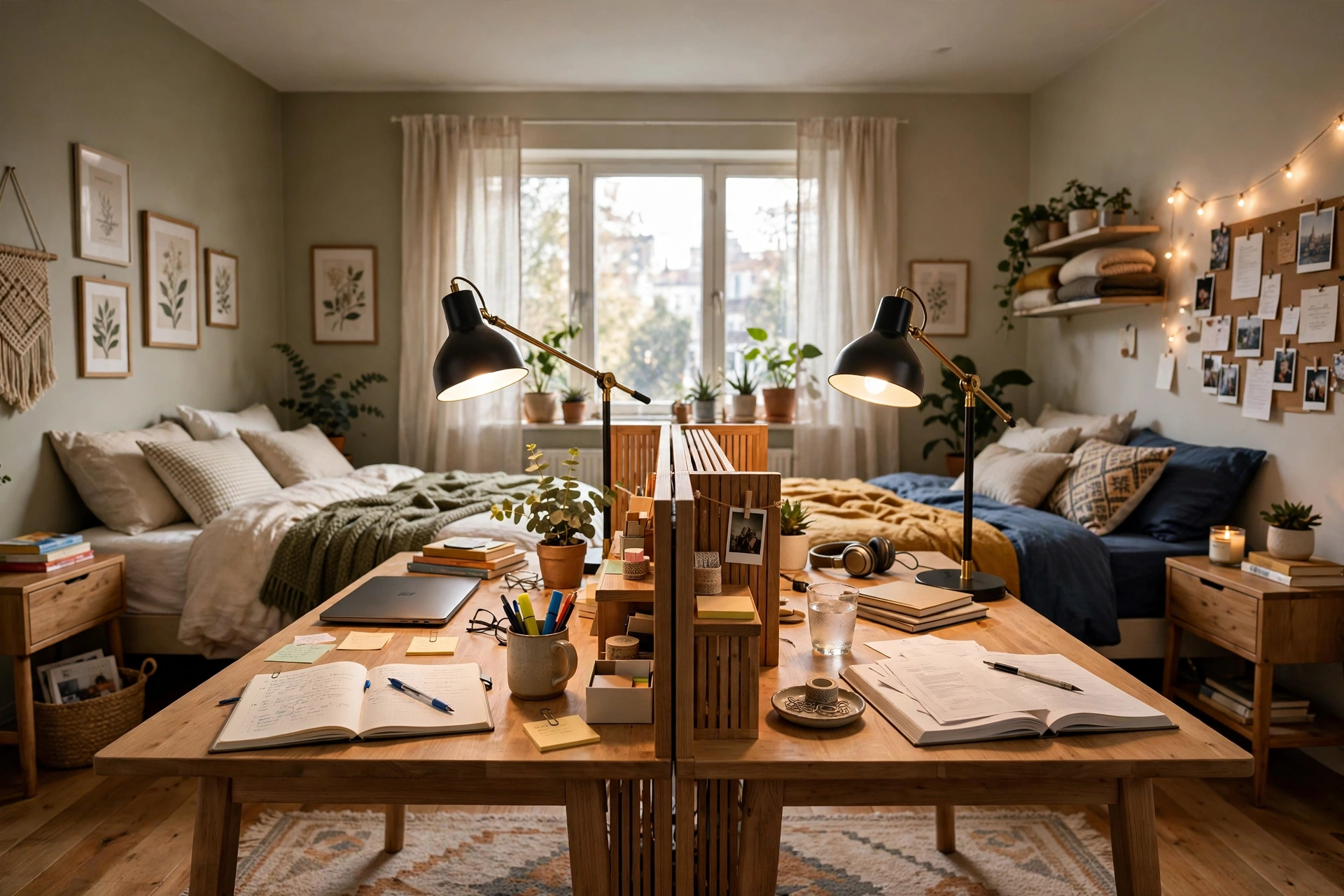
Two people, one bedroom, and one desk is a common puzzle — and it is solvable. Options include a back-to-back arrangement with a double-sided desk, staggered schedules on a single desk, or a slim second desk on the opposite wall if the room allows. Agree on noise and call rules upfront: headphones on, door closed, no speakerphone during the other person’s sleep hours. Lighting matters even more in a shared room — a focused task lamp keeps your work from lighting up your partner’s side of the bed. A folding screen or curtain can create a visual boundary that makes both the work and the sleep sides of the arrangement feel respected.
15. Keep Work and Sleep Separated With Simple Rituals
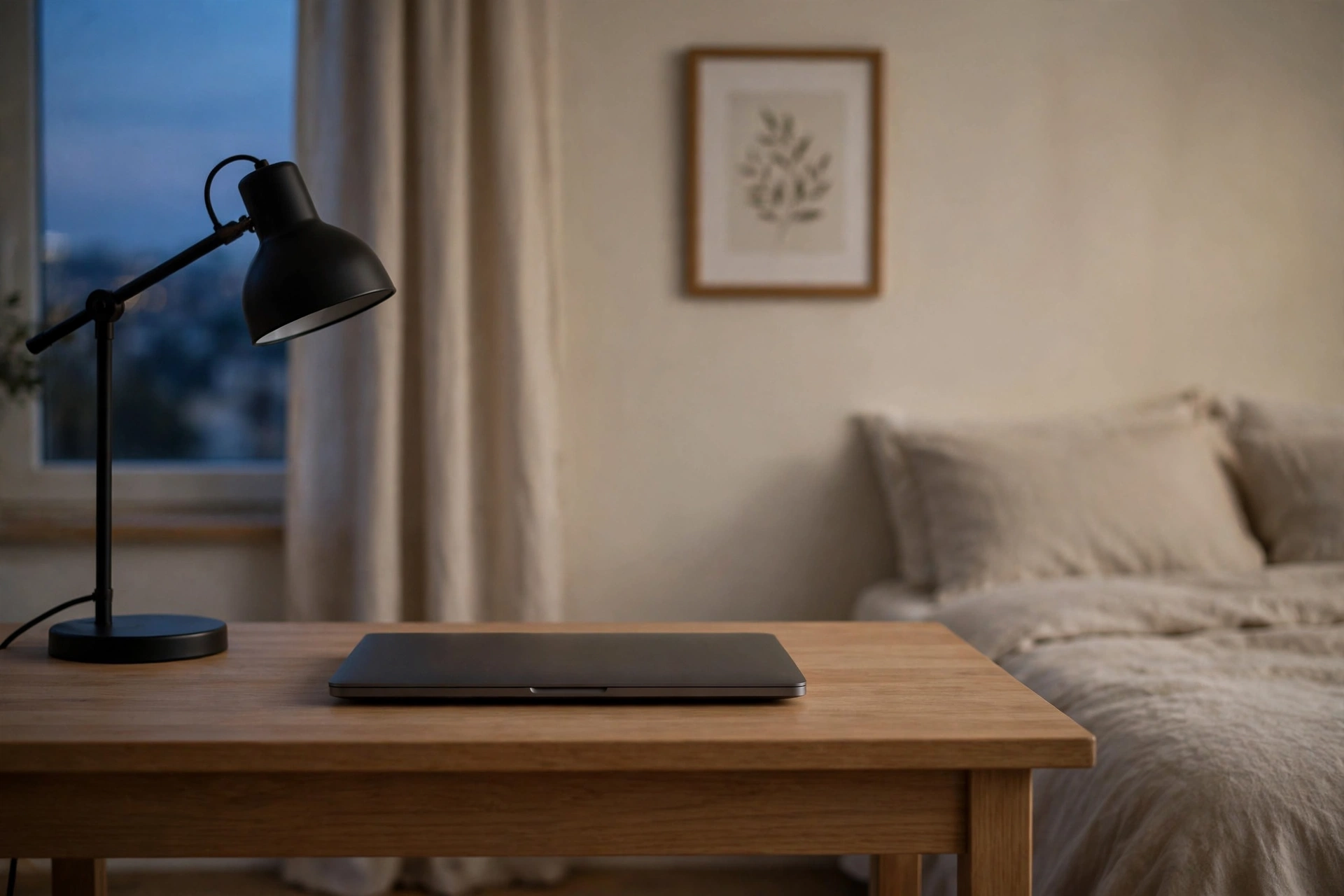
The biggest challenge of a bedroom desk is psychological: when your office is six feet from your pillow, the workday never quite ends. The fix is ritual. Clear the desk surface at the end of the day, close the laptop, switch off the task lamp, and physically leave the corner — these small signals tell your brain the shift is over. Keep work items in their storage homes overnight so the morning version of you sees a bedroom, not a to-do list. If possible, position the desk so it is not the first thing you see from the bed. Boundaries, not square footage, are what make a bedroom workspace sustainable long-term.
Frequently Asked Questions
What size desk fits best in a small bedroom?
For most small bedrooms, a desk between 90 and 120 centimeters wide and 50 to 60 centimeters deep is the sweet spot — wide enough for a laptop, a notebook, and a lamp, but slim enough to leave real walkway space. Measure your wall and allow at least 75 centimeters behind the desk for pulling out a chair. In very tight rooms, a 60-centimeter-wide writing desk or a wall-mounted fold-down desk works well for laptop-only setups. Always tape out the footprint on the floor with painter’s tape before buying so you can live with the size for a day.
Is it bad to work from your bedroom?
Working in the bedroom is fine for most people as long as the bedroom still signals “sleep” when work is done. The concern is real: bright screens and work stress close to bedtime can delay your body clock, and sleep experts recommend keeping the bedroom cool, quiet, and dark to protect rest — the Sleep Foundation’s bedroom environment guide explains exactly how light, noise, and temperature affect sleep quality. The practical takeaway: use warm lighting in the evening, keep screens off the bed itself, clear the desk when you log off, and give yourself a buffer of at least 30 screen-free minutes before sleep.
How do I make my bedroom desk look nice instead of cluttered?
Start with closed storage for all paperwork and supplies so only beautiful things stay visible. Style the surface with a plant, a framed print, and a desk pad in your bedroom’s palette, and choose a desk finish that echoes your other furniture — wood tones with wood tones, white with white. Hide cables in a sleeve or box, and make clearing the desk a two-minute end-of-day ritual. A desk that matches the room’s decor disappears into the design instead of shouting “office.”
Where should a desk go in a bedroom for the best light?
Beside or in front of a window is ideal, with the desk angled so you face parallel to the glass rather than into direct glare. This gives you daylight for alertness without screen washout, and it keeps overhead lights from casting shadows over your work. If no window wall is free, a corner near the room’s brightest spot works, supplemented by a good adjustable task lamp. Just keep the desk out of the direct walkway and give yourself a view you enjoy — you will spend hours looking at it.
How can I hide my bedroom desk when guests come over?
A fold-down or wall-mounted desk is the easiest to hide, since it vanishes into the wall in seconds. For a regular desk, a folding screen or a ceiling-mounted curtain panel conceals the whole nook quickly and looks intentional rather than improvised. Storing work gear in closed drawers and draping a throw over the chair helps the corner blend into the bedroom. The vanity-desk hybrid also shines here — with a mirror up and laptop away, it simply reads as a dressing table.
Keep Exploring
A bedroom desk that works for your mornings and quiets down for your nights is one of the most satisfying upgrades a small bedroom can get. Pick the ideas that fit your floor plan, your budget, and the way you actually work — then give the setup a full week before judging it, because a workspace needs a few days of real use to reveal its quirks.
If your desk dreams are bigger than one corner allows, our corner home office ideas to maximize every inch of space show how to build a fuller workstation from awkward angles and forgotten square footage — many of the same tricks, scaled up for serious home offices.