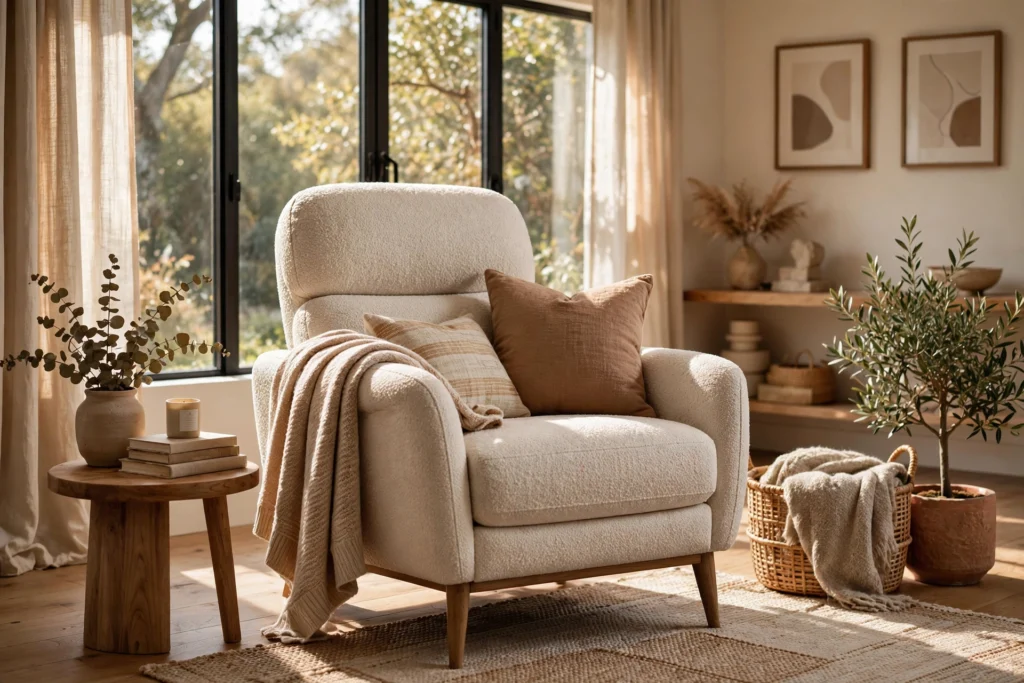

A good recliner is the hardest-working seat in the house — it is where movie nights happen, where Sunday naps find you, and where the best seat in the room is never in dispute. The problem? Recliners have a reputation for looking like bulky afterthoughts in an otherwise stylish room. These living room recliner ideas fix exactly that, showing you how to choose, place, and style a recliner so it delivers cloud-level comfort and looks like it was always meant to be there.
From slim modern profiles and swivel bases to leather-versus-fabric decisions and small-space wall-huggers, this guide covers the full recliner playbook. If you are still deciding between a recliner and a classic accent chair, our living room accent chair ideas for a cozy stylish space break down the lighter-weight option — but when pure comfort is the goal, the recliner wins every time.
1. Choose a Slim-Profile Modern Recliner
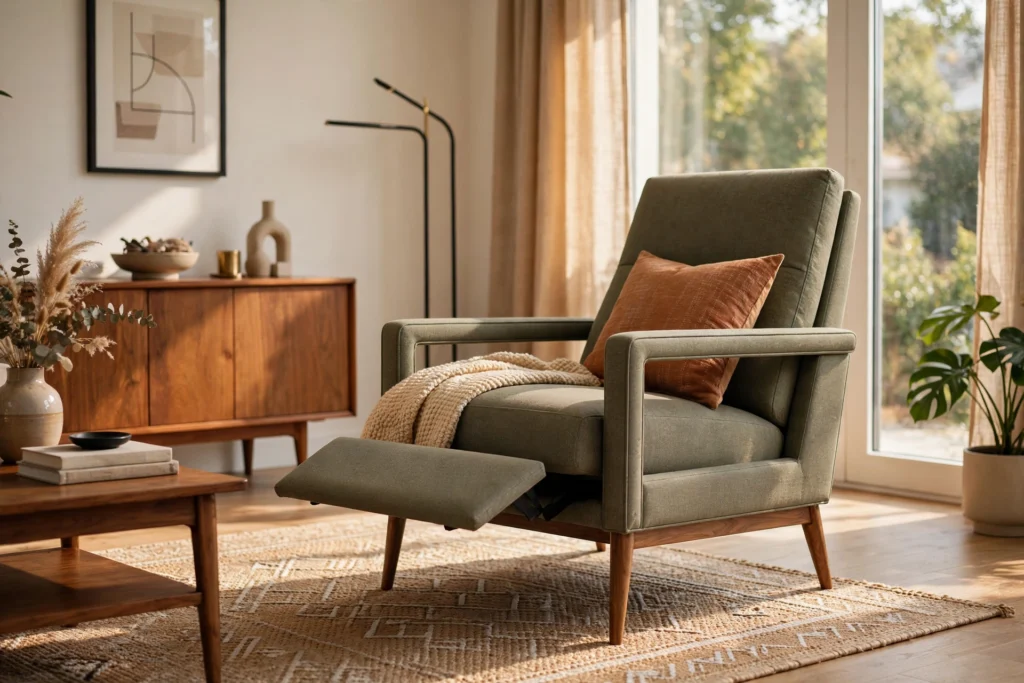
Forget everything you remember about oversized, boxy recliners. Today’s slim-profile designs hide their mechanisms behind track arms and tailored backs, with tapered wooden legs that read more like a designer lounge chair than a bulky lounger. Look for a model around 28 to 32 inches wide with a low back and minimal seams — smooth upholstery and clean lines keep the visual weight down. A slim recliner slips into a corner, beside a sofa, or into a reading nook without swallowing the room, making it the single best upgrade for style-conscious homes. Pair it with a small rug and it becomes a destination, not an afterthought.
2. Leather vs. Fabric: Know the Tradeoffs
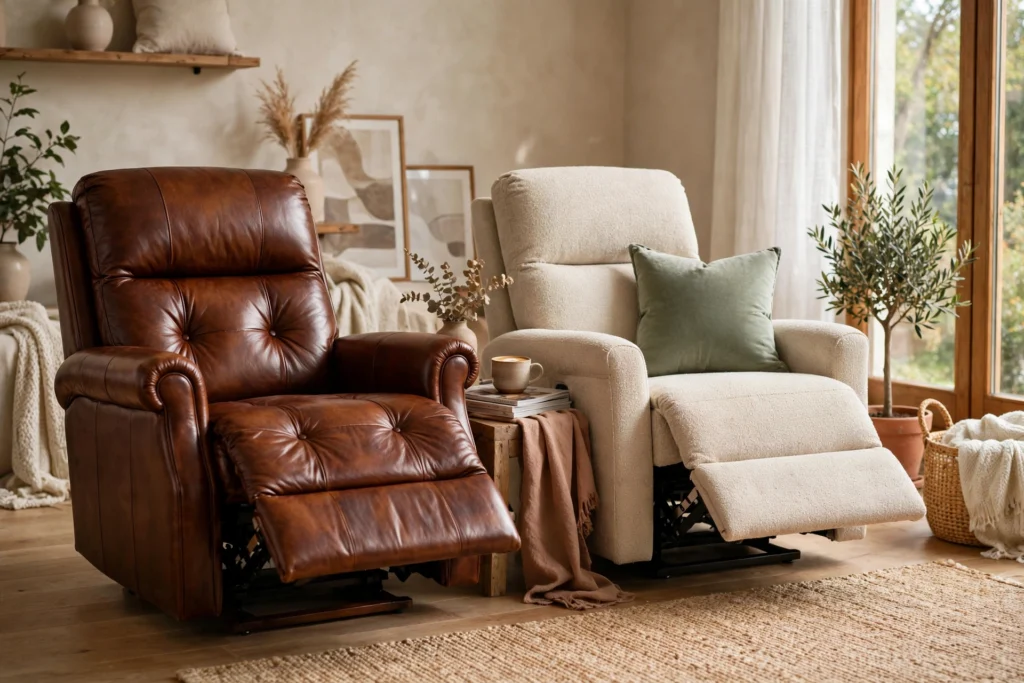
The upholstery you choose changes everything about how your recliner lives in the room. Full-grain and top-grain leather age beautifully, wipe clean in seconds, and add instant richness — but they cost more and can feel cold in winter and sticky in summer. Fabric recliners offer more colors and patterns, a warmer feel, and friendlier prices, though light fabrics show wear faster. For a busy household, performance fabrics with stain resistance split the difference nicely. If you love the classic American recliner look made famous by mid-century favorites, the history of the Barcalounger recliner is a fun reminder of how leather became the default — but today’s fabric options compete on both comfort and style.
3. Add a Swivel Base for a Flexible Layout
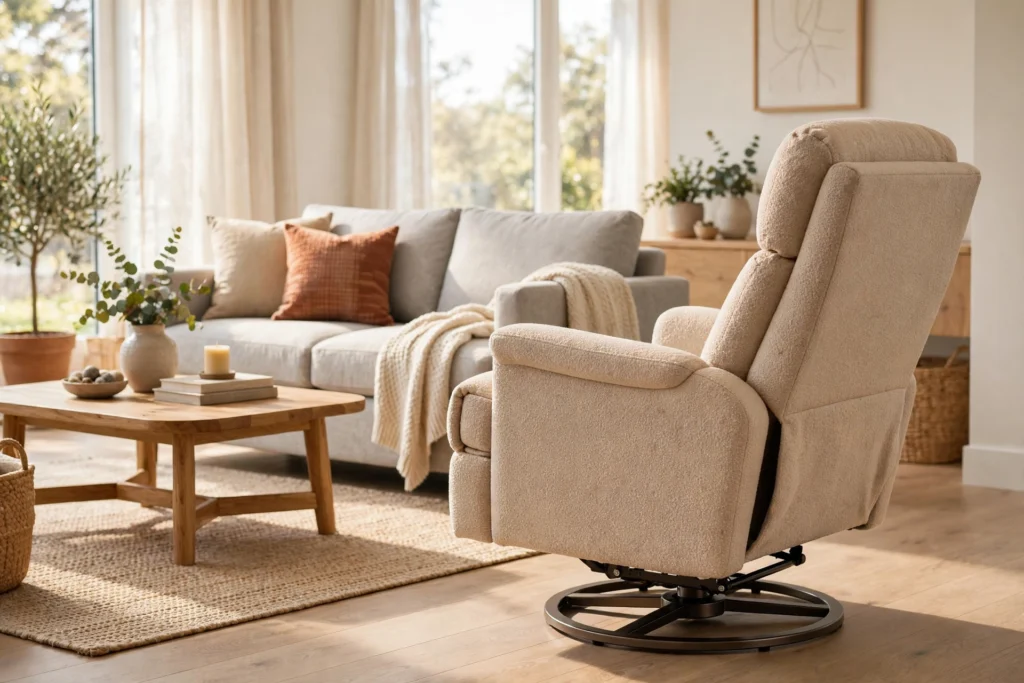
A swivel recliner is the most underrated layout tool in the living room. The 360-degree base lets you pivot toward the TV for movie night, turn back to face guests during a party, or rotate toward the window for afternoon reading — all without dragging furniture across the floor. Swivel bases shine in open-plan spaces where one chair must serve several zones. Look for a smooth, silent swivel mechanism and a base that locks or stays put when you do not want movement. In smaller rooms, the ability to change direction beats adding a second chair you do not have space for.
4. Pick a Wall-Hugger for Tight Spaces
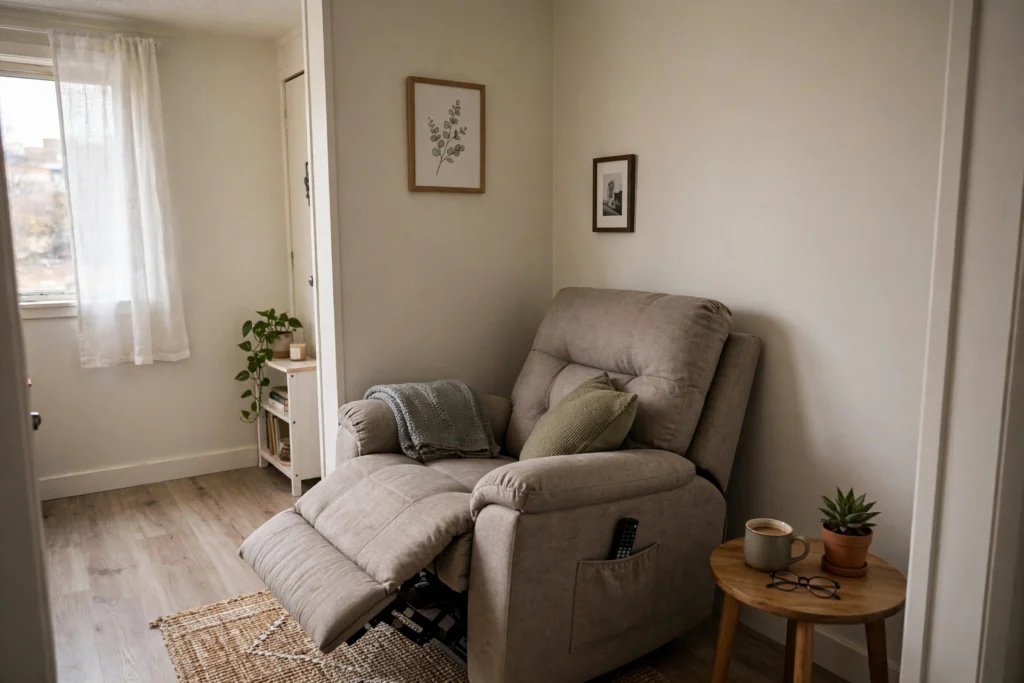
Standard recliners need 12 to 18 inches of clearance behind them to recline, which kills the idea for small rooms — unless you choose a wall-hugger. Also called zero-clearance recliners, these models slide forward as they recline instead of tipping backward, so they work with as little as 4 to 6 inches from the wall. That means you can keep your floor plan tight and still get a full stretch. Wall-huggers are ideal for apartments, snug TV corners, and any spot where the wall is doing the space planning. Just confirm the model is a true wall-hugger before you buy, since some “compact” recliners are merely small.
5. Decide Between Manual and Power Recline
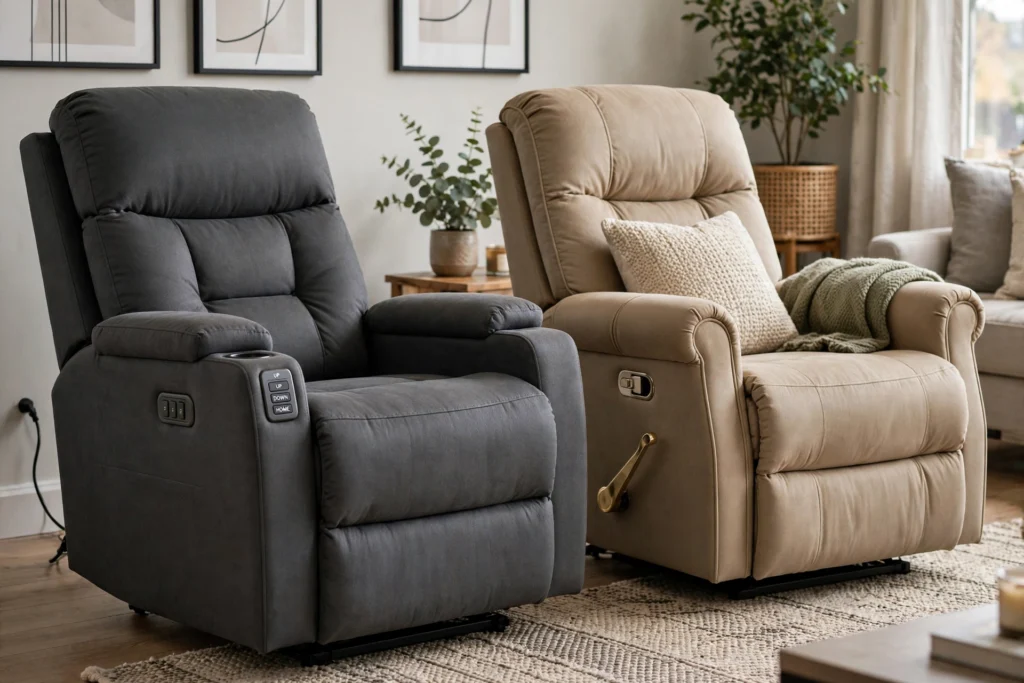
Manual recliners use a side lever or push-back mechanism — no outlet needed, lighter to move, and usually a few hundred dollars cheaper. They are simple, reliable, and great for casual spaces. Power recliners, on the other hand, glide to any angle at the touch of a button, often with extras like USB charging ports, adjustable headrests, and memory positions. The tradeoff is the price, the weight, and the need for a nearby outlet or battery pack. If multiple people of different heights share the chair, power wins for its infinite adjustability; if you want fuss-free comfort, manual never needs charging.
6. Soften the Silhouette With Throws and Pillows
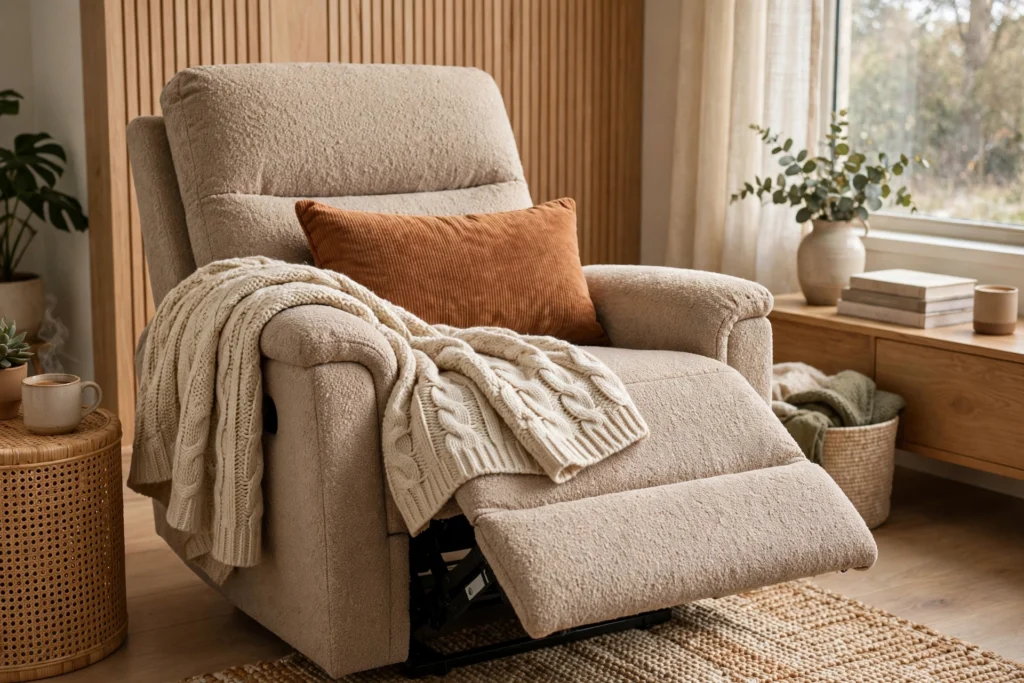
The fastest way to make a recliner look like decor instead of equipment is textile layering. Drape a chunky knit throw over one arm — casually, not folded into a military crease — and add a lumbar pillow in a texture that contrasts with the chair, like boucle against leather or linen against velvet. These layers break up the recliner’s solid mass and tie its color into the rest of the room. Stick to a tight palette: one throw and one pillow in tones pulled from your rug or curtains is enough. Over-styling a recliner makes it look fussy; two well-chosen textiles make it look intentional.
7. Anchor It With the Right Side Table
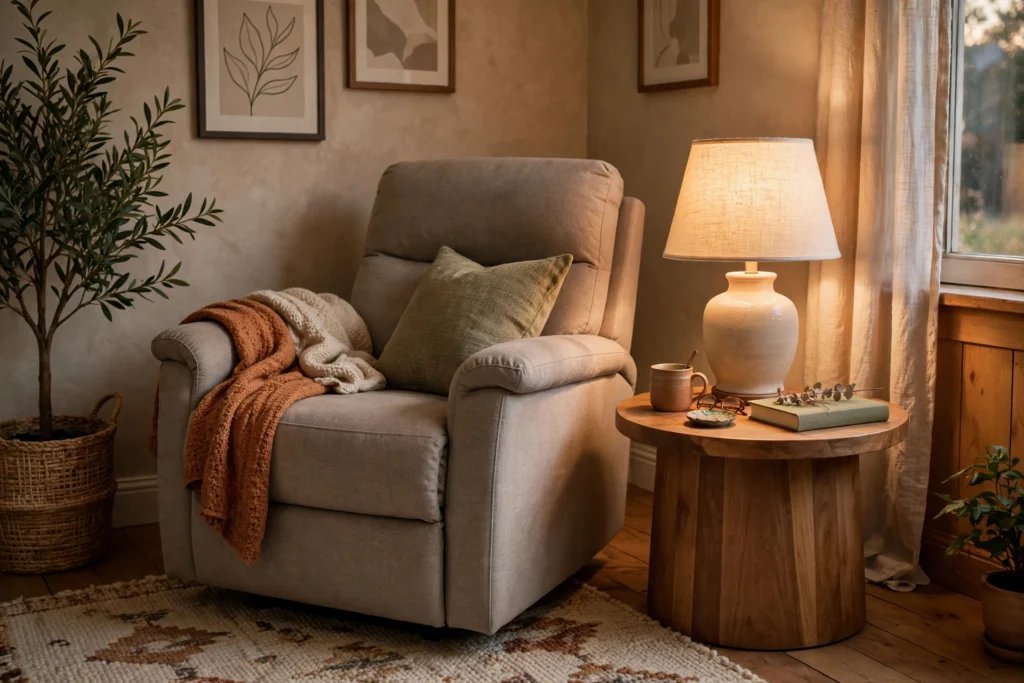
A recliner without a side table feels like it floated in from the garage — the table is what makes it part of the living room. Choose one slightly lower than the chair’s arm, within easy reach, and sturdy enough for a lamp, a drink, and a book. A round table softens the chair’s blockiness, while a small wooden drum table adds warmth. This pairing also creates a complete vignette: chair, table, lamp, throw. Suddenly the recliner is a designed moment rather than a stray seat. If the chair swivels or glides, make sure the table sits clear of the moving parts.
8. Face It Toward the TV Without the Theater Look
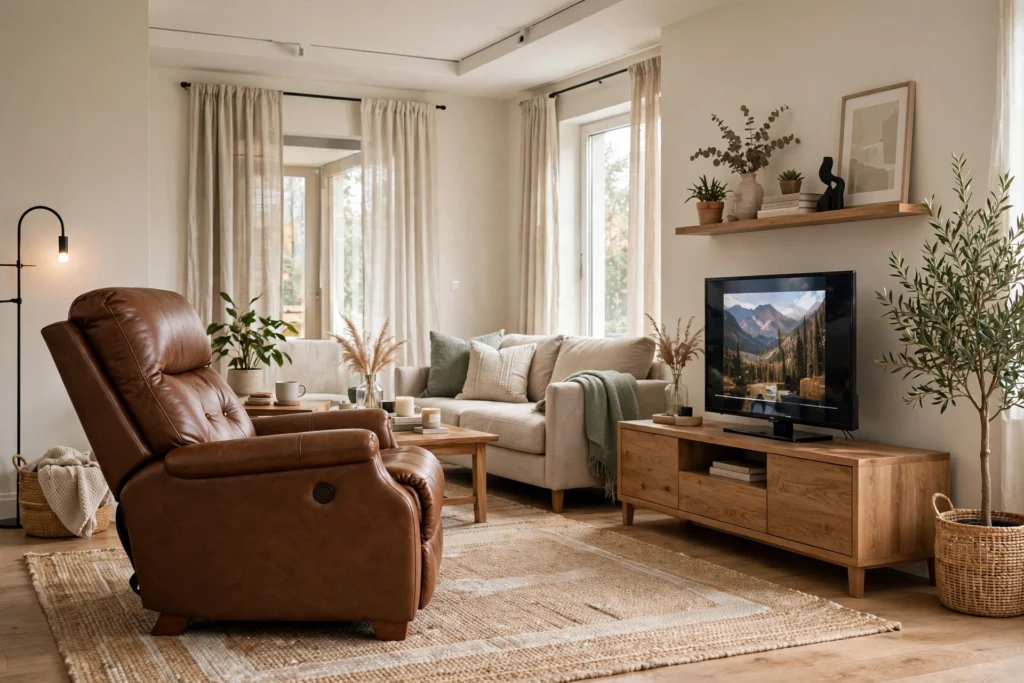
The recliner is the undisputed king of TV seating, but placing it dead-center like a theater chair ruins the room’s balance. Instead, angle it slightly — 10 to 20 degrees off the screen axis — so it feels like part of the seating arrangement rather than a shrine to the television. Keep it at the same sightline distance as your sofa so one person is not craning. If you are building the whole media wall around comfort, our living room design ideas with TV show how to balance the screen with seating that still looks like a living room, not a cinema lobby.
9. Angle It Into the Conversation Zone
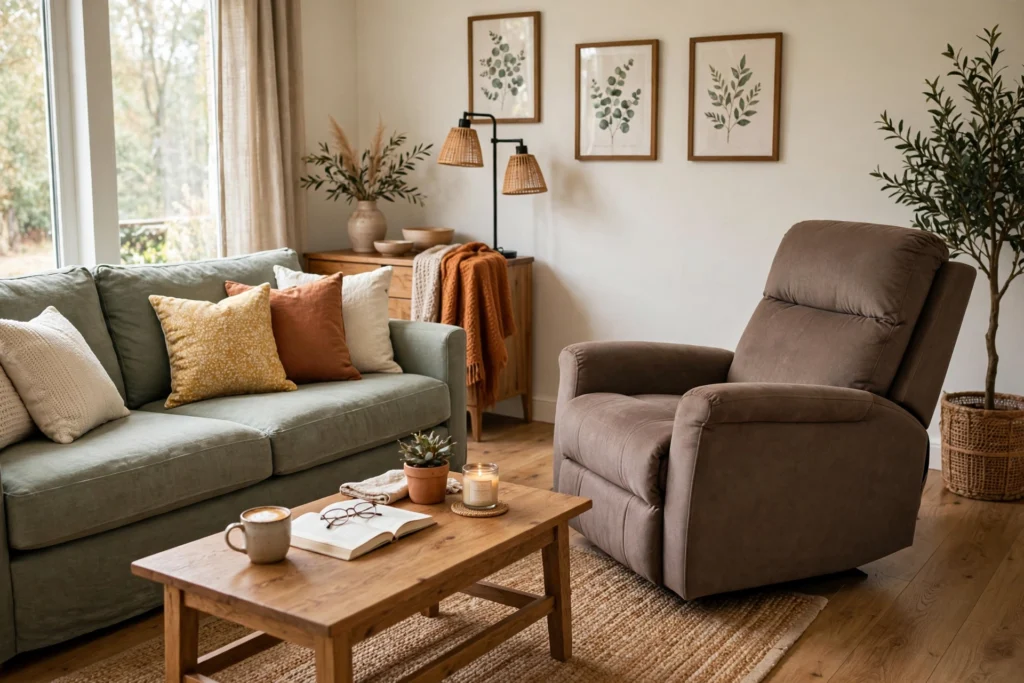
A recliner can absolutely belong in a conversation grouping — the trick is the angle. Float it opposite or perpendicular to the sofa, tilted inward about 30 degrees, so it joins the circle instead of facing away from it. This placement turns the recliner from a solo TV throne into social seating, and guests will fight over it. Match its scale to the other chairs so it does not dwarf them, and echo a color from the sofa in its throw or pillow. For larger rooms built around a big sofa, our sectional sofa styling ideas that anchor your living room show how to give every seat, recliner included, a clear role in the layout.
10. Claim the Window as a Reading Spot
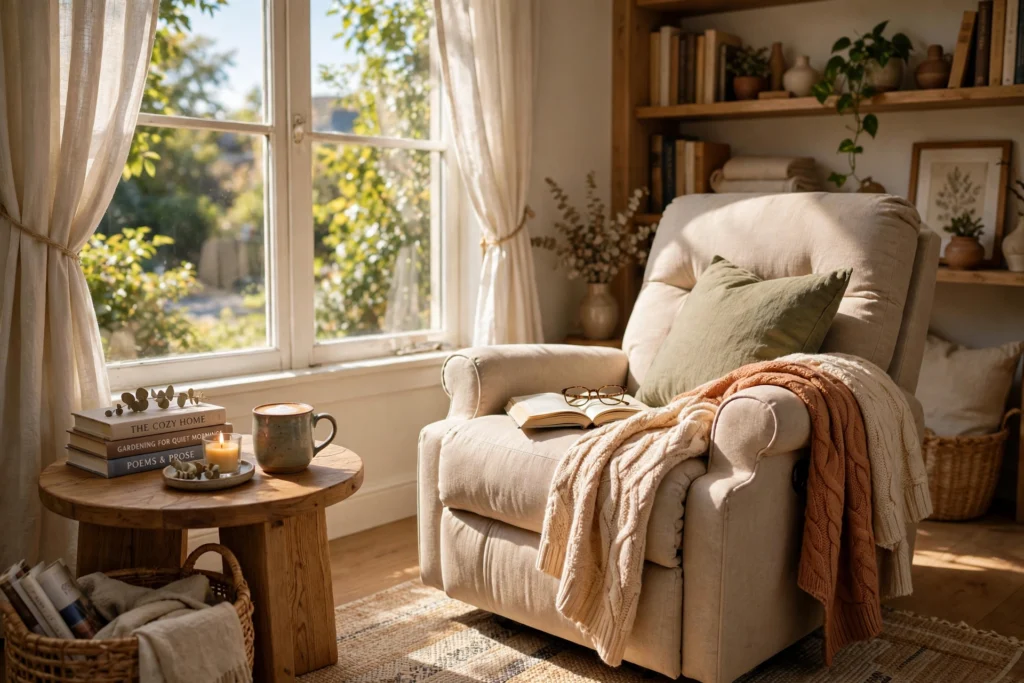
Few pairings beat a recliner and a good window. Tuck the chair beside or in front of a window at a slight angle, add a floor lamp behind it for evening reading, and you have a reading nook that needs nothing else. A swivel base is a bonus here: rotate toward the daylight during the day and back toward the room at night. Choose a lighter upholstery for window spots, since direct sun fades dark fabrics and dries out leather faster. A small bookshelf or basket within arm’s reach completes the setup. This is one of the easiest living room recliner ideas to pull off — it asks for one chair and one corner.
11. Pick a Color That Blends With Your Sofa
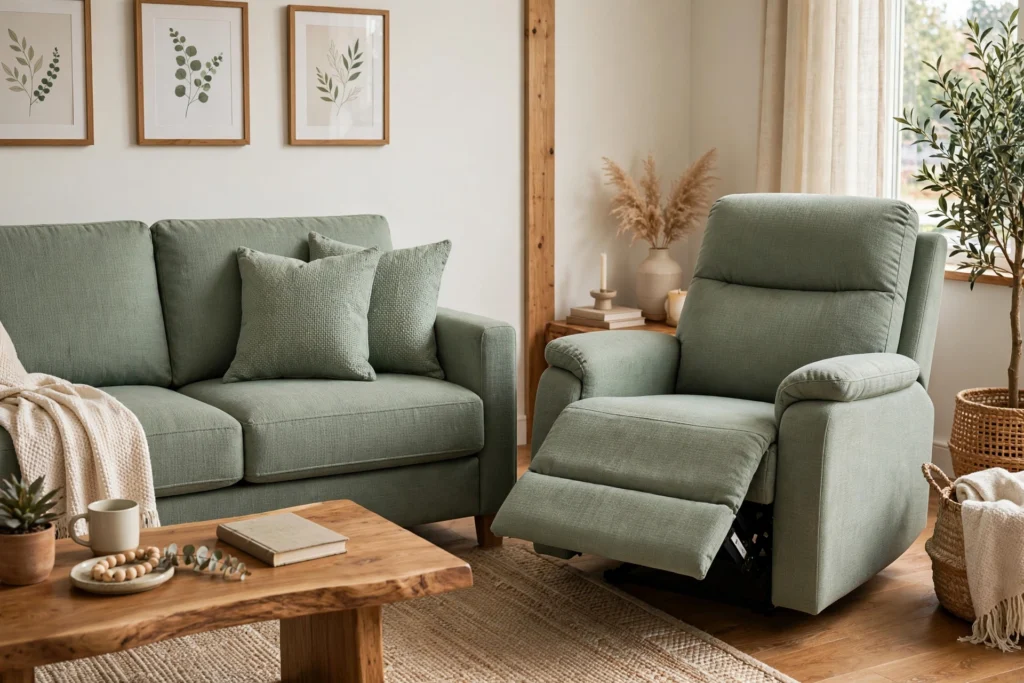
The recliner should not match your sofa exactly — that looks like a furniture showroom — but it should speak the same language. If your sofa is a cool gray, try the recliner in charcoal, warm taupe, or deep navy; if the sofa is beige, cognac leather or olive fabric bridges beautifully. Repeating one tone from the sofa in the recliner’s throw pillow ties the pair together without cloning. Bold colors work too, as long as the shade appears somewhere else in the room — a rust recliner with rust in the artwork feels curated, while a lone bright chair feels random. When in doubt, go neutral and let texture do the talking.
12. Pair It With a Matching Ottoman
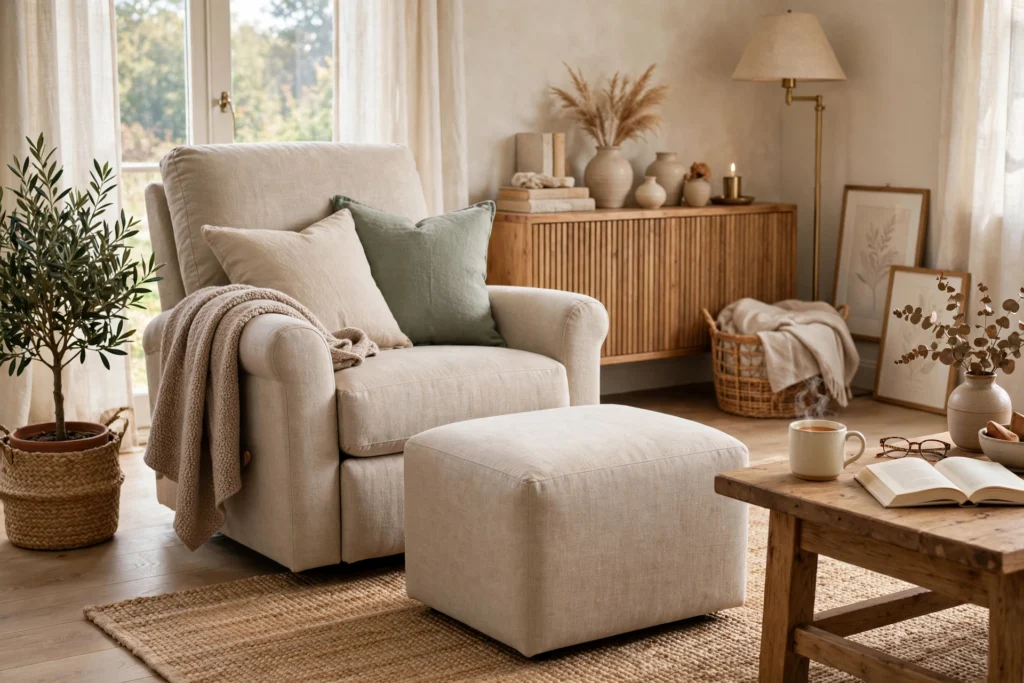
Some recliners come with built-in footrests, but a separate ottoman gives you more styling freedom. An ottoman extends the lounge profile, lets you kick up your feet without reclining the whole chair, and doubles as extra seating or a footrest for the sofa when guests arrive. For a tailored look, choose an ottoman in the same fabric as the chair; for visual interest, pick a complementary texture, like a leather chair with a boucle ottoman. Storage ottomans are the overachievers here — they hide blankets and remotes while completing the recliner’s silhouette.
13. Double Up With a Dual Reclining Loveseat
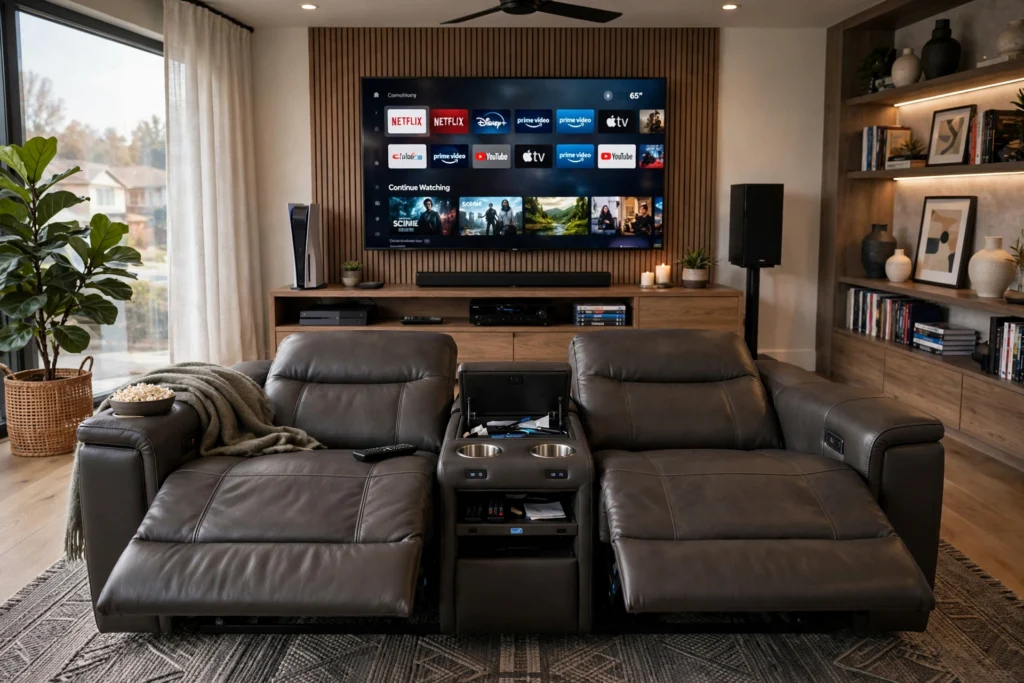
When one recliner is not enough but a full reclining sofa is too much, the dual reclining loveseat is the sweet spot. Two independent reclining seats with a shared center console — cup holders, storage, sometimes USB ports — make it perfect for couples’ movie nights or a parent-and-kid reading spot. Measure carefully, since loveseats still need recline clearance on both sides, and decide whether you want a split back (each person controls their own angle) or a shared mechanism. In a media-focused room, a dual reclining loveseat opposite the screen can replace both the sofa and the chairs.
14. Go Kid- and Pet-Friendly With Performance Fabrics
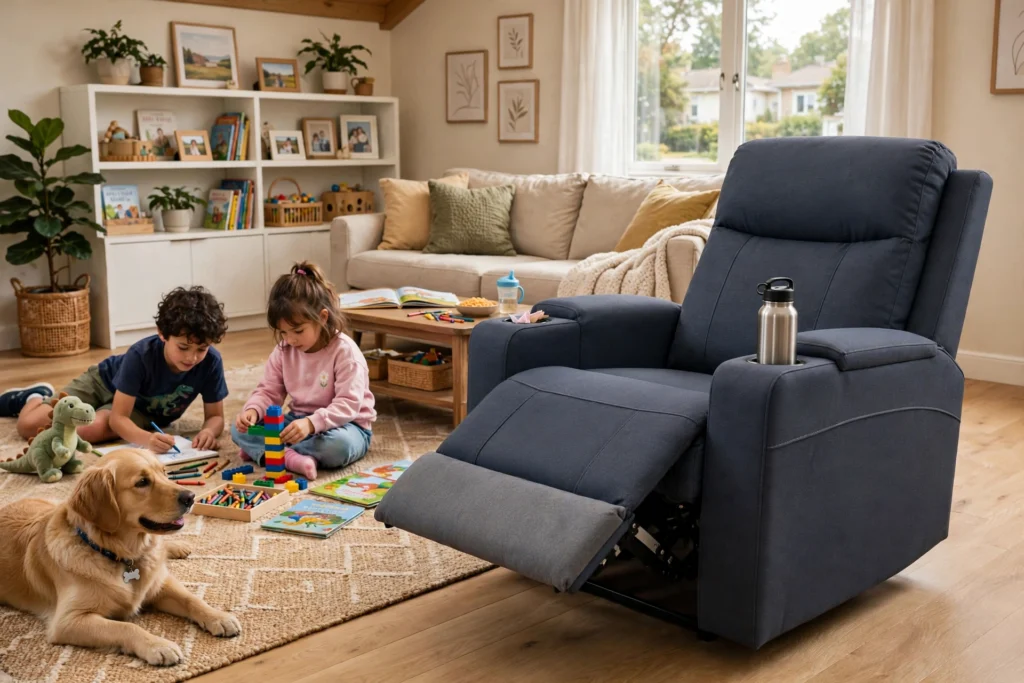
Real life means juice spills, muddy paws, and crayons. Performance fabrics — tightly woven, stain-resistant, often bleach-cleanable — are the recliner upholstery that survives it all without looking like outdoor furniture. Look for high double-rub ratings (25,000 or more) and removable, washable cushion covers if you can find them. Leather is also surprisingly pet-friendly: claws slide off smooth leather more easily than they snag fabric, though scratches show on darker hides. Choose mid-tone colors that hide fur between vacuums, and keep a washable throw on the seat for the dog’s favorite spot.
15. Balance Budget and Premium, Then Care for It
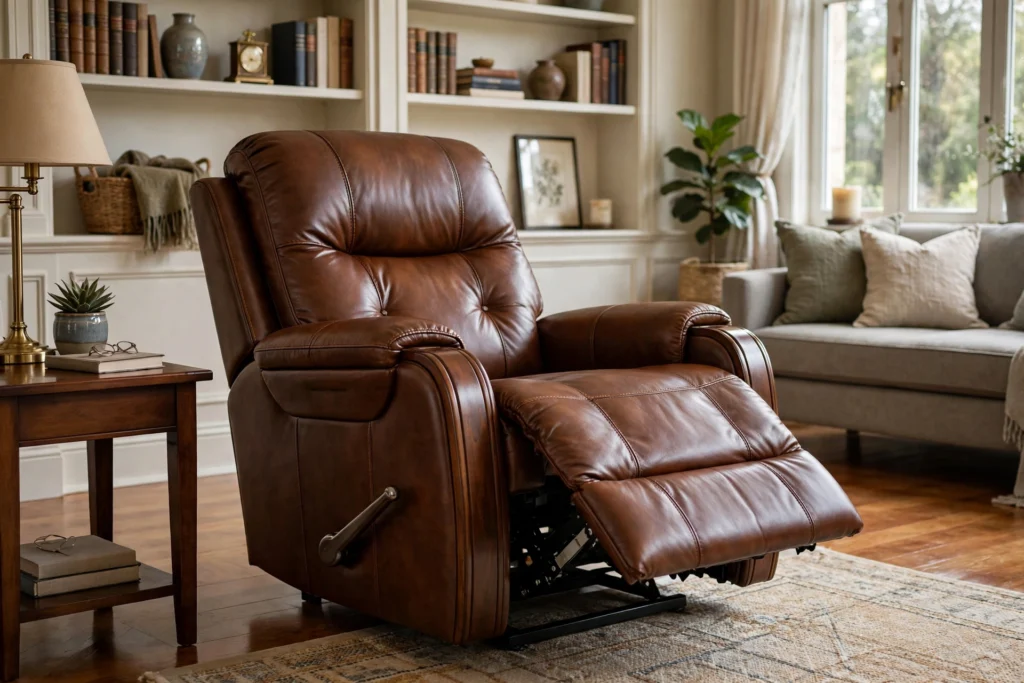
Budget recliners (roughly $300 to $700) get you manual mechanisms and standard fabrics or bonded leather — perfectly comfortable, just simpler in build and shorter in warranty. Premium models ($1,200 and up) buy you power recline, top-grain leather or high-end performance fabric, hardwood frames, and mechanisms rated for decades of daily use. Whichever tier you choose, basic care extends its life: vacuum upholstery weekly, condition leather every 6 to 12 months, tighten the mechanism bolts twice a year, and keep the chair out of harsh direct sunlight. A well-kept recliner should serve 10 to 15 years of naps, movies, and quiet mornings.
Frequently Asked Questions
Can a recliner work in a small living room?
Yes — pick a wall-hugger model, which needs only 4 to 6 inches of wall clearance, and choose a slim profile under 32 inches wide. A swivel base helps one chair serve multiple directions without extra furniture. Before buying, tape the chair’s full footprint (including the reclined position) on your floor to confirm it fits your walkways. Light colors and raised legs make the chair look lighter in a tight space.
Should I buy a manual or power recliner?
Manual recliners are cheaper, lighter, need no outlet, and rarely break — ideal for casual spaces and tight budgets. Power recliners offer infinite position control, adjustable headrests, and extras like USB ports, which is worth it if people of different heights share the chair or if anyone has mobility issues. For context on how the mechanics evolved, the recliner’s history and mechanics on Wikipedia covers the journey from simple levers to today’s powered designs.
How do I make my recliner look less bulky?
Drape a throw over one arm, add a contrasting lumbar pillow, and pair the chair with a side table and lamp so it reads as a styled vignette. Choose slim profiles with track arms and tapered legs, and pick upholstery in a tone that echoes your sofa or rug. Two intentional textiles beat clutter — restraint is what separates a styled recliner from a bulky one.
What is the best recliner fabric for kids and pets?
Performance fabrics with stain resistance and high double-rub ratings (25,000+) are the top pick — many are bleach-cleanable and hide daily wear. Smooth top-grain leather is a strong runner-up since pet claws slide off it, though scratches show on dark hides. Avoid light-colored delicate fabrics and loose weaves that snag. Mid-tone colors and a washable throw on the seat handle fur and spills between cleanings.
How do I measure for a recliner before buying?
Measure your doorways, hallways, and stairwells first — many recliners ship in one piece and the most common delivery disaster is a chair that cannot reach the room. Then measure the chair’s upright footprint plus its full reclined depth, and check the required wall clearance (4 to 6 inches for wall-huggers, 12 to 18 for standard models). Tape the outline on your floor and walk around it to make sure pathways stay comfortable.
Keep Exploring
A recliner earns its place when it feels both deeply comfortable and completely at home in your decor. Start with the right size and mechanism for your space, soften it with textiles, and give it a proper spot in the layout — comfort and style are not a tradeoff.
Your living room’s best seat is waiting. Pick the one or two ideas that fit your room, your household, and your budget, then settle in — the naps, the movies, and the quiet mornings will thank you.