
Great lighting is the invisible decor that decides whether a living room feels flat and cold or warm and inviting. The right living room lighting ideas do more than brighten a space — they shape how it feels at every hour of the day, from bright weekend mornings to slow evening wind-downs. A well-lit room draws people in, flatters the furniture, and makes even a modest space feel thoughtfully designed.
The secret is layering: no single overhead light can carry a whole room. This guide walks through 15 living room lighting ideas that mix ambient, task, and accent sources, so you can build a lighting plan that fits your space, your style, and your budget.
1. Build Your Plan on Three Layers
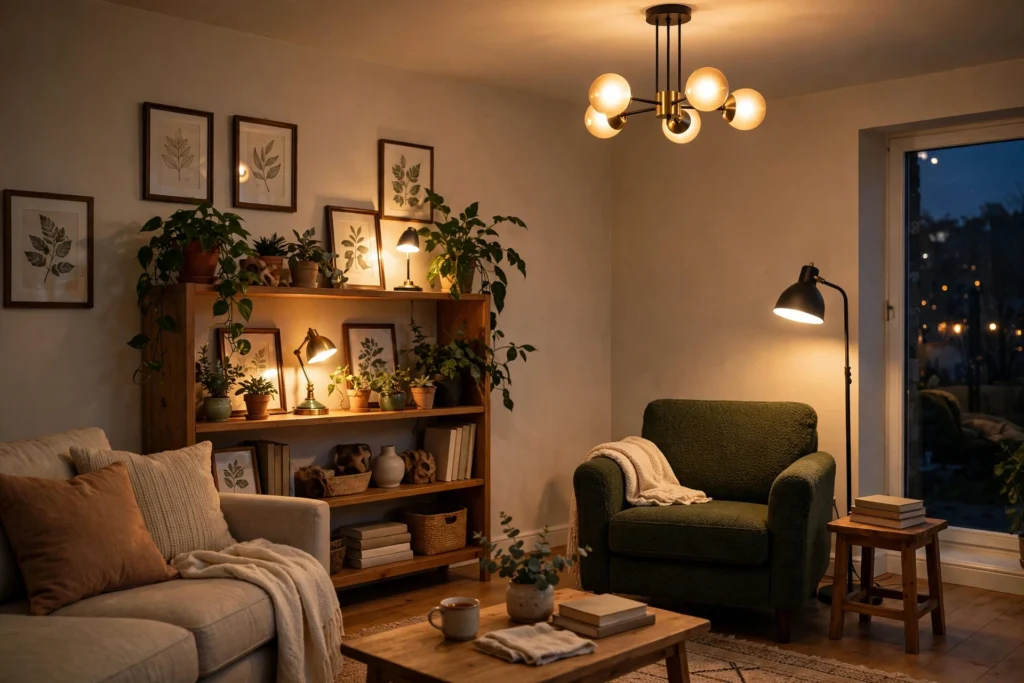
Every great living room lighting plan rests on three layers: ambient light that fills the room, task light for reading and hobbies, and accent light that highlights art, plants, and architecture. Ambient sources like ceiling fixtures and recessed cans establish the baseline brightness, while floor and table lamps handle task duty. Accent lighting — picture lights, LED strips, and spotlights — adds the drama that makes a room feel finished. Sketch your room and mark where you sit, read, and relax; then assign each zone at least two layers so no corner relies on a single bulb. Plan the layers before buying a single fixture, and the rest of your decisions get far easier.
2. Hang a Statement Chandelier as the Centerpiece
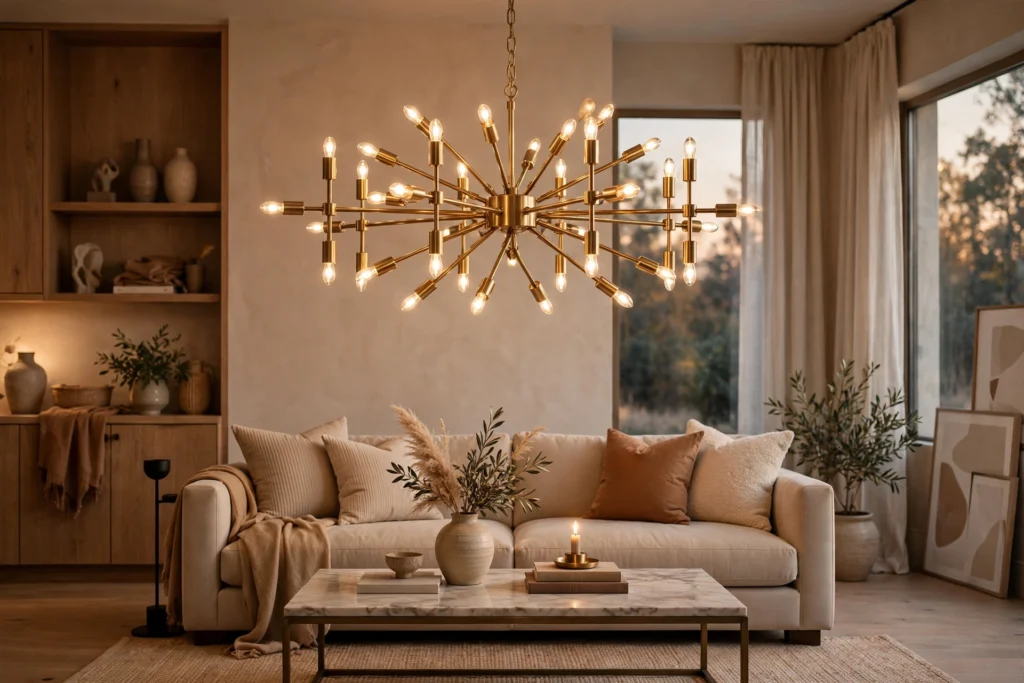
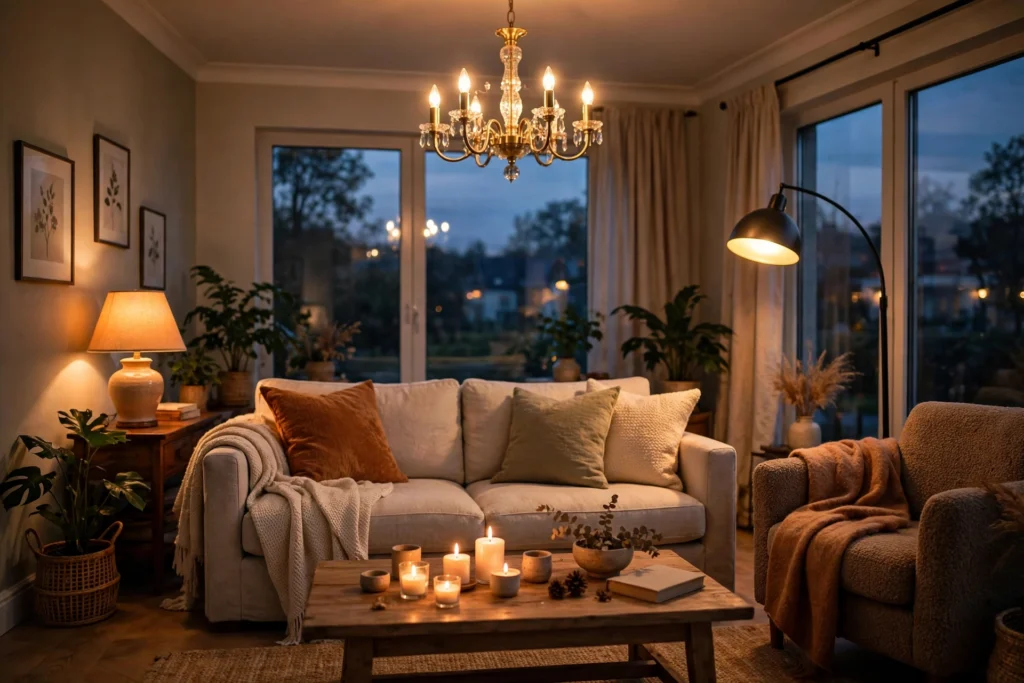
A bold chandelier turns the ceiling into the living room’s crown jewel. In rooms with eight-foot ceilings, choose a flush-mount or semi-flush fixture so tall guests can pass comfortably; higher ceilings can handle dramatic multi-tier designs that draw the eye upward. Scale matters: add the room’s length and width in feet, and convert the sum to inches for a fitting chandelier diameter. Branch out from basic finishes — matte black, aged brass, and woven rattan chandeliers each bring a distinct personality that sets the room’s tone. Just remember to dim it: statement fixtures look best at about seventy percent brightness in the evening.
3. Place a Floor Lamp in Every Reading Corner
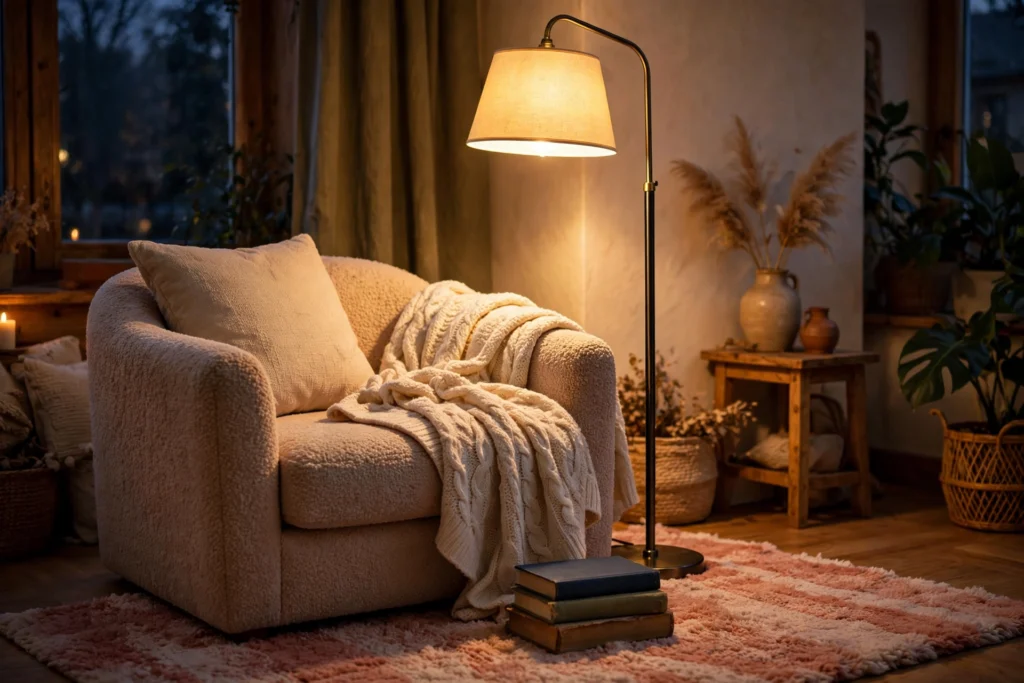
The classic floor lamp remains the hardest-working task light in the living room. Position it beside your favorite reading chair so the bulb sits just behind or above your shoulder, directing light over the page without glare. Torchiere styles bounce light off the ceiling for soft ambient fill, while adjustable-arm designs let you aim light exactly where you need it for knitting, puzzles, or remote work. Choose a shade that is light enough to glow warmly but lined to prevent harsh hot spots. Pair the lamp with a soft rug beneath the chair — our living room rug ideas for warmth and style show how a plush base anchors a reading nook beautifully.
4. Try an Arc Floor Lamp Over the Sofa
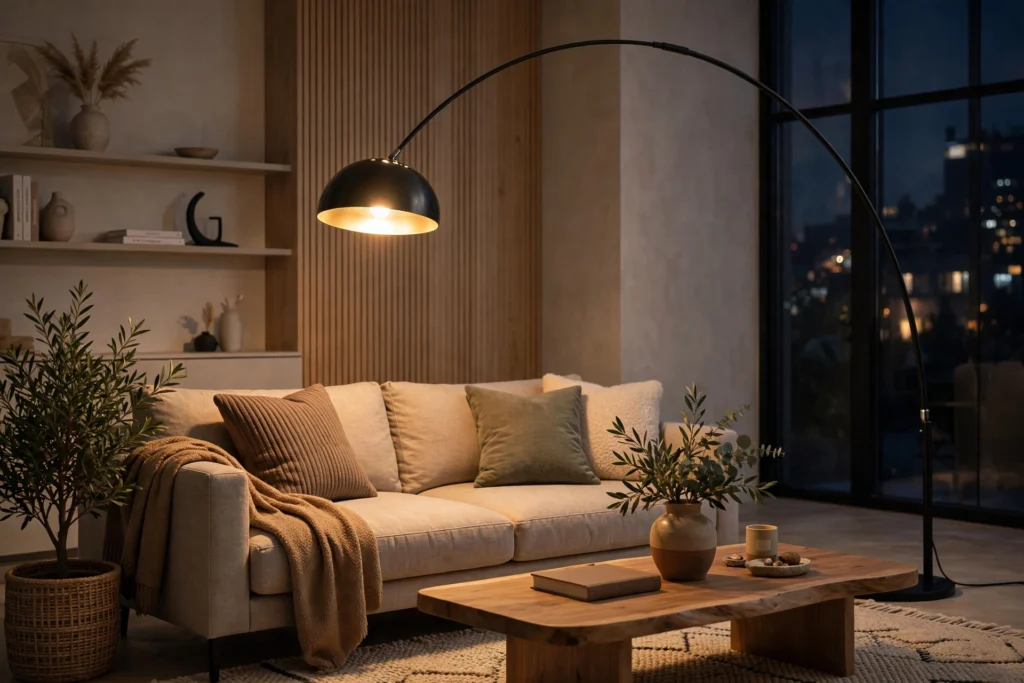
Arc floor lamps deliver overhead light without any ceiling wiring, swooping a glowing head directly over the sofa where people gather. This makes them a renter-friendly alternative to pendants, and the dramatic curve becomes an architectural feature in its own right. Look for a weighted base that sits safely behind the sofa and a reach long enough to center the head over the cushions. Marble and metal bases add a luxe look, while matte black keeps things modern and graphic. Most arcs come with a footswitch for easy on-off access. Because the bulb hangs at sitting-eye level, a frosted or fabric shade is essential to diffuse glare.
5. Use Table Lamps as Decorative Jewelry

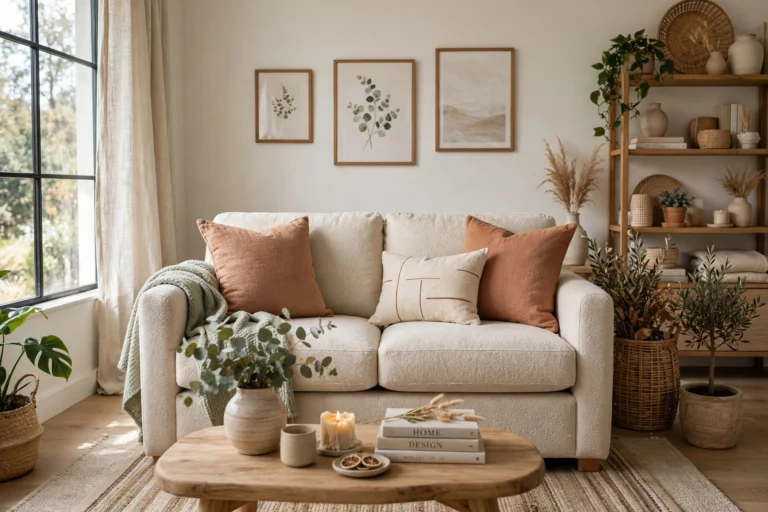
Table lamps are the jewelry of the living room — small enough to swap seasonally, impactful enough to change the room’s whole feel. Place matching pairs on console tables and bookshelves for symmetry, or mix shapes on side tables for a collected, designer look. Ceramic, stone, and textured linen bases bring organic warmth; polished metal and glass read sleek and modern. The shade sets the mood: drum shades throw light up and down for drama, while empire shades soften and diffuse. Grouping a lamp with books, a small plant, and a decorative tray turns a side table into a styled vignette that glows beautifully after dark.
6. Add Recessed Lighting for Clean, Even Glow
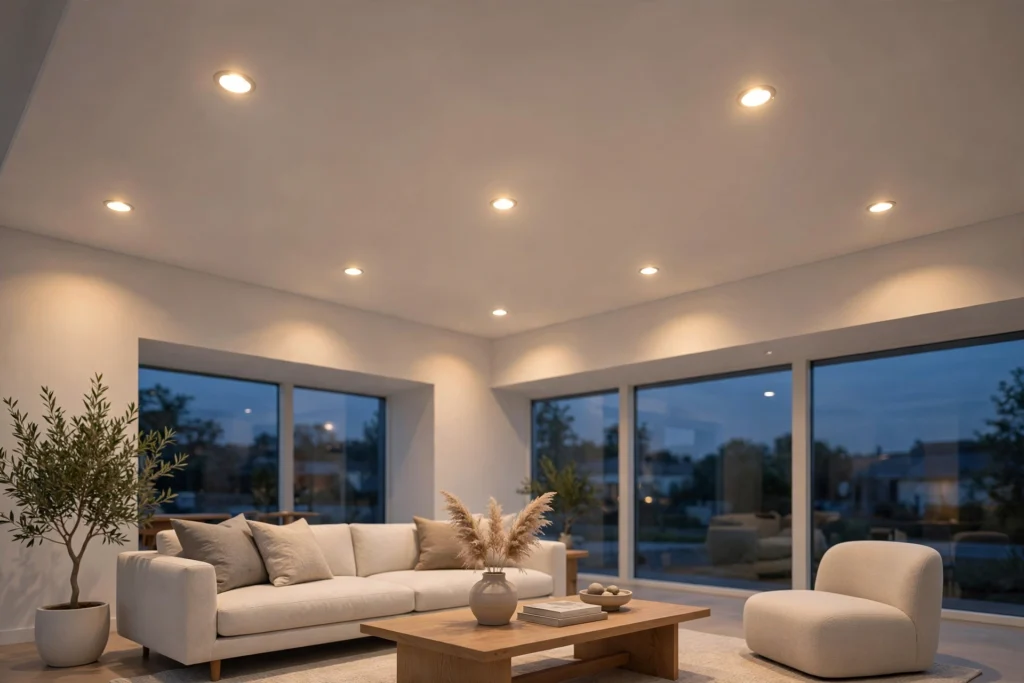
Recessed downlights are the quiet workhorses of modern living rooms, washing walls and floors with even light that never visually competes with your decor. They are ideal for rooms with low ceilings, where hanging fixtures would crowd the space, and for minimalist or contemporary schemes that favor clean lines. Space cans four to six feet apart in a grid, keeping them away from walls at roughly half that distance to avoid harsh scalloping. Retrofit LED trims make installation possible without tearing open the ceiling, and many accept smart bulbs. Always put recessed lights on a dimmer — full-brightness cans feel clinical, while dimmed ones create a warm, restaurant-like ambience. For a comprehensive look at fixture styles across rooms, browse our dining room lighting ideas from chandeliers to sconces to keep the whole home’s lighting language consistent.
7. Frame a Fireplace or Artwork With Wall Sconces
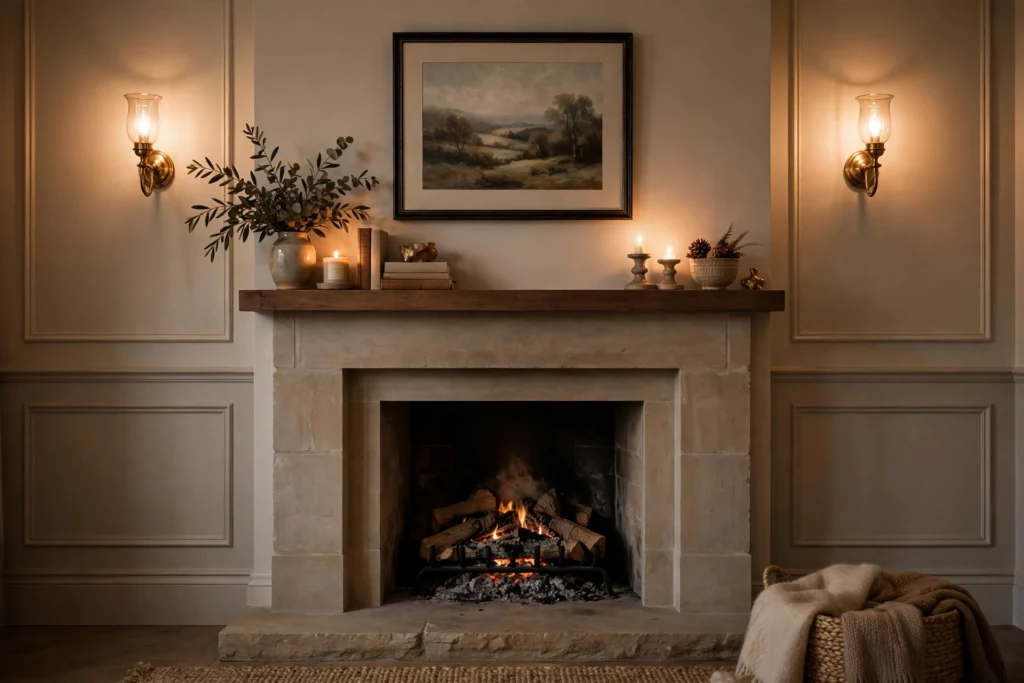
Wall sconces add a tailored, hotel-like polish while freeing up valuable surface space on mantels and shelves. Flank a fireplace with a matching pair to draw the eye to the room’s natural focal point, or use them to frame a large piece of art so it glows like a gallery exhibit. Swing-arm sconces beside reading chairs double as task lighting, folding flat against the wall when not needed. Hardwired sconces require an electrician, but plug-in versions with cord covers have become stylish enough to install yourself in minutes. Choose uplights for soft ceiling bounce, or downlights for dramatic pools of light.
8. Put Dimmers on Everything
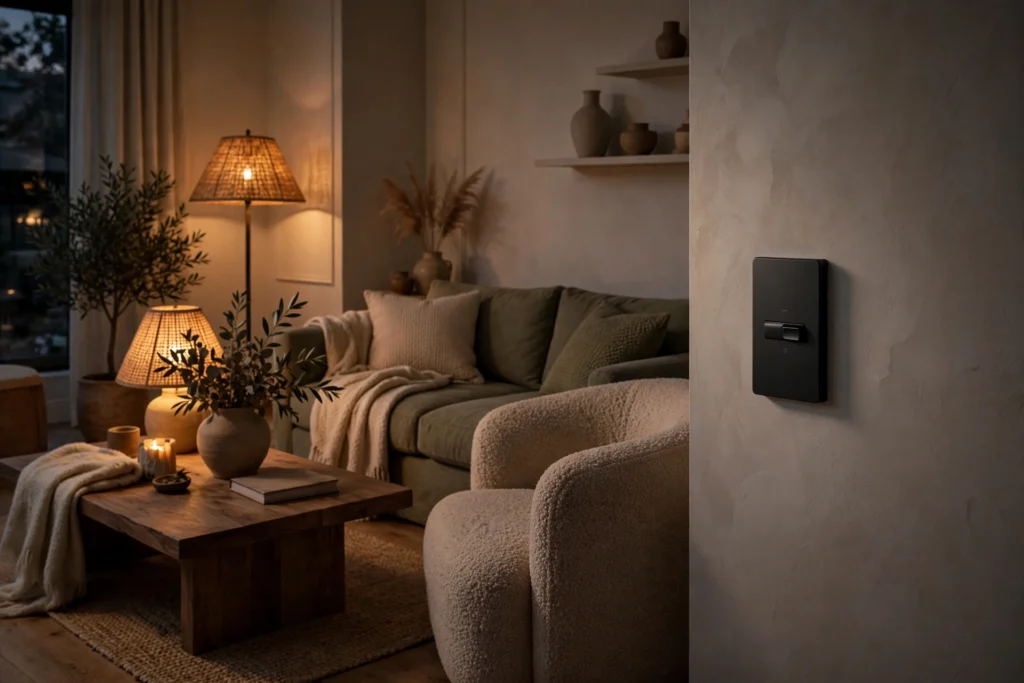
If you buy one lighting upgrade this year, make it dimmers. A dimmer switch transforms a single fixture into an entire mood range — bright for cleaning and homework, low for dinner parties and late-night conversations. Most LED bulbs are now dimmable, but always check the packaging and pair them with LED-rated dimmer switches to avoid flicker and buzzing. Three-way dimmers let you control the same fixture from two entries, a worthwhile splurge in large living rooms. Smart dimmer switches add app and voice control, so you can set scenes like “movie night” that lower every light with one tap. Dimmed light also extends bulb life and trims your energy bill.
9. Choose Warm Bulbs for a Cozy Feel
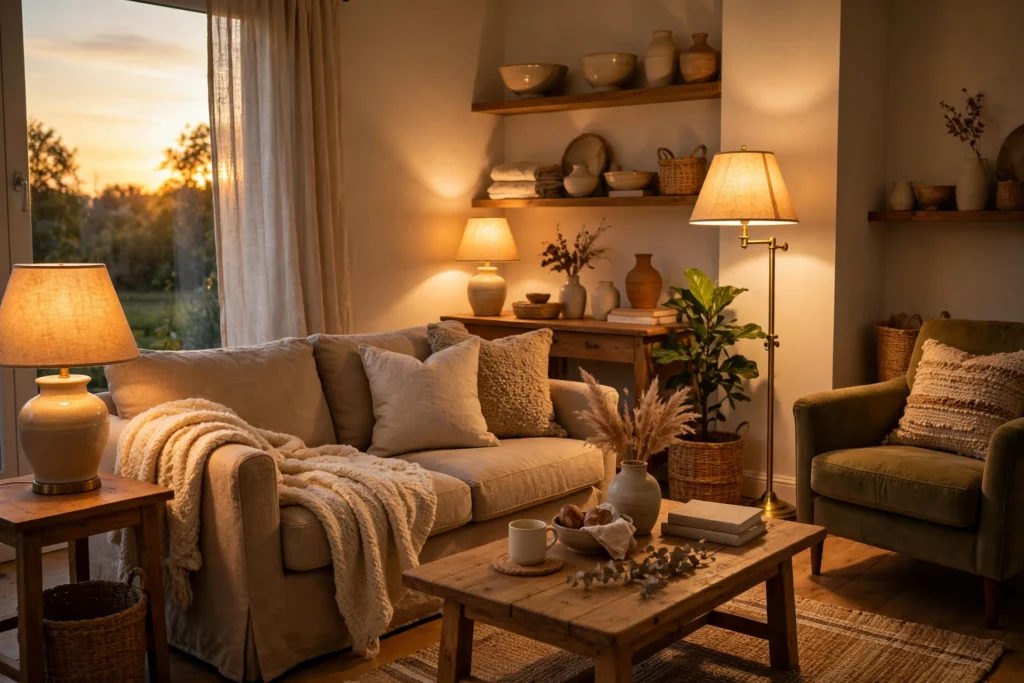
Bulb color temperature quietly controls whether your living room feels warm and welcoming or cold and clinical. For living rooms, choose 2700K to 3000K bulbs — the soft-white range that mimics evening sunlight and flatters skin tones. Cooler 4000K+ daylight bulbs suit task-heavy offices and garages, but they drain the coziness from a relaxation space. Keep every visible bulb in the room at the same temperature so lamps and ceiling lights blend seamlessly; mismatched bulbs make even expensive fixtures look off. Designers consistently recommend mixing overhead, floor, and table lamps at different levels for balanced light — warm bulbs then encourage people to linger and relax.
10. Add LED Strip Accents for Hidden Drama
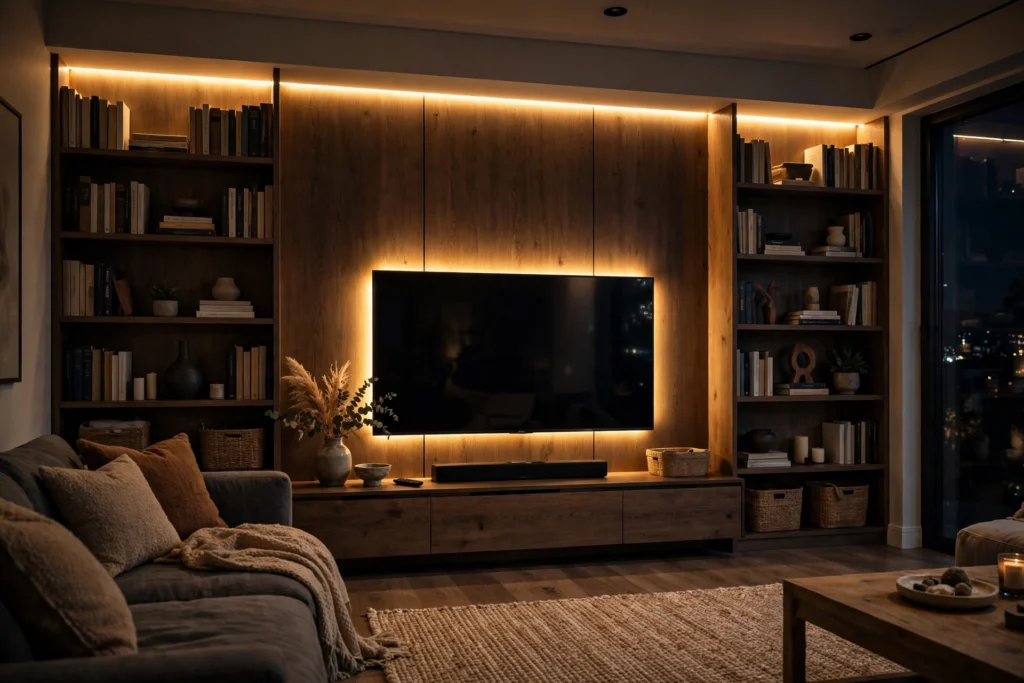
LED strip lights are the designer trick behind shelves, consoles, and coves that seem to glow from within. Tuck a strip behind the TV to reduce eye strain and add cinematic bias lighting, or run one along the top of bookshelves so the wall above glows softly. Battery-operated or USB-powered strips make the effect renter-friendly, while plug-in dimmable versions offer richer control. Stick to warm white for a sophisticated look — colored strips read playful, which suits game rooms more than grown-up living rooms. Conceal the strip itself so only the wash of light shows; visible diodes break the illusion. Cove lighting above crown molding or inside tray ceilings creates a floating effect that makes ceilings feel taller.
11. Hang Pendants in Rooms With High Ceilings
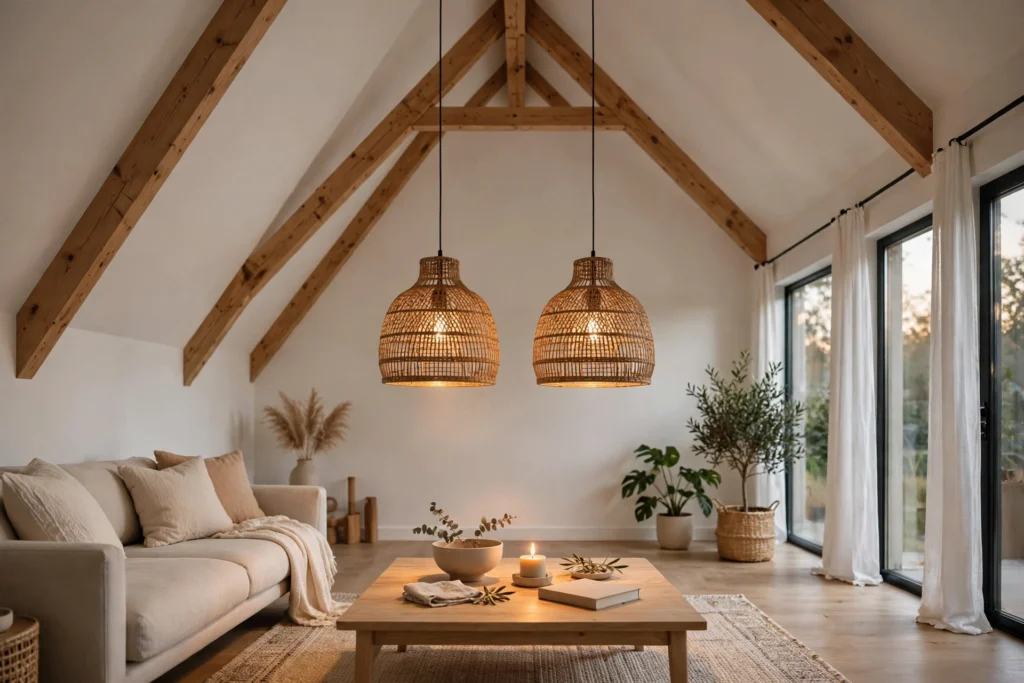
Pendant lights bring overhead illumination down to human scale, filling the void in rooms with tall or vaulted ceilings. A cluster of two or three pendants over a coffee table or reading area creates an intimate pool of light within an expansive space. Choose substantial sizes — small pendants get lost in a double-height room — and hang them so the bottom sits about seven feet off the floor for clear sight lines. Woven, paper, and capiz-shell pendants filter light into dappled patterns that add texture to bare walls. Glass pendants keep sight lines open in smaller rooms while still defining the lighting zone.
12. Spotlight a Gallery Wall With Picture Lights
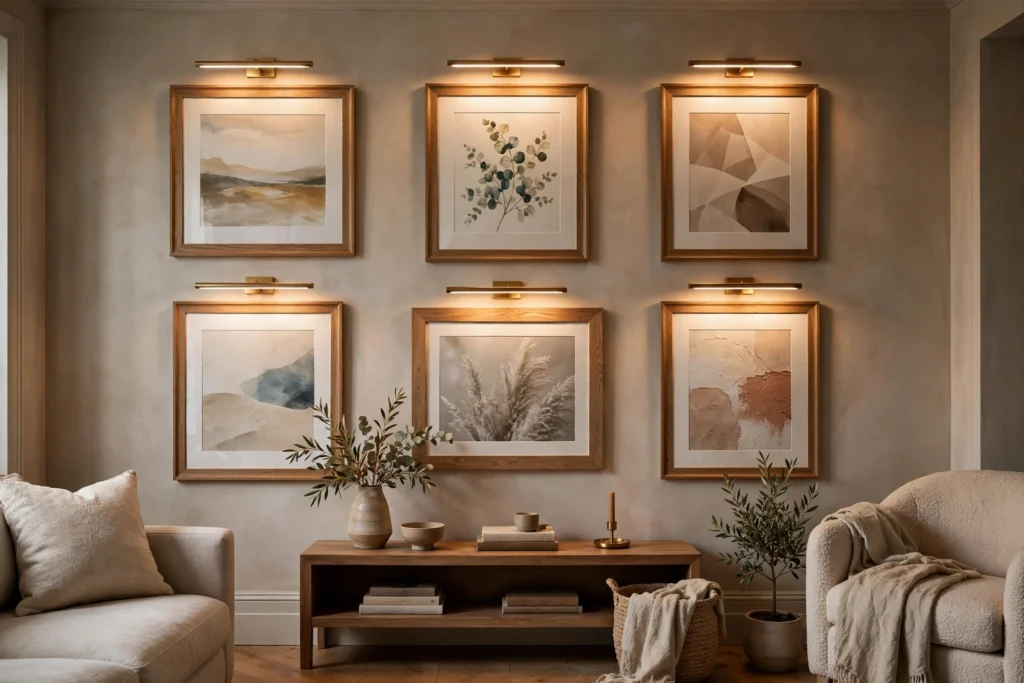
Dedicated art lighting makes a gallery wall look curated rather than cluttered. Slim LED picture lights mounted above each frame cast an even wash across artwork without the heat or UV of old halogen spots. For an entire gallery wall, aim adjustable recessed or track heads at the collection instead, angling them about thirty degrees to minimize glare and shadows. Keep the light color warm — 2700K — so paintings and prints read the way the artist intended. Spacing matters: fixtures should sit roughly one foot from the wall for the smoothest coverage. Pair lit art with a bold backdrop — living room accent wall ideas with big impact show wall treatments worthy of the spotlight.
13. Maximize Natural Daylight First
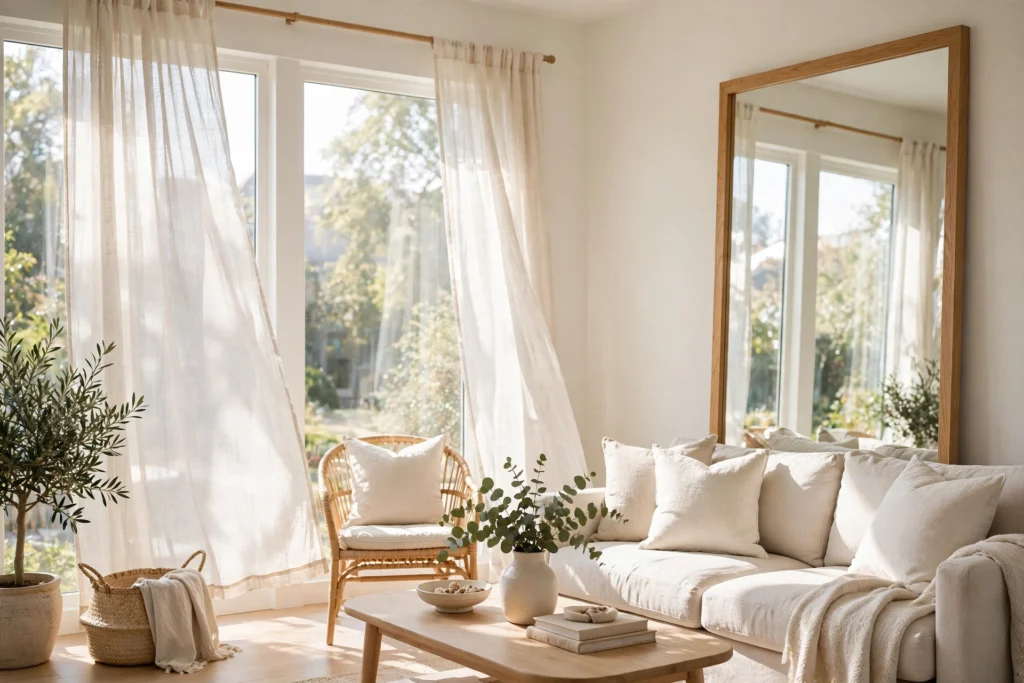
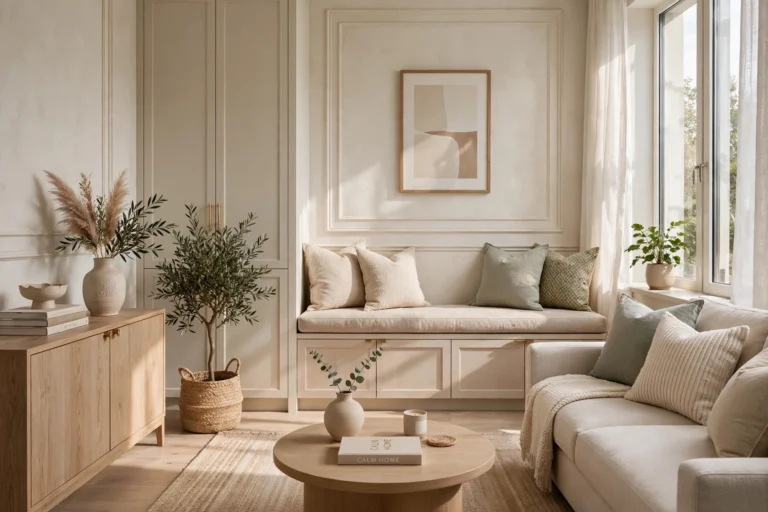
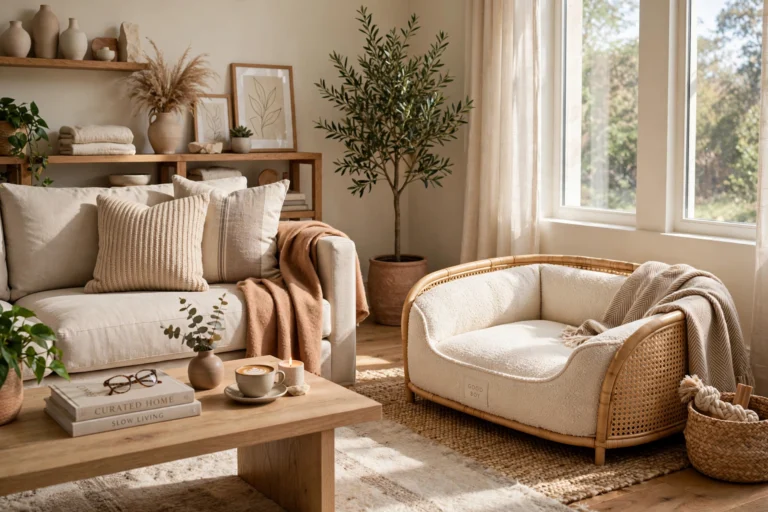
Before buying a single fixture, audit your natural light — it is the most flattering, free light source you have. Replace heavy drapes with sheer linen or light-filtering shades that soften glare without blocking the sun. Position mirrors opposite windows to bounce daylight deeper into the room; a large leaning mirror can effectively double a window’s reach. Keep windowsills and glass clean, since dusty panes block surprising amounts of light, and trim outdoor foliage that casts heavy shade. Light-colored walls, ceilings, and rugs amplify every sunbeam, while dark finishes absorb it. Thoughtful daylight design means you will need fewer fixtures and less electricity once the sun goes down.
14. Automate With Smart Lighting Scenes
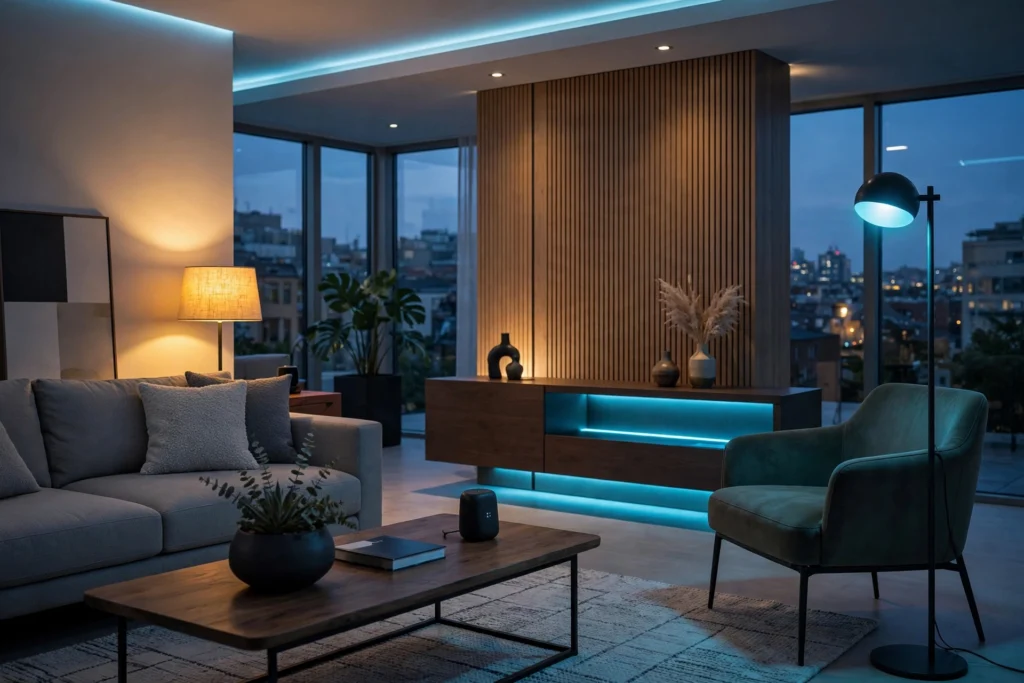
Smart bulbs and plugs turn your layered plan into one-tap living. Program scenes like “morning” for bright, cool-leaning light, “evening” for warm and dim, and “away” that randomly lights rooms for security. Voice control through a smart speaker means no more getting up to flip switches, and geofencing can welcome you home with a lit living room. Start small — two or three smart bulbs in key lamps — since full-room systems get expensive fast. Schedules that dim lights automatically an hour before bed support healthier sleep rhythms. Even renters can go smart with no wiring: screw-in bulbs and plug-in dimmers travel to the next apartment.
15. Layer Candlelight and Fireplace Glow
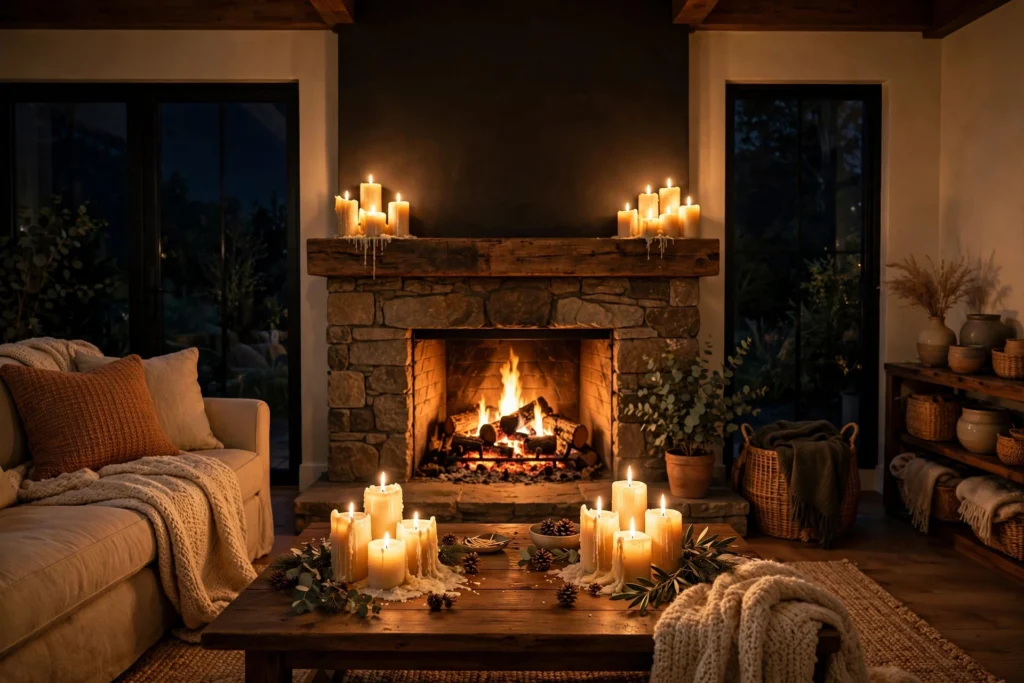
The oldest light source still delivers the most flattering glow in the room. Cluster pillar candles of varying heights on the coffee table or mantel for a warm focal point that costs almost nothing; LED flameless versions give the same flicker without the fire risk around kids and pets. If you have a fireplace, keep the mantel styled minimally so the flames — real or electric — become the evening’s centerpiece. String fairy lights in a glass cloche or along a bookshelf for a magical, low-commitment sparkle during holidays. Scented candles pull double duty, layering fragrance over glow. This final layer is about atmosphere over illumination: even a few candles make a room feel special. Candlelight consistently ranks among the most inviting lighting ideas for its ability to make ordinary evenings feel like occasions.
Frequently Asked Questions
How many light sources should a living room have?
Aim for five to seven light sources per living room, spread across the three layers. A typical mix might include one ceiling fixture or recessed grid, two table lamps, one floor lamp, and a pair of sconces or accent strips. Larger rooms or open-plan spaces may need more; the goal is that no seat is farther than an arm’s reach from a lamp. Start with the layers — ambient, task, accent — and add fixtures until every zone has at least two sources.
What is the best color temperature for living room lighting?
Choose 2700K to 3000K for living rooms — the warm, soft-white range that feels cozy and flattering. These temperatures mimic evening sunlight and encourage relaxation, which is exactly what a living room should do. Keep every bulb in the room at the same temperature so your lighting looks intentional and cohesive. Reserve cooler 4000K+ bulbs for task-heavy spaces like home offices and garages.
Are floor lamps or table lamps better for a living room?
Use both, because they serve different purposes. Floor lamps excel beside reading chairs and sofas, providing task light without occupying a tabletop. Table lamps shine on consoles, side tables, and shelves where they add decorative impact at eye level. A well-layered room typically includes at least one of each.
Should living room lights be on dimmers?
Yes — dimmers are the single most impactful lighting upgrade for a living room. They let one fixture serve bright daytime tasks and low evening ambience, cutting energy use and extending bulb life. Pair LED-rated dimmer switches with dimmable LED bulbs to prevent flicker. Smart dimmers add app and voice control, letting you program scenes like movie night with a single command.
How do I light a living room with no ceiling fixture?
Combine floor lamps, table lamps, and plug-in wall sconces to build a full layered plan without any ceiling wiring. An arc floor lamp over the sofa can substitute for a pendant, while LED strips behind furniture add ambient glow. Plug-in sconces with cord covers look hardwired and install in minutes. Renters should also maximize natural daylight with sheers and mirrors to reduce the number of fixtures needed after dark.
Keep Exploring
Layered lighting is what separates a living room that looks good in photos from one that feels good to live in. Whether you start with a statement chandelier, a simple dimmer switch, or a cluster of warm candles, each of these living room lighting ideas adds another dimension of comfort and style. Build the layers one fixture at a time, and the room will reward you every evening.
Once the lighting is dialed in, the finishing touches come next — texture underfoot, color on the walls, and styling on the shelves. Browse more Living Room Decor inspiration to keep the glow going, from cozy textiles to statement furniture, and turn your living room into the warm, well-lit heart of your home.