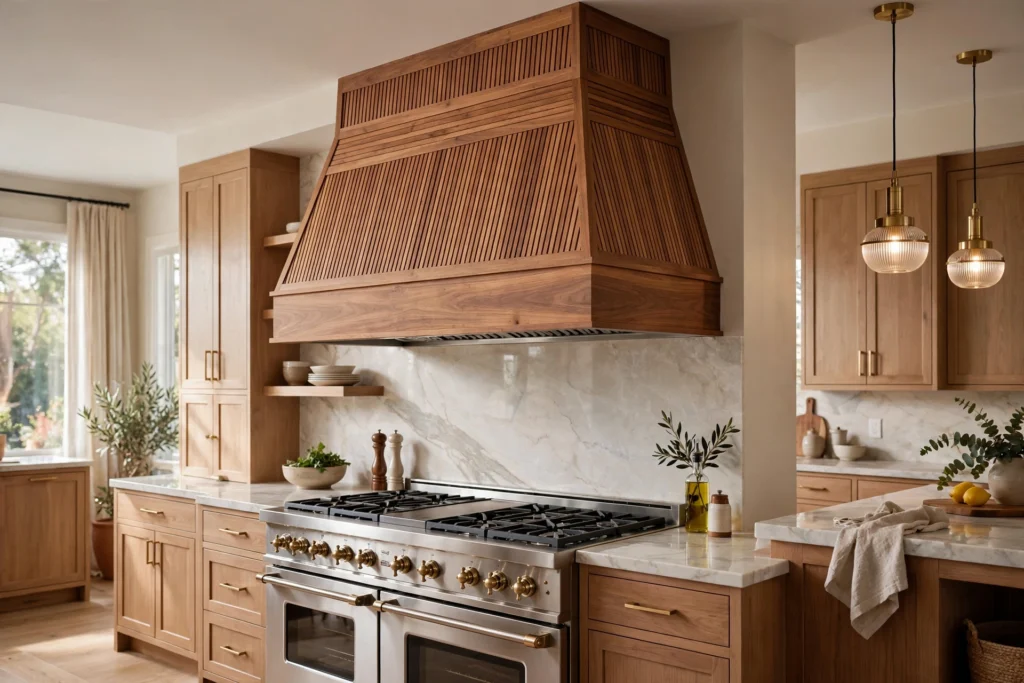

The range hood is the one kitchen element that cannot hide — it sits front and center above the cooktop, right at eye level. That visibility is an opportunity. These kitchen range hood ideas turn a purely functional vent into the room’s defining feature, whether you love rustic wood, sleek metal, or sculptural plaster.
From material choices to shapes and finishes, a statement hood anchors the entire cooking wall and gives the rest of the kitchen something to respond to. Coordinate it with the lighting above your island — our kitchen pendant lighting ideas from modern to farmhouse pair beautifully with a bold hood — and the whole space clicks into place.
1. Sleek Stainless Steel Statement Hood
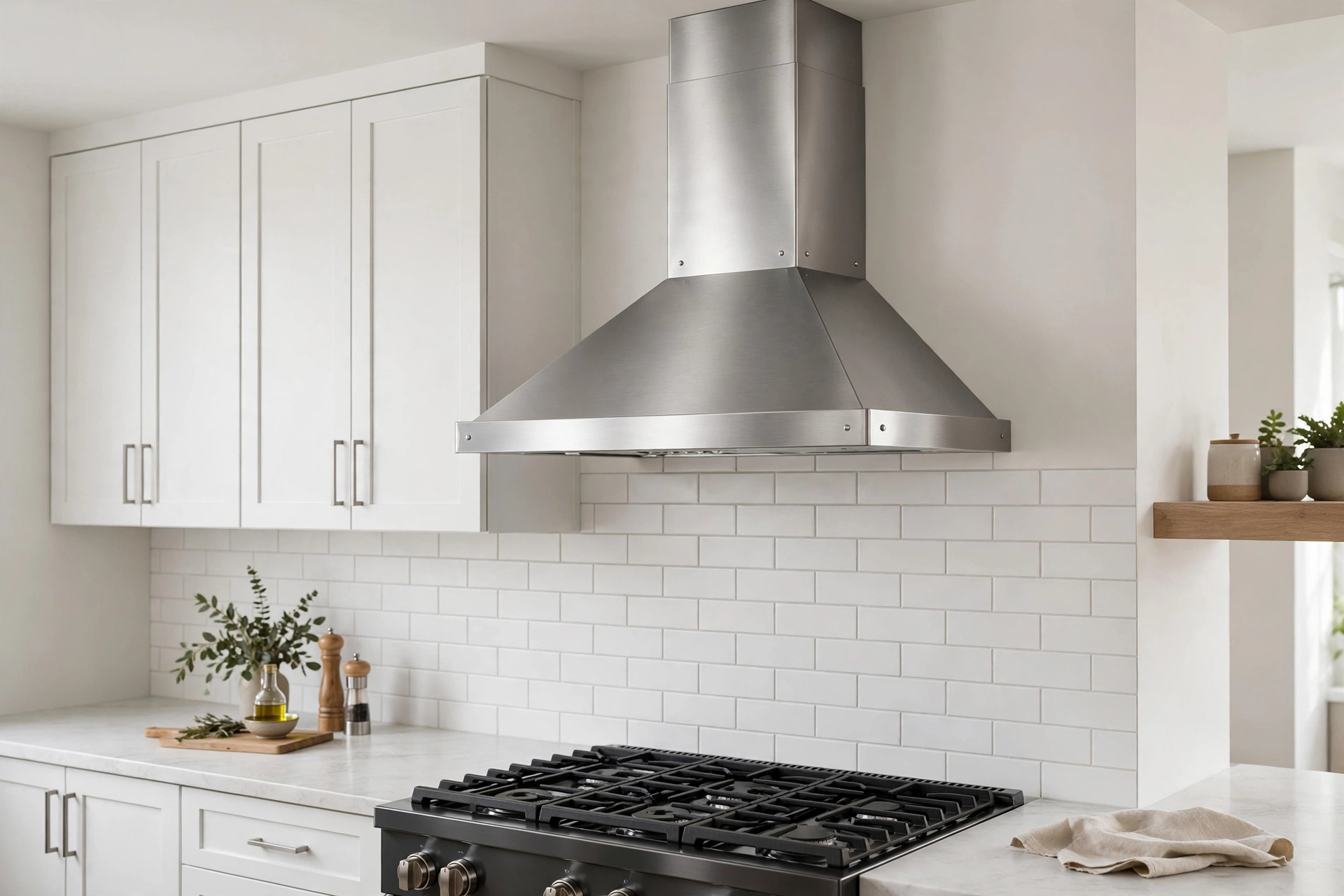
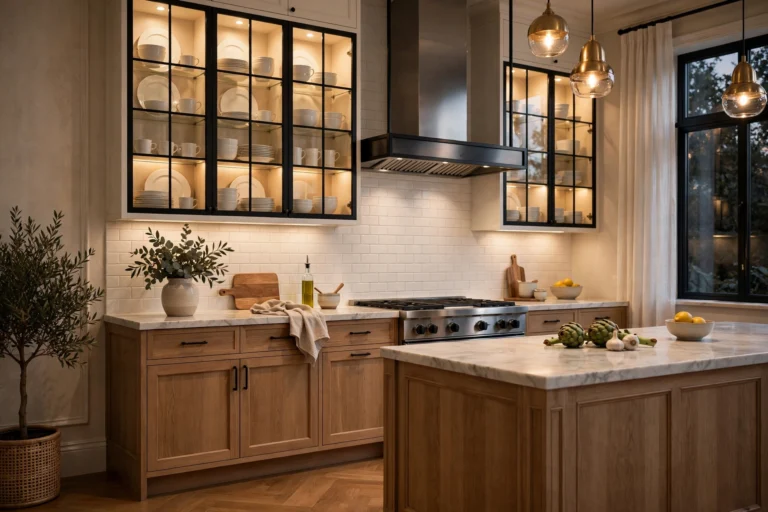
Stainless steel remains the classic statement for a reason: it reads professional, reflects light, and pairs with any cabinet color. Go oversized rather than minimal — a wide chimney hood with clean lines commands the wall and gives the kitchen a chef-grade feel. Keep surrounding finishes warm, like wood shelves or brass hardware, so the steel does not feel cold or commercial. A stainless hood is also the easiest to clean and the most forgiving with grease, making it as practical as it is striking. Choose a brushed finish to minimize visible fingerprints.
2. Matte Black Hood for Modern Drama
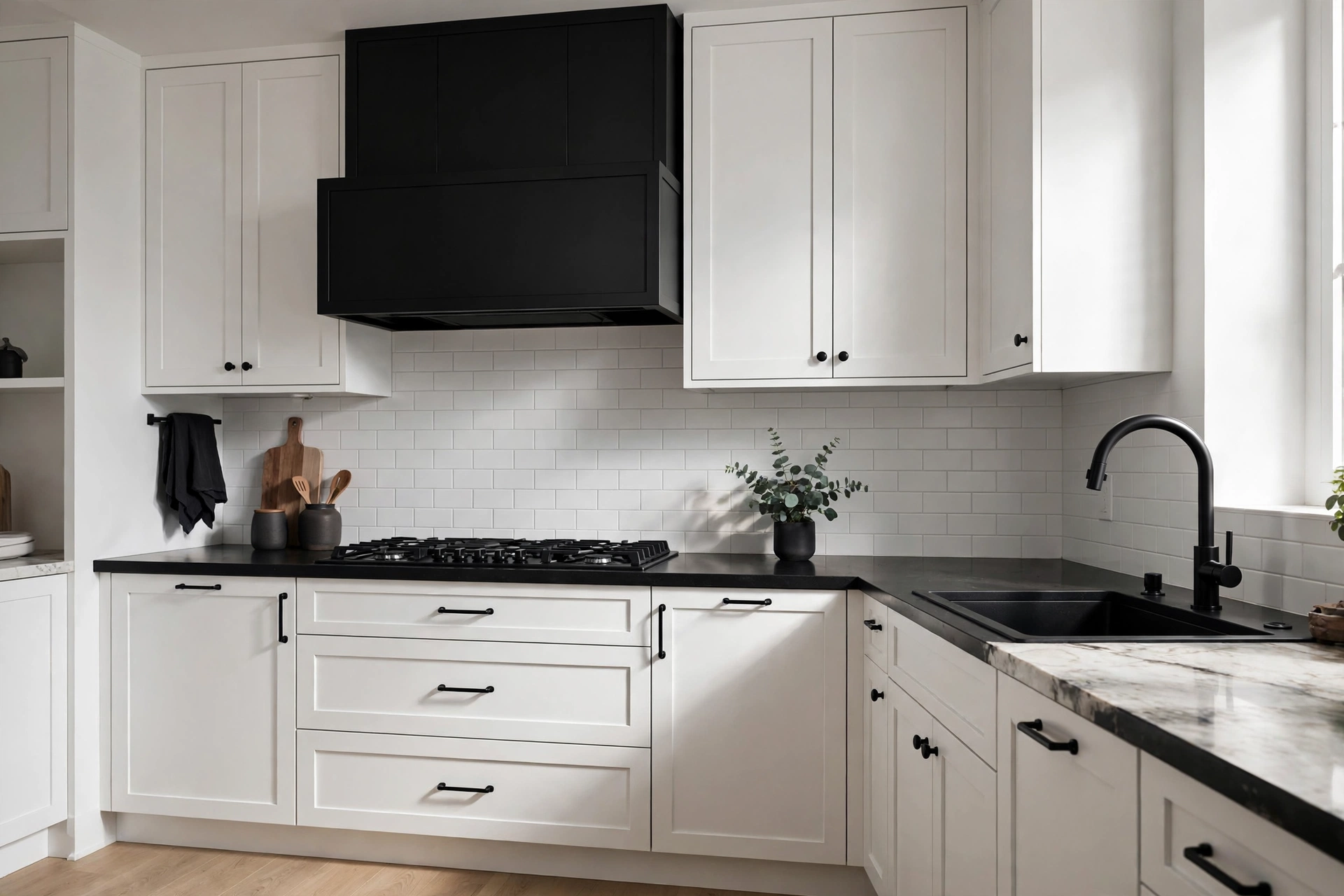
A matte black hood delivers instant drama, especially against white or light cabinetry where the contrast is at its boldest. The dark silhouette anchors the cooking wall like a piece of modern sculpture, and matte finishes hide smudges far better than glossy black. Repeat the black in small doses — faucet, cabinet hardware, or barstool frames — so the hood feels connected to the room rather than floating. This look suits contemporary, industrial, and moody transitional kitchens, and it photographs beautifully for anyone who loves a high-contrast, graphic kitchen.
3. Custom Wood-Clad Hood
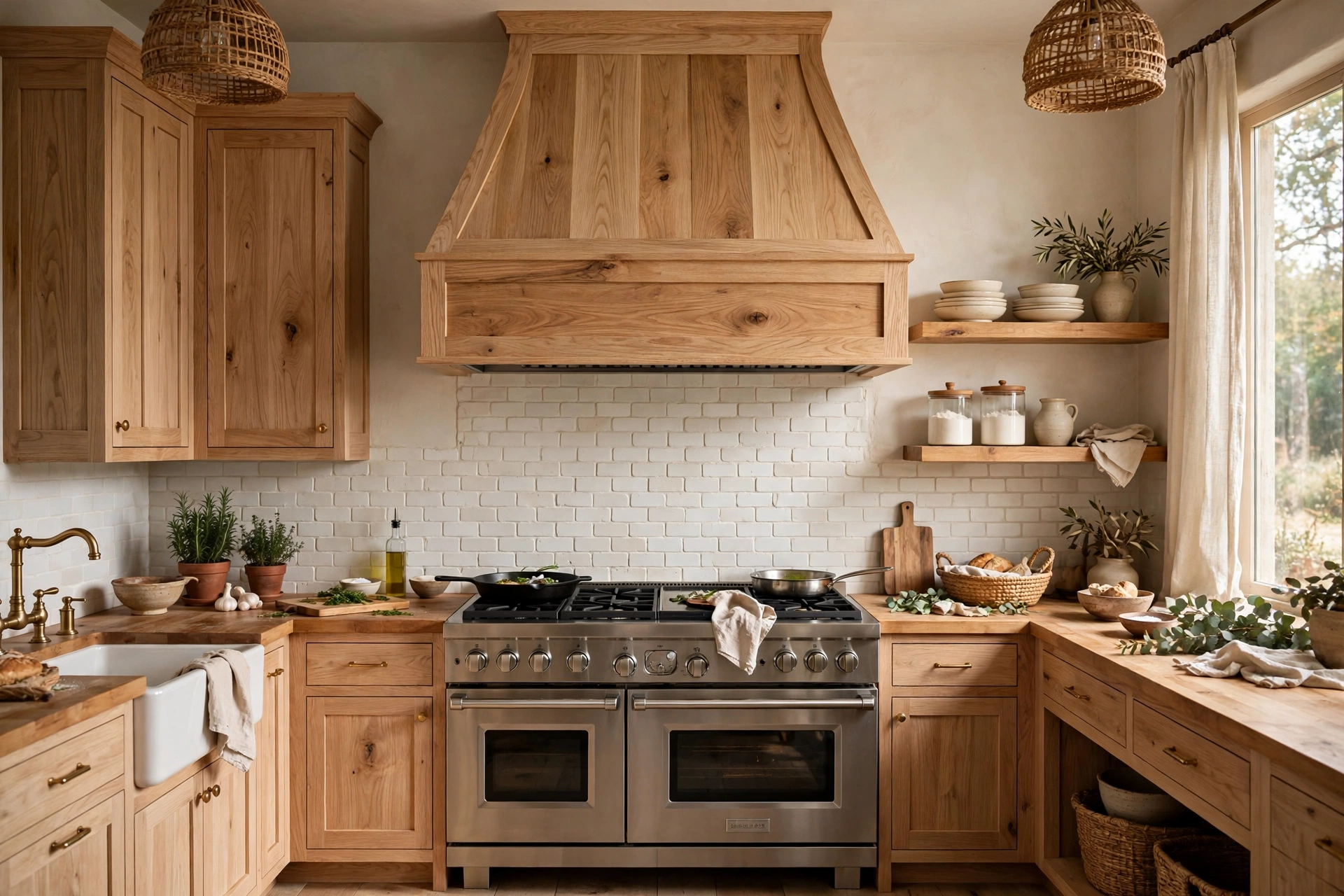
Wrapping the hood in wood — shiplap, reclaimed planks, or smooth white oak — softens the hardest-working appliance in the kitchen into something that feels like furniture. A wood-clad hood brings warmth to all-white kitchens and ties into wood floors, beams, or open shelving. Keep the wood sealed against grease and moisture, and choose a stain that complements rather than exactly matches the cabinetry for a layered, collected look. The natural grain gives the hood texture and movement that flat metal simply cannot, making it a favorite in farmhouse and modern-rustic kitchens.
4. Plaster Hood With Soft Curves
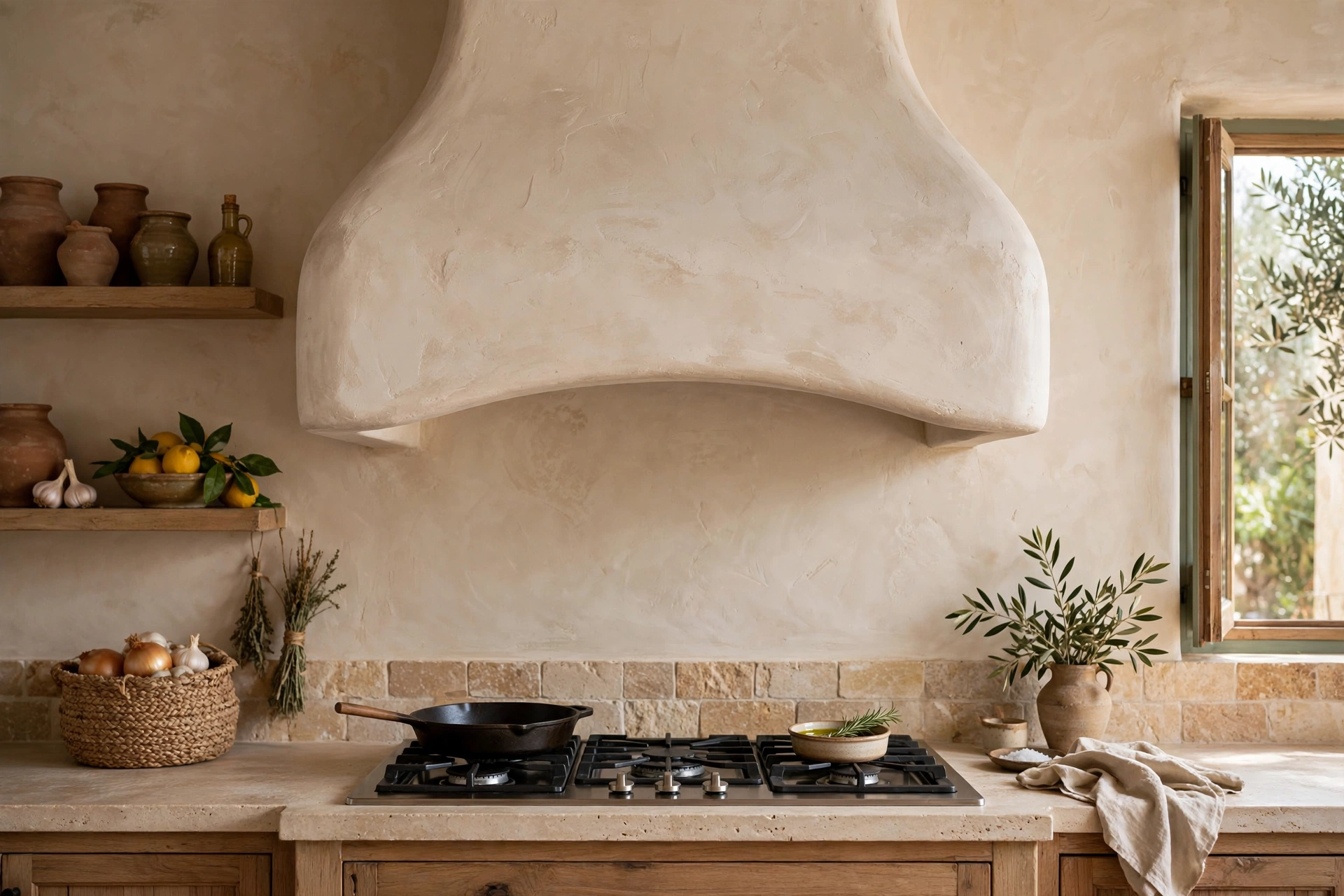
A hand-troweled plaster hood with gently curved edges is pure sculpture — soft, organic, and quietly luxurious. The matte, chalky surface diffuses light beautifully and works in Mediterranean, modern organic, and transitional kitchens alike. Curves are the key detail: an arched opening or rounded corners keep the large form from feeling blocky. Plaster can be tinted to match the walls for a seamless look or contrasted against them for definition. Because each application is handmade, no two plaster hoods are exactly alike, which is precisely the appeal.
5. Marble-Clad Hood for Seamless Luxury
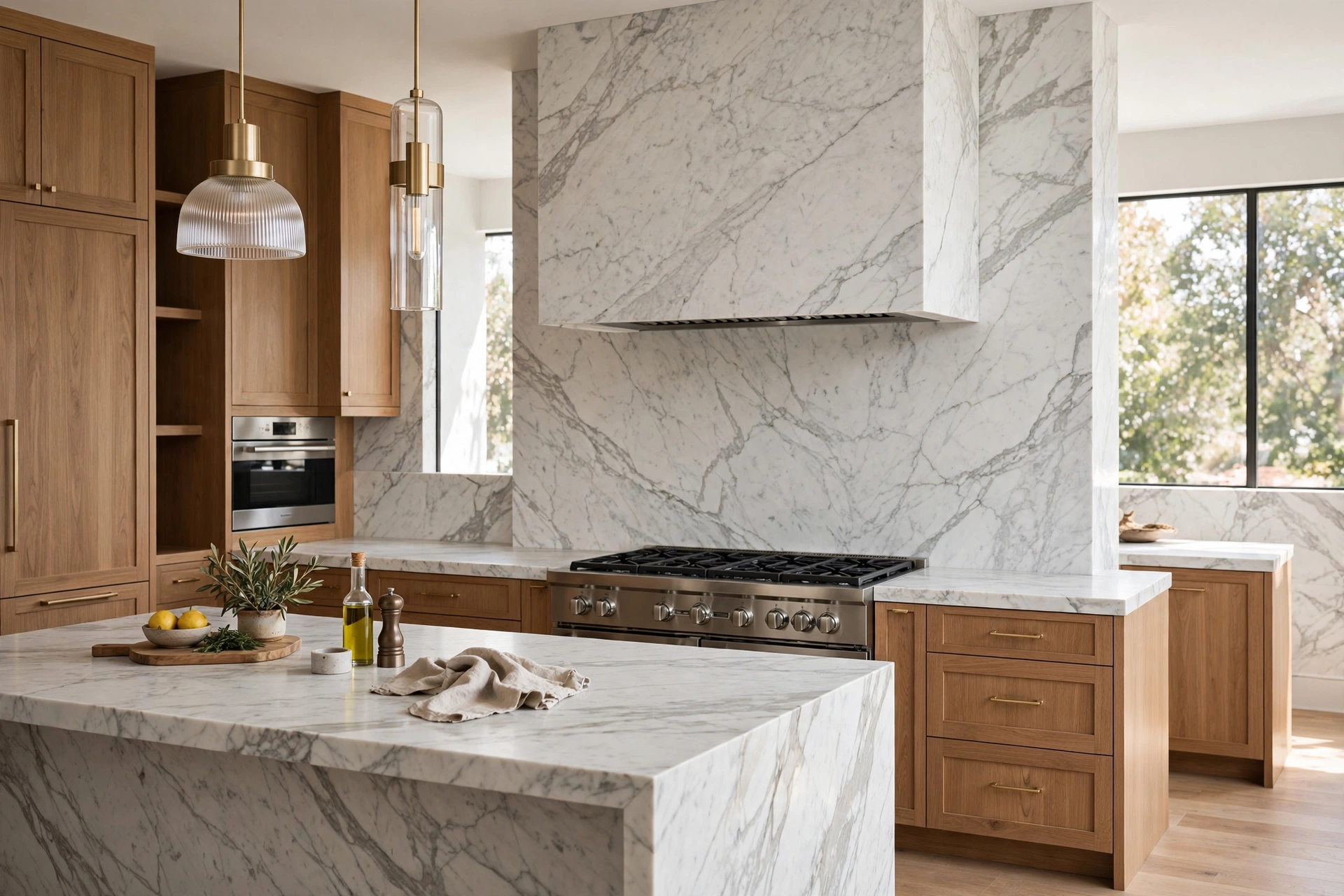
Cladding the hood in the same marble or quartzite as the countertops and backsplash creates one continuous sweep of stone — sleek, dramatic, and undeniably high-end. The veining flows uninterrupted from counter to hood, which makes the whole cooking wall feel carved from a single block. This works best with boldly veined stones where the pattern becomes the decoration. The Spruce’s luxury kitchen roundup features a giant statement range hood in warm wood tones showing how a well-scaled hood anchors a large kitchen. Budget for professional fabrication, since stone cladding demands precise templating and installation.
6. Brass and Copper Metal Hoods

Nothing warms a kitchen like a metal hood in brass, copper, or bronze. A hammered copper hood brings old-world craftsmanship and develops a living patina that deepens with time. Polished brass reads glamorous and pairs gorgeously with navy or green cabinetry, while aged bronze suits traditional and rustic spaces. Mix metals thoughtfully: a brass hood with black hardware and a stainless range feels layered rather than mismatched. These statement metals cost more than stainless, but they age gracefully and become the heirloom piece of the kitchen.
7. Shiplap-Covered Farmhouse Hood
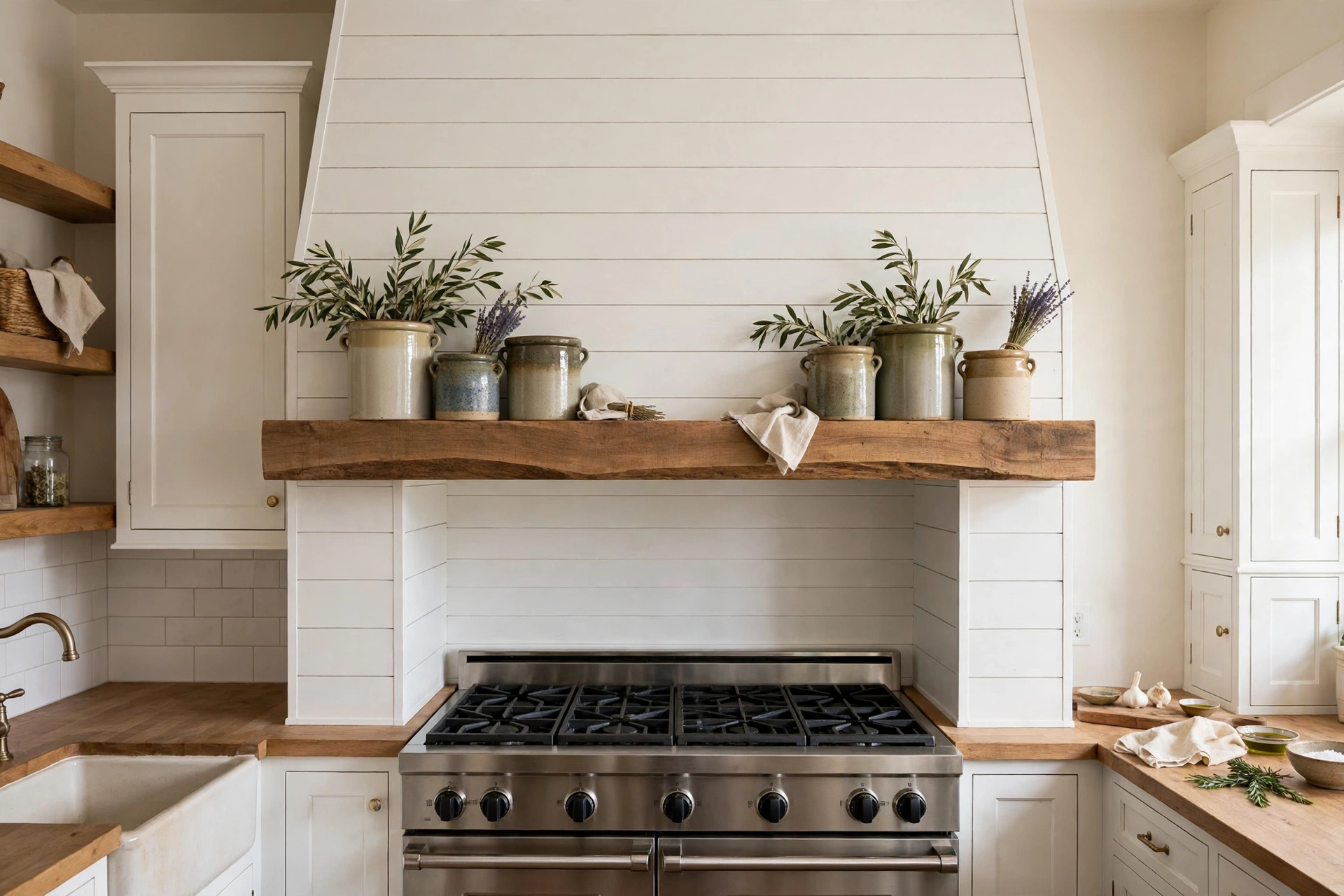
Horizontal shiplap boards give a range hood instant farmhouse charm and a handcrafted feel. Paint it the same white as the cabinetry for a seamless look, or choose a soft contrasting color like warm gray or sage to make the hood a gentle focal point. Add a chunky wood mantel shelf across the bottom for styling — a row of small plants or vintage crocks looks right at home. The linear texture of shiplap adds subtle pattern without competing with the backsplash. Seal the boards well, since the hood sits directly above heat, steam, and the occasional splatter.
8. Disappear the Hood Into the Cabinetry
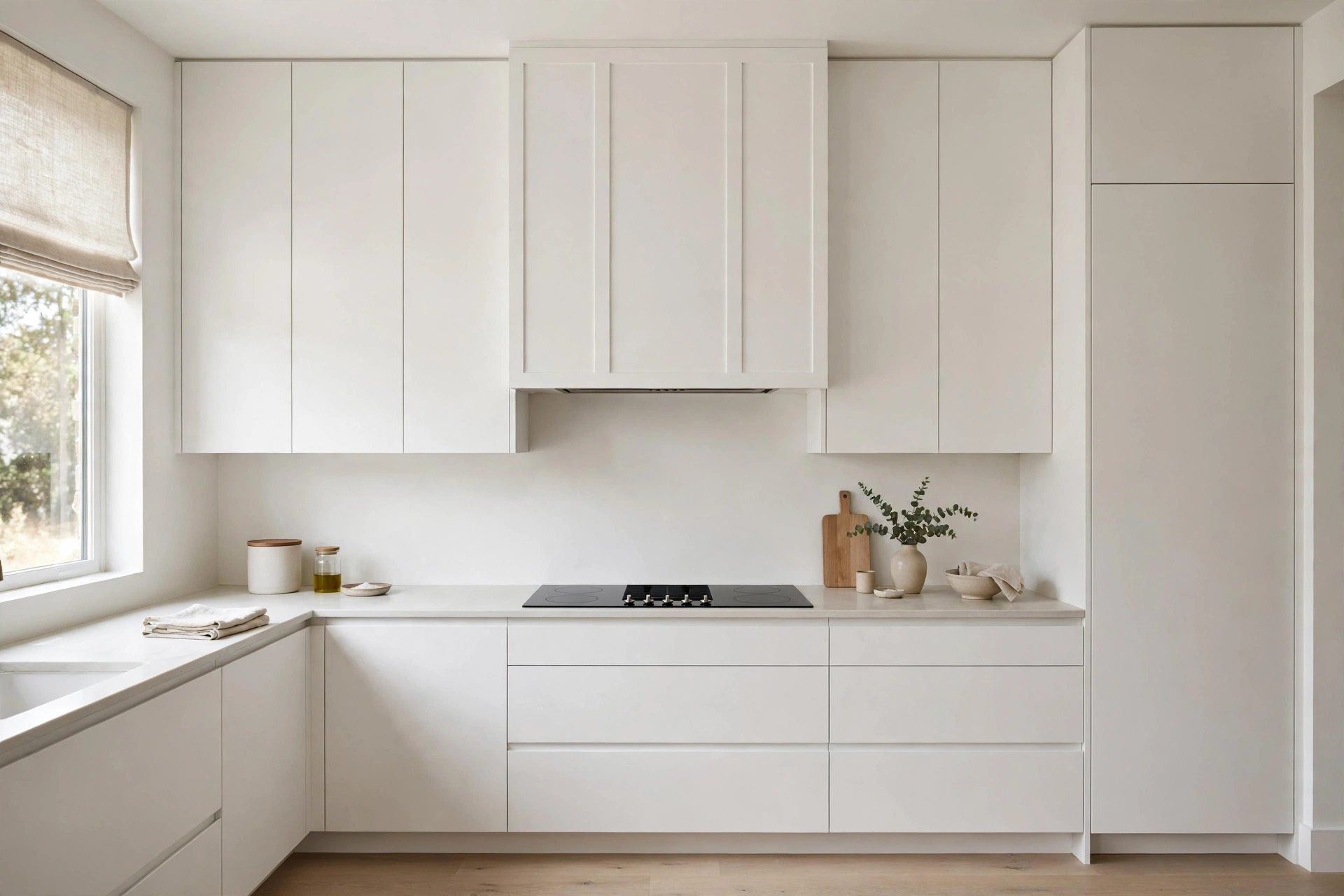
Sometimes the boldest move is invisibility: panel the hood in the same material as the surrounding cabinets so it melts into the wall. A cabinet-matched hood with an insert vent inside keeps the cooking wall calm and lets another element — the backsplash, the range, the windows — take the spotlight. This approach suits minimalist kitchens and open plans where you want the kitchen to recede. The trick is precise millwork: the hood surround must align perfectly with adjacent cabinet doors and drawers, or the illusion breaks. Done well, guests will not even realize a vent is there.
9. Tile the Hood as a Focal Point
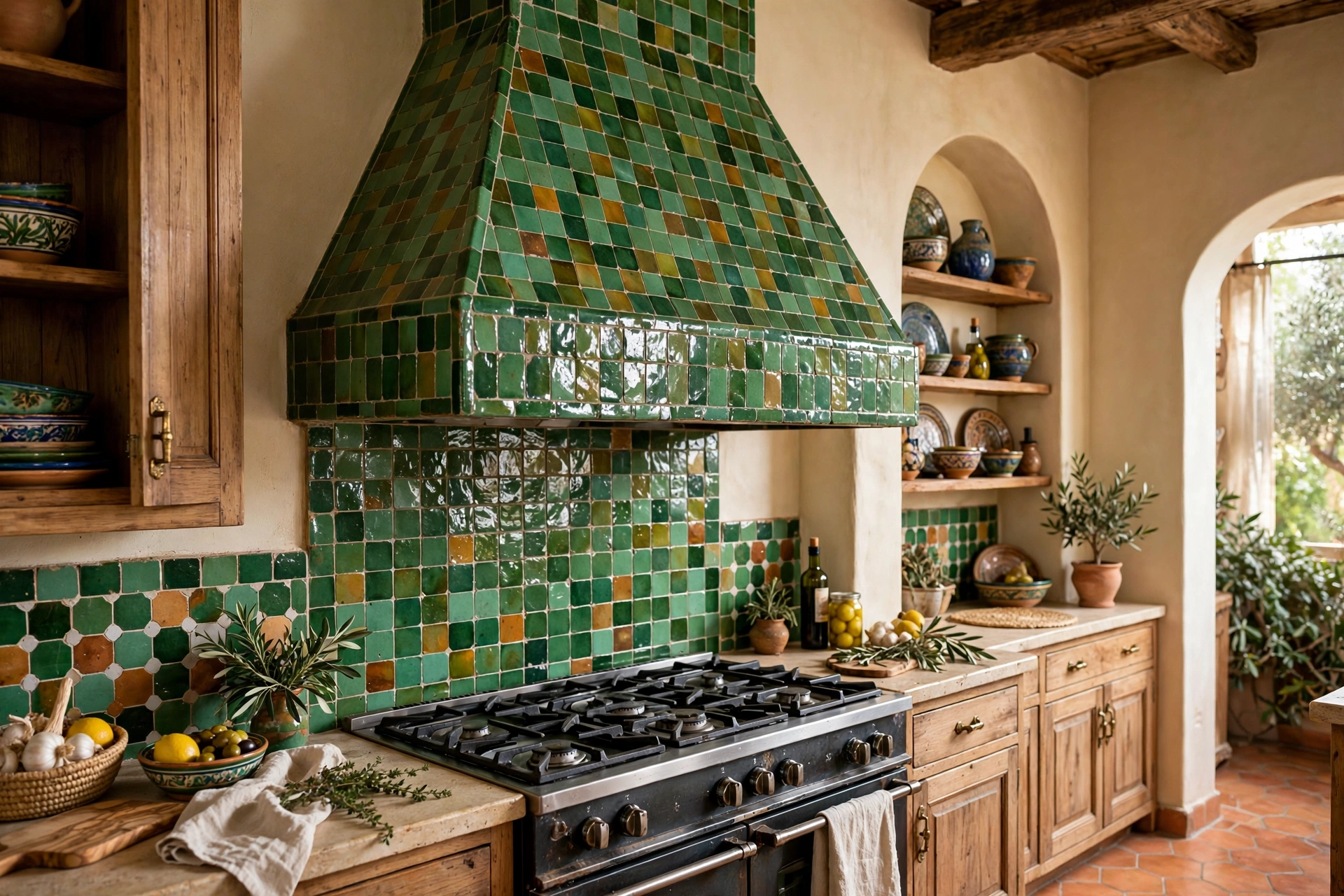
Extending your backsplash tile up and over the hood creates a stunning, unified focal wall. Handmade-look zellige tiles bring shimmer and variation, while a bold patterned tile turns the hood into art. Keep the tile choice in the same color family as the backsplash for cohesion, or use the hood as the place to introduce the pattern while the backsplash stays quiet. Tile is heat-tolerant and easy to wipe clean, making it as practical as it is pretty. This works especially well in Mediterranean, Spanish, and eclectic kitchens where texture and craft are celebrated.
10. Sculptural Island Hood
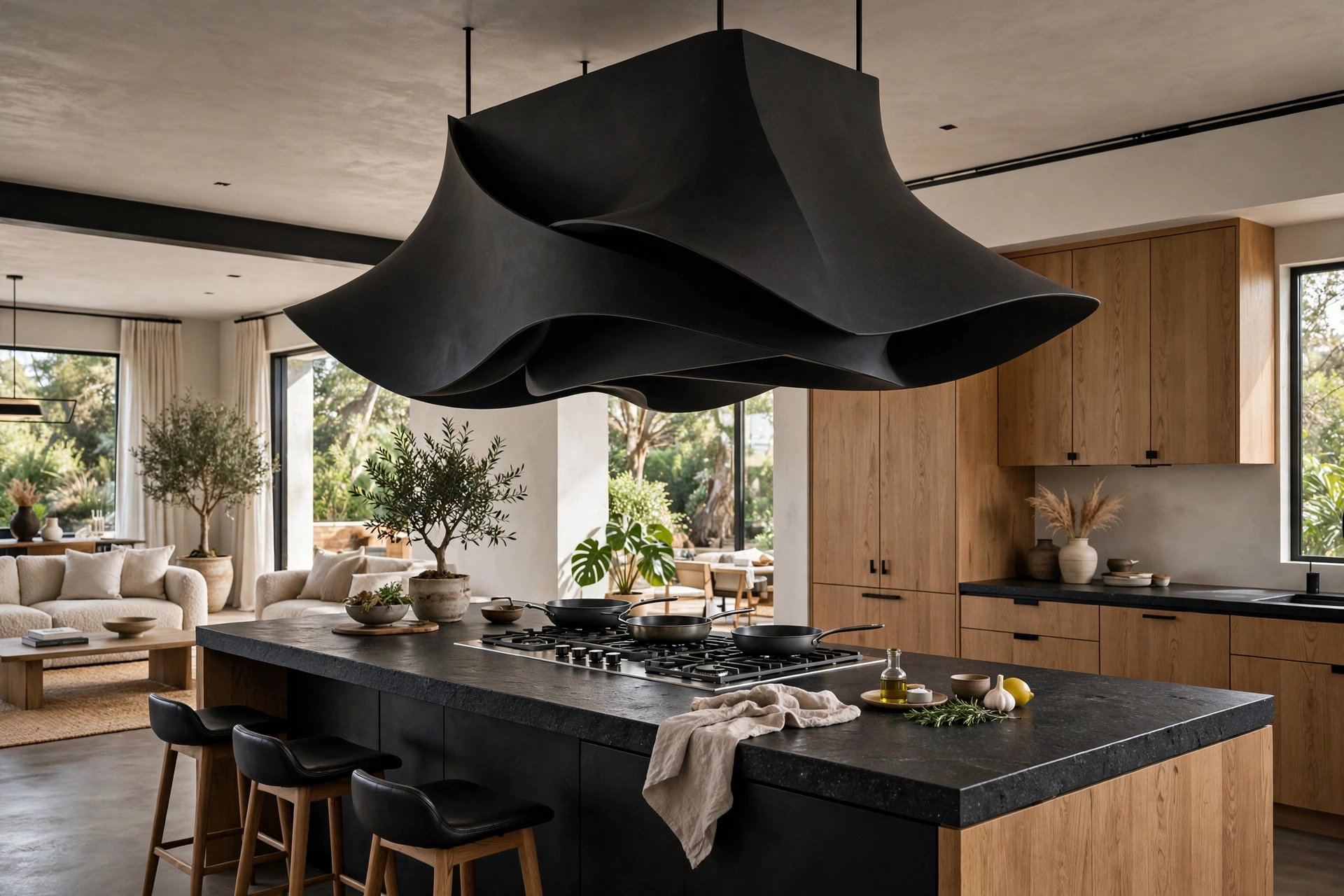
An island hood floats in the middle of the room, visible from every angle, so it has to earn its 360-degree presence. Choose a sculptural form — a tapered cylinder, a wide flat canopy in matte black, or a wood-and-metal combination — and treat it as the kitchen’s centerpiece. Suspend it at the right height: low enough to capture cooking vapors effectively, high enough to preserve sightlines across the island. In open-plan homes, the island hood defines the cooking zone within the larger living space, acting as both ventilation and architecture.
11. Add Integrated Lighting to the Hood
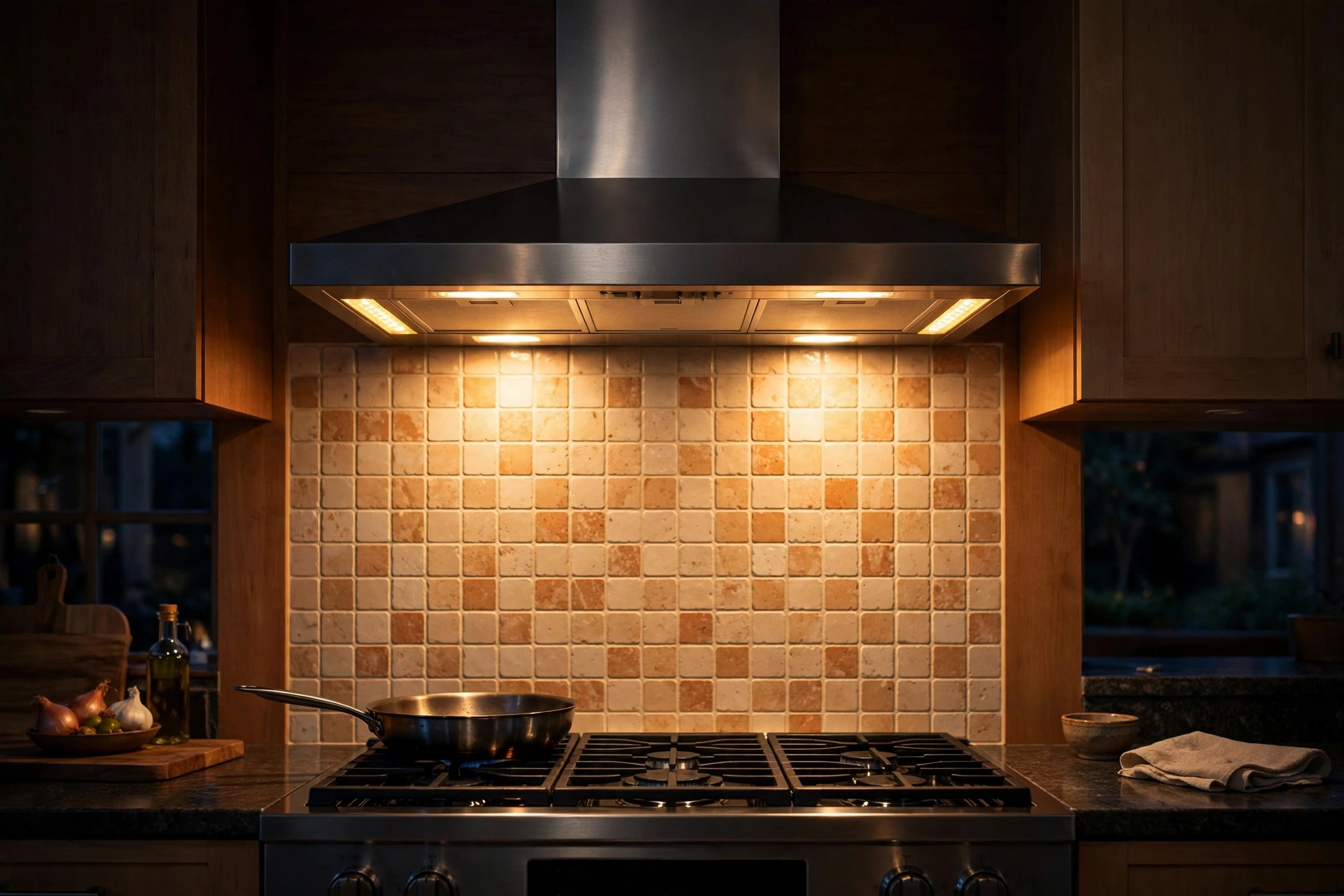
Built-in lighting under or around the hood does double duty: it illuminates the cooktop for safer cooking and washes the backsplash with a flattering glow after dark. LED strips tucked under the hood’s lower edge are invisible by day and transformative by night, turning the cooking wall into a softly lit backdrop. Choose warm white light to flatter food and finishes, and put the hood lights on a separate dimmer from the overheads for maximum control. Integrated lighting also highlights the hood’s own material — veined marble, hammered copper, or textured plaster all look richer under a wash of light.
12. Arched Hood for European Charm
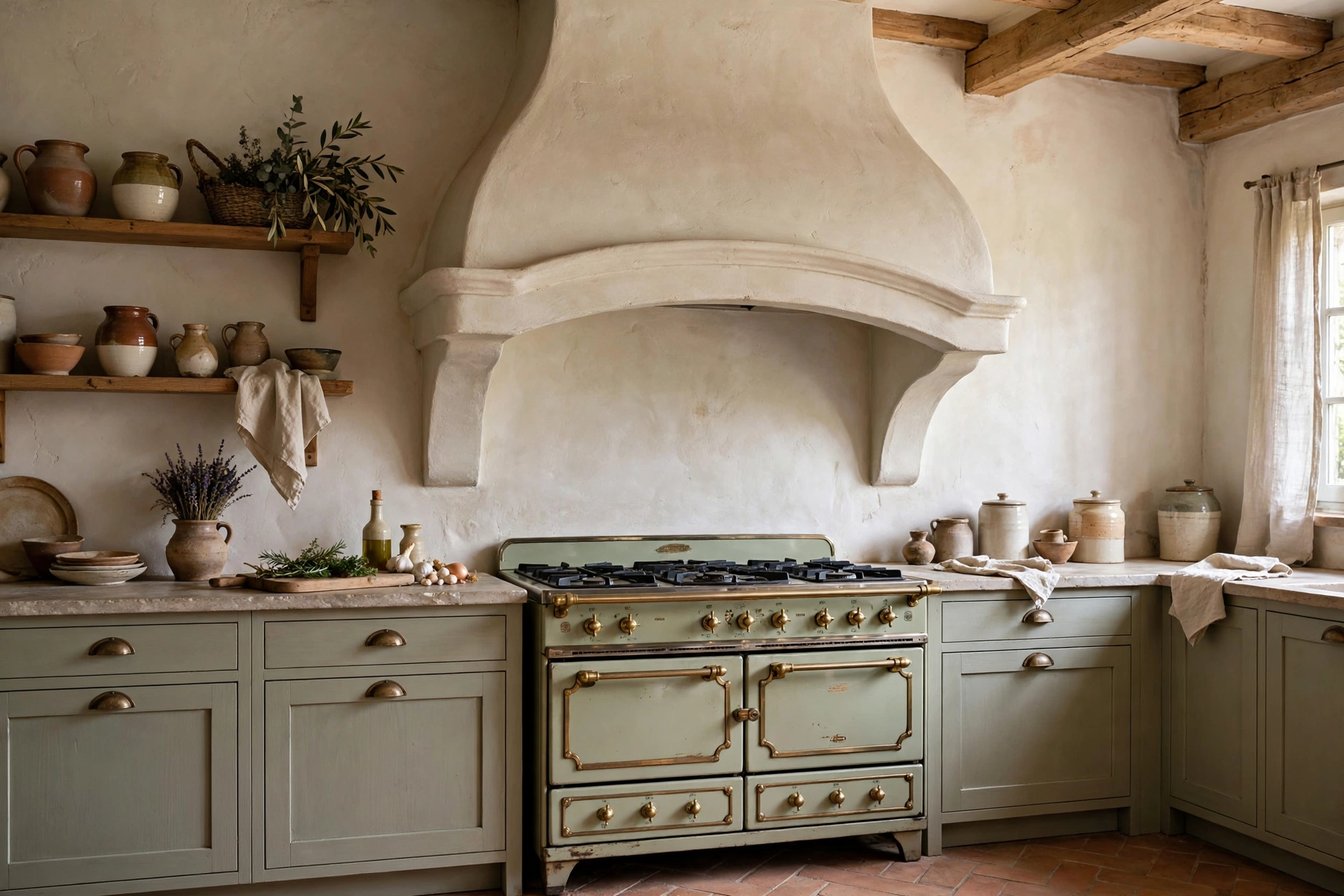
An arched opening at the base of the hood — the classic mantel shape — brings instant European farmhouse elegance. The curve softens the hood’s mass and creates a natural frame around the range, like a hearth for cooking. Build the arch from plaster, wood, or stone depending on your kitchen’s style, and keep the proportions generous so the curve reads clearly from across the room. This shape pairs beautifully with arched doorways, curved islands, and other soft geometry. It is a timeless choice that feels established and soulful rather than trendy.
13. Slim Hood for Small Kitchens
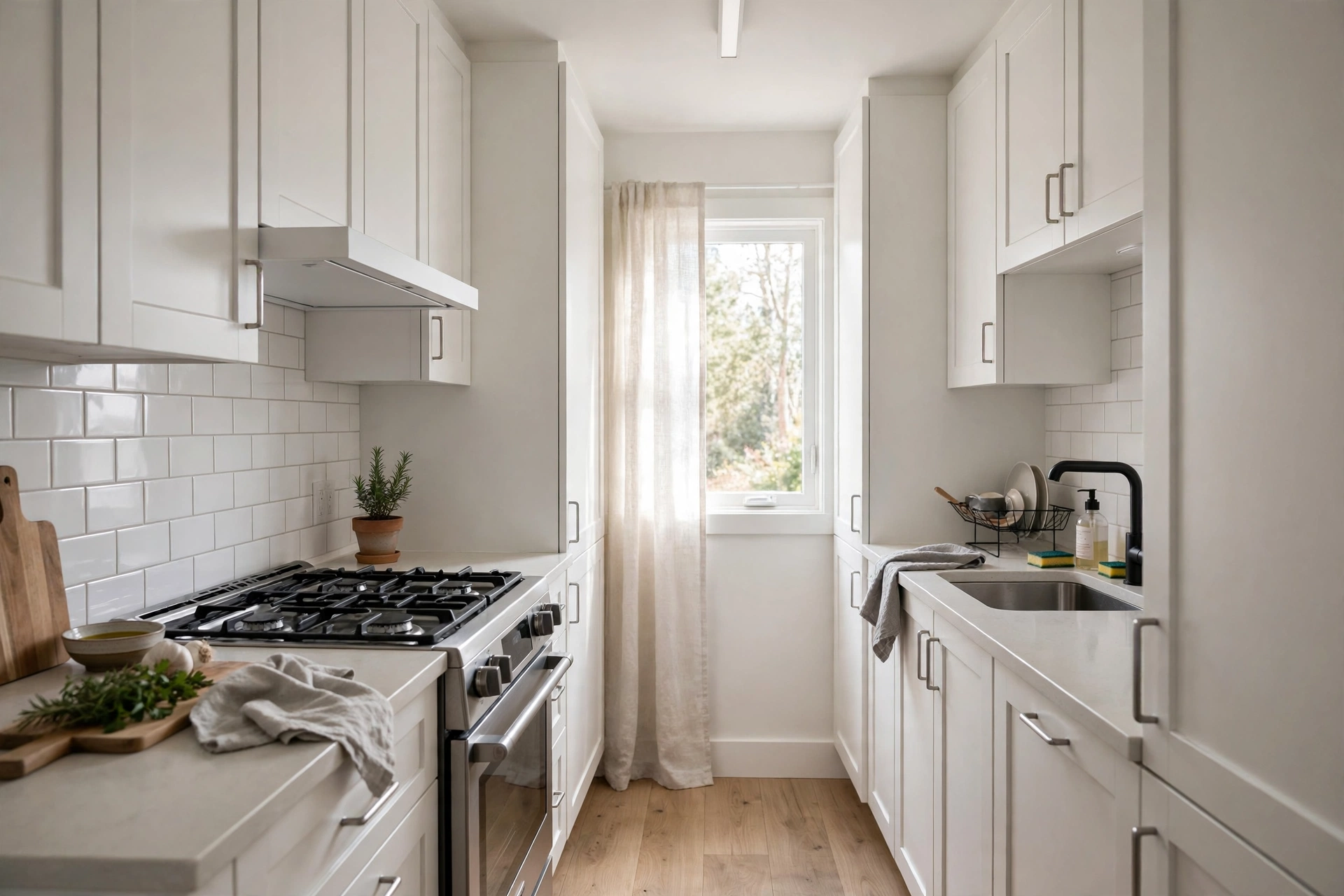
Small kitchens deserve statement style too — just in a slimmer profile. A narrow chimney hood, a sleek under-cabinet insert with a custom front, or a low-profile wall mount keeps sightlines open while still ventilating properly. Choose a light finish or mirror the cabinetry color so the hood does not visually compress the wall. In galley and apartment kitchens, a slim hood paired with a bold backsplash gives you the focal point without the bulk. The key is proportion: the hood should span the cooktop width for function but stay visually quiet enough for the room’s scale.
14. Two-Tone Hood With Trim Details
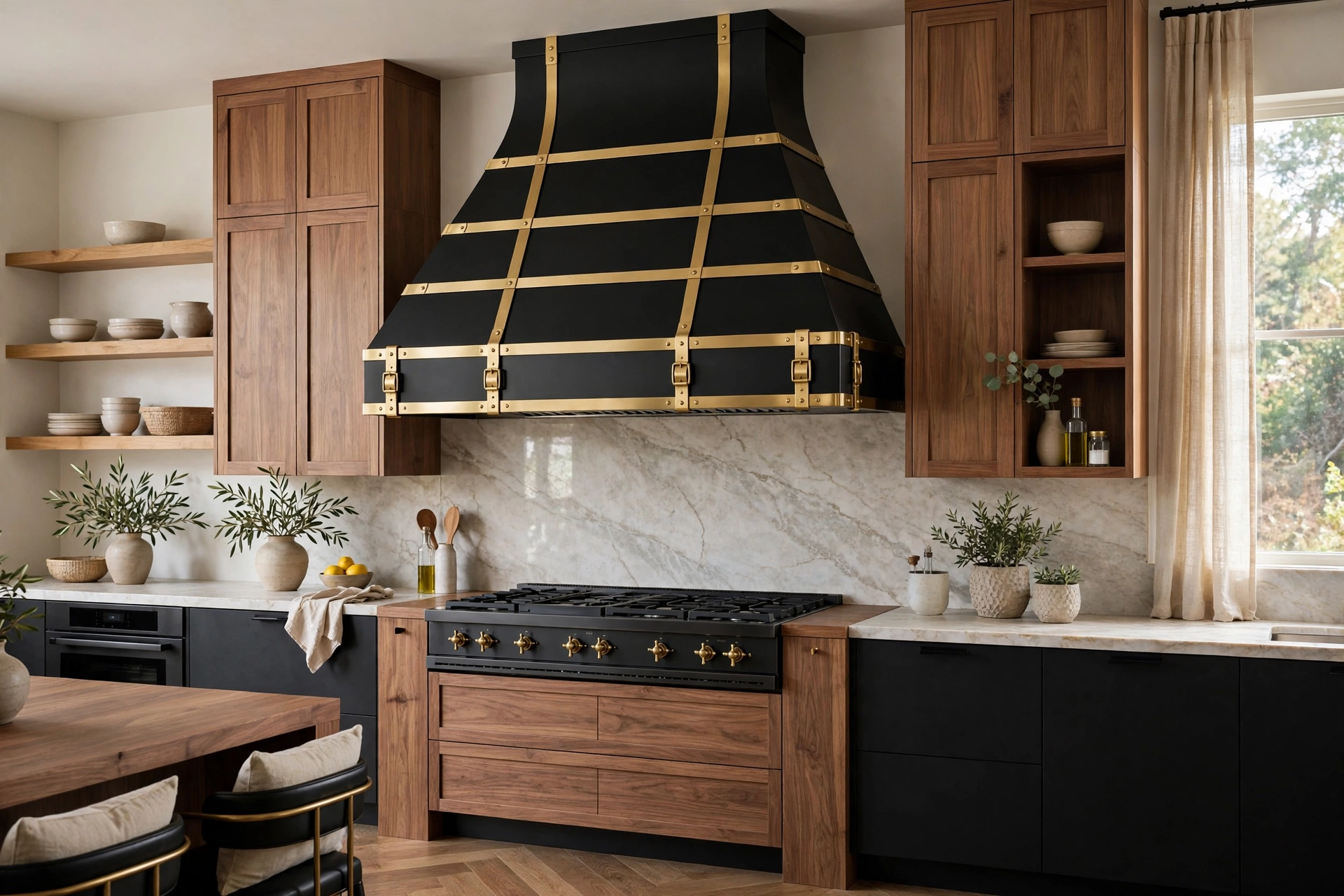
A two-tone hood — say, a painted surround with a wood mantel beam, or a plaster body with brass strapping — adds the layered detail that makes custom kitchens feel bespoke. Trim pieces like applied molding, metal bands, or a contrasting shelf break up the hood’s large surface and tie it to other finishes in the room. Keep the palette to two materials maximum so the design stays crisp rather than busy. This approach lets you bridge styles: a traditional molding profile on a modern matte-black hood, for instance, feels fresh rather than confused.
15. Pair the Hood With a Bold Backsplash
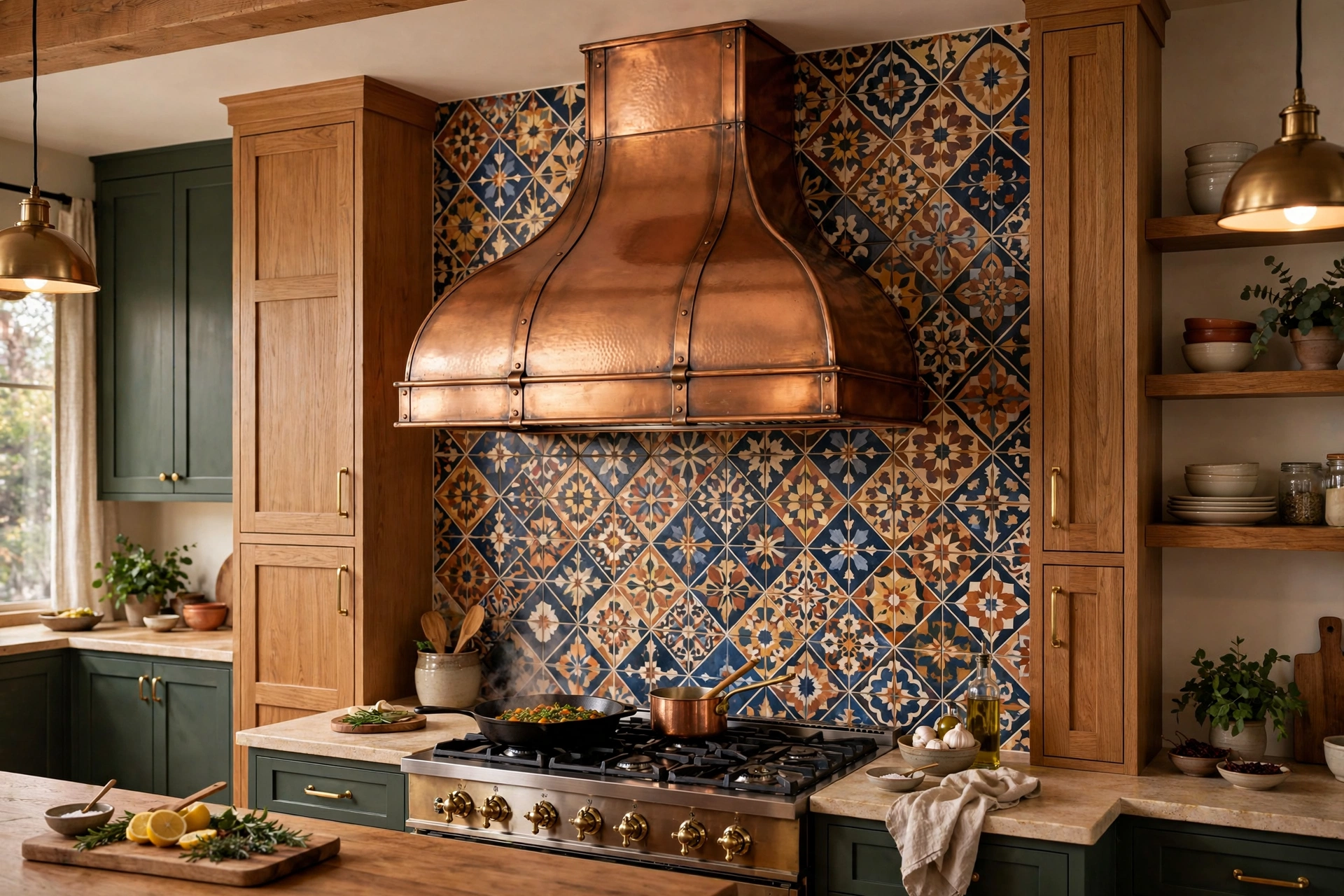
The hood and the backsplash share the same wall, so designing them as a pair multiplies the impact. A dramatic hood against a quiet backsplash lets the hood star; a bold patterned backsplash with a simple plaster hood lets the tile shine. The most striking kitchens commit to both — a marble hood flowing into a full-height marble backsplash, or a copper hood against handmade green tile. Plan them together from the start, since the hood’s material, the tile’s pattern, and the grout color all need to harmonize. For inspiration on the tile half of the equation, browse our backsplash ideas for a stunning focal point.
Frequently Asked Questions
What is the most popular range hood style?
Under-cabinet and wall-mount chimney hoods in stainless steel remain the most popular for their versatility and cleanability. But the fastest-growing trend is the custom statement hood — wood-clad, plaster, or stone surrounds with a hidden insert — which turns ventilation into a design feature. The right style depends on your kitchen: stainless suits contemporary spaces, wood and shiplap suit farmhouse kitchens, and plaster or stone suits Mediterranean and transitional designs. Choose the style that echoes your kitchen’s dominant materials.
Should the range hood match the cabinets or contrast?
Both work, and the choice sets the kitchen’s mood. Matching the hood to the cabinetry creates a calm, seamless wall where the kitchen recedes — ideal for minimalists and open plans. Contrasting the hood, with black metal against white cabinets or warm wood against painted cabinetry, makes it a deliberate focal point. A middle path is matching the material family but shifting the tone, like a white oak hood with white-painted cabinets. There is no wrong answer, only the effect you want the cooking wall to have.
How big should a range hood be?
A range hood should be at least as wide as the cooktop — wider is better for capturing smoke and grease, especially with powerful gas ranges. For island cooktops, go 6 inches wider than the cooking surface on each side if space allows. Mounting height matters too: typically 24 to 30 inches above the cooktop for gas, slightly lower for electric, but always follow the manufacturer’s specs. An undersized hood looks lost on the wall and performs poorly, so when in doubt, size up rather than down.
Can you put a wood hood over a gas range?
Yes, with proper clearances and a correctly sized insert. Wood hood surrounds are built around a metal vent insert, and building codes specify minimum distances between the cooking surface and combustible materials — typically 30 inches or more above a gas cooktop. The insert itself handles the heat and grease; the wood is purely decorative surround. Have the hood designed by a professional who understands both the ventilation requirements and local code. RISMedia’s guide to decorative range hood ideas covers wood, stone, plaster, and metal surrounds in detail.
How do you clean a statement range hood?
Match the cleaning method to the material: stainless steel wipes down with a degreasing cleaner and a microfiber cloth, always with the grain. Wood surrounds need a gentle degreaser and prompt drying to protect the finish. Plaster and stone prefer pH-neutral cleaners — avoid anything acidic on marble. Clean the grease filters monthly; most metal filters are dishwasher-safe. For more on keeping the cooking wall beautiful, see our open kitchen shelving ideas that look styled, not cluttered — the same regular-editing habit keeps both the hood and nearby shelves looking sharp.
Keep Exploring
A statement range hood does more than clear the air — it gives your kitchen a center of gravity. Whether you choose warm wood, sculptural plaster, dramatic black metal, or seamless stone, the right hood turns the cooking wall into the room’s best feature. Start with the material that speaks to you, get the size and clearances right, and let the rest of the kitchen respond.
When the hood is settled, keep refining the details around it. Browse more Kitchen Decor inspiration, from lighting to backsplashes to finishing touches, and build a cooking space with real presence from every angle.





[…] the placement of can lights and vents, and anything the ceiling must still do — like housing a statement range hoods that vents through it. With that mapped out, you can pick an idea that looks great and survives the […]
[…] enough that the arm folds neatly out of the way. If you are planning the whole cooking zone, our kitchen range hood ideas with statement style pair perfectly with a pot filler, since both live on that […]