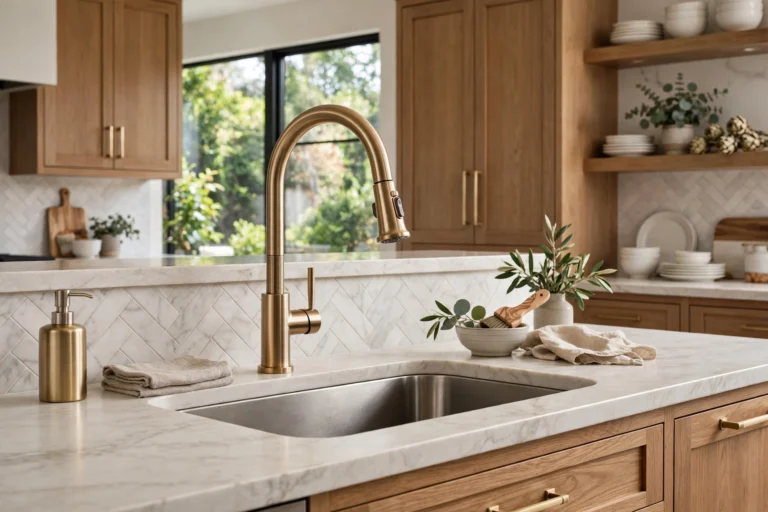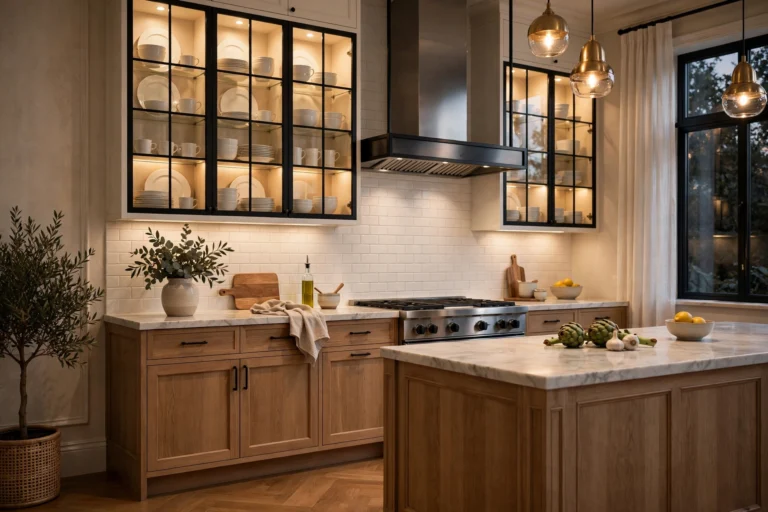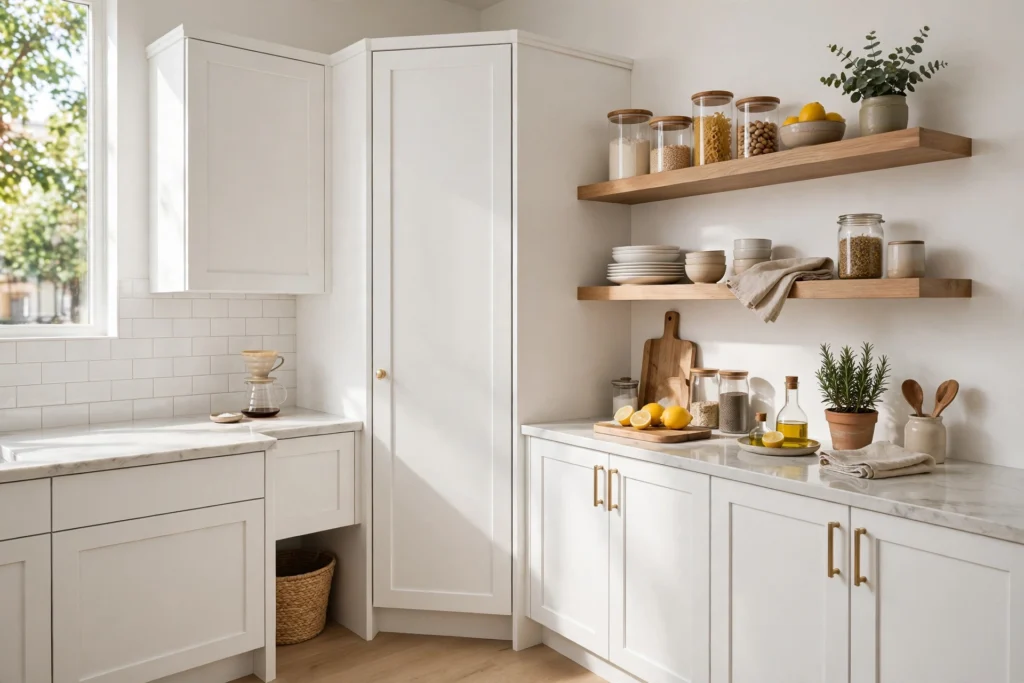

Corners are where kitchen storage goes to disappear — deep, dark, and hard to reach. But with the right hardware and design, a corner cabinet can become one of the hardest-working spots in your kitchen. These kitchen corner cabinet ideas cover every layout, from L-shaped and U-shaped kitchens to galleys, so no corner has to be wasted space.
Whether you retrofit what you have or plan corners into a remodel, the goal is the same: bring everything within reach and make the awkward angle feel intentional. Pair these ideas with smart L-shaped kitchen ideas for storage and seating to plan a layout where every corner pulls its weight.
1. Install a Two-Tier Lazy Susan
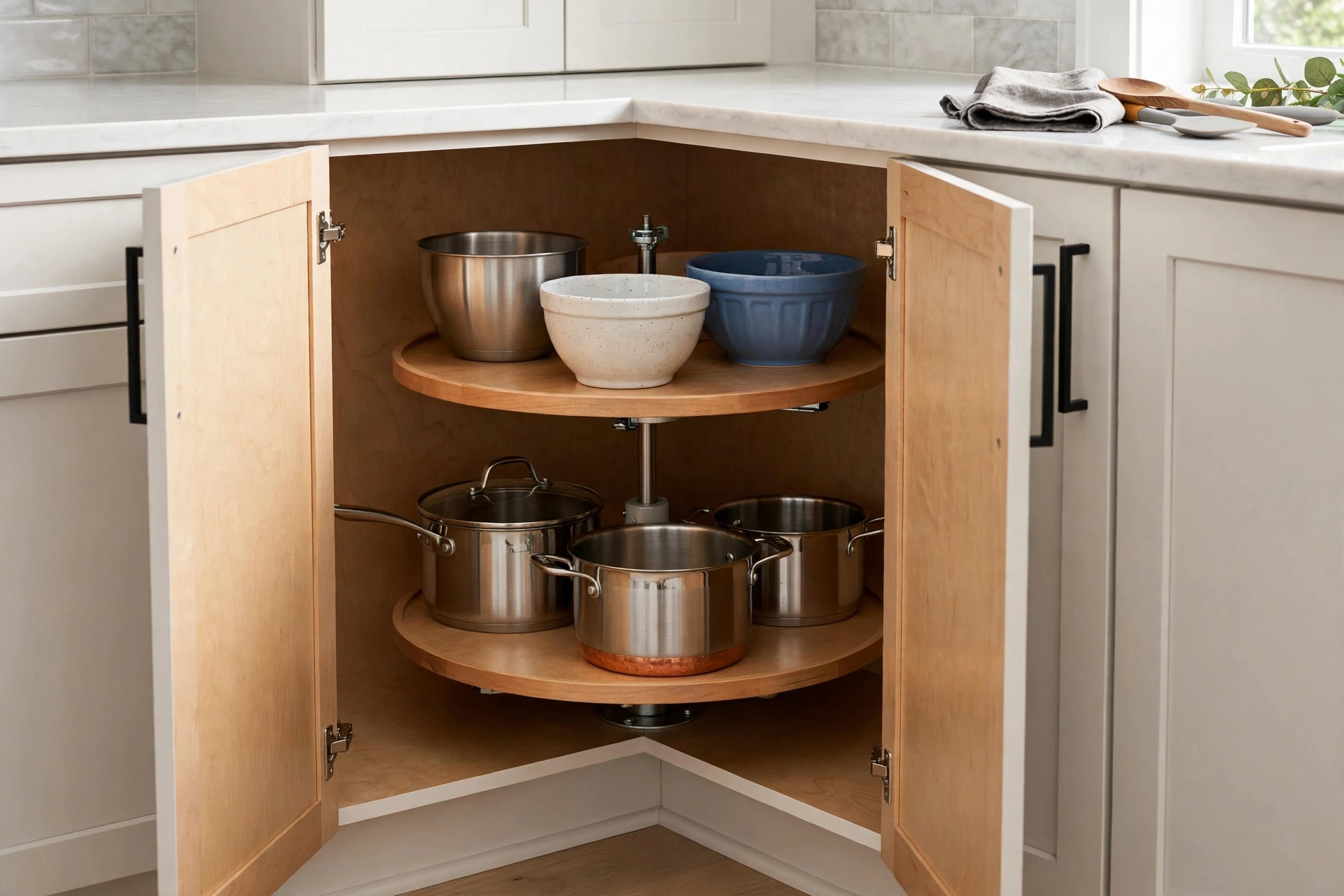
The classic corner fix for a reason: a two-tier rotating lazy Susan brings the back of a deep base cabinet right to your fingertips. Modern versions spin smoothly on ball bearings and hold serious weight, so pots, mixing bowls, and small appliances are all fair game. Choose kidney or D-shaped shelves that maximize the corner footprint, and add a raised rim so items do not slide off mid-spin. This is the most cost-effective corner upgrade available, and it installs in most existing base corner cabinets without any carpentry.
2. Add Pull-Out Corner Shelving
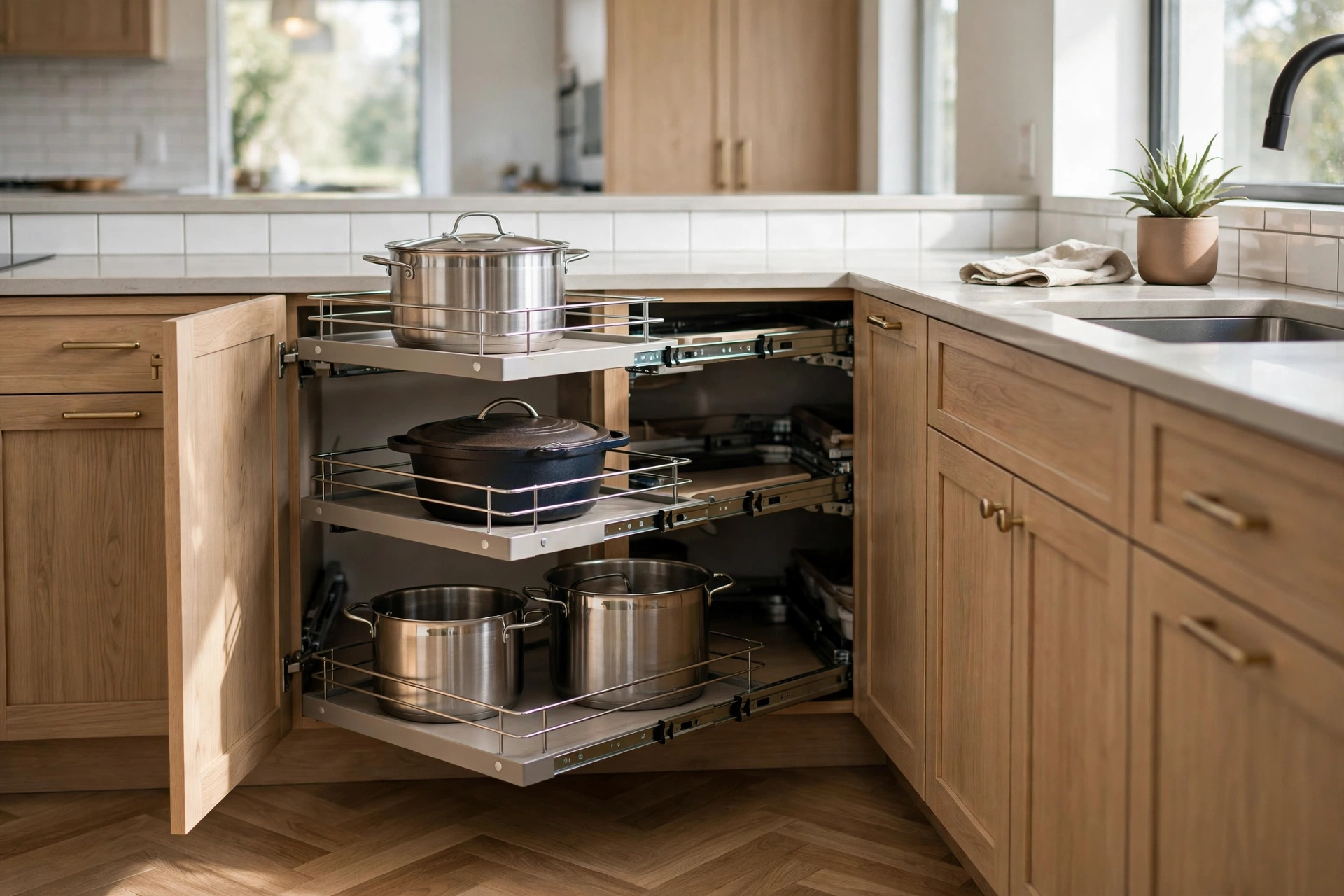
Pull-out shelving transforms a blind corner into a series of accessible trays that glide toward you. Two-tier slide-out units with guard rails keep large pots and baking sheets contained while making every item visible at a glance. Unlike a lazy Susan, pull-outs let you see everything without spinning, which some cooks prefer for heavy cookware. Look for soft-close slides rated for at least 75 pounds per shelf. The mechanism costs more than a turntable but delivers the most ergonomic access, especially for anyone who finds bending and reaching into deep cabinets uncomfortable.
3. Choose an Angled Corner Cabinet
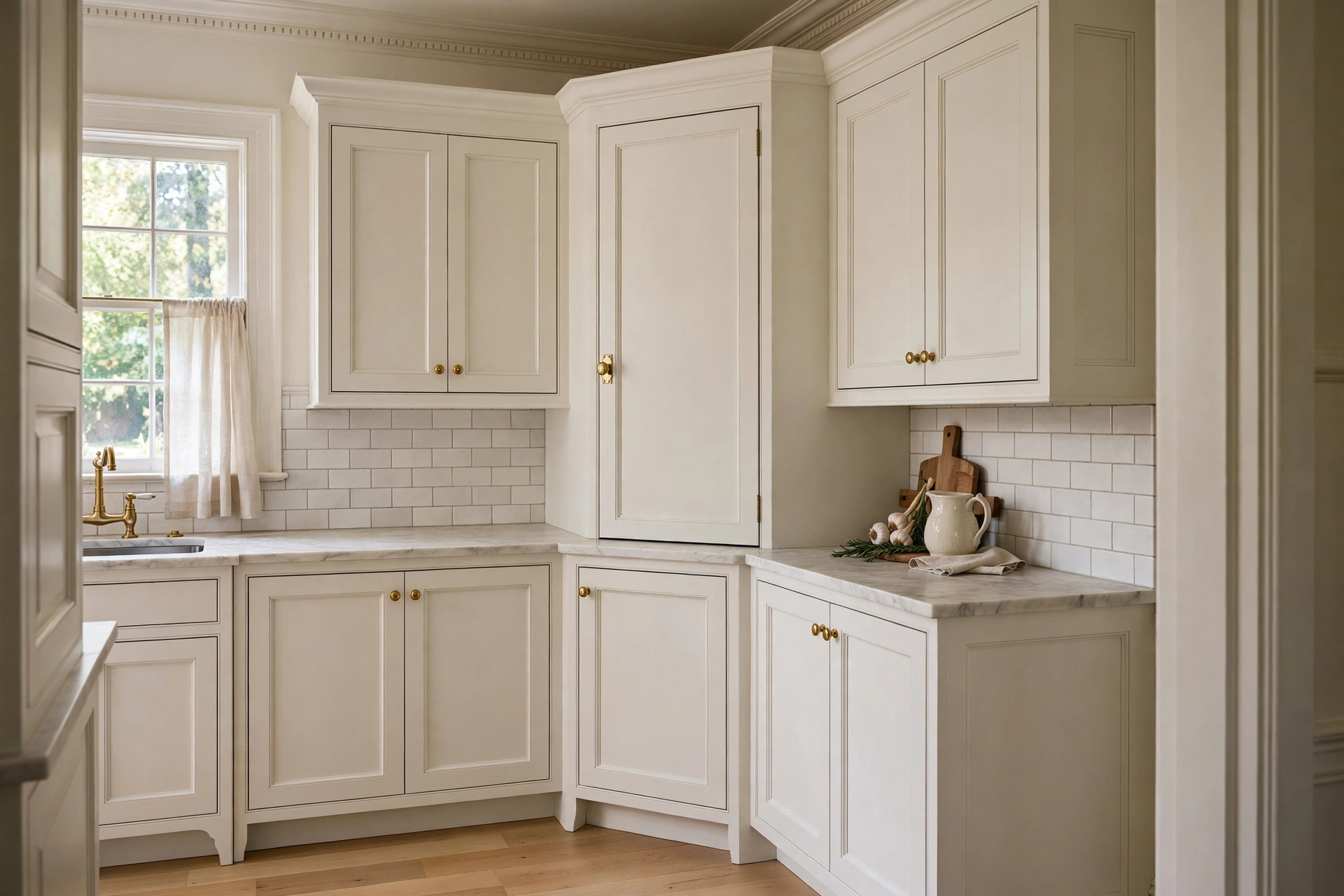
An angled or diagonal front cabinet replaces the sharp 90-degree corner with a flat face, creating uninterrupted storage and a softer visual line. The single wide door opens to a surprisingly roomy interior that fits a lazy Susan or deep shelves beautifully. On uppers, angled cabinets keep the corner from feeling like a dark tunnel and make the run of wall cabinets read as one continuous line. This is a design-phase decision rather than a retrofit, so specify it during a remodel. The Spruce’s roundup of corner cabinet ideas shows how angled cabinets streamline both uppers and lowers.
4. Use a Swing-Out Blind Corner Organizer
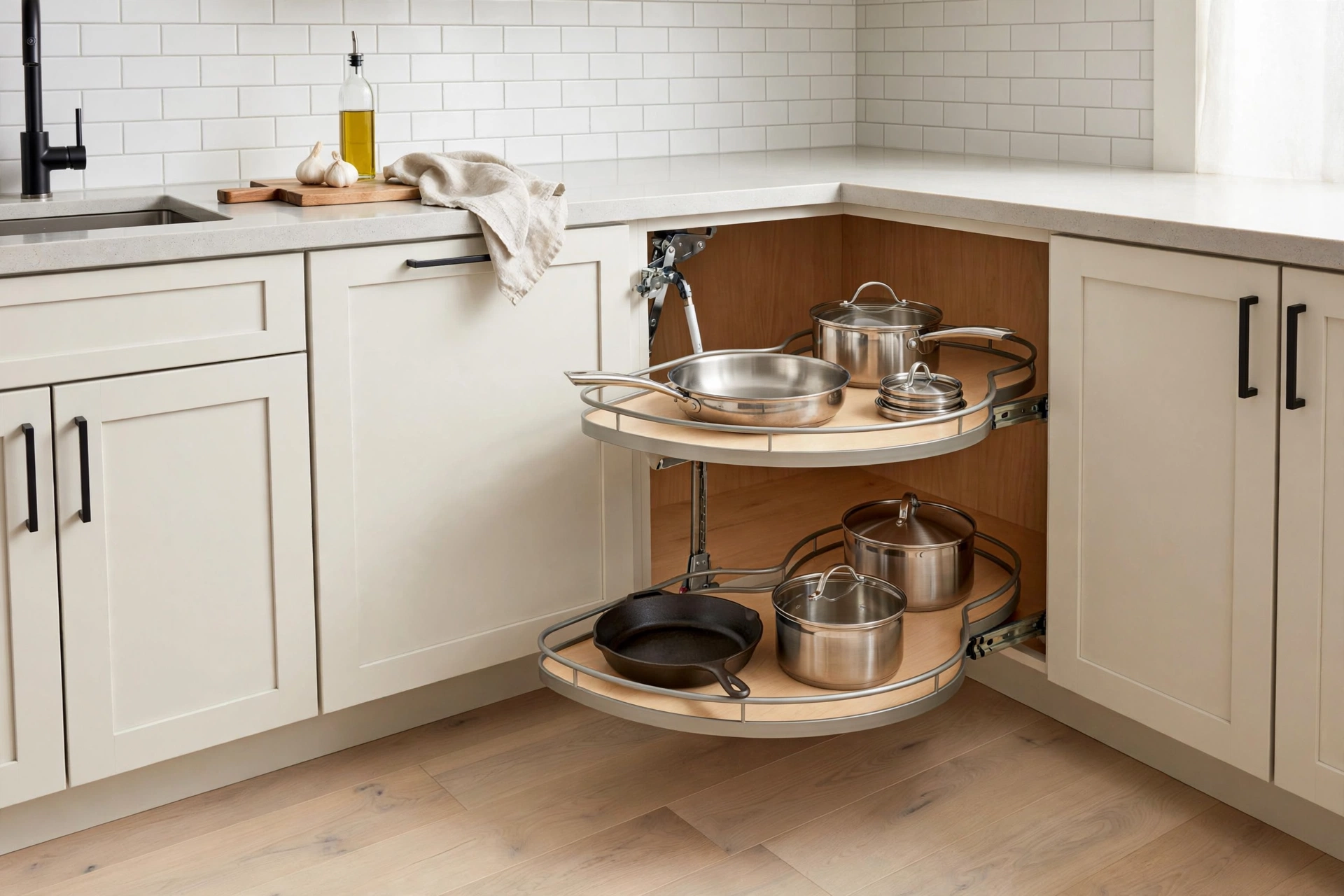
Blind corner cabinets — where one cabinet’s door hides storage that extends behind the adjacent run — are the trickiest corners of all. A swing-out organizer, sometimes called a half-moon or cloud system, pulls the hidden shelves out and around in one motion. These units typically offer a narrow middle section for small items and broader ends for pots and small appliances. Installation takes some precision, so follow the manufacturer’s template carefully or hire a pro. Once fitted, a swing-out system rescues what is otherwise the most wasted cubic footage in the entire kitchen.
5. Add Interior Cabinet Lighting
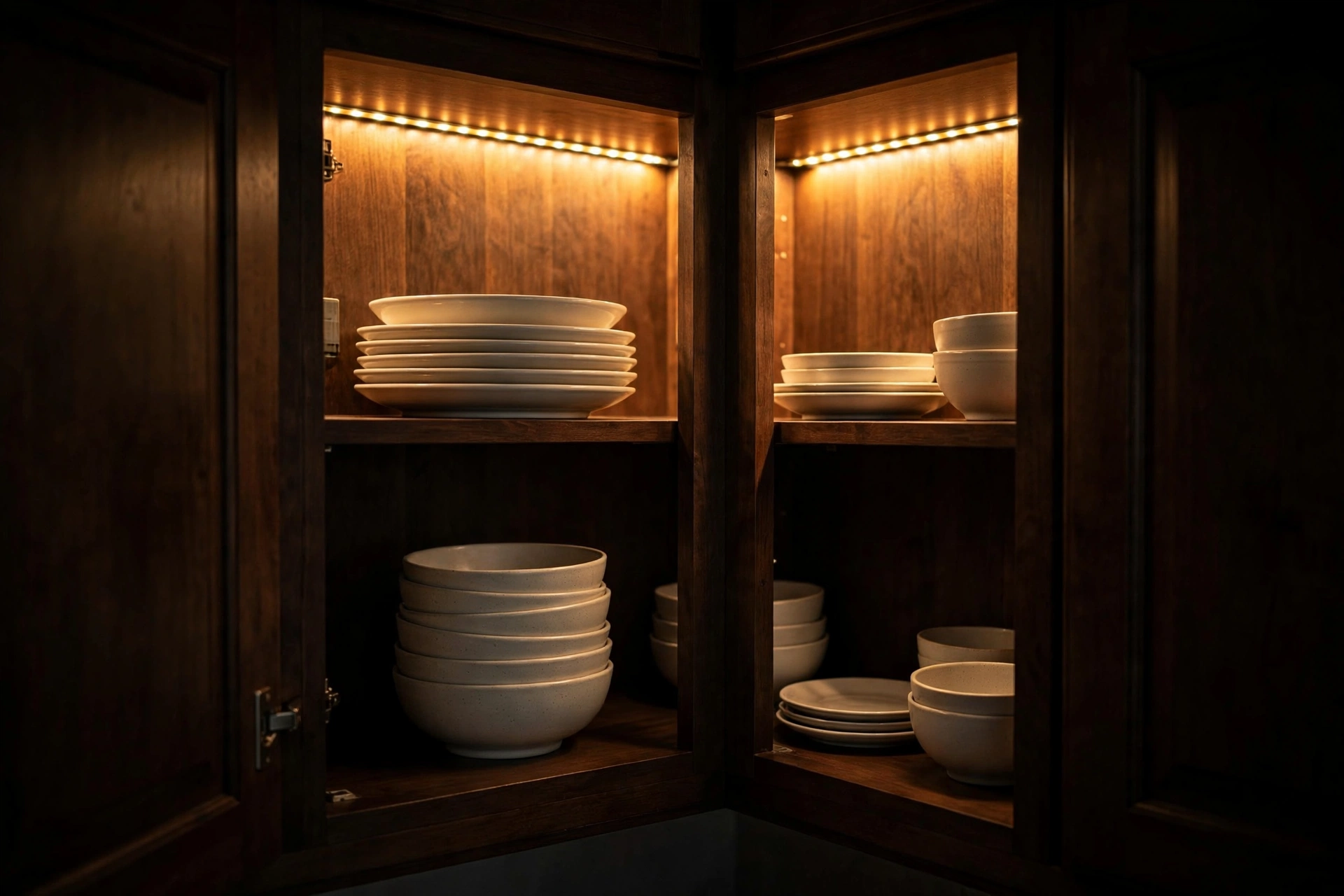
Dark corners hide clutter and swallow small items, so lighting the interior is a small upgrade with a big payoff. Battery-powered puck lights or slim LED strips mounted under the top of the cabinet turn on with a tap or a door sensor. Light makes it dramatically easier to find the right lid, spice jar, or pan without emptying the whole cabinet. It also makes glass-front corner cabinets glow beautifully in the evening. Pair interior lighting with light-colored shelf liners to bounce the light further into the deepest reaches of the corner.
6. Go Doorless With Open Corner Shelving
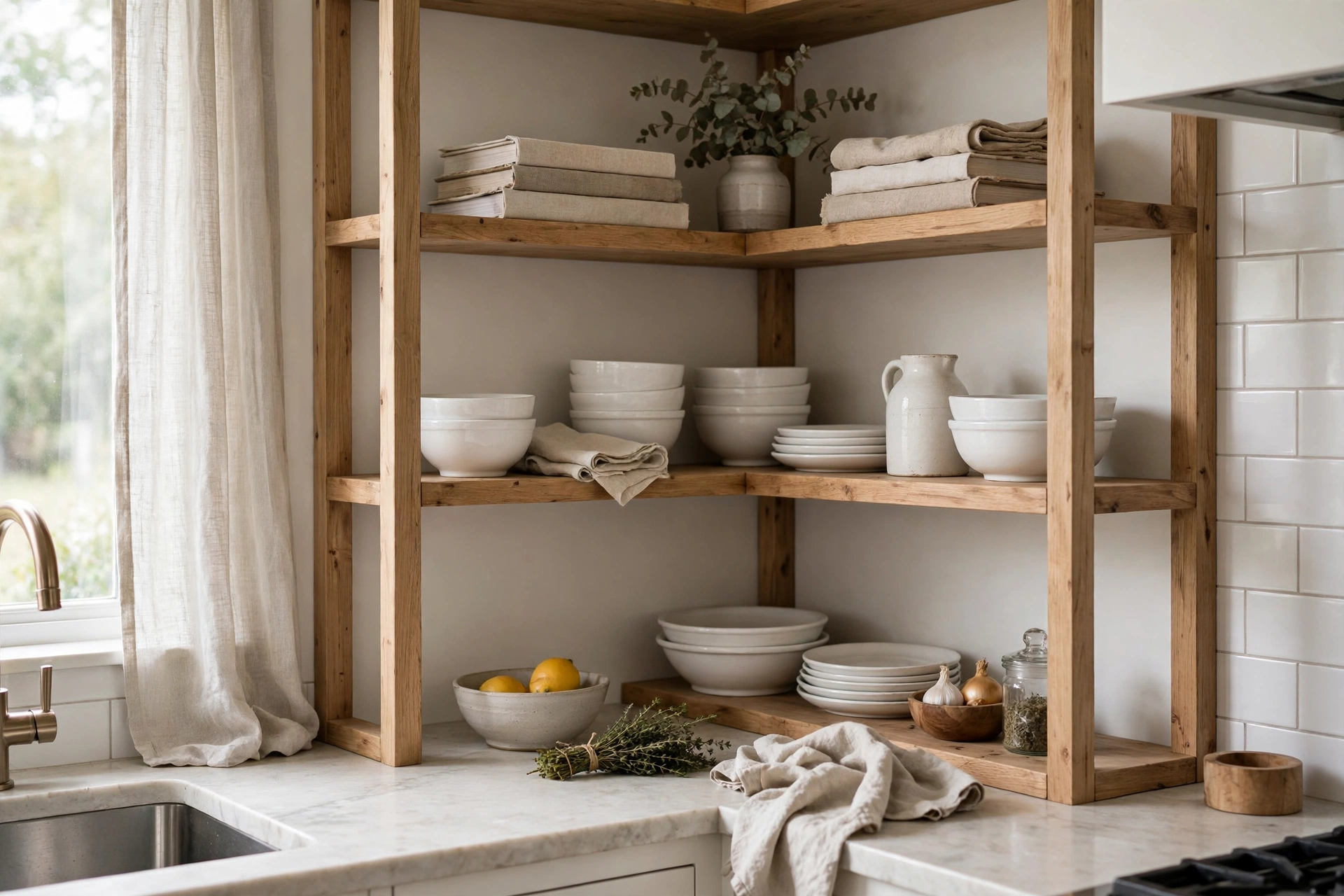
Removing the corner cabinet doors — or skipping them in a remodel — turns an awkward cabinet into open display shelving. The corner becomes a natural home for everyday dishes, pretty bowls, and cookbooks, all visible and easy to grab. Keep the styling edited with a limited color palette so the open corner reads as intentional rather than exposed clutter. This approach suits casual kitchens and renters who can simply remove doors and store them safely. Paint the cabinet interior a contrasting color or add wallpaper to the back panel for a custom, furniture-like finish.
7. Install a Corner Drawer System
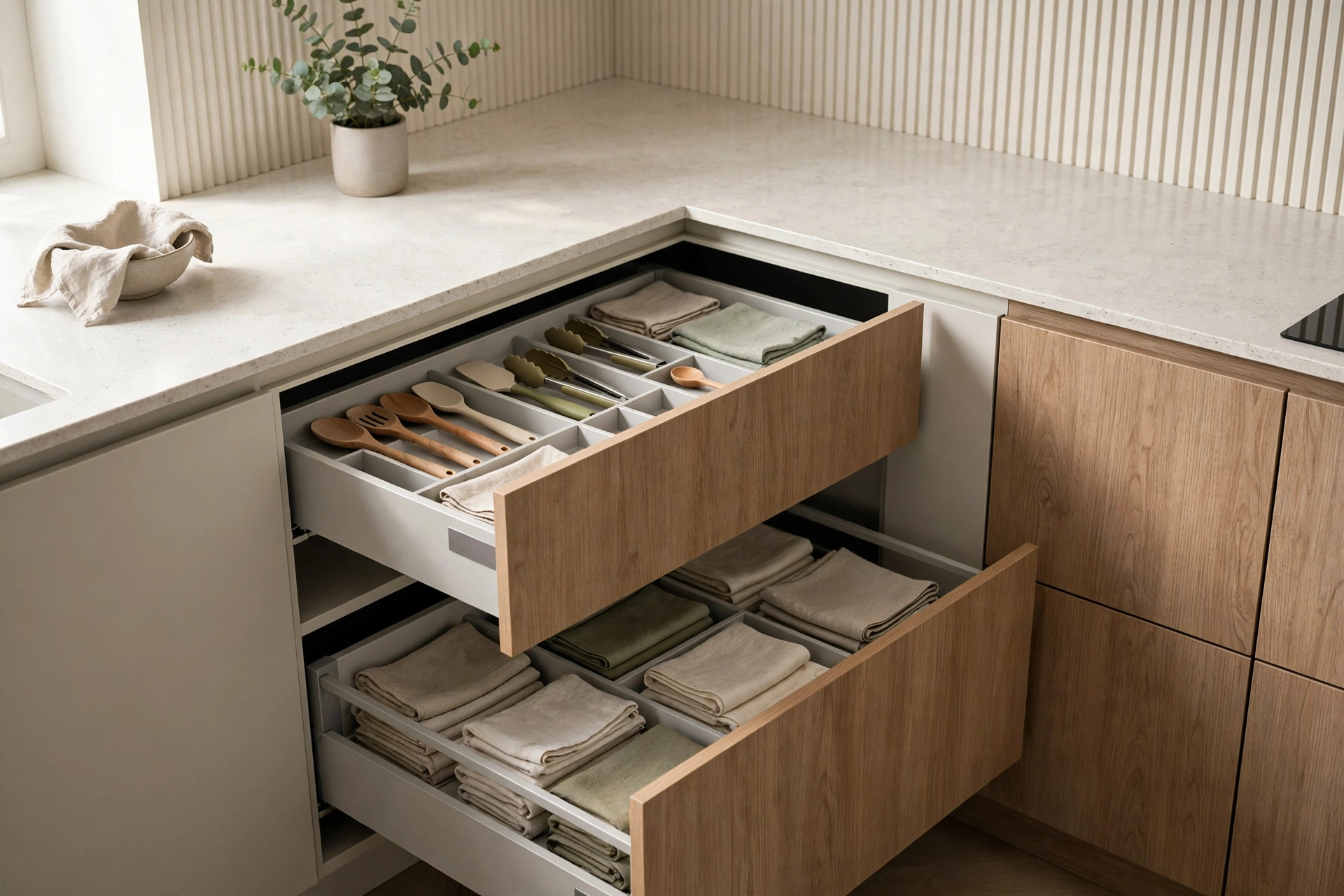
Corner drawers are a clever engineering solution: a stack of drawers shaped to fill the corner, each pulling straight out for full access. Unlike doors that hide the depths, drawers bring everything to you with zero reaching. They work beautifully for utensils, linens, spices, and even pots in deep versions. Because the drawer fronts follow the corner angle, the exterior looks like a natural part of the cabinetry run. Specify these during a remodel or major cabinet refit, as they require precise custom or semi-custom cabinetry rather than a simple retrofit.
8. Use Glass-Front Corner Cabinets
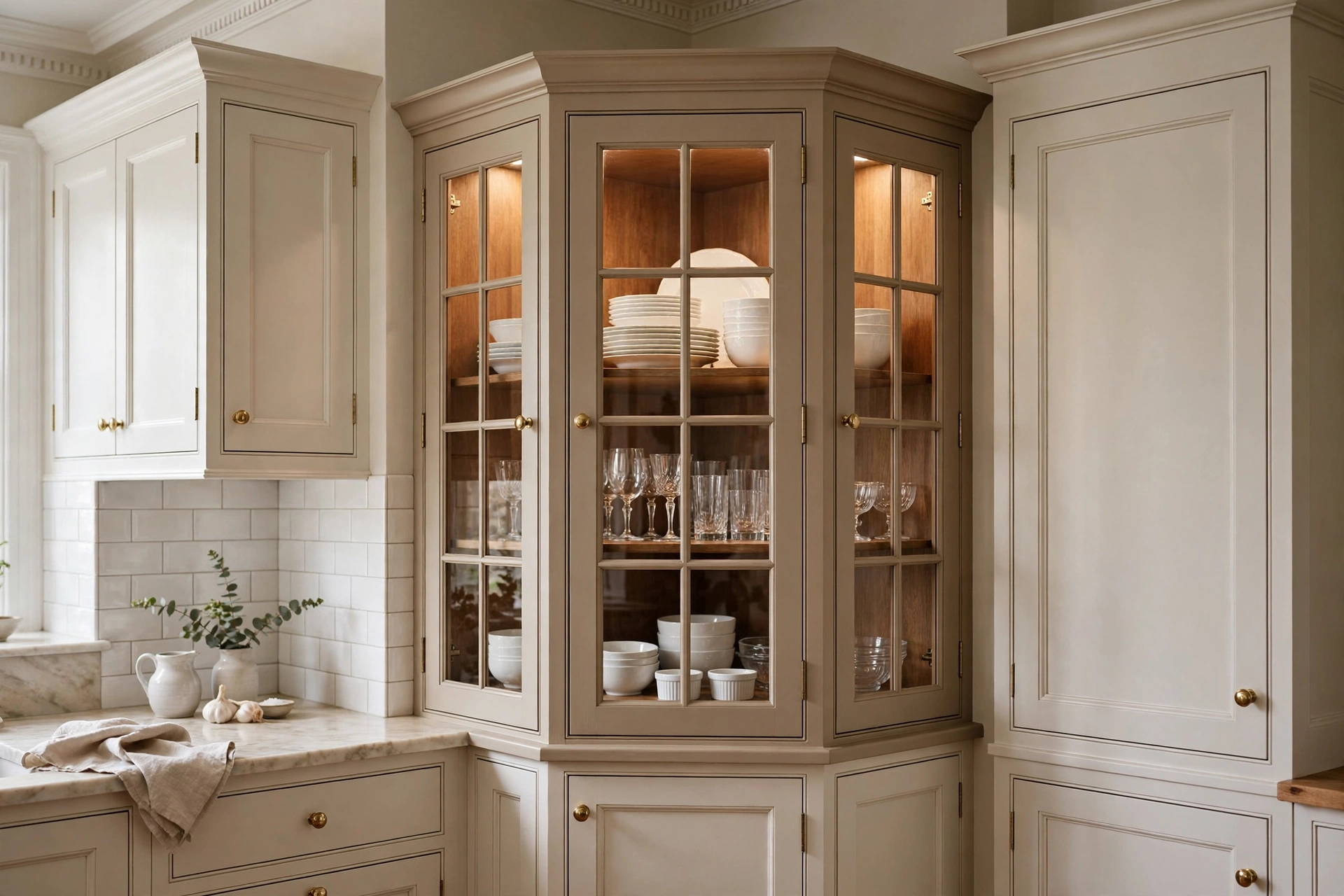
Glass-front doors turn the corner cabinet from a black hole into a display opportunity. The transparency tricks the eye into seeing depth, which makes the corner feel less bulky, and interior lighting makes dishes and glassware glow. Use this for your prettiest everyday items — white dishes, clear glassware, or a collected set of bowls — rather than the mismatched plastic containers. Frosted or reeded glass offers a middle ground, hinting at contents while hiding the less photogenic realities. Glass fronts work on both upper corner cabinets and tall pantry-style corners.
9. Create a Corner Coffee Station
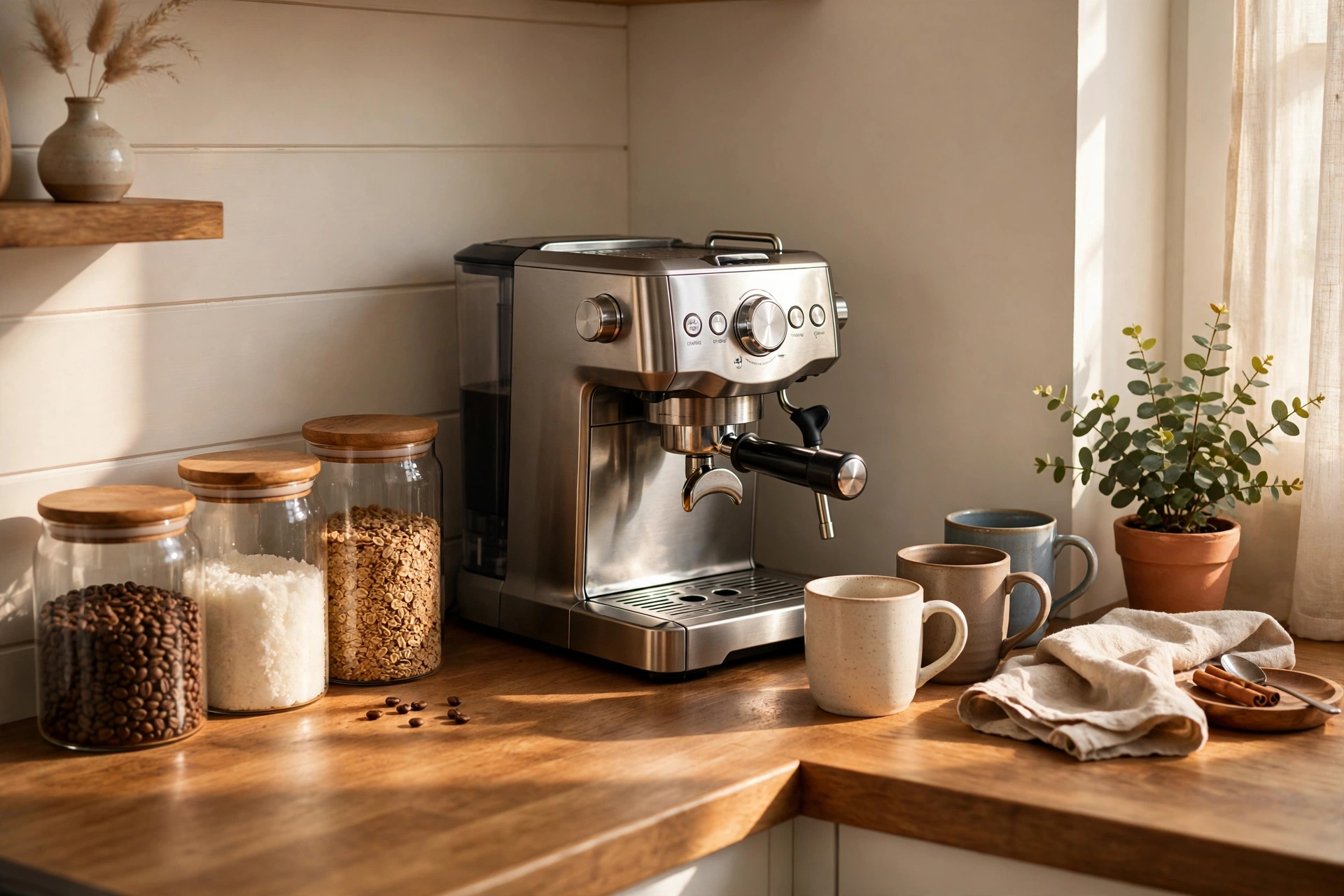
The counter above a base corner cabinet is prime real estate for a coffee station, since the deep corner gives you extra landing space. Place the machine at the angle where both counter runs meet, then flank it with mugs on one side and canisters on the other. The corner placement keeps the whole setup out of the main prep path while remaining central to the kitchen. Add a small tray to contain drips and a wipeable mat underneath. In U-shaped kitchen designs, the corner between two runs is often the natural hub — a coffee station there feels perfectly placed.
10. Add Vertical Dividers for Trays and Boards
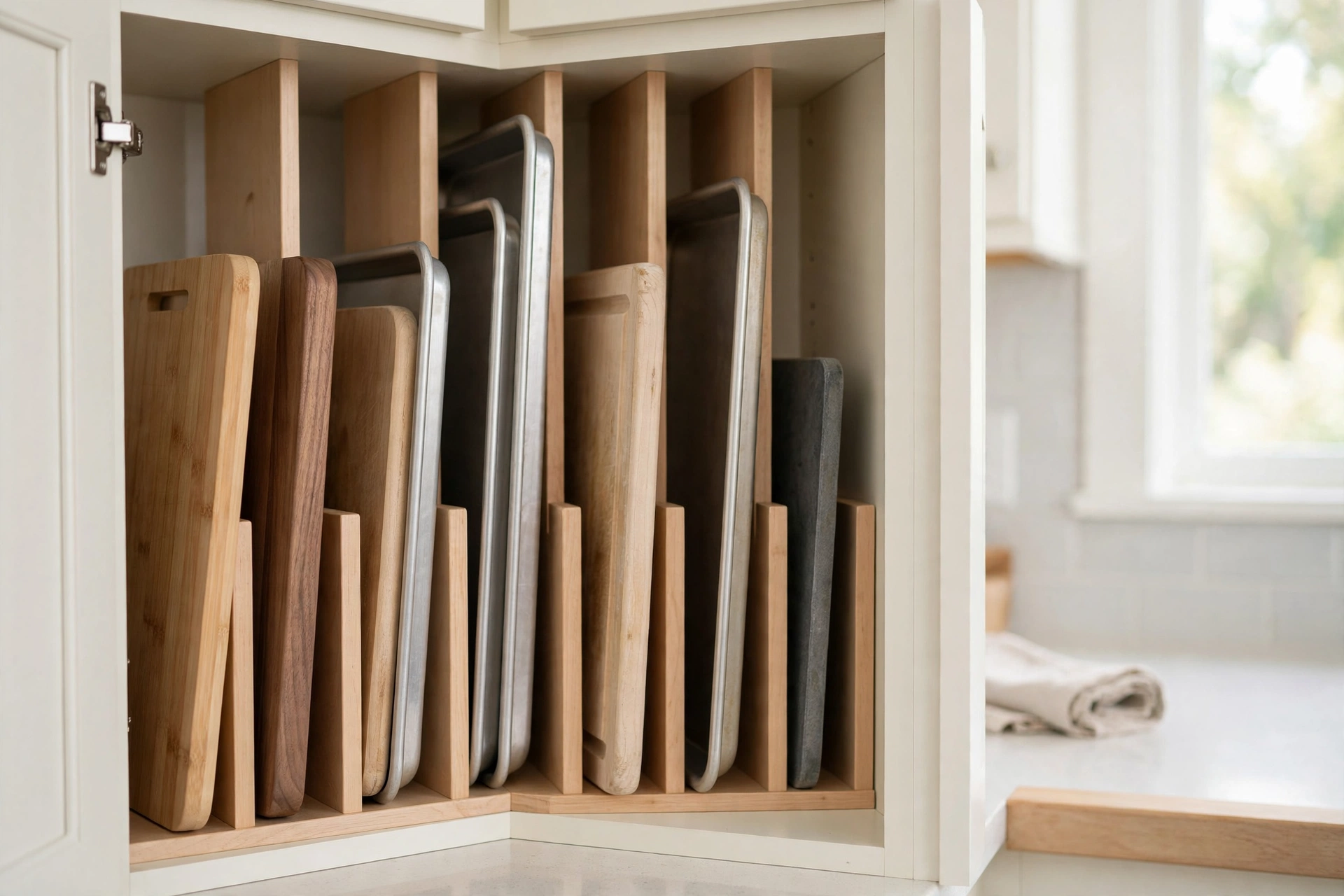
Tall, thin items like cutting boards, baking sheets, and serving trays are ideal corner-cabinet residents when stored vertically. Simple tension dividers or a vertical organizer rack turn one deep shelf into a filing system where every tray is visible and grabbable. This keeps stacks from toppling and ends the archaeological dig for the right sheet pan. Measure your tallest board before buying dividers, and leave a little extra room so pieces slide in and out without scraping. Vertical storage is one of the cheapest corner upgrades and works in both base and tall corner cabinets.
11. Zone the Deep Space With Bins
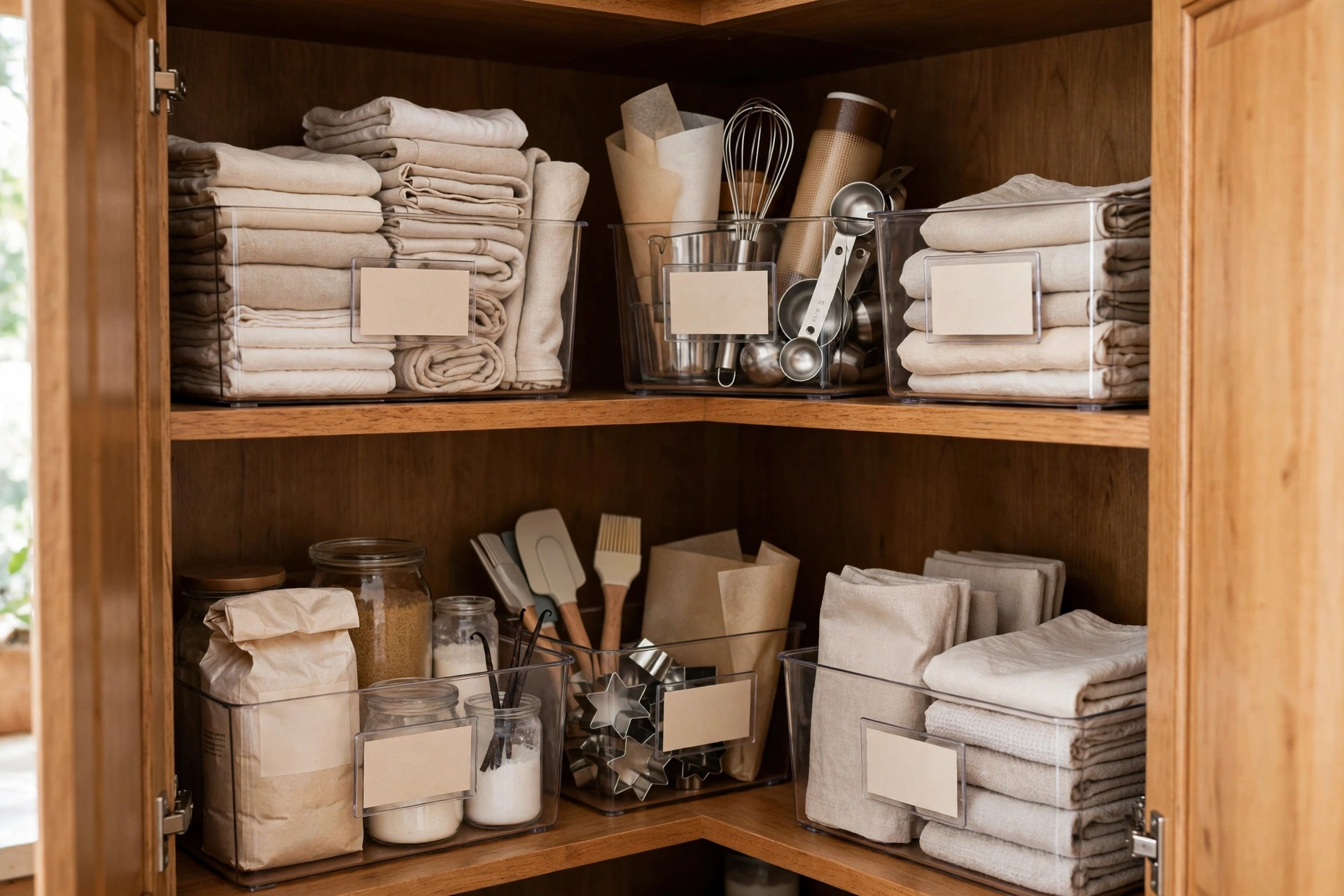
When hardware upgrades are not in the cards, clear labeled bins tame a deep corner cabinet for a few dollars. Assign each bin a category — baking supplies, entertaining extras, small appliances — and slide them in like drawers. The bin brings the back of the cabinet to you, which solves the reach problem without any installation. Choose bins with handles and low fronts so you can see contents at a glance. This approach is renter-friendly, instantly reversible, and surprisingly effective. Label the bins so everyone in the household returns items to the right zone.
12. Extend Corner Cabinets to the Ceiling
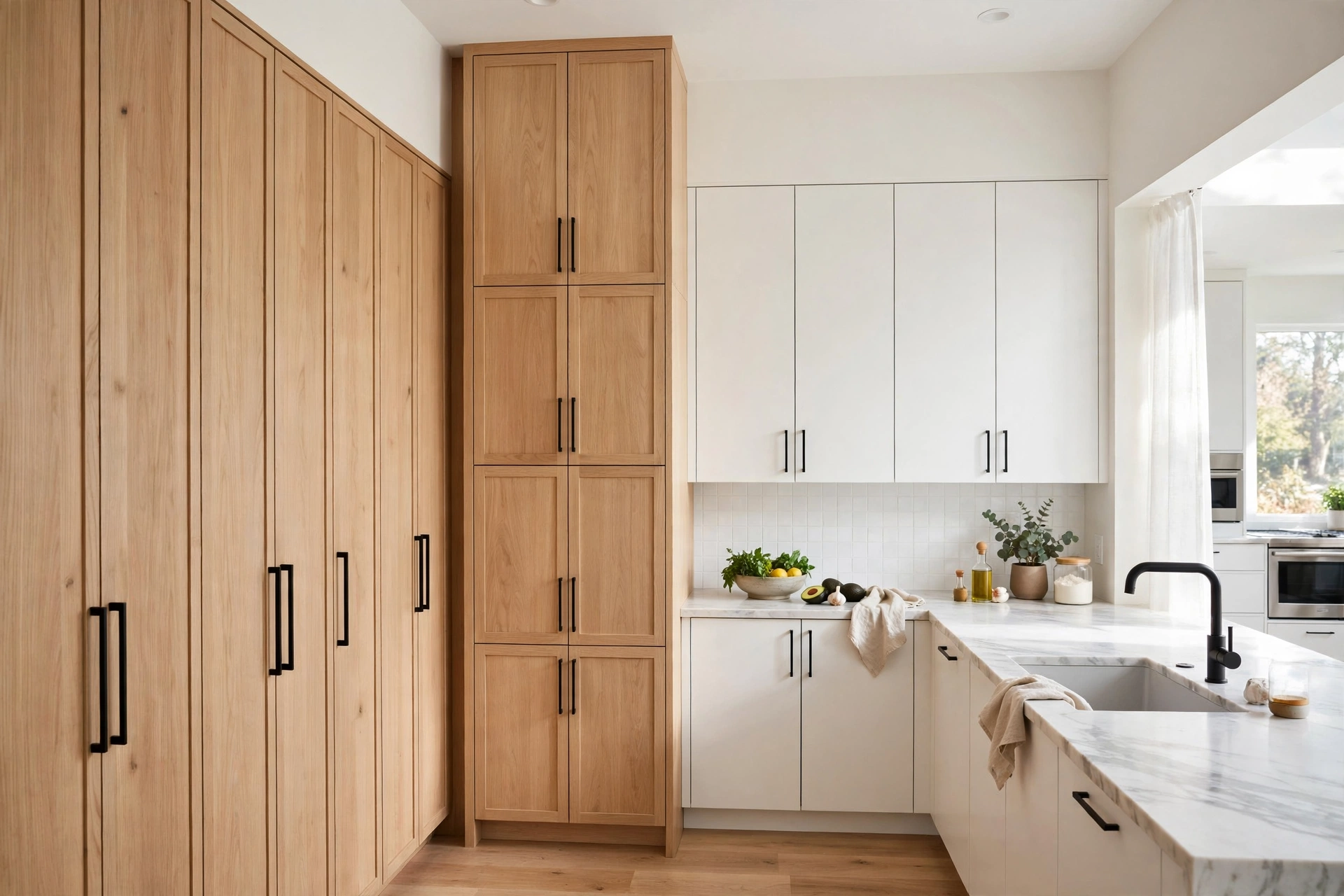
Running corner cabinets all the way to the ceiling captures storage that most kitchens waste and makes the corner feel like an intentional tower rather than an afterthought. Use the top section for seasonal items, entertaining pieces, and anything you reach for monthly rather than daily — a small step stool kept nearby makes access easy. On uppers, add smaller glass-front cabinets at the very top to keep the tall run from feeling heavy. Floor-to-ceiling corners work in every layout, but they are transformative in small kitchens where every cubic foot counts.
13. Try a Corner Pantry Cabinet
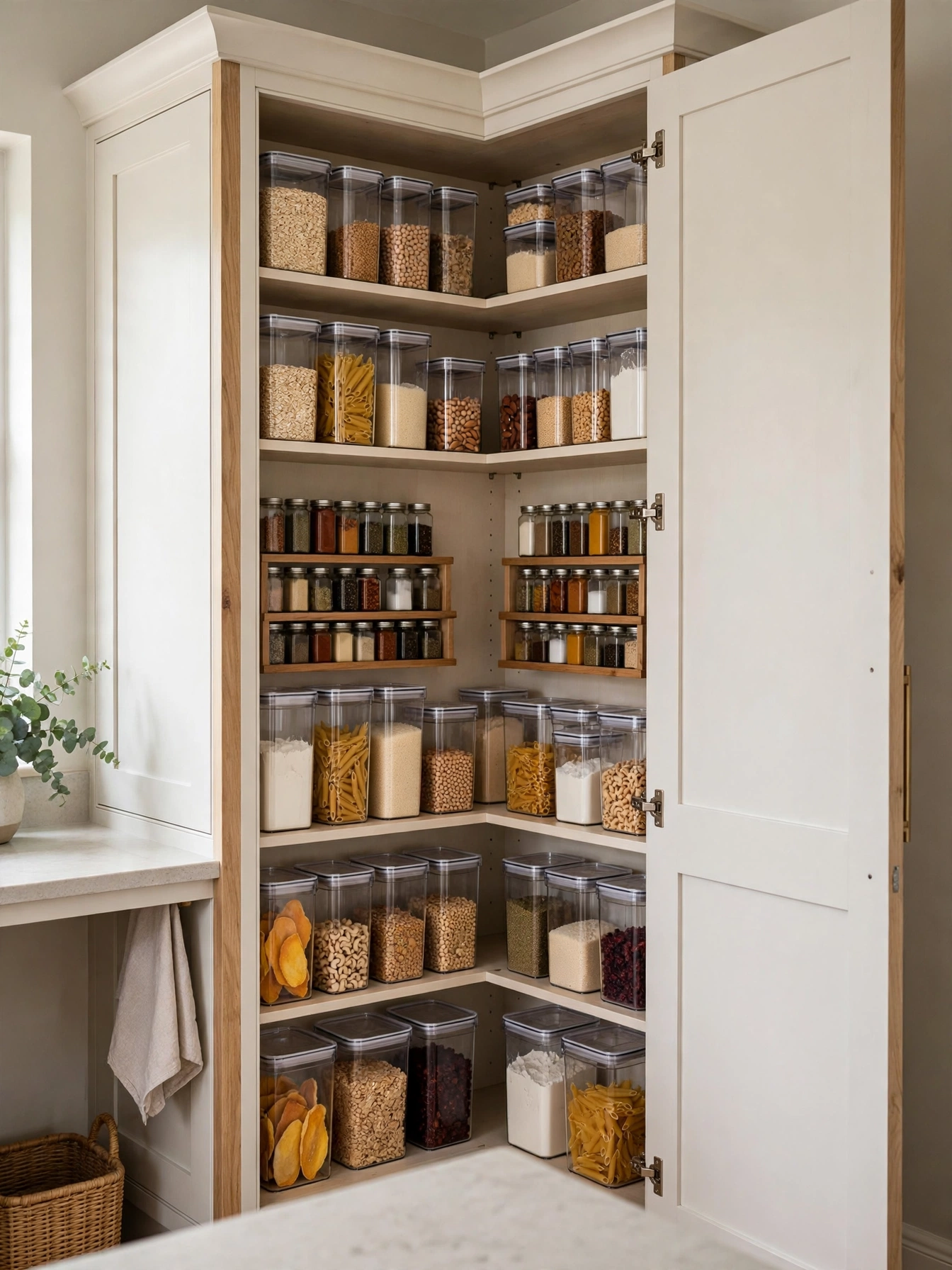
In kitchens without a walk-in pantry, a tall corner cabinet can become a pantry with surprising capacity. Angle the door for easy access, then fit the interior with adjustable shelves, door-mounted racks for spices, and pull-out baskets for produce. The corner location keeps food storage central to both prep zones in an L-shaped layout. Add interior lighting and clear containers so nothing gets lost in the depths. A corner pantry cabinet delivers near-walk-in storage in the footprint of a single cabinet — one of the highest-value uses of corner space.
14. Blur the Corner With Paint
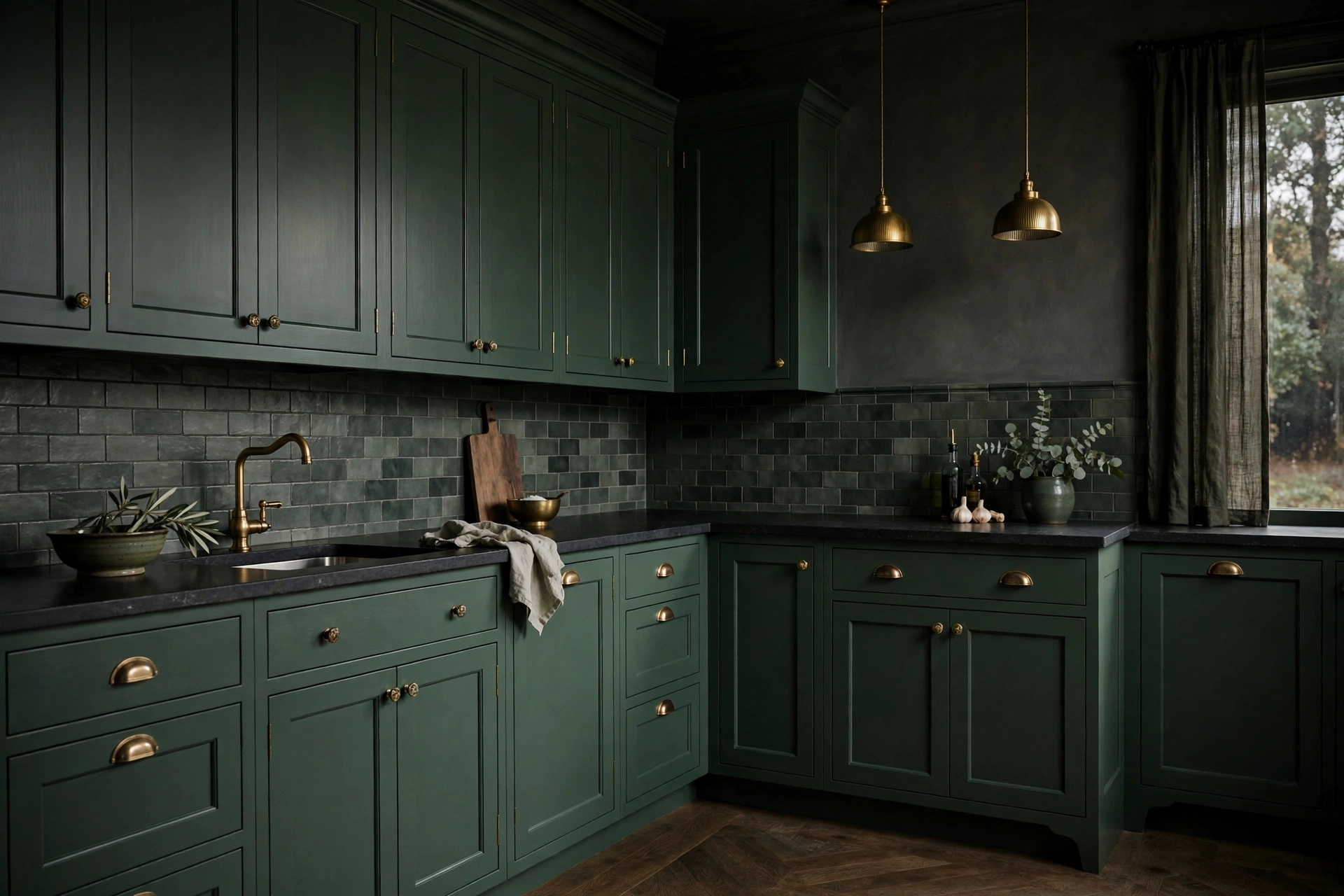
A coat of paint can make mismatched corner cabinetry look like one continuous, intentional run. Painting uppers, lowers, and the corner cabinet the same color — especially a deep, enveloping tone like forest green or navy — visually dissolves the awkward angles. Alternatively, paint just the corner cabinet an accent color to turn it into a deliberate focal point with open shelving or glass fronts. Paint is the cheapest way to unify corners in a kitchen with mixed cabinetry from different eras. Use a durable cabinet-grade enamel and proper prep so the finish survives daily use.
15. Style the Countertop Above the Corner
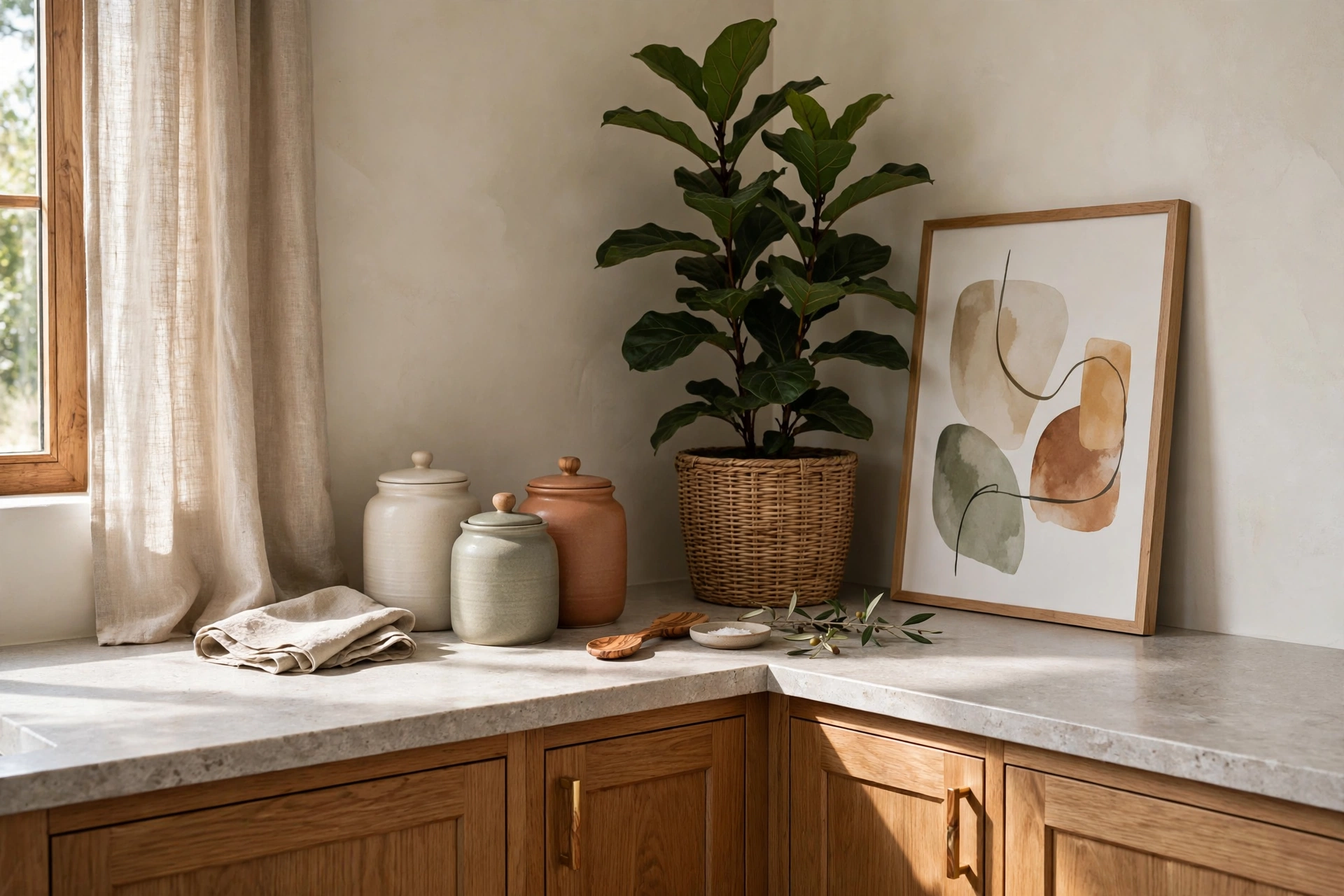
The counter above a corner cabinet often becomes a dumping ground because it sits outside the main work zones. Reclaim it with intentional styling: a large plant, a leaning piece of art, or a grouped vignette of canisters turns dead space into a design moment. Since this counter is slightly removed from splatter zones, it is ideal for items that would not survive next to the range — cookbooks, a candle, a small lamp. Treating the corner counter as display space rather than leftover space completes the transformation from awkward angle to asset.
Frequently Asked Questions
What is the best way to organize a kitchen corner cabinet?
Start by deciding what the cabinet should hold, then choose hardware to match: a lazy Susan for pots and bulky items, pull-out shelves for maximum visibility, or bins for a budget-friendly fix. BHG’s guide to organizing corner cabinets recommends emptying the cabinet completely, assigning each shelf a theme, and adding shelf liners to keep turntables stable. Group like items together and label zones so the system survives daily use by the whole household.
What should you store in a corner cabinet?
Store bulky, infrequently used items that benefit from deep space: large stockpots, serving platters, small appliances, and entertaining pieces. In upper corner cabinets, keep everyday dishes and glassware if you add a lazy Susan, since the turntable brings everything forward. Avoid storing tiny items loose in a deep corner — they migrate to the back and vanish. Whatever you store, use bins, turntables, or pull-outs so the back half of the cabinet stays reachable.
Are corner drawers better than a lazy Susan?
Corner drawers win on ergonomics: they pull straight out, so nothing hides in the back and nothing requires spinning. Lazy Susans win on cost and retrofit ease — they drop into existing cabinets for a fraction of the price. For heavy cookware used daily, drawers are worth the investment during a remodel. For a quick upgrade to existing cabinetry, a quality two-tier lazy Susan delivers most of the benefit. Choose based on your budget, your cabinet construction, and how often you reach into that corner.
How do you make a blind corner cabinet usable?
Install a swing-out organizer designed for blind corners — the shelves pull out and around, bringing hidden storage into the open. Alternatively, fit the accessible portion with pull-out trays and accept the deep section as seasonal storage for rarely used items. Good lighting inside a blind corner makes an enormous difference, since darkness is half the problem. Measure carefully before ordering hardware, as blind corner mechanisms are sized to specific cabinet dimensions and door positions.
What is the best corner cabinet for a small kitchen?
In a small kitchen, every corner must work hard: choose pull-out shelving or corner drawers for full access, extend uppers to the ceiling, and consider a tall corner pantry cabinet instead of a separate pantry. Open corner shelving keeps small kitchens feeling airy while keeping dishes accessible. For layout-specific strategies, explore our galley kitchen design ideas — narrow kitchens benefit most from corners that pull, spin, or slide rather than hiding storage behind a single door.
Keep Exploring
Corner cabinets stop being a problem the moment you give them the right job and the right hardware. A lazy Susan, a set of pull-outs, or even a few well-chosen bins turns the deepest, darkest corner into storage you actually use. Start with the corner that frustrates you most, fix that one well, and the rest of the kitchen feels easier overnight.
Keep the momentum going with more Kitchen Decor ideas — from layout-smart storage to the finishing touches that make a kitchen feel like home. Your corners are no longer wasted space; they are some of the hardest-working square feet you own.