
The best tv wall decor ideas treat the screen as a design feature instead of an eyesore to hide. A black rectangle does not have to dominate your living room when the wall around it is styled with intention — art, shelving, lighting, and texture can all work together to make the television feel like part of a composed, gallery-worthy arrangement.
From renter-friendly gallery walls to dramatic dark paint and built-in bookshelves, there is an approach for every budget and floor plan. Many pair well with broader living room design ideas with a TV if you are restyling the whole room.
1. Build a Gallery Wall Around the Screen
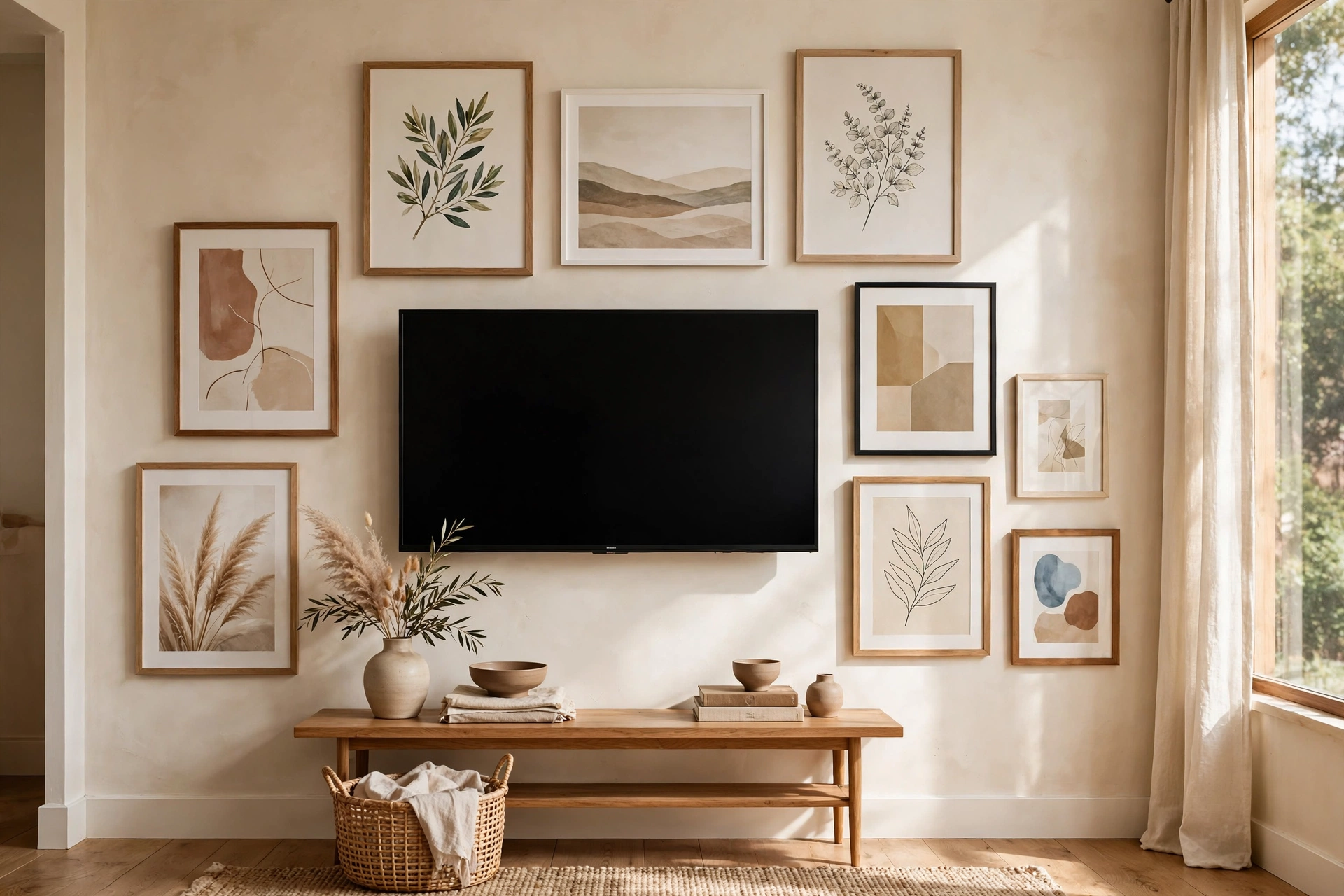
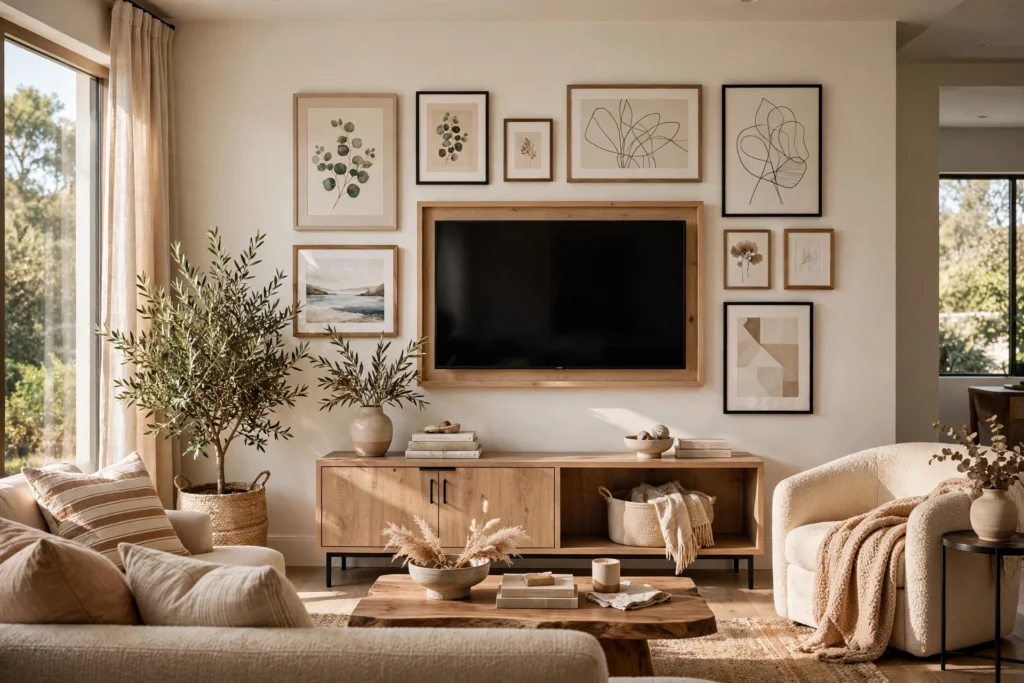
A gallery wall is the classic way to stop a television from floating alone on the wall. Arrange framed prints, photographs, and small canvases in a loose grid or cluster around the screen, keeping two to four inches between pieces so the composition reads as one deliberate unit. Choose frames in a shared finish — all black, all oak, or all white — so the wall feels curated, and vary the art sizes so the TV becomes one rectangle among many. More real-home inspiration for surrounding a TV with art to see the trick in real homes.
2. Mount the TV on a Bold Accent Wall
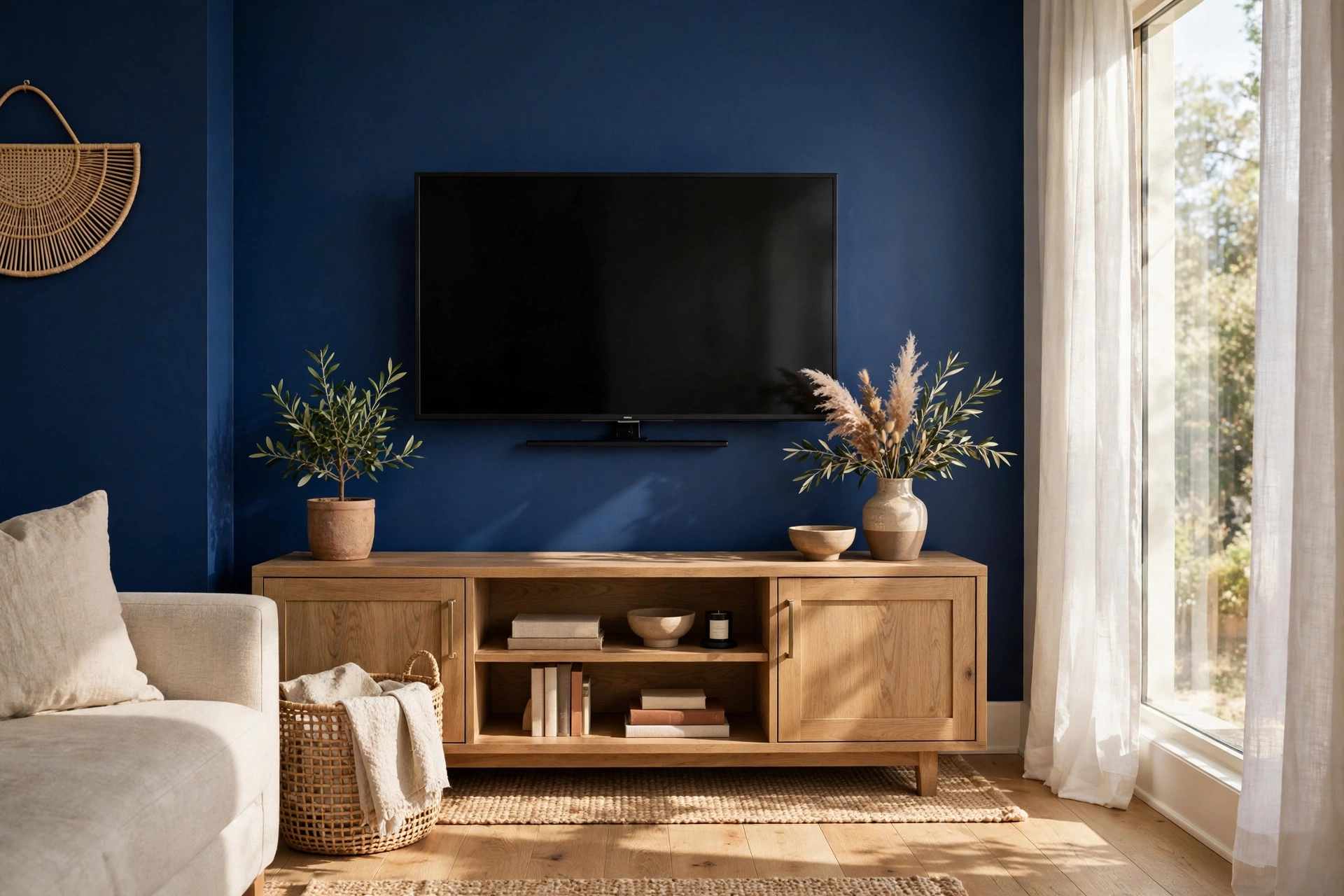
Painting the wall behind your television a deep, saturated color instantly gives the screen a frame it never had. A charcoal, forest green, or inky navy wall makes the black screen recede, which is why designers lean on dark tones for theater-style spaces. The contrast also hides cables and mounting hardware far better than white paint. Extend the paint wall to wall for a color-drenched look, or keep it to one section for a feature wall. Living room accent wall ideas with big impact show paint, paneling, and wallpaper routes worth trying.
3. Flank the Screen with Floating Shelves
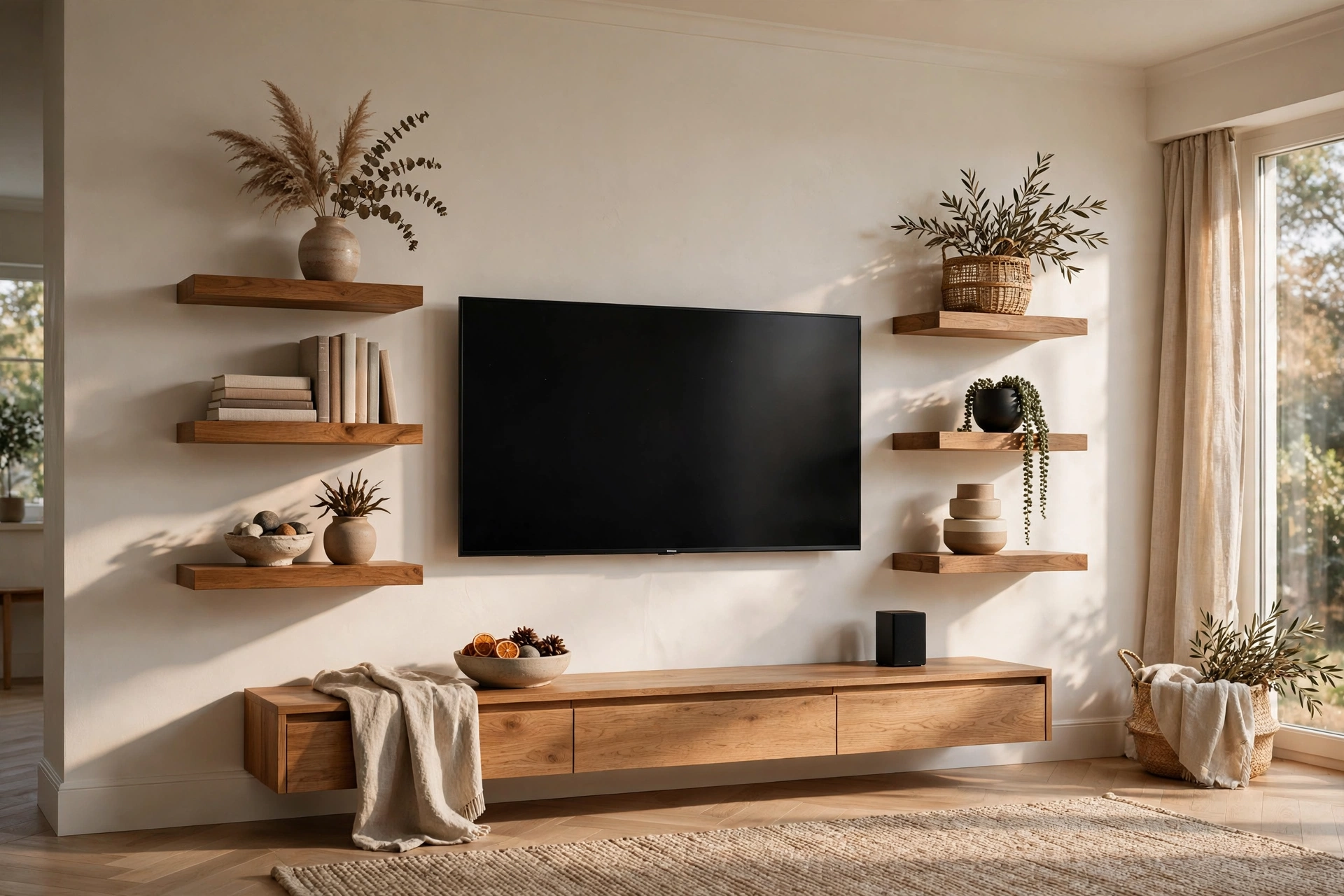
Floating shelves on either side of the TV create symmetry while giving you display space for books, trailing plants, and sculptural objects. Keep the shelves at the same height and stick to a tight color palette — warm wood with white ceramics, for example — so the arrangement feels intentional. Two shelves per side is usually plenty; leave breathing room between objects so the screen stays the star. For a bolder move, run one long shelf above the TV too, turning the wall into a shallow frame of decor.
4. Choose a Frame TV for an Art-First Look
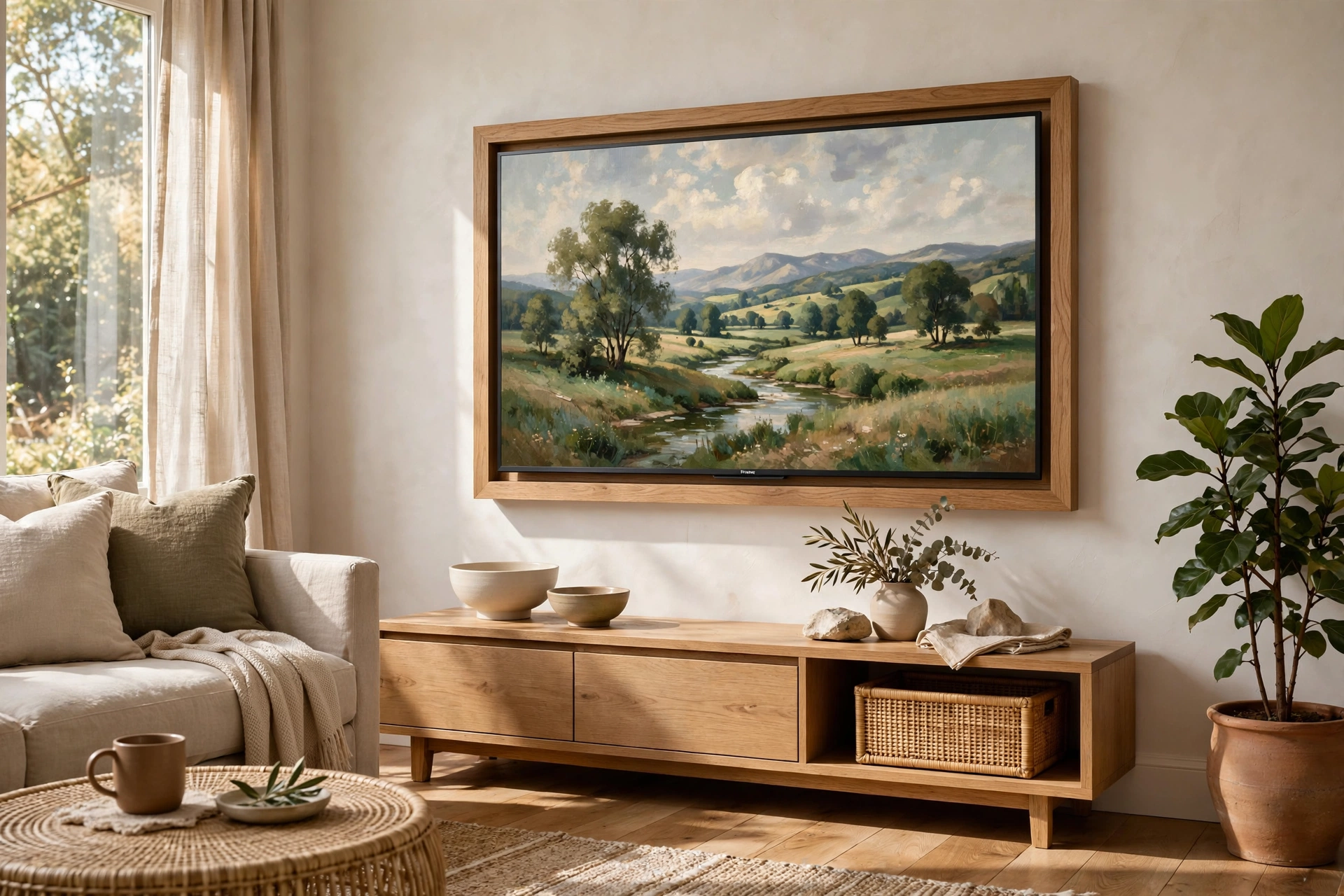
Art-style televisions with slim profiles and customizable bezels have changed how a TV wall looks when the screen is off. Instead of a black void, the display shows artwork, family photos, or a calm landscape that blends with your decor. Surround it with matching framed prints so guests cannot tell which rectangle is the television. On a budget, add a slim wooden frame around your existing TV for a similar effect. More clever ways to decorate around a standard flat screen, from mirrors to wallpaper, the principles are exactly the same.
5. Conceal the Screen with Sliding Panels
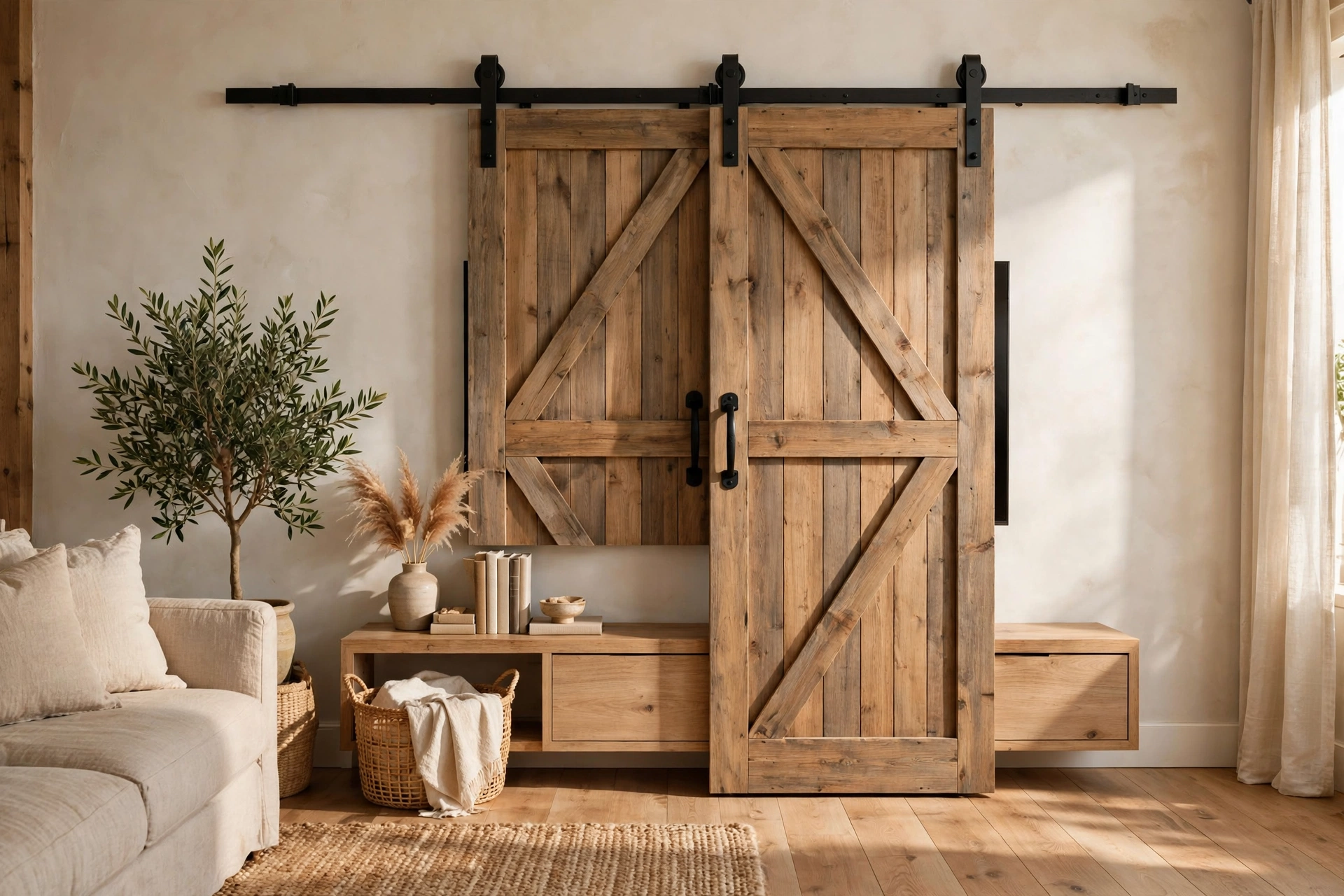
If you would rather have no screen in sight at mealtimes, sliding panels or barn doors can hide the TV completely. Mount a track above the wall and hang painted wood panels, woven cane screens, or large artwork panels that glide aside when it is time to watch. When closed, the wall reads as pure decor; when open, the panels frame the screen like curtains. This trick shines in multipurpose rooms where the TV shares space with a dining table or home office. Paint the panels the wall color for a seamless look, or a contrasting tone to make them a feature.
6. Create a Warm Wood-Slat Feature Wall
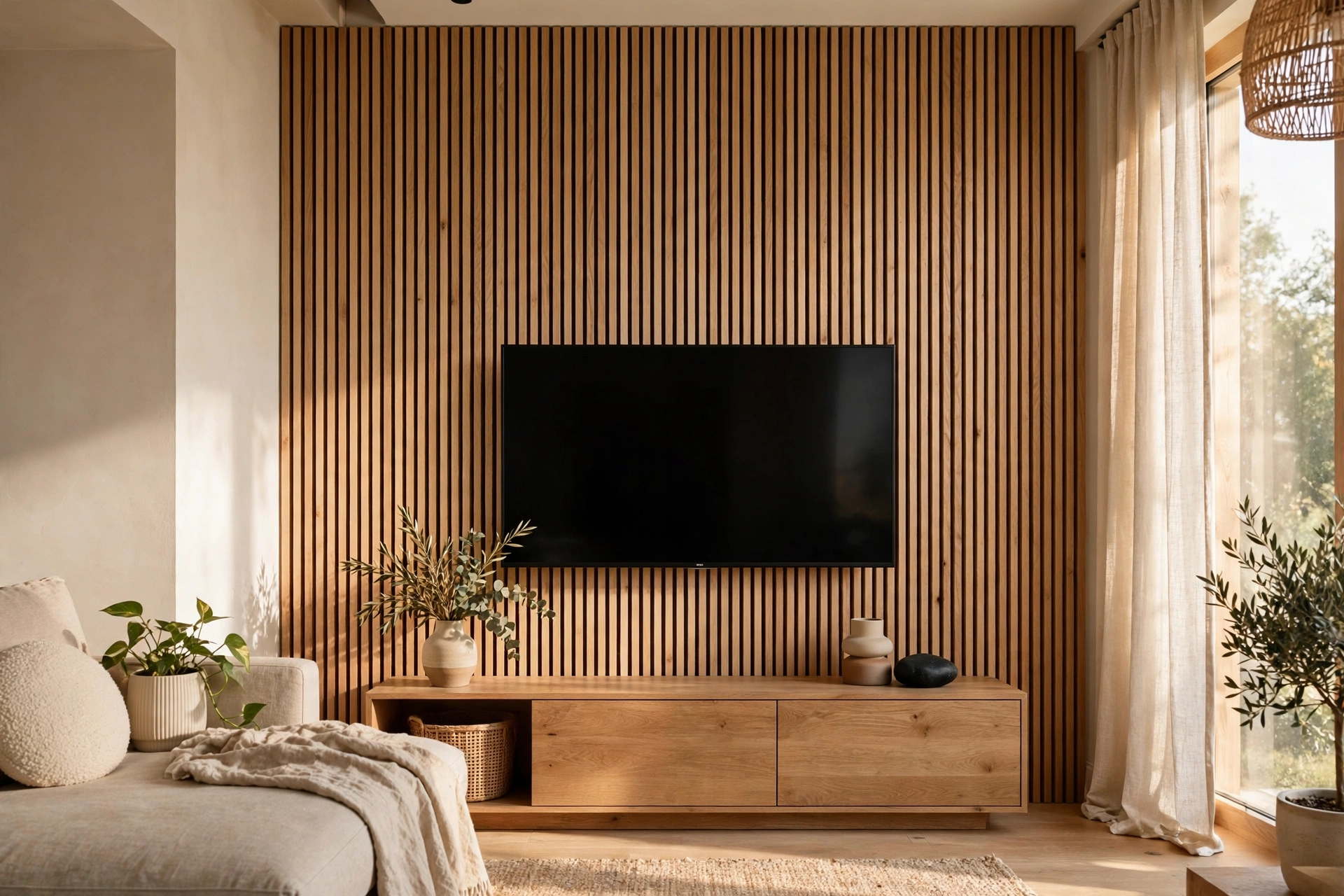
Vertical wood slats behind the TV add texture, warmth, and craft that flat drywall cannot match. Use slim oak or walnut battens spaced evenly across the wall, leaving narrow shadow gaps that give the surface depth and rhythm. The slats draw the eye upward, which makes ceilings feel taller, and the wood tones soften the hard edges of modern electronics. This is a weekend project with prefinished battens and construction adhesive, and it costs far less than a stone install. Pair the slats with a low console so the wall stays the hero.
7. Light the Wall with Sconces and LED Strips
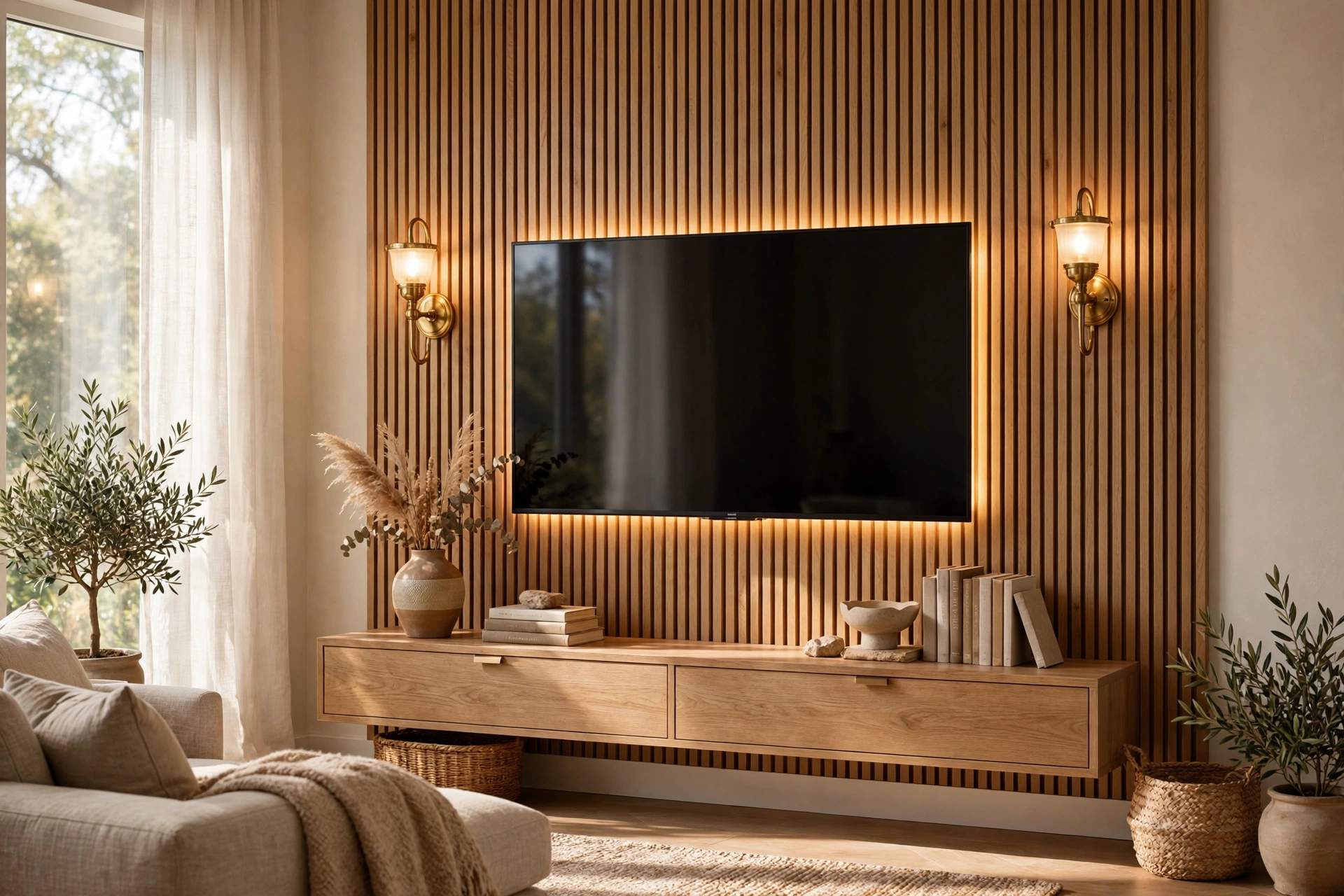
Lighting is what separates a flat TV wall from a cinematic one. Flank the screen with a pair of picture lights or slim sconces for a gallery-like glow, and add an LED bias strip behind the TV to reduce eye strain and make the screen appear to float. Dimmable lights let you shift from bright daytime viewing to a moody evening setup in seconds. Warm white flatters wood tones and artwork, while the subtle halo behind the screen softens the rectangle’s edges and hides mounting brackets.
8. Anchor the TV with a Stylish Media Console
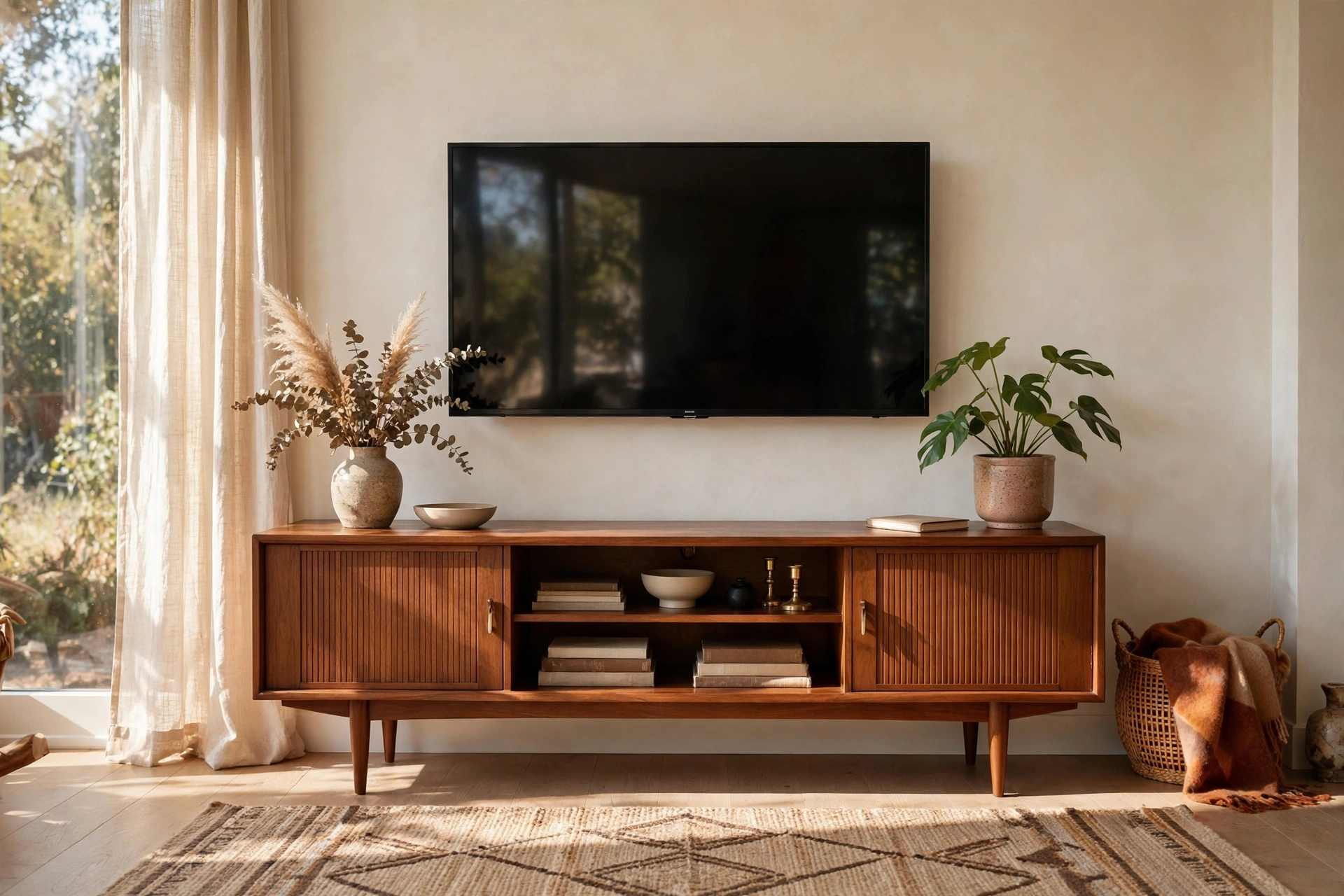
A console wider than the screen grounds the whole composition and stops the TV from looking like it is floating alone. Choose a piece with closed storage to hide consoles, remotes, and cable clutter, plus open shelves or drawers for display. Mid-century sideboards, low oak credenzas, and sleek lacquered units all work — the key is proportion, with the console extending a few inches past each side of the screen. Style the top with a stack of books, a low plant, and one sculptural object, keeping decor below the screen’s bottom edge.
9. Mix the Screen into Built-In Bookshelves
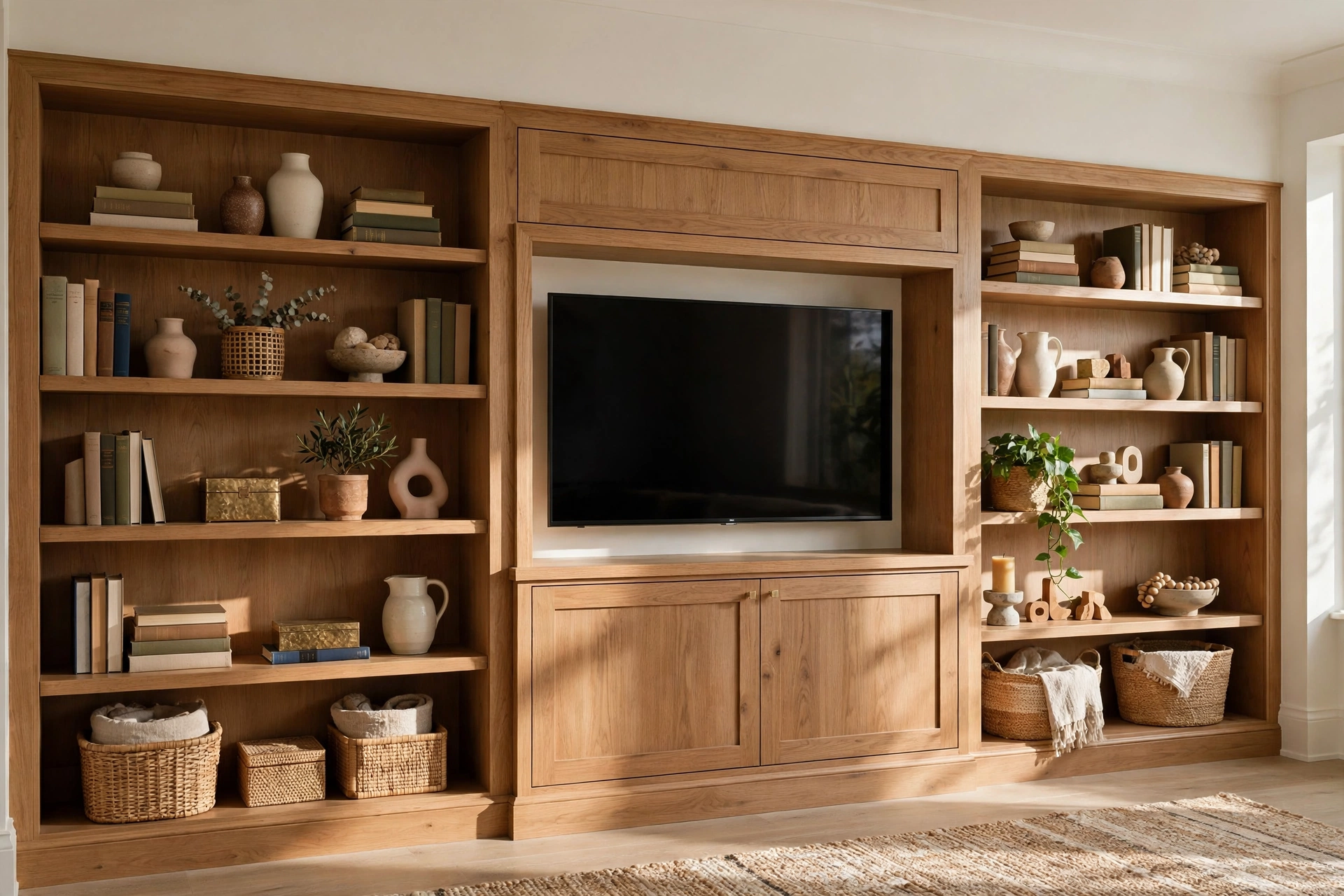
Built-in bookshelves turn the TV wall into a library that happens to have a screen. Frame a central niche for the television and fill the surrounding shelves with books arranged by height or color, interspersed with ceramics, framed photos, and small art objects. Painting the built-ins a moody color like deep green or charcoal helps the screen vanish when it is off, while white or natural wood keeps the wall light and airy. For a budget route, pair two tall bookcases with a bridging shelf over the screen.
10. Go Dark with a Moody Theater-Inspired Backdrop
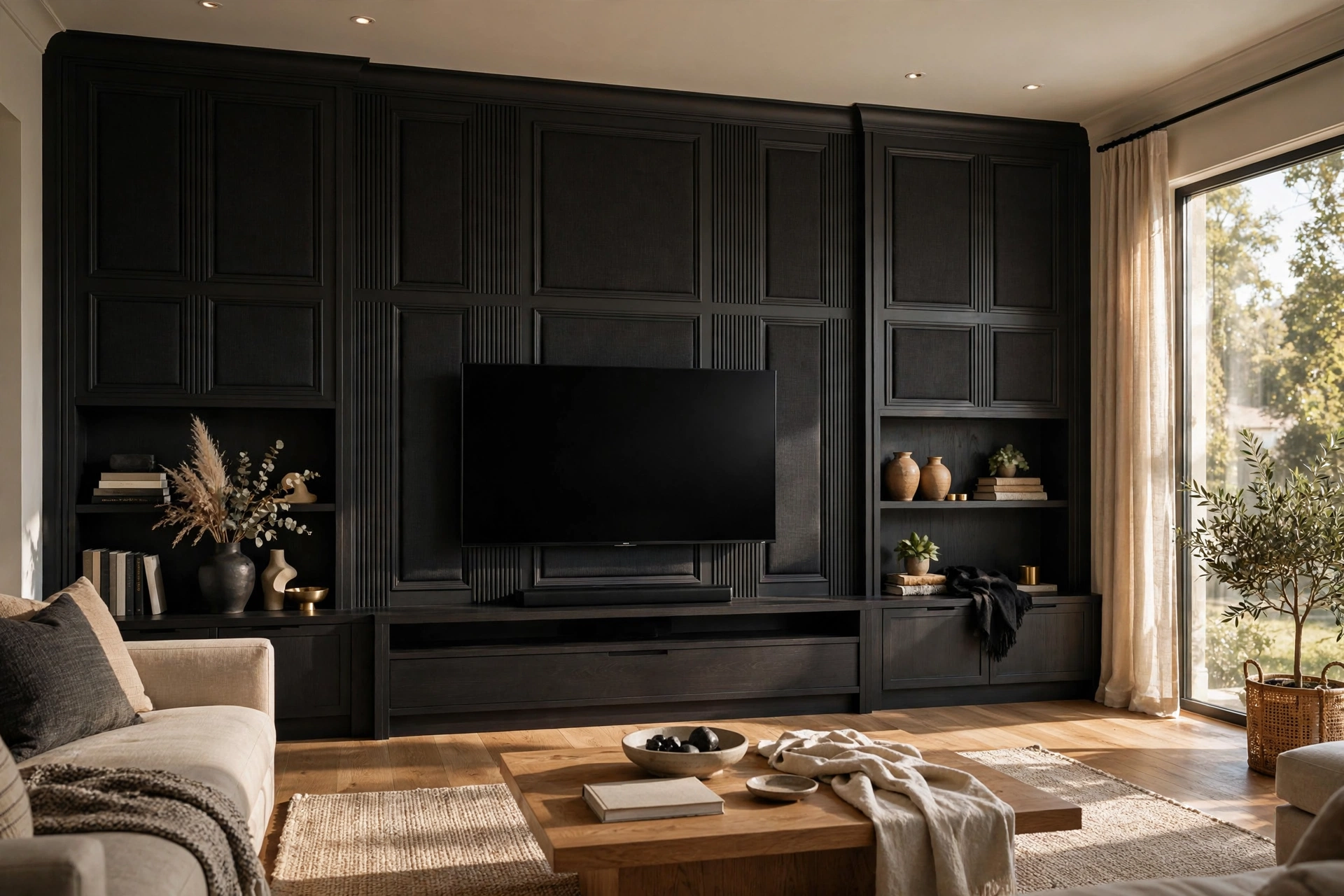
Color-drenching the TV wall — and sometimes the whole room — in a deep, enveloping shade is one of the fastest ways to make a screen disappear. Dark green, inky blue, and warm charcoal absorb light, so the black screen blends into the wall instead of jumping forward. Commit fully: paint the ceiling and trim the same tone for a true cocoon effect, then layer in brass sconces and a plush rug to keep the space cozy rather than cave-like. A dark backdrop also makes artwork and wood furniture glow by contrast.
11. Use Symmetrical Art for a Balanced Composition
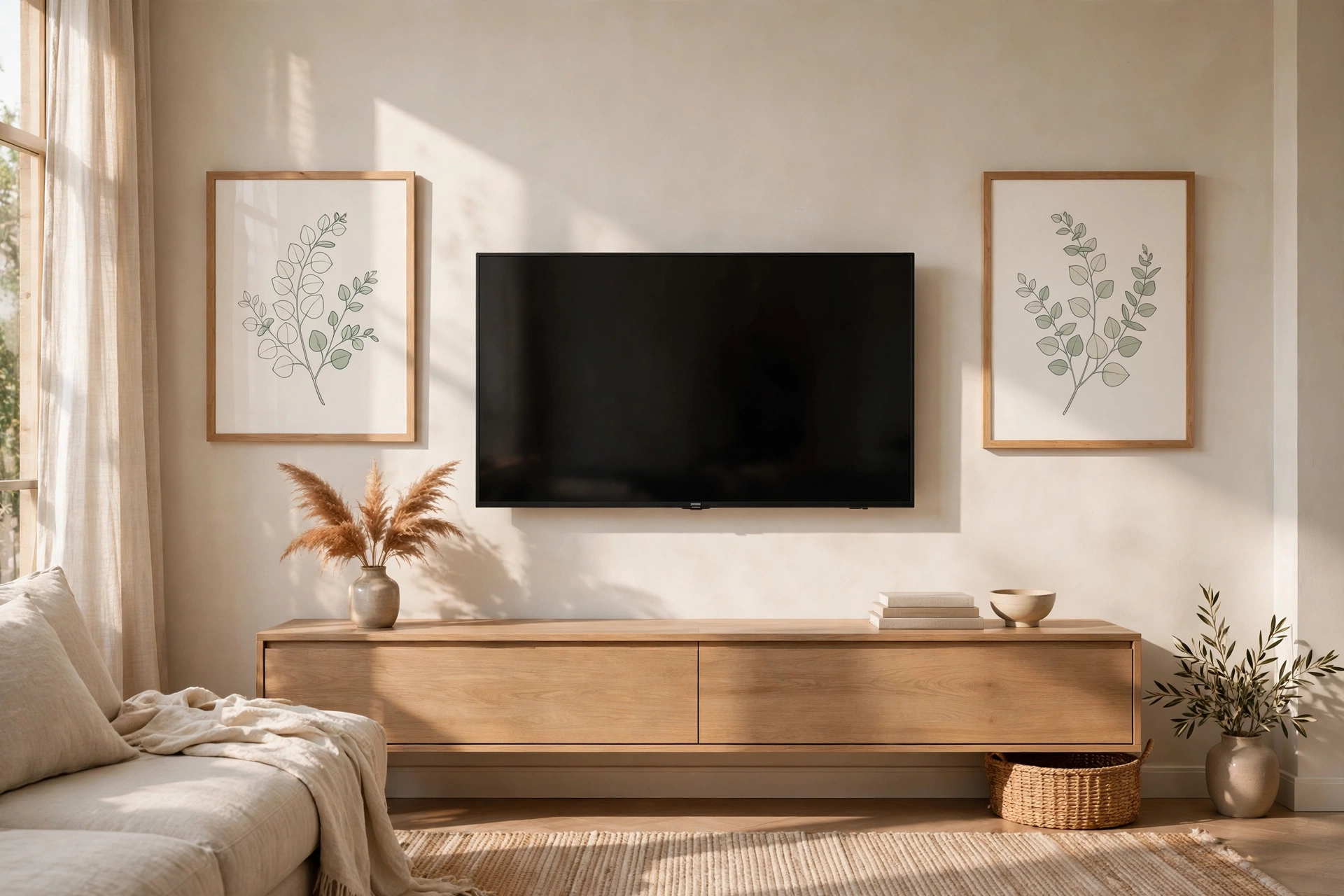
Symmetry calms a TV wall, especially in formal or traditional living rooms. Hang a matching pair of large prints on either side of the screen at equal heights, or stack two identical frames above the TV to build a balanced column. The mirrored layout gives the screen a clear sense of place and makes the wall feel composed rather than improvised. Keep the artwork in the same frame style and mat color for polish, and choose subjects with soft tones — landscapes, abstracts, or botanicals — so they complement the glowing screen.
12. Layer a Statement Mirror or Oversized Art Beside the TV
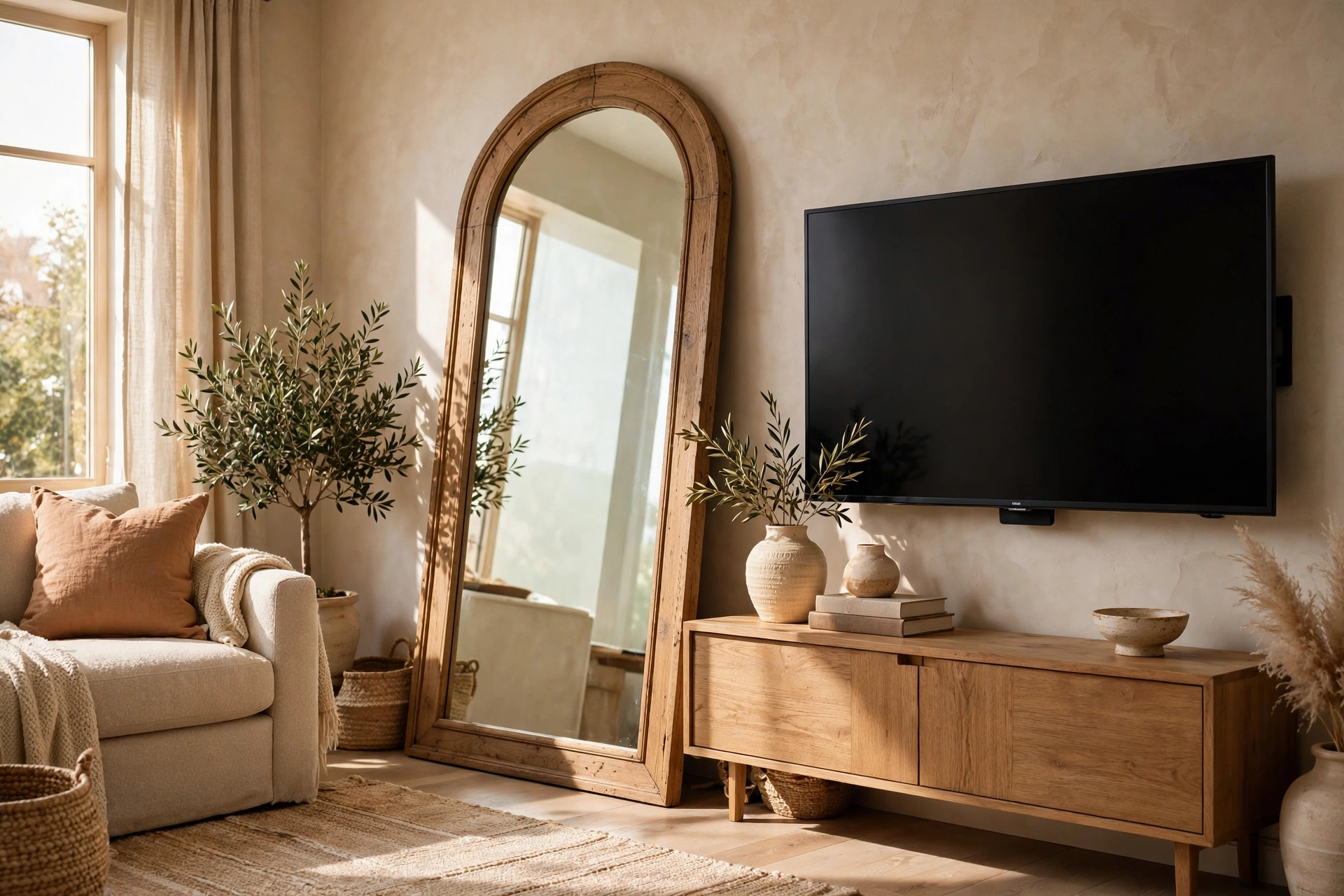
One oversized piece beside the TV can do the work of ten small frames. A tall leaning mirror or a single large-scale painting placed off to one side balances the screen’s visual weight while adding light and drama. Position the piece so its center sits slightly below the TV’s center, keeping the composition dynamic instead of rigidly symmetrical. A mirror also bounces daylight around the room, a bonus in smaller spaces. Keep the rest of the wall quiet: the scale contrast between the huge piece and the slim screen is what makes this look striking.
13. Keep It Minimal with a Clean Floating Mount
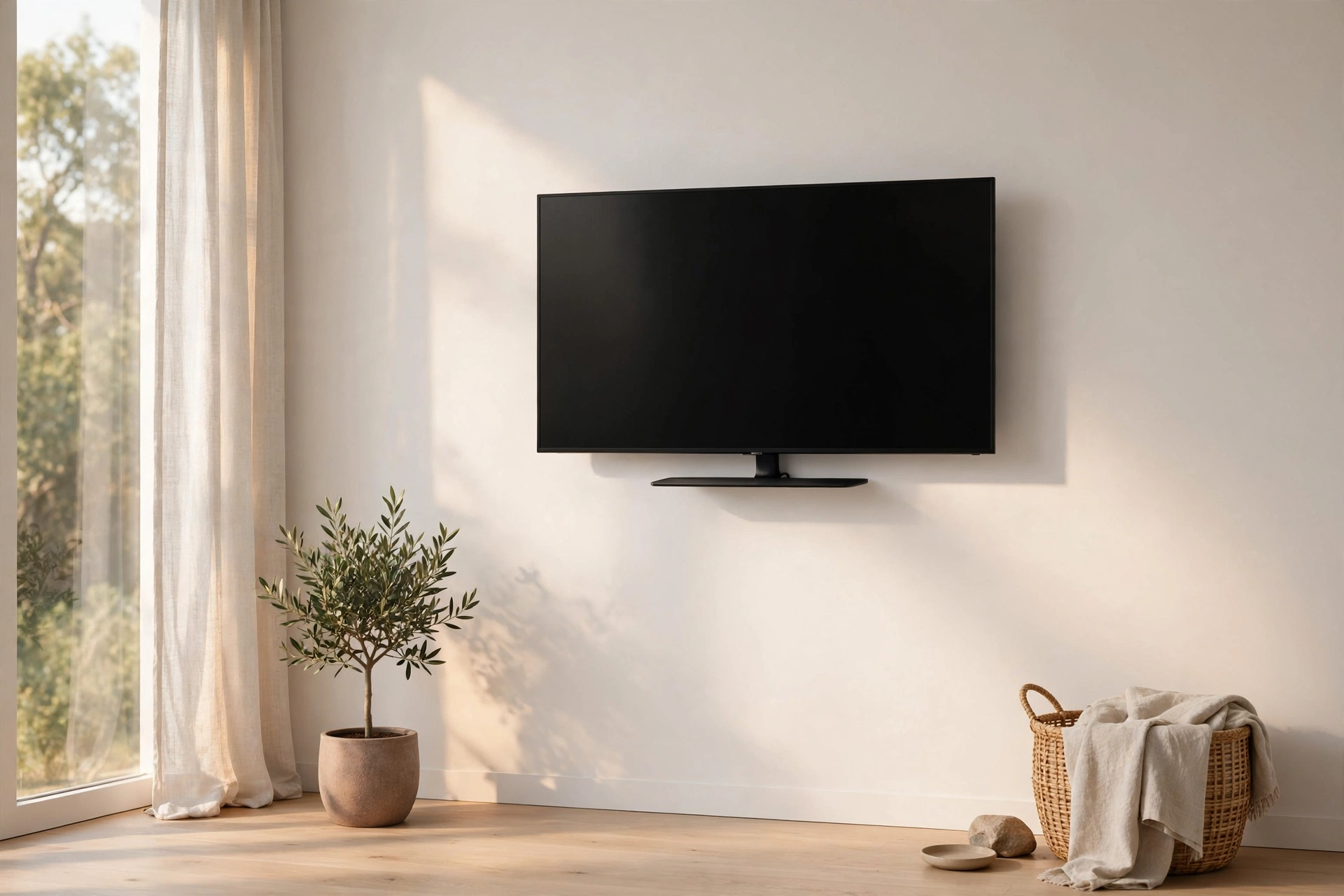
Sometimes the strongest decor decision is restraint. A low-profile floating mount holds the TV almost flush to a clean, uncluttered wall, with cables routed inside the wall or hidden in a paint-matched channel. The look works best when everything else is edited too: one long low console, a single plant, and nothing competing for attention. Choose a wall in a soft neutral — warm white, greige, or pale plaster — so the screen reads as deliberate contrast rather than a hole in the room.
14. Pair the Screen with a Fireplace Feature Wall
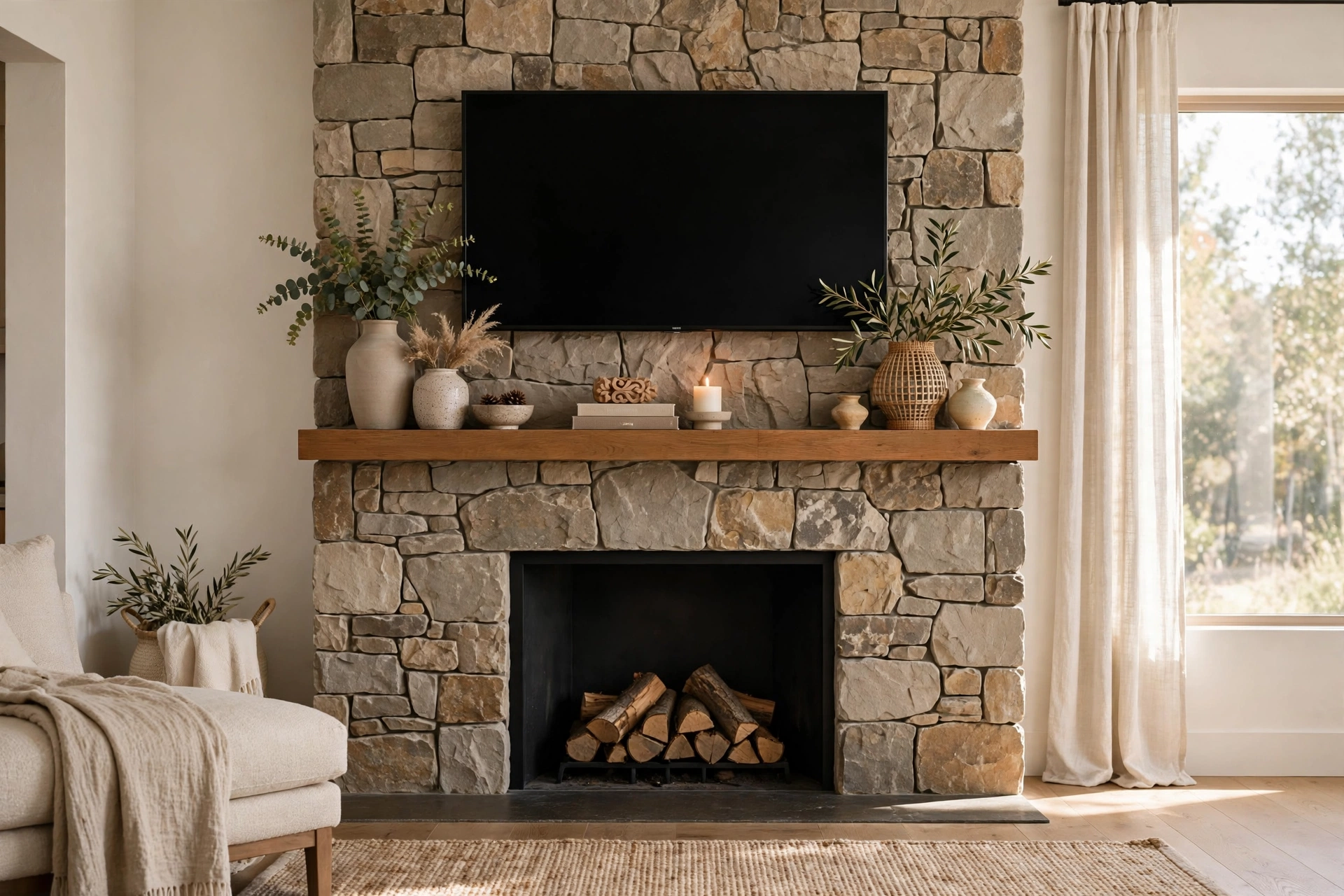
The classic living room pairing — fireplace below, television above — only works when the wall is treated as one composition. Style the mantel with a layered arrangement of art, candlesticks, and greenery so the space between firebox and screen feels decorated. If the screen feels too high, lower the mantel shelf or choose a slimmer mount to close the gap. A stone or wood-paneled chimney breast adds natural texture. Fireplace mantel decor ideas for every season and coordinate your wall decor with them.
15. Add Texture with Shiplap, Stone, or Limewash
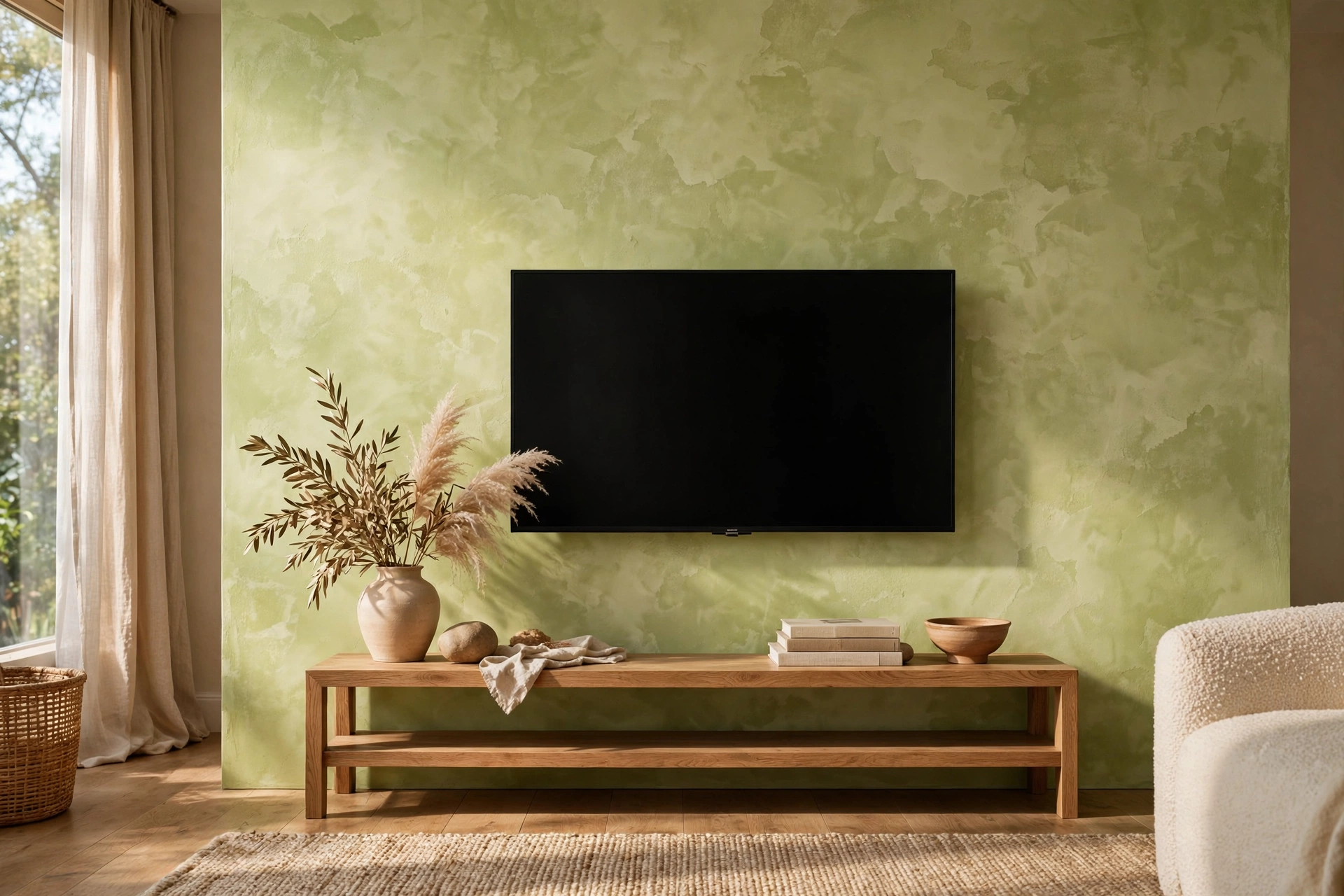
Texture gives a TV wall depth that paint alone cannot. Horizontal shiplap suits farmhouse and coastal rooms, a stacked-stone veneer adds rustic weight, and a limewash finish brings soft, cloudy movement that reads beautifully in neutral interiors. Each option breaks up the wall’s flatness so the screen sits within a layered surface rather than against a blank plane. Keep the texture consistent from floor to ceiling, and choose decor that echoes the material — linen and oak with limewash, iron and leather with stone.
Frequently Asked Questions
What is the best color for a TV wall?
Deep, muted tones work best because they make a black screen recede. Charcoal, forest green, inky navy, and warm espresso all absorb light and help the television blend into the wall when it is off. If you prefer light walls, choose warm whites or soft greige and style the wall with art and texture so the screen reads as deliberate contrast. Test paint samples beside your TV at different times of day before committing.
How do I hide TV cables on the wall?
Route cables inside the wall through a brush-plate kit for the cleanest look, leaving nothing visible between the TV and the console. If you cannot open the wall — common for renters — use a paintable cord cover channel running straight down behind the console, and bundle cables with ties so they stay neat. Mount a power strip inside or behind the console to keep adapters out of sight.
Should the TV be centered on the wall?
Centering is the safest choice for formal layouts and symmetrical gallery walls, but off-center placement can look more intentional in casual, collected interiors. If the screen sits to one side, balance it with a tall plant, a leaning mirror, or a cluster of shelves on the opposite side so the composition still feels anchored. What matters most is that your main seating faces the screen directly.
How high should I mount my TV on the wall?
Mount the screen so its center sits roughly at eye level when you are seated — usually 42 to 48 inches from the floor for standard sofas. That is much lower than most people expect, and it keeps viewing comfortable while leaving room for a console below. Above a fireplace, go as low as the mantel allows and use a tilted mount. Measure your seated eye height first, then place the screen center to match.
Can I mix a TV into a gallery wall without it looking cluttered?
Yes, as long as you treat the screen as one piece in a unified composition. Use frames in a single finish, keep spacing consistent at two to four inches, and vary art sizes so the TV becomes one rectangle among several. Aim for the wall to extend wider and higher than the screen itself, which dilutes the television’s visual weight, and keep the artwork’s color palette restrained so the arrangement reads as curated.
Keep Exploring
Your television wall gets more attention than almost any other surface in the house, so the effort you put into styling it pays off every evening. Pick one idea from this list that fits your budget and floor plan — a gallery wall for renters, a bold accent color for a weekend refresh, or built-ins for a long-term project — and build the composition around your screen step by step.
Once the wall itself is sorted, carry the same intentionality into the rest of the room: echo the wall’s tones in your throw pillows, choose a rug that grounds the seating arrangement, and layer in lighting that flatters both the screen and the people watching it. Small, consistent choices across the whole room make a TV wall look professionally designed — because now, it is.