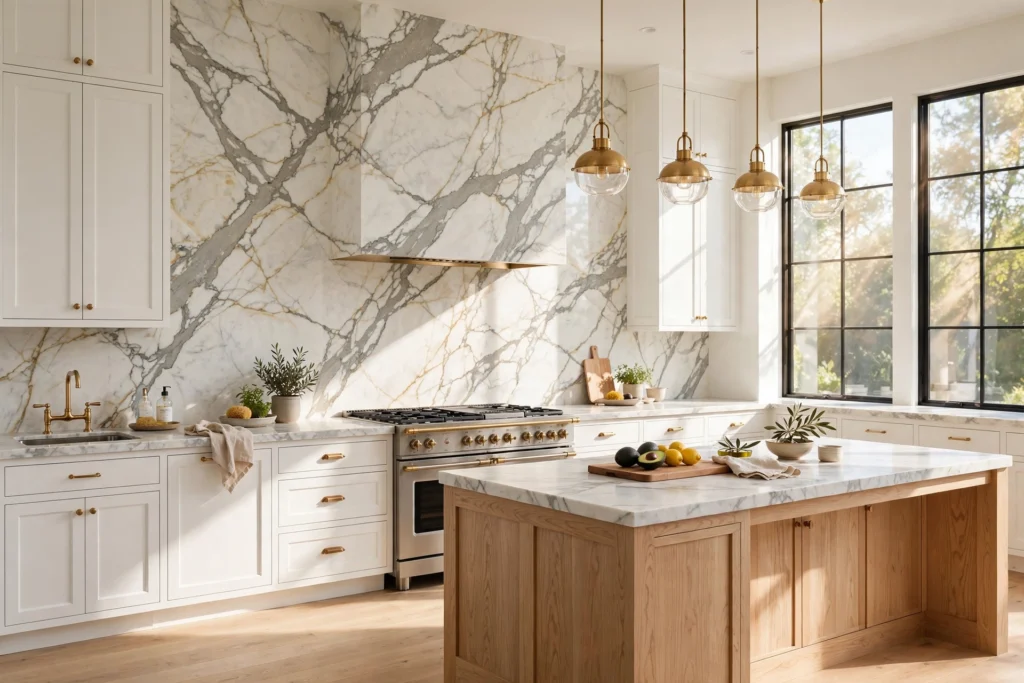

The backsplash is the one wall in your kitchen that can completely change the room’s personality. Cabinets and countertops are big, expensive decisions, but the backsplash is where you get to be expressive — and the right choice turns a plain cooking zone into the room’s star. If you’re planning a refresh, these kitchen backsplash ideas cover every style and budget, from artisan tile to sleek seamless slabs.
Every option below is chosen for real kitchens, not just photo shoots. You’ll find notes on durability, cleaning, and cabinet pairings, so the backsplash you love today is one you’ll still love after years of daily cooking.
1. Handmade Zellige Tile in Warm White
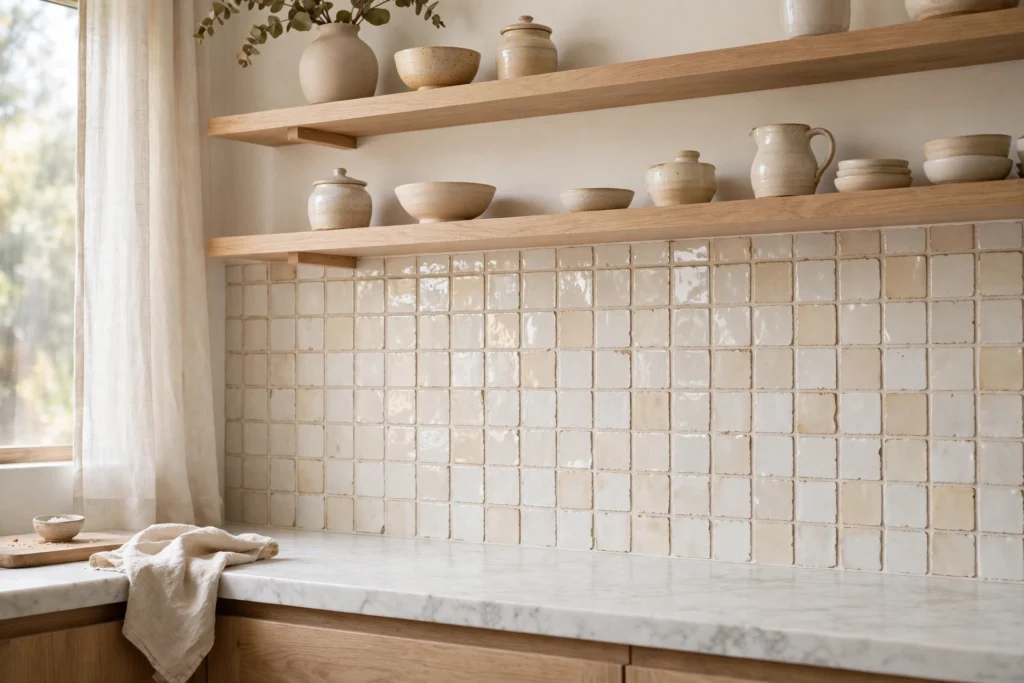
Few materials deliver the quiet luxury of zellige tile. Each piece is hand-cut from Moroccan clay and glazed by hand, so no two tiles are exactly alike — the surface catches light differently throughout the day and adds a warmth that machine-made tile simply can’t match. Warm white or ivory zellige works with nearly every cabinet color, softening the contrast in white kitchens and adding texture to darker schemes.
The Spruce’s roundup of backsplash styles that upgrade kitchens names zellige as a designer favorite for grounding a kitchen with handmade character. Seal the grout well, since the uneven surface can trap splatters, and pair it with simple hardware so the tile stays the star. For seating and cabinet pairings that work with textured tile, our kitchen island design ideas show how to keep the whole room cohesive.
2. Classic Subway Tile in Herringbone
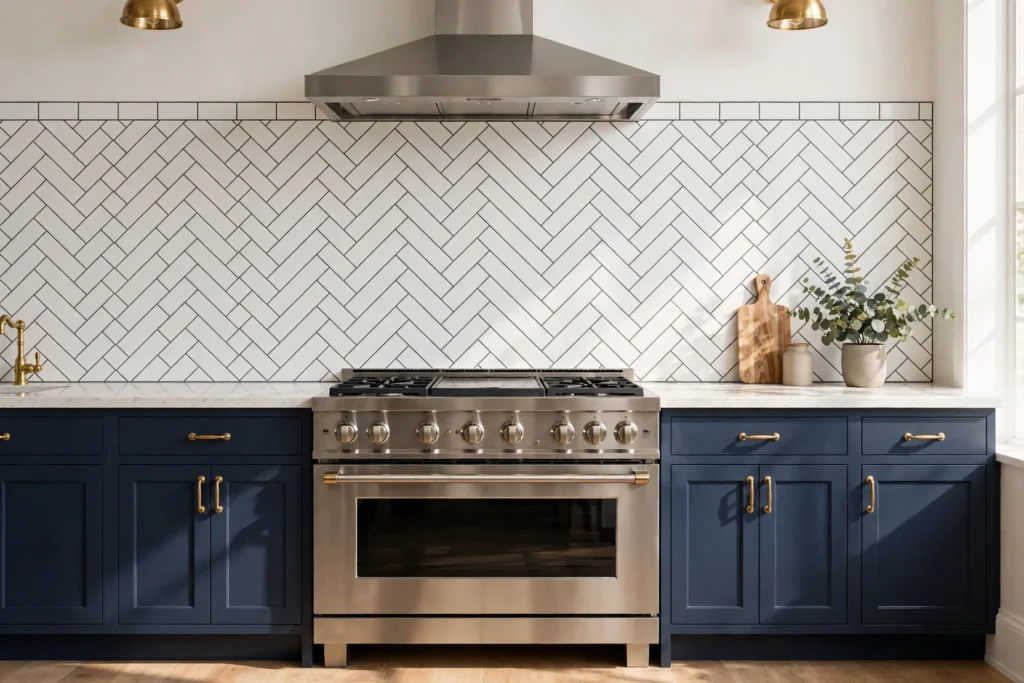
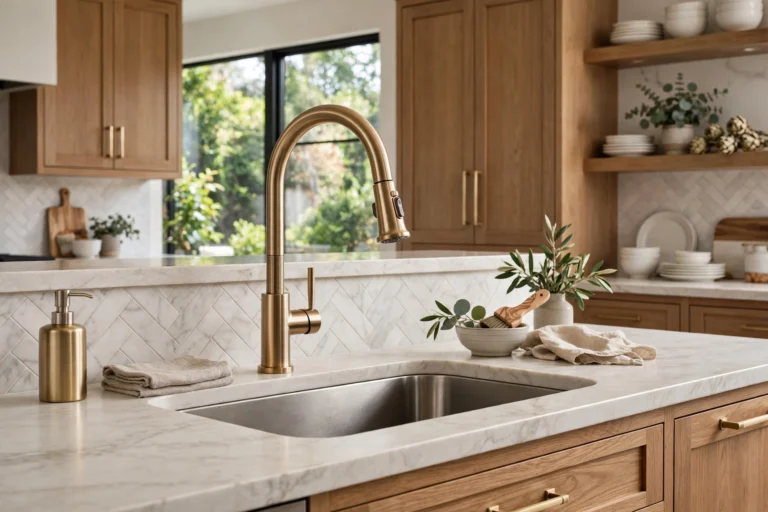
Subway tile is affordable, durable, and timeless — but the classic horizontal brick pattern can feel predictable. Laying the same tile in a herringbone pattern instantly makes it feel custom and high-end without raising the material cost. The zigzag pattern draws the eye along the wall and gives the backsplash real visual energy.
Expect higher labor costs, since herringbone takes longer to cut and set than a straight layout. Choose a beveled subway tile for extra light play, or use contrasting grout — dark gray or charcoal — to make the pattern pop. This layout looks especially sharp behind a range, where the pattern can fan out from the center of the cooktop like a built-in piece of art.
3. Bold Patterned Cement Tile
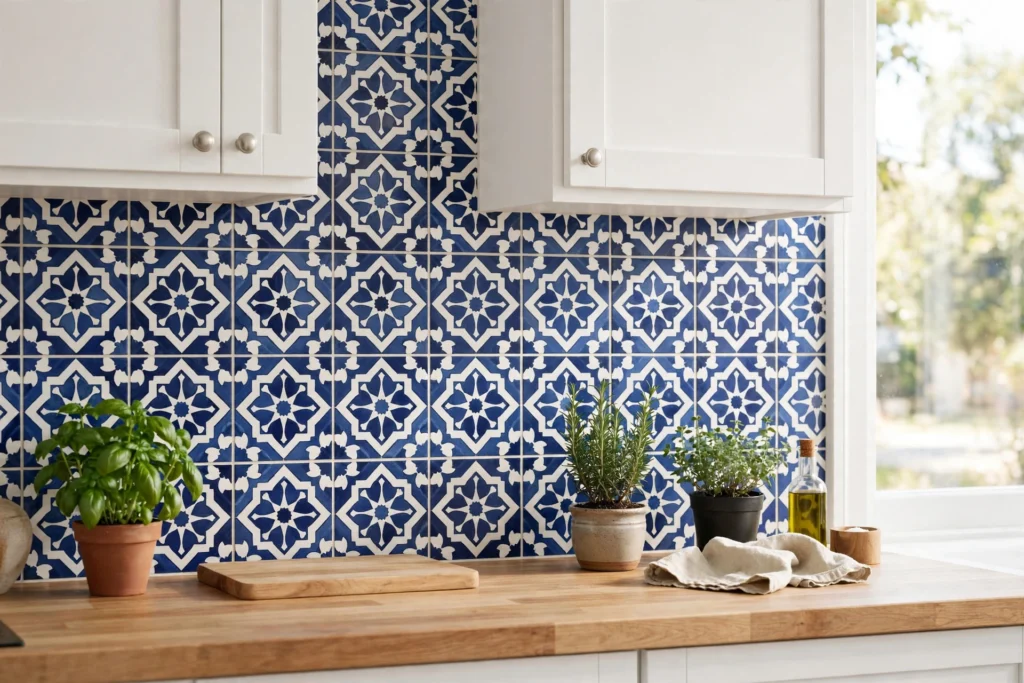
If your cabinets are white and your counters are neutral, a patterned cement tile backsplash is the fastest way to inject personality. Geometric Moroccan stars, encaustic-style florals, or graphic black-and-white motifs turn the wall into wallpaper-level art — with the wipeable surface a kitchen demands.
Keep the rest of the kitchen quiet when you go bold: plain cabinet fronts and simple countertops. Cement tiles are porous, so seal them on installation and reseal yearly, especially behind the range. Pull one color from the pattern into your hardware or stools to make the bold choice feel intentional.
4. Seamless Marble Slab Backsplash
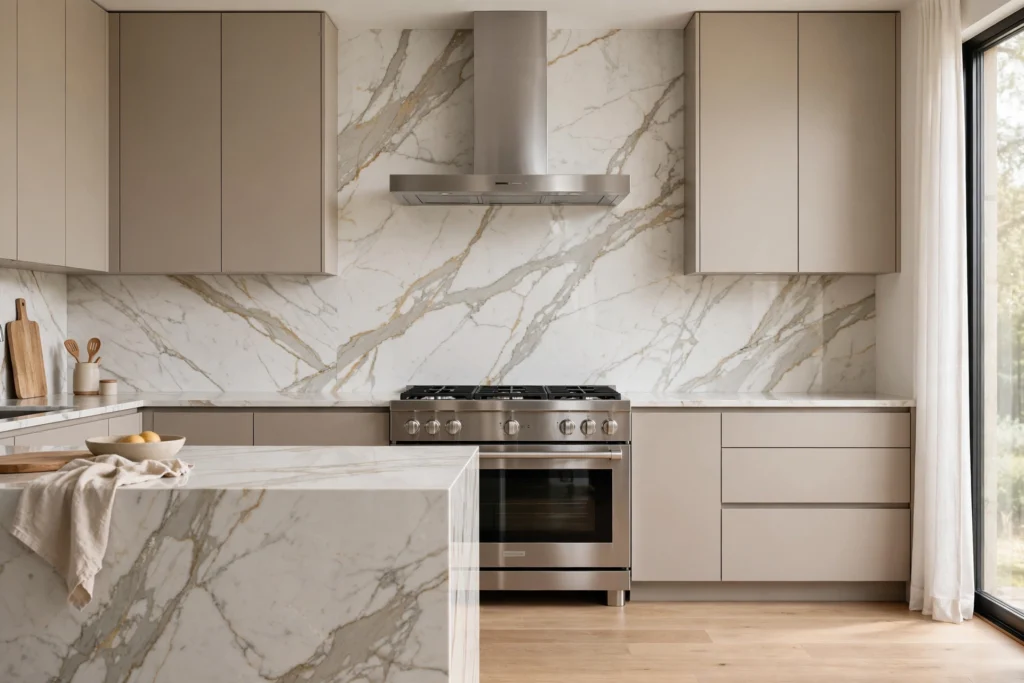
Running a single slab of marble from the countertop all the way to the upper cabinets is the ultimate luxury move. With no grout lines to scrub, the surface is easy to clean, and the continuous veining creates a dramatic, gallery-like backdrop. Carrara’s soft gray veining suits classic kitchens, while dramatic Calacatta works in bolder, modern spaces.
Marble etches with acids like lemon and tomato, so consider a honed finish that hides wear, or a quartz slab with marble veining for a maintenance-free alternative. Our modern kitchen interior design ideas show more ways to build a sleek kitchen around a statement stone wall.
5. Matte Black Tile for Drama
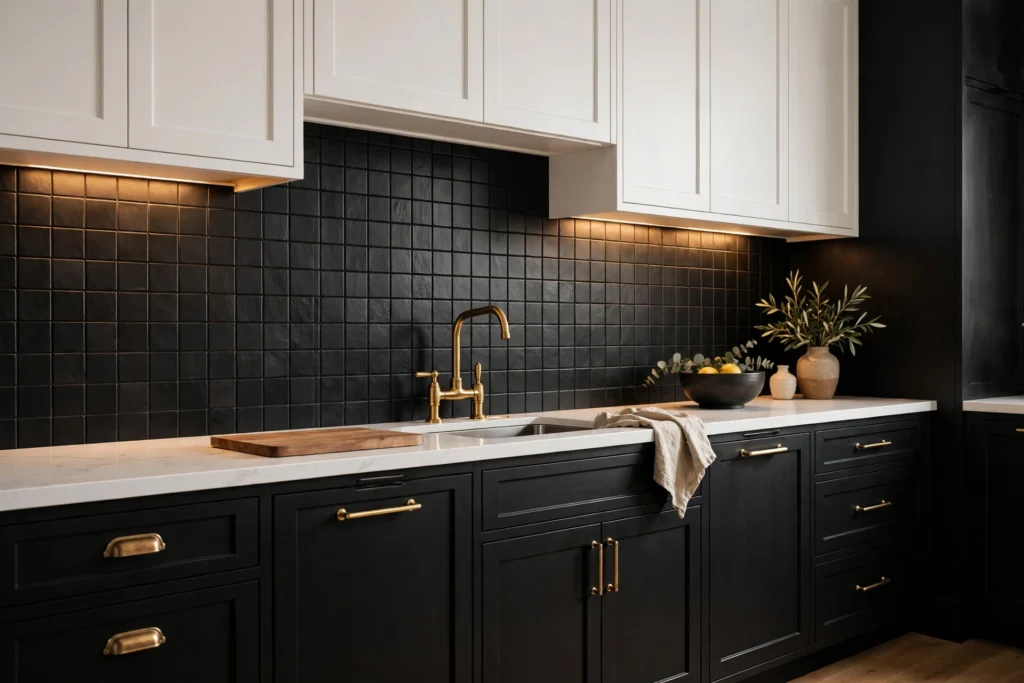
A black backsplash is the design equivalent of a little black dress — it makes everything around it look sharper. Matte black subway, hex, or square tiles add depth behind white or light-wood cabinets, and they hide everyday splatters far better than white tile does. In kitchens with stainless appliances and dark hardware, black tile creates a cohesive, moody sophistication.
Balance the darkness with under-cabinet lighting: a warm-white LED strip above the counter makes the texture glow and keeps the work zone bright. Pair with brass hardware for warmth and a light countertop — white quartz with black tile is a timeless high-contrast pairing.
6. Sage Green Subway Tile
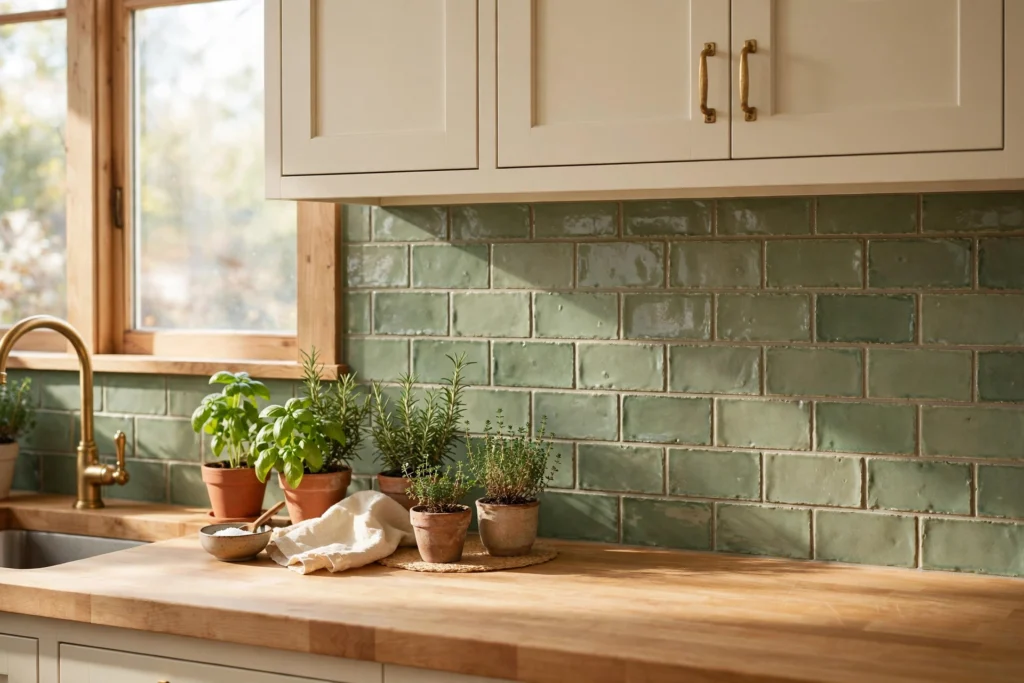
Sage green has become the neutral that replaced gray — calming, natural, and endlessly pairable. A sage green subway tile backsplash brings a soft wash of color that works with white, cream, wood-tone, and even navy cabinets. It reads as color without shouting, making it ideal for kitchens where you want personality that won’t date quickly.
Use a handmade-look ceramic for texture, or a glossy finish to bounce light around. Behind the range, take the tile to the ceiling for a dramatic focal column. For a full green-themed kitchen, see our sage green kitchen design ideas.
7. Antique Mirrored Glass Tile
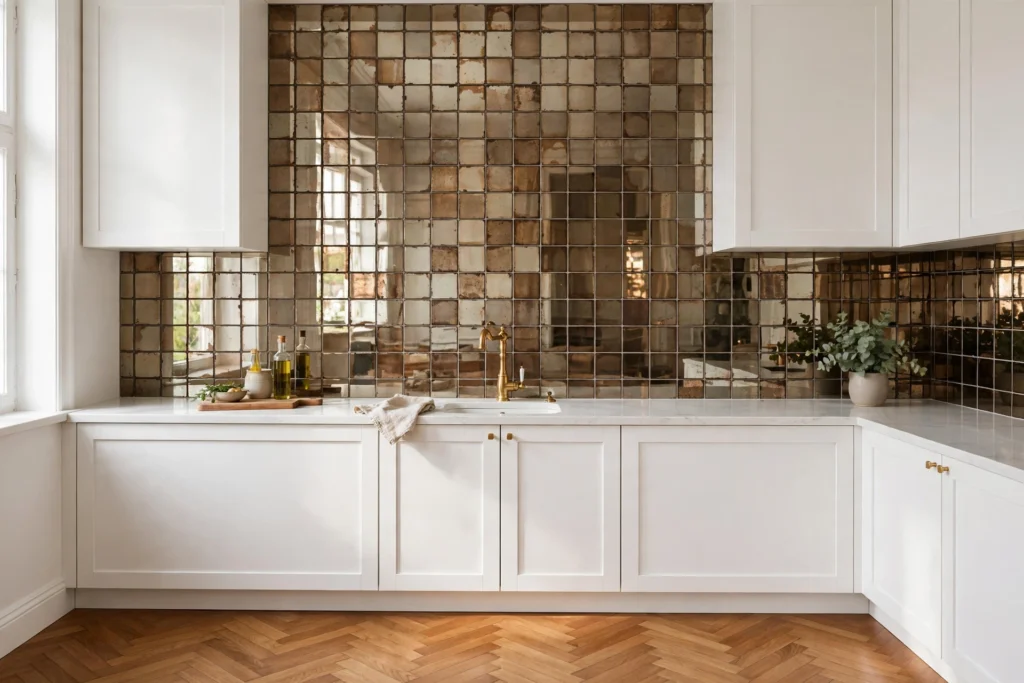
A mirrored backsplash does two jobs: it protects the wall and it doubles the visual size of your kitchen by reflecting light and views. Antique or bronze-tinted mirrored tile adds glamour without the harsh glare of a plain mirror, and the aged patina hides fingerprints better than polished glass. It looks stunning in small or north-facing kitchens that need every bit of brightness.
Mirrors need a perfectly flat substrate and a non-corrosive adhesive made for glass tile. Keep other finishes warm (wood floors, brass taps) so the reflection feels cozy, and let this be the only reflective surface — too many shiny finishes will make the room feel chaotic.
8. Sealed Exposed Brick
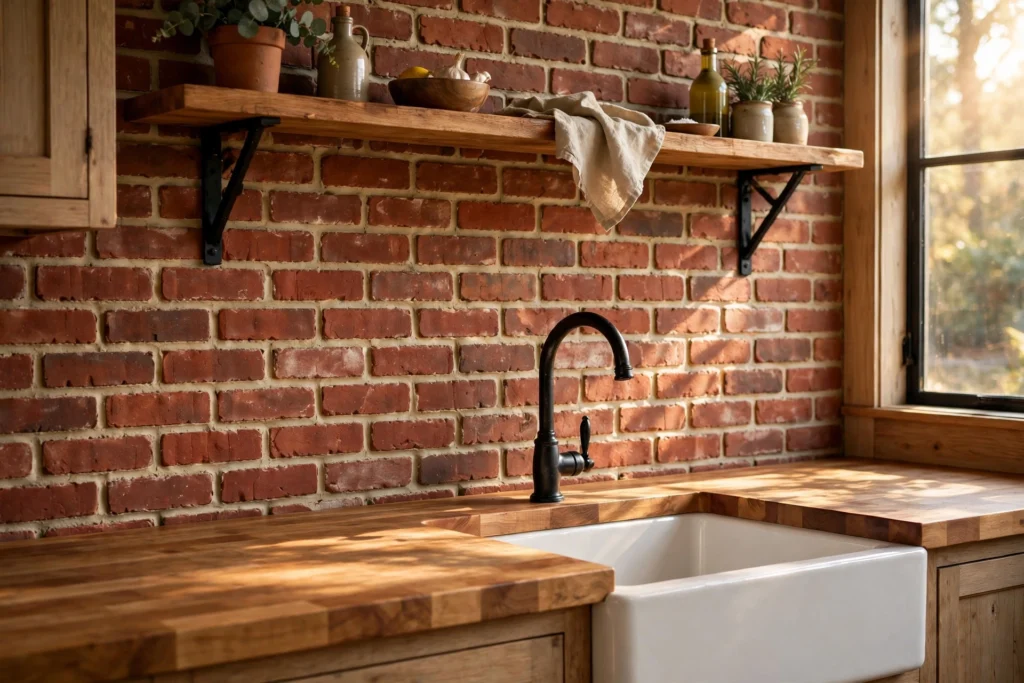
For farmhouse, industrial, and rustic kitchens, nothing beats the character of real brick. A sealed exposed-brick backsplash brings texture, warmth, and history — and it costs far less than most artisan tiles if the brick is already behind your drywall. Thin brick veneer gives the same look in newer homes.
Sealing is non-negotiable: use a matte, food-safe masonry sealer and reapply every few years, especially around the cooktop. Whitewashing softens the red-orange tones for a more versatile look, and sealed mortar joints stay wipeable while keeping their authentic texture.
9. Large-Format Porcelain Slabs
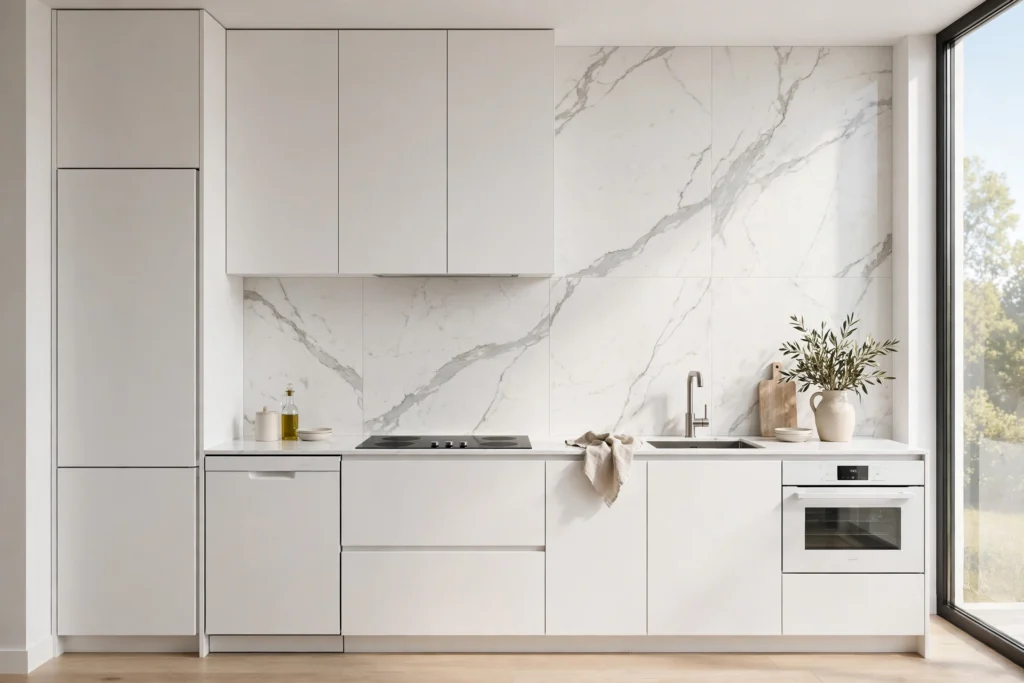
Large-format porcelain panels — sometimes just two or three pieces for an entire wall — deliver a seamless, contemporary look with almost zero grout lines. Modern digital printing means porcelain can convincingly mimic marble, concrete, or travertine at a fraction of the cost, with none of the sealing or staining worries. It’s one of the most practical high-end choices available.
The panels are large, so installation needs experienced tilers. The payoff is a calm, uninterrupted surface that makes small kitchens feel larger. Choose a book-matched marble-look porcelain behind the range for a custom, architectural moment without the marble maintenance.
10. Vertical-Stack Subway Tile
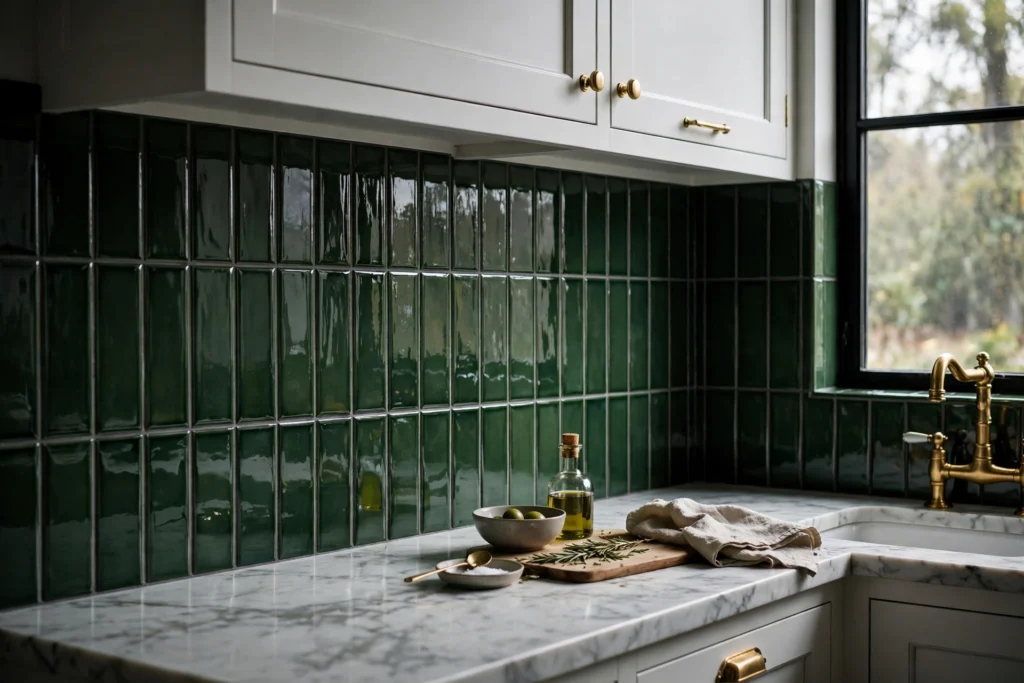
One of the easiest ways to make subway tile feel current is to rotate it: stacking tiles vertically elongates the wall and gives the kitchen a modern, tailored feel. Same affordable tile, roughly the same labor cost, but the result looks noticeably more designed.
Vertical stacks work especially well in kitchens with low ceilings or short backsplash areas, since the upward lines trick the eye into seeing more height. Try a glossy forest green or deep navy in a vertical stack for a jewel-box effect, or keep it white with matching grout for a subtle, texture-driven update that doesn’t overwhelm a busy kitchen.
11. Copper or Stainless Steel Panels
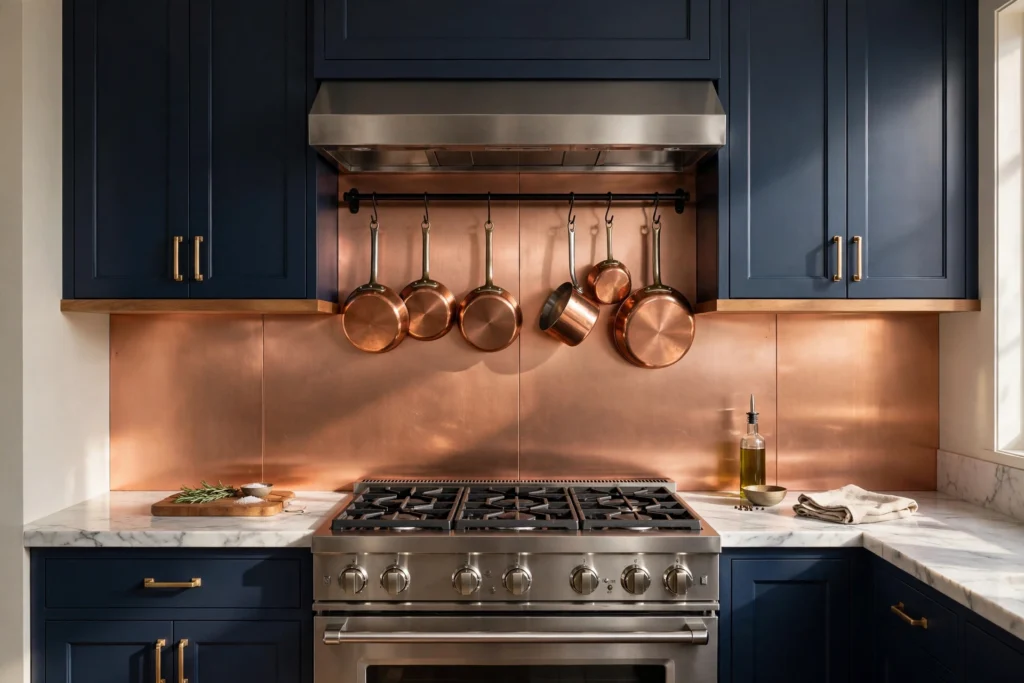
Sheet metal backsplashes have been a commercial-kitchen staple for decades, and for good reason: they’re grout-free, virtually indestructible, and wipe clean in seconds. Copper panels develop a living patina that deepens over time, while brushed stainless steel gives a crisp industrial edge. Both reflect light beautifully behind a range.
Use heat-rated adhesive and choose a matte or brushed finish rather than mirror-polish to minimize fingerprints. Copper pairs gorgeously with navy cabinets and marble counters, while stainless works with any palette. Add a matching metal shelf or pot rail to make it feel like a deliberate design system.
12. Mosaic Penny Tile
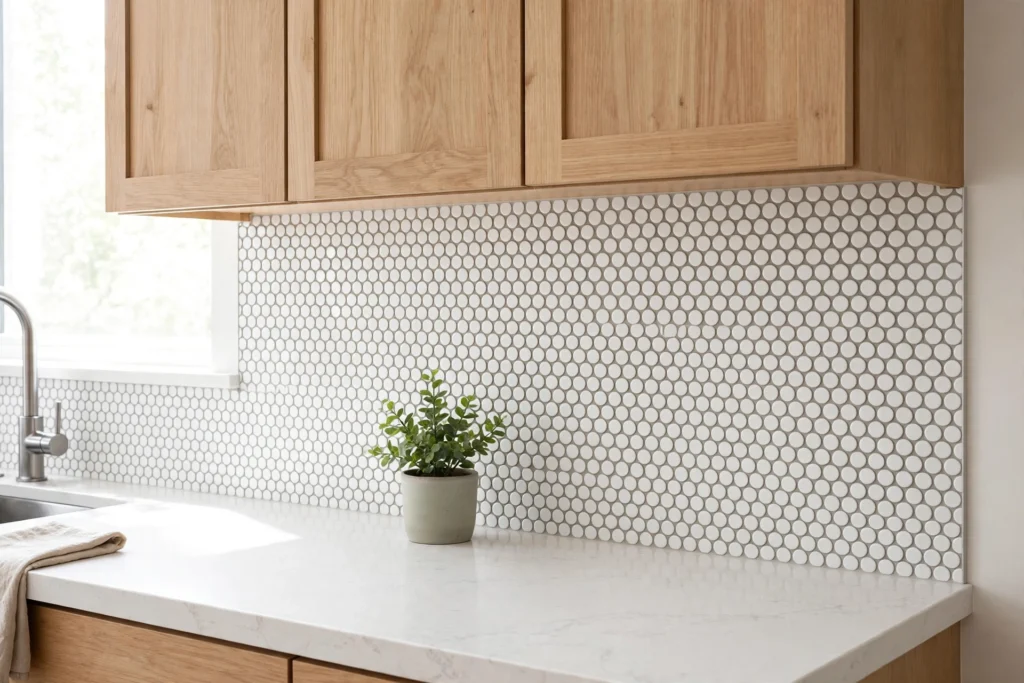
Penny rounds are playful, retro, and surprisingly versatile. A full wall of white or gray penny tile reads as classic texture, while a gradient blend — say, from white at the counter to deep blue at the cabinets — creates a genuine piece of art. The small circles catch light from every angle, adding sparkle that flat tile can’t match.
The downside is grout: penny tile has a lot of it, so choose a darker grout color that disguises everyday grime and seal it well. Keep the pattern uniform across the whole run — it looks best as one continuous field. It’s a great budget pick that punches far above its price.
13. Shiplap or Beadboard Paneling
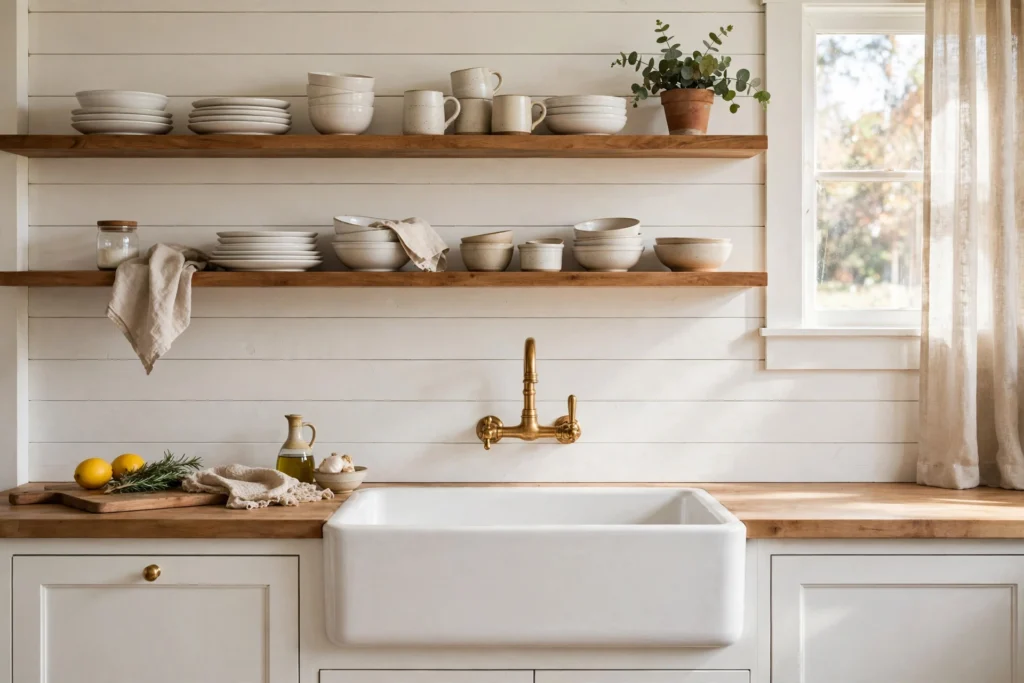
Wood paneling brings instant farmhouse and coastal warmth. Painted shiplap or beadboard in scrubbable satin enamel looks charming behind a farm sink, and it’s one of the most DIY-friendly options here — a confident beginner can install it over a weekend. The lines add rhythm without pattern.
The Spruce’s collection of shiplap backsplash ideas shows how designers layer it with marble, colored tile, and dark counters for very different moods. Use a moisture-rated paint and caulk every seam thoroughly, and consider a clear glass panel behind the range itself for extra grease protection while keeping the wood look everywhere else.
14. Tile Accent Strip or Border
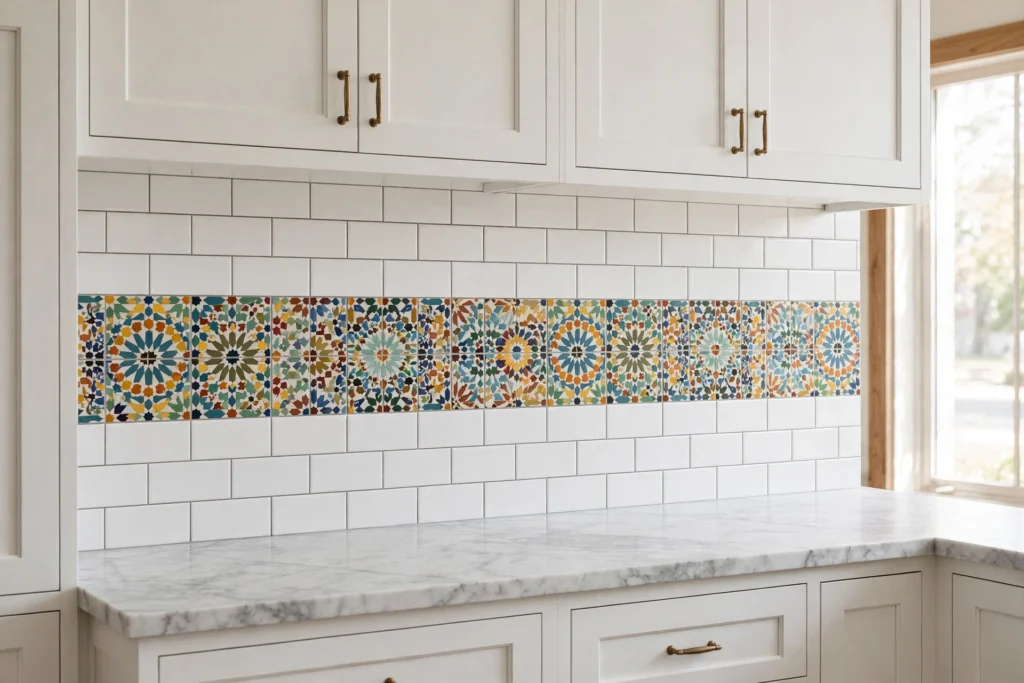
You don’t have to tile the entire wall in a statement material — an accent strip of patterned or colored tile running horizontally through a field of plain tile gives you the best of both worlds. This technique was popular in classic kitchens and is back in a fresher form: a single band of Moroccan tile, a row of hand-painted squares, or a slim metal inlay.
Place the strip at eye level or just above the countertop for maximum impact. It also works as a budget strategy — buy one box of expensive artisan tile for the strip and use affordable subway tile everywhere else. Keep the accent color tied to something else in the room, like the rug, window treatment, or bar stools, so it reads as curated rather than leftover.
15. Terracotta Tile for Warmth
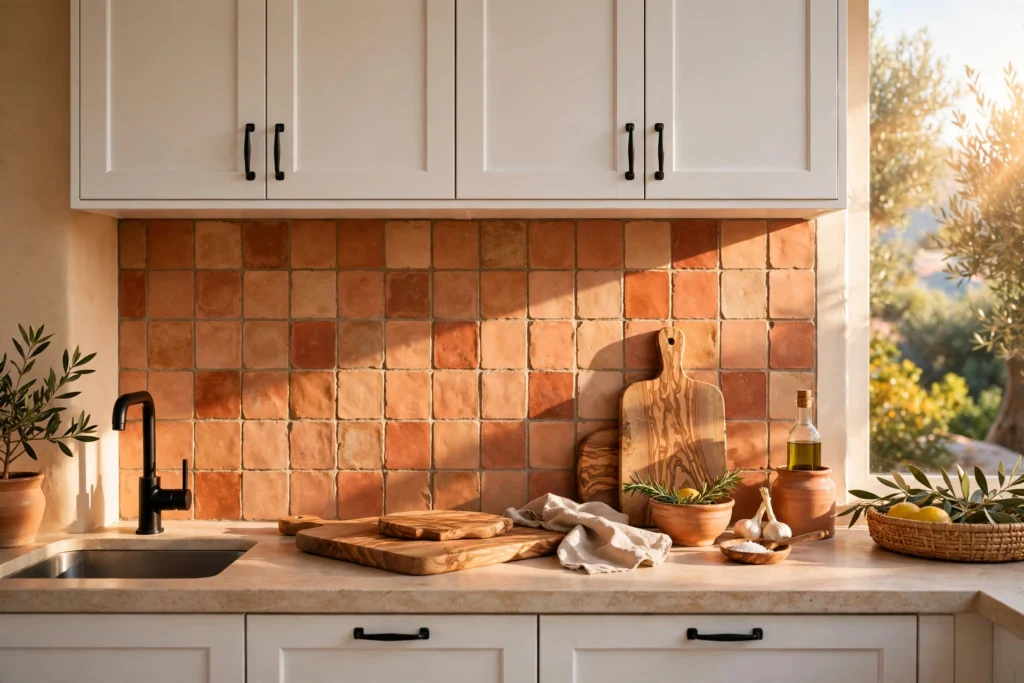
Terracotta brings earthy, sun-baked warmth that instantly makes a kitchen feel inviting. Handmade terracotta tiles in square or zellige formats have beautiful color variation — from pale peach to deep rust — and they pair perfectly with white cabinets, butcher-block counters, and black accents for a modern Mediterranean look.
Terracotta is porous, so sealing is essential, and it works best in a matte finish that celebrates its handmade character. Keep grout in a complementary warm gray rather than bright white. It’s an especially good choice for kitchens with lots of natural light, where the tonal shifts glow throughout the day.
Frequently Asked Questions
What is the most popular kitchen backsplash right now?
Handmade-look ceramic tile — especially zellige and artisan subway tile in warm whites, sage green, and soft blues — is currently the most popular choice. Large-format porcelain slabs that mimic marble are close behind for modern kitchens, since they offer a seamless look with almost no maintenance.
How do I choose a backsplash color for my kitchen?
Pull your color from fixed elements you can’t easily change: the countertop’s veining, the floor tone, or the cabinet color. A safe formula is to choose a backsplash one to two shades lighter or darker than your cabinets, or pick up a secondary tone from your countertop stone for a cohesive, intentional look.
Are busy patterned backsplashes a good idea?
Patterned backsplashes can be stunning, but they’re the fastest choice to date a kitchen. If you love pattern, limit it to a small area like the range wall, or use an accent strip rather than tiling the entire kitchen. Neutral patterned tiles in tone-on-tone colors give texture without the visual noise of high-contrast motifs.
How high should a kitchen backsplash go?
The standard is from the countertop to the underside of the upper cabinets — usually 15 to 18 inches. For a more dramatic focal point, run the tile to the ceiling behind the range or range hood. Full-height backsplashes look especially good with slab materials and in kitchens without upper cabinets.
Can I install a backsplash myself as a DIY project?
Simple layouts like standard subway tile or peel-and-stick panels are very DIY-friendly. Complex patterns like herringbone, large-format slabs, and natural stone are better left to professionals, since mistakes are expensive to fix. Whatever you choose, proper wall prep and waterproof adhesive matter more than the tile itself.
Keep Exploring
Your backsplash sets the tone for the whole kitchen, so take samples home and live with them for a few days before committing — view them in morning and evening light next to your actual cabinets. The right choice will feel obvious in your space.
Once you’ve chosen your tile, keep the momentum going: coordinate your hardware, lighting, and seating so the backsplash feels part of a complete design story rather than an isolated decision. A little planning now saves a lot of second-guessing later.





[…] cover cabinets, islands, walls, lighting, and finishes to suit every budget and comfort level. Backsplash inspiration to find patterns that shine against […]
[…] material like quartz or tile, and choose a faucet with enough height to clear the window trim. Kitchen backsplash ideas for pairings that make the sink wall […]
[…] creamy white — keep the room feeling calm and make cabinetry pop without competing for attention. Tile selection with complementary kitchen backsplash ideas so the floor and walls speak the same design language. Glazed ceramic resists stains and wipes […]
[…] practical while giving them the polished, intentional feel of a designer kitchen. Pair them with classic backsplash ideas and your whole kitchen will feel freshly […]
[…] personality — a little art, a clever shelf, or a well-placed mirror goes further than you think. Kitchen backsplash ideas for a stunning focal point pair beautifully with everything on this […]