
Trends come and go, but a traditional bathroom never looks dated. There is something deeply reassuring about a room built on a century of good taste: the gleam of polished chrome, the cool touch of marble, the quiet dignity of a clawfoot tub that has seen generations come and go. These rooms don’t chase fashion — they outlast it.
The secret of traditional bathroom design ideas is restraint married to quality. Every element earns its place through proportion, material, and craftsmanship rather than novelty. Whether you are restoring a period home or simply want a bathroom that will look just as beautiful in twenty years, these fifteen ideas will help you build a classic that never needs apologizing for.
1. Choose a Classic Pedestal or Console Sink
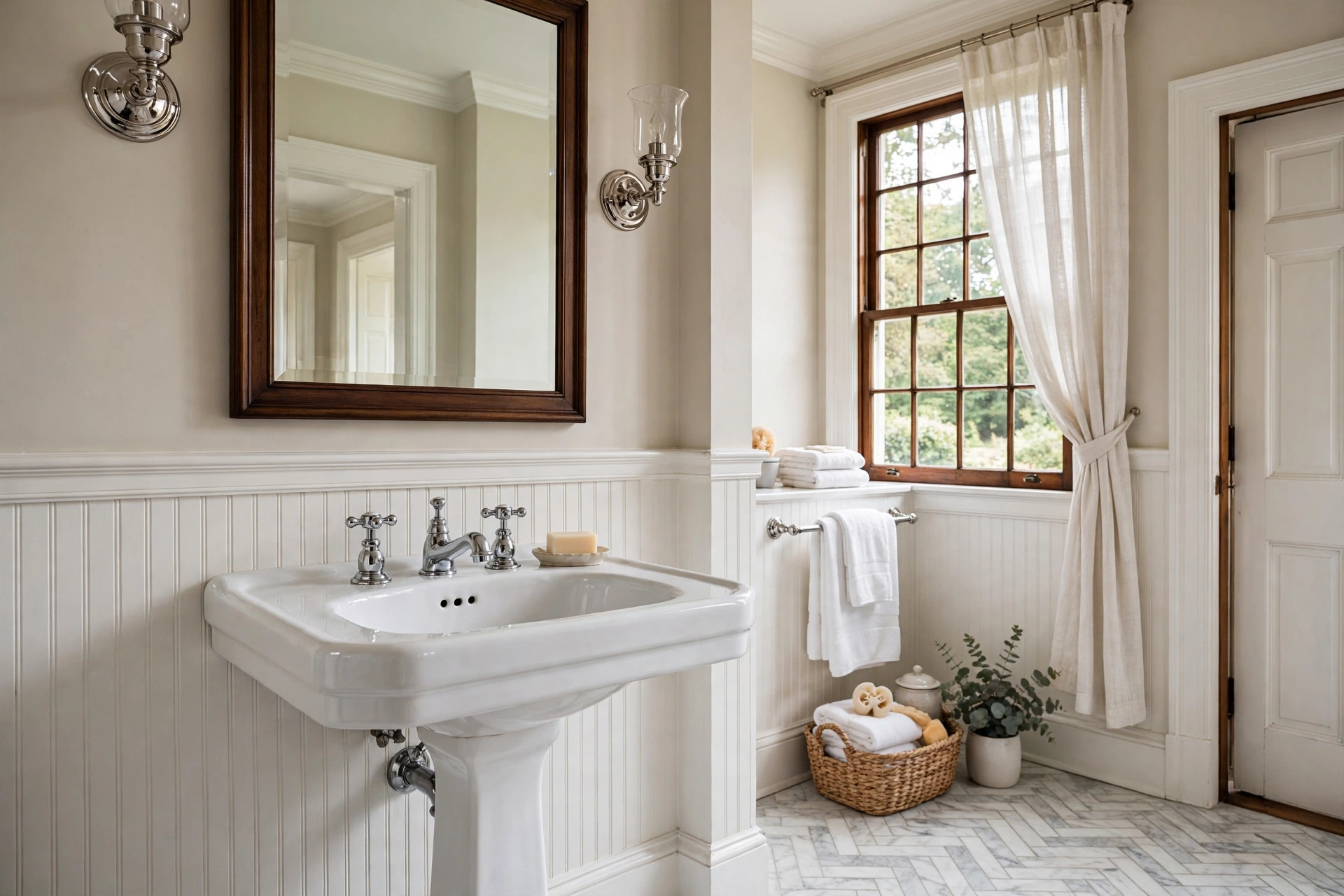
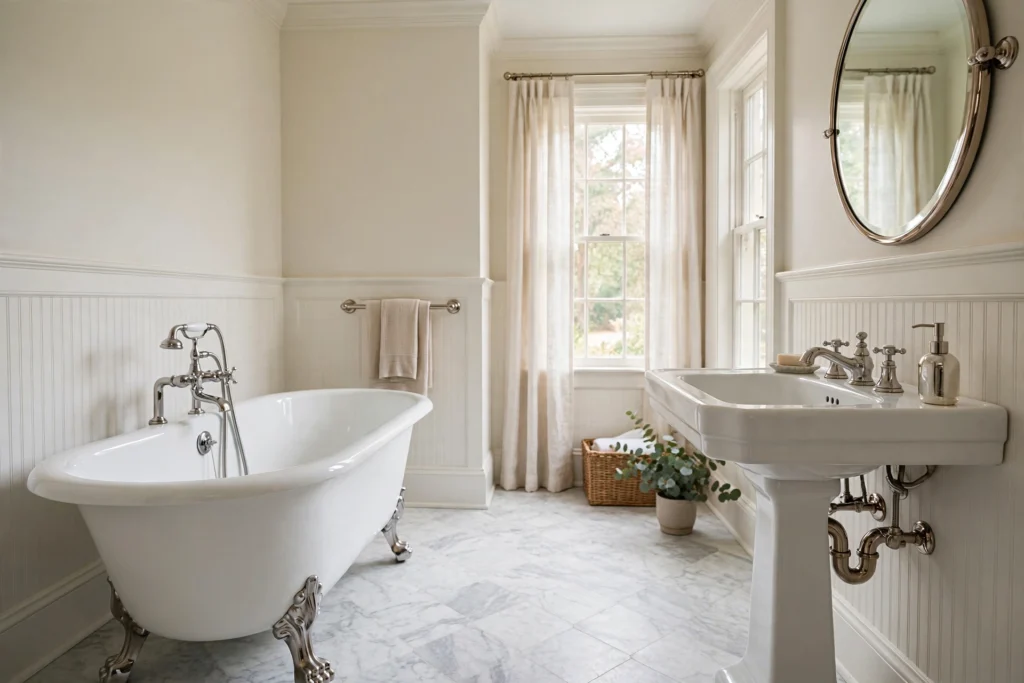
The pedestal sink is the signature of the traditional bathroom — sculptural, space-efficient, and effortlessly elegant. A vitreous china pedestal with clean lines and a softly rounded basin reads classic in any era, and it frees up visual floor space that makes small bathrooms feel larger. Pair it with a separate backsplash ledge or a wall-mounted soap dish to recover a little counter space.
For a slightly grander take, a console sink — a basin on turned legs with a lower stretcher shelf — gives you the openness of a pedestal with room for folded towels below. Chrome or brass legs echo the fixtures and keep the look light. Either way, choose a wide, deep basin with generous deck space for the taps; shallow modern bowls may look sleek, but the generous traditional basin is far more practical for daily use.
2. Install a Freestanding Clawfoot Tub
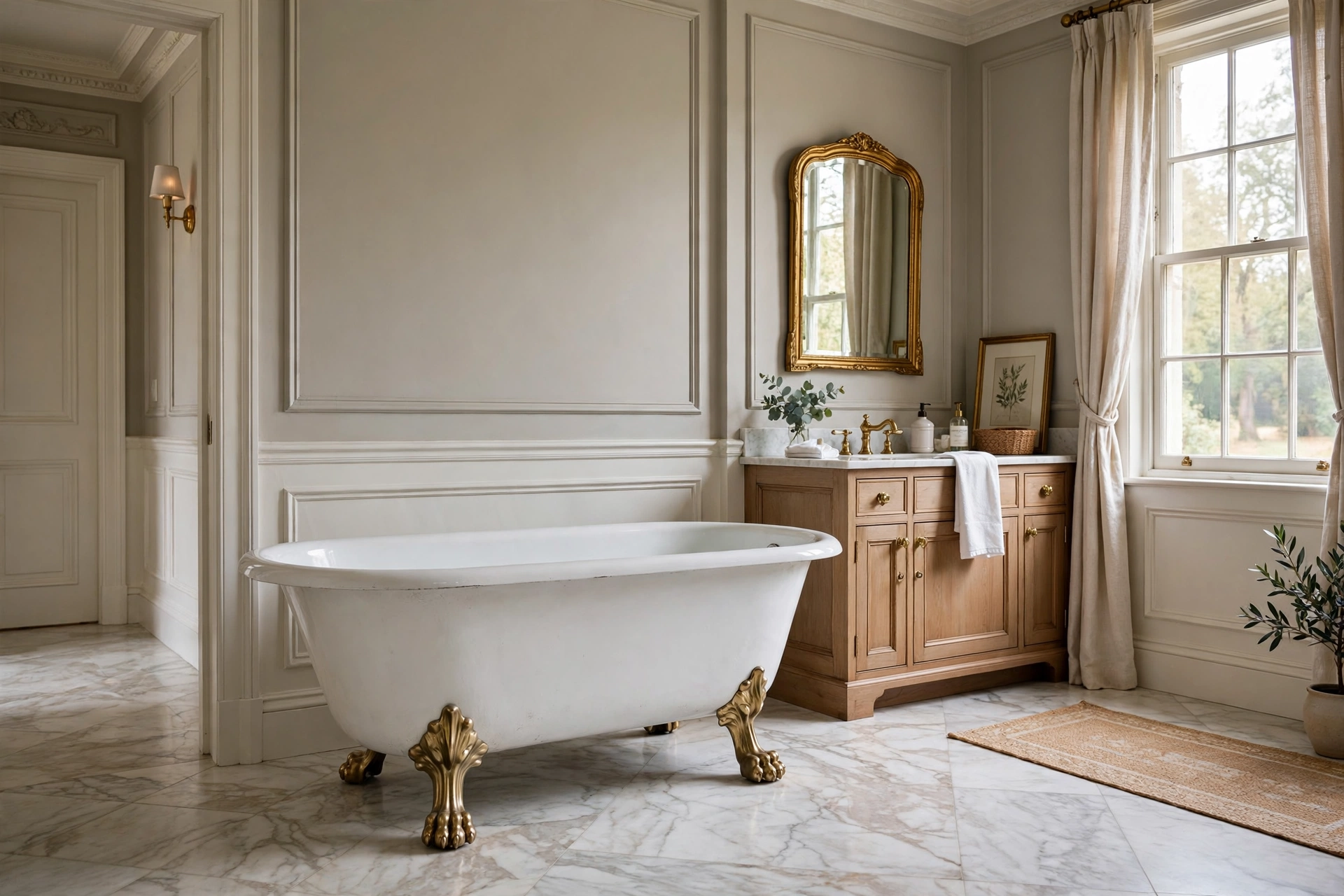
Nothing says traditional bathroom quite like a clawfoot tub. The rolled rim, the lion’s-paw or ball feet, the deep soaking well — it is the single most romantic fixture you can put in a bathroom, and it instantly establishes the room’s era. Modern reproductions in acrylic are lighter and warmer to the touch than cast iron, while original cast-iron tubs offer unmatched heat retention and authenticity.
Position the tub as the room’s centerpiece: angled in a corner, centered under a window, or floating in the middle of a generous bath. Pair it with a freestanding tub filler in polished nickel or oil-rubbed bronze, and add a handheld shower attachment on a riser for practicality. HGTV’s guide to traditional bathroom designs notes that the porcelain clawfoot tub remains the trademark choice — available today in materials from classic porcelain to wood-paneled and metal versions.
3. Lay Subway or Hexagonal Floor Tile
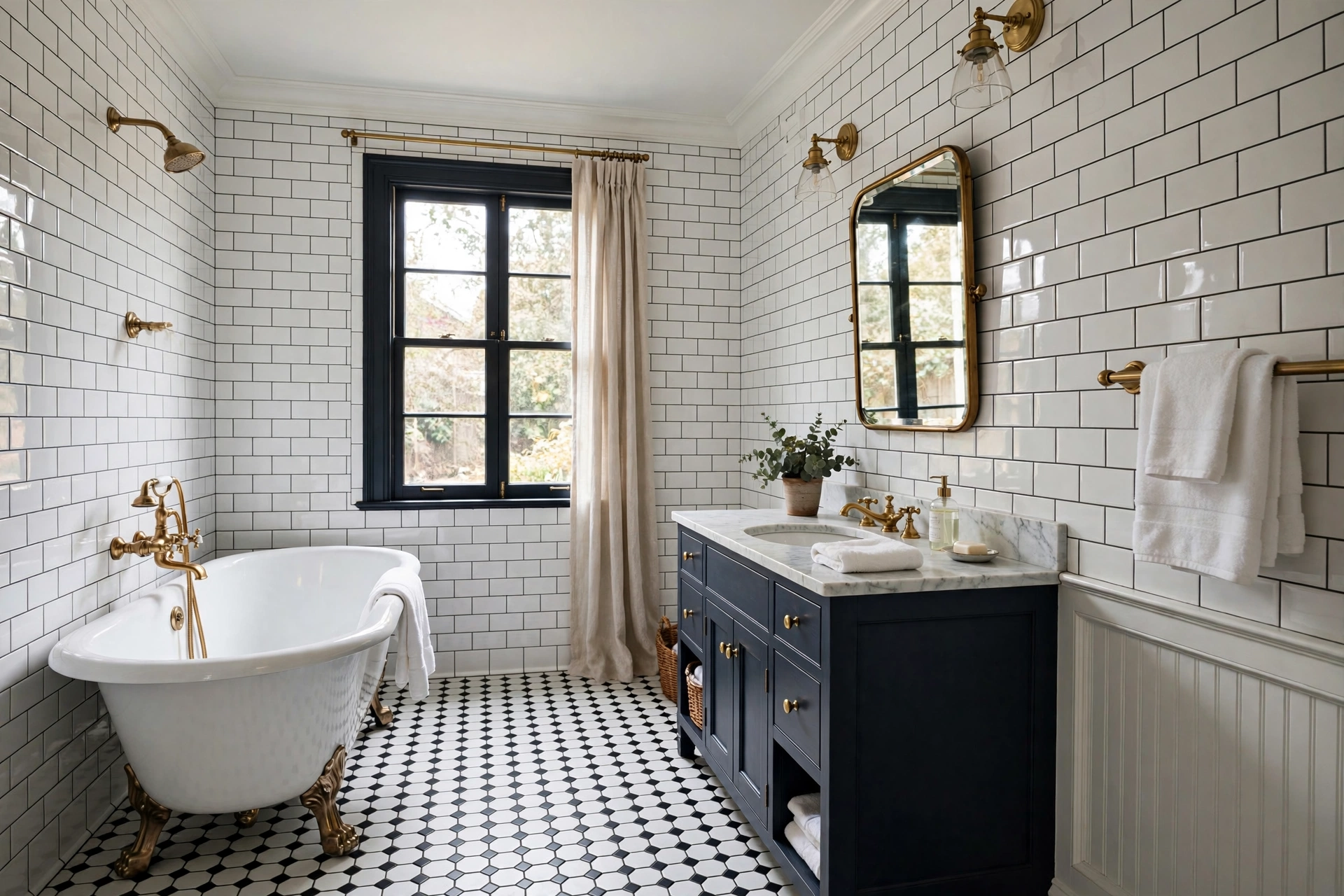
Traditional bathroom floors are tiled, patterned, and built to last a lifetime. Classic white subway tile on the walls pairs beautifully with small hexagonal or penny-round floor tile in white with dark grout — the combination is as close to a period guarantee as design gets. Basketweave marble tile (small squares set with dark dots) is another heritage pattern that reads unmistakably traditional.
Keep the palette restrained: white, cream, soft gray, and black accents. If you want a touch of color, a border row in deep navy or forest green tile nods to Victorian originals without overwhelming the room. Whatever pattern you choose, hire a skilled tile setter — traditional tile patterns are unforgiving of sloppy grout lines, and crisp installation is what separates a classic from a costume.
4. Add Wainscoting or Beadboard Walls
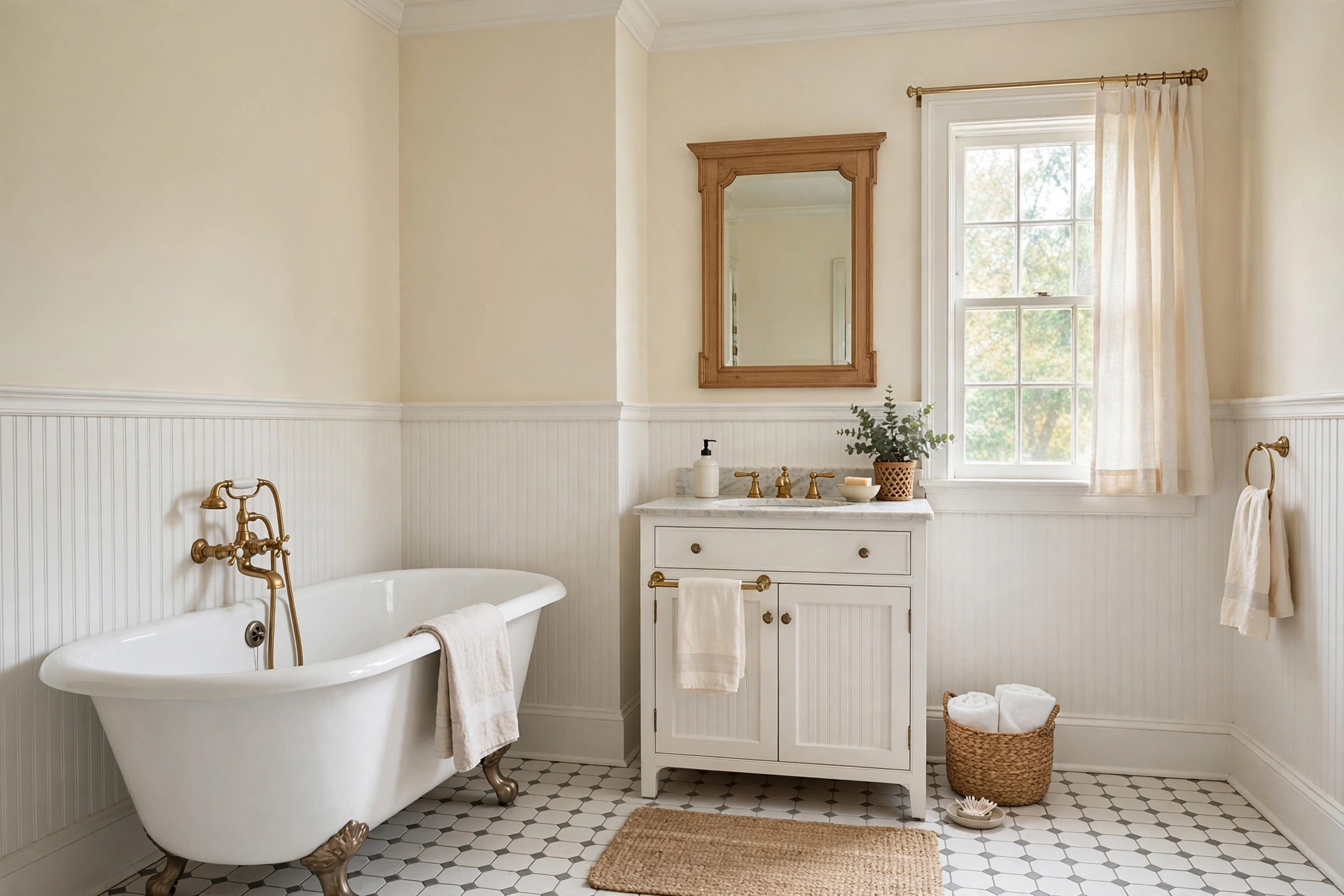
Wall paneling is one of the fastest ways to give a bathroom traditional bones. Beadboard — narrow vertical planks with a distinctive beaded groove — brings a homespun, cottage-traditional warmth, while raised-panel wainscoting with a chair rail reads more formal and grand. Both add the architectural depth that flat drywall simply cannot offer.
Paint the paneling a soft white, warm cream, or pale sage, and consider running it two-thirds up the wall with a wallpaper or painted finish above. The Spruce’s collection of beadboard bathroom ideas shows how versatile this treatment is — from traditional half-wall applications that frame a pedestal sink beautifully to full-height installations that make ceilings feel taller. Use moisture-resistant MDF or PVC beadboard in wet zones so the classic look survives the steam.
5. Pick Polished Nickel or Chrome Fixtures
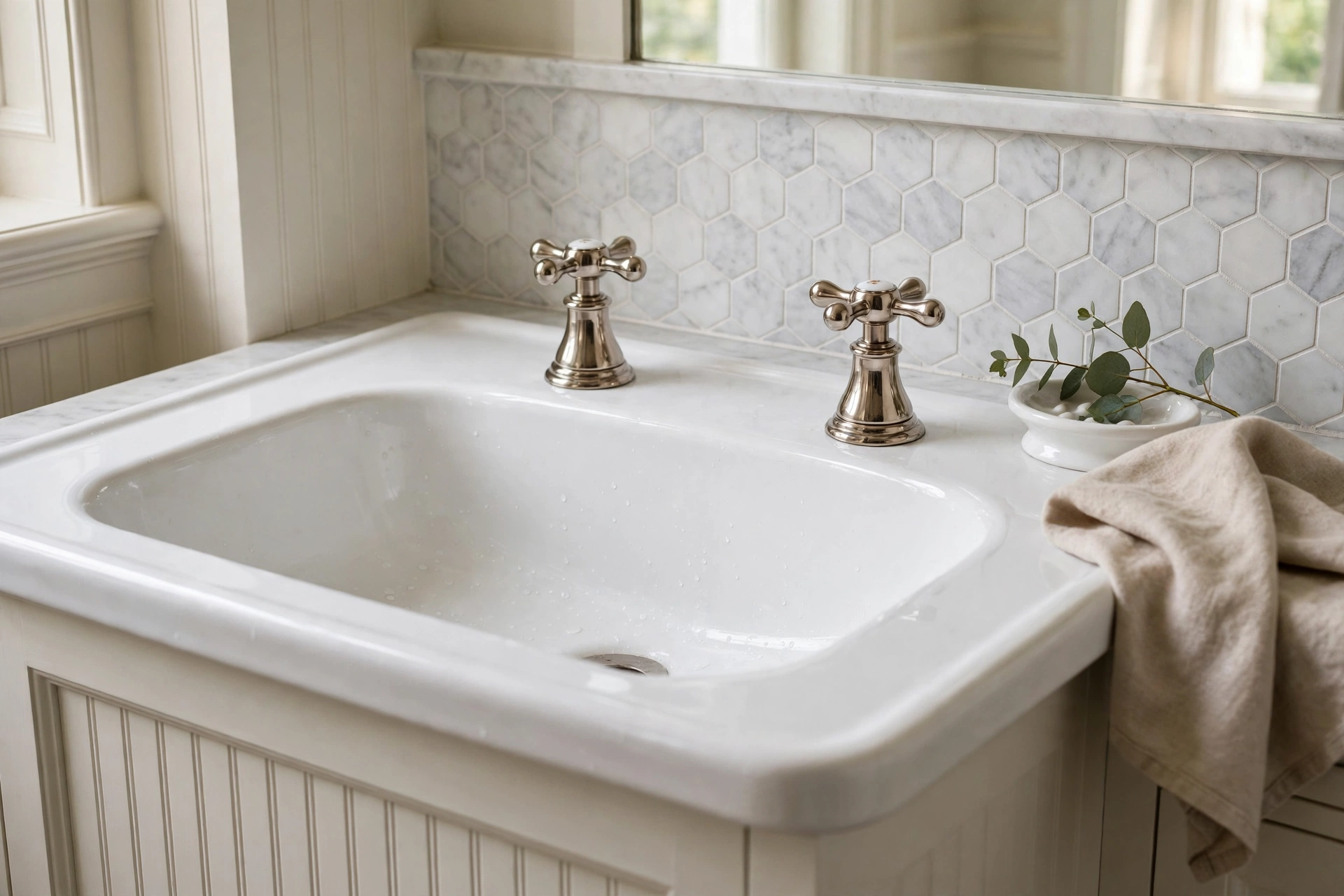
In a traditional bathroom, the metal finish does quiet heavy lifting. Polished nickel — warmer and softer than chrome, with a subtle golden cast — is the connoisseur’s choice for period style; it develops a gentle patina and flatters skin tones in the mirror. Classic polished chrome is brighter, crisper, and unmistakably traditional in its own right.
Consistency matters more than which finish you choose: carry the same metal through faucets, shower trim, towel bars, cabinet hardware, and even the mirror frame. Cross-handle faucets (hot and cold marked with porcelain indices) are the traditional tap silhouette and pair beautifully with a high-arc or bridge spout. Our vintage bathroom design ideas explore the same heritage hardware in a more nostalgic register.
6. Hang a Framed Traditional Mirror
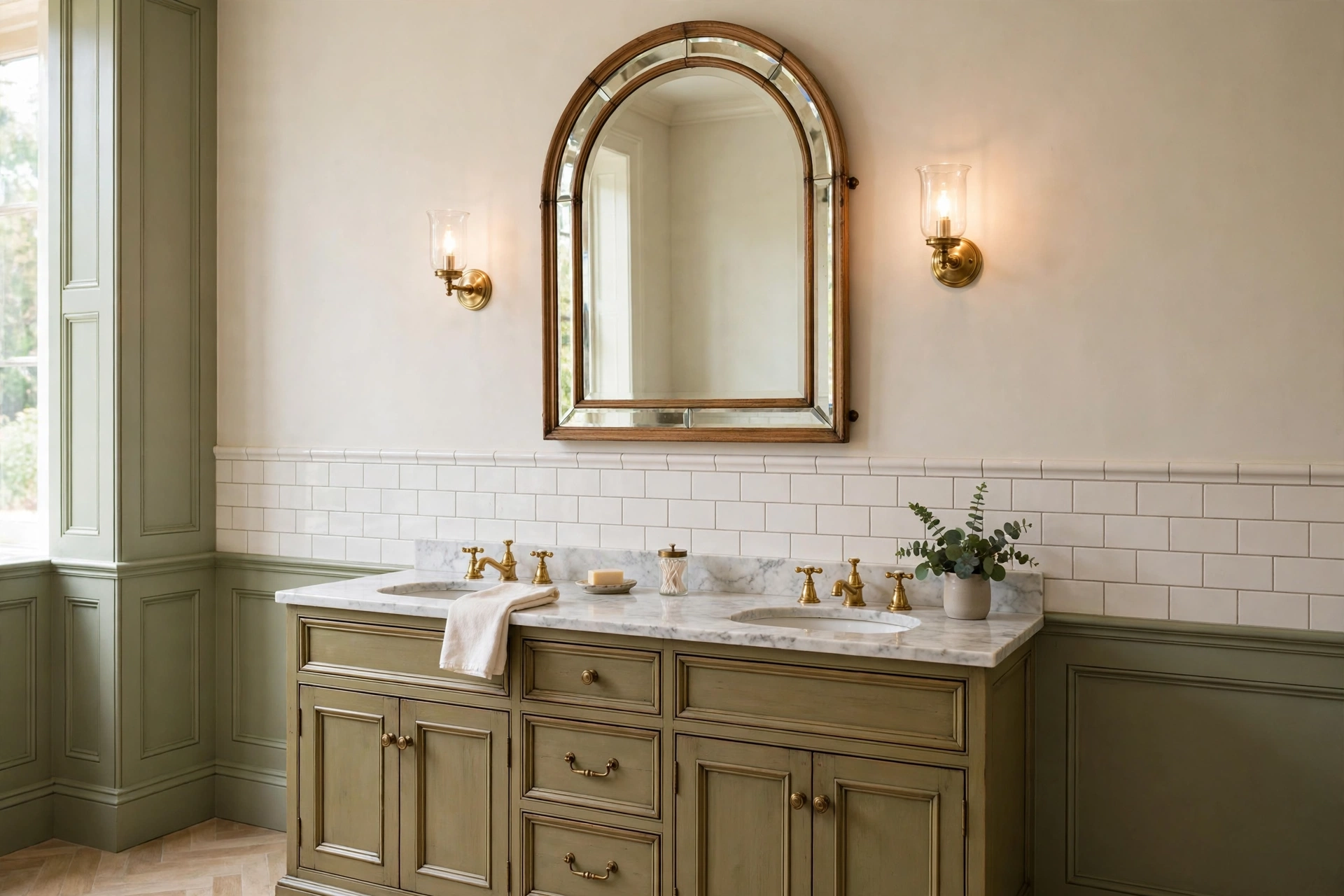
A mirror with a real frame — wood, gilt, or painted in the room’s trim color — anchors a traditional bathroom in a way a frameless plate never can. An arched-top mirror softens the room’s geometry, while a rectangular mirror with beveled edges and a simple molded frame feels tailored and timeless. Scale it generously: the mirror should be nearly as wide as the vanity below.
For double vanities, a pair of matching framed mirrors beats one oversized slab — the symmetry is inherently traditional. If you love antiques, a slightly foxed vintage mirror (with its cloudy, silvery spots) adds genuine age, but keep it away from direct shower steam. Mount the mirror so its center sits at eye level, and flank it with sconces rather than relying on a single overhead light that casts shadows.
7. Style a Furniture-Style Vanity
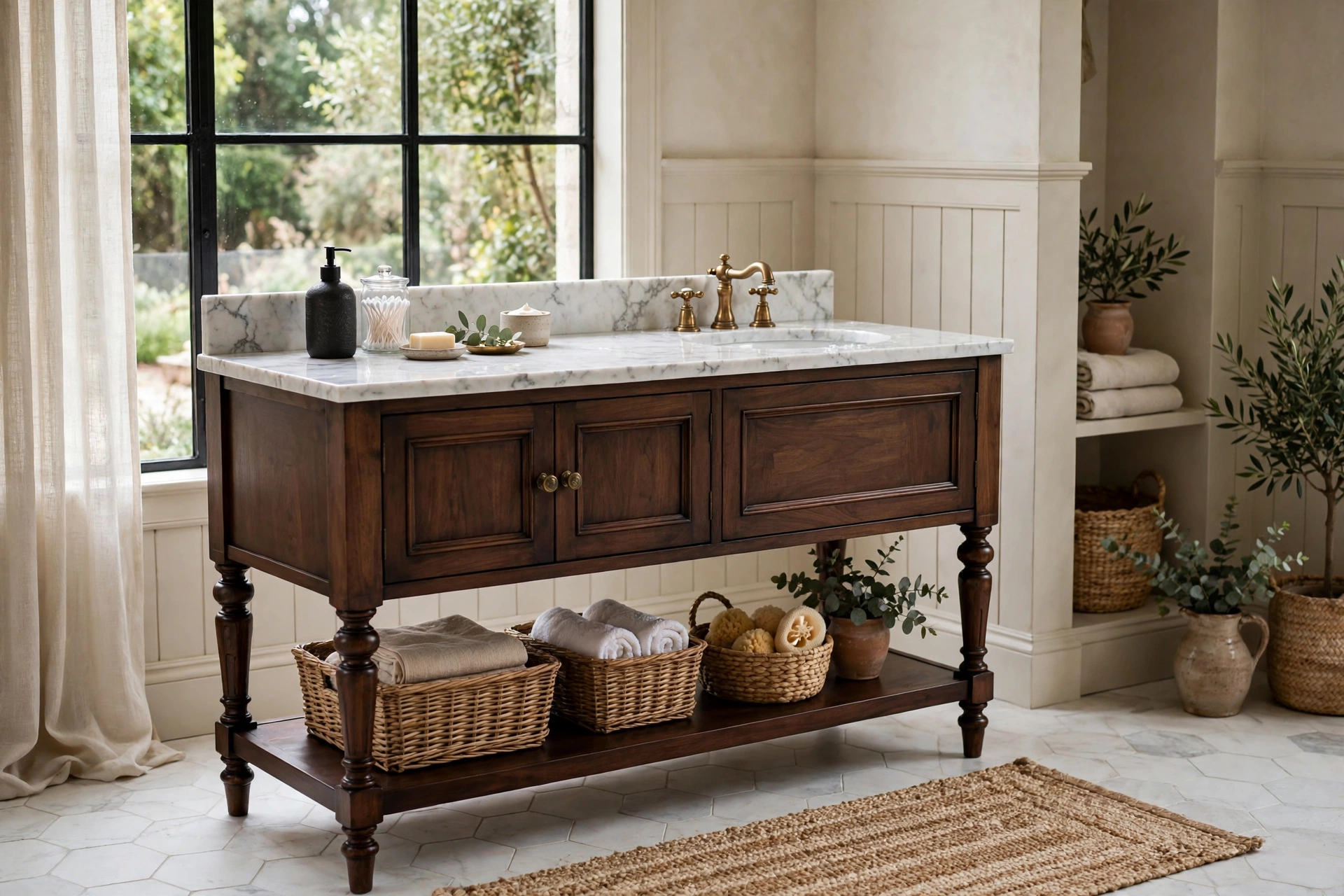
Traditional bathrooms treat the vanity as furniture, not cabinetry. A vanity with legs, a shaped apron, inset panel doors, and furniture-grade hardware reads like a treasured antique rather than a bathroom fixture. Dark stained woods — mahogany, walnut, cherry — bring the gravitas; painted vanities in navy, deep green, or classic white feel fresh while staying traditional.
Top it with marble or granite — Carrara’s soft gray veining is the classic choice — with an ogee or bullnose edge profile rather than a sharp modern eased edge. An undermount or vitreous china drop-in sink keeps the vintage feel; vessel bowls lean modern and fight the traditional language. Finish with bin pulls or drop handles in your chosen metal, and style the counter with a silver tray, apothecary jars, and fresh flowers.
8. Layer in Marble Surfaces
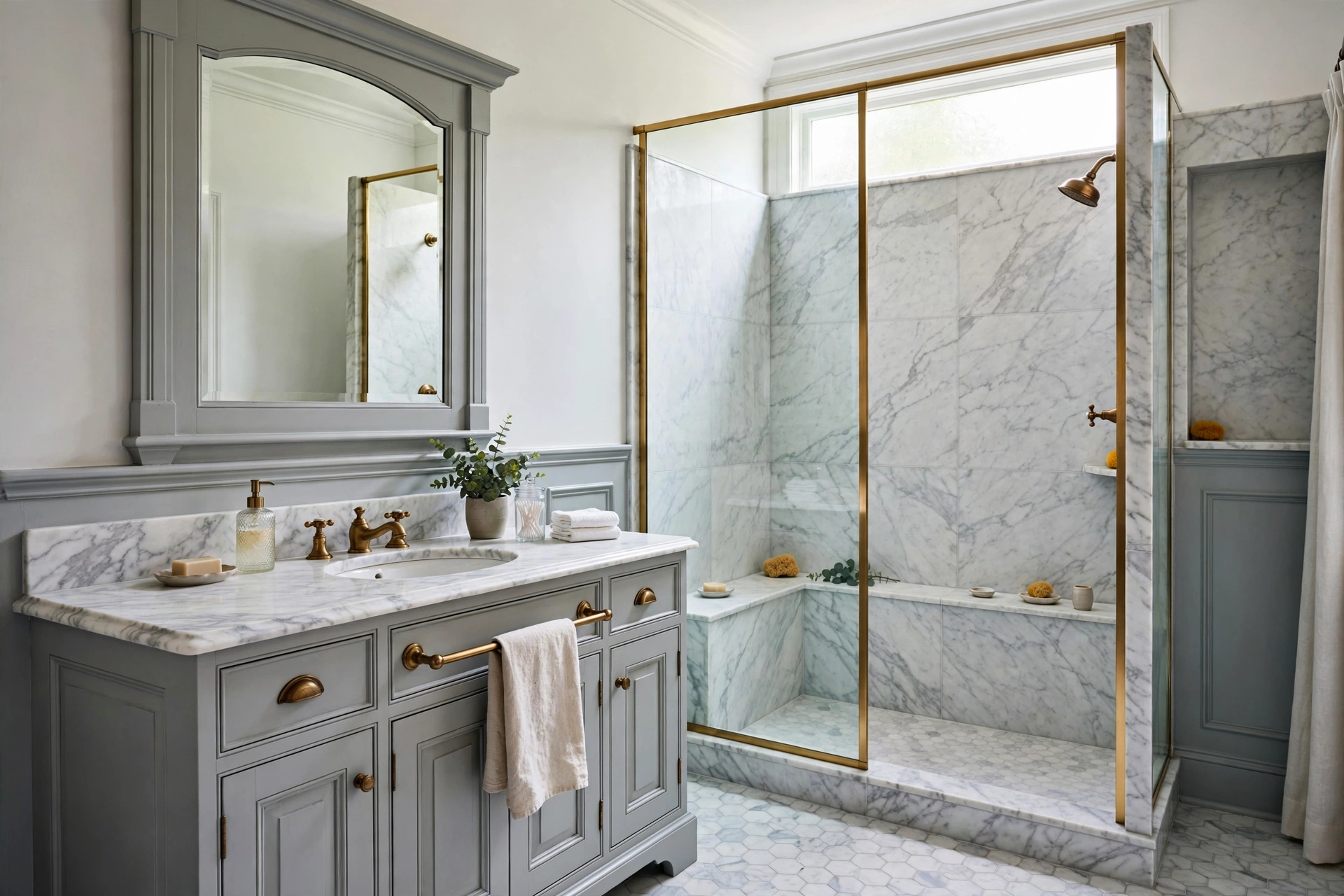
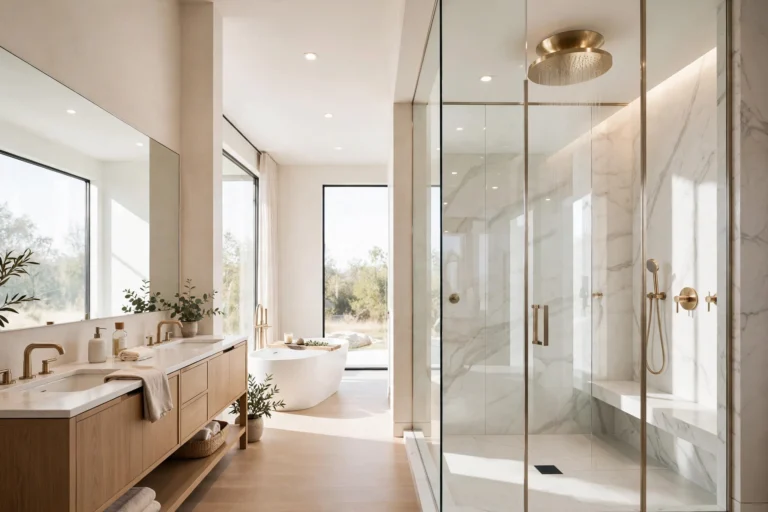
Marble is the stone of traditional bathrooms — cool, luminous, and quietly luxurious. Carrara marble with its soft gray veining is the classic, while Calacatta’s bolder veining makes a more dramatic statement. Use it on the vanity top, the tub surround, the shower walls, or as a threshold and windowsill detail; even small doses elevate the whole room.
Marble is softer than granite and needs sealing, but in a bathroom its patina is part of the charm — centuries of traditional bathrooms have worn marble beautifully. If maintenance worries you, porcelain tiles that convincingly mimic Carrara give you the look with zero sealing. For a full retreat built around calm, natural materials, our spa bathroom design ideas pair marble with the serene palette it deserves.
9. Add Classic Sconce Lighting
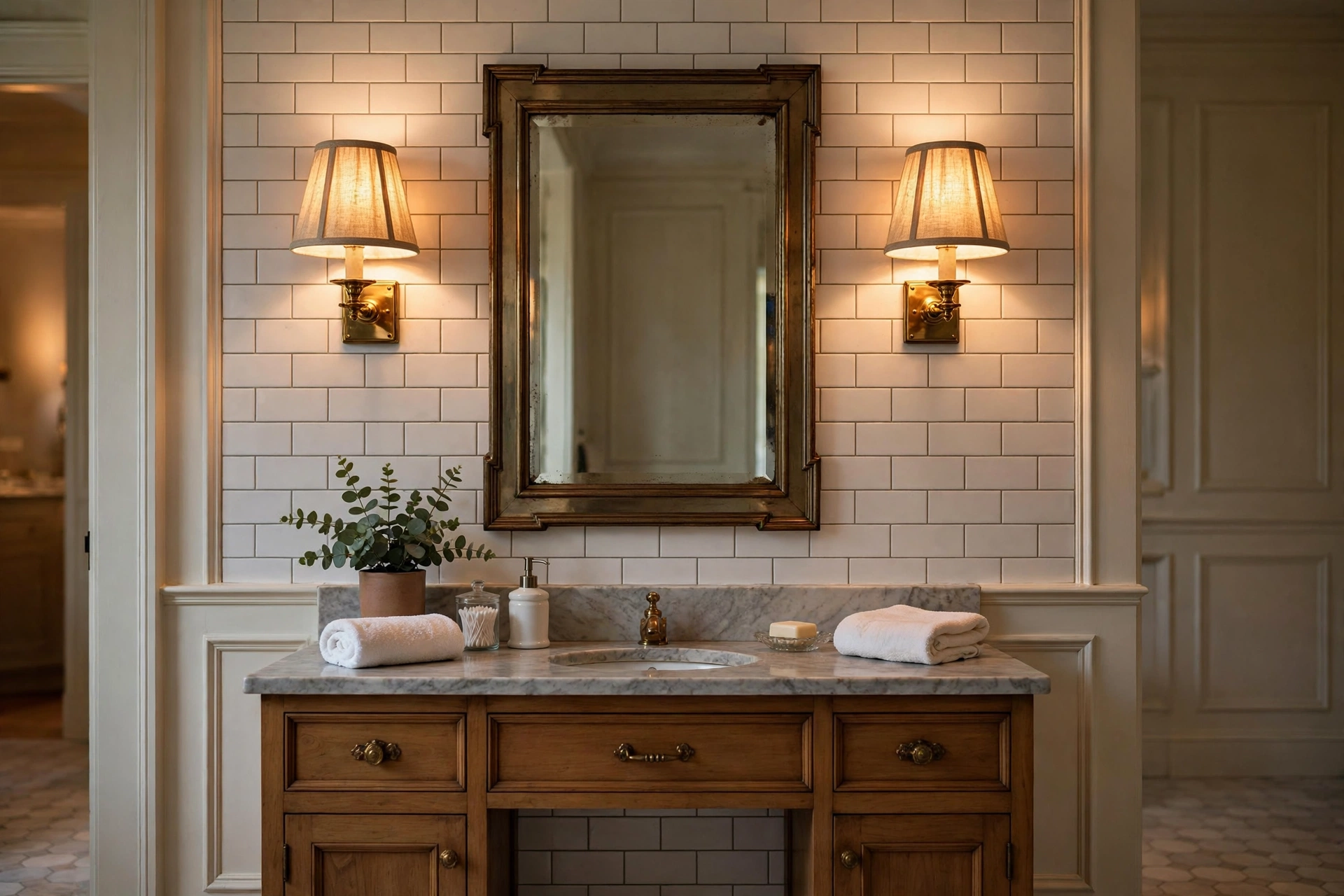
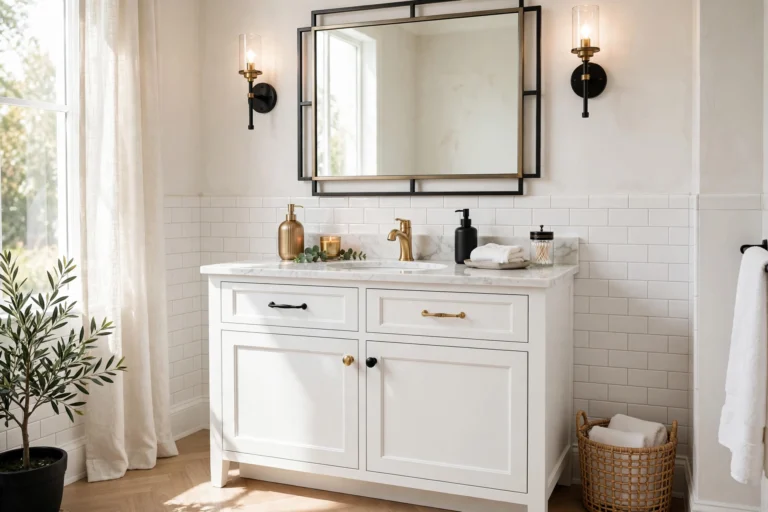
Traditional bathrooms glow from the sides, not just from above. A pair of sconces flanking the mirror — with fabric shades, frosted glass, or classic candle-style bulbs — gives the most flattering light for the face and the most traditional look for the room. Polished nickel or brass backplates tie the sconces to the faucet finish.
Add a small chandelier or a flush-mount ceiling fixture with a traditional silhouette (a milk-glass schoolhouse shade, a brass and crystal mini-chandelier) for ambient light. Keep all bulbs warm — 2700K — because traditional bathrooms are meant to feel like candlelight, not an operating room. Put the vanity lights on a dimmer so the room can shift from bright morning routine to soft evening soak.
10. Dress Windows with Café Curtains
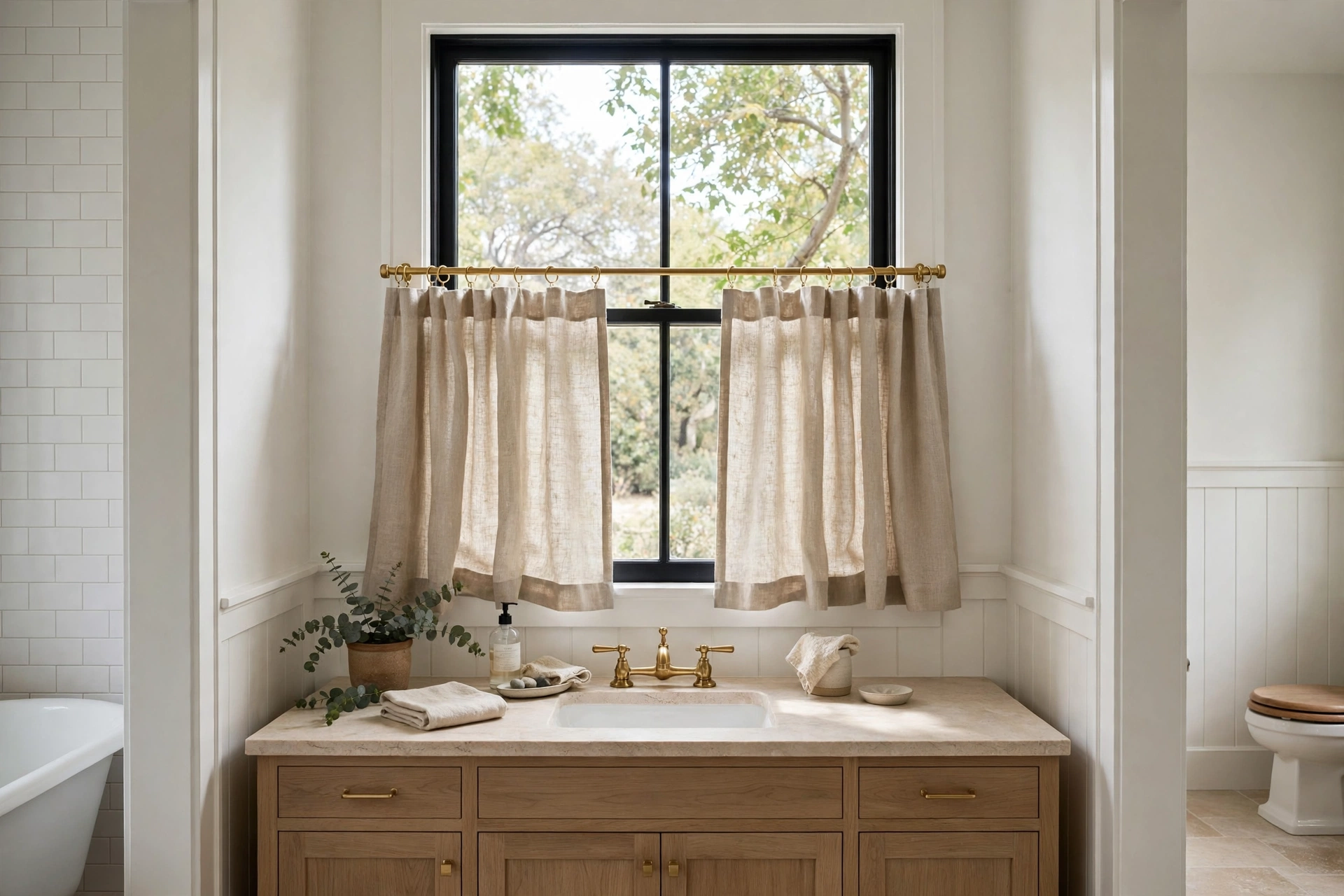
Traditional bathrooms handle window privacy with fabric, not plastic. Café curtains — covering just the lower half of the window — preserve natural light up top while shielding the sightlines that matter, and they are unmistakably classic. Choose a simple linen, a subtle stripe, or a small traditional print; keep the hardware simple brass or wood.
For full coverage, floor-length panels in a washable cotton or linen blend work beautifully, hung high and wide on a classic rod. Avoid heavy drapes that trap moisture — bathrooms need fabrics that breathe and dry. A tailored Roman shade in a traditional pattern (a small damask, a ticking stripe) is the neatest option and stacks compactly to admit maximum daylight.
11. Introduce a Soft Traditional Color Palette
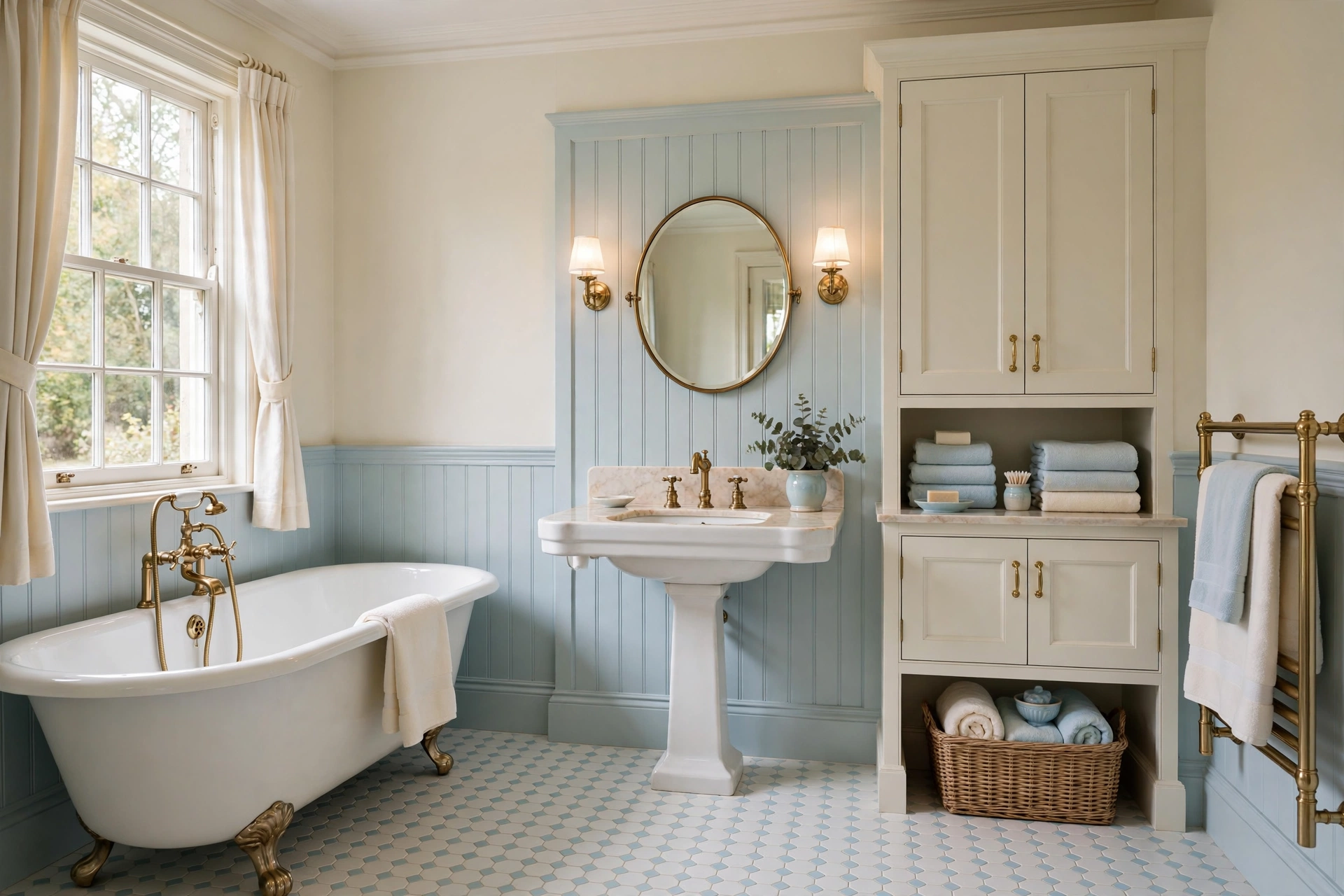
Traditional bathrooms wear soft, historic color with confidence: warm whites, creams, pale blues, soft sages, powdery grays, and the occasional deep accent — navy, forest green, or oxblood on the vanity or a single wall. These are colors with pedigree, drawn from centuries of painted woodwork and plaster.
Keep the overall feeling light: pale walls, white fixtures, and natural stone, with color concentrated in the vanity, the window treatment, or artwork. If you love wallpaper, a traditional bathroom is its natural home — a delicate floral, a classic stripe, or a toile above the wainscoting delivers period charm in one move. Sample colors in the room’s actual light; traditional palettes shift noticeably between daylight and warm lamplight.
12. Add Timeless Hardware Details
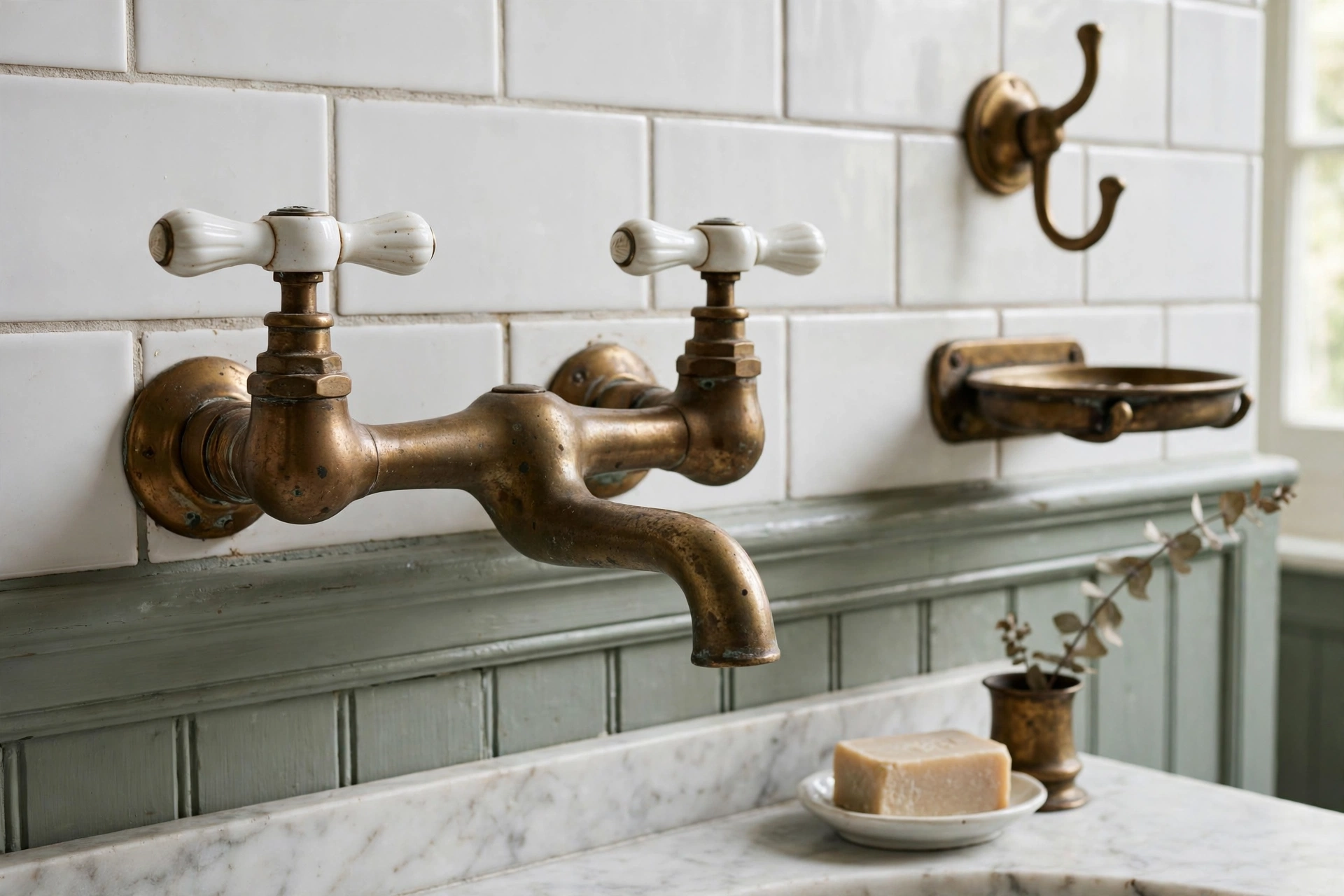
The jewelry of a traditional bathroom lives in the details: porcelain cross handles, a high-tank pull-chain toilet for the truly period-committed, a brass shower caddy, a wall-mounted soap dish and toothbrush holder in matching ceramic. These small, deliberate choices are what make a bathroom feel designed rather than merely renovated.
Don’t overlook the door and window hardware — bin pulls, a classic lever or knob in the room’s metal finish, and a traditional towel ring instead of a bar all reinforce the language. Even the toilet paper holder and robe hook deserve the same finish as the faucets. Consistency across every metal touchpoint is the difference between a bathroom with traditional elements and a truly traditional bathroom.
13. Display Classic Artwork and Prints
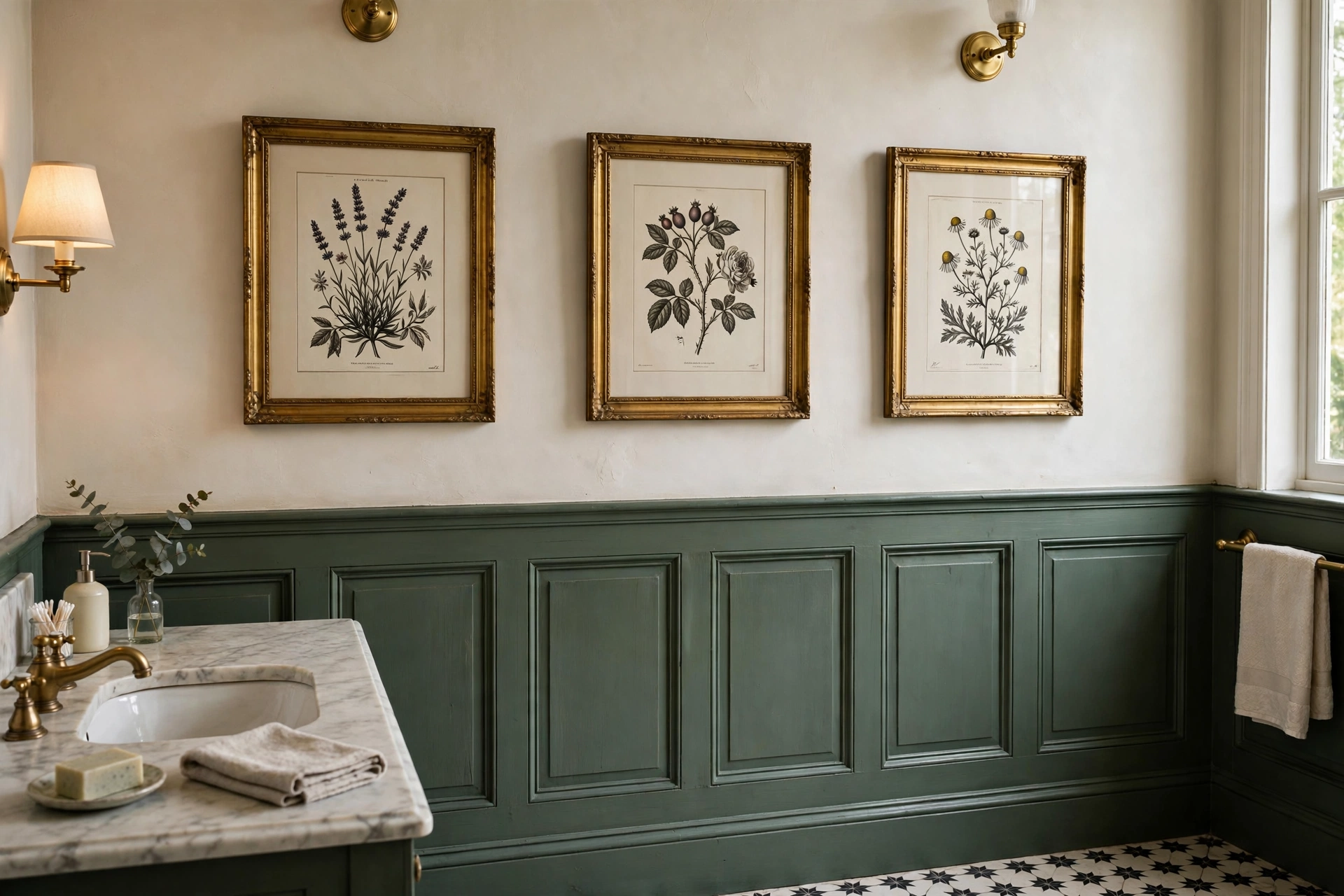
Bare walls are a missed opportunity in a traditional bathroom. Botanical engravings, architectural etchings, sepia landscape prints, or a small oil painting in a gilt frame bring the room to life — art makes a bathroom feel like part of the home rather than a utility space. Choose pieces with traditional subjects and frame them properly; the frame matters as much as the art.
Hang art away from direct shower spray, and in very steamy bathrooms choose prints behind glass or consider high-quality reproductions rather than originals. A single larger piece over the towel rail or a pair of small prints flanking the mirror both work. Keep the subject matter serene — this is a room for quiet, and the art should whisper, not shout.
14. Keep Linens Crisp and Simple
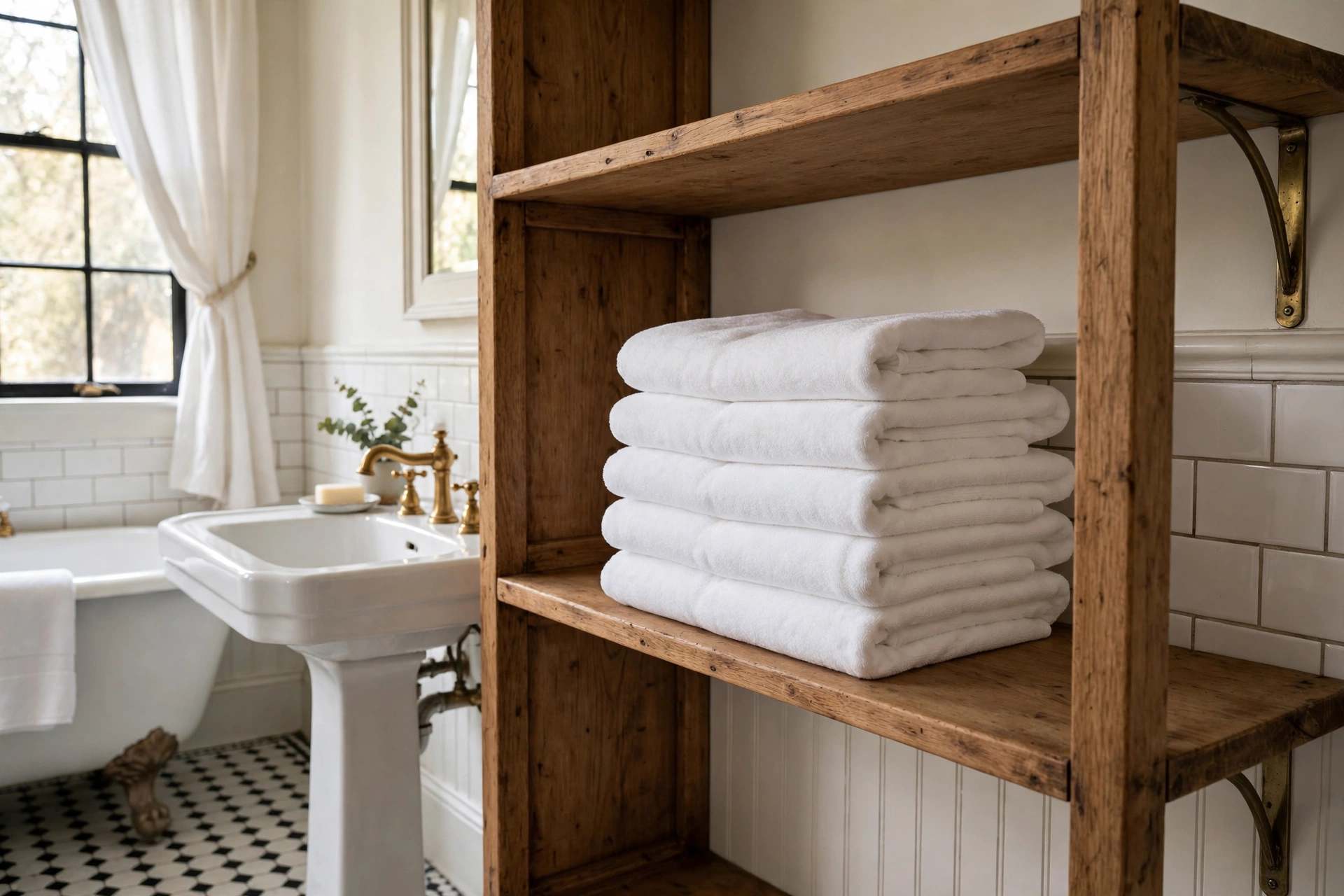
Traditional bathroom linens are an exercise in restraint: thick white or cream towels, a simple monogram if you like, neatly folded or rolled and displayed on open shelving or a heated towel rail. White towels are the classic choice because they signal cleanliness and they never clash with the room’s palette — and they can be bleached back to brightness.
Layer a waffle-weave or matelassé bath mat rather than a shaggy novelty rug, and choose a shower curtain (if you use one) in a classic fabric — a simple stripe, a subtle damask, or plain linen with a tailored hem. Our elegant bathroom design ideas carry the same crisp-linen philosophy into a slightly more formal register. Keep everyday products decanted into matching dispensers so the surfaces stay as calm as the linens.
15. Finish with Traditional Accessories
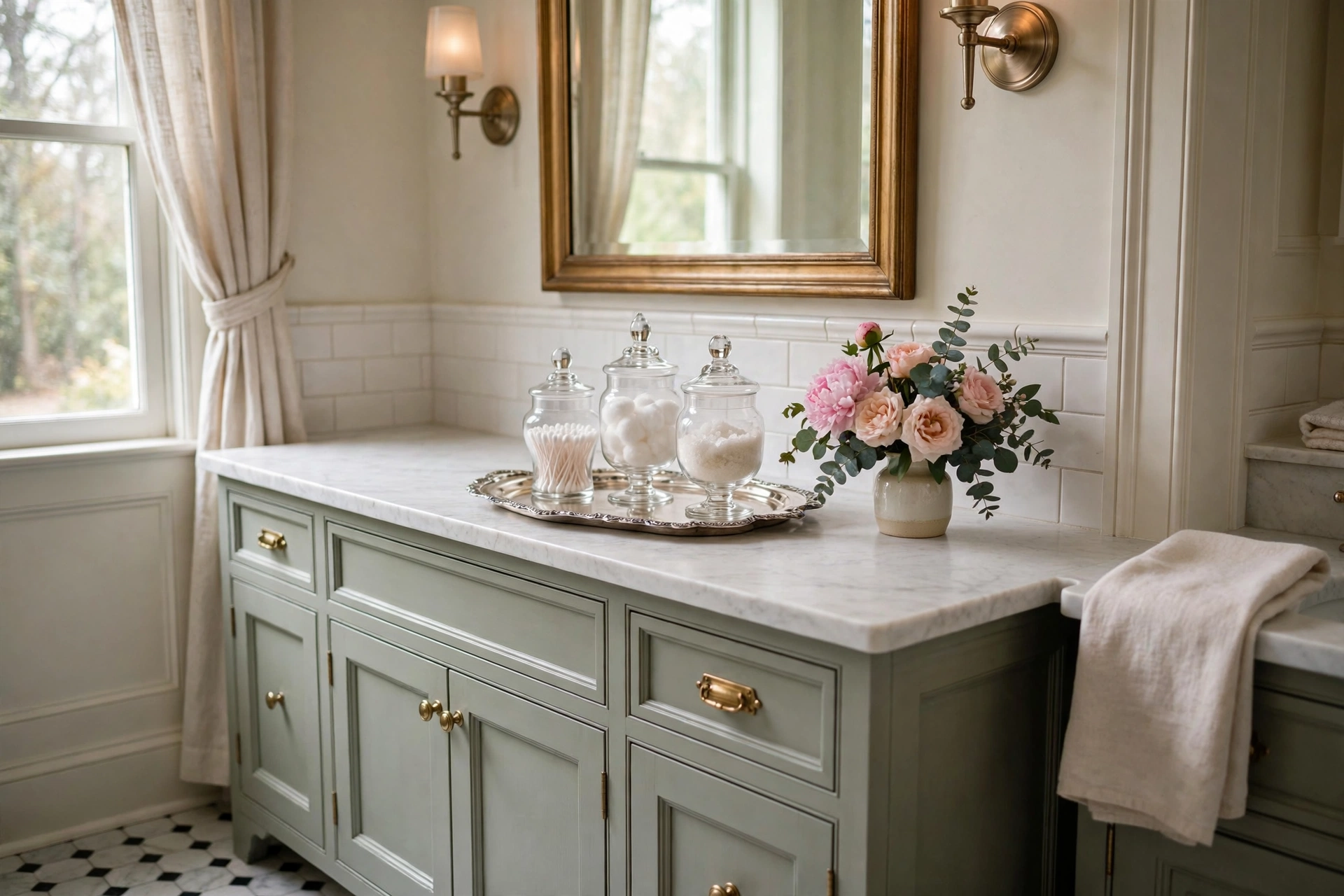
The final layer is the collection of small, beautiful objects that make a traditional bathroom feel loved: a silver tray corralling perfume bottles on the vanity, a lidded apothecary jar of cotton balls, a small potted fern or orchid, a stack of folded washcloths tied with ribbon, a scented candle in a classic scent like linen, rose, or sandalwood.
Choose accessories in the room’s materials — glass, silver, porcelain, natural stone — and edit ruthlessly; three beautiful objects beat ten cluttered ones. A wooden stool or small upholstered bench beside the tub gives you a place for a book, a candle, and a glass of something — because a traditional bathroom is ultimately a room for lingering. Finish with a proper wastebasket and a lidded hamper in materials that match the room, and the classic is complete.
Frequently Asked Questions
What defines a traditional bathroom?
Symmetrical layouts, classic fixtures (pedestal or console sinks, clawfoot or apron tubs), natural materials like marble and wood, heritage tile patterns (subway, hex, basketweave), polished nickel or chrome hardware, and a soft historic color palette. The overall feeling is timeless, tailored, and calm — designed to look as good in twenty years as it does today.
How do I make a small bathroom look traditional?
Focus on the highest-impact classics: a pedestal sink to free visual space, subway tile with dark grout, a framed mirror, cross-handle faucets, and beadboard wainscoting. Keep the palette pale and the metals consistent. Small bathrooms actually suit traditional style beautifully — the style grew up in modest Victorian and colonial homes.
Are traditional bathrooms expensive to create?
They can be, but they don’t have to be. The most expensive elements — marble, solid brass, custom millwork — have convincing budget alternatives: porcelain marble-look tile, a painted furniture-style vanity, reproduction cross-handle faucets. Spend on what you touch daily (faucets, tile installation) and save on what you see (mirror frame, accessories).
Can I mix traditional and modern in a bathroom?
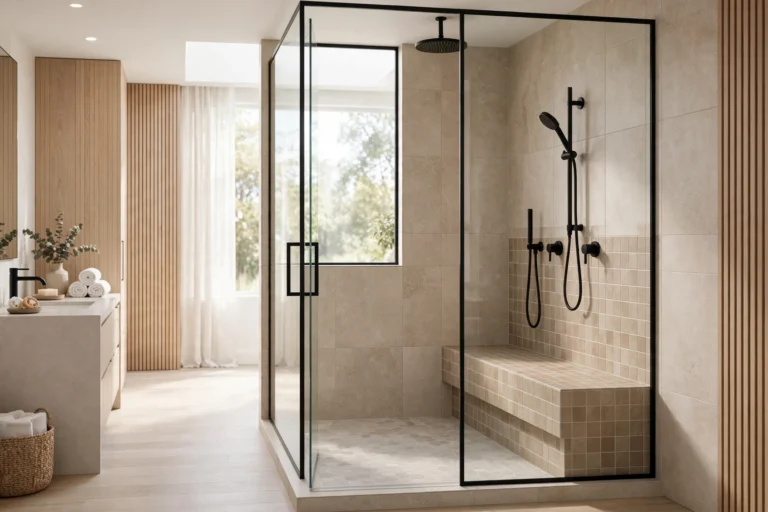
Yes — and the best traditional bathrooms often do. Keep the architecture and major fixtures traditional (tub, tile, vanity silhouette) and let one or two modern pieces provide contrast: a contemporary light fixture, a sleek frameless shower panel, modern art. The rule is that traditional should dominate; modern accents should feel like punctuation, not a competing sentence.
What colors work best in a traditional bathroom?
Warm whites, creams, soft blues, pale sages, and light grays form the classic base, with deeper accents — navy, forest green, oxblood, black — used sparingly on vanities, doors, or accessories. Whites, browns, and traditional reds, blues, and greens are the historic accessory palette. Avoid neon brights and cold stark grays; traditional wants warmth.
Keep Exploring
A traditional bathroom is a promise of permanence in a world of trends — the room in your home least likely to embarrass you in a decade. Start with the fixtures that define the era, layer in the tile and paneling that give it bones, and finish with the linens and accessories that make it yours.
For more classic inspiration, explore our bathroom decor ideas — and when you’re ready to extend the timeless feeling through the whole house, our traditional-leaning bedroom and living room guides will help you carry the calm from room to room.