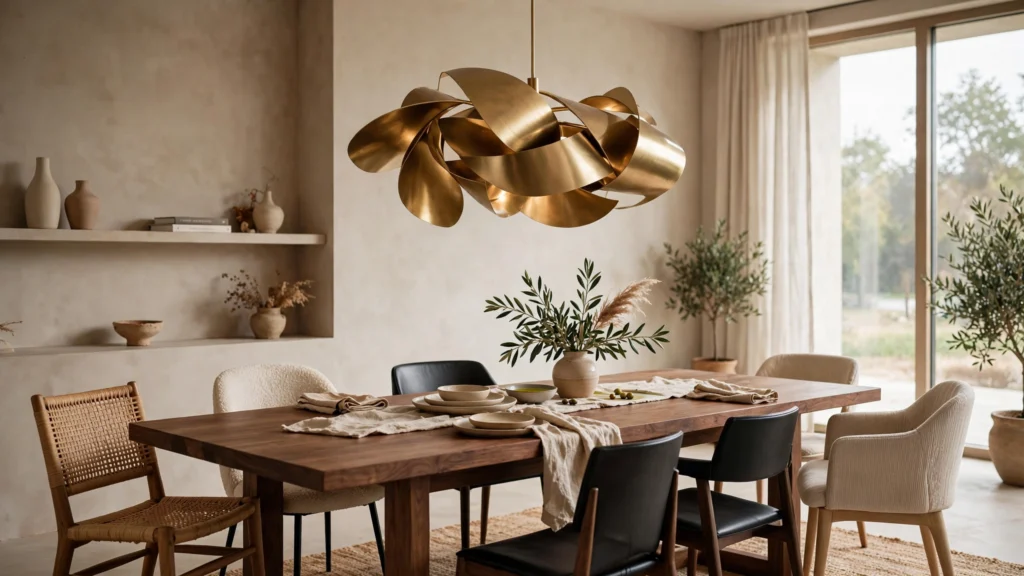

The modern dining room is having a moment. It’s no longer the stiff, seldom-used formal room of decades past — today’s dining space is where weeknight takeout happens, where friends gather around a board game, and where holiday dinners stretch long past dessert. It deserves design that works as hard as it looks.
The good news: modern doesn’t mean cold. The most stylish modern dining room design ideas blend clean lines with warm materials, sculptural lighting with soft textures, and just enough personality to make the room unmistakably yours. Here are fifteen ways to get there.
1. Hang a Sculptural Pendant Light
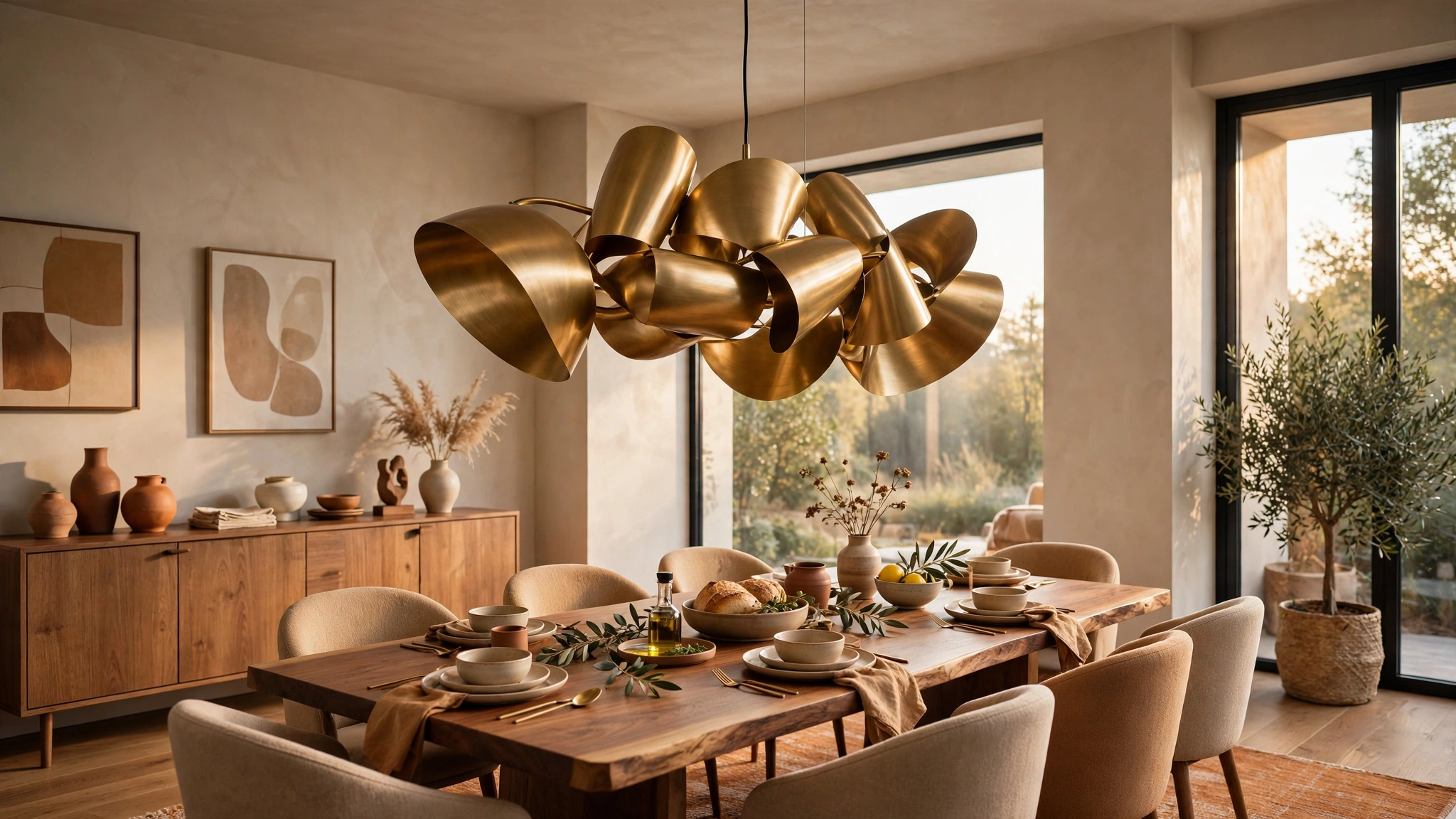
Nothing sets the tone of a modern dining room faster than the light fixture above the table. Think of it as the room’s jewelry — a sculptural pendant in brushed brass, matte black, or mouth-blown glass draws the eye and anchors the whole composition. The designers at The Spruce agree that a statement pendant is one of the strongest moves you can make; their roundup of modern dining room ideas shows just how many personalities one fixture can bring to a room.
Scale matters more than price. The fixture should be roughly one-half to two-thirds the width of your table, and hang it so the bottom sits 30 to 36 inches above the tabletop. Too high and it feels disconnected; too low and your guests are ducking during conversation.
If one pendant feels lonely, a cluster of three small pendants at staggered heights creates a more artful, gallery-like effect — especially over a long rectangular table.
2. Choose a Live-Edge Wood Table
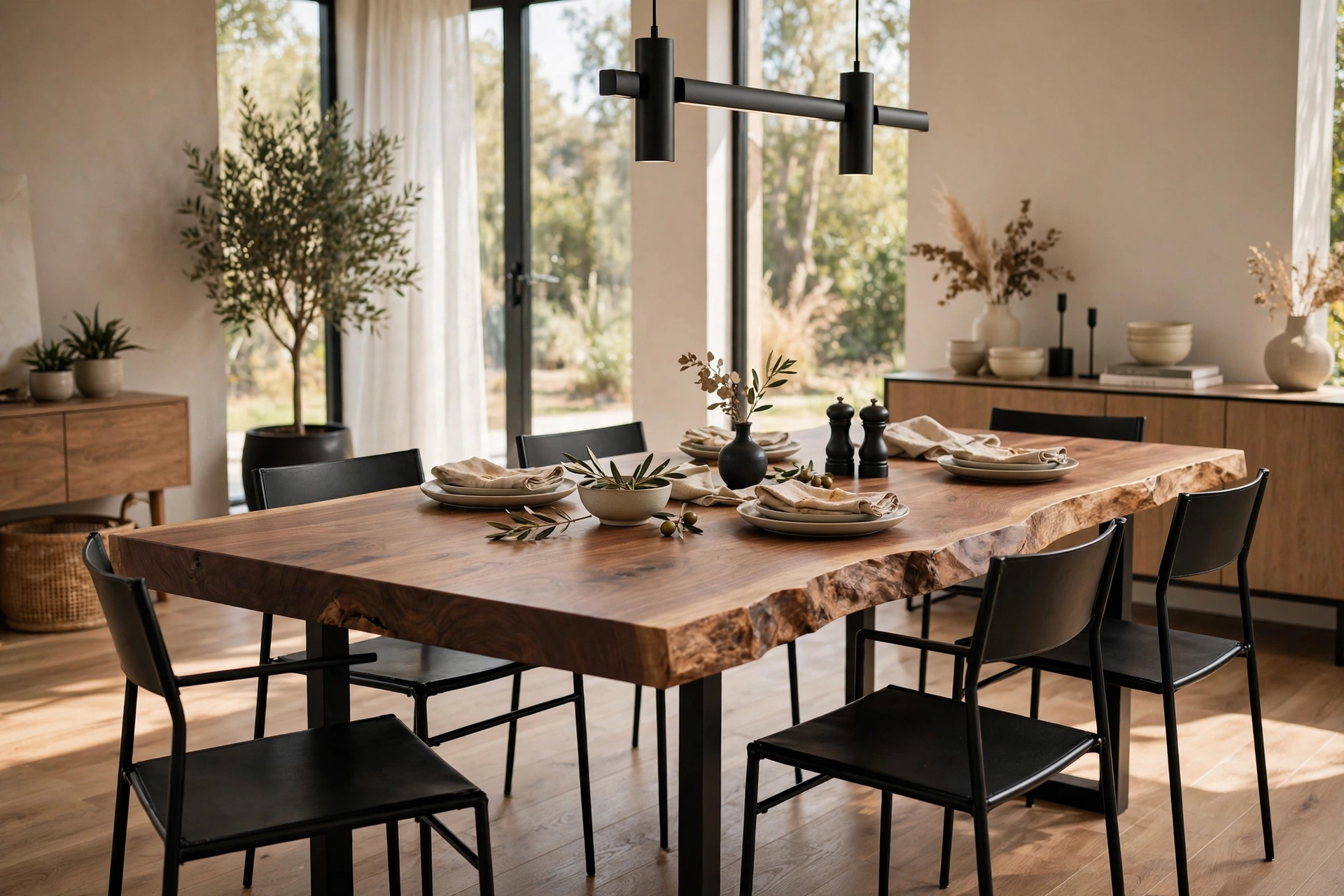
A live-edge table brings the organic warmth that modern rooms secretly crave. The natural, undulating edge of a walnut or oak slab softens all the straight lines around it — the rectilinear chairs, the square sideboard, the right-angled architecture — and every piece is one of a kind. It’s modern design’s best trick: letting nature do the decorating.
Pair it with slim, simple chairs so the table stays the star. Black metal legs keep the look contemporary and add a crisp contrast against the raw wood top. Finish it with a matte sealant rather than high gloss; modern warmth reads as tactile and matte, not shiny and precious.
3. Add Built-In Banquette Seating
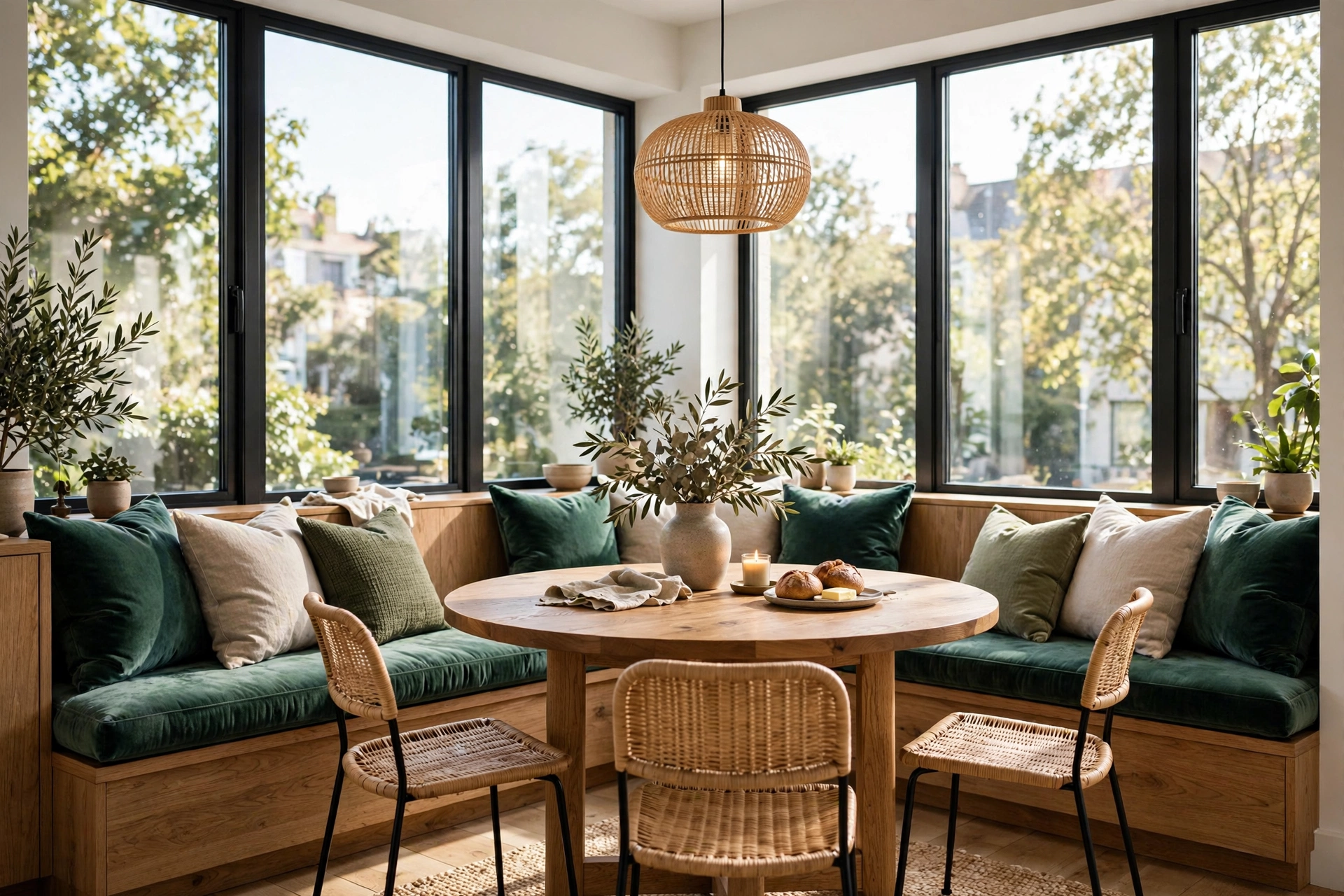
Banquette seating is the dining room’s best-kept secret: it tucks into a corner, seats more people than chairs ever could, and hides storage under the seat for linens, board games, and the serving dishes you only use twice a year. Against a wall of windows or under a low ceiling, a banquette turns an awkward nook into the room’s most coveted seat.
Upholster the cushions in a durable performance fabric — velvet for luxury, linen-look weave for everyday. Add a row of throw pillows in mixed textures to keep it from reading like a restaurant booth. Round tables work beautifully with banquettes since they let everyone slide in from the open side.
4. Work a Black-and-Wood Palette
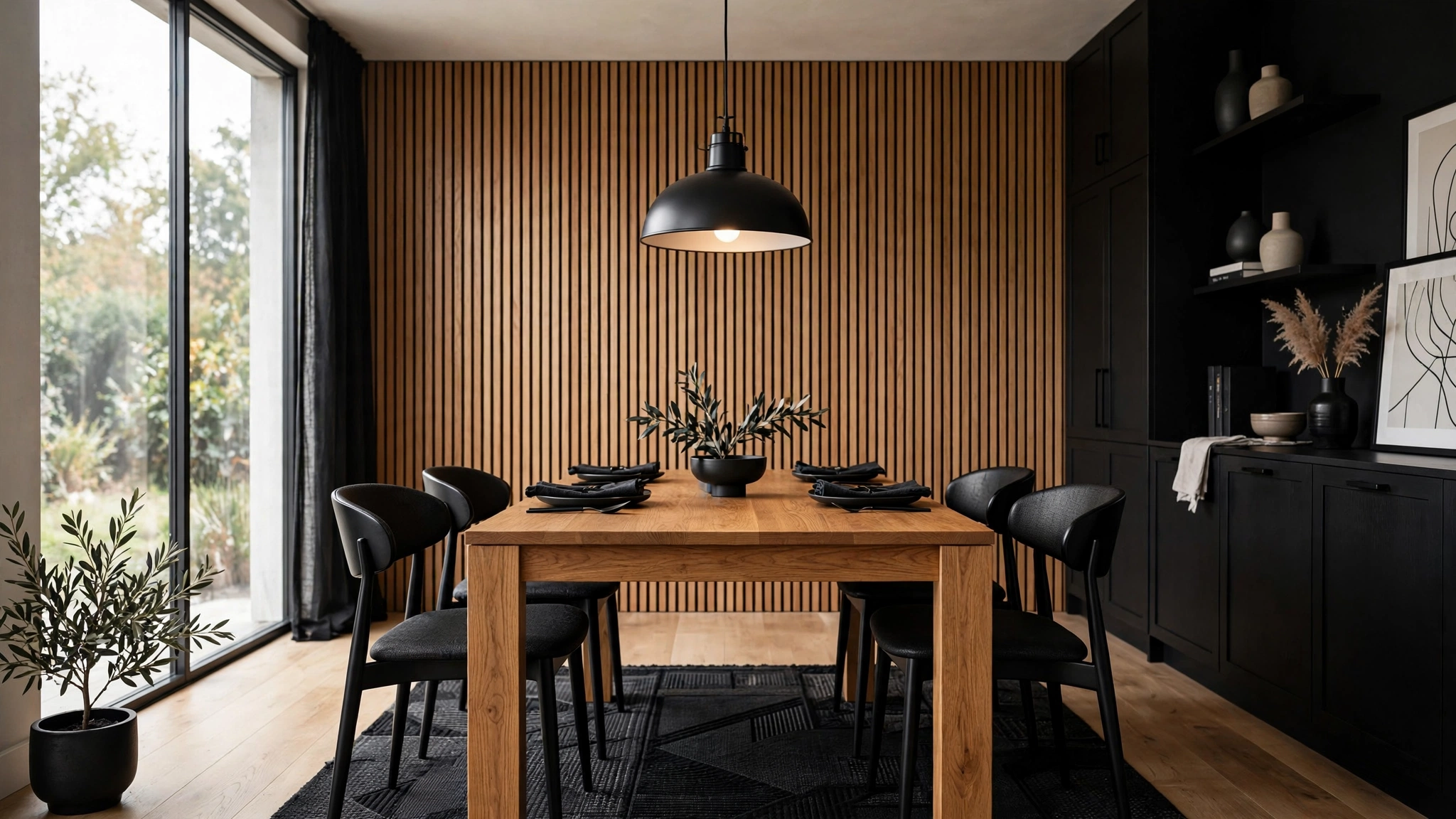
Black and wood is the little black dress of dining rooms: endlessly chic, impossible to mess up. Black chair frames, a black pendant, black window trim — set against the honeyed tones of an oak or walnut table and pale walls, the contrast feels graphic and confident without trying too hard.
Keep the black to furniture and fixtures rather than whole walls, unless your room gets generous daylight. The warmth of the wood is what stops the black from turning the room gloomy. A jute or wool rug underfoot adds one more layer of warmth and ties the palette together from the floor up.
5. Try a Glass Dining Table
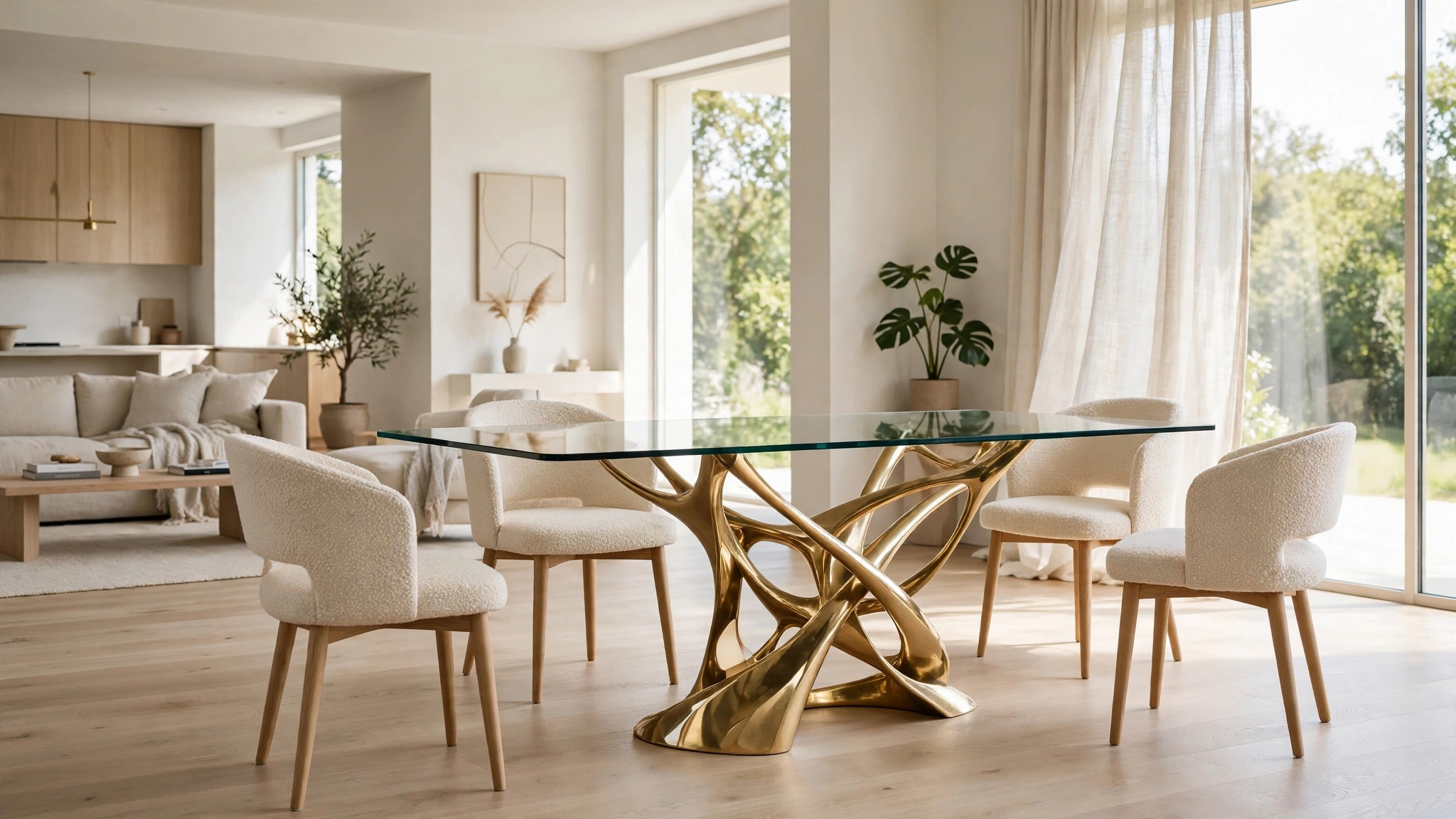
A glass dining table is pure modern magic: it visually disappears, letting light flow through and making even a modest room feel larger. In open-plan spaces, it keeps sightlines clear between the kitchen and living areas — the whole floor reads as one airy whole instead of three cramped zones.
Choose a table with a sculptural base in brass, chrome, or sculptural wood; since the top is transparent, the base becomes the real design statement. Glass is forgiving with styling too — a runner or a few objects on top read as floating, which looks effortlessly elegant. Just keep a microfiber cloth handy and embrace the realism.
6. Create a Statement Art Wall
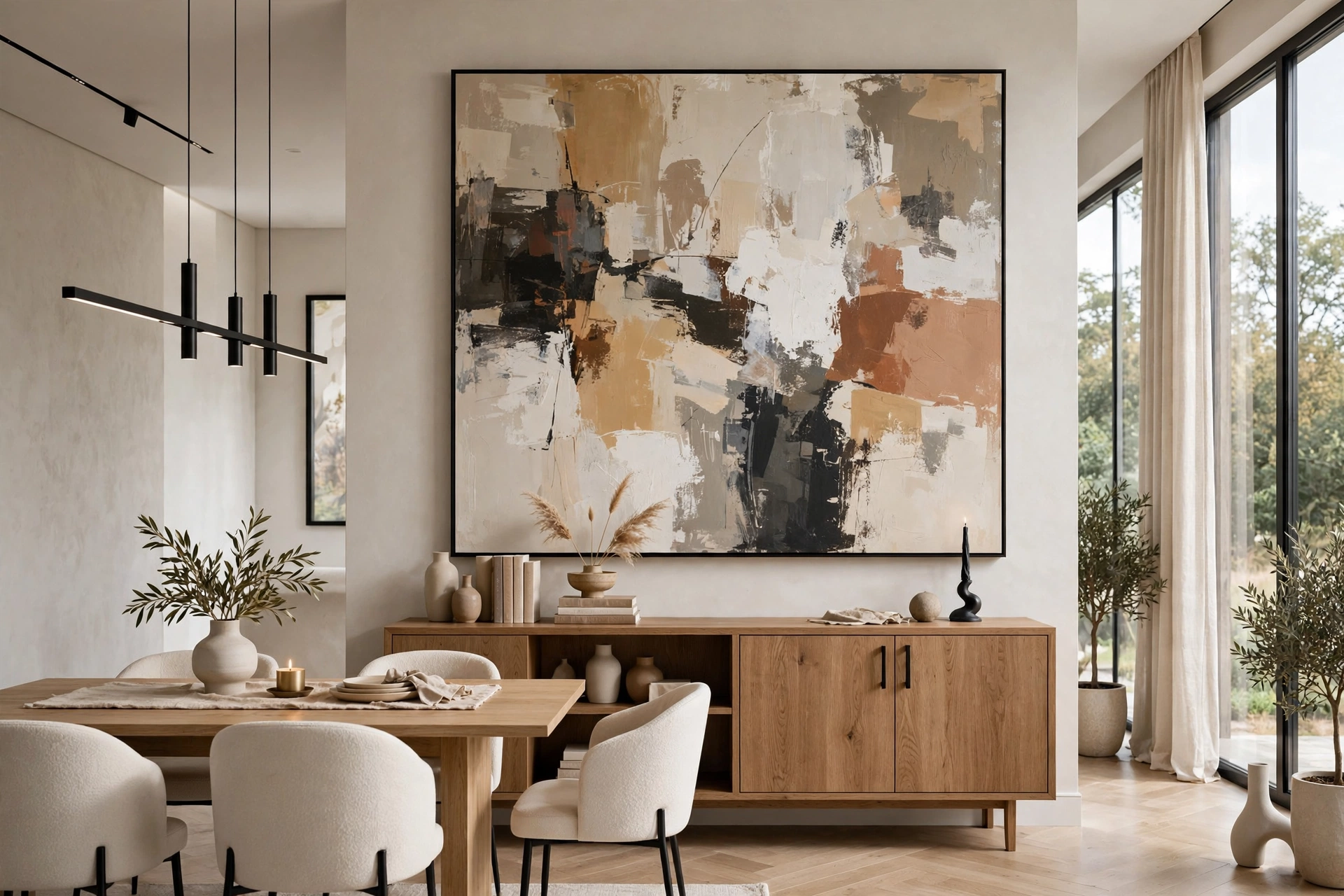
Modern furniture runs on clean lines and quiet surfaces, which makes it the perfect canvas for bold art. One oversized abstract piece above the sideboard — or a tight grid of three framed prints — gives the room a focal point that isn’t the television (because there isn’t one in here).
Go big: art that’s too small for the wall reads as an afterthought, while one generous piece looks deliberate and gallery-like. If your palette is neutral, this is your chance to introduce color — a warm ochre, a deep teal, a sweep of terracotta that you then echo in the table linens or the cushions on the banquette.
7. Mix and Match Modern Chairs
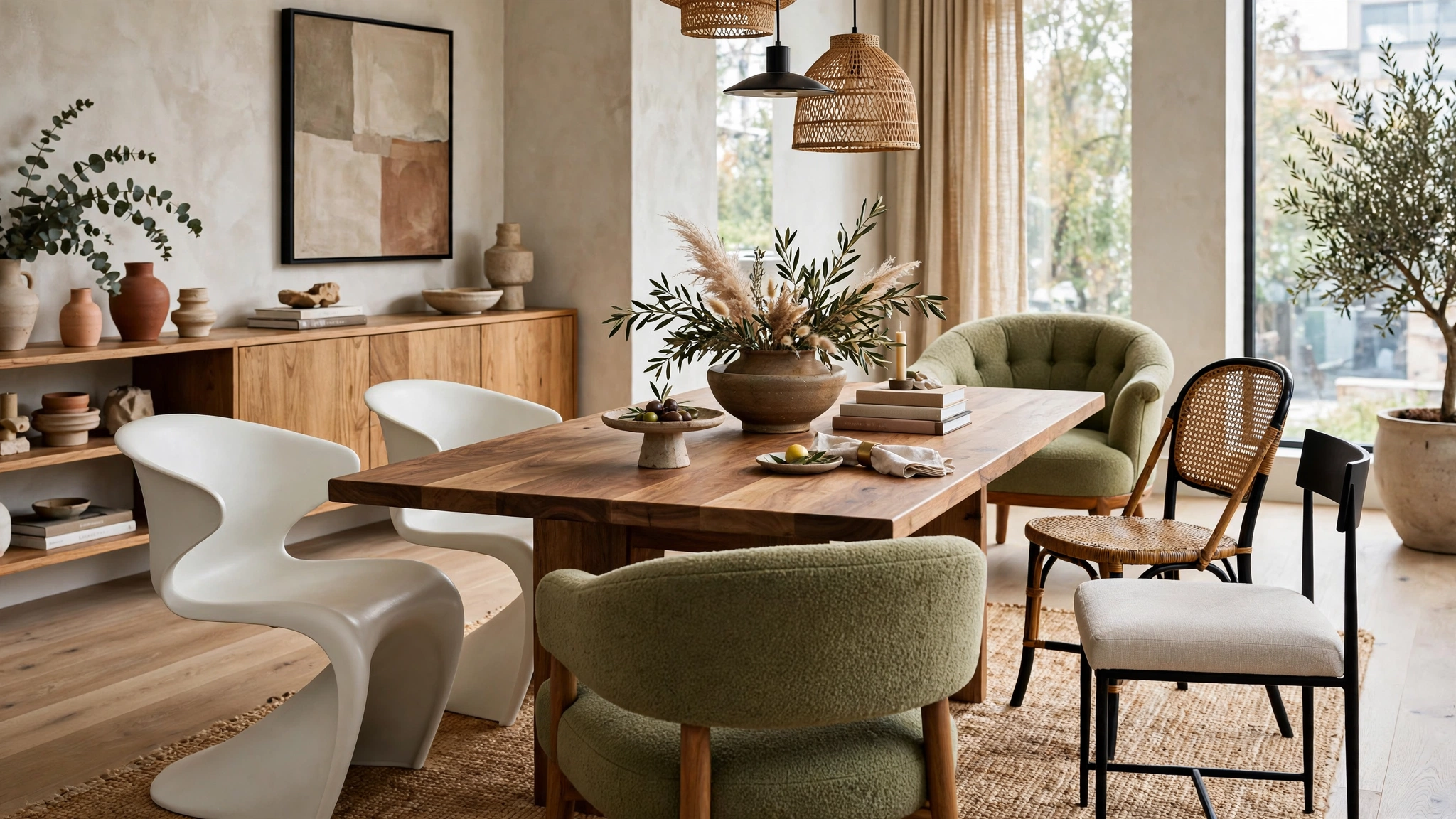
The matchy-matchy dining set is officially retired. Mixing chair styles — say, two upholstered host chairs at the ends and four sculpted side chairs along the sides — creates a collected, designer look that feels personal rather than showroom. The secret to making it work is a common thread: same color family, same leg material, or same design era.
This is also the budget-friendly way to modernize a room you already have. Keep your existing table and swap in new chairs; it’s the single fastest transformation in the dining room playbook. Midcentury-inspired molded chairs, cane-back bistro chairs, and bouclé-upholstered seats all play well together in a modern mix.
8. Layer a Bold Area Rug
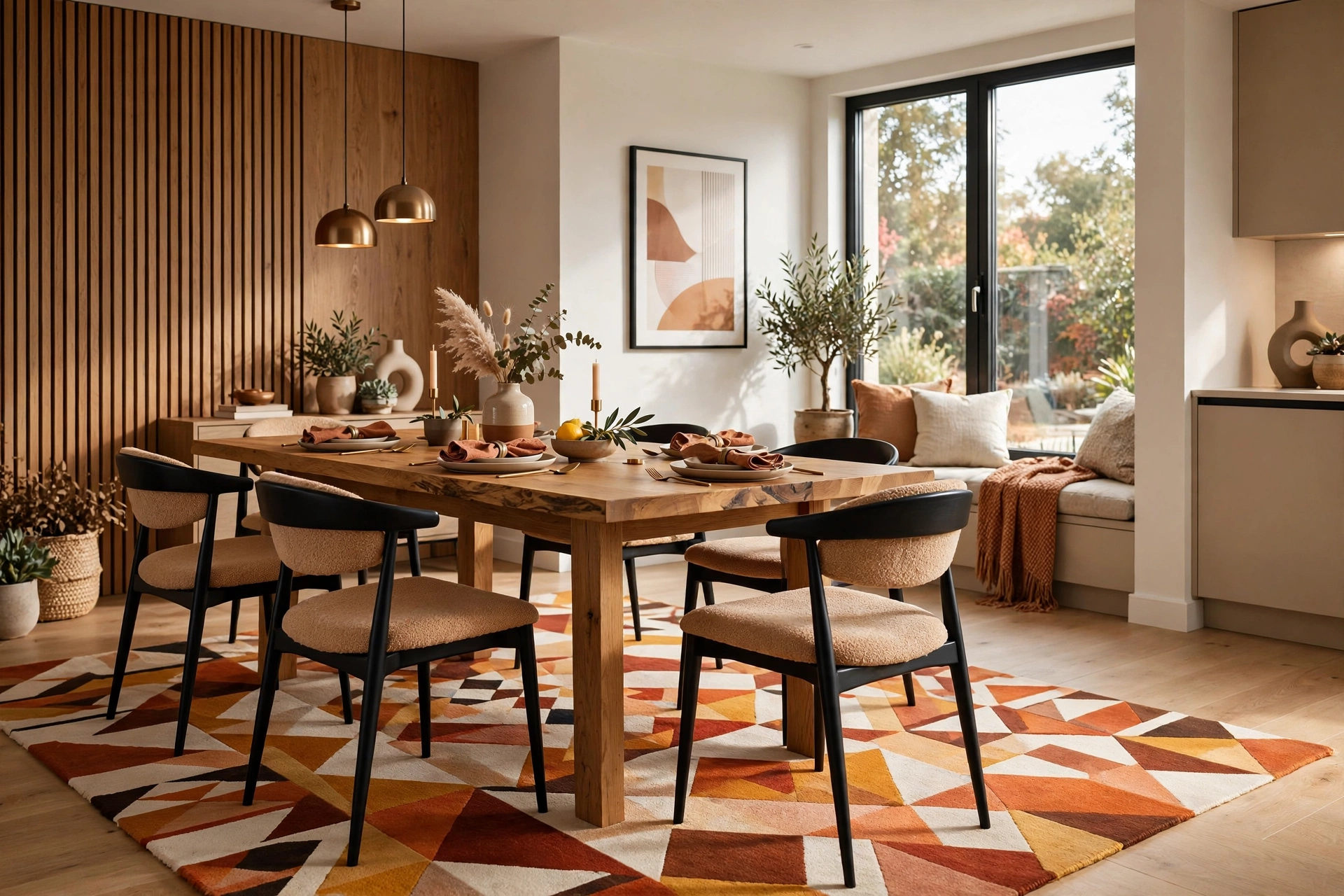
A rug does three jobs in a dining room: it defines the zone, softens the acoustics (no more echoing dinner conversation), and protects the floor from chair scrapes. In a modern room, it’s also your best opportunity for pattern — a graphic geometric, a vintage-look Persian in muted tones, or a bold stripe that runs perpendicular to the table.
Size it generously: the rug should extend at least 24 inches beyond the table on every side so chairs stay on the rug when they’re pulled out. Choose a low-pile, easy-clean weave — flatweave wool or an indoor-outdoor rug in a pretty pattern — because dining rooms see real-life spills.
9. Anchor the Room With a Sideboard
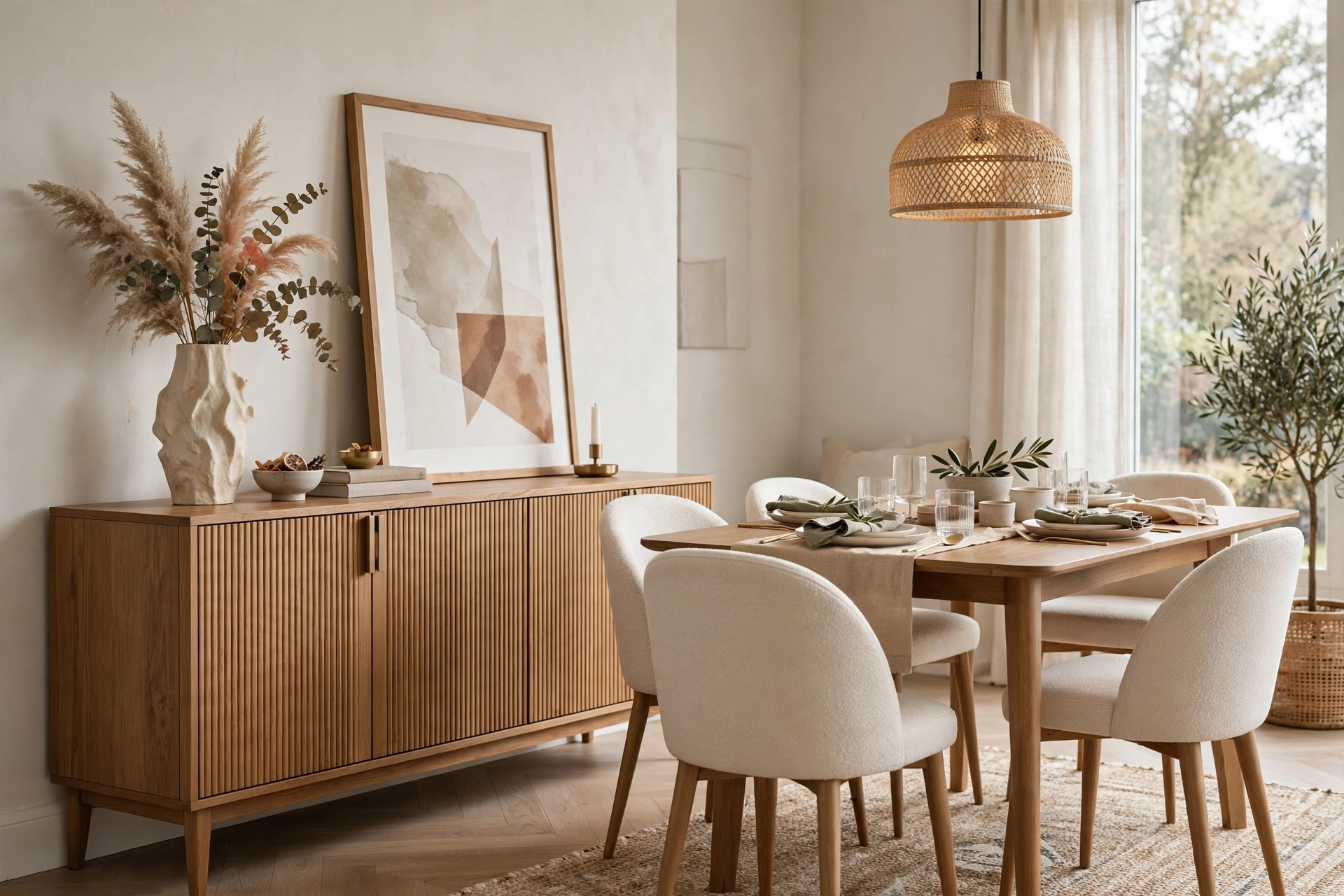
Every great dining room needs a sideboard. It grounds the wall, holds everything from extra plates to the bar setup, and gives you a styling surface for art, lamps, and a stack of beautiful cookbooks. In a modern room, look for clean-lined pieces with interesting details: fluted fronts, cane inserts, or slim tapered legs.
Style it simply — a pair of table lamps or one statement vase, a leaning art print, a small tray for candles. The sideboard is also where your room earns its entertaining credentials, so if you love hosting, consider a piece with wine storage or a lift-up serving shelf. Our guide to modern living room design ideas covers similar low-profile storage that keeps open-plan spaces looking calm.
10. Add Warm Minimalist Textures
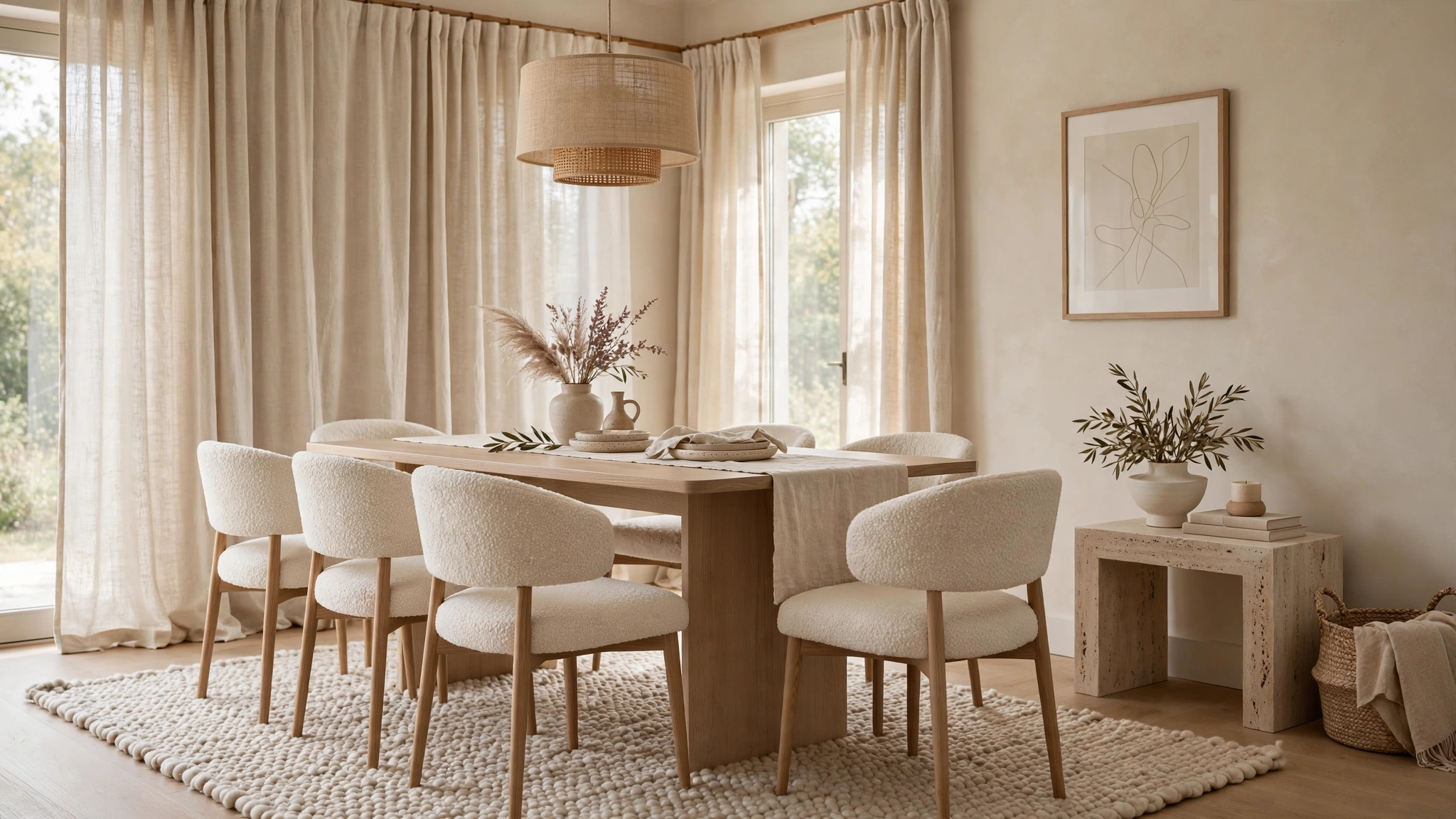
Minimalism gets a bad reputation for feeling sterile, but warm minimalism is anything but. The formula is simple: keep the shapes clean and the palette quiet, then pile on texture. Bouclé chair upholstery, a nubby wool rug, linen curtains, a travertine side table, a ceramic vase with visible throwing lines — each surface invites touch.
This is where modern dining rooms find their soul. You don’t need more stuff; you need more interesting surfaces on the stuff you have. Three textures minimum per sightline is a good rule of thumb: smooth wood against nubby fabric against cool stone keeps the eye moving and the room feeling layered rather than bare.
11. Style a Modern Tablescape
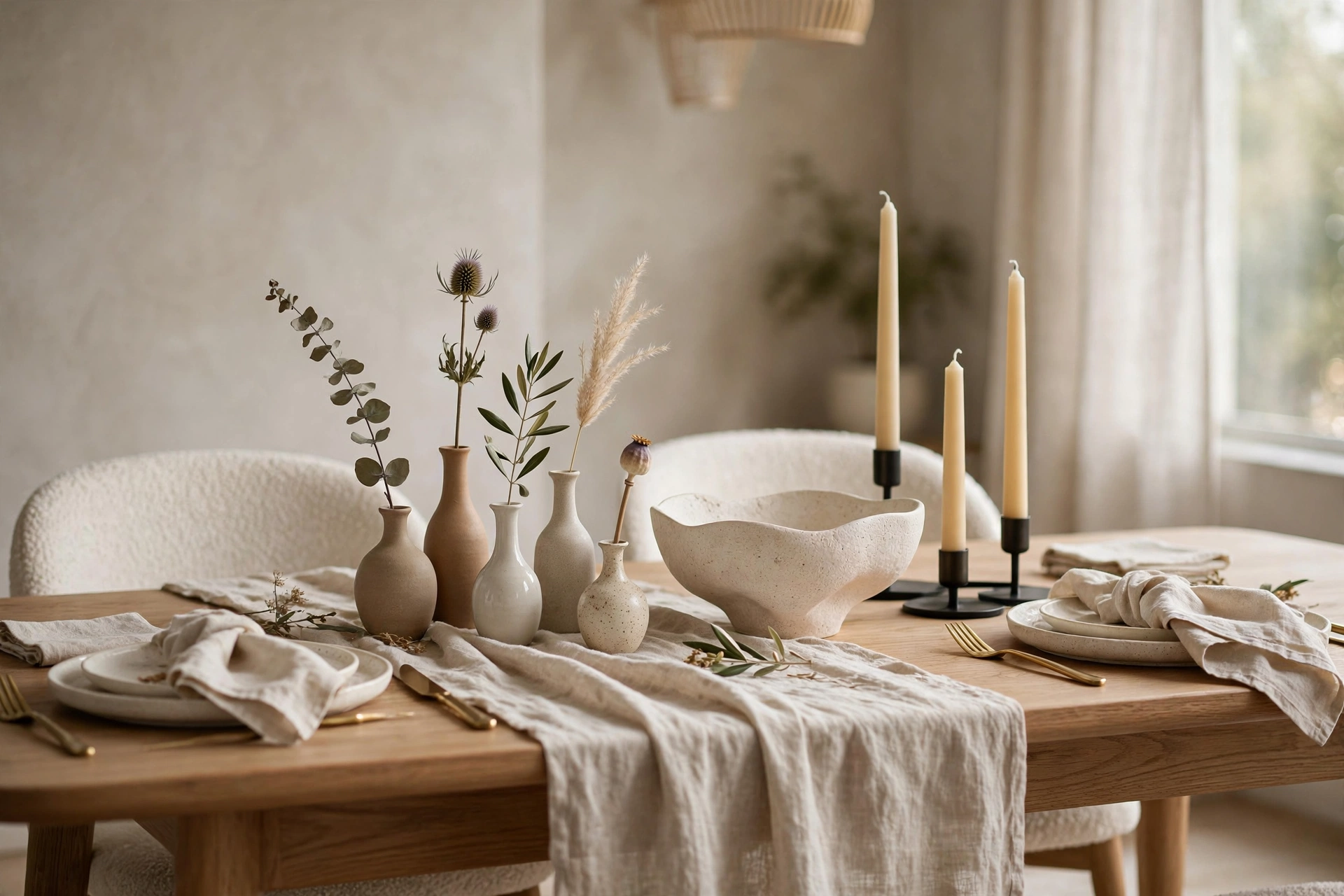
A dining table that looks beautiful between meals is a room that always feels finished. The modern tablescape is edited, not fussy: a low runner or a set of woven placemats, a cluster of bud vases with single stems, a sculptural bowl, and a pair of candlesticks. Everything low enough to see over, because conversation is the point.
Change it with the seasons rather than overhauling it — citrus and olive branches in spring, dried grasses in autumn, evergreen sprigs and taper candles in winter. A styled table also quietly signals that this room is used and loved, which is the whole spirit of modern entertaining.
12. Bring in Curved, Organic Furniture
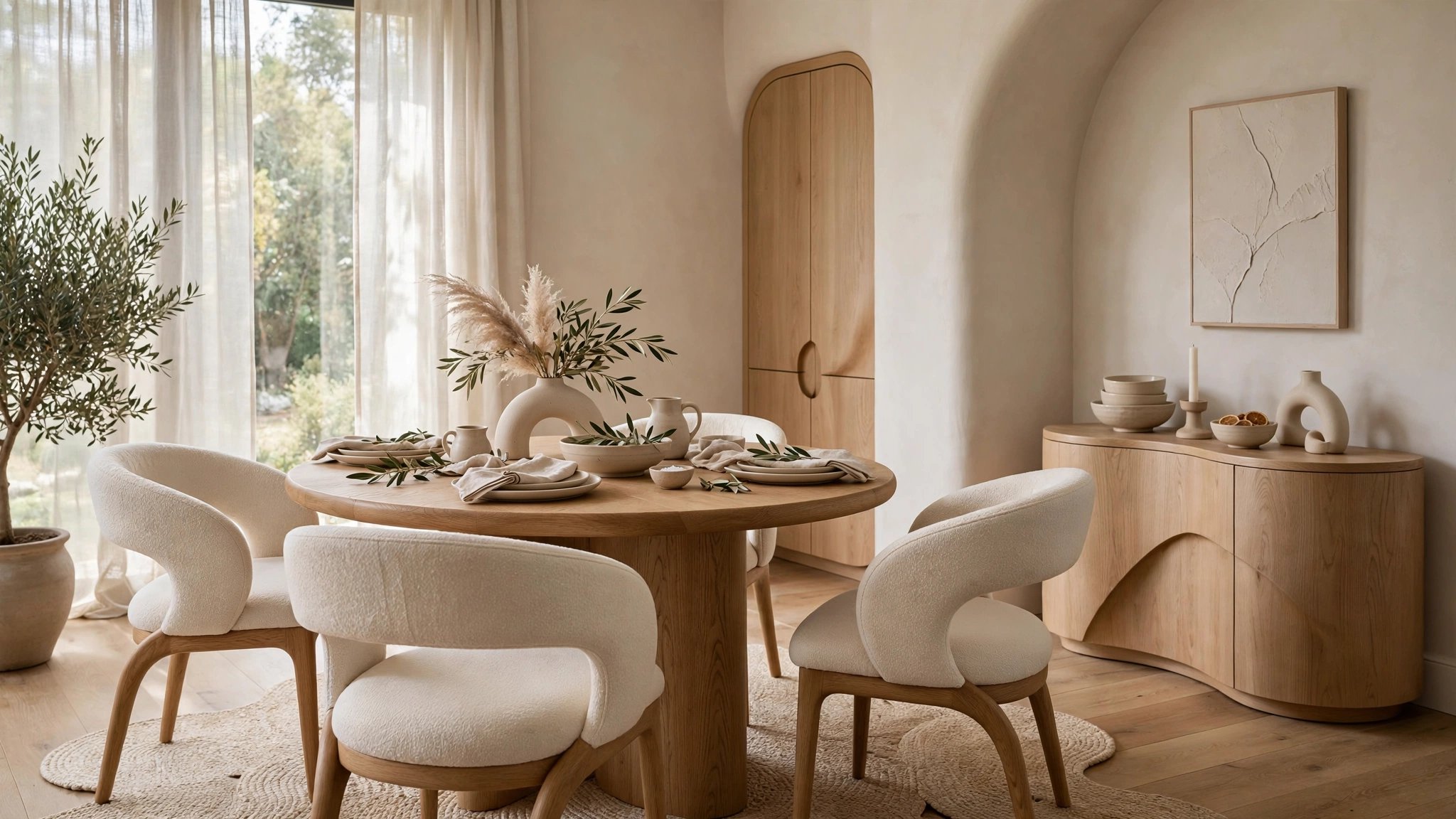
After a decade of sharp angles, curves are the modern dining room’s softening agent. An oval or round table eliminates the hierarchy of “head of the table” seating and makes conversation flow naturally. Curved-back chairs, an arched floor lamp in the corner, a round mirror on the wall — each curve is a small exhale in a rectilinear room.
Round tables have a practical superpower too: they seat more people comfortably in less floor space, since there are no corner dead zones. If you’re working with a compact dining area, Apartment Therapy’s guide to small dining room design ideas is full of clever layout tricks that prove tiny rooms can still feel generous.
13. Use a Moody Color-Drenched Wall
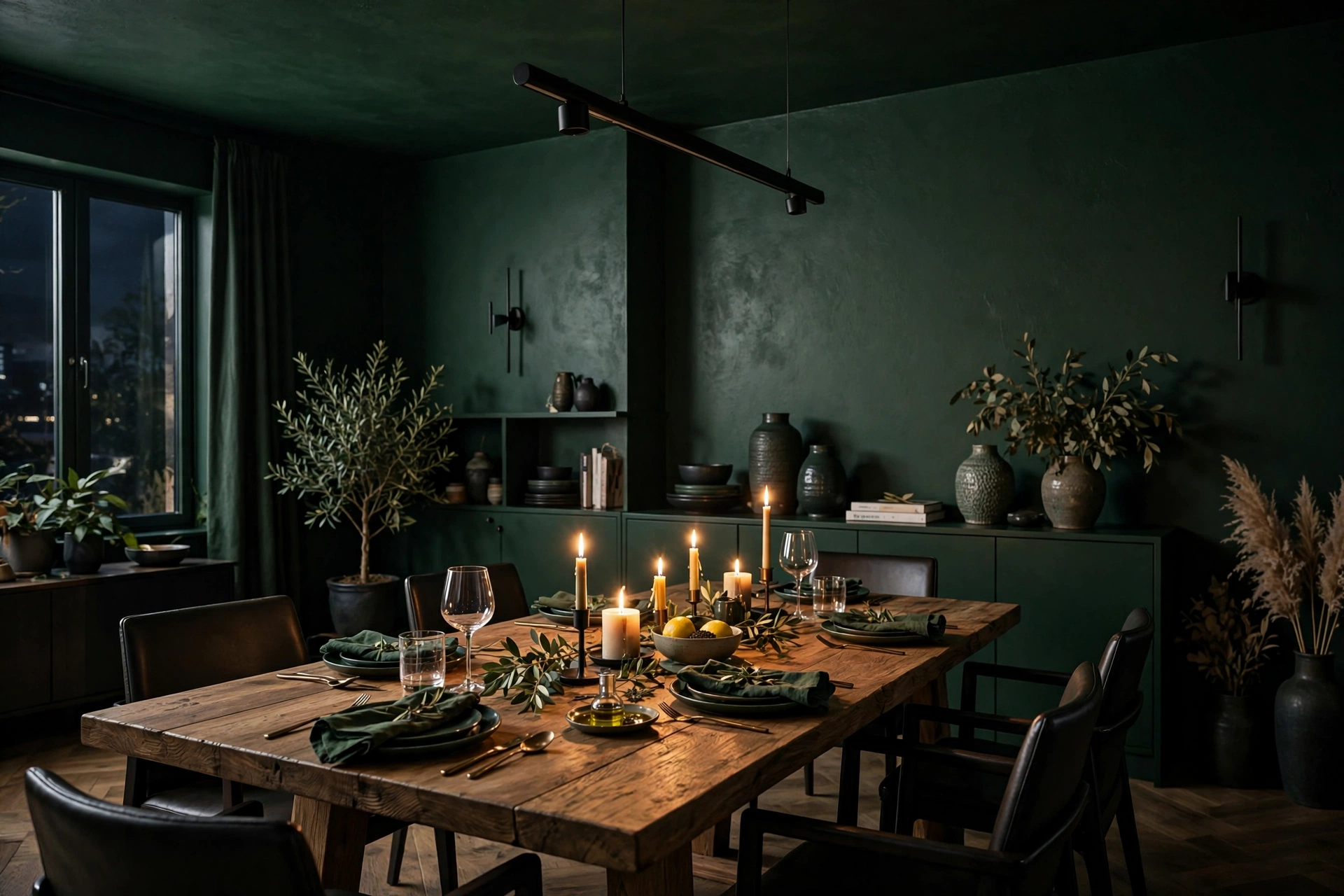
Color drenching — painting walls, trim, and even the ceiling in one rich hue — turns a dining room into an evening jewel box. Deep forest green, inky navy, warm charcoal, or aubergine all make candlelight glow and give dinner parties an instant atmosphere that white walls simply can’t.
The key is commitment: half measures (one accent wall, white ceiling) can look unfinished, while full drenching reads as confident and cocooning. Balance the drama with lighter furniture — a pale wood table, cream-upholstered chairs — so the room feels enveloping rather than heavy. Keep the art simple and let the color be the star.
14. Light It With Candlelight and Dimmers
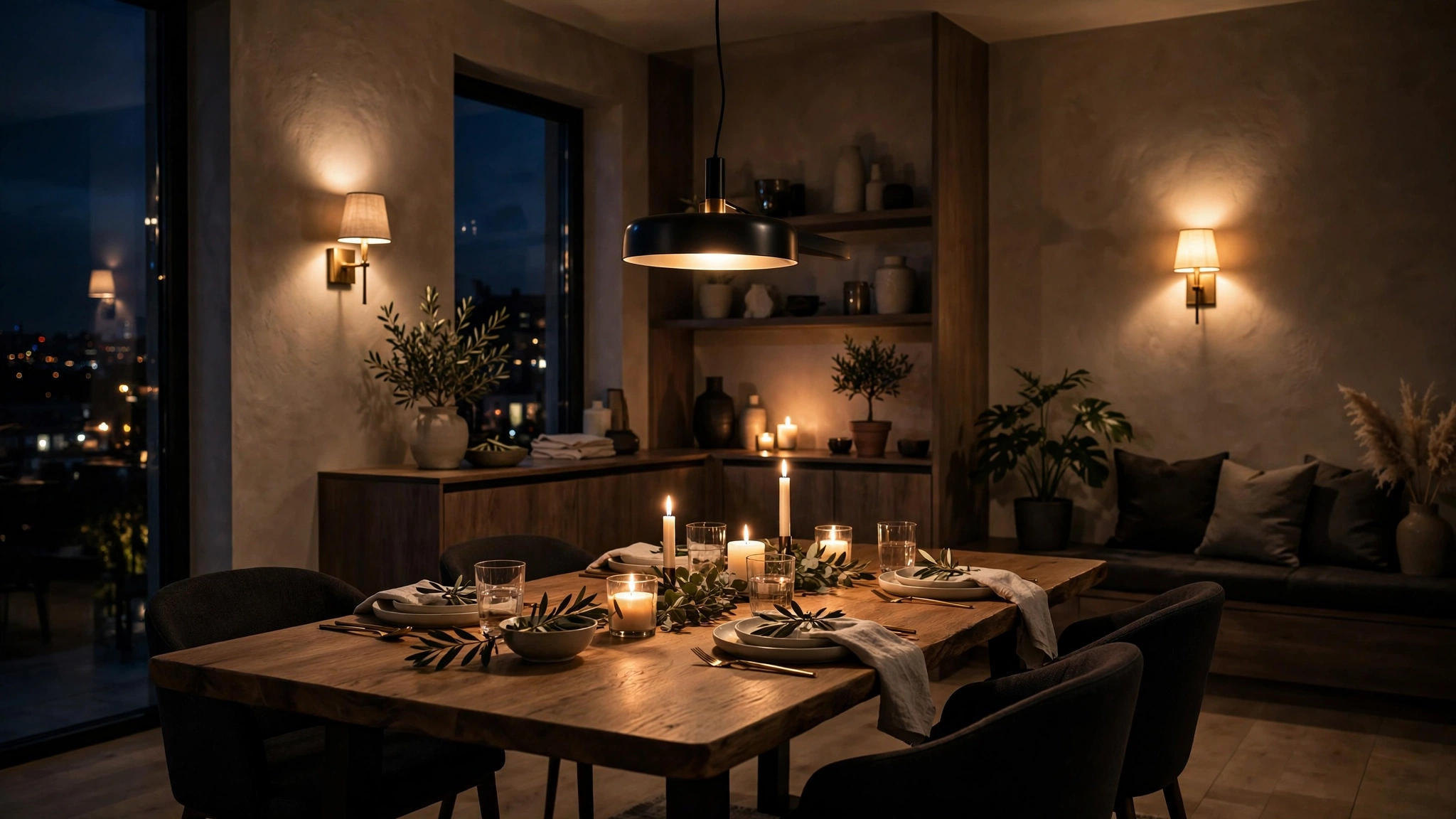
The difference between a dining room and a dining experience is lighting control. Overhead fixtures on a dimmer let you shift from bright family-dinner mode to low, flattering evening glow in one slide. Layer in candlelight — a row of tapers, a cluster of tea lights, one dramatic candelabra — and the room does half your hosting work for you.
Sconces on a dimmer are the modern dining room’s secret weapon: they wash the walls with warm light and free up table space that table lamps would steal. Aim for warm bulbs around 2700K everywhere; cool white light makes food look unappetizing and faces look tired, which is the opposite of hospitality.
15. Zone an Open-Plan Dining Area
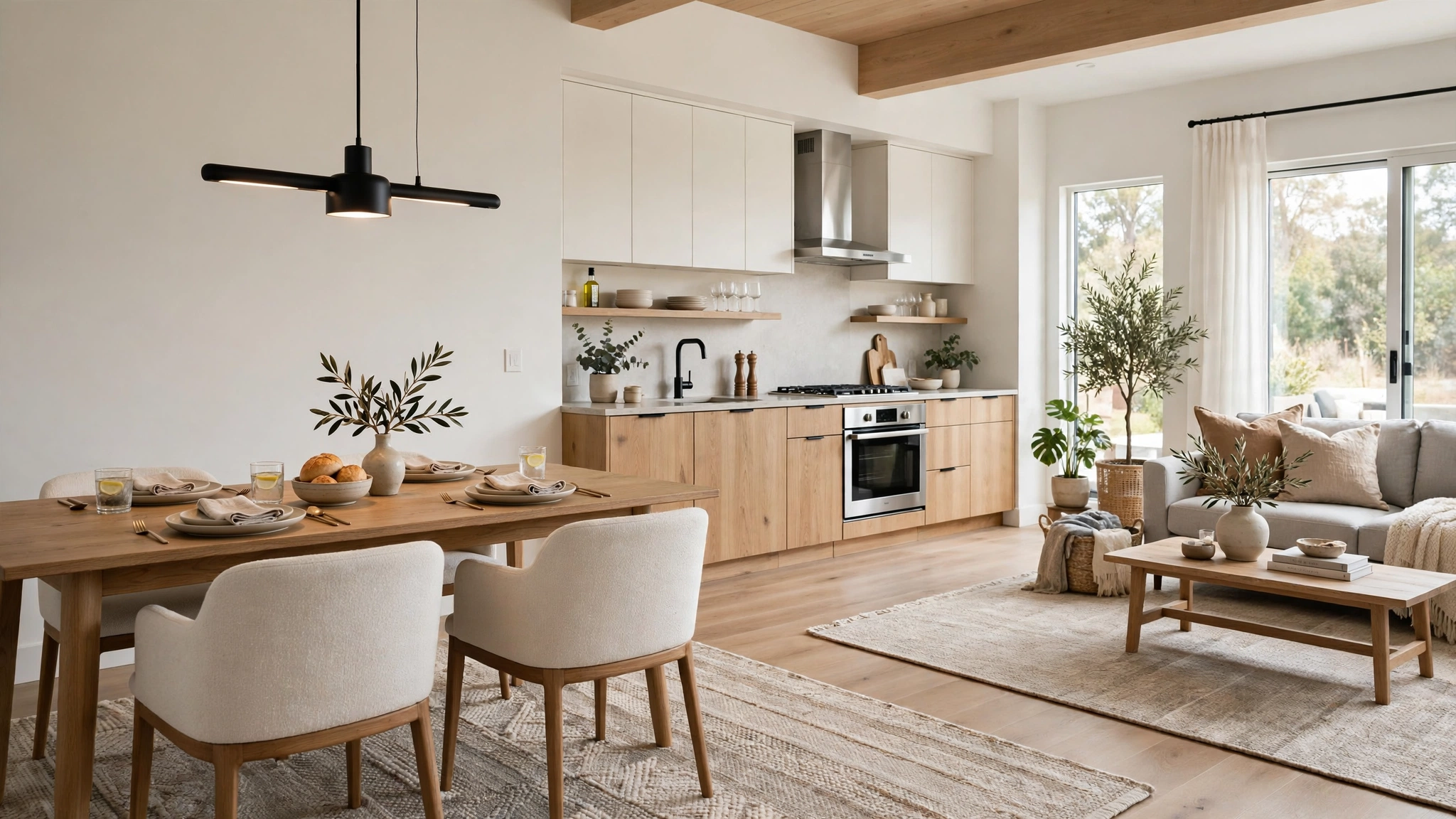
Most modern dining rooms aren’t rooms at all — they’re zones within open-plan living. The trick is giving the dining area its own identity without walls: a rug that defines the footprint, a pendant hung low over the table, and a sideboard or open shelving unit that acts as a soft divider. Suddenly the “corner by the kitchen” reads as a real dining room.
Keep the palette and materials consistent with the adjoining spaces so the zones feel related, not competing. Repeating one material — the same oak as the kitchen island, the same black metal as the living room shelving — stitches the whole floor together. For more on carrying one style across connected rooms, see our modern kitchen interior design ideas and Scandinavian kitchen design ideas — both built for open, flowing homes.
Frequently Asked Questions
What makes a dining room look modern?
Clean lines, uncluttered surfaces, and a restrained palette are the foundation. Add one sculptural element — a statement pendant, an art piece, an interesting chair silhouette — and warm it up with natural materials like wood, stone, and textured fabrics. Modern is less a specific style than an attitude: edited, intentional, and comfortable.
What is the best table shape for a modern dining room?
It depends on your room. Rectangular tables suit long, narrow rooms and larger gatherings; round or oval tables are better for square rooms, encourage conversation, and fit more people into less space. Glass tops make small rooms feel larger, while live-edge wood adds organic warmth to minimalist schemes.
How do I make my dining room feel cozy without cluttering it?
Layer texture instead of adding objects: a soft rug, upholstered chairs, linen curtains, and warm dimmable lighting do more for coziness than any collection of decor. Candlelight is the cheapest atmosphere upgrade there is. Keep surfaces mostly clear so the few styled pieces you do have can breathe.
Can a modern dining room work in a small space?
Absolutely — modern design’s clean lines are naturally space-friendly. Choose a round table, consider banquette seating against the wall, use a glass top or slim-profile furniture to keep sightlines open, and define the zone with a rug and a low-hung pendant. Light colors and a mirror on the wall multiply the sense of space.
How many chairs should I have for entertaining?
A good rule: own seating for your everyday number plus four. For most households that means six chairs around a table that seats six comfortably — enough for a dinner party without storing a dozen chairs you’ll rarely use. Folding or stackable modern chairs in a matching finish can live in a closet and join the table when guests arrive.
Keep Exploring
A modern dining room doesn’t ask for perfection — it asks for intention. Start with the light above the table and the chairs around it, add warmth through wood and texture, and let the room evolve with the way you actually live and gather.
If these modern dining room design ideas have you rethinking the whole open-plan flow, keep going: our kitchen and living room guides pick up right where this one leaves off, with the same clean lines and warm minimalism carried through every connected space. And the next time friends linger at your table long after dessert, you’ll know the design did its quiet work.





[…] stability and lead paint before bringing it to the table — character is wonderful, wobble is not. Our modern dining room ideas show how clean modern lines pair beautifully with industrial rawness when the mix is […]
[…] This approach suits contemporary rooms and is more forgiving than a single large fixture if your ceiling is off-center. For a modern room to pair them with, see our 15 modern dining room design ideas with effortless style. […]