

There’s a particular kind of calm you feel when you walk into a room where everything has a purpose and nothing shouts for attention. That’s the promise of Japandi — a design philosophy born from the marriage of Japanese minimalism and Scandinavian warmth. If your bedroom currently doubles as a laundry station, a home office, and a storage unit, these Japandi bedroom design ideas will help you strip it back to what actually matters: rest.
The name tells you the recipe. From Japan comes wabi-sabi — the art of finding beauty in imperfection — along with low-slung furniture and a deep respect for natural materials. From Scandinavia comes hygge, that untranslatable sense of coziness, plus pale woods, soft textiles, and light-filled simplicity. What both traditions share is restraint: fewer things, better made, arranged with intention.
The thirteen Japandi bedroom design ideas below are practical, not precious. Each one works on its own, but layered together they build a bedroom that feels serene without feeling sterile — a genuine retreat from the noise of the day.
1. Low Platform Bed
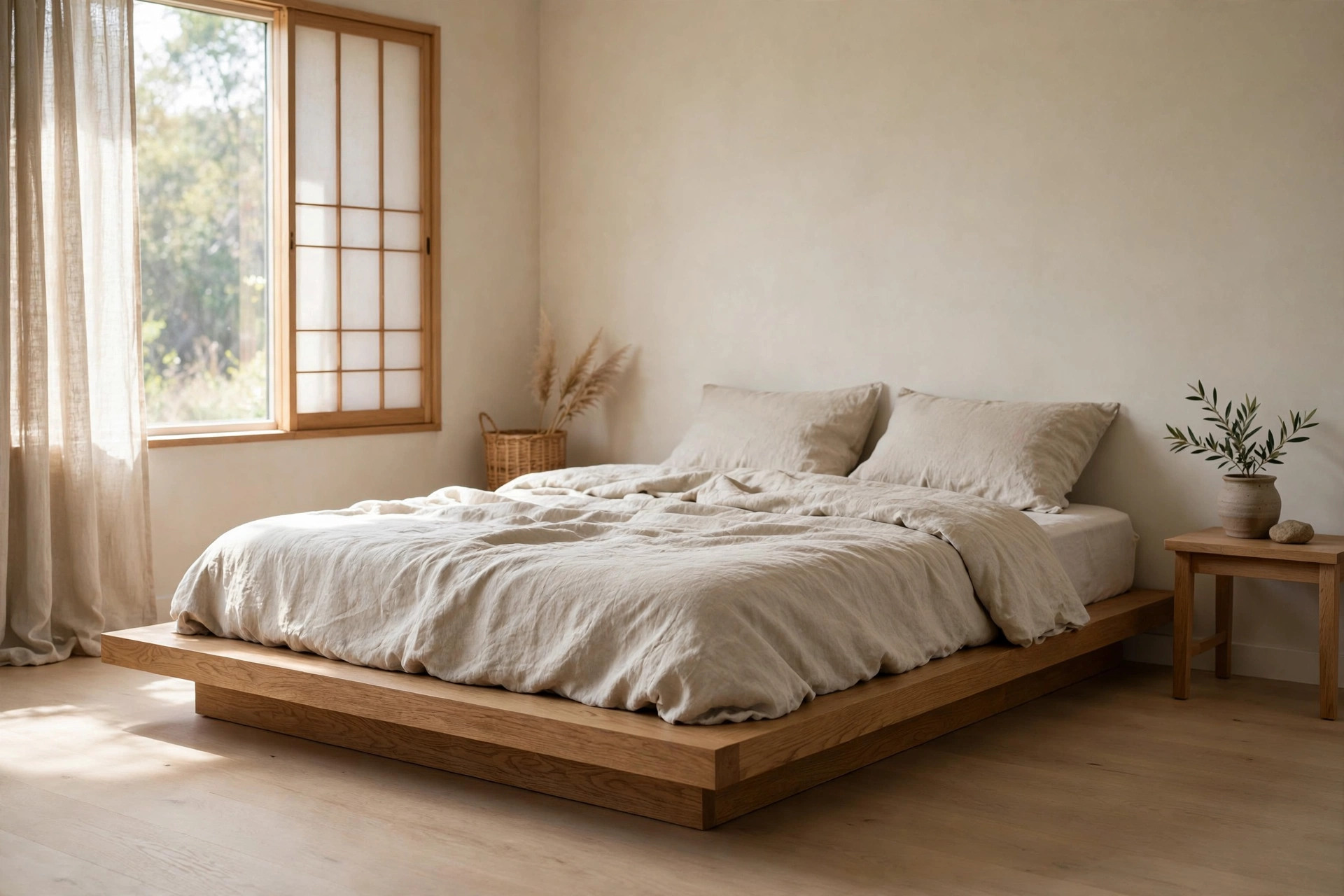
Start with the anchor of every Japandi bedroom: a low platform bed. Traditional Japanese interiors keep furniture close to the floor, a trick that makes ceilings feel taller and the whole room feel more grounded and calm. Choose a simple frame in solid oak or ash with clean, straight lines — no bulky headboard, no carved details. If you want a headboard, keep it low and upholstered in oatmeal linen. Position the bed with breathing room on both sides, ideally facing a window so you wake up to natural light. Keep the styling restrained: two sleeping pillows and a single lumbar cushion is the Japandi maximum. Anything more starts to feel like clutter.
2. Warm Neutral Palette
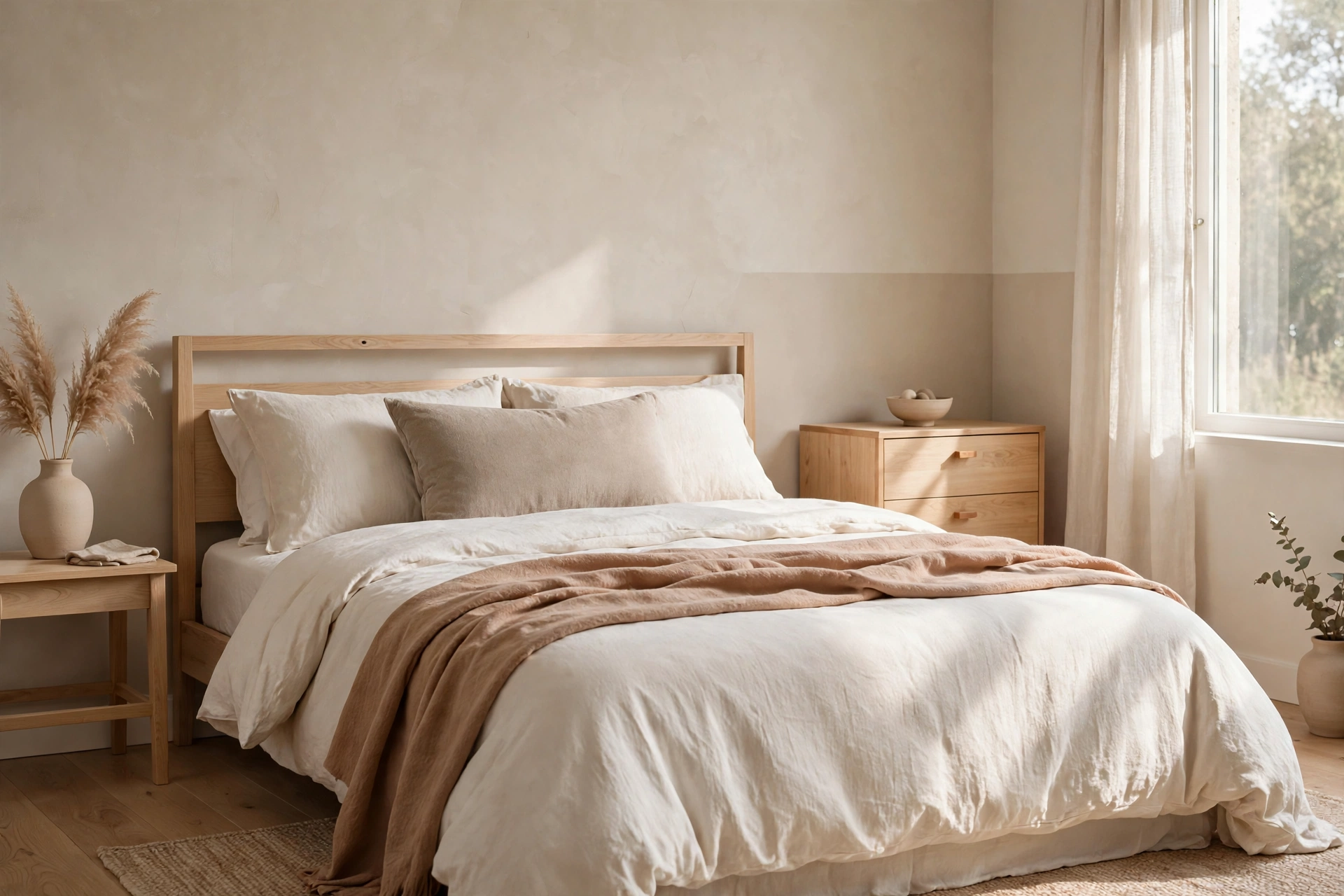
Japandi color palettes live on the warm side of neutral. Build yours around beige, greige, warm white, soft clay, and mushroom — colors that feel like morning light rather than a blank page. Paint walls in a warm off-white with a slight creamy undertone (avoid stark, blue-white shades, which read as cold). Layer bedding in oatmeal and natural flax tones, then add a single deeper accent — a clay-colored throw or a mushroom cushion — for depth. The rule is tonal, not matchy: everything should sit within the same warm family so the eye moves across the room without interruption.
3. Natural Wood Furniture
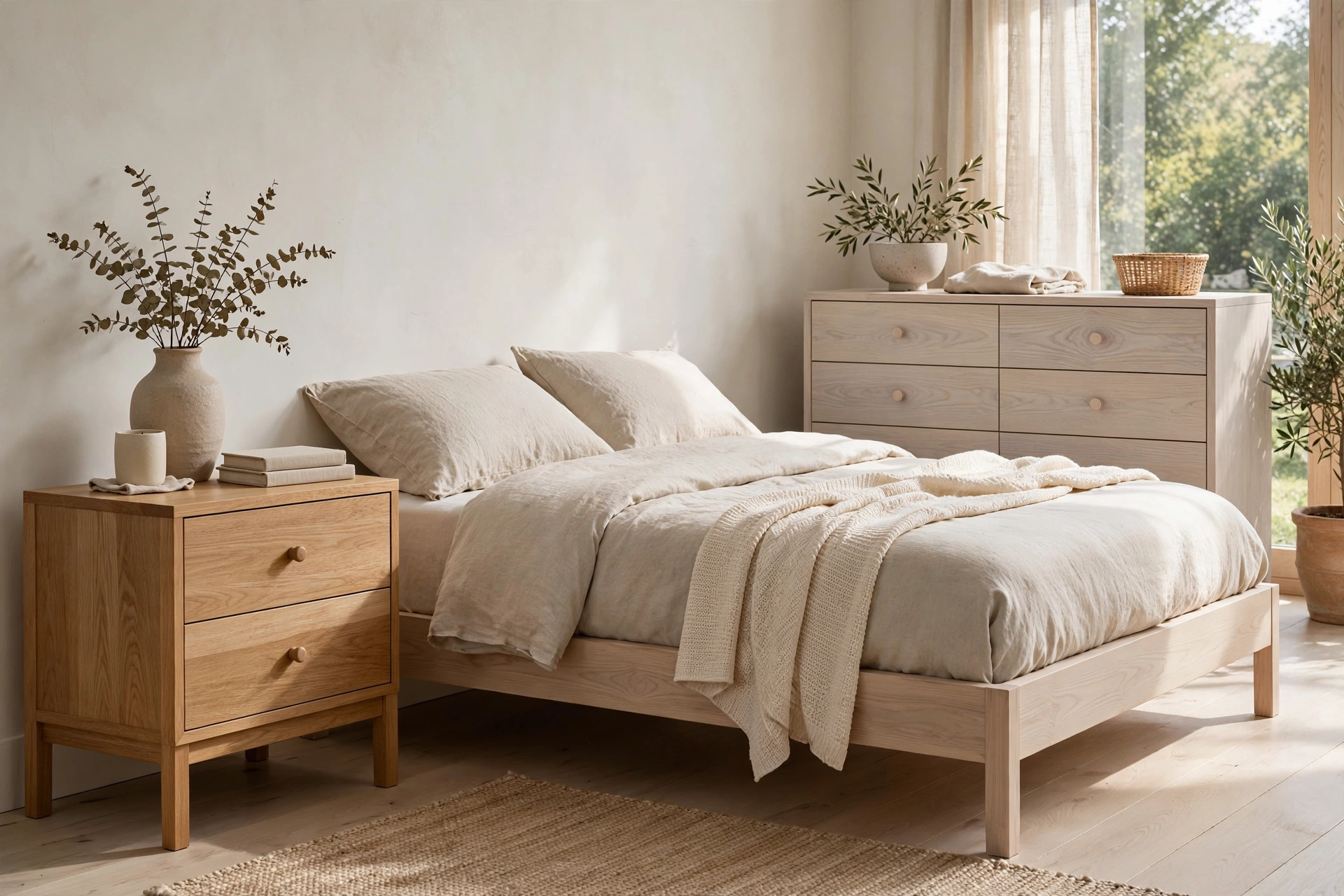
Wood is the backbone of Japandi design, so let it show. Choose nightstands and a dresser in light oak or ash with a clear, matte finish that reveals the grain — heavy stains and high-gloss lacquers have no place here. Keep silhouettes simple: straight legs, flat fronts, minimal hardware (or none at all, with push-to-open drawers). A good layout is one nightstand per side and a single low, wide dresser against the longest wall. If your budget is tight, a single beautiful oak piece beats three mediocre ones; Japandi rewards fewer, better things.
4. Crisp Linen Bedding
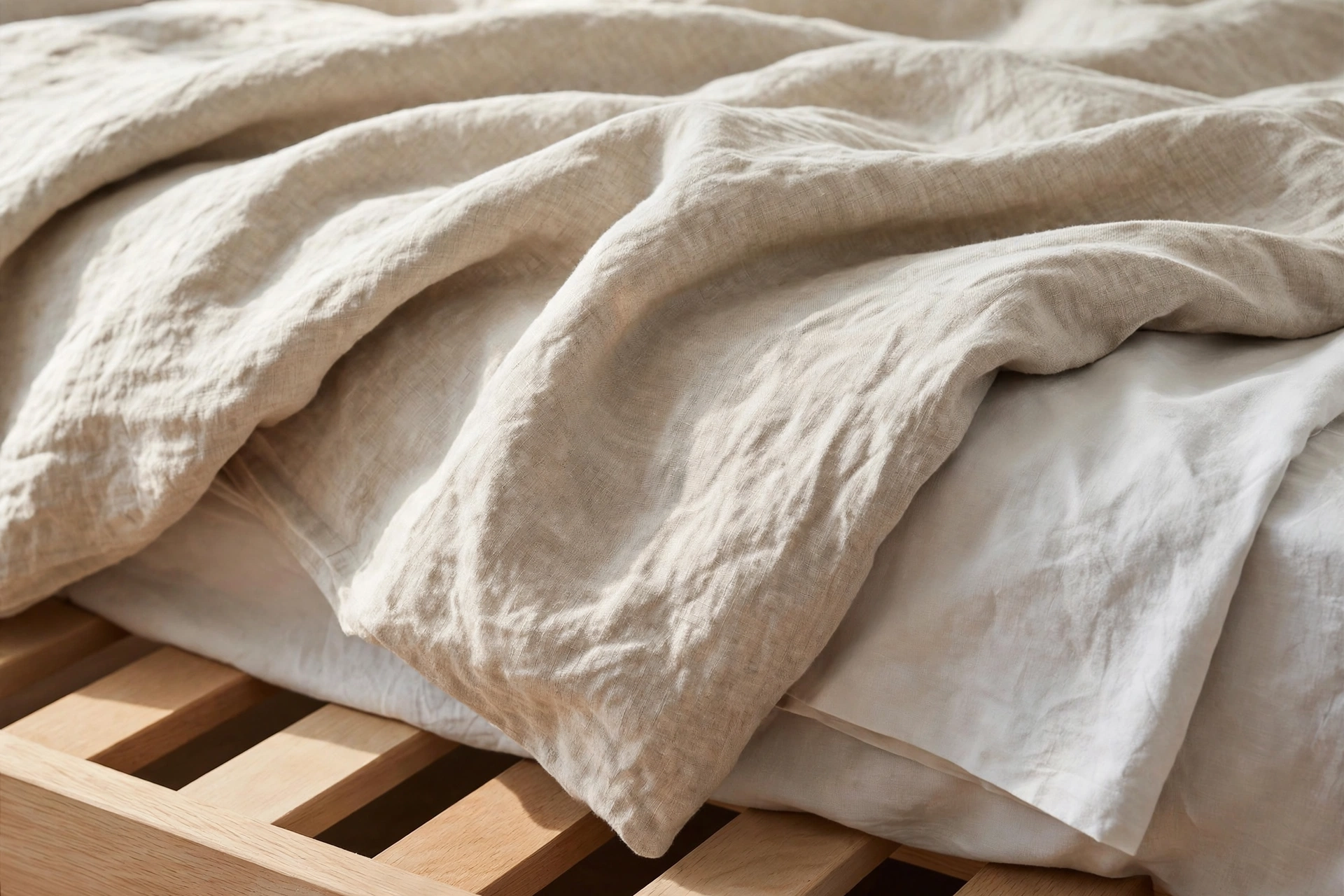
Nothing says Japandi bedroom quite like washed linen. Choose a duvet set in oatmeal, natural, or soft white — pure linen or a linen-cotton blend breathes beautifully and gets softer with every wash. Here’s the liberating part: wrinkles are not just acceptable, they’re the point. That relaxed, lived-in texture is wabi-sabi in fabric form, so skip the iron forever. Layer a flat cotton sheet underneath in a slightly lighter tone for contrast, and finish with a lightweight coverlet folded across the foot of the bed. Wash in cool water and line-dry when you can; linen lasts for decades when treated gently.
5. Paper Lantern Lighting
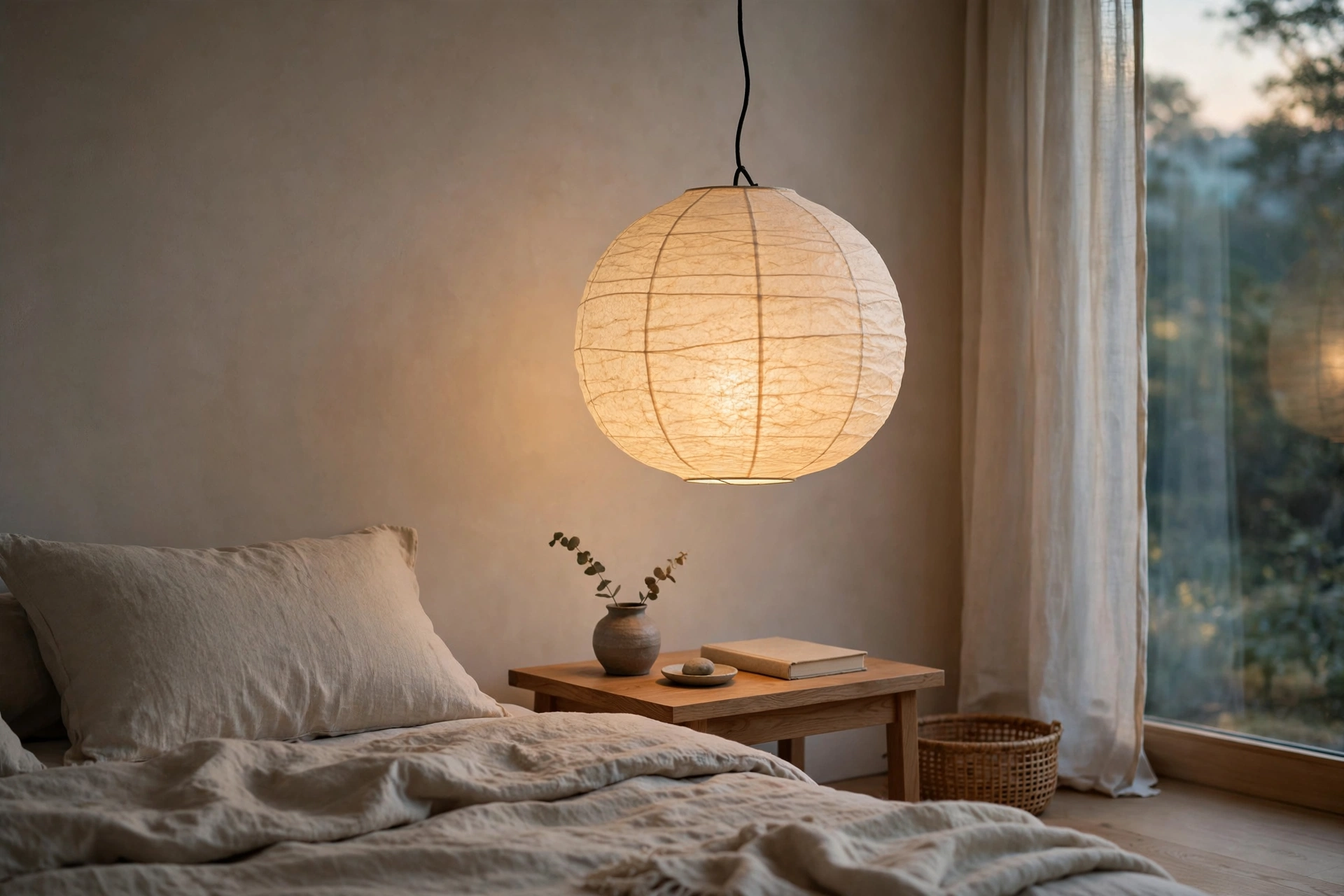
Overhead lighting can make or break the mood, and Japandi bedrooms call for glow, not glare. A washi paper pendant — in the spirit of Isamu Noguchi’s iconic Akari lanterns — casts a soft, diffused light that flatters everything in the room, making it one of the highest-impact, lowest-cost Japandi bedroom design ideas on this list. Hang one low over a reading corner or centered above the bed, and fit it with a warm 2700K bulb (never cool white). At night, pair the pendant with a small ceramic table lamp so you have pools of warm light instead of one harsh source.
6. Minimalist Floating Nightstands
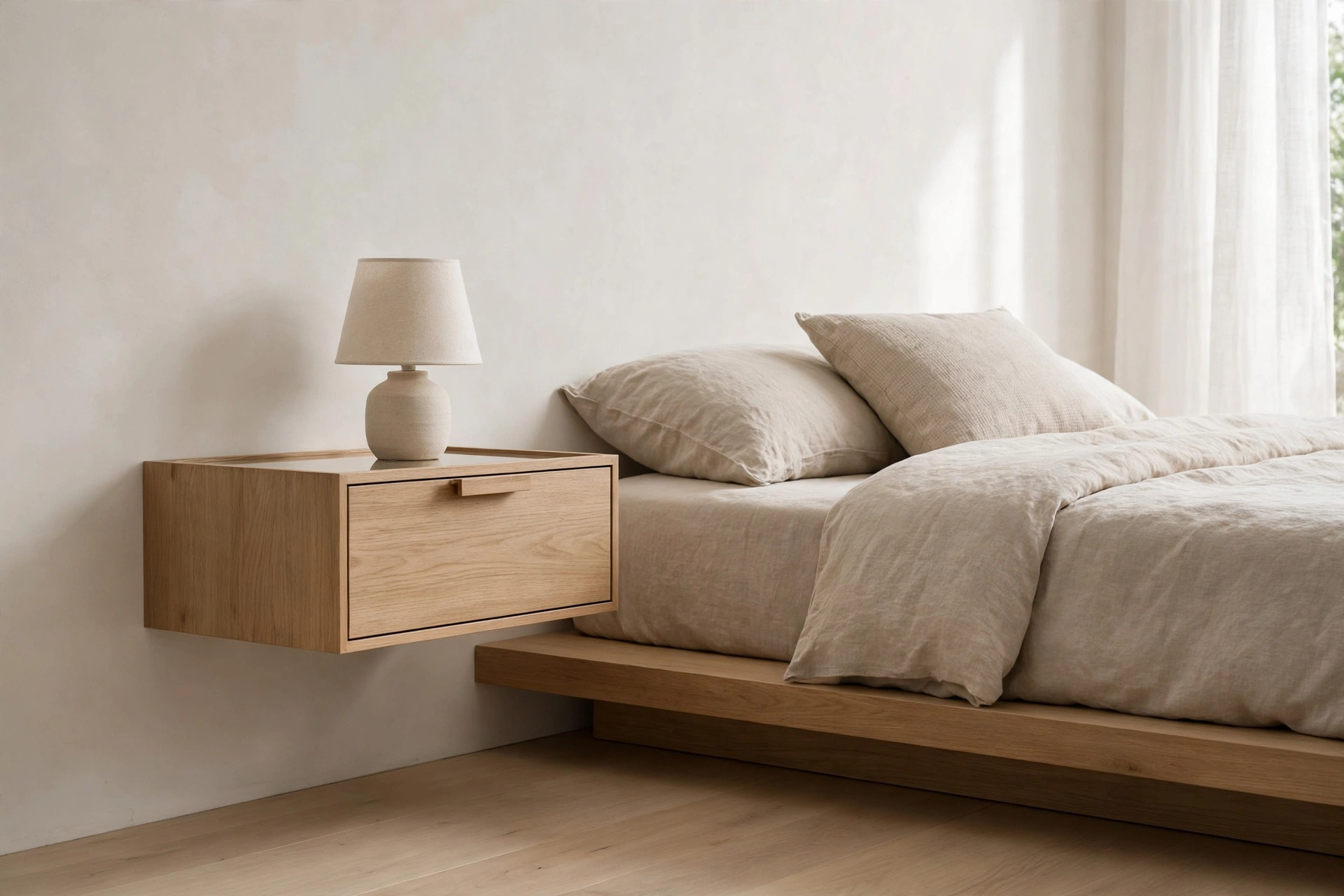
Wall-mounted nightstands are a small change with an outsized effect. By floating a light-oak shelf or single-drawer box beside the bed, you free up floor space, which makes the room feel larger and makes cleaning effortless — very much in the Japandi spirit. Mount them a few inches above mattress height so a book and a glass of water are within easy reach. Then enforce the styling rule: lamp plus one small object, nothing more. A floating nightstand with a clear surface is the difference between a bedroom that looks calm and one that only aspires to it.
7. Wabi-Sabi Ceramics
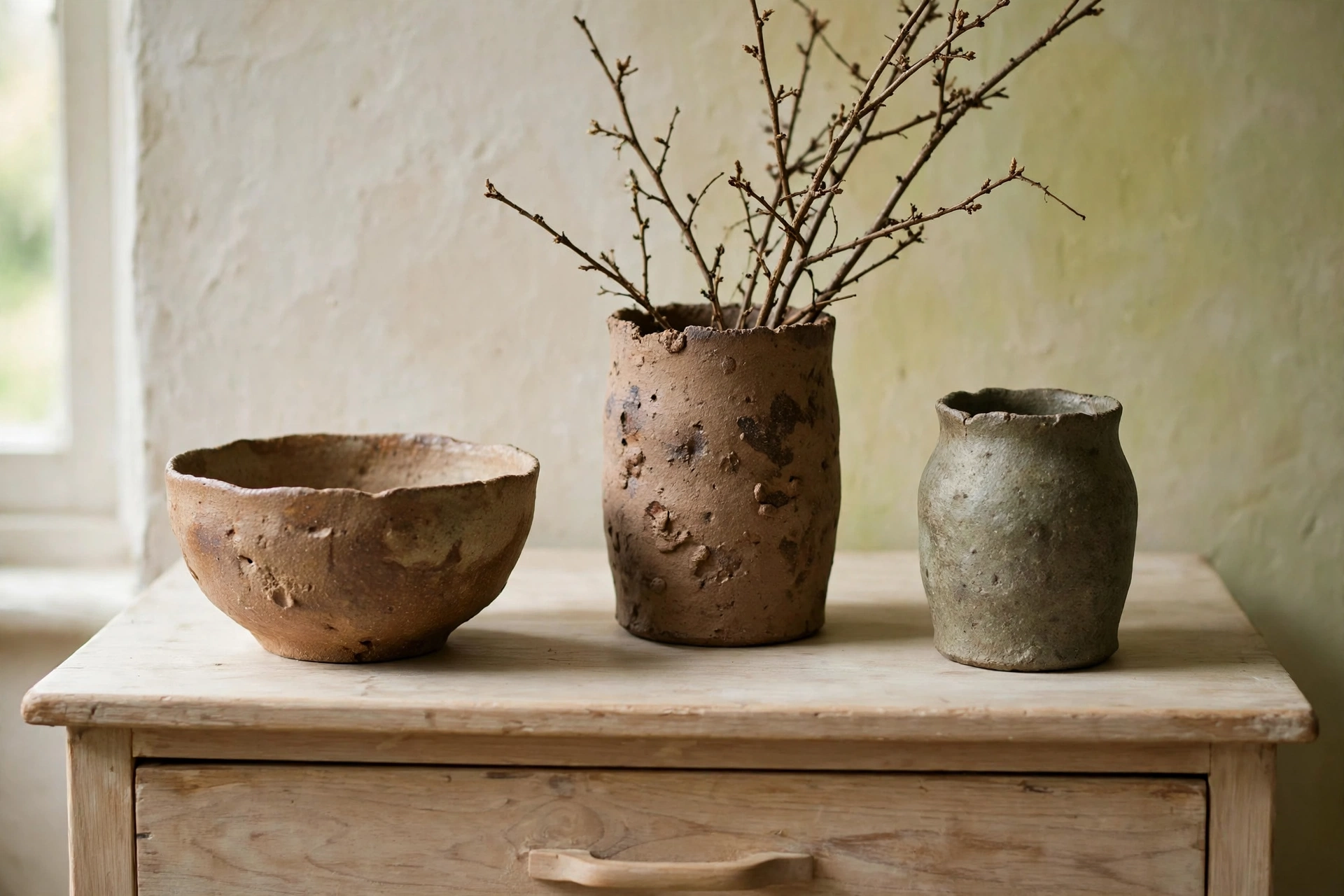
Japandi rooms need at least one nod to wabi-sabi — the Japanese appreciation of imperfection — and handmade ceramics are the easiest way in. Look for stoneware vases and bowls with uneven rims, visible throwing lines, and matte, earthy glazes; each piece should feel quietly one of a kind. Style a group of two or three on the dresser — odd numbers always look more natural — and put dried branches, pampas grass, or nothing at all inside them. These small, imperfect objects do important work: they keep the minimalism from feeling cold or mass-produced.
8. Shoji Screen Divider
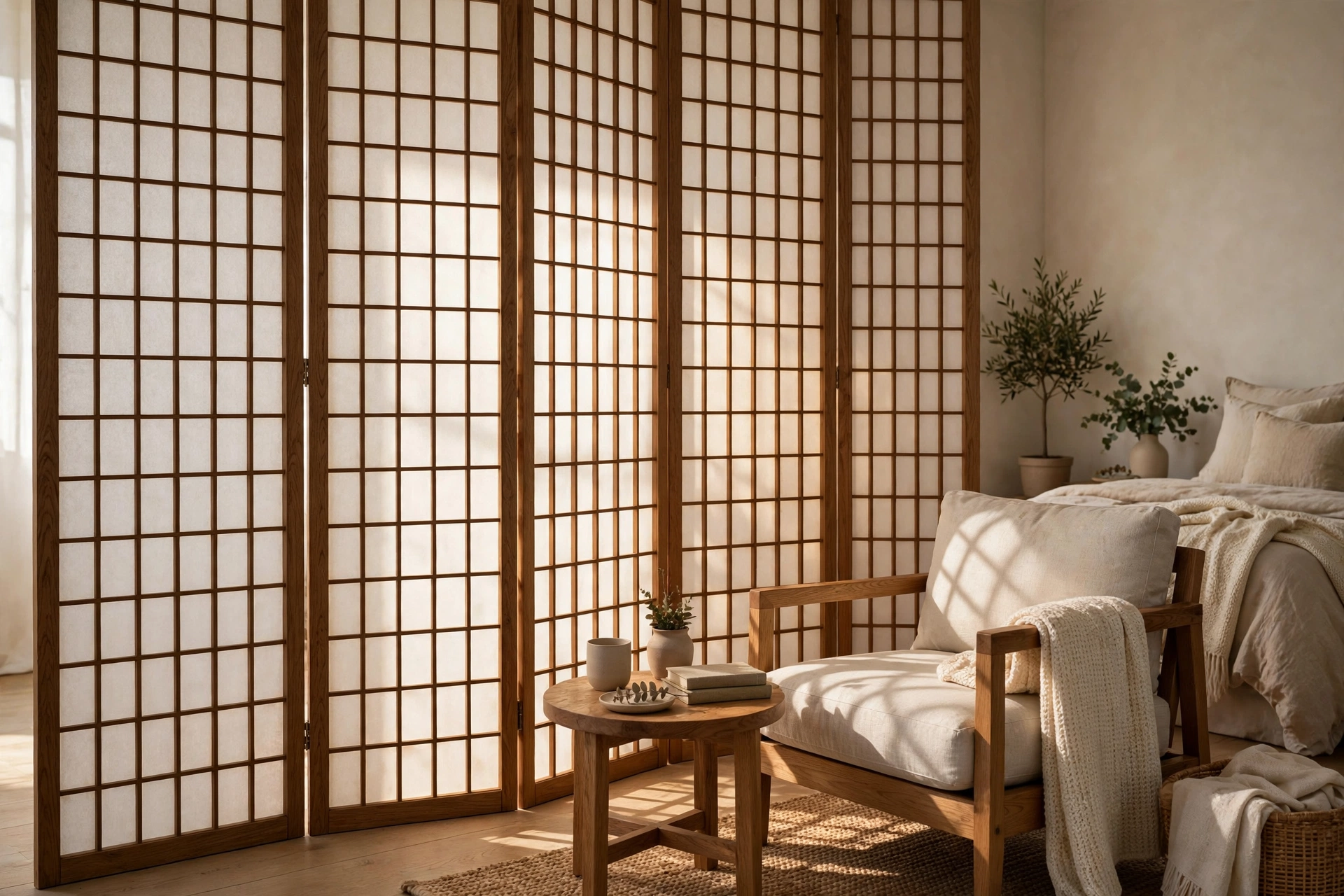
If your bedroom has to multitask — a reading nook, a work corner, a dressing area — a shoji screen is the most elegant way to zone it. The classic wooden lattice with translucent rice-paper panels divides space without blocking light, so both zones stay bright and airy. Place one to carve out a small reading chair corner, or use it to hide an open wardrobe or a radiator you’d rather not see. Choose a screen in natural or lightly stained wood, and keep the paper panels clean; the whole point is that soft, filtered glow they create.
9. One Sculptural Indoor Plant
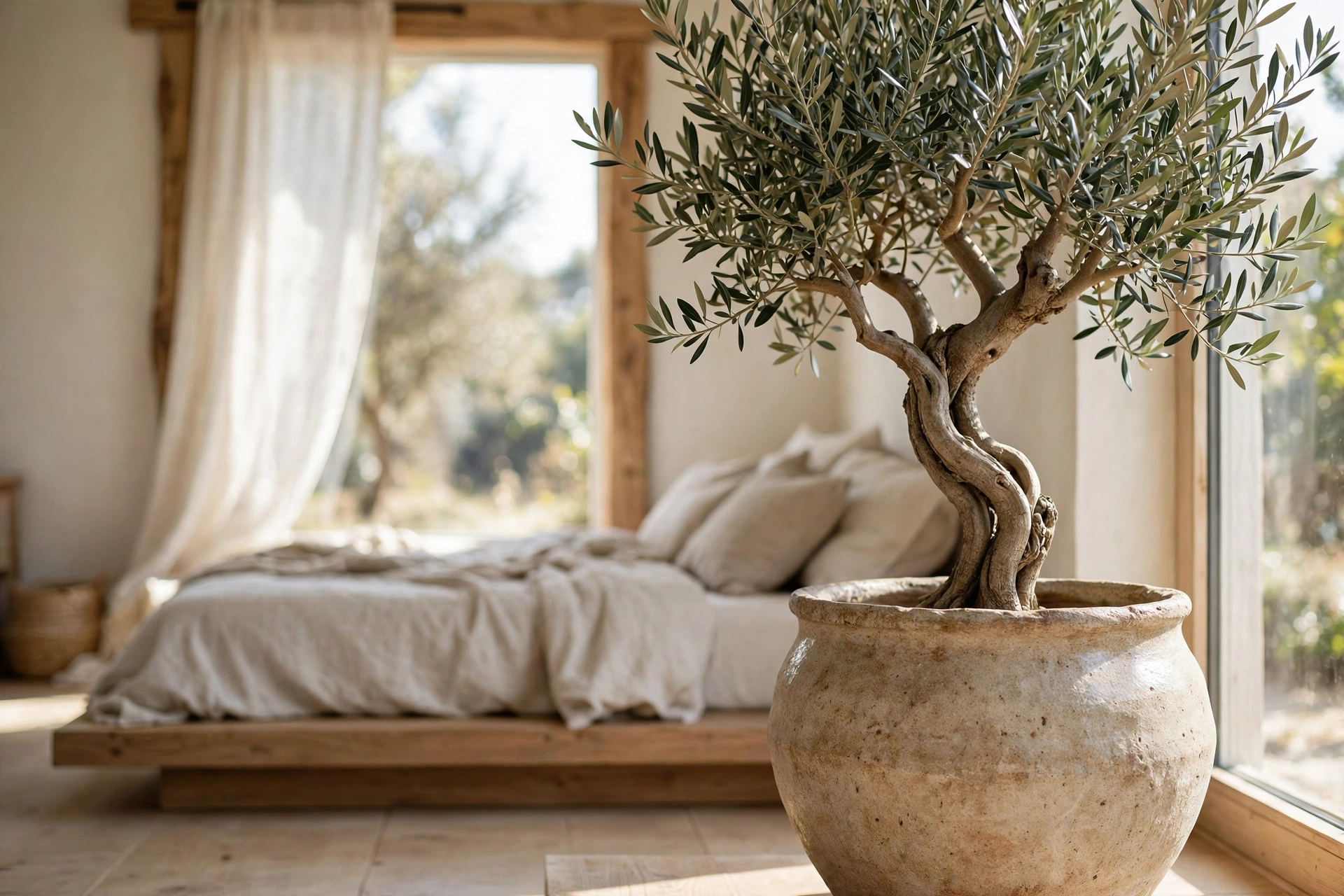
In Japandi design, greenery follows the same less-is-more rule as everything else: one plant, chosen well, beats a jungle. A single olive tree or fiddle-leaf fig in a large handmade ceramic pot brings height, life, and a sculptural silhouette to the room. Position it near the window where it gets bright, indirect light, and let it be the tallest thing in the room after the pendant light. Water deeply but infrequently, and wipe the leaves occasionally — a dusty plant undermines the whole calm-clean effect you’re building.
10. Tatami-Style Rug
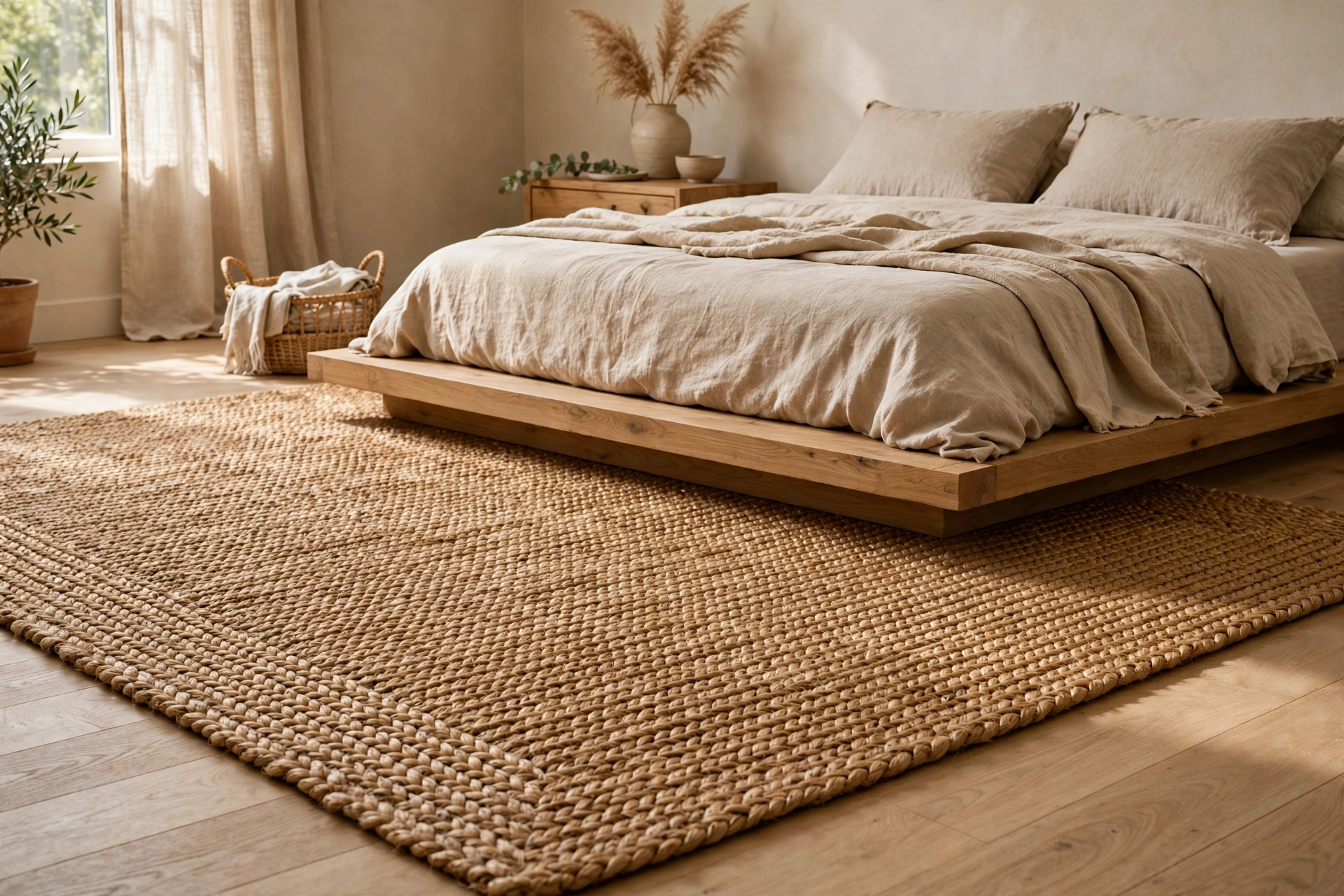
Japanese bedrooms traditionally sit close to the floor, and a natural-fiber rug recreates that grounded feeling underfoot. Choose a low-pile rug in jute, sisal, or seagrass — large enough to extend at least 60 cm beyond each side of the bed so your feet land on texture every morning. The tight weave and earthy tone add warmth without pattern, which keeps the room visually quiet. Avoid thick shag or bold geometric prints; in a Japandi bedroom, the rug’s job is to be felt more than seen.
11. Clutter-Free Surfaces with Hidden Storage
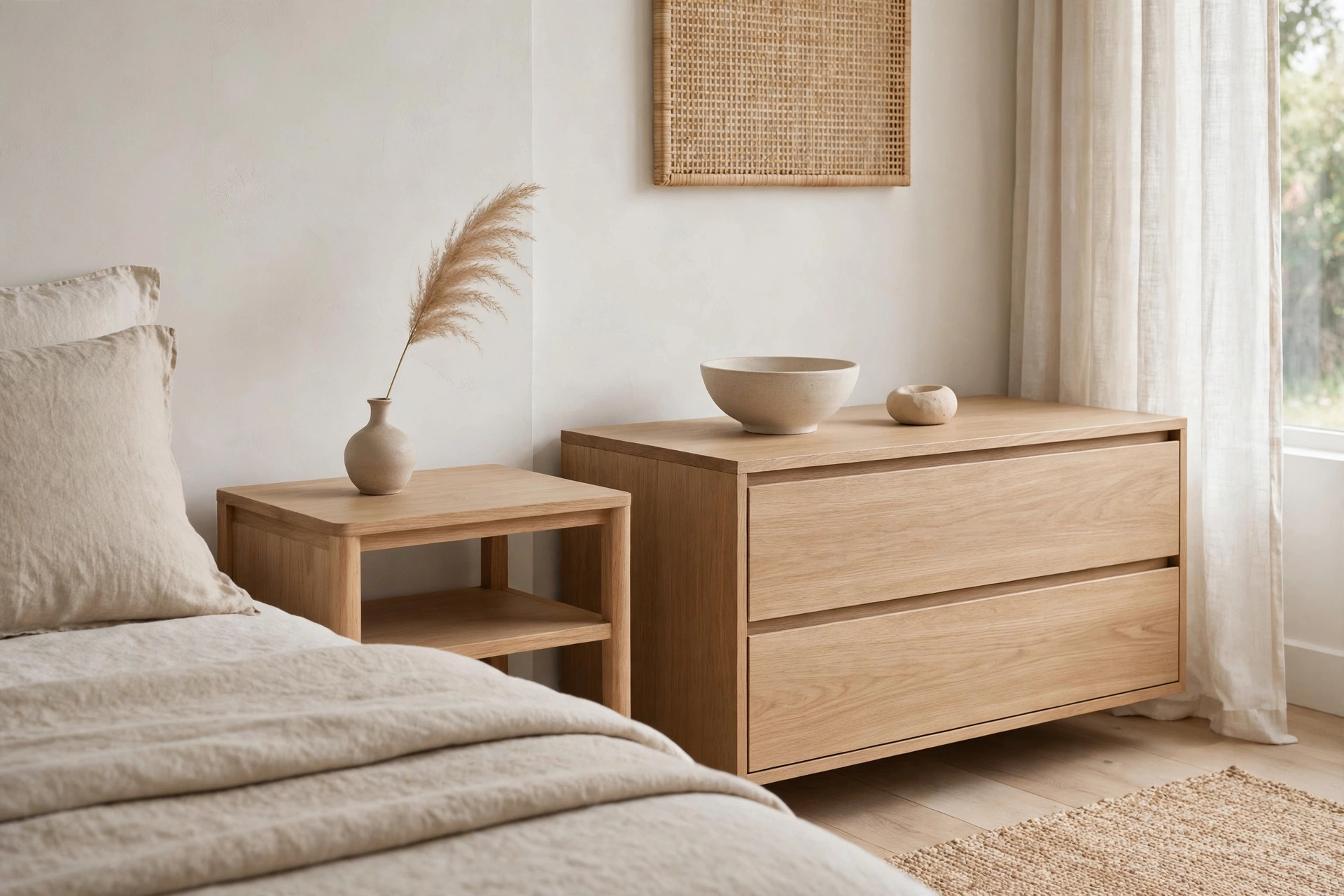
Of all the Japandi bedroom design ideas on this list, this is the unglamorous one that makes the others work. Japandi calm is impossible if every surface is covered, so give everything a hidden home: a platform bed with built-in drawers, a dresser with deep drawers instead of open shelves, and lidded baskets inside the wardrobe. Adopt the nightstand rule from idea #6 across the whole room — every surface should hold no more than two or three intentional objects. The one-in-one-out habit seals it: when something new enters the bedroom, something old leaves. Storage you can’t see is the real secret of a clutter-free retreat.
12. Oversized Minimal Wall Art
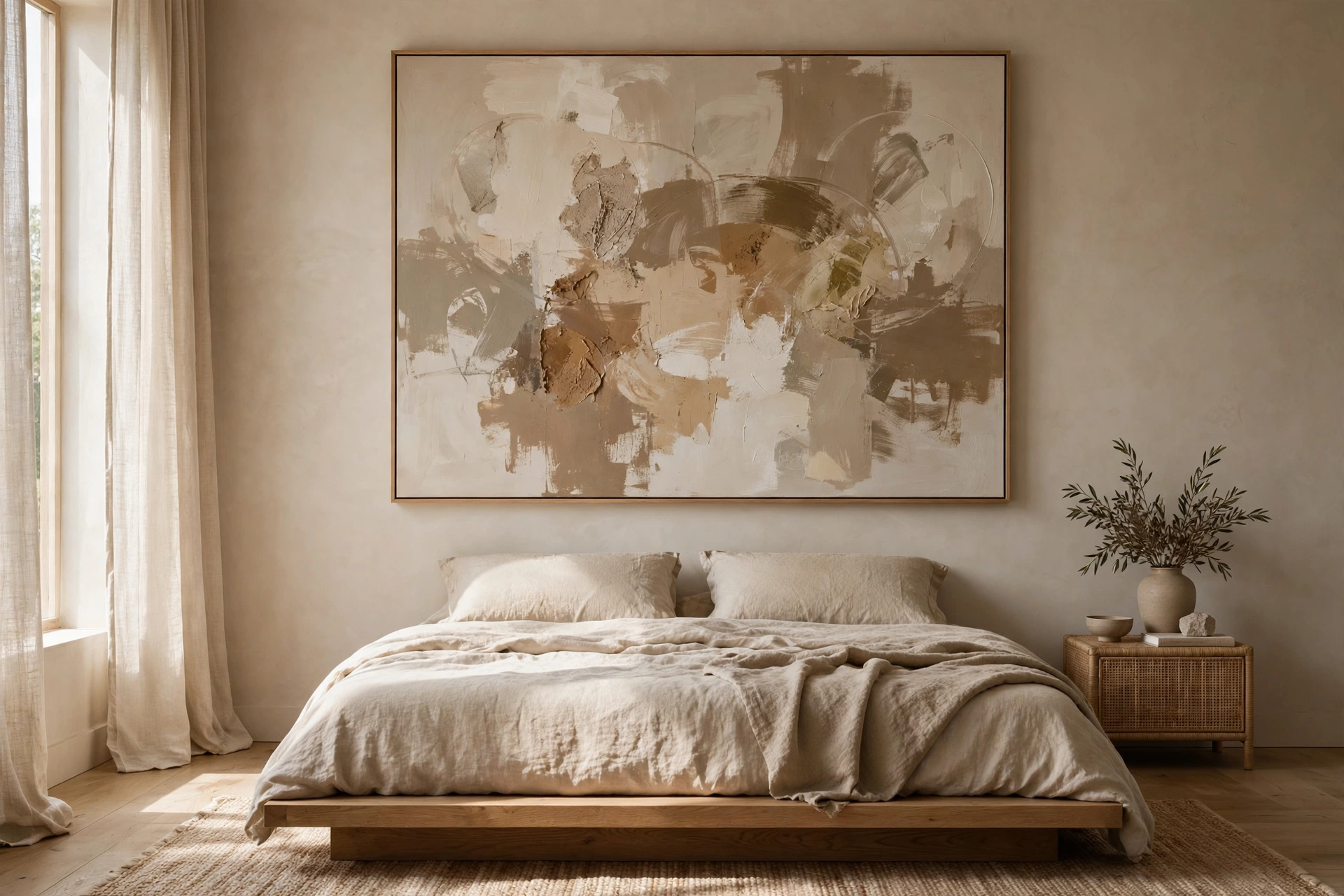
Instead of a gallery wall (too busy for Japandi), hang one large piece of art and let it breathe. An oversized abstract in neutral brushstrokes — think ink washes, plaster textures, or soft earth-tone gradients — becomes the room’s quiet focal point. Hang it centered above the bed, roughly two-thirds the width of the headboard, in a thin oak frame or as an unframed canvas for an even softer edge. One strong piece says “curated”; five small ones say “undecided.”
13. Layered Natural Textures
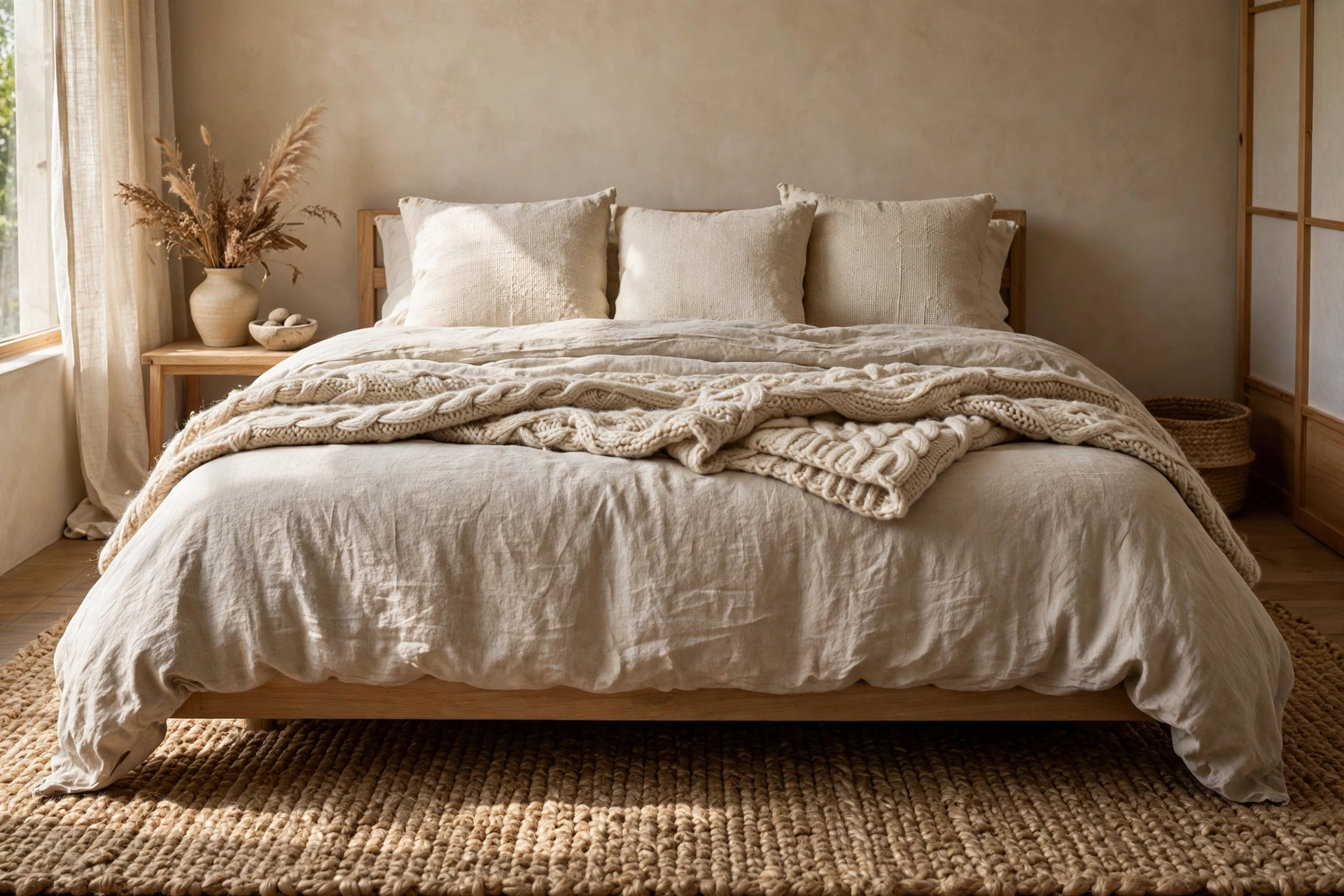
The final layer is all about touch. Japandi rooms can look flat if everything is smooth, so mix natural textures: the nubby jute rug underfoot, a chunky wool throw folded across the bed, raw cotton cushions with visible weave. Keep the colors within your warm neutral palette and let the textures do the talking — the contrast between rough jute and soft wool is what makes the room feel rich rather than empty. Three textures is the sweet spot; more than that and the layering starts to read as clutter.
Frequently Asked Questions
What exactly is Japandi style?
Japandi is a hybrid design style that fuses Japanese minimalism with Scandinavian functionality. From Japan it takes wabi-sabi, low furniture profiles, and natural materials; from Scandinavia it takes hygge coziness, pale woods, and light, airy spaces. The result is warm minimalism — calm and uncluttered, but never cold.
What colors work best in a Japandi bedroom?
Warm neutrals: beige, greige, warm white, soft clay, mushroom, and oatmeal. Avoid stark whites, cool grays, and saturated brights. Everything should sit in the same warm tonal family so the room feels cohesive and restful.
Can I create a Japandi bedroom on a budget?
Absolutely. Start with what costs nothing: declutter ruthlessly and rearrange what you own. Then make high-impact, low-cost swaps — a washi paper pendant light, washed linen-look bedding, and a jute rug transform a room for very little. Invest later in one good wooden piece, like an oak nightstand, rather than many cheap ones.
How is Japandi different from Scandinavian or minimalist design?
Pure minimalism can feel stark; Japandi warms it up with natural textures and imperfect, handmade details. Compared with classic Scandinavian style, Japandi is quieter and more restrained — lower furniture, earthier tones, and a stronger Japanese influence in materials like paper, bamboo, and stone.
Keep Exploring
If these Japandi bedroom design ideas sparked something, there’s plenty more calm to discover. Browse our bedroom decor guides for more serene palettes, small-space layouts, and natural-material inspiration to keep your retreat evolving — your calmest bedroom is still ahead of you.






[…] guides for more relaxed styles, from calm minimalist bedroom palettes to modern bedroom designs and Japandi-inspired retreats. Your most personal, most comfortable bedroom is the one that looks like you, and every layered […]
[…] low lighting from lamps and candles in the evening, tactile textures like wool and sheepskin, and a calm, uncluttered space that lets you unwind. It’s less a rule than a feeling: if the room makes you want to curl up […]
[…] Beyond white, sage loves the full earthy neutral family: warm beige, greige, camel, taupe, and soft clay. These grounded tones keep the palette sophisticated and prevent the room from feeling too “matchy.” Try sage walls with camel leather accents, or sage bedding layered over natural linen in oatmeal tones. The result is a bedroom that feels collected and calm — very Japandi in spirit. For more of that serene minimalism, see our japandi bedroom design ideas. […]