Track lighting has quietly become one of the smartest choices for kitchens — and it is nothing like the clunky brass rails of the eighties. Today’s systems are slim, architectural, and endlessly adjustable: slide a head six inches left and your prep zone is perfectly lit. These kitchen track lighting ideas cover layouts, finishes, and head styles that make track lighting look intentional and beautiful, whether your kitchen is a galley, an open concept, or a loft with soaring ceilings. The core advantage never changes: no other ceiling system lets you aim light exactly where the work happens.
Before you shop, know the three track types. H-style is the most common with the widest head selection; J-style is slimmer and more modern; monorail bends into curves. All take LED heads now, and most install from a single junction box.
1. Run a Straight Rail Over the Island

The classic move: one straight track centered over the island, with three to five adjustable heads aimed at the work surface. It delivers focused task light exactly where you chop, mix, and plate, and the linear form echoes the island’s shape for a tailored look. Space heads 18 to 24 inches apart and aim each slightly outward to wash the whole surface. Choose a rail finish that matches the ceiling so the hardware fades and only the light draws attention. If you already love pendant looks, these kitchen pendant lighting ideas from modern to farmhouse pair beautifully — many kitchens combine one track with a single statement pendant.
2. Choose Matte Black for Contrast

Matte black track is the current default for a reason: it reads as graphic and intentional against white ceilings, ties into black hardware and faucets, and suits farmhouse, industrial, and modern kitchens alike. Black heads with brass or copper interiors add a warm glint when lit. The contrast makes the track a design element rather than an apology. In kitchens with black window frames or cabinet pulls, the track completes the story. Keep the rail slim — chunky black track overwhelms small kitchens, while a thin profile looks crisp.
3. Try a Flexible Monorail Curve

Monorail track bends by hand into curves, waves, and L-shapes, then holds its form — perfect for wrapping light around a curved island or following an angled ceiling. The sculptural rail becomes a ceiling feature in its own right. Mount it with clips every 12 to 16 inches to keep the curve stable, and use compact gimbal heads that pivot fully so each light aims independently despite the bend. Installation takes longer than a straight rail, so budget extra electrician time. The payoff is a one-of-a-kind ceiling that no recessed can could ever deliver.
4. Layer Track With Under-Cabinet Lights

The best-lit kitchens layer sources. Run track on the ceiling for general and accent light, then add LED strips under the wall cabinets for shadow-free counter task lighting. The combination eliminates the dark zones that a single source always leaves — the cook’s own shadow being the classic one. Keep color temperatures matched (2700K–3000K for warm, 3500K–4000K for crisp task light) so the layers blend. These kitchen under cabinet lighting ideas for brighter counters detail the strip options that pair perfectly with an overhead track.
5. Aim Heads at the Backsplash

One of the prettiest kitchen track lighting ideas costs nothing: aim two heads at the backsplash instead of straight down. Textured tile, handmade zellige, or stacked stone comes alive under grazing light, turning the wall into a glowing feature. This accent layer makes the whole kitchen feel designed after dark. Use narrow-beam heads for drama on textured surfaces, wider beams for smooth tile. Put these heads on a separate switch or a smart dimmer so you can run the “evening glow” without the full task brightness.
6. Go White-on-White to Disappear

In small or minimalist kitchens, choose a white track, white heads, and a white ceiling — the system virtually vanishes, leaving only pools of light. This is the trick for kitchens where you want the lighting performance without any visual hardware. White track suits Scandinavian, coastal, and all-white kitchens especially. The heads are still fully adjustable; they just don’t announce themselves. Pair with warm 2700K LEDs so the invisible source still feels cozy rather than clinical.
7. Add a Dimmer From Day One
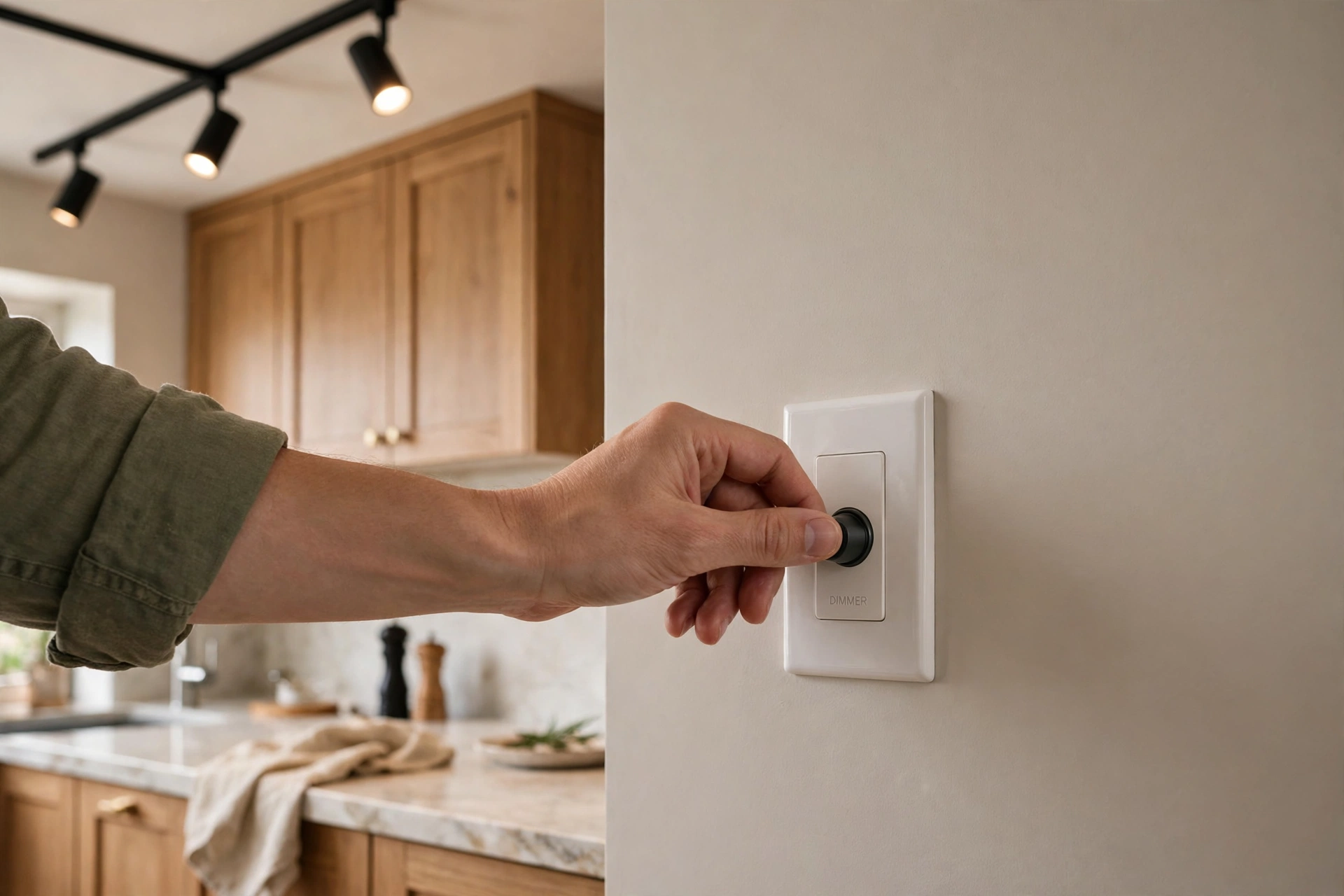
The difference between track lighting at full blast and at 50 percent is the difference between a workspace and a room you want to sit in after dinner. Install a dimmer on the track circuit immediately — retrofitting later costs more and some LED heads need compatible dimmers. A dimmer transforms the track from pure task lighting into ambient evening light for entertaining. Smart dimmers add scheduling and voice control. This single control upgrade does more for how the kitchen feels than any finish choice, and designers consider it non-negotiable.
8. Mix Track Heads and Pendants

You don’t have to choose. Hang two pendants over the island for style and run a short track over the perimeter counters for task coverage — the pendants provide the jewelry, the track does the work. Or use pendant adapters that plug directly into track heads, hanging mini-pendants from the rail itself. This hybrid approach is ideal for open concepts where the island deserves a focal moment but the surrounding counters still need real light. Keep finishes coordinated: if pendants are brass, choose brass-accented track heads. Apartment Therapy’s DIY track lighting makeover shows how renters adapted an existing track with pendant adapters for exactly this effect.
9. Light the Open Shelves

Aim one or two track heads at open shelving and your dishes become display. Glassware glints, ceramics glow, and the shelves read as intentional styling rather than storage overflow. This works beautifully with the glass-front cabinet trend too — light inside or aimed at glass cabinets doubles their impact. Use warm light here; cool light makes dishes look sterile. The adjustable aim is the whole point: as your shelf styling changes seasonally, the light follows in seconds with no rewiring.
10. Choose Brushed Brass for Warmth
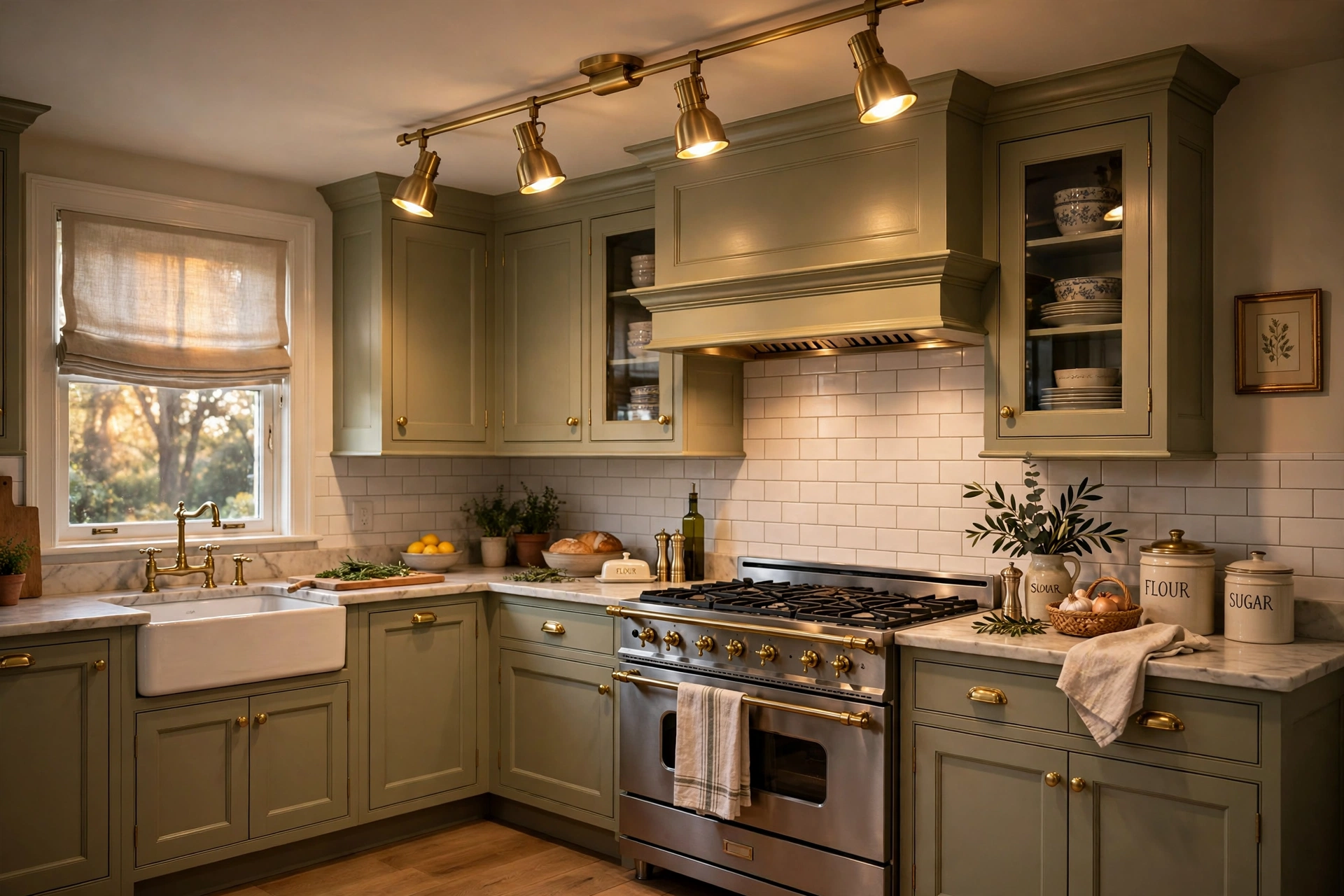
Brushed brass track brings warmth that black and white can’t — it glows against both light and dark ceilings and ties into brass faucets, cabinet pulls, and light fixtures. Brass suits traditional, transitional, and warm-modern kitchens. The finish has staying power beyond trends because it reads as jewelry, not hardware. Pair with warm 2700K bulbs to amplify the golden effect. In kitchens with marble or warm wood, brass track feels like it was always meant to be there — the ceiling plane can carry real design weight when the finish is right.
11. Use Track in a Galley Kitchen

Galley kitchens are track lighting’s natural habitat. One straight rail down the center of the narrow ceiling, heads aimed alternately at each counter run, lights the whole space from a single junction box — no electrician’s nightmare of multiple recessed cans. Slim white track keeps the low ceiling feeling open. Because heads slide along the rail, you can rebalance the light if you rearrange appliances or add a coffee station later. For the price of one fixture, a galley gets complete, adjustable coverage. It is the highest-value lighting upgrade in a narrow kitchen.
12. Install a Two-Circuit Track

Two-circuit track lets you control two groups of heads independently from one rail — task heads on one switch, accent heads on another. Cook with full brightness over the counters while the backsplash glows softly behind you. The wiring is slightly more involved, so plan it with your electrician upfront, but the flexibility is worth it. This is how high-end kitchens get that layered, designed-after-dark feel without a dozen separate fixtures. Label the switches clearly so guests aren’t confused.
13. Try Industrial Cage Heads

For lofts, converted barns, and industrial-style kitchens, cage-style track heads with exposed Edison or filament LEDs lean into the aesthetic. The visible bulb becomes part of the look — warm, vintage, and full of character. Matte black cages with amber glass bulbs are the classic combo. Use dimmable filament LEDs for the Edison look without the energy guilt. This style makes the track unapologetically visible, which is the point: in an industrial kitchen, the hardware is the decor. A roundup of modern kitchen track lighting configurations covers cage heads alongside H-track and monorail options if you want to compare styles side by side.
14. Keep Heads Out of the Sightline

The most common track lighting mistake is aiming heads where they glare into eyes — especially over a dining table or island seating. Aim heads at work surfaces and walls, never directly at seating. Position the rail so heads sit slightly behind the seated sightline, and choose heads with baffles or snoots that shield the bulb. Test the aim at night before locking heads in place; daylight hides glare problems. A well-aimed track feels like the light comes from nowhere — comfortable, even, and easy on the eyes.
15. Plan for Smart Bulbs
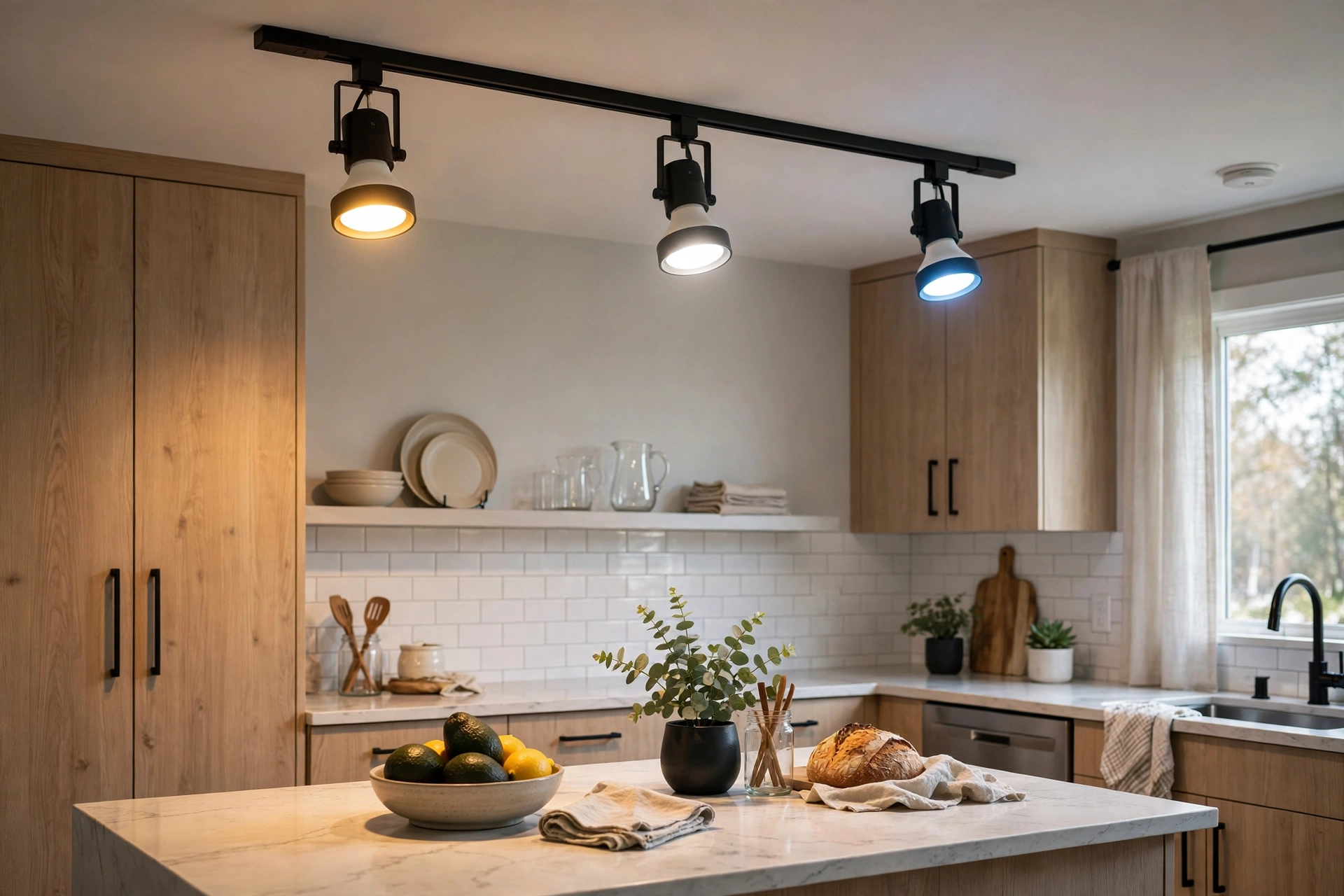
Modern track heads take standard LED bulbs, which means smart bulbs fit too. Tunable-white smart bulbs let you shift from crisp 4000K task light while cooking to warm 2700K ambiance for dinner — from your phone or voice. Start with smart bulbs in two or three key heads rather than the whole track to test the experience. Check dimmer compatibility: smart bulbs and wall dimmers often conflict, so use one control method. This is the easiest way to future-proof a track installation, and the daily delight of “dinner mode” lighting never gets old.
Frequently Asked Questions
Is track lighting outdated for kitchens?
Not at all. Slim-profile rails, architectural finishes like matte black and brushed brass, and LED-compatible heads look nothing like the chunky brass tracks of decades past. Contemporary track lighting is specified regularly in high-end renovations because no other ceiling system offers the same adjustability. The key is choosing a slim rail and a finish that suits your kitchen.
How many track heads do I need in a kitchen?
Budget roughly one head per 18 to 24 inches of rail for general coverage. A standard 8-foot island track needs four to five heads; a galley kitchen rail needs three to four. Tighter spacing suits task-heavy prep zones, wider spacing works for ambient areas. You can always add heads later since they slide onto the existing rail.
Can I install track lighting myself?
A basic track kit installs from an existing ceiling junction box and is a manageable DIY for anyone comfortable with basic wiring — always turn off the breaker first. Bending monorail, adding new circuits, or installing two-circuit track is electrician territory. When in doubt, hire a pro; ceiling electrical work is not the place to learn by trial and error.
What color temperature is best for kitchen track lighting?
Use 3000K to 4000K for task areas — crisp enough for safe chopping without feeling cold. Accent heads aimed at backsplashes or shelves look best at warm 2700K. Tunable smart bulbs let you shift between the two. Keep all heads in one zone at the same temperature so the light blends instead of clashing.
Track lighting vs recessed lighting for kitchens?
Track wins on flexibility and cost: heads aim anywhere and slide along the rail, and one junction box serves the whole system. Recessed wins on invisibility — nothing shows on the ceiling. Many kitchens use both: recessed for general fill, track for adjustable task and accent light. In rentals or concrete ceilings where recessed isn’t possible, track is the clear choice.
Keep Exploring
Track lighting earns its place in the modern kitchen by doing what fixed fixtures can’t: adapting. Slide a head, dim the rail, aim at the backsplash — the light follows your life instead of fighting it. Choose a slim rail, a finish you love, and a dimmer from day one, and your kitchen will be bright where it counts and beautiful everywhere else.
Lighting is a system, not a single fixture. Once the track is planned, carry the same thinking into the adjoining spaces. These dining room lighting ideas from chandeliers to sconces help the glow continue past the kitchen — because great light shouldn’t stop at the doorway.