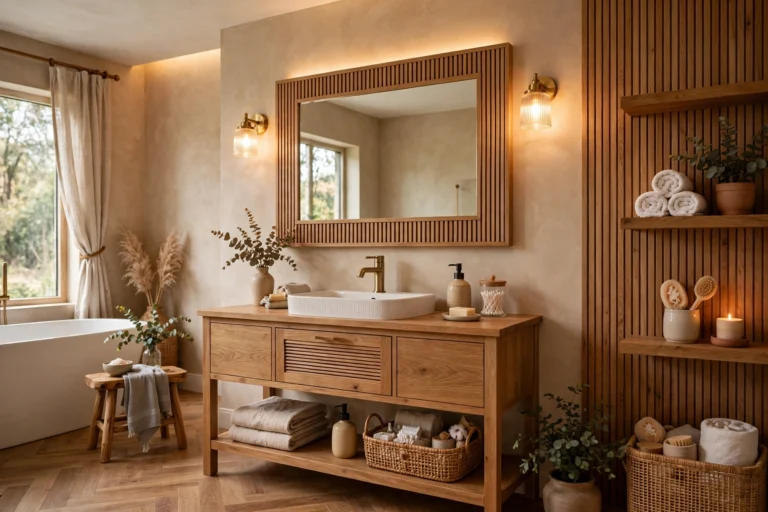
Bathroom towel warmer ideas bring spa luxury into the most ordinary daily routine. There is nothing like stepping out of the shower into a warm, dry towel — and a towel warmer makes that small pleasure available every day. Heated rails also dry towels faster between uses, which means less damp-towel odor and fewer laundry loads.
From simple plug-in rails that install in an afternoon to plumbed systems that tie into your heating, the fifteen ideas below cover every budget, bathroom size, and style — with the practical details on power, placement, and sizing you need to choose.
1. Wall-Mounted Ladder-Style Electric Rail
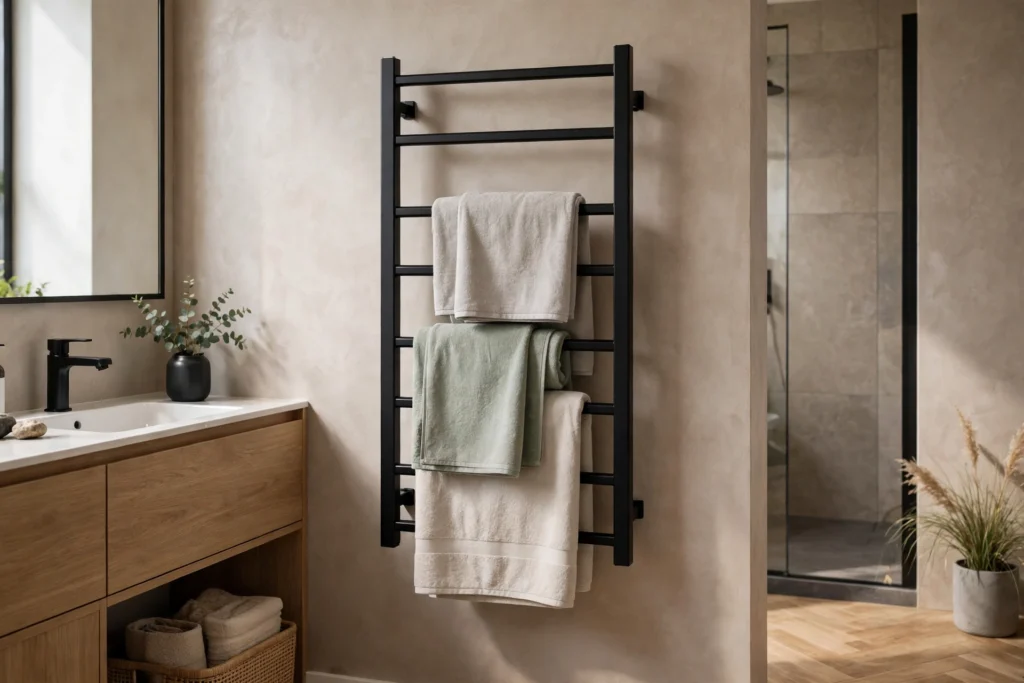
The ladder-style electric rail is the classic towel warmer: horizontal heated bars on a wall-mounted frame, wired to a switch or plugged into a nearby outlet. Choose at least four bars so a folded bath towel drapes across two of them, maximizing heat contact. Stainless steel models heat evenly and resist corrosion in steamy bathrooms.
Mount the rail within arm’s reach of the shower or tub, about 48 inches off the floor. Hardwired models look cleanest, but plug-in versions install in minutes. A ladder rail warms up in 20 to 30 minutes, so pair it with a timer for effortless scheduling.
2. Freestanding Plug-In Towel Stand
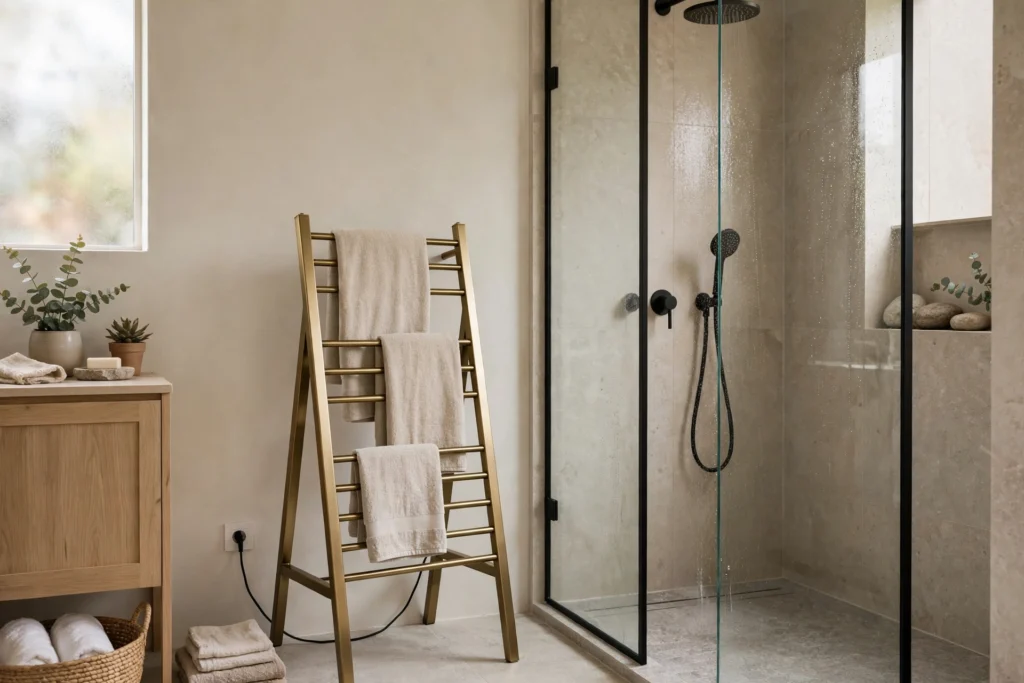
A freestanding towel stand is the zero-installation option. These A-frame or ladder stands plug into any outlet and can be placed wherever you need warmth — beside the shower today, in the guest room tomorrow. Look for a stable weighted base and at least three heated rungs so a full-size towel fits without bunching.
Freestanding warmers are ideal for renters, since nothing mounts to the wall and the unit moves with you. Route the cord safely away from water and choose automatic shutoff for peace of mind. They also double as elegant drying racks for delicates.
3. Plumbed Hydronic Heated Rail
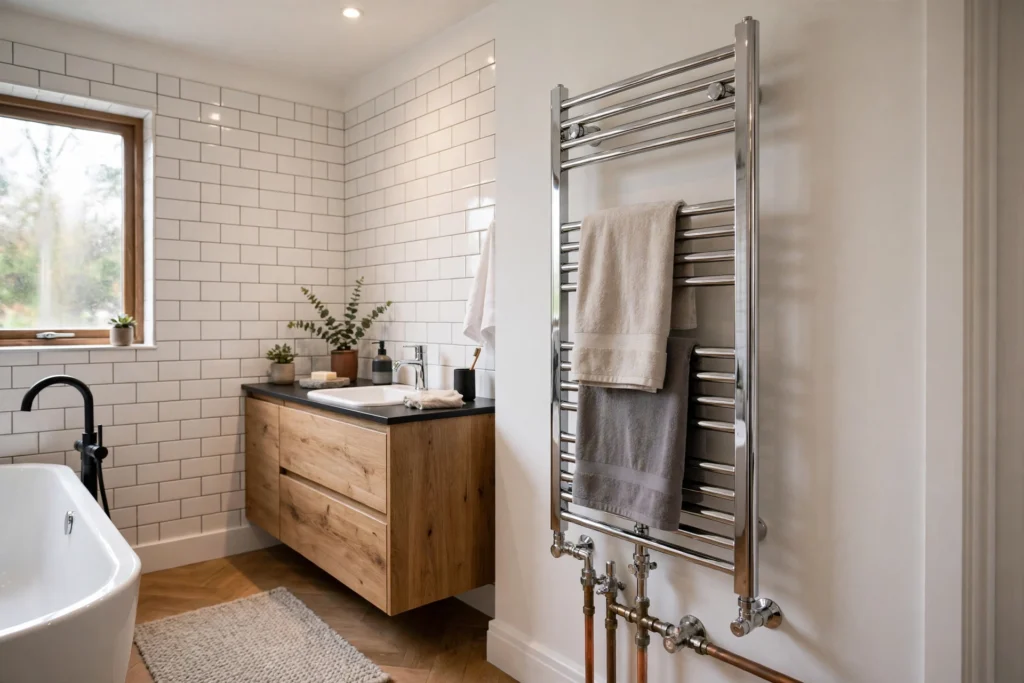
A plumbed hydronic rail connects to your home’s hot-water heating system, warming towels whenever the heat runs — no electricity needed at the rail itself. This is the most energy-efficient option for homes with hydronic or radiator heating, since it piggybacks on heat you already produce. Chrome and brushed-nickel finishes suit traditional and modern bathrooms alike.
Installation needs a plumber to tee into the heating loop, so it pairs naturally with a well-organized towel zone — see our guide to tidy towel storage if you are rethinking the setup. In summer, a dual-fuel valve lets you run it electrically.
4. Timer-Controlled Rail for Energy Savings
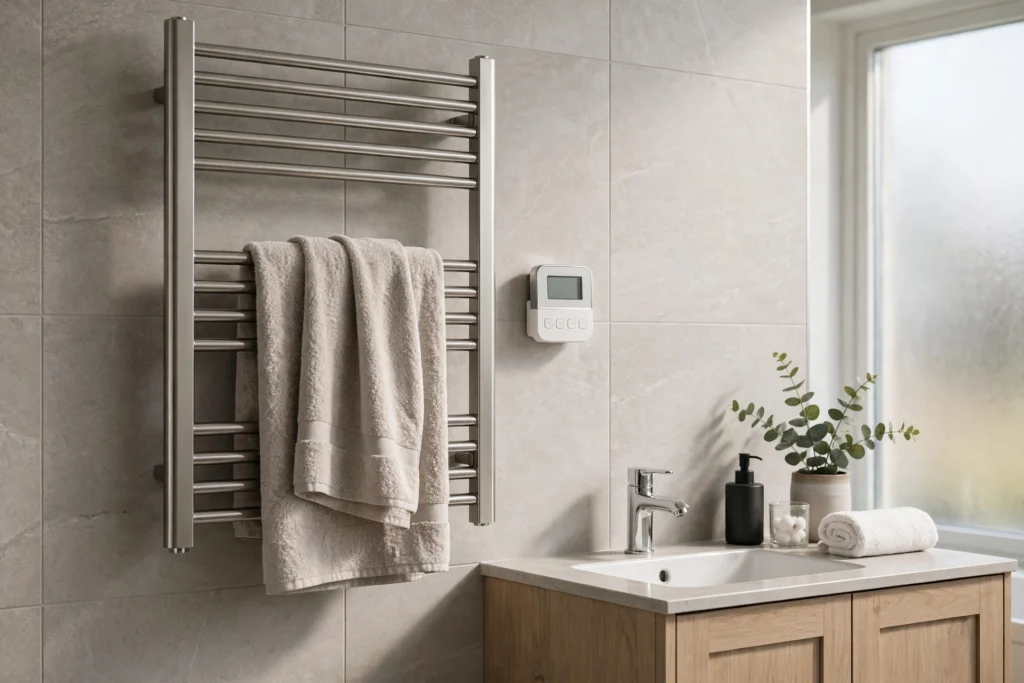
A timer turns your towel warmer into a set-and-forget comfort system. Instead of running all day, the warmer switches on an hour before your morning shower and off after towels dry — typically two to three hours daily. This cuts energy use dramatically while guaranteeing a warm towel exactly when you need it.
Choose a plug-in timer, a wall-switch timer, or a smart plug. Match the timer’s amperage rating to the warmer’s draw — most rails use 60 to 150 watts. Program a second evening cycle if the household showers at night too.
5. Budget-Friendly Plug-In Rail

You do not need a renovation budget to enjoy warm towels. Basic plug-in heated rails cost little more than a nice bath mat, mount with a few screws, and plug into a standard outlet. A compact three-bar rail fits narrow wall spaces and warms a single bath towel beautifully.
These entry-level models use the same heating principle as premium rails — low-wattage elements inside metal bars, a technology with a long history you can read about on Wikipedia’s heated towel rail page. Check for proper bathroom safety certification. For a first towel warmer, a budget plug-in rail is the lowest-risk way to discover whether the luxury becomes a habit.
6. Fold-Down Rail for Small Bathrooms
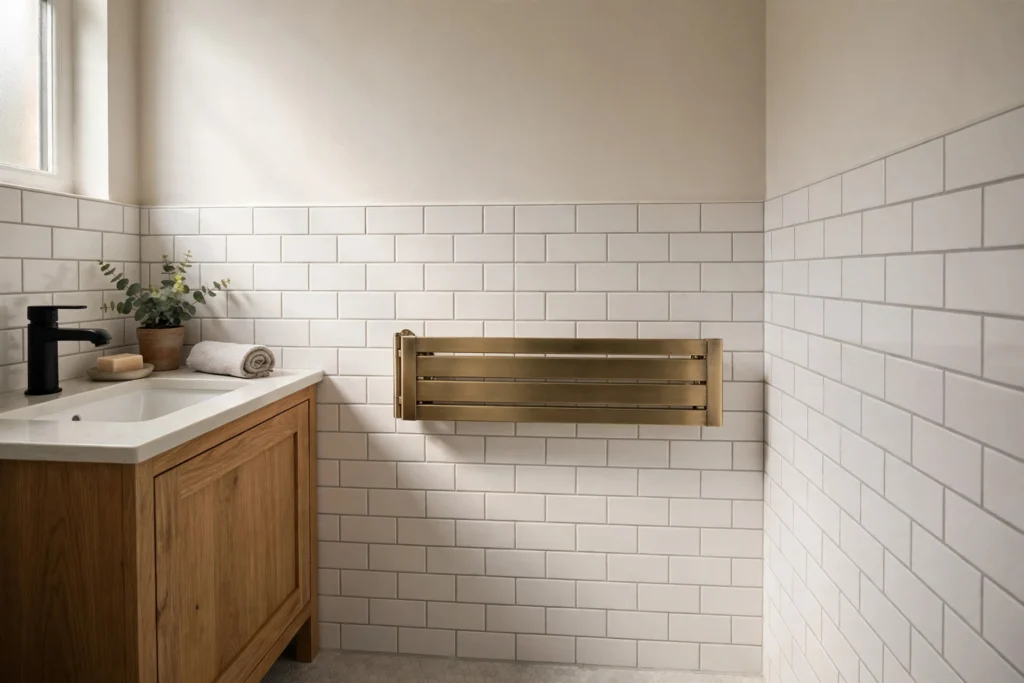
In a compact bathroom, a fold-down rail delivers warmth without permanently claiming wall space. These hinged rails fold flat against the wall when not in use and swing down to hold a towel when needed. Mount one above the toilet tank or on a narrow wall section that otherwise goes unused.
Look for a sturdy hinge rated for the weight of a wet towel — flimsy rails sag over time. Electric versions warm the towel directly; non-heated racks simply air-dry it. Either way, the folding design is one of the smartest bathroom towel warmer ideas where every inch matters.
7. Oversized Double-Bar Spa Rail
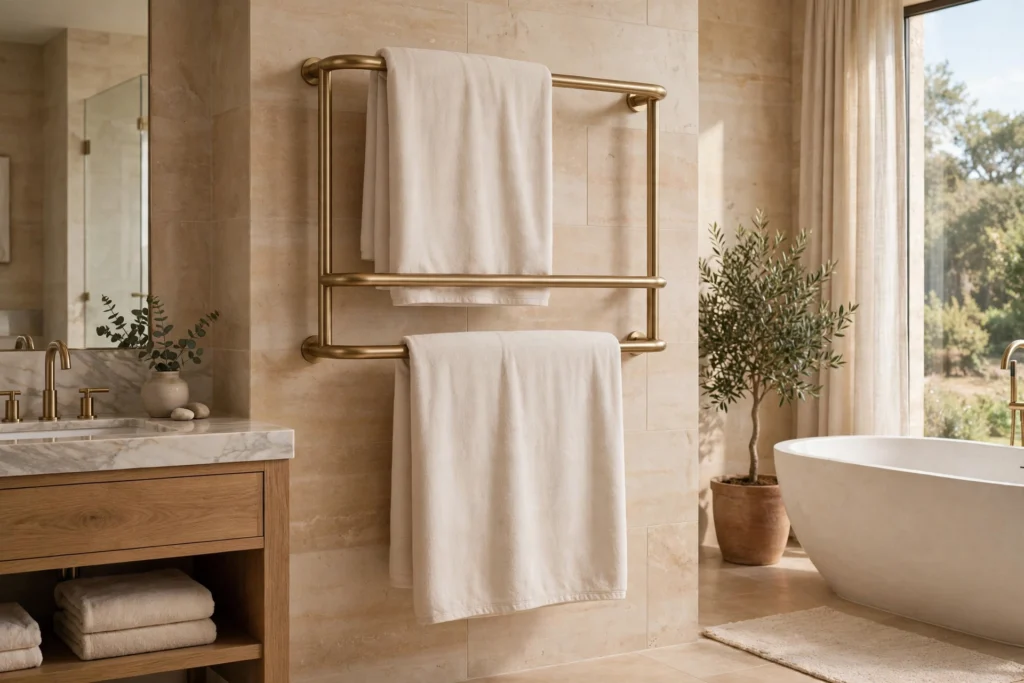
An oversized double-bar rail recreates the spa experience at home. These wide warmers hold two full bath sheets side by side, so couples never negotiate over the warm towel. The extra bars mean more drying surface, which speeds drying and keeps thick towels fresh between washes.
Sizing matters: measure your wall before ordering, since spa rails can run 32 inches wide or more. They need a robust outlet or dedicated circuit, and a timer is almost essential given the higher wattage. Hang one on the longest clear wall in a primary bathroom for an instant boutique-hotel feel.
8. Slim Vertical Column Warmer

When wall width is scarce, go vertical. Slim column warmers stack heated bars in a tall, narrow footprint — sometimes just 12 inches wide — fitting gaps beside the vanity or between the shower and toilet. The stacked bars hold a full towel folded in thirds.
Column warmers suit modern bathrooms well, with minimalist profiles in chrome, matte black, or white. Because heat rises through the stacked bars, towels dry evenly from top to bottom — the go-to choice for half-baths and galley bathrooms where a ladder rail will not fit.
9. Warmer and Storage Cabinet Combo
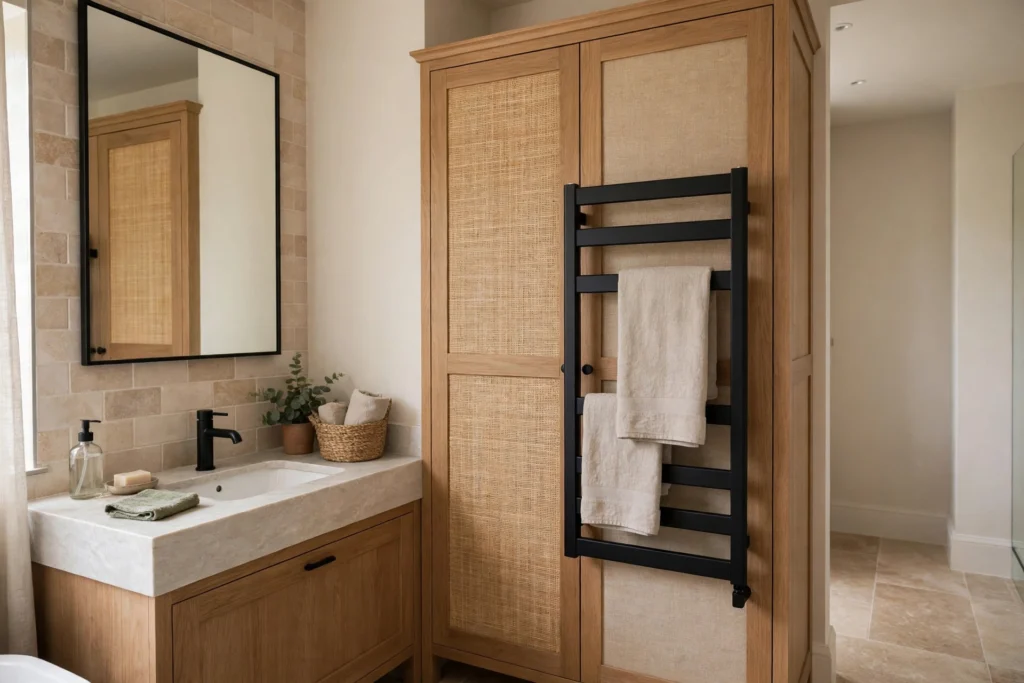
Combine warmth with storage by choosing a towel warmer integrated into or beside a cabinet. Some designs mount a heated rail on the front of a linen cabinet, so fresh towels warm while spares stay shelved behind closed doors. Others pair a wall rail above a low storage bench holding folded towels.
This combo keeps the whole towel zone in one place — warm, dry, and organized. It is a natural fit when rethinking the room’s layout — explore more layout inspiration with our bathroom remodel ideas. Keep the cabinet ventilated so warmed towels do not trap moisture inside.
10. Matte Black Statement Rail
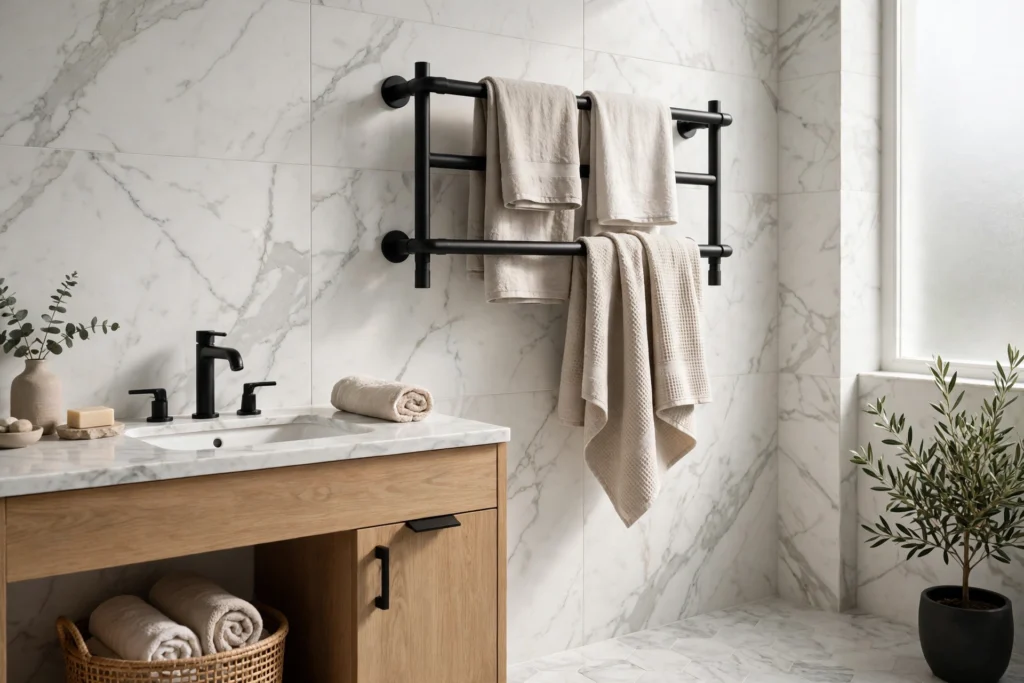
A matte black towel warmer turns a functional fixture into a design statement. The dark finish contrasts beautifully with white tile and marble, giving the bathroom a bold, contemporary edge. Black rails come in ladder, column, and curved-bar styles, so you do not sacrifice function for looks.
Match your other fixtures for a cohesive look. Note that matte black shows water spots more readily than chrome, so wipe the bars weekly with a soft cloth. It pairs especially well with warm wood vanities and brushed-brass accents.
11. Wet-Room Rail with Underfloor Heating
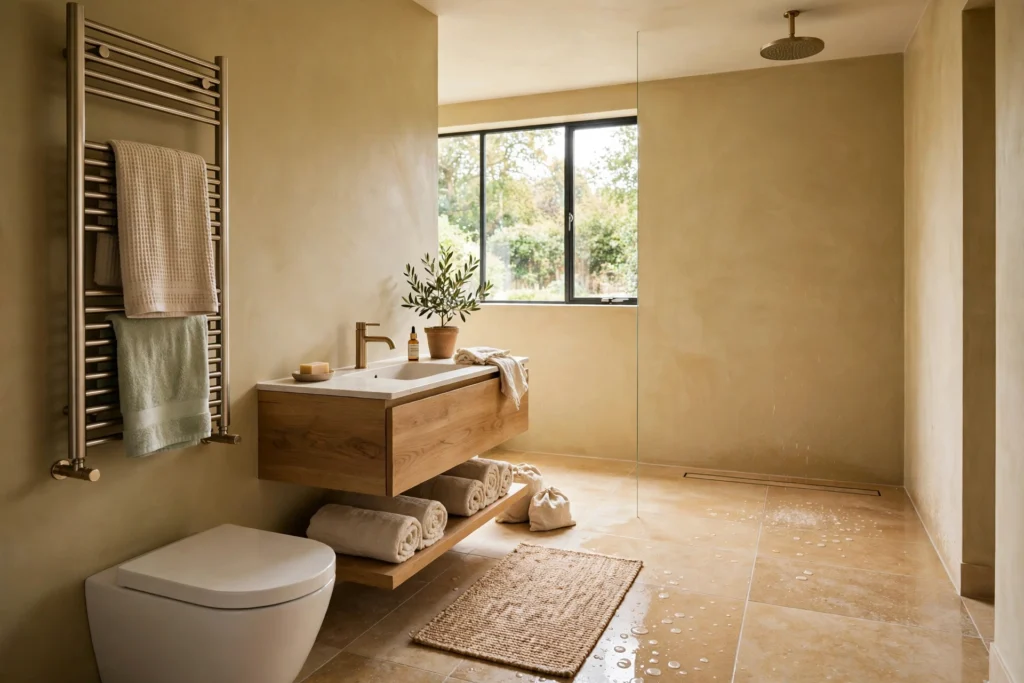
Pair a towel rail with underfloor heating for the ultimate cozy bathroom. In a wet room, the heated floor keeps feet warm and dries splashes quickly, while the rail keeps towels toasty — together they eliminate every cold surface. This combination is standard in high-end spa bathrooms for good reason.
Plan both systems during the same renovation, since underfloor heating installs beneath the tile. A programmable thermostat runs the floor on a schedule matching your routine, just like the rail’s timer. The bathroom has evolved from purely functional to comfort-focused — see Wikipedia’s history of the bathroom for how far it has come.
12. Warmer with Integrated LED Backlight
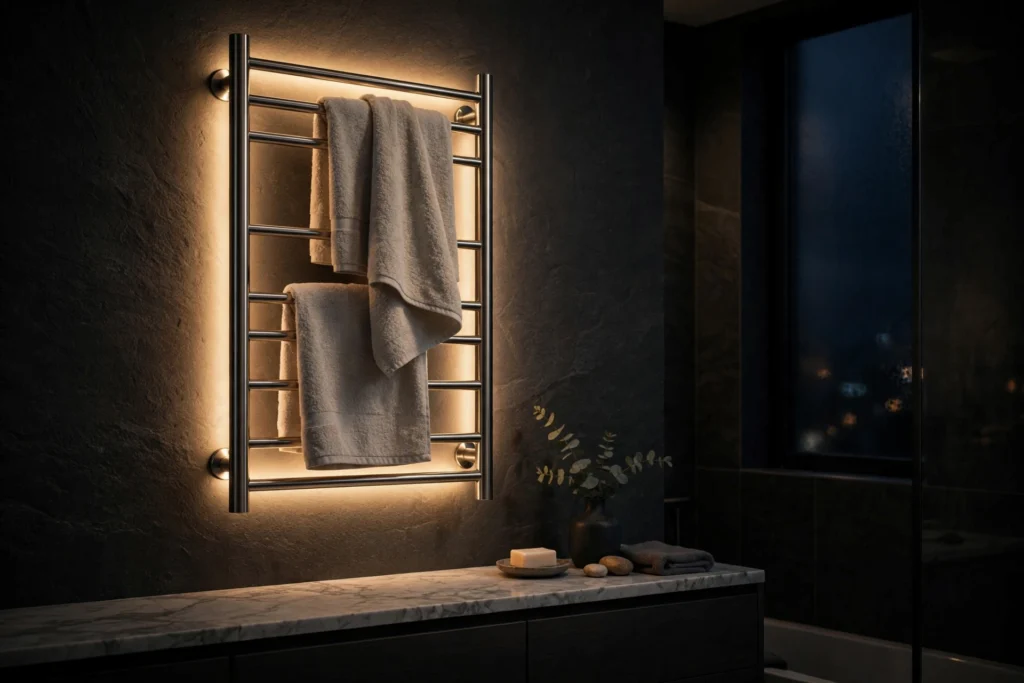
A towel warmer with integrated LED backlighting doubles as ambient bathroom lighting. The soft glow behind the rail creates a halo effect on the wall — perfect as a nightlight and as mood lighting for evening baths. Choose warm-white LEDs around 2700K for the coziest effect.
Wire the lighting to a separate switch from the heating element so you can enjoy the glow without running the warmer. This is one of the most striking bathroom towel warmer ideas for modern spaces. For more ways lighting transforms a bathroom, see our lighting ideas.
13. Heated Shelf Warmer
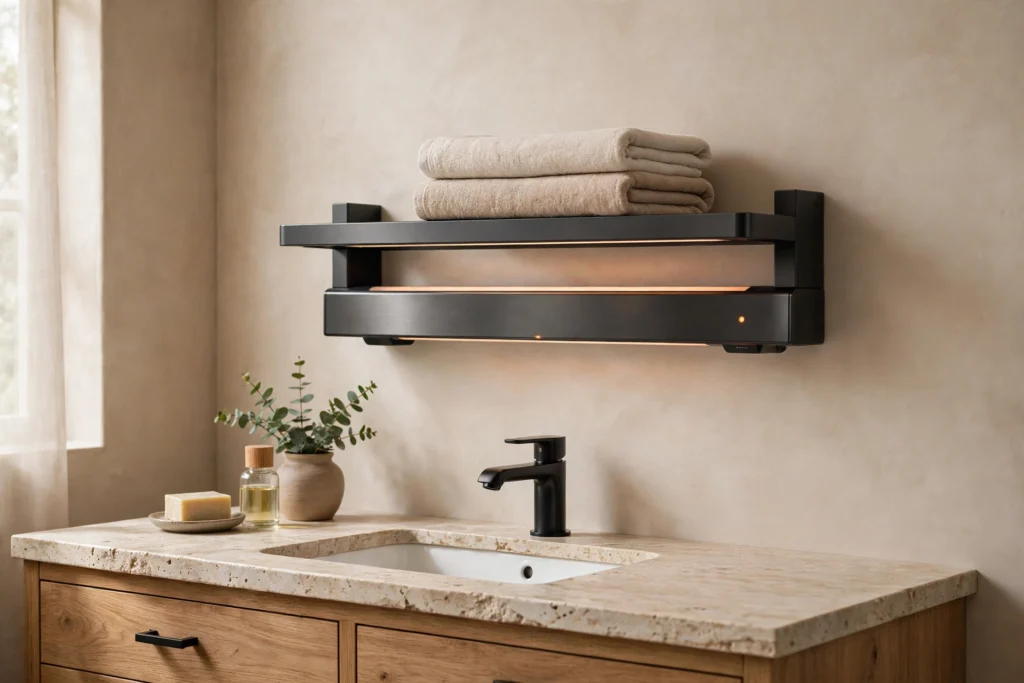
A heated shelf warmer looks like a floating shelf but gently warms folded towels stacked on top. The flat heated surface suits hand towels and washcloths, and the shelf provides display space for candles or small plants. Mount it above the vanity or beside the shower for easy reach.
These warmers run at lower wattages than ladder rails, making them economical to leave on longer. Choose a shelf 10 to 12 inches deep so a folded bath towel fits without overhang — it also works as a warming spot for robes laid across it before a bath.
14. Smart App-Controlled Warmer

A smart towel warmer brings your bathroom into the connected home. App-controlled models let you schedule heating cycles, adjust temperature, and switch the warmer on remotely — so towels are warm when you arrive home. Some integrate with voice assistants for hands-free control.
Look for energy-monitoring so you can see exactly what the comfort costs per month. Set geofenced routines that warm the bathroom as you approach home, and use vacation mode while you are away. As with any bathroom electrical, verify the unit’s safety ratings and keep controls outside splash zones.
15. Safety and Maintenance Routine

The final idea is not a product but a practice: a simple safety and maintenance routine that keeps any towel warmer running beautifully for years. Dust the bars monthly, since dust bakes onto hot metal and reduces efficiency. Check electrical connections yearly for corrosion, and never drape plastic or rubber-backed items on a heated rail.
Keep the area around the warmer clear and never cover the bars completely with thick towels, which can trap heat. Bleed plumbed models seasonally like any radiator. A well-maintained warmer is a safe warmer — delivering cozy, dry towels every day without a second thought.
Frequently Asked Questions
Are towel warmers expensive to run?
No — most electric towel warmers use only 60 to 150 watts, roughly like a light bulb, costing a few cents per hour. Running one on a timer for two to three hours daily adds only a small amount to your monthly bill. Plumbed hydronic models cost nothing beyond your existing heating. A timer is the key to heating only when you need it.
Can a towel warmer dry a wet towel or just warm a dry one?
Both, though warming is its primary job. The gentle, even heat evaporates moisture steadily, so a damp towel draped with good airflow across the bars dries within a few hours. It will not replace a dryer for a soaking-wet towel, but for daily shower towels it keeps them fresh between uses — which also means fewer musty smells and less laundering.
Where is the best place to install a towel warmer?
Mount it within easy reach of the shower or bathtub — ideally on the adjacent wall about 48 inches from the floor. Avoid spots where the door swings into it. Keep electrical models away from direct water spray and follow the manufacturer’s clearance guidelines. In small bathrooms, a slim column warmer or fold-down rail fits narrow walls a ladder rail cannot.
Do towel warmers work in summer?
Yes. Electric and plug-in models run year-round independently of your home heating — just switch them on when you want warm towels. Plumbed hydronic rails only heat when the central heating runs, so choose a dual-fuel model with an electric element for summer use. Many people run theirs less in summer but still enjoy it on cooler mornings.
Is it safe to leave a towel warmer on all the time?
Modern towel warmers are designed for extended use and include thermostats that prevent overheating, so leaving one on is generally safe — but a timer is smarter and cheaper. Continuous running wastes energy and can over-dry towels, making them stiff. Set the warmer to run one to two hours around your shower routine instead, and keep flammable items away from the bars.
Keep Exploring
A towel warmer is one of those upgrades that sounds like a luxury until you live with it — then it becomes the part of your routine you miss most when traveling. Pick the style that fits your bathroom and budget, mount it within reach of the shower, and put it on a timer. From that first warm towel on a cold morning, you will wonder how you ever did without one. Small comfort, daily payoff.