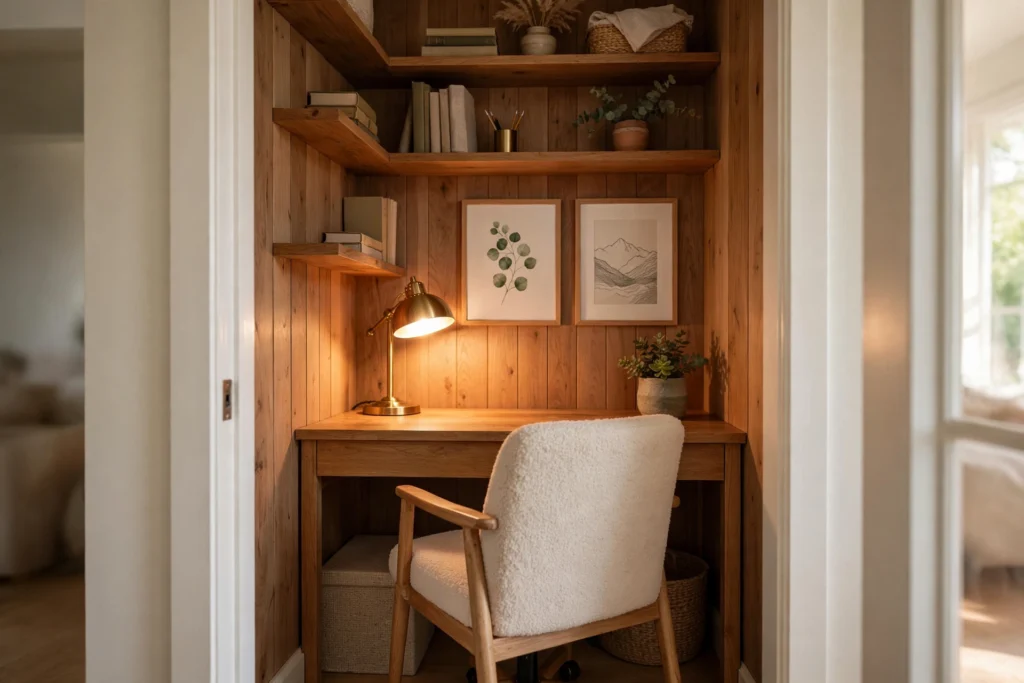

There is a particular satisfaction in opening a closet door and finding a fully working office inside instead of a jumble of old shoes. Somewhere along the way, the internet gave this little trick a name — the cloffice — and it stuck, because it really is that simple: a closet plus an office equals a real workspace, hidden in plain sight.
The beauty of a closet office is that the hard part is already done. The walls, the enclosure, the sense of a separate room-within-a-room — all built in. What remains is making that shallow rectangle genuinely good to work in: a desk at the right height, light where your eyes need it, storage that climbs instead of sprawls, and enough personality that it feels like yours. Here are fifteen practical closet office design ideas to get you there.
1. Measure First, Then Find the Desk That Fits
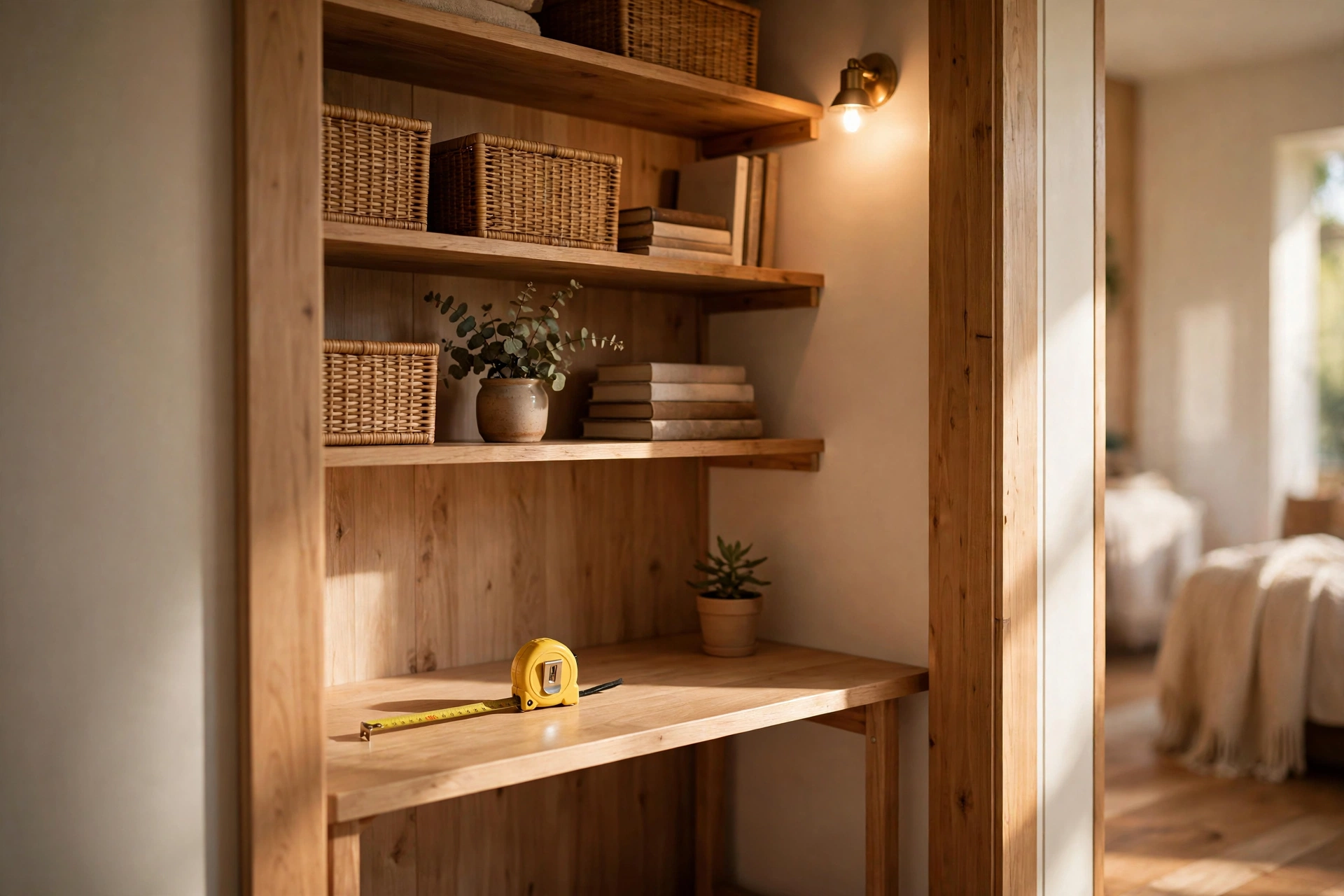
A standard reach-in closet is only about 24 inches deep, which is the single most important number in this project. Measure the width and depth before you shop for anything — a desk that is two inches too wide turns a weekend project into a returns queue.
Look for a writing desk or console table around 40 to 48 inches wide and 18 to 22 inches deep: slim enough to slide in with room to spare, deep enough for a laptop and a notebook. Keep about 30 inches clear in front for your chair. This is the step everyone wants to skip and nobody should.
2. Go Floating With a Wall-Mounted Desk Top
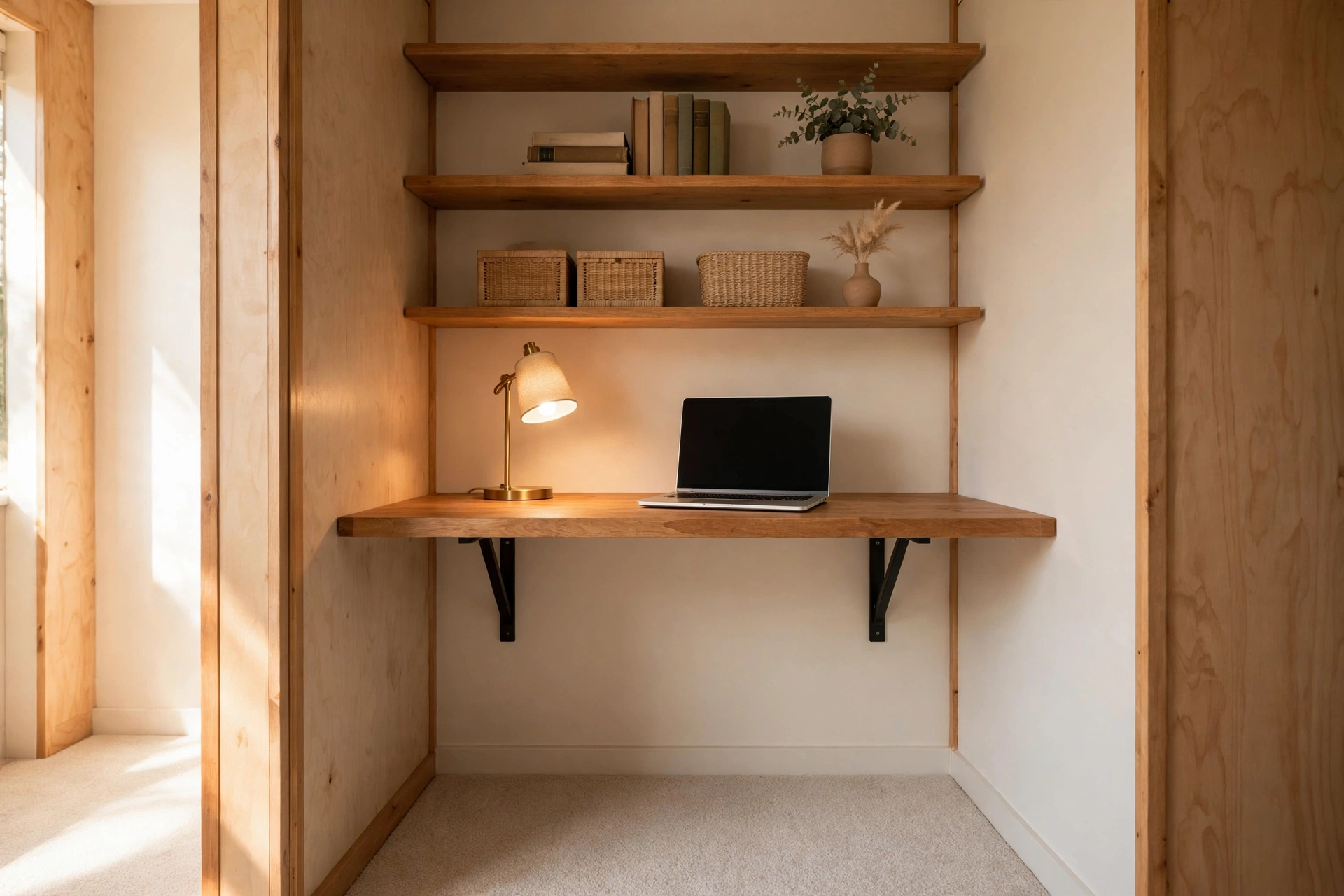
If your closet is narrow, skip desk legs entirely and mount a solid wood plank, butcher-block offcut, or shelf board directly to the wall with sturdy L-brackets. A floating desk top costs very little, fits the exact width of your closet, and leaves the floor completely clear — which makes the whole nook feel noticeably bigger.
Aim for a desktop height of 28 to 30 inches, the standard for comfortable typing. Sand and seal the board so it looks intentional rather than improvised, and add a cable grommet at the back before you mount it.
3. Paint the Inside a Color You Actually Love
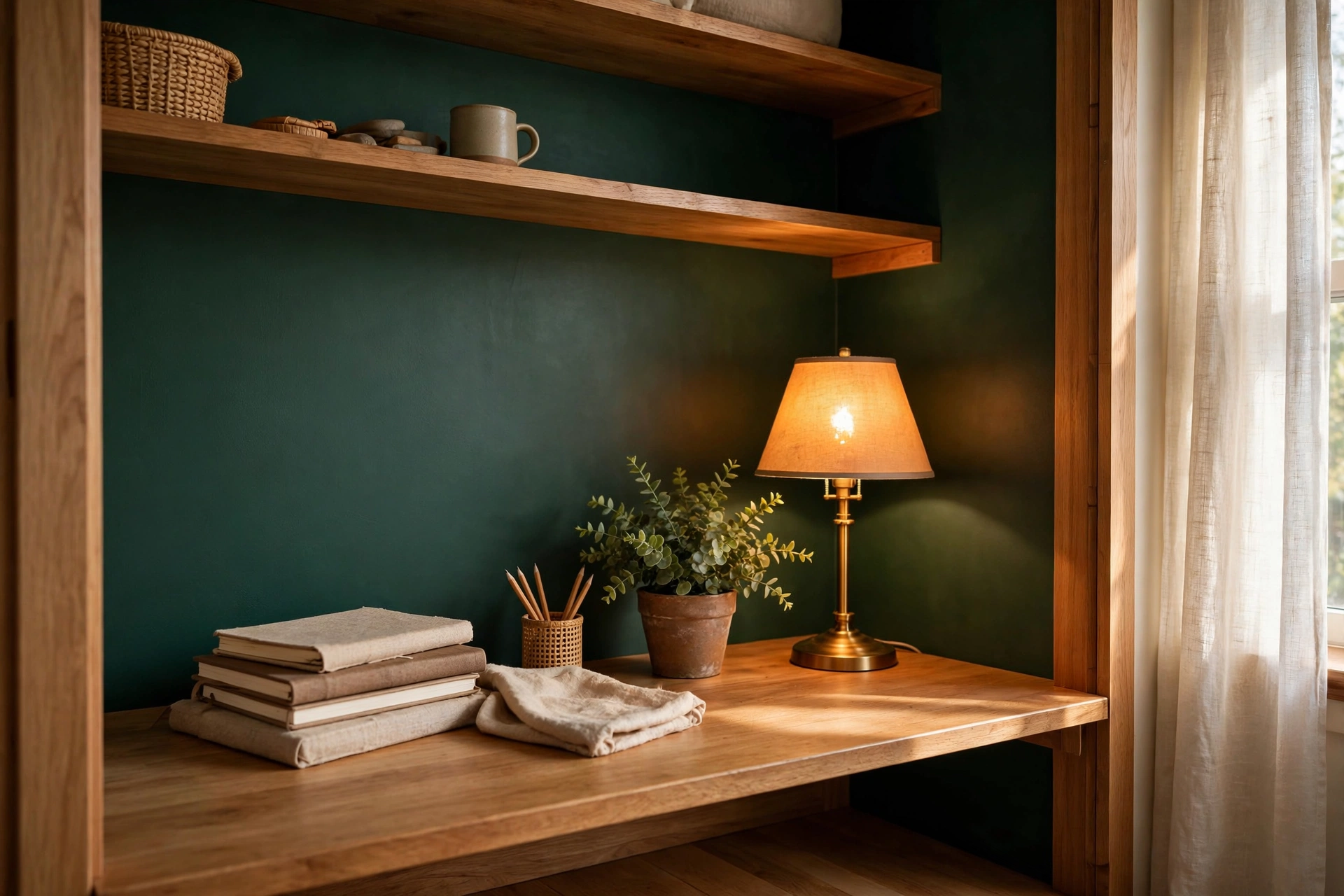
Here is the secret that separates a cloffice from a cupboard: treat the inside of the closet like a real room. A bold coat of paint on the back wall — deep forest green, warm terracotta, inky navy — instantly turns a storage cavity into a destination. The area is tiny, so one quart usually covers it, and even dramatic colors feel contained rather than overwhelming.
If paint feels too permanent, peel-and-stick wallpaper gives you the same transformation with zero commitment — botanical prints, subtle textures, or a graphic geometric. Renters especially should lean on this move.
4. Light It Like a Real Room, Not a Cupboard
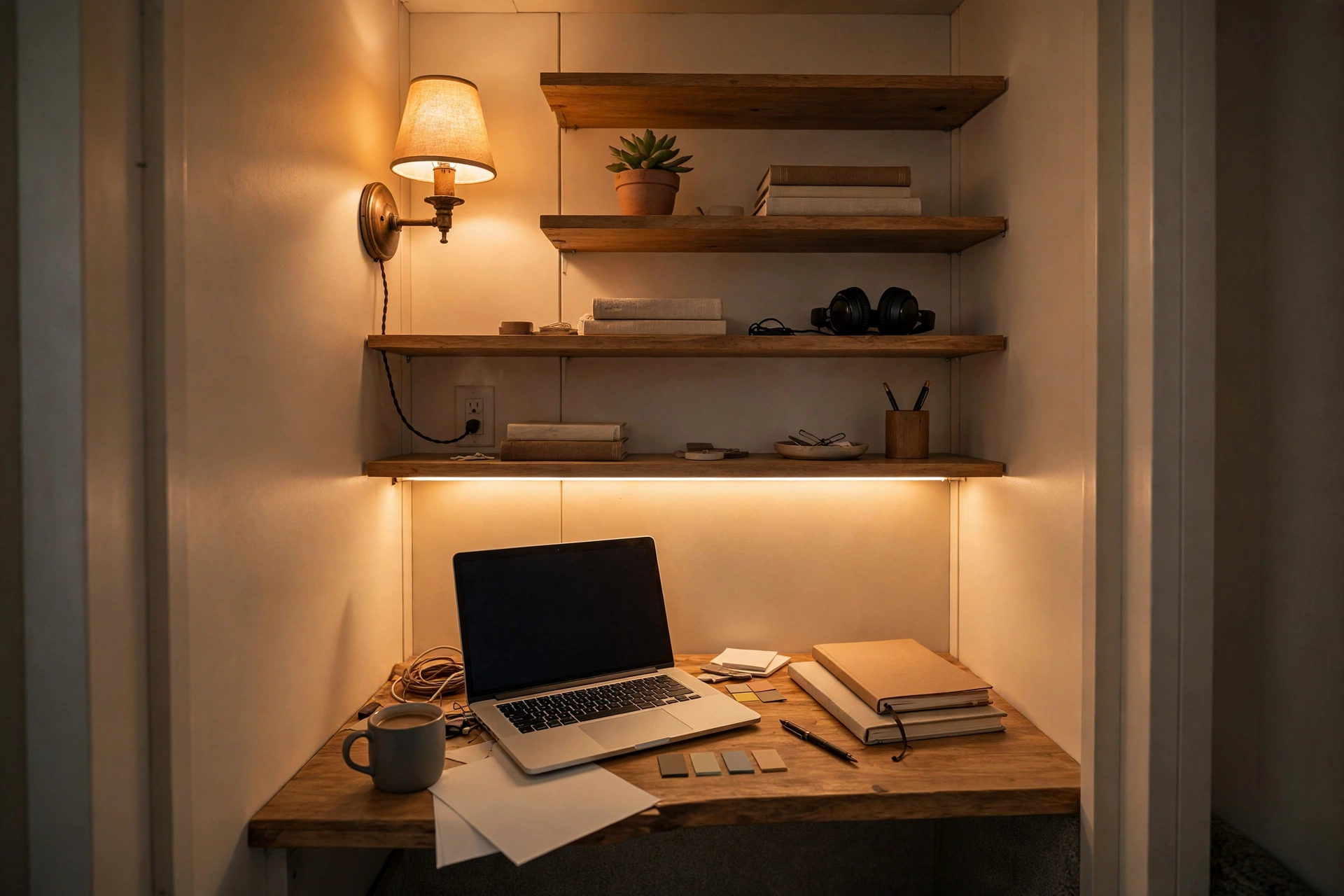
Most closets have no window and one sad overhead bulb, so lighting makes or breaks a closet office. Layer it: a slim plug-in wall sconce or mounted swing-arm lamp above the desk for task light, plus an adhesive LED strip under the top shelf to wash the back wall with a warm glow. The difference between one harsh bulb and three warm sources is the difference between a chore and a pleasure.
Choose bulbs around 2700K to 3000K for cozy, golden warmth, and add a small daylight-spectrum lamp if you take lots of video calls. Apartment Therapy’s cloffice formula lists proper lighting as a non-negotiable, right alongside a sturdy desk and overhead storage.
5. Build Up: Take Shelving All the Way to the Ceiling
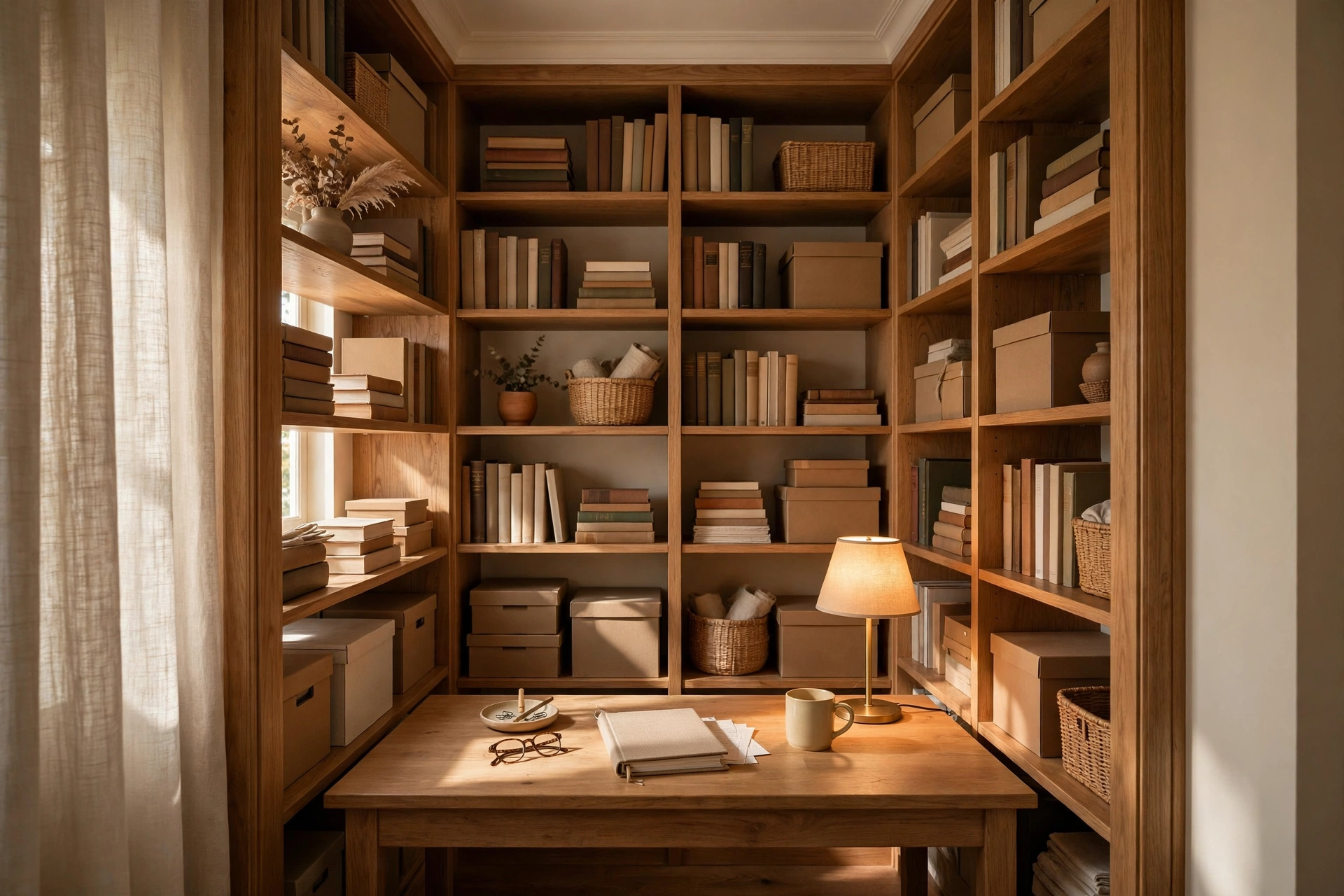
A closet’s superpower is vertical space, so use all of it. Mount two or three shelves above the desk — one about 18 inches above the work surface for daily items, higher ones for reference books, supplies, and the beautiful boxes that hide the ugly stuff. In a reach-in closet, shelves that span the full width make the space feel wider, not more cramped.
Keep everyday tools at arm’s reach and archive the rarely-touched items up high. Small cubbies or dividers keep open shelves tidy, and a printer fits neatly on a deep middle shelf — out of sight, but one arm’s reach away.
6. Decide on the Doors: On, Off, or Curtain
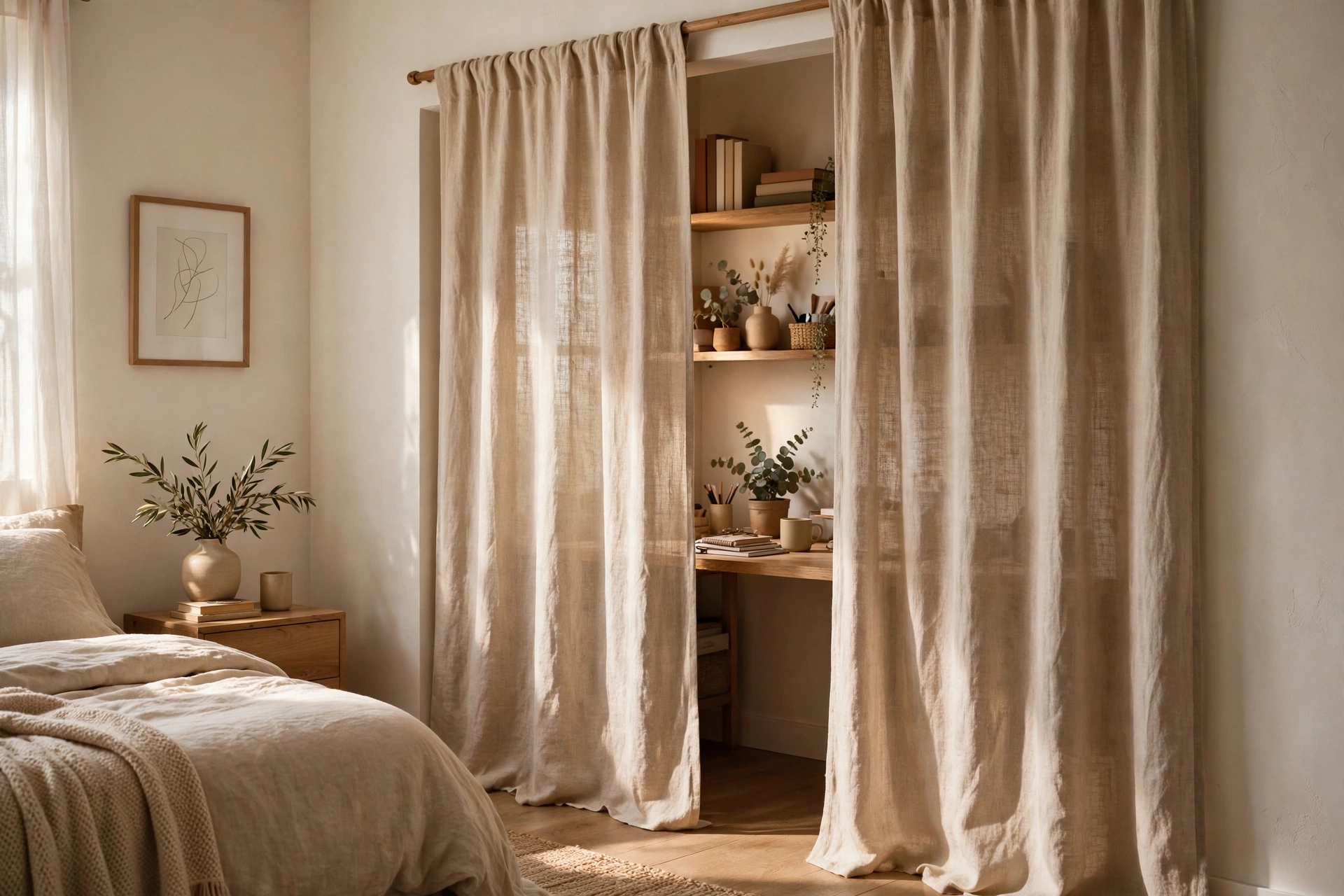
Doors are a design decision, not a default. Keeping them means you can shut the whole office away at 5 p.m. — more on that ritual in idea 15. Removing them entirely opens the nook up so it reads as a built-in alcove rather than a conversion, which works beautifully when the inside is styled.
The middle path is a curtain: remove the bulky bifolds and hang linen or striped cotton on a tension rod. It softens the look, hides visual clutter instantly, and costs almost nothing.
7. Plan for Airflow Before It Gets Stuffy
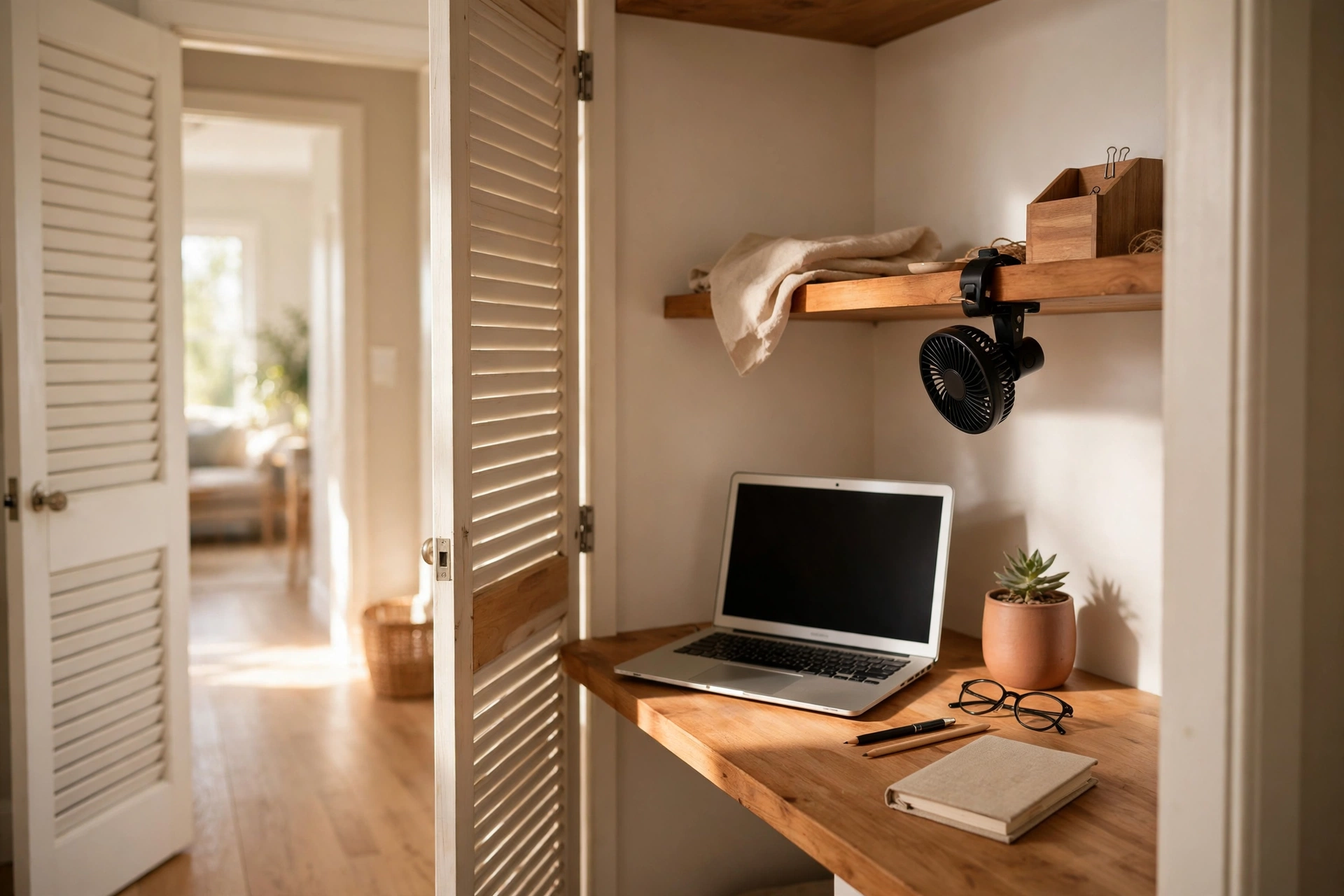
A small enclosed space warms up fast with a person and a laptop in it, so think about ventilation early. The simplest fix is leaving the door ajar while you work, or removing one door panel. A small quiet USB fan on the desk or a clip-on fan at the top of the frame keeps air moving without adding noise to your calls.
Avoid space heaters in such a tight space, and give your laptop breathing room with a simple stand — it improves both airflow and ergonomics.
8. Wire It Smartly: Power and Cables
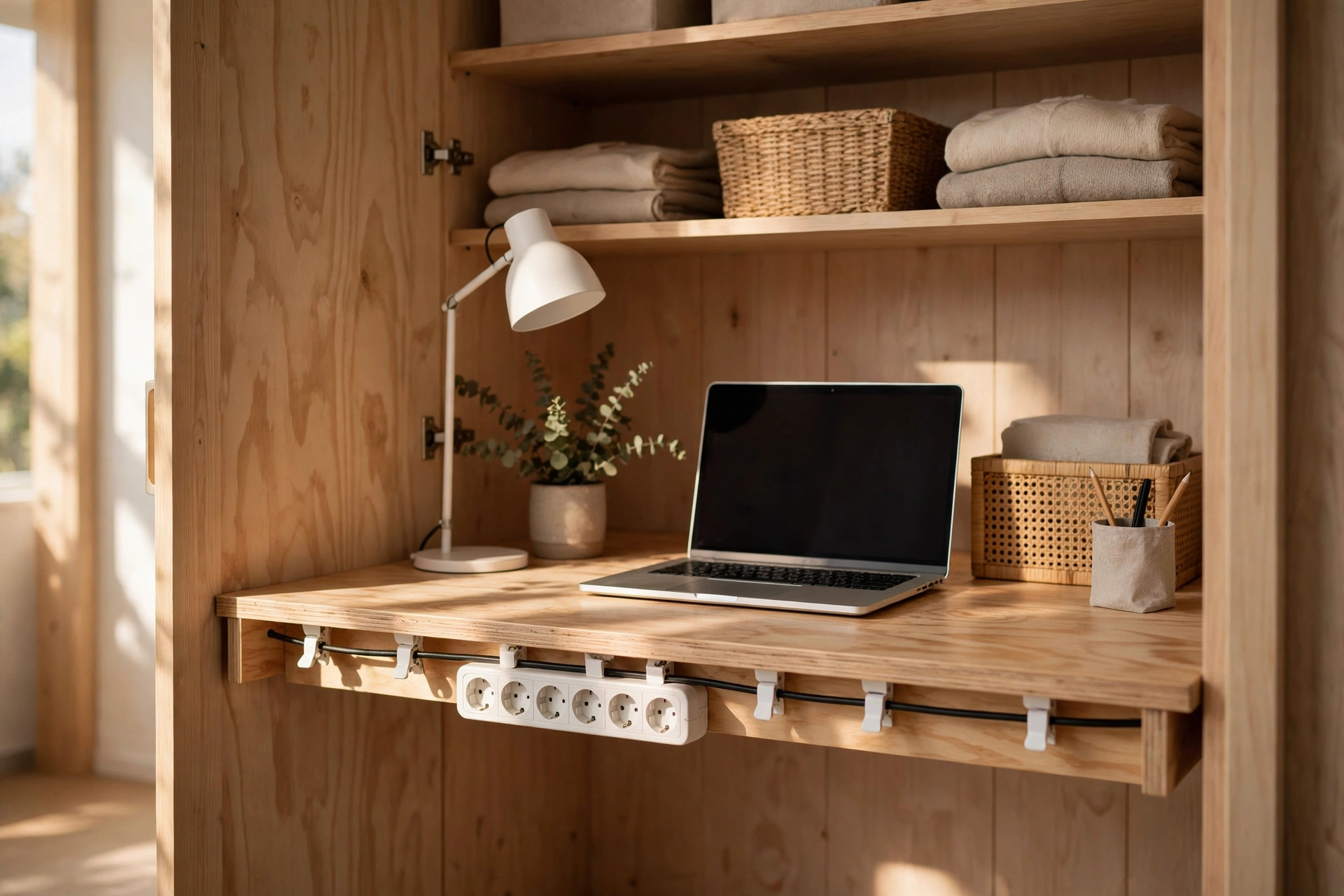
Many closets have no outlet, so map your power before the desk goes in. An extension cord with a flat plug can run discreetly along the baseboard from the nearest wall outlet — hide it with a paintable cord concealer and it disappears. From there, mount a compact power strip under the desk top or on the back wall so chargers and the lamp all live in one tidy spot.
Then tame the tangle: a small cable tray or a few adhesive clips under the desktop keeps cords off the floor and out of sight, making the whole setup look custom-built.
9. Pick a Chair That Tucks Away Completely
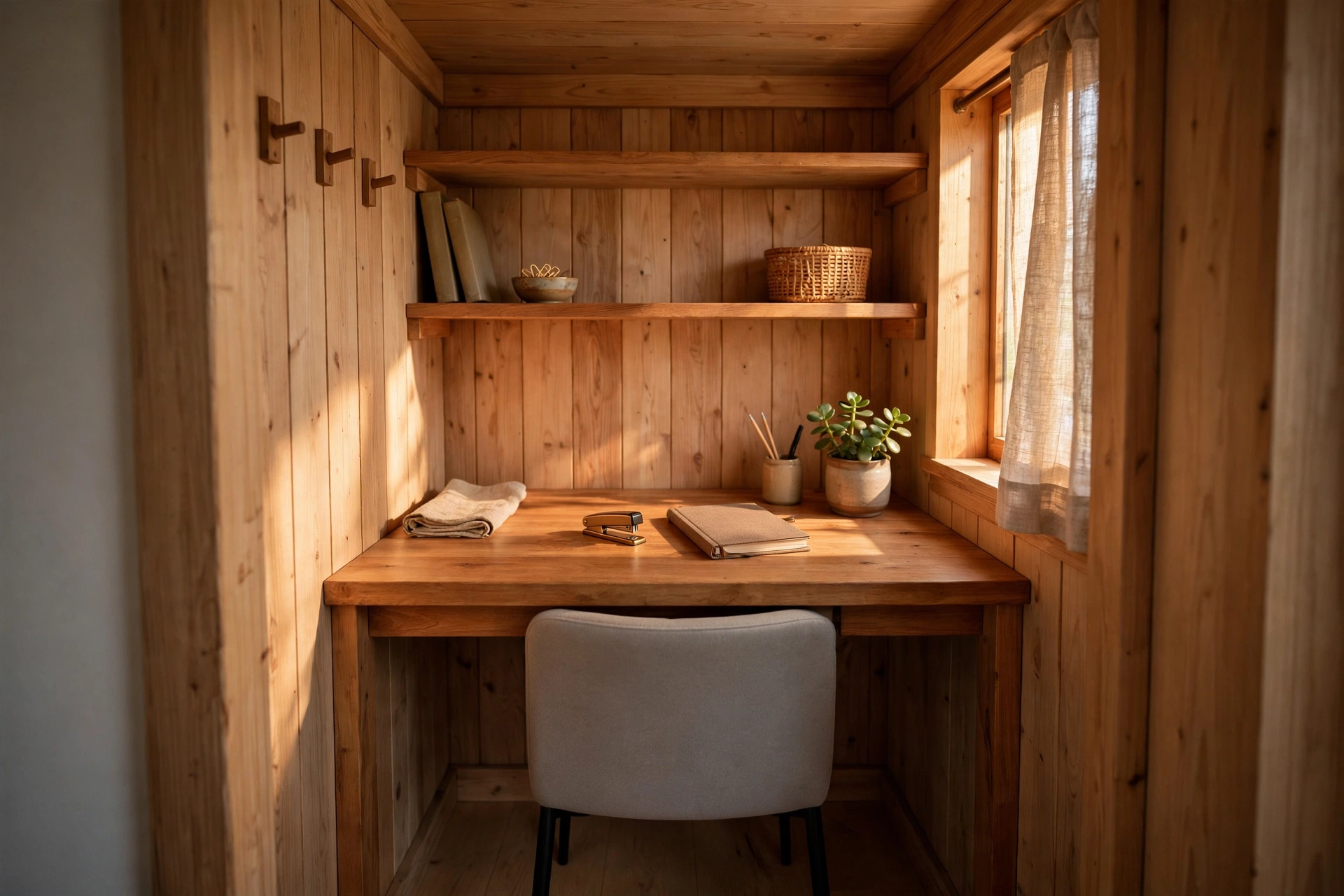
In a cloffice, the chair has to disappear when the workday ends. An armless task chair with a slim profile slides fully under the desk — look for good lumbar support anyway, since you will sit in it for hours. A backless stool or folding chair works for lighter use and tucks in even tighter.
Measure the clearance under your desk top before buying, including the seat at its lowest setting. If the closet is in a bedroom, choose a finish that looks good from the doorway, since your cloffice doubles as decor.
10. Make It Renter-Friendly From the Start
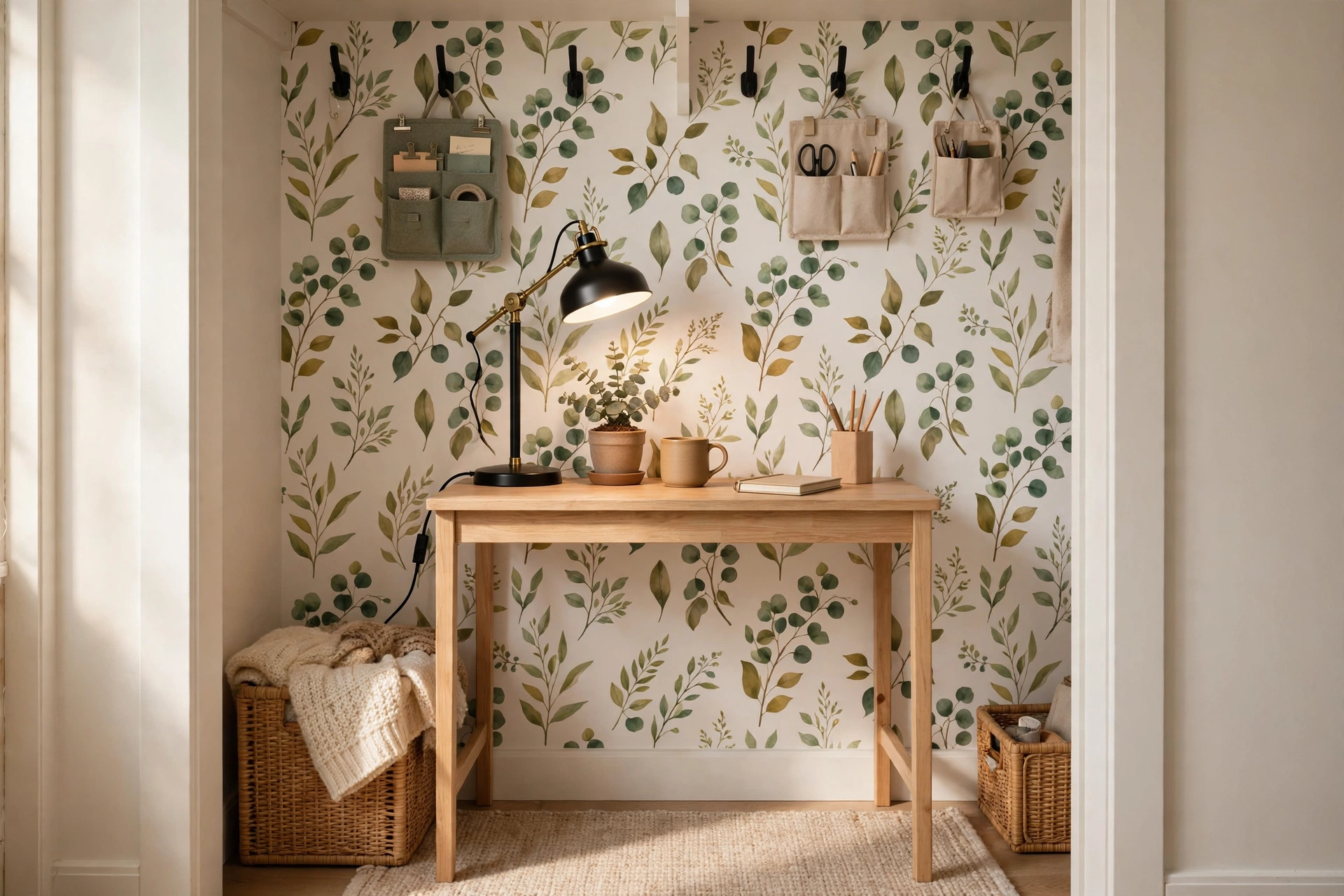
Renting does not rule out a cloffice — it just changes the toolkit. Use a freestanding narrow desk instead of a wall-mounted one, peel-and-stick wallpaper instead of paint, and removable adhesive hooks and strips for art and organizers. A tension-rod curtain replaces door removal, and a plug-in sconce replaces hardwired lighting.
Keep the original closet rod and shelf stored safely if you remove them, so move-out day is just a reverse of move-in day. Photograph the “before” state on day one; future-you will be grateful.
11. Double Up: Share the Closet With Your Clothes
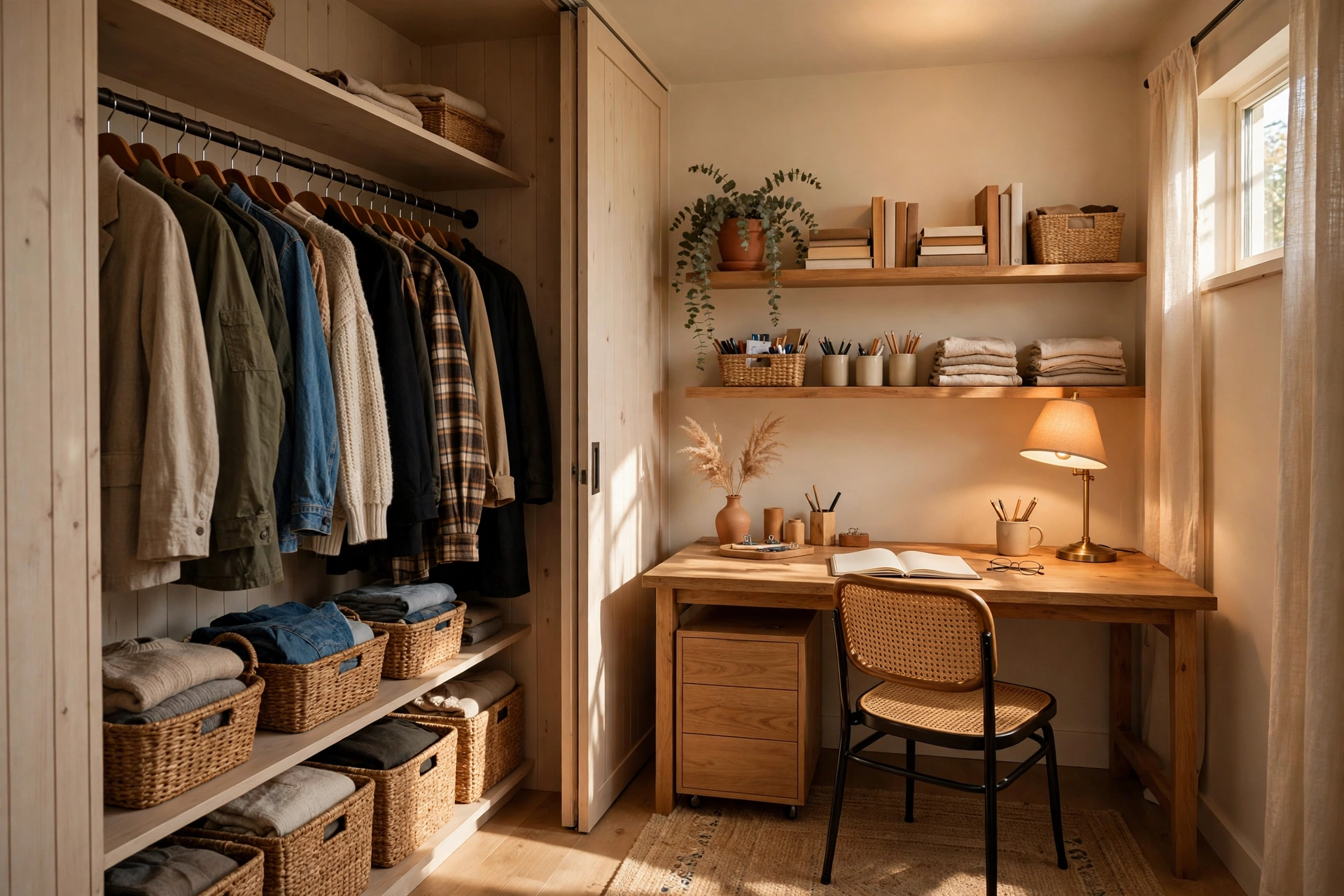
In a walk-in closet, you do not have to choose between wardrobe and workspace — zone it. Keep hanging clothes on one side and the desk on the other, with a rug or a change of wall color marking the office territory. A secretary desk with a fold-down front is made for this: open it to work, close it to hide the laptop and papers.
Use the clothing rod above the desk for a hanging organizer that holds office supplies in labeled bins — same hardware, new job. The trick is sightline discipline: at the desk, you should see your work zone, not a wall of laundry.
12. Soften the Sound in Your Little Nook
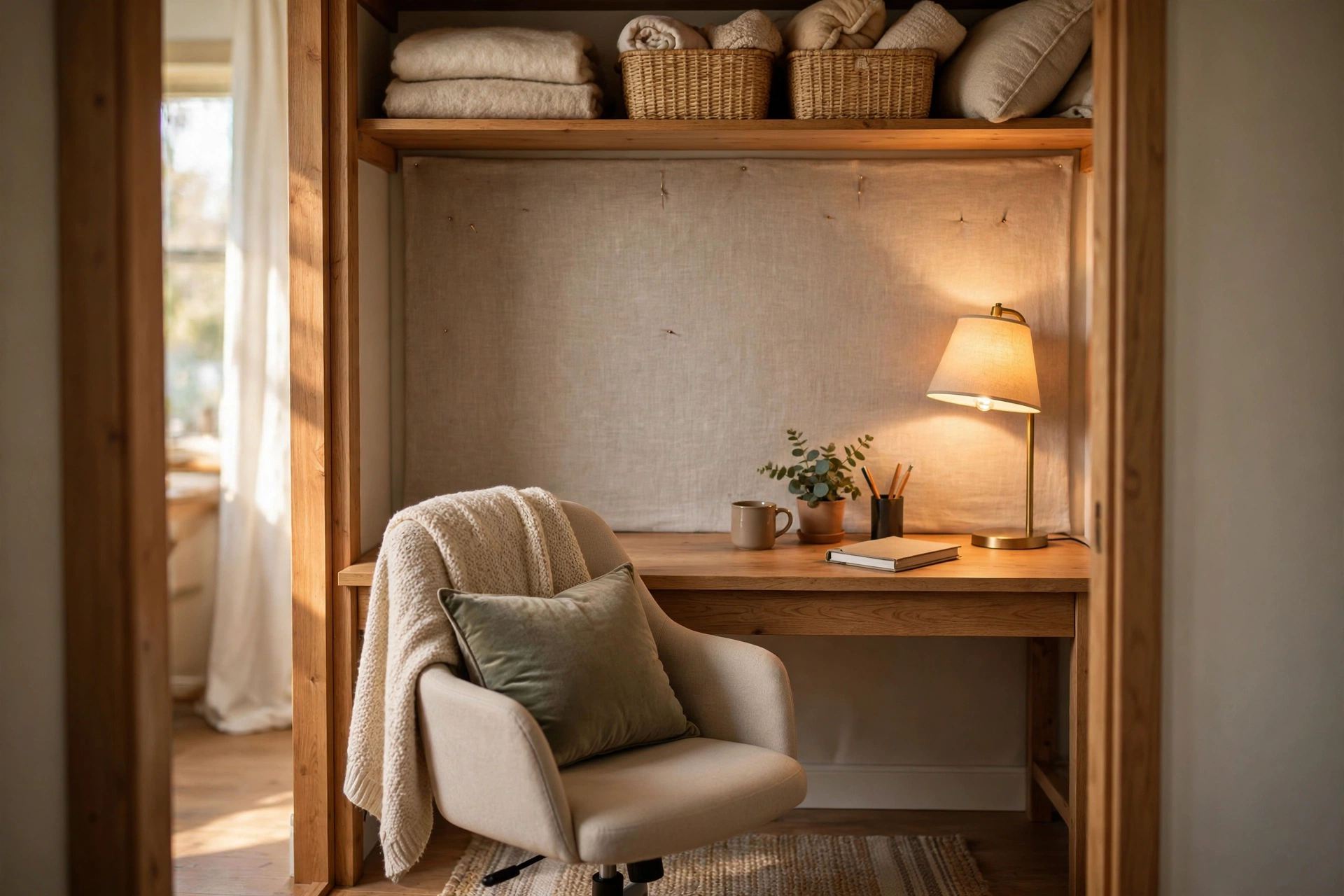
Hard closet walls bounce sound around, which makes calls echoey and the space feel harsh. The fix is textiles: a small rug under the chair, a fabric pinboard on the back wall, even a curtain at the opening all absorb sound noticeably. Peel-and-stick acoustic panels in a fabric finish do the same job while looking like intentional design.
A pair of good headphones with a dedicated wall hook keeps them off the desk and signals “do not disturb” to the household. These small acoustic moves punch above their weight — our cozy home office design ideas lean on the same principle, since softness is what turns a work corner into a sanctuary.
13. Style It Like a Room, Not a Storage Nook
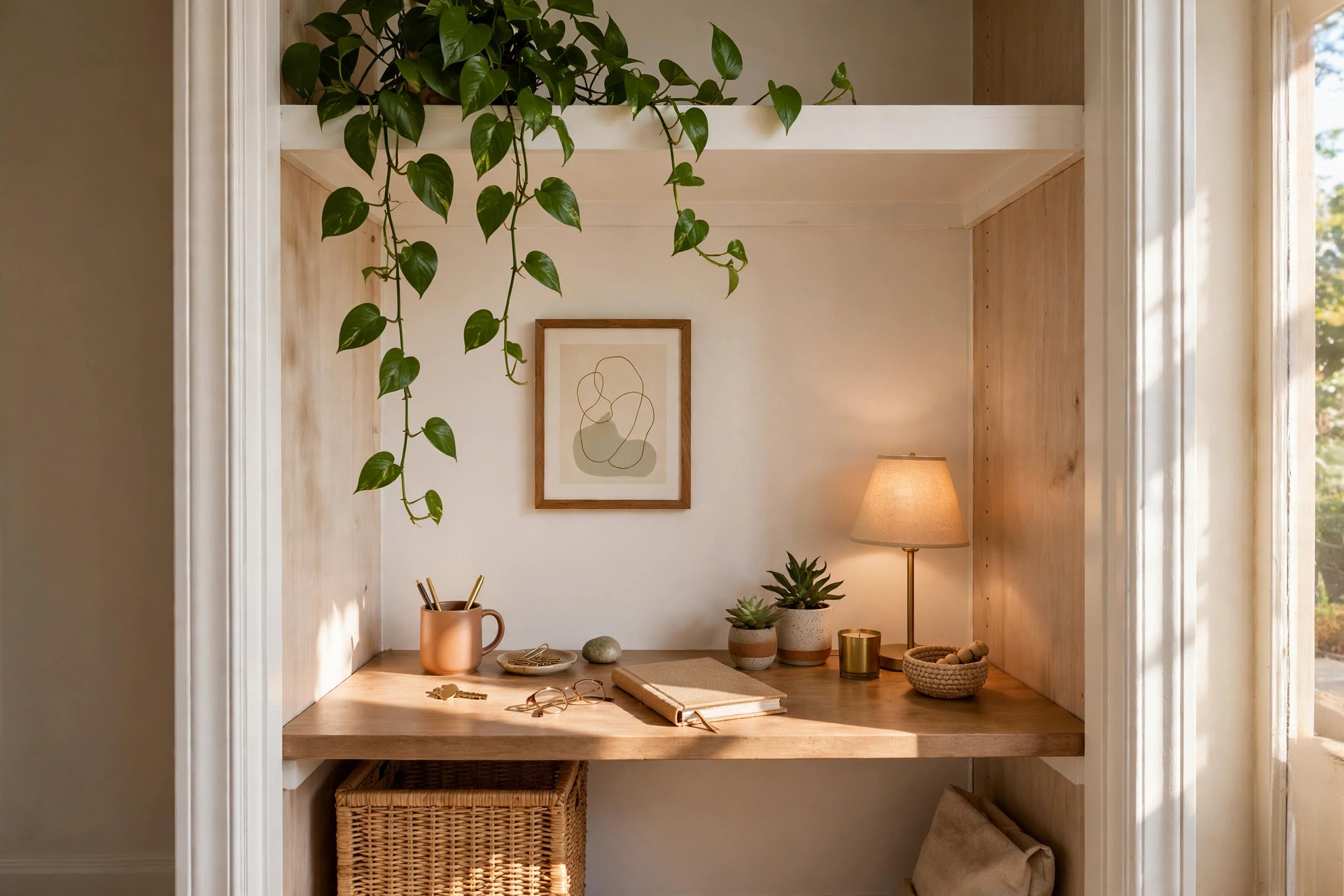
This is where the cloffice becomes a joy instead of a compromise. Hang one small piece of art you love at eye level above the desk. Add a tiny plant — a pothos trailing from the top shelf thrives in low light and asks for almost nothing. A favorite mug, a small stack of beautiful books: these are the objects that make you choose to sit down here. More wall-styling tricks that scale down well live in our small home office wall decor ideas.
Keep styling tight — three to five objects, not fifteen — because every extra item competes for precious inches. A small mirror on the back wall bounces light around and makes the nook feel twice as deep.
14. Design Your Zoom Background on Purpose
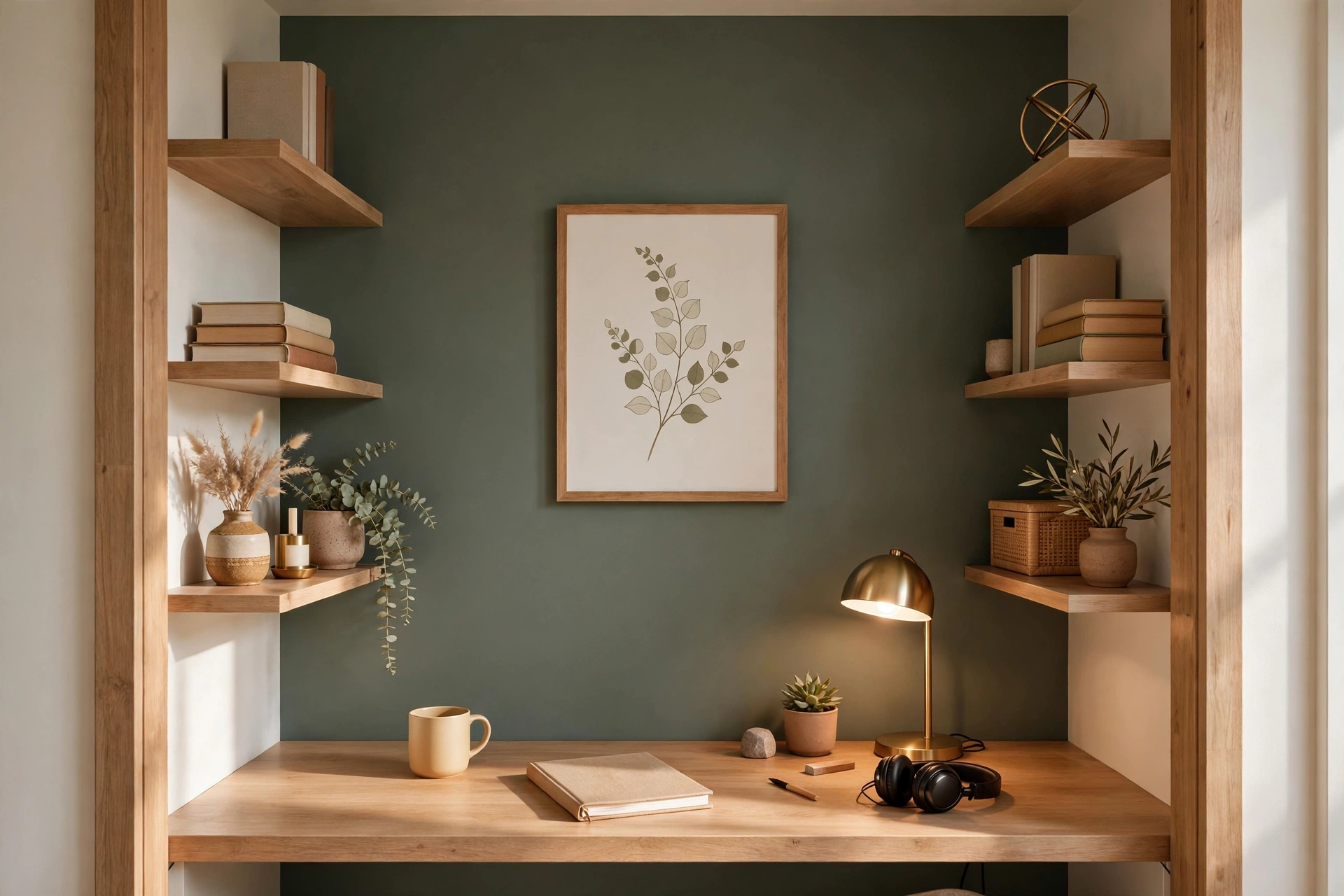
Your cloffice back wall is on camera every time you join a call, so style it deliberately. A painted or wallpapered back wall reads as intentional design, and one piece of art or a neat shelf arrangement gives the frame depth.
Light your face, not just the desk: a small lamp or LED panel in front of you, slightly above eye level, flatters far more than an overhead bulb. Sit so the light falls on you, not behind you. The Spruce’s roundup of inspiring closet offices is a great browse for backdrops that look designed rather than improvised.
15. Shut the Doors: The 5 O’Clock Ritual
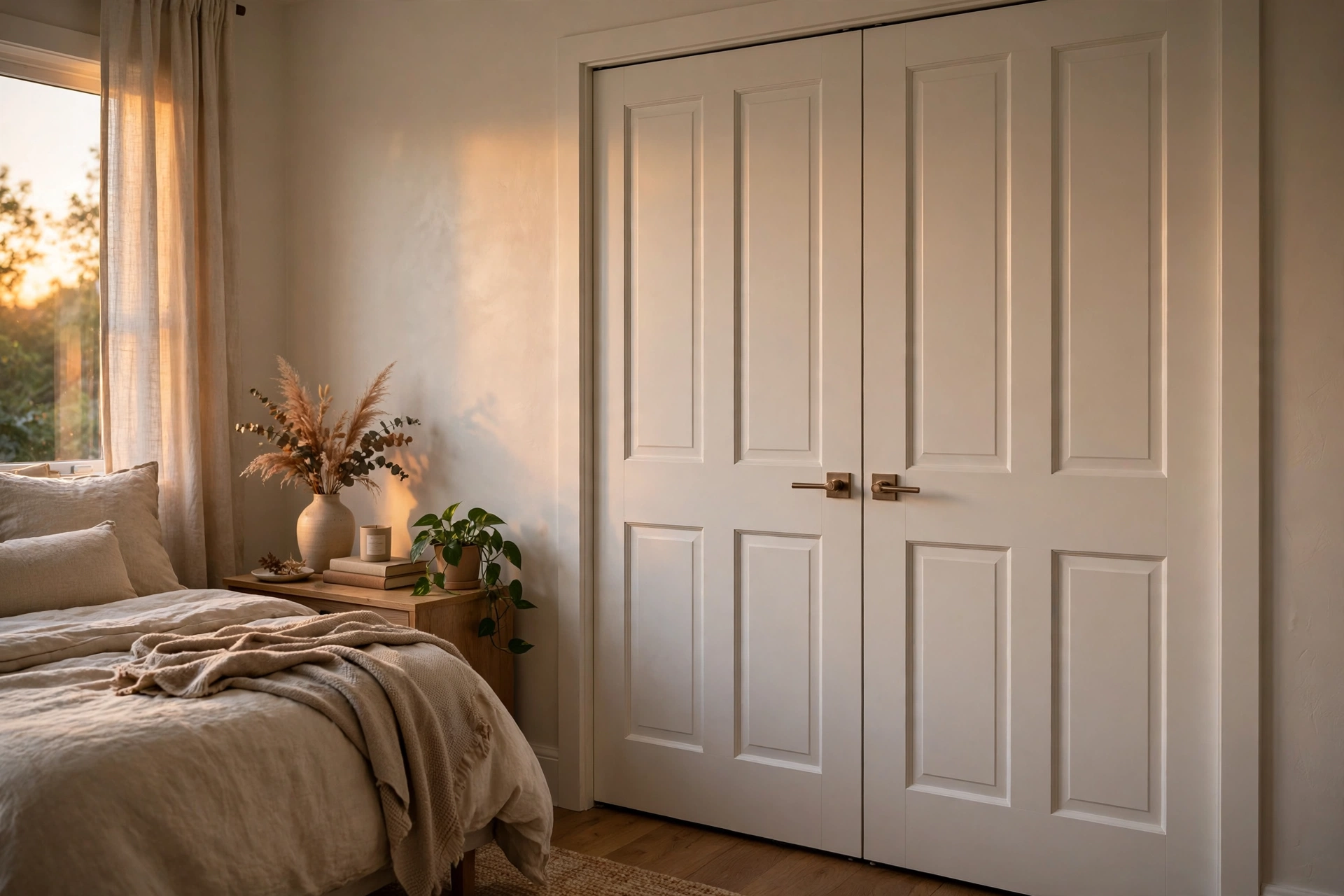
The single greatest feature of a closet office is the one no desk accessory can match: doors that close. At the end of the workday, shut them — curtain drawn, bifolds folded, or sliders slid — and the office physically disappears from your home and your mind. Remote workers consistently say this boundary is what a cloffice does best.
Make it a ritual: laptop closed, chair tucked, doors shut, and you have “left” the office without leaving the house. In the morning, opening those doors becomes the commute — a small transition that tells your brain the workday has begun. For all the clever shelving and lighting in this list, this humble ritual might be the most valuable closet office design idea of all.
Frequently Asked Questions
What exactly is a cloffice?
A cloffice is a closet converted into a home office — the word blends “closet” and “office.” It usually means fitting a desk, chair, lighting, and storage into a reach-in or walk-in closet, often with doors or a curtain that close to hide the workspace when the day ends.
What size closet do you need for a closet office?
A standard reach-in closet about 2 feet deep and 4 to 6 feet wide works well — that depth fits a slim desk or wall-mounted desktop with room to tuck in a chair. Measure your exact width, depth, and height before buying anything.
How do you keep a closet office from getting hot and stuffy?
Leave the door ajar while you work, or remove one door panel for permanent airflow. A small quiet USB or clip-on fan keeps air circulating, and a laptop stand improves both cooling and posture.
Can I build a cloffice in a rental?
Absolutely. Use a freestanding slim desk rather than a wall-mounted one, peel-and-stick wallpaper instead of paint, removable adhesive hooks for art and organizers, and a tension-rod curtain instead of removing doors. Store any removed closet hardware safely so you can restore everything on move-out day.
How much does it cost to turn a closet into an office?
A basic setup — a secondhand slim desk, a plug-in lamp, and a few adhesive organizers — can come in under $150. A mid-range build with a wall-mounted top, floating shelves, peel-and-stick wallpaper, layered lighting, and a decent chair typically runs $300 to $600.
Keep Exploring
A cloffice proves that a great workspace is about intention, not square footage. If you love the calm, light-filled side of compact workspaces, our 15 Scandinavian Home Office Design Ideas That Boost Focus show how pale woods and quiet palettes make even the tiniest desk feel serene. For more ways to make a small work zone feel warm and personal, browse our small home office wall decor ideas — nearly every trick there scales down beautifully to closet size. And when you are ready to think beyond the closet, our cozy home office design ideas will help you layer in the textures, lighting, and personality that make any workspace feel like yours.


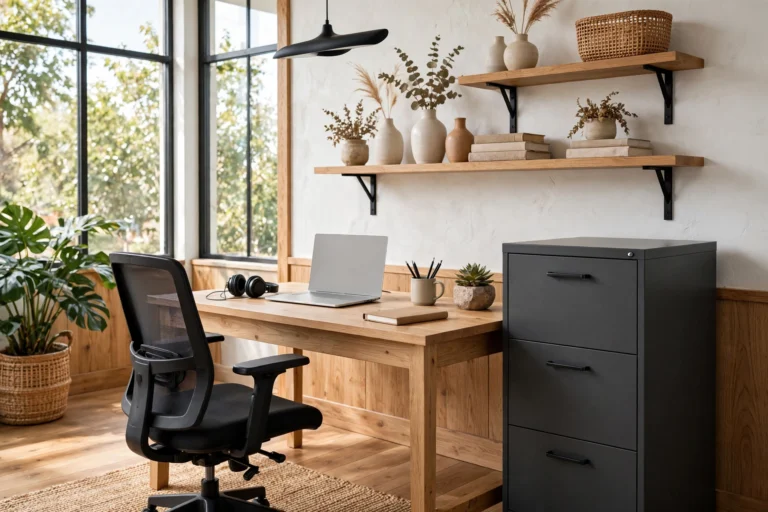





[…] store the rest in drawers or caddies. A tidy, well-lit desk genuinely makes studying less painful. Our closet office design ideas show how to squeeze a workspace into the tiniest […]
[…] with ease. Choose one with interior shelving so supplies have a home when the desk is closed. It pairs beautifully with the small-space ideas in our closet office guide. Anchor it into studs for rock-solid […]