Patio privacy ideas turn an exposed slab into a sanctuary. Nobody relaxes fully while feeling watched — whether it is the neighbors’ second-story windows, a busy sidewalk, or just the sense of being on display. The good news is that privacy and beauty are not trade-offs: the best screens, plantings, and structures make a patio more gorgeous while making it more secluded.
From living green walls to breezy outdoor curtains, patio privacy ideas range from afternoon DIYs to weekend builds, at every budget. This guide covers fifteen approaches with honest notes on cost, maintenance, and how much privacy each actually delivers — because a screen that blocks nothing is just decoration. Pick the combination that fits your exposure, and reclaim your outdoor room.
1. Tall Planter Box Green Screen
A row of tall planter boxes filled with dense, fast-growing plants is the most flexible privacy screen: no permits, no concrete, and it moves if you rearrange. Build or buy 24-inch-tall boxes, fill with a quality potting mix, and plant bamboo (clumping varieties only — running bamboo escapes), tall grasses like miscanthus, or dense evergreens like arborvitae. Within one season you have a living wall. Line the boxes along the exposed edge of the patio, leaving gaps only where you want views. Drip irrigation on a timer keeps the screen lush with zero daily effort.

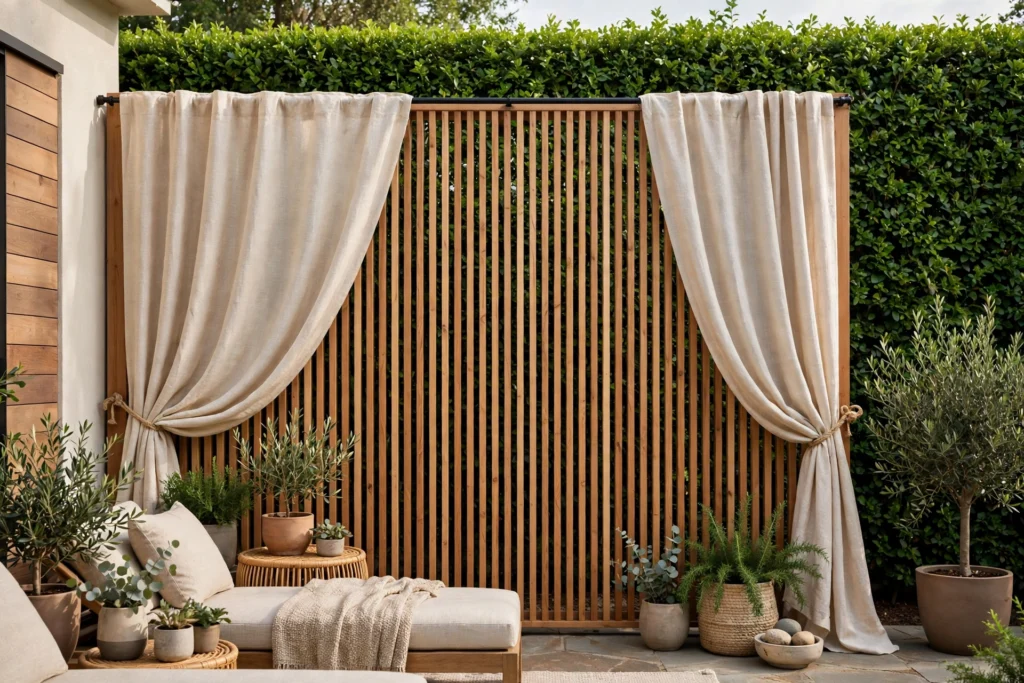
2. Outdoor Curtain Panels on a Cable System
Outdoor curtains on a stainless cable or conduit rod deliver instant, adjustable privacy with resort style. Hang weatherproof curtain panels from grommets or tabs, and draw them closed for seclusion or open for breeze and views. See our outdoor curtain guide for fabric and hardware picks.

3. Lattice Panels with Climbing Vines
Lattice plus vines is the classic privacy combination: the lattice gives immediate partial screening while the vines grow in to complete it. Choose cedar or vinyl lattice and mount panels between 4×4 posts set in concrete. Plant fast climbers like clematis, jasmine, or annual morning glories for first-season coverage. Train vines horizontally along the lattice for the densest fill.

4. Horizontal Slat Fence Screen
A horizontal slat screen — cedar or composite boards with half-inch gaps — is the modern privacy standard: clean lines, excellent coverage, and airflow through the gaps. See Wikipedia’s fence article for more on boundary structures.

5. Freestanding Privacy Screen Panels
Freestanding screens — hinged panels in wood, metal, or outdoor fabric — are privacy you can reposition in minutes. Angle them to block the specific sightline that bothers you. Choose screens at least five feet tall.

6. Pergola with Retractable Canopy and Drapes
A pergola defines the patio as a room; add a retractable canopy and side drapes and it becomes a private one. The canopy gives overhead seclusion from overlooking windows while drapes close the sides as needed.

7. Bamboo Fencing Rolls
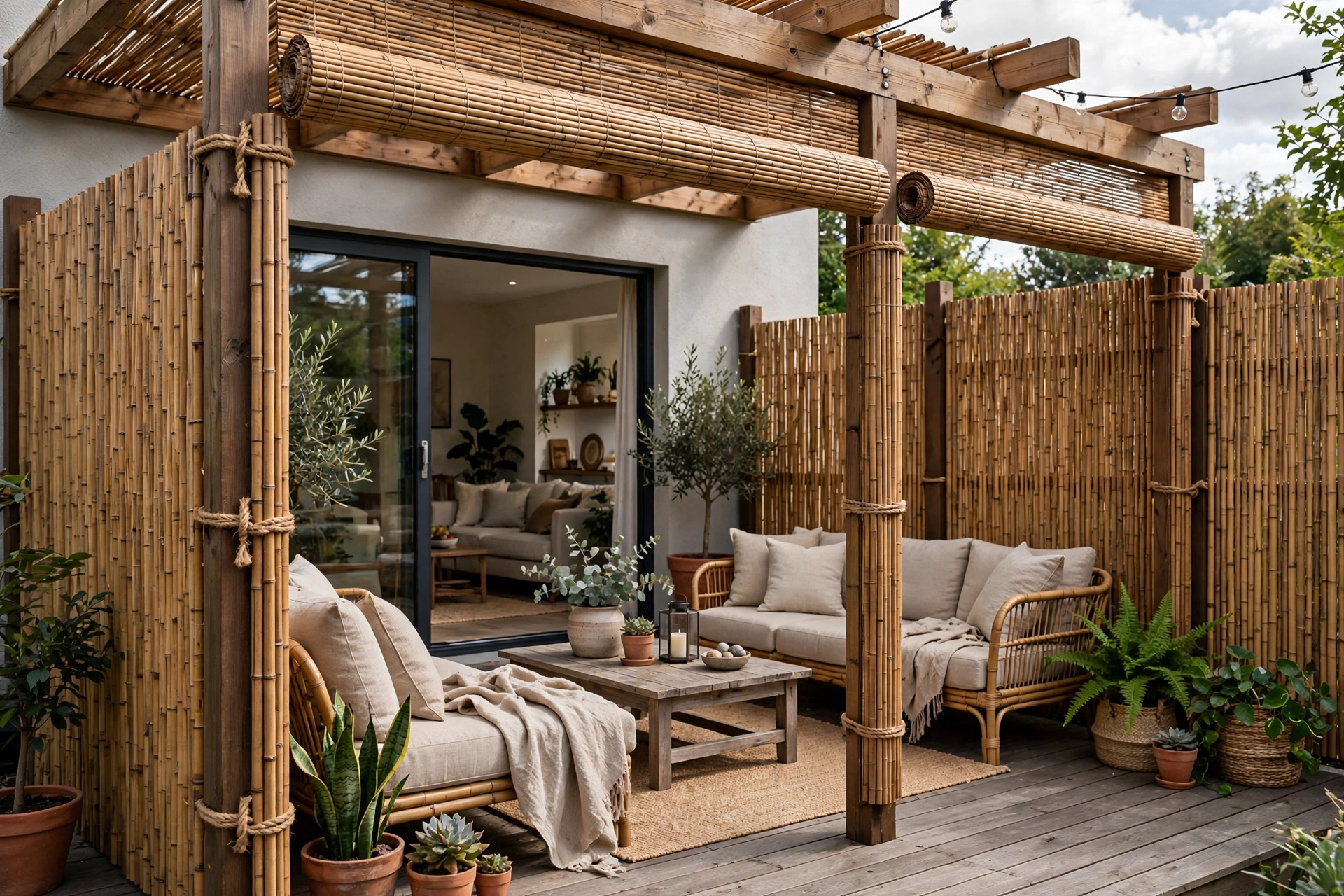
Natural bamboo fencing rolls — six feet tall, sold in eight-foot lengths — are the fastest path to full privacy: unroll, attach to posts or an existing fence with galvanized wire, done in an afternoon.
8. Living Hedge Wall
A proper hedge — arborvitae, privet, laurel, or holly planted in a tight row — is the most permanent and most beautiful privacy solution. Plant 3- to 4-foot specimens three feet apart and they knit into a solid wall within two to three seasons.

9. Decorative Metal Privacy Screens
Laser-cut metal screens — with geometric, botanical, or abstract patterns — block sightlines while functioning as art. Corten steel develops a rich rust patina; powder-coated aluminum stays crisp in any color.

10. Sail Shade as Overhead Privacy
Overlooking windows look down; a sail shade looks back. Triangular or rectangular shade sails stretched over the patio block downward sightlines while providing filtered shade. See our patio decor guide for styling a shaded patio.

11. Raised Deck with Built-In Benches
A raised deck with built-in perimeter benches creates privacy through elevation and enclosure. See Wikipedia’s patio article for background on patio design.

12. Outdoor Room with Glass Wind Screens
Frameless glass wind screens block wind and imply enclosure while preserving views. Tempered glass panels in slim aluminum posts create a barely-there barrier; add frosted film to lower sections for visual privacy.

13. Potted Tree Allée
A row of potted small trees — olive, citrus, Japanese maple, or columnar evergreens — lines the patio edge with living architecture. Large planters (20 inches plus) give roots room.

14. Fabric Privacy Sail on Posts
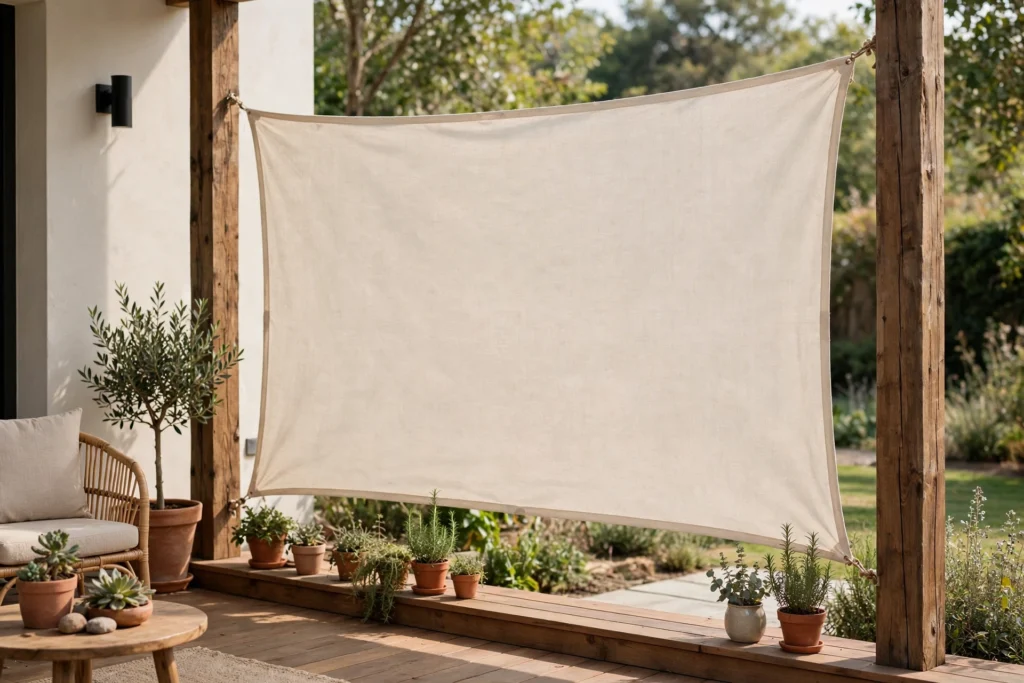
A simple rectangle of outdoor fabric stretched between four posts is privacy for the price of fabric and lumber. Hem the edges, add grommets, and lace it to the posts with rope or bungees.
15. Layered Privacy: The Designer Combo
The best privacy is layered: a low hedge at the property line, a slat screen at the patio edge, and curtains on the pergola. See our balcony retreat ideas for layering in small spaces.
Frequently Asked Questions
How tall should a patio privacy screen be?
Six feet is the standard for blocking ground-level sightlines. To block second-story windows, you need height plus distance — an 8- to 10-foot pergola canopy or tall trees work better than any fence. Always check local fence-height ordinances and HOA rules before building.
What is the cheapest way to add patio privacy?
Bamboo fencing rolls and fabric sails are the cheapest built options, often under a few hundred dollars for a typical patio edge. Fast-growing annual vines on inexpensive lattice give living privacy for the cost of seeds and a trellis.
Do I need a permit for a patio privacy screen?
It depends on height, permanence, and location. Most areas allow freestanding screens and plantings without permits; fences over six feet and permanent structures like pergolas often need one.
What plants give the fastest patio privacy?
Clumping bamboo, miscanthus grass, and evergreen clematis on a trellis give the fastest coverage — often one growing season. Arborvitae ‘Green Giant’ grows three to five feet per year once established.
How do you get privacy on a patio without blocking light?
Use solutions that filter rather than block: slat screens with gaps, laser-cut metal panels, sheer outdoor curtains, and high-canopy trees. Position solid screens only where the bad view is, and keep the sunny side open.
Keep Exploring
Privacy is not about hiding — it is about choosing what to share and with whom. Layer these ideas to match your exposures, and your patio becomes the outdoor room it was always meant to be: yours.