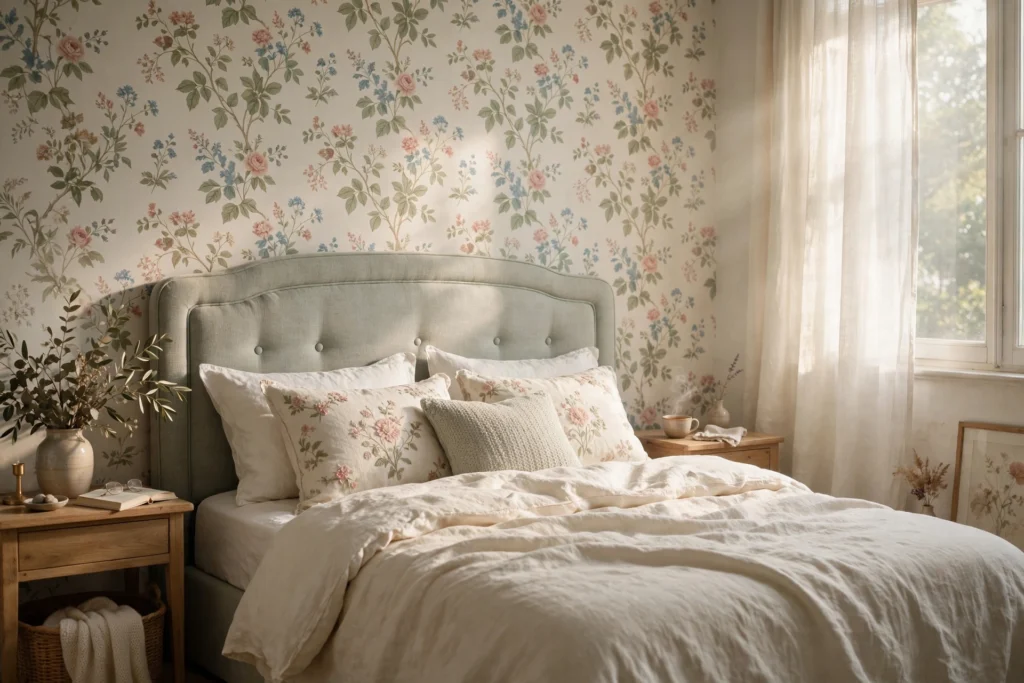

Few design moves transform a bedroom as completely as the right wallpaper. While paint changes color, wallpaper changes the feeling of the room — it can turn a plain rental box into a moonlit garden, a cozy cabin retreat, or a serene gallery suite. These bedroom wallpaper ideas cover every style and skill level, from renter-friendly peel-and-stick to full-wall murals and rich textures. Each one is chosen to make your bedroom feel intentional, layered, and restful.
The secret to wallpaper success in the bedroom is restraint with intent. Pick one star — a single feature wall, the ceiling, or the wall behind your headboard — and let everything else support it. Calm bedding, simple furniture, and soft lighting keep even the boldest pattern feeling dreamy instead of busy. With the right placement and palette, wallpaper becomes the backdrop your whole room is built around.
1. Botanical and Floral Prints
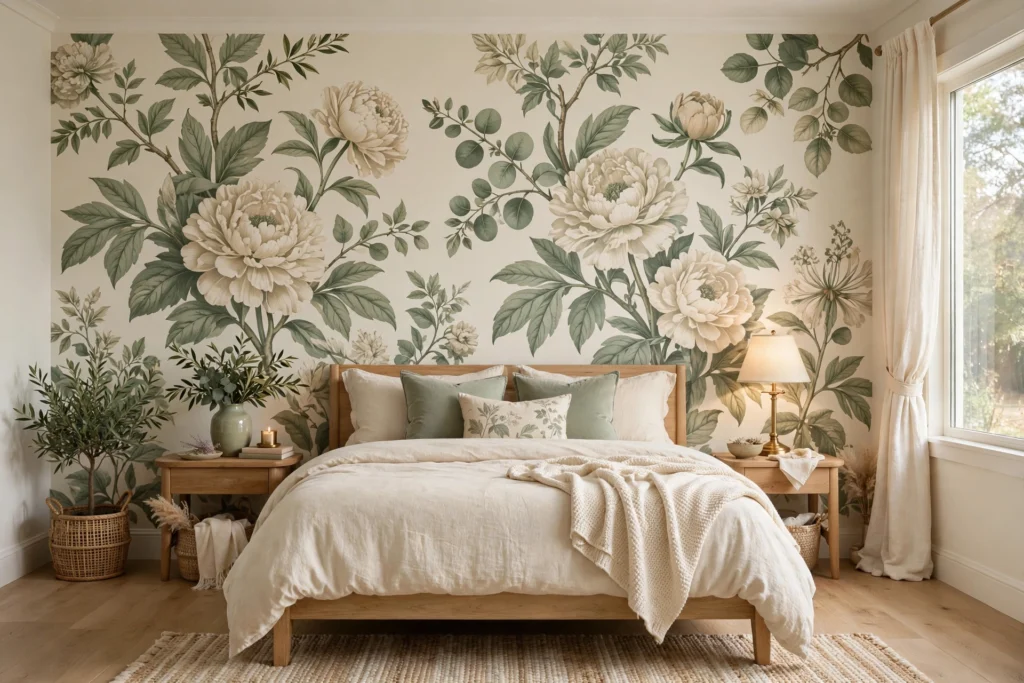
Trailing vines, oversized blossoms, and delicate wildflower sketches bring the outdoors in without any watering schedule. Botanical prints are the most loved bedroom wallpaper ideas for a reason: they feel alive but calming, especially in soft colorways like sage on cream, dusty rose on ivory, or eucalyptus on pale gray. Scale matters — large-scale blooms read modern and make a statement behind the bed, while small ditsy prints feel cottage-sweet and work beautifully across all four walls in a small room. Keep bedding quiet with solid linen or a subtle stripe so the walls stay the hero. This is also the forgiving choice for first-time paperhangers, since organic patterns hide small seams better than crisp geometrics ever will.
2. Serene Landscape Murals
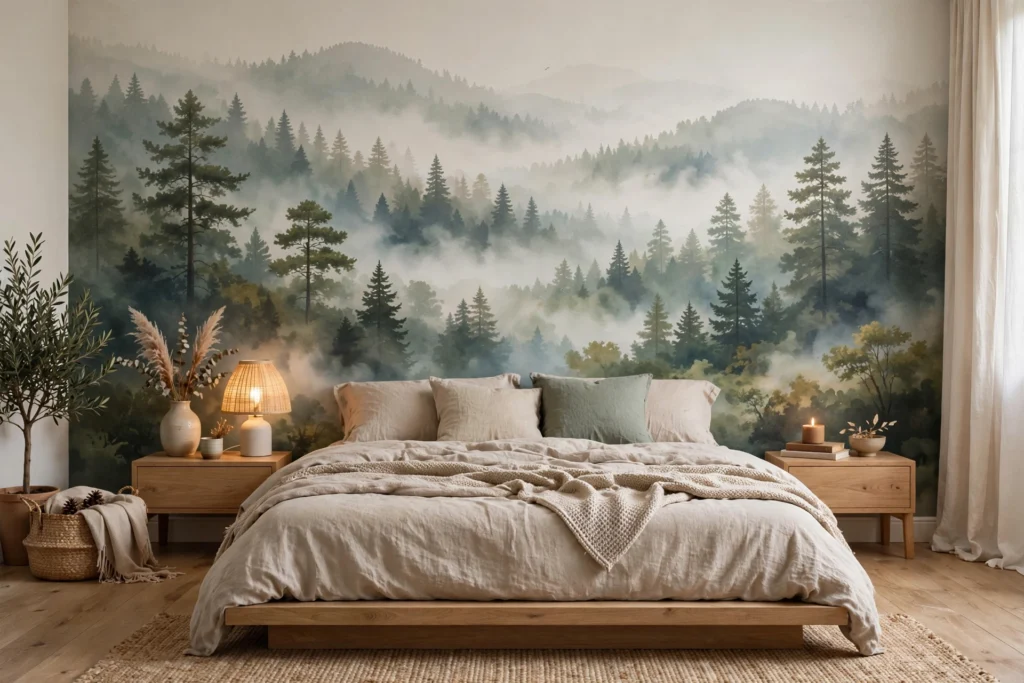
A mural turns your bedroom wall into a destination. Think misty forest treelines, rolling coastal dunes, or a soft watercolor mountain range fading into the distance. Because a mural is one continuous scene rather than a repeating pattern, it creates incredible depth — your eye travels across the wall instead of bouncing off it, which is why murals make even modest bedrooms feel larger. Place the bed against the mural wall so you fall asleep facing the view, and keep furniture low and minimal so nothing competes with the horizon line. Choose watercolor or photographic murals in muted tones for sleep-friendly calm; a saturated sunset scene might energize when you want to unwind.
3. Wallpaper Behind the Headboard
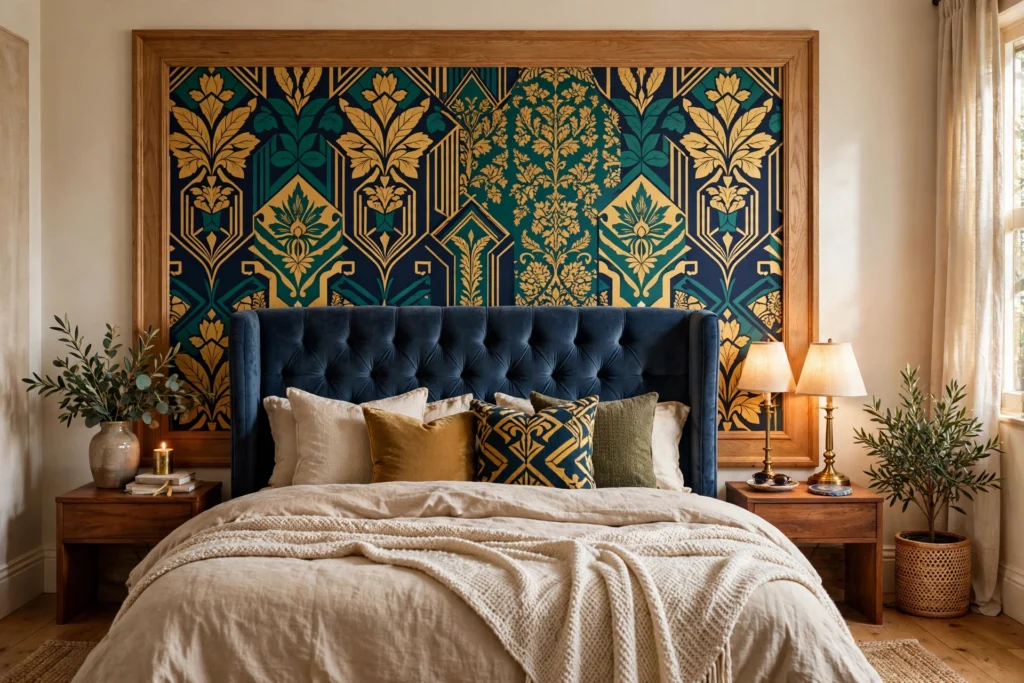
If you only paper one wall, make it the one behind your headboard. This placement delivers maximum impact for minimum effort and cost — one wall of paper, zero pattern-matching marathons. Wallpaper behind the headboard frames your bed like a giant piece of art, giving even a simple upholstered headboard a custom, designer look. Bold patterns shine here because bedding softens the edges: a dramatic damask or moody floral gets tempered by pillows and a throw. For the cleanest look, extend the paper wall to wall and ceiling to floor with no half-measures, and center the headboard precisely. The result reads like a boutique hotel suite, every single morning.
4. Peel-and-Stick Wallpaper for Renters
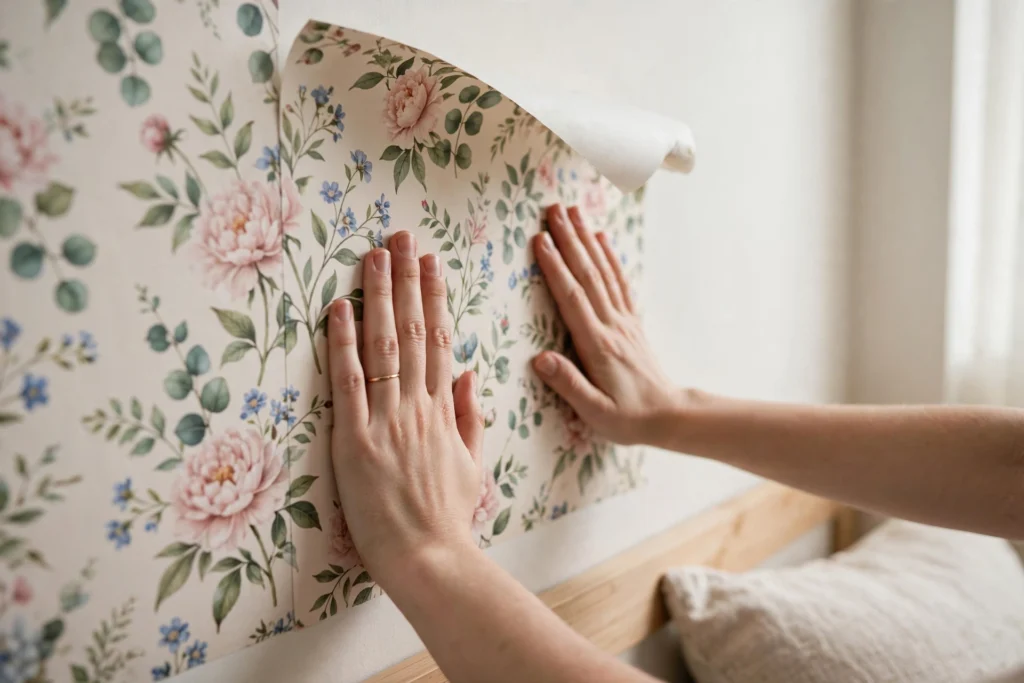
Renting is no reason to skip wallpaper. Peel-and-stick options deliver real pattern and texture with a repositionable adhesive that removes cleanly — ideal for apartments, dorms, and commitment-phobes. Modern peel-and-stick papers come in genuinely beautiful designs now, from grasscloth-look textures to painterly florals, so nobody will guess it is removable. The trick is wall prep and patience: start your first panel on a true vertical line rather than trusting a ceiling that may not be perfectly straight, and smooth bubbles outward with a soft squeegee as you go. For step-by-step application guidance from a major interiors authority, this guide to how to apply peel and stick wallpaper walks through the process panel by panel, including the plumb-line technique that keeps seams crisp. Always order samples first — color shifts dramatically between screen and wall, and a sample lets you test adhesion on your actual paint.
5. Grasscloth and Natural Textures
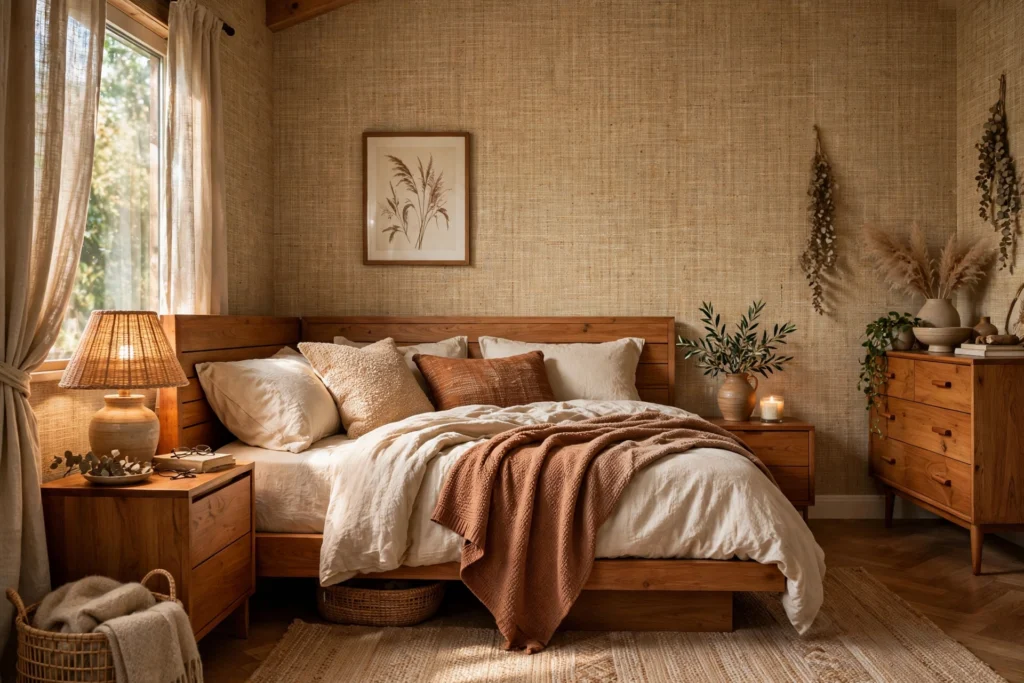
When you want richness without pattern, grasscloth is the answer. Woven from natural fibers like jute, sisal, and seagrass, it adds subtle movement and warmth that flat paint simply cannot match. Grasscloth reads as sophisticated rather than busy, which makes it perfect for bedrooms where you want texture without visual noise. The natural variation in the weave catches lamplight beautifully at night, giving walls a soft glow that feels incredibly cozy. Fair warning: it is one of the priciest wallcoverings and trickier to install, so this is a good candidate for a single accent wall or a professional hang. Pair it with crisp white bedding and wood furniture for an organic, spa-like bedroom.
6. Calm Geometric Patterns
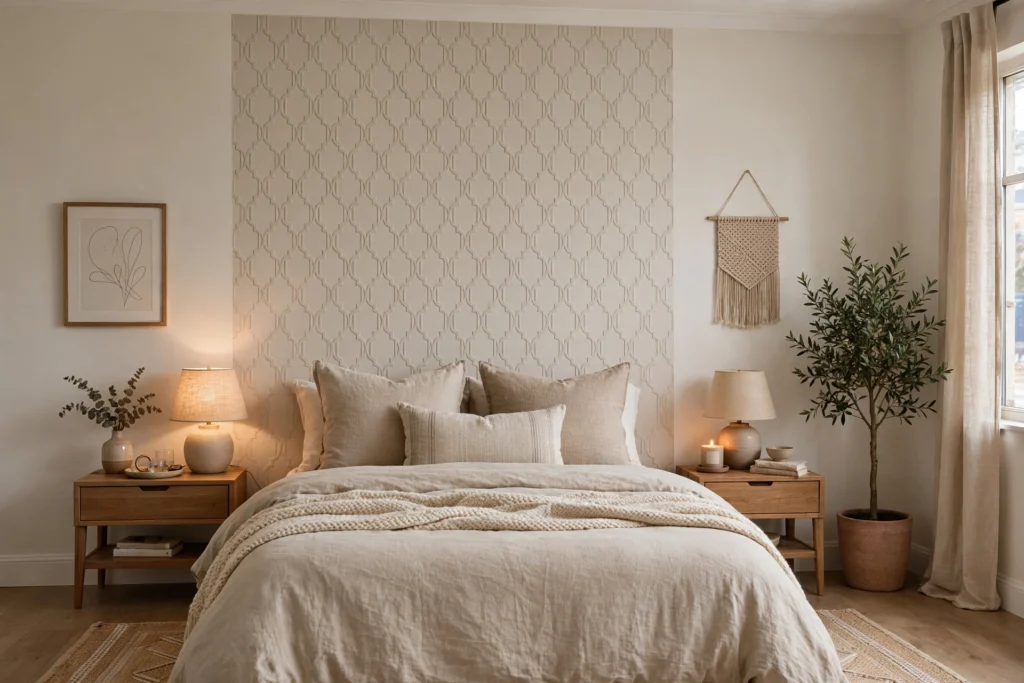
Geometrics do not have to shout. Soft trellises, loose honeycomb grids, and faded art-deco fans in tone-on-tone colorways add structure without stealing sleep. The trick is low contrast: choose a pattern where the motif is only a shade or two darker than the background, so it reads as texture from across the room and reveals itself up close. Geometrics are brilliant for bedrooms that need a modern edge, and they pair effortlessly with solid-color furniture and minimalist decor. If your room is small, keep the repeat size modest — a large bold geo can close in tight walls, while a medium-scale pattern adds interest that still breathes.
7. Chinoiserie Panels
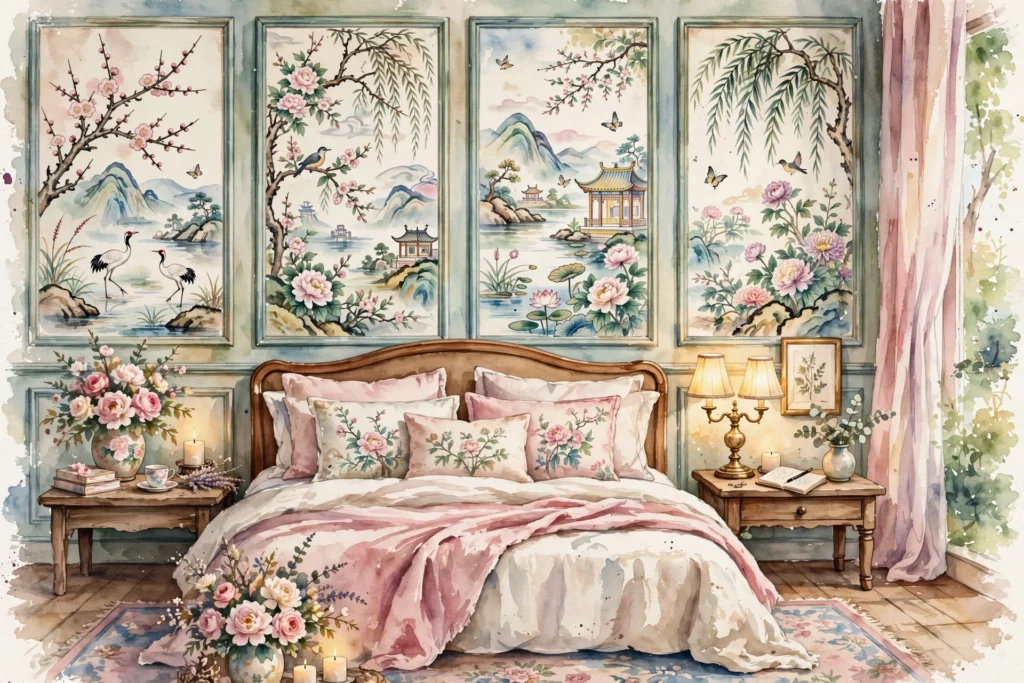
Hand-painted-style chinoiserie — flowering branches, songbirds, and pagodas on a soft background — is one of the most romantic bedroom wallpaper ideas in existence. It turns a bedroom into a garden conservatory, delicate and a little fantastical. Because the scenes are artistic rather than geometric, chinoiserie wallpaper works as a focal wall even in traditional and transitional rooms, and it pairs beautifully with antique or vintage furniture. To keep it dreamy rather than dated, choose panels with plenty of negative space and a light ground color like celadon, blush, or pale silver. Balance the ornate wall with simple solid bedding and uncluttered nightstands so the room stays restful.
8. Dark and Moody Wallpaper
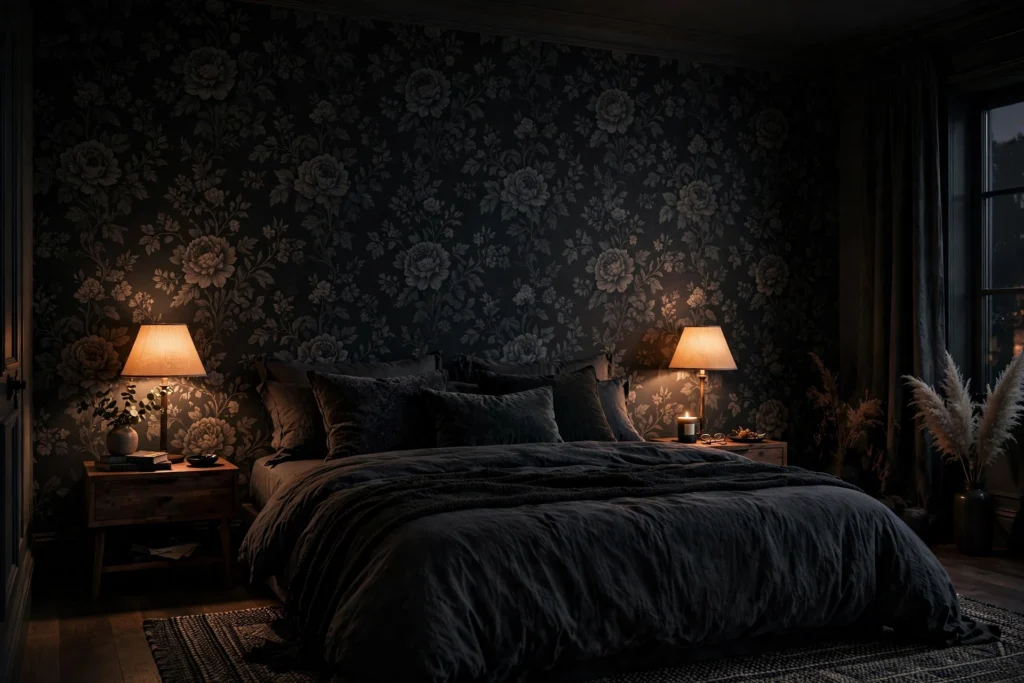
A dark bedroom is a sleep sanctuary waiting to happen. Deep charcoal, ink navy, forest green, or aubergine wallpaper cocoons the room and makes lamps glow like candlelight. Far from making the space gloomy, dark walls recede — edges blur, corners soften, and the room can actually feel larger and more intimate at once. This look is tailor-made for bedrooms with good natural light or for north-facing rooms that are never going to be bright, so embrace the duskiness instead of fighting it. Balance the drama with warm wood tones, brass or gold accents, and plenty of layered lighting. If full commitment feels risky, the same bold spirit transforms a small bathroom too — these bathroom wallpaper ideas for bold, beautiful walls show how deep color works in tight spaces, and the lessons translate directly to a moody bedroom.
9. Metallic Accents That Glow
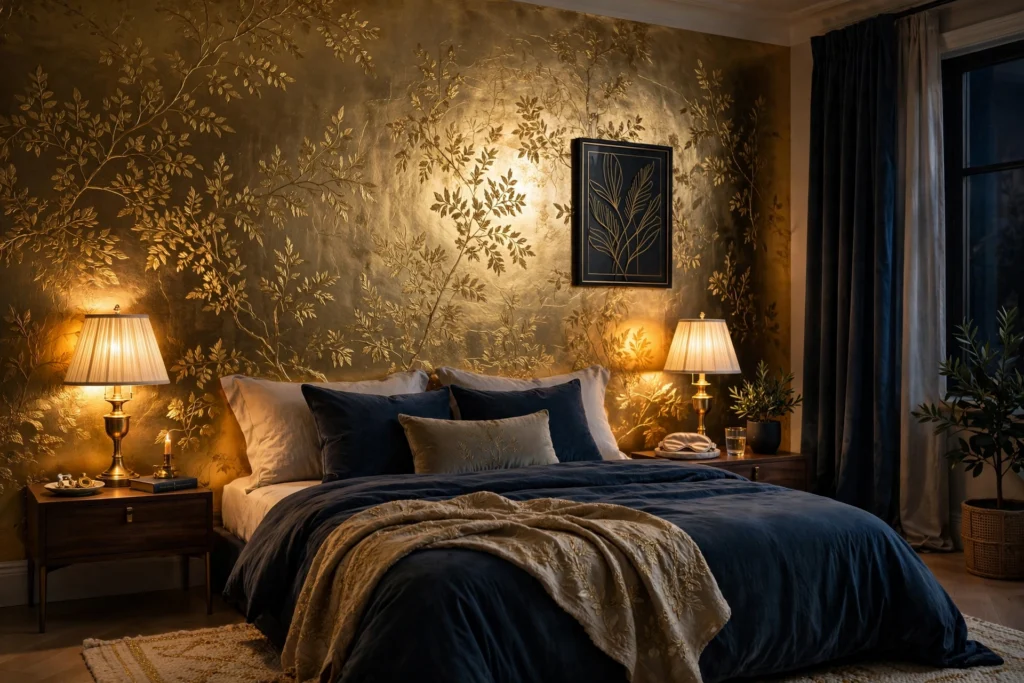
A little shimmer goes a long way in the bedroom. Wallpaper with metallic ink — gold leaves on cream, silver branches on pale blue, copper geometrics on charcoal — catches light and shifts with it, so the walls look different at morning, noon, and lamplight. Metallics add a layer of luxury without any extra decor, which makes this a smart pick for minimalist bedrooms that need just one touch of glamour. Keep the metallic finish subtle rather than mirror-bright to protect the calm; a soft sheen reads elegant, while full-on shine can feel restless at night. Pair with crisp bedding and one or two metallic accessories — a brass lamp, a gilt frame — to echo the wall without overdoing it.
10. Ceiling Wallpaper, the Fifth Wall
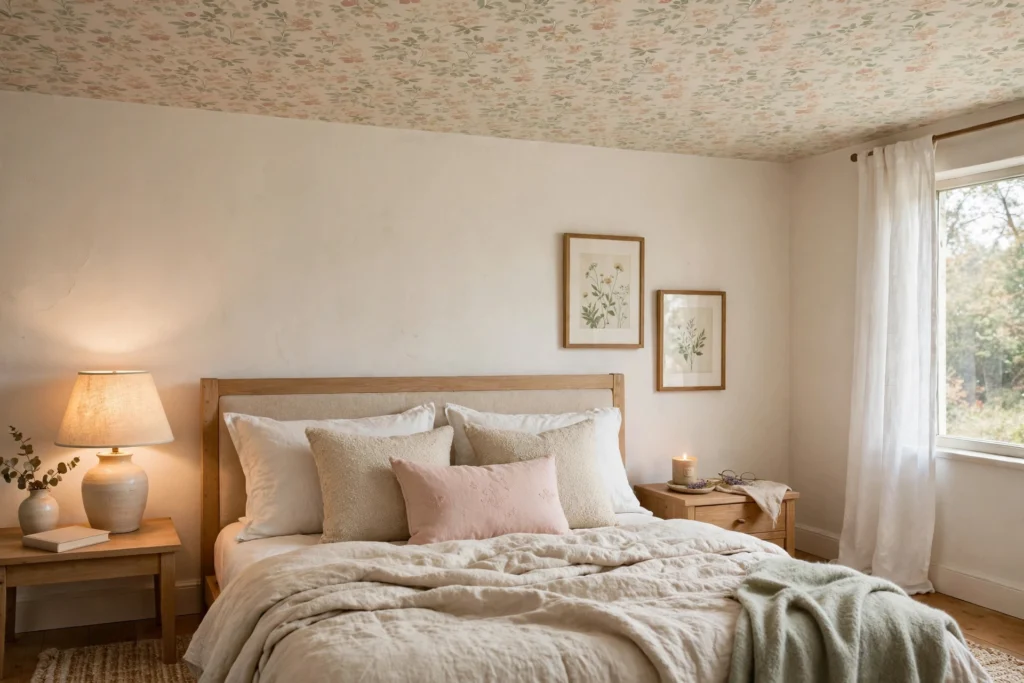
The ceiling is the most underused wallpaper surface in the house, and the bedroom is where it pays off most — it is the last thing you see before sleep and the first thing you see when you wake. A soft sky-blue grasscloth, a starry night print, or a gentle stripe on the ceiling adds surprise and intimacy without taking up a single inch of wall. Ceiling paper works especially well in rooms with simple walls, since the pattern sits overhead like a canopy. Stick to light or mid-tone designs so the ceiling does not feel lower, and consider continuing the paper a few inches down the walls for a tented, cozy effect. Hire a pro for this one: papering upside down is an arm workout and a precision job.
11. Wallpaper for Kids’ and Guest Bedrooms
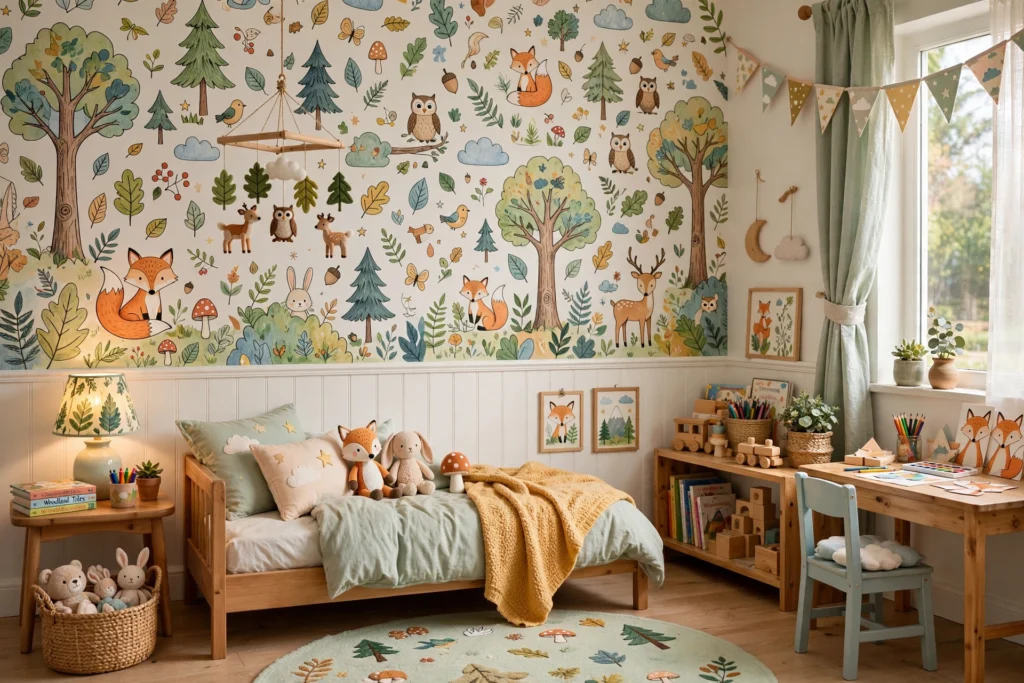
Secondary bedrooms are the perfect playground for wallpaper you might not choose for your own suite. In a kids’ room, try whimsical forests, playful constellations, or illustrated maps that spark imagination — and choose scrubbable vinyl so crayon incidents wipe away. Peel-and-stick is ideal here since tastes change fast as kids grow; swap the jungle for a starry sky without redoing the whole room. For guest bedrooms, wallpaper adds the polished, hotel-like layer that makes visitors feel pampered: a soft chinoiserie, a calm stripe, or a textural grasscloth signals thoughtfulness. In both cases, keep the rest of the room simple so the wallpaper carries the personality and linens can be swapped seasonally.
12. Pattern Scale for Small Bedrooms
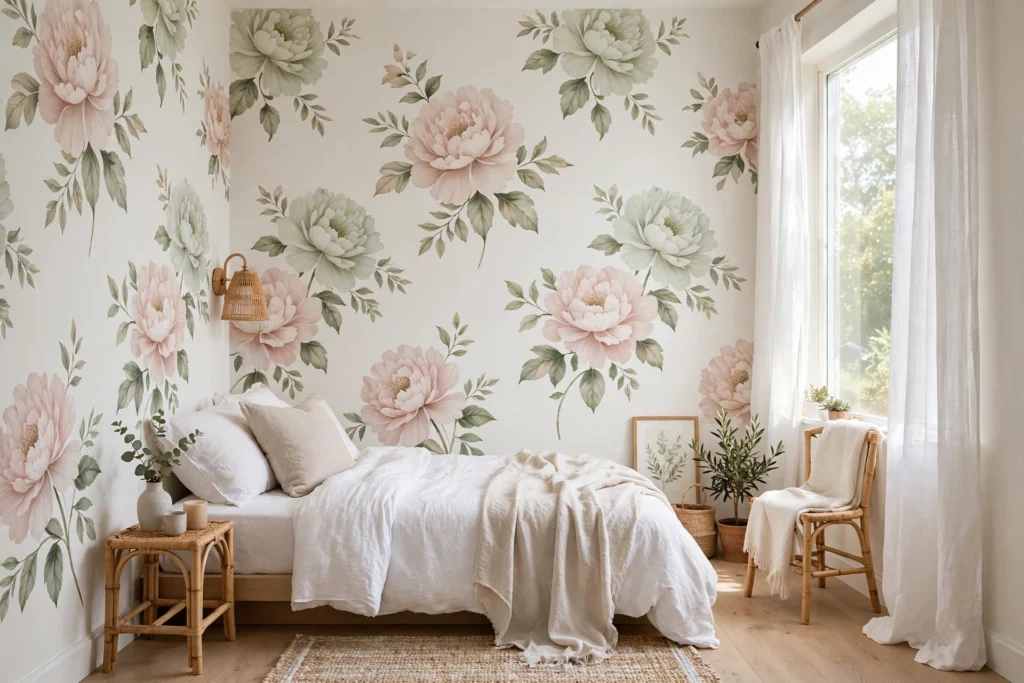
Small bedrooms are not wallpaper-free zones — they just need the right scale. The old rule says small rooms need small patterns, but the real rule is about breathing room: a large-scale pattern with plenty of background space can make a small bedroom feel grand, while a tiny dense print can feel cluttered. Look for designs where the motif is generously spaced and the background color is light and calm. Vertical stripes or tall botanical stems draw the eye upward and make ceilings feel higher, a classic small-room trick. And consider papering all four walls instead of one accent wall — counterintuitively, a continuous pattern wraps the room in a cocoon and blurs the corners, making the space feel unified and larger rather than chopped up.
13. Calming Color Palettes for Sleep
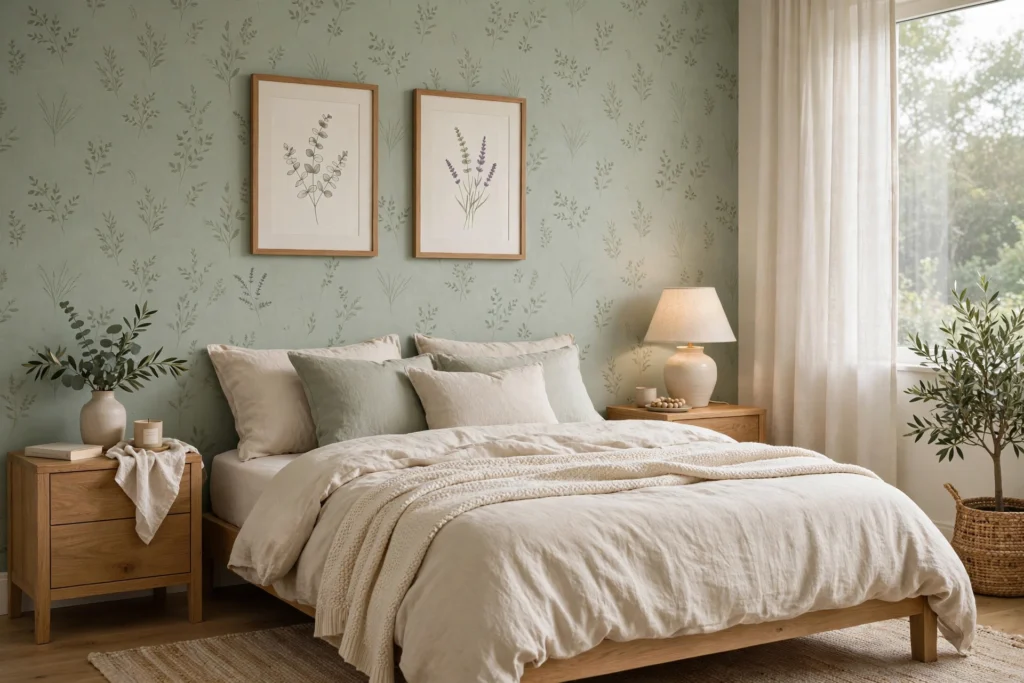
Wallpaper color sets the emotional temperature of your bedroom, so choose with sleep in mind. Soft blues and greens are proven wind-down hues — think sea glass, sage, dusty teal — that lower the visual energy of the room. Warm neutrals like oat, mushroom, and warm greige feel enveloping without the starkness of pure white, and they make bedding in any color look good. Blush and dusty rose bring gentle warmth without the intensity of red, which is best avoided in sleep spaces. If you love bold color, use it on the headboard wall only and keep the other three walls in a coordinating solid. And test swatches at night under your actual lamps: wallpaper that looks serene at noon can turn muddy or electric under warm bulbs.
14. Application Tips for a Smooth Hang
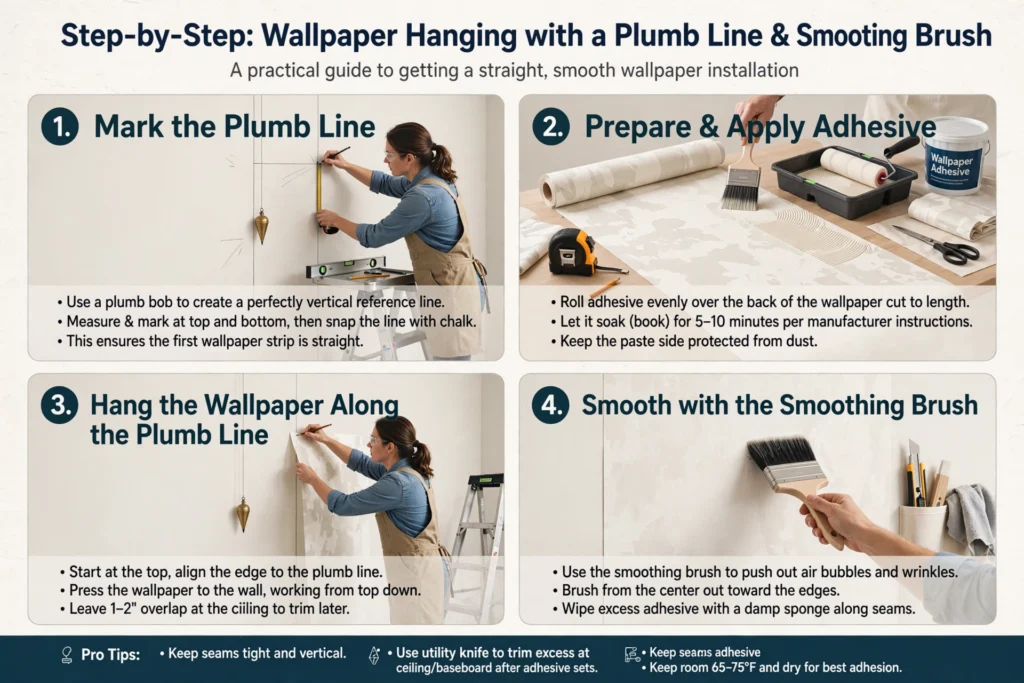
Good wallpaper lives or dies on preparation. Start with clean, smooth, primed walls — fill holes, sand lightly, and apply a wallpaper primer or sizing so paste adheres evenly and future removal does not strip your paint. Measure the wall, add a few inches of waste per strip, and cut all strips before you begin. Always hang the first strip on a plumb vertical line; walls and ceilings are rarely perfectly square, and one crooked strip multiplies errors across the wall. Match the pattern at eye level where it is most visible, and smooth each strip from the center outward to chase out air bubbles. For background on how wallpaper is manufactured and why pattern repeat works the way it does, this overview of wallpaper types and history is a solid primer. Finally, buy 10 to 15 percent more than you calculate — dye lots vary, mistakes happen, and matching a discontinued roll later is a special kind of heartbreak.
15. Mix Wallpaper With Paint
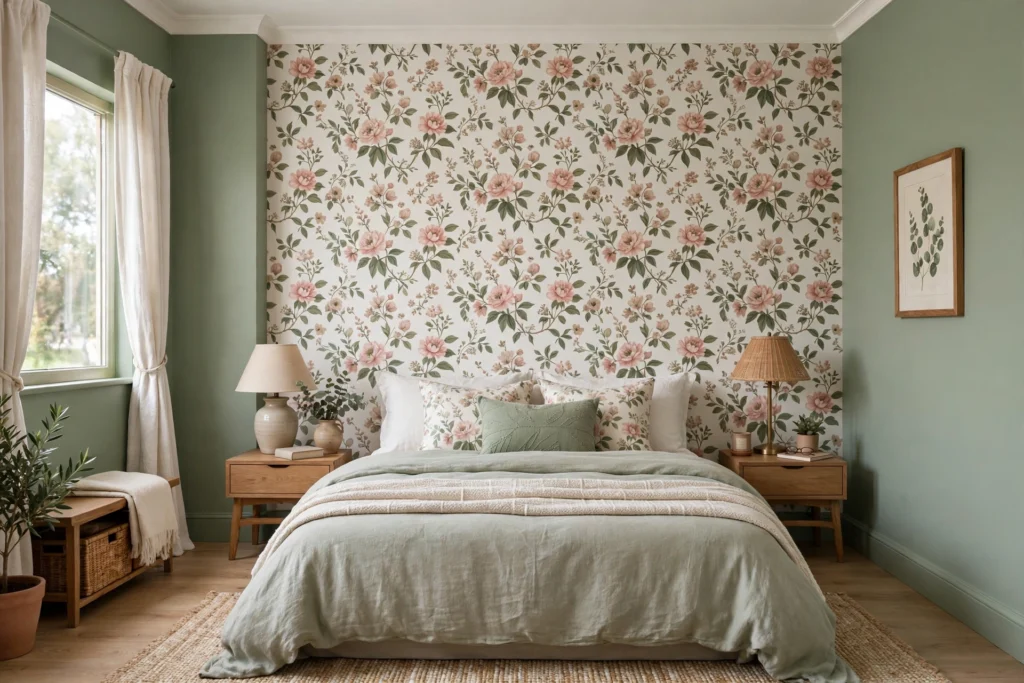
You do not have to choose between wallpaper and paint — the two work beautifully together. The classic move is wallpaper on the headboard wall and a coordinating paint color on the other three walls, pulled straight from the paper’s background or a soft motif shade. For architectural interest, paper the upper wall above a chair rail or wainscoting and paint below in a crisp complementary tone. Another elegant option: frame panels of wallpaper with molding on a painted wall, creating the look of custom artwork at a fraction of the price. The key is a clear color bridge — pick paint swatches against the actual wallpaper in your room’s light, not under store fluorescents. This mixed approach also stretches your budget, since you buy fewer rolls and get a richer, more layered room than paint alone could deliver.
Frequently Asked Questions
Is wallpaper too busy for a small bedroom?
Not if you choose the right pattern and placement. In a small bedroom, pick designs with generous background space, soft contrast, and calming colorways — the pattern should read as texture from across the room. Papering all four walls can actually make a small room feel bigger by blurring the corners into one continuous wrap, while a single accent wall behind the headboard adds drama without overwhelming. The busyness risk comes from high-contrast, tightly packed patterns, so sample on the wall and live with it for a few days before committing.
How durable is peel-and-stick wallpaper?
Quality peel-and-stick wallpaper is surprisingly durable — most last three to five years on interior walls and wipe clean with a damp cloth. It performs best on smooth, clean, fully cured painted walls; textured walls, fresh paint less than 30 days old, and humid bathrooms are its weak spots. Edges can lift in high heat or humidity, so bedrooms — dry, climate-controlled spaces — are actually its ideal environment. For a full room rather than an accent wall, these dining room wallpaper ideas for stylish gatherings offer pattern inspiration that works just as well scaled for a bedroom.
Does dark wallpaper work in a bedroom?
Beautifully — bedrooms are one of the best rooms for dark wallpaper. Deep tones make a bedroom feel cocooning and intimate, soften hard corners, and make lamplight feel warm and cinematic. The key is balance: pair dark walls with warm wood, light or mid-tone bedding so the bed does not disappear, and layered lighting (bedside lamps, a sconce, maybe LED strips behind the headboard). If you are nervous, start with the headboard wall only, or choose a dark pattern with light motifs rather than a solid dark ground.
How long does bedroom wallpaper last?
Traditional pasted wallpaper in a bedroom typically lasts 10 to 15 years, since bedrooms see less humidity, grease, and wear than kitchens or baths. Keep it looking fresh by dusting occasionally with a dry microfiber cloth and wiping scuffs promptly with a barely damp sponge — always test in a hidden spot first. Direct, harsh sunlight can fade colors over time, so consider UV-filtering window film or lined curtains on sun-blasted walls. Peel-and-stick has a shorter life of three to five years, but its easy removal means refreshing your style is a weekend project rather than a renovation.
Can I mix wallpaper with paint in the same bedroom?
Absolutely — it is one of the most designer-looking moves you can make. Paper the headboard wall and paint the rest in a color pulled from the wallpaper, split the wall with wallpaper above wainscoting and paint below, or frame wallpaper panels with molding on painted walls for a custom-art effect. The trick is choosing paint and paper together in your actual room light, since undertones shift dramatically. This approach also saves money: fewer rolls, more layered result, and a room that looks far more expensive than a full paper job.
Keep Exploring
A dreamy bedroom backdrop starts with one brave wall — pick the pattern that makes you exhale, prep the surface properly, and let calm bedding and warm light do the rest. Wallpaper rewards the thoughtful more than the fearless, and your bedroom will thank you every morning. And once you have seen what one room of pattern can do, you will start eyeing the rest of the house — these powder room wallpaper ideas with bold personality prove that small spaces are where wallpaper truly shows off.

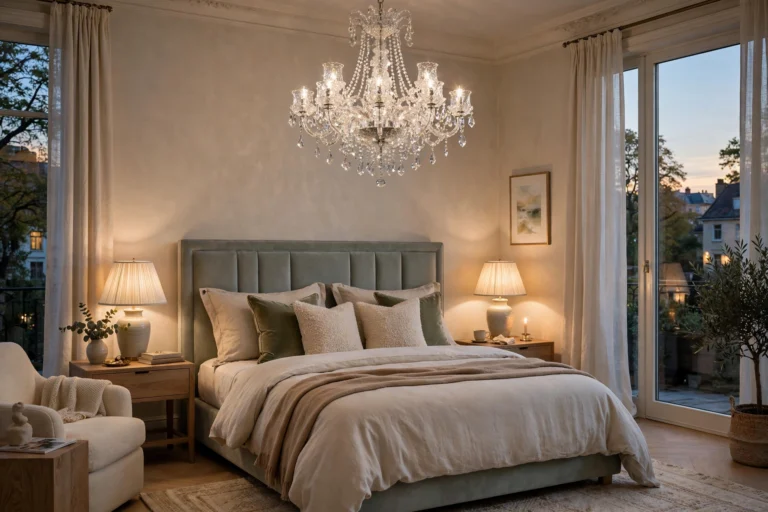
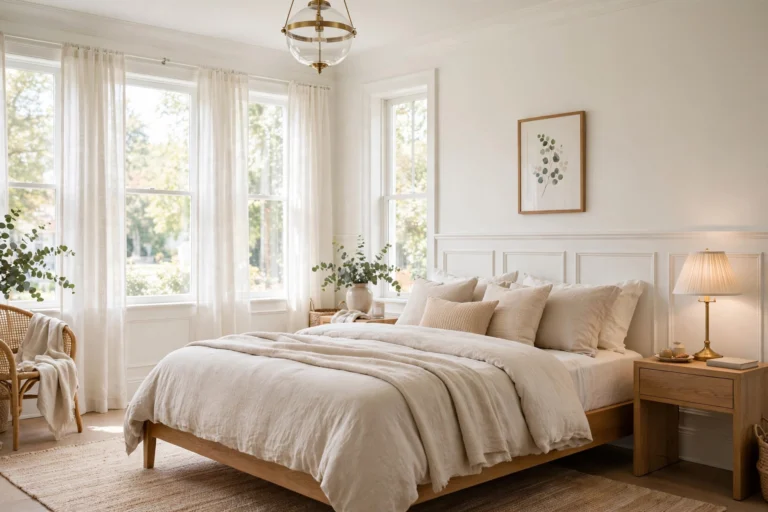
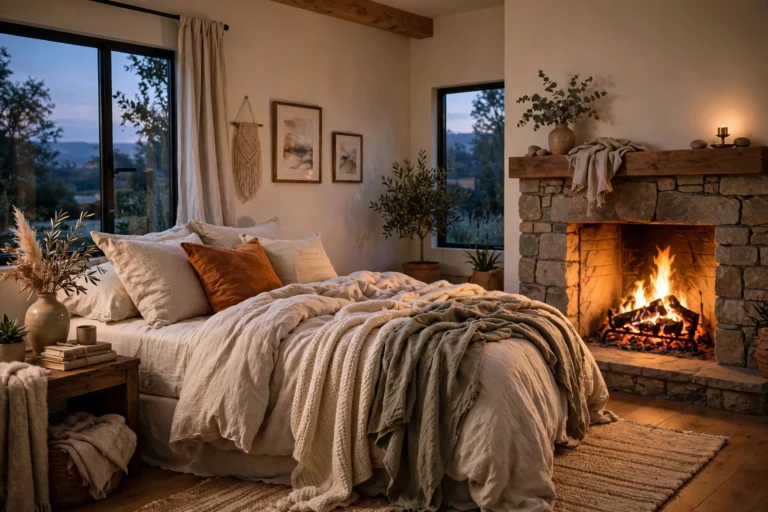




[…] layered, and quietly luxurious. It also pairs beautifully with pattern above the chair rail, as our bedroom wallpaper ideas for a dreamy backdrop show with wallpaper-and-panel […]