
Whether you share your bedroom with a work desk, a workout corner, or a roommate, a good divider creates privacy without building a wall. These bedroom room divider ideas show how to carve sleeping, dressing, and lounging zones from a single room — with options that move, fold, and adapt as your life changes. Carving a calm sleeping nook out of an open-plan space is its own design skill, and these bedroom curtain ideas for privacy, light, and style prove that soft fabric boundaries can feel surprisingly private.
The secret to a great room divider is matching the divider to the job. Need visual privacy for changing clothes? A tall folding screen does it. Just want the desk to stop staring at the bed? A low bookshelf zone is enough.
1. Try a Classic Folding Screen
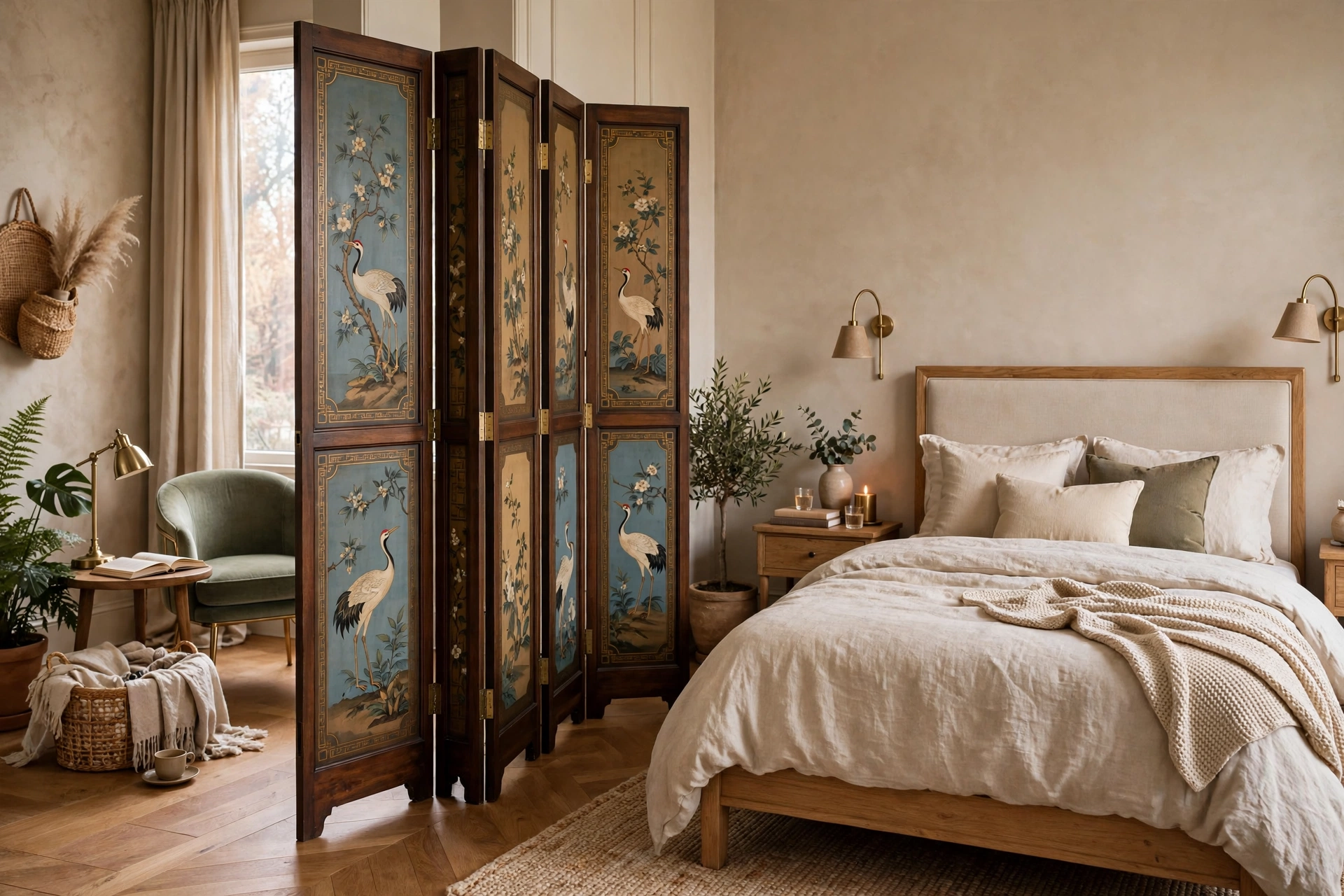
The folding screen is the original bedroom room divider, and it still works beautifully because it folds flat and moves anywhere. A three or four-panel screen instantly hides a dressing corner or shields the bed from the door. Choose rice-paper panels for soft light filtering, cane for boho texture, or fabric-covered panels that match your bedding. Position it at an angle rather than straight across the room — angled screens feel like decor, not barricades. When guests arrive or seasons change, fold it away in seconds.
2. Hang Floor-to-Ceiling Curtains
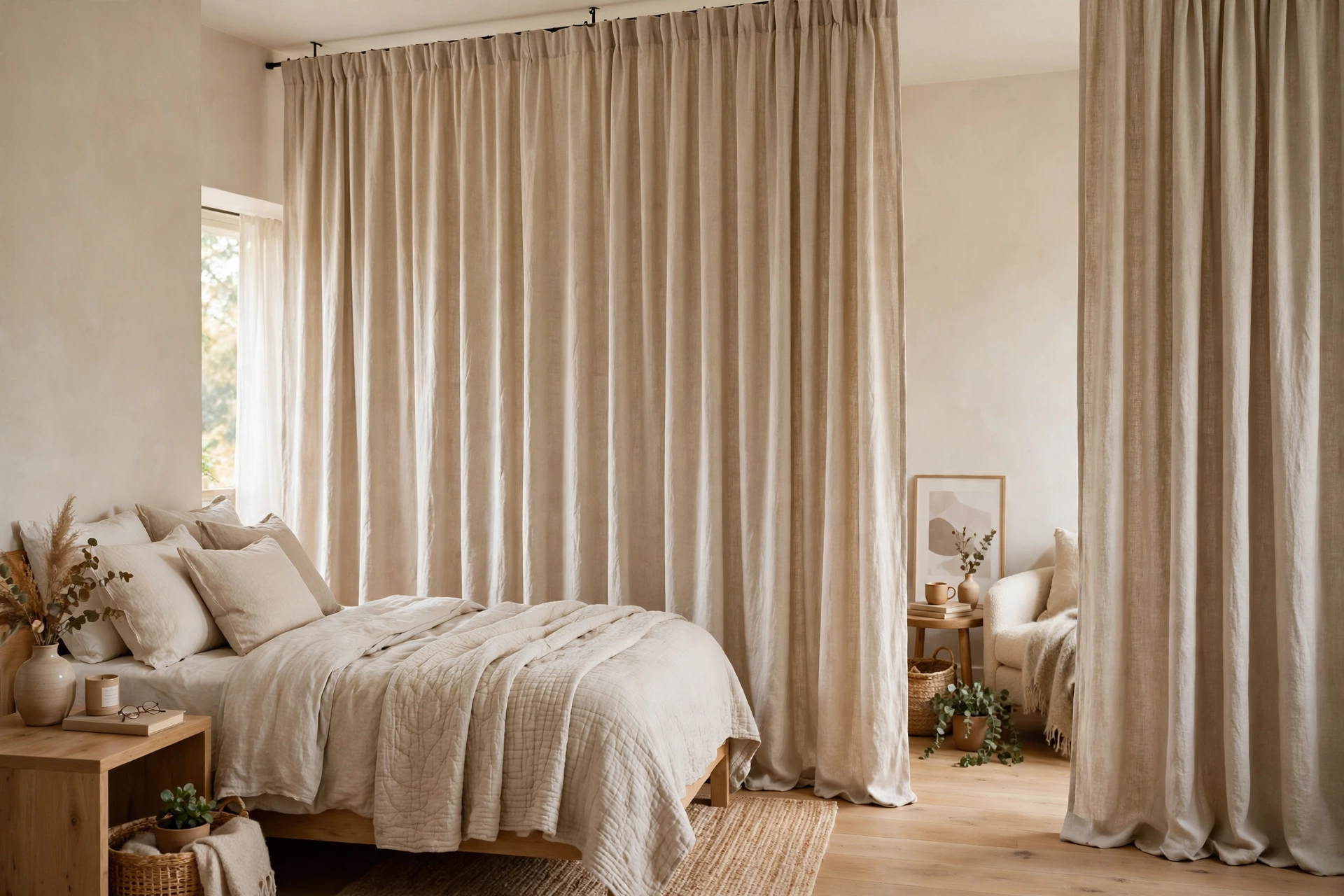
Few dividers feel as romantic as ceiling-hung curtains. A simple ceiling track or tension rod lets long curtain panels glide open and closed, turning a sleeping nook private at night and open by day. Choose a heavyweight linen or velvet for real visual privacy, or sheer voile if you only want a soft boundary that keeps the light flowing. The effect is cocoon-like, especially in white bedrooms where fabric panels add warmth without weight.
3. Zone With Open Shelving

A freestanding bookcase doubles as a divider and storage wall, which is why designers love it for shared bedrooms and studios. Position an open-backed shelf unit perpendicular to the wall to separate the bed from a desk or lounge corner. Style both faces deliberately — books and baskets on the bedroom side, decor objects on the other — so the divider looks intentional from every angle. Leave the top shelf airy and the middle shelves solid to block sightlines at sitting and standing eye level.
4. Float a Curtain Between Bed and Desk
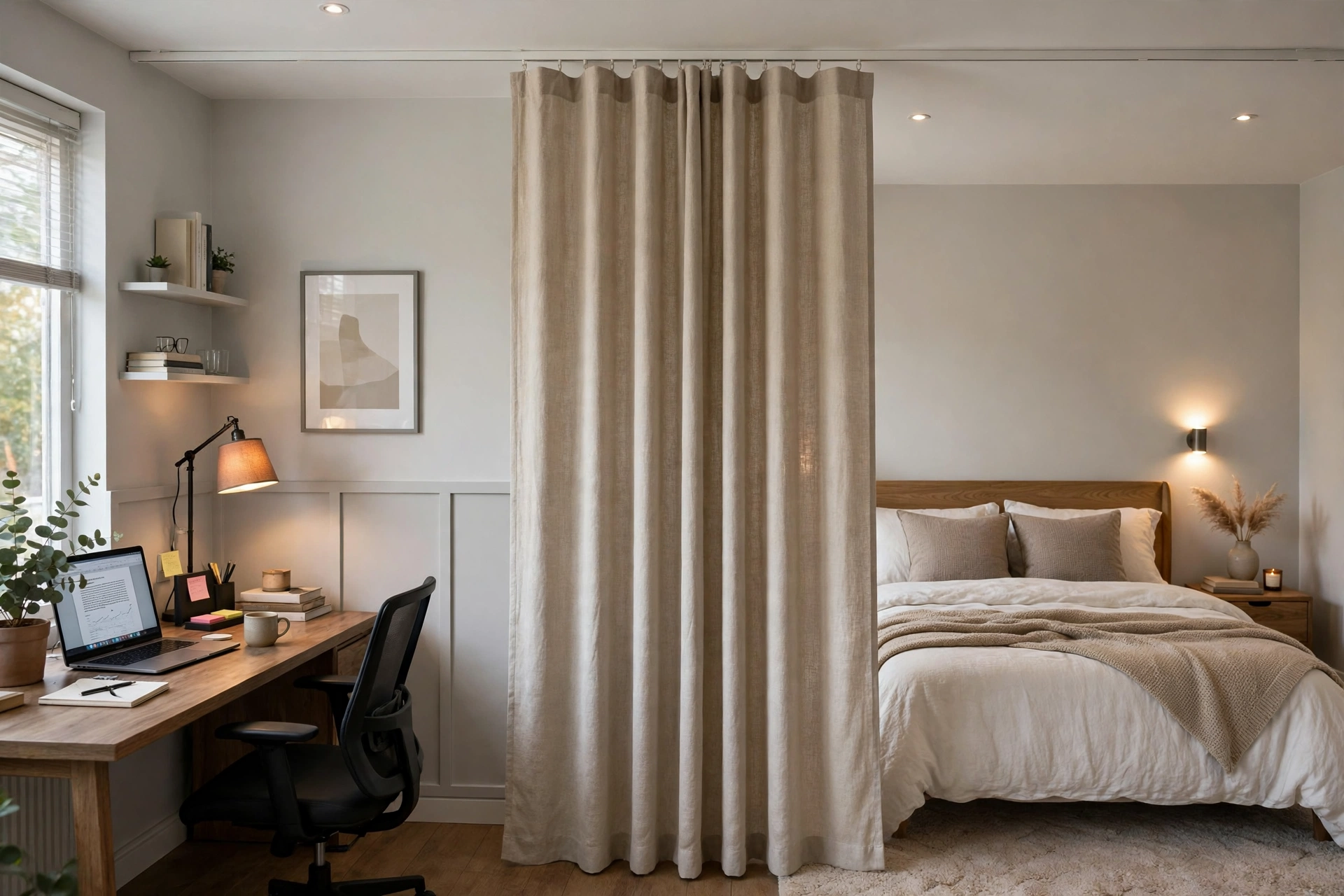
Remote workers know the pain of staring at a desk from bed — or worse, at a bed from the desk during video calls. A half-height curtain panel hung from a single ceiling track behind the bed’s headboard creates a backdrop for calls and a visual “off switch” for the work zone. Use a curtain just wide enough to frame the bed plus nightstands, and pick a color that calms you. This trick turns a bedroom office into a proper dual-purpose room without sacrificing the floor space a full partition would swallow.
5. Add a Cane or Rattan Screen
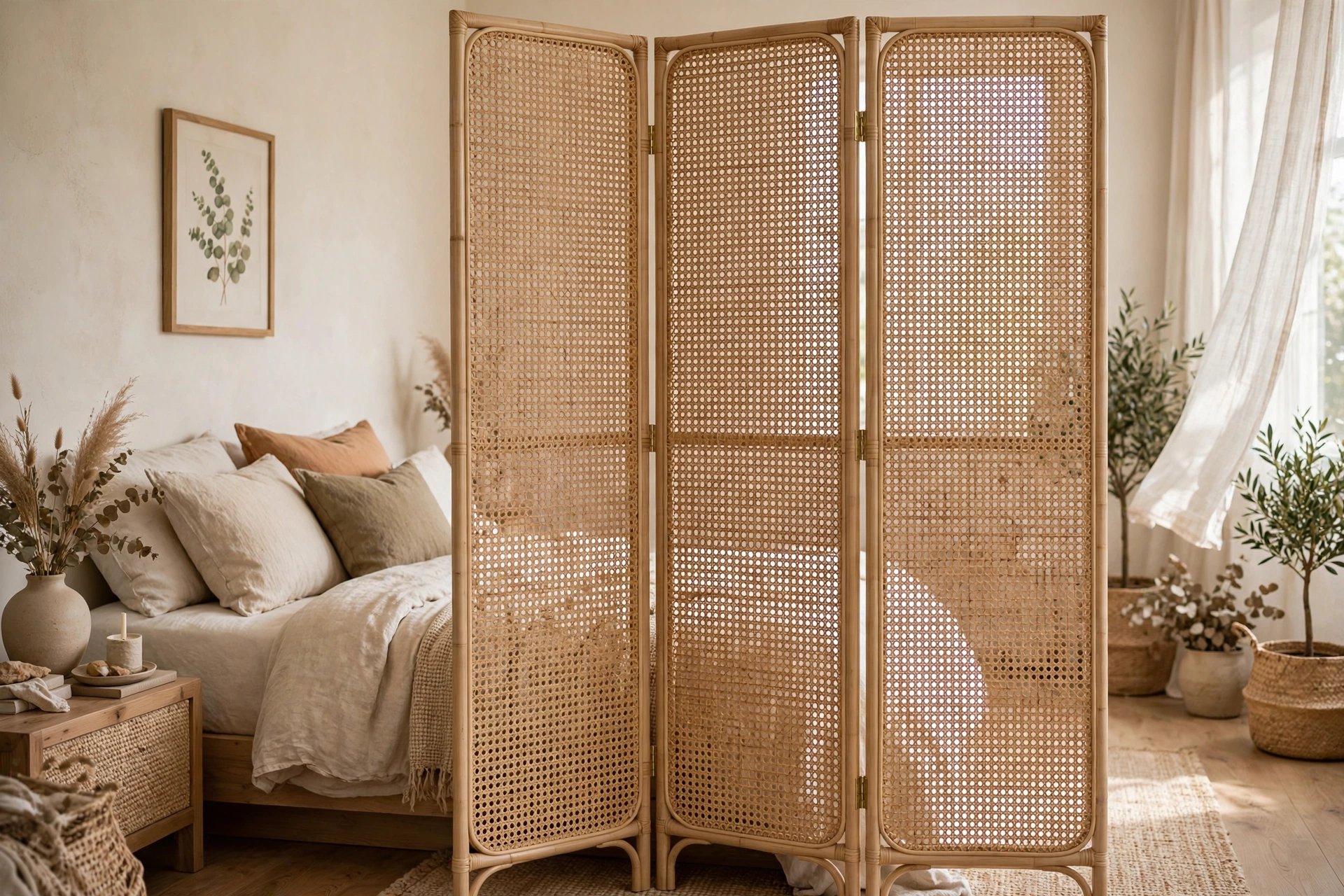
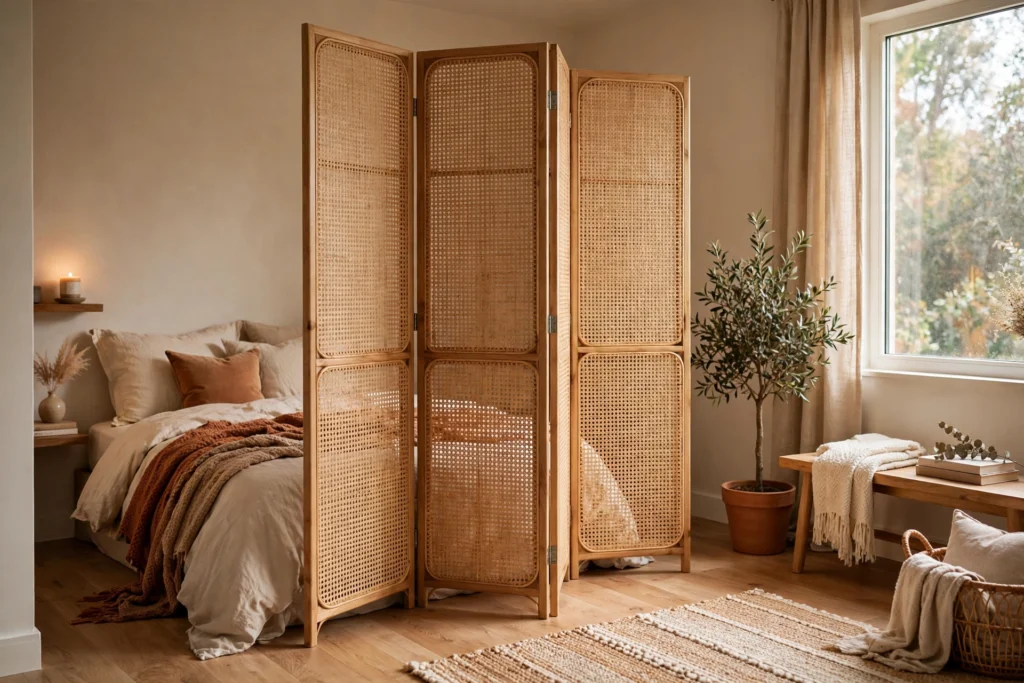
Cane and rattan screens bring breezy, resort-style texture to a bedroom divider while staying light enough to rearrange on a whim. The open weave filters light into lovely patterns and keeps air moving, so the divided zones never feel stuffy. Style a cane screen against the wall as a headboard alternative, or freestanding to shield a reading corner. Pair with plants and natural fibers for a full tropical-lounge mood.
6. Use a Storage Cube Divider
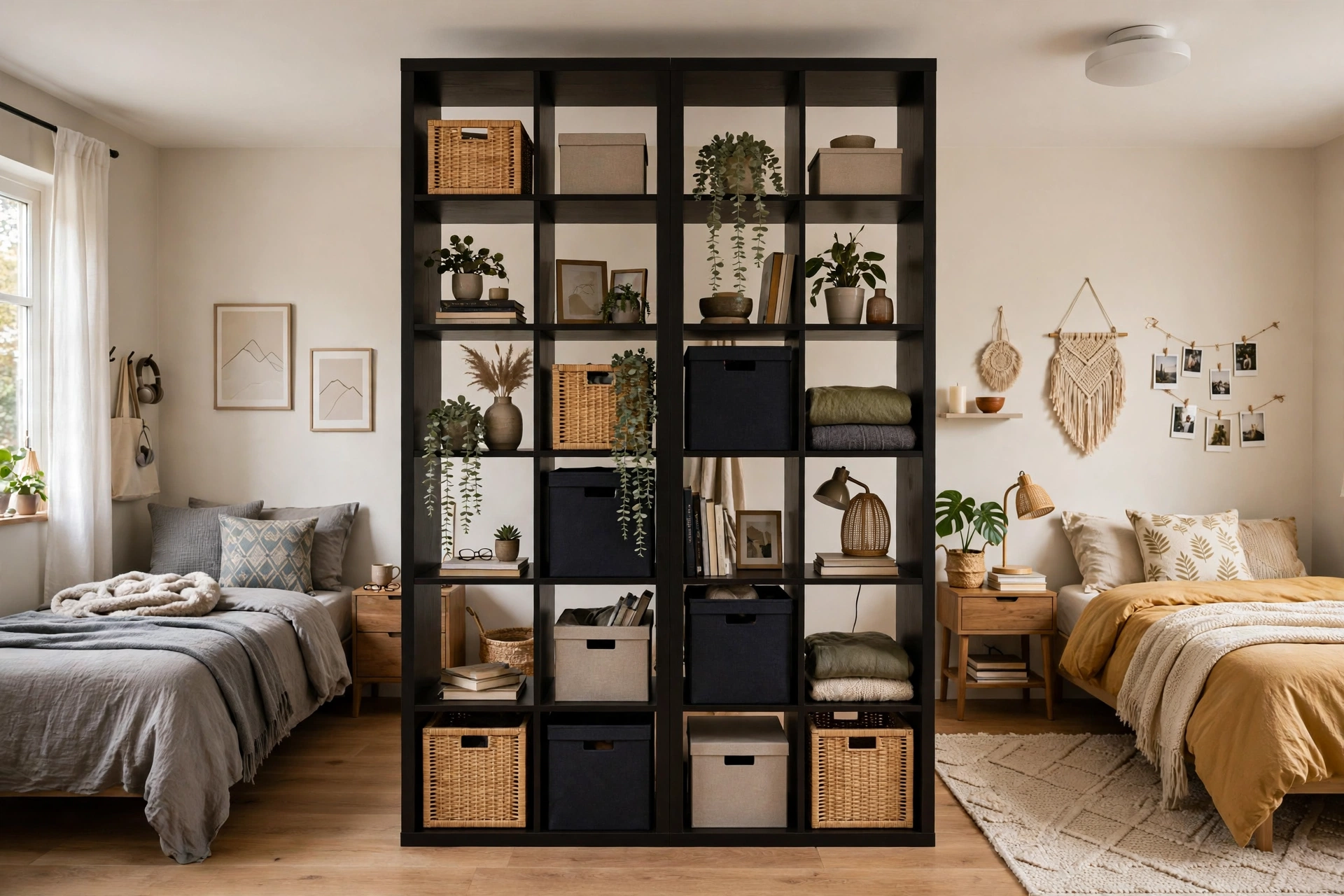
Modular storage cubes arranged two or three units high create a divider with cubbies on both sides — one side holds bedroom essentials like linens and books, the other holds office or craft supplies. Anchor the arrangement to the wall with anti-tip hardware, since tall freestanding units can topple. Face fabric bins toward the bedroom for a soft look and leave a few cubes open for display. This is a favorite in kids’ shared bedrooms, where each child gets their own side of the divider and their own half of the cubbies.
7. Install Sliding Barn Doors on a Track
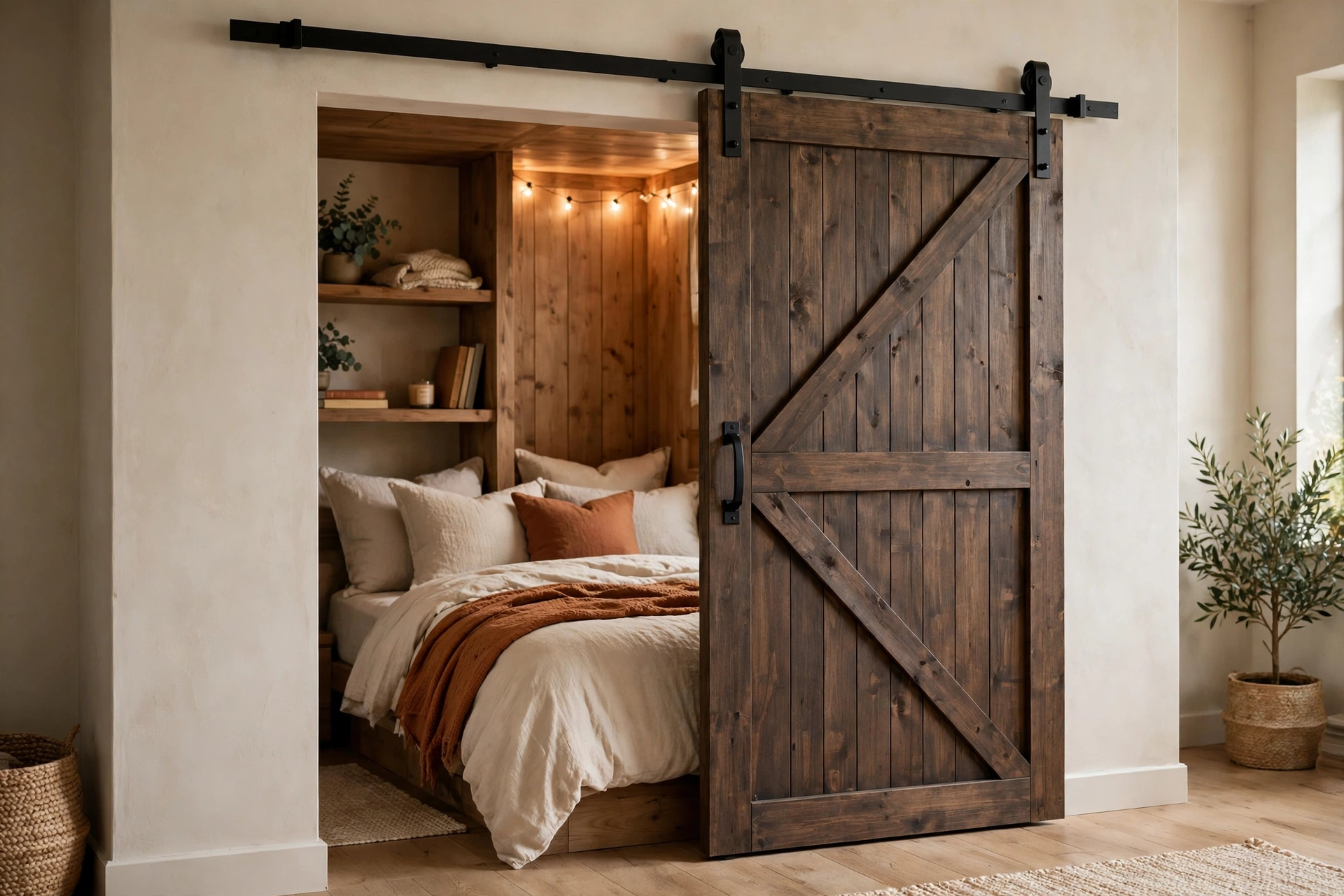
For a divider that feels permanent but slides away when you want openness, mount sliding barn doors or fabric panels on an interior track. A single wide panel can close off a walk-in closet, a dressing nook, or the entire sleeping zone of a large bedroom. Choose reclaimed wood for farmhouse charm, frosted acrylic for light flow, or upholstered panels for softness and sound dampening. Sliding doors need zero swing clearance, which is exactly why they beat swinging doors in tight bedrooms.
8. Screen the Bed With a Canopy
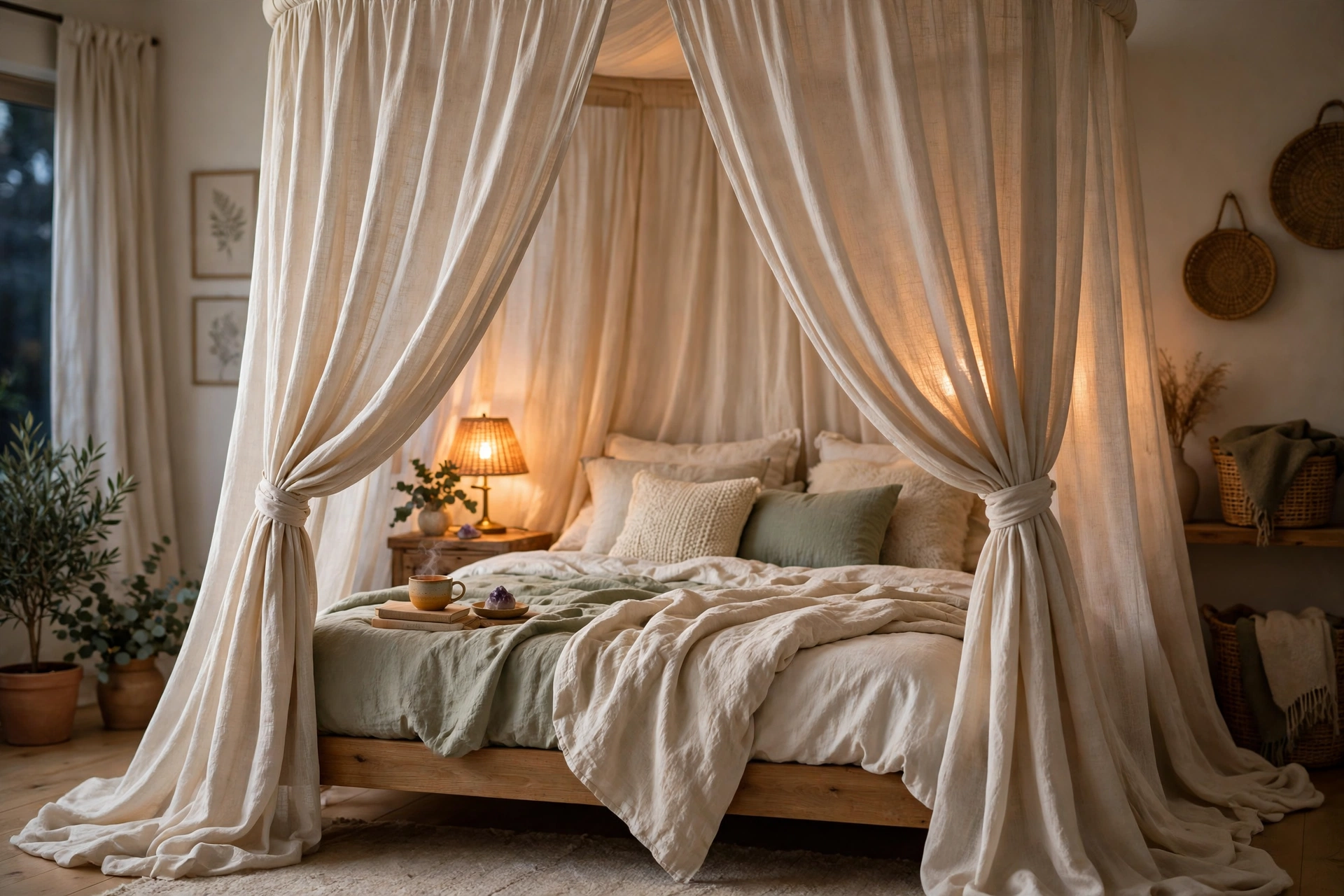
A four-poster or canopy frame creates the ultimate sleeping zone without any separate divider at all. Hang sheer curtains from the canopy rails and your bed becomes a private tent — light filters through, sightlines vanish, and the rest of the room fades away. This works brilliantly in shared rooms and studios where a true partition would eat too much space. Layer the sheers with heavier panels you can draw for extra privacy. Beyond zoning, a draped canopy makes the bed the undisputed star of the room; our dreamy canopy bed ideas for a stylish bedroom look show just how transformative fabric around a bed can be.
9. Divide With a Low Dresser

Sometimes the subtlest divider is the best one. A low dresser or console placed perpendicular to the bed marks a clear boundary between the sleeping area and everything else, without blocking light or conversation. Top it with a lamp, a stack of books, and a small plant so it reads as a styled surface, not a roadblock. This trick suits long, narrow bedrooms where a full-height screen would chop the room into claustrophobic halves. If you ever want the divider gone, simply push the dresser back against the wall — flexibility is the whole point.
10. Go With a Japanese Shoji Screen

Shoji screens — wooden frames with translucent rice paper — bring calm, gallery-like order to a bedroom divider. The paper glows when light hits it from behind, turning the divider into a soft lantern that flatters the whole room. Use a shoji screen to shield a dressing area or to hide the “work corner” you do not want to see at bedtime. Genuine rice paper needs a gentle hand (keep it dry, dust it lightly), but modern shoji uses washable synthetic panels that look identical.
11. Hang a Macramé or Beaded Curtain
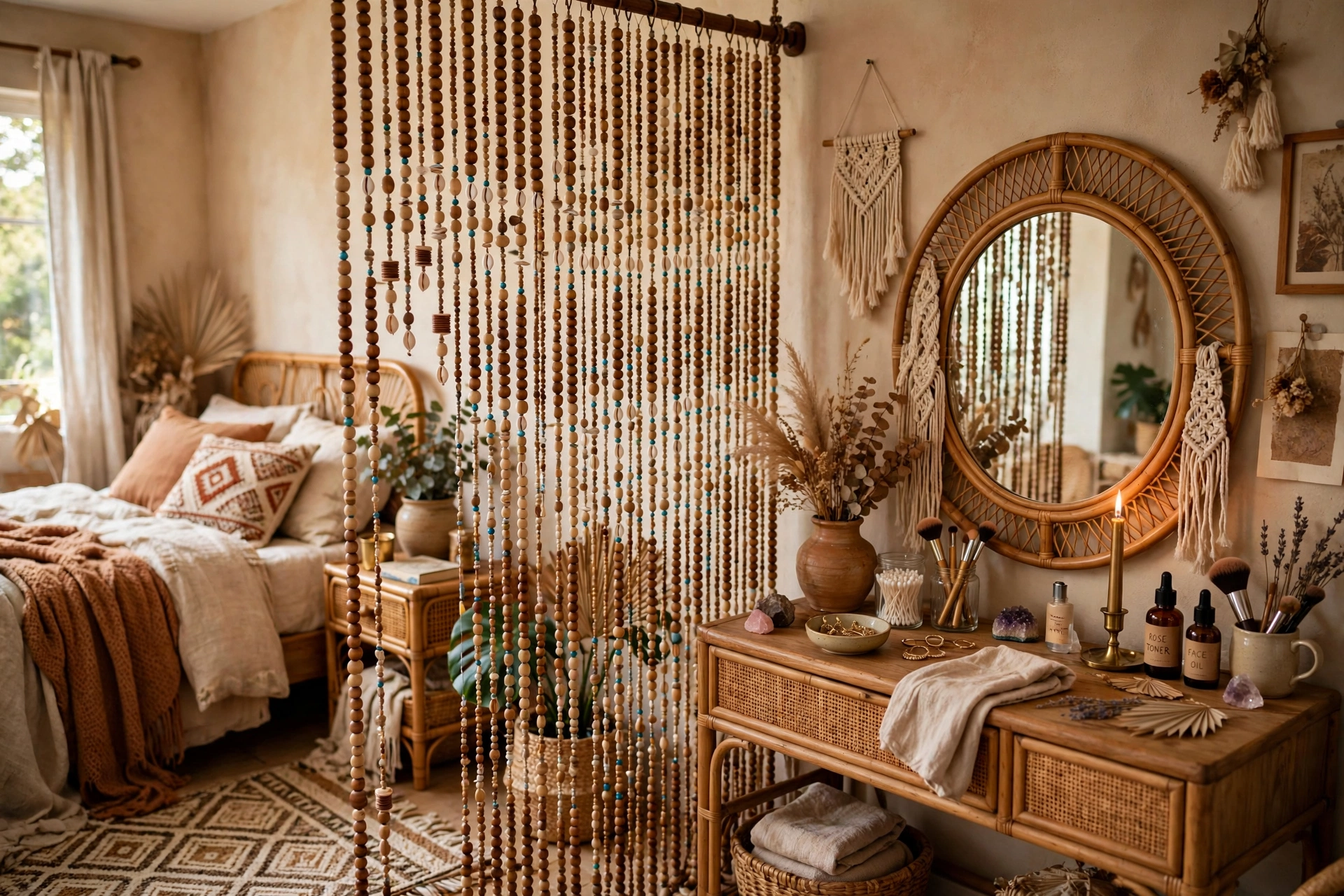
For boho and eclectic bedrooms, a macramé wall hanging or beaded curtain marks a zone with texture instead of a solid wall. Hang it in a doorway, over an arch, or from a ceiling-mounted dowel to separate a closet nook or vanity corner. Strands of wooden beads add gentle sound — a soft sensory cue that you have “entered” the private zone. Macramé dividers let air and light pass freely, so they are best for styling boundaries rather than real privacy.
12. Build Privacy With a Plant Wall

A row of tall, leafy plants on a bench or in matching planters forms a living divider that cleans the air and calms the eye. Snake plants, fiddle-leaf figs, and parlor palms all grow tall enough to block sightlines at seated height. Group pots at varying heights for a lush, layered effect, and choose planters that match your room’s palette so the wall reads as decor. This is one of the most sustainable bedroom room divider ideas — plants divide, decorate, and de-stress simultaneously.
13. Try a Folding Room Divider With Art
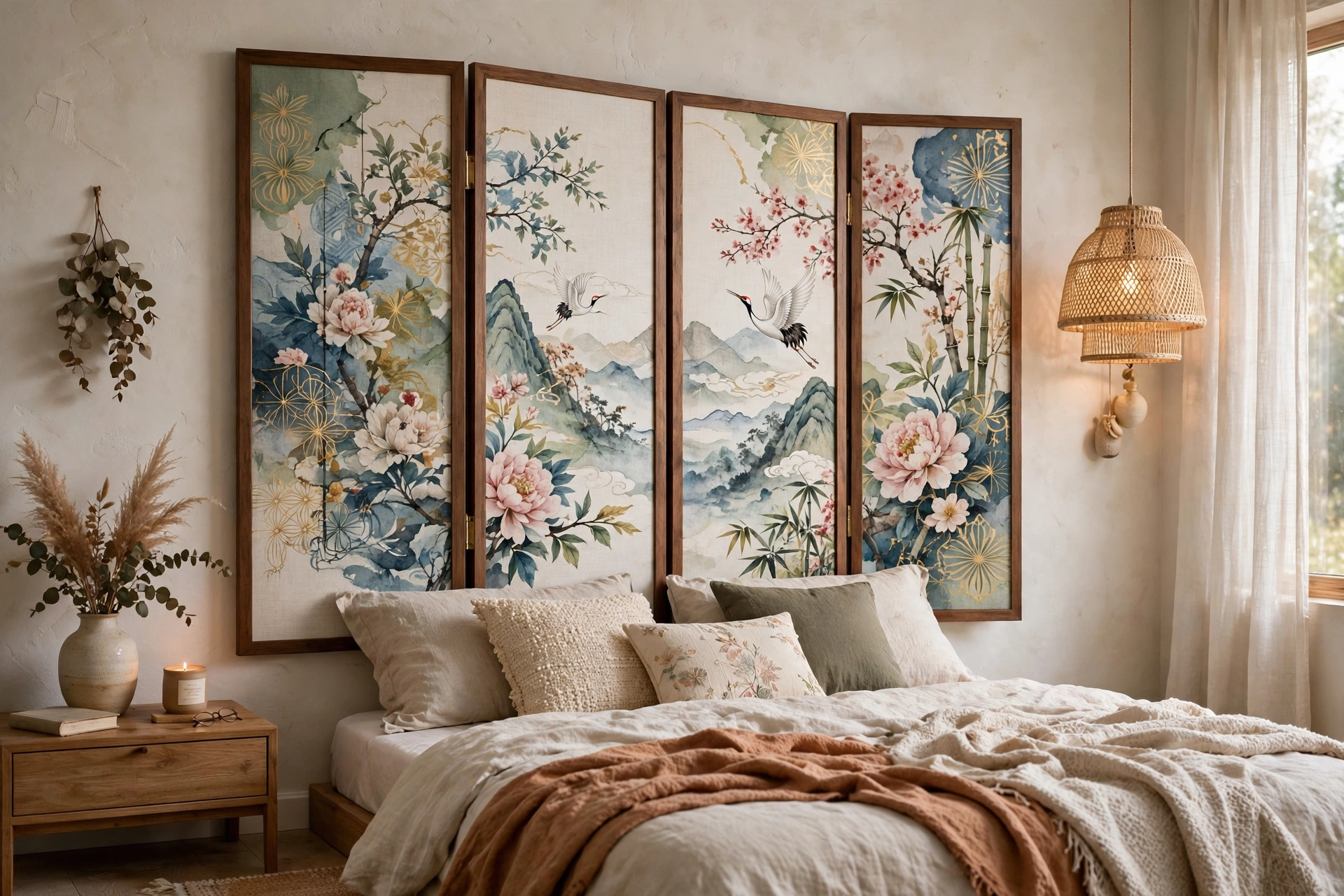
Turn the divider itself into the artwork by choosing a folding screen printed with a landscape, an abstract mural, or your favorite photography. When open, it functions as both privacy screen and oversized art piece; when folded, it stores in a corner like a sculpture. Look for reversible designs so the divider looks good from both sides. This approach shines in neutral bedrooms that need a jolt of color or personality without committing to a gallery wall. Some screens even come with interchangeable panels, letting you refresh the room’s art with the seasons. Measure doorways before ordering — large screens need clearance to arrive and unfold.
14. Zone With a Rug and Lighting

Not every divider needs to be physical. In some bedrooms, the smartest move is defining zones with layered rugs and distinct lighting: a soft rug under the bed marks the sleeping zone, while a separate rug and floor lamp carve out a reading corner. Add a pendant over the “lounge” side and warm bedside lamps on the “sleep” side, and your brain reads two rooms where there is one. This zero-footprint approach keeps small rooms feeling open while still giving each activity its own territory.
15. Create a Dressing Nook Behind Panels
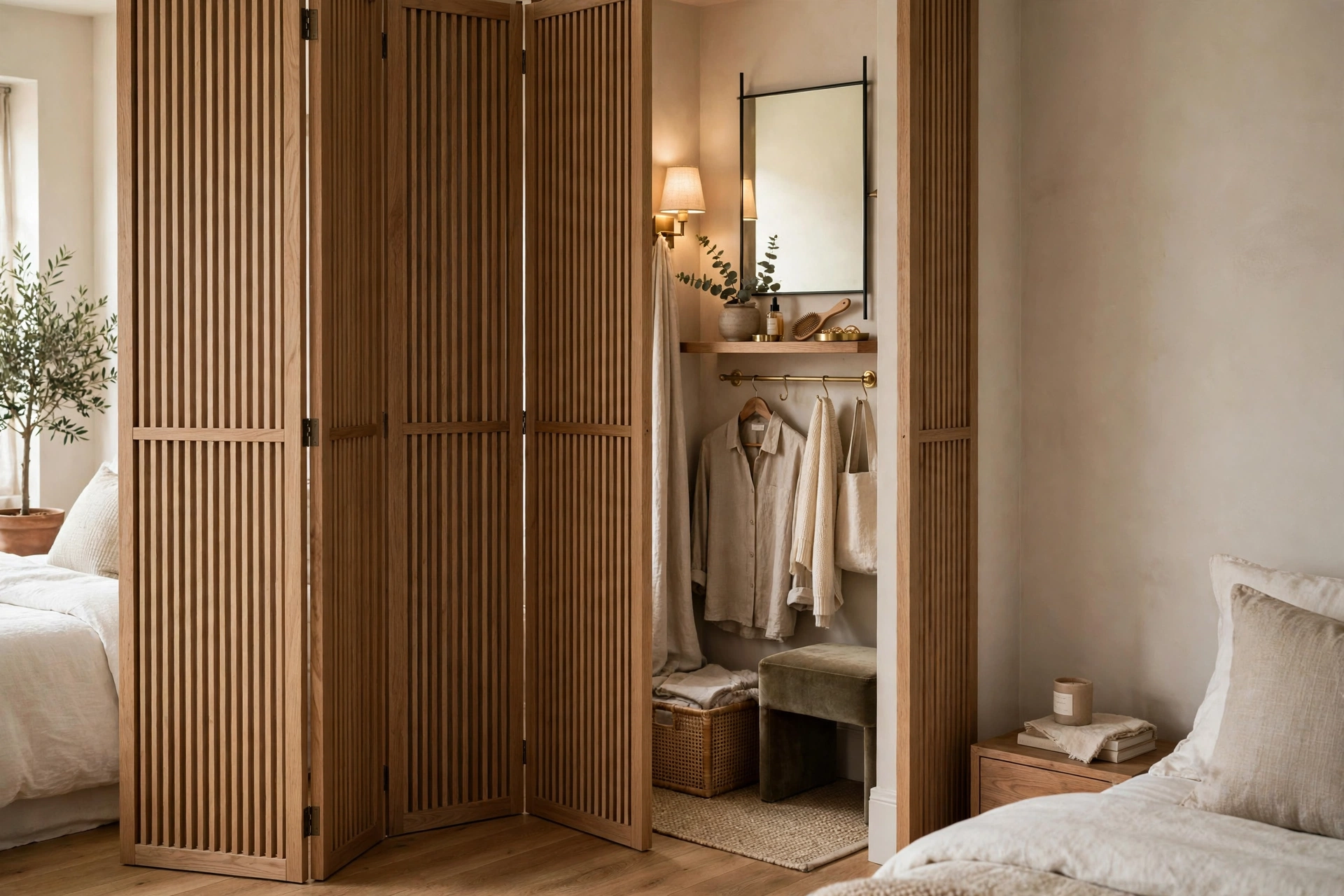
The ultimate bedroom room divider idea for privacy: carve a proper dressing nook. Position two folding screens or a curtain track in an L-shape in a bedroom corner, add a full-length mirror, a small stool, and a wall hook for tomorrow’s outfit. The nook hides the getting-ready clutter from the rest of the room and gives you a boutique-like ritual every morning. Place a small rug inside to define the footprint, and make sure a lamp or window lights the mirror so you can actually see.
Frequently Asked Questions
What is the best room divider for a bedroom?
A folding screen is the most versatile choice for most bedrooms — it moves anywhere, folds flat, and comes in styles from shoji to rattan. For real privacy, floor-to-ceiling curtains or sliding panels work better than freestanding screens. If you also need storage, choose an open bookcase or storage-cube divider. Measure your clearances first, since dividers that crowd walkways cause more frustration than the open plan they replace.
How do I divide a bedroom without making it feel smaller?
Keep dividers light-permeable: choose open shelving, sheer curtains, cane, or shoji instead of solid walls. Low dividers like dressers and benches zone a room without blocking sightlines. Stick to a single cohesive palette so the divided zones feel like one room. For more ideas on creating distinct areas in one room, these cozy bedroom seating area ideas show how a reading corner can feel separate without any partition at all.
Are room dividers renter-friendly?
Most are. Folding screens, curtains on tension rods, freestanding shelves, and plant walls need zero mounting. Ceiling tracks for curtains can often be installed with adhesive mounts or tension systems. Avoid drilling into walls or ceilings without landlord permission, and anchor tall freestanding units to the wall with removable adhesive straps rather than screws where possible. Always check your lease before any installation.
How tall should a bedroom room divider be?
For true privacy — hiding a dressing area or a messy desk — aim for five to six feet so sightlines are blocked when standing. For gentle zoning, three to four feet is plenty; low dividers keep the room feeling open and airy. In shared bedrooms, mix heights: a tall screen around the bed for privacy, a low dresser or shelf to mark the lounge zone. Match the divider height to its job rather than defaulting to the tallest option.
Can a room divider also add storage?
Absolutely — this is the smartest way to justify a divider’s footprint. Open bookcases, storage cubes, and low dressers all divide and store at once. Style both sides deliberately so the divider looks intentional from every angle. Leave roughly a fifth of the shelving empty to keep the unit feeling light rather than cramped. Anchor anything tall to the wall for safety, especially in homes with kids or pets.
Keep Exploring
A bedroom that adapts to your life — private when you need it, open when you don’t — feels bigger and calmer than any fixed layout. Flexibility is the whole point: the best bedroom room divider ideas are the ones you can move, fold, and restyle as often as you rearrange your plans.
Curious how designers use movable partitions to open up tiny flats? The Coolist’s roundup of clever dividers that separate the bed and living room has inspiring studio examples. And if you prefer your divider to store things too, WonderHowTo’s guide to bookcase room dividers for studio apartments walks through layouts that block a sightline while holding your books.