
Few kitchen features earn their keep like a chalkboard wall. It is a menu planner, a grocery list, a kids’ art studio, and a rotating piece of wall decor all in one — and it costs less than a takeout dinner to create. These kitchen chalkboard wall ideas range from a full painted wall to small framed boards, so there is an option for renters, minimalists, and maximalists alike. Kitchen countertop decor ideas for a clutter-free styled look keep the rest of the room calm while the chalkboard does the talking.
A little prep makes all the difference between a chalkboard you love and one that ghosts and smudges. A chalkboard surface works best when it is properly seasoned — rub the side of a chalk stick over the whole area and erase before first use — and liquid chalk markers give crisper lines than dusty sticks. Smooth walls take chalkboard paint best; heavily textured drywall benefits from a skim coat first. Pick your wall away from direct stove splatter, and you will have a feature the whole household actually uses.
1. Paint a Full Chalkboard Accent Wall
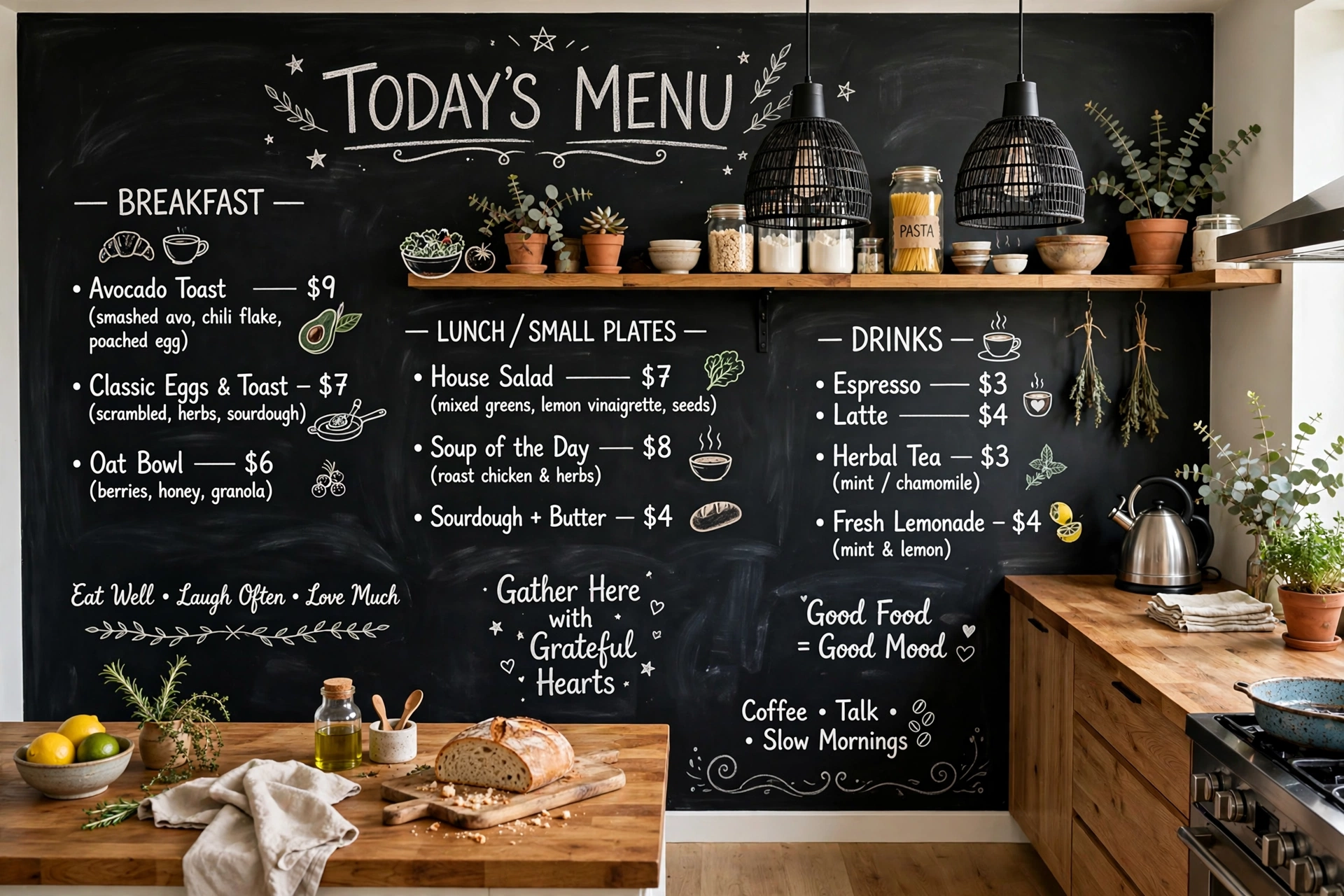
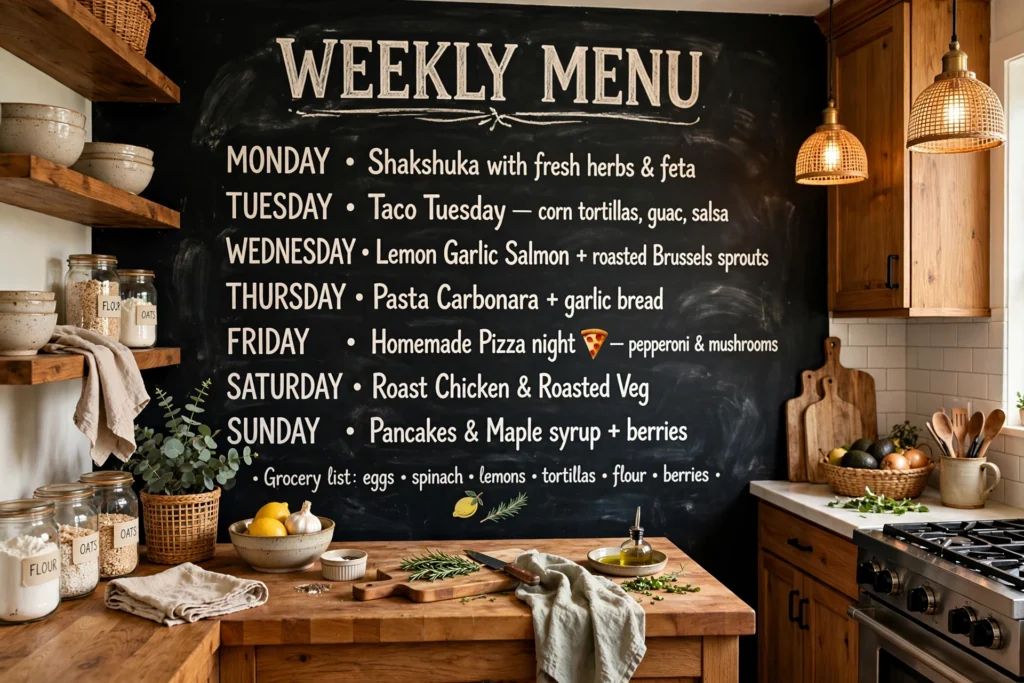
The boldest move is also the simplest: paint one entire wall in chalkboard paint and let it become the kitchen’s living, changeable artwork. A full wall gives you room for a big weekly menu, doodles, quotes, and kids’ drawings all at once without ever looking cluttered — the black surface unifies everything. Apply two to three thin coats over a good primer, letting each cure fully, and season the surface before the first masterpiece. Frame the wall with your trim color so it reads as intentional design, not an unfinished project. This is the chalkboard idea with the biggest visual payoff per dollar.
2. Frame a Chalkboard Menu Board
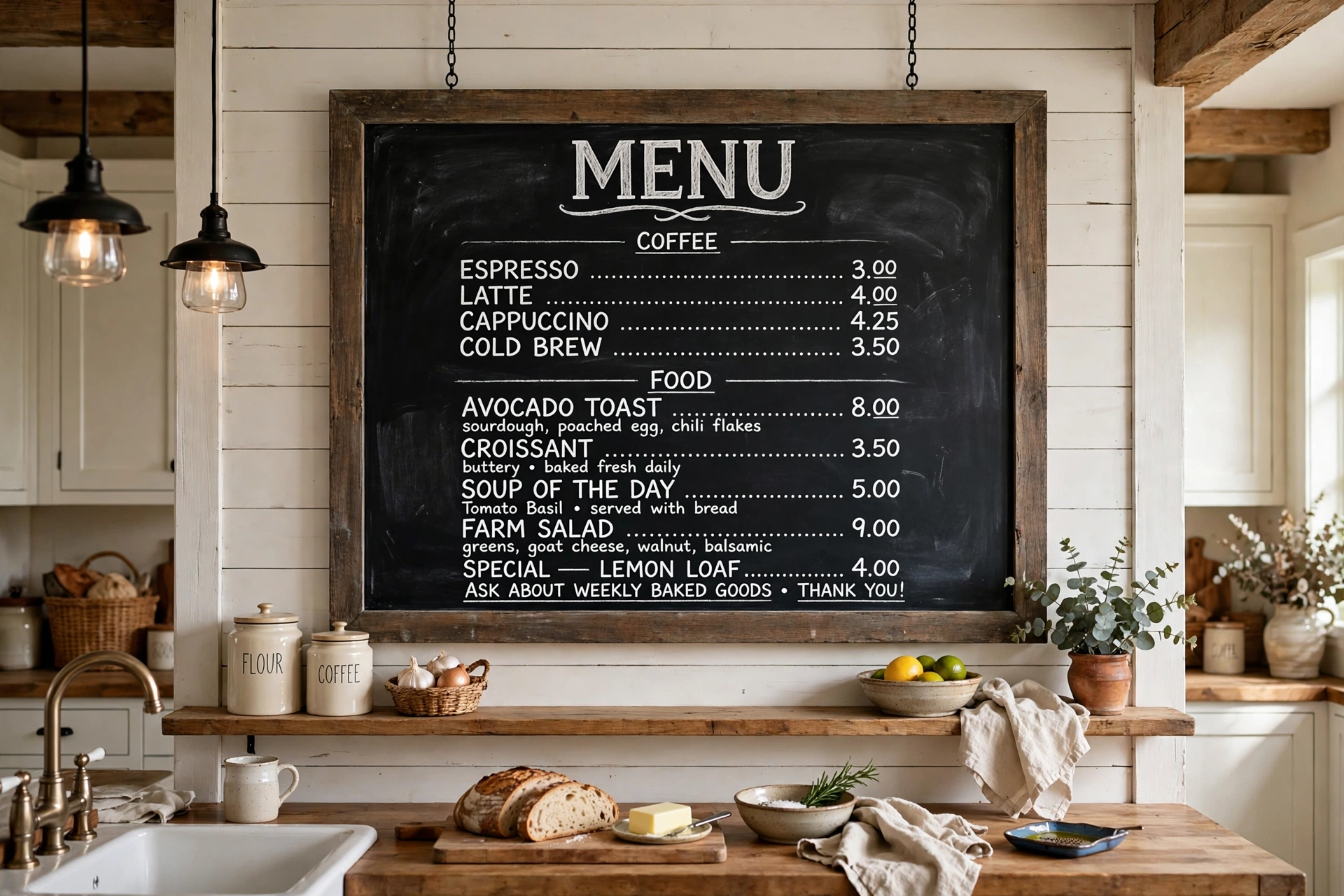
If a whole wall feels like too much commitment, a large framed chalkboard delivers the restaurant-menu charm in a movable package. Choose a substantial frame — distressed wood for farmhouse, slim black for modern — and hang it at eye level near the dining area or lean it on the counter. Use it for the week’s dinners, a dinner-party menu, or a rotating inspirational quote. Chalk markers keep the lettering sharp and photograph well for anyone who shares their kitchen online. When you tire of it, the board moves to another room in seconds.
3. Create a Weekly Meal-Planning Zone
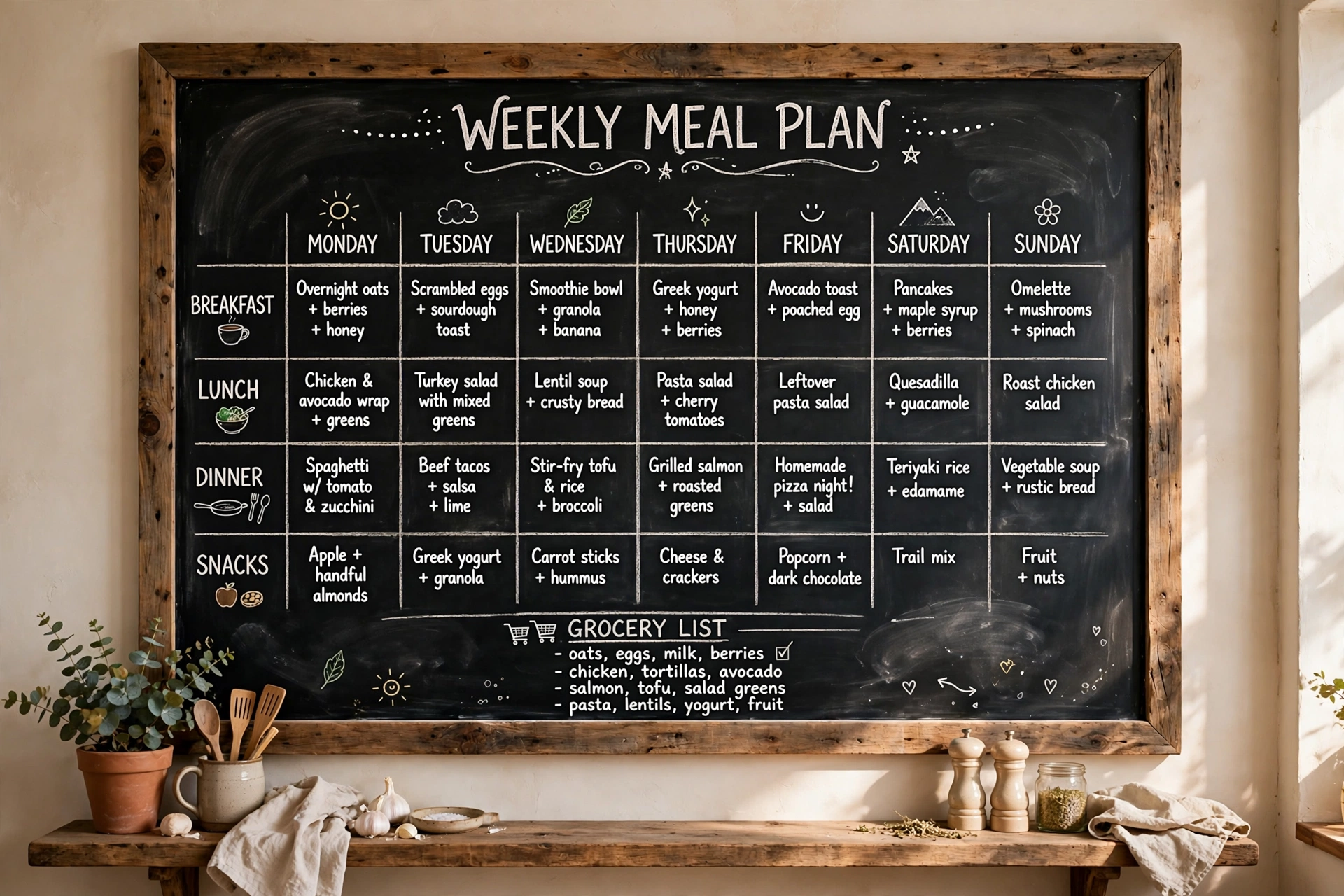
Turn a section of chalkboard wall into command central for the week’s eating. Draw a simple grid — seven days down, meals across — and plan the week every Sunday with the family. Seeing the plan kills the 5 p.m. “what’s for dinner” panic and cuts impulse grocery runs, since the shopping list writes itself from the gaps in the grid. Add a column for who is cooking and one for prep notes like “thaw chicken.” Use different chalk colors for each family member so ownership is visible at a glance. This is function-first chalkboard use at its best.
4. Dedicate a Kids’ Doodle Corner
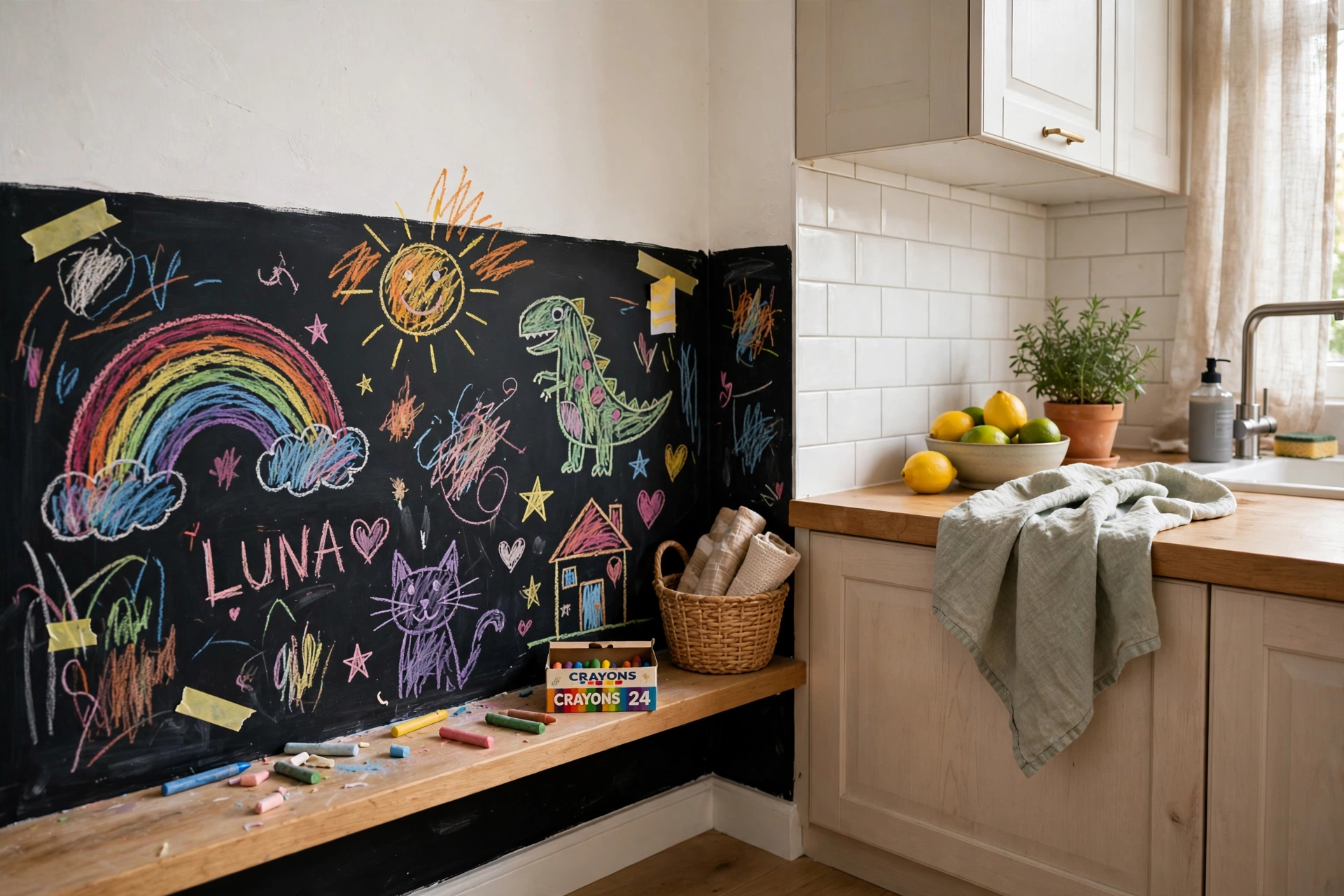
Give little artists their own chalkboard zone at their height — the bottom two feet of a wall, the side of an island, or a low cabinet end panel. Kids stay happily occupied while dinner cooks, and the art changes daily so the kitchen always feels alive. Mount a small tray at their reach for chalk and erasers, and lay a washable mat underneath for the inevitable chalk dust. Photograph favorite masterpieces before erasing to build a digital gallery. This one idea buys more peaceful cooking time than almost any gadget, and the kids feel ownership of the space.
5. Paint the Pantry Door
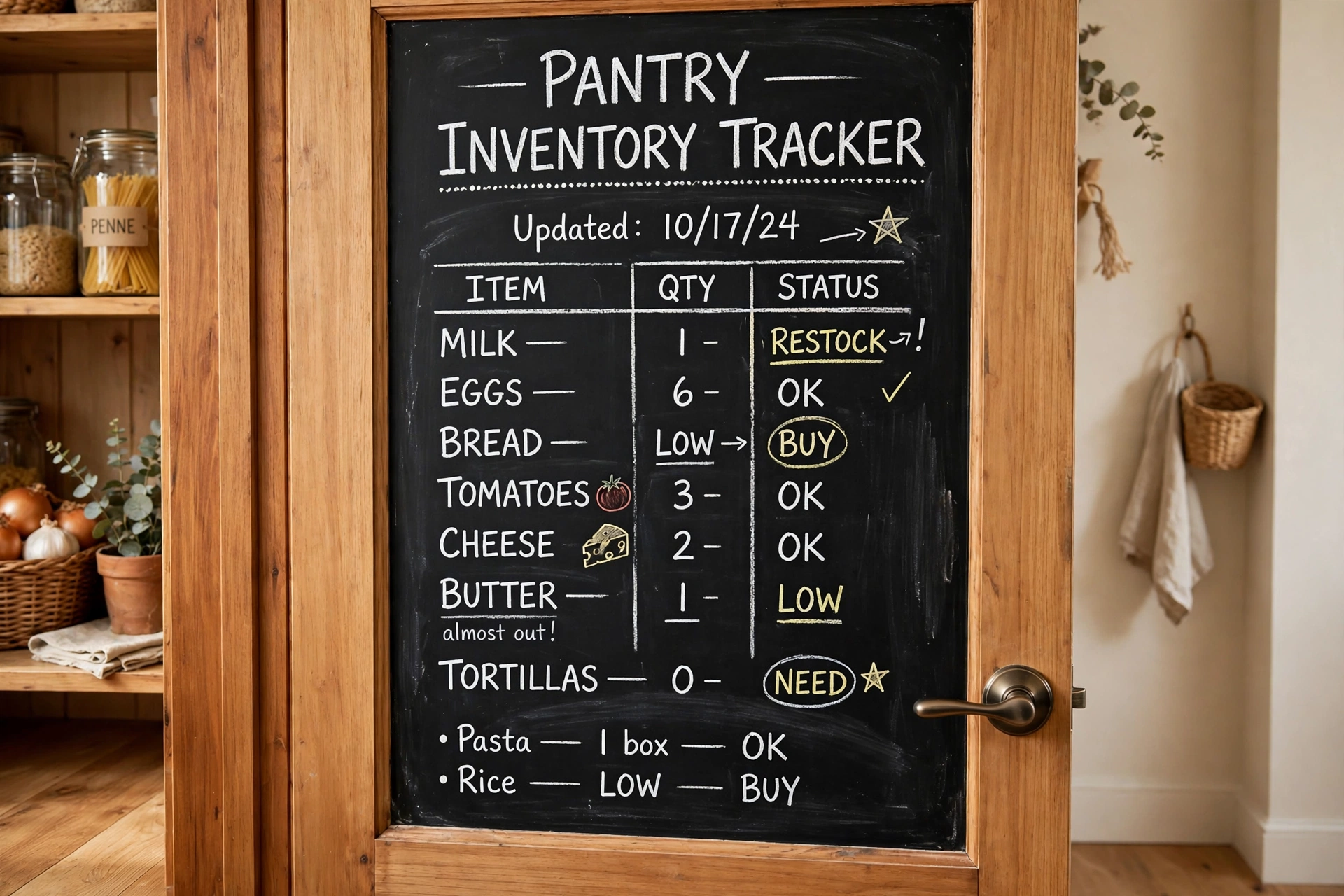
The pantry door is prime chalkboard real estate hiding in plain sight. A coat of chalkboard paint turns it into an inventory tracker: note what is running low, what is expiring soon, and what is on the grocery list without opening the door. Sand and prime the door first, remove the hardware, and paint it flat on sawhorses for the smoothest finish. Both sides can be chalkboard — inventory inside, menu or art outside. Because it is a door, not a wall, renters can sometimes pull this off with a removable painted panel instead.
6. Label Open Shelving
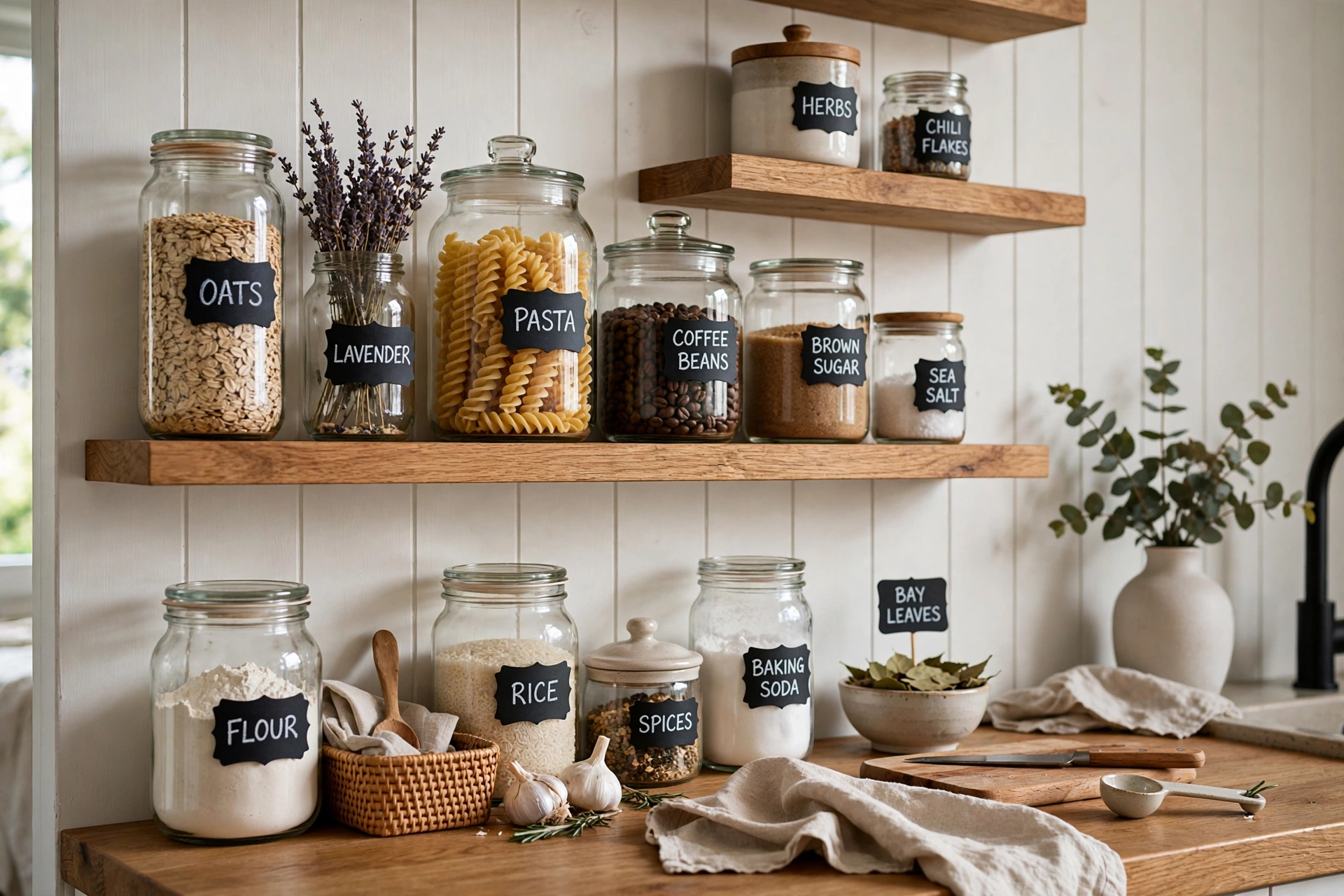
Chalkboard labels bring order and charm to open shelving in one stroke. Paint small wooden tags, clip-on labels, or the shelf edge itself with chalkboard paint, then label flour, sugar, oats, and coffee in your best handwriting. The labels make the pantry wall look like a general store and — more importantly — stop anyone from putting the salt where the sugar goes. Use chalk markers for crisp, smudge-resistant lettering, and keep a damp cloth handy for rewrites. Open kitchen shelving ideas that look styled not cluttered pair perfectly with labeled jars.
7. Make a Grocery List Station
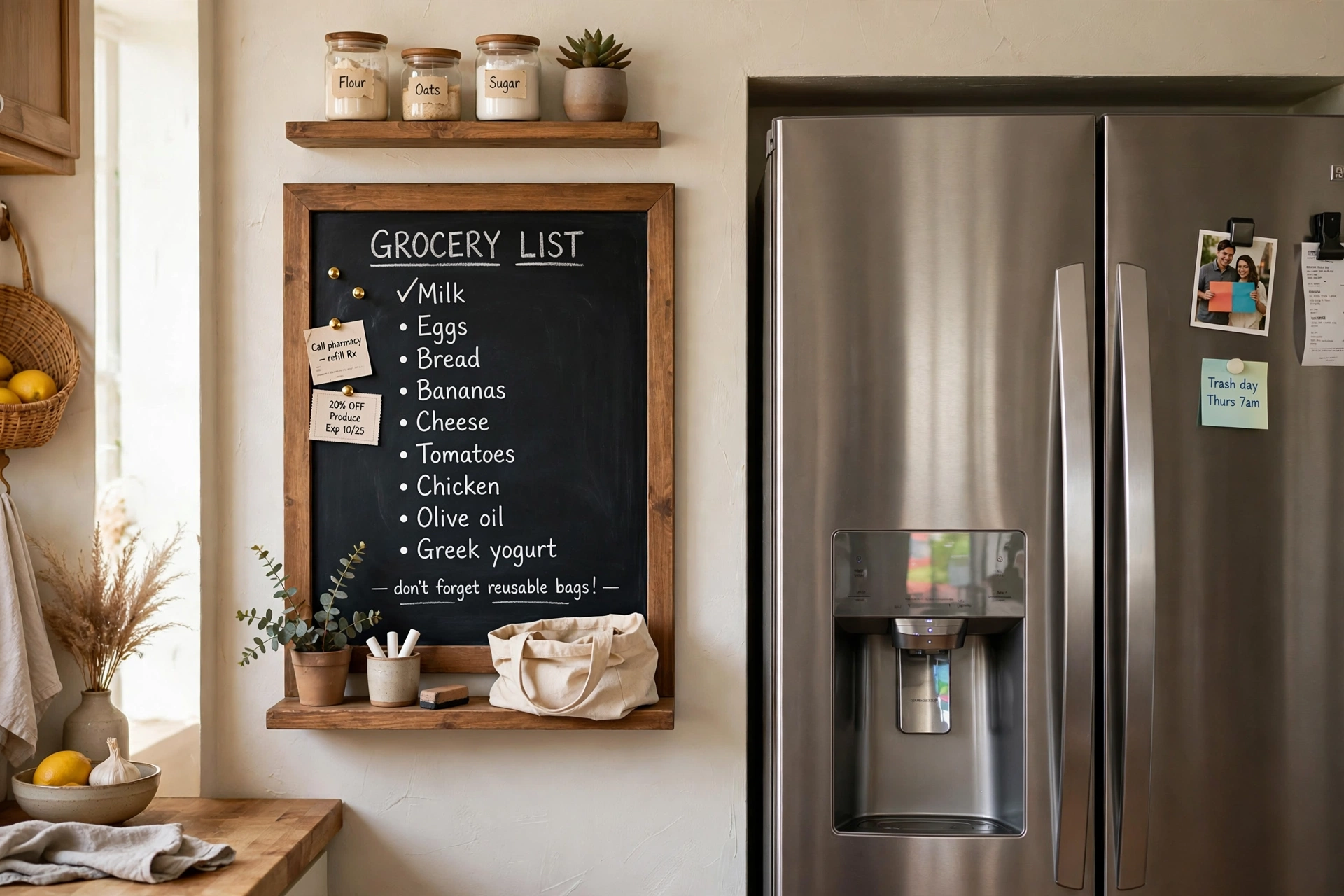
A chalkboard grocery list by the fridge or pantry door ends the “we’re out of milk” surprise. Keep chalk on a string nearby so adding items takes two seconds — the easier it is, the more the household actually uses it. Divide the board into store sections (produce, dairy, pantry) to make the shopping trip efficient, and snap a photo of the list before heading out. Erase as you shop or when items come home. Some families add a running “meal ideas” column so the list practically writes the week’s menu itself.
8. Try a Chalkboard Backsplash Behind the Stove
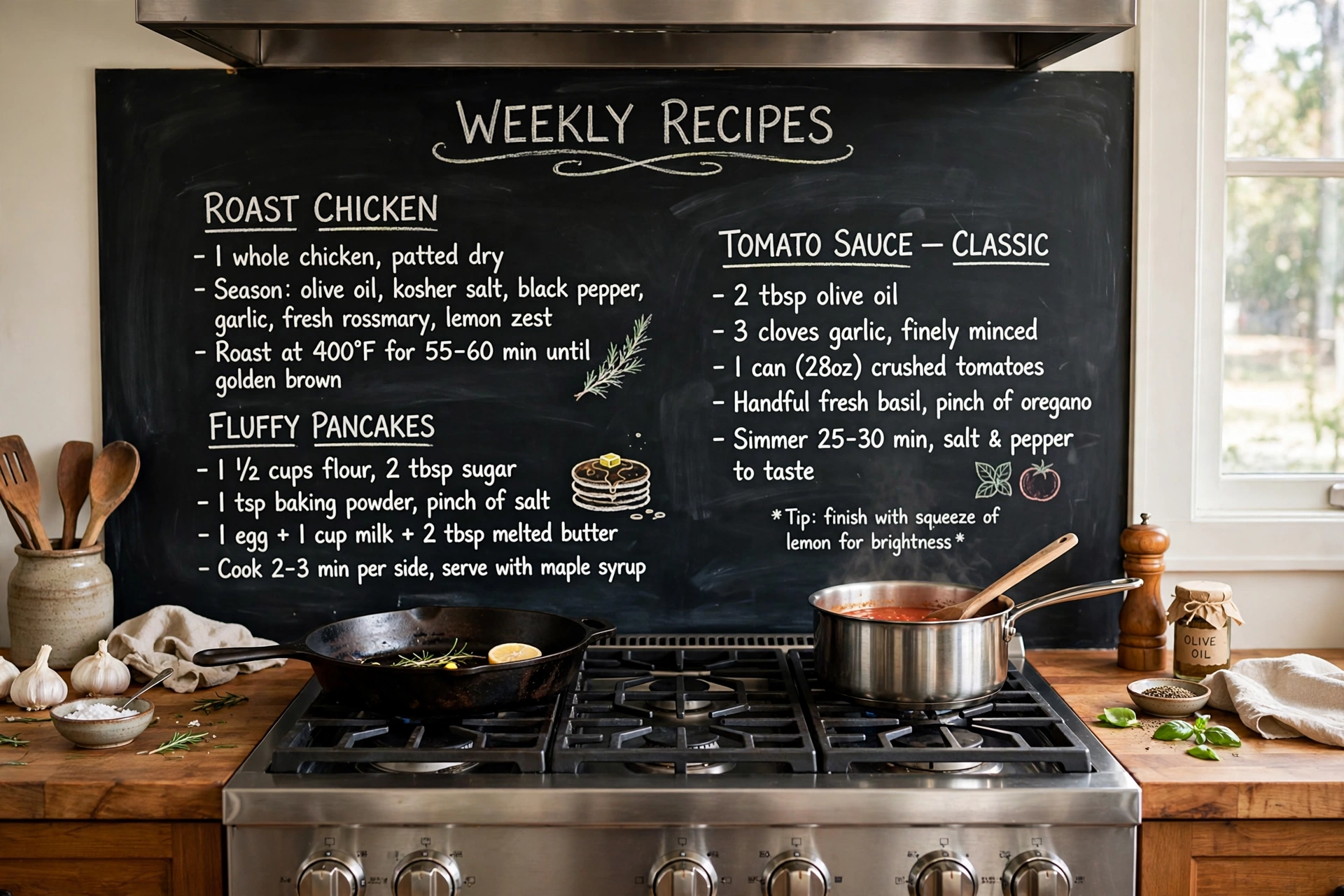
A chalkboard backsplash behind the range is a showstopper — write recipes at eye level while you cook, sketch, or leave notes for the household. But be honest about the trade-offs: grease and heat are chalkboard paint’s enemies, so this works best behind an induction cooktop or on a section of wall beside the range rather than directly over open flame. Seal the painted surface with a clear matte polyurethane rated for the application to make it wipeable. Keep a dedicated eraser and markers in a nearby drawer so the backsplash stays a working surface, not a grease-stained relic.
9. Frame Vintage-Style Typography Art
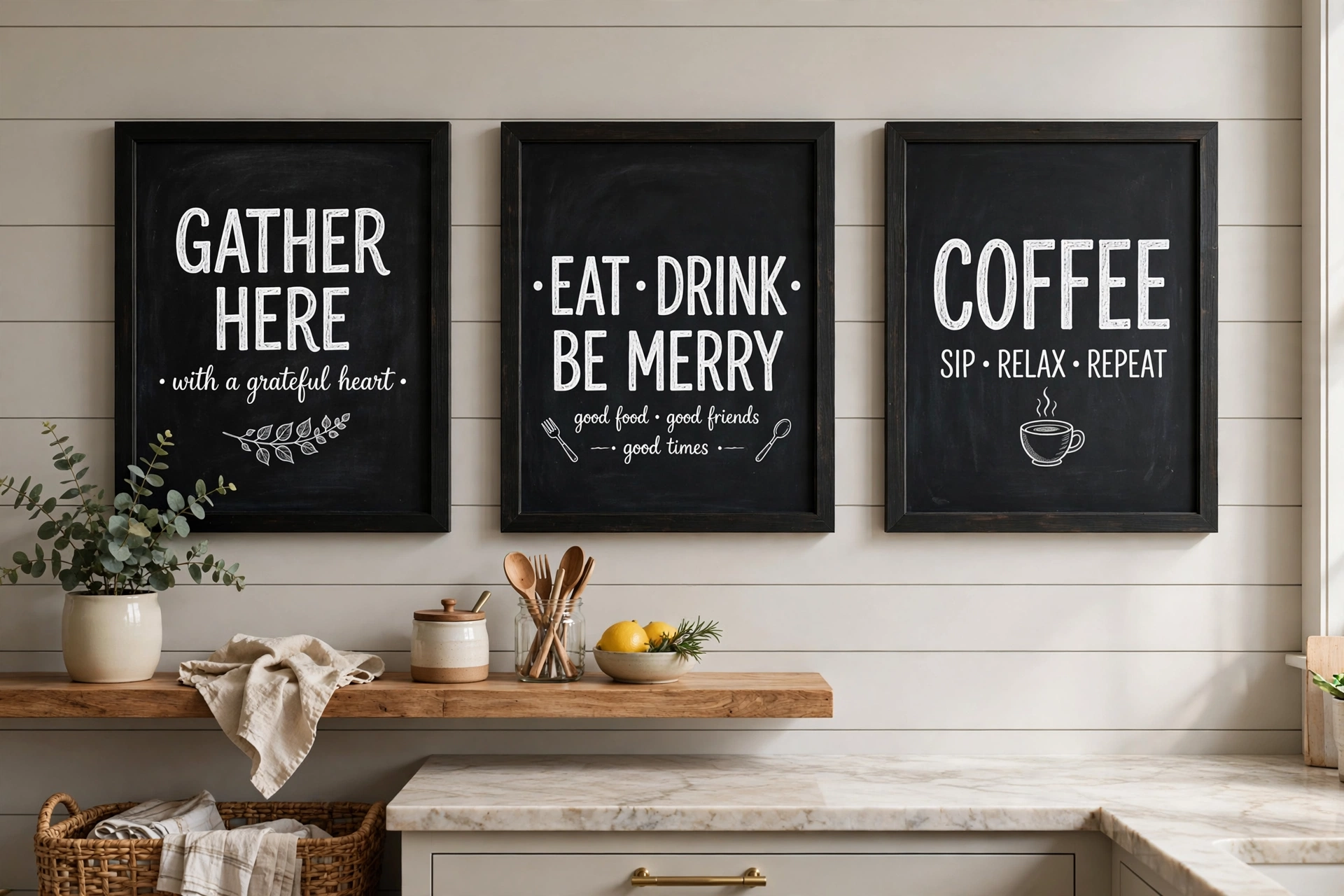
Chalkboard style is not only about writing — it is an aesthetic. Frame prints that mimic chalkboard typography: vintage advertisements, hand-lettered kitchen rules (“chop it like it’s hot”), or botanical illustrations on black backgrounds. These give you the chalkboard look with zero dust and zero maintenance, ideal for kitchens where real chalk would be a mess. Group two or three in matching frames for a gallery moment, or let one large piece anchor a wall. This is the chalkboard idea for people who love the look but not the upkeep.
10. Track a Family Calendar
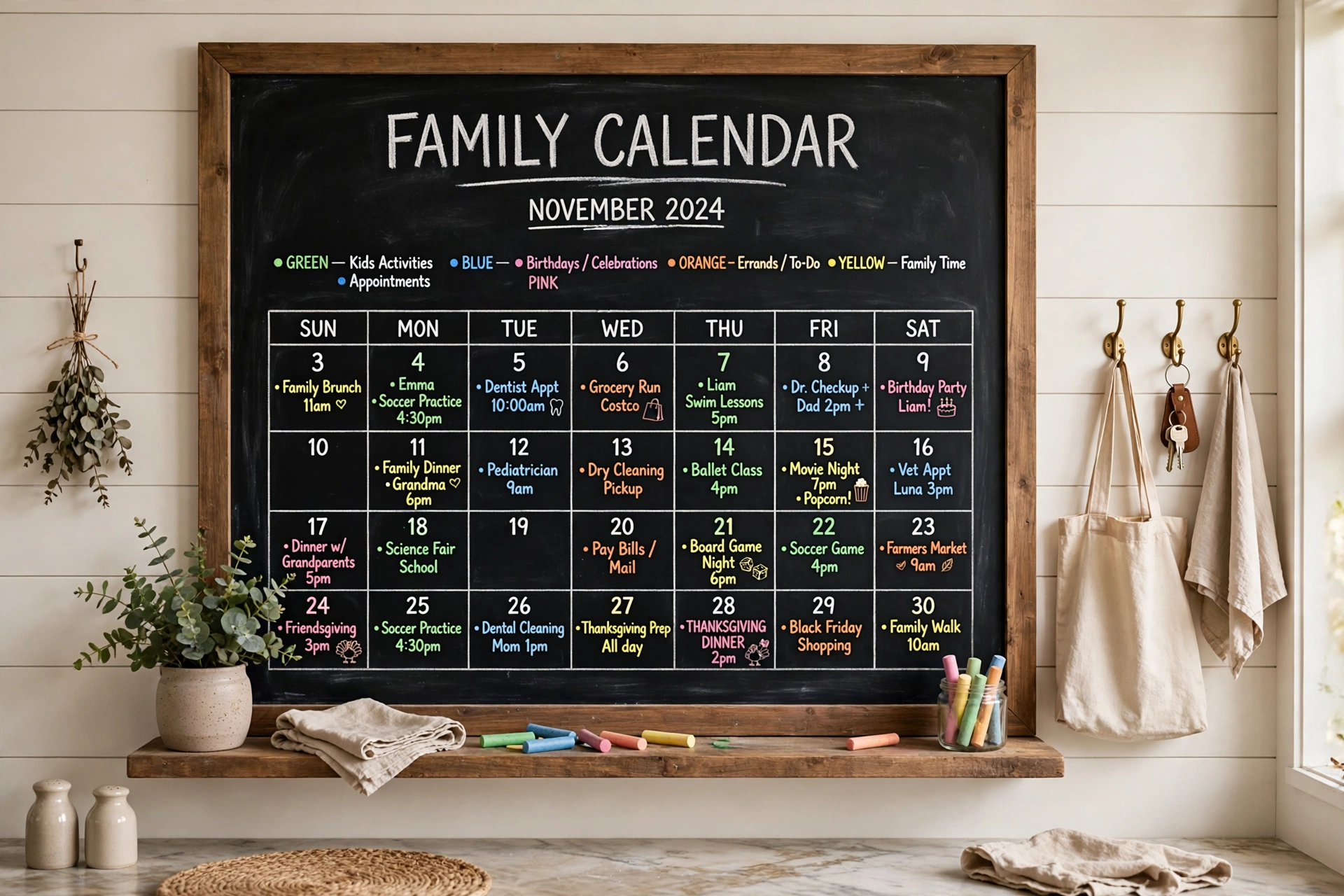
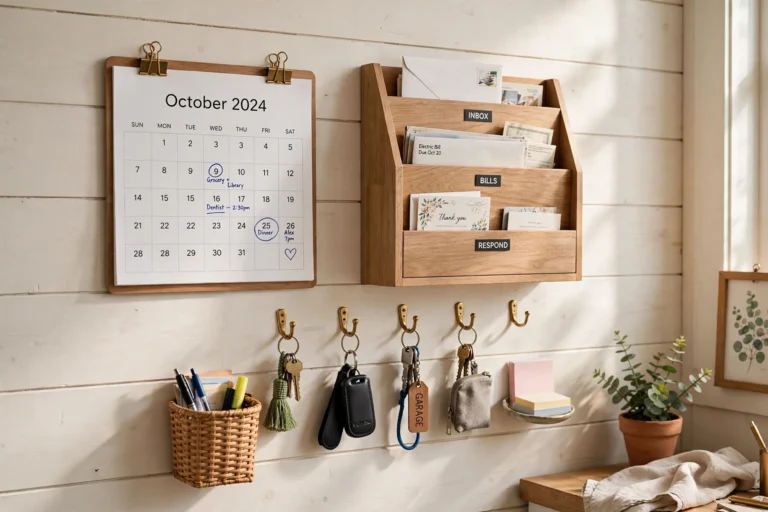
A chalkboard family calendar on the kitchen wall keeps everyone’s schedule visible where the household actually gathers. Draw a month grid big enough to read from across the room, and color-code each person’s events so the week makes sense at a glance. Photograph it at month’s start as a backup, and keep the digital calendar as the source of truth — the wall is the at-a-glance version. Mount it near the coffee station or breakfast table where mornings start. The ritual of updating it together on Sundays takes five minutes and prevents a week of scheduling collisions.
11. Paint Chalkboard Cabinet Fronts
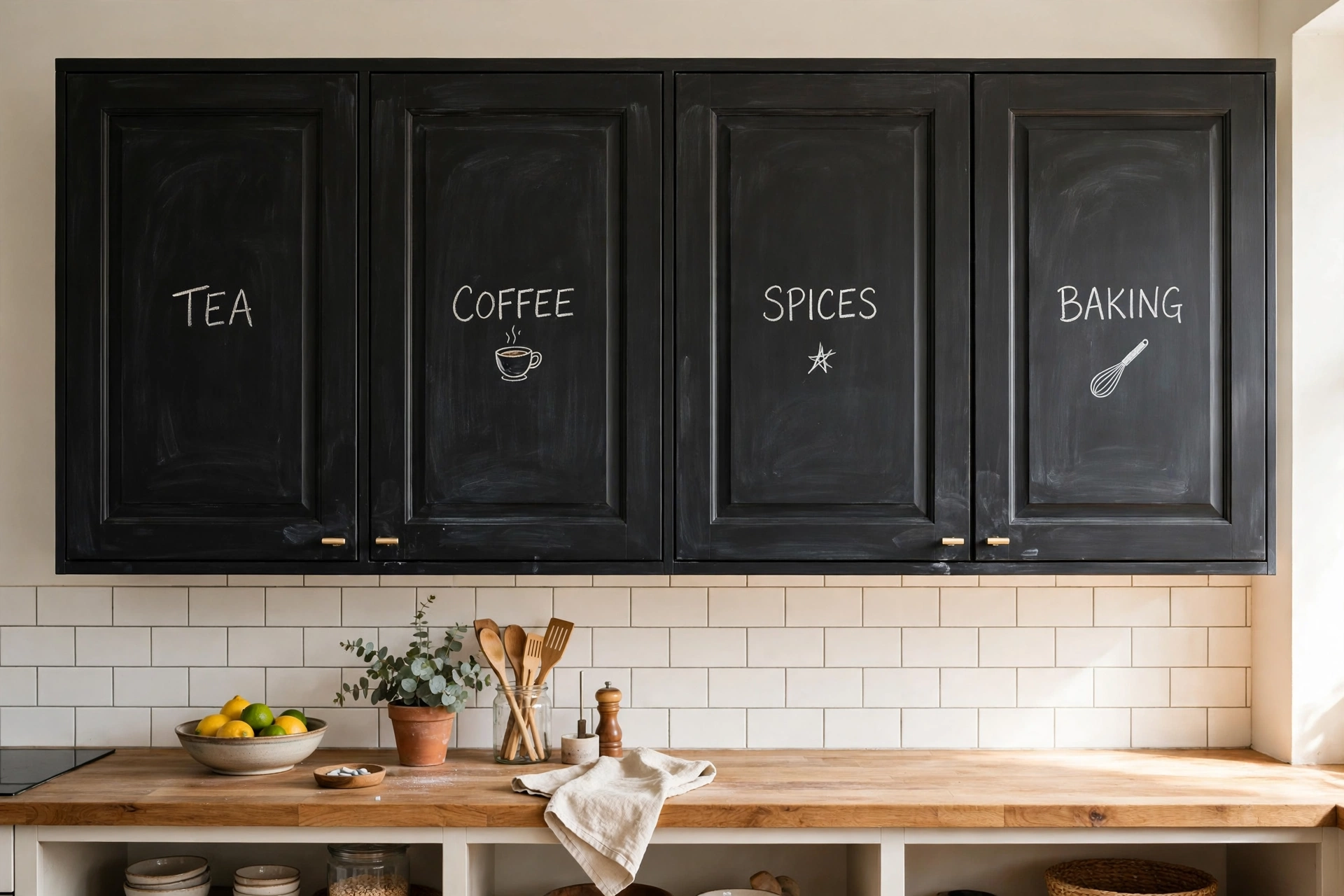
For the committed chalkboard lover, painting cabinet fronts — or just the upper cabinet doors — in chalkboard paint creates a kitchen that is equal parts storage and sketchpad. Label each cabinet’s contents on the door itself so there is never a mystery hunt for the baking powder. This works best on flat-front or shaker doors with smooth panels; heavily routed doors fight the paint. It is a bold look, so try it on a bank of uppers first before committing the whole kitchen. The result is playful, personal, and unlike any kitchen your guests have seen.
12. Do Seasonal and Holiday Lettering
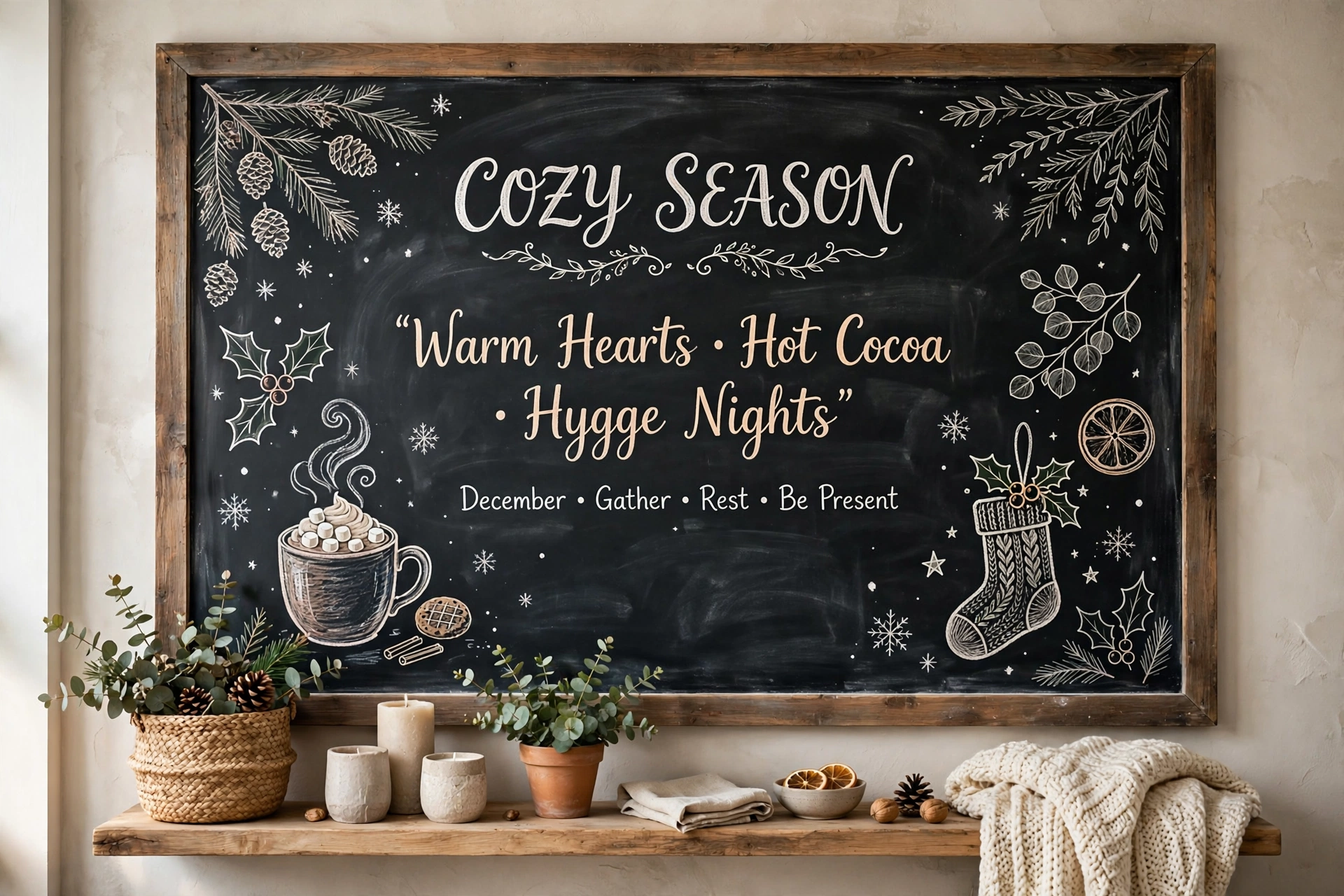
A chalkboard wall shines brightest when it changes with the seasons. Letter a harvest quote in October, a cookie countdown in December, a garden planting plan in April — the wall becomes a rotating celebration that costs nothing but chalk. Keep a small collection of reference fonts on your phone for inspiration, and do not fear imperfection: slightly wobbly hand lettering reads as charming, not sloppy. Photograph each season’s design before erasing. If lettering intimidates you, stencils and chalk markers make professional-looking results achievable on the first try.
13. Display the Recipe of the Week
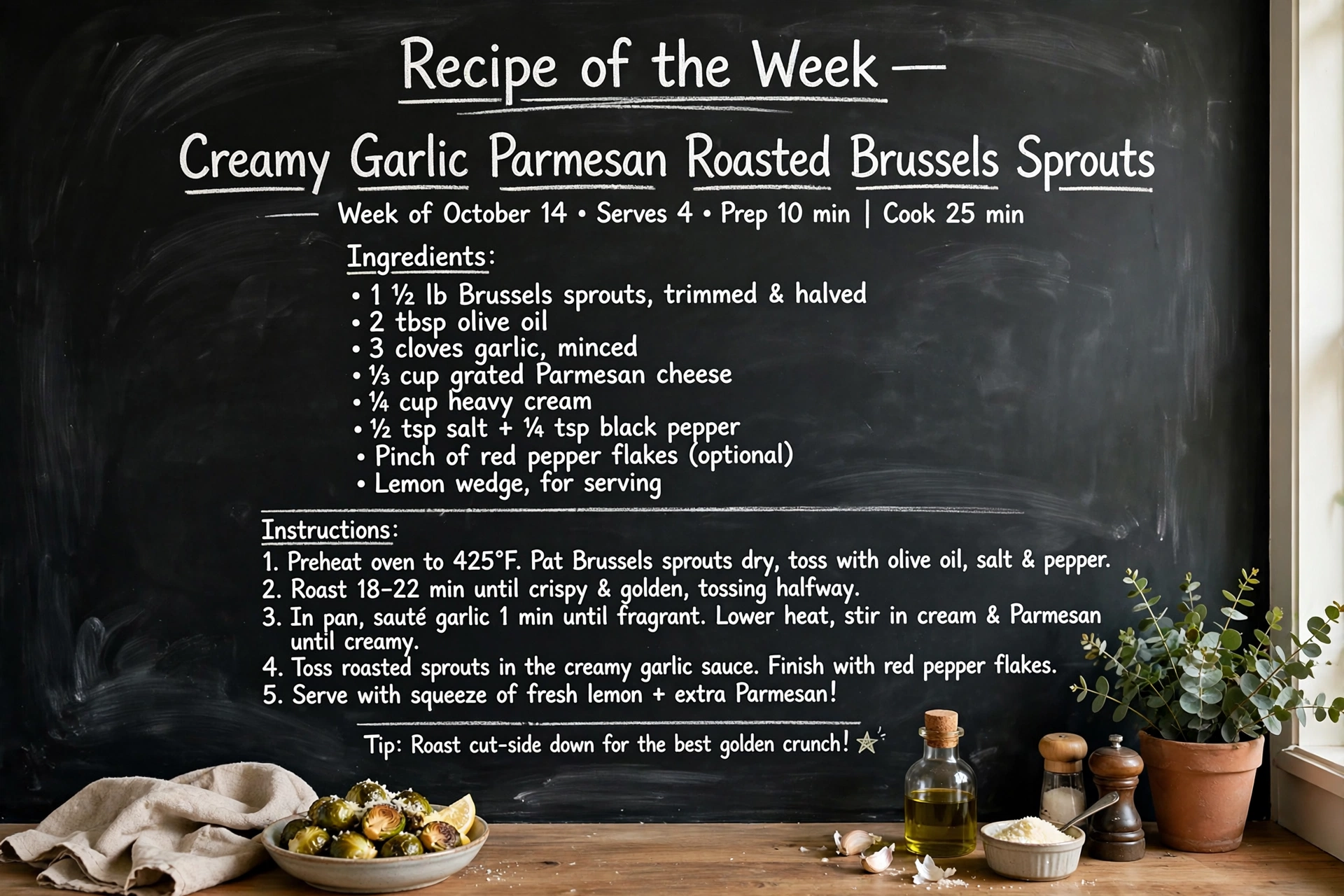
Write out one recipe in full on the chalkboard each week — a family favorite, something new you are testing, or a heirloom recipe in grandma’s honor. Cooking from the wall instead of a phone keeps screens out of the splash zone and turns the recipe into decor. Choose recipes with short ingredient lists so the lettering stays legible from a few feet away. Add the source or story underneath for charm. By year’s end you will have cooked fifty-two new dishes and built a delicious household tradition around a painted wall.
14. Use Chalkboard Spice Jar Labels
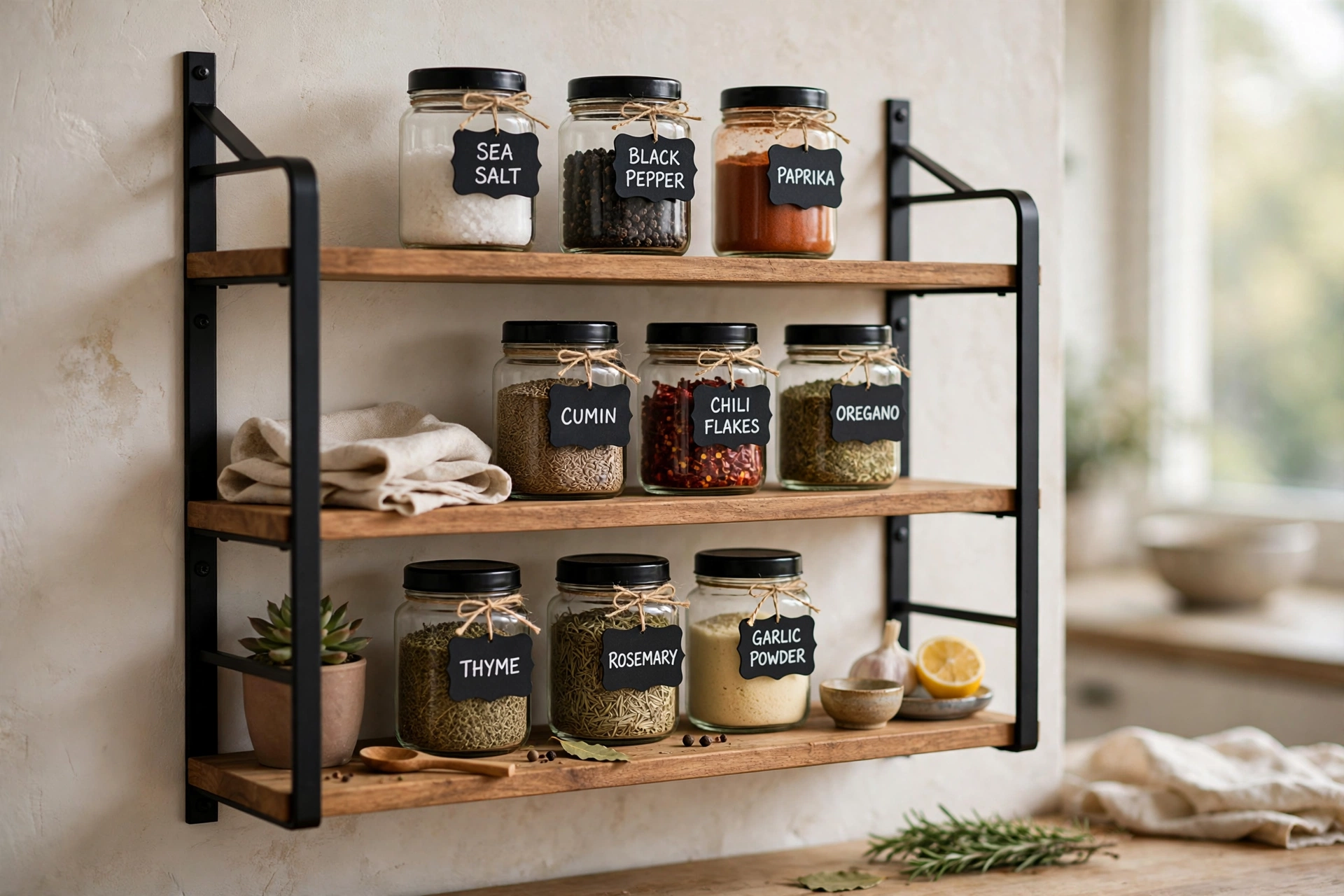
Small chalkboard labels on spice jars are the detail that makes an open spice rack look professionally organized. Paint jar lids or stick-on labels with chalkboard paint, then label each spice in neat chalk marker — cinnamon, cumin, smoked paprika, all instantly findable. Uniform jars with matching labels turn a jumble of store packaging into a display worth showing off. Keep the lettering large enough to read at arm’s length, and rewrite labels when jars get refilled with something new. This tiny project takes an afternoon and upgrades the whole pantry wall.
15. Build a Coffee Bar Menu Board
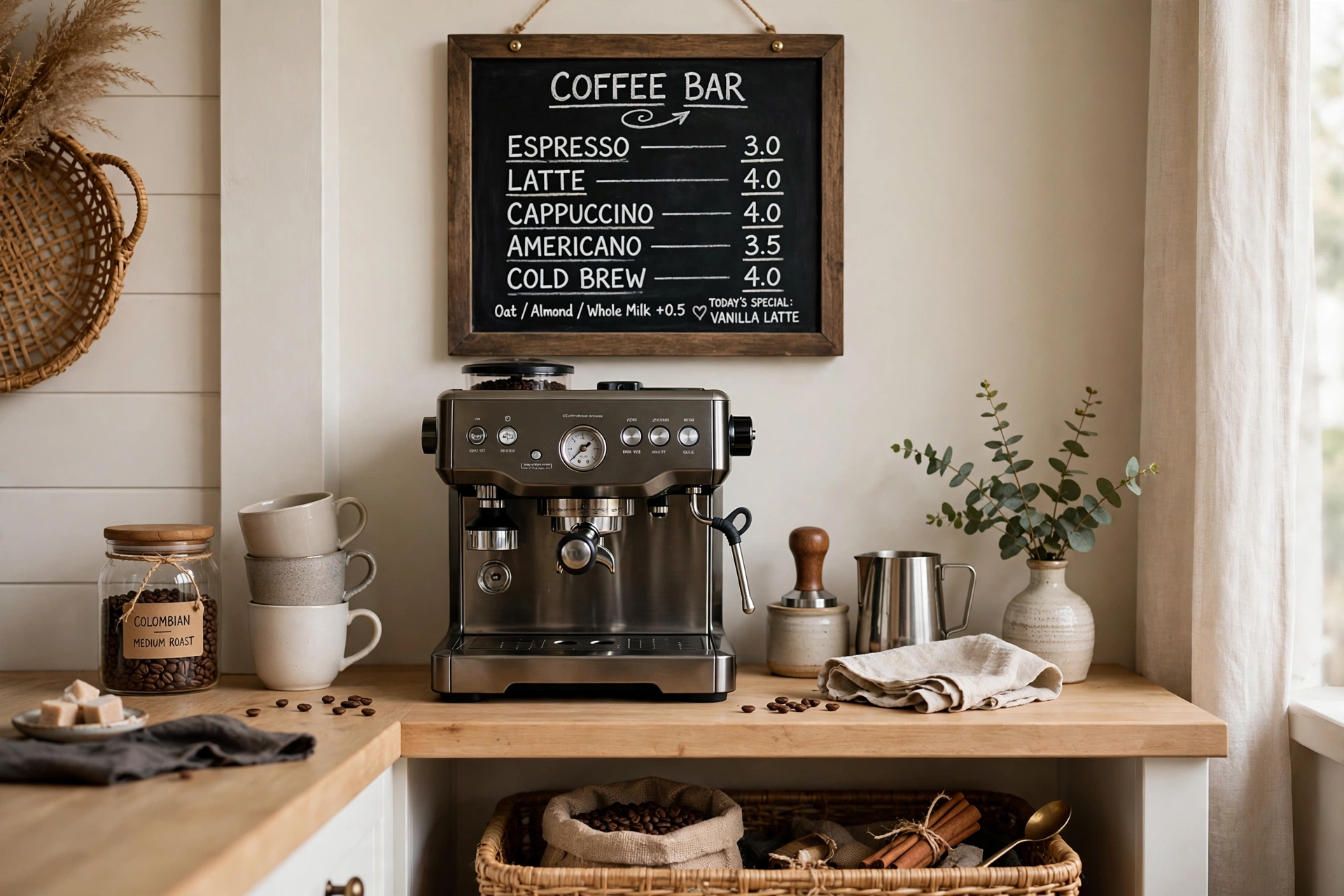
Give the coffee station its own chalkboard menu and watch it become the kitchen’s favorite corner. List the household’s standard orders — oat milk latte, French press, decaf after 2 p.m. — plus the beans currently in rotation and any seasonal syrups. A small framed board propped on the counter or hung above the machine is all it takes. Guests love ordering from it, and it makes a basic coffee corner feel like a cafe. Browse thespruce.com for coffee bar styling ideas to complete the vignette around your menu board.
FAQ
What kind of paint do I use for a chalkboard wall?
Use a dedicated chalkboard paint — available in brush-on quarts and spray cans — over a quality primer. Apply two to three thin coats rather than one thick one, and let it cure for the full time on the can (usually 24 hours) before seasoning. Brush-on paint gives a smoother, more durable surface for large walls; spray works well for small boards and labels.
How do you season a chalkboard wall?
Rub the side of a piece of chalk over the entire surface, covering it completely, then erase with a dry cloth or felt eraser. This fills the paint’s pores with chalk dust so your first real writing erases cleanly instead of ghosting. Season before first use and again if you notice writing leaving shadows after erasing.
Will chalkboard paint work on textured walls?
It works, but heavy texture makes writing difficult and erasing incomplete. For best results, skim-coat textured drywall with joint compound and sand smooth before priming and painting. Light orange-peel texture is usually fine. Test a small hidden section first — write, wait a day, erase — to check for ghosting before committing to the whole wall.
How do I keep a kitchen chalkboard wall clean?
Dust it weekly with a dry microfiber cloth or felt eraser to prevent buildup. For deeper cleaning, wipe with a barely damp cloth and let it dry completely before rewriting. Avoid harsh cleaners that strip the seasoning. Near cooking zones, a clear matte sealer over the paint makes the surface wipeable — just know that sealed boards take chalk markers better than raw chalk.
Is a chalkboard wall a bad idea for resale?
A painted chalkboard wall is just paint — it primes and repaints like any other wall, so it is not a resale risk. Framed boards and door panels are even easier to remove. If you are selling soon, keep the lettering neutral and tidy for showings, or erase to a clean black surface that reads as a bold accent wall.
Keep Exploring
A chalkboard wall is the rare decor choice that gets more useful the longer you live with it — the meal plans get smarter, the lettering gets better, and the kids’ art gets funnier. Start with one board or one wall, build the habit of actually using it, and let it earn a bigger role. Kitchen curtain ideas for charming window treatments soften the room and balance all that bold black.