
Your entryway sets the tone for your entire home, and few upgrades deliver more elegance per dollar than wainscoting. These entryway wainscoting ideas turn plain drywall into layered, architectural walls that welcome guests with quiet confidence. Wainscoting is wall paneling traditionally applied to the lower portion of a wall (about a meter or three to four feet high, per Wikipedia’s wainscot overview), and in a foyer it does double duty: protecting busy walls from scuffs while adding the kind of craftsmanship that makes a home feel finished. For more ways to warm up the whole space, our farmhouse entryway ideas full of warmth and rustic charm pair beautifully with several of the treatments below.
The golden rule of entry wainscoting is proportion first, style second. Keep panel heights between one-third and two-fifths of your wall — roughly 32 to 42 inches on standard 8-foot ceilings — and always center your layout so panels fall symmetrically around the front door, closets, and hall openings. With the right height and a good paint finish, even simple MDF trim reads as custom millwork.
1. Classic Board-and-Batten at Chair-Rail Height
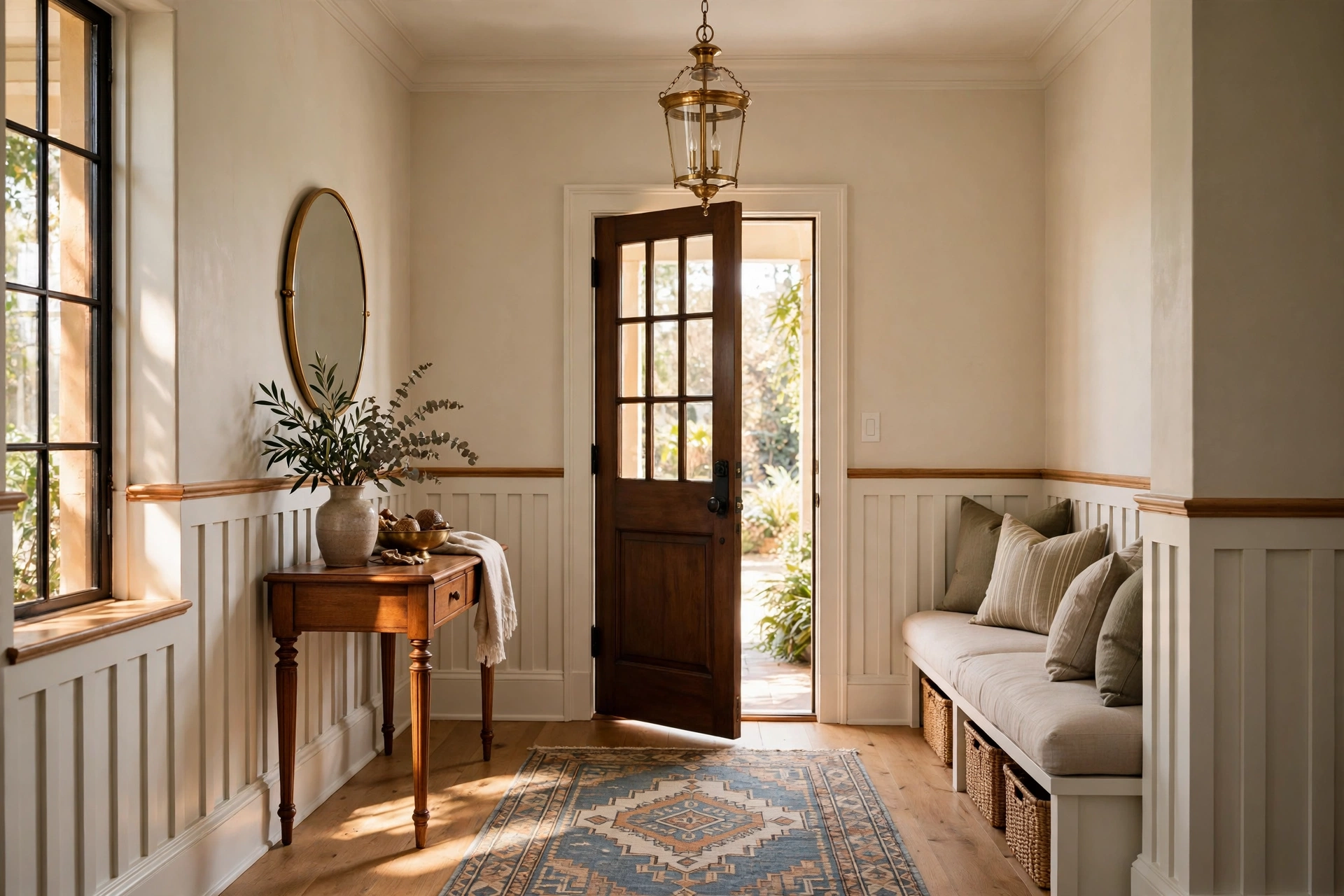
Board-and-batten is the workhorse of entryway wainscoting ideas: flat wall panels with narrow vertical battens applied over the seams, capped with a chair rail at about 36 inches. The vertical rhythm makes narrow foyers feel taller, and the simple geometry suits everything from colonial to transitional homes. Paint the whole treatment the same warm white as your baseboards for a seamless, built-in look, or use a slightly deeper tone like greige for definition.
Installation is genuinely DIY-friendly. Mark your studs, glue and nail the battens directly to the wall, then cap with a 1×4 chair rail and finish with caulk and two coats of enamel paint. In a busy entry, choose semi-gloss or satin sheen so backpacks, shoes, and umbrella handles wipe clean instead of scuffing the paint.
2. White Beadboard for a Cottage Welcome
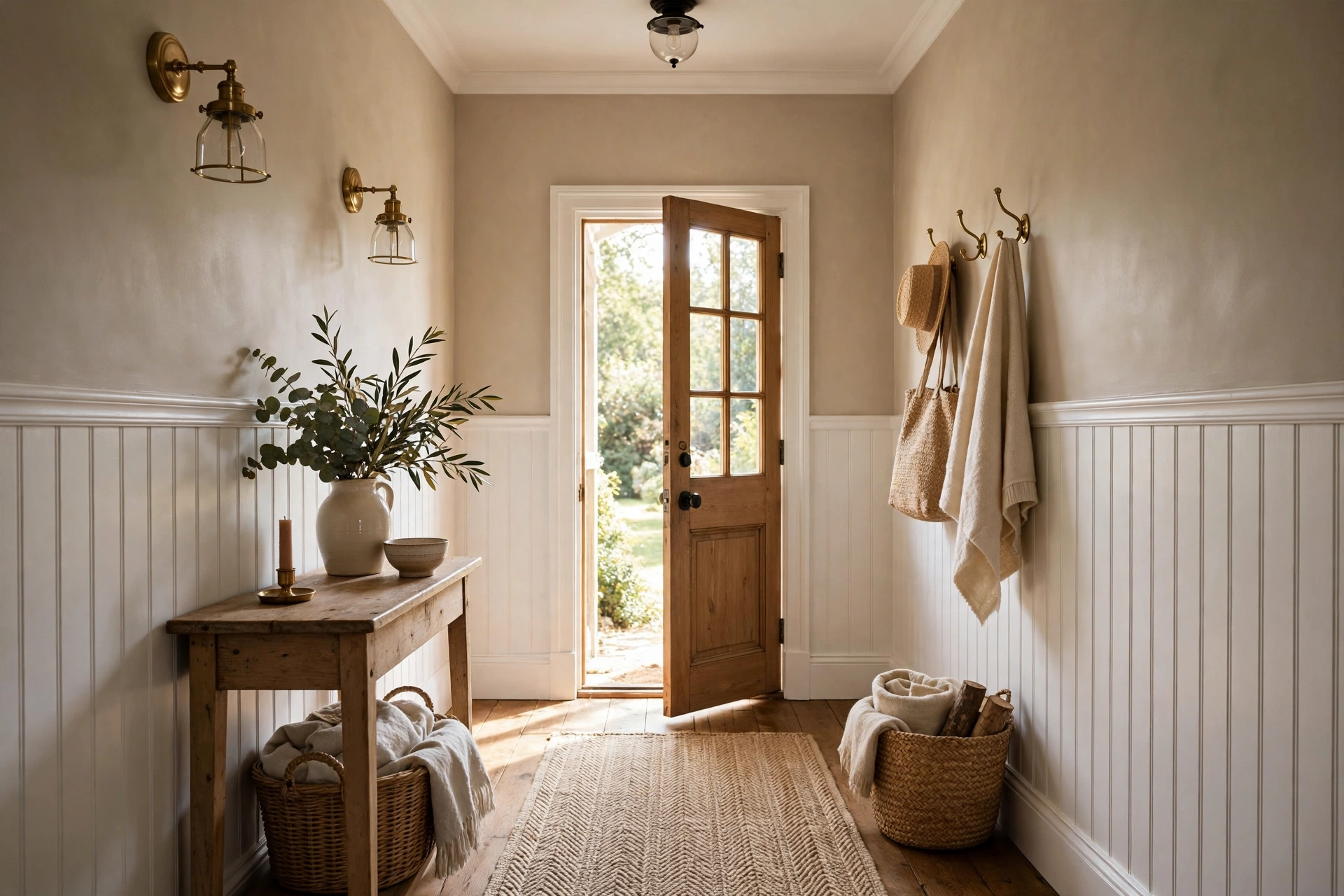
Narrow vertical beadboard with its signature bead-and-groove profile brings instant cottage warmth to a foyer. It softens a stark entry without feeling fussy, and white-painted beadboard reflects light beautifully — a real gift in windowless entryways. Cap it with a chunky chair rail at 36 to 40 inches and paint the wall above in a soft, warm neutral like creamy linen.
Beadboard’s texture hides a multitude of sins, which makes it the smart pick for older homes with wavy plaster or patched drywall. Use moisture-resistant MDF or primed wood panels, caulk every groove junction at the rail and baseboard, and expect a full weekend for a single foyer wall. The result reads cozy and welcoming from the first step inside.
3. Picture-Frame Molding for a Formal Foyer
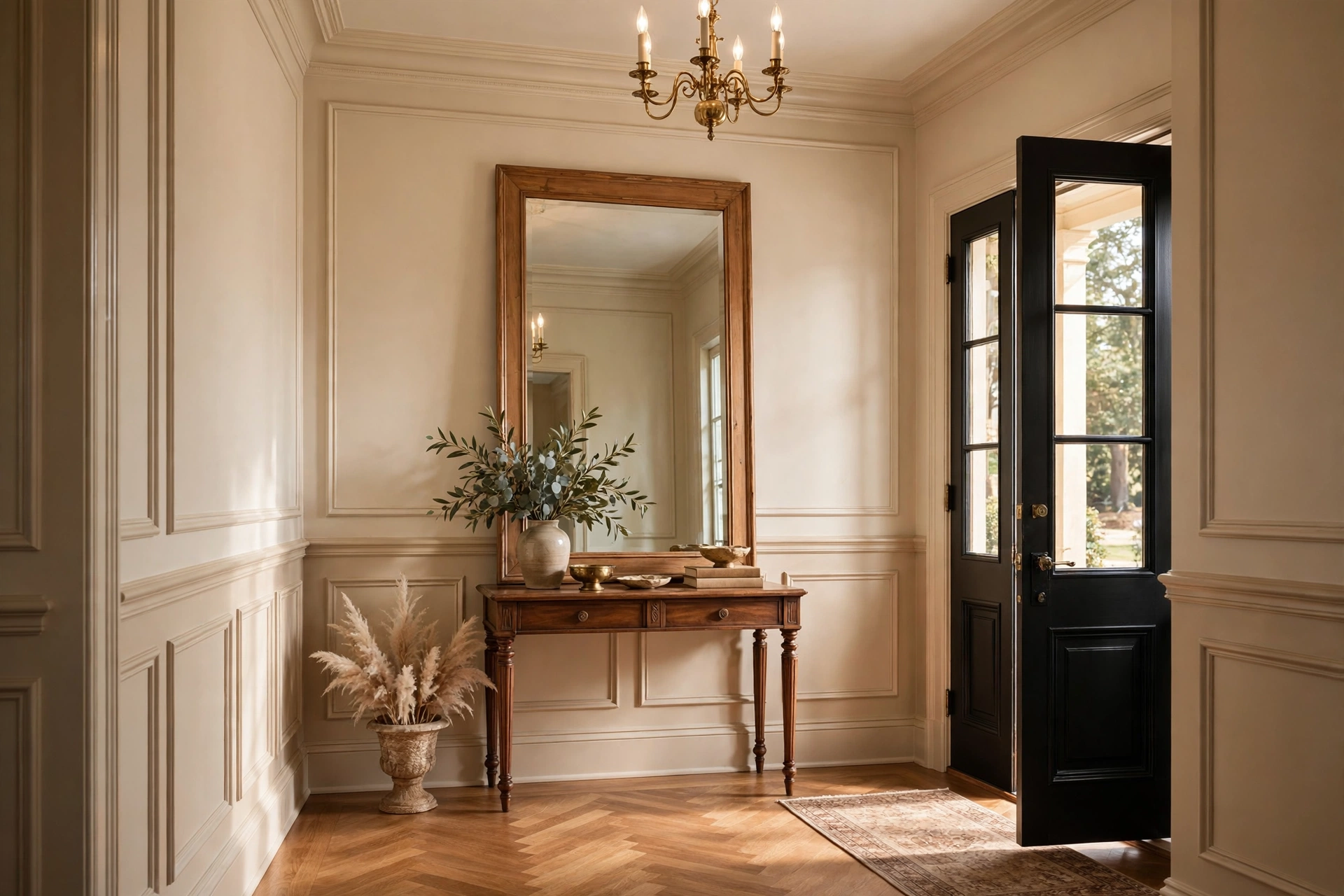
Want the look of raised paneling without the carpentry? Picture-frame molding — rectangular frames applied directly to the drywall — delivers formal, elegant entry walls at a fraction of the cost and depth of true paneling. Size your frames generously: two frames per wall section with about 4 inches of space between them and equal margins around the chair rail and baseboard looks deliberate rather than random.
This treatment shines in grand foyers with double-height ceilings or tall windows, where the molding catches light and shadow all day. Paint everything — frames, wall, and rail — in one sophisticated color like soft taupe or pale gray-blue for a seamless paneled effect, and hang one large mirror or art piece within a central frame above the chair rail for a gallery-worthy vignette.
4. Two-Tone Paint With a Chair Rail
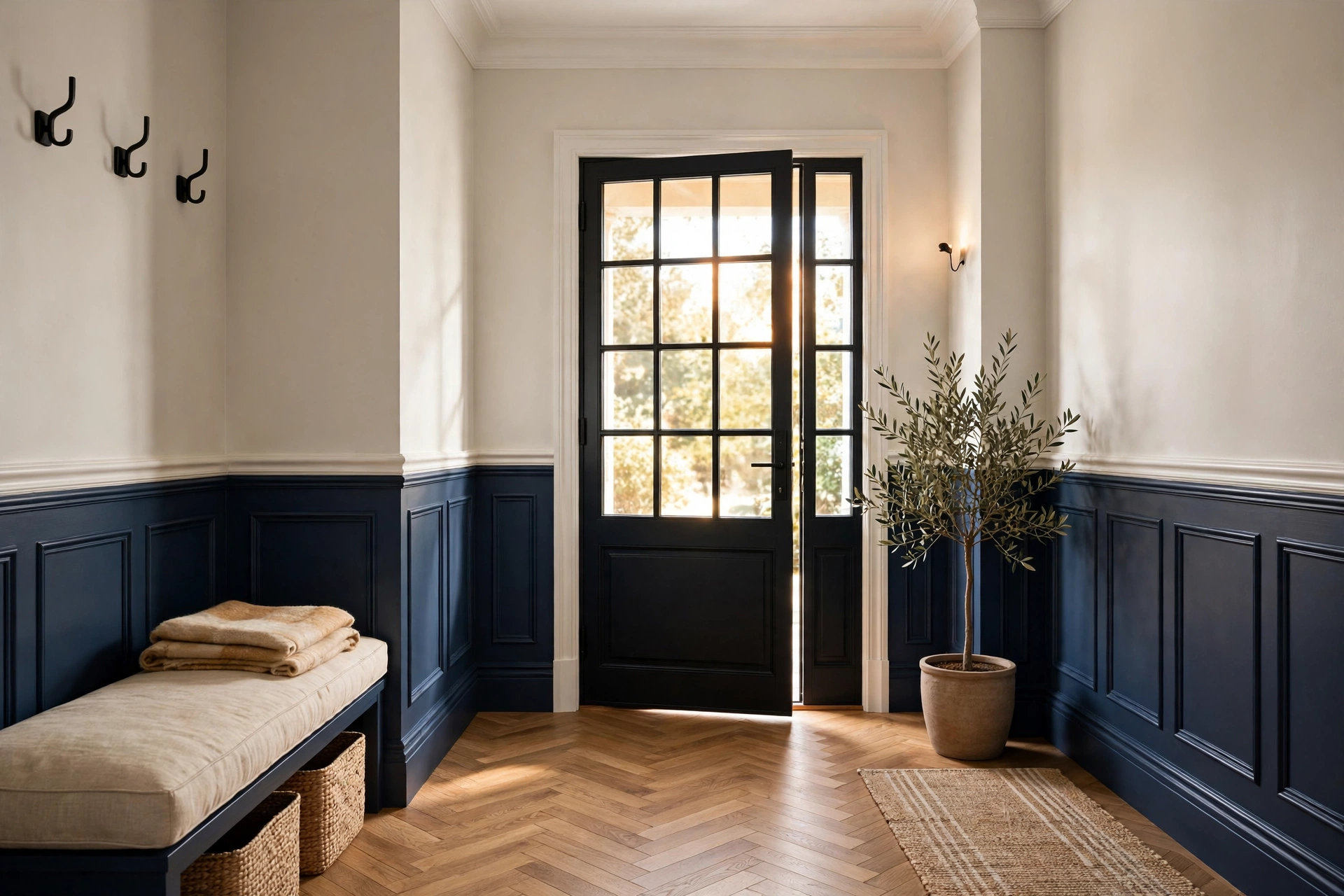
Two-tone entry walls are the easiest wainscoting shortcut of all: a painted lower wall, a crisp chair rail, and a different color above. This entryway wainscoting idea gives you the visual weight of paneling in a single afternoon of painting. Try deep navy or forest green below with warm white above for a classic, tailored foyer, or soft black below and pale oak-white above for modern drama.
Keep the chair rail narrow — a simple 1×3 or a small profile molding — so the color does the talking. This approach is ideal for renters too: paint the lower half a removable color and cap it with lightweight molding attached with adhesive, and you have instant architecture that moves out cleanly when you do.
5. Full-Height Wall Panels for a Grand Foyer
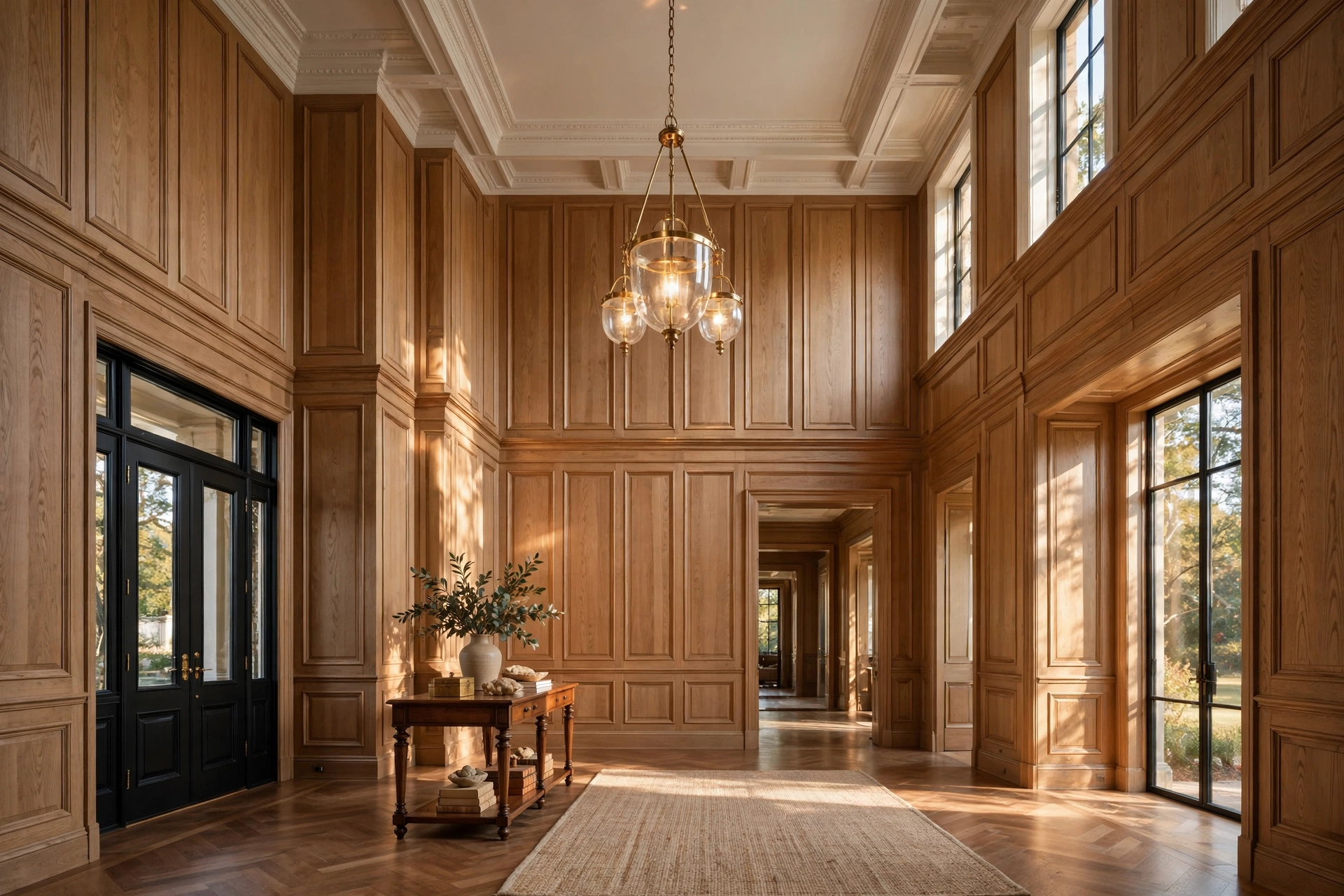
For large or double-height entries, full-height paneling makes the boldest statement of any entryway wainscoting idea on this list. Floor-to-nearly-ceiling panels of board-and-batten or Shaker frames turn the foyer into a wood-paneled jewel box that feels intentional and architectural. Keep the color disciplined — one color throughout, like warm white or a soft greige — so the volume feels calm rather than chaotic.
Scale your panels up with the wall: on 10-foot ceilings, panels 24 to 36 inches wide with 6-inch rails keep the rhythm elegant. This treatment pairs beautifully with a simple bench and a large pendant light, since the walls already carry all the visual interest. Stop the paneling cleanly at the hall opening with a cased corner so the transition feels crafted.
6. Horizontal Shiplap for a Modern Farmhouse Entry
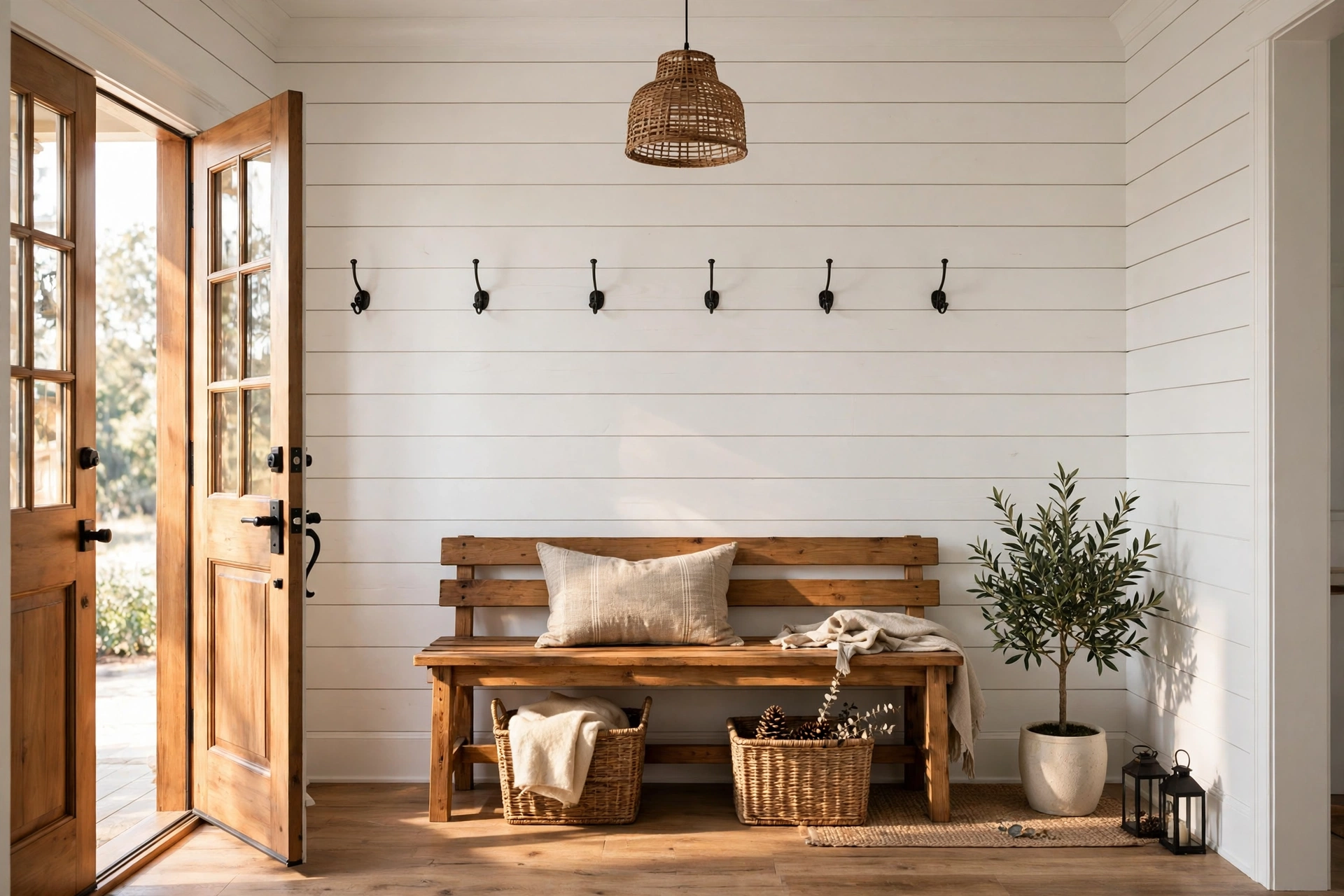
While vertical boards elongate a room, horizontal shiplap makes a small entryway feel wider and more relaxed — perfect for shotgun-style foyers or hall-like entries. Run tongue-and-groove planks horizontally to chair-rail height, cap with a slim rail, and paint in a clean farmhouse white or pale sage. The tiny shadow gaps between boards add texture without visual noise. Narrow hallways and compact entries deserve the same architectural love — our small entryway ideas for a welcoming first impression show how shiplap walls pair with clever layouts to make tight foyers feel generous.
For a subtler take, paint the shiplap the exact same color as the wall above; the texture reads as quiet craftsmanship rather than a style statement. Seal every joint with paintable caulk and use a satin finish so the grooves don’t trap dust and the whole wall stays wipeable against daily entry traffic.
7. Moody Dark Wainscoting for Instant Drama
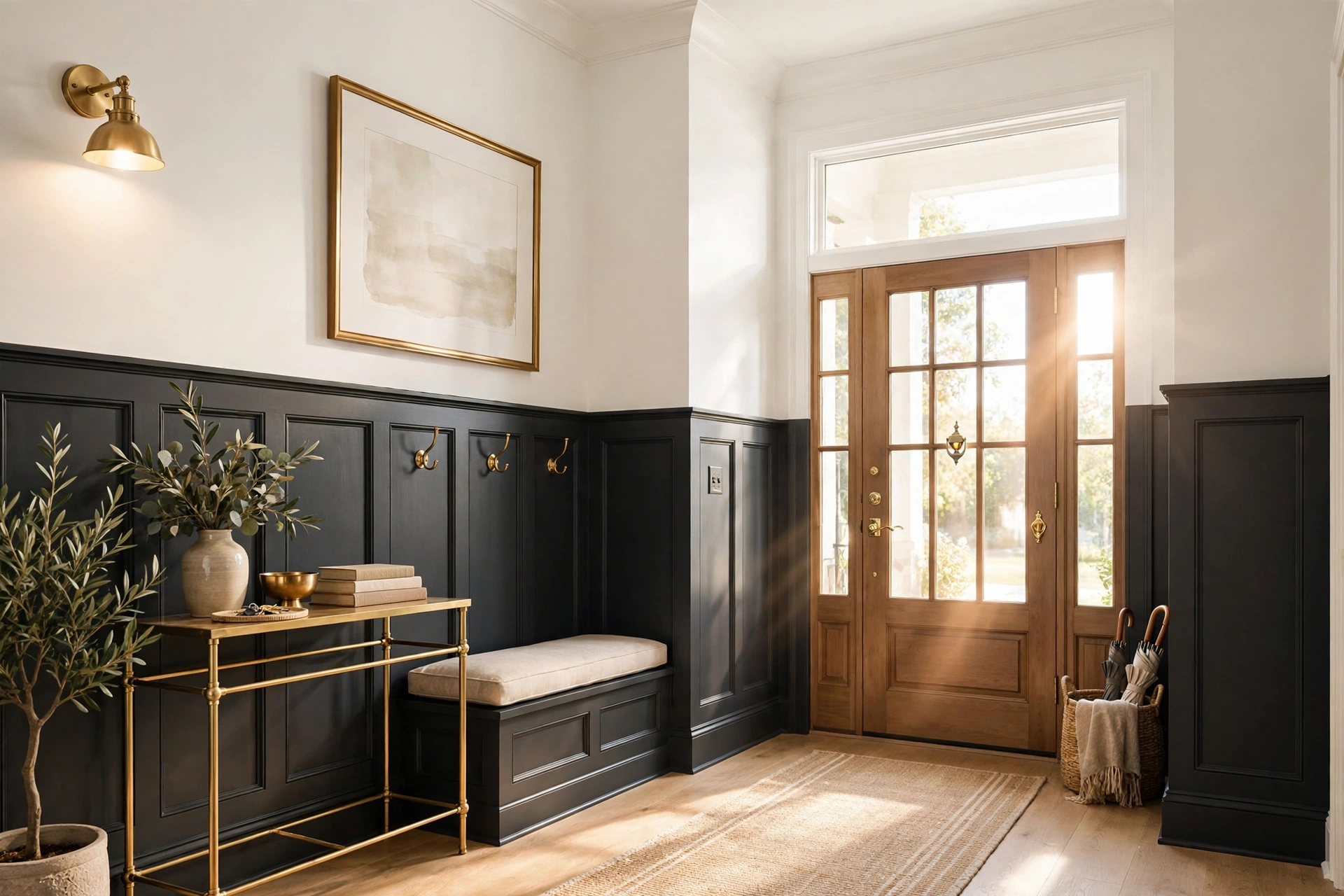
Dark wainscoting — charcoal, ink navy, deep forest, or espresso brown — gives an entry the atmosphere of a boutique hotel lobby. The trick is balance: keep the upper wall light and airy, or the foyer will feel like a cave. A 36-inch band of Benjamin Moore-style hale-navy below with bright white above creates a crisp, tailored contrast that makes light-colored furniture and art pop.
Dark paint shows dust and fingerprints faster than white, so choose a high-quality enamel in satin sheen and keep a touch-up kit handy. This entryway wainscoting idea works especially well in entries that get natural light from a transom window or sidelights, where the dark lower wall grounds all that brightness. Pair it with brass or black metal hardware for a finished, designed feel.
8. White-on-White Shaker Panels for Small Entries
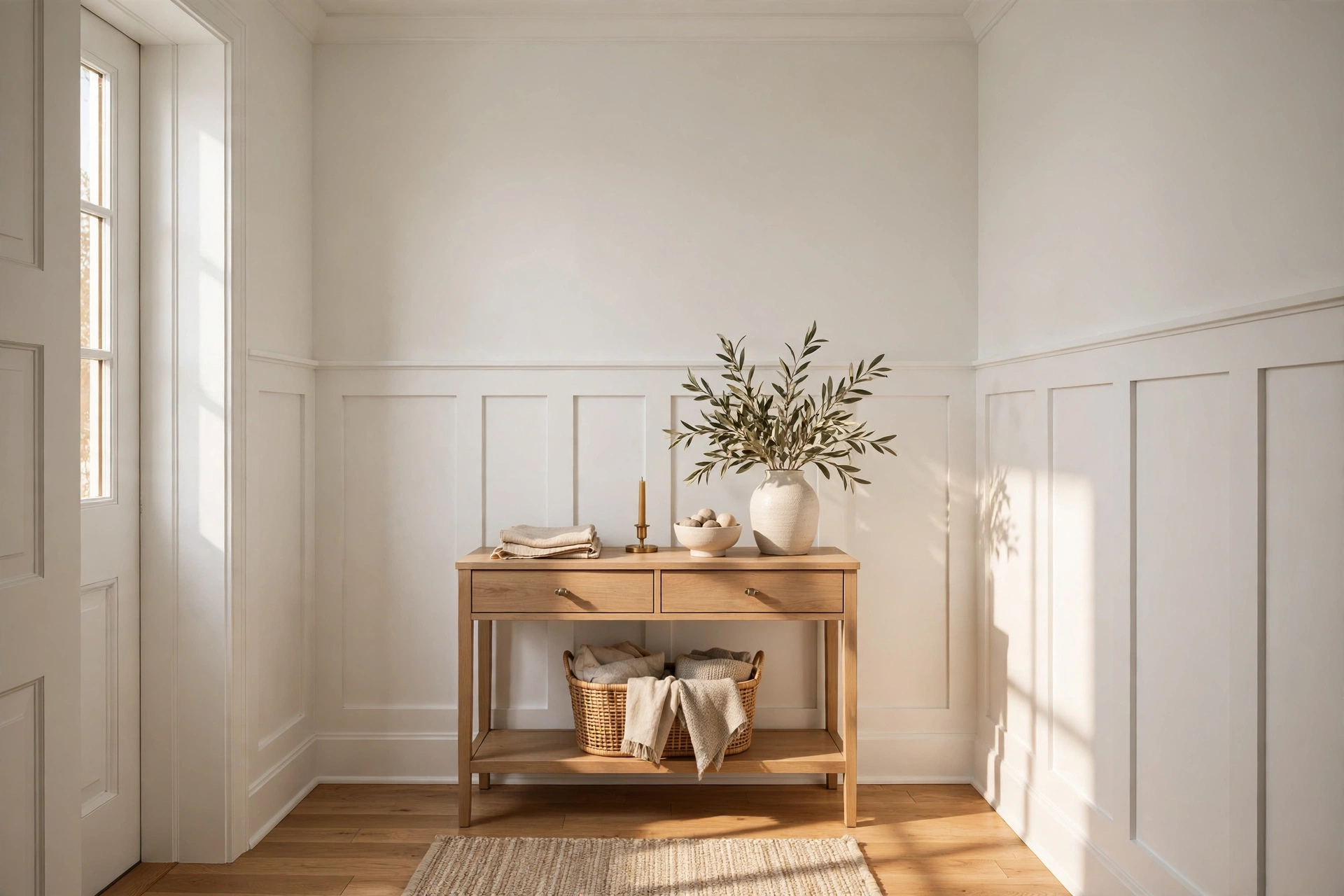
In tight entryways, contrast can chop the room into pieces. White-on-white Shaker-style wainscoting — flat panels with clean recessed edges, all in the same warm white as the trim — adds architecture without visual clutter. The panel frames catch subtle shadows, so the wall has dimension, but the monochrome palette keeps a small foyer feeling open and calm.
Use simple 1×4 rails and stiles glued directly to the wall rather than full panel construction; from two feet away, nobody can tell the difference, and the install is a fraction of the cost. Finish with the same white as your doors and baseboards so everything reads as one custom system. This is the safest choice for resale too — timeless, clean, and universally loved.
9. Wainscot a Built-In Entry Bench and Hook Wall
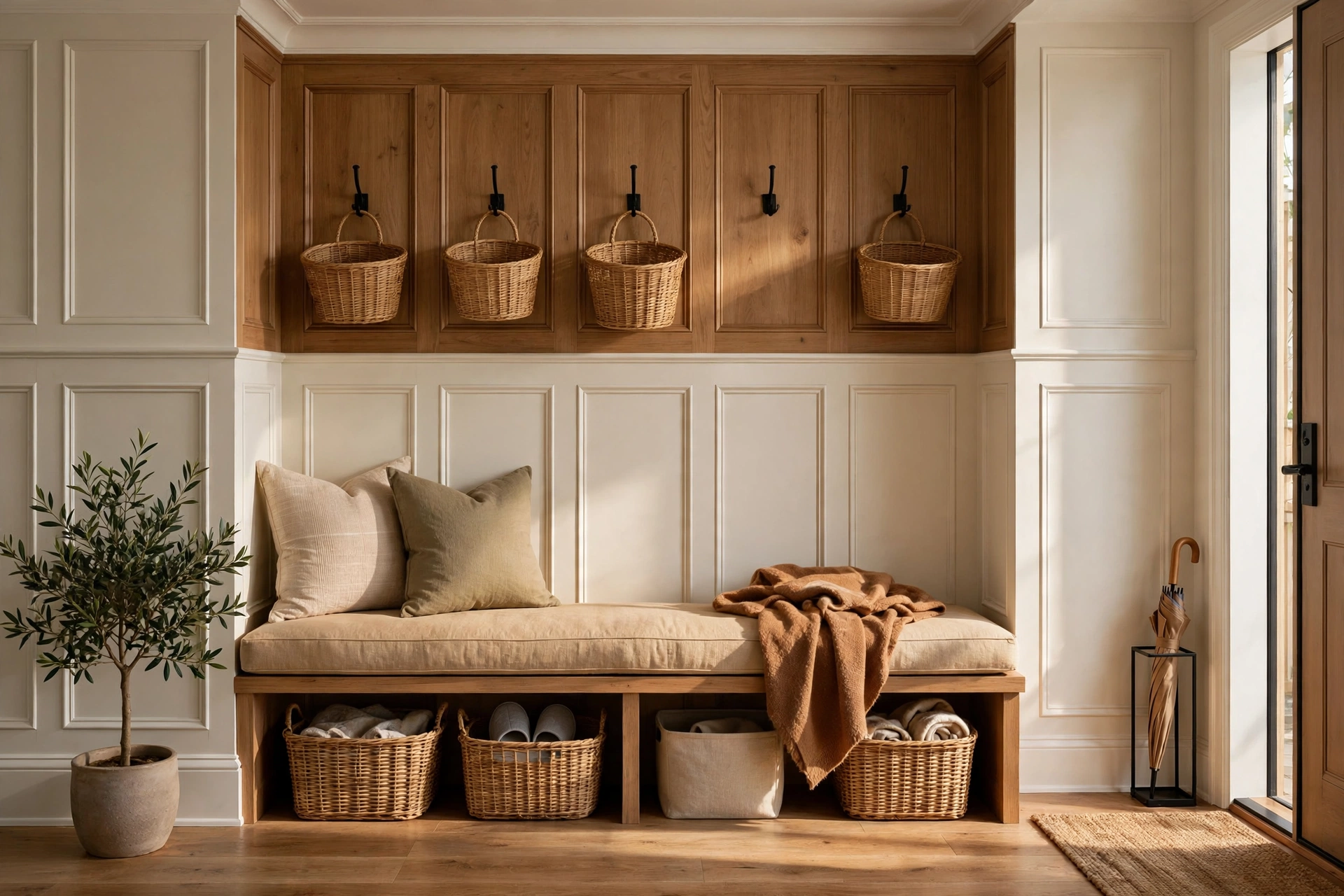
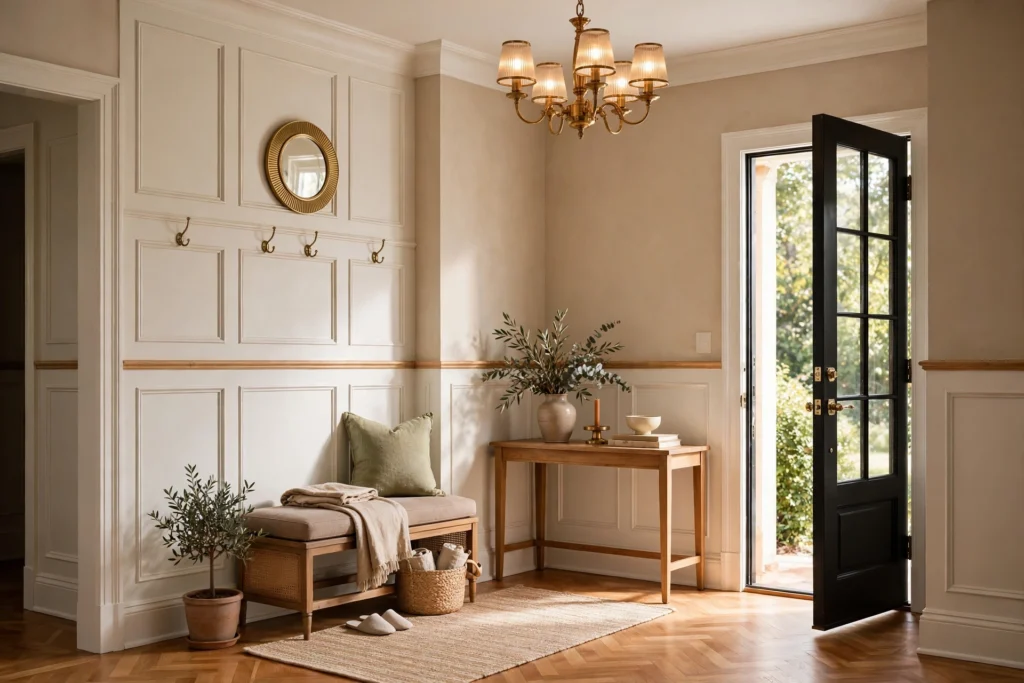
The hardest-working entry walls combine wainscoting with function: run board-and-batten or beadboard behind a wall-mounted bench, coat hooks, or a row of cubbies, and the whole assembly reads as built-in furniture. Extend the wainscoting to full height behind the hook zone so bags and coats land against durable painted wood instead of bare drywall that would dent and scuff within a month.
Match the paint on the bench, hooks board, and wainscoting exactly for a cohesive built-in look, and add a thick butcher-block or painted seat for contrast. Tuck baskets beneath the bench for shoes and keep the hook spacing generous — about 8 inches apart — so the wall never looks crowded. This is the single most practical entryway wainscoting idea for families.
10. Two-Thirds-Height Wainscoting for Tall Walls
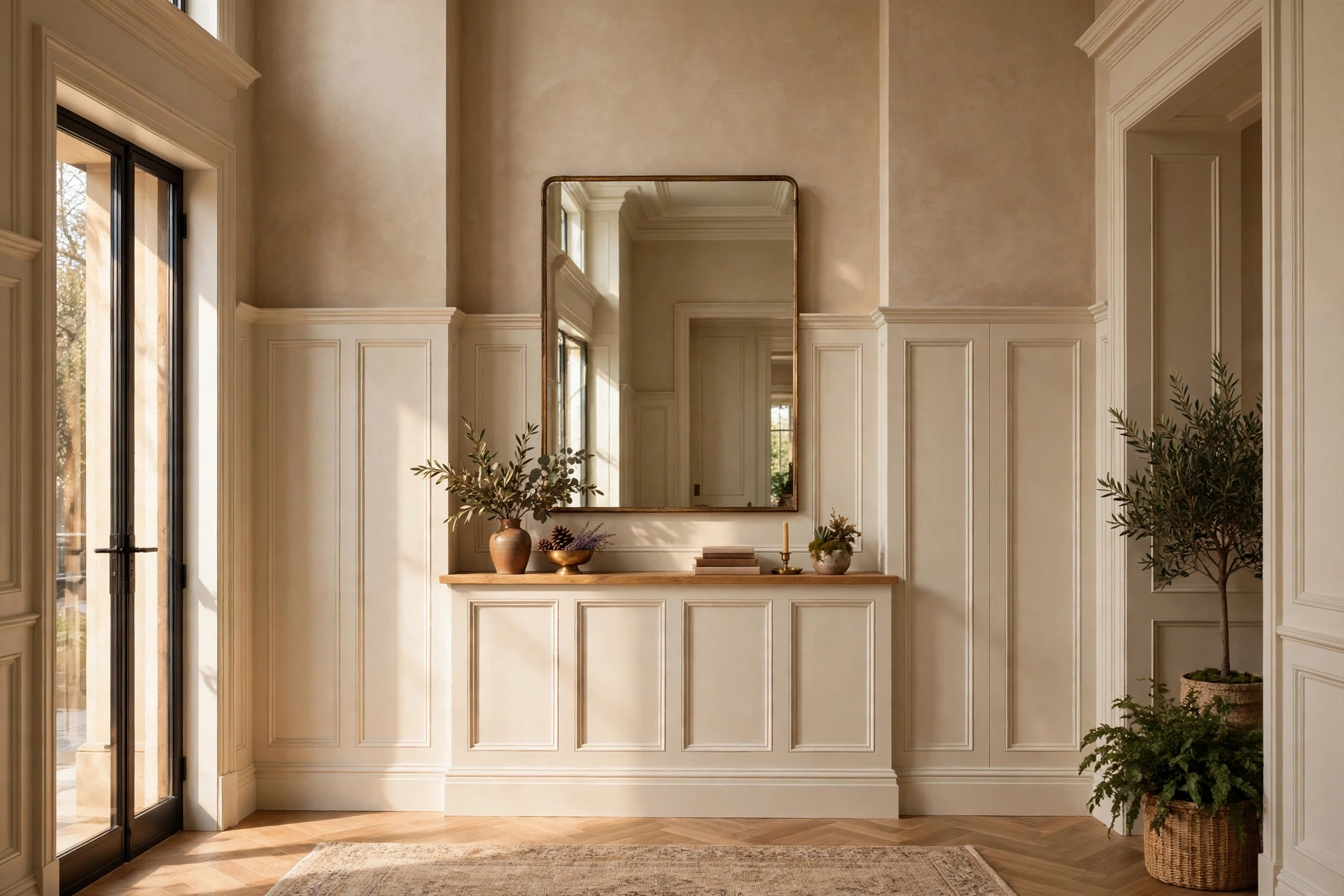
When your entry soars to nine feet or more, standard chair-rail height can look lost. Take the wainscoting to two-thirds of the wall — around 60 to 66 inches on a 9-foot wall — and cap it with a wide, detailed rail that can double as a slim display ledge for small art and photos. The taller band gives grand foyers the proportion they need and creates a natural zone for hanging a mirror or art above. Guides from experienced carpenters like Redfin’s expert-backed wainscoting guide note that three-quarter-height treatments draw the eye and add visual structure in halls and entries.
Paint the tall panels a soft mid-tone — dusty blue, warm sage, or classic gray — and keep the upper wall bright so the room stays balanced. Run the same treatment up the stair wall if your foyer flows into a staircase; the continuous line unifies the whole entry sequence and hides stair-wall scuffs beautifully.
11. Raised-Panel Wainscoting for Colonial Charm
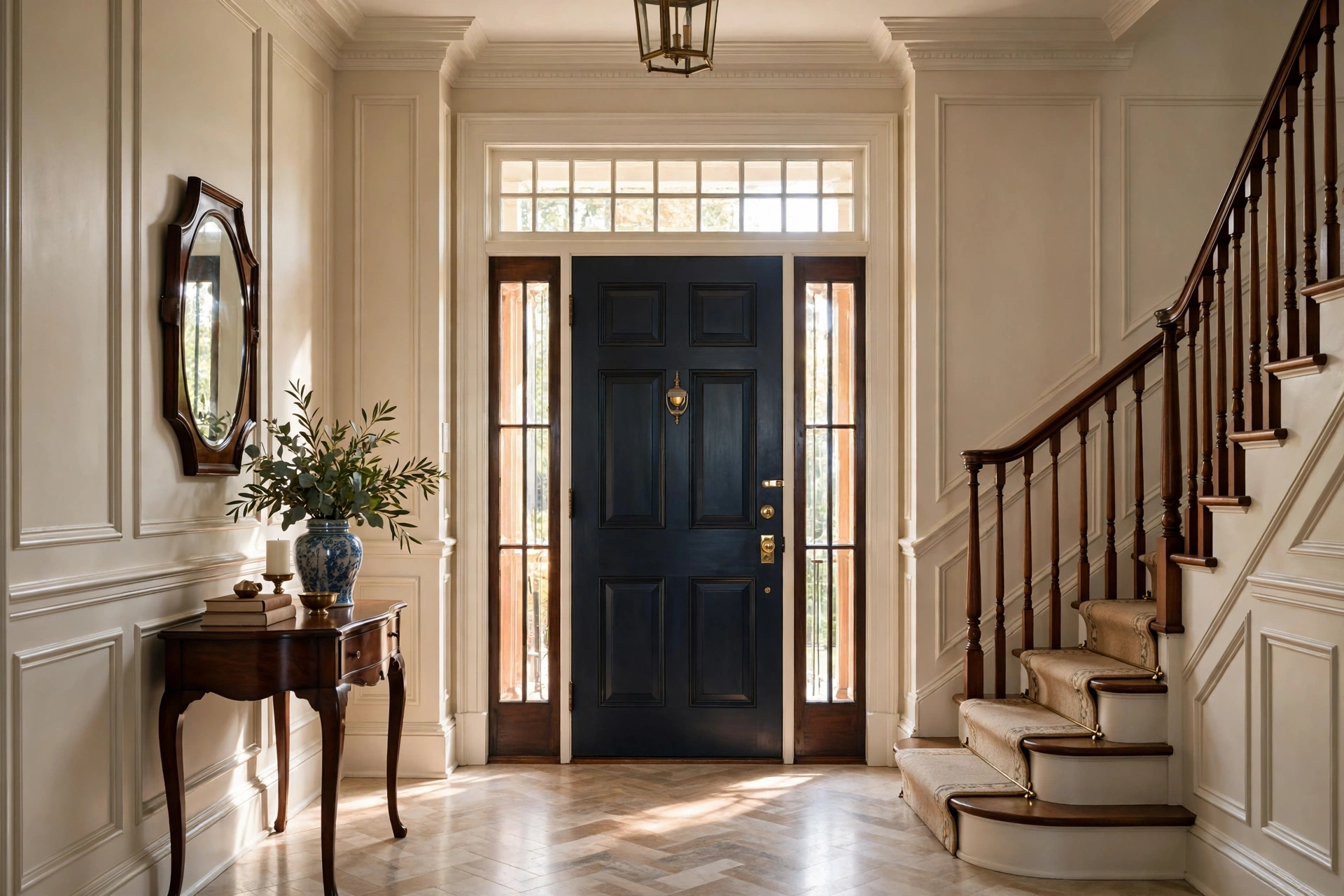
Raised-panel wainscoting, with its beveled center panels framed by stiles and rails, is the most traditional of all entryway wainscoting ideas — and in a colonial, Georgian, or classic home, it is simply the right answer. The beveled panels catch light across the foyer all day, giving the entry a crafted, heirloom quality that flat treatments can’t match. Keep the design restrained: two panels per wall section, modest panel moldings, and a simple baseboard below.
Use a heritage paint color — deep cream, soft putty, or a classic colonial blue — in a durable satin enamel. Raised-panel installation takes more skill than board-and-batten, since the bevels must sit perfectly square, so this is the treatment where hiring a finish carpenter often pays off in the final look. The result anchors the entry with old-house character that never dates.
12. Geometric Batten Patterns for a Modern Edge
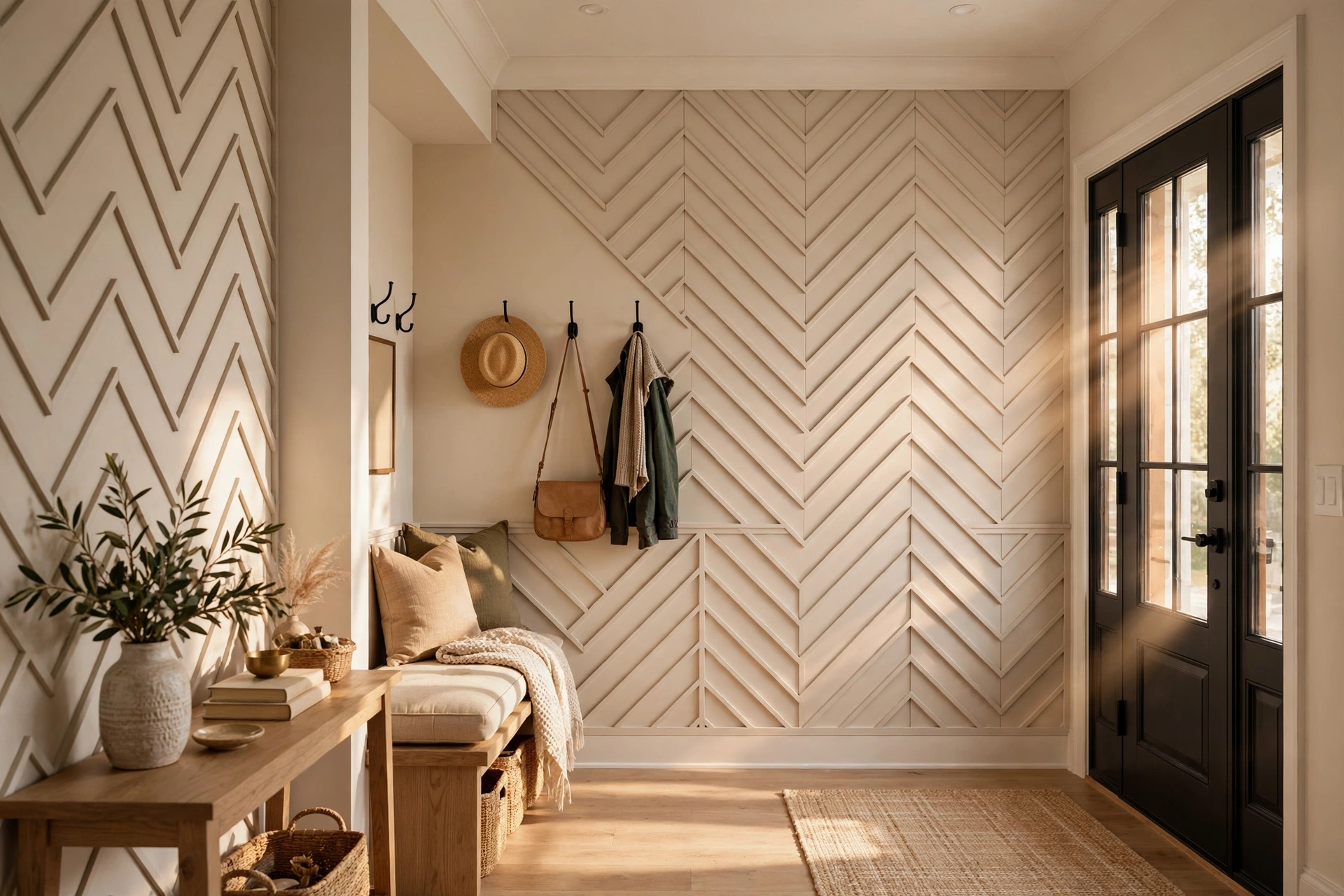
Wainscoting doesn’t have to be vertical lines. Diagonal, chevron, or crisscrossed battens applied over a flat painted wall create a modern, almost Art-Deco geometry that turns an entry into a design statement. Paint the battens and the wall one monochrome color — soft white, pale gray, or even matte black — so the pattern reads through shadow and texture rather than color contrast.
Keep the geometry simple and symmetrical: mirror-image chevrons centered on the main foyer wall look intentional, while random diagonals can read as busy. This entryway wainscoting idea suits modern and Scandinavian homes best, and it pairs beautifully with minimal furniture — a floating bench, one pendant light, and a single piece of large-scale art is all the room needs.
13. Black Battens on a White Wall
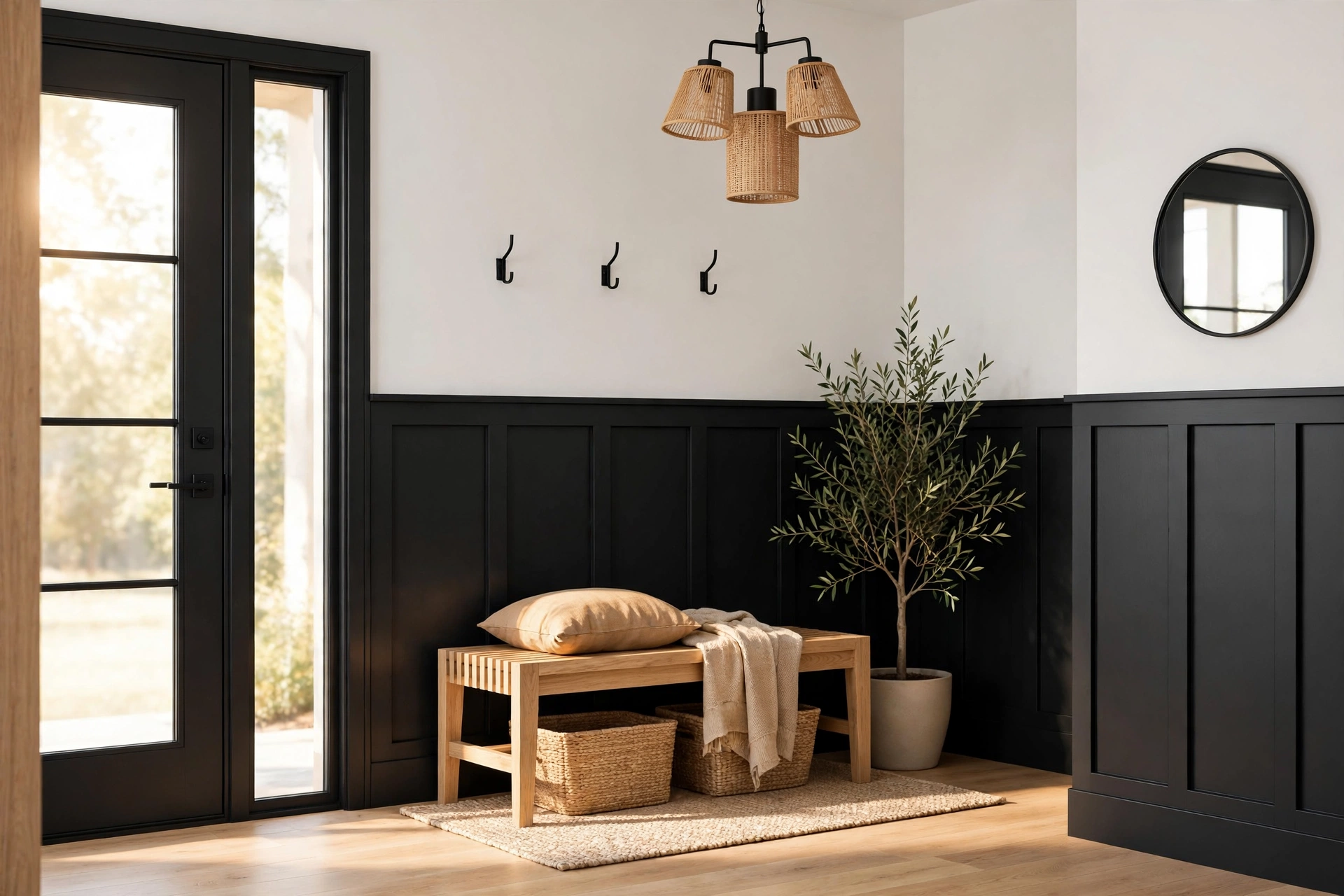
For high contrast without dark paint everywhere, try white walls with bold black or charcoal battens and rails. This crisp graphic look gives an entry the energy of modern farmhouse or industrial style while keeping the space bright. The battens read like linework on a sketch — clean, deliberate, and surprisingly easy to keep looking fresh, since dark trim hides the scuffs that show on white baseboards.
Use flat 1×3 battens with tight, clean joints and a good-quality black enamel in satin; any imperfection in the paint will show at this contrast level. Keep the entry furniture simple and pale — a light oak bench, cream runner, brushed brass mirror — so the wall treatment stays the star. One accent wall of this treatment is enough; wrap the adjoining hall in plain white to avoid pattern overload.
14. Wainscot Around the Door and Closet Wall
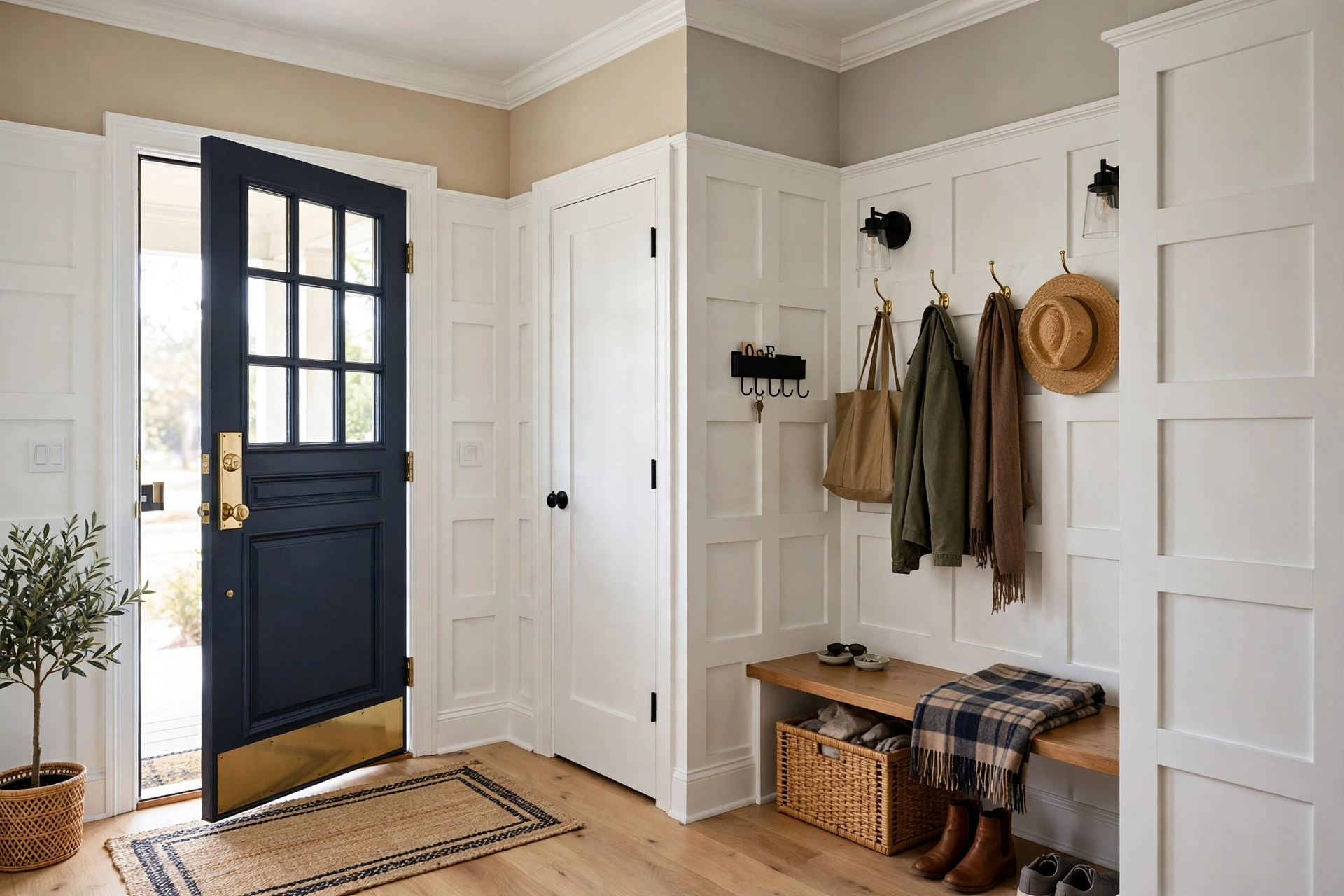
The most polished entries treat the front door and coat closet as part of the wainscoting composition, not obstacles to work around. Run your panels and chair rail continuously across the closet doors — framing them with trim so they read as tall panels — and wrap the treatment right up to the front door casing. The unbroken line makes the whole foyer feel custom-built rather than decorated wall by wall.
Center your panel layout on the front door so the entry composition is perfectly symmetrical when guests walk in; this is the money shot of the whole design. Choose a warm mid-tone paint — greige, warm taupe, or dusty green — that complements your door color, and carry the same baseboard profile through the adjoining hall so the whole ground floor flows together.
15. Carry Wainscoting Into the Adjoining Hallway
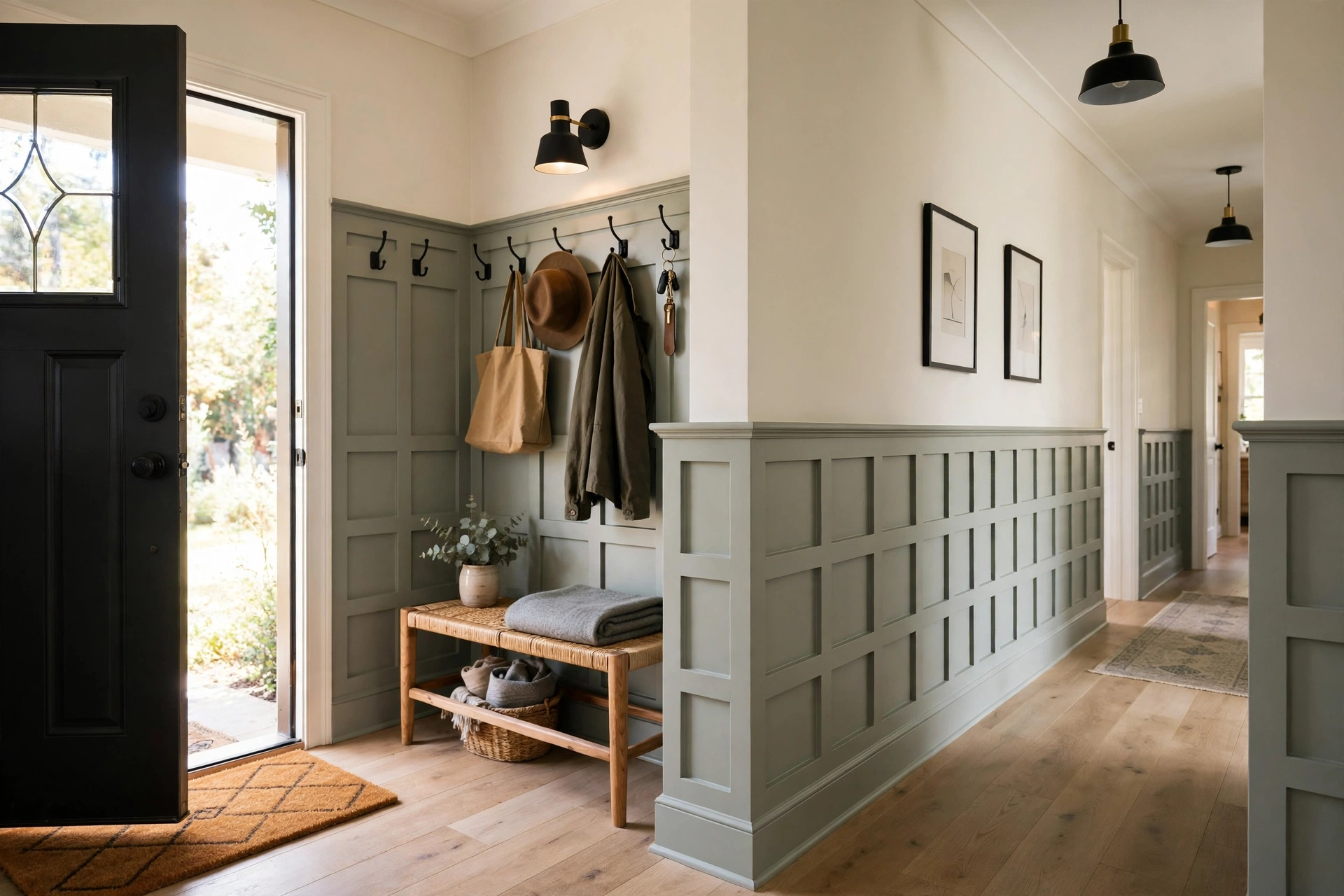
The smartest entryway wainscoting ideas don’t stop at the foyer. Extend the same wainscot style, height, and color down the hallway that feeds off your entry, and the two spaces merge into one elegant sequence. Halls are high-traffic walls that take constant abuse from shoes, bags, and kids, so the durable lower panels pay for themselves while making the narrow passage feel intentional instead of leftover.
Keep the rhythm consistent: the same batten spacing, the same rail height, the same paint. If the hall is long and dark, go a shade lighter than the foyer treatment to keep it bright; if it is short, match exactly. Add a simple runner rug and a couple of picture lights, and the once-forgotten hall becomes a gallery that extends your first impression all the way through the house.
FAQ
How high should wainscoting be in an entryway?
On standard 8-foot ceilings, 32 to 42 inches — roughly one-third to two-fifths of the wall — looks balanced. For 9-foot and taller entries, 54 to 66 inches (about two-thirds height) keeps the proportions right. Always center your panel layout around the front door so the composition is symmetrical where guests enter.
What is the cheapest wainscoting style for a foyer?
Picture-frame molding applied directly to drywall is the cheapest route, since it uses only trim pieces and no full panels. Painted board-and-batten in MDF is a close second and very DIY-friendly. Both deliver a high-end look for mostly the cost of trim, paint, and a weekend.
Should wainscoting in the entryway match the rest of the house?
The style and rail height should stay consistent for flow, especially in halls that connect to the foyer. But the color can shift slightly — a deeper tone in the entry and a lighter one in the hall, for example — as long as the profiles match so the whole ground floor feels unified.
What paint finish is best for entryway wainscoting?
Satin or semi-gloss enamel. Entry walls take daily hits from shoes, bags, keys, and coat hooks, and these sheens wipe clean and resist scuffing far better than flat or eggshell paint. Use the same quality enamel on the chair rail and baseboards for consistent durability.
Can I install entryway wainscoting myself?
Yes — board-and-batten, beadboard panels, and picture-frame molding are all beginner-friendly weekend projects requiring only basic tools like a miter saw, level, nail gun, and caulk. Raised-panel and full-height treatments demand more precision, so consider a finish carpenter for those. Start your layout from the center of the main wall to keep panels symmetrical.
Keep Exploring
An elegant entryway is built in layers — wainscoting gives you the architecture, and the right console table, mirror, and glow on top make it unforgettable. If you loved the wall treatments above, our entryway lighting ideas for a warm welcoming glow show how sconces, pendants, and layered light make paneled walls shine after dark. Pick the style that fits your home, take your time with the layout, and enjoy the first impression it makes every single day.