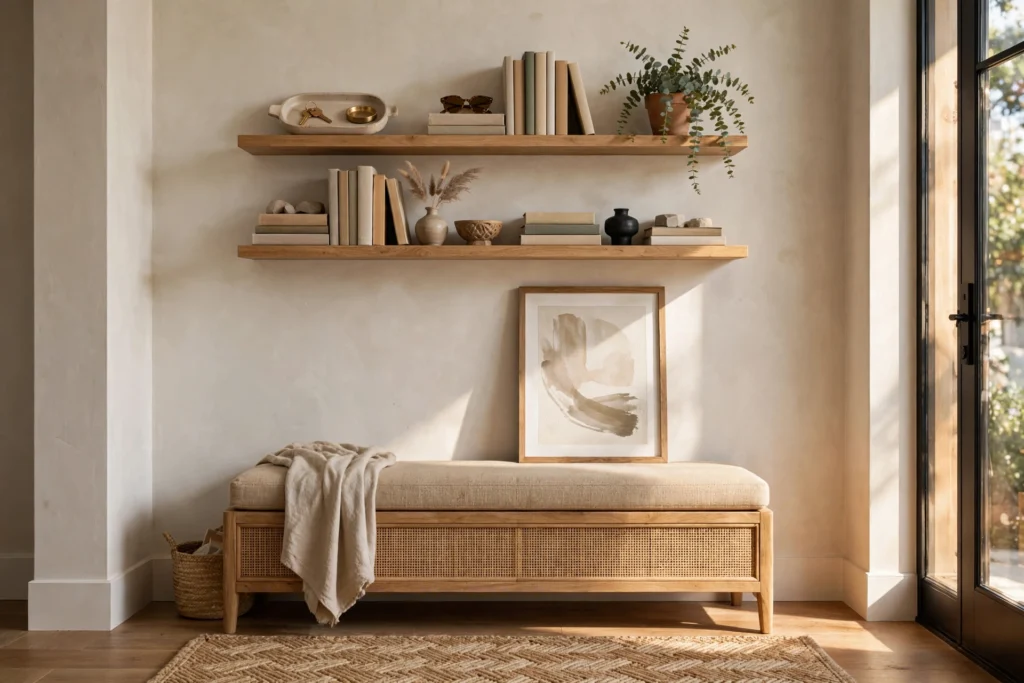

Your entryway is the first thing you see when you walk in and the last thing you touch before you leave, so the shelves there have to pull double duty: look beautiful and work hard. These entryway shelf decor ideas show you how to style floating shelves, wall shelves, and ledge shelves with books, baskets, plants, art, and catch-alls — all while keeping keys, mail, and daily essentials easy to grab. For the walls around your shelves, these entryway wall decor ideas for a warm personal entry pair perfectly with everything below.
The secret to a shelf that works is zoning: give every item a job before you give it a place. One zone for grab-and-go essentials like keys and wallets, one for pretty-but-useful storage like baskets and boxes, and one for pure decor — art, greenery, and objects that make you smile when you come home. Keep the everyday zone at arm’s reach (around chest height), put decor where your eye lands first, and leave breathing room between groupings so nothing feels crowded.
1. Mount Your Main Shelf at Grab-and-Go Height
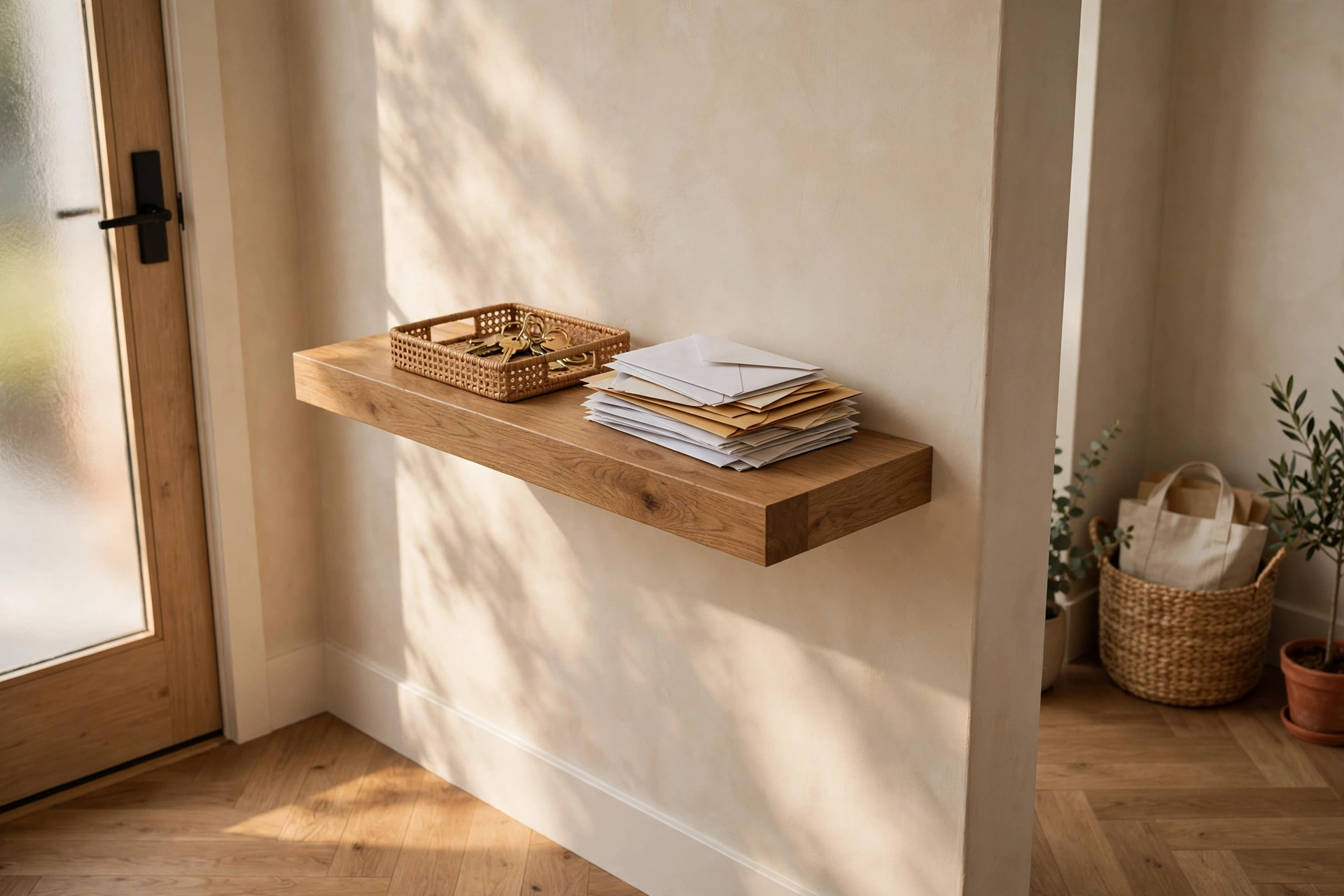
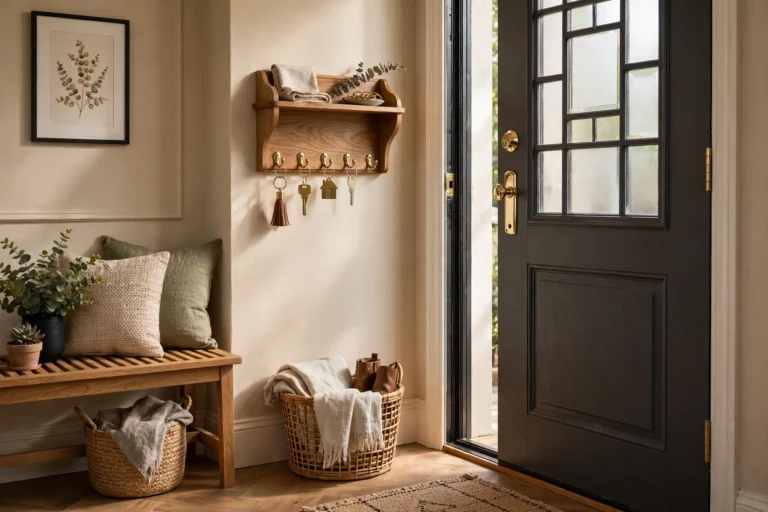
The most useful shelf in any entryway sits between 42 and 48 inches from the floor — right around chest height, where you can drop keys and mail without looking down. Measure from your own shoulder to elbow and mount there; if the shelf goes higher, you will stop using it for essentials and it becomes pure decor, which wastes its best function. A single floating shelf with a clean, chunky profile looks intentional here, and a depth of 8 to 10 inches gives enough room for a catch-all tray plus a small stack of mail without items sliding off. Anchor it into studs (or use heavy-duty toggle bolts) because this shelf will carry daily weight, unlike a decorative ledge.
2. Start With a Catch-All Tray for Keys and Small Essentials
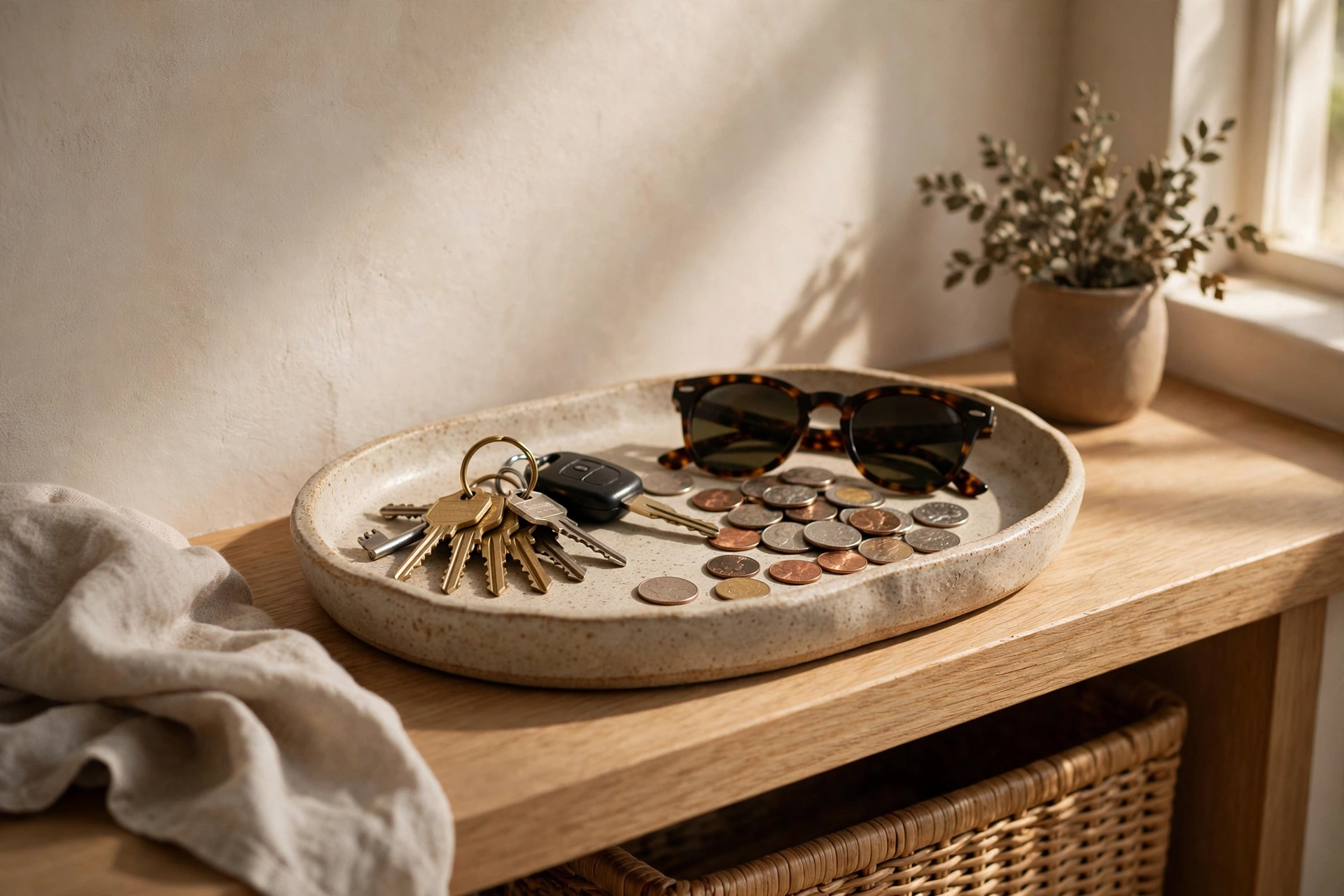
Every styled entryway shelf needs one dedicated landing spot for the small stuff — keys, sunglasses, spare change, earbuds. A shallow tray, a small lidded bowl, or a ceramic catch-all dish keeps these items contained so they never scatter across the shelf. Choose one with a lip or raised edge at least an inch high so keys do not slide off when you toss them in a hurry. Position the tray at the front edge of the shelf where your hand naturally lands, and keep it as the single “drop zone” — if everything small has exactly one home, the whole shelf stays tidy with zero effort. Materials like hammered brass, woven seagrass, or matte ceramic all look good and hide daily wear.
3. Stack Books to Create a Solid Base Layer
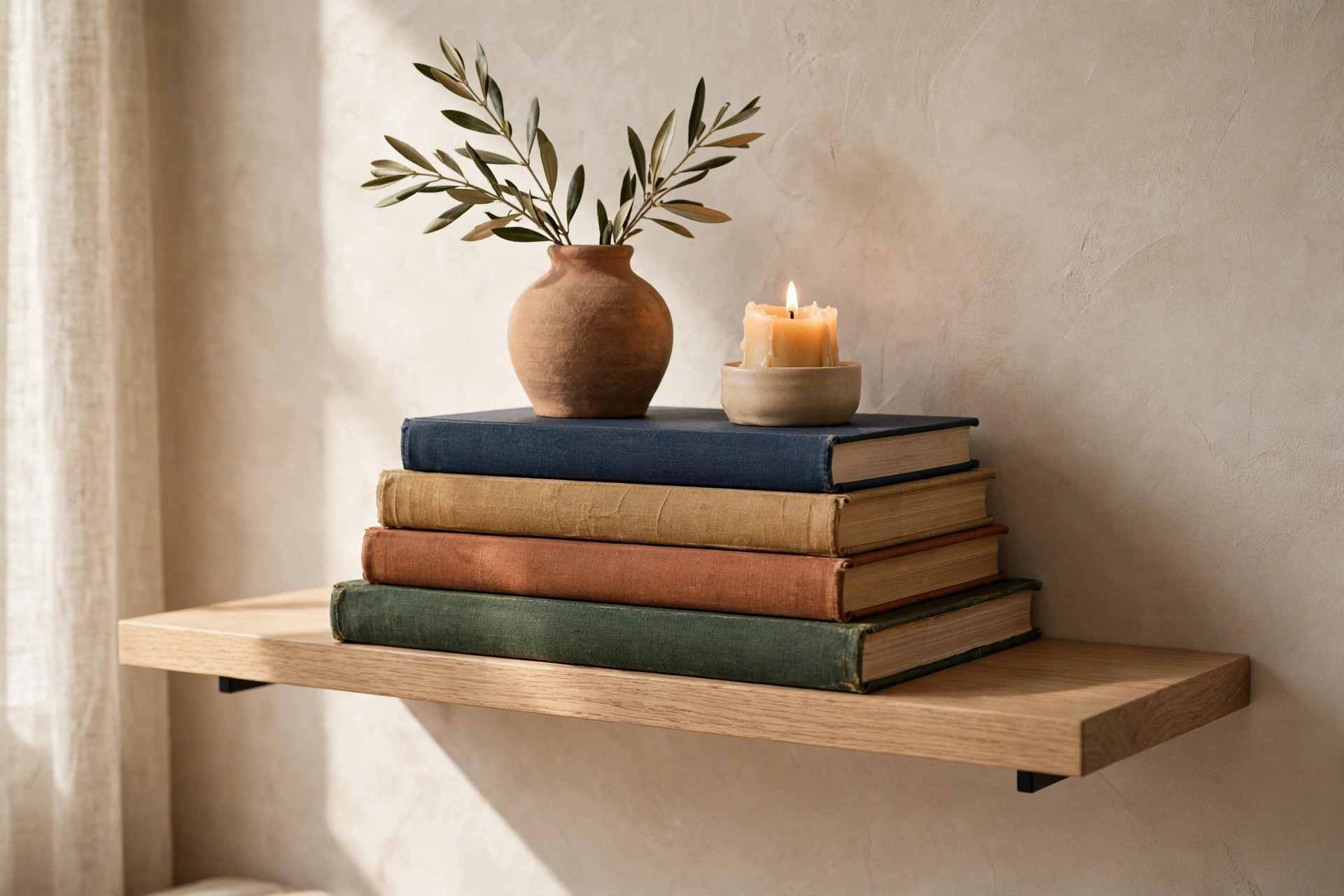
Books are the unsung heroes of shelf styling because they add height, structure, and personality in one move. Stack two to four books horizontally to create a pedestal for a small object — a candle, a bud vase, or a favorite figurine gets an instant lift and looks far more deliberate sitting on a stack than alone. On an entryway shelf, keep the books relevant and hardy: a local photography book, a design annual, or a sturdy hardcover travel guide rather than flimsy paperbacks that buckle under weight. Vary the stack heights across the shelf so one end feels taller than the other, which creates the visual rhythm that makes arrangements look professionally styled instead of lined up like a row of soldiers.
4. Add Baskets to Hide the Unpretty Stuff
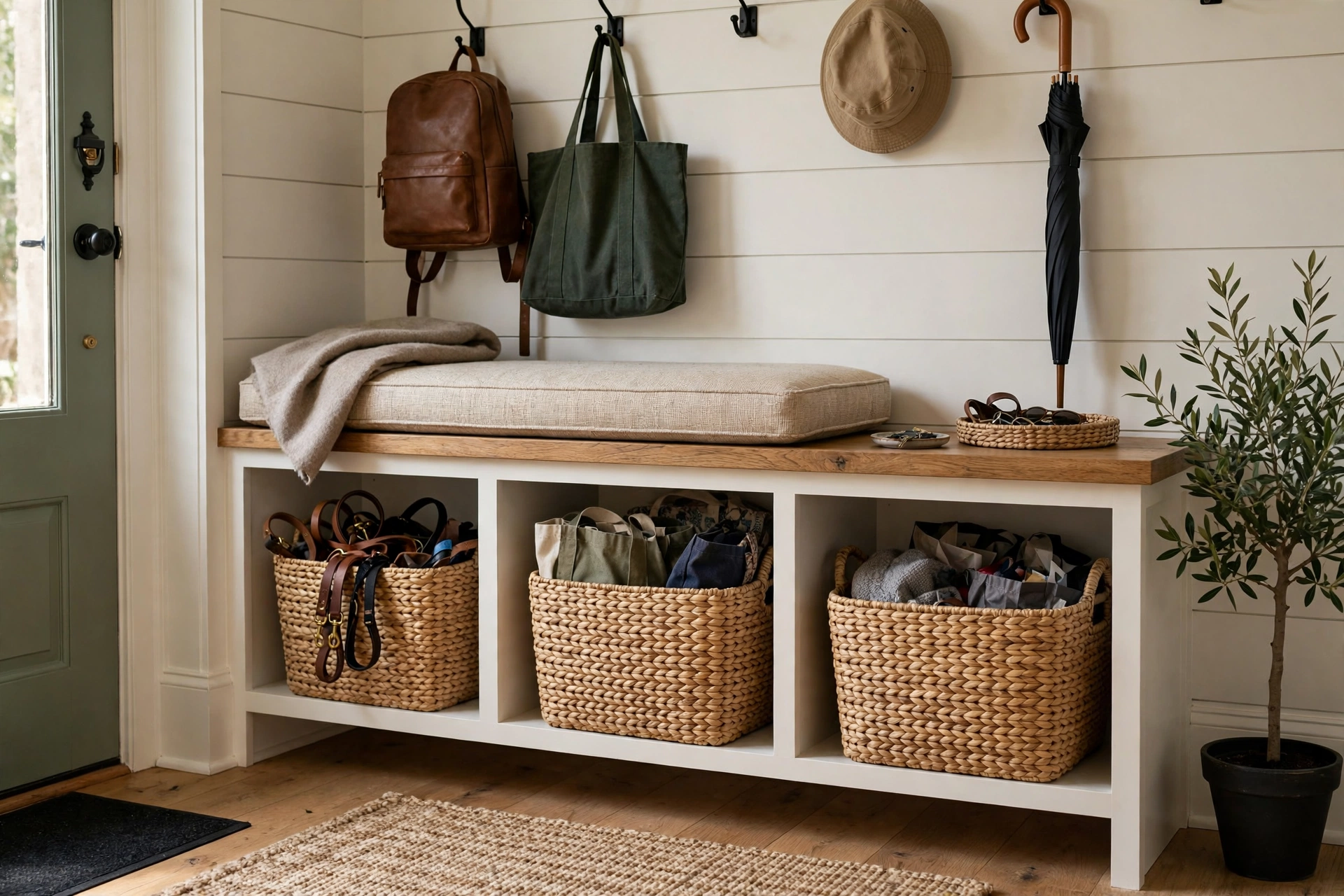
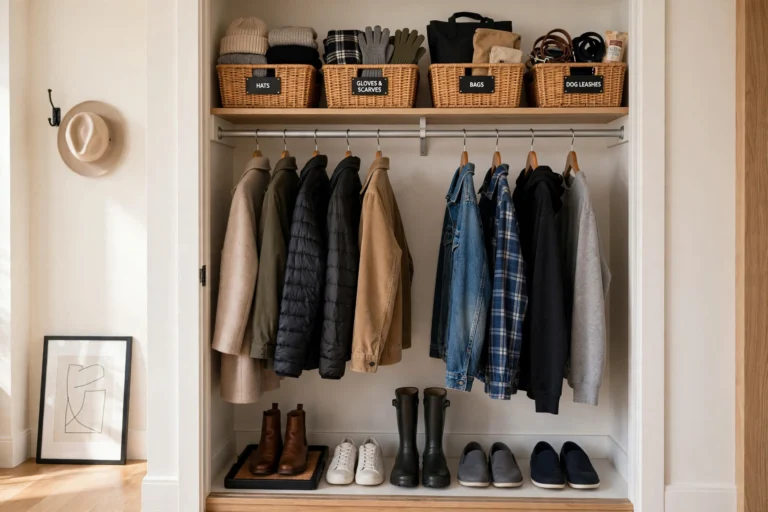
An entryway collects clutter that does not deserve to be seen — dog leashes, reusable bags, charger cables, spare masks. That is where baskets earn their place on a shelf: one or two woven baskets in natural rattan, seagrass, or felt swallow the messy stuff while adding texture and warmth. Pick baskets with handles so you can pull them down easily, and keep them on the lowest shelf or the far end of a long shelf so their bulk anchors the arrangement. The trick is proportion: a basket should take up roughly a third of the shelf width, never half, or it turns from a storage accent into the entire shelf. Label-free is fine for an entryway — if you can see into the basket from above, that is your signal it needs a lid or needs to sit higher.
5. Hang a Trailing Plant Over the Shelf Edge
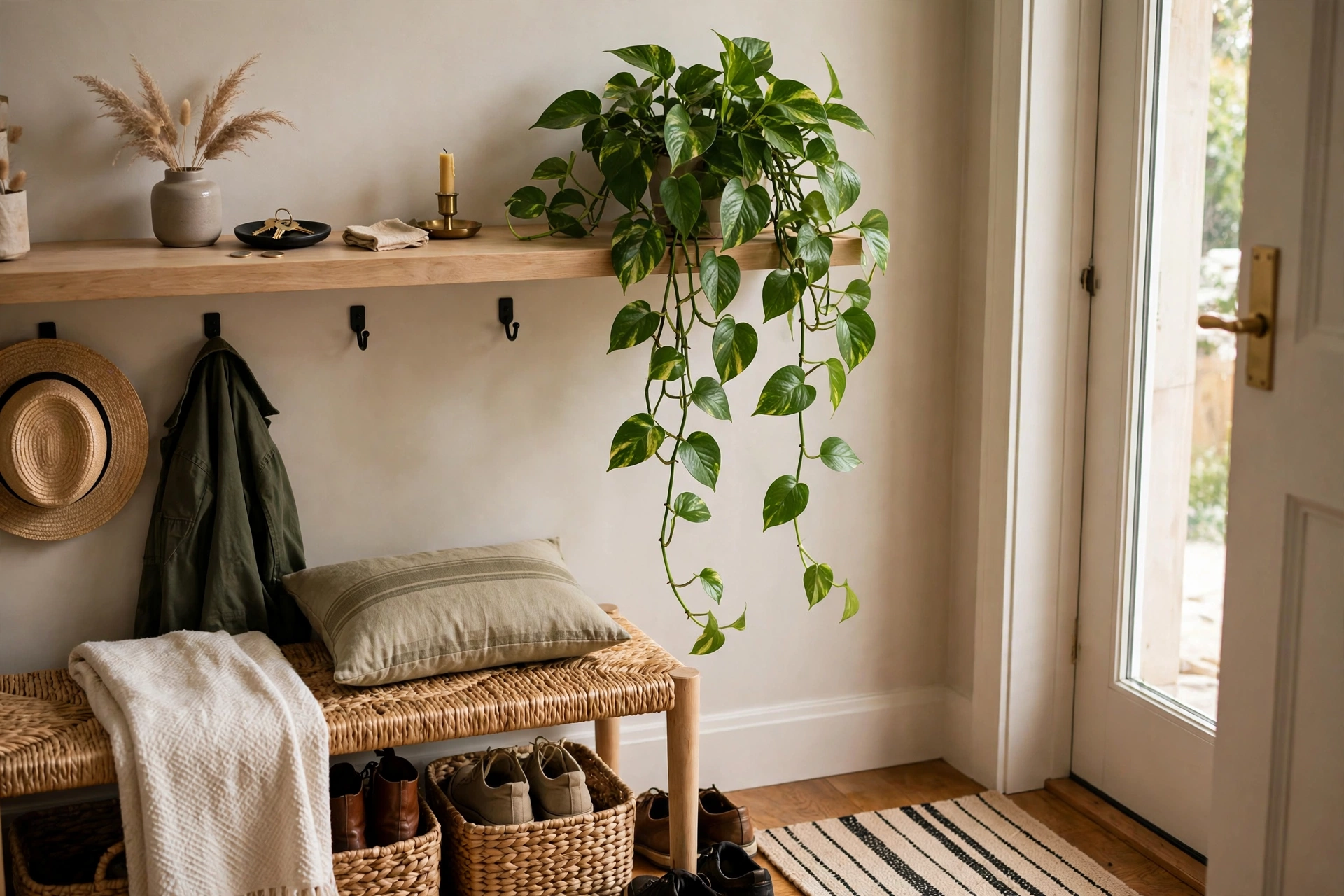
Nothing softens a shelf faster than a plant spilling over its edge. Pothos, philodendron, and string of pearls are ideal entryway plants because they tolerate the lower light of a foyer and forgive the occasional missed watering. Set the pot on the top shelf or the highest floating shelf, about 6 to 8 inches from the end, so the trailing vines cascade down without blocking items below. A single trailing plant creates a natural “frame” for whatever sits on the shelf, and the greenery adds life to a spot that often feels like a pass-through rather than a room. Use a simple pot in a neutral finish — terracotta, matte white, or black — so the plant, not the container, does the talking.
6. Lean Art Against the Wall Instead of Hanging It
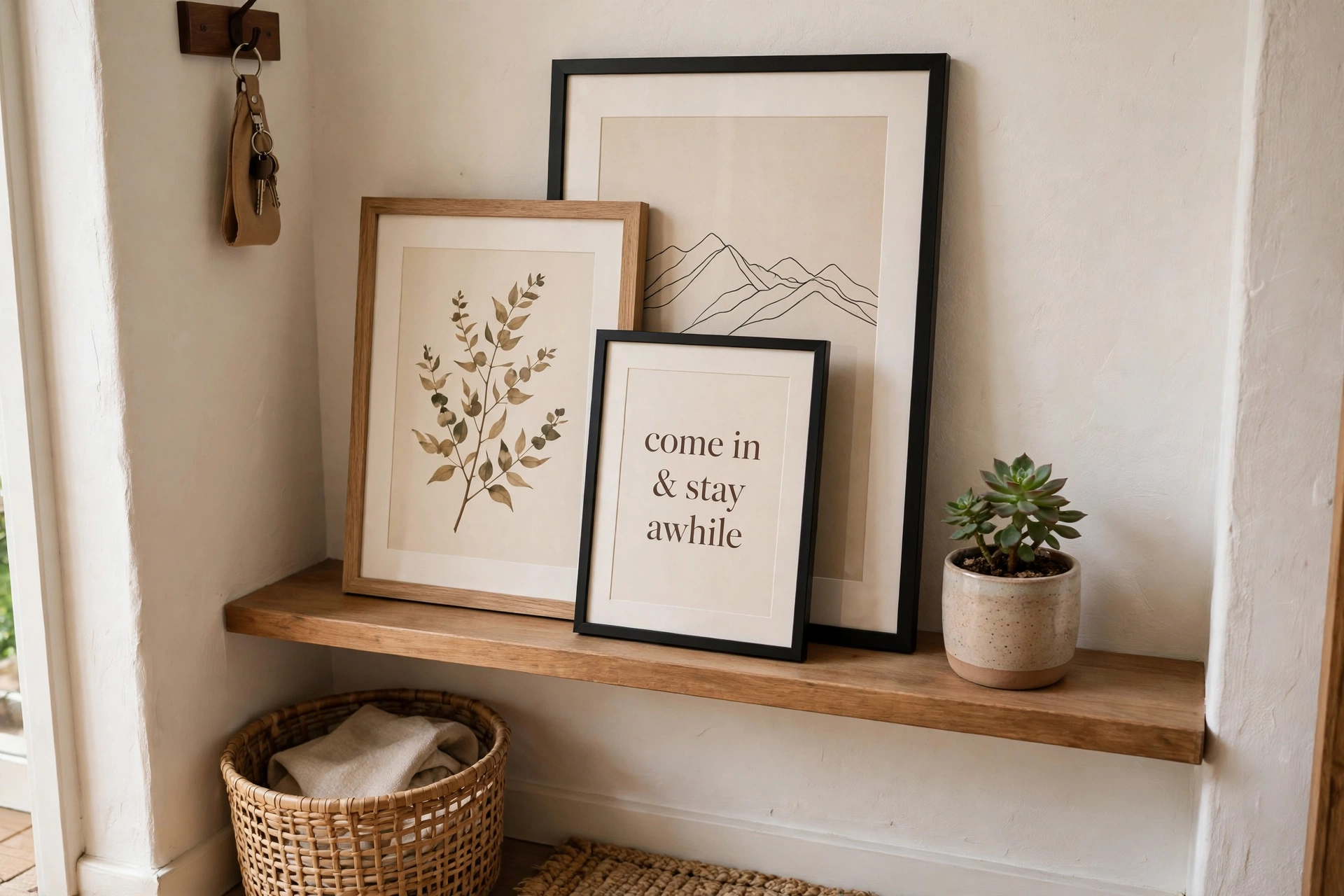
Leaning framed art or photos against the wall on a shelf is easier, more flexible, and often more stylish than hanging anything. Place the largest frame at the back, leaning it at a slight angle with its base about an inch from the wall, then layer a smaller frame in front of it at a different height. For entryways, family photos, travel prints, or a single abstract piece in warm tones make the space feel personal the moment you walk in. Frames with a depth of at least an inch stand upright on their own; thinner ones need a small plate easel or a strip of museum putty on the base. The beauty of leaning is that you can swap art seasonally in seconds — no patching holes, no remeasuring.
7. Mix Tall, Medium, and Short Objects for Rhythm
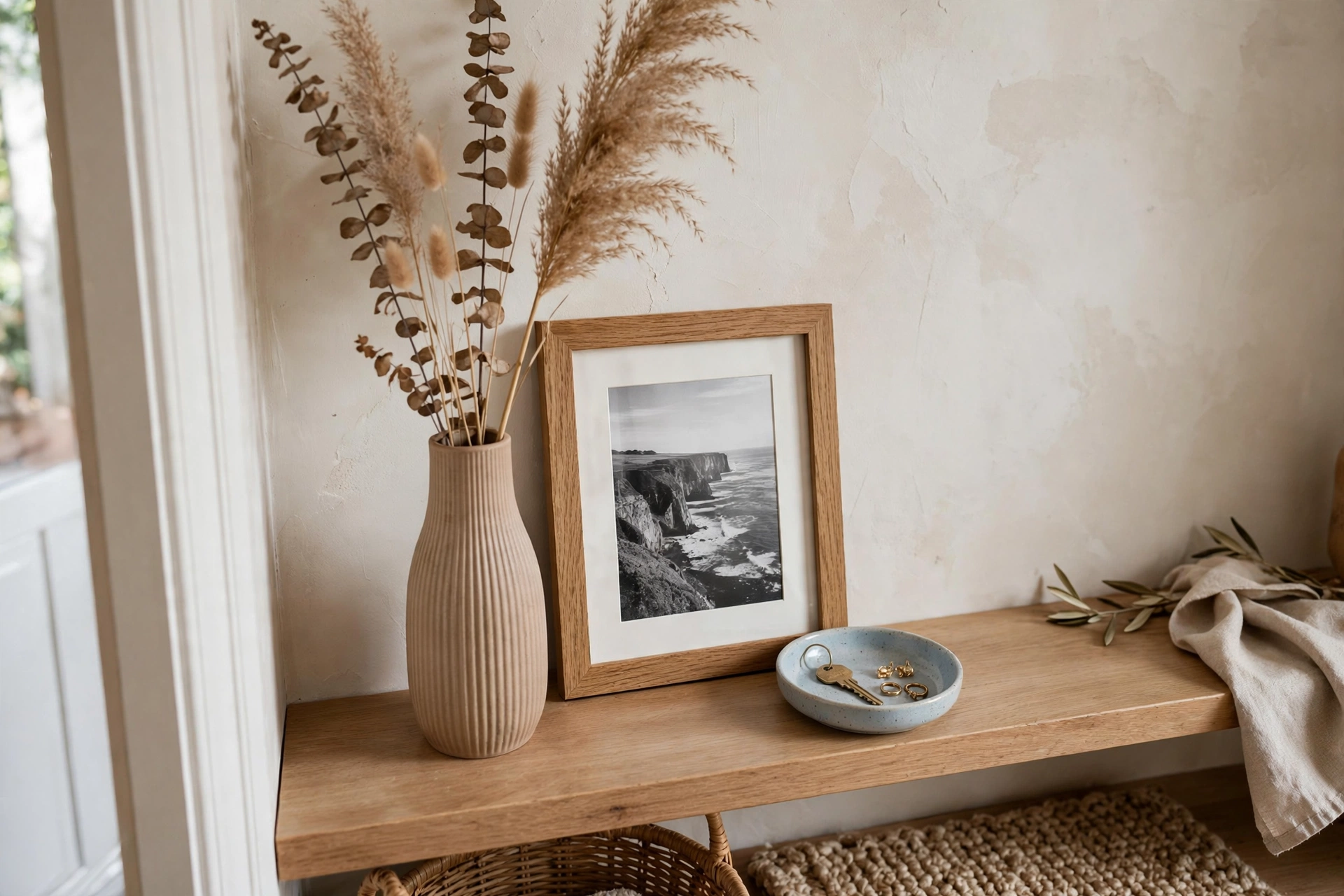
The single rule that separates styled shelves from shelves that just hold stuff is varying heights. Group objects in threes with one tall piece (a vase with stems, a candlestick, a stack of books), one medium piece (a framed photo, a small plant, a candle), and one short piece (a catch-all dish, a decorative ball, a folded mail pile). Keep roughly 2 to 4 inches of vertical space between each item’s top so the eye hops naturally across the group instead of seeing one flat line. If everything on your shelf is the same height, the arrangement reads as clutter no matter how nice the individual pieces are. When you shop, hunt for one standout tall item first — it anchors the whole vignette and makes the mediums and shorts fall into place around it.
8. Try a Slim Picture Ledge for Mail and Photos
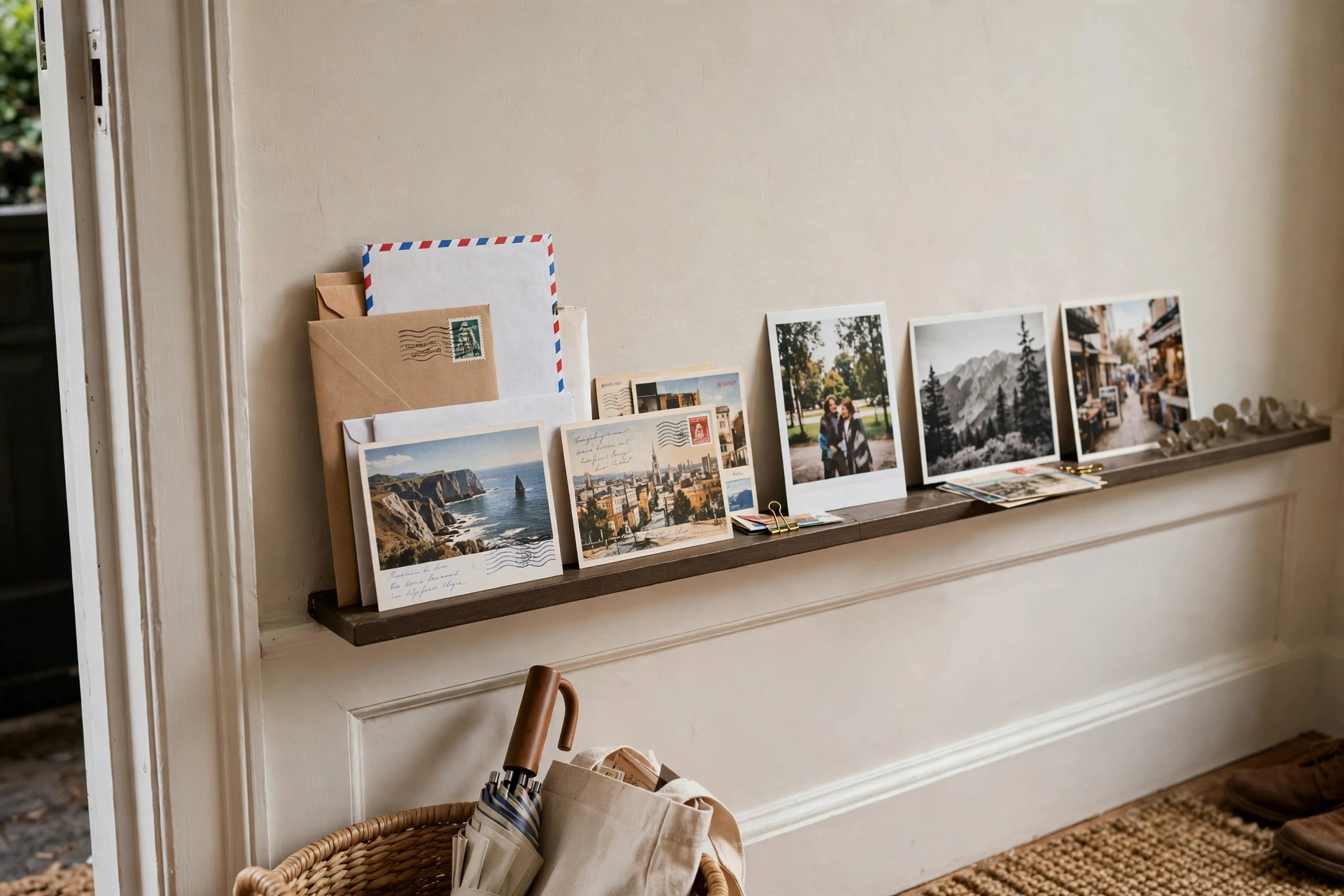
Picture ledges — narrow shelves with a small front lip — are a secret weapon for entryways because they hold flat items upright without cluttering. A 3-to-4-inch-deep ledge mounted at chair-rail height (about 30 to 36 inches) becomes a perfect launchpad for mail, postcards, and a couple of leaning photos. The front lip stops envelopes from sliding forward, and because ledges are so shallow, they work in hallways where a deeper shelf would jut into the walkway. Style one ledge with a slim vase, two leaning prints, and the day’s mail sorted behind a small paperweight — everything visible, nothing piled. Even Apartment Therapy has praised the picture ledge as the perfect little launchpad for purse, mail, and keys without wasting any floor space — read their take on decorating with picture ledges in every room. Because ledges are renter-friendly to mount, they are the lowest-commitment way to add functional shelf space to a foyer.
9. Place a Mirror on or Above the Shelf
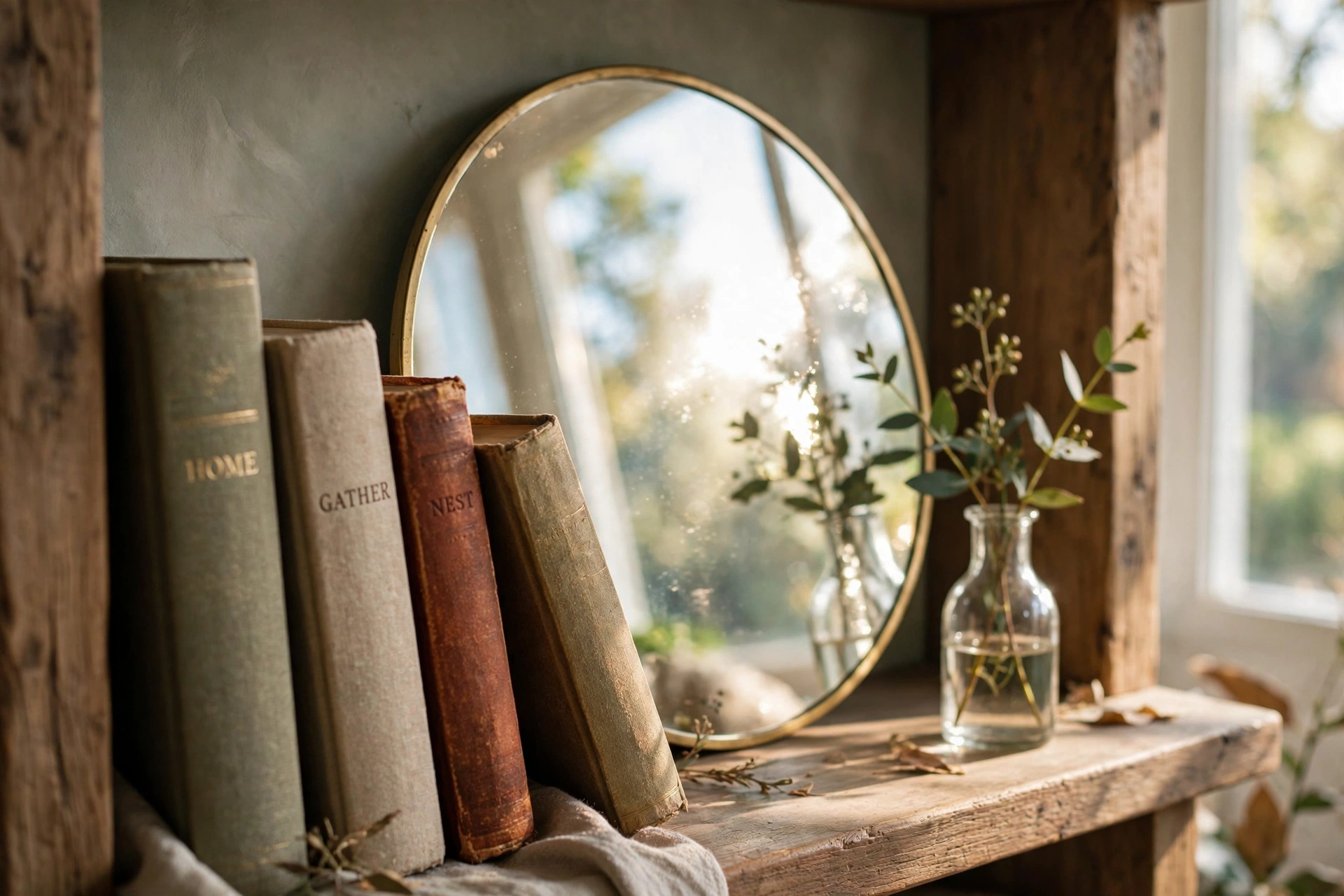
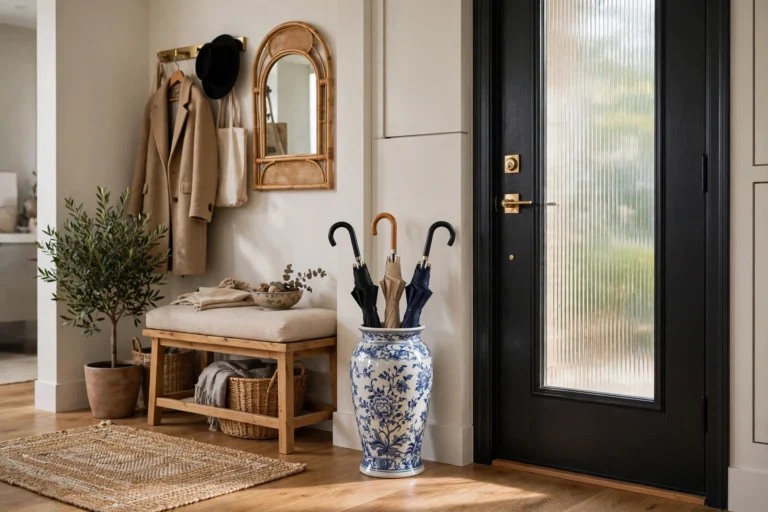
A mirror above or behind your entryway shelf does two jobs at once: it bounces light into a foyer that is usually the darkest part of the house, and it gives you a last look before you head out. Lean a small round or arched mirror on the shelf itself, tucking it behind a stack of books or a vase so only the top half shows — this creates depth and doubles the visual impact of everything styled in front of it. If you prefer a hung mirror, mount it so its bottom edge sits 4 to 6 inches above the top of the highest shelf, keeping the two visually connected. Avoid a mirror directly opposite the front door if you find it jarring when entering; a slight angle feels more welcoming. Clean the mirror monthly — entryway mirrors collect dust and fingerprints faster than any other spot in the house.
10. Add Warm Light With a Small Lamp or LED Strip
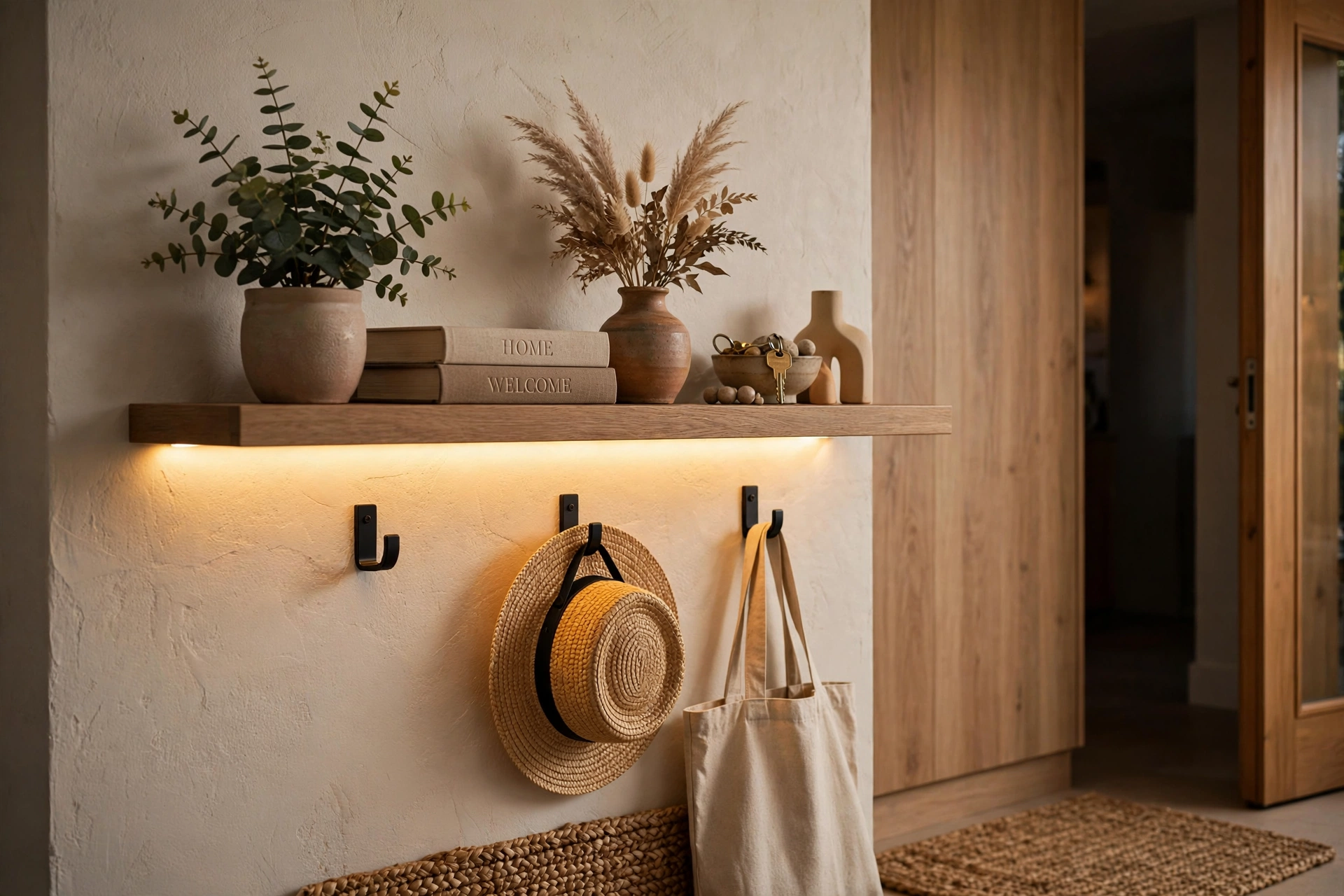
Entryways rarely get great natural light, so a shelf without its own light source can look flat and shadowy. A small table lamp with a fabric shade on the end of a wider shelf instantly makes the vignette glow and the entry feel finished. On floating shelves with no lamp surface to spare, stick a warm-white LED strip along the underside of the shelf above — the indirect light washes the styled items below in a soft glow and doubles as a practical night light for the foyer. Choose bulbs around 2700K for a warm, welcoming tone; anything cooler reads as office lighting. If the entryway has no outlet nearby, battery-operated LED puck lights with a remote give you the same effect for about the cost of a pizza, and you can set them on a timer so they greet you every evening.
11. Use the Rule of Three for Every Grouping
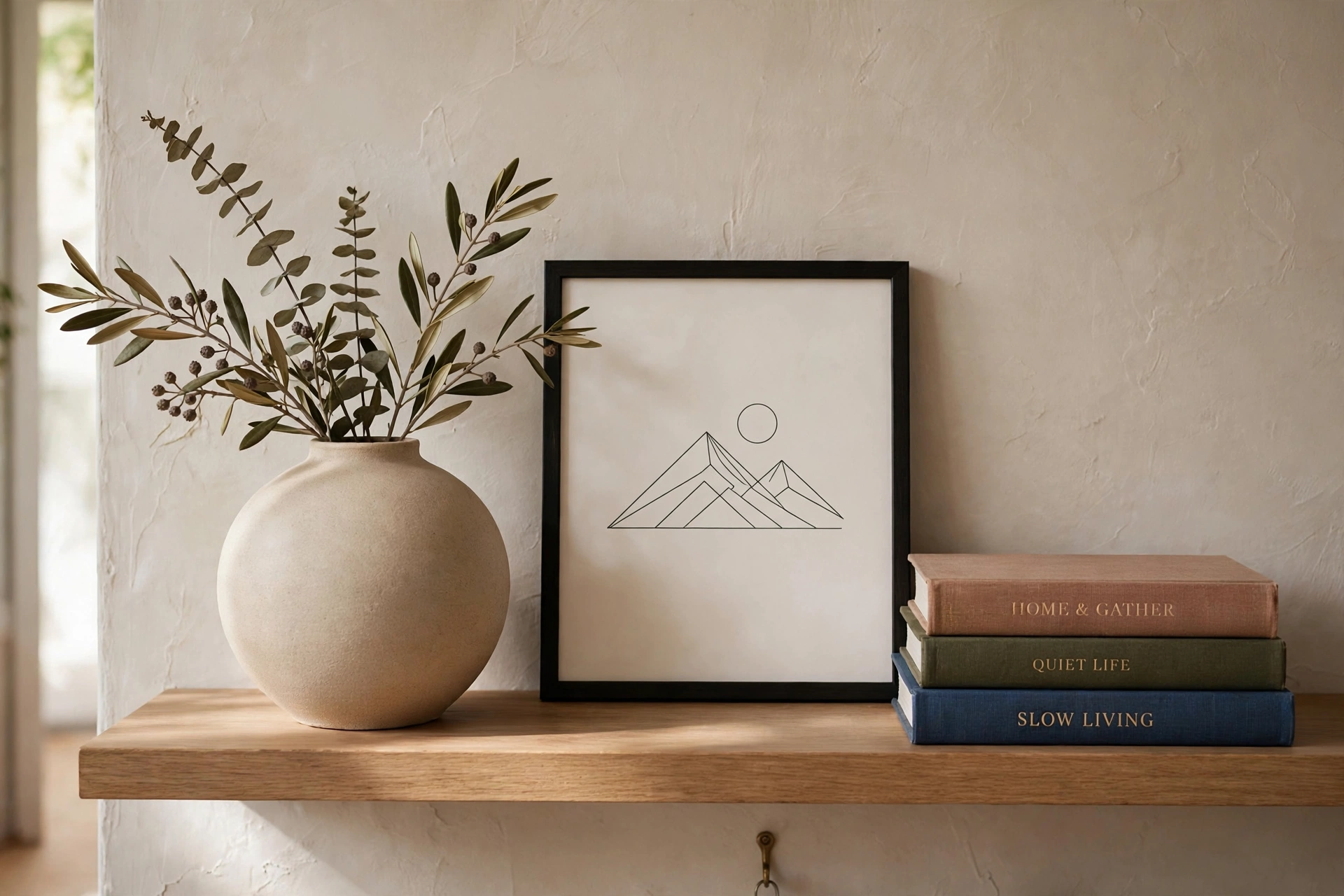
Professional stylists lean on the rule of three for a reason: odd-numbered groupings feel balanced without looking stiff. Apply it to every cluster on your entryway shelf — three items at one end, a single statement piece in the middle, three items at the other end. The three pieces should differ in height, shape, or texture: a round vase, a square frame, and a small stack of books, for example. Two items always look like they are waiting for a third, while four or more start to look like a collection that needs a display case. When a shelf feels “off” but you cannot name why, count the groupings — there is usually a pair or a lonely solo where a trio should be. This single habit makes even thrifted, mismatched pieces look like they were bought as a set.
12. Keep a Decorative Box or Tray for Incoming Mail
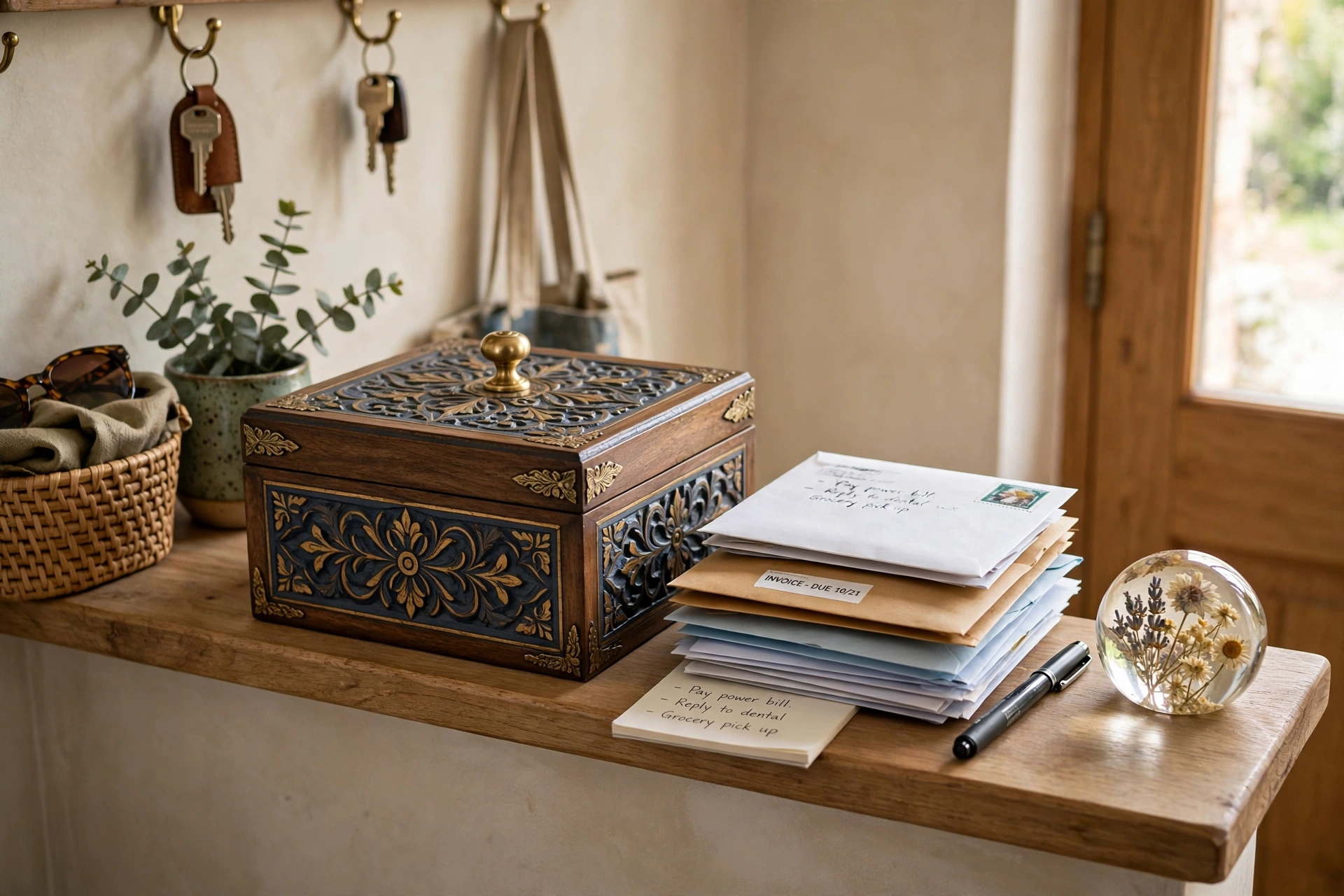
Mail is the fastest way to wreck a styled entryway shelf, so give it a proper home instead of letting it pile. A lidded decorative box, an upright file sorter, or a shallow woven tray keeps envelopes sorted and sightly. Sort once: bills and action items in the front slot or top tray, everything else filed or recycled that day. A box with a lid hides the paper mess entirely, which is ideal if your shelf faces the front door and guests see it first. Style the mail station itself — a small paperweight, a pen cup, or a tiny labeled tag that says “to file” — so even the functional zone feels designed rather than improvised. This one change turns the entryway from a paper avalanche into a controlled, calm landing zone.
13. Style Above the Shelf, Not Just On It
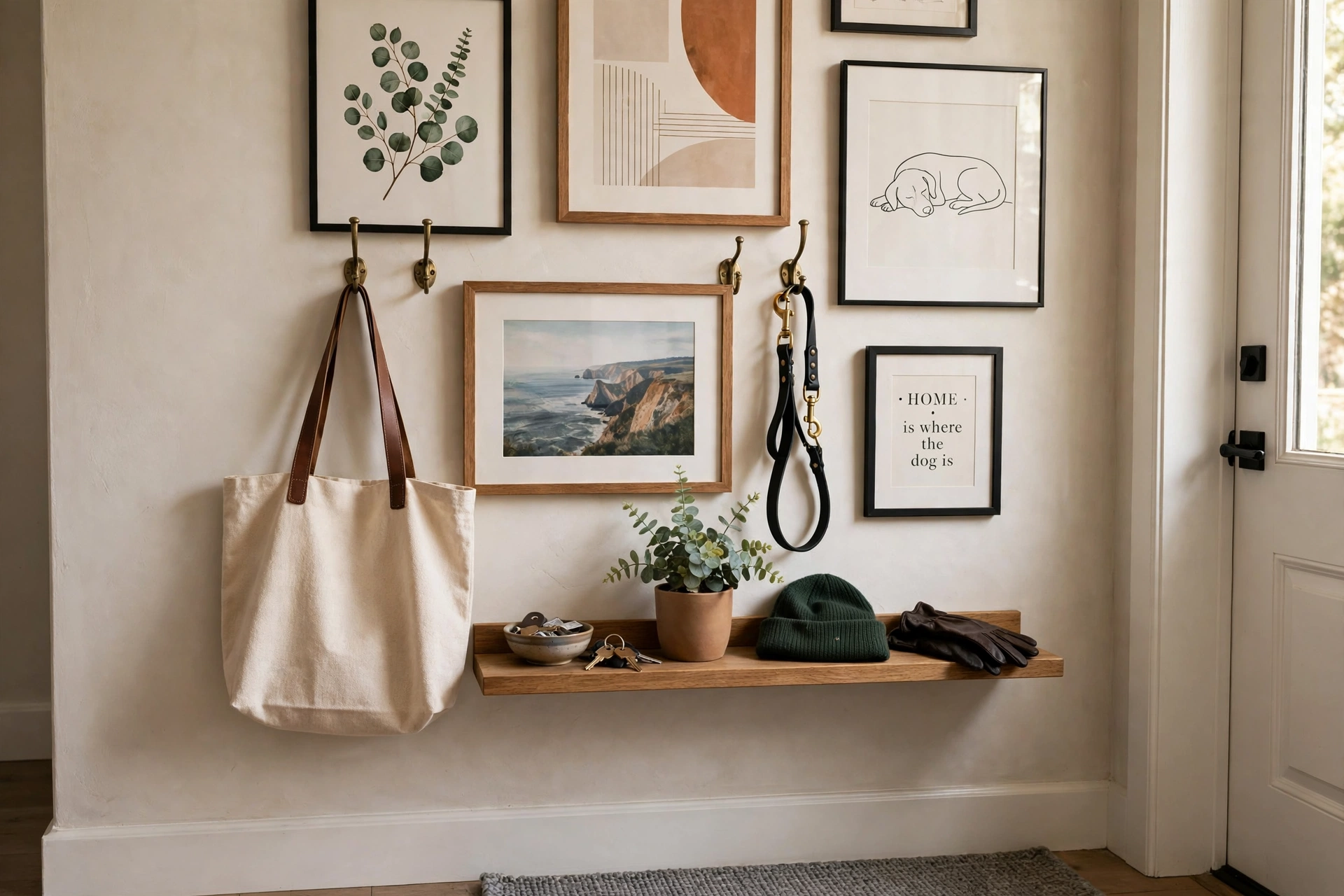
The wall above your entryway shelf is part of the composition, so style it too. Hang a single large piece of art, a small gallery of two or three frames, or a row of hooks directly above the shelf so the two layers read as one arrangement. Keep the bottom of hung art about 6 to 8 inches above the tallest object on the shelf — closer feels cramped, farther feels disconnected. Wall hooks above a shelf are especially smart in an entryway: tote bags, a dog leash, or tomorrow’s jacket hang within reach while the shelf below stays clear for styling. These entryway decor ideas for a warm welcoming entrance show how shelves, art, and hooks work as one layered vignette. Think of the shelf and the wall above it as one vertical picture, not two separate jobs.
14. Rotate Decor Seasonally to Keep It Fresh
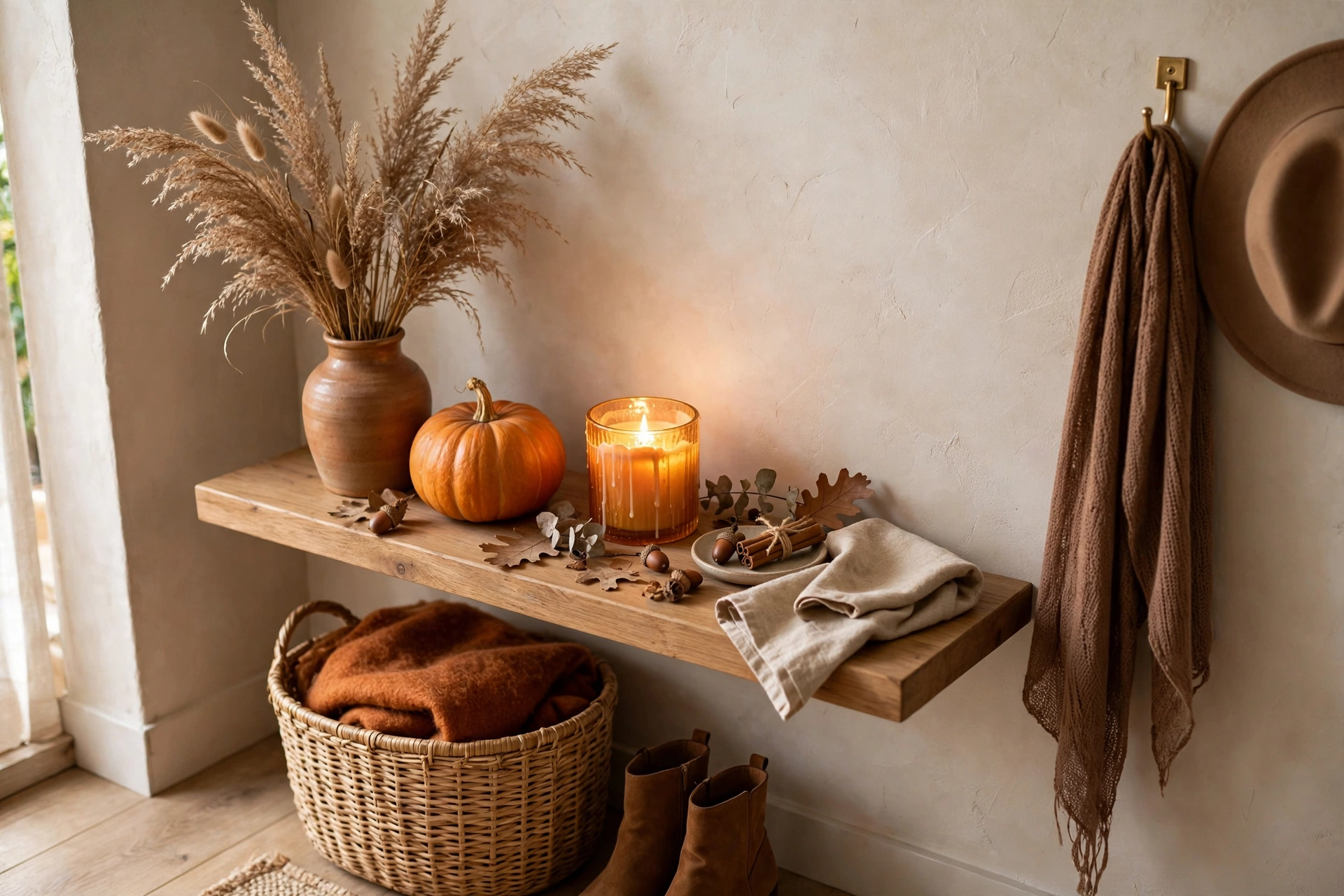
A shelf styled once and forgotten slowly goes stale, so treat your entryway shelf as a rotating display. Swap a few items with the seasons — a small pumpkin or dried grasses in fall, a pine sprig or candle in winter, fresh wildflowers in spring, a shell or woven piece in summer. You do not need to restyle everything; changing just two or three pieces makes the whole entry feel intentional again. Keep a small “shelf rotation” box in a closet with your extras so the swap takes five minutes. Apartment Therapy’s guide to creating a welcoming landing strip even recommends a small floating shelf as part of an easy entryway station that you can refresh with the seasons. Seasonal rotation also protects your shelves from dust buildup, since you are handling and wiping each piece a few times a year.
15. Leave Breathing Room — Edit Ruthlessly
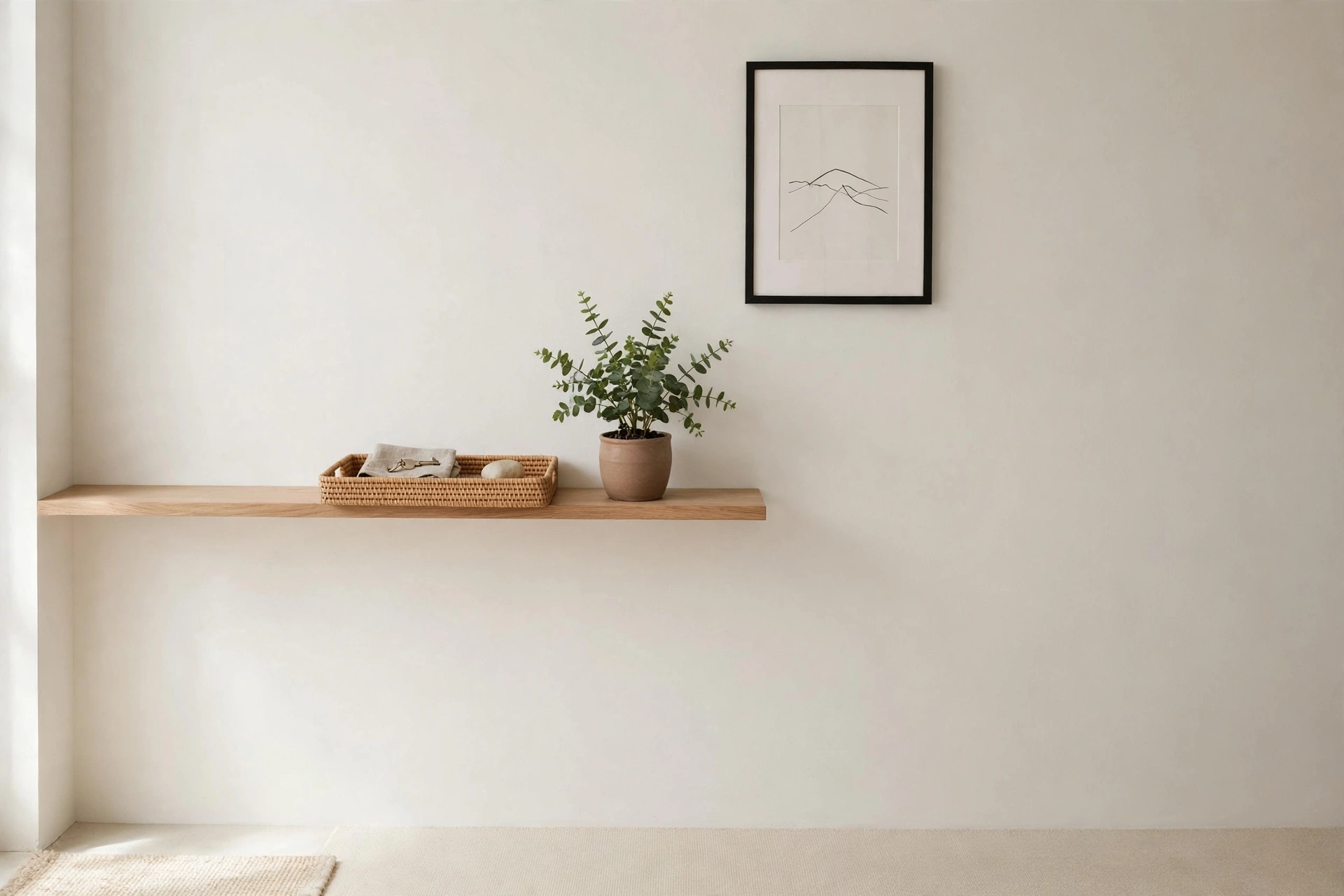
The final idea is the most important: leave empty space. A beautiful entryway shelf has roughly one-third empty surface, and that negative space is what makes the styled items look expensive instead of crowded. After styling, step back and remove one item from every grouping — if you cannot tell what left, it was clutter. Keep only what you use daily (keys, mail, wallet) plus what you genuinely love; everything else can live in a closet or another room. Re-edit monthly, because entryways are magnet zones for sunglasses, receipts, and random pocket items that creep onto shelves. A lightly styled, breathing shelf is easier to dust, easier to use, and honestly more impressive than a shelf packed with stuff.
FAQ
How high should I mount shelves in an entryway?
Mount your main functional shelf at 42 to 48 inches from the floor — roughly chest height — so you can drop keys and mail without reaching up or bending down. Decorative shelves can go higher, around 60 to 72 inches, where they catch the eye but stay out of the way. In a narrow hallway, keep shelf depth under 8 inches so the shelf does not crowd the walkway.
What should I put on entryway shelves to keep them functional?
Reserve one zone for daily essentials: a catch-all tray for keys and sunglasses, a small decorative box or sorter for mail, and space for a wallet or bag. Use baskets or lidded boxes for items you grab weekly rather than daily, like reusable shopping bags or pet supplies. The rest of the shelf is yours for decor — books, plants, art, and candles.
How do I keep my entryway shelves from looking cluttered?
Group items in odd numbers (threes work best), vary heights within each grouping, and leave about one-third of the shelf surface empty. Give small loose items a single contained home, like a tray or bowl, so they read as one object instead of ten. Step back after styling and remove one item from every grouping — you will not miss it, and the shelf will instantly look calmer.
Are floating shelves strong enough for an entryway?
Yes, if they are installed correctly. Anchor floating shelves into wall studs or use heavy-duty toggle bolts, and check the shelf’s weight rating before loading it with books. Keep heavier items like book stacks near the ends where the brackets or supports are strongest, and use lighter pieces — frames, plants, candles — toward the center. A single shelf should not carry more than its rated load plus your daily toss of keys and mail.
Can I style shelves in a rental without drilling?
Yes. Lightweight floating shelves and picture ledges can be mounted with heavy-duty adhesive strips rated for the load, or you can use leaning ladder shelves that need no wall attachment at all. Narrow ledges with a front lip are ideal for renters because they weigh little and hold mail, photos, and small decor securely. Always check the strip’s weight rating and clean the wall surface before applying for a secure hold.
Keep Exploring
Your entryway shelves are just one layer of a welcoming entrance — the right mirror above them bounces light, and the right wall art ties the whole vignette together. These entryway mirror ideas for light space and first impressions show exactly how to choose and place mirrors that make a foyer feel bigger and brighter. Pick one mirror idea and one new shelf styling trick from this post, apply them this weekend, and your entry will feel like a completely new room.





[…] in entries without a console table, condensing two landing zones into one tidy wall footprint. Entryway shelf decor ideas for a styled organized entry show how to build the same pairing with separate pieces if you […]