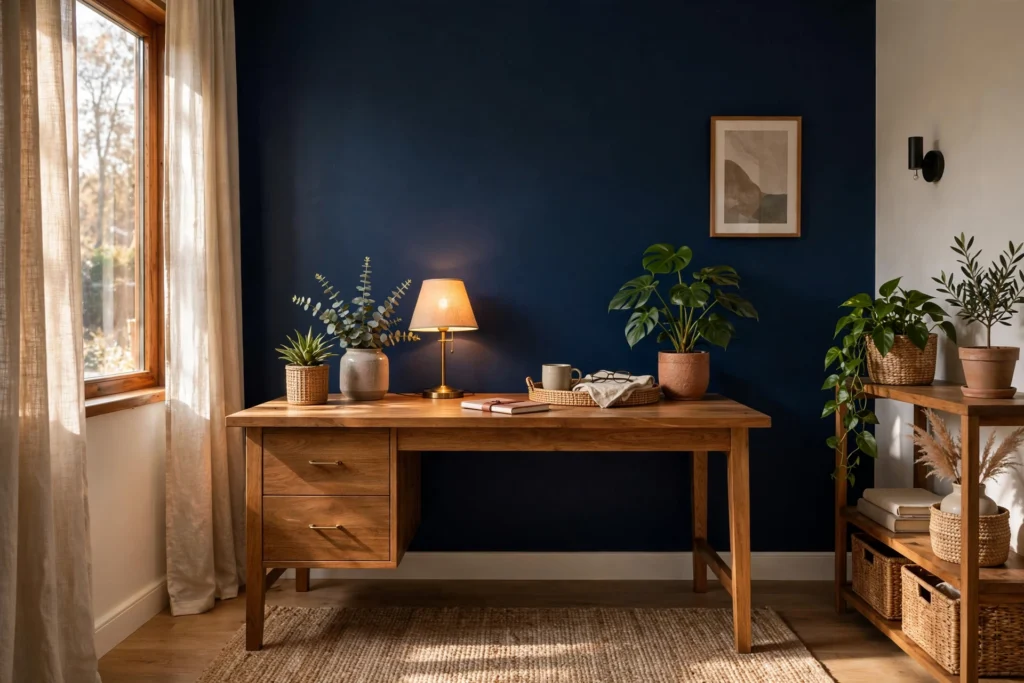

An accent wall is the hardest-working wall in your home office. Done right, it anchors your desk, frames your video calls, and — this is the interesting part — it can genuinely change how you feel while you work. Color research, including the studies summarized in color psychology literature, suggests blues and greens steady attention while warm tones nudge energy up. So choosing your accent wall is not just decorating; it is designing your own focus. The 15 home office accent wall ideas below use paint, wood, and texture to build exactly that kind of focus.
The best accent wall for an office usually sits behind the desk — it is what you face on calls and what a camera sees. But rules are flexible: a side wall works when your desk faces a window, and a ceiling accent works wonders in a windowless room. For more small-office wall treatments beyond paint and panels, small home office wall decor ideas pair beautifully with everything below.
1. Deep Navy Paint Behind the Desk
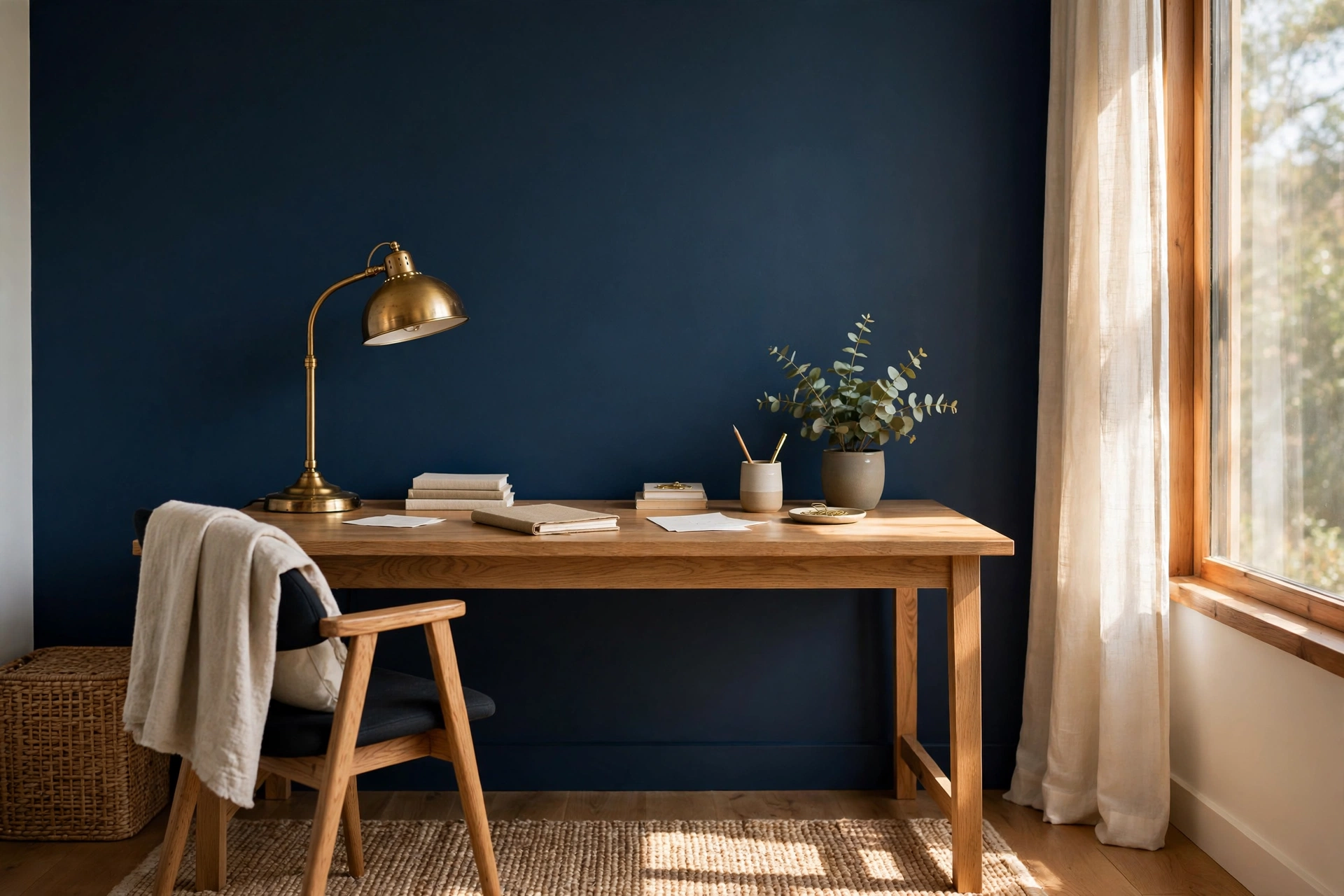
Navy is the classic focus color: deep enough to feel serious, calm enough to lower the mental noise. Paint the wall behind your desk in a rich navy like Hale Navy or a dusty midnight blue, keep the other three walls warm white, and your workspace instantly reads “corner office” instead of “spare room.” Navy absorbs visual clutter too — floating shelves and monitors blend in rather than shouting for attention. Use matte or eggshell sheen so the camera light on video calls stays soft, not shiny. Pair it with walnut or oak furniture and brass or black fixtures for a polished, timeless look.
2. Sage Green for Calm Concentration
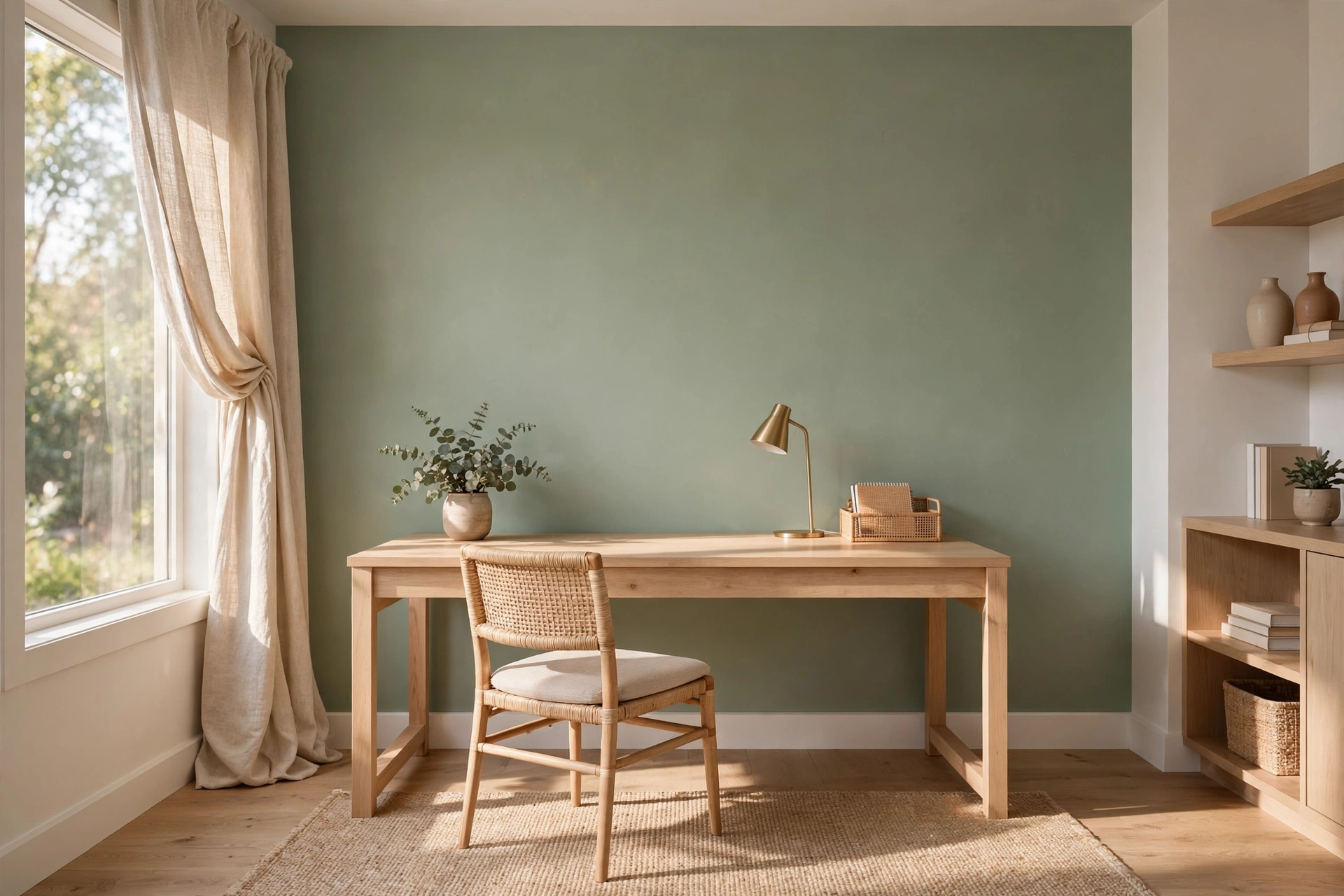
If navy feels too corporate, sage green is its gentler cousin. Greens are consistently linked with steadiness and calm — think of the color of a settled garden — and a soft sage keeps eye strain low through long screen days. It works especially well in offices that double as guest rooms, because it never reads as aggressive or “office-y.” Choose a gray-leaning sage rather than a yellow-leaning one so it stays sophisticated under warm lamps. White trim, light wood, and linen textures complete a scheme that feels like a deep breath every time you sit down.
3. Color-Blocked Geometry Above the Desk

Color blocking is the cheapest way to make an accent wall look custom. Tape off a large rectangle, arch, or half-wall shape on your main wall and paint it a saturated contrast color — terracotta on warm white, forest green on cream, or dusty rose on gray. The block visually “zones” your desk area, which matters in rooms that double as bedrooms or living space. Keep the shape’s edges crisp with painter’s tape and a second coat. For maximum Zoom impact, center the block behind your chair so the camera frames you inside the color. It is one gallon of paint and one weekend, yet it photographs like a full renovation.
4. Vertical Wood Slats for Texture and Warmth
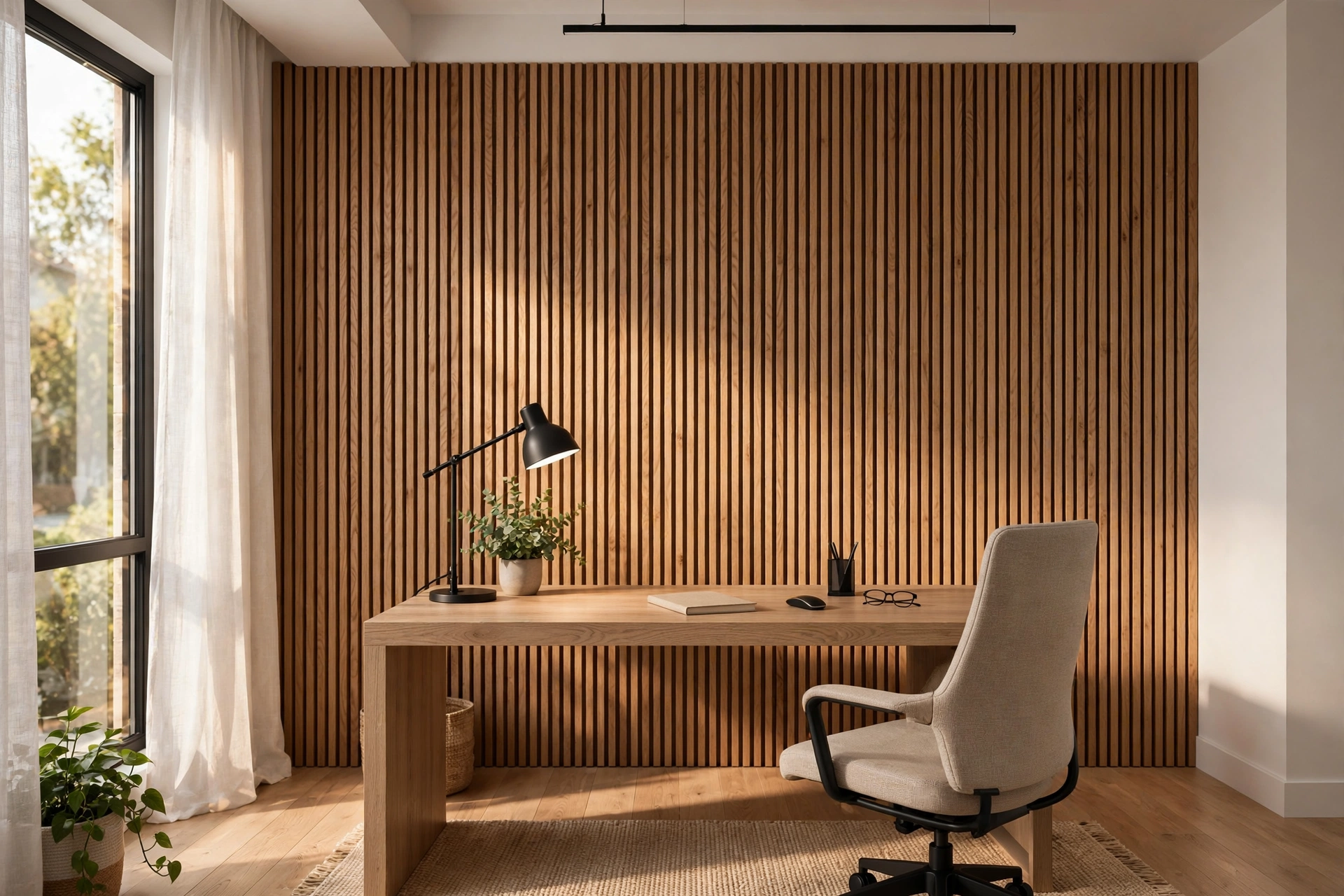
Wood slat walls add texture, warmth, and a subtle acoustic dampening that actually softens room echo on calls. You can buy ready-made slat panels or build your own from 1×2 pine battens spaced evenly over a painted backer wall — paint the wall dark first so the gaps read as shadow lines. Vertical slats pull the eye upward, which makes low-ceiling offices feel taller. Finish the wood in a natural oak tone for Scandinavian calm or stain it walnut for a richer, executive feel. Add a slim picture light or a low-wattage sconce aimed along the slats and the shadows at night look stunning.
5. Board-and-Batten Wainscot in a Moody Hue
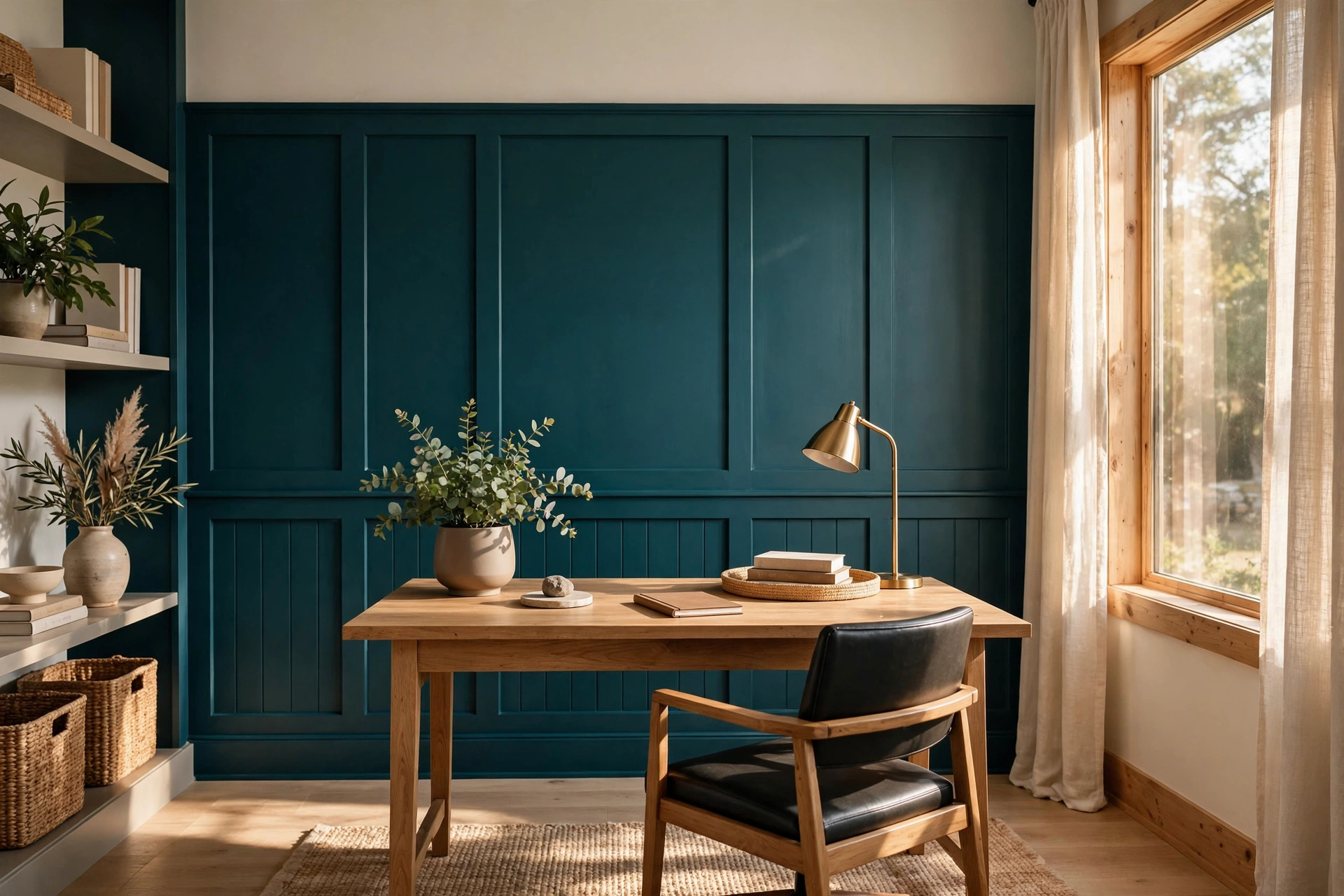
Board-and-batten gives you texture with a tailored, architectural finish. Install vertical battens from the floor to about two-thirds up the wall, then paint the entire section — wall and battens together — in one moody color like deep teal, forest green, or charcoal. The single-color treatment makes it look built-in and expensive, and the upper third of wall in plain paint keeps the room from closing in. This style suits traditional and transitional offices beautifully and gives video calls a layered, crafted background without any clutter. Seal MDF battens with primer first so the paint finish stays crisp.
6. Soft Limewash for a Plaster-Like Glow
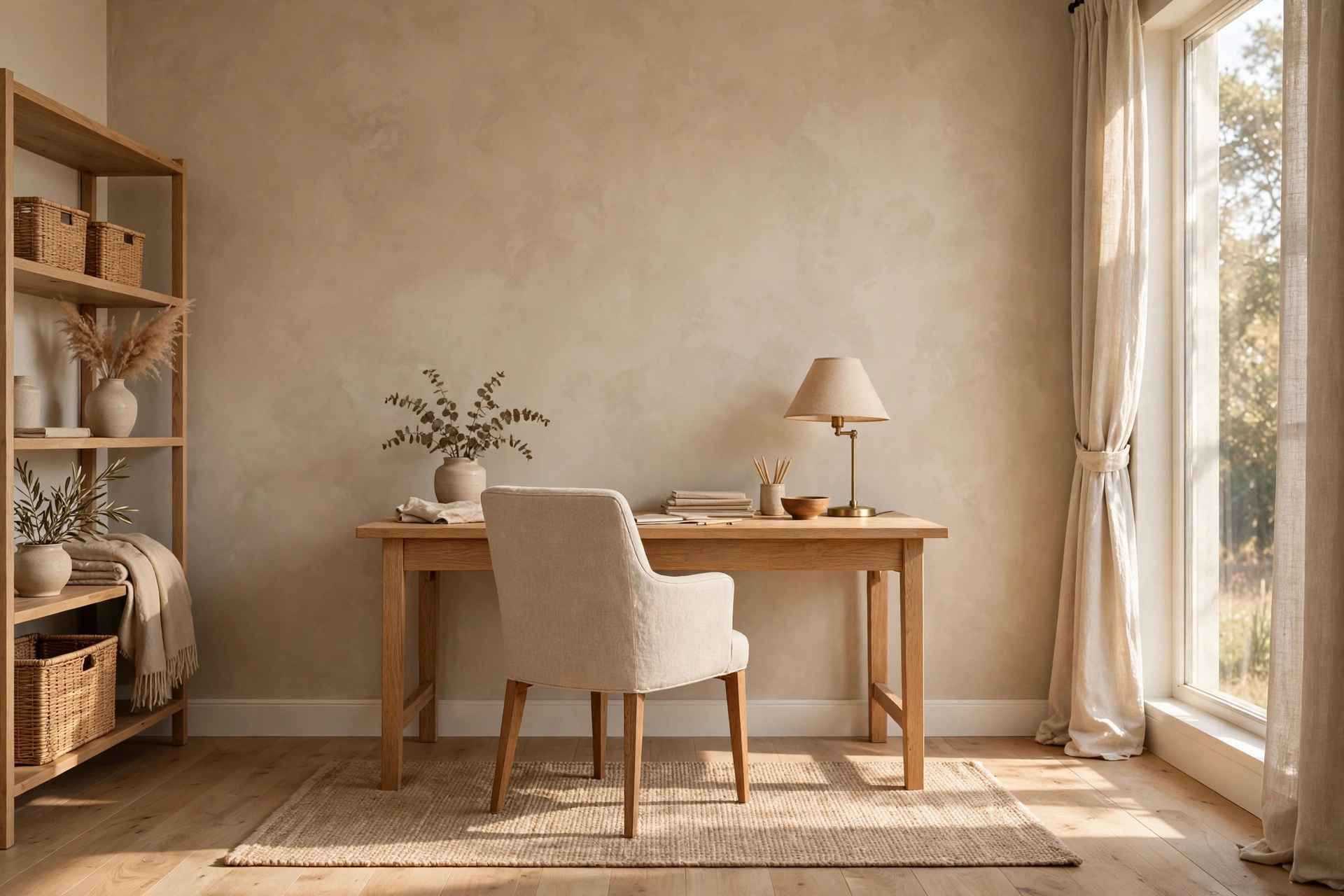
Limewash paint creates a cloudy, mineral finish that looks like old European plaster — depth and movement without any pattern. In a home office it softens hard surfaces and hides minor wall imperfections better than flat paint ever could. Choose a warm greige or pale sage for the full calming effect; the mottled finish catches lamplight in the evening and shifts gently through the day. Apply it in loose, overlapping X-strokes with a block brush rather than a roller. One accent wall is enough — limewash’s texture is rich, and a little goes a long way toward making the office feel artisanal and calm.
7. Terracotta for Warm Creative Energy

Terracotta brings warmth and creative spark without the urgency of bright red. It is the color of clay studios and sun-baked courtyards, and on an office wall it makes the space feel welcoming rather than clinical — perfect for creatives, writers, and coaches whose rooms double as client-facing spaces. Keep it to one wall, since terracotta is a strong personality, and balance it with cream walls, pale wood, and plenty of green plants. If a full wall feels like a lot, try it as a wide horizontal band behind the desk instead. Under warm 3000K lighting, terracotta glows like late-afternoon sun.
8. Chalkboard Paint for a Working Wall
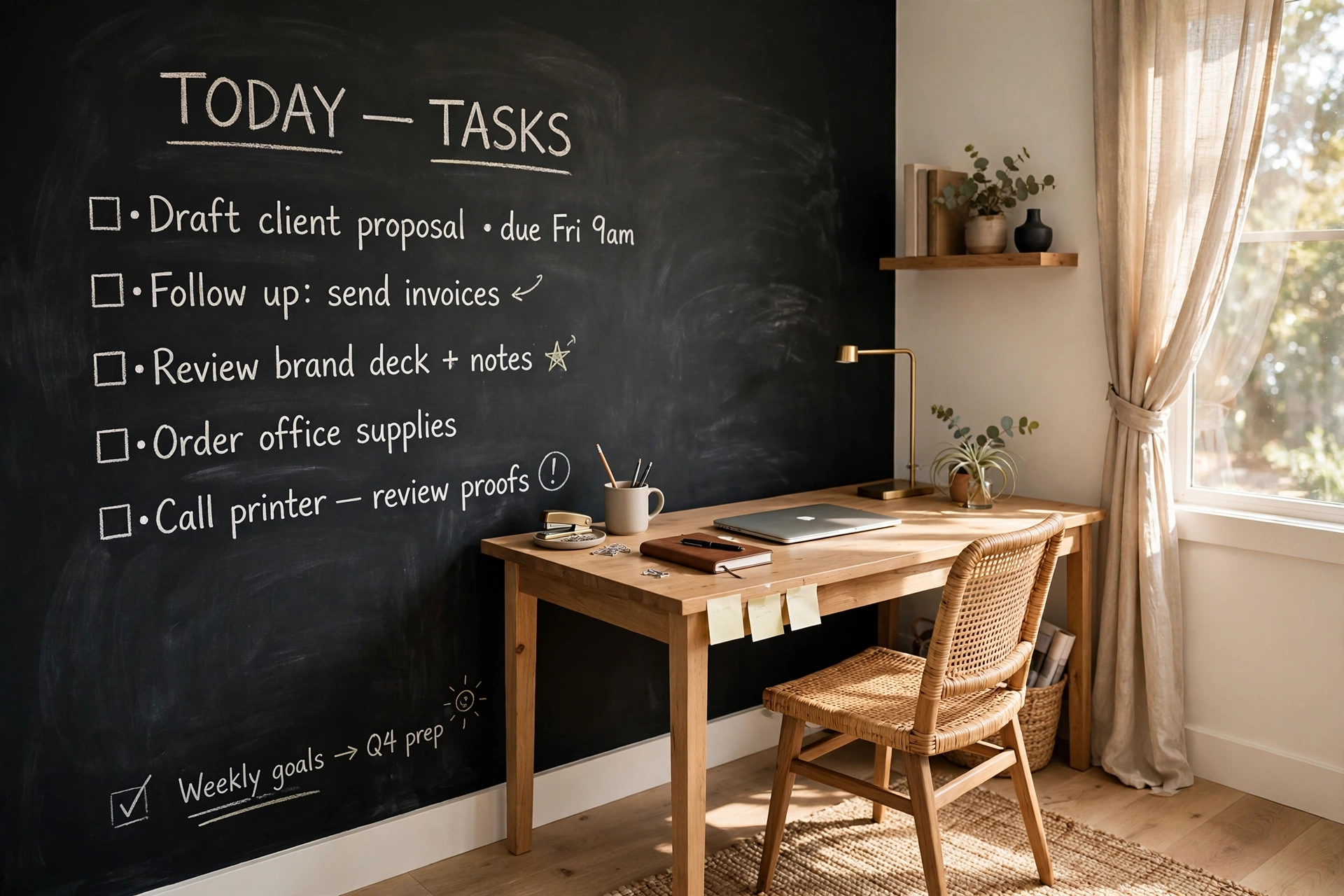
An accent wall that works as hard as you do: paint it with chalkboard paint in black, forest green, or navy and it becomes your standing task list, idea board, and calendar. Frame the section with simple painted trim so it reads as intentional decor rather than a classroom leftover. Chalk markers give clean, legible writing that wipes off easily, and a small ledge along the bottom holds the markers and an eraser. This idea is gold for planners, teachers, and anyone who thinks on paper. Because it is paint, not paper or boards, the wall stays flat and your decor stays simple.
9. Dark Charcoal for a Cocooned Focus Zone
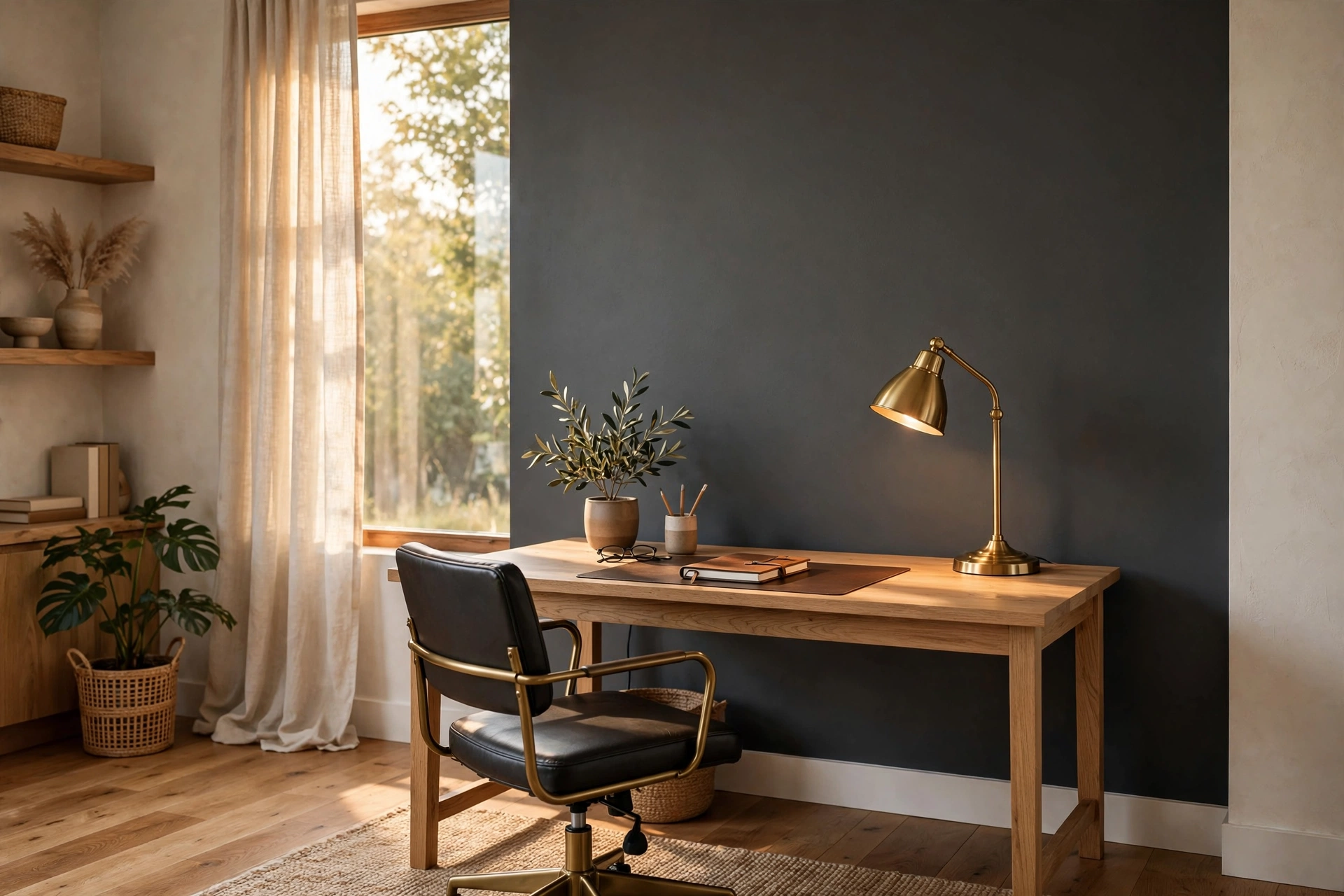
Charcoal gray is the ultimate deep-focus color: it recedes, quiets visual noise, and makes screens and paperwork pop by contrast. In a small office it sounds risky, but on a single wall it actually adds depth — the wall visually “pushes back” and the room feels larger, not smaller. Balance it with a light rug, pale furniture, and one warm element like a wood desk or brass lamp to avoid a cave effect. Designers like the deep charcoals in Benjamin Moore’s home office color guide for exactly this cocooning effect. Finish with a bright piece of art on the dark wall — it will look gallery-lit even without a spotlight.
10. Shiplap in Crisp White or Soft Gray
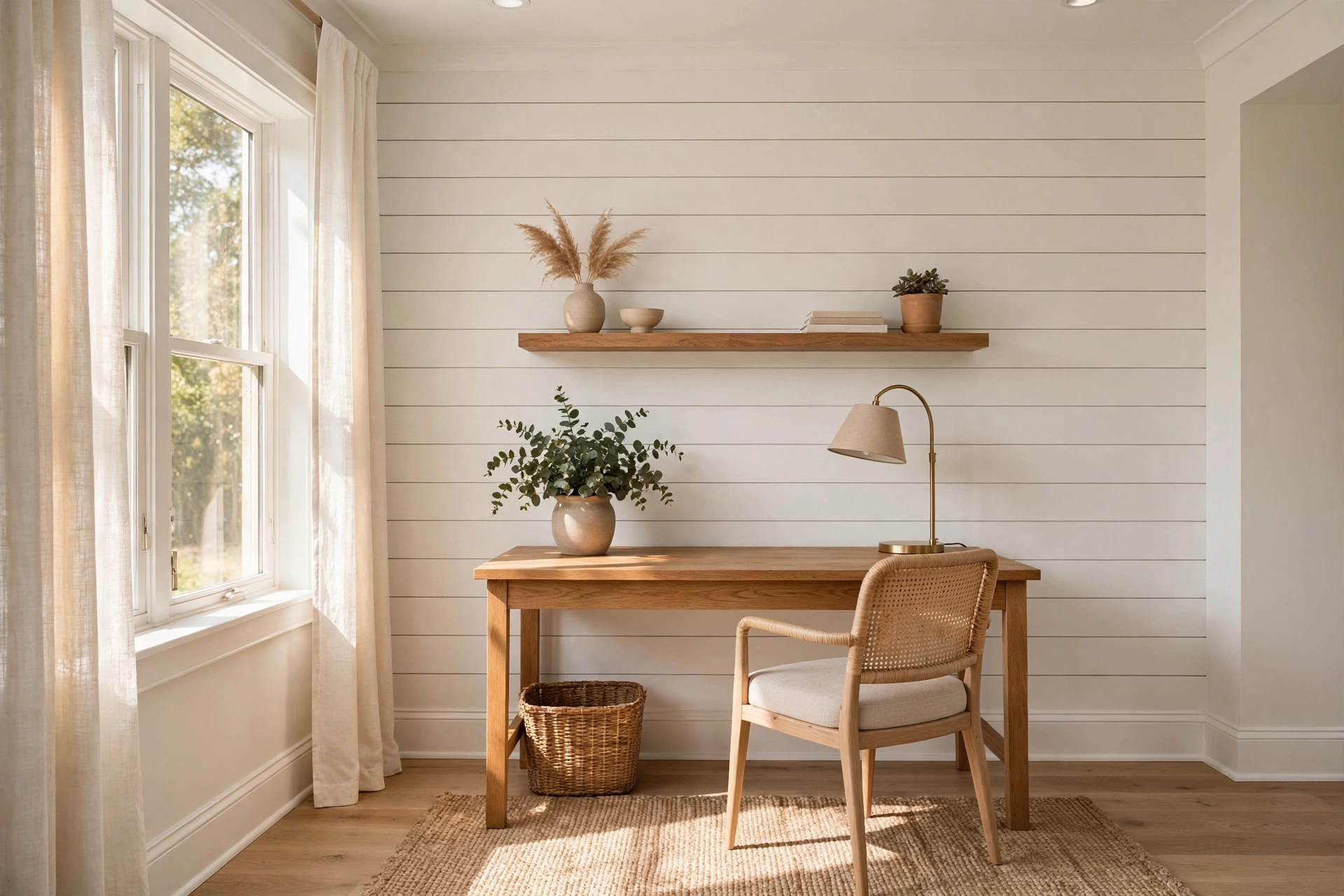
Shiplap brings structure and light to a home office, especially one that needs to double as a pleasant video background. Installed horizontally, the grooves add just enough texture to keep a white wall from feeling sterile; installed vertically, they add height. Paint it in a soft white or pale gray so the office stays bright, and let natural wood tones and black metal accents supply the contrast. Real wood shiplap looks best, but quality MDF planks are budget-friendly and take paint beautifully. Add a floating shelf or two on the shiplap wall — the grooves make mounted decor look extra crisp.
11. Painted Arches as Soft Focal Points
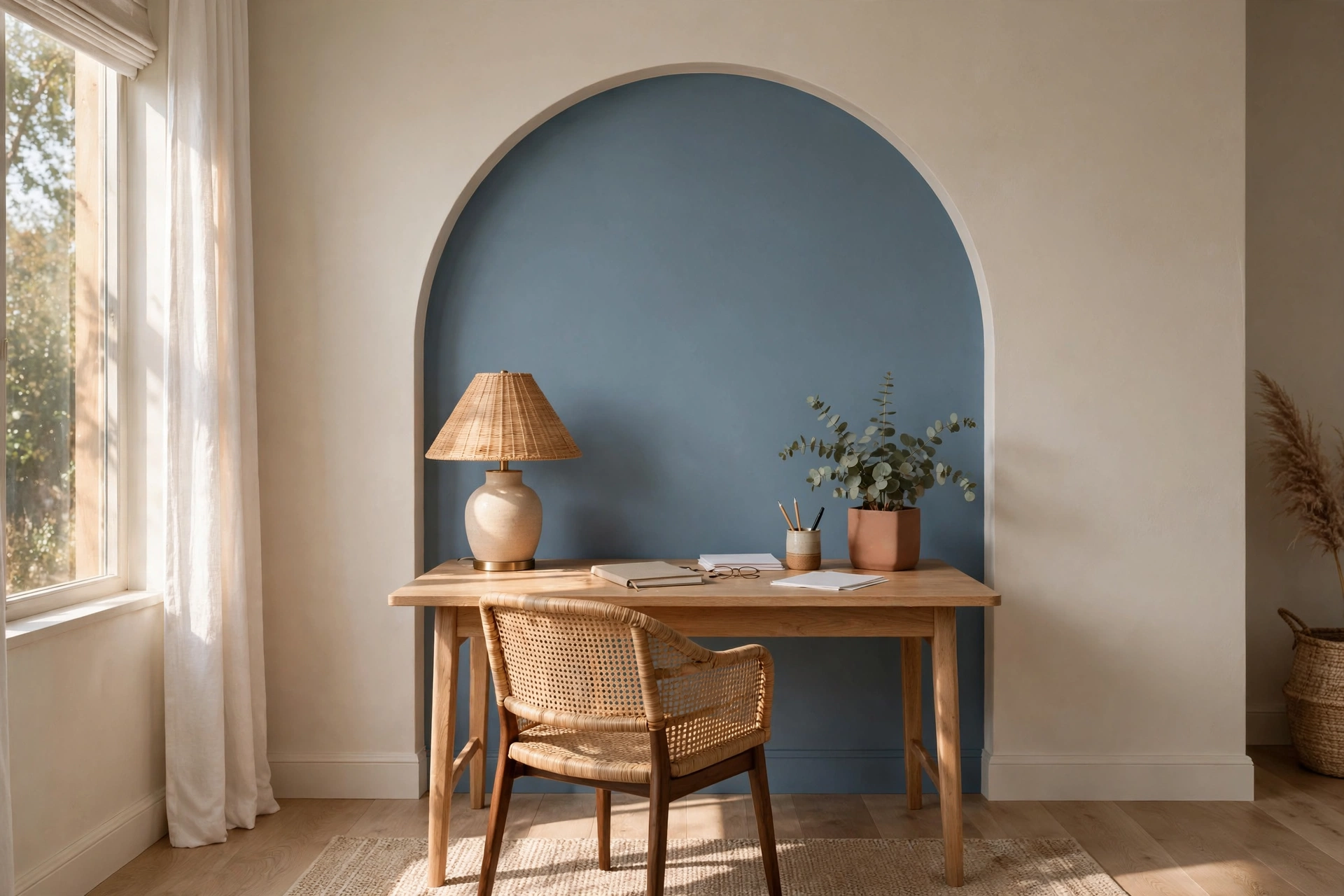
Arches are the gentle version of color blocking. Paint a tall, soft arch behind your desk in a warm ochre, dusty blue, or clay tone on an otherwise neutral wall, and you get a focal point with none of the harshness of rectangles. Arches flatter camera angles because their curves read as modern and artful on screen. The technique is forgiving too: draw the arch with a pencil and a piece of string as a compass, then cut in with a small brush before rolling. In a bedroom-office, an arch quietly separates “work” from “rest” on the same wall — a visual boundary your brain learns to respect.
12. Grasscloth-Textured Paint Finish
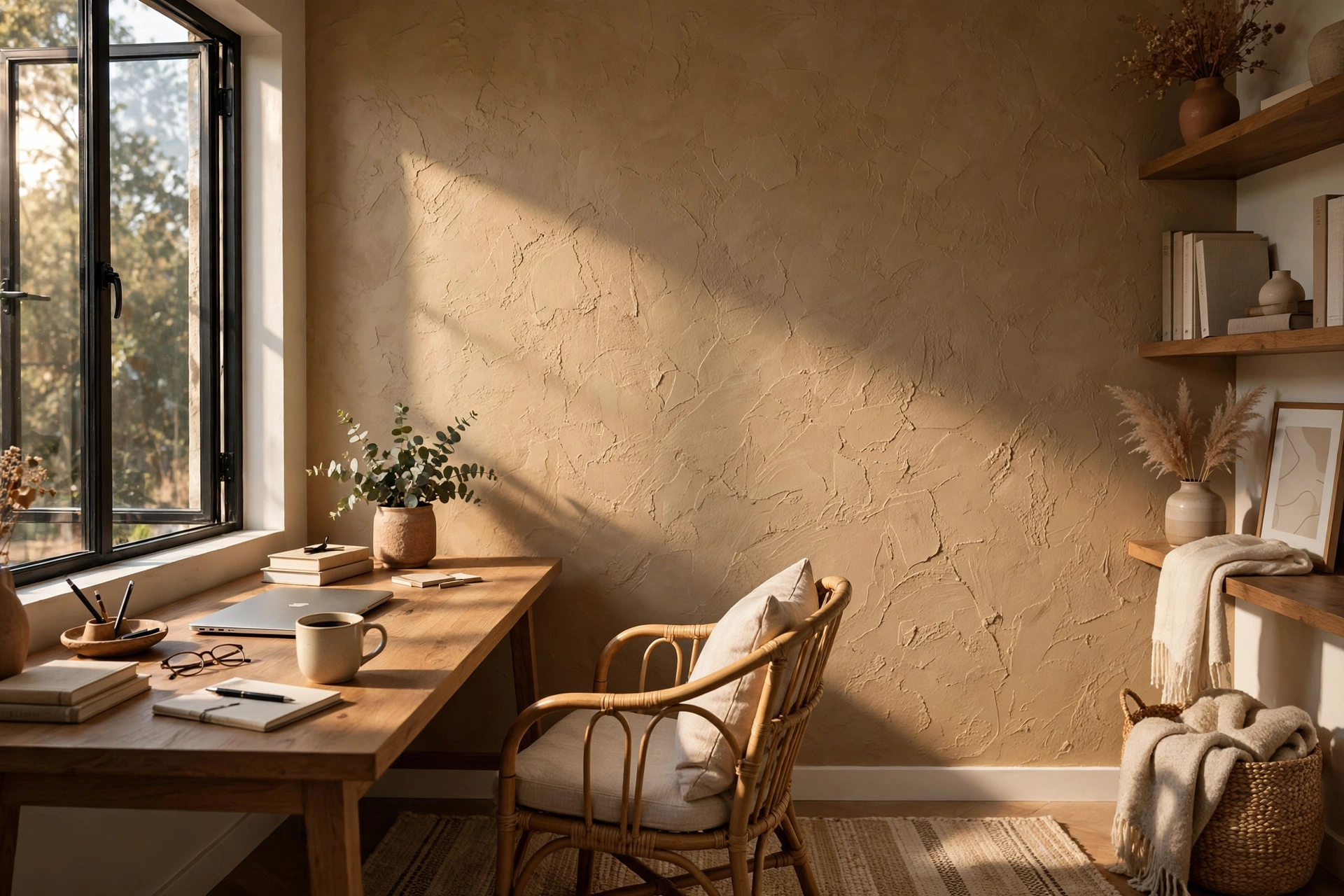
You can get the rich, woven look of grasscloth without the cost or commitment of real wallpaper by using textured paint. Sand-finish and suede-finish paints add a subtle fiber-like grain that plays with light across the wall, giving an office accent wall quiet luxury. Choose warm neutrals — wheat, flax, mushroom — so the texture stays soothing rather than busy. Because the texture catches raking light, keep your main lamp to the side of the wall so the finish glows softly instead of glaring. This is an excellent choice for executive-style offices where you want sophistication without bold color.
13. A Hand-Painted Landscape Mural
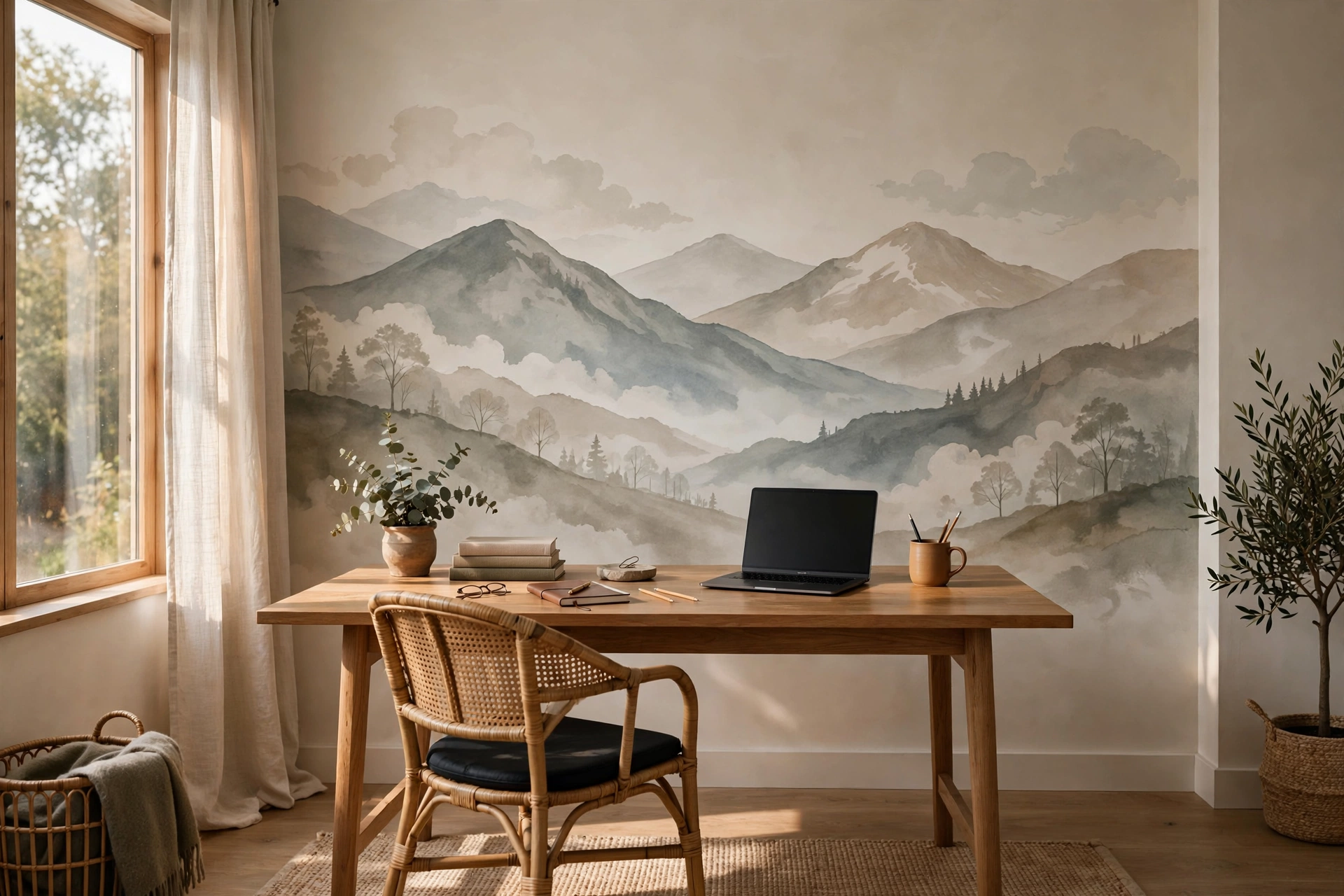
For the creative office, nothing beats a simple hand-painted mural: rolling hills, a soft mountain horizon, or an abstract sunrise band in three or four muted tones. You do not need to be an artist — project a photo onto the wall at dusk, trace the horizon lines in pencil, and fill with house paint or acrylics in dusty, desaturated colors. Keep the mural to the lower two-thirds of the wall so it reads as a landscape behind your desk, not a full takeover. Muted tones keep it calming rather than distracting, and a nature view gives your eyes a genuine resting place during long work sessions.
14. Two-Tone Walls: Dark Below, Light Above
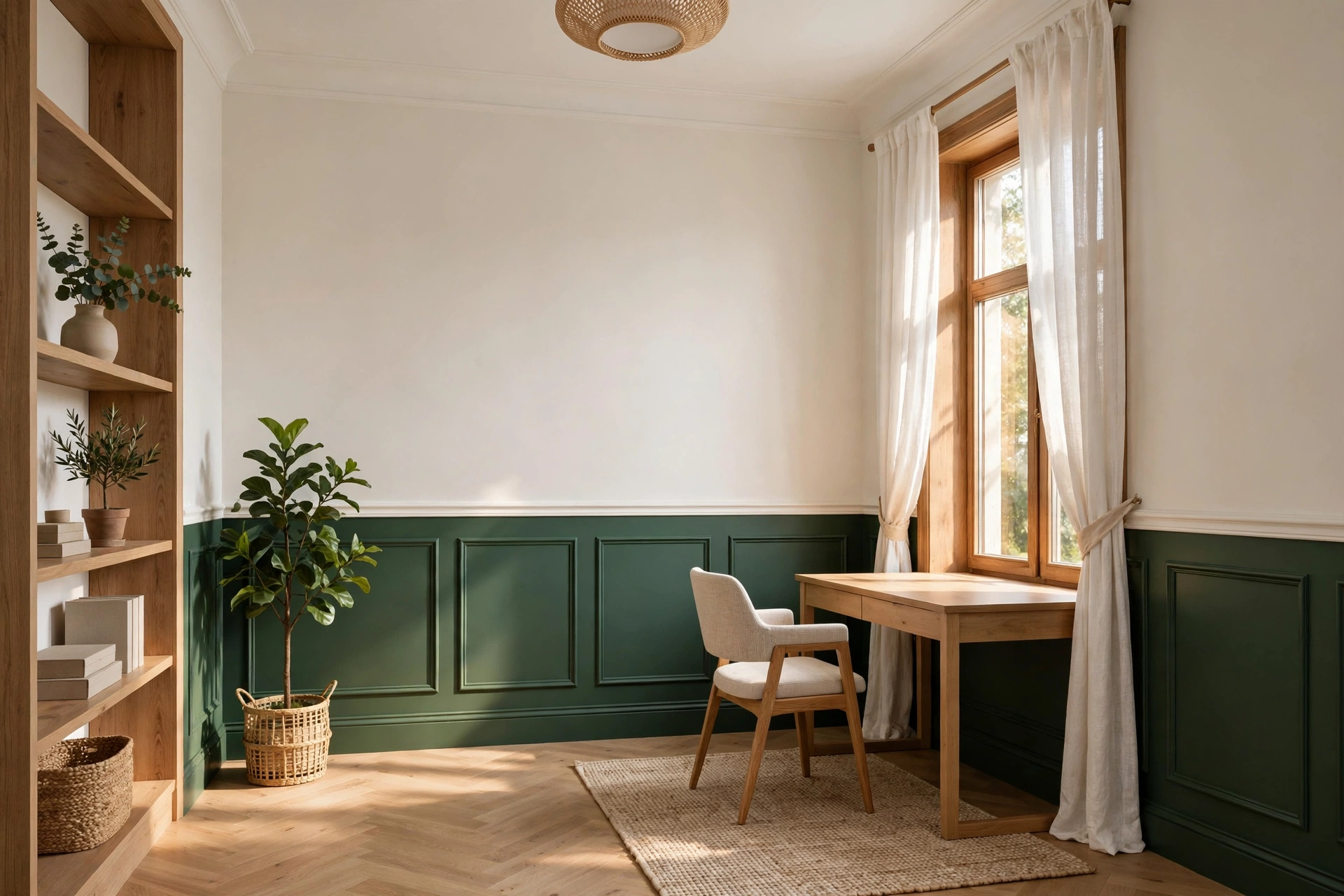
The chair-rail two-tone is a classic for a reason: paint the lower half of the wall in a deep, grounding color — forest, ink blue, or umber — and the upper half in warm white, divided by a crisp line or slim trim. The dark lower half grounds the room and hides scuffs and chair marks, while the light upper half keeps the space airy and bright for the camera. This treatment suits small offices beautifully because the white top half stops the color from overwhelming the room. Match the dark tone to an element in your furniture or these home office curtain ideas for light privacy and style and the whole room feels intentionally designed.
15. Ombre Fade From Floor to Ceiling
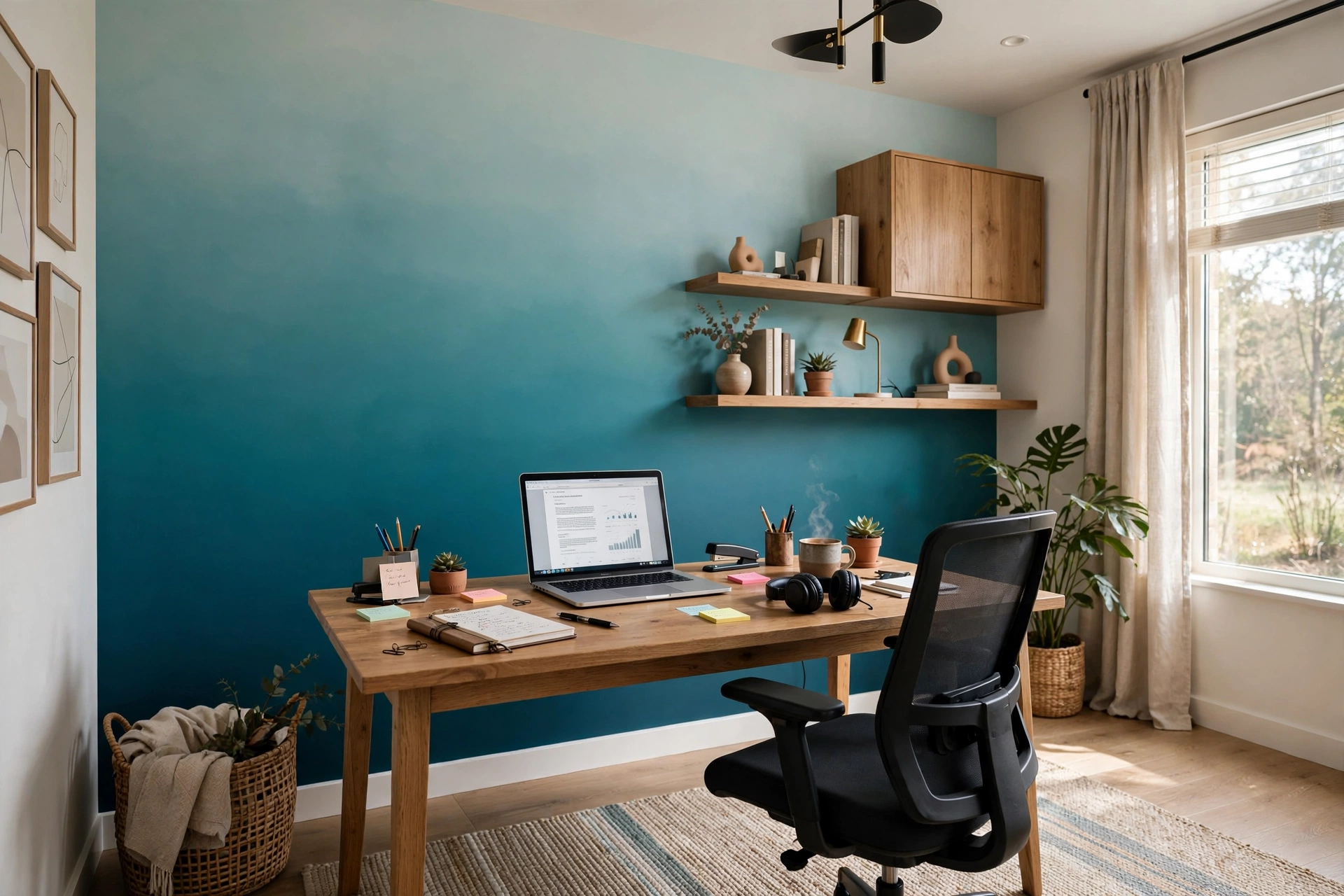
An ombre wall — color that melts from deep at the bottom to pale at the top — gives an office accent wall a dreamy, crafted quality. Blend three tints of the same color (say, deep teal at the base fading to mist at the ceiling) using dry-brush blending while the paint is wet, working in vertical sections. It looks hardest of all the ideas here, but the technique is forgiving because the gradient hides mistakes. The fade draws the eye upward, making low ceilings feel taller, and the soft transition is gentle on video calls. Seal it with a clear matte topcoat and keep the rest of the room simple — this wall is the whole show.
FAQ
Which wall should be the accent wall in a home office?
The wall behind your desk is the best default — it is what you see on video calls and it frames your workspace. If your desk faces a window for natural light, use the side wall instead, or choose the wall you face most often so the color supports your focus.
What is the best accent wall color for focus and productivity?
Deep blues, sage greens, and soft teals are the strongest choices — research links blue and green tones with steadier attention and calmer mood. Avoid bright reds and neon shades on a full wall, since stimulating colors can raise restlessness during long work sessions.
How do I make an accent wall look good on video calls?
Choose matte or eggshell sheen to prevent camera glare, keep the color medium-to-deep so you stand out from the background, and center your desk within the wall’s width. Avoid busy patterns directly behind your head — solid color, slats, or soft textures frame you best.
Can an accent wall work in a very small home office?
Yes — and it can help. A single accent wall adds depth that makes a small office feel larger, especially darker colors like navy or charcoal which visually recede. Keep the other walls light, use vertical elements like slats to add height, and avoid covering more than one wall.
Is paint or paneling better for an office accent wall?
Paint is cheaper, faster, and easiest to change — ideal if you like refreshing your space. Paneling like wood slats, shiplap, or board-and-batten adds texture, warmth, and some sound softening, which matters if you take calls in the room. Many offices use both: panels on the accent wall, paint elsewhere.
Keep Exploring
Your accent wall sets the tone, but the layers around it finish the room. Once the paint dries, ground the space with one of these home office rug ideas for a grounded focused workspace — the right rug under your desk ties the accent wall’s color into the whole floor plan and keeps your workspace feeling intentional from every angle.

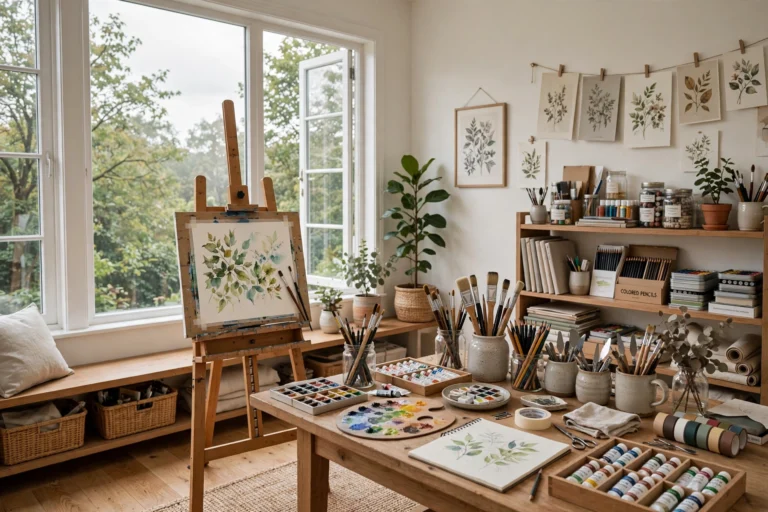
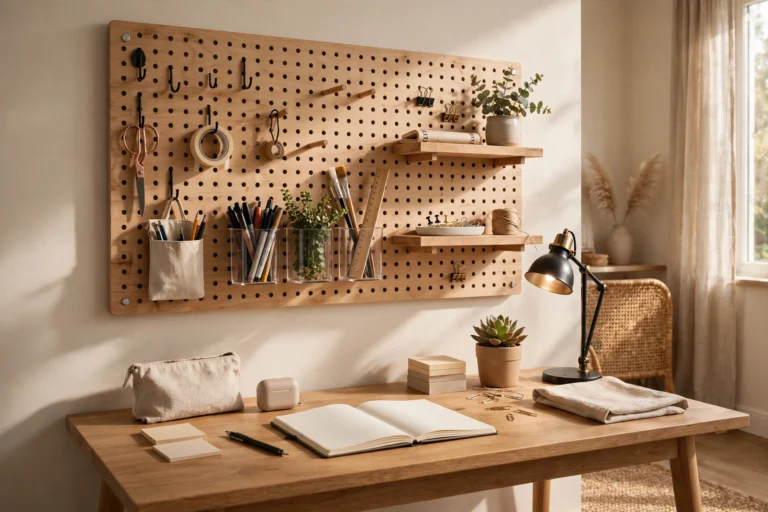
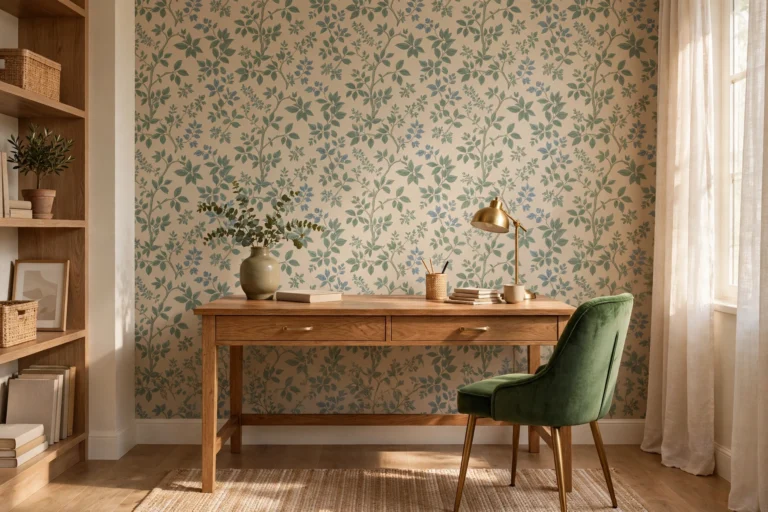




[…] and a surface, add storage as the practice grows, and protect the floors so you can work boldly. Home office accent wall ideas for a focused creative space show how the two zones can live beautifully side by […]