
There is something deeply calming about waking up next to living green things. Plants soften hard bedroom corners, clean up the look of empty floor space, and make even the plainest rental feel like a considered retreat. These bedroom plant ideas work for every light level and skill level — from near-indestructible snake plants to lush hanging pothos — so you can build your own calm, green sleep space without becoming a full-time plant parent.
Before you buy anything, read your room the way a plant would. Which way do your windows face? How many hours of direct sun does the sill actually get? Is the room warm and dry, or cool and drafty? Matching the plant to the spot beats forcing a sun-lover into a dark corner every time. Once you know your conditions, the greenery styling below becomes easy — and if you want to carry the leafy look into the rest of your home, these lush living room plant decor ideas use the same easy-care principles for bigger, brighter spaces.
1. Park a Snake Plant by the Nightstand
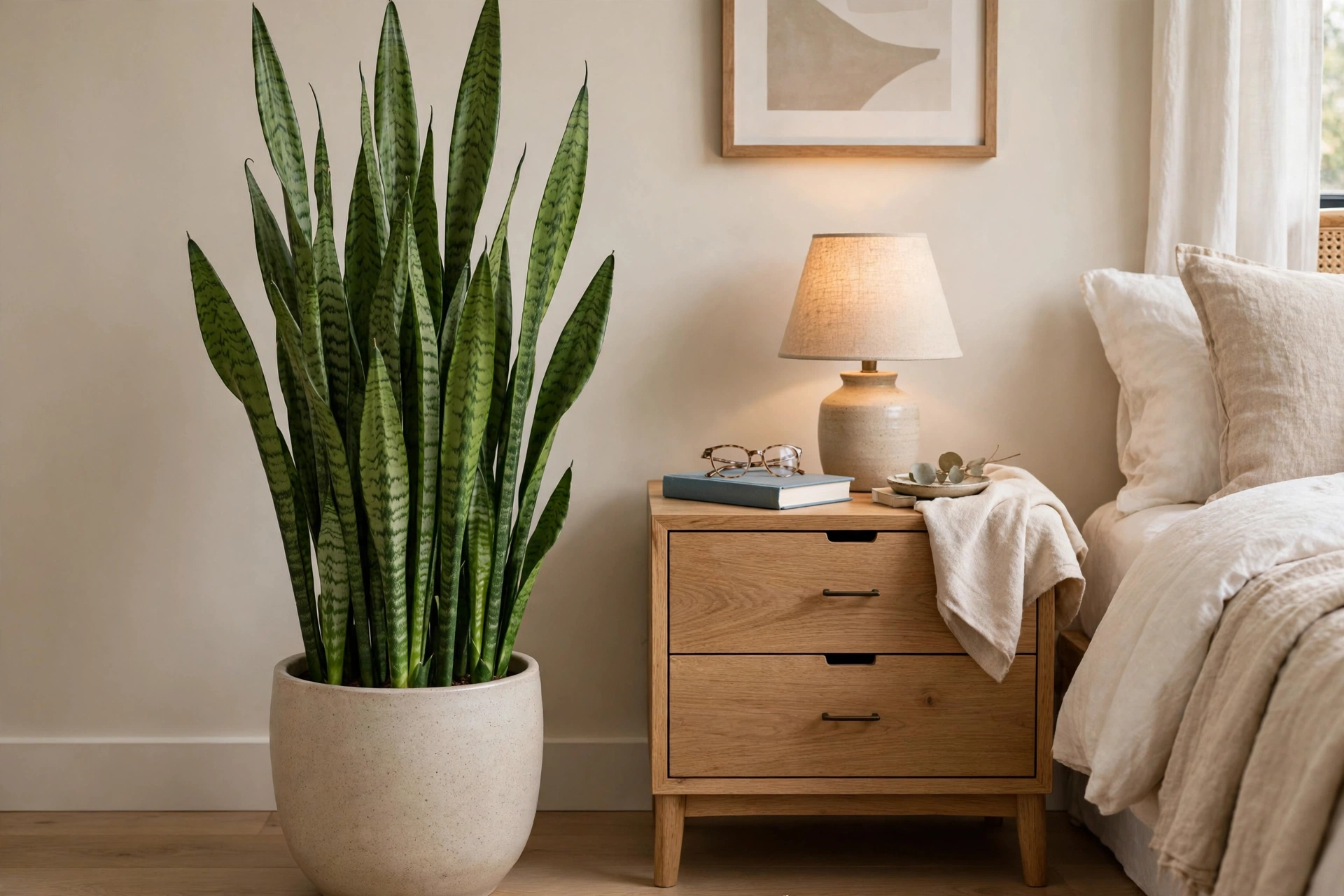
The snake plant is the classic bedroom plant idea for a reason: it tolerates low light, shrugs off missed waterings, and keeps its sculptural, upright leaves looking sharp year-round. Its vertical shape fits beautifully beside a nightstand or in the narrow gap between the bed and the wall where nothing else seems to work. Plant it in a well-draining cactus mix and let the soil dry completely between waterings — overwatering is genuinely the only way to kill one. Snake plants also release oxygen at night rather than during the day like most houseplants, which is a nice bonus for a sleep space. Choose a tall cylindrical pot in your bedding’s accent color and the whole corner looks intentional, not improvised.
2. Trail a Pothos from a High Shelf
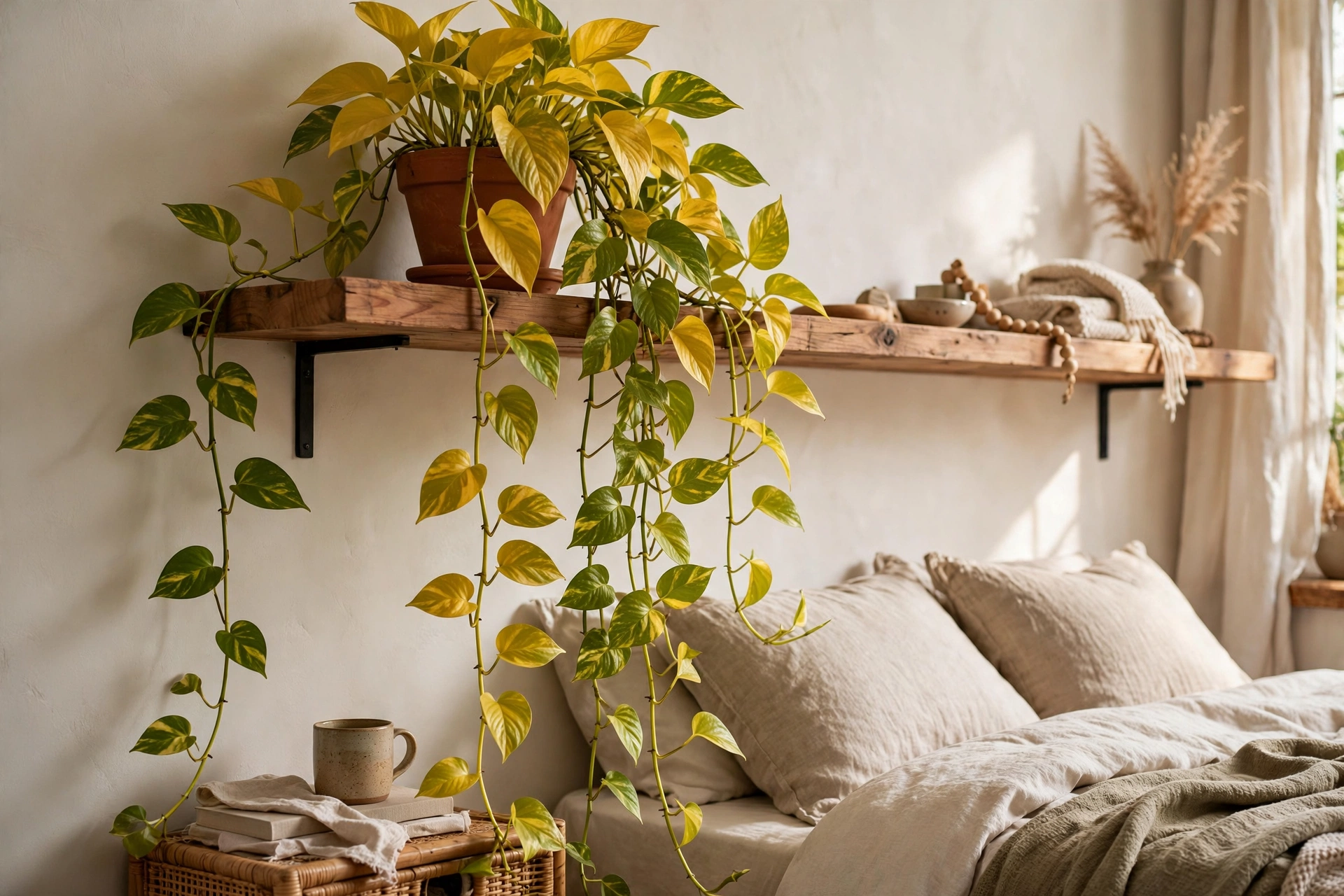
Pothos is the most forgiving trailing plant you can own, making it perfect for bedroom shelving, armoire tops, and floating ledges. It grows happily in low to medium light, tells you clearly when it is thirsty (the leaves droop softly), and bounces back within hours of a drink. Let the vines cascade down over a bookshelf edge for instant softness, or train them up a small trellis for a tidier look. Golden pothos, marble queen, and neon varieties give you three different color stories from the same easy-care plant. Trim the longest vines a few inches back each spring and propagate the cuttings in water — free plants for the rest of the house within weeks.
3. Rescue Dark Corners with a ZZ Plant
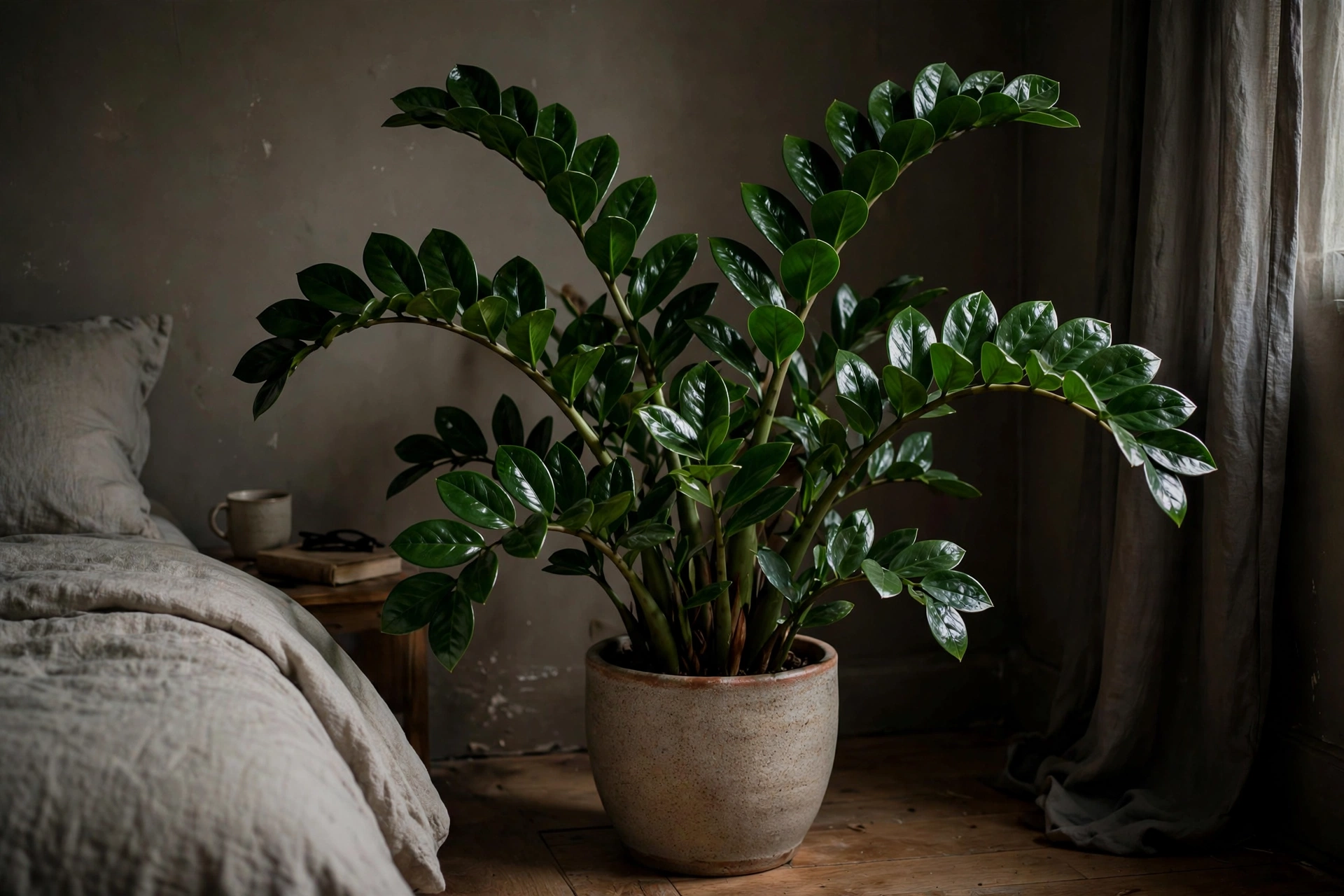
Every bedroom has one: the shadowy corner far from any window where decor goes to die. The ZZ plant was practically designed for it. With glossy, deep-green leaflets on arching stems, it looks far more expensive than it is, and it thrives on neglect — low light, infrequent watering, and dry indoor air are all fine. Its thick rhizomes store water underground, so watering every two to three weeks is plenty, and even a missed month rarely causes harm. Keep it away from direct hot sun, which scorches the leaves, and wipe the foliage with a damp cloth occasionally to keep that signature shine. It is one of the few plants that genuinely prefers the bedroom’s calm, dimmer conditions.
4. Make a Statement with a Large Floor Plant
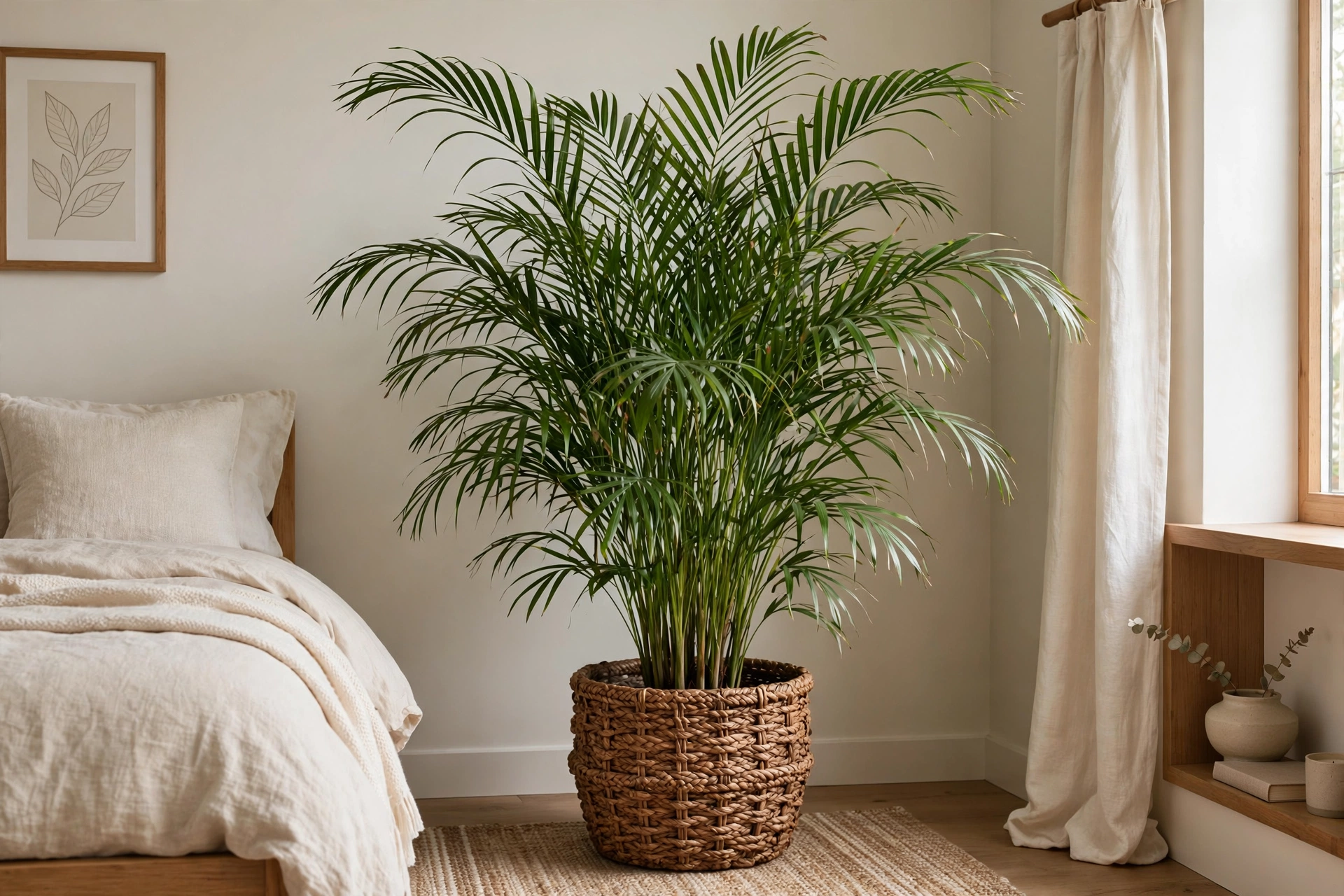
One large plant changes a bedroom’s whole atmosphere faster than a dozen small ones. A parlor palm, a dracaena, or a small olive tree in a floor planter fills an awkward empty corner and gives the room the kind of layered, finished feeling that furniture alone cannot. Aim for a plant roughly two-thirds the height of your ceiling’s visible wall space — big enough to read as a deliberate focal point, not a lonely afterthought. Floor plants anchor reading chairs and dressers beautifully, and a single dramatic silhouette behind a bench or chaise reads as high-end styling. Remember that bigger pots dry out more slowly, so always check the top two inches of soil before watering.
5. Hang Planters and Reclaim the Floor
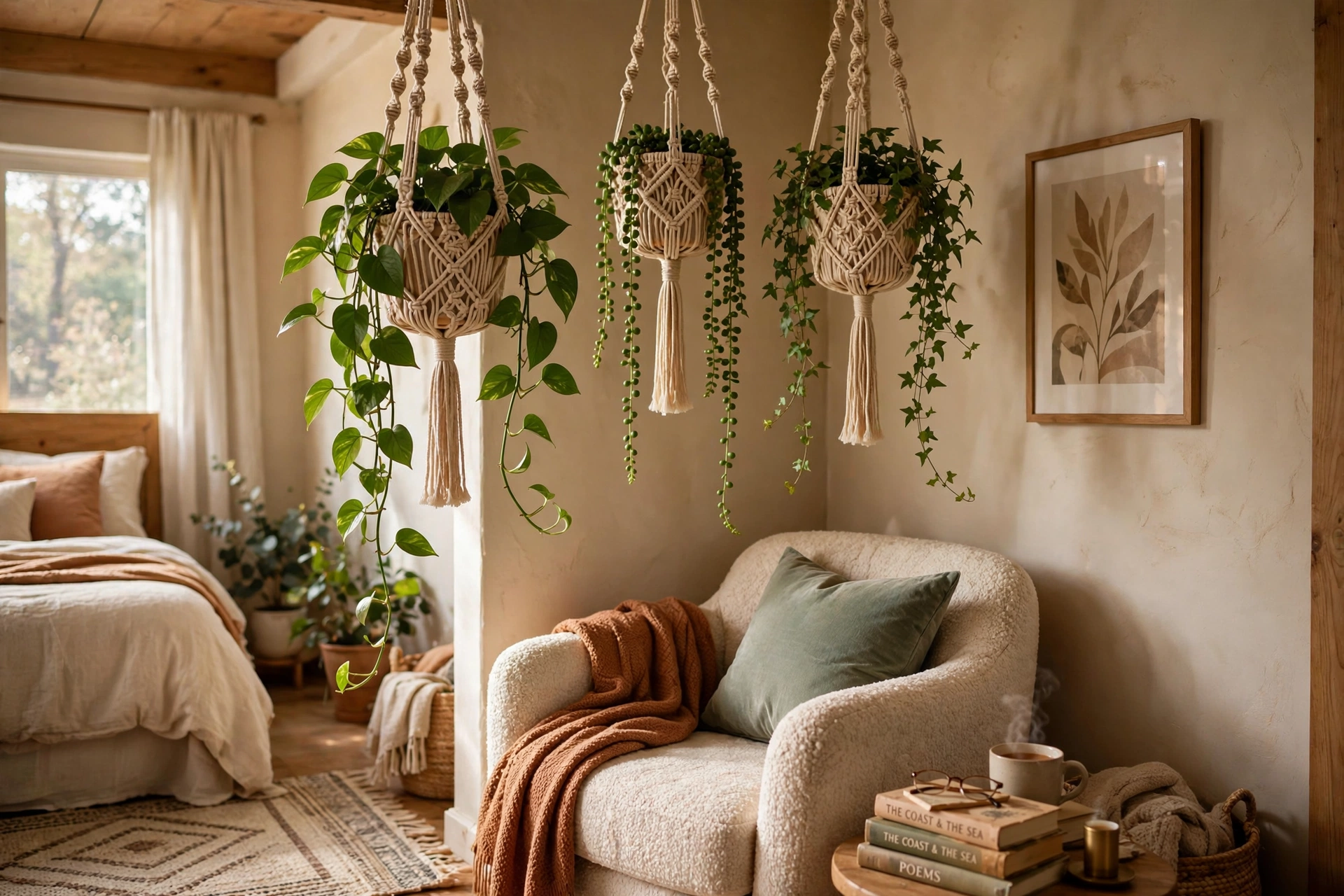
When floor and surface space are limited, the ceiling is your friend. Macrame hangers, brass ceiling hooks, and wall-mounted plant brackets lift greenery off every horizontal surface and draw the eye upward — a trick that makes small bedrooms feel taller. Hanging pothos, heartleaf philodendron, and spider plants all thrive with their roots out of the way and their foliage spilling downward. Hang at slightly different heights in groups of three for a curated, cascading look, keeping them clear of the bed itself so watering drips never land on your pillows. A single well-placed hanging planter above a reading nook can replace a whole piece of wall art.
6. Style a Sunny Windowsill Cluster
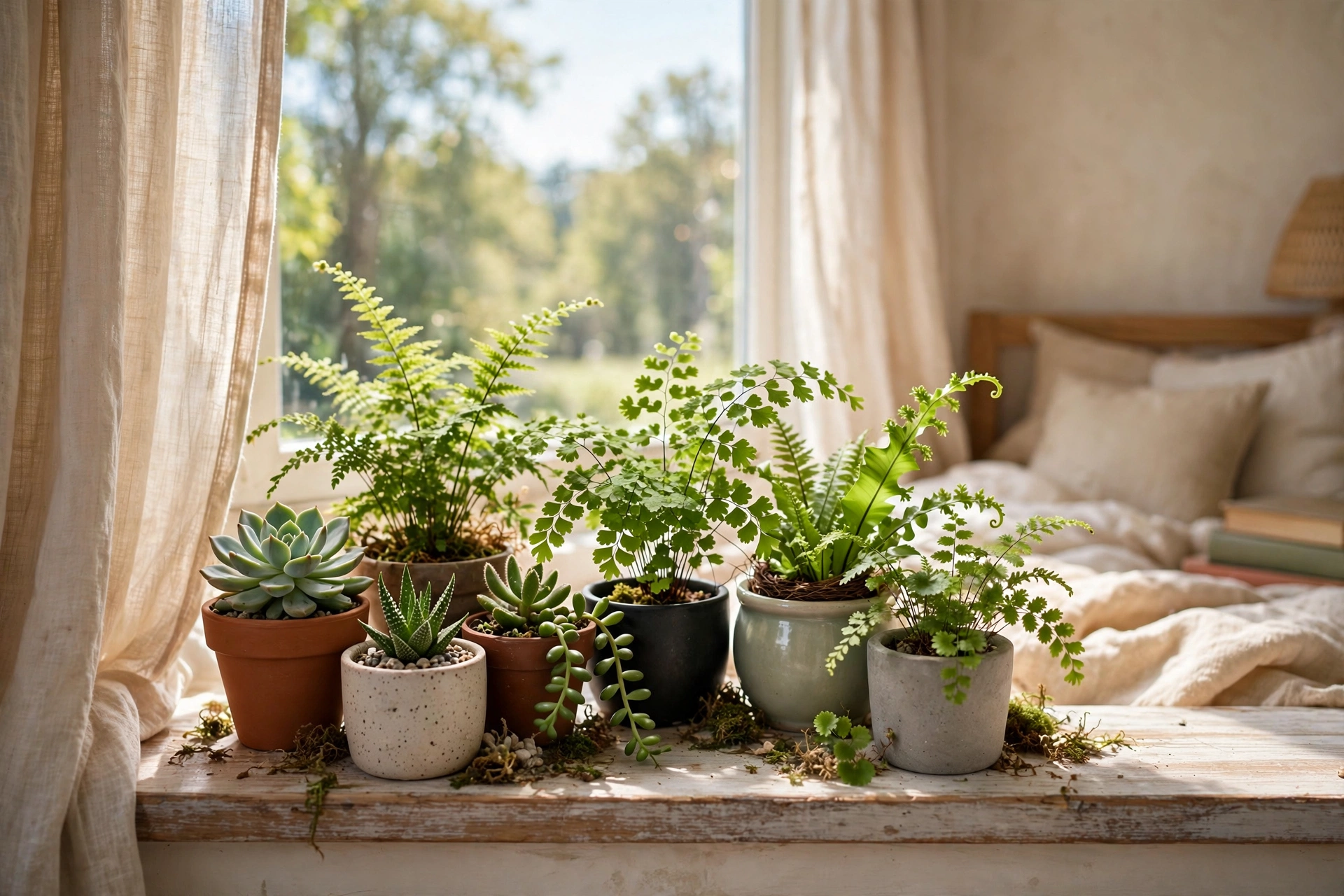
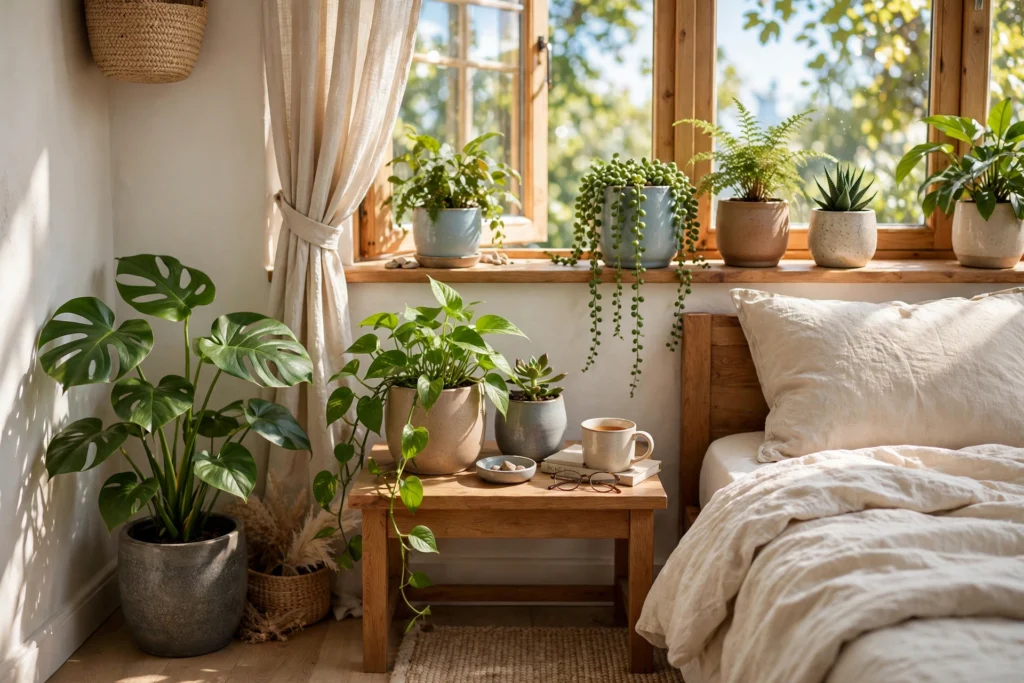
The windowsill is the brightest real estate in most bedrooms, and a small cluster of plants there turns morning light into a daily ritual. Group three to five plants of varying heights — a compact succulent, a small fern, a trailing string-of-hearts — in coordinating pots so the arrangement reads as one composition rather than a random lineup. Odd numbers photograph better and feel more natural. Succulents and cacti love the direct sun a south-facing sill provides, while east-facing windows suit almost everything. Rotate each pot a quarter turn weekly so growth stays even, and use a small tray underneath to catch watering overflow and protect the paint.
7. Soften the Room with a Peace Lily

Few bedroom plants feel as serene as a peace lily. Its deep-green, glossy leaves and occasional white blooms bring a soft, spa-like calm that suits a sleep space perfectly, and it is one of the best low-light bloomers available. Peace lilies also appreciate the slightly higher humidity many bedrooms have, and they are wonderfully communicative — leaves droop dramatically when thirsty, then perk up quickly after watering. Keep the soil consistently moist but never soggy, and place it in bright indirect light for the most flowers. One caution: peace lilies are mildly toxic if chewed, so keep them out of reach of curious cats and dogs.
8. Choose Pet-Safe Greens for Animal Households
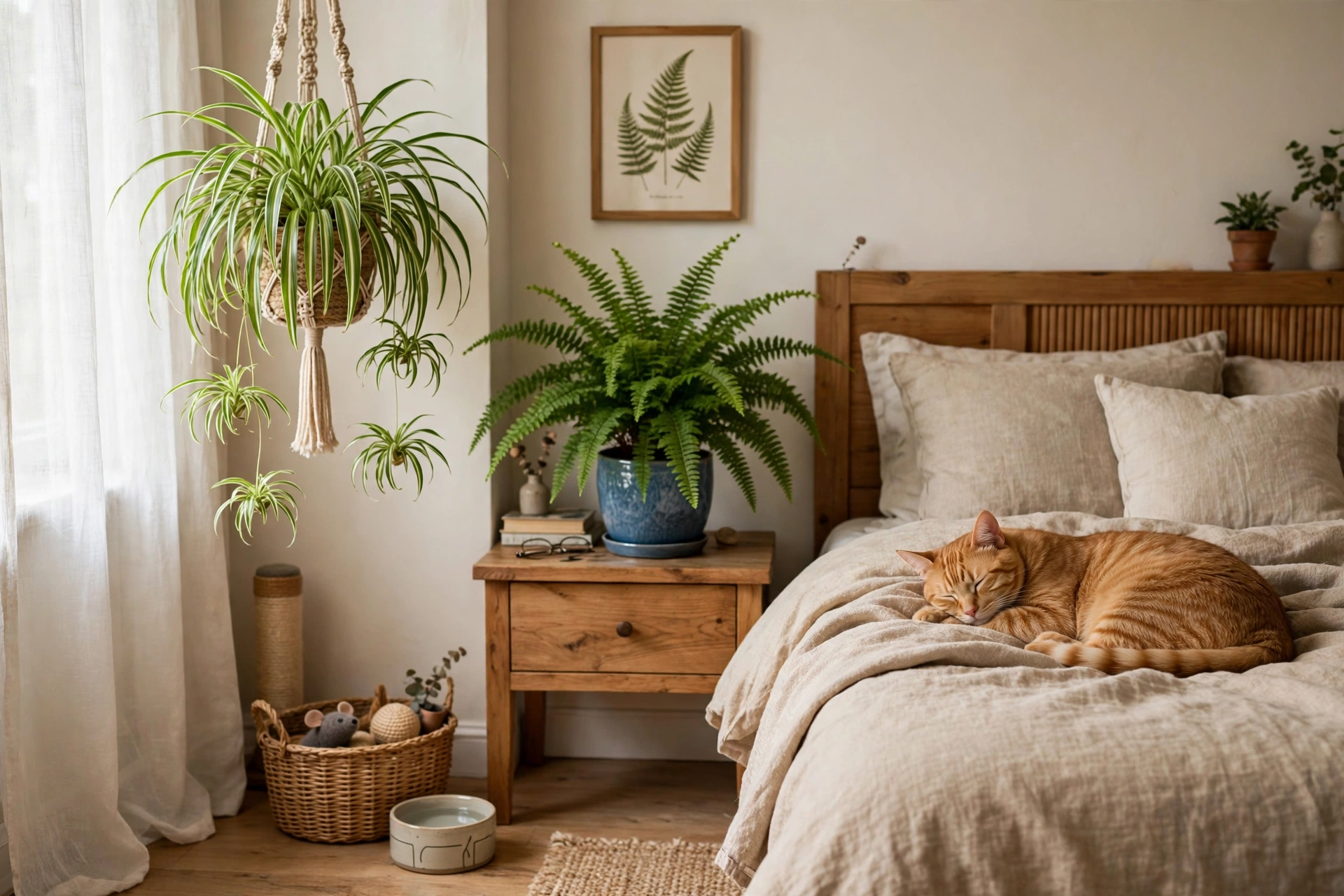
If a cat or dog shares your bedroom, plant choice becomes a safety question first and a style question second. The good news is that plenty of beautiful plants are non-toxic to pets: parlor palms, spider plants, Boston ferns, calatheas, and most true ferns are all safe bets. Spider plants are especially fun — they are nearly indestructible, tolerate low light, and produce dangling baby plantlets you can pot up and share. Keep a reliable toxicity reference handy before bringing anything home, since popular plants like pothos, peace lilies, and ZZ plants are toxic if eaten. When in doubt, hang tempting trailing plants well out of paw’s reach.
9. Add Height with Sculptural Plant Stands
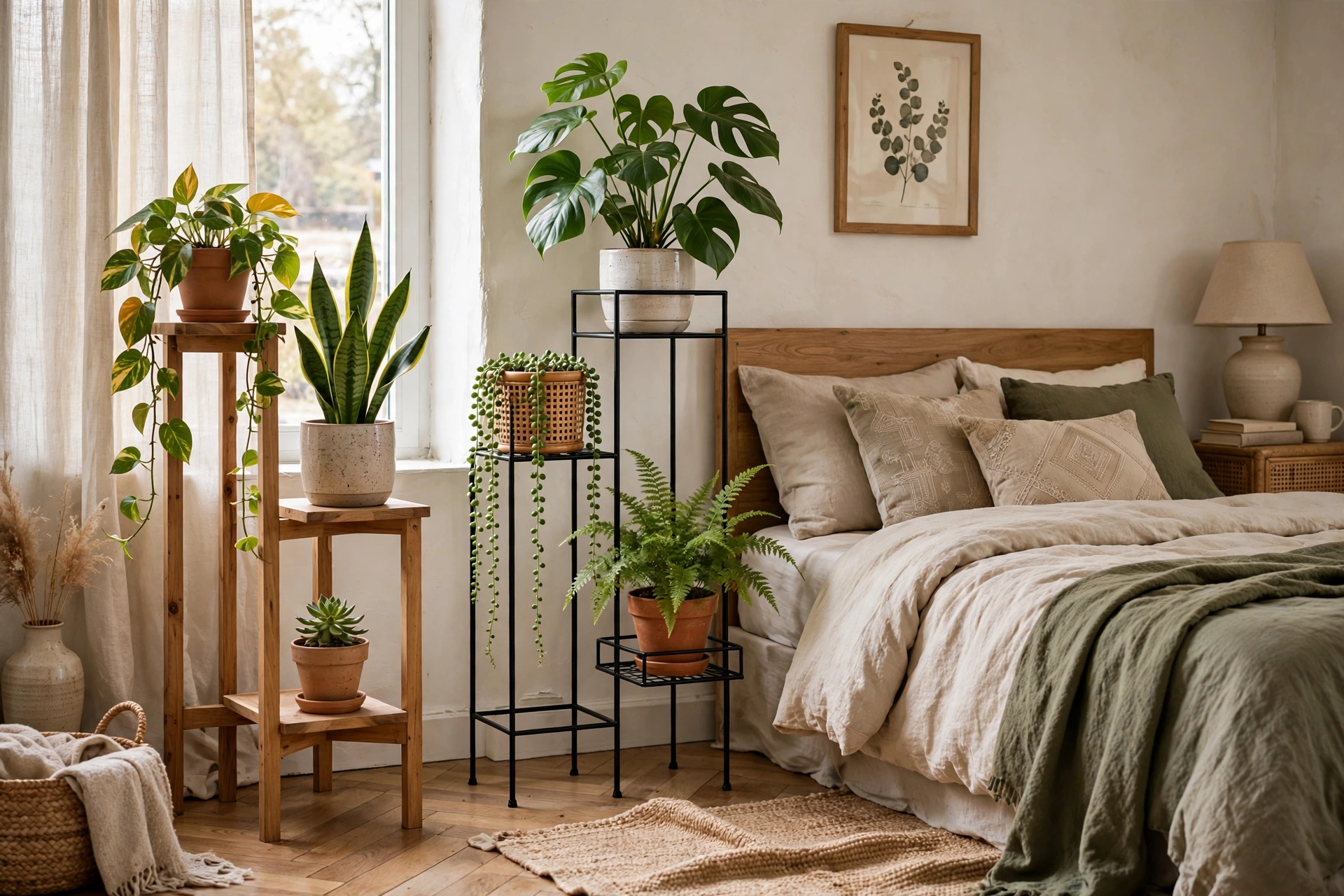
A plant sitting directly on the floor can look flat and lost, but the same plant on a stand suddenly has presence. Mid-century wood stands, black metal frames, and woven rattan risers lift greenery to different heights, creating the layered, gallery-like look that makes bedrooms feel professionally styled. Stands also protect floors from moisture rings and improve air circulation around the pot. Try a tall stand beside a low dresser to balance the heights, or cluster two or three stands of graduated sizes in an empty corner for a mini indoor garden. Bamboo and light wood stands suit calm, neutral bedrooms; black metal adds crisp contrast.
10. Try a Terrarium on the Dresser
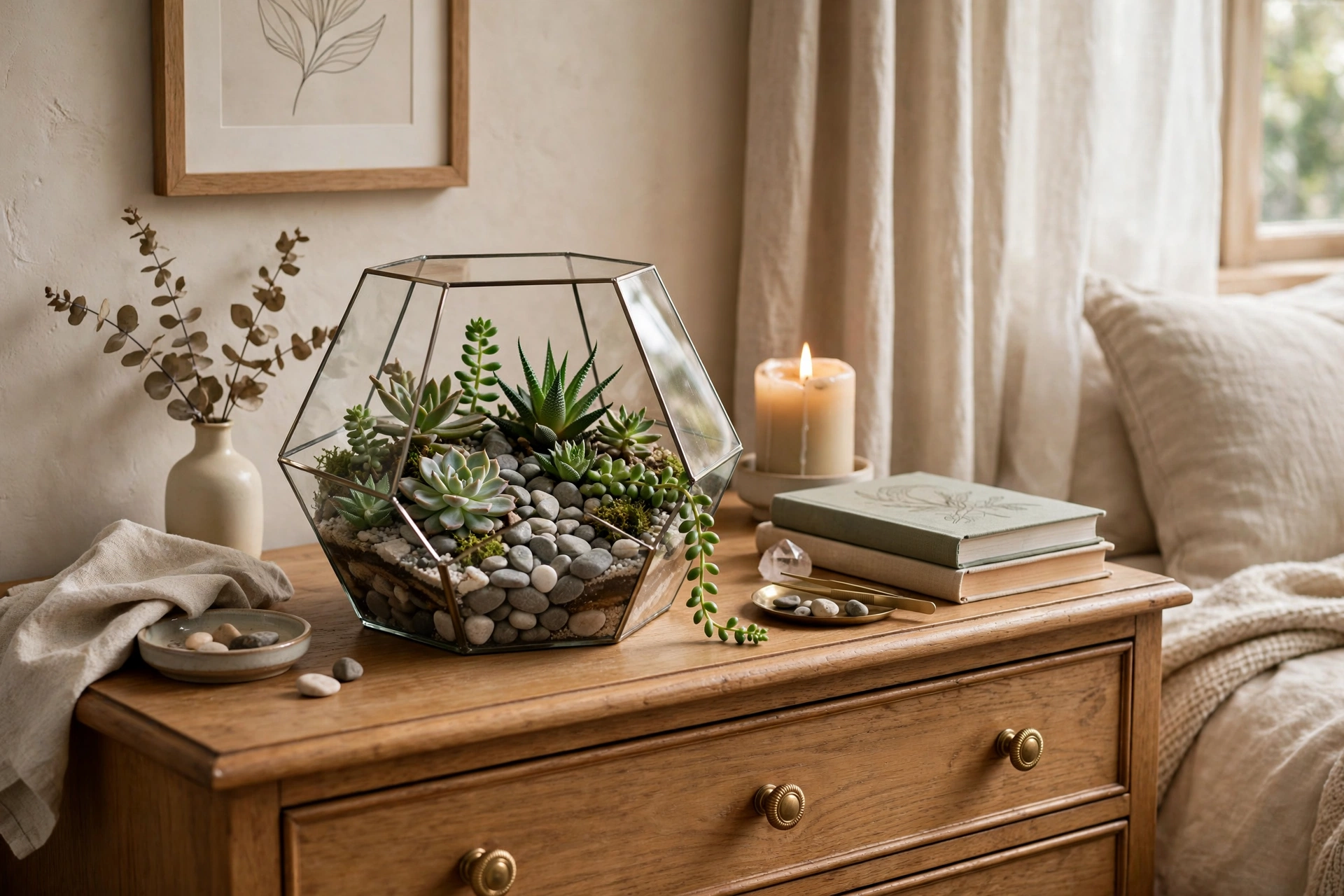
Terrariums are the jewelry of the plant world — small, contained, and endlessly charming on a dresser, vanity, or bedside table. An open glass terrarium with a few small succulents or air plants needs almost no maintenance beyond bright light and the occasional mist, while a closed terrarium with ferns or mosses creates its own little humid ecosystem. Layer pebbles, activated charcoal, and soil for proper drainage, and resist the urge to overwater: a teaspoon or two at a time is plenty. Because they are self-contained, terrariums are ideal for renters and for anyone who wants greenery without committing to a watering schedule.
11. Build a Renter-Friendly Plant Wall
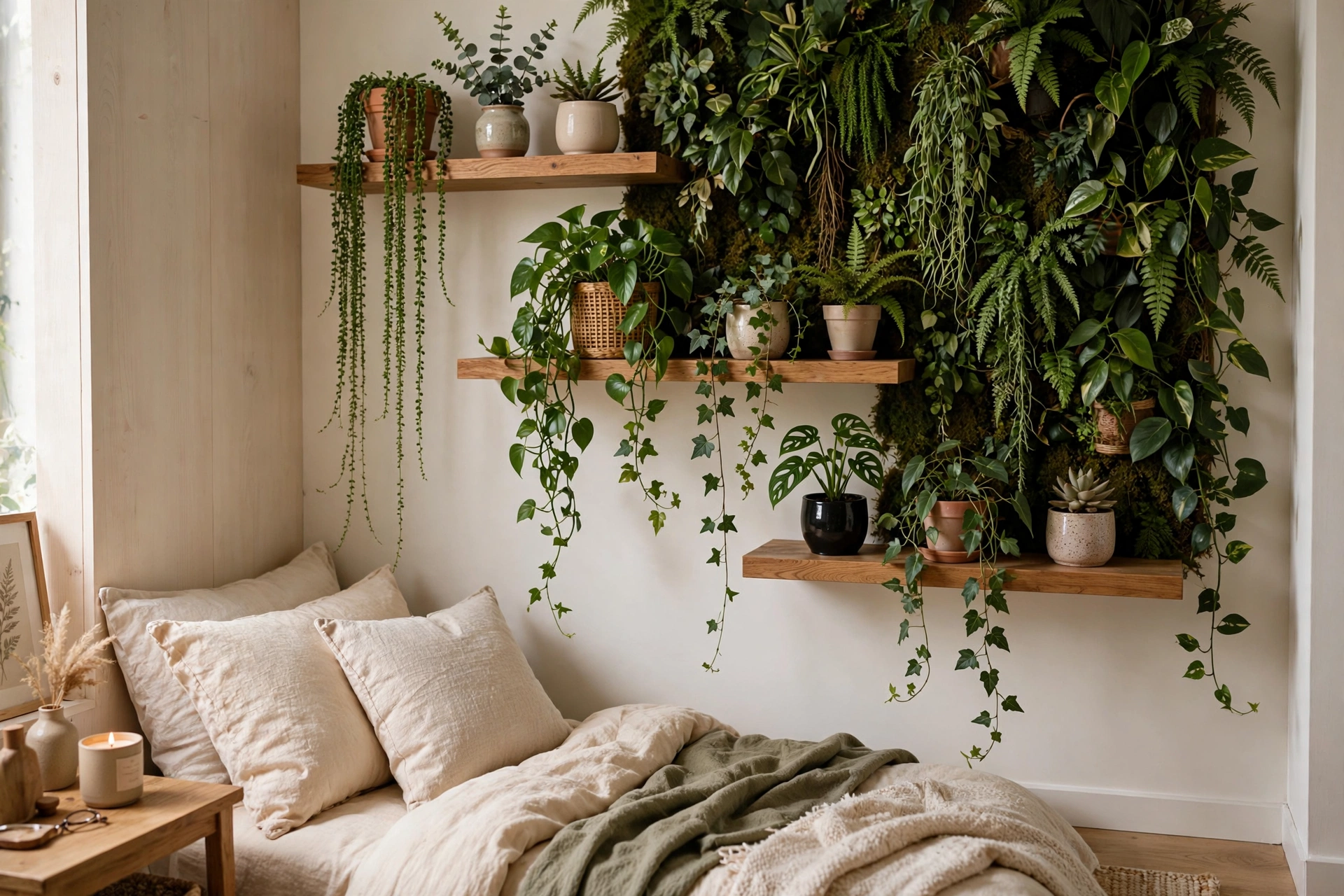
A plant wall sounds ambitious, but a small-scale version is entirely renter-friendly. Mount a wooden pegboard or a few floating shelves with heavy-duty adhesive strips, then fill them with small potted plants, trailing vines, and a couple of air plants in wall pockets. The result is a living focal point above a dresser or beside the bed that costs a fraction of a professional installation. Stick to lightweight pots and plants to keep the load safe, and choose trailing varieties like philodendron so the greenery spills over the edges and hides the hardware. This is one of the most impactful bedroom plant ideas for plain walls, and everything comes down cleanly at move-out.
12. Group Plants to Boost Humidity
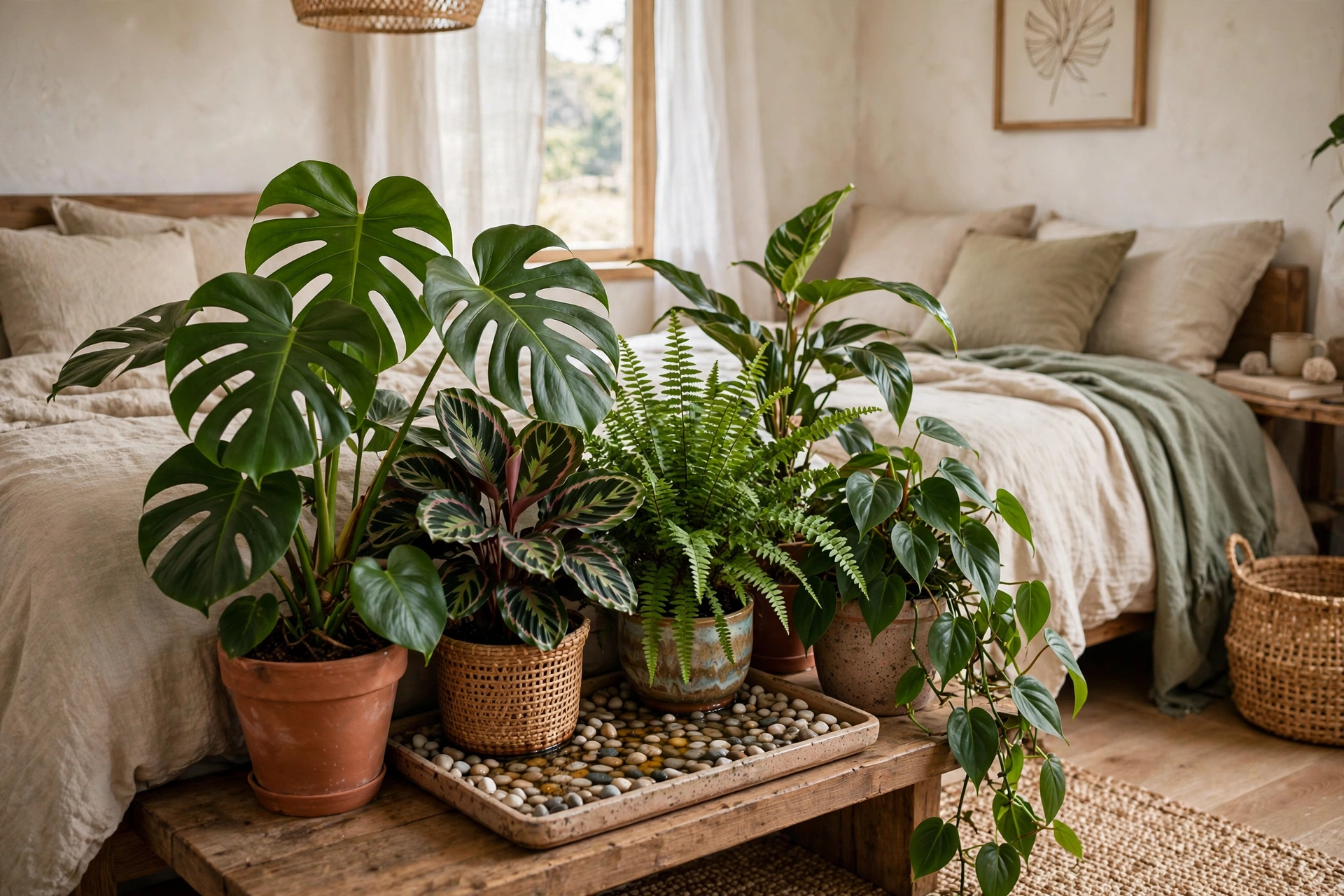
Bedrooms with forced-air heating or air conditioning tend to run dry, and tropical plants notice. Grouping several plants close together is the simplest fix: as each plant transpires, the shared air around the cluster stays a little more humid, and everyone benefits. Add a pebble tray — a shallow dish of pebbles filled with water just below the pot base — under the thirstiest members, and the gentle evaporation gives ferns, calatheas, and peace lilies the moisture they crave. A small humidifier near the cluster does even more during winter. Higher humidity also happens to feel better for sleeping skin and sinuses, so this is one plant-care habit that pays you back directly.
13. Keep Air-Purifying Claims Honest
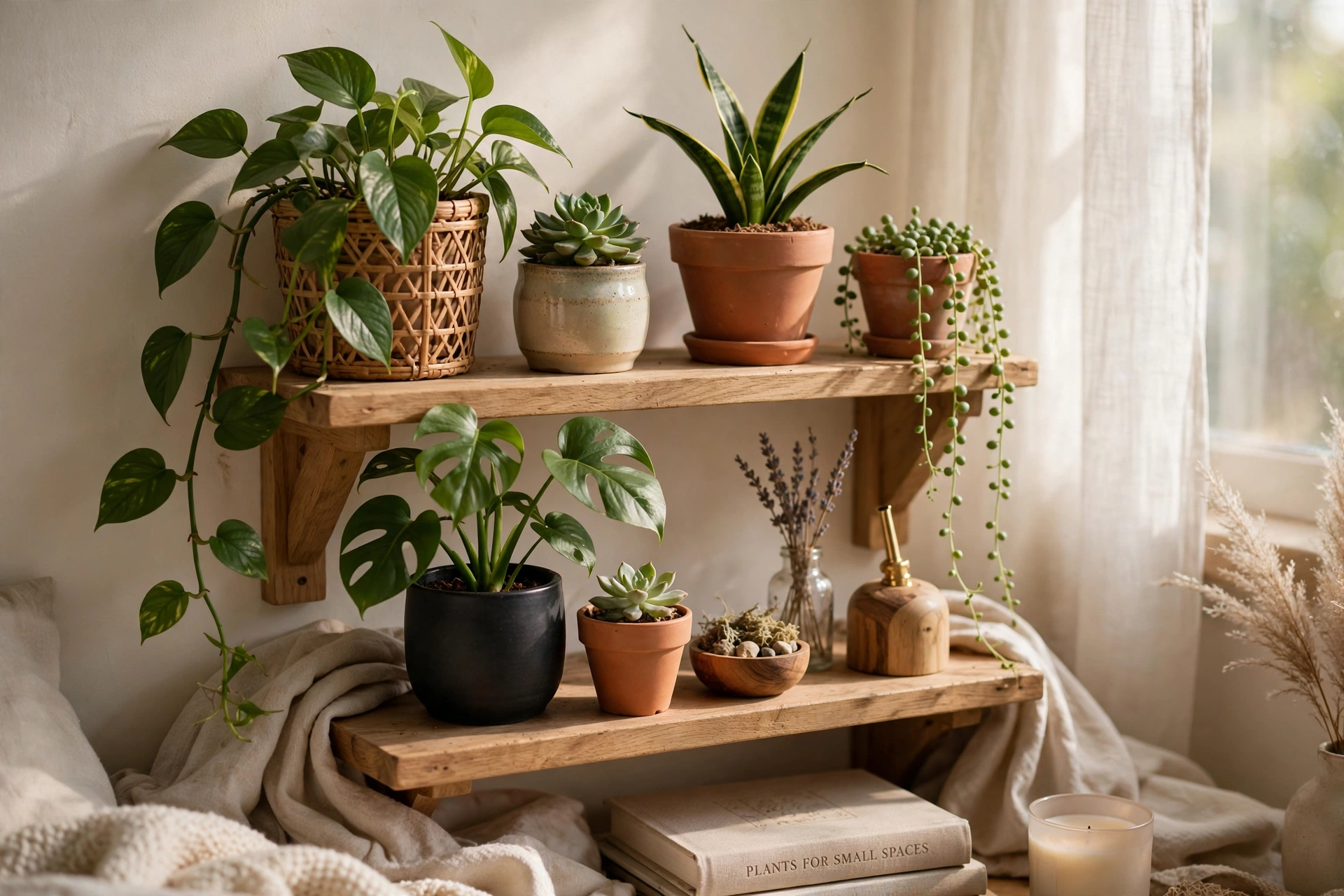
You will see plenty of articles claiming bedroom plants “purify the air,” so here is the honest version. The famous NASA Clean Air Study found that certain houseplants can remove volatile organic compounds like formaldehyde and benzene in sealed laboratory chambers — fascinating research, and the NASA Clean Air Study summary is worth a read for the full plant list. But later reviews concluded you would need an impractical jungle — dozens to hundreds of plants per room — to measurably change a real home’s air, since normal ventilation already handles the job. So enjoy your plants for what they genuinely deliver: beauty, calm, a touch of humidity, and the proven mood lift of caring for living things. That is more than enough reason to fill your bedroom with green.
14. Dress Them Up in Beautiful Pots
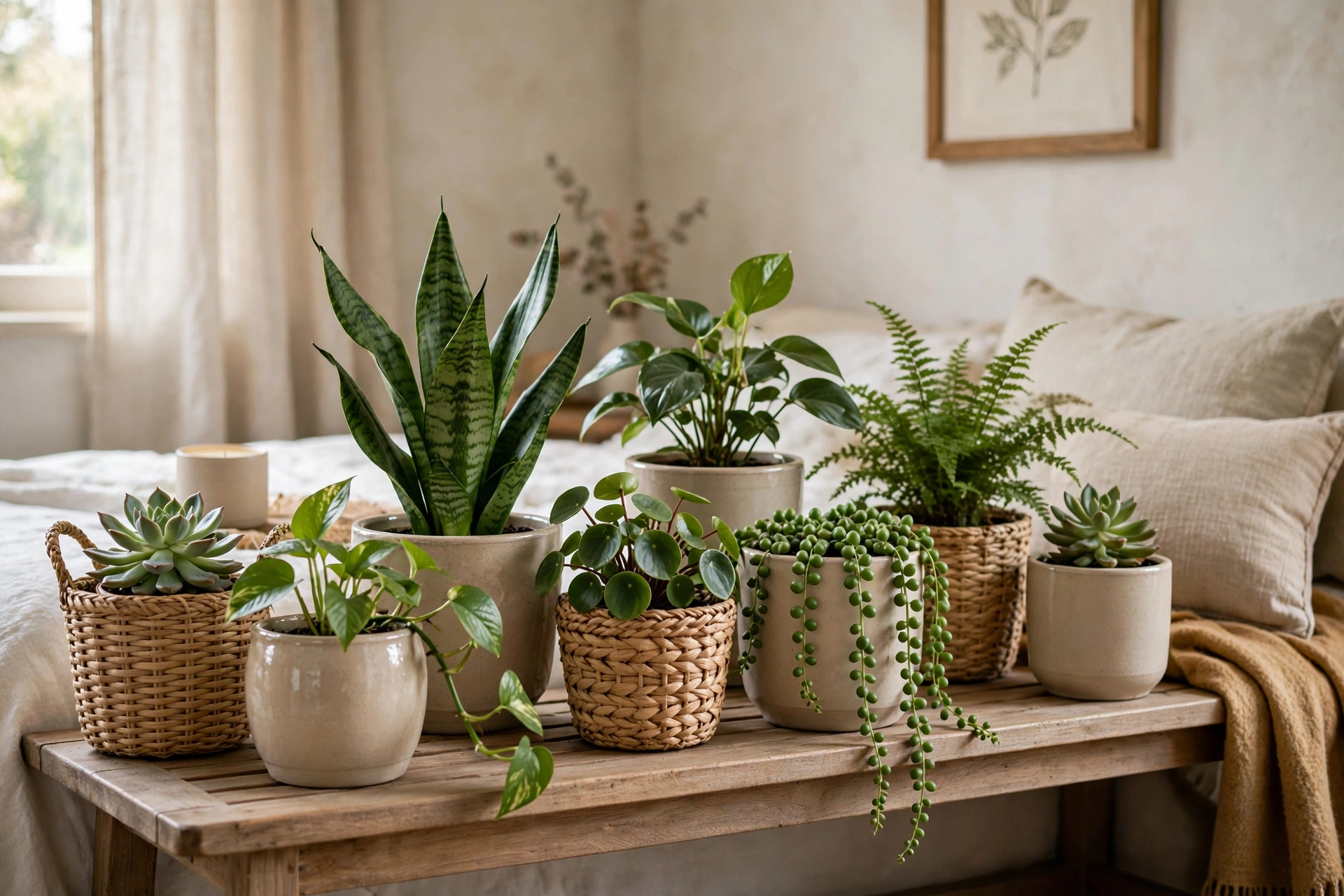
The pot is half the decor. A five-dollar pothos in a handmade ceramic planter looks like a design-magazine styling choice, while the same plant in its flimsy nursery pot looks like an errand you forgot to finish. Choose pots that echo your bedroom’s palette — matte ceramics in warm neutrals, woven seagrass baskets for texture, or glazed stoneware for a pop of color — and repeat one material across several plants for a cohesive look. Cache pots (decorative outer pots with no drainage) let you use any beautiful container while keeping the plant in its plastic nursery pot inside; just empty excess water after watering. Coordinating pots is the fastest way to make a mixed plant collection look deliberately curated.
15. Set a Simple Weekly Watering Routine
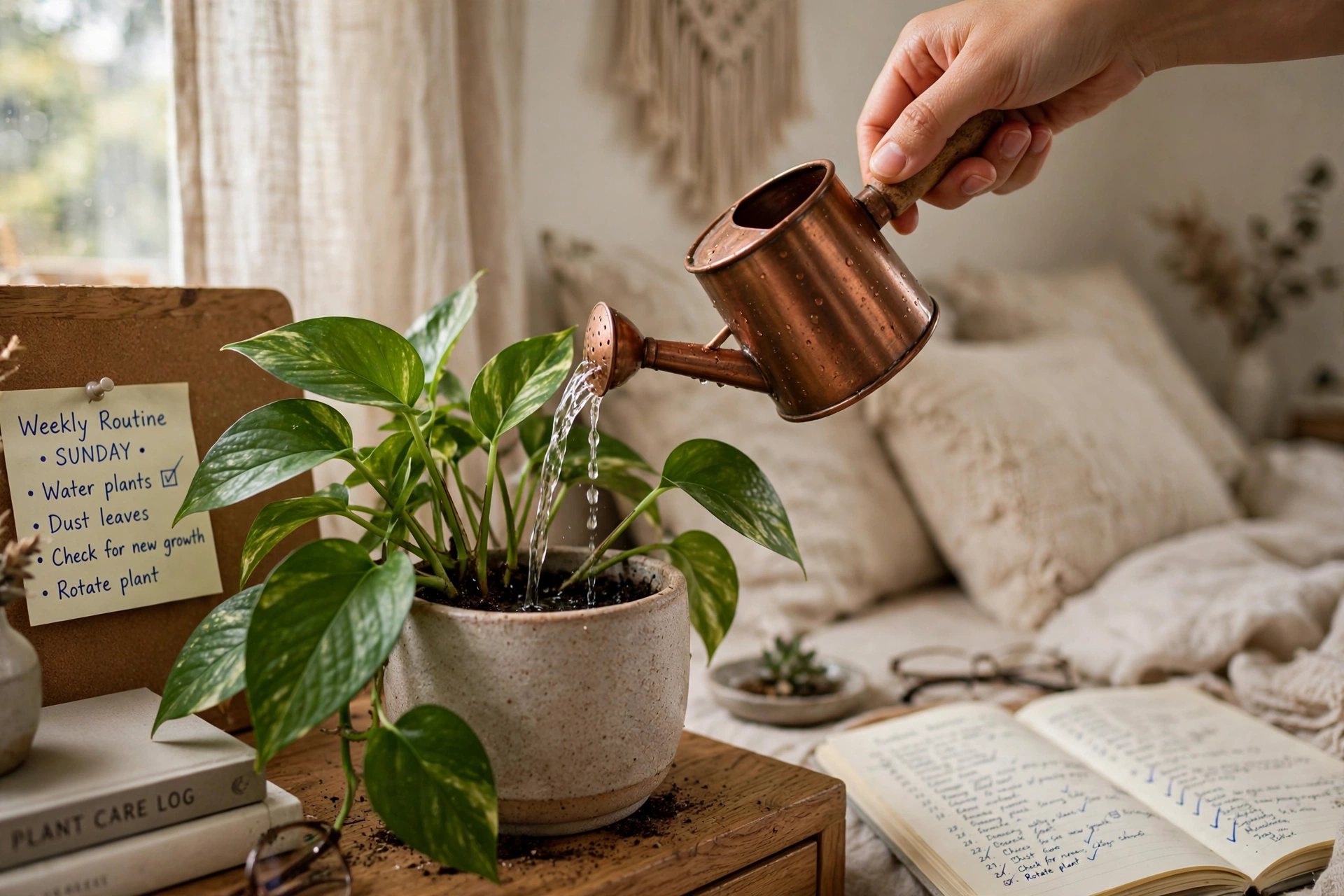
The secret to thriving bedroom plants is not talent — it is routine. Pick one day a week as plant-check day: walk the room, poke a finger into each pot, and water only the ones whose top inch or two of soil feels dry. Most bedroom plants die from too much love, not too little, so when in doubt, wait. Keep a small watering can in the room so the habit is frictionless, and note each plant’s rhythm on your phone the first month until it becomes second nature. Dust the leaves monthly with a damp cloth so they can photosynthesize properly. Ten minutes a week keeps the whole collection lush, and the ritual itself becomes part of the room’s calming routine. For authoritative guidance on specific plants’ water and light needs, the RHS plant advice pages are an excellent, science-backed reference.
Frequently Asked Questions
Do plants in the bedroom affect sleep?
For most people, bedroom plants improve the sleep environment rather than harming it. The old worry about plants “stealing oxygen” at night is a myth for all practical purposes — a few houseplants consume a negligible amount of oxygen compared to a sleeping human and a ventilated room. What plants genuinely do is soften the room visually, add gentle humidity, and create a calming ritual of care, all of which support winding down. If you are sensitive to pollen or strong fragrances, stick to non-flowering foliage plants like snake plants and pothos rather than heavily scented bloomers.
Which bedroom plants are safe for pets?
Pet-safe bedroom favorites include parlor palms, spider plants, Boston ferns, calatheas, and prayer plants — all non-toxic to cats and dogs. Avoid common toxic picks like pothos, peace lilies, ZZ plants, and snake plants in rooms where pets chew foliage, or place those out of reach on high shelves and hanging planters. If you are unsure about a specific plant, check a veterinary toxicity database before buying. Many bedroom plant lovers keep a simple rule: trailing plants hang high, pet-safe plants sit low.
What are the best low-light plants for a bedroom?
Snake plants, ZZ plants, and pothos are the unbeatable trio for dim bedrooms — all tolerate low light and irregular watering. Cast iron plants, parlor palms, and Chinese evergreens are strong backups that handle shade gracefully. Even “low light tolerant” plants grow better with some brightness, so place them as close to the window as the layout allows and rotate pots regularly. Avoid succulents and cacti in truly dark rooms; they need direct sun to stay compact and healthy.
How often should I water bedroom plants?
Most bedroom houseplants want water roughly every one to two weeks, but the calendar matters less than the soil. Check the top inch or two with your finger: dry means water, damp means wait. Succulents and snake plants prefer to dry out completely between drinks, while ferns and peace lilies like steady, light moisture. Bathrooms with their steamy air suit moisture-loving plants beautifully — see these fresh bathroom plant ideas for picks that thrive in humidity — but bedrooms run drier, so group tropicals together or use a pebble tray. Always empty saucers so roots never sit in water.
Can I have lots of plants in a small bedroom?
Absolutely — small bedrooms are some of the best rooms for plants, because greenery fills dead corners without adding visual clutter. Go vertical with hanging planters, wall shelves, and tall narrow stands so the floor stays clear. A good rule of thumb is one larger statement plant plus three to five smaller ones, all in coordinating pots so the collection reads as intentional. Keep walkways clear and avoid placing large plants where they block natural light from reaching the bed.
Keep Exploring
Your bedroom should be the calmest room in your home, and greenery is one of the simplest ways to get there — pick two or three ideas that match your light and your routine, then let the collection grow naturally. When the plants are settled, layer in the rest of the calm: soft bedding, warm light, and a restful color palette like these sage green bedroom design ideas, calm and timeless, which pair beautifully with lush greenery.
A green bedroom is never really finished — it grows with you, one new leaf at a time.