
A masculine bedroom is not about stereotypes — it is about confidence, restraint, and materials with real character. Think deep color, honest textures, and furniture that feels built to last rather than decorated to impress. Whether you are designing for yourself or balancing a shared room, masculine bedroom ideas bring a grounded, grown-up energy that stays stylish far longer than passing trends.
These 15 masculine bedroom ideas cover everything from moody paint and leather to industrial lighting and smart texture layering. Industrial bedroom design ideas with raw urban style pair naturally with everything here.
1. Moody Dark Walls for Instant Drama
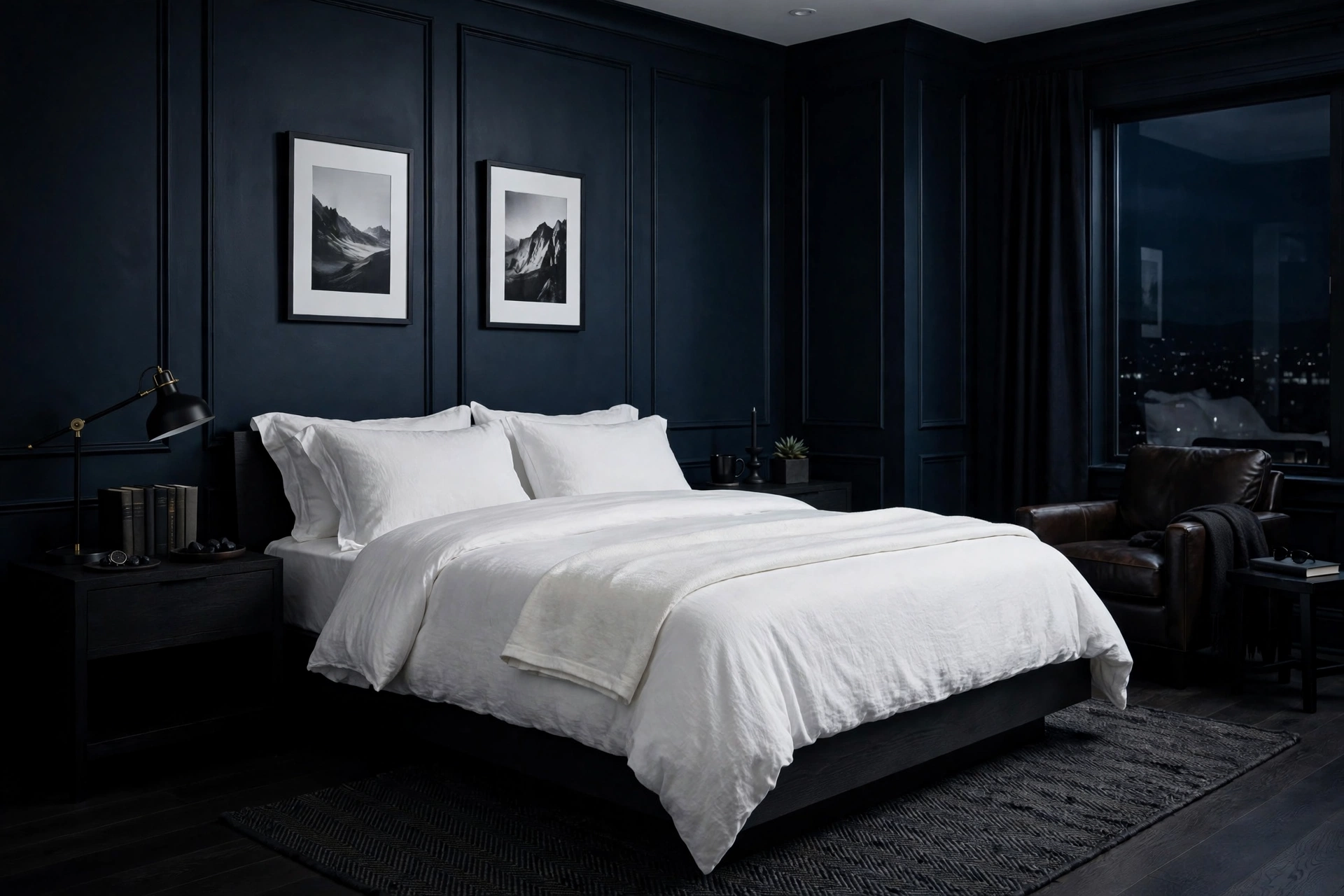
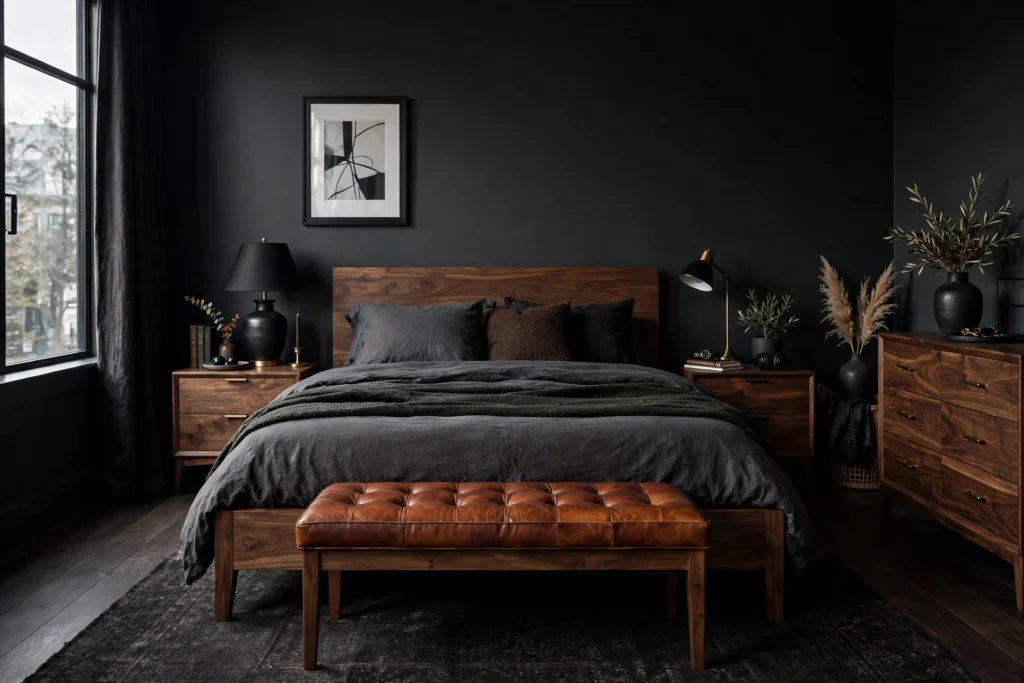
Dark walls are the fastest route to a masculine bedroom with real presence. Charcoal, deep navy, espresso, and forest green wrap the room in a cocooning feel that lighter colors cannot match, and they make everything else in the room — bedding, art, wood tones — look richer by contrast. Paint all four walls for full drama, or start with the bed wall if you want to test the waters. Satin or eggshell finishes keep dark paint from looking flat, and good lighting becomes non-negotiable: layer a ceiling fixture, bedside lamps, and a floor lamp so the room glows instead of broods. Crisp white bedding against dark walls is the classic high-contrast pairing that always works.
2. Leather Accents That Age Beautifully
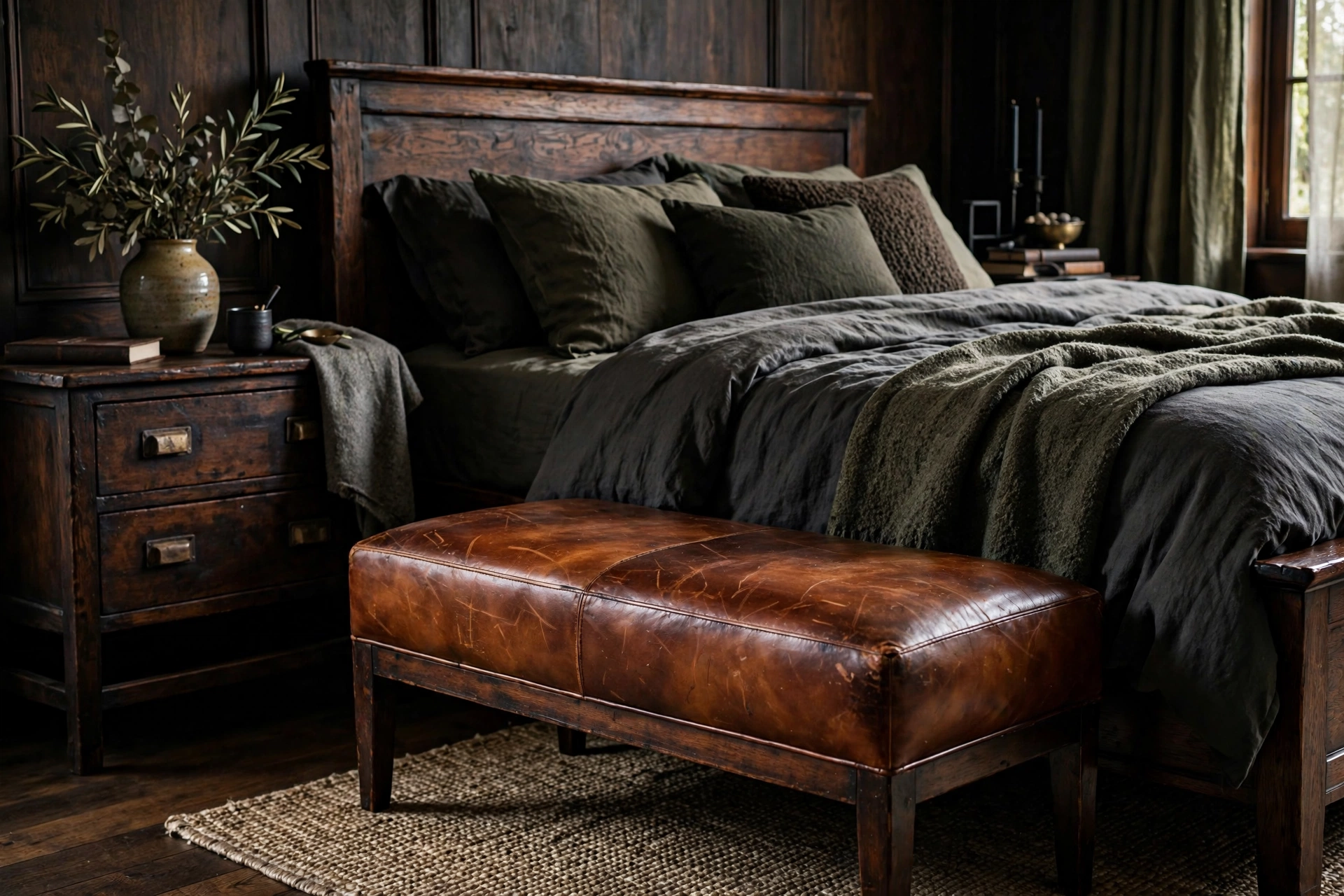
Few materials say masculine like leather. A leather bench at the foot of the bed, a cognac leather desk chair, or a pair of leather drawer pulls adds richness that only improves with age as patina develops. Full-grain and top-grain leathers wear best; bonded leather peels and cheapens the look within a couple of years. If real leather does not fit your budget or values, high-quality faux leather in warm brown tones gives a similar visual weight. Keep leather pieces to two or three per room — a bench plus a chair is plenty — so the material stays a highlight rather than a theme. Pair it with wool, linen, and raw wood to keep the room from feeling like a showroom.
3. Exposed Wood and Raw Materials
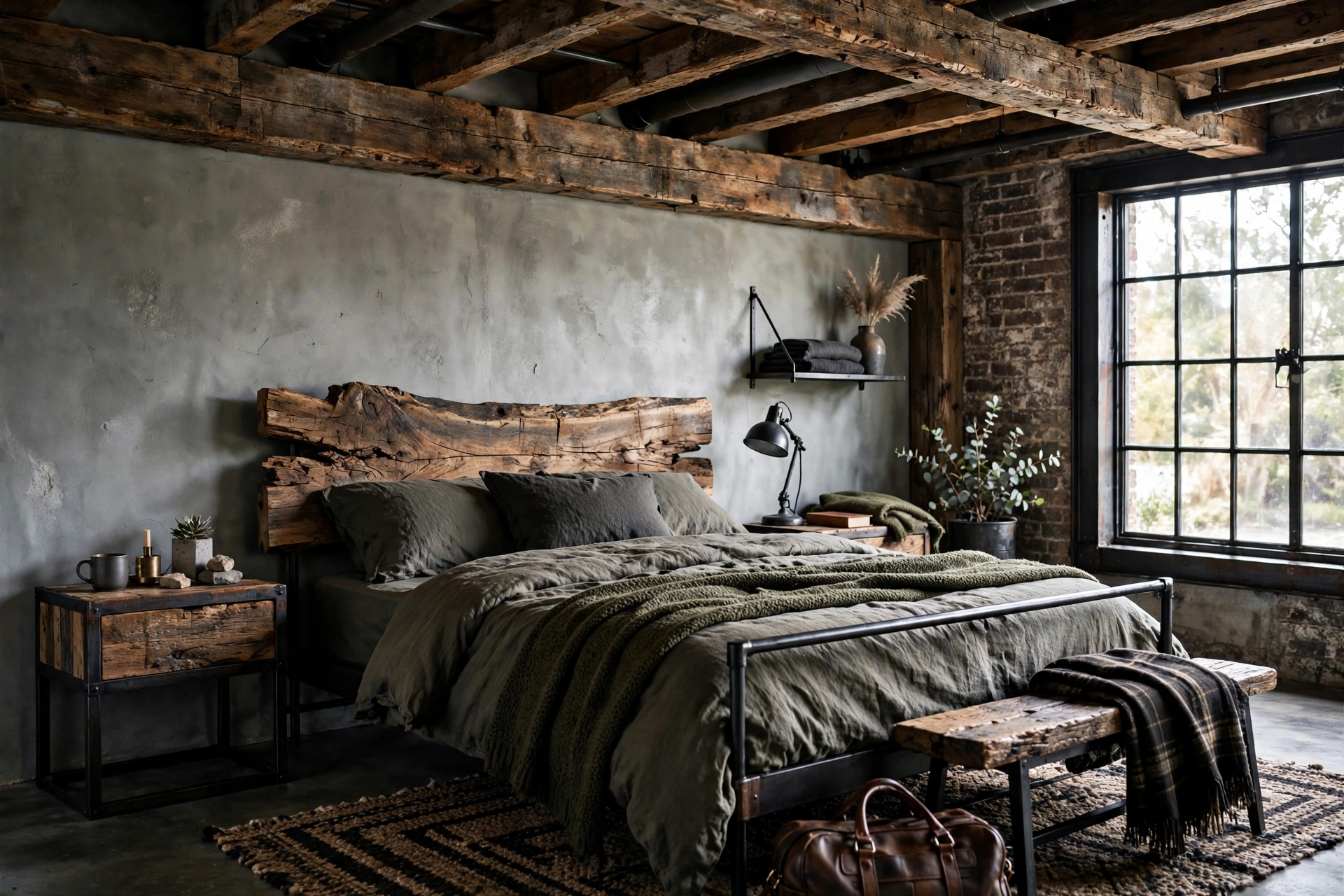
Raw, honest materials are the backbone of masculine design. Reclaimed wood beams, a live-edge headboard, concrete planters, and blackened steel frames bring a rugged authenticity that polished finishes cannot imitate. The key is mixing textures: rough wood against smooth linen bedding, matte black metal beside warm brass. Leave some materials unfinished — a raw wood shelf or a concrete side table shows the maker’s marks that make a room feel real. Balance is important, though: too many rough surfaces make a bedroom feel like a workshop. Anchor the rawness with soft textiles — a thick wool throw, a plush rug — so the room still invites rest.
4. Industrial Lighting with an Edge
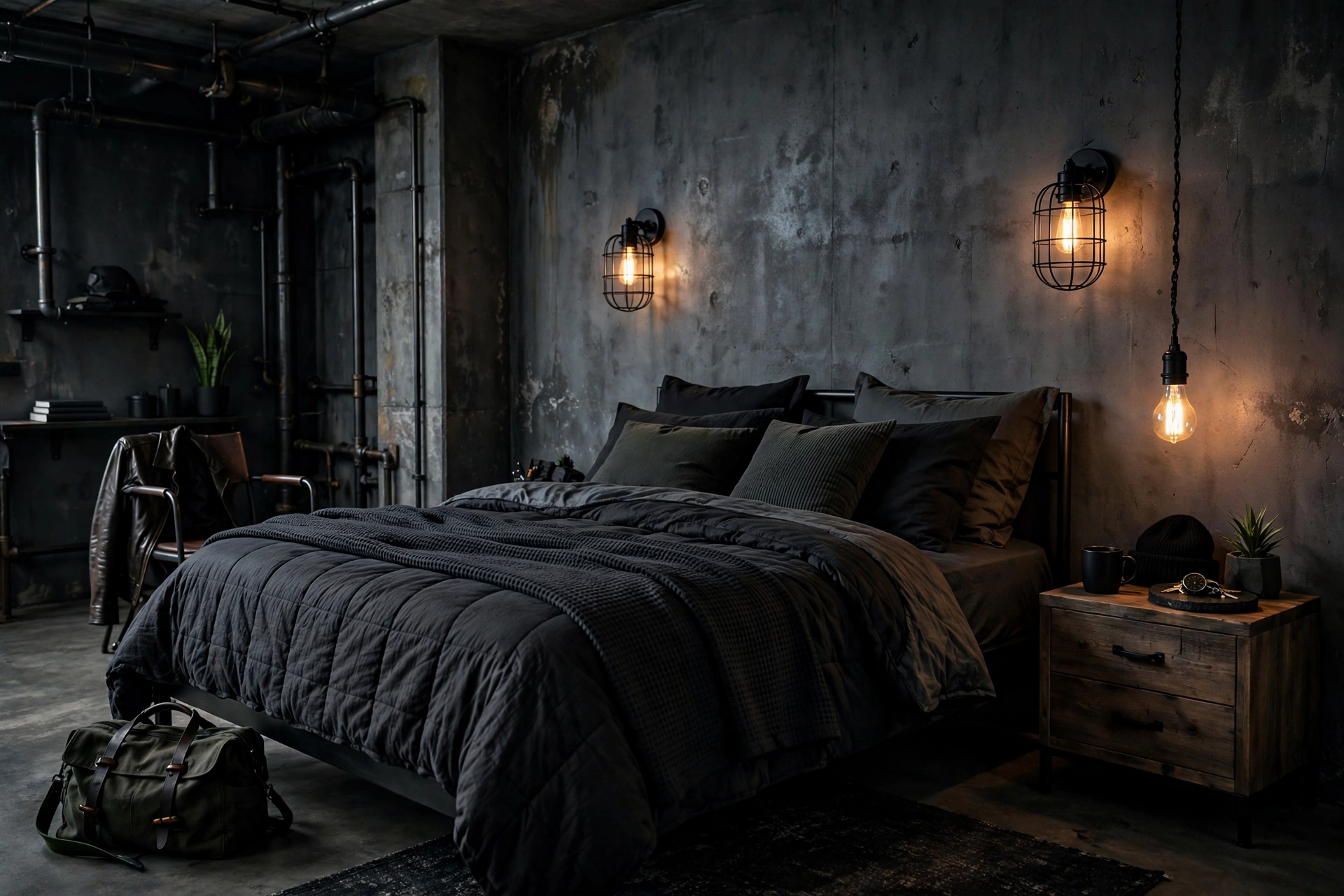
Lighting sets the masculine tone after dark. Exposed-bulb pendants, black metal cage sconces, and articulated task lamps bring an industrial edge that flat, builder-grade fixtures never will. Hang a pair of adjustable wall sconces beside the bed to free up nightstand space and add sculptural interest. Edison-style LED bulbs give the vintage filament look without the energy waste or heat, and warm 2700K light keeps the industrial elements from feeling cold. Dimmers are essential — bright for getting dressed, low for winding down. Dark academia bedroom design ideas with moody romance show how to layer this lighting with rich, scholarly details.
5. Plaid, Herringbone, and Bold Patterns
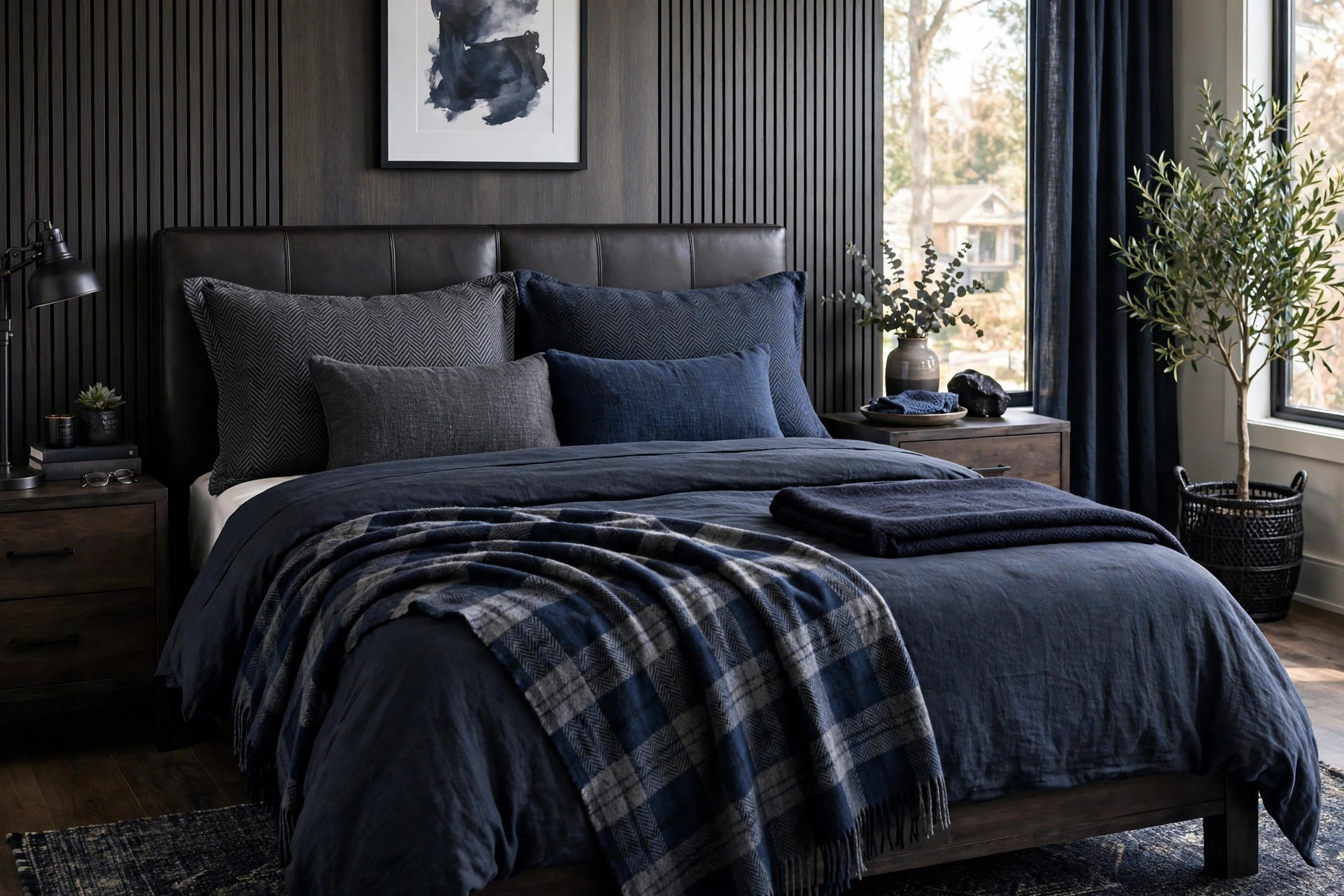
Masculine pattern is geometric, structured, and grounded — not fussy. Plaid throw blankets, herringbone or houndstooth pillows, and pinstripe or windowpane bedding add visual interest without softening the room’s edge. Stick to a restrained palette: charcoal, navy, camel, and cream patterns layered together read sophisticated, never busy. One large-scale pattern (a plaid duvet or a geometric rug) plus one small-scale pattern (herringbone pillows) is the safe formula. Keep florals and small ditsy prints out — they fight the confident mood you are building. If you want art on the walls, abstract or architectural prints in the same palette tie the patterns together without introducing competing colors.
6. Dark Woods and Heavy Furniture
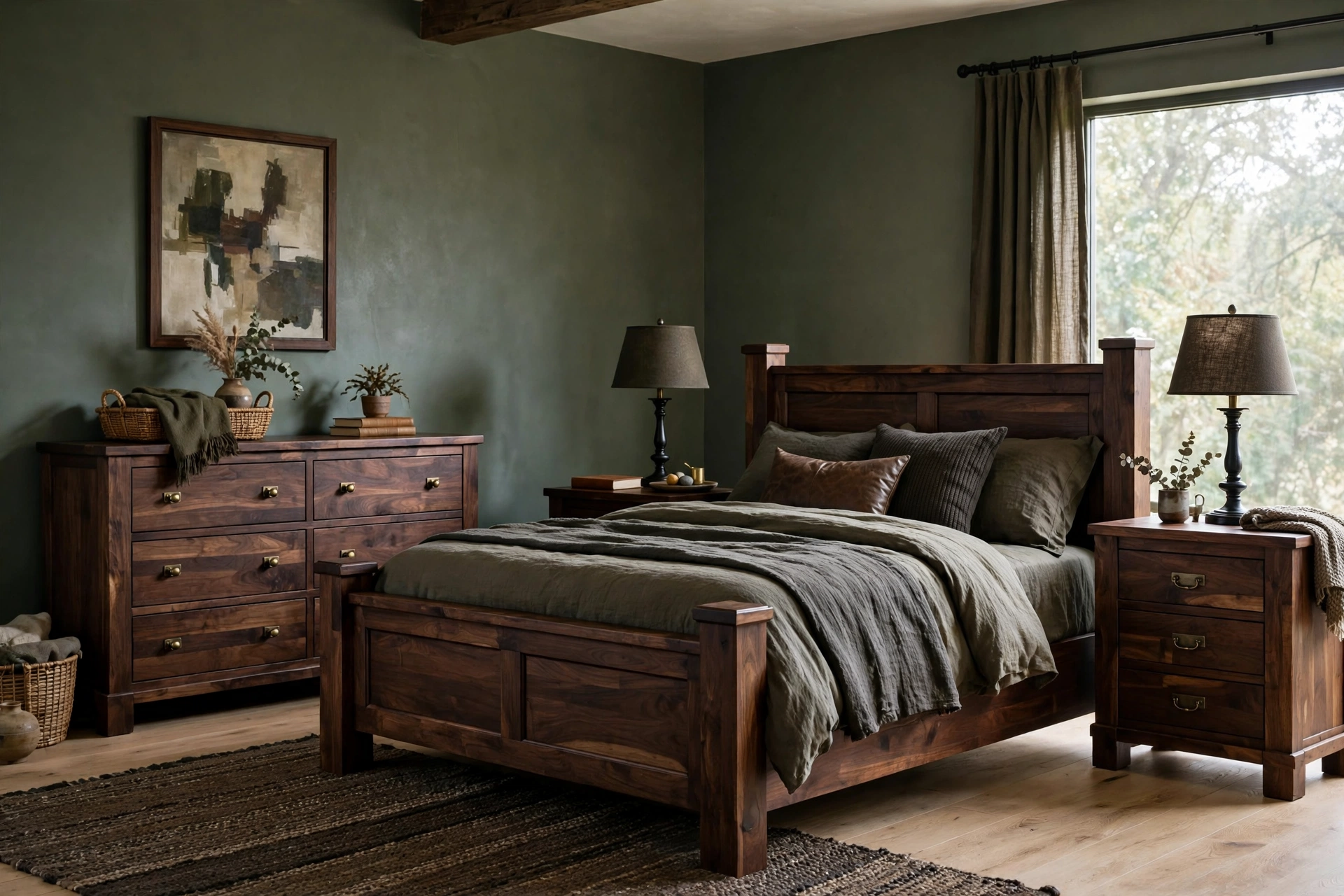
Substantial furniture gives a masculine bedroom its grounded feeling. Dark-stained oak, walnut, and mahogany pieces — a solid dresser, a chunky nightstand, a platform bed with a thick frame — anchor the room visually and feel built to last. Choose pieces with clean lines rather than ornate carving; the weight should come from the material, not the decoration. Balance dark woods with lighter elements so the room does not feel like a cave: pale bedding, a light rug, or white walls with dark trim all keep things breathable. If your existing furniture is light wood, a dark stain or even a walnut-toned furniture wax can transform it for the cost of a weekend. Two or three dark wood pieces per room is usually the sweet spot.
7. A Statement Headboard with Presence
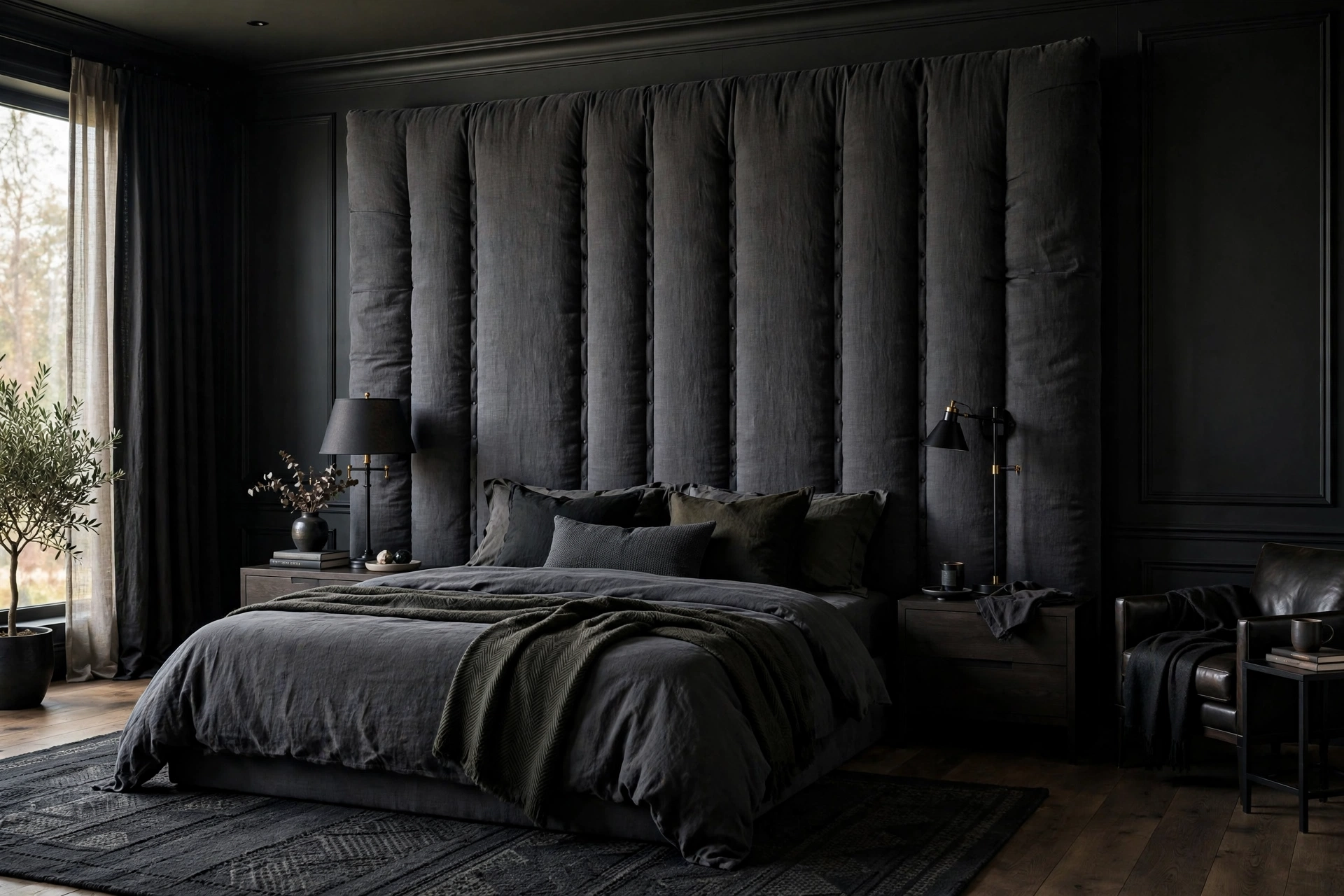
The headboard is the visual anchor of any bedroom, and in a masculine room it should have real presence. An oversized upholstered headboard in charcoal linen, a reclaimed-wood plank headboard, or a tall leather-paneled design all command the wall with confidence. Scale it generously — a headboard that extends a few inches beyond the mattress on each side looks intentional, while an undersized one disappears. Wall-mounted or floating headboards free up floor space and look custom.
8. Gallery Walls of Art and Photography
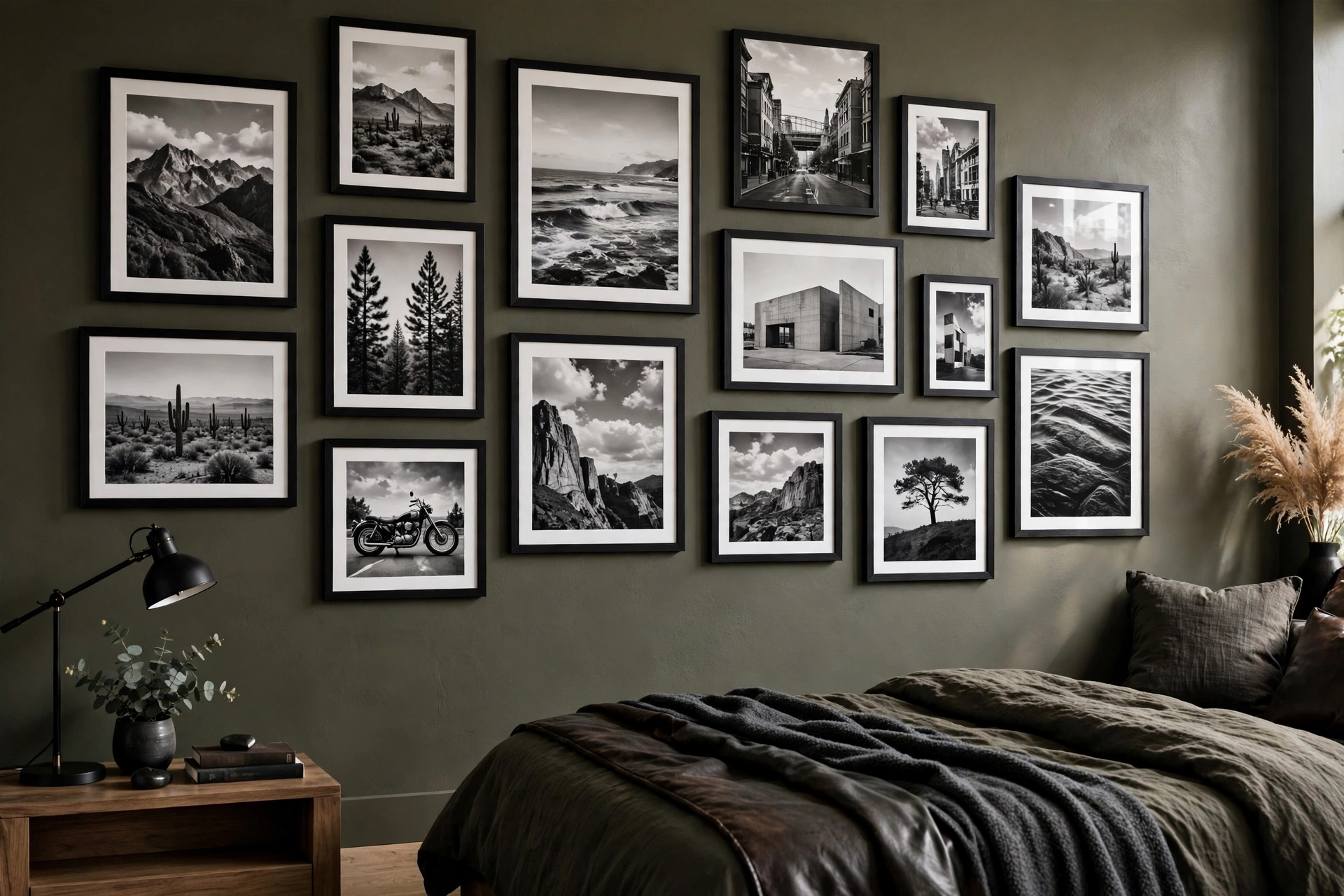
A gallery wall of black-and-white photography, architectural prints, or vintage posters adds personality without clutter. Masculine gallery walls work best with a tight edit: one theme (cityscapes, national parks, classic cars), consistent framing (all black frames, same mat width), and a grid or salon layout planned on the floor first. Oversized single pieces often read more confident than a scatter of small frames — one large print above the dresser beats six tiny ones. Mix in a mirror or a sculptural object sparingly to break up the rectangles. Keep the palette in the frames aligned with the room: monochrome photography suits gray and black rooms, while warm sepia prints flatter brown and camel palettes.
9. Layered Textures Without the Frill
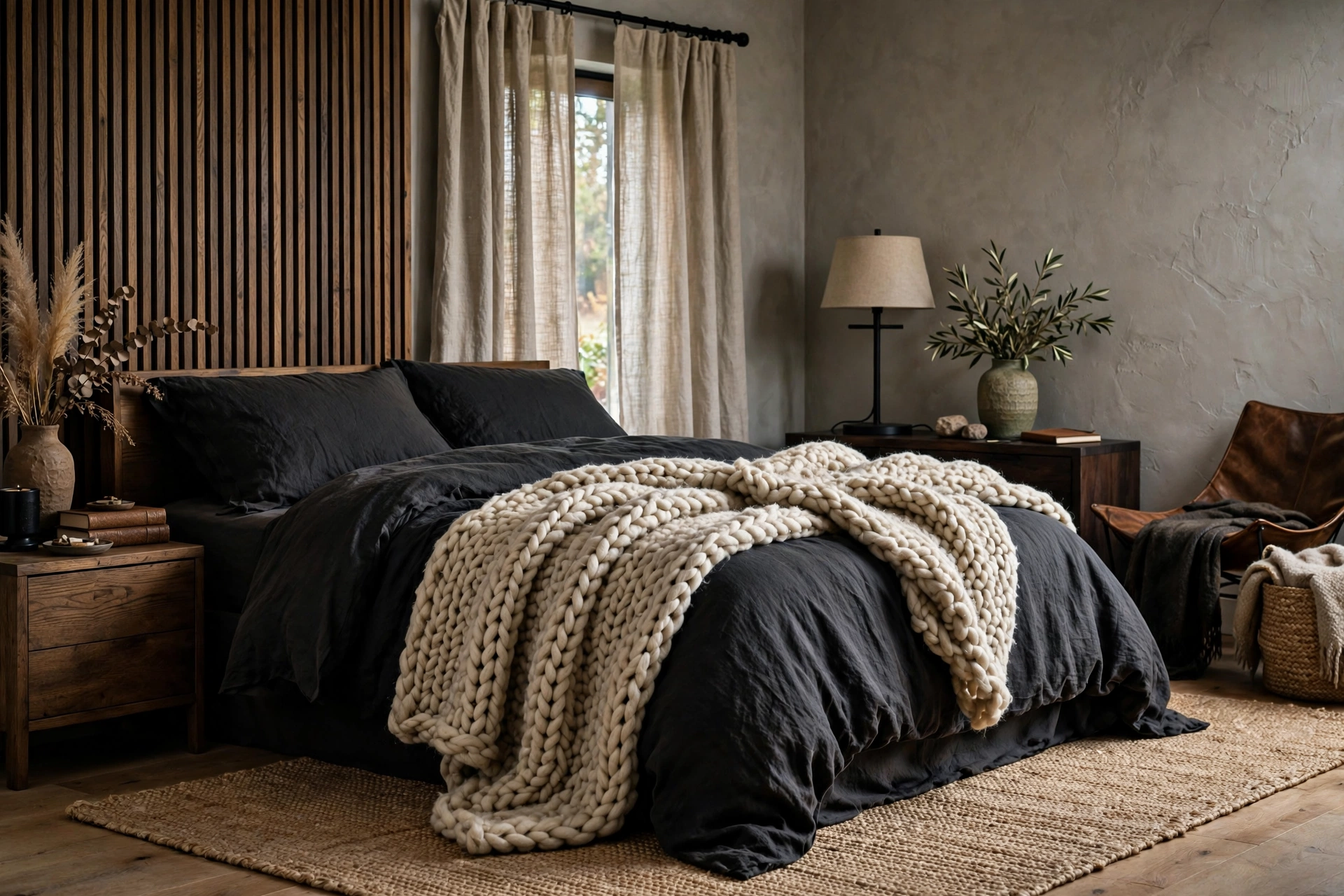
Texture is what keeps a dark, masculine room from feeling flat — and it does the job without a single ruffle. Layer wool, linen, leather, and raw wood so the eye always has something to land on. A chunky knit throw over crisp cotton bedding, a jute or low-pile wool rug underfoot, linen curtains that filter light softly: each layer adds depth while staying firmly in masculine territory. The rule is contrast — smooth against rough, matte against sheen — which creates richness even in a monochrome palette. Avoid anything shiny or delicate; brushed, washed, and matte finishes feel inherently more grounded. When in doubt, add one more textile layer rather than one more decor object.
10. Matte Black Fixtures and Hardware
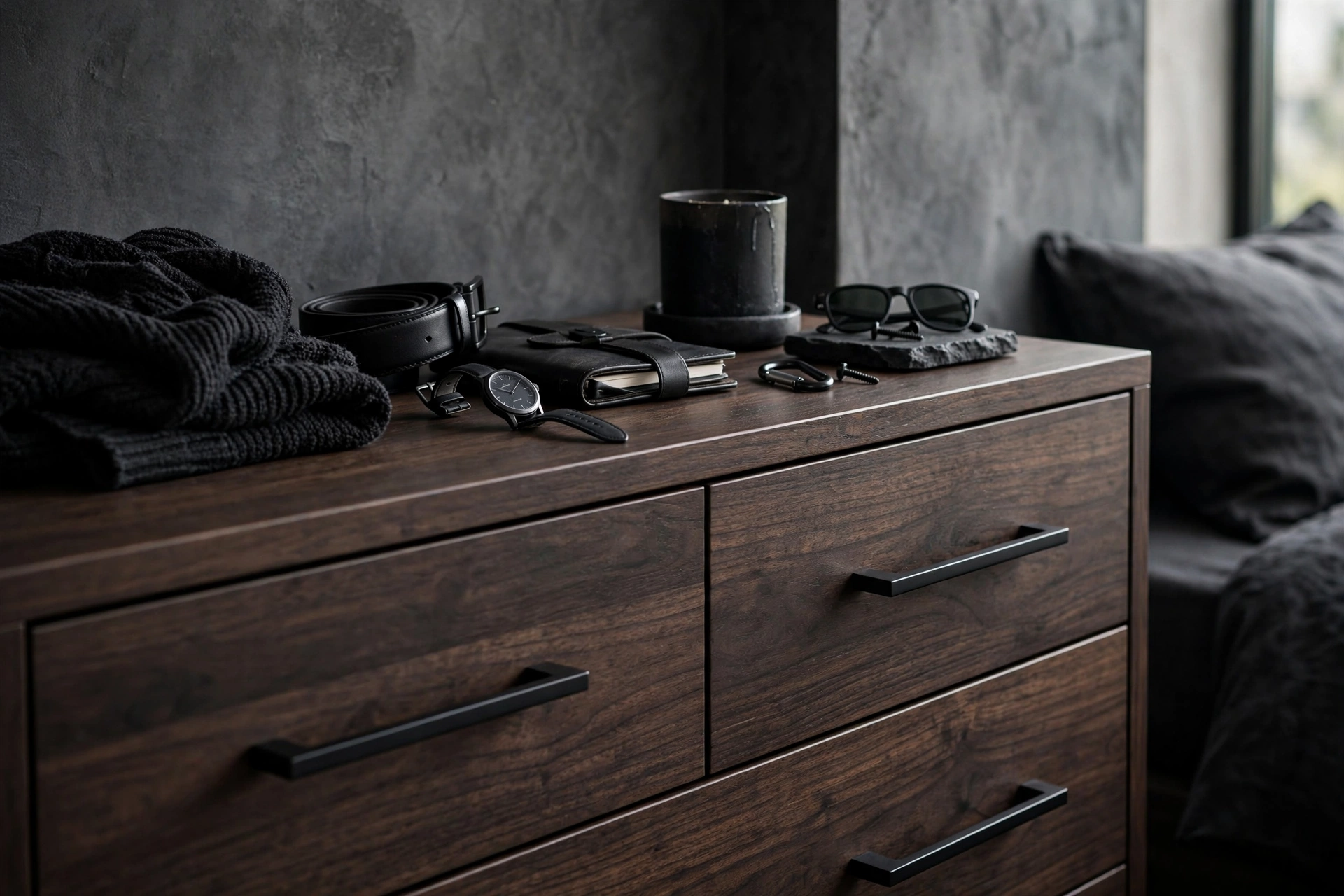
Matte black is the quiet workhorse of masculine bedrooms. Swapping shiny chrome for matte black drawer pulls, curtain rods, lamp bases, and picture frames instantly toughens up a room’s look for very little money. The finish pairs beautifully with dark walls, warm woods, and brass accents alike — it is one of the few finishes that works in almost any palette. Consistency matters: pick one dominant metal (matte black) and one accent (brass or bronze) and repeat them across the room. Avoid mixing three or four metals, which reads chaotic. Matte black also hides fingerprints and water spots better than polished finishes, a practical win for nightstands and dressers that get daily use.
11. A Reading Corner for Quiet Hours
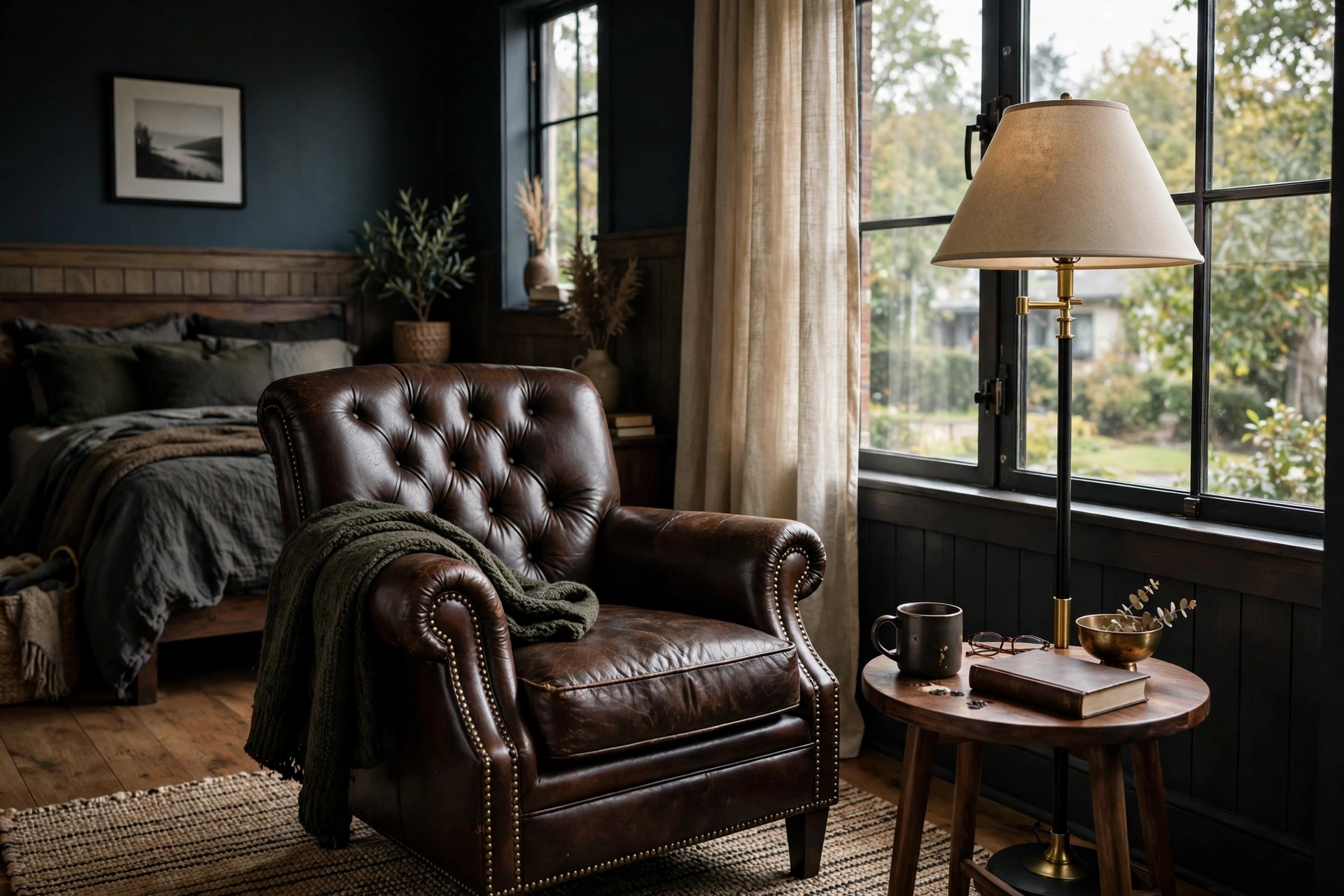
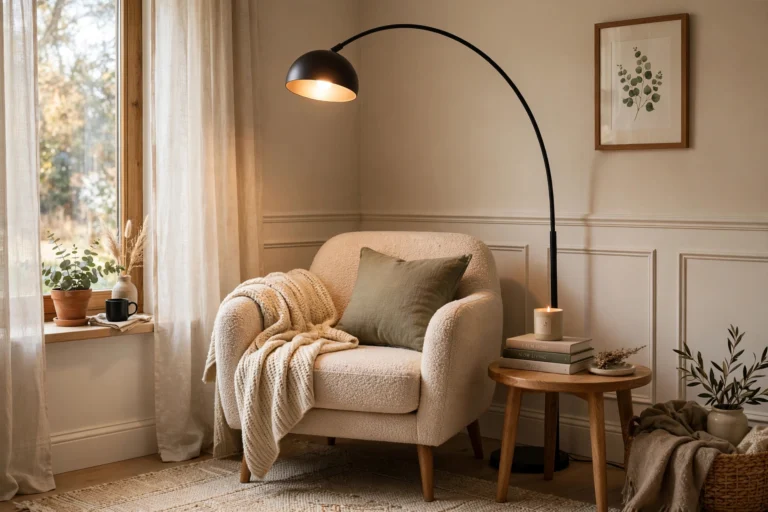
A masculine bedroom earns its keep beyond sleep with a proper reading corner. All it takes is a comfortable armchair — leather, wool-upholstered, or a deep-seated club chair — a floor lamp with warm light, and a small side table for a book and a drink. Position it near a window for daytime reading or in a dark corner made cozy with a floor lamp and a throw. A bookshelf or a leaning ladder shelf nearby keeps reading material at hand and adds intellectual character to the room. This corner does double duty as a dressing spot in the morning, which justifies the floor space even in smaller bedrooms. Keep the chair’s palette tied to the bedding so the corner feels integrated, not like an afterthought.
12. Masculine Green: Forest and Olive Tones
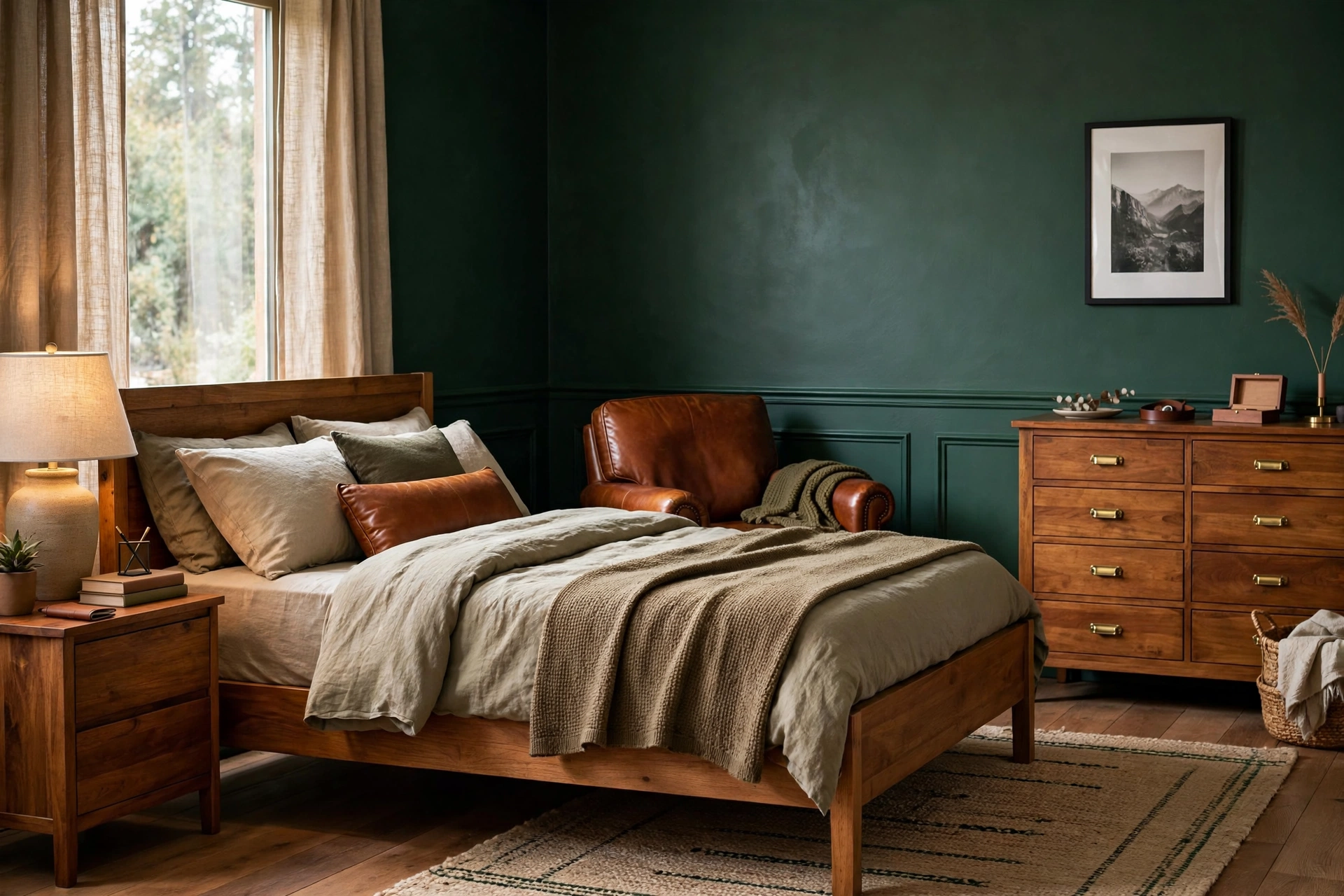
If black walls feel like too much, deep green is the masculine color that still plays well with everyone. Forest, olive, and hunter green bring nature indoors with a calm confidence — rich without being loud. Green pairs beautifully with warm woods, cognac leather, and brass, making it one of the easiest dark colors to decorate around. Try it on all four walls with white trim for a classic look, or color-drench walls, trim, and ceiling in one deep shade for a cocooning effect. Spruce's collection of dark green bedroom ideas is full of real rooms showing how the color works with plants, velvet, and wood. Green also photographs beautifully and hides scuffs better than black.
13. A Minimalist Approach with Clean Lines
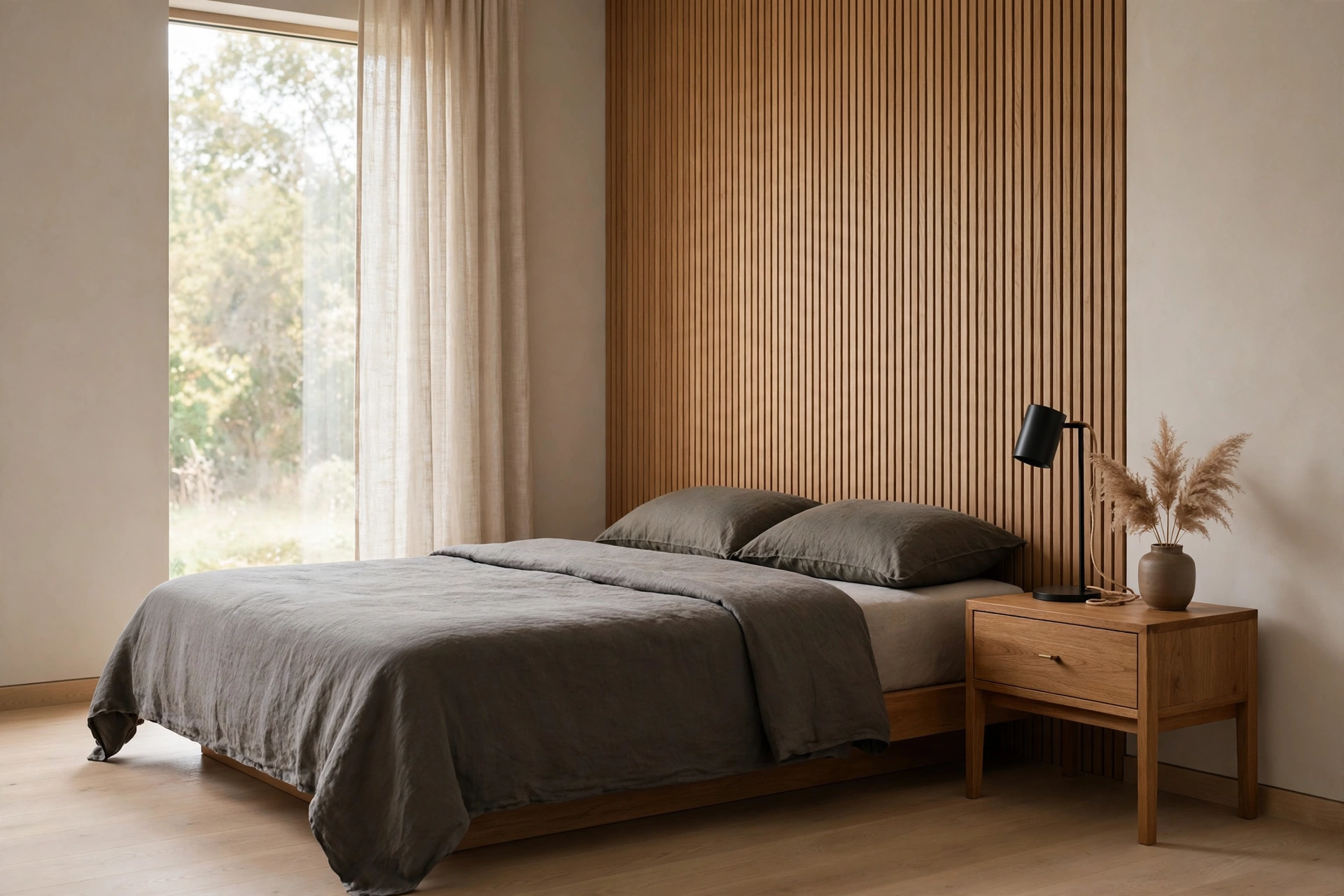
Masculine style and minimalism are natural partners. Strip the room to essentials — bed, nightstands, one dresser, one chair — and let each piece earn its place with good proportions and honest materials. Clean lines mean no ornate carving, no fussy valances, and no clutter on surfaces; every object should be functional or genuinely loved. This does not mean cold: warmth comes from materials (wood, wool, leather) rather than from stuff. Storage is what makes minimalism livable, so invest in closed storage — drawers and cabinets with doors — that hides the mess minimalism forbids. Mid-century modern bedroom design ideas with retro charm show this balance beautifully: streamlined furniture with warm wood tones and rich texture.
14. Personal Collections on Display
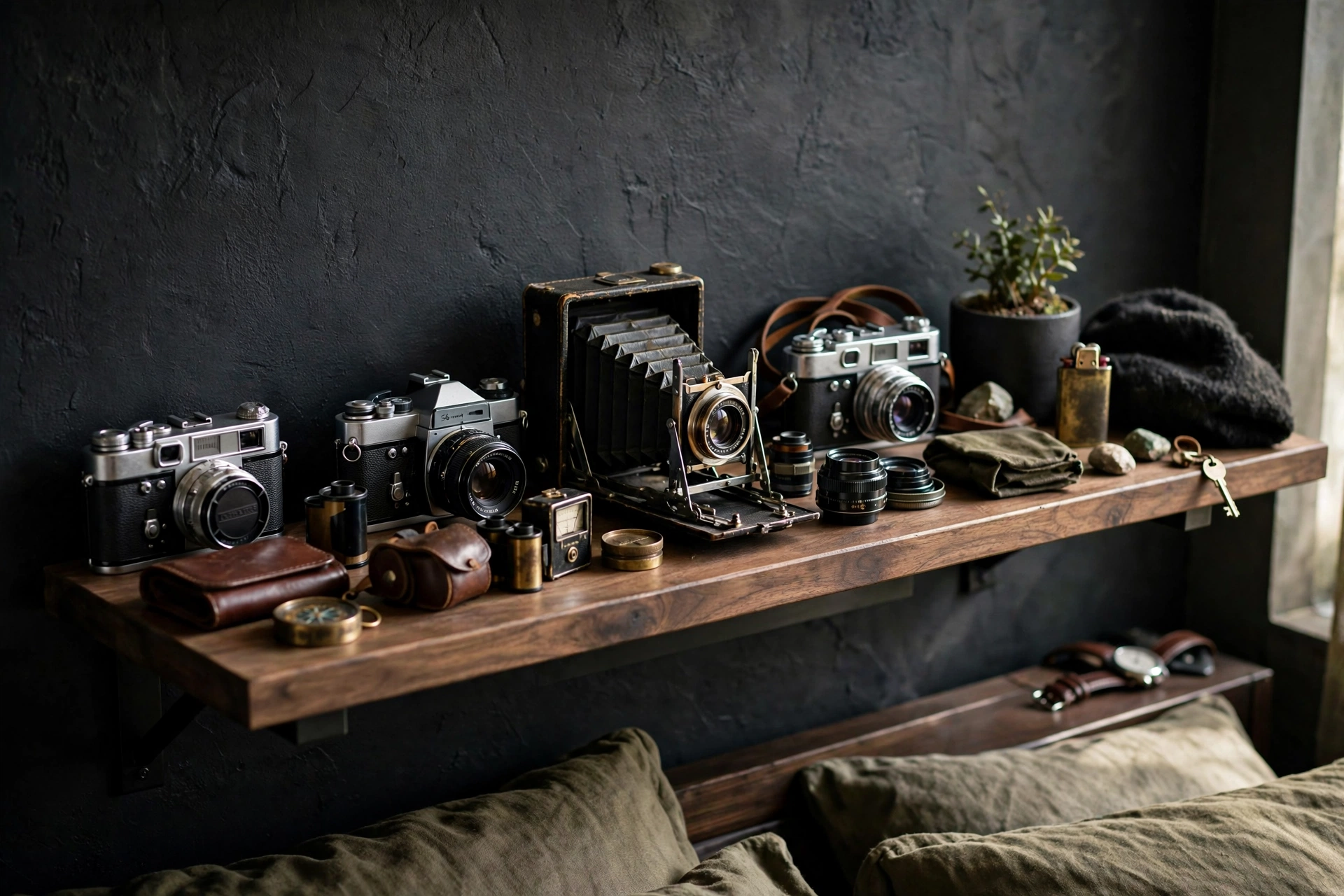
A bedroom should reflect who sleeps in it. Display one curated collection — vintage cameras, vinyl records, framed concert posters, sports memorabilia, travel souvenirs — rather than scattering unrelated objects around the room. The key word is curated: choose the five best pieces, not all fifty, and give them a dedicated shelf, wall, or cabinet. Consistent display (matching frames, a single shelf style) makes a collection look intentional instead of cluttered. Rotate pieces seasonally to keep the display fresh without buying anything new. Collections also make great conversation pieces and give guests a window into your interests. Just keep the bedroom’s primary job in mind: the display should energize the room by day and fade into the background at night.
15. Warm Metallics to Soften the Edge
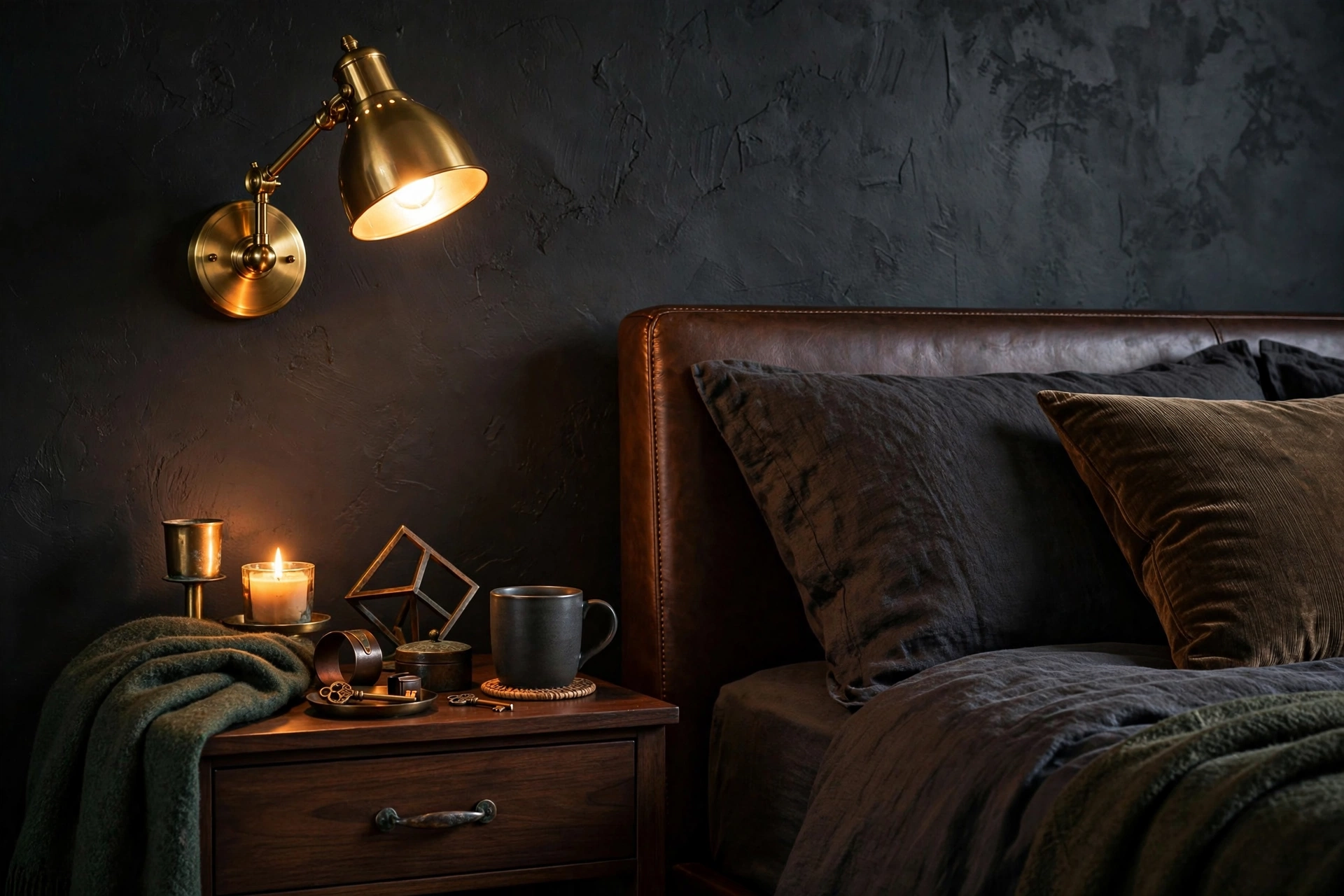
Dark, heavy rooms need a little light-catching contrast, and warm metallics do the job perfectly. Brushed brass, aged bronze, and copper — in lamp bases, picture frames, drawer pulls, and mirror frames — add glints of warmth that keep masculine rooms from feeling severe. The trick is restraint: metallics should be accents, not features, making up maybe ten percent of the room’s visual weight. Brushed and aged finishes feel more masculine than polished chrome or mirror-bright gold, which can read flashy. Repeat your chosen metal at least three times around the room — a brass lamp, brass frames, brass curtain rod — so it feels like a deliberate thread rather than a random glint. Against charcoal walls or walnut furniture, warm metal glows. Designers in Livingetc's men's bedroom ideas use the same trick, pairing dark blue walls with copper and gold to lift the mood.
Frequently Asked Questions
What colors work best in a masculine bedroom?
Deep, saturated colors with gray or brown undertones: charcoal, navy, forest green, espresso, and warm black. These shades feel confident and cocooning without being loud. Balance them with neutrals — warm white, greige, camel — in bedding and textiles so the room stays livable. Metallic accents in brass or bronze add warmth. Avoid pastels and high-saturation brights as dominant colors; they fight the grounded mood.
How can I make my bedroom more masculine without a full remodel?
Start with textiles: swap light bedding for charcoal, navy, or forest green, and add a wool or leather throw. Change hardware and lamp finishes to matte black or brass. Hang one large piece of moody art or black-and-white photography. These three moves — bedding, hardware, art — transform a room’s feel for a few hundred dollars without touching paint or furniture.
Is dark paint a bad idea in a small bedroom?
Not at all — dark paint can actually make small bedrooms feel larger by blurring the room’s boundaries, especially when walls, trim, and ceiling share one deep color. The key is lighting: layer ceiling, bedside, and accent lighting so the room glows. Pair dark walls with a light rug and pale bedding to keep contrast and prevent the cave effect. Good ventilation and a large mirror also help dark small rooms breathe.
What is the difference between masculine and industrial bedroom style?
Industrial is a subset of masculine style focused on raw, factory-inspired elements: exposed brick, black steel, Edison bulbs, and concrete. Masculine is broader — it includes industrial but also dark academia, modern minimalist, rustic cabin, and mid-century styles. A masculine bedroom might have zero industrial elements and still feel confidently masculine through dark colors, leather, and strong furniture. Industrial is one flavor; masculine is the whole menu.
How do I keep a masculine bedroom from feeling cold or unwelcoming?
Warmth comes from texture and light, not from color alone. Layer wool throws, linen bedding, and a soft rug; use warm 2700K bulbs in every fixture; add wood tones and leather to soften hard surfaces. A plant or two brings life, and personal photos or art add soul. The goal is a room that feels strong but still invites you to sink into bed — confidence plus comfort.
Keep Exploring
Masculine bedroom design is really about editing: strong colors, honest materials, and furniture with presence, minus the clutter and fuss. Whether you go full moody with charcoal walls and leather or keep it lighter with olive tones and warm woods, these masculine bedroom ideas give you a framework that feels confident without trying too hard.
Start with the biggest lever — paint or bedding — and build from there. Add texture, layer the lighting, and let one or two personal pieces tell your story. The best masculine bedrooms feel inevitable, like they could not have been any other way, and they age gracefully because they were built on materials and proportions rather than trends.