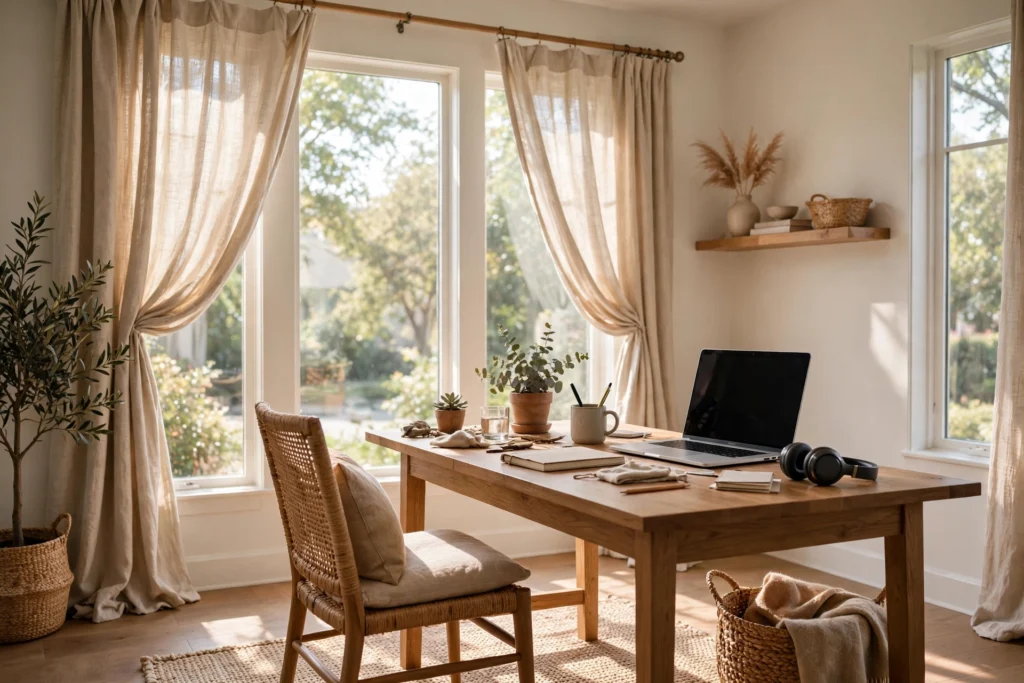

Your home office windows do more work than any other window in the house — they set the mood for video calls, control glare on your screen, and frame the view you stare at between tasks. The right home office curtain ideas do all of that while making the room feel finished and personal. Unlike a bedroom or living room, an office asks curtains to multitask: soften daylight, guard privacy during meetings, and still look sharp behind you on camera.
From airy sheers that filter harsh sun to blackout drapes that turn a spare bedroom into a focused studio, this guide covers 15 practical curtain ideas for every office size and style. Along the way, you will find tips on bedroom curtain ideas for privacy light and style. Pick the ones that fit your workflow, and your office will feel as professional as it is comfortable.
1. Sheer White Panels for Soft Daylight
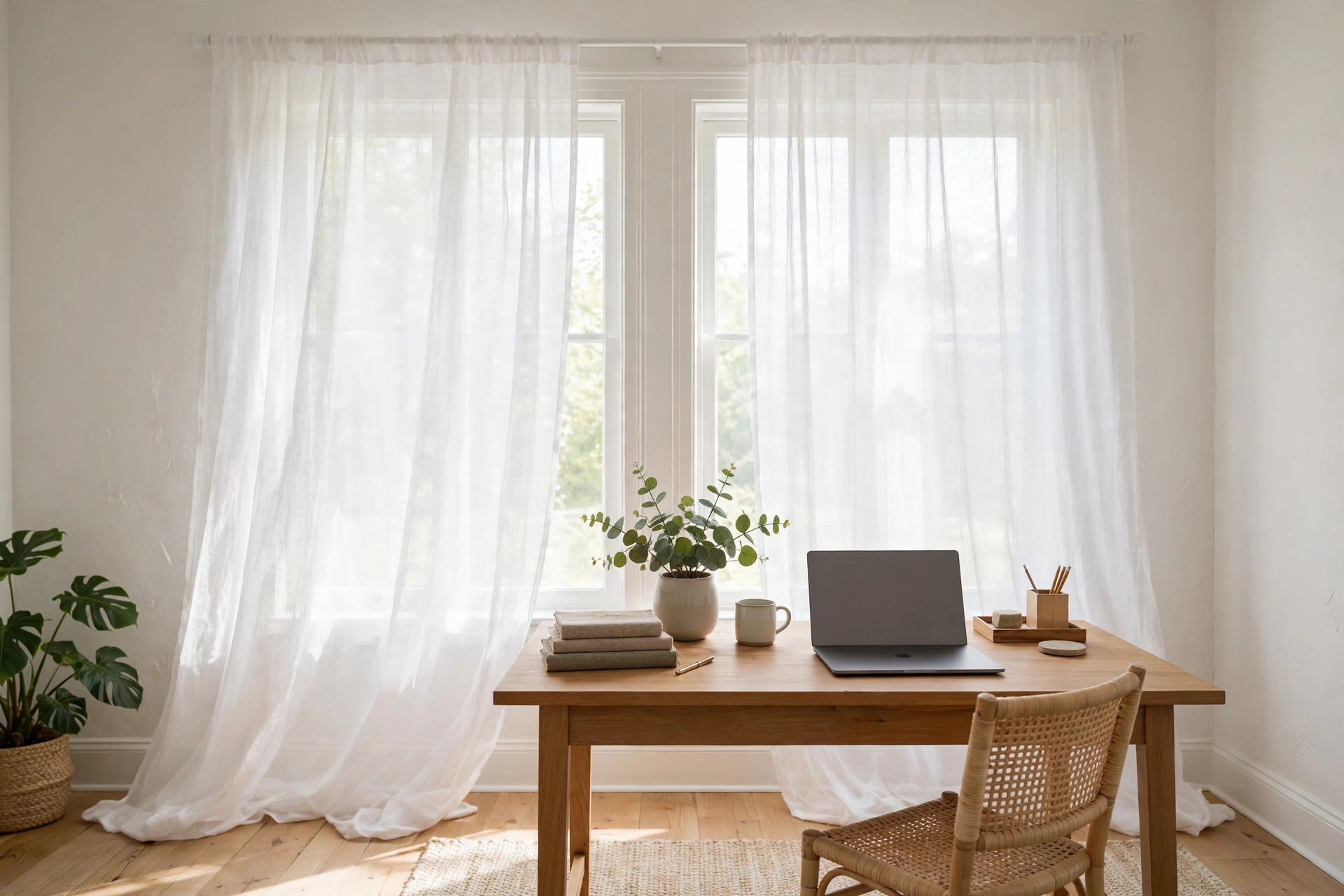
Sheer white panels are the workhorse of home office windows, diffusing harsh sunlight into a gentle glow that flatters both your face on video calls and your desk surface. They cut glare without plunging the room into darkness, which keeps your energy up through afternoon work sessions. Choose voile or lightweight linen sheers in a crisp white or warm ivory, and hang them high and wide so the window reads larger. Pair two to three panels per side for a full, gathered look; layer over blinds for nighttime privacy.
2. Blackout Drapes for Video Call Focus
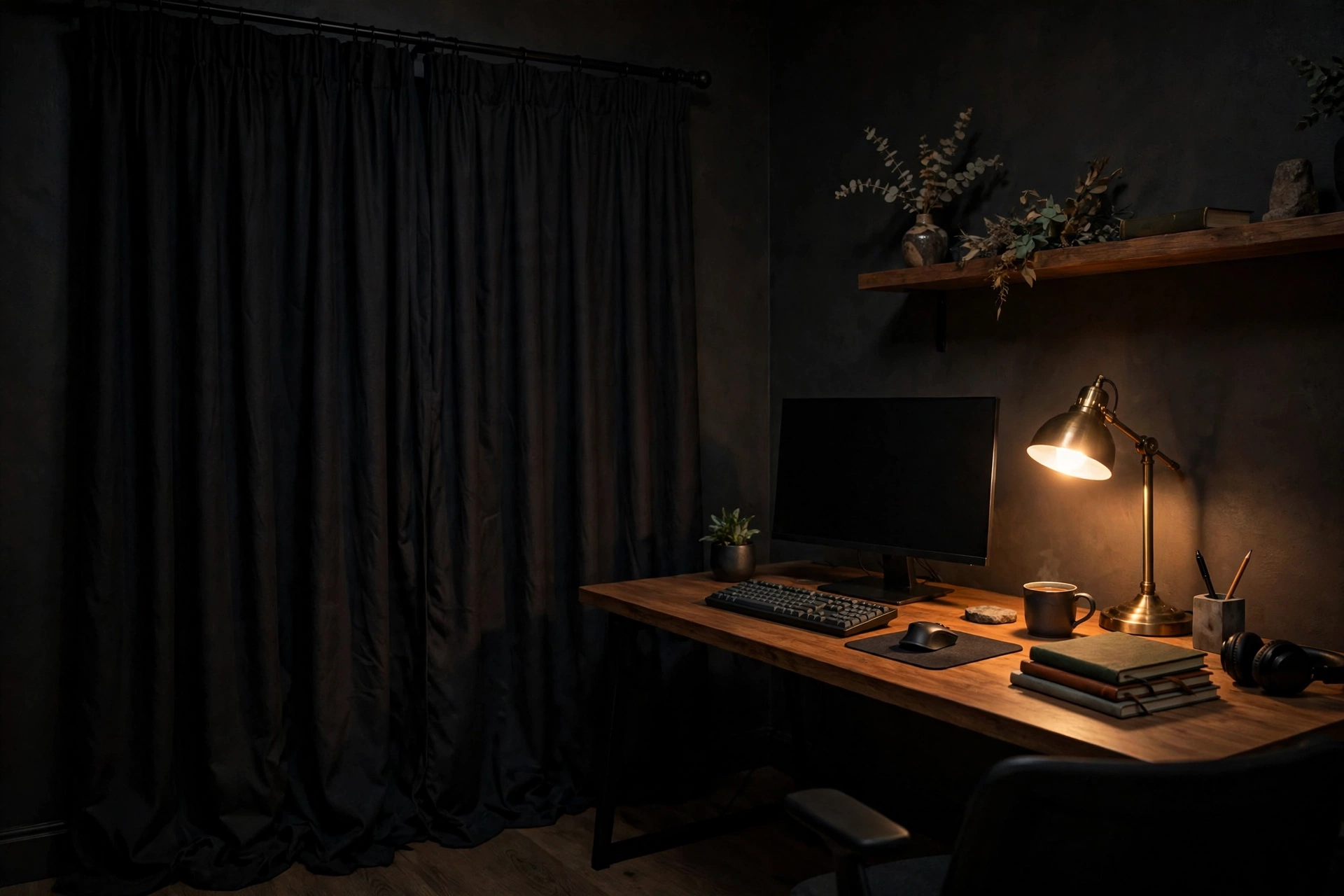
If your office doubles as a Zoom studio, blackout drapes are a game changer. They kill the backlighting that turns you into a silhouette, tame street noise bouncing off bare glass, and give you total control over brightness during presentations or screen recordings. Look for triple-weave blackout fabric rather than rubber-backed panels, which can crack and smell over time. Choose a color that reads well on camera — warm grays, soft navy, and muted greens all work beautifully. Mount the rod at least six inches above the frame and extend it past the window so panels stack fully to the sides when open. You get darkness on demand and a polished backdrop the rest of the day.
3. Linen Curtains for Relaxed Texture
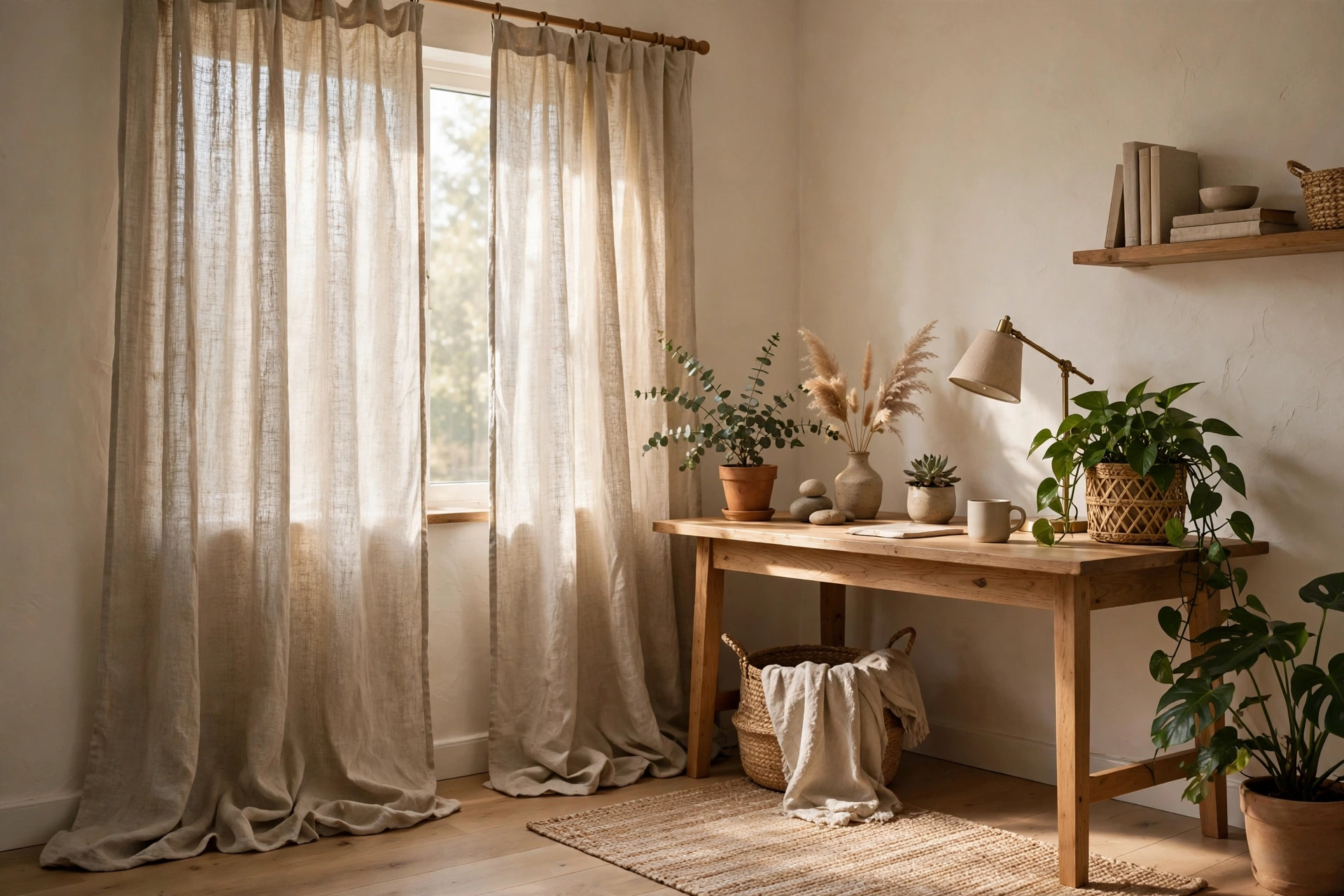
Linen brings an easy, organic texture that keeps a home office from feeling corporate. Its natural slubs and gentle wrinkles catch light beautifully, adding depth to even the simplest room. Unlined linen filters light softly, so it suits offices that already have blinds or shades for privacy. For a crisper look, choose a linen blend with a touch of cotton or polyester that resists excessive creasing. Hang panels long enough to just kiss the floor for a tailored finish, or let them puddle an inch or two for a relaxed, editorial vibe. Stick with washed neutrals — oatmeal, flax, and soft stone — that pair with wood desks and keep the palette calm and focused.
4. Floor-to-Ceiling Panels for Extra Height
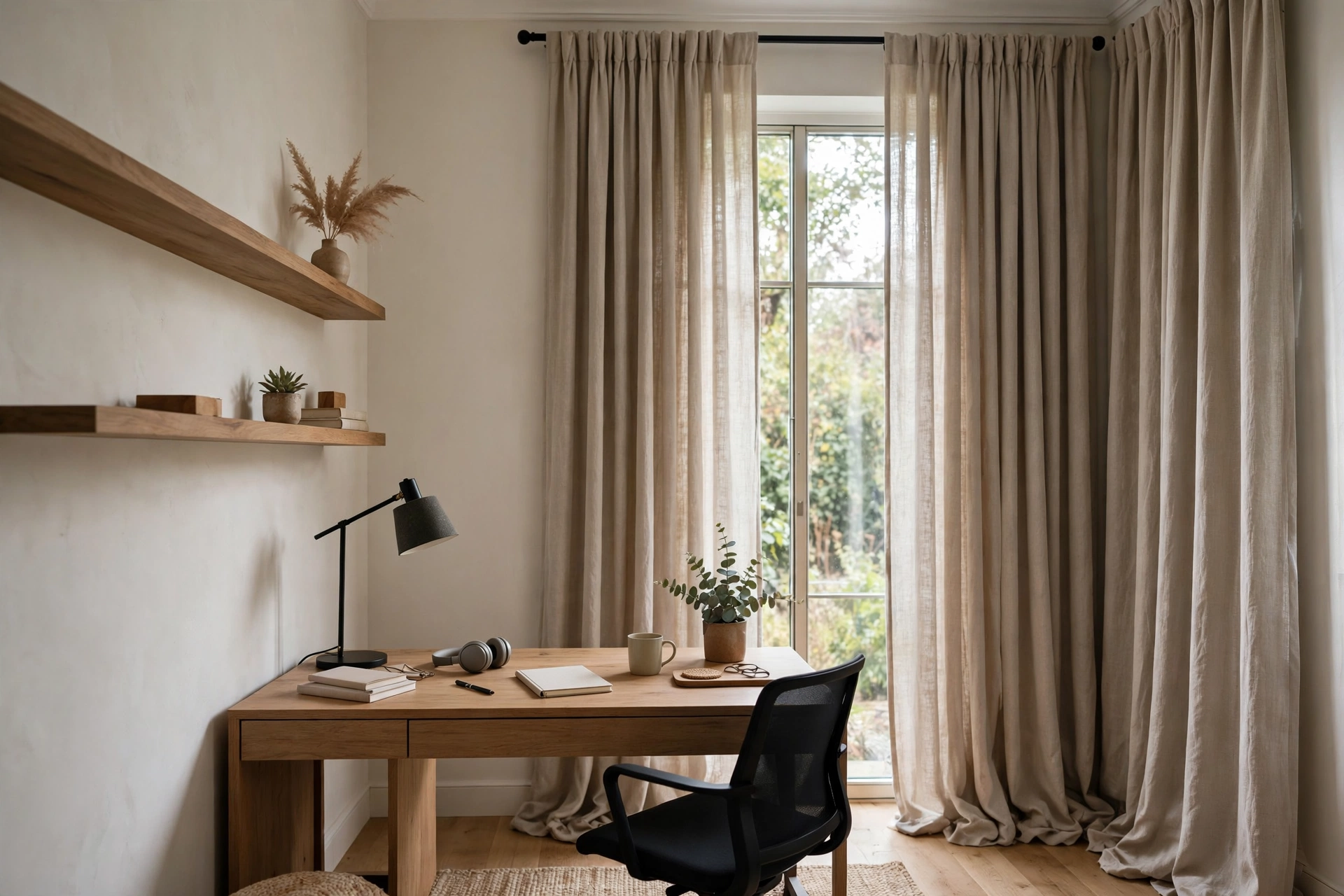
Mounting curtains near the ceiling instead of just above the window frame is the fastest way to make a small office feel grander. The long vertical lines draw the eye upward, creating the illusion of taller ceilings and a bigger room. This trick works especially well in attic offices, basement workspaces, and converted closets where windows sit low. Measure from just below the ceiling down to the floor, and buy panels long enough to reach without floating awkwardly. Use a slim rod that matches your desk hardware for a designer look at no extra cost beyond longer panels.
5. Double Rods for Layered Light Control
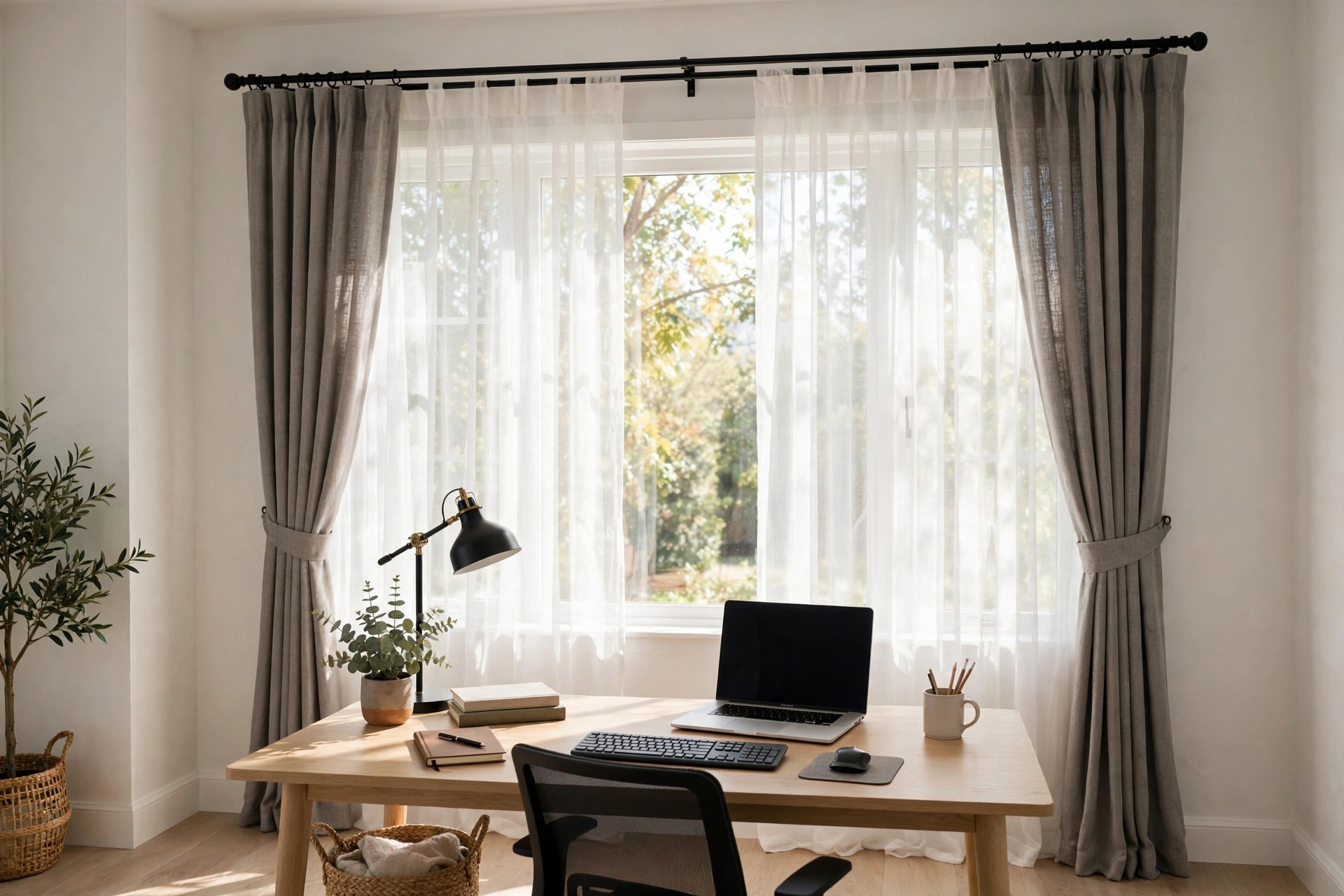
A double rod lets you hang sheers on the inner track and heavier drapes on the outer one, giving you three light levels: open, filtered, and fully closed. This is the most flexible setup for a room where you write in the morning, take calls at noon, and want privacy at night. Slide the sheers closed to soften midday glare, then draw the drapes for evening focus or weekend downtime. Productive days keeps the room balanced around the clock. Choose rods with a four to six inch projection so both layers hang freely without bunching.
6. Roman Shades for a Tailored Look
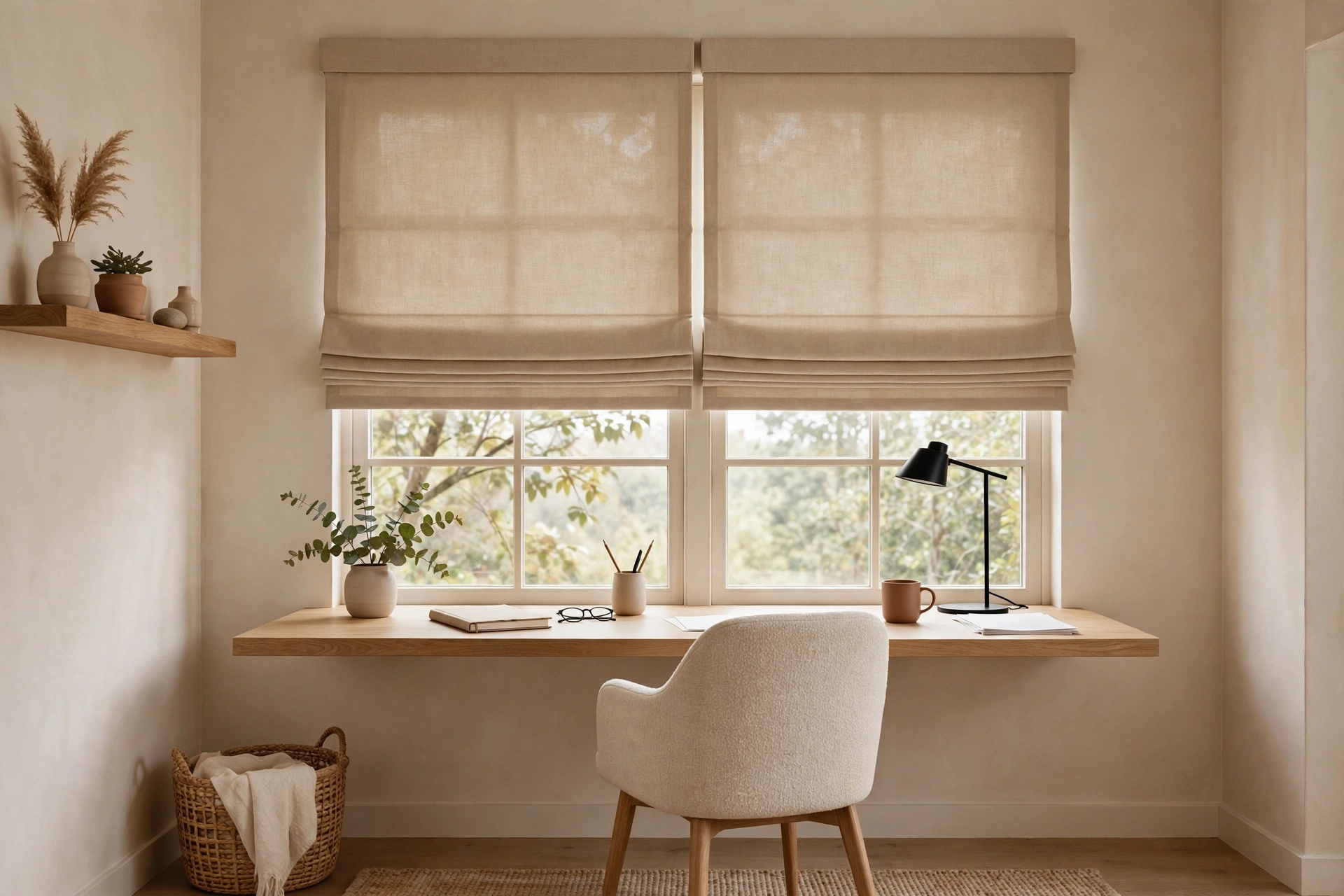
Roman shades offer the crisp, structured look of a custom window treatment in a compact package — ideal for offices where long drapes would fight with a desk pushed against the window. When raised, they stack into neat horizontal folds that frame the view; when lowered, they provide full privacy and light control. Choose a flat-fold style in a woven grasscloth or a relaxed fold in soft linen depending on your office style. Inside-mount them for a clean built-in appearance, or outside-mount to make a narrow window look wider. Motorized or cordless lift options keep the look child-safe and clutter-free, and patterned fabrics add personality without overwhelming the wall.
7. Woven Wood Shades for Natural Warmth
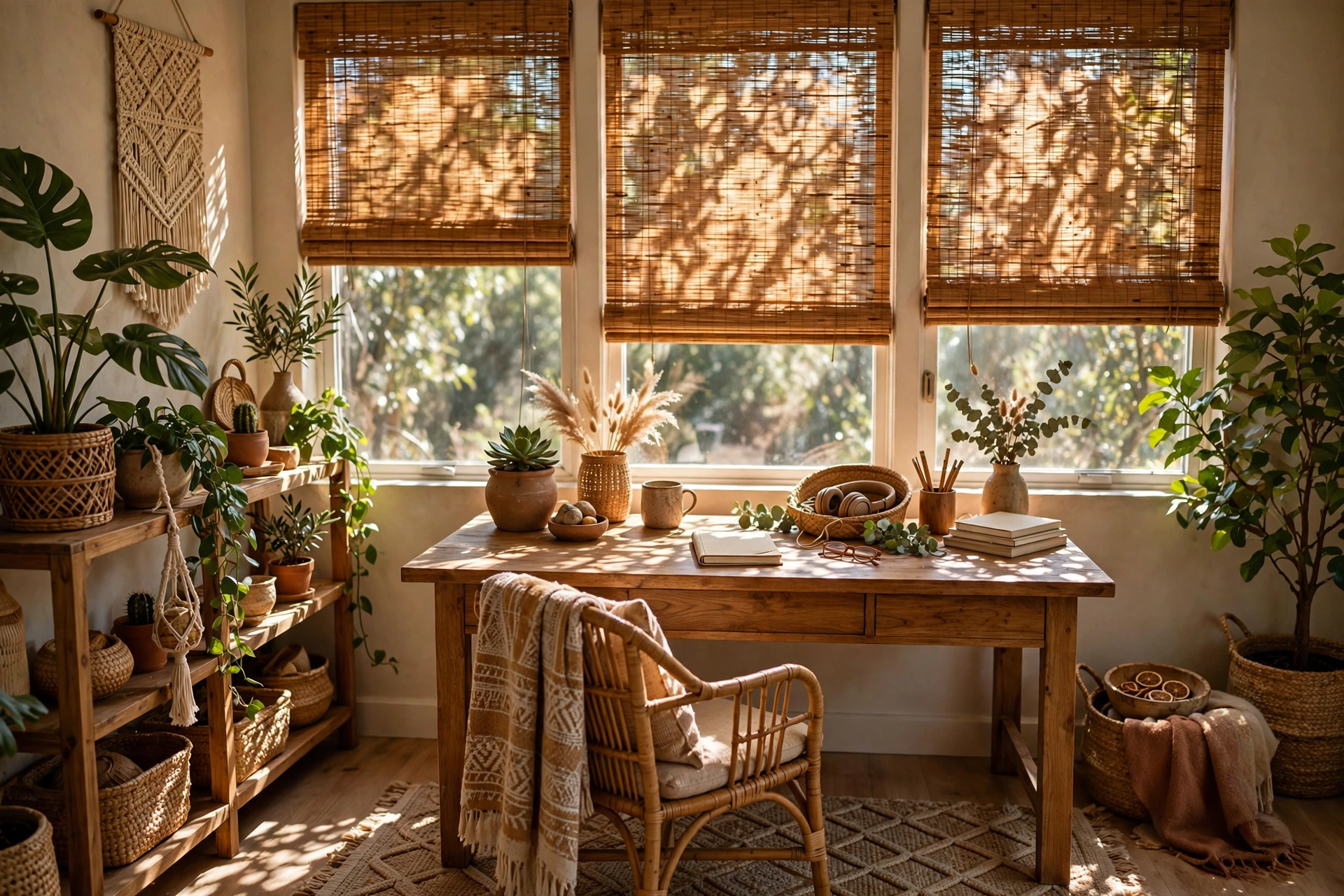
Woven wood shades made from bamboo, jute, or rattan filter sunlight into a warm, dappled glow that makes a home office feel inviting rather than sterile. They are a perfect match for boho, coastal, and Scandinavian offices, adding organic texture that pairs beautifully with plants and wood furniture. The natural weave provides daytime privacy while admitting light — layer with a roller shade if your office faces the street, since it will not block night views. Honey-toned bamboo warms up cool gray or white walls effortlessly.
8. Velvet Curtains for Acoustic Comfort
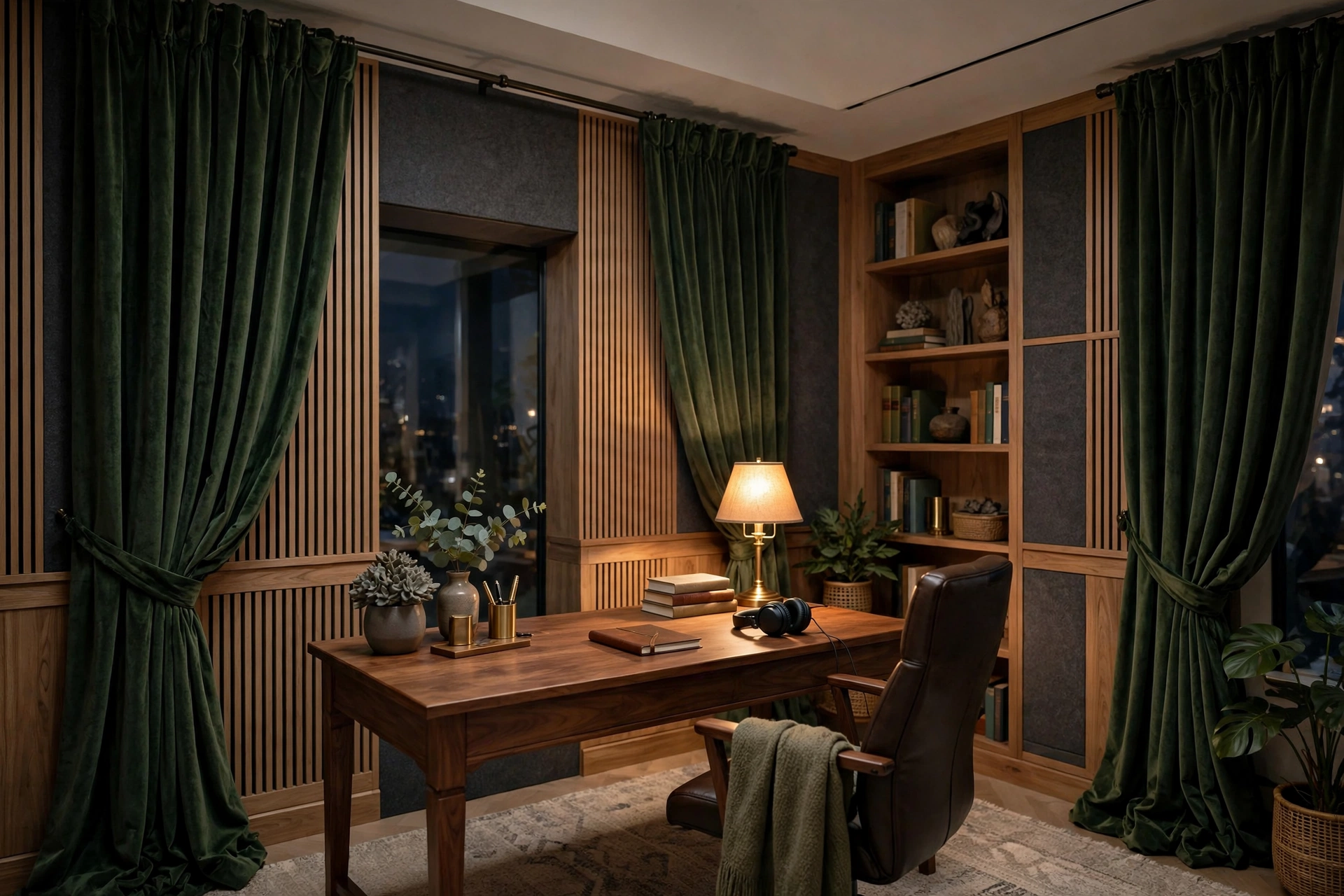
If your office echoes during calls or sits near a noisy street, velvet curtains are both a style statement and a sound solution. The dense pile absorbs sound waves, noticeably reducing echo and muffling outside noise — a real upgrade for podcasters, teachers, and anyone on calls all day. Designers note curtain height guidance explained in this guide to curtain hanging rules. Choose cotton velvet in deep, saturated tones like forest green, rust, or charcoal for a rich look that photographs well. Keep the panels full — at least twice the window width — so the folds trap more sound.
9. Cafe Curtains for Lower-Window Privacy
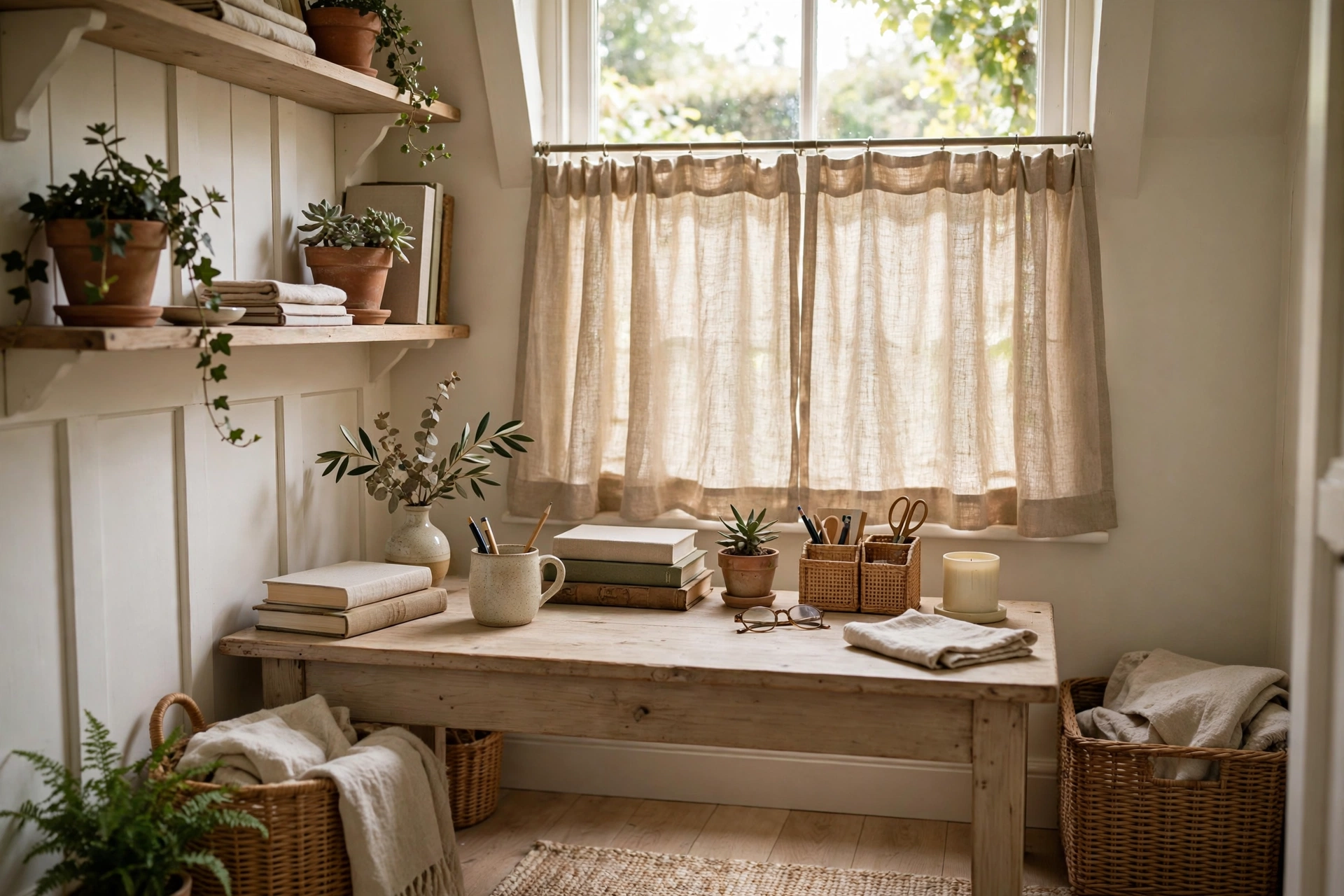
Cafe curtains cover just the lower half of the window, blocking the sightline from the street while leaving the top open for sky and daylight. They are perfect for ground-floor offices, garden-level studios, and anyone whose desk faces the window and the sidewalk beyond. A tension rod inside the frame makes installation tool-free and renter-friendly. Choose linen or cotton in a simple stripe or gingham for cottage charm, or a crisp solid for a modern look. Pair them with a valance or leave the top bare to maximize light. This half-window approach solves the classic home office dilemma: privacy without working in a cave.
10. Patterned Panels for Personality

A home office is the one room where your personality gets to lead, and patterned curtains are an easy way to express it. Botanical prints, subtle geometrics, and classic stripes all add visual interest to the wall behind your desk without the commitment of wallpaper. Keep the pattern scale in proportion to the room — small prints for compact offices, bolder motifs for larger spaces. Anchor a busy pattern with solid-colored furniture and a simple rug so the room stays calm enough for focus. If the curtains will appear on video calls, choose patterns with medium contrast in muted tones so they read as texture rather than distraction.
11. Ceiling-Mounted Tracks for a Sleek Finish
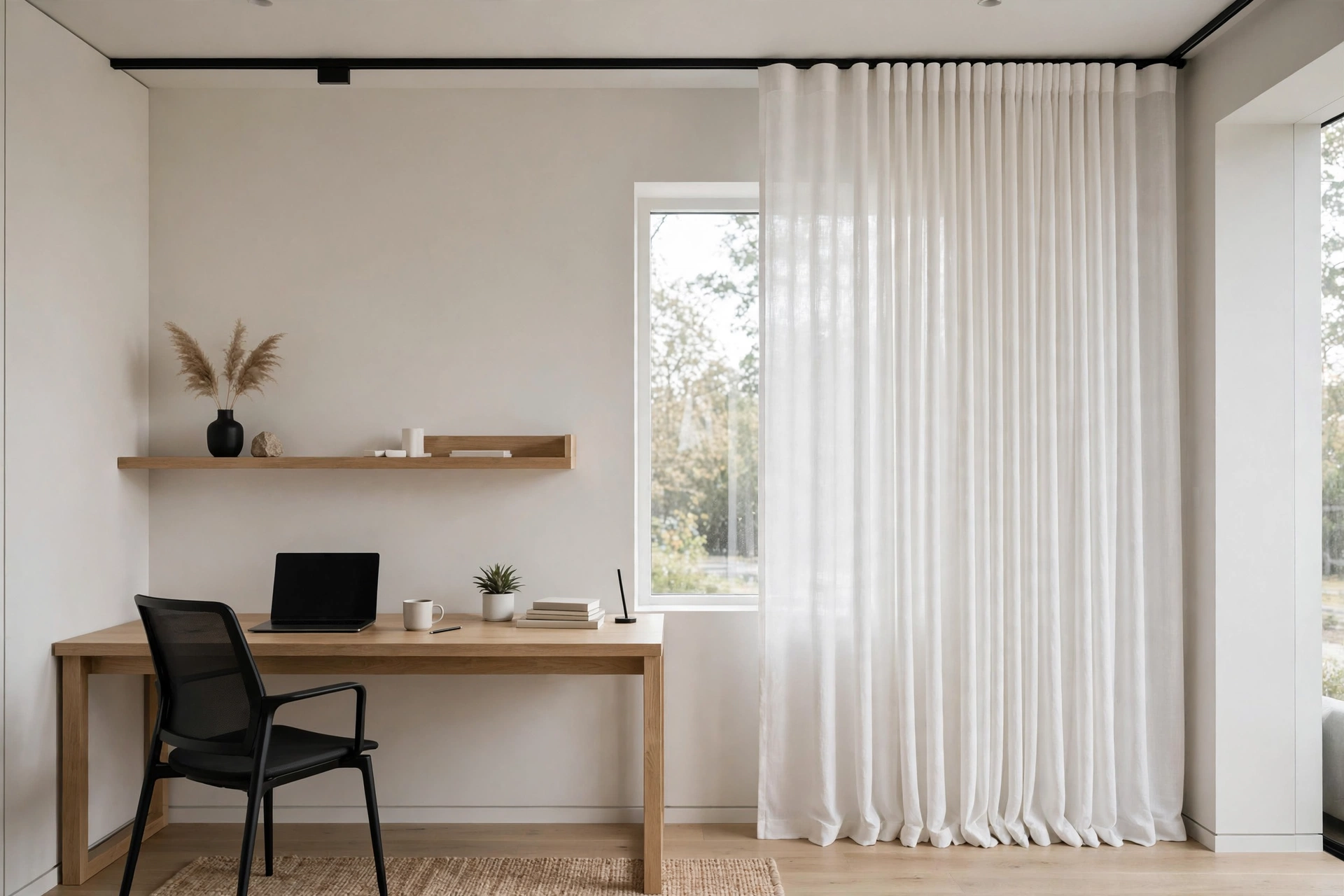
Ceiling-mounted curtain tracks deliver a crisp, contemporary look that works beautifully in modern and minimalist offices. The hardware disappears, panels glide smoothly around corners, and you can even curve a track around an L-shaped window wall. Tracks also let you hang curtains in front of sliding doors or wall-to-wall glass without bulky rods. Choose ripple-fold panels for an even, tailored wave that always looks neat. Because tracks mount directly to the ceiling, they maximize height — a bonus in offices with low ceilings.
12. Light-Filtering Shades Plus Drapes
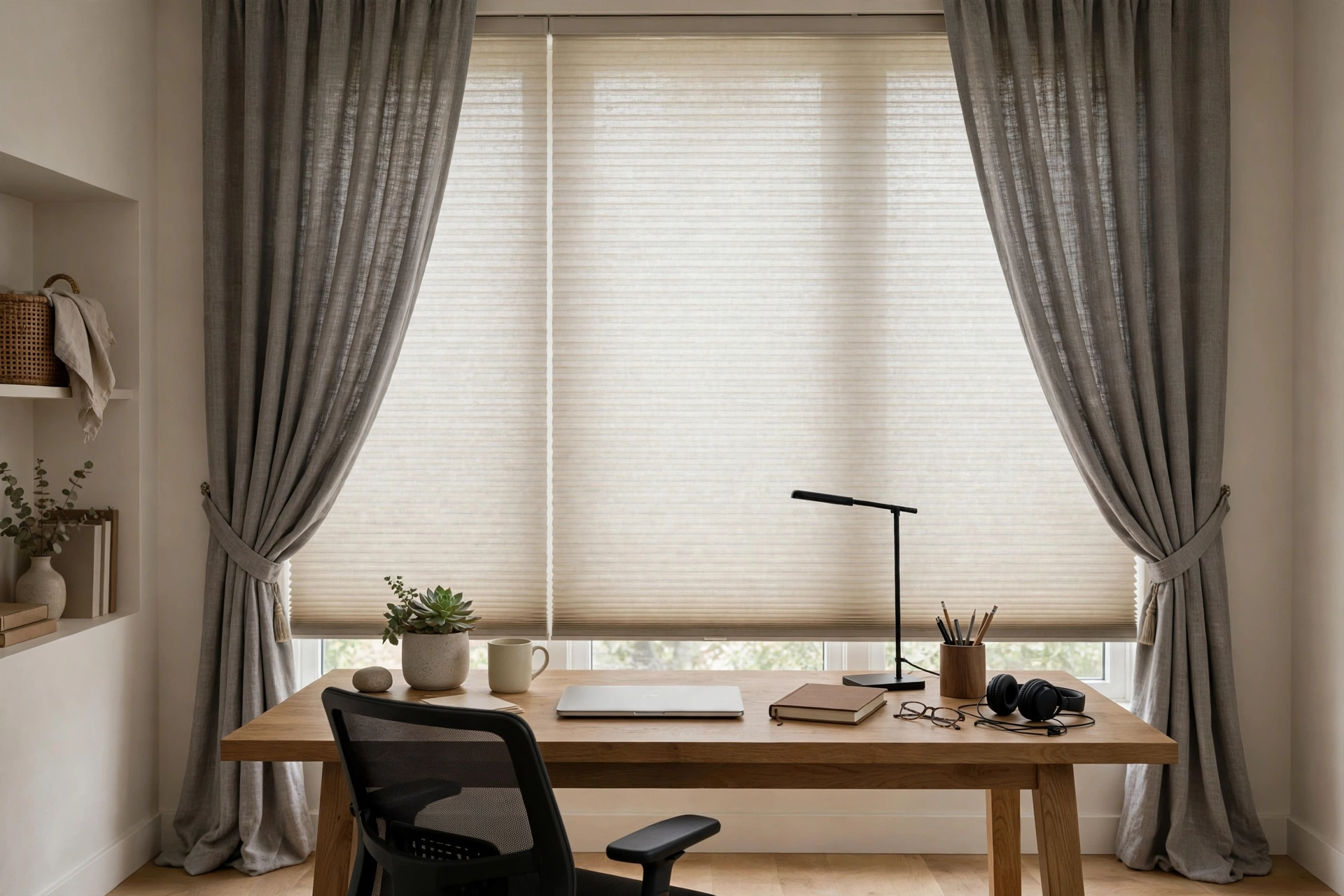
Layering light-filtering cellular or roller shades beneath decorative drapes gives you the best of both worlds: diffused daylight all day and a dressed, finished look. Keep the shades down to soften glare and UV while the drapes frame the window, then close the drapes at night for full privacy. Cellular shades add a bonus layer of insulation, trimming energy costs in drafty offices. Choose top-down bottom-up cellular shades if you want light from the sky while blocking street-level views — a brilliant trick for ground-floor workspaces. Match the shade color to your trim for a seamless look that lets the drapes be the star.
13. Grommet-Top Panels for Easy Sliding
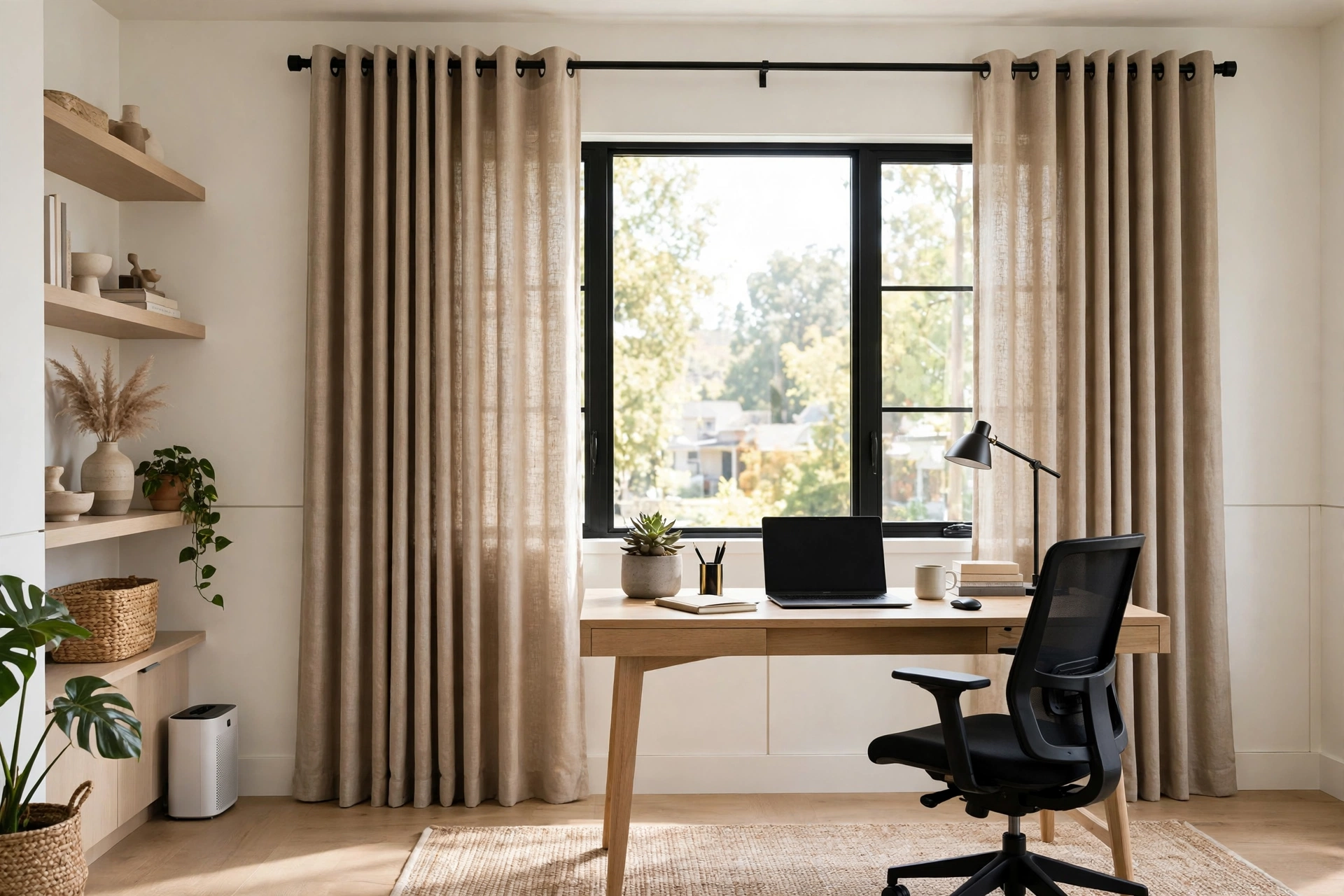
Grommet-top curtains thread directly onto the rod through metal rings, so they slide open and closed with one smooth pull — no rings to snag or clips to fuss with. That ease of use matters in a home office, where you adjust light several times a day as the sun moves. The wide, even folds create a clean, contemporary drape that suits modern and transitional offices. Choose grommets in a finish that matches your rod and desk hardware — matte black, brushed nickel, or warm brass — for a coordinated look. Because the panels need extra width to accommodate the deep folds, buy one and a half to two times the window width for proper fullness.
14. Earth-Tone Curtains for a Calming Palette
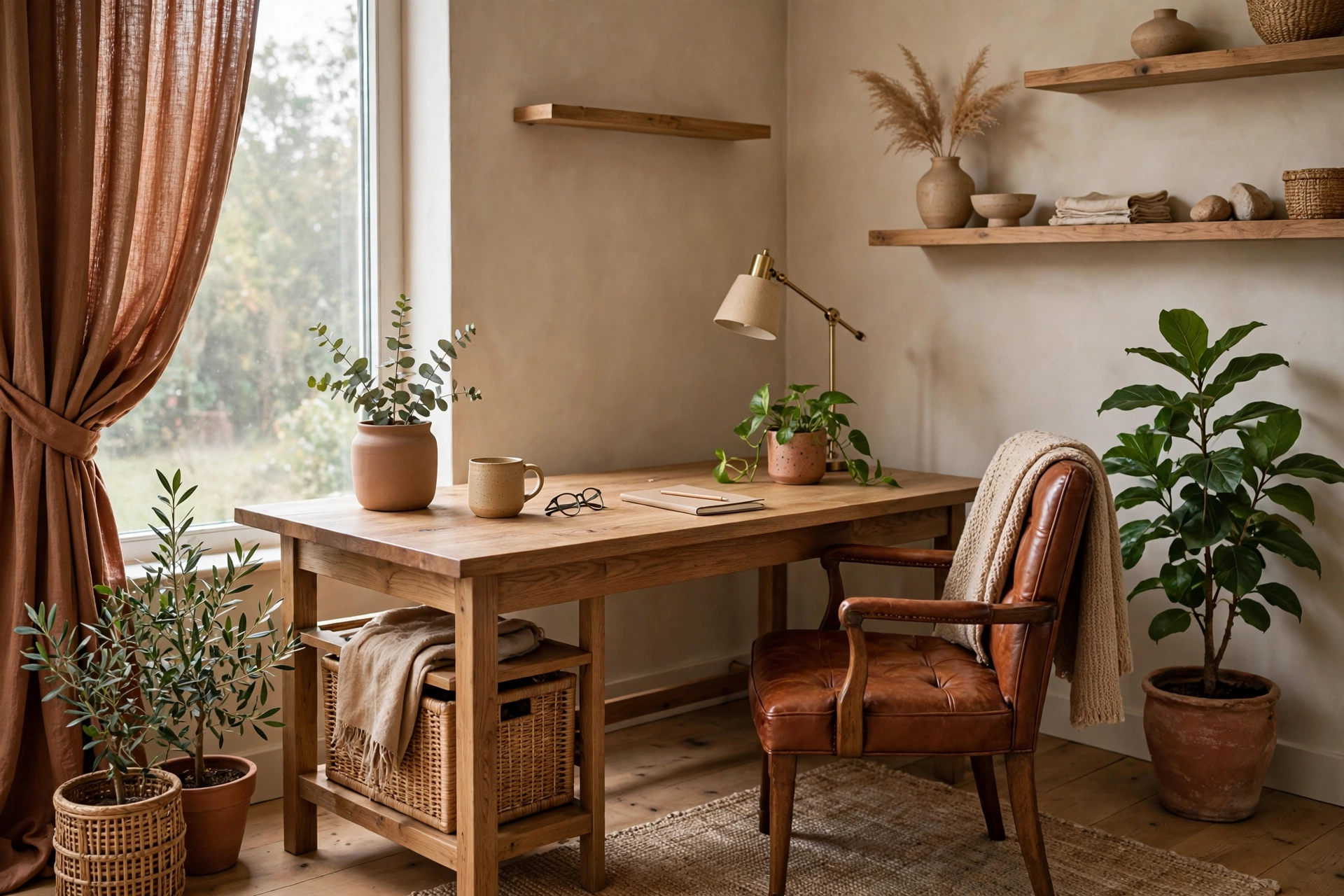
Terracotta, clay, sage, and warm taupe curtains wrap a home office in a grounded, calming palette that reduces visual stress during long workdays. These nature-inspired tones pair effortlessly with wood desks, leather chairs, and greenery, creating a cohesive look that feels both current and timeless. Choose a medium-weight cotton or linen blend that drapes softly. Earth tones photograph well on calls, reading warm and professional; rust or olive adds just enough color against white walls without overwhelming a small space.
15. Motorized Curtains for Hands-Free Control
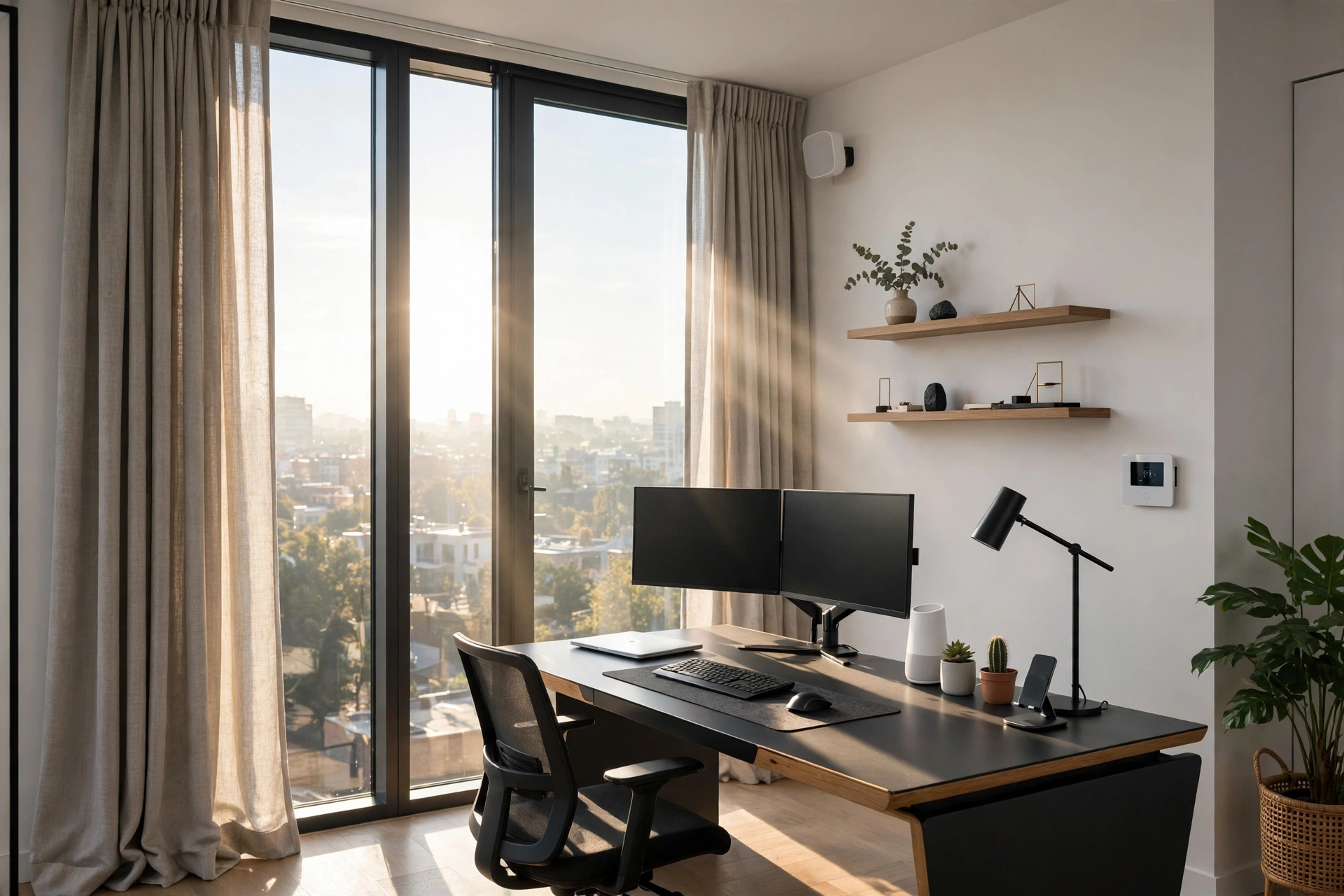
Motorized curtains are the ultimate home office upgrade: open them with a voice command when you start work, close them for calls, and schedule them to follow the sun. Battery-powered retrofit motors fit most standard rods, while hardwired tracks suit new builds and full renovations. Smart integration with morning routines means your office greets you with daylight automatically, and timed closing at dusk adds privacy without a thought. They are especially handy for tall windows or panels behind a desk you cannot easily reach. While the upfront cost is higher, the daily convenience — and the wow factor on video calls — makes motorization worth considering for a forever office.
Frequently Asked Questions
What type of curtains are best for a home office?
Light-filtering sheers layered over blinds or shades are the most versatile choice, giving you soft daylight, glare control, and privacy in one setup. For camera-heavy work, add blackout or heavy drapes you can close during calls. Choose easy-care fabrics like cotton, linen blends, or polyester that resist wrinkles and dust. The best option depends on your window orientation: south-facing rooms benefit from UV-filtering layers, while north-facing offices can embrace lighter sheers to maximize brightness.
Should home office curtains be blackout?
Not necessarily — full blackout is best reserved for video studios, night-shift workers, or rooms with harsh afternoon sun hitting the screen. Most home offices do better with light-filtering layers that keep the room bright and energizing. If you only need darkness occasionally, hang blackout drapes on a separate rod or track that you close just for calls and presentations. Common in cozy home office design ideas, keeps the space flexible for work and rest alike.
What color curtains make a home office look bigger?
Light, low-contrast colors — white, ivory, pale gray, and soft beige — make windows recede and rooms feel larger. Hang curtains in a tone close to your wall color for a seamless, expansive effect. If you want color, choose cool tones like soft blue or sage, which visually push walls outward. Avoid heavy, high-contrast patterns in tiny offices, since they chop up the sightline. Floor-to-ceiling panels in a light neutral are the single most effective trick for adding perceived height and space.
How high should I hang curtains in a home office?
Mount the rod four to six inches above the window frame at minimum, or closer to the ceiling for maximum height illusion — Designers generally agree that higher placement makes rooms feel larger and more polished. Extend the rod eight to twelve inches beyond each side of the frame so open panels clear the glass fully and admit maximum light. Panels should just kiss the floor or break slightly; avoid lengths that hover inches above the floor, which look like a measuring mistake.
How do I stop glare on my monitor with curtains?
Position your desk perpendicular to the window rather than facing it or backing onto it, then use curtains to fine-tune the light. Sheers or light-filtering shades diffuse direct sun without darkening the room, which is the sweet spot for screen visibility. Close heavier drapes during the brightest hour if glare persists. A matte screen filter and bias lighting behind your monitor also help. Avoid placing your desk directly in front of an uncovered window, since the extreme contrast between bright glass and screen strains your eyes fastest.
Keep Exploring
Curtains are one of the highest-impact, lowest-effort upgrades you can make to a home office — a single pair of well-hung panels can fix glare, add privacy, hush echo, and make the whole room look intentional. Start with your biggest pain point, whether that is harsh afternoon sun or a bare backdrop on video calls, and choose the idea that solves it first. Small offices benefit most from light fabrics and high mounting, while larger rooms can handle rich velvet and bold pattern.
Once your windows are dressed, keep the momentum going with the rest of the room — lighting, desk setup, and wall art all build on the foundation your curtains create. Browse more Home Office Ideas for inspiration on layouts, storage, and styling, and turn your work-from-home corner into a space that supports deep focus and looks great doing it, from your first coffee to your last email of the day.

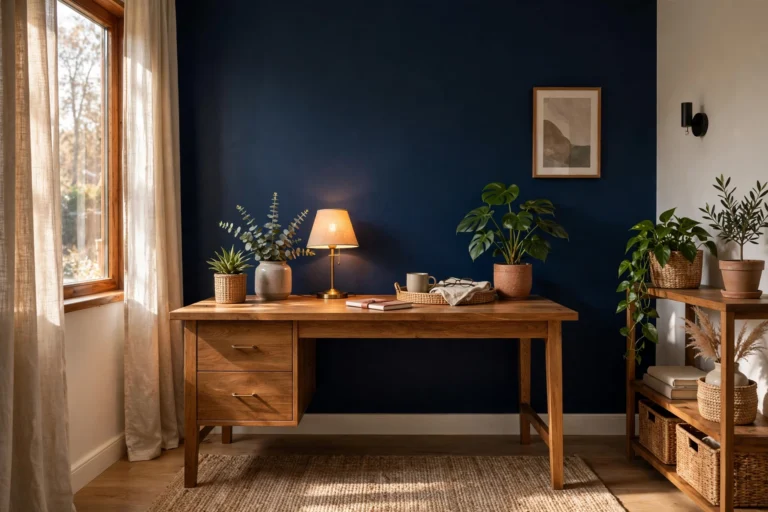
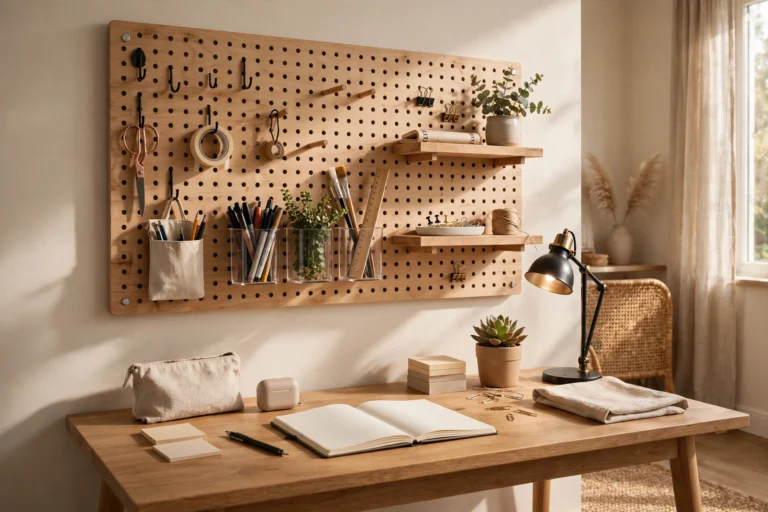




[…] stops the color from overwhelming the room. Match the dark tone to an element in your furniture or these home office curtain ideas for light privacy and style and the whole room feels intentionally […]